


Reference standards for nutrient intakes are evidence-based benchmarks for assessing the dietary adequacy of individuals and population groups. In addition, these reference standards help inform the planning, implementing, monitoring and evaluation of public health nutrition policies and programmes directed at influencing the food system, dietary behaviour and nutritional health(Reference Lawrence and Robertson1).
In Australia, the first reference standards for nutrient intakes were issued by the National Health and Medical Research Council (NHMRC) in 1954 (Nutrition Committee 1954). Revisions of these reference standards were issued in 1961, 1971, 1979 and 1991(Reference Truswell, Dreosti, English, Rutishauser and Palmer2). In 2002 the NHMRC was commissioned by the Commonwealth Department of Health and Ageing to manage the review of the existing reference standards. An expert Working Party was appointed to oversee the review process and followed terms of reference established by the NHMRC, which involved basing the review on: (i) the recommendations of the US and Canadian Dietary Reference Intakes(3); (ii) any new evidence; and (iii) following processes and standards acceptable to the Australian and New Zealand governments(Reference Baghurst4). The Working Party was advised to follow the NHMRC levels of evidence as a guide(5) when reviewing the literature. Neither the process for selecting the individual experts who comprised the Working Party nor the specific reviews to which they were allocated was explained in official documentation. A draft report of Nutrient Reference Values (NRV) was made available for public consultation for a period of three months from December 2004. The consultation was non-specific in that it simply invited the public ‘to make a submission to the Council about the draft guidelines’(6). In May 2006 the NHMRC and New Zealand’s Ministry of Health released its final report, entitled Nutrient Reference Values for Australia and New Zealand Including Recommended Dietary Intakes (7). Relative to earlier versions, the 2006 document includes a broader range of nutrients, a substantial change in the recommended dietary intake values for certain nutrients such as Na, Ca and folate, and a change in conceptual orientation to enable the assessment of chronic disease prevention and an individual’s dietary adequacy(Reference Capra8).
The development of reference standards for nutrient intakes is an inherently political process. The influence of NRV on public health nutrition policies and programmes means that they have the potential to affect either beneficially or adversely the interests of various stakeholders, who, in turn, may attempt to influence the decision-making process. In addition, experts involved in the review process have commented that the development of NRV in Australia and New Zealand(Reference Baghurst4) and the equivalent in the USA and Canada(Reference Green9) relied on ‘scant’ data available for many nutrients or was often drawn from studies that have substantial limitations, requiring much judgement by the respective expert committees in setting the values. The current paper presents the findings of an analysis of the views of submitters to the 2004 draft document associated with the development of the 2006 NRV for Australia and New Zealand. The aim of the study was to explore how these views were reflected in the policy-making process and the 2006 final policy document. Themes that emerged from the comments made in the submissions are explored in relation to a policy development model and are then discussed in light of the 2006 final NRV for Australia and New Zealand.
Method
Data in the current project were derived from the sixty-four public submissions made to the NHMRC Health Advisory Committee during the period of public consultation for the 2004 draft NRV document. A request was made to the NHMRC to obtain copies of the sixty-four submissions under the Freedom of Information (FOI) Act 1982(10). Permission was granted on the proviso that an upfront payment was made for processing costs associated with consulting third parties regarding disclosure of the identified documents. The process of obtaining data under the FOI legislation was not without challenges and required a significant amount of time, financial resources and knowledge of the procedures and an applicant’s rights under the legislation on the part of the research team. In the present case, once the application was made, it took several iterations of correspondence with Commonwealth Department of Health and Ageing bureaucrats extending over a 6-month period to gain approval for the data to be released. The costs associated with having the data release approved, the data photocopied and the data then made available was $AU 4200.
A photocopy of sixty-two complete submissions and two submissions with some portions exempt under subsection 41(1) of the FOI Act was provided by the NHMRC. These were scanned to provide electronic copies which were then entered into NVivo 2·0 (QSR International, Doncaster, Victoria, Australia), a qualitative software program which allows for the indexing, searching and theorizing of unstructured, non-numerical data(Reference Richards11).
Analysis consisted of multiple processes following Pope et al.’s(Reference Pope, Zielband and Mays12) stages of qualitative data analysis, including: (i) familiarizing oneself with the raw data; (ii) identifying a thematic framework; (iii) applying the thematic framework by indexing the data; (iv) rearranging the data to form more abstract groups of concepts; and (v) interpreting the data using applicable theoretical frameworks.
After reviewing each of the sixty-four submissions multiple times a thematic framework was inductively derived, as outlined in the Results and discussion section. The themes and sub-themes which emerged from the initial review of the submissions were then used deductively to code each line of each submission. This process is referred to as content analysis(Reference Liamputtong and Ezzy13) and involves identifying categories, searching for these in the data, and counting or systematically recording the number of times a category occurs. The quantification of themes in content analysis is a standard approach(Reference Esterberg14) which reduces bias and increases reliability and rigour.
Submissions were assigned to a ‘submitter workplace’ category based on the authors’ professional backgrounds. This allowed for comparisons of common themes within and between ‘submitter workplace’ categories. ‘Submitter workplace’ titles were pre-arranged and two researchers independently assigned submissions into six pre-arranged categories. A third researcher resolved any differences if they arose. The categories were: (i) academic/research agency; (ii) health sector; (iii) food industry; (iv) non-government organization (NGO); (v) government; and (vi) individual. Four submissions did not explicitly state issues but rather served as letters of support for another submission. In these four instances, themes were counted in the analysis as identical to the associated submission.
The content groups were then rearranged into overarching concepts which revolved around the policy-making processes of development, implementation and evaluation(Reference Bridgman and Davis15). The present paper focuses on comments and common concepts in relation to the process involved in developing the 2006 final NRV policy document rather than an appraisal of the scientific evidence associated with the setting of specific nutrient values. Finally, the key themes derived from the above analysis were compared and contrasted to the 2006 final NRV document in order to ascertain their importance or significance in the overall policy development process.
Results and discussion
The majority of submissions were from academics and researchers (n 19) followed by those from the health sector (n 14), the food industry (n 12), NGO (n 10), government (n 8) and individuals (n 1). Although the document was publicly available for comment, just one individual from the general public took this opportunity. This submission was discounted in the content analysis as it did not address the objectives of the NRV review process and instead focused on ‘the macrobiotic way of eating’ with reference to certain nutrients. A submission that had been put forward by several of the authors of the present research paper was also discounted in the overall analysis to avoid perceptions of bias in data analysis. For comparison’s sake, this submission included similar comments to those identified in other submissions.
The recurrent themes that were identified in the remaining submissions, in descending order of frequency were: (i) concerns associated with the conduct of the review process and in particular a perceived lack of transparency in undertaking the review process; (ii) the lack of dietary modelling data or the need to undertake more comprehensive modelling to assess whether nutrient recommendations can be translated into practical dietary advice; (iii) the growing evidence for prevention of chronic disease and its lack of emphasis in the overall document; (iv) the lack of monitoring and surveillance regarding the previous and forthcoming standards; (v) concerns regarding interpretation and consistency of implementation among health professionals and the food industry; (vi) concerns with the implications of the draft document including requiring revisions of food selection guides; (vii) concern that there would be a need to rely on the consumption of fortified foods to meet the new recommendations; (viii) importance of undertaking the review process and acknowledgement of the Working Party for undertaking such a complex task; and (ix) changes to food labelling to reflect the new NRV and consideration of which set of values is appropriate for describing the percentage daily intake. The number and proportion of submitters commenting on each of these recurring themes are shown in Table 1.
Recurring themes identified in stakeholder submissions

NRV, Nutrient Reference Values.
The most common recurring themes identified for each stakeholder classification were as follows.
1. Academics and researchers: a perceived lack of transparency in undertaking the review process and inadequate emphasis on the chronic disease section within the draft document.
2. Food industry: inadequate emphasis on the chronic disease section within the draft document.
3. Government: lack of dietary modelling data.
4. Health sector: the conduct of the review process, lack of monitoring and surveillance data, lack of dietary modelling data, consistency of implementation, supplements and fortification.
5. NGO: inadequate emphasis on the chronic disease section within the draft document and lack of dietary modelling data.
The recurring themes identified in stakeholder submissions were mapped against the three key steps of the policy process cycle, i.e. policy development, policy implementation and policy evaluation, outlined by Bridgman and Davis(Reference Bridgman and Davis15) (see Fig. 1). This simplified model of the policy cycle provides a heuristic device to explore public policy development and to help explain policy-making processes(Reference Parsons16).
Mapping the recurring themes against the three key steps of the policy process cycle (see Table 1 for definition of recurring themes)
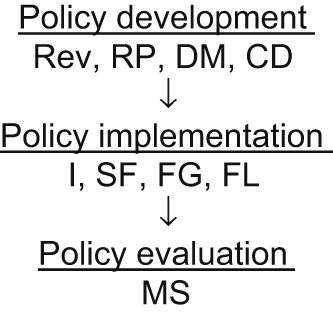
Representative excerpts from the submissions are used to provide some context to each of the recurring themes. These excerpts were chosen in relation to succinctness and how well they illustrated the theme. We are aware that, in qualitative research, the researchers’ choice of excerpt is necessarily undemocratic(Reference Morse17). However, while the choices of the researchers must be taken at face value, in selecting excerpts we were mindful that we must provide ‘recourse to evidentiary quotations from the data’(Reference Clark18) and a clear audit trail regarding the sources of data and analysis techniques so that others may verify our findings(Reference Lincoln and Guba19). We use a combined Results and discussion section for ease of reading as this enables a clearer understanding of the evolving policy development process.
Policy development
Importance of undertaking the review process
The Working Party was commended for undertaking the complex task of reviewing the nutrient reference standards for Australia and New Zealand.
The science of nutrition is evolving continuously providing new evidence for associations between diet and optimum human health. This reinforces the importance of the ongoing process of development and review of nutrient reference values for application to the nutrition and health science, the food industry, policy makers, and the general public.
(Academic/researcher)
Concerns with the review process
Among concerns raised with the review process were that it included insufficient justification for the differences between the US/Canadian recommendations and those in the draft 2004 NRV. In particular, it was noted that the distinction between deficiency states and chronic disease endpoints is not always clear or consistent.
Similar discrepancies are found for other nutrients …. It is again strongly recommended to reconsider this differentiation between the ‘classical’ definition of requirement and requirements for the reduction of chronic disease risk, as those indicators in practice can not be seen as separate indicators for deficiency.
(Academic/researcher)
This issue appears to have been partially addressed in the final NRV document with the inclusion of the comments such as ‘retain the traditional concept of adequate physiological or metabolic function and/or avoidance of deficiency states as the prime reference point for establishing the EAR and RDIs and to deal separately with the issue of chronic disease prevention’(20). However, the lack of a consistent conceptual approach to determining the Estimated Average Requirements and Recommended Dietary Intakes remains in the final document. For example, estimates of vitamin C recommendations are based on prevention of scurvy, a deficiency state, whereas folate recommendations are based, in part, on homocysteine reduction, a marker of chronic disease risk reduction(7).
Concerns were raised about a perceived lack of openness and transparency with the decision-making process. Requests were made for the original proformas on which the Working Party based its final recommendations, dietary modelling data, and details on which member of the NHMRC Working Party was responsible for revising each nutrient to be made available for public scrutiny and comment. None of these requests was addressed in the final NRV document.
The time available for public consultation was considered to be too short by a number of submitters. It was commented that this lack of time prevented many from providing in-depth responses, potentially limiting their ability to significantly contribute to the policy development process.
However, given the depth of the review and the extensive time taken to develop the recommendations … [we are] disappointed at the very short time frame that has been provided for consultation. It has not been possible for members to review all the documents in the depth that would be desirable and therefore the following comments are selective in scope.
(NGO)
Dietary modelling
Comments alluding to a lack of dietary modelling data were raised by several submitters in the context of concern about the increased quantity and combinations of foods required to meet the upwardly revised values for certain nutrients, particularly given the trend of an increasing prevalence of overweight and obesity.
Although the individual changes are not unrealistic singly, it is questionable whether infants and children can consume diets, in practice, to achieve these intake levels.
(Health sector)
Moreover, it was felt that the nutrient composition of the current food supply may not be sufficient to meet the reference standards and submitters requested that the NHMRC dietary modelling data be made available for public scrutiny.
Please reference the modelling work that is referred to throughout the draft.
(NGO)
It was requested that more comprehensive dietary modelling be undertaken by an independent reviewer prior to finalization of the guidelines. There was no additional information about the dietary modelling undertaken provided in the final NRV document or indication that any further modelling had taken place.
Chronic disease
There was concern that the discussion of chronic disease required more development and that it was not integrated within the overall NRV document.
… the chronic disease section is not as well developed as other sections of the document, which is disappointing considering its potential influence on nutrition issues in Australia. [We] … would like to see the section revised and expanded.
(NGO)
The suggestion to integrate the chronic disease section appears to have been dismissed as the chronic disease section remained separate in the final NRV document.
Comment was made that additional nutrient–chronic disease relationships should be considered for which there was significant evidence. Examples of these relationships include: Ca for the prevention of colon cancer; the Na:K ratio to help reduce the risk of hypertension; and the relationship between trans fatty acids and CVD risk. Several of these specific nutrient–disease relationships were addressed, with the inclusion of suggested daily targets for Na and K and a greater degree of discussion on the lack of evidence for individual recommendations for Ca, trans fatty acids and specific carotenoids.
The conventional orthodoxy for developing public health policy is that the process should be informed by scientific evidence(21). The concept of evidence-based policy draws on the rationalist assumption that data are systematically collected and then appraised against criteria to generate the most comprehensive and rigorous evidence foundation to then inform the policy-making process. The findings from the present analysis raise doubts about the rationality of the NRV policy development step. For example, it is unclear why differences exist between the US/Canadian recommendations and the 2006 final NRV document. No explanation for the criteria for inclusion/exclusion of nutrients is provided. Moreover, the original proformas upon which the reviewers based their decisions were not made available for public viewing.
A lack of transparency in undertaking the review was evident throughout the policy-making process. For example, there was no explanation provided of how the NHMRC Working Party members were selected and invited to participate in the review process (beyond a general comment that they were invited experts). This unexplained selection process was of particular concern as several members who were food industry employees or had previously consulted to certain food manufacturers were not required to declare their level of expertise or any potential conflicts of interest. Although the public consultation provided access to the decision-making process in theory, in practice there was no explanation provided regarding how submissions were reviewed and taken into account. Certainly, there was minimal change in the substantive content between the 2004 draft and 2006 final NRV documents. Table 2 provides a summary of the degree and type of changes between the 2004 draft and 2006 final NRV documents. The lack of transparency associated with the review process raises concerns about competing economic, ideological and bureaucratic interests(Reference Nestle22) and how the relative advocacy skills and resources of different stakeholders may have influenced the development of the final NRV document.
Degree and type of changes between the 2004 draft NRV and 2006 final document

NRV, Nutrient Reference Values; EAR, Estimated Average Requirements; DRI, Recommended Dietary Intakes; NHMRC, National Health and Medical Research Council.
Policy implementation
Interpretation and consistency in implementation
There was concern in relation to how and when to use the new NRV values, particularly in relation to the chronic disease section. A number of submitters requested that the NHMRC provide a communication strategy to assist stakeholders in interpreting and applying the NRV in practice.
A comprehensive communication and dissemination strategy is required, particularly to accompany the release of the document. The new NRV will affect a number of sectors differently; including health professionals, food manufacturers and caterers, and consumers. Potential short- and long-term implications need to be considered prior to release of the NRV for inclusion in the communication strategy. It is important the NHMRC clearly articulates the correct use and context of the NRV and minimises the potential for misuse of the recommendations.
(NGO)
There was concern expressed that changes in certain nutrient values would portray an inconsistent nutrition message to the general public and that these new values may not be practical to achieve.
It is important that the public receive nutrition messages that are consistent and can be implemented. Setting the UIL for sodium at 70 mmol will provide a message which is not practical and will be extremely difficult to achieve at a population level. Such a meal pattern will not include cheese, a key food to supply the increased calcium, additional milk (an excellent source of potassium as well as calcium), bread or many sauces or baked products (baking powder also includes sodium).
(NGO)
Revision of nutrition education materials
Several submitters highlighted that current nutrition education tools such as the Australian Guide to Healthy Eating and the Australian Dietary Guidelines that are informed by nutrient reference standards will require prompt revision in response to the 2006 NRV.
A major impact of the NRVs will be the translation into real food dietary recommendations for consumers via resources such as the Australian Guide to Healthy Eating and the Dietary Guidelines. Therefore an urgent review of the Core Food Groups and related dietary guides will be required. Has consideration been given to what timetable and resources are required for this?
(Government)
The lack of an up-to-date food guide and dietary guidelines impacts on professional practice. When and if the revision of the food guide and dietary guidelines might take place was unclear during the NRV development process and remained unaddressed in the 2006 final document. In addition, several submitters were concerned about the lack of available modelling data to inform such a revision process. In May 2007 the Australian Commonwealth Government announced funding for the revision of the Australian food guide and dietary guideline documents over the subsequent 18 months to 2 years(23), i.e. more than three years after the launch of the 2006 NRV.
Fortification of the food supply
Concerns were raised by some submitters about the feasibility of being able to achieve the substantially increased reference intake level for several nutrients with food alone and instead the possible need to rely on supplementation and/or food fortification.
The RDIs for calcium have increased significantly since 1991. Given that the 1991 RDI was hard to achieve (especially for women) how realistic are the new RDIs? Setting the RDI at this level is likely to be used as justification for fortifying the food supply which may create a range of other problems (e.g. tooth decay from calcium fortified orange juice).
(Government)
The implication of increasing availability of fortified food products in the marketplace also was raised.
The food supply will become very distorted in favour of fabricated foods and fortified foods. This increases food expenses for the entire population and is unnecessary.
(Health sector)
One food industry organization specifically requested that the government relax current regulations that prevent food manufacturers ‘from fortifying products and educating consumers on presence or absence of such nutrients’ (food industry). However, a different food industry stakeholder had an alternative view, suggesting ‘a section is added to the report outlining the benefits of obtaining most nutrients from a balanced diet, as well as examples of diets that meet all the new requirements for various age and gender groups’ (food industry).
Labelling
It was highlighted by submitters that with the extension of the conceptual basis to the nutrient values and changes to the actual values, a review of the food standards code and labelling requirements would be required.
Adoption of the new framework of NRVs has significant implications for food labelling – both for the reference values used on nutrition information panels on labels and the permitted level and range of added vitamins and minerals in foods. While these issues have not been addressed as part of the review process it is vital that the consequent review of dietary reference values for use on labels be undertaken and finalised as rapidly as possible ….
(NGO)
Food industry submitters requested labelling guidelines and sufficient time be made available for alterations to labels or formulations. Other submitters were concerned that a clear and timely message about nutrient intakes be portrayed to the public.
There will be an urgent need for clear guidelines for situations in which particular reference values should be used, e.g. food labels, as there is considerable potential for confusion of both the public and the food industry.
(Government)
Policy evaluation
Monitoring and surveillance
The lack of up-to-date dietary intake consumption data and food composition tables in Australia prompted submitters to express an urgent need to undertake ongoing monitoring and surveillance of the ‘food supply, food consumption and health outcome components of the food system’ (academic/researcher). There was an appeal for a commitment to monitoring and surveillance to ‘determine the effects of the introduction of the new values’ (academic/researcher) and suggested it be highlighted in the NRV policy document.
The document relies heavily on data from the National Nutrition Survey (1995) for the derivation of many of the NRV. These data, which are now 10 years old, are considerably out of date. The process of developing NRV highlights the urgent need for improved data collection through e.g. a national nutrition survey and the reinstitution of national apparent consumption data.
As part of a responsible approach to the introduction of a major new public health initiative, the development of the NRV for Australia needs to be accompanied with a suitable food and nutrition monitoring system.
(Government)
One submitter recommended that a national nutrition survey be conducted prior to the release of the final NRV document. Others suggested that a clear statement outlining the limitations for calculating certain nutrients on the basis of 1995 consumption data be included in the document, in addition to a commitment from the Government to undertake regular monitoring and surveillance. It was over two years later, in the context of the May 2007 budget announcement by the Australian Commonwealth Government, that this commitment to a national children’s nutrition and physical activity survey(24) was given and appears to have been unrelated to the public submission process and the development of the 2006 final NRV document.
Conclusion
The findings presented in the current paper provide insights regarding the claimed policy making for the review of the NRV relative to that observed against the model used to organize the present analysis. On one hand, it was claimed that the expert Working Party was concerned with assessing the quality and quantity of scientific evidence available to inform decisions and the 2006 final NRV document was prepared according to processes and standards acceptable to the Australian and New Zealand governments. On the other hand, the data reveal that despite many submitters’ support of the rationale behind the review of the nutrient reference standards, they expressed concern with at least one of the three policy cycle steps implemented. There is a lack of evidence that the majority of these stakeholder comments were addressed in the final NRV document. Although these findings cannot be interpreted to assess the validity or otherwise of the set nutrient values, they do raise questions about the process for their development and the adequacy of the final document to reflect the views of key stakeholders. The general lack of attention to submitters’ comments in the final document might be explained by the apparent inconsistency between the non-specific nature of the NHMRC’s invitation for public submissions and the NHMRC’s relatively narrow terms of reference for the Working Party. In the future, this inconsistency might be avoided if the Working Party were to have a brief that enabled conceptual and applied considerations identified in the literature and in submitters’ comments to be included. Additionally, it would be desirable to include greater transparency in the process for selecting experts and in explaining the basis for allocating experts to specific reviews.
We understand that the present research represents the first time that an FOI request seeking information about an NHMRC food and nutrition policy process had been made and therefore is novel in its approach to public health nutrition policy analysis. Notwithstanding the challenges presented by bureaucratic procedures and costs to access the data, this approach is an especially valuable data collection procedure for policy analysis because it provides an opportunity to gain insights into submitters’ views that otherwise may not be revealed. Also, it enabled us to assess the procedures of the review process. For instance, our analysis highlights that it is apparent that there were no formal criteria for assessing and responding to the comments contained in individual submissions. Moreover, there was no procedure for assessing divergent comments from among the submissions in total, e.g. how would decision makers balance brief comments presented in three identical submissions with a comprehensive and well-developed albeit contrasting argument presented by an alternative submitter? In such circumstances, the judgements of individual decision makers assume greater authority and submitters and analysts have less certainty in knowing how policies are made.
There are limitations with relying on data analysis from a submission process to explain policy making as it cannot account for the views of those stakeholders who did not make submissions. The limitation here is that there may be a number of stakeholders with valid views about the development process who did not inform the present analysis because of the actual process itself. For example, the lack of transparency and rushed nature of the process may have resulted in certain stakeholders having a lack of awareness of the process or lack of resources and time to engage with the process. Alternatively, certain stakeholders may have been in full agreement with the review process and may not have seen the need to submit a response to the 2004 draft NRV document.
Invariably, the development of NRV is subject to political influences, resources available and experts selected and not selected to be involved. In the future it will be necessary to undertake a qualitative research method that explores language and power, such as critical discourse analysis(Reference Wodak and Meyer25), to enable further identification of stakeholders’ views regarding the NRV document and its development process. In relation to the appropriateness of the set values, an ongoing review of the evidence will be essential as will dietary modelling to investigate the achievability and practical implications of the NRV including social and environmental considerations when translated into food servings and dietary patterns that individuals and population groups consume in the ‘real world’.
Acknowledgements
Sources of funding: Funding for the present research was provided by Deakin University Centre for Physical Activity and Nutrition Research (CPAN). Conflict of interest declaration: There were no commercial, personal, political, academic or financial conflicts of interest. Authorship responsibilities: All authors contributed significantly to the research, including obtaining submissions under the FOI Act, project design, implementation, management and manuscript writing. The research concept was conceived by M.L. Acknowledgements: We acknowledge Judith Hageman and her team at Scanning Deakin University, for their valuable and timely assistance in preparing electronic versions of all submissions. We also acknowledge the time, effort and intellect of all the submitters.



