

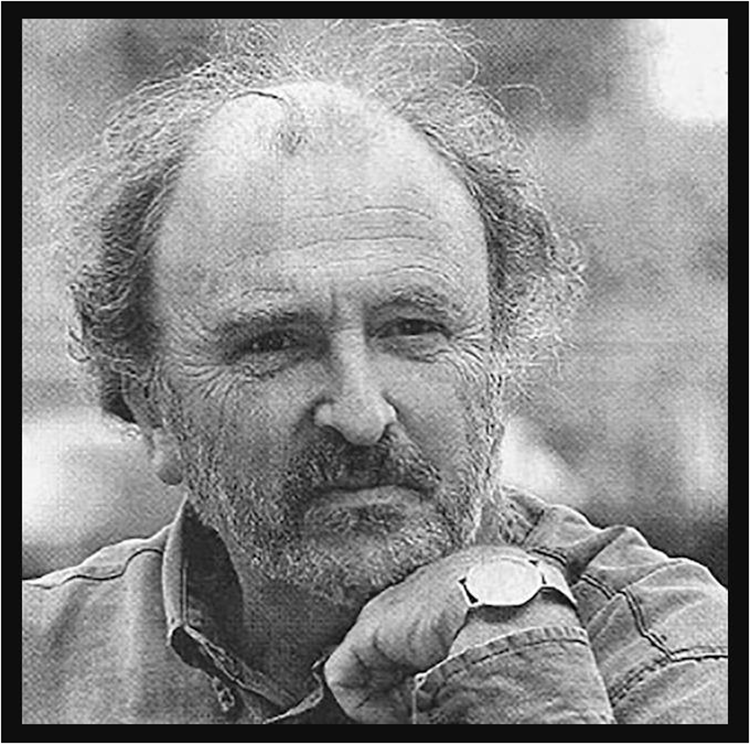
It is with great sadness that we note the passing of Victor Alexandre Ginsburgh, co-founding editor of the Journal of Wine Economics and Vice President of the American Association of Wine Economists (AAWE).
Victor was an economist of remarkable breadth and originality, whose work spanned the economics of culture, language, taste, identity, and wine. A long-standing professor at the Université libre de Bruxelles (ULB) and co-director of ECARES, he was a prolific scholar, a sharp and generous colleague, and a quietly influential force across several subfields of economics—most notably cultural economics.
Born in 1939 in Rwanda-Urundi to a father from Vitebsk (Belarus) and a mother from Vienna (Austria), Ginsburgh was educated in Belgium and earned his Ingénieur commercial degree (MBA, 1961), M.A. in Econometrics (1964), and Ph.D. in Economics (1972) at the Université libre de Bruxelles. He joined the ULB faculty shortly thereafter, where he remained throughout his career, mentoring generations of students and contributing significantly to the university's intellectual life. He also held visiting positions at Yale University, the University of Chicago, the University of Virginia, Christie's London, and in France (Aix-Marseille University).
Ginsburgh made foundational contributions to cultural economics. His Handbook of the Economics of Art and Culture (Elsevier, 2006), co-edited with David Throsby, remains a touchstone in the field. His later book, Symbolic Values of Art and Culture (Princeton University Press, 2011), co-authored with Oriane S. Guerts, examined how symbolic meaning interacts with economic valuation, particularly in the context of artworks and aesthetic judgment. Few economists moved so fluidly between the quantitative and the qualitative, combining econometric rigor with a humanist's curiosity.
Multilingual himself (he spoke French, German, and English fluently), his interest in identity and multilingualism led him to co-author How Many Languages Do We Need? The Economics of Linguistic Diversity (Princeton University Press, 2011) with Shlomo Weber. The book explored language policy, equity, and efficiency within multilingual societies, with a particular focus on the European Union. His work on linguistic disenfranchisement was pioneering, offering tools to assess how language choices affect participation, fairness, and inclusion.
His journal publications reflect a similar eclecticism and depth. He published in leading journals such as the American Economic Review, Economic Journal, Journal of Political Economy, Journal of Economic Literature, European Economic Review, Journal of Economic Perspectives, and Journal of Wine Economics, among many others. His articles covered topics as diverse as voting rules in collective decision-making, hedonic pricing of paintings, outcomes of classical piano competitions, the construction of inequality indices, the measurement of cultural and ethnic diversity, and the role of terroir in Bordeaux winemaking.
Aside from being the managing editor of AAWE's Working Papers for almost 20 years, in the Journal of Wine Economics, Victor co-authored several influential papers, including:
• “Natural Endowments, Production Technologies and the Quality of Wines in Bordeaux: Does Terroir Matter?” (with Olivier Gergaud, 2010), which assessed how much of wine quality—measured by expert assessments and auction prices—can be explained by terroir versus technological choices. Their results suggested that technology plays a more significant role than natural endowment.
• “Shapley Ranking of Wines” (with Israël Zang, 2012), which proposed a novel ranking method based on cooperative game theory, allowing consensus rankings with less burden on judges.
• “Red Wines of Médoc: What Is Wine Tasting Worth?” (with Muriel and Andras Monzak, 2013), showing that technology and weather explain two-thirds of wine price variance, rising to 85% when reputation effects (from the 1855 classification) are included.
• “Wine Ratings: Seeking a Consensus among Tasters via Normalization, Approval, and Aggregation” (with Olivier Gergaud and Juan D. Moreno-Ternero, 2021), which developed a framework for achieving consensus among wine tasters, inspired by political science and game theory, and applied it to the Judgment of Paris and 2018 Bordeaux en primeur ratings.
• “Tracking the Wines of the Judgment of Paris over Time: The Case of Stag's Leap Wine Cellars' Cabernet Sauvignon” (with Olivier Gergaud and Juan D. Moreno-Ternero, 2022), which followed the evolution of critical scores from 1968 to 2021, finding that the 1973 Stag's Leap vintage—though the 1976 winner—lagged behind its peers in subsequent years.
Ginsburgh also reviewed books for the Journal of Wine Economics, including Kolleen M. Guy's When Champagne Became French and Roger Scruton's I Drink Therefore I Am: A Philosopher's Guide to Wine.
“I drink, therefore I am” could well have been Victor's own motto—he was a deep thinker, a cultured human being, and a dear friend to many. He is survived by his wife Gilberte (Gigi), his son Stéphane, his daughter Emanuelle, and several grand-children.
As Stéphane wrote to us,
“Our dear Victor left us.
Ich weiss nicht, was soll es bedeuten,
Dass ich so traurig bin;
Ein Märchen aus alten Zeiten,
Das kommt mir nicht aus dem Sinn.
Heinrich Heine”
The AAWE and its members will greatly miss him. He will not be forgotten.
The Editors

 Open access

