


Over the past several decades, there has been increasing awareness of the role of added sugars, particularly in beverages, as a major driver of increased weight gain and tooth decay(Reference Popkin and Hawkes1–Reference Skinner, Byun and Blinkhorn4).
South Africa is facing a severe and growing obesity epidemic. The 2013 South Africa National Health and Nutrition Examination Survey found that 65·1 % of women and 31·2 % of men are overweight or obese, with 22·9 % of children aged 2–14 years overweight/obese(Reference Shisana, Labadarios and Rehle5). People living in formal or informal urban areas, rural areas, higher-crime areas, of African/White ethnicity, married, not exercising, of higher socio-economic category and/or living in households with proportionately higher spending on food (and unhealthy food options) were significantly more likely to be obese(Reference Sartorius, Veerman and Manyema6, Reference Cois and Day7). At the same time, South Africa has seen a significant rise in the consumption of processed and ultra-processed foods, including sugary beverages(Reference Igumbor, Sanders and Puoane8). Recent surveys have found that between 2005 and 2012, added sugar and sugar-sweetened beverage (SSB) consumption increased in both urban and rural communities in South Africa, with a corresponding increase in non-communicable disease risk(Reference Vorster, Kruger and Wentzel-Viljoen9). Furthermore, a study on the diets of young children (aged 12–24 months) in urban communities found that SSB were one of the most consumed drinks/foods among young children: less than maize meal and brewed tea, but more than milk(Reference Theron, Amissah and Kleynhans10).
SSB are non-alcoholic beverages sweetened with added sugars or containing significant free sugars(Reference Hu11). The WHO defines free sugars to be any sugars added to foods or drinks by a manufacturer, cook or consumer, and any other sugar not in its natural form(12). SSB are thought to lead to weight gain due to their high sugar content and incomplete compensation for total energy at subsequent meals following intake of liquid kilojoules(Reference Malik, Popkin and Bray13). Compelling evidence supports a positive link between the intake of SSB and the risk of obesity, diabetes and other metabolic conditions(Reference Malik, Popkin and Bray13–Reference Vartanian, Schwartz and Brownell17).
Yet, the chronicity of these diseases causes enormous human loss, an increase in health-care costs(Reference Cawley and Meyerhoefer18, Reference Sturm, An and Maroba19) and reduces overall workplace productivity through absenteeism or the premature death and/or disability of people during their productive years(Reference Tugendhaft and Hofman20).
One proposed policy strategy to reduce the risk of obesity and its co-morbidities is the use of price policies such as taxes on products linked to the onset of obesity. By levying a tax on a harmful product, one could disincentivise its consumption and production, and encourage substitution towards healthier alternatives. There is a growing empirical evidence base showing that price changes due to taxation or subsidies can modify consumption of obesogenic foods and beverages(Reference Cabrera Escobar, Veerman and Tollman21, Reference Andreyeva, Chaloupka and Brownell22). For instance, Mexico introduced a tax on SSB and high-energy-density packaged foods in 2014, resulting in significant reductions in their consumption(Reference Colchero, Popkin and Rivera23, Reference Batis, Rivera and Popkin24). A study conducted in South Africa reported that a 20 % tax is predicted to reduce energy intake by about 36 kJ/d (95 % CI 9, 68 kJ/d) with a projected reduction in obesity of 3·8 % in men and 2·4 % in women(Reference Manyema, Veerman and Chola25). In addition, Steyn and Temple(Reference Steyn and Temple26) have provided evidence that supports the current sugar guideline in place in South Africa that emphasises the use of foods and drinks that contain sugar sparingly and not between meals. Taxes on SSB are now in place in several US states and cities, Mexico, a number of European and Pacific countries, and since April of 2018 also in South Africa(Reference Eyles, Ni Mhurchu and Nghiem27–Reference Powell and Chaloupka30).
Beginning in 2013, the South African National Department of Health begun including a tax on SSB as a non-communicable disease and obesity prevention policy objective(31). Following a multi-year public consultation effort, a tax on SSB was ultimately legislated in December 2017 and implemented in April 2018(32, 33). The tax, termed the Health Promotion Levy, taxes the sugar content of common SSB at a rate of 0·021 ZAR per gram of sugar over an initial exemption threshold of 4 g of sugar per 100 ml(32). The policy process was highly contested with mass media campaigns both in support and against the tax, and has coincided with a national government corruption scandal regarding the abuse of public resources(34). This process saw the rate initially proposed by the National Treasury reduced significantly, in efforts to allay concerns of industry interests, from 20 % as recommended to be effective by the WHO to an approximate 10 % rate(12). Against this backdrop, the fraught process ultimately resulted in the adoption of the policy with the majority party voting in support in parliament. However, there is limited evidence on the broader public’s understanding of this policy. The present study sought to investigate awareness, perceptions and attitudes towards SSB and SSB taxation among South Africans living in urban Soweto.
Methods
Setting, design and participants
The present study was conducted in Diepkloof township of Soweto, Johannesburg. Diepkloof is one of the twenty-nine townships in Soweto, covering an area of approximately 9·46 km2 and housing a population of approximately 95 067 persons(35). Diepkloof is close to most public transport in Soweto.
We recruited our study participants using a purposive sampling approach from the Bara Taxi Rank in Soweto. We targeted the Taxi Rank as this is the pick-up and drop-off point for most residents of Soweto. Eighty-five people were approached, with fifty-seven participants agreeing to participate in the study. The inclusion criteria was adults (age above 18 years) who consented to participate in the study. Semi-structured interviews were administered in six focus group discussions (FGD) from November to December 2017. The FGD took place at a research centre at Chris Hani Baragwanath Academic Hospital in Soweto, and were age- and sex-stratified as follows: two with older adult males and females (aged 36–55 years), two with adult males and females (aged 26–35 years) and two with younger adult males and females (aged 18–24 years).
Data collection
Each FGD was composed of eight to eleven participants. Two multilingual research assistants facilitated the FGD using a semi-structured guide (see Appendix). The key questions in the FGD guide were: the contexts where participants lived; their understanding of healthy living; what made it easier or difficult for them to live healthy in their community; their understanding of obesity and diabetes; causes of obesity/diabetes; their understanding of SSB; the types and frequency of their SSB consumption; reasons why they consumed SSB; if it was easier or difficult to reduce SSB consumption; SSB advocacy advert; knowledge about SSB tax and why the government was implementing the tax; and their perceptions towards an SSB tax in South Africa. The FGD were audio recorded and one research assistant took intensive notes as a backup for the audio files. The discussions, which took 60–120 min, were conducted in English with flexibility of the participants to use vernacular languages. Audio files from the discussions were transcribed verbatim with translation as necessary. All transcripts were checked against the recordings to verify accuracy and credibility and small changes were made where necessary.
Data analysis
Qualitative data were thematically analysed using a constant comparison method, which constitutes the core of qualitative analysis in the grounded theory approach(Reference Boeije36), between different categories (e.g. age groups and gender). The data were analysed according to the six steps (data familiarisation through reading and re-reading transcripts and listening to the audio recordings; initial code generation; searching for themes; reviewing and naming themes; comparing themes across different categories; reporting). Initial code generation was developed by two researchers and this was reviewed by an independent researcher unrelated to the study. The codes represented a theme or idea with which each part of the data was associated. For example, the code ‘frequency of SSB consumption’ was attributed to data that suggested the number of times people consumed SSB daily. Having coded the first transcript, subsequent reading of this and other transcripts was carried out. New codes were added as necessary while discussing any discrepancies with the team members. After the coding process, a list of categories was compiled to relate to the research questions. This information was compared across the six FGD, reviewed, and verbatim excerpts were used to report the dominant themes.
Results
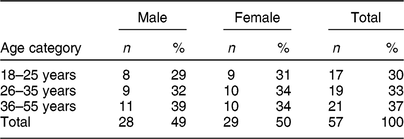
Of the fifty-seven participants recruited, approximately half (n 29) were females. Participants’ age ranged from 18 to 55 years (see Table 1). We present our study findings in two parts: (i) perceptions and attitudes towards SSB consumption and SSB tax; and (ii) alternative strategies to taxation.
Sociodemographic characteristics of focus group participants: adults aged 18 years or above (n 57) living in Soweto, Johannesburg, South Africa, November–December 2017
Perceptions and attitudes towards sugar-sweetened beverage consumption and taxation
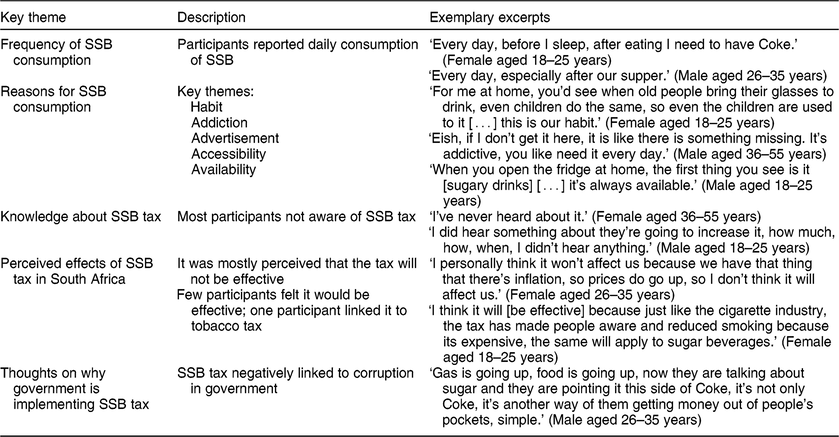
During the FGD, five main themes emerged in relation to SSB consumption and taxation: (i) frequency and patterns of SSB consumption; (ii) reasons why people consume SSB; (iii) knowledge of the SSB tax; (iv) perceived effects of the SSB tax in South Africa; and (v) thoughts on why the South African government is implementing the SSB tax.
Frequency and patterns of sugar-sweetened beverage consumption
Participants reported that they consumed different sweetened beverages, ranging from alcoholic drinks to juices, Coca-Cola, coffee and tea, as decribed below:
‘I drink a lot of coffee, because I always have to be caffeinated, with the coffee I have three to four spoons of sugars.’ (Male aged 18–25 years)
‘My daughter takes any type of cold drink she takes Coke or juice, my son takes tea and also a cold drink.’ (Male aged 36–55 years)
From the list of beverages participants talked about, we then asked them which ones were highly consumed. They all responded (in a chorus), ‘Coke’. In the present study, ‘Coke’ was used by our participants to mean Coca-Cola products as opposed to a ‘cold drink’ that signifies any brand of a sweetened beverage. This finding was consistently reported in all the FGD. In addition, both males and females in all age groups reported at least consuming one to two bottles of 300 ml (the usual size) daily:
‘Every day, before I sleep, after eating I need to have Coke.’ (Female aged 18–25 years)
‘Every day at home they drink Coke then on the weekends some of my uncles they drink beer, eish’. (Female aged 18–25 years)
‘I’ll give you one example for me and my family if there is no cold drink in that house then everybody goes mad.’ (Female aged 36–55 years)
It was reported that the consumption of Coca-Cola (Coke) was also dominant among their friends and neighbours, as described below:
‘Amongst like my friends’ families, most of their parents, sisters, brothers, they addicted to it, like they’ve been drinking it since like your early age years and some of them are like in their fifties.’ (Male aged 18–25 years)
Daily consumption of SSB was not only limited to the adults, but teenagers and young children were also consumers. About half of our participants reported that their children were heavy consumers of sugary drinks such as Coca-Cola and fruit juices. It was revealed that in most households, such drinks were served alongside main meals, and thus everybody ate and consumed them:
‘The kids too drink just like parents. Because every time they buy a cold drink for the family, I know the kids are going to drink it too.’ (Male aged 26–35 years).
However, very few participants reported that they consumed water or milk daily. For example, in the young women’s group, it was reported that some would survive for days without drinking water. A young female participant said:
‘I can’t remember when I took water last. I normally stay for months without water. As long as I have my cold drink, I am okay.’
Reasons why people consume sugar-sweetened beverages
A major reason for consumption of SSB that emerged across all the groups was habit and addiction. It was said that consumption of SSB had become a habit in people’s lives, as the consumption patterns developed during childhood (through socialisation). This was well knitted in the family, was normalised as children grew up and thus influenced people’s way of consumption later during adulthood:
‘For me at home, you’d see when old people bring their glasses to drink, even children do the same, so even the children are used to it that whenever we have our cool drinks, they come with their cups, we share with them as well and this is our habit.’ (Female aged 18–25 years)
When asked to explain further on habit, phrases such as ‘people drink from morning to evening’ or ‘we drink from Monday to Monday’ were commonly used. The majority of our participants also explained that this kind of habit developed as a result of addiction to SSB, as illustrated below:
‘Eish, if I don’t get it here, it is like there is something missing. It’s addictive, you like need it every day.’ (Male aged 36–55 years)
Advertising of SSB was also highly discussed across the FGD as a strong factor that drove people to consuming SSB. It was reported that use of attractive and appealing messages when promoting such drinks influenced people’s beverage choices and consumption. Most males reported that they enjoyed watching television and would try and buy a drink that was well advertised, such as Coke. It was also revealed that there were massive campaigns, advertisements and promotion of SSB on billboards and around schools, where demand from learners was high:
‘A lot of advertising […]. They spend a lot of money on advertising that drink, if you see it, you think it, you’ll drink it.’ (Male aged 18–25 years)
Participants indicated that availability and accessibility of SSB also influenced people’s consumption patterns. Availability and accessibility were discussed at two levels: (i) at community level, whereby the drinks were available very nearby in shops and taverns within neighbourhoods; and (ii) availability within the home. The following excerpts illustrate this:
‘I can’t imagine myself sleeping if Coke isn’t there because they sell it next door by my house. If I don’t have money, I go get it on credit, I’ll come pay month end.’ (Female aged 18–25 years)
‘When you open the fridge at home, the first thing you see is it [sugary drinks] […] it’s always accessible.’ (Male aged 18–25 years)
Knowledge of the sugar-sweetened beverage tax
Most of the participants were not aware that an SSB tax had been announced. Since most participants reported that they were not aware of the taxation, the interviewer briefly explained the tax policy in South Africa that was due to be implemented and what it entailed. The few who had heard about the SSB tax either indicated not understanding it well or narrated that:
‘I’ve heard about it, but no one really explained, I just heard.’ (Male aged 18–25 years)
‘I did hear something about they’re going to increase it, how much, how, when, I didn’t hear anything.’ (Male aged 18–25 years)
‘I heard that they are going to increase the tax for all these fizzy stuff, then Coke said it’s going to start removing like four spoons of sugar from every 2 litres.’ (Male aged 26–35 years)
‘I think it was on Thursday we went to a shop and we wanted to buy a buddy cool drink, but it is not a bigger bottle now, it’s small now.’ (Female aged 26–35 years)
Perceived effects of the sugar-sweetened beverage tax in South Africa
Once alerted to its existence, when asked about their views on the SSB tax, some participants’ initial perception was that the SSB tax would not be effective:
‘I don’t think it will change anything really, because you can tax the companies, you can tax us but we will moan and moan for like a few months, after a period of time, we will get used to it, you know, that’s basically like treating the symptom and not the disease itself.’ (Male aged 18–25 years)
More women compared with men argued that due to inflation and the high cost of living, some people might not realise the increase in price is related to targeting the SSB; rather interpreting it as part of a broader increase in the inflation rate:
‘I personally think it won’t affect us because we have that thing that there’s inflation, so prices do go up, so I don’t think it will affect us.’ (Female aged 26–35 years)
However, other participants suggested that a higher tax would compel people to reduce buying and consuming SSB due to unaffordability:
‘If the government increases the tax, then it will definitely affect us because people can only afford to buy the drinks up to a certain level.’ (Male aged 36–55 years)
In 2018, in the midst of the Health Promotion Levy parliamentary deliberations, the Coca-Cola company in South Africa reduced 500 ml bottles’ volumes to 440 ml and 330 ml cans to 300 ml(37). The reduced container size was mentioned by some of our participants as something that would turn then off making purchases of such drinks:
‘Price increase will definitely change the way that I’m going to buy. Because as it is the 500 ml bottles they are smaller now, and it costs like R12 depending where you get it from. If they increase this further, it will be so expensive.’ (Female aged 36–55 years)
In addition, one participant positively related the SSB tax to taxes on tobacco and believed that the tax will help people reduce consumption of SSB:
‘I think it will [be effective] because just like the cigarette industry, the tax has made people aware and reduced smoking because its expensive, the same will apply to sugar beverages.’ (Female aged 18–25 years)
Thoughts on why the South African government is implementing the sugar-sweetened beverage tax
More than half of the participants perceived the SSB tax to be the government’s way of raising additional revenue. This was expressed in a way that suggested an SSB tax was not in the interests of ordinary citizens’ health but was related to government corruption:
‘It’s money, yes, that’s the motive, it’s just disguised. They just want money from us.’ (Male aged 18–25 years)
‘Gas is going up, food is going up, now they are talking about sugar and they are pointing it this side of Coke, it’s not only Coke, it’s another way of them getting money out of people’s pockets, simple.’ (Male aged 26–35 years)
In contrast, few participants felt that the SSB tax was due to the increase of obesity and diabetes in South Africa and did have health-related benefits, as narrated by one older male:
‘I think it was a big concern on the rise of type 2 diabetes in South Africa, so it was one of the ways of trying to decrease sugar intake in the country.’
Still, even for those who viewed the SSB tax as a good strategy to prevent obesity, they were uncertain of how productive use of the tax revenue would be:
‘The only problem is that who is going to benefit from the tax? It’s the government.’ (Female aged 26–55 years).
Most participants felt that an SSB tax would be beneficial if the government would use the money from the tax to help people who have already been made ill from consuming SSB:
‘What will happen to these tax funds? If that money will be used in helping people with chronic illnesses, then it’s a good thing, but if not, then it’s a bad thing.’ (Male aged 36–55 years)
‘The only solution is to take this tax money and pay for the medical bills for those who are sick of those [lifestyle] diseases, I think that’s the best thing that could happen.’ (Female aged 18–25 years)
A summary of key themes on SSB and SSB tax is given in Table 2.
Key themes on sugars-sweetened beverages (SSB) and the SSB tax in focus group discussions conducted with adults aged 18 years or above (n 57) living in Soweto, Johannesburg, South Africa, November–December 2017
Alternative strategies to taxation
Participants reported that obesity was not only caused by SSB, but also by an unhealthy diet more broadly. It was recommended that beyond deterring consumption of unhealthy products like SSB, the government should consider making healthy foods accessible and affordable to people living in Soweto:
‘We are used to unhealthy lifestyles because the junk foods we eat, the “Kotas” [a quarter loaf of bread sandwiched with deep-fried chips and meat fillings] and whatever, are affordable and available everywhere in Soweto. Maybe the government can look at making healthy foods accessible as well.’ (Male aged 25–36 years)
Participants suggested that the government should educate the population about the dangers of SSB and how their consumption can cause obesity and other non-communicable diseases:
‘I think if they can educate people on how bad sugar is, this will help because most people do not know how dangerous it is.’ (Male aged 36–55 years)
Participants also said that there was need to improve educational strategies in relation to increasing the acceptability of healthy diets by employing captivating and appealing messages to the public and especially young people:
‘They should use appealing messages and adverts that will attract people especially youths.’ (Female aged 18–25 years)
Other participants recommended that the manufacturing companies should be instructed to reduce the amount of sugar in those beverages; and that the government should focus on abolishing the selling of SSB in schools because they were easily accessible to schoolchildren:
‘If you look at the schools, go to the tuck-shop of the school, most likely you are going to find a fridge full of the sugary drinks […]. They [government] should ban this selling at primary schools, that’s when the culture will change.’ (Male aged 36–55 years)
Discussion
To the best of our knowledge, the present study is the first qualitative study to explore awareness, attitudes and perceptions towards SSB and the SSB tax among urban South Africans. Most participants consumed SSB every day, a finding consistent with the literature(Reference Finkelstein, Zhen and Nonnemaker38, Reference Bleich, Wang and Wang39). Participants attributed this to several individual and environmental factors such as habit and addiction, advertising, availability and accessibility, which played a role in their consumption patterns. Habit and addiction was said to develop from childhood and impacted people later in their adulthood, a finding that has been consistently reported in other qualitative studies(Reference Farley, Halper and Carlin40–Reference Van Der Horst, Kremers and Ferreira43).
Advertisements of fast foods and SSB in Soweto was highly discussed as a driving force behind the high SSB consumption rates. Other similar studies investigating the obesogenic environment in Soweto have revealed that both vendors selling SSB and advertisements for SSB are located in close proximity to primary and high schools in Soweto, a factor that has contributed to increased intake of SSB especially by school-going children(Reference Moodley, Christofides and Norris44). This is not a unique finding; a study conducted in Western Cape schools in South Africa found that more than 60 % of schools had a branded food or beverage advertisement board displaying the school name(Reference de Villiers, Steyn and Draper45).
A key finding of the current study is that despite mass media campaigns both against and in support of the tax, as well the accompanying news coverage around the Health Promotion Levy(46–48), participants were largely unaware of the levy’s impending implementation. When made aware of the tax, some participants indicated cynicism with regard to the government’s motives for the tax and the potential for it to have a meaningful impact on behaviour. This is consistent with widespread perceptions of government corruption and declining tax morality in recent years in South Africa(Reference Walt van der49). These considerations extended to the uses of revenue. In particular, the present study revealed that participants were concerned with how revenues from such a tax might be used. This finding is not unique to the South African context but is consistent with findings from other researchers who have indicated that the tax was perceived as a means for raising revenue that would be inappropriately used by government(Reference Thomas-Meyer, Mytton and Adams50–Reference Niederdeppe, Gollust and Jarlenski52). Our findings revealed that the tax would be viewed positively if the revenue it generated would be used for health promotion or in providing health care to patients already suffering from non-communicable diseases such as obesity and diabetes, a finding that has been reported earlier in other settings(Reference Julia, Mejean and Vicari53). In the 2018/19 Budget Review, released alongside the implementation of the Health Promotion Levy and after our data collection, the National Treasury indicated some consideration will be given to uses of revenue for health promotion(32).
Importantly, participants reported that the proposed 10 % SSB tax may not have much impact on reduction of SSB consumption. However, they recommended a higher tax of about 20 %, which was perceived to be effective in people’s reduction of SSB consumption. Some studies suggest that a 20 % price increase of SSB may be required to have a significant impact on production and consumption patterns and levels, and ultimately on obesity and population health(Reference Manyema, Veerman and Chola25, Reference Basu, Vellakkal and Sutapa54). This calls for policy makers to rethink ways of increasing the tax to 20 % while considering inflation rates in South Africa.
Population information and knowledge is a key factor to consider in any implementation process. It is necessary to publicise the national obesity prevalence problem in South Africa, concurrently with the high rates of sugary drinks consumption and the SSB policies, to complement the reasons behind the tax policy as one of the strategies to curb the obesity epidemic in the country. While the SSB tax has the potential to contribute to addressing the obesity epidemic, there is little research conducted in South Africa on people’s perceptions before and after the implementation of the tax. Additional quantitative and qualitative research should be carried out in South Africa to confirm our findings and explore determinants of people’s perceptions and drivers of change in perceptions.
Ultimately, there is need to mitigate the adverse effects of the rapidly changing food environment in South Africa. Efforts should be made to encourage local food shops to subsidise healthy foods so as to be accessible by most people; and to include food and health education in the school curriculum and improve health education to the general public, a strategy that has worked elsewhere(Reference Gonzalez-Zapata, Ortiz-Moncada and Alvarez-Dardet55). Policies that limit the number of fast-food outlets in communities, and that lower the cost of healthy foods and increase the cost of unhealthy foods, can assist in reversing the environmental drivers of obesity(Reference Igumbor, Sanders and Puoane8).
The present study is not without limitations. We interviewed a sample of people from the Taxi Rank in Diepkloof area in Soweto close to the Chris Hani Baragwanath Academic Hospital, so these findings may not reflect general perceptions on SSB and the SSB tax among people in South Africa. In addition, we approached and invited eighty-five people from the Bara Taxi Rank to participate in our study but only fifty-seven agreed to participate, which could potentially lead to a biased sample. However, qualitative research does not aim at having representative samples or producing generalisable findings. Instead, the intention is to generate an in-depth understanding of a phenomenon and explore ‘transferability’ to other contexts(Reference Ritchie and Lewis56). Considering the exploratory nature of our study, the six FGD that we conducted within each homogeneous group was sufficient to capture perceptions of SSB consumption and the SSB tax, and to reach code saturation during analysis(Reference Hennink, Kaiser and Marconi57). Also, although our study is new and unique in Soweto, it reflects results from researchers(Reference Battram, Piché and Beynon58, Reference Bos, der Lans and Van Rijnsoever59) who have used different methods to study similar topics and this increases our confidence in the veracity and transferability of our findings.
Conclusion
In conclusion, our findings indicate high levels of habitual SSB consumption, warranting policy action such as South Africa’s Health Promotion Levy. However, our study reveals limited public awareness of this important policy. When alerted to its existence, many participants reported believing the tax as a means to raise revenue rather than reduce SSB consumption. Study participants revealed a preference for the revenue raised from the tax being used for health promotion or education activities. These findings suggest the need for a multipronged policy approach to reducing SSB intake that pairs environmental levers, such as SSB taxes and advertising restrictions, with individual level levers such as educational campaigns. In addition, our findings suggest higher levels of taxation might induce greater reductions in consumption, and that targeted use of revenue for health promotion activities would increase the acceptability of the policy.
Acknowledgements
Acknowledgements: The authors wish to thank all those who participated in this study; their sincerity in sharing their perceptions on SSB and their views on the SSB tax were fundamental to the success of this study. Financial support: The International Development Research Center (IDRC) (grant number D1612160-01) provided financial support for the project. IDRC did not have any role in the analysis, interpretation or writing of this manuscript, or the decision to publish. Conflict of interest: The authors declare there is no conflict of interest. Authorship: E.N.B. collected data, analysed data and wrote the manuscript; N.S. conceptualised the paper and commented on the manuscript; G.M. collected data and commented on the manuscript; A.T., K.H. and S.A.N. conceptualised the paper and commented on the manuscript. Ethics of human subject participation: This study was conducted according to the guidelines laid down in the Declaration of Helsinki and all procedures involving human subjects were approved by the Human and Ethics Research Committee (HREC) of University of the Witwatersrand (M170680). Written informed consent was obtained from the study participants after reading out the content of the information sheet and explaining the purpose of the study.
Author ORCIDs
Edna N Bosire, 0000-0002-4781-7101. Nicholas Stacey, 0000-0002-3572-5314.
Appendix
Focus group discussion guide: specific questions
Context
1. Can you provide some examples of good things going on in your community? Can you provide examples of some good things going on in your life? Home/work?
2. Can you provide some examples of things that are difficult for your community?
3. Can you provide some examples of things that are difficult for your community right now?
4. Can you provide some examples of things that are causing you stress? (home/work)
5. What in your environment makes it easier to lead a healthier lifestyle (or make healthier lifestyle choices easier)?
6. What in your environment makes it more difficult (harder) to make healthier lifestyle choices?
Healthy living
1. How do you define health? What makes you healthy?
2. How do you define healthy living? What makes it difficult to be healthy?
3. What are some of the behaviours/choices you would change to lead a healthier life?
4. What things in your community make it difficult to lead a healthier life?
5. Are there people who help you feel better? Or make healthier choices?
6. Are there programmes that help you feel better or make healthier choices?
Obesity and diabetes
1. What is obesity?
2. What words do you use to describe when people are overweight or obese?
3. Do people think having a larger body size is good? Do people think having a larger body size is bad?
4. What are some of the causes of obesity?
5. Do you think obesity is a problem in your community? Why or why not?
6. What is diabetes? Which words do you use to describe it?
7. What are some of the causes of diabetes that you know of?
8. Do you think diabetes is a problem in your community? Why or why not??
9. What could you, your family, your community do to prevent obesity and diabetes?
Sugar-sweetened beverages
1. What are sugar-sweetened beverages? Can you give an example of a sugary drink?
2. Do you take sugared foods or drinks? Can you give some examples?
3. How often do you drink sugary drinks? Can you give an example?
4. Do people in your family drink sugary drinks? What do they drink? When and how often?
5. Do your children drink sugary drinks? What do they drink? When and how often?
6. What influences the choice of drinks you take? (Probe: taste, price, packaging, size)
7. What do you think about sugary drinks? (Probe: tasty, good or bad)
Healthy/unhealthy
1. How easy or difficult is it to stop drinking sugary drinks? (add in example of what they’ve listed in the interview)
2. How many teaspoons of sugar do you think a can of cold drink contains?
3. How much does a 330 ml can of coke cost?
Sugar-sweetened beverage advocacy advert
Play advert off YouTube (https://www.youtube.com/watch?v=7bR9OTWia9w&feature=youtube)
1. What have you learnt from the advert? What do you think about the message? (Probe: is it important or not important?)
2. What did you like about the advert? Do you think your friends would like that too?
3. What didn’t you like about the advert? Do you think your friends would agree?
4. How did the advert make you feel?
5. Have you learned some knowledge on sugar-sweetened beverages with the advert?
6. Do you think the message in the advert will affect what you will drink tomorrow? Or what you will drink next month?
Sugar-sweetened beverage tax (SSB tax)
1. People are talking a lot about a new tax on sugary drinks. Have you heard about SSB tax? What is it all about?
2. How did you learn about SSB tax? (Probe: from a friend, media, poster, advert, etc.)
3. Do you think the tax will affect you in any way? How?
4. Do you think the tax will affect your family and friends? How?
5. What is your opinion on the SSB tax? (Probe: is it positive or negative?)
6. Do you think the SSB tax will change what types of sugary drinks you have daily?
7. Do you think SSB tax will have an impact on obesity in your community? How?
8. Do you think SSB tax will have an impact on diabetes in your community? How?
9. Why do you think the South African government has decided to tax sugary drinks?
10. When people get diabetes (due to eating/drinking sugary foods) and go to the clinic/hospital, this costs the government money that could be spent on other things. Should people who get diabetes from drinking too many sugary drinks pay for their own care? Should the companies that make the drinks pay?
11. The soft drink industry makes products that are unhealthy, but also provides jobs. How should government balance need to protect health against potential economic impact?



