

Overview
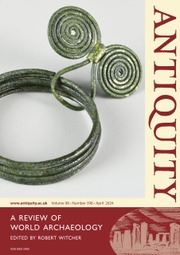
The British Museum’s double volume The Snettisham hoards, edited by Julia Farley and Jody Joy, offers the long-awaited complete publication of the largest concentration of Iron Age torcs in Britain and beyond. It covers a wide range of aspects related to finds made on the so-called Snettisham gold field in Norfolk, where over the past 60 years more than 1200 items were unearthed. The artefacts are now kept in the British Museum and Norwich Castle Museum collections. The publication has 710 pages in two volumes, is organised in three parts, which are subdivided into 24 chapters and five appendices, and presents the results of a long-term and in-depth investigation. The integrated interdisciplinary research team comprises around 30 renowned experts, with a wider network of collaborations visible in the extensive acknowledgements. Developing the publishing framework for such wide-ranging contributions is no easy task. The authors address challenging issues about Celtic society, culture, economy, arts and crafts, including function, social meaning and depositional practices of Iron Age metalwork, with special attention paid to torcs and coins. The double volume is available as a print version, and free PDF version online in the British Museum online research repository.
Since the first finds in the second half of the previous century, the Snettisham hoards have been only partly published and the most spectacular torcs are highlighted in publications on Celtic art and culture. Some selected and more specific typological, technological and analytical aspects of the Snettisham finds have also been considered in previous research, and these findings are incorporated into the new full presentation of the site.
The two volumes deliver access to a comprehensive scientific study with a huge and well-structured data collection on the exceptional metal assemblages. The level of detail is remarkable and the high-quality documentation supporting images is excellent. The same applies to the clear terminology in the various scientific fields. The subject areas include, among others, field archaeology, history of discovery, conservation, typology, Celtic art, numismatics, technology and archaeometry. The clearly noted references to the extensive bibliography, as well as connections to comparative finds or images are useful and allow for quick consultation. In addition, the wide-ranging index, listings, charts, diagrams and concordance with previous publications or inventories provide easy access and help to navigate the text. The book has excellent production values with a clear layout and lavish illustrations. The graphic documentation is informative, including maps, technical sketches and object photographs of various magnification, besides several kinds of SEM and x-ray images. Furthermore, Chapter 21 benefits from numerous excellent drawings related to discussed objects and Celtic art details.
The site’s history and its finds (Parts I and II)
The first volume is in two parts. Part I considers, in a diachronic perspective, the Snettisham field as excavation site, the history of discoveries and the chronological sequence of its occupation, from the Neolithic to post-medieval. The first finds on the site were made in 1948, followed by surveys and several excavation campaigns, in particular the British Museum excavations under the direction of Ian Stead in 1990–1992, when most of the 14 metalwork hoards were uncovered. Apart from insights in the excavation practices, it is remarkable that detailed features were recorded showing that each assemblage has a particular depositional order per hoard, illustrated by coloured overlay drawings of each torc’s stratigraphy in the pits (Chapter 12). The extraordinary Iron Age metalwork from Snettisham made in gold, silver or copper-based alloys, with iron and organic core materials, comprises an outstanding amount of annular neck and arm ornaments, associated with Celtic and Roman coins, ingots, a fragmented bronze helmet and other artefacts. This large and fine metalwork assemblage is the most important of its kind in the European Iron Age. Part II is dedicated to Iron Age metalwork, and delivers a useful, comprehensive, illustrated and annotated catalogue of all metallic artefacts from the site (Chapter 14), followed by a contribution dealing with the detailed study of Late Iron Age and Roman coinage (Chapter 15).
The torcs (Part III)
The second volume, Part III, includes the discussion and interpretation as well as several further topics concerning Celtic torcs, and their scientific analyses. Outcomes of thorough investigations in conservation, manufacturing processes and archaeometallurgy are drawn together in Chapters 16–18, including compositional analyses of objects from the first three hoards in Norwich Castle Museum. Informative and well-argued technical observations are particularly developed in Chapter 17, furthermore, manufacturing details are also pointed out in catalogue descriptions and in torc biographies (Chapters 14 & 20). The organic components in the metalwork are investigated in Chapter 19. Chapter 20 develops the torc biographies along with function, use and other aspects of the chaîne opératoire from creation until deposition. Celtic art matters are discussed and clearly illustrated in the light of the decorated metalwork from the hoards (Chapters 20 & 21). This is followed by an overview of metal torcs from Iron Age Britain with comparable features to the Snettisham torc types (Chapter 22), collecting and listing multistrand and tubular torcs made in bronze, precious metals and iron, from 65 British Iron Age sites. In addition, Late Iron Age types and the distribution of gold torcs from Ireland and the continent are considered, with emphasis on tubular examples. Chapter 23 enlightens the interpretation of function and use as well as the socioeconomic meaning of the deposition of metal objects and coins in the Late Iron Age.
Research outcomes
The comprehensive artefact catalogue considers for the first time the entire spectrum of findings. It reveals that open and closed annular ornaments comprise a large range of complete and fragmented precious metal and bronze arm and neck rings belonging to various stylistic and technical groups, with more than 60 complete or near-complete torcs along with hundreds of fragments. The size of ring diameter, from small arm rings up to large neck rings is variable (fig. 22.7), however, the small diameter of the major part of torcs suggest that they may have been worn by women. The chronological sequence in torc production and deposition in Snettisham refers to c. 360–60 BC, with an increase in deposition activities including coins in the first century BC (pp.558–61; tab. 22.23).
The majority of torcs are part of a very specific group of open torcs, more precisely twisted multistrand wire torcs with a large variety of terminals (ring or loop shaped, buffer, reel, torus, cage or decorated sheet; p.150 fig. 13.3), with technically very demanding and aesthetically appealing variants. They vary in number, size and manufacture of utilised wires or rods. Cables are composed of several strands, counting from only two thick rods up to 64 thin individual wires as exemplified by the Great Torc (E.1a). Several torcs, such as the so-called Great and the Grotesque torc (L.19a) among others, are particularly sophisticated and the precision of the multistrand wire work is stunning. Such complex wire constructions and the specific terminals are not common on the continent, where twisted wire torcs appear in more simple creations, perhaps with the exception of some multistrand silver and gold torcs from Late Iron Age hoards in Iberia (Museo Arqueológico Nacional 2002: 257–67).
An unfinished example from Snettisham, a stray find twisted torc with loop-shaped terminals, still has a protrusion, which can be identified as sprue, resulting from casting on, and delivers evidence for a workshop or scrap material on the site, as also presumably the large number of fragments. The wires used in Snettisham display a technological range in perfected twisting, coiling and wrapping around a core material, as well as a variety of surface colours. Furthermore, organic core material was identified as charred wood in multistrand torcs. Wooden remains in fine metal work are seldom documented but were apparently an integral part, included during manufacturing when wires and ropes were coiled around a core of bent wooden twigs (p.445). Such wooden cores used as support for forming processes and keeping the hollow shape of metal ornaments stable are also found in the ornament manufacturing in Iron Age contexts from France (Mulot et al. Reference Mulot, Binggeli, Charrie-Duhaut, Tegel, Higelin, Mulot and Béhague2022).
Less frequent in Snettisham are closed tubular torcs with double wheel-shaped terminals and locking system, which have an inserted iron rod core surrounded by a filling material (wax and a mineral mix) for stabilisation. Three large, complete tubular torcs, and fragments of two more, including iron core elements, stem from the first located hoard A (A.1-A.6; pp.159–68) and a smaller version was found in hoard F (F.63-66). These torcs are similar to continental examples and their internal structural elements are revealed by x-ray radiography and surviving iron cores (Armbruster et al. Reference Armbruster, Török and Giumlia-Mair2021: 426). Christiane Eluère published technical details of several continental tubular gold torcs bearing similar iron cores, showing four iron bars from Snettisham in comparison (Eluère Reference Eluère1987: fig. 7). Since then, more torcs with iron cores appeared in Late La Tène period assemblages, at least seven of a dozen tubular torcs from the Le Câtillon hoard, Jersey, still contain their iron cores and in some cases the filling substance (Armbruster et al. Reference Armbruster, Blet-Lemarquand, Nieto-Pelletier, Magnusson, Karlsson, Hjärtner Holdar and Giumlia-Mairin press). In the Warlincourt hoard, Pas-de-Calais, which was recently acquired by the French National Museum for Archaeology (Saint-Germain-en-Laye) fragments of at least four tubular torcs and a tubular bangle with preserved iron cores and filling material are found together (Armbruster & Olivier in preparation). Among them are cases with serial punch marks at the inner ring side, similar to the punch marks on the tubular torcs A.1, A.2 and A.3 (pp.162–66).
With regards to these torcs, the reviewer would like to offer a possible technical explanation concerning the manufacturing of hollow terminals of tubular torcs, that has so far not been taken into consideration. A look inside the torc terminal A.6 shows a mottled surface texture, this is proposed to be achieved by hammering gold sheet over a soft material like wood (pl.14.5; p.168). Another reviewer discards this hypothesis and rather takes it to be a proof that Celtic goldsmiths worked with the Japanese uchidashi technique (similar to chasing in three dimensions) (Machling Reference Machling2024). Indeed, this kind of torc terminal is shaped from the outside, but the uchidashi interpretation gives a misleading impression. This kind of inside texture emerges when fine metal sheet is undergoing an important plastic deformation by pressure from the outside over a non-metallic support material, for instance during chasing or shaping on a spinning lathe. This is the case with similar Late La Tène period terminals of continental tubular torcs that have the shape of a perfect hollow turned body (Nordez et al. Reference Nordez, Garcia Diaz, Villa Valdes, Valdes, Cicolani and Hiriart2023: 29 & fig. 5c; Armbruster et al. Reference Armbruster, Blet-Lemarquand, Nieto-Pelletier, Magnusson, Karlsson, Hjärtner Holdar and Giumlia-Mairin press). That means transforming a thin, closed sheet cylinder on the rotation axis of a spinning lathe. The cylinder is pressed into the relief of a wooden chuck with the desired shape by using antler or bone tools while spinning. The wooden chuck is previously turned on the lathe and finally eliminated by slow burning. The origin of metal spinning for the forming of hollow barrel, wheel or cylinder-shaped gold ornaments goes back to the production of Hallstatt period closed annular neck and arm rings in Germany, France and Switzerland. This advanced forming technique might also have been applied to the continental type torc terminals from Snettisham, which the reviewer did not see under the microscope.
Up-to-date material science methods were applied to characterise alloy composition, imaging and documentation, as well as to approach the chaîne opératoire of manufacturing processes, use wear, repair, fragmentation or nature of destruction. The majority of the technological and analytical studies of precious metal objects in Part III concern selected material from hoard F. However, the annotated catalogue entries and the torc biographies also contain comments on manufacturing of a wider range of examined objects. The detailed archaeometric studies of selected ornaments and fragments from Snettisham were executed mainly in the Department of Scientific Research at The British Museum. Optical studies were conducted by optical microscopy at several levels, metallographic and scanning electron microscopy (SEM) as well as high voltage x-radiography, resulting in an efficient and precise visual documentation providing excellent insights in surface topography, tool marks, internal structures, object construction and repair. In addition, SEM backscattered electron and metallographic imaging are used for instructively visualising the elemental x-ray distribution maps of polished and etched metallographic sections to scrutinize alloy structures and effects of surface treatment. Surface analyses were carried out by scanning electron microscopy with energy dispersive x-ray microanalysis (SEM-EDX) and x-ray fluorescence analysis (XRF). For alloy characterisation these methods can only deliver precise information about the chosen alloy provided that the surface was cleaned from corrosion or depletion, or if samples for polished metallographic sections are available (tab. 17.5). Most results on the precious metal find are reduced to major elements (Au, Ag, Cu), whereas on copper-based alloy objects 12 elements are listed (tab. 18.1). Trace elements and platinum group elements (PGE) are not considered for the precious metal objects, except for one remark on an easily visible osmium-iridium inclusion on a stray find (S.13; p.319).
The Snettisham metal work did not profit from the innovative, minimal invasive laser ablation method (LA-ICP-MS) for the characterisation of major and trace elements, on and below the surface. Laser ablation inductively coupled mass spectrometry, a highly sensitive analytical tool surmounting the limitations of traditional techniques, was introduced in the past decade for gold and silver studies, including Iron Age artefacts, and developed in French, German and Dutch archaeometry laboratories in Orléans (IRAMAT), Mannheim (CEZA), Bochum (DBM) and Amsterdam (VU) (Blet-Lemarquand et al. Reference Blet-Lemarquand, da Mota, Gratuze, Leusch, Schwab, Milcent, Armbruster and Pernicka2018: 106–28; Nordez et al. Reference Nordez, Garcia Diaz, Villa Valdes, Valdes, Cicolani and Hiriart2023: 25–27). More recently, portable laser ablation instruments (pLA-ICP-MS) have allowed for accurate analytical data even in museum collections (Merkel et al. Reference Merkel, D’Imporzano, van Zuilen, Kershaw and Davies2022). This might be a possibility for future research on precise elemental composition for raw material provenance and comparison with analytical data of continental gold work (e.g. the Celtic Gold project). This method also allows for the characterisation of solder alloys that must have a higher copper content for lowering the melting point compared to the metal parts to be joined. Analyses of solder composition are lacking for Snettisham, except for one case (A.7, p.170).
The importance of different colours related to the elemental composition of ternary gold, silver and copper alloys is highlighted (pp.444–53), questioning intentional surface treatments in order to change colour or for economic saving of precious material or aesthetic reasons. Surface enrichment practices are clearly shown by SEM and optical metallographic images of polished sections using elemental x-ray distribution maps for gold, silver and copper of the copper-rich or copper-silver-rich core alloys and the gold or silver enriched surfaces, with evidence of depletion of copper or silver contents. Instructive experiments were conducted for surface depletion on wires (Chapter 17). Furthermore, mercury gilding on bronze items, probably the first occurrence in the Late Celtic world, is pointed out (p.450). Another early example of a bronze artefact with mercury amalgam gilding can be added here from the Le Câtillon II hoard, Jersey (Armbruster et al. Reference Armbruster, Blet-Lemarquand, Nieto-Pelletier, Magnusson, Karlsson, Hjärtner Holdar and Giumlia-Mairin press). This unique piece in the huge coin and ornament hoard from the mid-first century BC, is a small version of a tubular torc with attached double wheel-shaped terminals and a locking system.
The methodology of the technological investigations integrates complementary techniques for the visual examination of manufacturing details and defects, such as tool marks, surface topography, microstructure textures or breaks. Some gratifying experimental archaeology—in particular for various wire production by plastic shaping and surface enrichment by annealing and pickling—is set out in Chapter 17. These experiments, however, do not consider the whole complexity of craftsmanship attested in Snettisham.
Conclusion
Based on the excellent visual documentation provided, the arguments put forward and the interpretation of the technological details are very sound; from the perspective of the reviewer, a trained goldsmith and archaeologist who gained new insights into British torc making while reading the publication. The examination of the original objects in laboratory conditions reveals that nearly the whole technical repertoire of Iron Age goldsmiths in Europe is represented, including heat-based technologies, such as melting, alloying, casting, annealing, joining by casting-on, soldering and gilding. Cold working techniques of plastic shaping are present for making and forming sheet, rods and wires, for decoration by chasing, punching and tracing, as well as for cold joining by riveting, folding, plugging or interlacing. Filigree decorative elements appear to be extremely rare (torc A.1 and wire ring A.7), while granulation and gilding silver by diffusion bonding are absent. This is different from continental Iron Age fine metal working that adopted these decorative techniques through Mediterranean influence.
To sum up: the wait was worth it. The well-edited double volume is indispensable for learning about the exceptional site with multiple deposits, deposition customs and torcs in Britain. The Snettisham hoards is also an unprecedented in-depth work in analyses, description and illustration of the multifaceted art of Celtic fine metal workers, their technical know-how, design and material choices. This solid English-language resource on archaeology and art of the Late Iron Age research highlights the interdisciplinary methodology that crosses multiple approaches.
The quality of the integrated specialist contributions and the illustrations certainly position the Snettisham volumes among the ‘must-have’ works for any library, scholar or amateur interested in Celtic culture and metalwork. My sincere congratulations to all involved in this huge project.

 Open access

