


CVD is the leading cause of death in the USA, accounting for one in every 2·8 deaths(Reference Rosamond, Flegal and Furie1). With an ageing population, the prevalence is predicted to double by 2050(Reference Foot, Lewis and Pearson2). CVD is also expected to have an increasing detrimental effect in other nations throughout the world(Reference Callow3). Rates of CVD and stroke are projected to triple in Latin America and sub-Saharan Africa in the next two decades(Reference Callow3).
Peanuts and tree nuts are increasingly recognised for their role in CVD risk reduction, as acknowledged by a Food and Drug Administration qualified health claim in 2003(4). Epidemiological studies estimate an approximate 35 % reduction in the incidence of CVD in the highest nut-consuming groups(Reference Fraser, Sabaté and Beeson5–Reference Kris-Etherton, Hu and Ros8). Multiple components of peanuts including arginine, folate, tocopherols and fatty acids probably mediate their cardioprotective effects.
Clinical studies indicate that tree nuts, with most of the evidence derived from almonds and walnuts, reduce LDL-cholesterol (LDL-C) by 3–19 % compared with reference diets, including habitual, lower fat and average American diets(Reference Griel and Kris-Etherton9). Reductions of up to 11 % in total cholesterol and 14 % in LDL-C have been reported for peanut interventions compared with similar reference diets(Reference O'Byrne, Knauft and Shireman10–Reference Lokko, Lartey and Armar-Klemesu12). Consistent with a more general literature(Reference Anderson, Spencer and Hamilton13–Reference Romero, Romero and Galaviz16), the degree of reduction in plasma cholesterol concentrations in response to peanut consumption is inversely related to baseline concentrations(Reference Kris-Etherton, Pearson and Wan11).
While promoting improved lipid profiles, nut consumption has limited impact on body weight(Reference Mattes, Kris-Etherton and Foster17). Epidemiological studies reveal either a negative association or a lack of association between nut consumption and BMI(Reference Fraser, Sabaté and Beeson5–Reference Albert, Gaziano and Willett7). Clinical studies support a lack of association under a variety of conditions(Reference Mattes, Kris-Etherton and Foster17), and may actually aid weight loss through improved dietary compliance(Reference McManus, Antinoro and Sacks18). Because central obesity is an independent risk factor for CVD, and weight loss leads to a reduction in disease risk(Reference Sowers19), moderate consumption of nuts may be a functional component in a cardioprotective diet(Reference Van Horn, McCoin and Kris-Etherton20).
Clinical intervention studies exploring the effects of nuts on CVD risk and body weight have used natural, unprocessed nuts; lightly salted, roasted nuts; or an unspecified nut variety. Since numerous flavours and forms of nuts are currently available on the market, questions have arisen as to whether processing properties (e.g. grinding to butter, roasting and boiling) and the addition of flavours (e.g. salt, spices and sugar) may alter the health effects(Reference King, Blumberg and Ingwersen21). For example, grinding nuts into butter form ruptures the parenchymal cell walls that encapsulate the intracellular components(Reference Ellis, Kendall and Ren22). While the complete effects of this alteration in nut form remain unknown, it results in significantly less faecal fat, protein and tocopherol losses compared with the whole nut form(Reference Levine and Silvis23, Reference Traoret, Lokko and Cruz24). Furthermore, concerns have arisen as to the possible adverse effects of the addition of hydrogenated oils to peanuts to prolong shelf life. Because hydrogenated fats are potential sources of trans fats, which have detrimental effects on plasma lipids and CVD risk(Reference Mensink, Zock and Kester25, Reference Mozaffarian, Katan and Ascherio26), the addition of hydrogenated fats during processing could compromise the cardiovascular health benefits associated with nut consumption. Analyses of common peanut butter brands reveal non-detectable levels of trans fats in the brands analysed(Reference Sanders27), but concerns persist. Limited evidence also indicates that the modification of rheological properties during processing may alter the satiety properties of nuts(Reference Kirkmeyer and Mattes28) with possible implications for energy balance.
The primary aim of the present study was to determine whether the form, flavour and processing of peanuts alter the fasting plasma lipid profile and body weight response to their consumption over a 1-month intervention period. Peanuts were used as the test nut as they are the most commonly consumed nut (actually a legume) in the USA, and are available in many flavours and forms(Reference He, Fletcher and Rimal29). Based on evidence that greater effects may be observed in individuals with the greatest baseline cholesterol concentrations, differential responses between normolipidaemic and hyperlipidaemic individuals were explored.
Methods
Participants
A total of 120 participants from three countries (Brazil, Ghana and the USA) participated in this multi-centre trial. Forty participants were recruited at each site. Eligibility criteria included stable weight (no deviations >2·5 kg over the prior 3 months); BMI ≥ 25 kg/m2; pre-menopausal; having no known lipid disorders or other acute or chronic diseases; using no prescription medications apart from birth control; and having no nut allergies. The final sample included 118 participants (forty-seven males and seventy-one females; age 29·2 (sd 8·4) years; BMI 30·0 (sd 4·5) kg/m2; Table 1), as the final outcome measures from two participants in Ghana were not available for analyses. The present study was conducted according to the guidelines laid down in the Declaration of Helsinki, and all procedures involving human subjects/patients were approved by human research review boards at each location. Written informed consent was obtained from all the subjects/patients.
(Mean values and standard deviations)
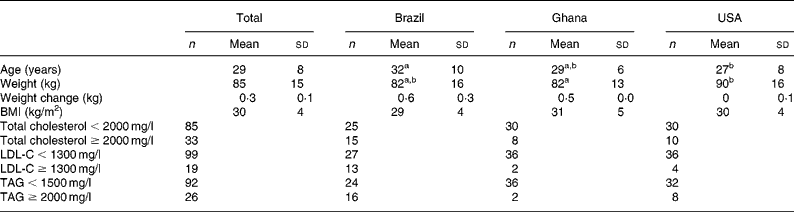
LDL-C, LDL-cholestrol.
a,b Mean values for age and weight within a row with unlike superscript letters were significantly different from each other (P < 0·05).
Experimental design
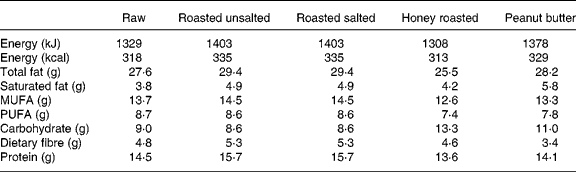
The study used a parallel group experimental design. Participants were sequentially assigned to incorporate 56 g (2 oz) of one of five peanut forms into their diet daily for 4 weeks. Each country distributed the participants into five groups with eight people per group. The five peanut forms were whole raw unsalted, whole roasted unsalted, whole roasted salted, whole honey roasted peanuts, and peanut butter. The daily energy and nutrient composition of each treatment are presented in Table 2. Participants were allowed to consume the peanuts/peanut butter at any time of the day and in any manner they chose, but they were requested to restrict consumption of all other nut products during the intervention period. No additional dietary instructions were provided. To ensure consistency across the research sites, all peanuts and peanut butter were provided by a single site (USA). Participants collected their daily peanut rations at the research site, pre-weighed and labelled, on a weekly basis.
Mean energy and nutrient composition of 56 g of raw unsalted, roasted unsalted and roasted salted, honey roasted peanuts, and peanut butter
Anthropometrics
After a 10 h overnight fast and after voiding, body weight was measured ( ± 0·1 kg) using calibrated scales (model TBF-305; Tanita, Arlington Heights, IL, USA), with participants wearing no shoes and a light gown, at baseline and post treatment (week 4). Standing height was measured ( ± 0·1 cm) using a wall-mounted stadiometer (Holtain Limited, Crymych, Dyfed, UK). To allow sub-group analyses, participants were classified, according to BMI, into overweight (BMI 25–29·9 kg/m2; n 72) and obese (BMI ≥ 30 kg/m2; n 46) categories. Participants were requested to maintain their customary activity levels during the study period, so any changes in body weight were presumed to be due to the dietary intervention.
Fasting plasma lipids
After a 10 h overnight fast, 6 ml of blood were collected at baseline and post-treatment into vacutainers containing EDTA. The samples were immediately placed on ice, and were then centrifuged (3000 rpm × 15 min at 4 °C), separated and stored at − 80 °C until analyses. Samples were analysed in duplicate for total cholesterol, LDL-C, HDL-cholesterol (HDL-C) and TAG concentrations using an automated clinical chemistry analyser (COBAS Integra 400, Roche Diagnostic Systems, Branchburg, NJ, USA).
The ratios of total cholesterol to HDL-C, HDL-C to LDL-C and TAG to HDL-C were calculated based on evidence that the ratios of these lipids may be more important and more robust predictors of CVD risk than any lipid fraction alone(Reference Fernandez and Webb30, Reference Da Luz, Favarato and Faria-Neto31).
Due to evidence indicating that plasma lipid responses to cholesterol-lowering interventions may be greatest in individuals with the highest baseline lipid concentrations(Reference Kris-Etherton, Pearson and Wan11), participants were categorised based on baseline total cholesterol, LDL-C and TAG concentrations to allow sub-group analyses. The total cholesterol groups were classified as normal (total cholesterol concentrations < 2000 mg/l; n 85) or high (total cholesterol concentrations ≥ 2000 mg/l; n 33); LDL-C groups as normal (LDL-C concentrations < 1300 mg/l; n 100) or high (LDL-C concentrations ≥ 1300 mg/l; n 18); and TAG groups as normal (TAG concentrations < 1500 mg/l; n 92) or high (TAG concentrations ≥ 1500 mg/l; n 26)(32).
Dietary intake
Three-day food records (two non-consecutive weekdays and one weekend day) were recorded at baseline and during weeks 2 and 4 of the intervention. Training was provided on the method for estimating food portion sizes using food models. Food records were reviewed with participants once they were completed to clarify details and obtain any additional information deemed necessary. Each study site analysed the food records using country-specific nutrient databases, focusing specifically on the daily intake of energy, total fat, carbohydrate and protein. In addition, US food records were analysed for SFA, MUFA, PUFA, cholesterol, total dietary fibre, soluble fibre, insoluble fibre, total α-tocopherol, folate, Mg and arginine.
Peanut form palatability
At baseline and post treatment, each of the five peanut forms, weighing between 1·38 and 1·42 g, was sampled in a randomised order and rated for palatability on a hedonic scale end anchored with ‘not at all palatable’ and ‘extremely palatable’. Participants rinsed thoroughly between samples. The mean palatability of the peanut form consumed daily during the intervention period was compared with the mean palatability of the other four non-intervention peanut forms to assess the impact of frequency of consumption on palatability ratings.
Appetite ratings
An additional component of the US study required participants to record the subjective sensations of hunger, fullness, desire to eat, desire to eat something sweet, desire to eat something salty, prospective consumption and thirst on visual analogue scales (developed by W. Horn) on personal digital assistants. The scales were end anchored with ‘not at all’ and ‘extremely’. Each scale was completed every waking hour for 24 h during one weekday of baseline and weeks 2 and 4 of the intervention. The day of the week on which the recordings were made was held constant for each participant.
Statistical analyses
Statistical analyses were performed using SPSS (version 16.0, SPSS Inc., Chicago, IL, USA). Treatment effects were tested by repeated-measures ANOVA, with time as the within-subject factor and peanut form as the between-subject factor. Country was not entered as a between-subject factor in the final analyses because there were no significant differences between them with respect to the main outcome variables. Sub-group analyses were conducted for sex, BMI and lipid categories using the grouping variable as the between-subject factor in a repeated-measures ANOVA and time as the within-subject factor. Paired t tests were performed for post hoc analyses with the Bonferroni adjustment when the main effects were significant. A significance level of P < 0·05, two-tailed, was set as the criterion for significance. All data are expressed as mean values and standard deviations.
Results
Body weight/BMI and sex
Independent sample t tests revealed no statistically significant BMI/body weight or sex effects within any of the groups for the main outcome measures. There were no significant differences between peanut form groups at baseline with respect to body weight (84·6 (sd 15·2) kg). There was also no significant time or time × peanut form interaction with respect to change in body weight following the intervention. Mean body weight at the end of week 4 was 84·9 (sd 15·1) kg.
Dietary intake
Total daily energy intake did not change significantly between baseline and post treatment (Fig. 1). Total fat intake increased significantly (F(1,112) = 41·6, P < 0·01), carbohydrate intake decreased significantly (F(1,112) = 12·7, P < 0·01) and protein intake increased significantly (F(1,112) = 5·9, P = 0·02) from baseline (Fig. 1). There were no significant differences between the peanut form groups with respect to changes in total daily energy intake or intake of the macronutrients.
Changes in daily total energy and macronutrient intakes (as kJ/d) from baseline for the total group (n 118). Values were represented ass means and standard deviations. * Mean values were significantly different from baseline (P < 0·05).

In the US sample, there were significant increases in MUFA (F(1,35) = 26·1, P < 0·01), PUFA (F(1,35) = 6·5, P = 0·02), fibre (F(1,35) = 13·4, P < 0·01), folate (F(1,35) = 13·7, P < 0·01) and arginine (F(1,35) = 22·8, P < 0·01) intakes relative to baseline (Table 3). There was a trend towards a significant increase in total α-tocopherol, but this just failed to reach statistical significance (F(1,35) = 3·9, P = 0·06). There was no significant change in SFA intake.
(Mean values and standard deviations)

* Mean values were significantly different from baseline (P < 0·05).
Plasma lipids
Baseline measurements of total cholesterol were significantly higher in the roasted unsalted group than in the peanut butter group (P = 0·01; Table 4). There were no significant differences in LDL-C, HDL-C or TAG concentrations at baseline between treatment groups. Furthermore, baseline measurements of total cholesterol:HDL-C, HDL-C:LDL-C and TAG:HDL-C ratios did not differ significantly between peanut form treatment groups.
(Mean values and standard deviations)

a,b Mean values within a column with unlike superscript letters were significantly different from each other and lipid category (P < 0·05).
* Mean values were significantly different from baseline (P < 0·05).
In the full sample, total cholesterol and LDL-C concentrations did not change significantly from baseline to post treatment (Table 4). HDL-C concentrations increased significantly from baseline (F(1,113) = 6·9, P = 0·01). Mean serum TAG concentrations decreased by 5 % from baseline to post treatment, but these failed to reach statistical significance (F(1,113) = 1·6, P = 0·21). The total cholesterol:HDL-C ratio did not change significantly from baseline to post treatment. There was a trend towards an increase in the HDL-C:LDL-C ratio (F(1,113) = 2·8, P = 0·097). The TAG:HDL-C ratio decreased significantly from baseline to post treatment (F(1,113) = 4·1, P = 0·04).
There were no significant differences between peanut form treatment groups with respect to changes in total cholesterol, LDL-C, HDL-C or TAG concentrations. No significant treatment group differences were noted in the change in total cholesterol:HDL-C, HDL-C:LDL-C or TAG:HDL-C ratios.
Sub-group analyses revealed a significant time × lipid category interaction for total cholesterol and LDL-C concentrations (Fig. 2). Individuals in the high total cholesterol group ( ≥ 2000 mg/l) had significantly greater decreases of total cholesterol and LDL-C concentrations than individuals in the normal total cholesterol group (F(1,116) = 6·6, P = 0·01 and F(1,116) = 6·2, P = 0·02, respectively). Individuals with high LDL-C concentrations had significantly greater decreases of total cholesterol and LDL-C concentrations than individuals with normal LDL-C concentrations (F(1,116) = 13·9, P < 0·001 and F(1,116) = 14·1, P < 0·001, respectively). Individuals with elevated baseline TAG concentrations had significantly greater decreases of TAG concentrations relative to individuals with normal TAG concentrations (F(1,116) = 9·6, P < 0·01).
Changes in (a) total cholesterol (Total-C), (b) LDL-cholesterol (LDL-C) and (c) TAG from baseline for the total group and according to lipid subgroups. Values were represented ass means and standard deviations. (a) * Mean values were significantly different from normal Total-C group (P < 0·05). (b) * Mean values were significantly different from normal LDL-C group (P < 0·05). (c) * Mean values were significantly different from normal TAG group (P < 0·05).

The lipid subgroups did not differ significantly with respect to baseline body weight, change in body weight, or change in total daily energy, protein, fat or carbohydrate intake. However, the individuals classified as having high total cholesterol were significantly older than individuals with normal total cholesterol (28 (sd 7) and 33 (sd 10) years, respectively, P < 0·05). Similarly, individuals classified as having high LDL-C concentrations were significantly older than individuals with normal LDL-C concentrations (28 (sd 7) and 34 (sd 11) years, respectively, P < 0·05).
Appetite ratings
Self-reported hunger, fullness, desire to eat, desire to eat something sweet or salty, prospective consumption and thirst ratings did not change significantly with time. Furthermore, there was no time × peanut form interaction for any of these variables.
Peanut form palatability
While peanut butter was rated as the most palatable (78 (sd 20)) form and raw peanuts were rated as the least palatable (34 (sd 24)) form, there were no significant differences in palatability between the nut treatments at baseline. Honey roasted, roasted salted and roasted unsalted peanuts were rated at 75 (sd 22), 73 (sd 15) and 60 (sd 18), respectively. The palatability ratings of the nuts consumed daily during the intervention decreased with time, but not significantly (mean rating at baseline: 70 (sd 23); mean rating post treatment: 65 (sd 25)). Furthermore, there was no significant time × peanut form interaction for this variable. The rate of change in palatability ratings was not significantly different between the nuts consumed daily during the intervention and the other four nuts that were not consumed daily.
Discussion
Epidemiological and clinical evidence support a beneficial effect of nut consumption on CVD risk factors, in particular plasma lipid concentrations(Reference Kris-Etherton, Hu and Ros8, Reference Griel and Kris-Etherton9, Reference Mukuddem-Petersen, Oosthuizen and Jerling33). Benefits are achieved while having a limited impact on body weight(Reference Mattes, Kris-Etherton and Foster17). However, the evidence supporting this association is mainly derived from unprocessed nuts, and changes introduced during processing have been hypothesised to alter these findings(Reference King, Blumberg and Ingwersen21). The present study suggests that processing, specifically the addition of flavours, grinding to butter and roasting, does not alter the lipid-lowering effects of peanuts. Significant lipid-lowering effects were observed in hyperlipidaemic individuals with all peanut varieties. Furthermore, these benefits were achieved without altering body weight status.
In the present study, significant reductions in total cholesterol, LDL-C and TAG concentrations were observed when hyperlipidaemic individuals consumed 56 g of whole raw, roasted unsalted, roasted salted or honey roasted peanuts, or ground peanut butter daily for 4 weeks. There were no significant differences between the peanut treatments with respect to these lipid-lowering responses despite differences in processing such as grinding and roasting before consumption. Overall, total cholesterol decreased by 3 % (74 mg/l), LDL-C decreased by 10 % (150 mg/l) and TAG concentrations decreased by 13 % (290 mg/l) from baseline. O'Byrne et al. (Reference O'Byrne, Knauft and Shireman10) reported greater reductions in total cholesterol and LDL-C in hyperlipidaemic women following peanut consumption, with concentrations decreasing by 10 and 12 %, respectively. However, the peanuts used in that study were enriched with oleic acid, containing 60–70 % more than other commercially available varieties of peanuts. Also differences in the contribution of dietary SFA to total daily energy intake may account for the disparities in the reported cholesterol-lowering effects. In the study by O' Byrne et al. (Reference O'Byrne, Knauft and Shireman10), SFA contributed 5 % to total energy intake in contrast to 12 % in the present study. Since a direct, positive, dose-dependent relationship exists between SFA and plasma total cholesterol and LDL-C(Reference Van Horn, McCoin and Kris-Etherton20), the differences in dietary SFA likely account, at least partially, for the differences observed. The cholesterol-lowering effects in the present study are, thus, predicted to be even greater if accompanied by a lower SFA diet.
While the unsaturated fatty acid profile of nuts (high MUFA and PUFA) is thought to mediate the majority of the favourable effects on plasma lipids, other components such as fibre and phytosterols may also contribute(Reference Kris-Etherton, Hu and Ros8, Reference Griel and Kris-Etherton9). Furthermore, in the present study, the lower TAG concentration may stem from the spontaneous reduction in carbohydrate intake when the peanuts were added to the diet. Reductions in carbohydrate intake are associated with decreases in TAG concentrations(Reference Appel, Sacks and Carey34), and thus, the decreases in carbohydrate intake reported may have had an independent effect on lipid concentrations. It is estimated that a 370 mg/l (1 mmol/l) reduction in total cholesterol and LDL-C results in 24–28 % decreases in the relative risk of CHD mortality(Reference Gould, Davies and Alemao35), and that an 880 mg/l (1·0 mmol/l) decrease in TAG is associated with a 14–37 % reduction in overall CVD risk(Reference Cullen36).
In contrast to the hyperlipidaemic individuals, no significant changes in plasma lipids were observed in the individuals with normal lipid concentrations. This is in contrast to a peanut intervention study that reported a 12 % reduction in total cholesterol and a 10 % reduction in LDL-C in normocholesterolaemic individuals consuming whole peanuts and peanut butter for 24 d(Reference Kris-Etherton, Pearson and Wan11). In that study, MUFA from peanuts were substituted for SFA, resulting in a decrease in the contribution of SFA to the total daily energy intake from 16 to 7 % during the peanut intervention(Reference Kris-Etherton, Pearson and Wan11). However, in the present study, no substitutions were made, and SFA intake levels did not change from baseline and were maintained at 12 % of total daily energy intake during the intervention. A similar study also failed to report significant changes in total cholesterol or LDL-C following a peanut intervention trial in normocholesterolaemic individuals when the contribution of SFA to the diet remained relatively stable at 10 % of total daily energy intake(Reference Alper and Mattes37). These findings indicate that a simultaneous reduction in SFA and an increase in MUFA may be necessary to elicit changes in plasma lipids in normolipidaemic individuals with peanut consumption. However, of note, the reductions observed by Kris-Etherton et al. (Reference Kris-Etherton, Pearson and Wan11) among normocholesterolaemic individuals were greater in those with the highest concentrations at baseline. This is consistent with the present findings and with several reports from other lipid-lowering dietary interventions with foods such as oats(Reference Anderson, Spencer and Hamilton13–Reference Romero, Romero and Galaviz16).
The present study supports the findings from epidemiological and clinical studies reporting that peanut consumption has limited effects on body weight(Reference Fraser, Sabaté and Beeson5, Reference Ellsworth, Kushi and Folsom6, Reference O'Byrne, Knauft and Shireman10, Reference Lokko, Lartey and Armar-Klemesu12, Reference Hu, Stampfer and Manson38, Reference Alper and Mattes39). However, the results extend beyond these findings to indicate that neither peanut form nor flavour affects this outcome measure. Consumption of four different flavours of whole peanuts or peanut butter at a level of approximately 1363·9 kJ/d (mean daily energy contributed from the five peanut treatments) for 4 weeks did not cause any significant changes in body weight. The mean theoretical weight gain due to the peanut intervention was calculated to be 1·2 kg over the 4-week period assuming no compensation. As the mean change in body weight was 0·3 (sd 0·1) kg, a strong compensation for the peanut energy load is indicated. The lack of effect on body weight could be due to dietary compensation and increased satiety, limited efficiency of absorption of energy from the peanuts or increased energy expenditure(Reference Mattes, Kris-Etherton and Foster17).
Beneficial changes in dietary intake beyond MUFA and PUFA intakes were observed in the present study, as reflected by the US food intake records. Arginine, folate and Mg intakes increased significantly. Since arginine is the precursor of NO, which has many bioactive properties, including vasodilation and reduced platelet aggregation(Reference Wells, Mainous and Everett40), increases in dietary intake may contribute to cardioprotective effects beyond those associated with lipid-lowering. Increasing folate intake may also improve plasma homocysteine status(Reference Weikert, Hoffmann and Dierkes41). Elevated homocysteine concentrations are an independent risk factor for the development of atherosclerosis(Reference Boushey, Beresford and Omenn42), and thus, by functioning as a methyl donor in the conversion of homocysteine to methionine, dietary folate can lower plasma homocysteine concentrations and lower CVD risk(Reference Weikert, Hoffmann and Dierkes41). Increases in Mg intake may afford additional benefits if they translate into increases in plasma Mg concentrations, as the risk of CVD is inversely related to the concentration of plasma Mg(Reference Singh, Gupta and Mittal43, Reference Chakraborti, Chakraborti and Mandal44). The potential mechanisms mediating this beneficial outcome include a reduction in the formation of free oxygen radicals and pro-inflammatory molecules(Reference Chakraborti, Chakraborti and Mandal44). Furthermore, while α-tocopherol intakes only tended to rise, its antioxidant properties, along with those of other antioxidants in nuts, are hypothesised to reduce atherogenic oxidative processes(Reference Blomhoff45, Reference Moskaug, Carlsen and Myhrstad46). A reduction in lipid peroxidation has been noted with peanut consumption(Reference O'Bryne, O'Keefe and Shireman47), and improvements in oxidative markers have also been documented for other nuts(Reference Fitó, Guxens and Corella48, Reference Jenkins, Kendall and Marchie49). The increases in intake of cardioprotective nutrients other than MUFA and PUFA noted in the present study are similar to those reported previously(Reference Alper and Mattes37).
While the present study failed to observe an effect of processing on the lipid-lowering effects of peanuts, future studies are warranted to determine the impact of processing on other CVD risk parameters such as blood pressure, oxidative stress, inflammation, insulin sensitivity and endothelial function. It is plausible that the lipid-lowering effects are maintained, but the overall health effects are altered. Furthermore, while the present research suggests that the addition of salt and sugar, grinding to butter and roasting do not have implications for the short-term lipid-lowering effects of peanuts, the effects of other processing procedures on health outcomes merit investigation, e.g. boiling of peanuts and removal of skin. Boiling of peanuts in water could lead to the leaching out of cardioprotective, water-soluble nutrients(Reference O'Connor50), while removal of the skins of peanuts during processing significantly alters the antioxidant capacity(Reference Blomhoff, Carlsen and Andersen51). The effects of processing on other nut varieties also warrant exploration.
Similar to previous reports(Reference Zandstra, De Graaf and Mela52, Reference Hetherington, Pirie and Nabb53), the present study noted a decrease in palatability ratings over time. However, the hedonic ratings were not significantly different at the end of the intervention compared with baseline. Thus, while a degree of monotony occurred, it was not significant. Alper & Mattes(Reference Alper and Mattes39) reported a similar stability of palatability ratings with daily consumption of peanuts for 8 weeks. This indicates a tolerance of daily nut consumption. Furthermore, given the comparable health effects noted with the different peanut forms, varying the sensory properties may aid regular use without compromising the benefits.
Failure to measure compliance by an objective measure such as changes in erythrocyte membrane fatty acid composition is a limitation of the present research. Furthermore, while food intake diaries are frequently used to estimate food intake in free-living individuals, they are not without error. This technique has been shown to underestimate intakes, especially in obese individuals(Reference Braam, Ocke and Bueno-de-Mesquita54). And while measures were taken to improve accuracy (e.g. participants received education on how to record food intake accurately, and records were reviewed for accuracy with participants), the mean daily energy intakes were more reflective of the energy needs of a normal weight population (approximately 8368 kJ/d) than of those of the present overweight population.
Conclusions
Different forms and flavours of peanuts, when consumed in moderate quantities, lead to a less atherogenic lipid profile in hyperlipidaemic individuals. Such changes may be achieved without significant impact on body weight. The continued high palatability of the peanuts over the trial period suggests that monotony will not be a barrier to regular consumption. The lack of significant country effects also indicates that nut consumption may be a feasible intervention to reduce CVD risk globally.
Acknowledgements
We thank the assistance of William Horn for the development and adaptation of the Appetite Log VAS software (US Department of Agriculture, Agricultural Research Service, Western Human Nutrition Research Center, Davis, CA 95 616, USA). None of the authors have a conflict of interest related to this work of manuscript. R. D. M. contributed to the design and analysis of the study and manuscript preparation, and had primary responsibility for its final content. F. M. contributed to the design, conduct and analysis of the study and manuscript preparation. P. L., A. K., R. L. S., N. M. B. C., J. B. and R. C. G. A. contributed to the conduct and analysis of the study as well as to the manuscript preparation. This research was supported by a grant from the US Agency for International Development Peanut Collaborative Research Support Program #RD309-022/4092094 and FAPEMIG APQ-0957-4.08/07.



