





Structural transformation of the food system is essential for climate change mitigation and adaptation and for improving food system resilience and population health. Despite a growing body of evidence indicating that plant-rich diets provide health and environmental benefits(Reference James-Martin, Baird and Hendrie1,Reference Willett, Rockstrom and Jonell2) , dietary patterns have remained largely unchanged, especially in high-income countries. Globally, around 40% of people do not adhere to recommended national dietary guidelines(Reference Leme, Hou and Fisberg3). In most countries, intakes of plant-based foods (e.g. whole grains, fruits, vegetables and legumes) remain below recommendations, while consumption of livestock products such as red and processed meat exceeds recommendations(Reference Leme, Hou and Fisberg3,Reference Rockstrom, Thilsted and Willett4) .
Dietary choices are shaped by a complex interplay of factors. Culinary traditions play a key role in various cultures and often present substantial challenges for those pioneering and contemplating dietary shifts(Reference Graça, Truninger and Junqueira5), especially for individuals trying to substitute traditionally meat-centric meals – an experience that varies widely depending on individual circumstances. Some successfully adopt plant-based diets (e.g. vegan and vegetarians) but encounter social barriers(Reference Frontier and Lichtenstein6,Reference Markowski and Roxburgh7) , while other individuals struggle with the practical aspects of making these dietary changes effectively. The latter is associated with limited knowledge about nutritional content and health benefits, time, cost or the cooking skills required to prepare healthy and sustainable meals using legumes, nuts and seeds, tofu, tempeh or seitan(Reference Rickerby and Green8–Reference Morren, Mol and Blasch11).
Despite these barriers, some successful population-level dietary shifts have been highlighted in the literature. For example, in the United Kingdom (UK), red and processed meat consumption has decreased by approximately 17%, and the proportion of self-identified vegetarians or vegans has risen by 3% over the past decade(Reference Stewart, Piernas and Cook12). However, these success stories only represent a small proportion of the population. Furthermore, evidence from UK purchasing supermarket data has shown that pathways towards meat reduction are not always associated with healthier and sustainable substitutions. Carr et al.(Reference Carr, Zarate-Ortiz and Reuzé13) identified two consumer clusters, one that shifted towards healthier and sustainable options, while the other cluster had variable substitutions among households, but they generally replaced meat with less healthy snacks such prepared foods, biscuits and cakes.
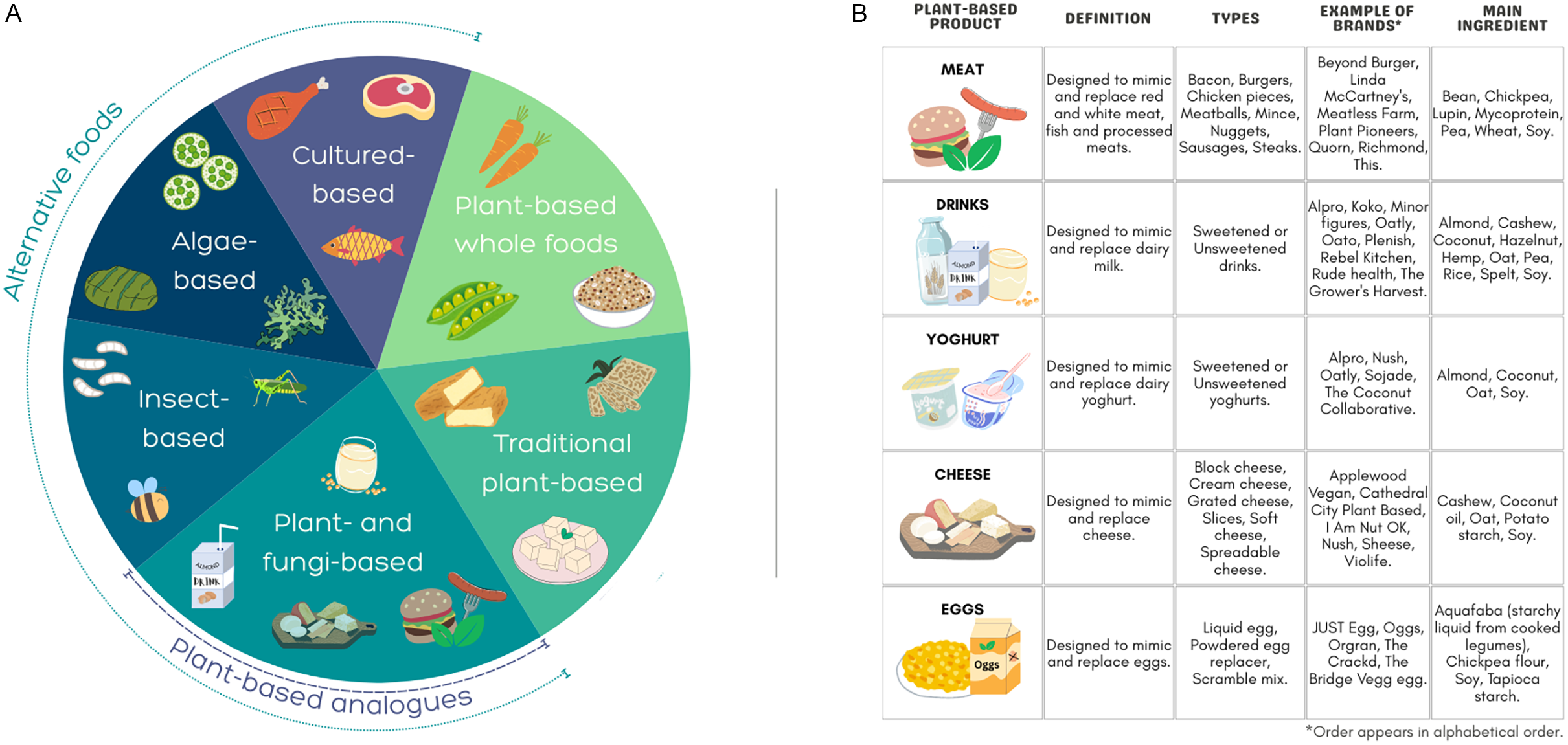
Given the growing need for food systems transformation, the novel alternative foods landscape (e.g. cultured or cell-based, algae-based, insects and fungi-or plant-based analogues) has emerged in recent years promising to support dietary transitions (see Figure 1, pane A). The growing interest in healthy and sustainable diets is thought to have driven increases in supply, demand and investment, particularly in the plant-based analogue (PBA) sector(Reference Vellinga, Rippin and Gonzales14–Reference Gaan16). PBA are fungal-and plant-derived products that mimic the appearance and functionality of commonly consumed animal-based foods such as meat (processed and lean cuts) and dairy: plant-based meat (e.g. mince, sausages and burgers), plant-based dairy (e.g. drinks, yoghurt and cheese) and plant-based eggs (see Figure 1, pane B). Among available novel alternatives, PBA are already marketed and generally accepted by consumers due to their versatility and familiar ingredients, including fungi (i.e. mycoprotein) or plants (e.g. legumes and cereals)(17).
Types of alternative foods designed to mimic animal products and specific categories of plant-based analogues. Pane A shows all types of alternative foods including novel and plant-based wholefoods. Pane B shows the definition, type, example of product brands and main ingredient for each category of plant-based analogues.

Alongside this increased supply and demand of PBA, the academic literature on PBA has also increased rapidly. There are numerous systematic reviews examining different aspects of PBA, including their nutrient composition(Reference Paul, Kumar and Kumar18–Reference Chalupa-Krebzdak, Long and Bohrer21), production and processing(Reference Silva, Silva and Ribeiro22,Reference McClements, Newman and McClements23) , food safety(Reference Hadi and Brightwell24,Reference Liu and Sha25) , market predictions(Reference Boukid26) and health(Reference Gibbs and Leung27,Reference Fernández-Rodríguez, Bizzozero-Peroni and Díaz-Goni28) . Other reviews have assessed health and environmental outcomes for a specific category of PBA, such as focusing on plant-based drinks(Reference Silva and Smetana29) or plant-based meats(Reference Gibbs and Leung27,Reference Bryant30–Reference Lindberg, Woodside and Nugent32) . Only one review assessed the nutritional, health and environmental outcomes across multiple PBA categories(Reference Nájera Espinosa, Hadida and Jelmar Sietsma33).
A number of these reviews have highlighted that PBA could facilitate dietary changes, especially in high-income countries, because they require minimal dietary behaviour change if used to replace animal-based foods, especially processed meats. Current evidence also indicates PBA consumption occurs alongside animal-based food consumption(Reference Neuhofer and Lusk34). However, uncertainty and confusion remain regarding their nutritional content, nutrient bioavailability and bioaccessibility, environmental impacts and the degree of processing. This review aims to synthesise and discuss the current evidence on PBA by examining the health, nutritional and environmental benefits, challenges and research gaps to inform public health and environmental strategies and support evidence-based policy decision-making in high-income countries.
Determinants of health, nutritional and environmental outcomes in plant-based analogues
Current research on PBA is complex, with emerging evidence, several knowledge gaps and promising but limited findings. The evidence shows that the primary ingredients (e.g. mycoprotein and legume), type of product (e.g. drink and meat), processing techniques and product brand of PBA (e.g. Quorn, Linda McCartney, Oatly, etc.) determine nutritional, health and environmental outcomes of PBA(Reference Nájera Espinosa, Hadida and Jelmar Sietsma33). In the next section, we discuss in detail current evidence on health, nutritional and environmental outcomes for PBA, see Table 1 for a summary of the key findings for each outcome.
Summary of key findings on the health, nutritional and environmental outcomes of plant-based analogues (PBA)

ABF, animal-based foods; PB, plant-based; PBA, plant-based analogues; d, day; vit, vitamin; GHG, Greenhouse gas emissions, Land, Land use; Water, Blue water footprint; +: positive.
* Most nutritional data are derived from web-scraping or product labelling.
** Comparison with median values.
Human health outcomes
In this section, we summarise the evidence across all PBA (meat, drinks and other products) in relation to human health outcomes.
Short-term health studies (<1 day up to 56 days) suggest potential health benefits, particularly for plant-based meats; however, the field faces critical limitations in scope, duration and population diversity that must be addressed to inform evidence-based dietary recommendations. Based on a comprehensive review published in 2024(Reference Nájera Espinosa, Hadida and Jelmar Sietsma33), plant-based meat studies have mainly focused on mycoprotein, soya or pea protein products. Plant-based drink research primarily covers almond-and soya-based options (<1day up to 30 days). Most studies have mainly focused on healthy adults(Reference Roberts, Busque and Robinson35–Reference Crimarco, Landry and Carter43).
While small, short-term trials provide valuable insights, long-term randomised controlled trials and prospective cohort studies are needed to more accurately evaluate the sustained health effects of PBA consumption. This is particularly important because short-term outcomes are often confounded by individual variability in diet, health status and consistency of consumption. Longer trials can help minimise these variables and provide a more accurate understanding of the sustained effects of PBA.
A recent trial(Reference Da Silva, Anderson and Amr44) illustrated these complexities by examining metabolic effects (including natural food matrices and their impact on satiety and glycaemic regulation) of various plant-based dairy products (sweetened plant-based drinks, yoghurt and cheese). The study found that while these PBA were more effective in reducing post-meal appetite than their animal-based counterparts, they were less effective at lowering post-meal blood glucose levels. Based on these findings, the authors suggested that certain plant-based dairy products might compromise nutritional intake and glycaemic management(Reference Da Silva, Anderson and Amr44). However, since this intervention used products with 15–25 additives and sweetened plant-based drinks, these results cannot be extrapolated to other types of PBA such as those that are unsweetened and contain fewer additives.
The following sub-sections present the health evidence for plant-based meats and drinks in more detail. However, it is important to note that, across all PBA categories, data on the long-term health outcomes are lacking. Additional evidence is still required for plant-based drinks other than soya and almond-based, and other PBA categories such as plant-based yoghurt, cheese or egg analogues. Such studies are essential for developing tailored guidelines that mitigate potential risks for all individuals, including vulnerable populations (e.g. elderly, children, individuals with underlying diseases).
Evidence on plant-based meats
This sub-section presents the evidence for plant-based meats in relation to health outcomes. Based on a comprehensive review published in 2024(Reference Nájera Espinosa, Hadida and Jelmar Sietsma33), to date, plant-based meat studies have mainly focused on health outcomes associated with their consumption, typically in healthy and overweight adults, over study periods ranging from less than a day to 8 weeks, by substituting meat products with plant-based meats of equivalent caloric value.
Regarding mental health outcomes, the first randomised dietary intervention trial in healthy adults found no significant difference in psychological outcomes between groups consuming weekly amounts of red meat versus PBA alongside a balanced vegetarian diet(Reference Conner45).
With respect to physical health, in our previous systematic review, Nájera Espinosa et al.(Reference Nájera Espinosa, Hadida and Jelmar Sietsma33) reported that mycoprotein-based meat consumption, instead of white and red meat, had beneficial effects associated with lower glycaemic markers, reduced energy intake, increased fibre intake, decreased insulin release and positive microbiome changes. Similarly, legume-based meat consumption reduced cardiovascular risk markers, including trimethylamine-N-oxide levels and LDL-cholesterol, while supporting beneficial gut bacteria growth. Three meta-analyses confirmed these findings(Reference Gibbs and Leung27,Reference Fernández-Rodríguez, Bizzozero-Peroni and Díaz-Goni28,Reference Shahid, Gaines and Coyle46) , showing that substituting meat with legume-based and mycoprotein-based meats may lead to reductions in total cholesterol, LDL, body weight and TAG. Another review found positive cardiovascular outcomes of consuming plant-based meats, despite concerns about processing and higher levels of Na(Reference Nagra, Tsam and Ward47).
While results from recent reviews are encouraging, some recent studies have reported neutral findings associated to plant-based meat consumption. A secondary analysis did not observe any differences in selected biomarkers of inflammation, when comparing legume-based meats with red meat of equivalent caloric value(Reference Crimarco, Landry and Carter43). Furthermore, in a randomised control trial in healthy Asian participants, Toh et al.(Reference Toh, Fu and Mehta48) found that individuals did not exhibit any positive or negative cardiometabolic effects associated with the consumption of plant-based meats.
The short-term health findings associated with increasing PBA intake point to a promising direction for dietary adjustments, particularly among people advised to lower processed meat consumption for health reasons. This offers a great opportunity for individuals to begin shifting their diets, without sacrificing their sensory enjoyment. Processed meats are classified as ‘carcinogenic to human’ (group 1) by The International Agency for Research on Cancer for their negative health outcomes and high content of saturated fat, Na, energy density and preservatives(Reference Zhang, Liang and Chen49,Reference Bouvard, Loomis and Guyton50) . For instance, in the UK, despite decreased intake of processed meat over the past decade (from 33.8 to 26.8 grams per day)(Reference Stewart, Piernas and Cook12), average intakes still account for almost half of the total national recommended intake for red and processed meat(51). Therefore, additional dietary changes are needed to further reduce processed meat intakes.
Evidence on plant-based drinks
This sub-section presents the evidence for plant-based drinks in relation to health outcomes. Evidence on plant-based drinks remains limited, with no published prospective cohort studies and research that has focused only on healthy adults(Reference Dineva, Rayman and Bath52–Reference Sun, Tan and Siow54).
Our systematic review, Nájera Espinosa et al.(Reference Nájera Espinosa, Hadida and Jelmar Sietsma33) identified micronutrient deficiency concerns in soy-and almond-based drinks, which have been linked with lower iodine intake and tooth demineralisation. The same review found that soya-based drinks produced similar glycaemic responses to dairy milk when consumed with white bread, though this was through different biological pathways(Reference Nájera Espinosa, Hadida and Jelmar Sietsma33).
Despite these micronutrient challenges, a recent systematic review and meta-analysis suggest that substituting cow’s milk with soya drinks (sweetened or unsweetened) is not associated with increased cardiometabolic risk factors(Reference Erlich, Ghidanac and Blanco Mejia55). Moreover, this substitution showed certain benefits such as improved blood lipid profiles and lower blood pressure, without negative outcomes in other cardiometabolic markers.
Regarding oral health, Shkembi et al.(Reference Shkembi and Huppertz56) reviewed dental health impacts and concluded that plant-based drinks are more cariogenic than bovine milk due to added sugars, higher acidity, lower buffering capacity and reduced Ca bioavailability, despite similar labelled content. However, most studies in this review were in vitro studies (there was only one randomised control trial) and focused on sweetened and unsweetened soya-and almond-based drinks.
Current evidence present a mixed picture of benefits and concerns that warrant careful consideration. Comprehensive research evaluating other plant-based drinks made from a wider range of ingredients, and their effects on both oral and overall health outcomes, remains urgently needed to inform evidence-based dietary recommendations.
Nutritional composition
In the following section, the evidence on plant-based meats and plant-based dairy is considered in relation to nutritional composition. Several studies have assessed the nutritional composition of various PBA, including meat, drinks, yoghurt and cheese analogues(Reference Nájera Espinosa, Hadida and Jelmar Sietsma33). Similar to health outcome research, evidence regarding plant-based cheese and yogurt analogues remains limited. However, the existing research demonstrates considerable diversity in primary ingredients across PBA categories. Plant-based drinks extend beyond soya and almond-based products to include numerous other types (e.g. oat and coconut), while plant-based meat analogues encompass legume-based, cereal-based and mycoprotein-based options. This diversity contributes to a variability in nutritional profiles within PBA categories.
Despite this growing body of research, a significant methodological limitation persists; much of the available nutritional data are derived from web-scraping or product labelling rather than direct analytical samples, highlighting a critical need for more rigorous laboratory-based nutritional composition analysis.
At the macronutrient level (energy density, saturated fat, fibre and total sugar), there is considerable variability across PBA categories (e.g. meat or dairy); however, median values across each primary ingredient and PBA type indicate that PBA generally present better nutritional profiles relative to their animal-based equivalents, particularly to processed meats(Reference Nájera Espinosa, Hadida and Jelmar Sietsma33,Reference Lindberg, Woodside and Fitzgerald57) . This nutritional advantage is particularly relevant because diets high intakes of saturated fat and energy-dense foods, combined with low fibre intake, are associated with the highest dietary burden of disease(58). Replacing animal-based products with PBA could help to mitigate these risks, particularly when substituting processed meats.
These nutritional profiles could provide substantial health benefits in high-income countries, where consumption deviates substantially from recommended levels. Similarly, certain PBA, like plant-based meats and drinks, contain portions of vegetables, legumes and nuts(Reference Nájera Espinosa, Hadida and Jelmar Sietsma33), which could help address the inadequate intake of these food groups commonly observed in high-income countries, particularly among lower-income households(59). There is also substantial protein content variability across PBA, but not all PBA median protein values match their animal-based protein content [see supplementary data in(Reference Nájera Espinosa, Hadida and Jelmar Sietsma33)]. Among all PBA categories examined, mycoprotein-based and legume-based products (including both meat and drinks analogues) show nutritional characteristics suitable for a healthy diet.
Nevertheless, most PBA in this study contained sugar(Reference Nájera Espinosa, Hadida and Jelmar Sietsma33). While the total sugar content in plant-based meats is higher than their animal-based counterparts, other PBA categories (e.g. plant-based drinks and yogurts) show greater variation and some even contain less sugar than their animal-based counterparts. Although the total sugar content in most PBA categories remains beneath the ‘low in total sugar’ threshold (5 g or less per 100 g of food) as defined by the UK nutrition and health claims guidance(60), it is difficult to determine the breakdown between naturally occurring versus added sugars in PBA. This distinction is important because high intake of added sugars is strongly associated with adverse health outcomes(Reference Kelly, Tong and Watling61–63). Therefore, consumers who replace meat and dairy with PBA should keep in mind their sugar intake, especially from added sugars.
Understanding the micronutrient profile of PBA is complex; not all studies report micronutrient content, and fortification is inconsistent within and across countries(Reference Romão, Botelho and Torres64,Reference Gallani and Klapp65) . Consequently, concerns regarding potential micronutrient deficiencies are frequently raised in scientific debates comparing PBA with animal-based foods.
While more clinical trials are needed to examine micronutrient absorption across all PBA, current evidence on plant-based drinks is mixed. For example, a study conducted by Dineva et al.(Reference Dineva, Rayman and Bath52) found significantly lower iodine intake in exclusive consumers of almond and soya drinks. In our review(Reference Nájera Espinosa, Hadida and Jelmar Sietsma33), we found that when PBA are fortified, they generally match their animal-based counterparts in contributing to the delivery of the recommended daily allowance of key micronutrients such as Fe, Ca and vitamins B12, B2 and D. A modelling study also demonstrated that incorporating optimised plant-based meats (fortified with Fe and Zn), resulted in nutrient-adequate and overall healthier diets than current baseline diets(Reference Salome, Mariotti and Dussiot66). While fortification may allow PBA to match their animal-based counterparts in delivering key micronutrients, fortification is not a standard practice. In our study, we observed that from 1259 PBA products with listed nutritional profiles, only 502 (40%) reported micronutrients(Reference Nájera Espinosa, Hadida and Jelmar Sietsma33), suggesting that many were probably not fortified. These large micronutrient variability in PBA may pose significant risks, especially for vulnerable populations like children. This is because observational evidence suggests that children consuming unfortified plant-based drinks have lower BMI, height and serum vitamin D concentrations compared with those who consume cow’s milk(Reference Soczynska, da Costa and O’Connor67).
Furthermore, studies on micronutrient composition usually report a limited number of micronutrients from the front-of-pack food labels rather than using analytical samples. A recent study that collected data from national food composition tables found that, regardless of fortification, plant-based meats can be a source of several types of micronutrients such as alpha-linolenic acid, folate, vitamin E, vitamin K, Ca, Mg, Mn, Cu and Fe(Reference De Bie, Eilander and Wanders68).
This evidence suggests that if carefully selected plant-based meat analogues can adequately contribute towards a healthy diet, particularly when used as partial replacements. However, until micronutrient evidence improves through more comprehensive analytical studies, careful consideration is needed when contemplating complete dietary replacements of animal-based foods with PBA(Reference Leonard and Kiely69). This caution is especially warranted given that modelling studies indicate complete replacement of animal-based foods with PBA could increase micronutrient deficiency risks of iodine and vitamin B12 (for females)(Reference Lawrence, Huang and Johnson70), Zn (for males)(Reference Lawrence, Huang and Johnson70) and n-3 long-chain fatty acids, vitamin B12, Ca, Fe, iodine and riboflavin in the general adult population(Reference Lawrence, Huang and Johnson70–Reference Farsi, Uthumange and Munoz Munoz73). These concerns become even more prominent among vulnerable groups such as children, pregnant women, the elderly and those with chronic illnesses, as these subgroups have distinct nutritional needs than the general population.
Environmental impacts
In the following section, the evidence on plant-based meats and dairy is considered in relation to their environmental impacts. There is a growing number of studies evaluating the environmental impacts of plant-based meats and drinks, focusing primarily on mycoprotein-, soya-or pea-based meats and almond-and soya-based drinks(Reference Nájera Espinosa, Hadida and Jelmar Sietsma33). However, data are missing for other plant-based drinks and other product types such as plant-based yoghurt, cheese or egg analogues. The environmental impacts in these studies are usually measured using the life cycle assessment methodology, but studies usually focus on greenhouse gas emission, land use and water use metrics(Reference Nájera Espinosa, Hadida and Jelmar Sietsma33).
Partial or complete substitution of animal-based products with similar PBA have a median reduction ranging from −53 to −94% for greenhouse gas emissions, −57 to −90% for land use and −93 to 4601% for water use(Reference Nájera Espinosa, Hadida and Jelmar Sietsma33). They are, therefore, a valuable strategy to help individuals shift to more sustainable diets and contribute to net-zero targets. However, differences in methodologies, study context and data choices that influence environmental outcomes should always be handled with great care. While reductions are reported consistently across several studies(Reference Silva and Smetana29–Reference Lindberg, Woodside and Nugent32,Reference Berardy, Rubin-Garcia and Sabate74,Reference Carlsson Kanyama, Hedin and Katzeff75) , Nájera Espinosa et al.(Reference Nájera Espinosa, Hadida and Jelmar Sietsma33) found a few data points where PBA had a higher footprint and some extreme outliers, particularly for water use, for single studies on almond-based drinks(Reference Grant and Hicks76) and soya-based meat(Reference Kazer, Orfanos and Gallop77). These outliers and single data points may introduce uncertainty, complicating policy recommendations and potentially slowing action to change. It is essential to carefully examine these extreme cases, assess their validity and include multiple data points to ensure reliable environmental recommendations.
While PBA offer environmental benefits, the identified benefits on greenhouse gas emissions, water and land use provide only a partial view of the environmental impact of PBA. Other crucial metrics – such as energy consumption, water and soil pollution and biodiversity loss – are less commonly studied. The limited evidence may be due to lack of funding and data sources for other environmental impact categories. The reliance on a limited number of crops (such as soya, pea, wheat, oats, mycoprotein and coconut oil) could lead to other long-term environmental, social, food security and economic challenges. For example, heavy dependence on monoculture not only harms biodiversity but also degrades soil, increases pests and diseases and concentrates production within an industrial agri-food system reliant on global supply chains and trade dependencies(Reference Pontarp, Runemark and Friberg78–Reference Singh, Delgado-Baquerizo and Egidi80). This dependency poses food security risks and makes prices vulnerable to fluctuations within industrial monoculture, which could drive further reformulation of PBA if certain ingredients become scarce. While the evidence is consistent and the direction of the environmental benefits is evident that can guide policy and practice, further research should continue to explore potential trade-offs that may not yet be fully understood.
Processing of plant-based analogues
In this section, the evidence on plant-based meats and dairy is considered in relation to their processing level. Although processing offers benefits such as improved food safety, extended shelf-life and facilitates fortification(Reference Flint, Bowles and Lynn81), accumulating evidence associates consumption of ultra-processed foods with negative health effects(Reference Fang, Rossato and Hang82–Reference Pagliai, Dinu and Madarena85). Based on the level of processing and use of ingredients such as food additives, most PBA technically fall in the ultra-processed foods category according to the NOVA classification(Reference Monteiro, Cannon and Levy86).
However, it is critical to recognise that not all ultra-processed foods are nutritionally equal, especially since this categorisation does not account for nutritional outcomes. While NOVA’s main goal is to guide consumers away from replacing wholefoods with ultra-processed foods, categorising PBA within this classification system overlooks the fact that PBA products, when used as replacements for less healthy options such as processed meats and sweetened dairy products, can offer better nutritional outcomes whilst also offering major environmental benefits. A nutritional distinction is essential because the nutrient profiles of PBA usually differ considerably from those found in ultra-processed foods, although there are some exceptions(Reference Monteiro, Cannon and Levy86). Furthermore, a recent study proposing a more nuanced subclassification of various ultra-processed food groups found that plant-based meat analogues, in particular, were not associated with health risks like those linked to ultra-processed foods such as cakes, biscuits, confectionary and alcohol(Reference Cordova, Viallon and Fontvieille87).
The nuanced categorisation, proposed by Cordova and colleagues(Reference Cordova, Viallon and Fontvieille87), suggest that further disaggregation of PBA is needed for accurate interpretations of the health benefits. Many studies often compare broad categories of PBA with their animal-based counterparts (i.e. plant-based drinks with dairy milk or plant-based meat with meat and poultry) or generalise the findings of specific PBA to the entire category. For example, a recent meta-analysis suggested that plant-based meats can modestly improve cholesterol and slightly reduce weight; however, mycoprotein-based meats had greater positive effects in comparison to other plant-based meats(Reference Fernández-Rodríguez, Bizzozero-Peroni and Díaz-Goni28). Similarly, a systematic review comparing soya drinks with cow’s milk identified positive cardiometabolic effects(Reference Erlich, Ghidanac and Blanco Mejia55), yet these findings cannot be generalised to other types of plant-based drinks.
Future directions
Taking our findings into consideration, several key areas emerge as essential for advancing the field to avoid unintended consequences. In the following sections, we propose key research directions organised by theme to better inform policy and practice.
Strengthen the nutritional evidence base
Nutrient data from labels and web-scraping do not provide a complete assessment of nutritional composition of PBA, and the assumption that certain micronutrients are absent because they are not reported on labels is not entirely accurate. National food composition tables include analytical samples reporting additional micronutrients that are not usually reported on food labels (e.g. Mg, phosphorus and tryptophan)(88). Global food composition tables range from limited PBA entries (e.g. UK) to more complete nutrient profiles (e.g. Netherlands) for various disaggregated categories of PBA such as plant-based meats by type of product (e.g. nuggets, mince, sausages, meatballs and burgers) and main ingredient (e.g. soya, pea and wheat), as well as plant-based drinks (e.g. soya, almond, oat and coconut), plant-based yogurts (e.g. soya, coconut) by main ingredient and similarly for other products such as plant-based cheese and ice-cream(89). Future studies should align data sources and avoid comparisons of PBA label data with analytical samples for animal-based products.
Better comparisons between PBA categories for dietary recommendations
To guide food-based dietary recommendations, broad nutrition comparisons of PBA are insufficient for identifying healthier options. To navigate the complex nutritional variability, careful considerations are required. Research should be grounded in like-for-like comparisons (i.e. mincemeat vs plant-based mince or bacon vs plant-based bacon) and sub-classification by primary ingredient (e.g. soya, almond, oat and pea). This approach would distinguish nutrient-dense PBA from typical unhealthy PBA. Thus, providing clearer guidance for consumers and policy recommendations and facilitating further health research, given likely differences in biological responses across subcategories.
Guidance for consumers and vulnerable groups
Evidence on micronutrient bioavailability and bioaccessibility in PBA is limited, with some studies suggesting lower bioavailability for certain micronutrients(Reference Lindberg, McCann and Smyth31). Further research is required, as lack of evidence may pose risks to consumers of PBA in both the general population and vulnerable groups(Reference Dahdouh, Grande and Espinosa90,Reference Manzanilla-Valdez, Ma and Mondor91) . In addition, PBA manufacturers could help address these challenges by improving nutritional value, bioavailability and bioaccessibility through various pathways. For example, exploring innovative processing techniques to improve nutrient uptake by using strategic ingredient combinations (e.g. grains and legumes, vitamin C with Fe fortification), increasing the proportion of wholefoods (vegetables and legumes) or reducing refined ingredients, Na and added sugars. These combinations could lead to enhanced protein and fibre content and Fe bioavailability of PBA, hence improving their overall nutritional quality.
Clearer labelling and improved nutritional food standards would support consumer’s food choices. National dietary recommendations may require tailored guidance for vulnerable groups, considering their dietary patterns and the specific animal-based foods being replaced. Because consumers generally purchase PBA along with animal-based foods(Reference Neuhofer and Lusk34,Reference Stewart and Dong92) , both short-and long-term health studies could broaden the ‘plants versus animals’ evidence by evaluating the role of selected PBA as part of a balanced, health-promoting diet that also includes plant-based wholefoods (e.g. legumes, vegetables and nuts) and some animal-based foods.
At the macronutrient level, PBA protein content is typically not higher than in their animal-based counterparts, though many products, especially plant-based meats, still qualify as a ‘source of’ or ‘high in’ protein according to the UK nutrition and health claims standards.(60) While protein intake remains a topic of debate in the scientific community, protein sufficiency is less of a concern for many high-income countries since protein deficiency has minimal impact on overall burden of disease(58). In contrast, protein overconsumption, particularly from red and processed meats, is more prevalent and linked to negative health outcomes(Reference Leme, Hou and Fisberg3,Reference Zhang, Liang and Chen49,Reference Nelson, Bogard and Lividini93) . Nonetheless, recommendations in relation to PBA should be made for sub-groups with higher protein needs (e.g. children, elderly)(94). For example, mycoprotein-based meats and soy-based drinks/yoghurt can provide optimal or complete amino acid profiles(Reference Souza Filho, Andersson and Ferreira95–Reference Montemurro, Pontonio and Coda97). While some studies suggest that PBA have lower amino acid levels compared with their animal-based counterparts (with exceptions)(Reference Moore, Costa and Pozza96,Reference Zhang, Langlois and Williams98) , others indicate that plant-based proteins can complement animal-based foods(Reference van Vliet, Bain and Muehlbauer99). There is an opportunity to improve nutrient absorption by optimising ingredient combinations at the manufacturing level, which could both increase food diversity and enhance absorption and intake of essential amino acids from plant-based sources to support health.(Reference Mariotti and Gardner100) Simultaneously, education campaigns should highlight the complementary profiles of PBA to encourage partial replacements(Reference van Vliet, Bain and Muehlbauer99), with careful attention to vulnerable groups with special dietary requirements.
Processing, additives and health
Future research on both ultra-processed foods and PBA is needed to fully comprehend the role of: high palatability of PBA, satiating effects, changes in the food matrix, nutritional profiles, isolated ingredients (such as protein isolates and hydrolysed proteins) and by-products formed during packaging and processing. All of which may influence endocrine pathways and gastrointestinal health(Reference Cordova, Viallon and Fontvieille87).
More research is also needed to understand the gastrointestinal impact of the quantities and types of different ingredients used in PBA. While food additives commonly used in products undergo safety assessments based on country-or region-consumption data, the health effects of consuming multiple additives together remain unclear. Further research is needed to explore the impacts of regular consumption of food additives and potential ‘cocktail’ effects, through PBA and other ultra-processed foods. This includes investigating how additives may contribute to gut dysbiosis and its potential effects on brain function and behaviour(Reference Abiega-Franyutti and Freyre-Fonseca101).
Standardised environmental outcomes
Globally, numerous databases report on environmental footprints (e.g. Agribalyse, Ecoinvent, World Food LCA database and OpenLCA Nexus), yet the assessment of food-related footprints is still novel in the nutrition field and especially for PBA. Standardised environmental methods are essential to ensure comparability and prevent misinterpretation. Establishing a national guideline – like an environmental food national guideline or adding footprints to food composition tables – could improve data selection and transparency. Such a guideline would strengthen the evidence base and support interventions, such as environmental footprint labelling (e.g. carbon and water footprint labelling) to help consumers choose lower-impact food options like PBA and traditional plant-based foods (i.e. tofu and tempeh)(Reference Nakaishi and Chapman102,Reference Meis-Harris, Klemm and Kaufman103) .
Beyond single ingredients: innovation and food systems effects
As climate change continues to affect crop yields and quality(104–Reference Scheelbeek, Bird and Tuomisto107), diversifying PBA ingredients could reduce dependence on a narrow set of crops, enhance nutritional diversity and support food system resilience. Rapid technological innovation can support such shifts by introducing new inputs [e.g. fungi-based Fy ProteinTM (USA market)(108), animal-free dairy protein made by microflora (in USA market)(109) and potato and avocado drinks (in UK/USA markets)]. Nonetheless, the environmental impacts of ingredient substitutions should be carefully evaluated as demand scales. For example, in 2024, a USA-based leading manufacturer of plant-based meat analogues (Beyond Meat), announced that its fourth-generation product would be formulated with avocado oil instead of palm oil to help reduce cholesterol(Reference Meat110). While this change may benefit health, it could increase water-related impacts relative to palm oil. Although several environmental impacts have been documented for palm oil, this oil is considered relatively efficient and more economically viable compared to other vegetable oils(Reference Beyer and Rademacher111,Reference Meijaard, Brooks and Carlson112) . Avocado cultivation on the other hand, often requires significant water and is frequently grown in water-stressed regions(Reference Frankowska, Jeswani and Azapagic113), with limited environmental data on large-scale avocado oil production. These impacts underscore the need for holistic assessments that consider both health and environmental effects of ingredient choices(Reference Frankowska, Jeswani and Azapagic113).
Beyond ingredients, recent work suggests there is an underestimation of the environmental footprints of dairy and meat in ready meals(Reference Jaacks, Amoutzopoulos and Runions114,Reference O’Connor, Herrick and Parsons115) . Incorporating PBA (partially or completely) into ready meals could result in additional environmental benefits since 88% of the adult UK population consumes ready meals regularly(Reference Aceves-Martins, Denton and de Roos116), with the majority of these meals containing meat (70% until 2021)(Reference Better117). Expanding research to evaluate health and environmental trade-offs in ready meals containing PBA presents a valuable opportunity to encourage consistent shifts in dietary patterns.
Policy relevance and practice
In this last section, we discuss the role of PBA for policy relevance and practice. Efforts to increase the uptake of selected PBA should not come at the expense of replacing foods that are culturally appropriate, traditional and known to be healthier and better for the environment. These include traditional plant-based foods (e.g. tempeh, tofu, falafel, nut roast and baked beans), plant-based wholefoods (e.g. legumes, nuts and seeds) and dishes that replace meat with legumes or vegetables (e.g. vegetable chilli)(Reference Springmann118). Prioritising the promotion of these plant-based foods should remain a key focus, however in contexts with high consumption of processed foods, such as in the UK, integrating PBA could provide a transitional step towards a more plant-forward diets(Reference Alae-Carew, Green and Stewart119).
Given the large potential of dietary changes to address environmental challenges and the positive health and environmental outcomes linked to the consumption of PBA, greater efforts are needed to promote the consumption of both healthy and sustainable PBA along with plant-based wholefoods. However, various gaps must be addressed to inform public health and environmental policies better. One potential restraint is the limited funding available for research on PBA, largely due to their relative novelty. Many studies are funded by PBA manufacturers, which raises concerns about bias, though outcomes appeared consistent regardless of funding source(Reference Nájera Espinosa, Hadida and Jelmar Sietsma33). Nonetheless, it remains essential for independent institutions to invest in PBA research or institutions such as the UK National Alternative Protein Innovation centre(120) to rigorously assess both the benefits and challenges of these products. Future assessments should also integrate food safety into research. Food safety was often overlooked in nutritional, health and environmental studies, despite identified chemical, biological and physical food safety threats(Reference Tan, Ong and Yong121,Reference Augustin Mihalache, Dellafiora and Dall’Asta122) .
The wide nutritional variation in PBA impacts their reliability as direct replacements for animal-based foods in several ways, especially regarding the micronutrient content, protein quality, fortification consistency and ingredients. This lack of standardisation may discourage consumption and pose risks for exclusive or non-exclusive consumers of PBA and vulnerable groups with specific dietary needs. To mitigate health risks and help consumers navigate the varying nutrient profiles of PBA, simplifying food labels and clearly communicating the origin of raw ingredients is needed. For example, food labels could indicate fortification levels or highlight the potential benefits and risks of replacing comparable animal-based foods. Current recommendations in the UK food-based dietary guidelines suggest consumption of fortified soya-based drinks and mycoprotein-based meat(51). These recommendations could be extended to encompass a wider selection of PBA, to increase uptake of those PBA that can contribute to a healthy diet. A careful selection of PBA in food-based dietary guidelines could support the promotion of adequate PBA for public procurement in institutional catering (e.g. schools, hospital and universities), especially as alternatives to replace processed meats and to accommodate dairy milk allergies.
Even though there are some environmental differences between various types of PBA made with different ingredients, most PBA demonstrate substantial environmental benefits compared to animal-based foods, particularly red and processed meat.
A larger range of recommended PBA would not only improve social acceptance by offering consumers more informed choices and variety but also support food procurers and chefs in accommodating allergies and preferences with different PBA. While some consumers of PBA have transitioned towards these products due to lactose intolerance or milk protein allergy, new sources of plant-based proteins like pea protein or mycoprotein may also pose risks to certain individuals with allergic sensitivities(Reference Tan, Ong and Yong121). A larger range of healthier PBA would help accommodate these personal barriers while also introducing different types of PBA, increasing familiarity and potentially encouraging greater adoption at home.
To avoid unintended consequences, the application of nutritional standards for PBA would help reduce potential nutritional related risks. In high-income countries like the UK, there are well established compositional standards for various products including meat and dairy products(123). For example, pork sausages must contain 42% of pork before being called ‘pork sausages(124,125) ’, lean mincemeat cannot contain more than 7% of fat(126) and full fat milk must contain at least or equal to 3% fat(127). Research in the field shows there is manufacturing capacity to create healthier products within the wide nutritional ranges of PBA with products with more than 40% of whole ingredients such as legumes and vegetables(Reference Nájera Espinosa, Hadida and Jelmar Sietsma33), or ‘health-boosting’ plant-based meat enriched with amino acids like lysine(Reference Kouw, Pinckaers and Le Bourgot40).
Considerations of the development of regulations or standards for PBA could enable a larger range of healthier PBA and less confusing messaging to consumers. For example, minimum fortification standards for PBA with key micronutrients could deliver on key nutrients that are under-consumed in many high-income countries(Reference Bird, Barron and Pigat128), supporting wider national targets for the reduction of nutritional deficiencies. It could also support individuals following diets that do not contain animal-based products (e.g. vegans) and other population sub-groups such as pregnant women, children and the elderly who may have ‘higher than average’ micronutrient needs. Limiting nutrients of concern in PBA formulations such as saturated fat, added sugars and Na is another alternative that could provide large benefits to high-income population’s health overall.
From the regulatory angle, there have been great efforts to reduce free sugars. Moving forward it is important to guide manufacturers against substituting free sugars for non-sugar sweeteners. Emerging evidence suggests potential health risks associated with non-sugar sweeteners, while the food safety of other additives is unclear(129,Reference Mendoza, Smith-Warner and Rossato130) . Regulations of this type would also allow consumers to choose PBA they like, rather than having to choose between products based on the presence or absence of certain nutrients. The implementation of a food safety surveillance system for PBA, alongside consumer education on proper handling and storage practices (e.g. always refrigerate plant-based milks), is also recommended. While surveillance systems usually record and monitor food safety-related activities, such systems could also be implemented to monitor and keep track of the fast pace of the industry and any nutritional variations in PBA to help stakeholders stay up to date.
Additionally, food manufacturers of PBA have communicated the importance of producing PBA with healthier nutrient profiles than animal-based foods(Reference Flint, Bowles and Lynn81). This is because PBA are designed to directly replace animal-based products, which have traditionally been sources of key nutrients in diets. Although nutritional composition may not be a primary driver of consumer choice or manufacturer decision-making in the short-term, large nutritional discrepancies have the potential to influence public health outcomes and may, over time, affect product acceptance and market sustainability. By hiring external consulting companies to assess the environmental footprints of PBA exemplifies manufacturers’ attempt to ensure reliability. For this reason, manufacturers of PBA have focused primarily on matching the nutritional profiles of animal-based foods. Likewise, researchers have tended to compare PBA mainly with the nutrient content found in animal-based foods. While fortification of PBA with micronutrients commonly found in animal-based foods (e.g. iron, iodine, calcium, vitamin B12) should remain a priority, focusing solely on these micronutrients may represent a missed opportunity. PBA could also be fortified with additional nutrients to broaden their nutritional contribution beyond that of animal-sourced products, by providing nutrients that are not easily obtained from animal-based foods yet are also lacking in the general population (e.g. fibre and vitamin D)(Reference Scheelbeek, Green and Papier131,Reference Derbyshire132) . Research on other compounds not necessarily present in animal-based foods such as chitin and β-glucan found in mycoprotein-based meats(Reference Denny, Aisbitt and Lunn133), or health-promoting substances such as water-soluble bioactive compounds present in plant-based beverages (e.g. flavonoids, phenolic acids, vitamins, carotenoids and other phenolics)(Reference Popova, Mihaylova and Lante134), could be beneficial to take into account when assessing nutritional and health outcomes.
Another overlooked opportunity in PBA production is the use of nutrient-rich crops and under-utilised crops, alongside a higher proportion of commonly consumed wholefoods, to enhance the fibre content and overall nutritional value, while reducing refined ingredients. Including under-utilised crops could provide a win-win scenario for nutrition and the environment. Under-utilised crops can further enhance the nutritional content of PBA, reduce climate change impacts and improve biodiversity(Reference Odeku, Ogunniyi and Ogbole135). Relying on under-utilised crops may also create opportunities to improve farmers livelihoods by integrating them into the value chain if they choose to reduce their livestock production.
Further research is also required to understand who is willing to consume PBA and why, and how to effectively promote PBA that are both healthy and environmentally friendly. Supportive regulatory measures and further efforts from the food industry, could improve the affordability, availability and sensory appeal of PBA(Reference Barakat, Samuel Short and Strauss136). However, understanding consumer behaviour is essential for considerations of certain measures (e.g. fiscal measures) given that emerging studies suggest that consumers would expect much lower prices for PBA to swap from animal-based foods(Reference Vries, Neufingerl and Zandstra137–Reference Carlsson, Kataria and Lampi139). It is equally important to inform both consumers and non-consumers of PBA about processing methods and the health, nutritional and environmental advantages and challenges of incorporating PBA – whether partially or fully – into their diets. Such efforts should highlight the importance of not replacing plant-based wholefoods with PBA.
From the manufacturing perspective, PBA are targeted to the average consumer. However, evidence shows the importance of taste, texture and cost for a higher uptake of plant-forward diets(Reference Rickerby and Green8,Reference Andreani, Sogari and Marti140,Reference Aggarwal, Rehm and Monsivais141) . PBA manufacturers could make further improvements to enhance product appeal and reduce costs(Reference Biesbroek, Kok and Tufford142–Reference Morach, Witte and Walker144). Additionally, the emerging technologies used to mimic the sensory experience of meat and dairy presents an opportunity to incorporate beneficial dietary compounds, supporting groups who may have special dietary needs (e.g. children, adults with underlying health conditions).
The regulatory side could support this field through carbon taxes on animal-based foods, reallocating subsidies away from livestock production, or providing support schemes for farmers to transition from livestock production to plant crops(Reference Bryant, Couture and Ross145). The implementation of tailored subsidies for plant-based foods(Reference Vries, Neufingerl and Zandstra137), including healthier PBA and other alternatives to animal-based products (e.g. plant-based wholefoods, traditional plant-based alternatives), could help alleviate the economic burden for some individuals. Recent studies have suggested fiscal measures could accelerate positive shifts, benefiting individual’s health, the environmental and social well-being(Reference Pastorino, Cornelsen and Cuevas Garcia-Dorado146,Reference Broeks, Biesbroek and Over147) . For example, lowering prices by 20–40% has shown increased purchases of healthier food choices [(Reference Waterlander, Jiang and Nghiem148) & Xu et al. in(Reference Tufford, Brennan and van Trijp9)].
Conclusion
In conclusion, to achieve healthy and environmentally sustainable diets, plant-based wholefoods should remain the primary objective. However, given the limited adoption of plant-based wholefood consumption, PBA represent a viable approach when seeking to reshape food systems by acting as a transitional bridge for consumers. When carefully selected, PBA often demonstrate good health and environmental outcomes compared with their animal-based counterparts, particularly when substituting for frequently consumed processed meats. Nevertheless, the considerable nutritional variability among PBA and the lack of comprehensive long-term health studies underscore the necessity for further research. Such research is critical for developing evidence-based policies and practices and for expanding the range of healthier PBA.
Acknowledgements
The authors acknowledge the Nutrition Society for the invitation to present this review at the Nutrition Society Conference 2025 in Loughborough.
Author contributions
S.N.E. drafted the manuscript. G.H., A.R., R.G. and P.S. critically reviewed the manuscript. All authors have read and approved the final manuscript.
Financial support
Acknowledge financial support from UKRI ‘Transforming UK Food System for Healthy People and a Healthy Environment SPF Programme and Building a Green Future strategic theme (‘Climateflation’ project/grant #28012024AbdnLF) as part of the Maximising UK Adaptation to Climate Change (MACC) programme and The Welcome Trust (DESTinY project/Grant #313586/Z/24/Z).
Competing interests
None.


 Open access

