



Prior cross-sectional and longitudinal studies have consistently found that having regular family meals is associated with multiple health benefits for adolescents and young adults, including healthful dietary intake( Reference Larson, Neumark-Sztainer and Hannan 1 – Reference Larson, Nelson and Neumark-Sztainer 7 ), lower levels of unhealthy weight-control behaviours( Reference Neumark-Sztainer, Eisenberg and Fulkerson 8 , Reference Neumark-Sztainer, Wall and Story 9 ) and better psychosocial well-being( Reference Eisenberg, Olson and Neumark-Sztainer 10 – Reference Utter, Denny and Robinson 12 ). Some studies have also shown associations between family meal frequency and lower risk for overweight in adolescence and young adulthood( Reference Gable, Chang and Krull 13 – Reference Chan and Sobal 16 ). Given the health benefits of regular family meals, it would be important to understand whether intergenerational transmission of family meal patterns/routines occurs from one generation to the next.
Additionally, it would be important to know whether young adult parents who have engaged in different family meal frequency patterns (e.g. never had regular family meals as an adolescent or as a parent, started having regular family meals as a parent, stopped having regular family meals as a parent, maintained having regular family meals as an adolescent and as a parent) in adolescence and in parenthood have similar health benefits. For example, do young adults who discontinue regular family meals when they have their own family experience similar weight-related health outcomes as young adults who continue to have regular family meals with their own children? Or, do young adults who did not have regular family meals as adolescents but start having them once they have a family of their own experience the same weight-related health benefits of family meals in parenthood as young adults who always had regular family meals? Identifying how young adults’ health outcomes are associated with different family meal frequency patterns from adolescence into parenthood will help inform whether the beneficial weight and weight-related health outcomes of having regular family meals can be realized whether the routine of regular family meals is carried forward from adolescence into parenthood or the routine of having regular family meals starts in parenthood. Furthermore, it is of interest to know whether having children increases the likelihood of young adults engaging in a certain family meal frequency pattern.
Overall, there is limited research examining the intergenerational transmission of family meal routines from adolescence to parenthood and few studies examining the association between family meal frequency patterns in adolescence and dietary, weight-related and psychosocial outcomes as a parent( Reference Berge, Wall and Hsueh 15 ). In addition, these associations have not been examined in a large community-based, racially/ethnically and socio-economically diverse sample. Thus, the main aim of the current study was to address the current gaps in the literature by examining four family meal frequency patterns from adolescence into parenthood, namely (i) never had regular family meals as an adolescent or as a parent, (ii) started having regular family meals as a parent, (iii) stopped having regular family meals as a parent and (iv) maintained having regular family meals from adolescence to parenthood, and their associations with young adults’ dietary intake (fruit and vegetable intake, sugar-sweetened beverage consumption, fast-food intake), weight and weight-related behaviours (weight status, unhealthy weight-control behaviours, binge eating), and psychosocial well-being (depression, self-esteem) as a parent.
Specific hypotheses to be tested in the current study include:
-
1. young adult parents who had regular family meals as adolescents and carry them forward (i.e. intergenerational transmission) with their own children will have better dietary intake, more healthy weight and weight-related behaviours and higher psychosocial well-being compared with young adult parents who never have family meals, stop having regular family meals or do not start having regular family meals until they are parents; and
-
2. young adults who have children will be more likely to engage in regular family meals compared with young adults who are not parents.
Theoretical framework
The research question, hypothesis and analysis for the current study are guided by the Family Systems Theory (FST)( Reference Whitchurch and Constantine 17 – Reference Berge 22 ). According to FST, the family environment is the most proximal level of influence on child weight and weight-related behaviours. FST posits that behaviours learned in the family context in which a person is raised (e.g. having regular family meals, not having regular family meals) are passed on intergenerationally( Reference Berge, Meyer and MacLehose 23 , Reference Pachuki, Lovenheim and Harding 24 ). Furthermore, FST emphasizes the importance of creating healthful family patterns/routines (e.g. family meals) so that positive patterns are passed on to the next generation.
Methods
Study design and population
Data for the current analysis were drawn from the first (1998–1999) and fourth (2015–2016) waves of Project EAT (Eating and Activity in Teens and Young Adults), a longitudinal study designed to examine dietary intake, physical activity, weight-control behaviours weight status and factors associated with these outcomes among young adults. There were 1830 participants who completed both EAT-I (Wave 1) and EAT-IV (Wave 4) surveys. Compared with participants at baseline (n 4746), participants completing both Waves 1 and 4 of data collection were more likely to be female (57 % compared with 45 % at baseline, P (χ 2)<0·0001), White race (68 % compared with 36 % at baseline, P (χ 2)<0·0001) and have higher socio-economic status (19 % compared with 10 % at baseline, P (χ 2)<0·0001).
The current analytic sample of parents includes 726 young adults who participated in Waves 1 and 4 of the Project EAT study, reported having one or more child(ren) (aged ≥1 year) at Wave 4, and lived with their own child(ren) at least 50 % of the time at Wave 4. To address study hypothesis 1, only Waves 1 and 4 from the Project EAT study were used in analyses because the main aim of the study was to examine family meal patterns in adolescence (Wave 1) and in parenthood (Wave 4). To address hypothesis 2 (i.e. young adult parents will be more likely to engage in regular family meals than young adults who are not parents), we compared the 726 young adult parents with 618 non-parent participants who responded to both EAT-I and EAT-IV, reported having a significant other and had replied to a question about the frequency of eating family meals with their significant other.
Survey development and fielding
To allow for longitudinal comparisons and examination of secular trends, key items from earlier study waves of the study were retained on the Project EAT-IV survey. Decisions to retain or drop items were based on their relevance to the current study aims, their use in earlier analyses and the performance of represented constructs in the peer-reviewed literature. Additions to the survey were also made to reflect the study’s life-course perspective and focus on learning about intergenerational influences on weight-related outcomes( Reference Fine and Kotelchuck 25 ). Scale psychometric properties were examined in the full EAT-IV survey sample and estimates of item test–retest reliability, reported below, were determined in a subgroup of 103 participants who completed the EAT-IV survey twice within a period of 1–4 weeks.
Invitations to complete the Project EAT-IV survey were mailed along with a two-dollar bill to all participants in the original sample who had responded to at least one previous follow-up survey. Most (83 %) of the sample was still living in Minnesota at EAT-IV, and all attempts to contact participants were by mail and online. Efforts to retain respondents who had moved from Minnesota were equal to efforts to retain respondents still in Minnesota. Survey invitation letters provided the web address and a unique password for completing the online version of the EAT-IV survey and an FFQ. To enhance participant response, a combination of US mail, email and text message reminders were sent to non-responders. Individuals received up to six reminders; the final two mailed reminders included paper copies of the survey and FFQ, and all mailings provided the option to complete the survey by telephone. Reminder emails were additionally mailed to participants who did not complete the survey and FFQ after logging into the online version. Internet tracking services were employed to identify correct addresses when any mailing was returned due to an incorrect address. Surveys were completed by 66·1 % of those who could be contacted at EAT-IV. Most respondents (95·4 %) completed the online survey. The University of Minnesota’s Institutional Review Board Human Subjects Committee approved all protocols used in Project EAT at each wave.
Measures
Family meal frequency patterns
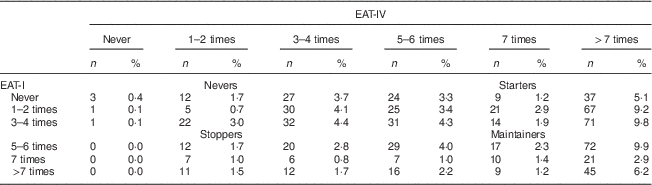
Family meal frequency was assessed at both EAT-I (1998–1999) and EAT-IV (2015–2016). In EAT-I participants were asked, ‘During the past seven days, how many times did all, or most, of your family living in your house eat a meal together?’ At EAT-IV participants were similarly asked, ‘During the past seven days, how many times did all, or most, of the people living in your household eat a meal together?’ (test–retest r=0·64). At both time points the response options were: ‘never’, ‘1–2 times’, ‘3–4 times’, ‘5–6 times’, ‘7 times’ or ‘more than 7 times’. A binary variable was created with participants reporting five or more family meals per week categorized as having regular family meals at EAT-I and at EAT-IV. Four family meal frequency patterns were then created including: nevers, stoppers, starters and maintainers. ‘Nevers’ reported having fewer than five family meals per week both at baseline and 15-year follow-up. ‘Starters’ reported not having five or more family meals per week at baseline but having five or more family meals at 15-year follow-up. ‘Stoppers’ reported having five or more family meals per week at baseline but not at 15-year follow-up. ‘Maintainers’ reported having five or more family meals per week both at baseline and 15-year follow-up. Frequencies for the original response options are shown in Table 1.
Reported family meal frequencies per week at EAT-I and EAT-IV; longitudinal data from Wave 1 (EAT-I; 1998–1999) and Wave 4 (EAT-IV; 2015–2016) of Project EAT (Eating and Activity in Teens and Young Adults)
Outcome measures
Fruit and vegetable intake and sugar-sweetened beverage consumption
Intake of fruit and vegetables and consumption of sugar-sweetened beverages were measured at EAT-I and EAT-IV using a semi-quantitative FFQ, which comprehensively assessed overall usual past-year dietary intake( 26 ). At EAT-IV, the FFQ was administered at the same time as the Project EAT-IV survey and included measures to allow for assessment of fruit, vegetable and sugar-sweetened beverage intakes( 27 ). A daily serving of fruit and vegetables was defined as the equivalent of one-half cup and a serving of sugar-sweetened beverages was defined as the equivalent of one glass, bottle or can. Energy intakes were determined in 2016 by the Nutrition Questionnaire Service Center at the Harvard School of Public Health using a specially designed database, based primarily on the US Department of Agriculture’s Nutrient Database for Standard Reference. Previous studies have examined and reported on the reliability and validity of intake estimates( Reference Feskanich, Rimm and Giovannucci 28 , Reference Rimm, Giovannucci and Stampfer 29 ). Responses to the FFQ were excluded if participants reported a biologically implausible level of total energy intake (<2092 kJ/d(<500 kcal/d) or >20 920 kJ/d (>5000 kcal/d)) or left twenty or more items blank (excluded n 161). At EAT-I, a youth form of the FFQ was used to assess dietary intake and was administered at the same time as the Project EAT-I survey( Reference Larson, Neumark-Sztainer and Hannan 1 , Reference Rockett, Berkey and Field 30 ).
Fast-food intake
Intake of fast foods from six categories of fast-food restaurants (i.e. burger-and-fries, fried chicken, Mexican, Asian, pizza, sandwich/sub) was assessed on the EAT-IV survey with the question, ‘In the past month, how often did you eat something from the following types of restaurants (include take-out and delivery)?’ Examples of quick-service and fast casual restaurant chains were provided for each type of fast-food restaurant. Response options were ‘never/rarely’, ‘one to three times per month’, ‘one to two times per week’, ‘three to four times per week’, ‘five to six times per week’ and ‘one or more times per day.’ This measure was adapted from a screener previously developed to assess restaurant use among adolescents( Reference Nelson and Lytle 31 ). The test–retest reliability of reported frequencies among young adults varied according to the type of food served at restaurants, ranging from r=0·51 (Asian food) to r=0·71 (sandwich/sub). At EAT-I, respondents were asked, ‘In the past week, how often did you eat something from a fast food restaurant (like McDonald’s, Burger King, Hardee’s, etc.)?’ There were six response options ranging from ‘never’ to ‘more than 7 times’.
Weight status
Weight status at EAT-IV was calculated from self-reported height and weight. Self-reported height and weight have been shown to be highly correlated with objectively measured values in adults( Reference Stewart 32 – Reference Palta, Prineas and Berman 35 ). Heights and weights were converted to BMI and dichotomized as overweight (BMI≥25·0 kg/m2) or non-overweight (BMI<25·0 kg/m2). At EAT-I, weight status was calculated from measured height and weight.
Unhealthy weight-control behaviours
Unhealthy weight-control behaviours were assessed at EAT-I and EAT-IV with the following question, ‘Have you done any of the following things in order to lose weight or keep from gaining weight during the past year?’: (i) ‘fasted’; (ii) ‘ate very little food’; (iii) ‘used a food substitute (powder or a special drink)’; (iv) ‘skipped meals’; (v) ‘smoked more cigarettes’; (vi) ‘took diet pills’; (vii) ‘made myself vomit’; (viii) ‘used laxatives’; and (ix) ‘used diuretics’. Participants responded to each behaviour with ‘yes’ or ‘no’ (test–retest r=0·82). Unhealthy weight-control behaviours were coded as dichotomous variables (presence of any behaviour v. none), based on our previous research( Reference Haines, Neumark-Sztainer and Eisenberg 36 ).
Binge eating
Binge eating was assessed at EAT-I and EAT-IV using two items adapted from a scale by Yanovski( Reference Yanovski 37 ): ‘In the past year, have you ever eaten so much food in a short period of time that you would be embarrassed if others saw you (binge-eating)?’ (percentage agreement=90 % at EAT-IV); and ‘During the times when you ate this way, did you feel you couldn’t stop eating or control what or how much you were eating?’ (percentage agreement=78 % at EAT-IV). Participants responded ‘yes’ or ‘no’ to each item. Participants who answered ‘yes’ to both questions were coded as engaging in binge eating.
Depressive symptoms
Depressive symptoms were assessed at EAT-I and EAT-IV from a six-item standardized scale( Reference Kandel and Davies 38 ). An example item is, ‘During the past 12 months, how often have you been bothered or troubled by feeling too tired to do things?’ Responses ranged from ‘not at all’ to ‘much’. Cronbach’s α for these six items from EAT-IV in this sample was 0·84. The items were summed to get a depression score that ranges from 6 to 18, with higher scores indicating more depressive symptoms (test–retest r=0·77). In a comparable sample of high-school students, Kandel and Davies also found these items to have acceptable internal validity with a Cronbach’s α of 0·79( Reference Kandel and Davies 38 ).
Self-esteem
Self-esteem was assessed at EAT-I and EAT-IV from a six-item standardized scale( Reference Rosenberg 39 ). An example item is, ‘On the whole, I am satisfied with myself’. Responses were scored on a 4-point Likert scale ranging from ‘strongly disagree’ to ‘strongly agree.’ Cronbach’s α for these six items from EAT-IV in this sample was 0·85. These items were summed to get a self-esteem score that ranges from 6 to 24, with higher scores indicating more self-esteem (test–retest=0·81).
Sociodemographic characteristics
Age in years was calculated by subtracting the participant’s self-reported birthdate from the date on which the survey was completed. Sex was self-reported as male or female at baseline. Race, reported at baseline, was dichotomized for the multivariate models to White and non-White because of small numbers in more specific categories of race. Socio-economic status (SES) was calculated primarily from the maximum educational attainment of the participants’ parents with penalties for reporting being on public assistance or being unemployed( Reference Neumark-Sztainer, Story and Hannan 40 ). The participant’s relationship status at EAT-IV was self-reported and dichotomized for the multivariate models to married and unmarried. The participant’s parents’ relationship status at baseline was self-reported and dichotomized for the multivariate models to married and unmarried. Participants reported ages in years for each of the children living more than 50 % of the time in their household; a mean age of the children living in the household was calculated from these reported ages.
Statistical analyses
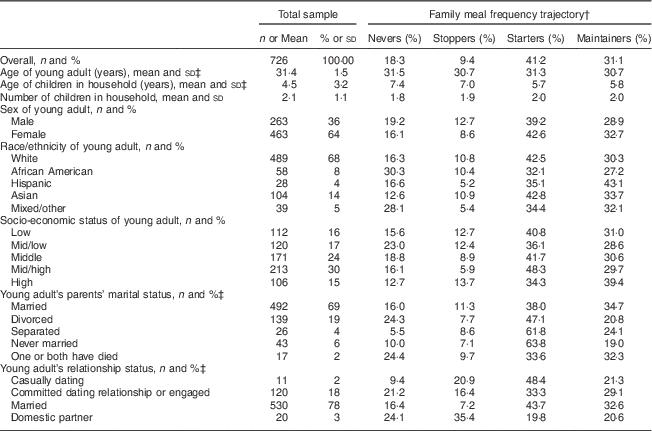
Demographic descriptions of the family meal frequency patterns among those who were parents at EAT-IV were run, comparing age of the participant (at EAT-IV), mean age of children in the household (at EAT-IV), number of children in the household (at EAT-IV), participant’s sex (at EAT-I), participant’s race (at EAT-I), household SES (at EAT-I) and marital status of the participant’s parents (at EAT-I) between the family meal frequency categories (nevers, starters, stoppers, maintainers; Table 2). Statistically significant differences (P<0·05) in family meal frequency patterns were assessed with χ 2 tests for categorical demographic variables and with ANOVA and F tests for continuous demographic variables.
Demographic characteristicsFootnote * of young adults by family meal frequency patterns at EAT-IV; data from Wave 4 (EAT-IV; 2015–2016) of Project EAT (Eating and Activity in Teens and Young Adults)
* Values of polytomous variables may not sum to 100 % due to rounding.
† Models comparing trajectories of family meals are mutually adjusted.
‡ Variable is significantly related to family meal trajectory at P<0·05.
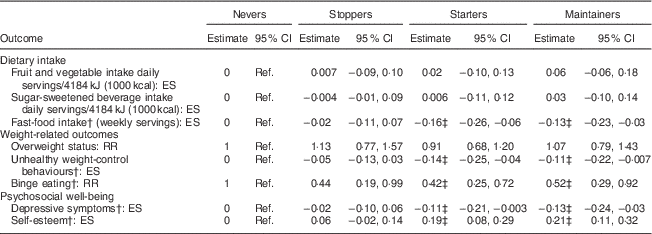
To address hypothesis 1, a series of regression models were run to separately assess the association of family meal frequency pattern with each of the EAT-IV outcomes described above. All models were adjusted for age, sex, race (White v. non-White), parents’ baseline SES, parents’ baseline marital status (married v. unmarried), participant’s current marital status (married v. unmarried), current mean age of children in the household, current number of children in the household, current education, the interaction between current education and baseline SES, and the baseline (EAT-I) level of the outcome variables. Linear regression was used for continuous outcomes (fruit and vegetable intake, sugar-sweetened beverage consumption, fast-food intake, unhealthy weight-control behaviours, depression, self-esteem). Continuous outcome variables were standardized to mean of 0 and sd of 1. Effect sizes (regression coefficients) are reported for each category of family meal pattern for each outcome. The unhealthy weight-control behaviours variable was square-root-transformed to account for substantial right skew in its distribution. Logistic regression was used for binary outcomes (overweight status, binge eating). Because the outcomes in the logistic regressions were fairly common (particularly overweight status), odds ratios do not approximate the relative risks. Therefore, the counterfactual method( Reference Muller and MacLehose 41 ) was used to calculate relative risks from the prediction equation estimated in the logistic regression. Standard errors for the relative risks were estimated using the delta method and method of variance recovery (MOVER)( Reference Zou 42 ) to allow estimation of confidence intervals for the relative risks (Table 3). To address hypothesis 2, parents were compared with all non-parents (n 618) using χ 2 tests to determine if family meal patterns differ by parent status. Parents were also compared with non-parents on demographic variables (Table 4).
Standardized associationsFootnote * between family meal frequency pattern and young adults’ dietary intake, weight and weight-related behaviours, and psychosocial well-being at EAT-IV; data from Wave 4 (EAT-IV; 2015–2016) of Project EAT (Eating and Activity in Teens and Young Adults)
ES, effect size; RR, relative risk; Ref., reference category; SES, socio-economic status.
* All models adjusted for parent age, sex, race (White v. non-White); mean age of children in the household; number of children in the household; current household SES; current marital status; baseline marital status; baseline SES; the interaction of current SES with baseline SES; and baseline measures of outcome variables.
† Statistically significant overall at P<0·05.
‡ Significantly different from ‘never’ category at P<0·05.
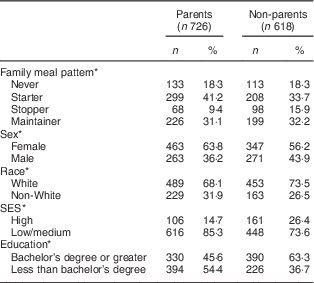
Family meal patterns among parents and non-parent young adults at EAT-IV; data from Wave 4 (EAT-IV; 2015–2016) of Project EAT (Eating and Activity in Teens and Young Adults)
* Parents and non-parents differ significantly at P (χ 2)<0·05.
All analyses were run in 2016 using the statistical software packages SAS version 9.4 (2011) and Stata version 13.1 (2013), and the epiR package in R version 3.2.2. Individual variables from the EAT-IV survey in this sample had relatively low missingness. Only the overweight status variables had greater than 5 % of respondents missing (8·4 and 7·4 % at EAT-I and EAT-IV, respectively). Because of non-response to the FFQ, there was greater missingness for the fruit and vegetable (missing=26·7 %) and sugar-sweetened beverage (missing=24·3 %) variables. However, under the missing at random assumption, missingness on the outcome will not bias the regression coefficients even if complete case analysis is used. For these reasons, all regressions were run as complete case analyses.
Results
Demographic correlates of changes in family meal frequency patterns among young adult parents
Among young adult parents, family meal frequency patterns over time tended to be similar across the following sociodemographic characteristics: sex, race/ethnicity, SES and number of children living in the household (Table 2). However, differences in meal patterns were observed for other demographic characteristics, including: mean age of child(ren) in household (i.e. starters and maintainers had younger children), age of the parent (i.e. stoppers and maintainers were younger parents) and marital status of the young adults’ own parents (i.e. starters and maintainers were more likely to have had parents who were married).
Associations between family meal frequency patterns and young adult parents’ dietary intake, weight and weight-related behaviours, and psychosocial well-being
Dietary intake outcomes
Results indicated that parents who maintained having regular family meals as adolescents and as parents, or who started the routine of having regular family meals as parents, consumed less fast food per week compared with those who reported never having regular family meals during adolescence or in parenthood (Table 3). For example, parents who maintained having regular family meal routines as an adolescent and as a parent reported 0·13 (95 % CI −0·23, −0·03) sd fewer fast-food meals per week than parents who never had regular family meals (Table 3). Parents who started having regular family meals when they became parents reported 0·16 (95 % CI −0·26, −0·06) sd fewer fast-food meals per week than parents who never had regular family meals (Table 3). There were no significant associations between family meal frequency patterns and young adult parents’ fruit and vegetable intake or sugar-sweetened beverage consumption.
Weight-related outcomes
Results indicated that parents who maintained having regular family meals as adolescents and as parents, or who started the routine of having regular family meals as parents, engaged in significantly fewer unhealthy weight-control behaviours and had a lower risk of binge eating compared with those who reported never having regular family meals as an adolescent or as a parent (Table 3). There were no significant associations between family meal frequency patterns over time and young adult parents’ weight status.
Psychosocial outcomes
Results indicated that parents who maintained having regular family meals as adolescents and as parents, or who started having regular family meals with their own children, had fewer depressive symptoms and higher levels of self-esteem as compared with parents who never had regular family meals as adolescents (Table 3).
Comparison of young adult parents v. non-parents on family meal frequency patterns
Family meal patterns differed between young adult parents and other young adults who were not parents (Table 4). Parents were more likely to be family meal starters (41·2 %) than other young adults (33·7 %) and less likely to be family meal stoppers (9·4 %) than other young adults (15·9 %). Compared with participants who were not parents at EAT-IV, parents were more likely to be female (64 % of parents v. 56 % of other young adults, P (χ 2)=0·004), have medium or lower SES (85 % of parents v. 74 % of other young adults, P (χ 2)<0·0001), be non-White (32 % of parents v. 27 % of other young adults, P (χ 2)=0·03) and were less likely to have attained at least a bachelor’s degree (46 % of parents v. 63 % of other young adults, P (χ 2)<0·0001).
Discussion
Results of the current study support each study hypothesis in part or in full. The first hypothesis was that young adult parents who had regular family meals as adolescents and carry them forward (i.e. intergenerational transmission) with their own children as parents will have better dietary intake, more healthy weight and weight-related behaviours, and higher psychosocial well-being. This hypothesis was supported for the majority of the outcome measures. Among young adult parents, having regular family meals in both adolescence and parenthood (15 years later), or starting to have regular family meals as a parent, was associated with more healthful dietary, weight-related and psychosocial outcomes in parents. These associations were found for many, but not all of the outcomes examined. For example, regular family meals were associated with less fast-food intake, fewer unhealthy weight-control behaviours, fewer depressive symptoms, less binge eating and higher self-esteem in parents. However, there were no significant associations between regular family meals and parent fruit and vegetable intake, sugar-sweetened beverage consumption or weight status. Study results reinforce prior cross-sectional and longitudinal findings that have shown regular family meals in adolescence are associated with healthier weight-related behaviours and emotional well-being in the short and long term( Reference Larson, Neumark-Sztainer and Hannan 1 , Reference Eisenberg, Olson and Neumark-Sztainer 10 , Reference Fulkerson, Neumark-Sztainer and Hannan 14 , Reference Berge, Wall and Hsueh 15 , Reference Fulkerson, Story and Mellin 43 ). Results also extend previous longitudinal findings by showing that having regular family meals as a parent is associated with healthful dietary, weight-related and psychosocial outcomes, even if family meals were experienced less frequently in adolescence( Reference Larson, Neumark-Sztainer and Hannan 1 , Reference Eisenberg, Olson and Neumark-Sztainer 10 , Reference Fulkerson, Neumark-Sztainer and Hannan 14 , Reference Berge, Wall and Hsueh 15 , Reference Fulkerson, Story and Mellin 43 ).
The second study hypothesis, that young adults who have children will be more likely to engage in regular frequent family meals compared with young adults who are not parents, was supported. Young adults who were parents were more likely to start and less likely to stop having regular family meals compared with non-parents.
Results of the current study also support the tenets of the FST( Reference Whitchurch and Constantine 17 , Reference Bertalanffy 18 ) and other studies that have used FST to guide their research on family meals( Reference Fiese, Hammons and Grigsby-Toussaint 19 , Reference Berge 22 , Reference Berge and Saelens 44 , Reference Fiese and Schwartz 45 ). FST purports that patterns/routines (e.g. regular family meals) created in the family can be supportive and conducive to healthy behaviours/outcomes (e.g. healthy eating). Additionally, behaviours (i.e. having regular family meals) learned in adolescence can be transmitted intergenerationally. In the current study, intergenerational transmission of family meal patterns from adolescence into parenthood was associated with healthy dietary intake, weight-related behaviours and psychosocial outcomes in parenthood. Furthermore, results suggested that starting new patterns/routines in parenthood regarding regular family meals was also associated with healthy dietary intake, weight-related behaviours and psychosocial outcomes in parents.
These findings have implications for health-care providers, public health interventionists and future research. For example, providers working with adolescents and their parents, or young adults and their families, may want to include recommendations that it’s never too late to start having regular family meals in terms of realizing certain dietary, weight-related and psychosocial benefits as a parent. Such messages may be reassuring to parents who are worried about lacking experience with the practice of having family meals. Additionally, interventions and future research focused on increasing family meals may want to include educational messages for families and parents regarding the importance of starting regular family meals whenever possible and tips for parents who did not eat regular family meals as children, but who might want to start. Such information may help reduce the barriers or potential burdens identified in previous research regarding why family meals are sometimes hard for families to carry out( Reference Fulkerson, Kubik and Rydell 46 – Reference Berge, Hanson and Draxten 48 ). Furthermore, it may be important to conduct qualitative research with parents regarding their attitudes towards family meals, such as their reasons for (or against) carrying forward family meals or barriers to carrying forward family meals with their own families.
The current study has both strengths and limitations. One strength of the study is the longitudinal study design, allowing for examining practices used in the home during adolescence and in parenthood. Another strength is the ability to adjust for important demographic variables and baseline measures (during adolescence) of the outcome variables. There are also some study limitations relating to the self-report nature of survey research, challenges with retention over the 15-year follow-up period, measuring dietary intake with an FFQ tool and the timing of measures. First, social desirability bias may have occurred, given the self-report nature of survey research. Additionally, the one-item measure of family meal frequency may not be as robust a measure as compared with using multiple items. A second limitation is that participants self-reported their height and weight. However, prior studies( Reference Stewart 32 – Reference Palta, Prineas and Berman 35 ) and results from a sub-study (n 125) conducted with Project EAT participants( Reference Quick, Wall and Larson 49 , Reference Sirard, Hannan and Cutler 50 ) have shown high correlations between self-reported height and weight and objectively measured values in adults (i.e. r=0·89–0·98). Third, there is a potential for retention bias in the study due to differential loss to follow-up from EAT-I to EAT-IV. Participants who were followed to Wave 4 were significantly different on some sociodemographic characteristics (e.g. sex, SES) compared with the population sampled at Wave 1. Therefore, findings from the present study may not be generalizable to other more diverse populations. A fourth limitation is that FFQ were used, which may not be as valid a measure as other tools such as multiple 24 h dietary recalls. Finally, while the longitudinal time frame of the study is a strength, it is unclear at what point in time the family meal frequency patterns actually changed for participants and thus conclusions cannot be drawn regarding specific time points at which starting or stopping regular family meals is more impactful than other time points.
Conclusion
Study results suggest that young adults who continued the routine of having regular family meals from adolescence into parenthood (i.e. maintainers) or who started the routine of having regular family meals with their own families (i.e. starters) had more healthful dietary, weight-related and psychosocial outcomes compared with parents who never had regular family meals from adolescence to parenthood or those who stopped having regular family meals. Additionally, parents were more likely to be family meal starters than non-parents. Results of the current study may be useful for interventionists, health-care providers and future research to educate parents that it is never too late to start having regular family meals to realize certain benefits of healthy dietary, weight-related and psychosocial outcomes as a parent.
Acknowledgements
Financial support: This research was supported by the National Heart, Lung, and Blood Institute (Principal Investigator D.N.-S., grant number R01HL116892). The content is solely the responsibility of the authors and does not necessarily represent the official views of the National Heart, Lung and Blood Institute, the National Institute of Child Health and Human Development or the National Institutes of Health. Conflict of interest: Authors have no conflicts of interest to report. Authorship: All co-authors made a substantial contribution to the paper as described below and agree to be accountable for all aspects of the work regarding the accuracy or integrity of any part of the work. J.M.B. conceptualized the paper, assisted with data analysis and interpretation, wrote all drafts of the paper, and gave final approval of the version to be published. J.M. conducted the data analysis, critically reviewed the paper, and gave final approval of the version to be published. A.W. assisted with data analysis and interpretation, critically reviewed the paper, and gave final approval of the version to be published. N.L. assisted with data acquisition, interpretation of the data, critically reviewed the paper, and gave final approval of the version to be published. K.A.L. assisted with conceptualization of the paper, critically reviewed the paper, and gave final approval of the version to be published. D.N.-S. is the Principal Investigator on the grant, she critically reviewed the paper, and gave final approval of the version to be published. Ethics of human subject participation: The University of Minnesota’s Institutional Review Board Human Subjects Committee approved all protocols used in Project EAT at each wave.



