


Schizophrenia and schizophrenia spectrum disorders are one of the worldwide leading causes of chronic disability in young people (GBD 2016 Disease and Injury Incidence and Prevalence Collaborators 2017). Although about 40% of patients can be described as having a good symptomatic outcome, impairments in everyday functioning often persist even with successful pharmacological treatment of psychotic symptoms (Emsley Reference Emsley2009); only about 1 in 7 patients experience ‘true’ recovery, i.e. symptom remission accompanied by adequate social functioning (Jaaskelainen Reference Jaaskelainen, Juola and Hirvonen2013).
It has long been acknowledged that timely treatment in the early stages of psychotic disorders can improve clinical and functional outcomes, prevent negative social consequences of psychosis such as social isolation, unemployment and homelessness, and reduce the risk of self-harm and violence (Oliver Reference Oliver, Davies and Crossland2018). Awareness of this fact has led to an increased focus on early detection and treatment of psychotic disorders, boosted by a seminal study that reported a prodromal phase with attenuated or unspecific symptoms and/or functional decline several years in advance of a first psychotic episode in the majority of patients (Häfner Reference Häfner, Maurer and Löffler1998). In the late 1990s, operationalised criteria were developed to identify individuals at increased risk for psychotic disorders. The present review aims to provide a summary of major terms, concepts and recommendations with respect to diagnosis and treatment of such individuals. The case vignettes are fictitious but based on our clinical experience.
Diagnosis
The terms ‘clinical high risk’ and ‘at-risk mental state’ are used to describe signs and symptoms indicative of a high risk for psychotic disorders (Fusar-Poli Reference Fusar-Poli, Bechdolf and Taylor2013a). Two sets of criteria are used for diagnosis: ultra-high-risk and basic symptom criteria (Schultze-Lutter Reference Schultze-Lutter, Michel and Schmidt2015).
Ultra-high-risk criteria
Ultra-high-risk criteria require the presence of at least one of the following: (a) attenuated positive symptoms, i.e. symptoms such as hallucinations and delusions that occur in the presence of more or less intact reality testing (case vignette: Box 1); (b) brief limited intermittent psychotic symptoms (BLIPS), i.e. full-blown positive symptoms that spontaneously remit after a short time (case vignette: Box 2); and (c) genetic high risk accompanied by functional decline (see Table 1 for detailed definitions and criteria).
Case vignette: Anna – diagnosis of attenuated positive symptoms
Anna is 16 years old and has dropped out of high school. Her mother arranged an appointment at an early psychosis service, after searching information about her daughter's symptoms online. Anna reports seeing faces and shadows and hearing footsteps on the staircase, as well as a voice whispering her name, almost every day for the past 6 months. She is aware that her experiences are not real; she was not certain at first, but she tried to record the appearances with her mobile phone and she found out that she could not. However, they make her afraid, and she cannot sleep at night. When asked what she thinks causes the appearances, she says ‘there must be something wrong with my head’. She was prescribed quetiapine 50 mg/day 3 weeks ago, but she did not notice any improvement.
Anna dropped out of school at the age of 15 after failing eighth grade (UK year 9) twice. Since then, she has had a few part-time jobs. In the past few months, she has been spending most of her time at home watching TV and sleeping. Anna's mother reports that Anna has been withdrawn, oppositional and argumentative for the past couple of years; she does not seem to care about anything anymore, and she hardly talks to her parents. Anna describes a growing sense of hopelessness and worthlessness; in the past few weeks, she has had little energy and spent most of her time at home watching TV and sleeping. She has often contemplated suicide but has never tried to harm herself.
Discussion
Anna suffers from visual and auditory hallucinations. Although reality testing is intact, her experiences do cause some concern and have an impact on her sleep. Their frequency is sufficient for a diagnosis of attenuated psychotic symptoms, given that the symptoms have been present for less than a year.
Case vignette: Mike – diagnosis of brief limited intermittent psychotic symptoms (BLIPS)
Mike, a 19-year-old apprentice carpenter with no previous psychiatric history, was referred for emergency psychiatric assessment by his general practitioner after receiving a fine for fare evasion. Mike reported that he had fled home 3 days ago because he thought he was being persecuted. After seeing a stranger on the bus, who appeared at his place of work to visit his manager 2 days later, he started noticing people on the street and being convinced that they were following him and talking about him. He felt threatened, especially after seeing a hearse driving by, so he went to the train station, jumped on the next departing train and spent 3 days travelling around. He returned home when he started feeling safe again.
At the time of assessment, a week after the incident, Mike did not express any ideas of reference or persecutory delusion. He dismissed his previous ideas as ‘absurd’ and was worried that they meant that he was going crazy, so he agreed to a full diagnostic evaluation. He reported smoking cannabis fairly regularly, about once or twice a week, but not in the week prior to the episode. There were no other relevant findings from his psychiatric or family history, physical examination, laboratory tests and neuropsychological evaluation.
Discussion
Mike suffered from full-blown psychotic symptoms (complete loss of reality testing) but they lasted less than a week and remitted spontaneously and fully without antipsychotic treatment. Hence, he meets criteria for BLIPS.
Ultra-high-risk criteria and comparison of the Structured Interview for Prodromal Syndromes (SIPS) and Comprehensive Assessment of At-Risk Mental States (CAARMS)
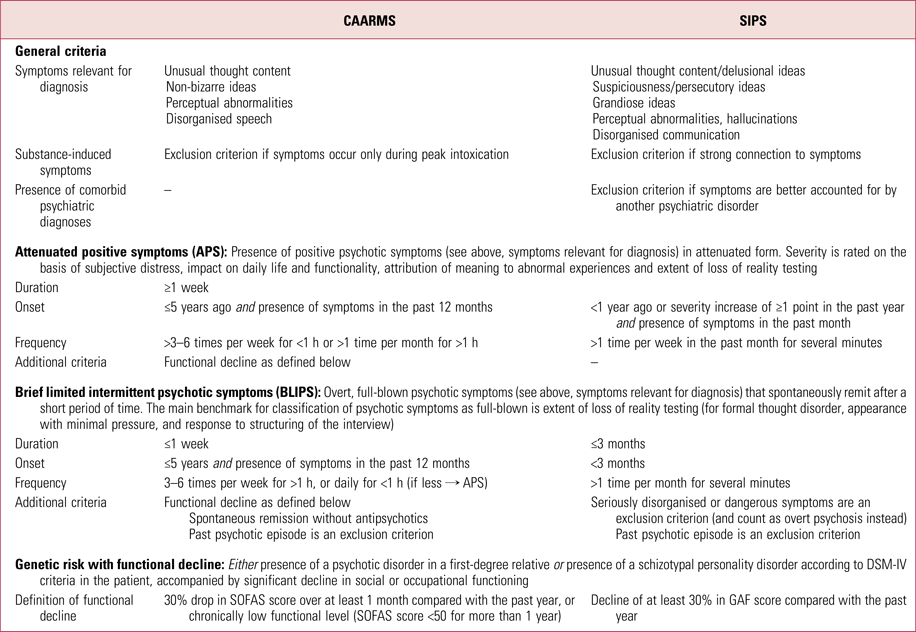
GAF, Global Assessment of Functioning; SOFAS, Social and Occupational Functioning Assessment Scale.
The most widely used psychometric instruments for diagnosis of ultra-high-risk criteria to date are the Structured Interview for Prodromal Syndromes (SIPS) (McGlashan Reference McGlashan, Walsch and Woods2010) and the Comprehensive Assessment of At-Risk Mental States (CAARMS) (Yung Reference Yung, Yung and Pan Yuen2005). Both instruments include a cut-off threshold for the definition of overt psychosis based on symptom frequency, duration and severity.
It should be noted that there are some differences in the way ultra-high-risk criteria are operationalised by the SIPS and CAARMS (Table 1). However, a recent study (Fusar-Poli Reference Fusar-Poli and Schultze-Lutter2016a) showed that there is substantial diagnostic agreement between the two instruments, most differences having no major consequences in clinical practice. A notable exception is operationalisation of BLIPS: the SIPS includes an urgency exclusion criterion (symptoms associated with severe disorganisation or with danger to self and others are considered to exceed the threshold for psychosis irrespective of their duration), and thus some patients meeting this criterion in the CAARMS may be categorised as exhibiting a first psychotic episode in the SIPS (Fusar-Poli Reference Fusar-Poli, Díaz-Caneja and Patel2016a).
Basic symptoms
Basic symptom criteria represent a distinct approach in the diagnosis of high psychosis risk, in that they only consider symptoms subjectively experienced (i.e. the emphasis is on the patient's distress rather than observation by others) (case vignette: Box 3). They include disturbances of perception, cognition and language, and are thought to indicate an earlier prodromal stage than ultra-high-risk criteria (Klosterkötter Reference Klosterkötter, Schultze-Lutter and Bechdolf2011). Because they do not necessarily coexist with ultra-high-risk symptoms, they are used in some centres, especially in German-speaking countries, to complement assessment of suspected high-risk individuals.
Case vignette: Claire – diagnosis of basic symptoms
Claire is a 17-year-old high school pupil. In the past few weeks, she has been experiencing increasingly distressing symptoms that occur at least once a week. While reading books, for example, she noticed that she does not understand the meaning of words and passages as effortlessly as before and needs to reread them. She also has difficulty finding the right words and putting them in order to make meaningful sentences. At times, she loses her train of thought or her mind is flooded by insignificant thoughts, which makes it impossible to concentrate. More than a year ago she started to experience visual disturbances. Colours of objects seem brighter, and she feels that she cannot always rely on her perception of distance or movement; for example, sometimes she thinks objects are moving, although in reality they are not. She also sometimes has the impression that people are talking about her or looking at her, although at the same time she knows that this is actually not possible. She has asked her family and friends if she seems odd or changed in any way, but they have not observed any changes.
Discussion
Claire experiences several cognitive basic symptoms: disturbance of receptive and expressive speech, thought interference, thought blockage, unstable ideas of reference. Moreover, she experiences one perceptual basic symptom (visual perception disturbances). Because she experiences these symptoms as a deviation from her usual state and they cause her distress, they meet the general criterion for basic symptoms. The fact that the symptoms are not observed by others is not relevant for diagnosis, as the definition of basic symptoms relies exclusively on subjective experience.
Basic symptoms are assessed using the Schizophrenia Proneness Instrument, which has separate adult (SPI-A) (Schultze-Lutter Reference Schultze-Lutter, Addington and Ruhrmann2007) and child and adolescent (SPI-CY) versions (Schultze-Lutter Reference Schultze-Lutter and Koch2010). Two partially overlapping criteria sets are used for diagnosis of the high-risk state (Schultze-Lutter Reference Schultze-Lutter and Ruhrmann2008) (Box 4).
Sets of criteria for diagnosis of high-risk state using basic symptoms on the Schizophrenia Proneness Instrument
To be rated as basic symptoms, symptoms must be experienced with full insight (i.e. as a change from the individual's usual state) and cause significant subjective distress.
Cognitive disturbances (COGDIS)
Presence of least two of the following symptoms in the past 3 months:
• Inability to divide attention
• Thought interference
• Thought pressure
• Thought blockages
• Disturbance of receptive speech
• Disturbance of expressive speech
• Unstable ideas of reference
• Disturbance of abstract thinking
• Captivation of attention by details of the visual field
Cognitive-perceptual disturbances (COPER)
Presence of at least one of the following symptoms for at least 12 months:
• Thought interference
• Thought perseveration
• Thought pressure
• Thought blockages
• Disturbance of receptive speech
• Decreased ability to discriminate between ideas and perception, fantasy and true memories
• Unstable ideas of reference
• Derealisation
• Visual perception disturbances
• Acoustic perception disturbances
Prognostic considerations – how to interpret a clinical high-risk diagnosis
The probability of psychotic transition in individuals meeting high-risk criteria has been estimated to be about 36–37% in recent meta-analyses and appears to reach its peak in the first 2–3 years of follow-up (Fusar-Poli Reference Fusar-Poli, Bechdolf and Taylor2013a; Schultze-Lutter Reference Schultze-Lutter, Michel and Schmidt2015); most of these individuals will develop a schizophrenia spectrum disorder (Fusar-Poli Reference Fusar-Poli, Borgwardt and Bechdolf2013b).
From the above figures it becomes clear that, although these patients are at considerably higher risk for the development of a psychotic disorder than the general population, approximately two-thirds of them will not develop such a disorder. It should always be kept in mind that the diagnostic instruments mentioned above have high sensitivity (96%) but only modest specificity (47%) (Fusar-Poli Reference Fusar-Poli, Cappucciati and Rutigliano2015a), and thus are more useful in ruling out psychosis risk than in predicting an actual future transition to psychosis (Fusar-Poli Reference Fusar-Poli, Cappucciati and Rutigliano2016b).
The effect of screening strategy
In recent years, a notable decline in transition rates has been observed in high-risk individuals, which cannot be fully accounted for by the effects of earlier treatment (Nelson Reference Nelson, Yuen and Lin2016). It has been suggested that the declining transition risk may represent a ‘dilution effect’ due to the application of the clinical high-risk concept to unsuitable populations. It has been established that the prognostic accuracy of high-risk criteria is strongly dependent on the pre-test risk of the population studied (Fusar-Poli Reference Fusar-Poli, Cappucciati and Rutigliano2015a), which is higher for help-seeking individuals referred to early intervention centres (15%) compared with, for example, primary care patients (0.045%) (Fusar-Poli Reference Fusar-Poli, Cappucciati and Rutigliano2015a, Reference Fusar-Poli, Cappucciati and Rutigliano2016b). Thus, low-threshold referral strategies and outreach campaigns targeting the general population may result in limited prognostic usefulness of specialised early assessment. In its guidance on the early detection of the high-risk state, the European Psychiatric Association acknowledges that substantial pre-assessment ‘risk enrichment’ is needed for early intervention services to have clinical utility, and suggests that the above criteria for assessment of high risk for psychosis should only be applied to individuals already distressed by mental problems and seeking help for them, or to those seeking clarification of their current risk in the context of, for example, a genetic predisposition for psychotic disorders (Schultze-Lutter Reference Schultze-Lutter, Michel and Schmidt2015).
Children and adolescents: special considerations
In young children, the prevalence of psychotic symptoms such as auditory hallucinations may be as high as 9%, but more often than not they have no clinical relevance and remit spontaneously (Schimmelmann Reference Schimmelmann, Walger and Schultze-Lutter2013). Moreover, a recent telephone survey of adolescents reported a point prevalence for attenuated positive symptoms of around 13.8%, but in most cases these were not frequent enough to meet criteria for psychosis risk (Schultze-Lutter Reference Schultze-Lutter, Michel and Ruhrmann2017). Therefore, particular caution is advised when assessing children and young adolescents for early signs of psychosis, and interpretation and communication of results should be carried out by trained professionals experienced in psychosis risk screening (Schimmelmann Reference Schimmelmann, Walger and Schultze-Lutter2013). In older adolescents, there are more similarities to clinical presentations of high risk in adults, but with a more fluctuating course (Schimmelmann Reference Schimmelmann, Conus and Cotton2007).
Predictors of transition to psychosis
Given the above-mentioned limitations of screening instruments, a large body of research has been devoted to identifying specific variables, or combinations of variables, that could be used to improve prediction of the risk of psychotic transition at the level of the individual patient.
Several studies have investigated whether specific combinations of prodromal symptoms are predictive of increased transition risk. Although individual results vary, greater severity of psychosis risk symptoms at baseline appears to be a consistent predictor of increased transition risk (Mechelli Reference Mechelli, Lin and Wood2017). Moreover, patients meeting both ultra-high-risk and basic symptom criteria have been reported to be at increased transition risk compared with those meeting only one set of criteria (Ruhrmann Reference Ruhrmann, Schultze-Lutter and Salokangas2010).
Apart from symptoms, variables such as environmental, cognitive, neuroimaging and electrophysiological measures (Fusar-Poli Reference Fusar-Poli, Borgwardt and Bechdolf2013a; Schmidt Reference Schmidt, Cappucciati and Radua2017) have also been suggested to be useful in predicting psychotic transitions. Several studies apply machine learning algorithms to large datasets in order to provide individualised estimates of transition risk (Klosterkötter Reference Klosterkötter, Ruhrmann and Schultze-Lutter2005; Schmidt Reference Schmidt, Cappucciati and Radua2017; NAPLS 2018; PRONIA 2018) or functional outcomes (Koutsouleris Reference Koutsouleris, Kambeitz-Ilankovic and Ruhrmann2018) in high-risk individuals. The ultimate goal is the development of individualised ‘risk calculators’ (Cannon Reference Cannon, Yu and Addington2016; Fusar-Poli Reference Fusar-Poli, Rutigliano and Stahl2017a). However, predictive tools need to be validated in independent samples and different clinical contexts, as their performance depends on several factors, such as recruitment strategies, sample characteristics and instruments used for assessment. Since high-quality validation studies are largely lacking (Studerus Reference Studerus, Ramyead and Riecher-Rössler2017), the applicability of existing risk prediction tools is currently still limited to the research setting.
Transition to psychosis – not the only outcome of interest
Although most studies so far have focused on transition to psychosis as the major outcome of interest in high-risk individuals, more recent research indicates that other clinical measures may also be meaningful and relevant to treatment. A number of studies investigating the clinical course of high-risk patients who do not transition to psychosis indicate that at least a third of these individuals persistently or recurrently experience attenuated psychotic symptoms in the long term (Simon Reference Simon, Borgwardt and Riecher-Rössler2013; Michel Reference Michel, Ruhrmann and Schimmelmann2018). Moreover, the majority of these patients have non-psychotic psychiatric disorders such as substance-related, affective or anxiety disorders (Lin Reference Lin, Wood and Nelson2015; Michel Reference Michel, Ruhrmann and Schimmelmann2018) and exhibit long-term functional impairments compared with healthy controls (Polari Reference Polari, Lavoie and Yuen2018). These observations are relevant to treatment. For example, it has been suggested that attenuated psychotic symptoms may also occur in the context of other clinical disorders, such as depressive and anxiety disorders, as a sign of increased severity (van Os Reference van Os and Guloksuz2017); in such patients, treatment of the primary disorder might lead to remission from the high-risk state.
Treatment
As detailed above, patients screening positive for clinical high risk for psychosis experience significant distress and often functional impairment as well, irrespective of whether they will convert to psychosis or not. Therefore, the aim of treatment is not only to prevent transition to psychosis, but also to improve comorbid disorders such as depression, anxiety and substance use, as well as to prevent functional impairments or improve existing functioning (Schmidt Reference Schmidt, Schultze-Lutter and Schimmelmann2015; Addington Reference Addington, Addington and Abidi2017; Fusar-Poli Reference Fusar-Poli, McGorry and Kane2017b). Specialised early intervention services work towards these goals by adopting an integrated multidisciplinary approach that typically includes a combination of elements such as symptom monitoring and management, improvement of social skills and cognition, psychoeducation, treatment of comorbidities, crisis management, family intervention and support, and psychosocial support for housing, educational or vocational problems (case vignettes: Box 5, Box 6, Box 7).
Case vignette: Mike – clinical course of BLIPS
Mike received a few psychoeducation sessions, in which a crisis plan for future episodes was developed. He was advised to abstain from cannabis, but he continued smoking it occasionally. He came to his follow-up appointments every 3–4 months for about a year and kept in touch over the telephone for another few months, but he did not feel the need to make any further appointments.
Case vignette: Anna – clinical course of attenuated positive symptoms
Anna was diagnosed with a major depressive episode. Quetiapine was discontinued, and she was offered psychoeducation about attenuated positive symptoms and cognitive–behavioural therapy. However, after missing several therapy appointments, she was started on an antidepressant. Her mood improved somewhat, suicidal ideation disappeared and she was able to keep her appointments more reliably. She reported feeling less frightened by her hallucinations and later that they had disappeared altogether. A few joint sessions with her parents were held to relieve family tensions. Anna is currently being helped by a social worker to find a supported apprenticeship.
Case vignette: Claire – clinical course of basic symptoms
Claire had an appointment with an early psychosis detection service after she talked to the school social worker about her very distressing experiences. She had an extensive diagnostic assessment in which she was relieved to talk about her problems and to obtain professional help on how to cope with her cognitive disturbances and how to understand her perceptual disturbances. She agreed on regular monthly follow-ups in order to reassess her disturbances.
Dos and don'ts in clinical practice
Do
• Refer for specialist assessment and treatment early when you suspect high risk for psychosis
• Offer treatment for any depression, anxiety or substance misuse, and psychosocial support
• Be optimistic – keep in mind that only about a third of high-risk patients will make the transition to psychosis
Do not
• Screen for psychosis risk if the individual is not distressed by mental problems, unless they are seeking advice on their current risk in the context of a genetic predisposition
• Communicate suspicions of high psychosis risk to children and adolescents or their families: interpretation of screening results in this age group is complicated and should be left to trained professionals with expertise in high-risk diagnosis
• Use antipsychotics for subthreshold symptoms, or symptoms of unconfirmed severity, before exploring other options
Specialised early intervention services have been shown to reduce the occurrence of psychotic transition (van der Gaag Reference van der Gaag, Smit and Bechdolf2013) in high-risk individuals; in patients with a first psychotic episode, they contribute to reduction of the duration of untreated psychosis (i.e. the time between onset of symptoms and the beginning of treatment) (Oliver Reference Oliver, Davies and Crossland2018) and reduce the need for in-patient treatment and compulsory admissions (Fusar-Poli Reference Fusar-Poli, Díaz-Caneja and Patel2016c). These benefits have been acknowledged by several national and international guidelines, which consider assessment by a specialised early intervention service as an integral part of early psychosis treatment (National Institute for Health and Care Excellence 2014; Schmidt Reference Schmidt, Schultze-Lutter and Schimmelmann2015; Addington Reference Addington, Addington and Abidi2017). Specific psychotherapy programmes, such as cognitive–behavioural therapy protocols and family interventions, have also shown some promising results in the treatment of clinical high-risk individuals (Schmidt Reference Schmidt, Schultze-Lutter and Schimmelmann2015; Devoe Reference Devoe, Farris and Townes2019). However, a recent meta-analysis (Davies Reference Davies, Cipriani and Ioannidis2018a) did not find any evidence favouring specific interventions over needs-based interventions for the prevention of transition to psychosis.
Cannabis use
Although a causal relationship has not been conclusively established, several epidemiological studies suggest that regular or heavy cannabis use may increase the risk for the development of psychotic disorders over and above the effects of acute intoxication, especially in predisposed individuals, users of potent strains of cannabis or those with an early onset of use (Gage Reference Fusar-Poli, McGorry and Kane2016; Murray Reference Murray, Quigley and Quattrone2016). Moreover, cannabis use has been related to worse symptomatic outcomes and accelerated loss of grey matter volume in individuals with schizophrenia (Iseger Reference Iseger and Bossong2015). All of these effects appear to be mediated by tetrahydrocannabinol (THC) (Iseger Reference Iseger and Bossong2015; Gage Reference Fusar-Poli, McGorry and Kane2016). Therefore, both high-risk and first-episode patients should be encouraged to reduce or abstain from cannabis use.
Interestingly, the observed negative consequences of THC do not extend to cannabidiol (CBD), which instead has been suggested to have antipsychotic effects (Iseger Reference Iseger and Bossong2015; Khoury Reference Khoury, Neves and Roque2017). Two small randomised controlled studies have suggested that CBD might be effective in the treatment of positive symptoms in individuals with schizophrenia (Leweke Reference Leweke, Piomelli and Pahlisch2012; McGuire Reference McGuire, Robson and Cubala2018), but a third study failed to replicate these findings (Boggs Reference Boggs, Surti and Gupta2018). So far, there are no published studies on the clinical efficacy of CBD in high-risk or first-episode patients; however, a recent neuroimaging study of single-dose CBD in high-risk patients suggested a positive effect on the function of brain regions associated with the clinical high-risk state, such as the parahippocampal area, striatum and midbrain (Bhattacharyya Reference Bhattacharyya, Wilson and Appia-Kusi2018). Thus, and given its favourable adverse effect profile (Iseger Reference Iseger and Bossong2015), CBD presents a promising area for future research.
Pharmacological interventions
Several atypical antipsychotics have shown efficacy in reducing conversion rates in clinical high-risk patients (Schmidt Reference Schmidt, Schultze-Lutter and Schimmelmann2015). However, available meta-analyses suggest that treatment with antipsychotics is not superior to psychological interventions in terms of conversion rates (Schultze-Lutter Reference Schultze-Lutter, Michel and Schmidt2015; Davies Reference Davies, Cipriani and Ioannidis2018a), reduction of attenuated positive symptoms (Davies Reference Davies, Radua and Cipriani2018b; Devoe Reference Devoe, Farris and Townes2019) or functional outcomes (Schmidt Reference Schmidt, Schultze-Lutter and Schimmelmann2015). Therefore, current international guidelines (Schmidt Reference Schmidt, Schultze-Lutter and Schimmelmann2015; Addington Reference Addington, Addington and Abidi2017) recommend the least restrictive approach, i.e. psychological interventions, as the first-line treatment, while treatment with antipsychotics is reserved for patients who do not respond to psychological interventions or who show severe and/or progressive high-risk symptoms. In these cases, antipsychotic medication should be used to achieve sufficient clinical stability for psychosocial interventions; long-term preventive treatment with antipsychotics is currently not recommended (Schmidt Reference Schmidt, Schultze-Lutter and Schimmelmann2015).
Apart from antipsychotics, other pharmacological or neuroprotective agents have shown promise in the treatment of high-risk patients, particularly N-methyl-d-aspartate (NMDA) receptor modulators such as d-serine and glycine for the treatment of positive and negative symptoms (Woods Reference Woods, Kantrowitz and Javitt2014; Dong Reference Dong and Haschimoto2015) and antidepressants for prevention of psychotic transitions (Cornblatt Reference Cornblatt, Lencz and Smith2007; Fusar-Poli Reference Fusar-Poli, Frascarelli and Valmaggia2015b); however, further evidence is needed before a reliable recommendation can be provided. Promising results that were initially obtained for omega-3 fatty acids (Amminger Reference Amminger, Schäfer and Papageorgiou2010, Reference Amminger, Schäfer and Schlögelhofer2015) could not be replicated in a larger randomised controlled trial (McGorry Reference McGorry, Nelson and Markulev2017; Nelson Reference Nelson, Amminger and Yuen2018).
Summary
Almost three decades have passed since the introduction of operationalised criteria for the identification of individuals at high risk for psychosis. Clinical experience and a large number of studies have established the usefulness of the concept of high psychosis risk and led to its inclusion in international guidelines. However, clinicians should be aware of the limitations of psychosis risk assessment and the particularities of treatment in high-risk individuals (Box 7); early referral to a specialised early intervention service will be advantageous in most cases.
MCQs
Select the single best option for each question stem
1 Which of the following does not count towards a diagnosis of clinical high risk for psychosis?
a suspiciousness
b negative symptoms
c hallucinations
d disorganised speech
e subjective disturbance of receptive speech.
2 The parents of a 13-year-old girl seek advice after she tells them that, if she concentrates hard, she can perceive the edges of a picture moving. She is not distressed or alarmed by this experience; on the contrary, she seems to enjoy it. On the basis of this information only, should you refer them to a specialised early psychosis service for evaluation?
a yes, because visual perception disturbances are one of the COPER criteria
b yes, because psychosis screening in adolescents should always be carried out by trained professionals
c no, not before you establish whether the time criterion for COPER (at least 12 months) is met
d no, because there is no subjective distress and therefore the general criteria for basic symptoms are not met
e no, not before you establish whether the symptom is substance-related.
3 Which of the following statements regarding clinical high risk for psychosis is correct?
a the majority of these patients will experience a psychotic episode in the future
b psychosis risk in these patients is substantially increased compared with the general population
c many of these patients suffer from other psychiatric disorders such as depression
d all of the above
e b and c.
4 Which of the following are evidenced-based treatments for high-risk patients?
a treatment in a specialised early intervention service
b antipsychotics
c antidepressants
d a and b
e all of the above.
5 Which of the following is not true regarding high-risk criteria?
a their prognostic usefulness is dependent on referral practices
b the diagnostic instruments have a low sensitivity and high specificity and, hence, they are good predictors of a future transition to psychosis
c most patients who develop a psychotic disorder meet criteria for high risk in the prodromal phase
d patients meeting high-risk criteria often exhibit long-term functional impairments
e they should be interpreted with caution in children and adolescents.
MCQ answers
1 b 2 d 3 e 4 d 5 b


 Open access


eLetters
No eLetters have been published for this article.