


Good nutrition is important for preventing several diet-related diseases( 1 ). Since dietary habits and preferences developed in childhood and adolescence may be maintained into adulthood( Reference Kelder, Perry and Klepp 2 , Reference Bertheke Post, de Vente and Kemper 3 ), altering diet-related behaviours early in life, such as during adolescence( Reference Gaziano 4 , Reference Lake, Mathers and Rugg-Gunn 5 ), is important for disease prevention. Many high-energy foods and beverages are nutrient-poor and often sources of high levels of saturated fat, sugar and salt( Reference Meneton, Lafay and Tard 6 ), which have been linked to overweight and obesity, dyslipidaemia, hypertension, hyperglycaemia and insulin resistance( Reference Dwyer, Evans and Stone 7 ). Increased intakes of high-energy foods and beverages also tend to displace consumption of more nutritious foods including fruit, vegetables and milk( Reference Larson, Story and Wall 8 , Reference Bowman, Gortmaker and Ebbeling 9 ), further impacting on health.
Adolescents tend to consume diets that are at odds with recommendations for health, with a high proportion consuming high-energy foods and beverages daily( Reference Shi, Lien and Kumar 10 , Reference Rangan, Randall and Hector 11 ). Further, adolescents’ intake of high-energy foods tends to increase as they mature, resulting in even poorer dietary quality( Reference Larson, Neumark-Sztainer and Story 12 – Reference Pearson, MacFarlane and Crawford 14 ). Socio-economically disadvantaged adolescents are at greater risk for consuming a poorer diet than more advantaged adolescents, consuming high-energy foods and beverages more frequently( Reference Larson, Neumark-Sztainer and Story 12 , Reference Arcan, Kubik and Fulkerson 15 ). For example, one study of adolescents from all levels of socio-economic position reported that of those who consumed high-energy foods ≥3–4 times/week, 61 % were disadvantaged, and 56 % of adolescents consuming high-energy beverages ≥5–6 times/week were disadvantaged( Reference Arcan, Kubik and Fulkerson 15 ). In order to improve such eating behaviours, a better understanding of the factors influencing adolescent nutrition is required.
Although socio-economically disadvantaged adolescents are at greater risk for consuming a poor diet, some manage to consume a more favourable diet( Reference Magarey, Daniels and Smith 16 – Reference Di Noia, Contento and Schinke 18 ). Understanding factors that enable disadvantaged adolescents to protect their dietary quality, including consuming fewer high-energy foods and beverages, can help inform nutrition promotion initiatives aiming to improve the dietary intakes of disadvantaged adolescents.
Social ecological models consider the connections between individuals and their environments, or ecologies( Reference Bronfenbrenner 19 , Reference Bandura 20 ), across intrapersonal, social and environmental domains and provide useful frameworks for identifying factors associated with eating behaviours. Several factors have previously been shown to be associated with dietary intakes among adolescents. Self-efficacy, perceived importance of health behaviours, taste preferences, food-related behaviours (e.g. meal frequency, snacking) and barriers (e.g. cost, time, inconvenience)( Reference Rasmussen, Krolner and Klepp 21 ) are key intrapersonal determinants of adolescents’ dietary intakes. Social factors associated with dietary intake include adolescents’ interactions with family, friends and peers( Reference Bauer, Larson and Nelson 22 – Reference Cutler, Flood and Hannan 24 ). Parenting style, role modelling of eating behaviours, reinforcement, perceived norms and cultural factors may also be involved( Reference Pearson, Biddle and Gorely 25 ). Finally, environmental influences on adolescent eating behaviour include food availability, accessibility and affordability at home, school and within the local neighbourhood( Reference Pearson, Biddle and Gorely 25 – Reference Laska, Hearst and Forsyth 27 ).
Several intrapersonal, social and environmental factors have previously been associated with socio-economically disadvantaged adolescents’ frequent intakes of vegetables and fruit. For example, we previously reported that greater perceived importance of health and frequently being served vegetables with dinner were associated with frequent vegetable and fruit intakes( Reference Stephens, McNaughton and Crawford 28 ). Among disadvantaged boys, friends’ support for healthy eating was associated with frequent vegetable consumption. Less stringent adherence to family meal-time rules, including whether the adolescent was allowed to buy whatever was liked at fast-food places among both sexes and being expected to eat all foods among boys, was associated with frequent vegetable and fruit consumption; however, the opposite was observed when girls were expected to eat all foods served( Reference Stephens, McNaughton and Crawford 28 ).
To our knowledge, predictors of less frequent consumption of high-energy foods and beverages among disadvantaged adolescents have not been examined. Therefore the aims of the present investigation were: (i) to identify disadvantaged adolescents’ high-energy food and beverage intakes; and (ii) drawing on Social Ecological Theory, to explore cross-sectional and longitudinal associations between intrapersonal, social and environmental factors and disadvantaged adolescents’ high-energy food and beverage intakes.
Methods
Participants and setting
The present investigation draws on a sub-sample of 529 socio-economically disadvantaged adolescents with longitudinal data from the YEP Study, an online food habits survey conducted in thirty-seven secondary schools in metropolitan and non-metropolitan regions of Victoria, Australia. The baseline phase was conducted in 2004–2005, and adolescents were followed up in 2006–2007( Reference Pearson, MacFarlane and Crawford 14 , Reference Stephens, McNaughton and Crawford 28 , Reference MacFarlane, Crawford and Ball 29 ).
At baseline, invitations to participate were open to all co-educational government and Catholic secondary schools that included Years 7–12 and had >200 enrolments located in metropolitan Melbourne and non-metropolitan Gippsland, east of Melbourne, Australia. Of seventy schools that met these criteria, twenty metropolitan and seventeen non-metropolitan schools (thirty-seven in total) agreed to participate. All students (n 9842) from Year 7 (aged 12–13 years) and Year 9 (aged 14–15 years) were invited to participate. Written informed consent was received from adolescents’ parents, and the survey was completed during class time by 3264 sociodemographically diverse secondary students (n 2010 in Year 7, n 1254 in Year 9; response rate at baseline 33·2 %). Schools that participated in the baseline YEP survey were contacted again in 2006 to indicate their interest in continuing involvement in the YEP Study. Schools were sent a list of adolescents for whom parental consent had been granted at baseline and teachers invited adolescents to complete the online follow-up survey. Of 3264 adolescents who completed the baseline YEP survey in 2004–2005, 1938 completed the 2006–2007 YEP follow-up survey (59 % response rate). Of 1287 socio-economically disadvantaged adolescents who completed the baseline YEP survey, 708 (55 %) also completed the follow-up survey. At baseline, a survey assessing sociodemographics of the parent and their partner, including highest level of education, and additional questions about their adolescents’ eating patterns was mailed out to those parents who had given informed consent for their adolescents to participate. Of parents sent a parental survey, 1622 (64 % of parents who initially indicated their interest to participate; representing 50 % of parents for the whole YEP adolescent sample) returned a completed survey.
In the present investigation, only data from socio-economically disadvantaged adolescents who had non-missing data for all variables of interest were included in the analyses (n 529). When adolescents who had non-missing data were compared with those with missing data (n 782) across the measures included in the present investigation, few statistically significant (P ≤ 0·01) differences in these variables existed between groups. When compared with adolescents who had incomplete data, adolescents with complete data rarely bought food/drink from the school canteen, rarely bought food/drink on the way to/from school, had smaller amounts of spending money, perceived greater maternal role modelling of healthy behaviours, were always expected home for dinner and had greater availability of nutritious food at home. The remaining thirty-two variables did not differ between the groups. Where differences did exist, they were relatively small in magnitude.
Socio-economic position was defined based on maternal highest level of education (self-reported at baseline): ‘low’, mother completed up to Year 10 of high school; ‘medium’, mother completed Year 12 high school and/or a technical or trade school certificate/apprenticeship; and ‘high’, mother completed a university or tertiary qualification. The study was approved by Deakin University's Ethics Committee, the Victorian Department of Education and Training, and the Catholic Education Office (EC 227–2003).
Measures
Outcome variables
The online baseline and 2-year follow-up surveys each included a thirty-eight-item FFQ, comprising twenty-seven food items and eleven beverage items, based on food intake questions recommended by the Australian Food and Nutrition Monitoring and Surveillance Unit( Reference Marks, Webb and Rutishauser 30 ) and those used in the 1995 National Nutrition Survey( 31 ). These food and beverage items were based on those most commonly consumed by individuals aged 12 years and older( 31 ). Adolescents were asked to indicate on a seven-point scale (scored 1–7) the frequency with which they had eaten each food item in the previous month. Scores representing equivalent daily frequencies for high-energy beverages were converted from monthly frequencies as follows: ‘not in the last month’ (scored 0·00 – i.e. consumed zero times daily), ‘several times per month’ (0·07), ‘once a week’ (0·14), ‘a few times a week’ (0·36), ‘most days’ (0·71), ‘once per day’ (1·00) and ‘several times per day’ (2·50). As the FFQ did not include portion size, calculation of serving size was not possible. Therefore each FFQ response scale was converted to weekly (high-energy food) or daily (high-energy beverages) equivalent frequencies separately at baseline and at follow-up. High-energy food monthly frequencies were converted to equivalent weekly frequencies as follows: ‘not in the last month’ (scored 0·0 – i.e. consumed 0 times weekly), ‘several times per month’ (0·50), ‘once a week’ (1·00), ‘a few times a week’ (2·00), ‘most days’ (4·00), ‘once per day’ (7·00) and ‘several times per day’ (14·00). Scores representing equivalent daily frequencies for high-energy beverages were converted from monthly frequencies as follows: ‘not in the last month’ (scored 0·00 – i.e. consumed zero times daily), ‘several times per month’ (0·07), ‘once a week’ (0·14), ‘a few times a week’ (0·36), ‘most days’ (0·71), ‘once per day’ (1·00) and ‘several times per day’ (2·50). This approach is based on the Victorian Cancer Council FFQ User Guide( 32 ) conversion of FFQ response categories to daily equivalent frequencies, a methodology commonly used to rank individuals’ dietary intakes( Reference Di Noia and Contento 33 , Reference Kvaavik, Batty and Ursin 34 ).
The ‘high-energy food’ group included ‘hot chips, French fries, wedges, fried potato’, ‘fish or seafood (from a fish and chip shop)’, ‘pizza’, ‘pies, pastries, sausage rolls’ and ‘fast foods (e.g. McDonalds, KFC)’. Foods purchased at fast-food restaurants average ~1100 kJ per 100 g( Reference Prentice and Jebb 35 , 36 ). ‘High-energy beverages’ included regular (i.e. not diet/low-calorie) cordial (a sweetened, flavoured, concentrated syrup mixed with water to taste), regular soft drink, energy drinks (e.g. VFootnote *, Red BullFootnote † ) and sports drinks (e.g. GatoradeFootnote ‡ , PoweradeFootnote § ).
Among socio-economically disadvantaged adolescents, baseline and follow-up consumption frequencies were dichotomized as follows: less frequent consumption was defined as ≤2 times/week for high-energy food meals and as ≤1 time/d for high-energy beverages.
Predictor variables
Survey items were developed to assess intrapersonal, social and environmental factors drawn from Social Ecological Theory and hypothesized to influence adolescent eating behaviours( Reference Bronfenbrenner 19 , Reference Bandura 20 ). The YEP surveys were pilot-tested among twenty adolescents, with survey items modified slightly for clarity based on adolescents’ feedback prior to being administered to the larger sample. The present investigation included a number of intrapersonal, social and environmental measures from the baseline survey (Table 1). Scales were created by summing categorical-response items measuring a particular construct. For example, three items measuring the perceived importance of health behaviours were summed to give a composite score. Cronbach's α coefficients were calculated for all summed scales used in the present investigation (Table 1).
Intrapersonal, social and environmental measures from the baseline YEP adolescent survey
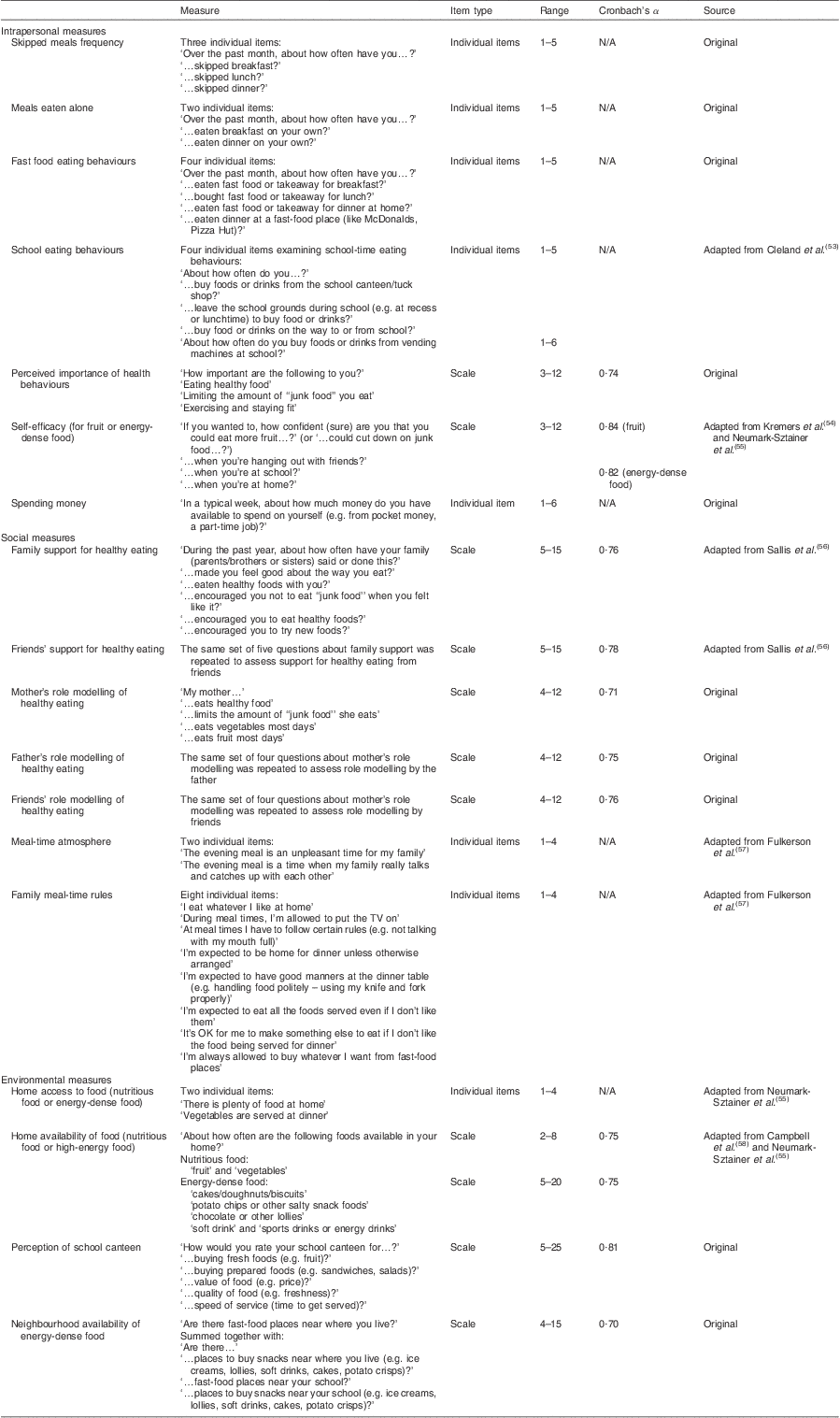
N/A, not applicable.
Covariates
Past research has demonstrated that sociodemographic characteristics including sex( Reference Rangan, Randall and Hector 11 , Reference Rasmussen, Krolner and Klepp 21 ), age( Reference Rangan, Randall and Hector 11 , Reference Rasmussen, Krolner and Klepp 21 ) and region of residence( Reference Shi, Lien and Kumar 10 ) are associated with adolescent diet. These data were gathered in the baseline survey and were considered as covariates in the present investigation.
Statistical analyses
Statistical analyses were conducted using the Stata statistical software package version 11. Descriptive statistics were used to describe sociodemographic characteristics of participating adolescents (n 529) and to examine the proportions of adolescents eating fewer high-energy foods and beverages at baseline and at follow-up. Associations between each sociodemographic characteristic (sex, age and region of residence) and less frequent intakes at each time point were identified in bivariable logistic regression analyses, and only those sociodemographic characteristics significantly (P ≤ 0·01) associated with the dietary outcome were adjusted for in further bivariable and multivariable analyses. The more stringent criterion of using a P value of ≤0·01 (rather than P ≤ 0·05) was applied for determining statistical significance as the relatively large sample size used and large number of tests conducted in the present investigation increased the likelihood of a Type I error.
Spearman non-parametric correlation coefficients were calculated to indicate co-linearity between predictor variables. Two predictor variables were considered to be co-linear if P ≥ 0·4, indicating a moderate correlation( Reference O'Rourke, Hatcher and Stepanski 37 ). Of those two co-linear predictor variables, only the predictor variable most strongly associated with either of the two food group outcomes was included in further analyses. Therefore, due to co-linearity, the ‘Self-efficacy for fruit’ and ‘Perceived importance of healthy behaviours’ scales and the ‘Expected to follow certain meal-time rules’ and ‘Expected to be home for dinner’ items were excluded from analyses.
Bivariable logistic regression analyses were used to examine associations between baseline predictor variables and less frequent consumption of each food group outcome at baseline. Similarly, bivariable logistic regression analyses adjusted for baseline consumption frequency were used to identify baseline predictors of less frequent consumption at follow-up. The reference categories chosen for each predictor variable were selected to facilitate the simplest interpretability of results. Statistically significant (P ≤ 0·01) factors identified in bivariable analyses were then entered into multivariable logistic regression analyses, which included adjustment for baseline frequency of intake. All models were also adjusted for relevant covariates. As the YEP Study involved recruitment of a sample of adolescents clustered by school, potential clustering effects by school in regression models were adjusted for clustering by using the ‘cluster’ command in Stata to generate robust standard errors.
Results
Adolescents were sociodemographically diverse (Table 2). Among socio-economically disadvantaged adolescents included in the present investigation, 32 % consumed fewer high-energy foods (≤2 high-energy meals/week) at baseline, increasing to 39 % at follow-up. Sixty-one per cent of disadvantaged adolescents consumed fewer high-energy beverages (≤1 time/d) at baseline, increasing to 65 % at follow-up.
Sociodemographic characteristics of socio-economically disadvantaged Australian adolescents and proportions consuming fewer high-energy foods and beverages at baseline and follow-up (n 529)
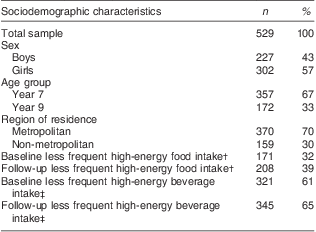
†Less frequent intake defined as consumption of high-energy food meals ≤2 times/week.
‡Less frequent intake defined as consumption of high-energy beverages ≤1 time/d.
Bivariable logistic regression analyses were performed to identify statistically significant (P ≤ 0·01) covariates and predictor variables which were then entered into multivariable logistic regression models (data not shown). Multivariable logistic regression model findings from cross-sectional and longitudinal analyses are detailed below.
Cross-sectional associations between predictor variables and less frequent consumption of high-energy foods
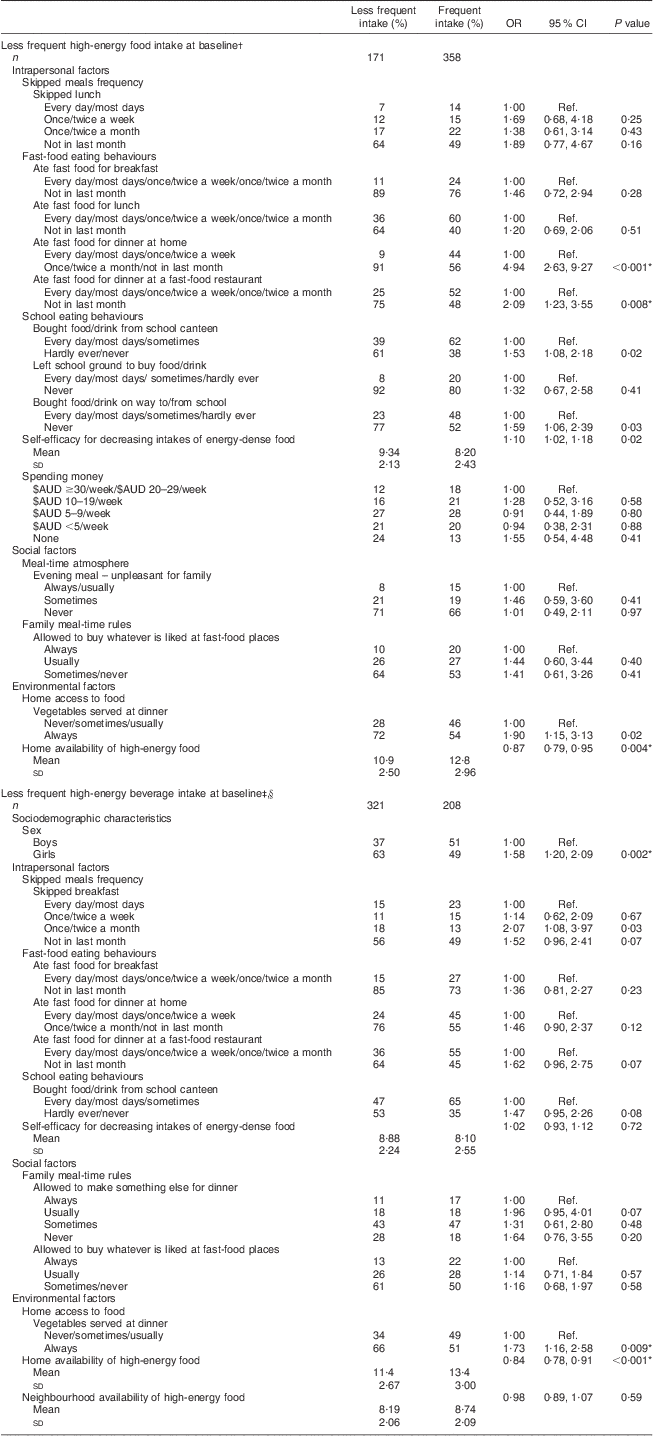
After controlling for all bivariably associated predictor variables in multivariable analysis, two intrapersonal and one environmental predictor variables remained significantly associated with less frequent high-energy food intake (≤2 high-energy meals/week) at baseline among socio-economically disadvantaged adolescents (Table 3). Adolescents who had consumed high-energy food for dinner at home twice or less in the month preceding the baseline survey had nearly five times greater odds of eating fewer high-energy foods than adolescents who consumed high-energy foods at home more frequently. Similarly, adolescents who had not consumed fast food for dinner at a fast-food restaurant in the past month had two times greater odds of having less frequent intakes than adolescents who ate fast-food meals in this setting more often. Each unit increase on the ‘home availability of high-energy food’ scale was associated with a 13 % decrease in the odds of having less frequent intake, i.e. adolescents who reported less high-energy food available at home had greater odds of eating fewer high-energy foods compared with those who reported greater availability of those foods.
Odds ratios and 95 % confidence intervals of consuming fewer high-energy foods and beverages at baseline among socio-economically disadvantaged Australian adolescents identified in multivariable logistic regression analysis (n 529)
Ref., reference category.
*P ≤ 0·01.
†Less frequent intake defined as consumption of high-energy food meals ≤2 times/week at baseline.
‡Less frequent intake defined as consumption of high-energy beverages ≤1 time/d at baseline.
§Model adjusted for covariate ‘sex’.
After controlling for all predictor variables bivariably associated with consuming fewer high-energy beverages (≤1 time/d) at baseline including the covariate ‘sex’, only three factors remained statistically significant in multivariable analysis (Table 3). Disadvantaged adolescent girls had 58 % greater odds of consuming fewer high-energy beverages than boys. Adolescents who reported always being served vegetables at dinner had 73 % greater odds of consuming fewer high-energy beverages when compared with adolescents who were served vegetables less often. Each unit increase on the ‘home availability of high-energy food’ scale was associated with a 16 % decrease in the odds of consuming fewer high-energy beverages.
Longitudinal predictors of less frequent consumption of high-energy foods
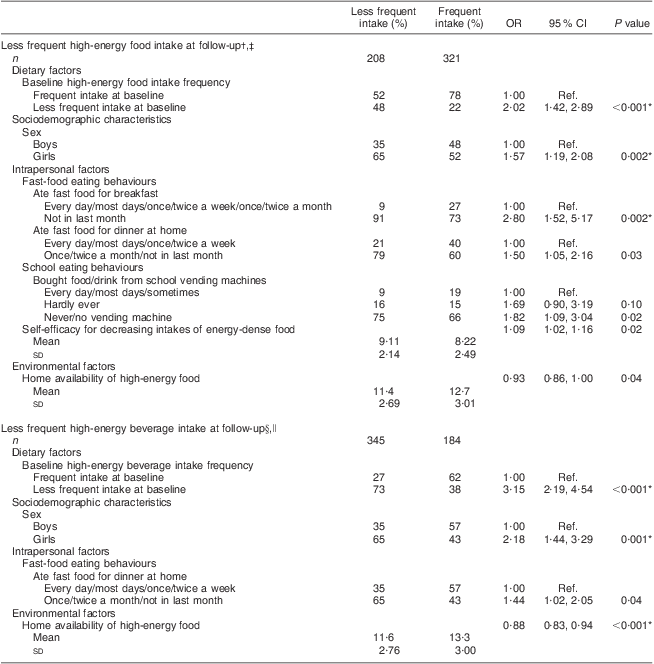
Baseline high-energy food intake frequency, sex and one intrapersonal variable remained significant predictors of less frequent high-energy food consumption at follow-up among disadvantaged adolescents (Table 4). Baseline high-energy food intake frequency strongly predicted high-energy food intake frequency at follow-up, i.e. adolescents who ate fewer high-energy foods at baseline had two times greater odds of eating fewer high-energy foods at follow-up when compared with adolescents who frequently ate high-energy foods at baseline. Girls had 57 % greater odds of eating fewer high-energy foods at follow-up when compared with boys. Adolescents who had not consumed fast food for breakfast in the month preceding the baseline survey had nearly three times greater odds of eating fewer high-energy foods at follow-up when compared with adolescents who ate fast food for breakfast more frequently.
Longitudinal predictors and odds ratios and 95 % confidence intervals of consuming fewer high-energy foods and beverages at follow-up among socio-economically disadvantaged Australian adolescents identified in multivariable logistic regression analysis (n 529)
Ref., reference category.
*P ≤ 0·01
†Less frequent intake defined as consumption of high-energy food meals ≤2 times/week at follow-up.
‡Model adjusted for covariate ‘sex’ and baseline high-energy food intake frequency.
§Less frequent intake defined as consumption of high-energy beverages ≤1 time/d at follow-up.
∥Model adjusted for covariate ‘sex’ and baseline high-energy beverage intake frequency.
Baseline high-energy beverage intake frequency, sex and one environmental factor predicted less frequent high-energy beverage consumption. Adolescents who consumed fewer high-energy beverages at baseline had more than three times greater odds of consuming fewer high-energy beverages at follow-up. Girls had more than twice the likelihood of consuming fewer high-energy beverages at follow-up when compared with boys. For each unit increase on the ‘home availability of high-energy food’ scale, disadvantaged adolescents’ odds of drinking fewer high-energy beverages decreased by 12 %.
Discussion
Some socio-economically disadvantaged adolescents managed to consume fewer high-energy foods and beverages. The present study identifies cross-sectional associations between intrapersonal, social and environmental factors and consumption of fewer high-energy foods and beverages; and longitudinal determinants of adolescents’ less frequent high-energy food consumption.
Past research supports the observation that some disadvantaged adolescents managed to consume fewer high-energy foods. Among disadvantaged American adolescents, 56 % of boys and 58 % of girls consumed fast-food meals two times or less in the week preceding the Project EAT follow-up survey( Reference Bauer, Larson and Nelson 22 ). These proportions are greater than observed in the present investigation, which may be explained by methodological differences between the two studies.
Proportions of disadvantaged (defined by family affluence) European adolescents who consumed high-energy beverages less than daily ranged from 50 % to 94 %; when parental occupation was used to define socio-economic position, proportions ranged from 47 % to 91 %( Reference Vereecken, Inchley and Subramanian 38 ). Although the cut-off for less frequent high-energy beverage consumption (≤1 time/d) in our study was less stringent than that used by Vereecken et al. ( Reference Vereecken, Inchley and Subramanian 38 ) (less than daily), proportions of disadvantaged adolescents who drank fewer high-energy beverages (61 % at baseline, 65 % at follow-up) were comparable to those reported in the European study. Findings from the present investigation support the observation that a proportion of disadvantaged adolescents manage to consume high-energy foods and beverages relatively less frequently.
The observation in the present investigation that disadvantaged adolescents’ consumption of high-energy foods decreased over time is unexpected, as it is at odds with findings that the quality of adolescents’ diets tends to decline as they mature( Reference Larson, Neumark-Sztainer and Story 12 – Reference Pearson, MacFarlane and Crawford 14 , Reference Bauer, Larson and Nelson 39 ). It could be that messages about healthy eating are leading to secular improvements in Australian adolescents’ diets, as evidenced in the wider population( Reference Martin, Rosenberg and Miller 40 , Reference Rangan, Kwan and Louie 41 ). For example, in 2008 fewer Australian adolescent girls consumed fast food at least once weekly (18·4 %) compared with 2003 (34·6 %)( Reference Martin, Rosenberg and Miller 40 ). Secular changes in Australian adolescents’ diets require further investigation, particularly consumption of high-energy foods and beverages.
The present study showed that less frequent consumption of fast-food main meals, frequently being served vegetables with dinner and reduced home availability of high-energy foods were associated with less frequent high-energy food consumption among disadvantaged adolescents. Less frequent fast-food consumption for breakfasts and dinners at home or at fast-food restaurants was associated with consumption of fewer high-energy foods at both time points. Previously, adolescents’ regular fast-food meal consumption was shown to be positively associated with greater intakes of those foods( Reference Boutelle, Fulkerson and Neumark-Sztainer 42 ), resulting in poor diet( Reference Larson, Story and Wall 8 , Reference Bowman, Gortmaker and Ebbeling 9 , Reference Cusatis and Shannon 43 ). Among disadvantaged adolescents, fat avoidance behaviours including eating bread, rolls or muffins without butter or margarine and replacement behaviours including ordering pasta or pizza without meat sauce or meat toppings significantly predicted low fat intakes( Reference Di Noia, Contento and Schinke 18 ).
Lower home availability of high-energy foods predicted consumption of fewer high-energy foods and beverages. Similarly, frequently being served vegetables with dinner was associated with less frequent high-energy beverage consumption. Adolescents who consumed fewer high-energy foods may consume home-prepared meals more regularly, although this requires further investigation. Greater home availability of high-energy beverages was associated with increased consumption of such drinks( Reference Haerens, Craeynest and Deforche 44 , Reference Denney-Wilson, Crawford and Dobbins 45 ), and home availability of high-energy foods predicted US adolescent boys’ and girls’ higher fast-food intake( Reference Larson, Neumark-Sztainer and Story 12 , Reference Bauer, Larson and Nelson 22 ) and girls’ high-energy beverage intake( Reference Bauer, Neumark-Sztainer and Fulkerson 46 ). Previously, disadvantaged adolescents were more likely to have greater home availability of high-energy beverages, while less often reporting having vegetables always served at dinner when compared with more advantaged adolescents( Reference MacFarlane, Crawford and Ball 29 ). These findings suggest that despite increasing autonomy and greater influences outside the home impacting on adolescents’ eating behaviours as adolescents mature, the home environment remains important for supporting healthy eating behaviours. Health promotion initiatives could provide education and assistance for disadvantaged adolescents and their families to develop budgeting and cooking skills related to purchase and preparation of quick, easy and nutritious meals (e.g. serving vegetables with dinner) in place of high-energy foods and beverages at home.
In the present investigation, baseline frequency of high-energy food and beverage intakes strongly predicted follow-up intake frequency, reflecting tracking of less frequent high-energy food consumption throughout adolescence. Kelder et al. found that adolescents who measured high on a given health behaviour still ranked highly for that measure 6 years later and those who ranked low remained low( Reference Kelder, Perry and Klepp 2 ), a pattern that has emerged in several other related studies( Reference Krebs-Smith, Heimendinger and Patterson 47 – Reference Lake, Rugg-Gunn and Hyland 49 ). These findings suggest that while nutrition promotion messages and strategies should be employed throughout adolescence to aid disadvantaged adolescents in avoiding high-energy foods and beverages, particular emphasis on such initiatives during early adolescence is warranted.
The present findings suggest that selected intrapersonal (particularly behavioural factors) and environmental (particularly within the home) factors may be beneficial foci of nutrition promotion initiatives aiming to improve disadvantaged adolescents’ diets. There also remain aspects of social factors that were not measured in the present investigation, e.g. increasing research about peer social networks. However, relatively few factors from across all domains, but particularly few environmental factors, strongly predicted disadvantaged adolescents’ less frequent high-energy food consumption. Different factors were cross-sectionally and longitudinally associated with less frequent consumption of high-energy foods, suggesting that different factors may be important for promoting healthy eating among younger and older adolescents, or over the shorter v. longer term.
Limitations of the present study should be acknowledged. Dietary intake data were based on a self-reported thirty-eight-item FFQ and serving sizes could not be determined. However, while FFQ may provide less detailed data than food diaries or repeated recall methodologies, research has shown that this methodology presents low burden to participants, and is appropriate for ranking participants’ intakes and examining associations with independent variables( Reference Vereecken, Covents and Matthys 50 ). It is possible that some adolescents may have misunderstood the categories or descriptions of foods or beverages in the FFQ resulting in categorical bias; however, the questions and food categories have been used previously with participants of this age group in national surveys( 31 , Reference Hardy, King and Espinel 51 ). Also, additional types of high-energy foods and beverages consumed by adolescents may not have been represented in the FFQ resulting in an underestimation of the frequency of adolescents’ consumption of such foods. While BMI is a potentially important covariate that could be associated with dietary intake, height and weight data were not gathered from participants in the YEP Study, and therefore the effects of BMI could not be accounted for in the present investigation. Correlates were only assessed at baseline to increase participant response at follow-up. Income or household economic status was not assessed in the YEP Study, and while measures of paternal education and combined parental education were collected in the YEP Study, the majority (84%) of parental sociodemographic data were provided by mothers and therefore paternal education was only available for a small number of adolescents (n 263). Further, no significant associations between paternal education level and adolescent diet have been found in past research( Reference Shi, Lien and Kumar 10 , Reference Rasmussen, Krolner and Klepp 21 , Reference Von Post-Skagegard, Samuelson and Karlstrom 52 ).
The YEP Study response rate was not high, perhaps due to participant absenteeism on the days the surveys were conducted and the use of an active consent method, but none the less the sample was relatively sociodemographically diverse. Although there were some differences between adolescents with complete and missing data, these were generally small and existed only for six of thirty-eight variables. While some disadvantaged adolescents managed to consume fewer high-energy foods, achieving this as defined in the present study does not reflect achieving dietary recommendations. Finally, analyses could not be stratified by sex due to sample size constraints.
There are several strengths of the present investigation. Data were drawn from a large sample of sociodemographically diverse disadvantaged adolescents, and as the YEP sample incorporated two age cohorts, analyses included adolescents across a wide age range. A comprehensive model based on Social Ecological Theory was used to examine a range of factors associated with less frequent consumption. Factors supporting disadvantaged adolescents’ healthy eating may be more readily adopted by families living in similar contexts. Finally, the longitudinal design of the study allowed examination of temporally appropriate associations.
Based on our findings, health promotion programmes targeting disadvantaged adolescents and their families could focus on educating and assisting such families to develop budgeting and food preparation skills related to the preparation of quick, easy and nutritious meals at home in place of high-energy foods and beverages such as fast-food meals. Emphasis could also be placed on supporting healthy eating behaviours among boys and the suggested health promotion messages could be implemented during early adolescence.
Acknowledgements
Sources of funding: The study was funded by the Australian Research Council (ID: DP0452044) and the William Buckland Foundation. S.A.M. is supported by an Australian Research Council Future Fellowship (ID: 323519), D.C. is supported by a Victorian Health Promotion Foundation Senior Research Fellowship and K.B. is supported by a National Health and Medical Research Council Senior Research Fellowship (ID: 479513). Conflicts of interest: The authors have no conflicts of interest to declare. Authors’ contributions: D.C. and K.B. designed the research; D.C. and K.B. conducted the research; L.D.S. analysed the data. All authors contributed to manuscript preparation and approved the manuscript. Acknowledgements: The authors thank Dr Nick Andrianopoulos for advice regarding statistical analyses.



