





Introduction
The perinatal period is a time of great change for mothers, in which mothers experience changes in role, self-concept, mental health, and neuroanatomy (Davis & Narayan, Reference Davis and Narayan2020; Muzik et al., Reference Muzik, McGinnis, Bocknek, Morelen, Rosenblum, Liberzon, Seng and Abelson2016; Paulson et al., Reference Paulson, Miller-Graff, Jamison, Scheid and Howell2023; Pritschet et al., Reference Pritschet, Taylor, Cossio, Faskowitz, Santander, Handwerker, Grotzinger, Layher, Chrasil and Jacobs2024), with key implications for their infants’ development. For some, this period is imbued with experiences of interpersonal violence, which can have significant and deleterious consequences for mothers and their children (Donovan et al., Reference Donovan, Spracklen, Schweizer, Ryckman and Saftlas2016; Rodríguez-Soto et al., Reference Rodríguez-Soto, Buxó, Morou-Bermudez, Pérez-Edgar, Ocasio-Quiñones, Surillo-González and Martinez2021; White et al., Reference White, Sin, Sweeney, Salisbury, Wahlich, Montesinos Guevara, Gillard, Brett, Allwright, Iqbal, Khan, Perot, Marks and Mantovani2024). The worldwide prevalence rate for intimate partner violence (IPV) during pregnancy is 25% (Román-Gálvez et al., Reference Román-Gálvez, Martín-Peláez, Fernández-Félix, Zamora, Khan and Bueno-Cavanillas2021), and it is estimated that approximately one in four Peruvian mothers experience IPV during pregnancy (Perales et al., Reference Perales, Cripe, Lam, Sanchez, Sanchez and Williams2009). Additionally, longstanding theory (Fraiberg et al., Reference Fraiberg, Adelson and Shapiro1975) and recent qualitative research with pregnant Peruvians (Levey et al., Reference Levey, Chang, Sanchez, Harrison, Rodriguez, Gelaye and Rondon2023) suggest that mothers may engage in critical reflection during the perinatal period of their own experiences of childhood family violence. Therefore, it is likely the impact of childhood violence exposure on maternal mental health may be especially salient during pregnancy. Peruvian mothers with a history of trauma, particularly those who have experienced various forms of interpersonal violence across multiple life stages, tend to report higher rates of perinatal posttraumatic stress symptoms (PTSS; Levey et al., Reference Levey, Gelaye, Koenen, Zhong, Basu, Rondon, Sanchez, Henderson and Williams2018; Sanchez et al., Reference Sanchez, Pineda, Chaves, Zhong, Gelaye, Simon, Rondon and Williams2017). Yet, many Peruvian mothers display resilience and draw strength from their desire to provide a better life for their children (Carney et al., Reference Carney, Gallo, Espinoza, Yataco and Miller-Graff2024). The present study examined how Peruvian mothers’ experiences of interpersonal violence during childhood and the prenatal period may be associated with their posttraumatic stress severity and resilience during the prenatal and postpartum periods, and, in turn, affect their infants’ temperament.
Guiding theoretical framework: the bioecological model
According to the bioecological model (Bronfenbrenner & Morris, Reference Bronfenbrenner, Morris, Damon and Lerner1998), fetal and infant development are influenced by multiple interacting environmental systems. Nolvi and colleagues (Reference Nolvi, Merz, Kataja and Parsons2023) extensively review how elevated levels of maternal prenatal stress and adversity (e.g., prenatal violence exposure and poor prenatal mental health) impact fetal brain structure and functioning. Conversely, positive postnatal environmental factors can moderate the effects of prenatal stress to promote lifelong resilient developmental processes in offspring (Nolvi et al., Reference Nolvi, Merz, Kataja and Parsons2023). The vast literature on the Developmental Origins of Health and Disease (Barker, Reference Barker1990) has long described how occurrences while in utero can prompt a cascade of long-term implications for health and well-being. For example, multiple levels of the fetus’s bioecology interact to impact fetal development; maternal prenatal stress and nutrition can moderate fetal genetic expressions (Argyraki et al., Reference Argyraki, Damdimopoulou, Chatzimeletiou, Grimbizis, Tarlatzis, Syrrou and Lambropoulos2019; Peral-Sanchez et al., Reference Peral-Sanchez, Hojeij, Ojeda, Steegers-Theunissen and Willaime-Morawek2022). After the baby is born, biological factors continue to greatly impact infant development, such as nutrition quantity and quality (Granger et al., Reference Granger, Embleton, Palmer, Lamb, Berrington and Stewart2021). Additionally, the social environment greatly impacts infant development (Nolvi et al., Reference Nolvi, Merz, Kataja and Parsons2023) through both proximal (e.g., quality of early parenting; Hess et al., Reference Hess, Papas and Black2002; Martinez-Torteya et al., Reference Martinez-Torteya, Katsonga-Phiri, Rosenblum, Hamilton and Muzik2018) and distal (e.g., parents’ access to social support; Manning et al., Reference Manning, Long, Watts, Tomfohr-Madsen, Giesbrecht and Lebel2022) social mechanisms. It is important, therefore, to consider both prenatal and postpartum factors in conjunction, treating them as connected yet potentially distinct influences on infant development.
Infant temperament – associations with mothers’ violence exposure and mental health
Temperament, or individual differences in predispositions toward self-regulation and reactivity, becomes apparent in infancy (Putnam et al., Reference Putnam, Helbig, Gartstein, Rothbart and Leerkes2014) and has profound implications for lifelong physical and mental health outcomes (Bergmeier et al., Reference Bergmeier, Skouteris, Horwood, Hooley and Richardson2014; Joseph et al., Reference Joseph, Lorenzo, Fisher, Novick, Gibson, Rothenberger, Foust and Chronis-Tuscano2023). Historically, infant temperament was considered stable and heritable (e.g., Allport, Reference Allport1961; Thomas & Chess, Reference Thomas and Chess1977), yet other key works regard infants’ temperament as more dynamic, with the development of temperament occurring through bidirectional interactions between genetic and environmental factors (e.g., Lerner & Lerner, Reference Lerner, Lerner, Baltes and Brim1983; Putnam et al., Reference Putnam, Helbig, Gartstein, Rothbart and Leerkes2014). Recent research supports more dynamic conceptualizations of temperament. For example, analyses of temperament data worldwide found that cultural orientations are associated with significant variability in temperament domains (i.e., surgency, negative affectivity, and regulatory capacity; Putnam et al., Reference Putnam, Sehic, French, Gartstein, Luttges and Peltola2024). In addition to the influence of cultural factors, intrafamilial factors have also been shown to influence infant temperament and children’s adjustment. Mothers’ exposure to perinatal IPV has been associated with increased infant fussiness and reduced infant positive affectivity and regulatory capacity (e.g., Edhborg et al., Reference Edhborg, E-Nasreen and Kabir2020; Miller-Graff & Scheid, Reference Miller-Graff and Scheid2020). Research from Peru with four- to seventeen-year-old children suggests caregiver resilience and positive parenting practices are associated with lower child adjustment problems and higher prosocial skills (Miller-Graff et al., Reference Miller-Graff, Scheid, Guzmán and Grein2020). This work has not yet been conducted in an infant sample however, and to our knowledge, no research has yet explored how Peruvian mothers’ experiences of adversity and mental health affect their infants’ temperament.
Maternal violence exposure in Peru
Childhood violence exposure and infant temperament
Globally, it is estimated that about 60% of children experience physical and/or psychological violence in their homes (UNICEF, 2004). Similarly, exposure to violence in childhood is alarmingly common in Peru, and the sequelae of childhood trauma exposure pose significant risks to Peruvian mothers’ perinatal physical and mental health (Barrios et al., Reference Barrios, Gelaye, Zhong, Nicolaidis, Rondon, Garcia, Mascaro Sanchez, Sanchez and Williams2015; Zhong et al., Reference Zhong, Wells, Rondon, Williams, Barrios, Sanchez and Gelaye2016). In a nationally representative sample of Peruvian adolescents, most adolescent girls had experienced psychological (75.6%) and/or physical (72.5%) violence at home, and 44.3% reported sexual violence in the home (Fry et al., Reference Fry, Anderson, Hidalgo, Elizalde, Casey, Rodriguez, Martin, Oroz, Gamarra, Padilla and Fang2016). Another nationally representative sample of Peruvian women indicated 43.8% had witnessed IPV against their mothers in childhood (Bazo-Alvarez et al., Reference Bazo-Alvarez, Copez-Lonzoy, Ipanaqué-Zapata, Bazalar-Palacios, Rivera and Flores-Ramos2024). Theory and research suggest that experiencing violence in childhood may influence parenting later in life. For example, psychodynamic theories of intergenerational trauma posit that mothers’ experiences of violence in their own childhoods represent “ghosts in the nursery” (Fraiberg et al., Reference Fraiberg, Adelson and Shapiro1975) that may interfere with their ability to understand and bond with their own infants. Supporting this theory, prior research has found that mothers’ experiences of child maltreatment are associated with distorted representations of their babies in utero (Malone et al., Reference Malone, Levendosky, Dayton and Bogat2010), and negatively impact their infants’ temperament (i.e., increased infant distress and reactivity, and reduced infant ability to recover from distress; Lang et al., Reference Lang, Gartstein, Rodgers and Lebeck2010). Such research and theory highlight the relevance of evaluating mothers’ own childhood experiences of violence when investigating factors that may influence maternal perinatal mental health and infant development.
Intimate partner violence and infant temperament
The global literature has consistently shown that prenatal IPV is linked with worsened maternal mental health which, in turn, may adversely affect infant outcomes. Notably, numerous studies have found significant associations between IPV and maternal mental health problems such as depression, PTSD, and suicidality (Ellsberg et al., Reference Ellsberg, Jansen, Heise, Watts and Garcia-Moreno2008; Edhborg et al., Reference Edhborg, E-Nasreen and Kabir2020; García-Moreno et al., Reference García-Moreno, Pallitto, Devries, Stöckl, Watts and Abrahams2013; White et al., Reference White, Sin, Sweeney, Salisbury, Wahlich, Montesinos Guevara, Gillard, Brett, Allwright, Iqbal, Khan, Perot, Marks and Mantovani2024). Further, a systematic review by Halim et al., (2018) underscores that IPV is more prevalent in low- and middle-income countries compared high-income countries. This review revealed significant associations between IPV and various perinatal mental health issues, including anxiety, depression, and suicidal ideation. A more recent systematic review of literature from low- and middle-income countries demonstrated associations between prenatal IPV and higher odds of postpartum depression, as well as deleterious infant outcomes (i.e., low birth weight, preterm birth, and less breastfeeding; Da Thi Tran et al., Reference Da Thi Tran, Murray and Van Vo2022). This extensive global body of literature highlights the extensive impact of IPV on women’s health and its potential intergenerational consequences.
Prior research with Peruvian mothers indicates that experiencing violence in childhood significantly elevates the risk of experiencing interpersonal violence later in life. Barrios and colleagues (2015) demonstrated that child abuse was associated with more than double the odds of lifetime IPV among pregnant Peruvian mothers, indicating that interpersonal victimization can echo through multiple formative life stages. Additionally, maternal exposure to IPV has been significantly linked with lower levels of infant surgency and regulatory capacity in a sample of low-income families in the United States (Miller-Graff & Scheid, Reference Miller-Graff and Scheid2020). However, there is limited research on the cumulative effects of maternal exposure to violence on infant temperament in any global context, and no published studies on this topic examine Peruvian samples. Most extant research instead focuses on influences of maternal violence exposure from one life stage on their children’s development. Yet, given the theoretical works that highlight the importance of understanding IPV in the context of other life experiences (Hamby & Grych, Reference Hamby, Grych and Johnson2013) and research indicating that violence in childhood and later IPV often co-occur among pregnant Peruvians (Barrios et al., Reference Barrios, Gelaye, Zhong, Nicolaidis, Rondon, Garcia, Mascaro Sanchez, Sanchez and Williams2015; Zhong et al., Reference Zhong, Wells, Rondon, Williams, Barrios, Sanchez and Gelaye2016), IPV should be viewed as part of a broader cycle of re-victimization affecting many Peruvian mothers rather than as an isolated experience.
Maternal mental health and wellbeing in Peru
Perinatal posttraumatic stress and infant temperament
Child maltreatment and IPV are examples of experiences that meet criteria for potentially traumatic events, as defined by the American Psychiatric Association (2013). Potentially traumatic events, in which one is exposed to actual or threatened violence, serious injury, or death, can lead to posttraumatic stress symptoms (PTSS) and posttraumatic stress disorder (PTSD; American Psychiatric Association, 2013). In Peru, the prevalence of potentially traumatic experiences is notably high among pregnant individuals; a recent study with over 3,000 pregnant Peruvians found that 86% indicated exposure to at least one traumatic event, with 41.8% of those meeting criteria for PTSD (Levey et al., Reference Levey, Gelaye, Koenen, Zhong, Basu, Rondon, Sanchez, Henderson and Williams2018). Another study found that individuals with a history of physical or sexual abuse during childhood, coupled with experience of IPV in adulthood, had a 20-fold increase in the odds of developing PTSD compared to those without such experiences (Sanchez et al., Reference Sanchez, Pineda, Chaves, Zhong, Gelaye, Simon, Rondon and Williams2017). As such, cumulative interpersonal violence across the life course may significantly heighten the risk of PTSS during pregnancy in Peru.
Due to physical and hormonal changes, as well as elevated rates of violence exposure, the risk for PTSS is particularly high during pregnancy (Onoye et al., Reference Onoye, Shafer, Goebert, Morland, Matsu and Hamagami2013; Perales et al., Reference Perales, Cripe, Lam, Sanchez, Sanchez and Williams2009). There is little literature on the effects of perinatal PTSS on maternal and fetal health in Peru, but available research indicates that perinatal PTSS may confer risk for prenatal migraines (Friedman et al., Reference Friedman, Aponte, Perez Hernandez, Velez, Gelaye, Sánchez, Williams and Peterlin2017) and preterm delivery (Gelaye et al., Reference Gelaye, Sanchez, Andrade, Gómez, Coker, Dole, Rondon and Williams2020). To the primary author’s knowledge, no literature has yet investigated relations between maternal perinatal PTSS and infant temperament in Peru or other low- and middle-income settings. A recent systematic review on the impact of maternal perinatal mental health on child temperament did not find any research from low- or middle-income countries (Rodríguez-Soto et al., Reference Rodríguez-Soto, Buxó, Morou-Bermudez, Pérez-Edgar, Ocasio-Quiñones, Surillo-González and Martinez2021), but research from high-income countries has demonstrated that maternal perinatal PTSS was associated with increased fussiness and decreased regulatory capacity in infants (Brand et al., Reference Brand, Engel, Canfield and Yehuda2006; Garthus-Niegel et al., Reference Garthus-Niegel, Ayers, Martini, von Soest and Eberhard-Gran2017; McLean et al., Reference McLean, Cobham, Simcock, Kildea and King2019; Tees et al., Reference Tees, Harville, Xiong, Buekens, Pridjian and Elkind-Hirsch2010). These findings indicate a need to examine the impact of maternal PTSS on infant temperament in Peruvian populations, especially given the scarcity of such research in low- and middle-income countries.
Resilience and infant temperament
Rather than focusing exclusively on maternal risk factors for infant development, a small but growing body of work holistically includes both risk and resilience factors (Atzl et al., Reference Atzl, Grande, Davis and Narayan2019; Davis & Narayan, Reference Davis and Narayan2020). Resilience, which represents the complex ways an individual dynamically interacts with their social ecologies to respond to stressful experiences, includes both manifested forms of resilience and processes through which positive adaptation occurs (Masten, Reference Masten2014; Miller-Graff, Reference Miller-Graff2022). Studies in the U.S. have shown that while mothers’ experiences of violence during childhood can negatively impact their resilience, high levels of maternal resilience during the postpartum period can buffer the effects of these early adverse experiences on parenting (Martinez-Torteya et al., Reference Martinez-Torteya, Katsonga-Phiri, Rosenblum, Hamilton and Muzik2018). Moreover, maternal resilience has been associated with positive parenting in early infancy (Hess et al., Reference Hess, Papas and Black2002). Although focusing on older children, one study found that caregivers’ resilience, comprising individual, relational, and community assets, was associated with more prosocial skills and fewer adjustment problems among Peruvian youth (Miller-Graff et al., Reference Miller-Graff, Scheid, Guzmán and Grein2020). As such, in the face of violence and adversity, maternal resilience appears to play a key role in promoting child wellbeing.
The current study
To extend the existing literature, this study longitudinally evaluated direct and indirect effects of mothers’ exposure to violence in both childhood and adulthood (i.e., prenatal IPV exposure), posttraumatic stress symptoms (PTSS), and resilience on their three-month-old infants’ temperament. Since the participants were involved in a longitudinal intervention study (described below in ‘Procedures’ and in Miller-Graff et al. [Reference Miller-Graff, Carney, Padilla Cancino and Yataco RomeroIn preparation]), all models controlled for treatment group assignment. Study hypotheses are as follows and can also be seen in table format in Supplemental Table 1:
-
1. Mothers’ exposure to violence when they were children will be:
-
a. directly positively associated with prenatal IPV
-
b. directly positively associated with prenatal and postpartum PTSS
-
c. directly negatively associated with prenatal and postpartum resilience
-
d. directly positively associated with their infants’ surgency and negative affectivity
-
e. directly negatively associated with their infants’ regulatory capacity
-
-
2. Mothers’ exposure to prenatal IPV will be:
-
a. directly positively associated with prenatal and postpartum PTSS
-
b. directly negatively associated with prenatal and postpartum resilience
-
c. directly positively associated with their infants’ surgency and negative affectivity
-
d. directly negatively associated with their infants’ regulatory capacity
-
-
3. Mothers’ prenatal PTSS will be:
-
a. directly positively associated with their postpartum PTSS
-
b. directly negatively associated with their postpartum resilience
-
c. directly positively associated with their infants’ surgency and negative affectivity
-
d. directly negatively associated with their infants’ regulatory capacity
-
-
4. Mothers’ postpartum PTSS will be:
-
a. directly positively associated with their infants’ surgency and negative affectivity
-
b. directly negatively associated with their infants’ regulatory capacity
-
-
5. Mothers’ prenatal resilience will be:
-
a. directly positively associated with their postpartum resilience
-
b. directly negatively associated with their prenatal and postpartum PTSS
-
c. directly negatively associated with their infants’ surgency and negative affectivity
-
d. directly positively associated with their infants’ regulatory capacity
-
-
6. Mothers’ postpartum resilience will be:
-
a. directly negatively associated with their postpartum PTSS
-
b. directly negatively associated with their infants’ surgency and negative affectivity
-
c. directly positively associated with their infants’ regulatory capacity
-
-
7. Mothers’ postpartum resilience will moderate the effects of childhood violence exposure and prenatal IPV on infant temperament, such that higher maternal resilience will buffer the relationships between IPV and childhood violence on the infant temperament outcomes.
-
8. Mothers’ prenatal and postpartum PTSS will mediate the effects of childhood violence exposure and IPV during pregnancy on infant temperament.
Method
Participants
Participants were N = 251 pregnant women in Lima, Peru, ranging in age from 16 to 44 years (M age = 28.03 years, SD = 6.94) at their first interview. Average gestational age was 20.07 weeks pregnant (SD = 6.67 weeks). A follow-up interview was conducted at three-months postpartum. Regarding their romantic relationships, 15.94% were single mothers and 80.1% lived with their romantic partner. Household incomes varied significantly, ranging from 0 to 3,000 Peruvian soles per month (approximately $0 to $810 USD) with an average monthly income of 970.86 soles (approximately $270 USD; SD = 418.24 soles). Subjective assessments of participants’ socioeconomic status revealed that one (0.40%) participant felt her family lived very well, eight (3.20%) lived comfortably, 70 (28.00%) lived paycheck to paycheck, 136 (54.40%) did not have a stable income, and 35 (14.00%) had no income. With regards to education, 13 (5.22%) participants had not completed elementary school, 54 (21.69%) had not completed high school, 103 (41.37%) had completed high school, 38 (15.26) had attended some university or technical school, and 41 (16.47%) graduated university.
Procedures
Following approval from the Institutional Review Board at the University of Notre Dame, pregnant women were recruited for a larger study (Miller-Graff et al. [Reference Miller-Graff, Carney, Padilla Cancino and Yataco RomeroIn preparation]). The study was implemented in collaboration with a local community partner, Instituto de Pastoral de la Familia, in Lima, Peru. Participants were recruited via referral from local community organizations, direct community outreach by trained local study recruiters, and Facebook advertisements. Eligible women who met the inclusion criteria were provided additional information about the study, covering aspects such as privacy, confidentiality, and expected duration of their participation. After providing informed consent, participants were interviewed by study personnel who were trained local lay paraprofessionals and were provided referrals to additional resources as needed. Following the intake, participants were assigned in alternating blocks of five into one of two groups, wherein they received either perinatal health content only or trauma-focused + perinatal health content. Participants received weekly text messages containing information about perinatal health and infant care over the course of five weeks (see Miller-Graff et al. [Reference Miller-Graff, Carney, Padilla Cancino and Yataco RomeroIn preparation]). Women were then re-assessed at three-months postpartum. Average duration between the first interview and the interview at three-months postpartum was approximately 31 weeks (M weeks = 30.64, SD = 7.37).
Measures
Mothers’ Demographics
Standard demographic information was collected, including participants’ age, weeks pregnant, and monthly income.
Mothers’ Childhood Violence Exposure
At baseline, all participants completed Felitti and colleagues’ (1998) Adverse Childhood Experiences (ACEs) Questionnaire, which assesses exposure to ten types of childhood adversity. For the present study, three items—physical abuse, sexual abuse, and witnessing IPV—were used to measure exposure to violence in childhood. The childhood violence exposure variable was created by summing these three items. The ACEs questionnaire has been used with pregnant Peruvian women in previous research (e.g., Carroll et al., Reference Carroll, Rondon, Sanchez, Fricchione, Williams and Gelaye2021; Siego et al., Reference Siego, Sanchez, Jimenez, Rondon, Williams, Peterlin and Gelaye2021). Internal consistency was not calculated since individuals may experience one type of violence without experiencing another.
Mothers’ Intimate Partner Violence Exposure
The Escala de Violencia (Violence Scale) is a 27-item scale that measures physical, sexual, psychological, and severe IPV (Valdez-Santiago et al., Reference Valdez-Santiago, Híjar-Medina, Salgado de Snyder, Rivera-Rivera, Avila-Burgos and Rojas2006). The scale was developed in Spanish for IPV research in Mexico (Valdez-Santiago et al., Reference Valdez-Santiago, Híjar-Medina, Salgado de Snyder, Rivera-Rivera, Avila-Burgos and Rojas2006). Using a 5-point scale (0 = Never to 4 = Many times), the scale assesses how often participants experienced various types of IPV in the past year. The questionnaire was administered at baseline and was averaged to capture participants’ typical response to many types of IPV exposure. The scale’s internal consistency was α = .91 and ω = .93.
Mothers’ Posttraumatic Stress Symptoms
Twenty self-report items comprise the PTSD Checklist for DSM-5 (PCL-5; Weathers et al., Reference Weathers, Litz, Keane, Palmieri, Marx and Schnurr2013), which assesses participants’ past-month PTSS severity. It was administered at baseline and three-months postpartum. Symptom severity is rated on a 5-point scale (0 = Not at all to 4 = Extremely). A PTSS score was obtained by summing the PCL-5 items, with higher scores indicating more severe symptoms. In a previous study of pregnant Peruvians, the PCL-5 demonstrated excellent internal consistency (α = .90; Gelaye et al., Reference Gelaye, Zheng, Medina-Mora, Rondon, Sánchez and Williams2017). At the baseline interview during pregnancy, internal consistency for the PCL-5 was α = .91 and ω = .91. At the interview three-months postpartum, internal consistency was α = .89 and ω = 0.88.
Mothers’ Resilience
The Adult Resilience Measure (ARM-R; Jefferies et al., Reference Jefferies, McGarrigle and Ungar2018; Liebenberg & Moore, Reference Liebenberg and Moore2018) was used to assess participants’ social-ecological resources/assets across multiple levels (i.e., individual, relational, contextual/cultural) during pregnancy and at three-months postpartum. Items are scored on a 5-point scale (0 = Not at all like me to 4 = A lot like me) and are summed into a total score, with higher scores representing greater resilience. Although the ARM-R has not been previously used with a Peruvian sample, it has been used with individuals exposed to interpersonal violence in Colombia (Clark et al., Reference Clark, Jefferies, Foley and Ungar2022). In the current study, internal consistency for the ARM-R was α = .90 and ω = .91 during pregnancy, and α = 0.88 and ω = 0.88 at the three-month postpartum interview.
Infants’ Temperament
The Infant Behavior Questionnaire–Revised, Very Short Form (IBQ-R-VSF: Putnam et al., Reference Putnam, Helbig, Gartstein, Rothbart and Leerkes2014) was used to measure infant temperament (i.e., infants’ self-regulation and reactivity) when they were three-months old. Mothers responded to 37 items about their infants’ behaviors in the past week on a 7-point scale (1 = Never to 7 = Always). The IBQ-R-VSF is comprised of three subscales (i.e., negative affectivity, surgency, and regulatory capacity). Items within a subscale were averaged to produce a total average subscale score. Although this measure has not been used with a Peruvian sample, the IBQ-R-VSF subscales demonstrated adequate reliability (α = .74 for surgency, α = .81 for negative affectivity, and α = .64 for regulatory capacity) in a Chilean sample (Woldarsky et al., Reference Woldarsky, Urzúa, Farkas and Vallotton2019).
Due to low internal consistencies for the IBQ-R-VSF subscales in the current sample when the subscales were scored with all items as recommended by the measure developers (Putnam et al., Reference Putnam, Helbig, Gartstein, Rothbart and Leerkes2014; surgency α = .68, negative affectivity α = .63, regulatory capacity α = .56), a confirmatory factor analysis was conducted in Stata 17.0 (StataCorp, 2021) which tested the factor loadings of each item onto their recommended IBQ-R-VSF subscale. All items loaded significantly onto the surgency subscale and were retained in subsequent analyses. Items 4 (λ = .01, p = .982), 17 (λ = .18, p = .057), 28 (λ = .13, p = .186), and 33 (λ = .09, p = .351) did not significantly load onto the negative affectivity factor and were dropped from the subscale in subsequent analyses. Finally, items 6 (λ = .18, p = .050) and 11 (λ = .04, p = .649) did not load significantly onto the regulatory capacity subscale and were dropped from the subscale in subsequent analyses. After the removal of these items, internal consistency for the IBQ-R-VSF subscales in the current sample were α = .68 and ω = .70 for the surgency subscale, α = .68 and ω = .68 for the negative affectivity subscale, and α = .65 and ω = .66 for the regulatory capacity subscale.
Analytic protocol
Preliminary analyses included inspecting variable distributions, gathering descriptive information, and assessing missingness in the data. Prior to conducting path analyses, study variables were assessed for multicollinearity. Initially, using uncentered predictors, the Variance Inflation Factor (VIF) was high (i.e., mean VIF = 38.73), indicating problems with multicollinearity; however, after predictors were mean-centered (i.e., standardized to a mean of 0), all VIF values were <5 (mean VIF = 1.34).
Data were inspected for missingness. All missing data were determined to be missing completely at random via Little’s test (χ2 (73) = 92.46, p = .062; Little, Reference Little1988) and were addressed via full information maximum likelihood (FIML; Enders, Reference Enders2010). Beyond study attrition (i.e., N = 45 women did not complete the postpartum interview), there was minimal single-item missingness. At baseline, three observations or fewer were missing for each item related to mothers’ childhood violence exposure, IPV exposure, PTSS, and resilience. At the postpartum interview, two or fewer observations were missing for each item in the PTSS and resilience measures. Data were missing on the measure of infant temperament (3.8%) due to item-level missingness (i.e., up to eight participants elected to skip single items on the IBQ-R-VSF). Further, four items were accidentally omitted from the initial version of the baseline survey on the IPV measure. These items were left blank in the dataset to be addressed with FIML.
The PTSS measure (PCL-5; Weathers et al., Reference Weathers, Litz, Keane, Palmieri, Marx and Schnurr2013) has a Criterion A component which asks participants to describe the worst event that happened to them. Response to subsequent PCL-5 items are then anchored to that event (e.g., “How much were you bothered by repeated, disturbing dreams of the event?”). Of note, 17 participants did not endorse a Criterion A event on the PLC-5 at baseline, and due to staff oversight, the PCL-5 was not administered to them. To determine whether these participants had actually not experienced a Criterion A event, the study team retroactively reviewed their responses to the ACEs Questionnaire (Felitti et al., Reference Felitti, Anda, Nordenberg, Williamson, Spitz, Edwards and Marks1998) and Escala de Violencia (Valdez-Santiago et al., Reference Valdez-Santiago, Híjar-Medina, Salgado de Snyder, Rivera-Rivera, Avila-Burgos and Rojas2006). Specifically, the team checked whether participants had endorsed any Criterion A events in the ACEs (items 2, 3, 5 or 7), and IPV measure (items 6-21, and 23). Of these, 11 participants did not endorse having experienced any of the Criterion A items on the ACEs and/or IPV measure, and their PCL-5 data were retroactively filled with zeroes in the dataset. The remaining six women had endorsed having experienced at least one Criterion A event on the ACEs and/or IPV measure and, therefore, should have been administered the PCL-5. Thus, their data were considered truly missing and were addressed through FIML.
Next, the study longitudinally evaluated the direct and indirect effects of mothers’ experiences of childhood violence exposure, prenatal IPV exposure, prenatal and postpartum PTSS, as well as prenatal and postpartum resilience on their infants’ temperament (i.e., surgency, negative affectivity, and regulatory capacity). Study hypotheses were tested using longitudinal structural equation modeling (Little, Reference Little2013). All analyses were conducted in STATA version 17 (StataCorp, 2021), using path modeling, bootstrapping functions with 1000 replications, and standardized coefficients. Figure 1 presents the hypothesized path models; all variables are observed (depicted by rectangles). Of note, the model was run with all three infant temperament outcomes (i.e., surgency, negative affectivity, and regulatory capacity), analyzed concurrently and covaried, but are depicted as a single outcome variable (Infant Temperament) in Figure 1 for simplicity. All direct and indirect effects were included simultaneously. Interaction terms between IPV and postpartum resilience, and between childhood violence exposure and postpartum resilience, were utilized to test for moderating effects. Sensitivity tests were conducted in which the model was run with only prenatal factors included, and another model with only postpartum factors included.
Proposed path model. Note: model was run with all three infant temperament outcomes (i.e., surgency, negative affectivity, and regulatory capacity) included concurrently and covaried.

To test for moderation, analyses of marginal means were conducted to assess the direction of interaction effects. Marginal means analyses are not compatible with SEM functions in STATA so, to analyze confidence intervals associated with simple slopes, these analyses were performed using multiple regression. To test for mediation, indirect effects were estimated using the Monte Carlo method, wherein mediation was considered present if the 95% confidence interval of the indirect effect did not include zero (Falk & Biesanz, Reference Falk and Biesanz2016).
Results
Descriptive Statistics and bivariate correlations
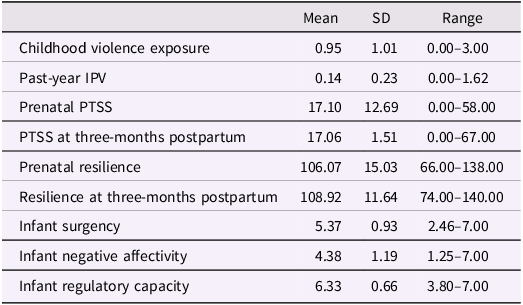
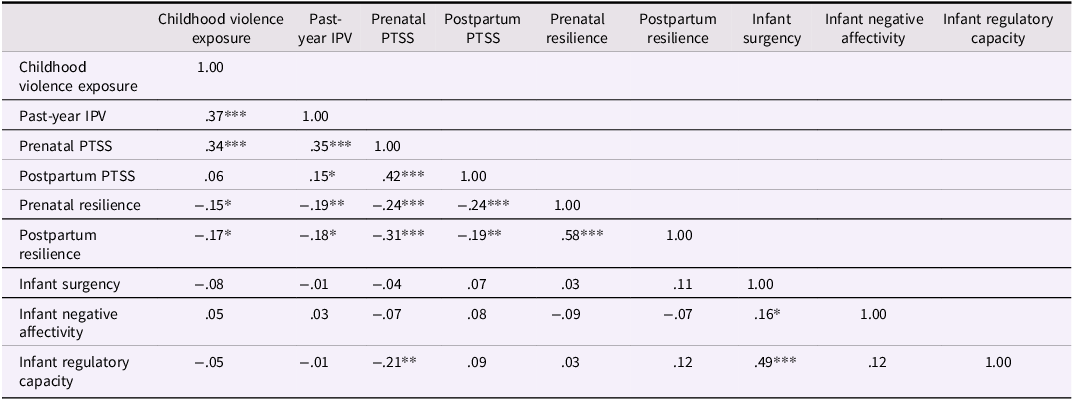
Table 1 displays descriptive statistics for all study variables, and Table 2 presents bivariate correlations. On average, of the three possible childhood violence exposure items, participants reported exposure to just under one type of violence (M = 0.95, SD = 1.01), although total scores in the sample ranged from 0 to 3.
Means, standard deviations, and range for all study variables

Notes. IPV = Intimate Partner Violence; PTSS = Posttraumatic Stress Symptoms; SD = Standard Deviation
Bivariate correlations among all study variables

Notes. IPV = Intimate Partner Violence; PTSS = Posttraumatic Stress Symptoms; ***p < .001; **p < .01; *p < .05.
During pregnancy, n = 33 (13.15%) participants reported PTSS that fell in the clinical range (i.e., >31; Bovin et al., Reference Bovin, Marx, Weathers, Gallagher, Rodriguez, Schnurr and Keane2016); prenatal PTSS was low overall (M PTSS = 17.10, SD = 12.70, range = 0 - 58). At three-months postpartum, the average PTSS score was similarly low (M PTSS = 17.06, SD = 10.51, range = 0 - 67), with n = 22 (10.68%) participants reporting PTSS in the clinical range. A paired t-test determined that PTSS scores were not statistically different across pregnancy and postpartum (t(190) = -0.65, p = .519).
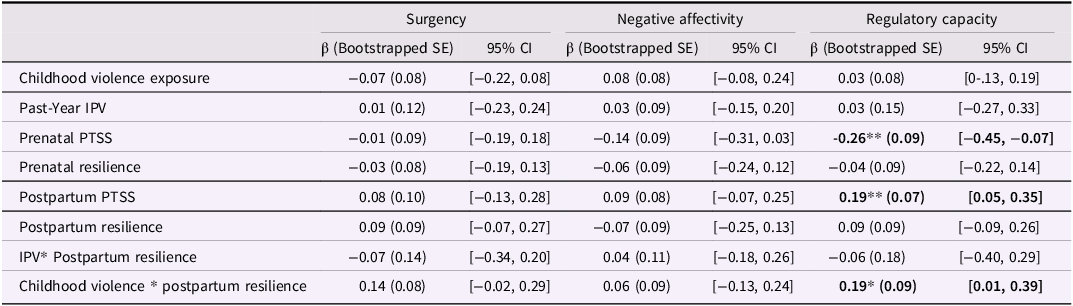
Hypotheses were tested using longitudinal structural equation modeling; this model fit adequately (χ2(2) = 24.31, p = .060; RMSEA = .05, 90% CI = [.00, .09]); CFI = .97; TLI = .87). Figure 2 shows the results of the path model with infant surgency as the outcome; Figure 3 shows the results of the path model with infant negative affectivity as the outcome; Figure 4 shows the results of the path model with infant regulatory capacity as the outcome. Although the three infant temperament outcomes were included concurrently and covaried in the model, the results are presented separately in Figures 2 to 4 for interpretability. Table 3 shows the results of the direct effects model.
Results of path model with infant surgency as the dependent variable. Notes. only significant paths are depicted. ***p < .001; **p < .01; *p < .05.

Results of path model with infant negative affectivity as the dependent variable. Notes. only significant paths are depicted. ***p < .001; **p < .01; *p < .05.

Results of path model with infant regulatory capacity as the dependent variable. Notes. only significant paths are depicted other than the direct path from childhood violence experiences to infant regulatory capacity, since although this direct association was not significant, maternal postpartum resilience significantly moderated this path. ***p < .001; **p < .01; *p < .05.

Multivariate regression analysis – direct effects model

Notes. SE = Standard Errors; IPV = Intimate Partner Violence; PTSS = Posttraumatic Stress Symptoms; ***p < .001; **p < .01; *p < .05.
Hypothesis 1 – effects of mothers’ exposure to violence in childhood
Hypothesis 1 posited that mothers’ exposure to violence as children would be directly positively associated with prenatal IPV; this relation was significant (β = 0.36, SE = 0.06, p < .001). Mothers’ exposure to childhood violence was also proposed as a direct, positive predictor of prenatal and postpartum PTSS. Although childhood violence exposure significantly predicted prenatal PTSS (β = 0.21, SE = 0.07, p < .001), it did not significantly predict postpartum PTSS (β = −0.11, SE = 0.07, p = .134). It was also hypothesized that mothers’ exposure to violence as children would be significantly, negatively, and directly associated with their prenatal and postpartum resilience; this was not supported (prenatal resilience β = −0.09, SE = 0.07, p = .175; postpartum resilience β = −0.02, SE = 0.06, p = .712). With regards to the effect of maternal childhood violence exposure on infant temperament, it was hypothesized that violence exposure would be directly positively associated with their infants’ surgency and negative affectivity and directly negatively associated with regulatory capacity. This was not supported; maternal exposure to violence in childhood was not significantly associated with infant surgency (β = −0.07, SE = 0.08, p = .258), negative affectivity (β = 0.08, SE = 0.08, p = .304), or regulatory capacity (β = 0.03, SE = 0.08, p = .680). As such, hypothesis 1a was supported, hypothesis 1b was partially supported, and hypothesis 1c, 1d, and 1e were not supported.
Hypothesis 2 – effects of mothers’ exposure to prenatal IPV
In the second hypothesis, maternal exposure to prenatal IPV was proposed as a direct, positive predictor of prenatal and postpartum PTSS. Although prenatal IPV exposure significantly predicted prenatal PTSS (β = 0.23, SE = 0.08, p = .004), it did not significantly predict postpartum PTSS (β = 0.03, SE = 0.10, p = .791). It was also hypothesized that maternal exposure to prenatal IPV would be significantly, negatively, and directly associated with prenatal and postpartum resilience. This was partially supported; there was a significant negative relation between prenatal IPV and prenatal resilience (β = −0.17, SE = 0.06, p = .009) but no significant relation was found with postpartum resilience (β = −0.02, SE = 0.09, p = .796). With regards to the relation between prenatal IPV exposure and their infant temperament, it was hypothesized that IPV would be directly positively associated with surgency and negative affectivity and directly negatively associated with regulatory capacity. However, maternal exposure to prenatal IPV was not significantly associated with infants’ surgency (β = 0.01, SE = 0.12, p = .980), negative affectivity (β = 0.03, SE = 0.09, p = .778), or regulatory capacity (β = 0.03, SE = 0.15, p = .843). Hypotheses 2a and 2b were therefore partially supported (with significant associations with prenatal PTSS and resilience, but not with postpartum PTSS and resilience), and hypotheses 2c and 2d were not supported.
Hypothesis 3 – effects of mothers’ posttraumatic stress during pregnancy
The third hypothesis proposed that prenatal PTSS would directly and positively relate with PTSS at three months postpartum; this was supported (β = 0.41, SE = 0.09, p < .001). It was also hypothesized that maternal prenatal PTSS would positively relate to infants’ surgency and negative affectivity, and negatively relate with infants’ regulatory capacity. This was partially supported. Prenatal PTSS was not significantly related to infant surgency (β = −0.01, SE = 0.10, p = .976) or negative affectivity (β = −0.14, SE = 0.09, p = .094). Prenatal PTSS was significantly negatively related with infants’ regulatory capacity (β = −0.26, SE = 0.10, p = .008), indicating that mothers with higher levels of prenatal PTSS had infants with lower regulatory capacity. Therefore, hypotheses 3a and 3c were supported, whereas hypothesis 3b was not supported.
Hypothesis 4 - effects of mothers’ posttraumatic stress at three-months postpartum
The fourth hypothesis proposed that maternal postpartum PTSS would be positively associated with their infants’ surgency and negative affectivity, and negatively associated with their infants’ regulatory capacity. PTSS at three-months postpartum was not significantly related with infants’ surgency (β = 0.08, SE = 0.10, p = .456) or negative affectivity (β = 0.09, SE = 0.08, p = .260). Maternal PTSS at three-months postpartum significantly positively related with infant regulatory capacity (β = 0.19, SE = 0.07, p = .008), but this association was in the opposite direction from what was hypothesized. Hypothesis 4a and 4b were therefore not supported.
Hypothesis 5 - effects of mothers’ resilience during pregnancy
Hypothesis five proposed that maternal prenatal resilience would be positively associated with their postpartum resilience and directly negatively associated with maternal prenatal and postpartum PTSS. A positive direct association was found between prenatal resilience and resilience at three-months postpartum (β = 0.55, SE = 0.05, p < .001). A negative direct association was also found between prenatal resilience and prenatal PTSS (β = −0.16, SE = 0.06, p = .010), but no significant association was found between maternal prenatal resilience and postpartum PTSS (β = −0.01, SE = 0.09, p = .115). No significant direct associations were found between prenatal resilience and infant surgency (β = −0.03, SE = 0.08, p = .730), negative affectivity (β = −0.06, SE = 0.09, p = .536), or regulatory capacity (β = −0.04, SE = 0.09, p = .678). As such, hypothesis 5a was supported, hypothesis 5b was partially supported, and hypotheses 5c and 5d were not supported.
Hypothesis 6 - effects of mothers’ resilience at three-months postpartum
In the sixth hypothesis, maternal resilience at three-months postpartum was proposed to be directly positively negatively associated with postpartum PTSS, infant surgency and negative affectivity, and directly positively associated with infant regulatory capacity. Hypotheses 6a and 6b was not supported, as no significant associations were found between postpartum resilience and postpartum PTSS (β = −0.01, SE = 0.09, p = .931), infant surgency (β = 0.10, SE = 0.09, p = .258), negative affectivity (β = −0.07, SE = 0.10, p = .505), or regulatory capacity (β = 0.09, SE = 0.09, p = .322).
Hypothesis 7 – moderating effects of mothers’ resilience at three-months postpartum
Hypothesis seven posited that postpartum resilience would moderate the effects of childhood violence exposure and prenatal IPV on infant temperament, such that higher maternal resilience would buffer the relationships between IPV and childhood violence on the infant temperament outcomes. Mothers’ postpartum resilience did not significantly interact with their exposure to prenatal IPV to moderate the effects on any infant temperament outcome. Maternal postpartum resilience also did not significantly moderate the effects of mothers’ childhood violence exposure on either infant surgency or negative affectivity. However, mothers’ postpartum resilience significantly moderated the association between mothers’ exposure to violence in childhood and their infants’ regulatory capacity (β = 0.20, SE = 0.10, p = .045). Simple slopes analyses demonstrated that that maternal exposure to childhood violence was positively associated with their infants’ regulatory capacity when mothers’ resilience is high but was negatively associated with their infants’ regulatory capacity when maternal resilience was low. The association between maternal exposure to violence in their childhoods and infant regulatory capacity was not significantly different from zero for mothers with average levels of resilience (See Figure 5). Hypothesis 7 was therefore partially supported.
Results of Analyses of Marginal Means to Assess the Relations between Mothers’ Childhood Violence Exposure on their Infants’ Regulatory Capacity, Moderated by Mothers’ Postpartum Resilience.

Hypothesis 8 – mediating effects of mothers’ posttraumatic stress at three-months postpartum
In the eighth hypothesis, it was proposed that mothers’ postpartum PTSS would significantly mediate the association between mothers’ exposure to violence (i.e., violence during childhood and IPV during the prenatal period) and their infants’ temperament outcomes. Indirect paths were assessed, but none were significantly different from zero. As such, the eighth hypothesis was not supported.
Sensitivity testing
Sensitivity tests were conducted in which the model was run with only prenatal factors included, and another model with only postpartum factors included. Results from these models demonstrated that the significance and direction of main effects held with the exception of the association between postpartum posttraumatic stress and infant regulatory capacity, which was nonsignificant. The fit of both the prenatal-only (χ2 (2) = 39.89, p < .001; RMSEA = .11, 90% CI = [.08, .15]); CFI = .84; TLI = .35) and postpartum-only models (χ2 (2) = 17.33, p = .044; RMSEA = .06, 90% CI = [.01, .10]); CFI = .94; TLI = .70) was poorer than the full model. It was therefore determined that the full model was the most appropriate model, but these sensitivity tests do indicate that the significance and direction of the effect of postpartum posttraumatic stress on infant regulatory capacity may be due to a suppression effect and should, therefore, be interpreted with caution.
Discussion
Worldwide, research has consistently found that maternal experiences of interpersonal violence can increase the risk of adverse outcomes for both maternal mental health and infant adjustment, although most of this research used samples from high-income countries in the Global North (Noonan & Pilkington, Reference Noonan and Pilkington2020; White et al., Reference White, Sin, Sweeney, Salisbury, Wahlich, Montesinos Guevara, Gillard, Brett, Allwright, Iqbal, Khan, Perot, Marks and Mantovani2024). Extending this body of literature, the present study explored these dynamics in a sample of Peruvian mothers who reported on their mental health, resilience, and experiences of interpersonal violence during pregnancy and again at three-months postpartum. Additionally, mothers reported on their infants’ temperament during the postpartum interview. To our knowledge, this is the first published study investigating infant temperament in Peru. Study findings illuminate how Peruvian mothers’ experiences of interpersonal violence at crucial developmental junctures—during youth and pregnancy—impact their prenatal and postpartum mental health and resilience, and their infants’ temperament.
The study, grounded in the bioecological model (Bronfenbrenner & Morris, Reference Bronfenbrenner, Morris, Damon and Lerner1998), explored how both maternal prenatal factors (i.e., prenatal violence exposure, prenatal posttraumatic stress, and prenatal resilience) and postpartum factors (i.e., postpartum posttraumatic stress and postpartum resilience) both relatedly and distinctly influence infant temperament at three-months of age. The only examined maternal factor that directly predicted any infant temperament domain was maternal prenatal posttraumatic stress (given sensitivity tests that indicated the significant positive path between maternal postpartum PTSS and infant regulatory capacity was spurious), which was negatively associated with infant regulatory capacity. However, maternal postpartum resilience significantly moderated the effects of maternal childhood exposure to violence on their infants’ regulatory capacity. As such, childhood violence exposure, prenatal posttraumatic stress, and postpartum resilience emerged as important factors across a mother’s childhood, pregnancy, and early experience of parenting in influencing the development of this important domain of infant temperament. By examining risk and resilience across multiple perinatal phases in the same model and examining these relations in a Peruvian sample, the current findings extend the extant literature that has demonstrated how maternal prenatal stress often adversely impacts fetal development through biological mechanisms but positive early-life social influences, such as positive parenting, can buffer these adverse effects (see Nolvi et al., Reference Nolvi, Merz, Kataja and Parsons2023 for review).
Consistent with extant literature from both Peru and around the world, study findings indicate that higher levels of violence exposure in mothers’ childhoods were linked with increased exposure to prenatal IPV and with PTSS. These findings replicate a robust body of literature demonstrating how violence exposure in childhood is associated with repeated re-victimization across women’s lives; a 2019 meta-analysis of child maltreatment and IPV across over 20,000 participants worldwide found a significant positive association between experiences of child maltreatment and later IPV (Li et al., Reference Li, Zhao and Yu2019). In Peru, qualitative research indicates that young women may marry quickly to escape violence in their families of origin, only to encounter IPV in their new marriages (Alvarado & Vilchez, Reference Alvarado and Vilchez2015). Also extending the global literature, current findings demonstrate that experiencing IPV during pregnancy is associated with increased prenatal PTSS and decreased resilience. These results align with multiple prior studies indicating that exposure to violence in both childhood and adulthood have demonstrable negative effects on mothers’ wellbeing during pregnancy.
In an effort to reflect these mothers’ experiences more comprehensively, both risk and resilience factors were analyzed simultaneously within the model, addressing an often-neglected area of the literature concerning mothers’ positive adaptive processes in the face of violence. In the present study, mothers’ resilience was conceptualized as access to social-ecological assets across multiple levels (i.e., individual, relational, contextual/cultural). Results demonstrated a positive direct association between prenatal resilience and postpartum resilience, indicating that mothers with greater access to individual, relational, and contextual resources during pregnancy continued to report higher levels of these supports at three-months postpartum. Furthermore, a negative direct association was found between mothers’ prenatal resilience and their prenatal PTSS, suggesting that social-ecological assets during pregnancy may be protective for mothers’ prenatal mental health. The protective roles of assets against perinatal PTSS, such as social support and one’s intrinsic sense of resilience, have been observed in has been found in other samples of pregnant mothers worldwide (Scrafford et al., Reference Scrafford, Grein and Miller-Graff2019; Zhang & Zhang, Reference Zhang and Zhang2021). These findings highlight the potential of enhancing mothers’ access to social-ecological assets as a means to protect their mental health during pregnancy and signal that connecting pregnant mothers to sources of support across their social ecologies could be a potential way to intervene against prenatal posttraumatic stress.
No direct effects of maternal resilience on infant temperament were found. However, mothers’ postpartum resilience significantly moderated the effects of their childhood exposure to violence on their infants’ regulatory capacity. Specifically, when mothers’ postpartum resilience was high, their exposure to violence in childhood was positively associated with their infants’ regulatory capacity. Conversely, mothers’ exposure to violence when they were children was negatively associated with their infants’ regulatory capacity when mothers’ postpartum resilience was low. The adaptive calibration model theory (Del Giudice et al., Reference Del Giudice, Ellis and Shirtcliff2011) suggests that early environmental conditions, including exposure to extreme adversity, can yield individual differences in the stress response systems. For some individuals, these adaptations to adversity yield positive responses to stress that can promote a cascade of positive adaptations to stress throughout the life course. That is, some individuals may become resilient to adverse conditions early in life in response to childhood stressors, which helps them to positively adapt to challenges over time. Within this framework, those mothers who managed to positively adapt to childhood violence exposure may carry that positive response pattern into the postpartum period. This high maternal resilience, perhaps developed early in life as an adaptive response to childhood violence exposure, might create a supportive environment. This support could buffer these mothers’ infants from potential negative consequences of maternal exposure to violence, allowing positive aspects of heightened maternal sensitivity – such as increased responsiveness to infant cues– to emerge. This could manifest as enhanced regulatory capacity in infants.
These findings underscore the dynamic interplay between past maternal trauma and adaptive processes, highlighting the crucial role of resilience in moderating the potential negative impacts of early exposure to violence on child development. The significance of these findings is underscored by evidence that poor regulatory capacity in infancy has been associated with increased psychopathology in adolescence (Kostyrka-Allchorne et al., Reference Kostyrka-Allchorne, Wass and Sonuga-Barke2020) and has also been linked to mental health difficulties and behavior problems in adulthood, such as substance misuse and criminal behaviors (Moffitt et al., Reference Moffitt, Arseneault, Belsky, Dickson, Hancox, Harrington, Houts, Poulton, Roberts, Ross, Sears, Thomson and Caspi2011; Wolke et al., Reference Wolke, Baumann, Jaekel, Pyhälä, Heinonen, Räikkönen, Sorg and Bilgin2023). Further exploration of these mechanisms can enhance our understanding of resilience as a buffer and an active facilitator of positive developmental trajectories in high-risk settings (Davis & Narayan, Reference Davis and Narayan2020). Interventions aimed at improving children’s well-being by supporting their mothers during pregnancy should prioritize enhancing mothers’ access to social-ecological assets as a key intervention target.
Findings regarding maternal PTSS during the perinatal period were somewhat surprising. Consistent with study hypotheses, prenatal PTSS was positively associated with postpartum PTSS. As anticipated, mothers’ prenatal PTSS significantly negatively related with their infants’ regulatory capacity, however, maternal postpartum PTSS was significantly positively related with infants’ regulatory capacity. Some prior literature with samples of IPV-exposed women has noted similar differential effects on infant outcomes across the prenatal and postpartum periods (e.g., Yalch et al., Reference Yalch, Black, Martin and Levendosky2016). However, it is possible that the inverse relationships between prenatal and postpartum PTSS with infant regulatory capacity are due to suppressor effects in the model given high bivariate correlations between prenatal and postpartum PTSS and the findings of post-hoc sensitivity tests. Further research is needed to replicate these study’s findings. Findings that maternal prenatal PTSS has negative effects on infant regulatory capacity replicates the findings of prior studies that mothers’ prenatal posttraumatic stress is related with lower regulatory capacity in their infants (Rodríguez-Soto, Buxo, et al., Reference Rodríguez-Soto, Buxó, Morou-Bermudez, Pérez-Edgar, Ocasio-Quiñones, Surillo-González and Martinez2021; Bush et al., Reference Bush, Jones-Mason, Coccia, Caron, Alkon, Thomas, Coleman-Phox, Wadhwa, Laraia, Adler and Epel2017). These findings underscore the great need for interventions to reduce prenatal PTSS to benefit both mothers and their offspring.
Limitations and future directions
A notable limitation of the current study is that the data were collected during the COVID-19 pandemic, which may have influenced maternal mental health and maternal self-report and thus may limit generalizability. The pandemic impacted many aspects of life in Peru given strict national lockdown measures and the strains the pandemic placed on an already overburdened national healthcare system (Herrera-Añazco et al., Reference Herrera-Añazco, Uyen-Cateriano, Mezones-Holguin, Taype-Rondan, Mayta-Tristan, Malaga and Hernandez2021). Pandemic-related factors may have particularly impacted participants in this study, given escalations of IPV (Agüero, Reference Agüero2021) and worsening perinatal mental health (Aguilar et al., Reference Aguilar, Contreras, Raviola, Sepúlveda, Espinoza, Moran, Ramos, Peinado, Lecca, Pederson, Kohrt and Galea2023) during the pandemic in Peru. Unfortunately, we do not have data that measures potential variations within this sample with regard to the pandemic.
Similarly, although the bioecological framework is a key guiding model for conceptualizing the effects of prenatal and postpartum environmental effects on infant temperament, the present dataset did not capture any biological factors. Future studies could better represent the biological components of the bioecological model by including predictive variables like maternal cortisol levels during and after pregnancy, maternal nutrition status, and breastfeeding (Argyraki et al., Reference Argyraki, Damdimopoulou, Chatzimeletiou, Grimbizis, Tarlatzis, Syrrou and Lambropoulos2019; Granger et al., Reference Granger, Embleton, Palmer, Lamb, Berrington and Stewart2021; Nolvi et al., Reference Nolvi, Merz, Kataja and Parsons2023; Peral-Sanchez et al., Reference Peral-Sanchez, Hojeij, Ojeda, Steegers-Theunissen and Willaime-Morawek2022).
Another limitation is that the measures used in the present study are all maternal report. It is possible that mothers’ mental health and violence exposure could influence their report about their children (Behrens et al., Reference Behrens, Edler and Valentino2024; Weissman et al., Reference Weissman, Feder, Pilowsky, Olfson, Fuentes, Blanco, Lantigua, Gameroff and Shea2004) although no research on this has been conducted in a Peruvian sample. Observational data with infants should be used to replicate and extend this study’s findings in future research as well as to assess for possible maternal report bias. Extending this research with older infants would also be useful to examine the associations between mothers’ violence exposure, posttraumatic stress, and resilience across a larger interval of child development. Infants’ surgency and negative affectivity were not influenced by any hypothesized predictors included in this model; more research will be needed to determine factors that modulate these dimensions of infant temperament in Peru.
Additionally, the literature suggests that women and girls in Peru may be exposed to violence not only within their own families (as was measured in this study) but also across different community contexts (e.g., Benjet et al., Reference Benjet, Sampson, Yu, Kessler, Zaslavsky, Evans-Lacko, Martins, Andrade, Aguilar-Gaxiola, Cia, Medina-Mora, Stagnaro, Torres de Galvez, Viana and Galea2019; Fry et al., Reference Fry, Anderson, Hidalgo, Elizalde, Casey, Rodriguez, Martin, Oroz, Gamarra, Padilla and Fang2016); extending the research to examine how mothers’ exposure to community violence may impact their mental health and their infants’ temperament could be useful for future violence prevention and intervention efforts. Further, this paper focuses on the sequelae of maternal exposure to violence prior to giving birth, yet it is possible that violence exposure changes in the postpartum period. As such, future research that examines variations, for example, in IPV from pre- to post-partum and the influences of these changes on infant temperament would be useful. Finally, more data and research are needed on infant temperament in low- and middle-income settings. The vast majority of the extant literature on infant temperament comes from high-income settings in the global north (Putnam et al., Reference Putnam, Sehic, French, Gartstein, Luttges and Peltola2024). Yet, to allow for true cross-cultural and cross-regional comparisons, more literature is needed on predictors of these important constructs from settings like Peru.
Clinical and policy implications
This study’s findings underscore the importance of violence prevention efforts for bolstering mothers’ mental health throughout their lives, given the harmful effects of childhood violence and prenatal IPV exposure on maternal PTSS and resilience during pregnancy. Peru ratified the Convention on the Rights of the Child in 1990 and has since been making significant investments in improving child welfare (UNICEF, N.D.). For example, Peru’s Ministry of Health established guidelines to implement child and adolescent abuse care modules in health care facilities around Peru in 2011, aiming to care for youth affected by maltreatment (Ministerio de Salud, Reference de Salud2011). The creation of these focused care modules around the country is a promising step towards providing maltreated youth the care they need to recover. Similarly, UNICEF Peru recently collaborated with Peru’s Ministry of Education on a project to implement sexual education in schools to help strengthen violence prevention efforts (UNICEF, 2023a). However, it is yet unclear the extent to which child maltreatment prevention programs in Peru have been successfully implemented or the extent to which they have been successful in preventing violence against Peruvian children. According to the UNICEF’s 2023 annual report on Peru, violence against girls remains prevalent, with Women’s Emergency Centers in Peru responding to approximately 20,000 cases of sexual violence against female adolescents in the past year (UNICEF, 2023b).
Similarly, IPV prevention efforts are greatly needed in Peru. A recent report by the World Bank indicates several gender-based violence prevention and response initiatives in Peru, including the rollout of a mobile app that directs women experiencing IPV to emergency services, the implementation of legal assistance centers for women who have experienced IPV. and the training of local organizational leaders across Peru to attempt to change social norms around IPV (Orbegoso et al., Reference Orbegoso, Melgar Calderon, Romero Haaker and Levano2024). Pregnant mothers exposed to IPV in Peru as well as doctors and mental health providers have discussed the need for gender-based violence prevention programing to be implemented in Peruvian schools to support healthy relationships early in a child’s life (Carney et al., Reference Carney, Gallo, Espinoza, Yataco and Miller-Graff2024). IPV prevention programing for creating positive family relationships and to help reduce interfamilial conflict could also be of great benefit for both child maltreatment and IPV prevention. Extant qualitative and quantitative literature from Peru demonstrated that women who have experienced IPV in the perinatal period strongly desire supportive services but face many structural barriers to such services, including social and family norms that normalize IPV, a lack of prenatal care resources and IPV-victims services, and a lack of accountability for perpetrators when IPV is reported (Carney et al., Reference Carney, Gallo, Espinoza, Yataco and Miller-Graff2024; Cripe et al., Reference Cripe, Espinoza, Rondon, Jimenez, Sanchez, Ojeda, Sanchez and Williams2015). Such findings underscore the need for a multifaceted approach to reduce IPV and support Peruvian women who have experienced it. These approaches would, necessarily, touch multiple parts of Peruvian society, including expanded access to prenatal care, victims’ services, and mental health resources, but also organizational, legal, and cultural shifts around the normalization and acceptance of violence against women, as well as training workers in the medical and legal fields to identify, accompany, and appropriately interact with women experiencing IPV (Carney, Reference Carney2024; Sagot, Reference Sagot2005).
Supplementary material
The supplementary material for this article can be found at https://doi.org/10.1017/S0954579425000318.
Acknowledgements
Agradecemos a los participantes en San Juan de Lurigancho que compartieron sus historias y experiencias con nosotros, y que hicieron posible esta investigación. We thank the participants in San Juan de Lurigancho who shared their stories and experiences with us and who made this research possible.
Competing interests
The authors declare none.
Funding Statement
This research was supported by a grant from the Ford Family Program for Human Development Studies and Solidarity and the Kellogg Institute for International Studies. Data analysis was supported by a graduate student fellowship from the Eck Institute for Global Health at the University of Notre Dame. This research was approved by the Institutional Review Board at the University of Notre Dame under IRB number 19-04-5333.





 Open access

