




Introduction
In Ancient Greece, marble sculpture, like architecture, was painted. Although studies of ancient polychromy began at least a couple of centuries ago, the exact appearance of ancient sculpture and architecture—that is, to what extent surfaces were decorated with paint and with what techniques—is still largely unknown. This lack of knowledge is the result of several factors. Paint rarely survives in archaeological contexts; when Renaissance artists began emulating ancient sculpture excavated in Rome and other classical centres, they did so without the use of colour, a practice that culminated in the paradigmatic whiteness of neoclassical sculpture. It became therefore common to think of ancient sculpture as being without a painted finish. Over-zealous cleaning procedures that were intended to restore the ‘original’ whiteness of marble have also historically contributed to the loss of surviving paint. Consequently, as only microscopic traces of original paint typically survive on sculptures, it is difficult to extrapolate how these objects originally looked to the ancient viewer.
The Parthenon Sculptures are no exception. The Parthenon temple on the acropolis of Athens was dedicated to the goddess Athena in the mid-fifth century BC. Over time, the monument and its famous sculptural elements have been subject to processes and events that have eroded or damaged the original appearance of the surfaces. These events include exposure to the environment and associated weathering, the conversion of the structure into a church and then a mosque, the use of casting to make plaster copies, the removal of a large portion of the sculpture in the early nineteenth century and its transport to the United Kingdom and cleaning and display in London. The sculpture not removed by Thomas Bruce was subsequently relocated from the Parthenon to the Acropolis Museum.
Ever since the departure of the bulk of the Parthenon Sculptures from Athens, these works have played an important role in the development of modern art history and constituted an emblematic example of the politicisation of cultural heritage (Jenkins Reference Jenkins2001). Endlessly studied and emulated, they are considered a pinnacle of ancient art. Beyond art historical appreciation, however, research into production processes has been limited, restricting our understanding of the sculptures’ original appearance and the craftworking techniques used to make them. The addition of colour to the finished surfaces of sculpture and buildings was the final step in a long production process and the study of polychromy is therefore a crucial starting point that may provide information about the original appearance, role and significance of monuments in antiquity.
It is widely assumed that the marble surfaces of the Parthenon Sculptures, whether highly finished or weathered, do not preserve many carving traces (Brommer Reference Brommer1963: 17–21; Palagia Reference Palagia1993: 21, 2005: 240; Davison Reference Davison2009: 579, 583, 585). As a result, investigations into carving sequences and the types of tools used have tended to be generic. The importance of understanding these technical aspects of carving are emphasised in the literature (e.g. Palagia Reference Palagia and Neils2005: 230), but only a few surviving tool marks have been identified to date (Casson Reference Casson1933: 201–2, 218; Adam Reference Adam1966: 31, 50; Palagia Reference Palagia and Palagia2008: 257–8).
Similarly, discussions of the surviving evidence for colour are limited. While reports exist, the exact nature of the findings leaves room for interpretation (Fletcher Reference Fletcher1931: 101; Reuterswärd Reference Reuterswärd1960: 48–54; Jenkins & Middleton Reference Jenkins and Middleton1988; Zambon Reference Zambon2012; Brinkmann Reference Brinkmann, Østergaard and Nielsen2014: 95). The complex forms of the carving, and the sophisticated rendering of the drapery in particular, has led scholars to conclude that while colour might have been used in the finish, this did not extend to the application of detailed ornamentation in the form of designs, patterns and textures (Brinkmann Reference Brinkmann2017: 40, 44).
In 2008, conservators at the Acropolis Museum noticed a ‘greenish’ pigment on Figure 17 of the West Frieze— a horseman—and on the garment of the mythical king Kekrops (West Pediment Figure B; Vlassopoulou Reference Vlassopoulou, Brinkmann, Primavesi and Hollein2010: 277–89). In the same year, a preliminary imaging campaign for the analysis of Egyptian blue at the British Museum unequivocally confirmed its extensive presence on the Parthenon Sculptures (Verri et al. Reference Verri, Saunders, Ambers and Sweek2010).
In 2018, a new research project revealed a wealth of additional information on the use of colour on the monument. Most recently, the architectural polychromy of the Parthenon in Greece has been published (Aggelakopoulou et al. Reference Aggelakopoulou, Sotiropoulou and Karagiannis2022). The present article reports on analysis of the carving and painting of the Parthenon Sculptures at the British Museum, designed to document the sculptures’ surfaces and identify indications of their production and finishing, including carving marks and paint traces, and any links between them. We conclude by discussing how our findings inform the broader understanding of the Parthenon Sculptures in their historical and cultural context. A more detailed report of the results will be published by the researchers elsewhere in due course.
Materials and methods
Following visual inspection, macro- and raking-light imaging were used to record tool marks on the sculptures’ surfaces. Evidence of polychromy was sought using imaging techniques including visible-induced luminescence (VIL), a non-invasive mapping technique that visualises the presence of Egyptian blue as bright white against a grey-black background (Verri Reference Verri2009). Fibre-optic reflectance spectroscopy (FORS; Ocean Optics Jaz, LS-1) and x-ray fluorescence spectroscopy (XRF; XGLab Elio, Rh, 50kV, 40μA, 200s) were used for in situ non-invasive investigation of the sculptures. Based on the results of the VIL investigation, sub-millimetric samples of Egyptian blue were collected and analysed as cross-sections and dispersions using optical and scanning electron microscopy (SEM; Hitachi S-3700N, 20kV, 50Pa) and a Raman spectrometer (Jobin Yvon LabRam Infinity, 532nm, 785nm).
The Parthenon pedimental sculpture and frieze are displayed on high plinths: East Pediment (EP); West Pediment (WP); and East Frieze (EF). The sculptures were accessed using ladders. No traces of pigment are easily visible to the naked eye. We used VIL imaging to record the surfaces of all the sculptures; we then collected a total of three microscopic samples where evidence of blue pigment was detected. Table S1 (online supplementary material (OSM)) shows the areas where pigments were revealed, while the locations of the samples taken for further analytical investigations are reported in Figures 7, 9 and 10. Locations for the analysis of the carving process were selected based on the results of VIL imaging and areas where tool marks could be visually identified. We also report the detection of traces of purple paint that were visually observed during the cleaning of several of the sculptures for the exhibition ‘Rodin and the art of ancient Greece’ at the British Museum in 2018 (Table S1).
Results
Carving processes
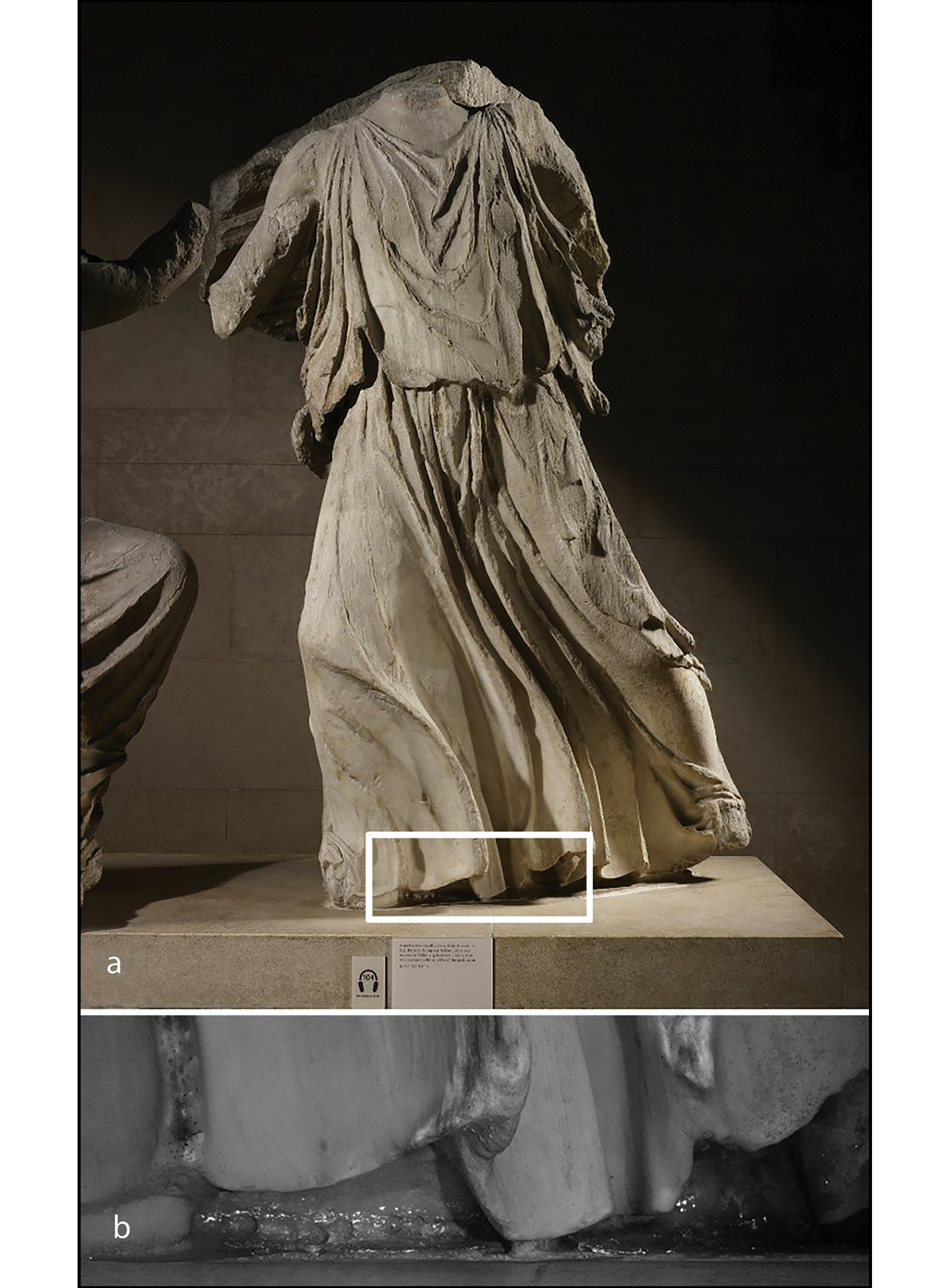
We documented carving marks on the sculptures’ surfaces using a digital camera and then associated these with the tools used to make them. The results are reported based on their micro-chronological relationships and functions so as to reconstruct the sequence of tool use with reference to the traditional patterns of work (Adam Reference Adam1966; Rockwell Reference Rockwell1993: 12; Palagia Reference Palagia and Palagia2008; Wootton et al. Reference Wootton, Russell and Rockwell2013). Limited evidence was found for the early stages of marble working because the incremental progression through the sculptural phases usually erases each preceding step. Point-chisel marks were observed, however, on the underside of blocks (see Adam Reference Adam1966: 14–15 for comparable marks on Figures WP N (Iris?) and EP E (Demeter?); Figure 1a–b). Here, the roughing-out with the use of a point chisel was subsequently smoothed over by a claw chisel (Palagia Reference Palagia1993: 21; Figure 1c).
a–b) Evidence for use of the point chisel on the underside of Figure EP G, and front of E and F, respectively; c) evidence of use of the claw chisel on the back of Figures EP L and M; d) extensive use of the drill in the drapery folds of Figure M (figure by Katarzyna Weglowska) ©Trustees of the British Museum.
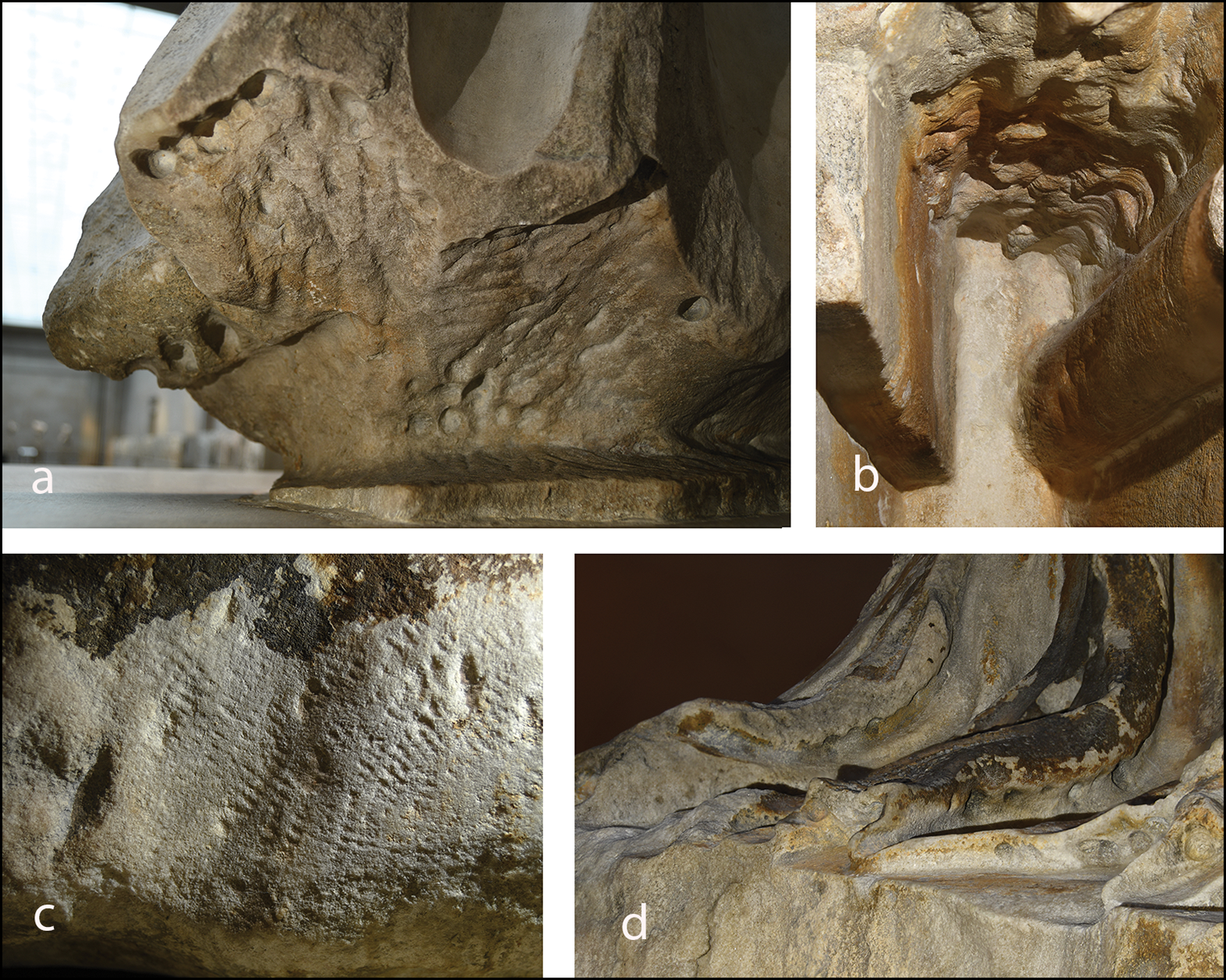
These two chisels were used in association with a third tool, the drill. This was used for removing stone during rough-shaping, then drawing out the depth necessary to create the three-dimensional forms (see Palagia (Reference Palagia1993: 41) for the drill on the WP; Figures 1d, 2a–d). The carvers made use of at least three different-sized drills: small, medium and large, from 3–10mm. Adam (Reference Adam1966: 51) identified drills of 4mm and 8mm on AcrM 1363, compared with 2mm and 4mm on the West Pediment at Olympia. During rough shaping, a series of large holes were drilled both perpendicular to the surface and on the diagonal to create a honeycomb effect; the bridges between these spaces were then knocked out with a point chisel (Adam Reference Adam1966: 50–57). The desired depth was attained by repeating this process. Finer drills were used for more detailed areas. Traces survive in the undercut folds of the drapery, and within the folds themselves, where it was presumably deemed unnecessary to remove these working marks completely (Figure 2a).
a) Drill marks surviving in the folds of Figure EP F; b–c) the drill and the claw used in tandem for the drapery of Figures EP L and M; d) evidence of the drill followed by fine-tool finishing and use of the rasp on Figure EP M (figure by Katarzyna Weglowska) ©Trustees of the British Museum.
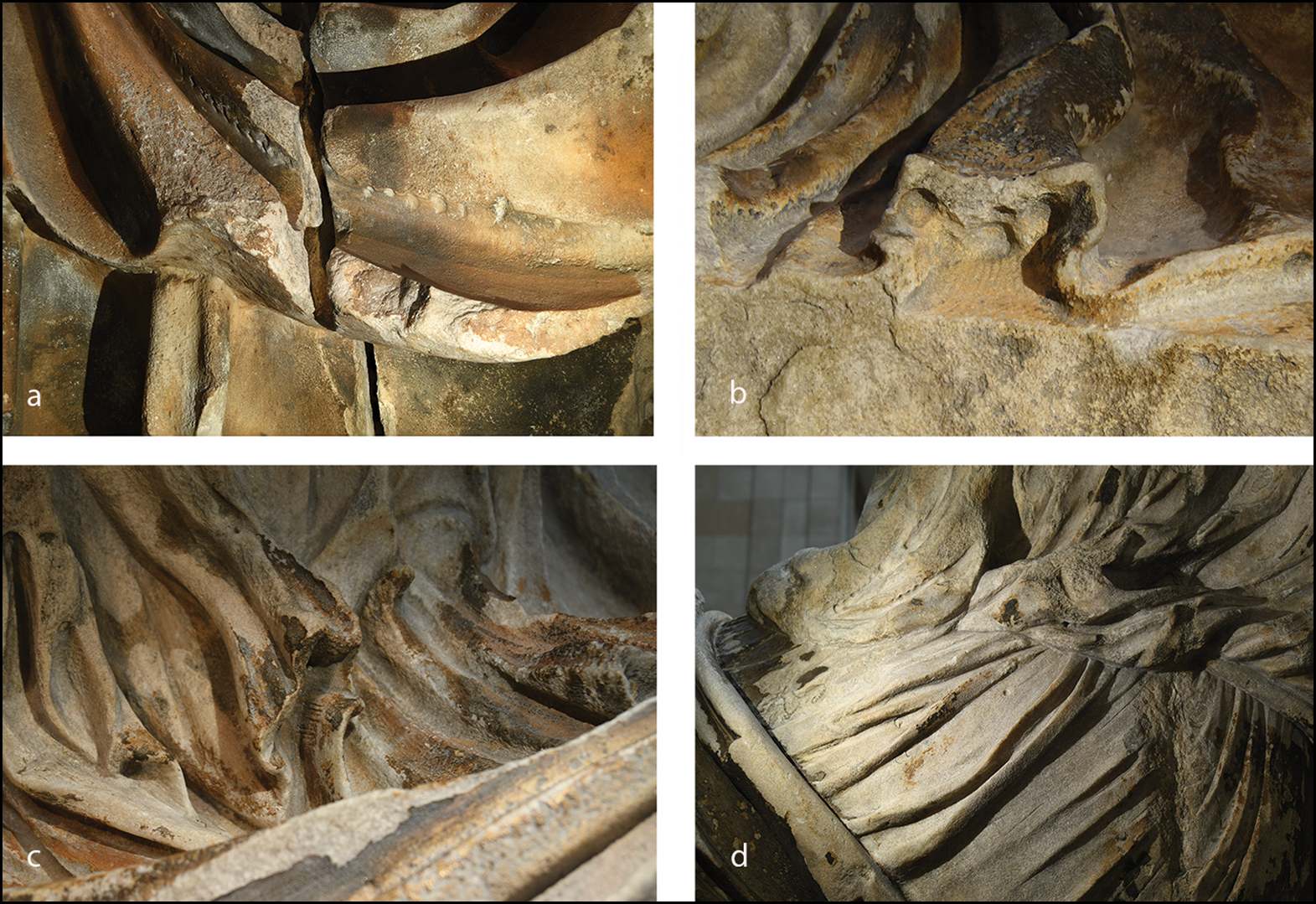
The claw chisel was used for both rough- and fine-shaping. Marks are apparent on the drapery, smoothing the rippling forms created by the deep cuts of the drill, and on flatter areas such as the backs of the figures (compare with Adams’ (Reference Adam1966: 20) observations on EP A). The size of the claw used depended on the degree of detail needed, with the number of teeth ranging from five to seven (Paga Reference Paga2015: 171; Figures 2b–c).
The carvers worked in a non-linear manner during the fine-shaping of the sculptures. Rather than bringing the whole block gradually towards its final form, they worked by area, taking each towards a high level of finish before moving onto the next section. The tools and working processes were adjusted according to the intended form (Figure 2d). This is most obvious when comparing the heavily draped mantles and the more subtly curving tunics. On Figure EP L (Dione?), the finishing of the mantle demonstrates fewer fine-tool marks, such as those made by the rasp and small channelling tools; however, these are more apparent on the tunic, where the more delicate tooling accentuates a lighter, flowing linen material. In contrast, the mantle was carved to give a greater sense of volume; it is robust in its execution producing a form and finish more akin to woven wool.
Evidence for surface polishing on Figures EP L and M (Aphrodite?) was more difficult to discern due to weathering, with the exception of the neckline of M, which is very smooth, indicating that the flesh areas were further differentiated from the drapery. This smoothness can also be seen on the neck of Figure EP A (Helios), which has a polished surface (Haynes Reference Haynes1975: 131; Jenkins Reference Jenkins2001: 23). There is evidence for the point chisel being used late in the production sequence, with the backs of EP L and M apparently modified during the original installation in the pediment. In addition, there are drill holes for fixing attachments to the sculptures, such as those for a bracelet and a necklace on Figure EP M.
The figures therefore demonstrate that the carvers adjusted their approach according to the specific subject matter, for example, considering the different garments and their materials, in particular their texture, weight and hang. The focus of the carvers was on truth to form. The final stage was the addition of colour. Carving and polychromy had a symbiotic relationship (Heilmeyer et al. Reference Heilmeyer, Massmann, Germann, Koch-Brinkmann and Brinkmann2014; Blume Reference Blume2015); there was a correlation between a surface's finish and the application of colour, but a special preparation such as ‘keying’ was not required to facilitate the adhesion of pigments (Adam Reference Adam1966: 74–5).
Polychromy and its uses
We detected Egyptian blue, in combination with two white pigments, gypsum and probably bone white, on 11 pedimental sculptures and one figure from the frieze. A selection of the most significant occurrences is presented here in detail with images and a complete list of instances in which pigments were identified is reported in Table S1. A purple pigment, at this stage tentatively identified as an anthraquinone-containing colourant, was also discovered on Figure EP M.
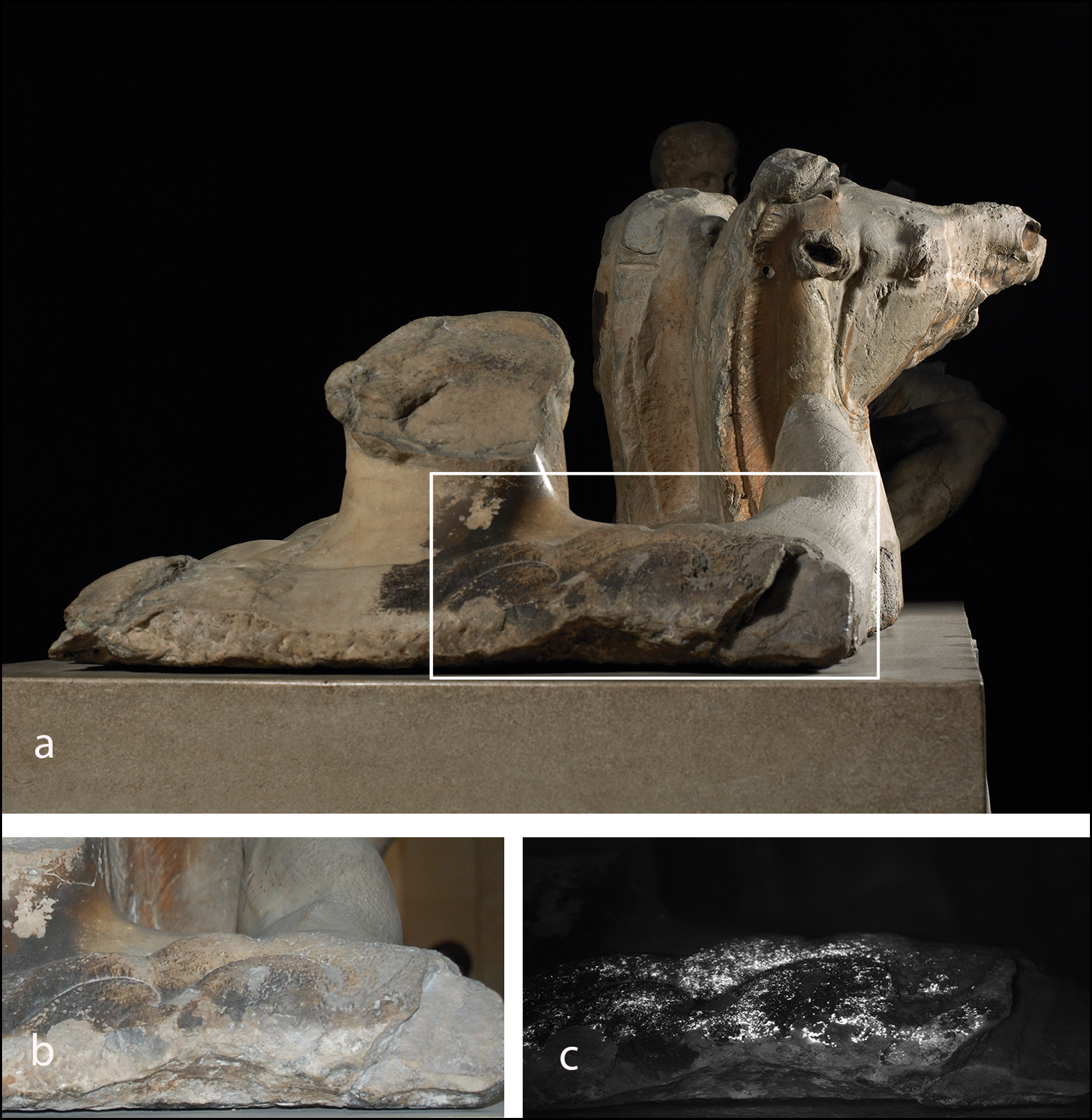
Water: Egyptian blue was detected on the area of water from which Figure EP A is shown rising (Figure 3). Blue for waves is commonly found on terracotta productions; for example, the wavelets on the Aphrodite in a Shell at the National Archaeological Museum in Athens (inv. no. EAM 2060).
Figure EP A: a–b) visible and c) VIL images of the back of the sculpture (figure b–c by Giovanni Verri) ©Trustees of the British Museum.
Snake skin: a few grains of Egyptian blue were also observed on the serpent tail of Figure WP B (Kekrops?). While the interpretation of extremely small quantities of pigment can be problematic, the use in antiquity of blue for snakeskin and sea creatures is well established as noted, for example, on a ritual basin from Ascoli Satriano, Italy (Wallert Reference Wallert1995: 178).
Background/empty space: a small amount of Egyptian blue was also detected in the background space between the rear legs of the stools/boxes on which Figures EP E and F (Demeter? and Persephone?) are shown sitting. This area probably represents ‘empty space/air’ between the legs of the seat. A considerable quantity of Egyptian blue was found beneath the peplos (dress) of Figure EP G (Hebe?; Figure 4), but no pigment on the dress itself. Despite the interpretative complications caused by the partial cleaning of this figure in the 1930s (Jenkins Reference Jenkins2001: 24–5), it is possible that the pigment was not used for the peplos, but only to represent the empty space below it. This use of blue is well attested in antiquity. Solid-blue backgrounds behind figural representations have been found, for example, in the space between the legs of the Ascoli Satriano basin mentioned above, and on the so-called ‘Throne of Eurydice’ from Vergina, Greece, to indicate the spaces between its legs. It is also applied in a more ‘naturalistic’ manner as a backdrop to the image on the backrest of that throne, as well as to the landscape of the hunt frieze from the ‘Tomb of Philip II’ at the same site. The appearance of blue on the Parthenon's pedimental sculpture may be related to the original colour of the architectural background against which the sculptures were placed.
Figure EP G: a) visible and b) VIL images (figure (b) by Giovanni Verri) ©Trustees of the British Museum.
Textiles: extensive areas of Egyptian blue were detected on garments. In particular, the mantle of EP L shows clear traces of Egyptian blue on the front of the figure (Figure 5), as well as the side and rear (Figures S1–S4 in OSM). We interpret these traces as depicting a woven design, representing dyed wool yarns in tapestry weave, but other techniques cannot be excluded (Spantidaki Reference Spantidaki2016: 78–96). The reading of the woven composition is complicated by the loss of areas of the original surface to erosion, and by other areas covered with a black crust where the blue pigment cannot be detected with the instrumentation used in this study. Nonetheless, all surviving traces of blue are exclusively found at the same distance from the lower edge of the mantle, suggesting a wide border. While the exact characterisation of the woven design is unclear, a cautious interpretation of the results can be attempted.
Figure EP L: visible and VIL images of the front. Details and line drawings of the design are in Figures S1–S4 in the online supplementary material (figure by Giovanni Verri) ©Trustees of the British Museum.
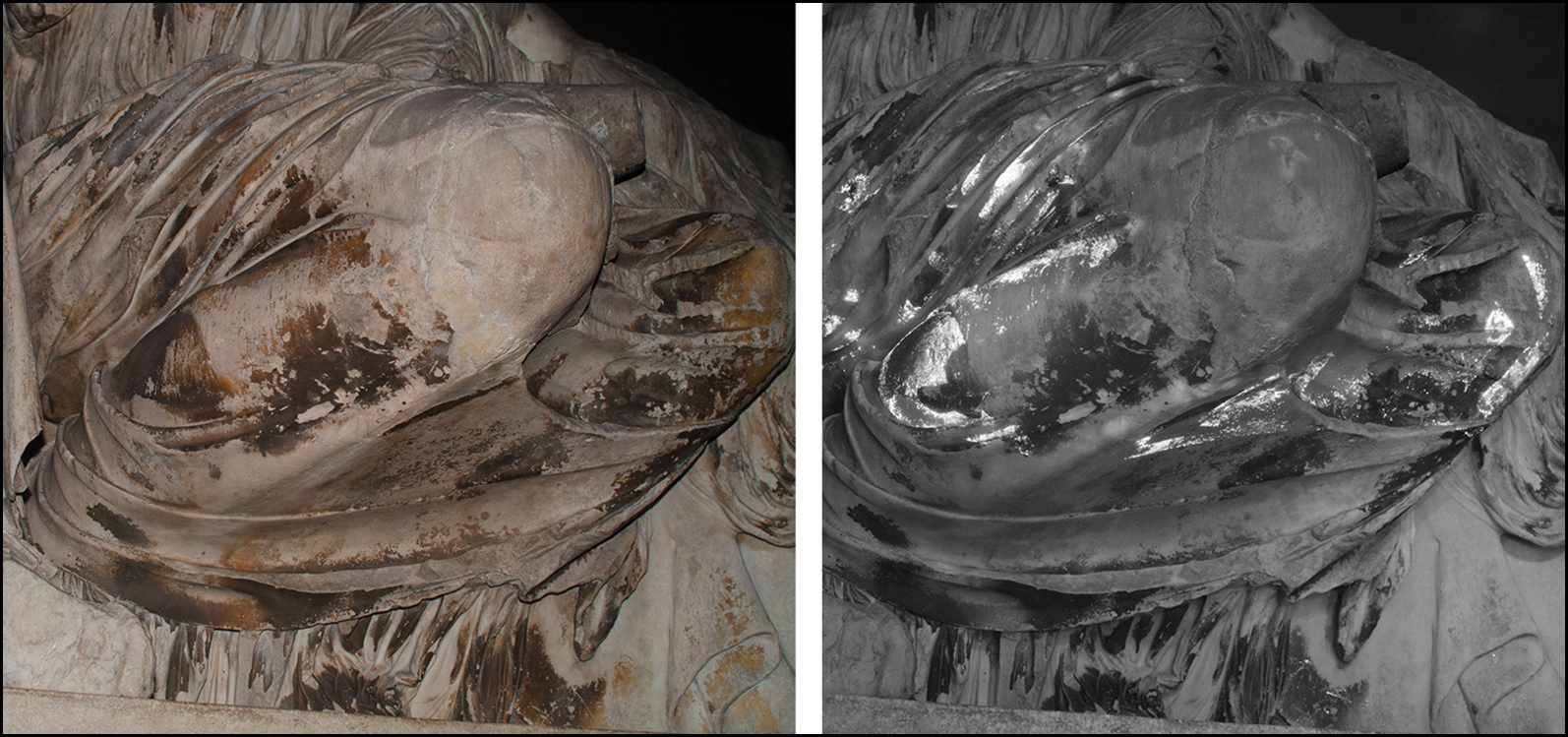
The analysis of the outlines of the various shapes visible on the mantle suggests that Egyptian blue may have been used as a background to a decorative design. On the garment over Figure EP L's left knee, it possible to discern the outline of bent human legs, as if running to the right (see athlete on the vase at the Boston Museum of Fine Arts (inv. no. MFA 96.720) for a near identical position). Over the top and side of EP L's right leg, the garment is painted with parallel bands of Egyptian blue. By the figure's knee, what appears to be an outstretched hand is visible, and a foot wearing a shoe is represented on the garment covering EP L's calf (See Figures S1-S4 in the OSM).
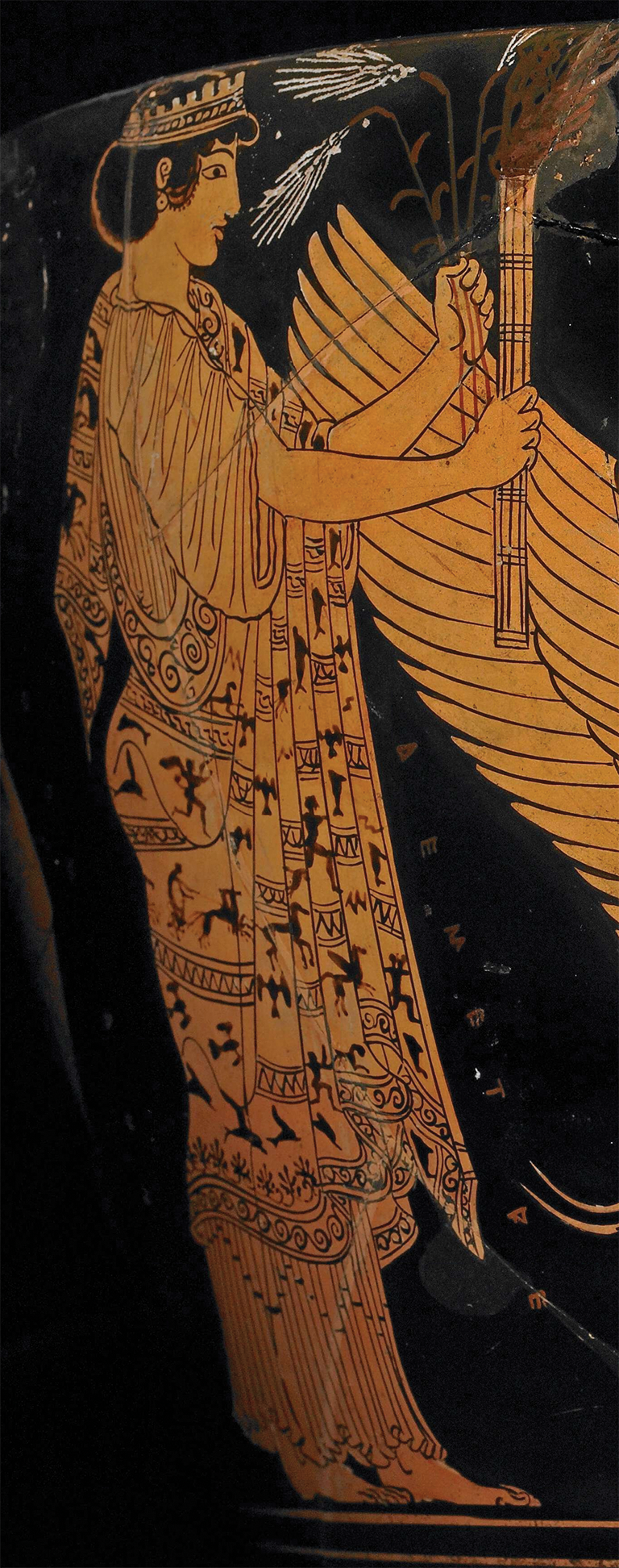
The shapes defined by the Egyptian blue background suggest that the woven decoration depicted was figurative, rather than geometric or floral. The absence of blue along the edge of the garment also suggests that the decoration was divided in woven panels or friezes, such as that on a vase from Chiusi, Italy (inv. no. Chiusi 1831). The iconography includes Penelope at her loom with a woven motif of a running figure with bent legs, similar to that visible on EP L's knee. The dimensions of the legs of the winged figure represented on Penelope's textile relative to Penelope's own knee roughly match those proportions of EP L and the leg shown on the mantle. The most convincing comparative example is found on an Attic vase at the British Museum (inv. no. BM 1873,0820.375; Figure 6). It shows Demeter wearing a mantle decorated with horizontal bands representing, among other decorative elements, winged human figures running with bent legs. There, the painter has depicted the figures on Demeter's mantle as they would have behaved on a physical garment, with at least some figures disappearing into the folds.
Red-figure skyphos showing figurative textile (inv. no. BM 1873,0820.375 c. 500–480 BC) (©Trustees of the British Museum).
The folds of the mantle on EP L's lap show a complex distribution of Egyptian blue, possibly corresponding to appearing and disappearing figures, only partially represented. Similar, but later, representations of figures with bent legs are found on textiles from archaeological contexts, such as the fragment preserved at the Boston Museum of Fine Arts (inv. no. MFA 53.18). The shape defined by Egyptian blue on EP L's calf is tentatively interpreted as a sandalled foot running parallel to, but not touching, the band where no Egyptian blue was detected. While straps are visible, the footwear does not seem to be a standard sandal, but rather a closed shoe with solid uppers and leather straps. A comparable example can be found on Figure EP N (the Seer) of the Temple of Zeus at Olympia (Dohan-Morrow Reference Dohan Morrow1985: 51). The network of straps, as well as the half-moon shape at the front of EP L's shoe, is executed using Egyptian blue, representing what is probably leather. The use of blue pigment in this way and mixed with other pigments to represent different hues (Verri et al. Reference Verri, Opper, Lazzarini, Liverani and Santamaria2014), is also found on the brown leather sandals of the philosopher pointing at a globe in the ‘Tomb of the Philosophers’ in Pella, Greece (Brecoulaki et al. Reference Brecoulaki, Verri, Kalaitzi, Maniatis and Lilimpaki-Akamati2023: fig. 19). Bright blue boots/shoes are represented using Egyptian blue on a ceramic lekythos in Athens (inv. no. EAM 2059). The half-moon feature at the front of the shoe could be an embellishment, as observed on Treu's drawing of leather straps decorated with a palmette (Dohan-Morrow Reference Dohan Morrow1985: 51) and the larger palmette at the front of the shoe of the Seer from Olympia (Brinkmann Reference Brinkmann2003: fig. 319.1).
EP L's garment appears to have been highly decorated, and therefore does not correspond to what is commonly observed in other representations of Athenian fashion contemporaneous to the construction of the Parthenon (Brinkmann Reference Brinkmann and Liverani2004: 154–6). Figure EP L represents a goddess but deities’ garments do not necessarily follow fashion rules observed for mortals. In this case, the use of elaborate decorative designs on the dress may hark back to earlier historical periods (e.g. Figure 6, which is dated to c. 490 BC), when decoration on textiles was common even for humans, or it might simply evoke the grandeur of a numinous presence. Even if not necessarily worn by mortals, elaborate textiles were nonetheless present during the middle of the fifth century BC; the tradition of annually weaving a new peplos with figurative elements, to be dedicated to Athena Polias, attests to a continued production of richly decorated textiles (Stamatopoulou Reference Stamatopoulou2012: note 1); epigraphic evidence from the Sanctuary of Artemis at Brauron confirms the existence of figured textiles in the Classical period (Llewellyn-Jones Reference Llewellyn-Jones2003: 140; Cleland Reference Cleland2005: 114–15). A desire to distinguish deliberately between the representation on a public monument of the garments worn by deities and the clothes worn by ordinary people on the streets of Athens may explain the decorative designs found on EP L's garment. The painted ornamentation may have even aided the reading of the pediments’ iconography.
Figures EP L and M are shown reclining on a rock softened by a draped cloth. Egyptian blue was detected on the reverse of this group. It forms a line equidistant from the edge of the cloth, suggesting a border running along its length (Figure 7a). A small sample taken from this line shows that the blue pigment was mixed with and layered over a phosphate-rich white matrix. Raman spectrometry reveals calcium phosphate under a thick, calcium oxalate layer, now orange because of iron impurities. Discussions on the nature of this orange layer, which is likely of natural origin and therefore the product of environmental deterioration, are beyond the scope of this study (Palagia Reference Palagia, Pike, Pensabene and Gasparini2015). It is worth noticing, however, that the oxalate layer formed when the Egyptian blue layer was already highly fragmentary (Figure S5), strongly supporting the natural origin of the orange layer. SEM investigations of this sample show a uniform distribution of phosphorus suggesting an intentional use of a phosphate-rich material, such as bone white pigment. The use of a nearly identical stratigraphy on the Mausoleum of Halicarnassus (Gratziu et al. Reference Gratziu, Jenkins and Middleton1989: 324) may not be coincidental and could be related to the pigments’ resistance to the elements for outdoor sculpture.
Figure EP L and M: VIL image of a) the back and b) visible and c) VIL image of a detail of the front by L's feet. The white arrow in (a) shows the sample location for Raman and SEM-EDX analysis (figure by Giovanni Verri) ©Trustees of the British Museum.
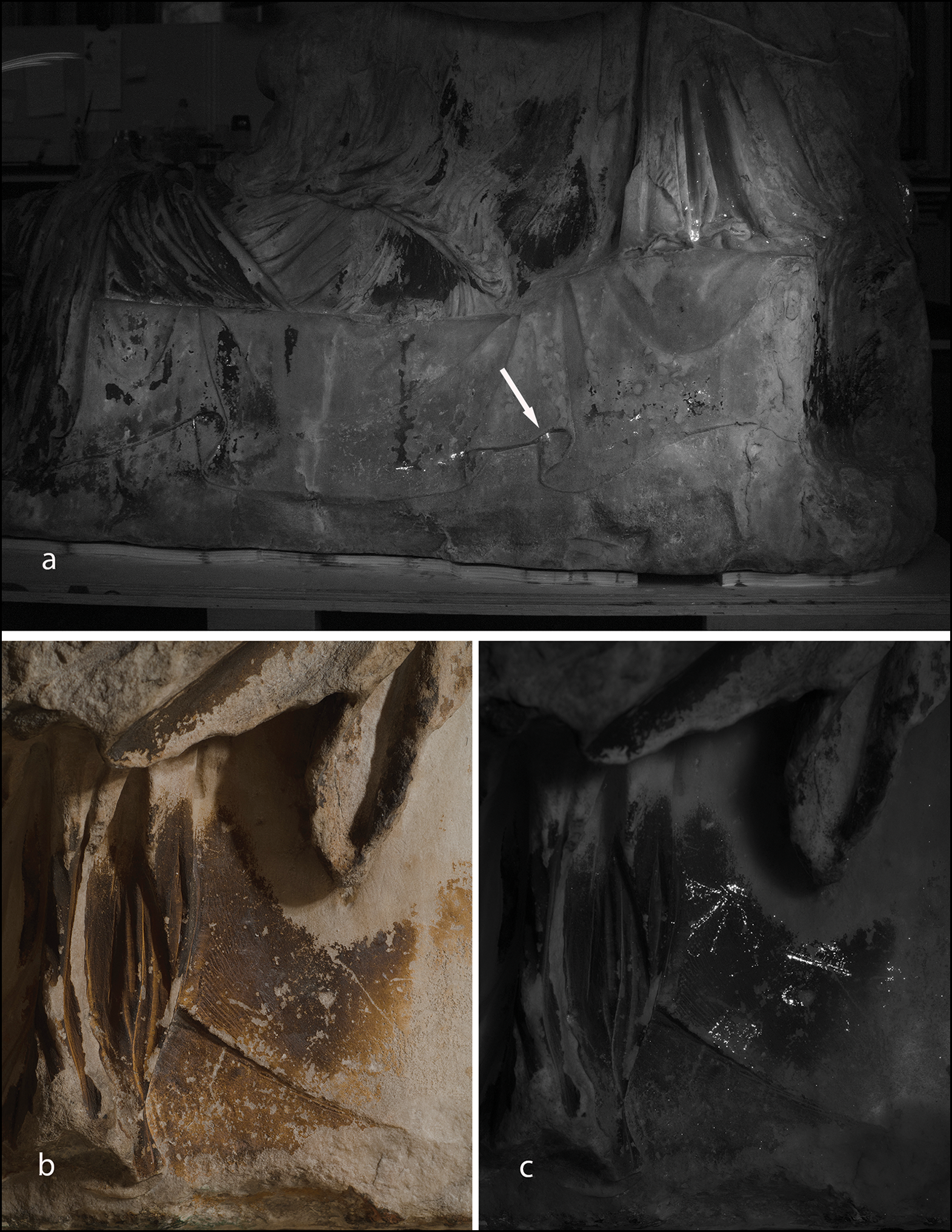
On the border of the same cloth at the front of the group, in the protected area under the knee of Figure EP L, we detected a palmette (Figure 7b–c). Lower down, several squares appear to run along the bottom edge of the textile. We observed a similar pattern on Figures WP T (Kreusa?) and EP K (Hestia?), where extensive traces of Egyptian blue were detected on these figures’ mantles. An example of a battlement pattern on a mantle, together with borders with palmettes, can be seen on a kylix representing Hera in the Berlin Antikensammlung (inv. no. Berlin 2685).
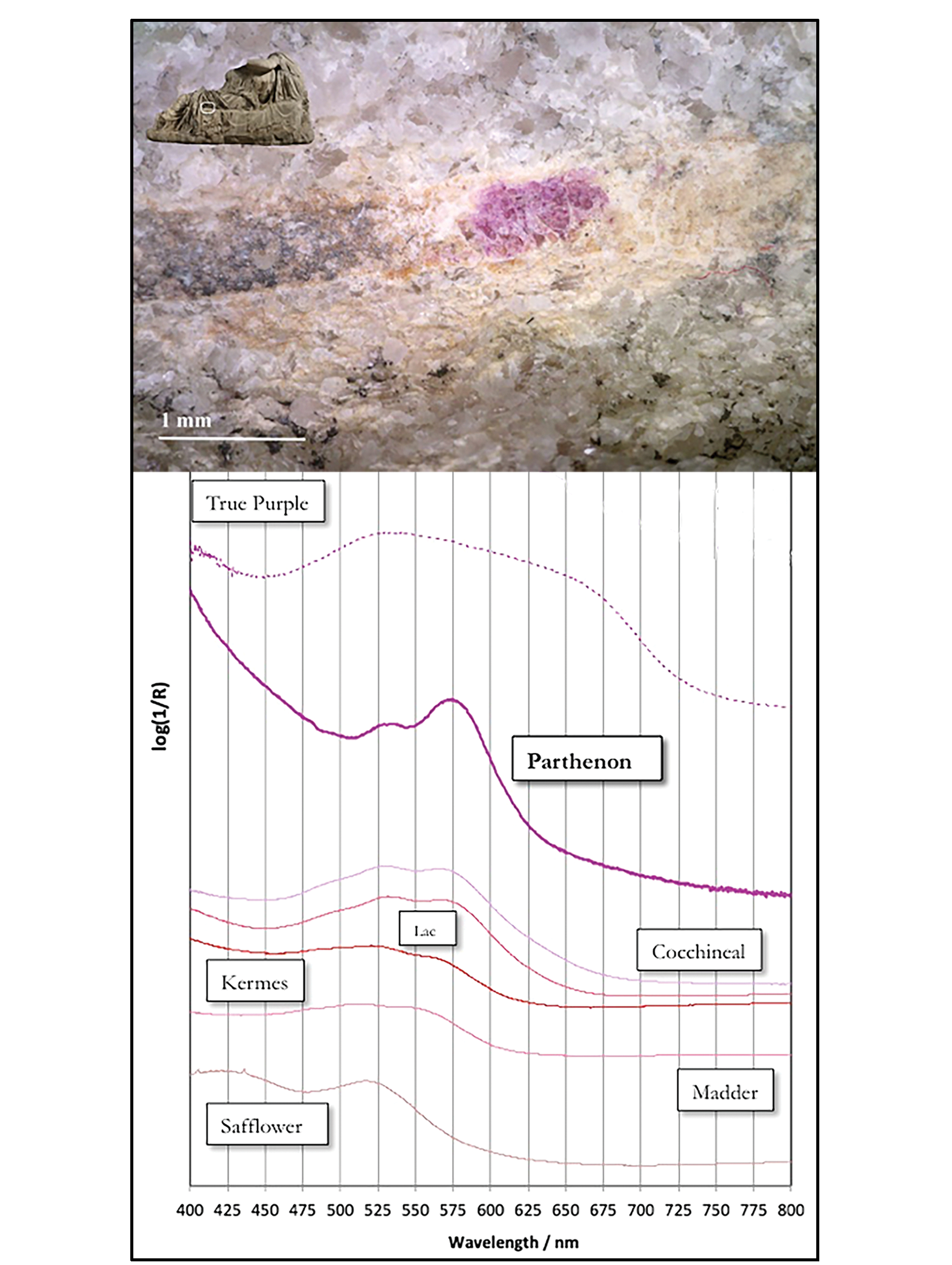
We also detected bright purple particles at the point where the cloth on which EP M sits meets the figure's mantle at the back of the block (Figure 8). It is impossible, however, to establish to which of the two textiles these purple traces belong. The particles show a translucency and gloss typical of organic colourants and are embedded in a white matrix. A variety of purple colourants—as well as combinations of red and blue—were available in antiquity and some are discussed in the Leyden and Stockholm papyri (a set of Greek texts of Roman imperial date from Egyptian Thebes which record various chemical and technical processes; Jensen Reference Jensen2008). The FORS spectrum of the purple colour, together with the absence of bromine in the XRF spectrum makes the use of true purple extracted from sea snails from the Muricidae family (also previously known as Murex)—one the most precious and coveted colours in antiquity—unlikely. When compared with other available purple dyes, the purple colour detected here shows a relatively good accordance with anthraquinones, but these may be only one of the components present. The investigations are ongoing. The desirability of the colour purple in the Classical period is well attested in textual sources (e.g. the records of Artemis Brauronia mentioned above), as well as in high-status Athenian coroplastic forms (e.g. inv. no. EAM 2059) and marble production (Brecoulaki et al. Reference Brecoulaki, Kavvadias, Verri, Østergaard and Nielsen2014).
Detail of the purple organic colourant on Figure EP L. The inset shows the location of the area. Absorption spectrum of the colourant in comparison to standards (for orcein/folium see Aceto et al. Reference Aceto, Angelo, Fenoglio, Idone, Gulmini, Picollo, Ricciardi and Delaney2014, for alkanet Angelini et al. Reference Angelini, Tozzi, Bracci, Quercioli, Radicati and Picollo2010) (figure by Giovanni Verri) ©Trustees of the British Museum.
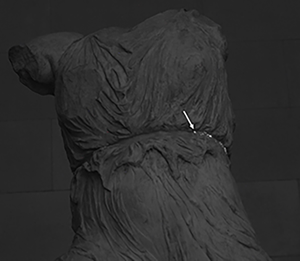
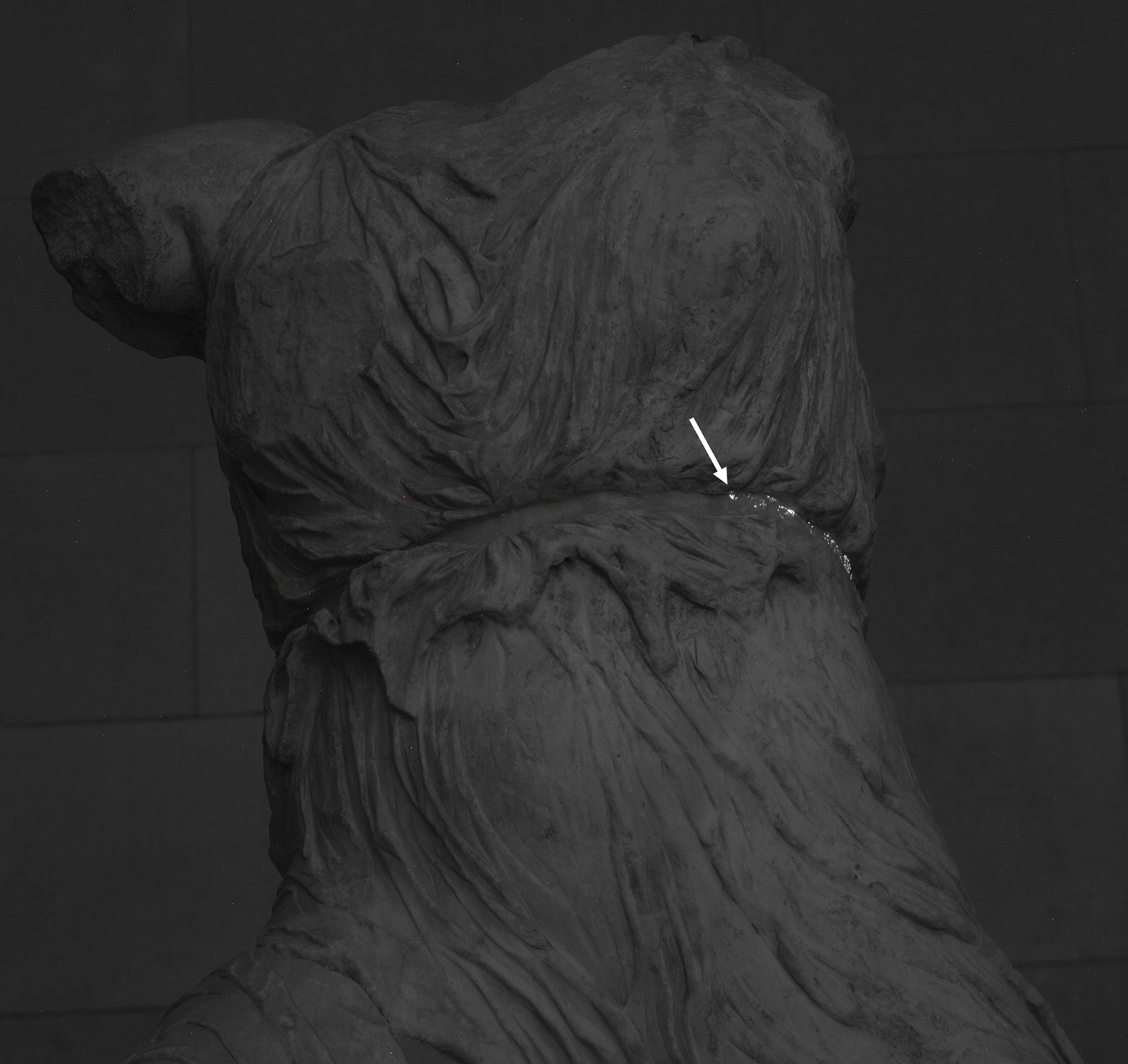
We also detected Egyptian blue on the beltline of Figure WP N (Figure 9). This may correspond with the representation of a textile band or strap. Alternatively, the recessed carving of the beltline, in conjunction with a small hole at the back may indicate the fitting of a metal belt (for comparison, see the small hole intended to secure a metal belt on Metope North XXXII, Acropolis Museum, Athens, inv. no. AKR 20706). The hole may also be the remains of drill-work for a fold, rather than for an attachment. The presence of blue in an area that might have been covered by a metal attachment is difficult to understand. It could be a later repainting or a blue background for a perforated metal belt. Repainting seems less likely because the blue at the back is in an inaccessible area. Here, SEM and Raman analysis reveal the presence of gypsum, rather than bone white, as the white pigment with which the blue was mixed. Whether the presence of two different types of white pigments corresponds to different workshops, an intentional artistic choice or the result of a later intervention is currently unknown. Gypsum can form from calcium carbonate in the presence of sulphuric acid, as in the case of ‘acid rain’; however, while the paint layer appears well-bound and cohesive—unlike a typically powdery alteration product—the presence of calcium sulphate instead of calcium phosphate, as found in the other samples, presents the same questions and uncertainties highlighted here.
Figure WP N: VIL image. The white arrow shows the sample location for Raman and SEM-EDX analysis (figure by Giovanni Verri) ©Trustees of the British Museum.
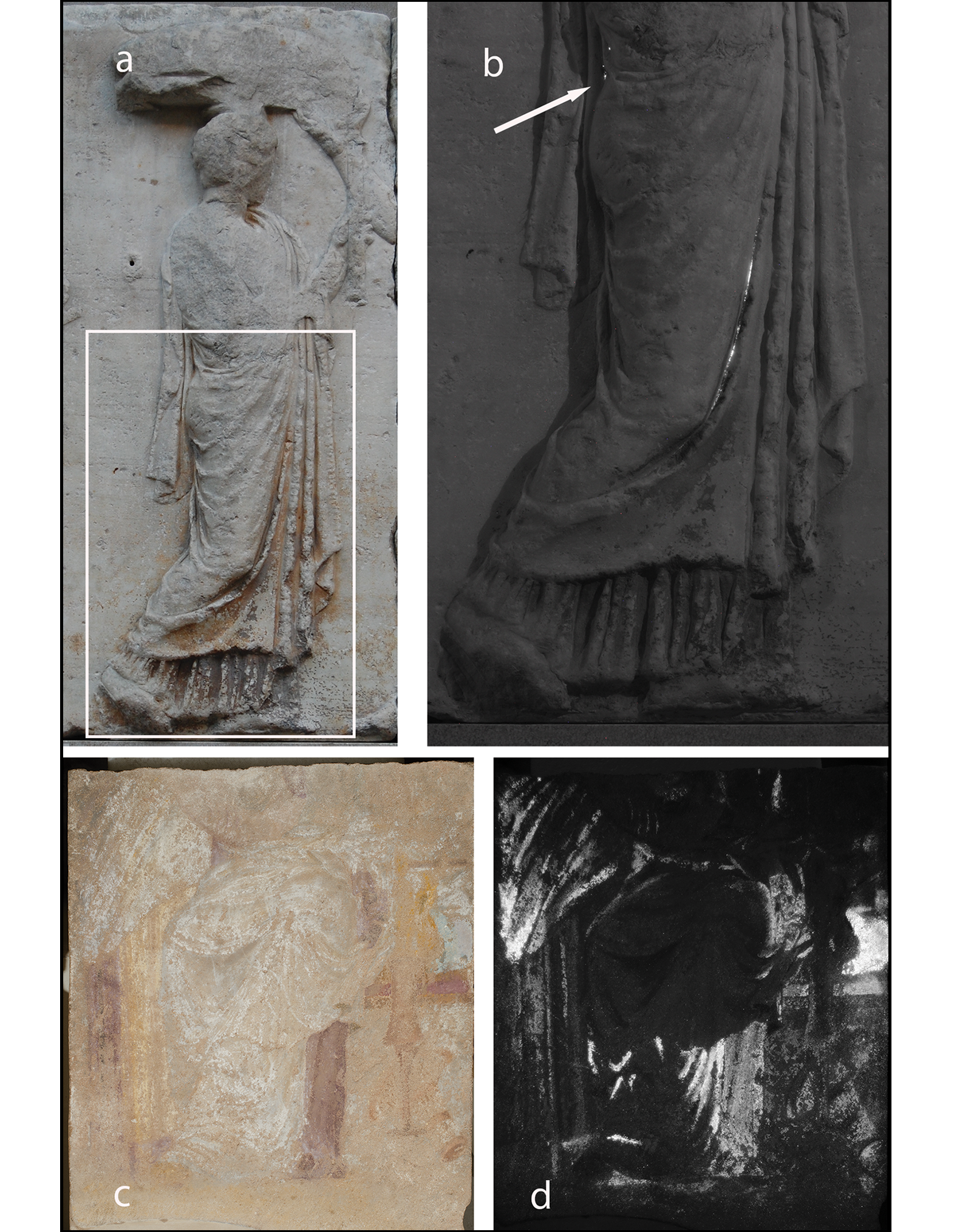
Finally, we detected Egyptian blue in the recesses of the folds of Figure 32 on EF Block V, (Figure 10a–b). These may be remnants of a representation of a garment made with blue-dyed wool, as with WP N's belt above. The analyses of ancient painting practices, however, show the difficulty involved in interpreting scant traces of colour and this example could have a more complex interpretation. For example, on the Amathus stele in the British Museum (inv. no. BM 1894,1101.717), Egyptian blue was used to represent depth in the folds of both white and coloured textiles (Figure 10c–d). The blue found on Figure 32 could have been a solid application of colour or part of a shading technique; a sample indicates the presence of a phosphate-rich white pigment, with a stratigraphic distribution similar to that observed on the East Pediment.
Figure East Frieze, Block V, Figure 32. a) visible and b) VIL image. The white arrow in (b) shows the sample location for Raman and SEM-EDX analysis. Hellenistic stele from Amathus(?), Cyprus, showing two women (inv. no. BM 1894,1101.717, fourth–third century BC); c) visible and d) VIL images (figures b–d by Giovanni Verri) ©Trustees of the British Museum.
Conclusions
The surviving evidence on Figures EP L and M (e.g. Figure 7, Figures S1-S5 in the OSM) shows no distinct technical intervention between the surface finish of the marble and the application of paint. Instead, the evidence indicates that the sculptors focused on reproducing the intended form rather than crafting a special surface for the addition of colour. Tunics were executed with fine tooling, reflecting their lightweight linen, in contrast with the vivid impression of the heavier woven and draped woollen fabric of the mantles. The finish, where applied, to areas of skin, offered further differentiation, such as Helios’ polished neck.
The application of polychromy was the final stage in the process of making of these sculptures and was, undoubtedly, as visually important as the carving. It was what the viewer saw. Even if the surfaces were not explicitly prepared for the application of paint, carving and colour were unified in their conception. The pediment artists were sympathetic to the final intended polychrome sculpture providing surfaces that evoked textures similar to those of the subjects represented. They used innovative modelling techniques to achieve extraordinary sculptural effects and provide support for the complex decorative and figurative designs that would subsequently be painted on them.
It is likely that the painters took advantage of these mimetic surfaces to achieve the final effects. Egyptian blue was used to represent natural features and woven decorative elements, including figurative designs, on garments representing wool. Iconographic parallels for the designs can be found on roughly contemporaneous ceramic vessels as well as in textual and epigraphic sources. The colour palette used also included white (gypsum and probably bone white) and, importantly, purple (possibly containing anthraquinones as well as other currently unidentified purple components).
The results and their preliminary interpretation presented here bring us closer to understanding the sculptures’ original appearance. The interpretation of small amounts of paint, however, requires caution. The presence of a particular colour does not necessarily mean that the surface was uniformly painted. The practice of mixing Egyptian blue with other pigments is attested for the creation of many hues, including flesh tones, brown for leather, grey for weapons, purple for textiles and so forth. The Parthenon Sculptures are probably no exception. The results reveal the complexity of ancient painting techniques and are a reminder of the need for care when interpreting such traces. Our results also demonstrate the traces of highly detailed paintwork, for example showing figurative textiles, intended to emphasise the divine status of the various individuals represented. Moving to a complete colour reconstruction of the Parthenon pediment and frieze should therefore proceed carefully. The evidence, albeit greatly expanded, is still insufficient to reconstruct such a large and complex work of art.
The results of this study open up new interpretations about the role and significance of the Parthenon in the development of ancient Greek art history. Thanks to their ‘new look’, we can revisit the current understanding of the sculptures. It could be argued that the Parthenon was partially or wholly the inspiration for a wider interest in the use of rich and elegant polychrome sculpture. This interest has clear parallels in other media, including in textiles, described in textual sources, as well as marble and coroplastic productions of the same period, culminating in what Brecoulaki et al. (Reference Brecoulaki, Sotiropoulou, Katsifas, Karydas and Kantarelou2014) describe as the predilection for ‘colour and shine’ during the Late Classical period.
Painted over the white surface of the marble, polychromy was one of the most immediately visible elements of architectural sculpture. In addition to being aesthetically pleasing, the use of colour might also have been intended to aid the viewer in the identification of the figures from a distance, for religious or even political purposes. Lavish polychromy likely served to demonstrate the grandeur and reach of the Athenian empire. The Parthenon was the grandest of all the works instigated by Pericles; emblematic in this respect is the episode narrated by Plutarch, in which Pericles and the sculptor Pheidias are incriminated for having included their own portraits among the decorative elements of the gold-and-ivory sculpture housed within the Parthenon itself (Plutarch Vit. Per. 31; Perrin Reference Perrin1916).
It is also noteworthy that the sculptures were both carved and painted in the round, including at the back where they could not be seen once installed on the building, or accessed, making the surviving paint certainly original and not a later addition. We can only speculate on reasons for this. The sculpture, like the temple itself, was dedicated to the gods, to whom the entire sculpture ensemble was ‘visible’, and, as such, it had to be completed to the highest standards regardless of the invisibility of portions to mortal eyes. Another possible reason is that Pericles intended to use the sculptures to impress important visitors (Plutarch Vit. Per. 13; Perrin Reference Perrin1916), who would visit the site when the great works were being undertaken, and hence the sparing of no expense was part of their, and his, prestige. Finally, the artists’ modus operandi is an intangible aspect of the creation of a work of art; the highly finished sculptures may be the result of a practice that required the modelling of a figure in the round for the sake of completion.
While further research is necessary and more avenues of interpretation can be brought forward, it is apparent that the Parthenon Sculptures were part of a syncretic endeavour, in which the painted decoration was a significant component of the final effect, as important, elaborate and prominent as the much-celebrated carving. When understood together, carving and painting add a dimension of complexity previously unacknowledged. Despite their troubled history, this scientific analysis of the Parthenon Sculptures has exceeded expectations, revealing a wealth of surviving paint, and arguably making them the best-preserved examples of surviving polychromy of mid-fifth century BC Athens.
Acknowledgements
The authors are indebted to Lesley Fitton, Thomas Harrison, Michelle Hercules, Thomas Kiely, Timothy Long, David Saunders, Stephanie Vasiliou and Quanyu Wang for their support with this research. We also warmly thank all the British Museum security staff who helped us during long and late hours.
Our dear colleague Ian Jenkins (18 February 1953–28 November 2020) died before the completion of this article. He made a fundamental contribution to the project, developed over many years of collaboration (2008–2020). He remains, therefore, as an author. We have endeavoured to represent his views accurately and dedicate the publication to his memory.
Supplementary material
To view supplementary material for this article, please visit http://doi.org/10.15184/aqy.2023.130.


 Open access

