

INTRODUCTION
On 21 January 1965, the Art Gallery of Greater Victoria (AGGV) in British Columbia, Canada, received a donation from a Mrs H.V. Bartholomew comprising 62 Laconian lead figurines; a black-figure Droop Cup; a black-figure lekythos; one Corinthian piriform aryballos and one Corinthian squat oinochoe (both catalogued as unguentaria); a miniature Corinthian conventionalising kotyle; a nineteenth-century CE Nepalese ornament of gold, brass and semi-precious stone; a ‘Celtic-type ornament’; and two woodcut prints (AGGV, Statement of Gift, AGGV Acc. No. 65-8). Given its accession date and documentation, the donated material is in accordance with the UNESCO Convention of 1970. The donated collection of lead figurines addressed in this paper is representative of a class of small votives commonly found at Spartan and, more generally, Laconian sanctuaries. Neither these artefacts nor the remainder of the collection of ancient Greek and Roman art in the AGGV have previously been displayed for the public or published in any way. Since their donation, the figurines have remained in storage, with only a short (and, until recently, unillustrated) online description to attest to their presence in the collection.Footnote 1
Included with Bartholomew's donation was a brief, handwritten note, dated 1910, on the professional letterhead of architect Ramsay Traquair of Edinburgh, then an Associate of the Royal Institute of British Architects (RIBA) and lecturer at the Edinburgh College of Art (BSA 1909–10, 325). With this note, it is possible to confirm the figurines’ provenience and to reconstruct in broad strokes their collections history from their excavation at the sanctuary of Artemis Orthia in the spring of 1906 by the British School at Athens (BSA) to their eventual donation to the AGGV in 1965. The note in question and the relationships between the individuals involved likewise allows the material in the AGGV to be identified as part of Traquair's personal collection,Footnote 2 evidently deriving from his time spent working on the BSA's Laconia project under the direction of R.C. Bosanquet. For convenience, the collection of lead figurines in the AGGV is therefore referred to as the ‘Traquair Collection’ throughout this paper.
This article presents a detailed study of the figurines in the Traquair Collection with respect to collections history and typology. The Traquair Collection includes a range of figurine varieties representing many of the major published groups: wreaths, female figurines (all or nearly all representing votaries), male figurines (including warriors and a flautist), animals and a probable ‘grille’ fragment (see Wace Reference Wace1929 for definitions and illustrations of the types). An accompanying catalogue (see Supplementary Material) provides standardised measurements, descriptions and comparanda for all figurines in the collection. When assigning individual artefacts to chronological ranges in the sections below, we employ Hodkinson's (Reference Hodkinson, Fisher and van Wees1998a, 107, table 2, n. 35) dating of Wace's (Reference Wace1929, 251–2) lead phases (Table 1), which he describes as a ‘compromise’ between the chronologies offered by the excavators, Boardman (Reference Boardman1963) and Cavanagh and Laxton (Reference Cavanagh and Laxton1984). Although the typological framework developed by Wace should be revisited, we employ it in our description of the figurines in the Traquair Collection due to its correlation to the stratigraphy and ceramic sequence identified at the sanctuary of Artemis Orthia, which have been the subjects of much restudy since excavation, and its primacy in other discussions of lead figurines. It is therefore necessary to include a brief review of the history of the excavation and analysis of the sanctuary of Artemis Orthia and its stratigraphy, and the study of the lead figurines specifically, in order to situate our analysis within the development of the figurine typology and the work that has been conducted upon the corpus since its definition.
Laconian lead phases, corresponding absolute dates and ceramic phases (cf. Hodkinson Reference Hodkinson, Fisher and van Wees1998a).

The Traquair Collection also allows us to test, through the close analysis of a small sample, the applicability and chronological utility of the long-standing Laconian lead figurine typology in dating and describing figurines for which no or only very approximate contextual data are available. In this regard, our study supports and supplements the issues raised by Cavanagh and Laxton (Reference Cavanagh and Laxton1984) in their study of figurines from the more recent Menelaion excavations, where they repeatedly found it necessary to rely on stratigraphic and contextual data rather than typology when seeking to assign precise dates to lead figurines and associated levels. The Traquair Collection complements Cavanagh and Laxton's analysis by approaching the issue of typology from the standpoint of a decontextualised museum collection. Due to the collection's lack of stratigraphic context, any attempt to assign the figurines to phases and corresponding dates must be dependent upon the typology. As our discussion and associated catalogue of the Traquair Collection demonstrates, the traditional typology is ineffective in assigning precise and accurate dates on a stylistic basis for lead figurines without the benefit of robust archaeological contexts. Only in a few distinct cases within the collection can individual figurines be confidently assigned to precise chronological phases by stylistic attribution (e.g. 11, 18, 38). Indeed, entire classes of figurines, most notably the popular spike wreath variety, can scarcely be assigned but to the widest of date ranges. We conclude with some comments upon future directions and the utility of small collections in considering the lead figurines as a corpus while accounting for their unique history of excavation and analysis. The study of small collections such as this allows for more comprehensive analysis of the material than has been afforded to large assemblages, thus contributing to a fuller published dataset and a better understanding of the typological characteristics of the figurines, and thereby helping to demonstrate the problems and limitations of over-reliance on those typological characteristics in attempting to place figurines within a chronological sequence.
COLLECTIONS HISTORY
We begin with the existing evidence bearing on the Traquair Collection's provenience, acquisitions history and arrival in Victoria, British Columbia, Canada. The note from Ramsay Traquair included with the AGGV acquisition documents is crucial for the reconstruction of the collection's history, as it allows an identification of the figurines’ provenience as originating from the 1906 excavations at the sanctuary of Artemis Orthia. We can thus limit the possible findspots of the figurines to three distinct zones within the excavations. The note further allows for an analysis of collections history providing a reconstruction of the figurines’ passage from Sparta to Victoria during the first decades of the twentieth century. Finally, a brief professional biography of Ramsay Traquair discusses his association with the BSA and presents subsequent connections between Traquair and Canada through his later work in Quebec, thus further situating the collection's history within the diverse academic engagements of its collector.
A note from Ramsay Traquair
At the time of our examination of the Traquair Collection in early 2020, little was known to suggest how the donor, H.V. Bartholomew, had acquired her small collection of antiquities. During our analysis of the figurines in the AGGV, however, we found a brief note pertaining to their nature and origin. The note is dated 10 May 1910 and written on the professional letterhead of Ramsay Traquair, though it is unsigned. In the decades following Bartholomew's donation, this note, which was not independently catalogued, was forgotten, leaving no institutional or recorded knowledge of its existence. The inclusion of the note, quoted here in full, is instrumental in piecing together the history of the figurines as well as demonstrating how Bartholomew came to possess them:
Dear Hilda, The lead votive figures are from the shrine of Artemis Orthia at Sparta, they belong to the 5th or 6th century B.C. The shrine was a rather famous one[.] The Spartan boys were beaten at the altar of Artemis as a test of endurance. It seems probable however that this rather savage performance was a late addition to some early rite [and] was performed eagerly for the entertainment of the Roman tourists who were very fond of ‘quaint old[-]world customs’.
Traquair relates a summary account of the well-known rite of διαμαστίγωσις held at the sanctuary of Artemis Orthia.Footnote 3 As Traquair was present at Sparta only for the 1906 season, when he served as project architect (Bosanquet Reference Bosanquet1905–6, 278; Traquair Reference Traquair1905–6a; Reference Traquair1905–6b; and see below), the collection most likely originates from the corpus recovered in the course of that excavation season. This inference is supported by an aged paper label on the cardboard backing of the frame that held the figurines from prior to their donation until they were re-housed in early 2020, as it reads, in Traquair's hand: ‘Lead votive figures from the Shrine of Artemis Orthia, Sparta 1906’.Footnote 4 The figurines can thus be said to derive from one or more contexts in the conical riverbank deposit, Trench A and/or Trench B, which were excavated at the sanctuary during that season (see Fig. 1; cf. Dawkins Reference Dawkins1929a, 4, pl. III), but no more specific context can be established on present evidence.Footnote 5 Given the vast number of lead figurines recovered in the excavations, these artefacts often passed into the personal collections of the excavators, thus facilitating their appearance in museums and galleries around the world.Footnote 6 While there is no known documentation recording Traquair's acquisition of the collection, we can posit that the acquisition followed the dispensation process that contributed to the personal collections of the other excavators with the permission of Greek authorities. Our outlining of the Traquair Collection's provenience and collections history permits responsible study of the collection by demonstrating the material's direct derivation from the Artemis Orthia excavations, in addition to providing a general knowledge of the figurines’ context.
Plan of the sanctuary of Artemis Orthia following the 1907 excavation season. Trench A, Trench B and test pits excavated during the 1906 season are labelled as such. (After Dawkins Reference Dawkins1906–7, pl. 2; AO, pl. III; British School at Athens Archive, Sparta Excavation Records, Sparta 79a; reproduced with the permission of the British School at Athens.)

In the note, Traquair addresses his sister, Mrs Hilda Napier, who was the mother of the donor, H.V. Bartholomew, and to whom he seems to have gifted the figurines (Murray Reference Murray2003; Bosher Reference Bosher2010, 525; S. Topfer, pers. comm.). Mrs Napier must have received the collection around the time of her arrival in Victoria in 1909 with her husband, Mr George Paxton Napier, perhaps just before the couple's emigration from London (see Bosher Reference Bosher2010, 525). Traquair's note suggests that the letter was authored some time after the initial gifting of the figurines, perhaps in response to a query about the artefacts. It is also possible, however, that the figurines were gifted alongside the writing of the note in 1910. Upon her passing in December 1964, Mrs Napier evidently left the figurines to her daughter, likely alongside the other antiquities included in the 1965 donation. We can only speculate as to whether these might also have previously belonged to Traquair, but it seems a likely scenario. For instance, the Droop Cup (AGGV 1965.003.001), with a silhouette style frieze of deer and lions in its lower register, bears a label on the base of the foot indicating that the cup was sold in Naples.Footnote 7 Given Traquair's presence in Italy in 1900 (see below), it is entirely plausible that he purchased it.
Ramsay Traquair and the British School at Athens
Ramsay Traquair, born 29 March 1874 in Edinburgh, Scotland, was the eldest son of Dr Ramsay Heatley Traquair – curator of Natural History at the Royal Museum of Science and Art in Edinburgh (now National Museums Scotland) and a noted palaeoichthyologist and geologist – and Phoebe Anna Traquair (née Moss), an artist who helped spearhead the arts and crafts movement in Scotland (DSA; Matthews Reference Matthews1952; Murray Reference Murray2003; Reference Murray, Rider and McNabb2006; Nobbs Reference Nobbs1939). Traquair studied architecture at the University of Edinburgh and the University of Bonn (1891–2), taking degrees from neither institution, prior to articling with S.H. Capper at the Edinburgh College of Art (1892–7) (DSA; Hill Reference Hill2009; Nobbs Reference Nobbs1939). In 1900, he was admitted as a RIBA Associate and gained his first experience in the Mediterranean while surveying architecture in Italy (Kakissis Reference Kakissis, Llewellyn Smith, Kitromilides and Calligas2009, 134; Murray Reference Murray2003; Nobbs Reference Nobbs1939).
Traquair's relationship with the BSA began with an appointment to the architectural studentship for the 1905–6 session to assist Prof. A. van Millingen in his study of Byzantine churches in modern Istanbul,Footnote 8 in addition to working in Laconia (BSA 1905–6, 485–6; cf. Gill Reference Gill2011, 144, citing BSA Minute Book 5, Meeting of 17 October 1905). During the spring of 1906, the BSA's Laconia project employed Traquair with the stated objective of dedicating serious scholarly attention to the rich architectural remains of Byzantine and Frankish Laconia,Footnote 9 in addition to serving as project architect for the new excavations in Sparta. As project architect, Traquair was responsible for the initial analysis and preliminary publication of the Roman stoa and late Roman fortifications on the Spartan acropolis (Traquair Reference Traquair1905–6b), as well as some site photography, though he did not draft plans outside of his own purview of study (Bosanquet Reference Bosanquet1905–6, 279). His report on the stoa is particularly brief, and his observations on both the stoa and fortifications have been fruitfully supplemented by later analyses (Waywell et al. Reference Waywell, Wilkes, Bailey and Sanders1993; Reference Waywell, Wilkes, Bland, Sidell, Wilkinson and Chandler1997; Waywell and Wilkes Reference Waywell and Wilkes1994). In addition to his work at Sparta, Traquair made a detailed architectural study of medieval castles and churches throughout Laconia (Traquair Reference Traquair1905–6a; see also van de Put and Traquair Reference Put and Traquair1906–7). Elsewhere, Traquair (Reference Traquair1906–7) studied the medieval fortresses of the north-western Peloponnese and collaborated with Wace to produce a brief article on the base of the obelisk of Theodosius in Istanbul (Wace and Traquair Reference Wace and Traquair1909). Traquair returned to Greece once more in 1909 with support from the then newly founded Byzantine Research Fund (Kakissis Reference Kakissis, Llewellyn Smith, Kitromilides and Calligas2009, 134–5), during which time he furthered his work on the medieval churches of the Mani peninsula (Traquair Reference Traquair1908–9; see also Megaw Reference Megaw1932–3). His interest in the post-antique architecture of Greece persisted, and he published an additional article on Frankish architecture in Greece in 1923 (Traquair Reference Traquair1923).
Following his first visit to Greece in 1905–6, Traquair took up a posting in 1906–7 as lecturer in architecture at the Edinburgh College of Art (BSA 1906–7, 478; Nobbs Reference Nobbs1939). In 1913, he succeeded P.E. Nobbs as the Macdonald Chair of Architecture at McGill University in Montreal, Quebec.Footnote 10 During Traquair's tenure at McGill, he donated a further portion of his collection of lead figurines to the university's Redpath Museum (see n. Footnote 2). From his position at McGill arose an interest in the architecture of Quebec and early Canada, which the bulk of Traquair's later publications treated to good acclaim.Footnote 11 Upon his retirement from McGill University in 1939, Traquair was appointed Emeritus Professor of Architecture, and he continued to publish almost to his passing in 1952 (cf. Matthews Reference Matthews1952). Traquair's magnum opus, The Old Architecture of Quebec (Reference Traquair1947), remains a fundamental study of French-Canadian architecture, for which he was awarded an honorary doctorate by the Université de Montréal in 1948. The variety of Traquair's interests is exemplified by his other major monograph, The Old Silver of Quebec (Reference Traquair1940), which treats the silver artefacts of Quebec and their smiths, both religious and secular.
THE SANCTUARY OF ARTEMIS ORTHIA AND LACONIAN LEAD FIGURINES
We turn now to a brief review of early British fieldwork in Laconia, the excavation of the sanctuary of Artemis Orthia and the history of study of the lead figurines recovered from it and other Laconian sanctuaries. This facilitates the proper contextualisation of our discussion of Traquair and the place of the Traquair Collection within the wider corpus of lead figurines and their analysis. In addition to providing some context to this otherwise decontextualised collection, this will allow us to connect more closely Traquair's professional biography with the history of the collection and its place within the study of Laconian material culture.
The British Laconia project in the early 1900s
Sparta has long occupied a prominent place in scholarly and popular conceptions of classical antiquity (see, for example, discussion in Cartledge Reference Cartledge2001; Jensen Reference Jensen and Powell2018; Mason Reference Mason and Powell2018; and papers in Hodkinson and Macgregor Morris Reference Hodkinson and Macgregor Morris2012). The city of Sparta and the region of Laconia have likewise played a prominent role in British archaeological fieldwork and the development of modern classical archaeology (Catling Reference Catling, Cavanagh and Walker1998). When the BSA's Sparta excavations officially began in 1906, considerable expectation was expressed for the potential of a large-scale, collaborative project (cf. Gill Reference Gill2011, 172–4). In his report on the initial season of excavations at the sanctuary of Artemis Orthia, R.C. Bosanquet (Reference Bosanquet1905–6, 277), then BSA Director, forecast the lasting significance of the project, calling it ‘what seems likely to be the most extensive and productive piece of work yet undertaken by the British School at Athens’.
From the outset of the project, the BSA's design for fieldwork in Laconia was extensive and diachronic, with many elements foreshadowing goals and procedures that would become standard for regional studies projects in Greece (cf. Catling Reference Catling, Cavanagh and Walker1998). In 1904, M.N. Tod and A.J.B. Wace compiled a detailed review of the known material recovered from the area to be investigated; this was published in 1906 as A Catalogue of the Sparta Museum (Tod and Wace Reference Tod and Wace1906). British fieldwork in Laconia intensified in the spring of 1905, with a series of test excavations.Footnote 12 As excavation and analysis came to focus on Sparta in the following years, topographical surveys throughout Laconia continued to supplement this work (e.g., Forster Reference Forster1903–4a; Reference Forster1903–4b; Forster and Woodward Reference Forster and Woodward1906–7; Wace and Hasluck Reference Wace and Hasluck1907–8; Reference Wace and Hasluck1908–9; Ormerod Reference Ormerod1909–10). These topographical studies concerned themselves not only with the region's antiquities, but also with the history and architectural remains of medieval and post-medieval periods. As noted above, Traquair's work played a central role in the investigation of post-antique Laconia. The rich medieval and post-medieval remains within Sparta itself, however, regrettably remained rather neglected by this phase of fieldwork (cf. Catling Reference Catling, Cavanagh and Walker1998, 21).
The investigations at Sparta began in the spring of 1906 with largely topographical aims (Bosanquet Reference Bosanquet1905–6; Dickins Reference Dickins1905–6b). The stoa and fortifications reported upon by Traquair and the Roman theatre near the acropolis (Dickins Reference Dickins1905–6a) were early foci of investigation. But on 7 April 1906, shortly after Traquair's arrival in Sparta, horizontal excavations into the eroded western bank of the Eurotas River, at a location previously investigated by Wace (Tod and Wace Reference Tod and Wace1906, 228; Wace Reference Wace1929, 249–50), exposed a massive conical deposit of Archaic votives including many lead figurines (Dawkins Reference Dawkins1905–6, 318; Reference Dawkins1929a, 3–4). The levels underlying the so-called ‘little Roman amphitheatre’ were thus identified as the site of a major sanctuary (Bosanquet Reference Bosanquet1905–6, 278–9). Spoliated inscriptions in the theatre above these levels enabled identification of the sanctuary as that of Artemis Orthia, and focus quickly shifted from explorations around the acropolis to a concerted, large-scale excavation of the newly located sanctuary, so well known from ancient literary testimonia (Pausanias 3.16.7–11; Plutarch, Lycurgus 18.1; Instituta Laconica 40; Strabo 8.4.9; Xenophon, Respublica Lacedaemoniorum 2.9).
Excavation, phasing and chronology
Over the course of the 1906 season at the sanctuary of Artemis Orthia, following the partial excavation of the conical riverbank deposit, two long, narrow stratigraphic test trenches (Trenches A and B) were cut parallel to one another across the southern portion of the Roman foundations (Fig. 1; Dawkins Reference Dawkins1929a, 4, pl. III).Footnote 13 Trench A was extremely valuable as it demonstrated in stratified levels the artefactual richness and chronological extent of the pre-Roman deposits. Trench B helped to establish the spatial extent of these deposits though it yielded little early material.Footnote 14 In addition to these stratigraphic trenches, a substantial portion of the surface of the Roman theatre was cleared of sediment. Over the subsequent seasons, the remainder of the theatre was cleared and the underlying deposits were excavated to virgin soil, revealing a continuous series of altars, an early temple and a temenos wall, among other architectural features and masses of votives.
At the close of excavations in 1910, the now well-known remains of the sanctuary of Artemis Orthia had been uncovered. Large amounts of well-preserved material were discovered, much of it peculiar to Laconia, thus establishing the sanctuary as a type-site for the study of Laconian material culture and developments. The sanctuary also served as a case study in Droop's Reference Droop1915 monograph on archaeological excavation methods, where he emphasised the careful recording of stratigraphy and artefact provenience (though see Fragkopoulou Reference Fragkopoulou2010, 118–21, 240–71). His culture-historical approach aimed to recover all the ‘facts’ of a site by excavating defined plots in arbitrary levels or ‘spits’ and mapping the site and its finds horizontally and (especially) vertically.Footnote 15 The ceramic sequence at the sanctuary thus allowed Droop (Reference Droop1929) to develop his influential relative chronology of Laconian ceramics. In identifying his ceramic phases (Laconian I–VI), Droop observed and defined a purported development, acme and degradation in the style and quality of pottery produced in the ‘Laconian’ style.Footnote 16 The relative chronology of Laconian ceramics, linked closely to the stratigraphy of the site, has facilitated revisions to the absolute chronology assigned by the excavators, beginning with the work of Boardman (Reference Boardman1963) and continued by numerous others.Footnote 17
Despite chronological revisions, the absolute chronology of the Geometric and Archaic phases at the sanctuary of Artemis Orthia remains uncertain and, to some extent, speculative. This is a circumstance of the rather mechanical, geological approach to stratigraphy employed in the excavation, the formation processes that have contributed to the differential development of the site in the archaeological record and the paucity of well-stratified comparative material.Footnote 18 The Classical and Hellenistic levels present a comparable situation, further compounded by poorer preservation. In addition to the facts of excavation, recording and analysis, the dearth of well-excavated, well-stratified and well-published sites of these periods in Laconia generally limits one to the use of a few, broad chronological ranges following those assigned to Laconian V–VI by Droop (Reference Droop1929, 113).Footnote 19 Again, all absolute dates given in this paper follow the chronological framework summarised in Table 1,Footnote 20 which accounts for a series of studies on the relative and absolute chronology of the sanctuary of Artemis Orthia and other Laconian sites that provide points of comparison. We should, however, remain cautious when assigning absolute dates to phases or artefacts that are not precisely datable on independent grounds.
While the sanctuary's latest architectural phase is well known for its unique layout featuring a Roman theatre set around the façade of the Late Archaic temple, lead figurines originate only from earlier phases. They are most abundant from the seventh through sixth centuries BCE but remain prevalent at least up to the final quarter of the fifth century BCE.Footnote 21 The first use of the sanctuary seems to have occurred in the tenth century BCE, to which the earliest pottery at the site is dated (Pipili Reference Pipili and Powell2018, 124–5; see also Droop Reference Droop1929, 60–6; Coulson Reference Coulson1985), when the natural hollow functioned as a sacred grove.Footnote 22 The earliest architectural remains at the site date to the Geometric period (beginning, perhaps, in the mid-eighth century BCE and terminating c. 650 BCE) when a cobbled surface and temenos wall were constructed (Dawkins Reference Dawkins1929a, 6–8). Wace (Reference Wace1929, 251) reports only 23 lead figurines from Geometric levels (his Lead 0) and, unsurprisingly, none are represented in the Traquair Collection. An early temple and the ‘Great Archaic Altar’ were subsequently incorporated into the site architecture (associated with Laconian I–II; see Dawkins Reference Dawkins1929a, 8–16). A massive deposition of sand and gravel that covered the site in the first half of the sixth century BCE has been correlated with the end of the early phase of the sanctuary.Footnote 23 This sand layer was deposited to combat the flooding of the Eurotas River and has contributed to the exceptional preservation of the rich archaeological levels concealed beneath. The levels deposited above the sand have thus been subject to more intensive post-depositional processes, and their preservation is considerably poorer. For phasing purposes, the deposition of the sand provides a convenient separation between the earlier and later phases of the sanctuary, but the sequence of ceramics, small finds and architecture from beneath, within and above the sand illustrates direct continuity across this stratigraphic barrier.Footnote 24 Continuity in the topographical organisation of the sanctuary is likewise demonstrated by a series of successive altars and a prostyle temple in antis built atop their respective predecessors (cf. AO, pl. I; Dawkins Reference Dawkins1929a, figs 2, 5–8). In most phases, ceramics and small finds were found in abundance, with lead figurines depicting humans, gods, animals and imitations of wreaths and other objects – including, in early phases, jewellery – being the most popular votive offerings, alongside items of worked ivory, bone, bronze, terracotta and stone.
Laconian lead figurines
Over 100,000 lead figurines were recovered in the excavations at the sanctuary of Artemis Orthia alone (Wace Reference Wace1929, 249). This is by far the largest recovered assemblage of this characteristically Laconian votive, which is found widely at cult sites throughout the region. Prior to the inception of the BSA's Sparta excavations in 1906, lead figurines were known from the earlier work of Ross and Kastriotes at the Menelaion (Ross Reference Ross1861, 243, pl. 1; Kastriotes Reference Kastriotes1901) as well as from Tsountas’ excavations at the Amyklaion in 1890.Footnote 25 Already when Tod and Wace catalogued the contents of the Sparta Museum in 1904, the artefact type was recognised as ‘apparently peculiar to Laconia, or at least to the Peloponnesus’ (Tod and Wace Reference Tod and Wace1906, 228). The Ashmolean Museum had recently acquired figurines of the same type under a purported Corinthian provenance, but these are likely also Laconian in origin, perhaps, as Wace suggested, even from the site subsequently identified as the sanctuary of Artemis Orthia where local children had been known to collect such artefacts from the riverbank (Tod and Wace Reference Tod and Wace1906, 228; Wace Reference Wace1929, 249). During the BSA's excavations in the first decades of the twentieth century, ‘almost every site identified as a shrine in or near Sparta … produced a few lead figurines among its votives.’Footnote 26 The most substantial assemblage besides the sanctuary of Artemis Orthia was recovered during the 1909 excavations at the Menelaion under the direction of Wace, Thompson and Droop, accounting for 4284 figurines (Wace, Thompson and Droop Reference Wace and Hasluck1908–9; Wace Reference Wace1908–9). An assemblage of nearly 6000 additional figurines was recovered in the BSA's renewed excavations at the Menelaion during the 1970s under the direction of H.W. Catling (Catling Reference Catling1976–7; Cavanagh and Laxton Reference Cavanagh and Laxton1984).
Subsequent excavations elsewhere in Laconia have recovered small assemblages of lead figurines,Footnote 27 but the Spartan sanctuaries, especially that of Artemis Orthia and the Menelaion, remain by far the greatest centres for their deposition. In fact, some have suggested based on the figurines’ heavy centralisation in Sparta that their presence in perioikic sanctuaries may be indicative of Spartan/Spartiate use of the shrine.Footnote 28 Regardless of whether or not this is the case, the figurines’ concentration in the area of Sparta proper highlights their prevalence here in comparison to the rest of Laconia.
In total, then, more than 10,000 figurines are known from other Spartan and Laconian sanctuaries in addition to the more than 100,000 recovered from the sanctuary of Artemis Orthia. Outside of modern Laconia, lead figurines have been found at a small number of Peloponnesian sanctuaries, including Bassae (Kourouniotis Reference Kourouniotis1910, 324, fig. 45), Tegea (Dugas Reference Dugas1921, 338, 428–9; Fragkopoulou Reference Fragkopoulou2010, 243, 250), the Argive Heraion, Phlius (Wace Reference Wace1929, 250), Ayios Floros in Messenia (Valmin Reference Valmin1938, 449–50, pl. XXXV:6) and the sanctuary of Artemis Limnatis at Volymnos in what was in antiquity a much contested area of modern Messenia, where a single Lead I pendant was recovered.Footnote 29 A collection of lead figurines from Pontic Olbia in modern Ukraine (Wąsowicz and Zdrojewska Reference Wąsowicz and Zdrojewska1998), dating to the fourth and third centuries BCE, is sometimes cited in relation to the Laconian votives (cf. Gill and Vickers Reference Gill and Vickers2001, 235 n. 40; Muskett Reference Muskett2014, 164), but these do not hold a close stylistic resemblance and are to be considered unrelated.Footnote 30
Through a close study of the lead figurines from the sanctuary of Artemis Orthia and the Menelaion, Wace (Reference Woodward1929) developed a chrono-typological framework that separated the Laconian figurines into seven stylistic phases (Lead 0, Lead I, Lead II, Lead III–IV, Lead V and Lead VI) corresponding with the stages identified in the development of Laconian pottery. Wace based the construction of his phases on site stratigraphy, which he correlated with differences observed in the stylistic variety and general quality of moulding in figurine assemblages from datable deposits. The figurines attributed to Lead III and Lead IV could not be differentiated stratigraphically, and so Wace referred to what he considered to be two stylistic groups or ‘periods’ together as Lead III–IV. In keeping with Droop's pottery sequence, Wace identified a developmental increase in quality leading to an acme in Lead II followed by a shift away from high technical quality and a decrease in size in Lead III–IV, when ‘fashion … obviously demanded quantity and not quality’ (Dawkins, Droop and Wace Reference Dawkins, Droop and Wace1930, 334). Later phases only brought further degradation. Wace attempted to recognise stylistic and material features that were specific to certain phases, but his typology demonstrates that many features occur across multiple phases, therefore complicating the dating of strata bearing figurines without associated pottery to provide a firmer context date.
Wace's framework identified thickness as a general distinguishing feature, with earlier phases employing larger, deeper moulds and therefore being ‘better cast’ relative to subsequent products (Wace Reference Wace1929, 253). This led him to suggest that earlier figurines were substitutes for more valuable votives in gold, silver or ivory, whereas later figurines were simply cheap, mass-produced votives.Footnote 31 Yet despite identifying thickness as a key feature in establishing the relative date of a figurine, Wace does not publish a single measurement of thickness. It is somewhat surprising given the prominence Wace assigned to figurine thickness that no more recent publication of Laconian lead figurines has presented systematic and extensive thickness measurements linked to typological phase attribution.Footnote 32 This tendency is likely attributable to the publication tradition established by Wace, but it remains a significant lacuna in the literature, and one that must be accounted for in future publications of lead figurines.
The interpretation of the diachronic development of the lead figurines offered by Wace (i.e., a rise to a stylistic acme followed by a long decline) follows a culture-historical framework that connects a limitation of artistic detail to the ‘carelessness’ of artistic production beginning in Laconia in the mid-sixth century BCE (cf. Dickins Reference Dickins1908; Reference Dickins1929, 166; Droop Reference Droop1929, 94; Dawkins, Droop and Wace Reference Dawkins, Droop and Wace1930; Wace Reference Wace1929, 253). The culture-historical approach taken by the excavators of the sanctuary shared influence with the longstanding view of an intensive ‘Spartan austerity’ during the Archaic and Classical periods – a notion most recently invoked by Léger (Reference Léger2017, 31). Hodkinson (Reference Hodkinson, Fisher and van Wees1998a; Reference Hodkinson, Cavanagh and Walker1998b; Reference Hodkinson2000; papers in Hodkinson and Gallou Reference Hodkinson and Gallou2021) and others have, on numerous occasions, made convincing arguments against the notion of extreme, intentional Spartan austerity.Footnote 33 With respect to lead figurines, Hodkinson (Reference Hodkinson, Fisher and van Wees1998a, 105–7; Reference Hodkinson, Cavanagh and Walker1998b, 58; Reference Hodkinson2000, 278–83) has argued against the supposition that they were produced in lieu of precious metal votives due to ideals of austerity, stressing their exceptional number and recognising their contemporaneity with and complementary use to metal votives of greater intrinsic value, particularly bronzework. In potential indirect support of Hodkinson's conclusions, lead isotope analysis (LIA) might suggest that some of the lead used for figurine production in Sparta originated from the Lavrion mines in Attica;Footnote 34 this would contradict Wace's presumption that local lead sources must have been exploited for the production of especially cheap votives.Footnote 35 Gill and Vickers’ (Reference Gill and Vickers2001) study, if accepted (and the results of their LIA in particular should be scrutinised), would demonstrate that already in the Archaic period, at least some lead was transported to Laconia from Attica, indicating its status as an actively imported material, rather than simply a cheap, locally available substitute for more valuable or luxurious materials.Footnote 36 This line of evidence requires more robust examination, which lies beyond the scope of the present paper.
Although many lead figurines have been excavated since Wace laid out his typological description of those from the sanctuary of Artemis Orthia, few have been adequately published. Among those that are published, even fewer illustrations, figures and measurements are provided, thus limiting the viability of further study and necessitating continued reliance upon Wace's typology. Our inclusion of a comprehensive catalogue here is in part in response to this limitation in the publication record (see Supplementary Material). Furthermore, as Prost (Reference Prost and Powell2018, 161) notes, since the primary publication of the Artemis Orthia figurines, these objects have been ‘relegated to the Sparta Museum … waiting for a new specialist study’ with very little new stylistic research conducted upon them, though the viability of such an analysis is limited by the current state of documentation and extant material. There have been, however, a small number of noteworthy exceptions to the general lack of new research, including the stylistic consideration by Boss (Reference Boss2000), who, influenced by Stibbe's (Reference Stibbe1972) work on Archaic Laconian ceramics, has attempted to divide the corpus of figurines into three stylistic phases subdivided into four workshops. Rather than seven phases spanning perhaps the eighth through third centuries BCE, Boss posits a restricted framework covering only the period from 650 to 500 BCE on the basis of his stylistic analysis. But without further intensive analysis against improved stratigraphic and contextual evidence, we feel that it is best to operate with reference to Wace's stratigraphically based categories, even while acknowledging its limitations. In this respect, the doctoral works of Fragkopoulou (Reference Fragkopoulou2010) and Luongo (Reference Luongo2014; see also Reference Luongo2011; Reference Luongo2015) make important contributions to the archaeology of the lead figurines, if sometimes indirectly, but these have not yet seen final publication. Cavanagh and Laxton's (Reference Cavanagh and Laxton1984) preliminary publication of figurines from stratified deposits at the Menelaion is particularly significant and is discussed in further detail below. Although Cavanagh and Laxton's analysis demonstrates problems in the stylistic details of Wace's typology, their findings align with the overall structure of his framework. No subsequent system has replaced the use of Wace's categorisation for the description of Laconian lead figurines.
These circumstances both limit the depth of study that can be afforded to new datasets (including freshly excavated examples and legacy collections such as that considered herein) and restrict the ability of scholars to revise or replace Wace's typology effectively. The lack of any large-scale, well-stratified and published assemblage excavated under modern methodology is, of course, another major impediment to the critical re-analysis of Wace's typology and the Spartan cultural sequence developed from the results of early excavations at the sanctuary of Artemis Orthia. Thus, it is an important and productive exercise to consider in detail individual collections such as the Traquair Collection in the AGGV as a means by which to approach the figurine corpus from a collections standpoint, enabling us to identify some of the limitations of previously published material from the sanctuary of Artemis Orthia and elsewhere.
THE ‘TRAQUAIR COLLECTION’ IN THE AGGV
The following sections comprise our description and discussion of the lead figurines in the Traquair Collection and present the challenges and insights the collection offers. The descriptions and comparanda provided here are supplemented by a full catalogue (published as Supplementary Material), including universal, standardised measurements of length, width and thickness for the 62 figurines in the collection. On the whole, the figurines in the collection display a good state of preservation, though very few are complete. A small number of the figurines appear to display modern repairs made with a liquid adhesive; it is uncertain whether these repairs were made by the excavators or by subsequent possessors, but such treatment was evidently preferentially afforded to the warrior figurines in the collection.
In our description, we employ the terminology used by Cavanagh and Laxton (Reference Cavanagh and Laxton1984) in their analysis of lead figurines from the Menelaion: figurine refers to an individual object; a mould is a group of figurines that utilises the same visual features in all respects (i.e., iconographic pairs);Footnote 37 a variety is a group of moulds with one or more thematic features in common; and a category describes a group of varieties. The criteria employed for evaluating comparanda necessarily differ for each figurine on the basis of size, formal characteristics and preservation. In general, however, the aim is to recognise similar features and parallel combinations of such features within the published corpus.
Typological groups
Five broad groups are identifiable within the Traquair Collection – wreaths and ring, female figurines, male figurines, animals, and miscellaneous – and many figurines within these broad groups can be further subdivided into categories, such as ‘votary’ or ‘warrior’. Within each category, general varieties may be identified. Such varieties are often not phase specific. For example, the warrior figurines might be classified into varieties by shield device, but in most cases this would be a diachronic classification (see below under ‘Male figurines’). No shared moulds are represented within the collection itself, but two female votaries (11 and 38) and a warrior (18) find matching moulds amongst the published material.Footnote 38
The possible chronological range of the collection spans all lead phases identified at the sanctuary of Artemis Orthia, excepting Lead 0 (see Table 1). This range is consistent with material known from deposits excavated during Traquair's time at the site in 1906. All suggested phase attributions are based upon published comparanda; yet these attributions must remain tentative due to the lack of contextual data for the material in the collection and the limitations of the typology.
Wreaths and ring
Wreath figurines represent the most common category in the corpus and are likewise the best represented in the Traquair Collection (Fig. 2). The collection includes 27 wreaths separated into three varieties based on the form of the pendant feature extending from the central band of the wreath: spike wreaths, ball wreaths and a pomegranate wreath (52). A single ring (7), the only figurine in the collection that is moulded in the round, is also included here. These figurines are particularly difficult to date due to their rare illustration and lack of description in published reports. Dating is further complicated by their rather conservative style. Due to our dependence upon the scarce published comparanda, considering the lack of contextual data for the Traquair Collection wreaths, it is only possible to assign all the spike wreaths in the collection to the very loose chronological range of Lead II–VI (c. 620–250 BCE). In the catalogue, we describe spike wreaths using the following terms: long, defined spikes (n = 2); medium length, (semi-)defined spikes (n = 14); short, defined spikes (n = 1); and undefined spikes with much residual lead (n = 6).Footnote 39 These descriptors are used purely to facilitate concise description of the wreath figurines in the Traquair Collection and cannot be discerned to carry chrono-typological significance. The ball wreaths (n = 3) unfortunately need to be treated in similar terms. Most are quite large (all complete ball wreaths are more than 3 cm in diameter and range in thickness from 0.15 to 0.23 cm), and by analogy to Wace's observation that size and thickness generally decrease in later phases, they might be expected to be relatively early. Typologically, however, the ball wreaths vary little from their inception in Lead I to their final appearance in Lead V, and the examples in the Traquair Collection cannot, therefore, be assigned a more precise date within this range. The pomegranate wreath and the ring, fortunately, can be treated somewhat more precisely.
Wreaths and ring. (Photo by authors.)

Despite the difficulties involved in the typological description of wreath figurines, they represent a helpful category by which to consider the production and ritual function of figurines in Spartan dedicatory practice. Perhaps due to their simplicity and the vast numbers in which they were produced, the wreath figurines provide the clearest evidence of the techniques employed in their production. Besides the usual features shared by nearly all categories of figurines, such as a flat, undecorated back indicating casting in a one-sided mould, many of the wreaths retain particularly clear evidence of the ‘stalks’ that once connected them into links of joined figurines. These stalks preserve the forms of ‘channels’ cut into the mould to enable the molten lead to fill multiple intaglios in order to produce multiple linked figurines from a single mould (Wace Reference Wace1929, 252–3). Connected links of wreaths were sometimes dedicated as such at the sanctuary of Artemis Orthia (Wace Reference Wace1929, 252, pl. CXCIII:11). Typically, however, individual figurines were cut away from these links as the final step of production. Two of the wreaths included in the Traquair Collection (1, 13) in fact retain evidence of snipping in their preserved stalk segments and nearly all retain portions of the stalk from which they were cut, thus illustrating the process of their separation from casting links.
With regard to the place of the figurines in dedicatory practice, it is a noteworthy feature of wreath figurines as distinct from most other categories that they are embodied representations of ritual objects, physical wreaths, offered to the divinity and/or otherwise employed in ritual.Footnote 40 This is illustrated by numerous examples of female votaries (e.g., 26) as well as depictions of the goddess herself bearing such wreaths. Wreaths also appear in Laconian representational art in other media. An ivory plaque from the sanctuary of Artemis Orthia (Dawkins Reference Dawkins1929d, 212–13, pl. CIV:3),Footnote 41 a votive relief of the Dioskouroi found at Sellasia (Sanders Reference Sanders and Sanders1992, 208, fig. 73), terracotta plaques from elsewhere in Laconia (Salapata Reference Salapata2009, 327, 334–5) and vase-paintings by well-known sixth century BCE Laconian paintersFootnote 42 all depict wreaths in scenes of apparent ritual action and/or in association with divinities. Two fragments of Alcman (3.65, 60.2) also reference wreaths (πυλεῶνα).Footnote 43 The former fragment, from one of Alcman's surviving partheneia, associates a wreath with a beautiful parthenos, Astymeloisa, described as the ‘darling of the people’ (3.74: μ̣έλημα δάμωι). The emphasis on public audience in Alcman 3, and on Astymeloisa's movement, serves to connect the action of the song with the ongoing choral performance in a public festival. Astymeloisa's action of bearing a wreath (3.65) likewise situates her in her role as votary in a cultic rite (cf. Spelman Reference Spelman2014, esp. 25 n. 14), here connecting with the materially represented dedications of such wreaths and wreath-bearers. The astral simile invoked alongside Astymeloisa's wreath bearing (3.66–7: [ὥ] τις αἰγλά[ε]ντος ἀστήρ ὠρανῶ διαιπετής) echoes a much-debated passage in Alcman's other surviving partheneion (1.60–3), a passage that seems to connect the action of that song with a festival in honour of Orthia.Footnote 44 Alcman 60 is a much shorter fragment, preserving only three lines, but it directly invokes prayer and repeats the image of wreath as votive offering. Other lead figurine categories, by and large, are not such direct representations of ritual objects, but rather represent significant moments, actions and ideas. While wreaths also would have evoked related notions, memories or traditions, they can be seen to operate within a somewhat distinct mode of representational symbolism.
Finally, some comments on the pomegranate wreath (52; Fig. 3) and the ring (7) are in order as these are the two outliers among the figurines of this category. Both can be attributed with a certain level of confidence to Lead I–II based on published comparanda, as they are the most typologically distinctive figurines in the category. Wreaths with pomegranate buds, also representing organic offerings, make their first appearance in levels attributed to Lead I, and together with the ball wreath, they remain the most prominent wreath type in Lead II, even with the introduction of the spike wreath.Footnote 45 In Lead III–IV, the spike wreaths become the dominant type, although pomegranate and ball wreaths continue to be produced through Lead V (Wace Reference Wace1929, 277–8). Among the few published pomegranate wreaths from these later phases, however, a stylistic shift away from the Lead I–II type is observable. The wreaths attributed to Lead I–II are characterised by the rendering of only a small number of pomegranate buds opposite the stalk area (cf. AO, pls CLXXX:3, CLXXXVI:31), as is 52. Those assigned to Lead III–IV and Lead V, on the other hand, are entirely encircled with buds, save for the stalk (cf. AO, pls CXCIV:50, CXCIX:25). The small number of illustrated examples from each of these phases necessitates caution, but 52 is markedly more comparable to the Lead I–II wreaths than those of later phases and thus probably can be designated as such.
Catalogue no. 52: pomegranate wreath. (Photo by authors.)

As noted above, the ring (7) is distinct from all other figurines in the Traquair Collection in that it is moulded in the round. As with the ball and pomegranate wreaths, the plain ring variety was introduced in Lead I (Wace Reference Wace1929, 255). These continued to be produced with no apparent typological development in Lead II, after which their production ceased, according to Wace, and the plain type was replaced by a ring variety with a ‘rectangular or diamond-shaped’ bezel (Wace Reference Wace1929, 265, 270–1). The ring retains strut scarring on its exterior edge, indicating that it was moulded as the interior in a set of concentric rings from which it was subsequently excised. Pairs of rings moulded in this way have occasionally been found dedicated together (cf. AO, pls CLXXX:5, CLXXXVI:35; Boss Reference Boss2000, fig. 93, no. 1412). Wace (Reference Wace1929, 255, 265, 270–1) interpreted the plain ring variety as a finger ring model analogous to the contemporary scarab ring variety and the later bezelled types. Boss (Reference Boss2000, 122, 142), conversely, assigns the plain variety to the catch-all category ‘Ringenhänger’ (Thema 44) and separates the other types under the heading ‘Ringe’ (Thema 63).
Female figurines
The collection includes 12 female figurines (Fig. 4) with possible phase attributions ranging from Lead I–VI, although most find their closest comparanda in the range of Lead I–IV. Unlike other categories in the collection, when operating within Wace's typology, fairly precise phase attributions can be made with some confidence for a number of these figurines. The great majority (perhaps all) of the female figurines in the Traquair Collection likely represent votaries, although the alternative interpretation of these images as deities cannot be excluded. Some depict women bearing votive objects, including wreaths such as those independently represented and discussed above, while all lack the distinctive iconographic elements to demonstrate identification as divine figures.
Female figurines. (Photo by authors.)

A plausible exception to the rule of female votaries is the highly schematic 37; while not unambiguous, its formal characteristics suggest that it may represent a female dancer, perhaps intended as a chorus member (cf. Supplementary Material catalogue entry no. 37). The figurine is small (length: 2.38 cm, width: 0.51 cm, thickness: 0.10 cm), largely lacking in decorative details and missing its extremities. Yet the twisting posture of the figurine conveys a high degree of movement – to an extent that distinguishes it from other female figurines depicting individuals in a static pose or restricted gait – which may represent the motion of dance. Among the published material, 37 appears to represent a rather rare type with no precise parallels, though this may be an accident of publication, and no other female figurines have been identified as dancers.Footnote 46 Therefore, 37's level of preservation and its lack of precise comparanda make a certain identification as either dancer or votary untenable for the present time. The possible identification of a female chorus member represented as such within the corpus of lead figurines is remarkable, however, given the important connections between song and dance, Laconian religion and the sanctuary of Artemis Orthia itself, not least in the choral songs of Alcman.
Two figurines (11 and 38) can serve as case studies characterising the female figurines in the collection and the varying degrees of possible precision in their typological attribution, even among relatively well-defined varieties. 11 depicts a votary carrying either a pot – possibly a jug or an alabastron – or a pomegranate (Fig. 5). She is shown entirely in profile, an early feature, and her arm and hand are visibly elongated. Her dress is plain, with two border lines, a belt and a second horizontal line mid-torso. She also appears to wear a necklace, which is rendered more clearly in published comparanda. The facial features are greatly distorted, and the headdress and hair visible on her comparanda are not rendered. The variety to which 11 belongs is very distinctive and can be assigned securely to Wace's Lead I–II. In fact, 11 and its comparanda (Wace Reference Wace, Thompson and Droop1908–9, 128, fig. 6:23; AO, pls CLXXXII:18, CXC:22) are so distinctive within the corpus and so similar to one another that they can quite confidently be considered matching moulds. The indistinctness of some of 11's features might indicate that it was produced relatively late in the life of a shared mould. This observation, coupled with the initial appearance of the mould in Lead I, perhaps suggests an attribution to Lead II for the Traquair Collection figurine, if indeed all four published figurines share a single mould rather than just exceedingly similar ones. It must be kept in mind, however, that the phase in which a figurine from a given mould is deposited – or, rather, recovered, due to the reliance of the typology upon stratigraphic information – does not necessarily align with its phase of production (cf. Cavanagh and Laxton Reference Cavanagh and Laxton1984, 27, 32).
Catalogue no. 11: female figurine carrying a votive offering. (Photo by authors.)

38 is the most detailed and among the largest of the female figurines in the Traquair Collection (Fig. 6). The figurine represents a female figure, probably a human votary rather than a divinity, with her body en face and her head in profile. She wears a polos-like headdress and bears a wreath in her right hand. She may once have held a second wreath in her left hand, but this is not preserved. As is common among similar representations of wreath-bearers, the features of the hand are entirely subsumed into the form of the wreath (cf., inter alia, AO, pls CLXXXI:2, 10, CLXXXII:8, 11, CLXXXIX:1–5, CXCV:12, 13, 17, CXCVIII:33). This feature is more clearly observable on 26 and 41 among the votaries in the AGGV.
Catalogue no. 38: female figurine with headdress and lozenge-patterned dress. (Photo by authors.)

In addition to being among the most detailed in the collection, 38, like 11, finds some of the closest comparanda among the published corpus of any figurine in the collection. The clear and distinctive facial features, headdress and hair, as well as the lozenge-patterned dress with side groove, are so close in detail to those published from the sanctuary of Artemis Orthia and the Menelaion that they might be considered as matching moulds.Footnote 47 At the least they depend on a common model. The mould associated with the figurine appears in levels attributed to Lead I through Lead III–IV and, therefore, can only be assigned by stylistic comparison to a chronological range spanning c. 650–500 BCE (cf. Wace Reference Wace1908–9, 136, fig. 9:22; AO, pls CLXXXI:5, CXC:17; Cavanagh and Laxton Reference Cavanagh and Laxton1984, pl. 2:47.9). As a result, 38 represents a caveat to Cavanagh and Laxton's (Reference Cavanagh and Laxton1984, 33) conclusion that ‘a good sample of moulds is the best standard of comparison, and the only reliable grounds for dating a given context.’ Even though it belongs to one of the more recognisable types in the corpus, 38 is not absolutely attributable to a precise chronological range. Consequently, as Cavanagh and Laxton recognised, an individual mould can only represent a terminus post quem. The criterion of 38's large size (length: 4.70 cm, width: 0.83 cm, thickness: 0.13 cm) might tend to suggest an attribution to the earlier part of its possible range, following Wace's schema, and indeed the mould first appears in Lead I and II, but the very fact that it cannot be assigned as such stylistically is illustrative of the uncertain quality of this principle. The apparently later examples attributed to Lead III–IV might well be theorised to represent contamination from earlier levels, but this hypothesis is not testable given the available evidence. Thus, even for this stylistically distinctive figurine, we are left with a frustratingly wide range of possible dates and the begrudging conclusion that even identifiable moulds do not on their own always offer satisfactory chronological precision. Other female figurines that are less well preserved or less distinctive in their appearance are, of course, even less securely datable.
Male figurines
The collection of male figurines comprises 11 examples (Fig. 7): 10 warriors and a flautist, whose possible phase attributions span Lead I–VI. The warrior varieties display several shield devices, including rosettes (16, 17, 20, 21, 24), an asterisk (18) and a whorl (39). Most of the shields also exhibit a central boss. All helmets, where preserved, are crested, though plume patterns vary. Wace categorised the warrior figurines according to shield device, which at first glance might appear to be a useful feature for chronological classification. This method is not completely fruitless, as Wace (Reference Wace1929, 274) notes that blazons featuring animal devices first appear in Lead III–IV, while whorls disappear in Lead V (Wace Reference Wace1929, 278), but it is immediately clear that most shield devices are not chronologically indicative. Comparable representations of armed warriors in other media are, of course, well known, including an excellent bronze statuette of the later sixth century BCE (cf. Phaklaris Reference Phaklaris1990, 181, pl. 93:γ,δ) from the sanctuary of Apollo Maleatas on which the rather detailed renderings of the facial features, helmet and crest closely recall the more schematised, two-dimensional representations in lead. It is worthwhile to note that, amongst other classes of votives at the Artemis Orthia sanctuary, warriors make up a relatively small percentage of figural representations compared to their prominence in the figurine corpus: there are no warriors in limestone carving, bronzework or terracotta, and many of the male figures rendered in ivory are hunters or fit the iconography of a Master of Animals schema. A few warriors are, however, represented among the ivories, often on horseback (AO, pls XCII:3, CIV:1; see also AO, pl. CXIV:1). One example (AO, pl. CVIII), associated with Laconian II pottery (Dawkins Reference Dawkins1929d, 214), shows a helmeted warrior wearing a breastplate and kilt. This disparity in votive representations is intriguing and might suggest a relatively restricted role for martial images at the sanctuary, at least in the earlier phases, wherein they were reserved for the most part to the smaller and less detailed lead figurines rather than the more conspicuous bronze and ivory dedications.Footnote 48
Male figurines. (Photo by authors.)

The largest of the male figurines in the Traquair Collection (18; Fig. 8) finds direct parallels with examples from both the Artemis Orthia and Menelaion assemblages (AO, pls CLXXXIII:1, CXCI:6; Wace Reference Wace1908–9, pl. VII:3). Its form, with a distinctive head and asterisk shield device, is easily distinguishable, suggesting a common mould. As with 38 above, the identification of the same mould at both sites is notable, indicating that a given mould was not limited to, nor perhaps produced for, dedication in a particular sanctuary. The large dimensions of 18 (length: 5.34 cm, width: 1.74 cm, thickness: 0.16 cm) might once again point to an early date for this figurine, though given the considerations discussed above we do not regard this as a satisfactory criterion on its own. In contrast to the case of 38, 18's published comparanda appear only in levels assigned to Lead I–II, so that we might assign a date of Lead I–II with due caution. Here we are in keeping with Cavanagh and Laxton's (Reference Cavanagh and Laxton1984, 33) recognition of moulds as central to establishing reliable dates for a given figurine or context, but the example of 38 still holds in demonstrating that this principle is not without caveats. While it is, therefore, possible in some instances to assign relatively precise dates, the same cannot be said for other visually striking warriors, such as 21, which finds numerous close comparanda attributed to the wide range of Lead II–IV. And, as with the female figurines discussed above, the situation only worsens as we arrive at less well-preserved examples (62) and those without close published comparanda (16, 17).
Catalogue no. 18: large warrior figurine with asterisk shield. (Photo by authors.)

Finally, the flautist (32; Fig. 9) serves as an outlier among the male figurines in the collection. The rounded buttocks and nudity of the figure are representative characteristics of flute-players, other musicians and male dancers (i.e., komasts) in the figurine corpus (cf. Smith Reference Smith, Cavanagh and Walker1998, 79; Reference Smith2010, 143–5). Komasts were indeed a feature of the iconographic repertoire at the sanctuary of Artemis Orthia, identified amongst the painted pottery, lead figurines and other media (Smith Reference Smith2010, 119–49). Flautists and musician varieties seem clearly related to the komast figurines in their anatomical characteristics, poses and dress or lack thereof. The flautist in the Traquair Collection represents another example of this subject matter. The instrument that 32 plays is almost certainly an aulos, although both ends of the flute are now lost. Better preserved representations of the aulos can be found among published figurines attributed to Lead I–II (AO, pls CLXXXIII:21, 22, 24; CLXXXIX:13, 14), and bone auloi, one bearing a dedicatory inscription to Orthia (Woodward Reference Woodward1929, 370, cat. no. 169:27), were recovered in the excavation of the sanctuary (Dawkins Reference Dawkins1929d, 236–7, pls CLXI, CLXII). Wace also identifies other musicians, including both male and female lyre- and flute-players and one variety of female cymbal player (AO, pl. CXCV:44); these other musicians range from Lead I–IV. 32 appears to be typologically limited to Lead I–II based on its published comparanda. We see again here a material representation of the linkage between ritual action and song and dance in Spartan culture.
Catalogue no. 32: flautist. (Photo by authors.)

Animals
The animal figurines in the collection are accounted for by six examples (Fig. 10), including horses (12, 29, 47, 54), with one winged example (35), and a deer (49). They are generally schematic and span a wide range of possible phases, from Lead I–VI. The most notable figurine is the winged horse (35; Fig. 11), for which published comparanda suggest a date in the range of Lead I–II. Despite the absence of a head, the form of the body and the musculature rendered on the back leg/hindquarters and neck make the identification of 35 as a winged horse, rather than a sphinx, quite certain, as do the faint traces of a mane; these features are clearly demonstrated by the comparanda given in the catalogue in the Supplementary Material. 54 appears to depict a horse equipped with a harness or some other tack. No other examples are known of horses with such harnesses among published figurines. While the features on the shoulder could perhaps be taken for details of muscle definition, these are almost always represented with depressions in the lead rather than raised ridges, further indicating that the animal is indeed depicted wearing tack.
Animal figurines. (Photo by authors.)

Catalogue no. 35: winged horse. (Photo by authors.)

Other sources demonstrate that horses already held great significance in the (ritual) culture of seventh-century BCE Laconia. Alcman 1, the more famous of his partheneia – likely associated with a festival of Orthia, though interpretation is difficult here as throughout the surviving textFootnote 49 – directly associates horses with the most beautiful parthenoi and leaders of the khoros and emphasises their metaphorical status as exceptional and/or exotic horses (1.45–59). Notwithstanding the difficulties of interpreting Alcman 1, the emphasis on horses and their association in this instance with parthenoi acting as votaries in a festival context is clear. Horses and hippic activities maintained a special significance in the sociopolitical and festival culture of Classical Lacedaemon.Footnote 50
Horses are, moreover, well represented among votives in other media at the sanctuary of Artemis Orthia, in addition to their rendering as lead figurines (see AO, pls XXXII, XXXIII, XLI [terracotta figurines, sometimes associated with other figures]; LXV–LXVIII [limestone reliefs]; LXXVI–LXXIX [bronze figurines]; CIV, CXII, CXVI, CXXVIII, CXXX, CLXIX, CLXXI–CLXXXIII [bone and ivory, sometimes associated with warriors or other figures]). These representations are generally early, including the well-known Geometric bronze horse figurines,Footnote 51 and are especially numerous in the corpora of terracotta figurines and limestone reliefs (Dawkins Reference Dawkins1929b, 157; Reference Dawkins1929c, 189–92).
The deer (49) stands out amongst the animal figurines in the Traquair Collection, though it belongs to a familiar variety within the wider corpus. Deer first appear in Lead III–IV (Wace Reference Wace1908–9, 137; Reference Wace1929, 277), but the slender, curving body and elongated neck of 49 seem to favour an attribution to the later Lead V or Lead VI phases. As deer appear in the corpus in Lead III–IV, the venerable horse variety is on its way out, with their representation ceasing in subsequent phases (Wace Reference Wace1929, 277–8, 282–3). This change in votive iconography in the Late Archaic period, in conjunction with the appearance of Olympian deities (including Athena, Hermes and Poseidon) alongside the winged goddess variety and in place of the potnia therōn type of earlier phases, might suggest shifting religious associations.Footnote 52 Indeed, some have argued with reference to this shift that the goddess Orthia came to be identified with the Olympian goddess Artemis during this period, in the mid-sixth century BCE.Footnote 53
Miscellaneous
Five figurines are categorised as miscellaneous (Fig. 12). Due to their fragmentary nature and the subsequent lack of identifiable parallels among the corpus of published material, none are assignable to specific dates. 55 appears to be a fragment of a grille and displays a roughly oval piercing. While grilles represent a relatively well-known type, 55 does not have any known comparanda that would allow us to assign a precise date. Grilles appear in all phases except for Lead 0. 23 might likewise be a portion of the plate of a grille or a fragment from a plaque or pendent. A prominent volute ridge sweeps across the fragment and additional decoration is present in the form of raised dots. As with 55, 23 features an oval piercing, here positioned in the centre of one volute loop. Perhaps the most enigmatic piece in the collection is fragment 36. At first sight its shape seems to suggest an animal type, but none of its visual features allow any certain identification, and so it must consequently remain unidentified. The final two pieces labelled as ‘miscellaneous’ (59, 60) are very small, featureless fragments and are therefore unidentifiable. The inclusion of these figurines within the collection is of interest from the perspective of collection formation practices as it suggests a relatively low level of special curation and gives some insight into the sort of material collected during the Artemis Orthia excavations that was not seen as fit for publication. The exclusion from study and publication by the excavators of other, better-preserved figurines such as those in the Traquair Collection, and others like it, is, of course, simply due to the tremendous number of lead figurines recovered.
Miscellaneous figurines. (Photo by authors.)

Situating the Traquair Collection within the study of Laconian lead figurines
The study of Laconian archaeology is complex. The region's distinctive material culture, in particular its pottery, and the limited range and number of stratified and well-published sites in the area complicates the development of well-defined absolute chronologies and the identification of meaningful trends in material production and consumption. In historical perspective, the interpretation of Laconian material culture has also been affected by the Spartan mirage and a persistent belief in extreme Spartan austerity. Numerous historians of Sparta (cf., inter alia, Hodkinson Reference Hodkinson2000, esp. chapter 2; Cartledge Reference Cartledge2001, 169–84; Hodkinson and Gallou Reference Hodkinson and Gallou2021; Christesen Reference Cook and Nichollsin preparation) now characterise this notion of austerity as an exaggeration of ancient reality adopted and developed by modern scholars from later ancient sources steeped in the Spartan mirage. The lead figurines, as a body of evidence, have by no means been excluded from this narrative of Spartan culture. In fact, in their principal presentation, a peculiar ‘traditional Spartan contempt for precious metals’ (Wace Reference Wace1929, 250) is implicated as a causal force behind their prevalence in Spartan sanctuaries. As Hodkinson (Reference Hodkinson, Fisher and van Wees1998a, 105–7) has observed, the lead figurines have, over the past century, ‘played a curious dual role in modern scholarship’, figuring both as an illustration of material and cultural austerity and, occasionally, as an indication of the status of an emergent and reified hoplite population base in the final century-and-a-half of the Archaic period.Footnote 54 Hodkinson, in particular, has covered important ground in demonstrating that the lead figurines do not stand opposite their correlates in other materials as independent evidence for a turn to austerity in Spartan dedicatory practice. The reason or reasons for their development and special prevalence in Laconia, however, remain to be established.
While the lead figurines in the Traquair Collection will clearly not offer a solution to the complex problems bearing on the study of Spartan and Laconian material culture, the collection can contribute to the discussion. Thorough and standardised analysis of the 62 individual figurines in the collection allows several observations to be made on the applicability of Wace's typology and subsequent publications of Laconian lead figurines for the dating and analysis of decontextualised examples. In the case of the wreaths and ring group, the dearth of published examples does not permit specific typological categorisation of either the spike wreath or the ball wreath variety. The stylistic conservatism of this group has led to an abbreviated publication record, but more consistent analysis of each variety might still substantially improve the frustratingly wide chronological ranges that it has been necessary to assign here. The figural varieties are more conducive to specific phase attribution. As observed in our analysis of both the female figurine and male figurine categories, however, even those examples for which common moulds are identifiable can sometimes face issues in the attribution of precise dates. Therefore, even the figurines that are most distinctively recognisable are sometimes chrono-typologically vague, making the identification of specific chronological indicators amongst individual figurines or varieties difficult. Closer inspection of stylistic details on an individual basis is perhaps unlikely to produce large-scale chronological clarity in the typological breakdown of the corpus, as it remains a point of fact that the stylistic development of the figurines is slight from phase to phase. The varieties are, in most cases, defined by their conservatism. But such individual analysis might lead to a better understanding of chronological distinctions in some varieties, which could facilitate a clearer understanding of certain elements of their production, use and meaning.
Brief discussion of an earlier study, related in its goals, if not in circumstances to the present paper, may help to situate the Traquair Collection more firmly within the study of Laconian lead figurines. More than half a century after the publication of Wace's typology, Cavanagh and Laxton (Reference Cavanagh and Laxton1984) presented a model based on the analysis of figurines recovered in closed archaeological contexts during the renewed excavations at the Menelaion conducted by H.W. Catling during the 1970s. Through a series of seriation experiments, Cavanagh and Laxton evaluated Wace's typology and its effectiveness in dating the strata in which the figurines were found. The significance of their findings extends to comparable figurines lacking secure contexts, such as those presented here. Their study problematises Wace's developmental description of the lead figurines, that is, that over time their production became increasingly careless (cf. Wace Reference Wace1929, 253). They especially underscore the epistemological drift between ‘decline’ in production quality and ‘simplicity’ of design, a variance of reading which can have major implications for a judgement of ‘carelessness’ in any given figurine. Conflation of the two characteristics can lead to confusion in assigning relative chronological positions. Cavanagh and Laxton therefore conclude that, while the seriation of their set of 561 moulds generally agrees with the sequence produced by the Artemis Orthia excavations, Wace's typology collapses when employed to date figurines or moulds solely on stylistic grounds, since stylistic variations are not sufficiently distinctive. So, while estimates can be made, lead figurines cannot be assigned precise dates without associated finds allowing for more defined context dates, except when a strong sample of moulds is identifiable. Again, however, even this principle, as demonstrated above by the case of 38, does not necessarily allow for satisfactorily precise dates to be established. The present study, in attempting to assign phases to decontextualised figurines, supports and supplements Cavanagh and Laxton's conclusions regarding the applicability of Wace's typology. Where they established its ineffectuality for precisely and accurately dating newly excavated figurines on a stylistic basis, the Traquair Collection gives attestation from the standpoint of a wholly decontextualised museum collection. As illustrated in the above sections addressing the figurines by category, and as more fully demonstrated by the associated catalogue (see Supplementary Material), the general typological distinctions that have been tied to more confident ceramic chronologies are not sufficient when attempting to date figurines based purely upon style with no possibility for recourse to associated finds.
In some sense, the limited size of the Traquair Collection presents analytical advantages over a large corpus like that analysed by Cavanagh and Laxton. Each of the 62 figurines in the AGGV has been individually measured and described in the catalogue, including those that would have normally been ignored for the sake of brevity and efficiency. This enables a holistic, case-by-case view of the collection that reveals weak points in previous and more general typological analyses. One might draw a parallel to the site finds from beyond the great depositional centres of the sanctuary of Artemis Orthia and the Menelaion (see nn. Footnote 26 and Footnote 27 above), where the numbers of finds count in single digits or tens rather than many thousands. Employing this methodology of comprehensive examination allows direct observations to be made that bear upon future attempts to date fully decontextualised figurines or those with limited contextual information. Contrary to Wace's (Reference Wace1929, 253) suggestion, thickness does not seem to hold firm as a reliable independent criterion for determining relative date on an individual basis; that is to say, there is not, at least within the Traquair Collection, a demonstrable correlation between thickness and likely date as determined from a given figurine's closest stylistic comparanda. This is an area in which the continued comprehensive study of museum collections, including standardised thickness measurements, is needed to grant greater clarity to the extent of any correlation. Our analysis also recognises the general discrepancies in the published corpus, especially the lack of illustration afforded to certain categories, with the wreaths being a particularly striking example. One must, of course, acknowledge the monumental task of analysing and recording a corpus of 100,000 artefacts to such a degree and the inevitable logistical problems such an endeavour would entail. Nevertheless, it remains the case that the typology developed by Wace has not received comprehensive updating on the stratigraphic and contextual bases on which it is founded, despite Boss's (Reference Boss2000) meticulous stylistic discussion. The circumstances of the excavation of the sanctuary of Artemis Orthia, its methodology and the extant records and material from the site, indeed, do not support such an analysis at present.Footnote 55 Until a site preserving well-stratified deposits of lead figurines can be excavated and recorded under modern methodologies, the onus is therefore on smaller studies such as this to supplement prior analyses in order to facilitate a greater degree of specificity and direct comparison. Large-scale data synthesising projects designed to collate and make available the great masses of now disparately located material would likewise represent a major contribution.
CONCLUSIONS
Through a detailed analysis of the small collection of lead figurines held in the AGGV and their associated documentary materials, it is possible to demonstrate various aspects of their provenience and collections history, and to evaluate the effectiveness of the traditional Laconian lead figurine typology for the stylistic dating of figurines lacking stratigraphic context. The inclusion of a personalised note written by Ramsay Traquair, alongside a label likewise written in his hand, elucidates the ultimate source of the figurines. The collection was derived from the corpus of lead figurines recovered in the 1906 excavation season at the sanctuary of Artemis Orthia – the only season in which Traquair participated, serving as project architect. We can, therefore, isolate their findspots in general terms to the conical riverbank deposit, Trench A and/or Trench B, but no more specific context can be reconstructed. Subsequent study of the relationship between Traquair, the donor and the addressee of the note clarifies the process by which the collection came to reside in Victoria, Canada, following its formation by a Scottish architect conducting research in the eastern Mediterranean; Traquair gifted a portion of his personal collection to his sister, to whom the note is addressed, at or around the time of her emigration from Scotland to Victoria, and the artefacts remained in her possession until their donation to the AGGV shortly after her death. The establishment of the Traquair Collection's history provides the relevant background to a detailed consideration of the figurines within both the corpus of lead figurines and the history of their analysis.
Perhaps of wider significance than our reconstruction of the collections history of the Traquair Collection are the observations on typology and phase attribution that are made possible by the focused and comprehensive study of a small collection of lead figurines such as this. The conclusion that these artefacts are difficult to assign precise dates on their own is not in itself a new one (cf. Cavanagh and Laxton Reference Cavanagh and Laxton1984; Bonias Reference Bonias1998, 103). This is even, to some extent, in keeping with Wace's (Reference Wace1929, 250–1) own observations on the nature of the material. The observable changes in type, style and, he says, fabric are slight, and their own utility as chronological markers was always in conjunction with supporting ceramic evidence. The goals of studies working with less expansive quantities of material drive variance from the often rather generalised trends underpinning the construction of Wace's typology. When the ceramic evidence is by unfortunate necessity removed from the equation, and one attempts to assign a date of satisfactory precision based on style or type, unless the figurine belongs to one of a limited number of suitably distinctive and well-defined varieties, the limitations of the typology and published comparanda become clear. The primary value of our study in this regard is its position as an illustration from the collections perspective of the intractability of determining precise and accurate dates for decontextualised lead figurines on a stylistic basis. Here this study stands, as we have detailed, as complementary to the findings of Cavanagh and Laxton (Reference Cavanagh and Laxton1984). Due to the limited scope of analysis provided by the Traquair Collection we are able to isolate specific case studies demonstrating the varied ability of the standard typology and published comparanda to provide such precise and accurate dates for the figurines held in a given collection or recovered from a given site. This perspective ranges from the case-by-case consideration of ‘matching moulds’ identified among the female and male figurines in the published corpus to the near completely undatable category of wreath figurines, which remain chronically under-published and stylistically under-defined in addition to their innate typological conservatism.
The sanctuary of Artemis Orthia remains in many ways our best source of knowledge about Spartan material culture. We are therefore beholden to a certain reliance upon the work of the excavators when considering the material in question. While much of the work carried out by these pioneers and their contemporaries was superlative, these accounts are primed for serious updating, as has been observed here and elsewhere for more than half a century. For this reason, the continued publication and renewed analysis of material from the sanctuary of Artemis Orthia and elsewhere in Sparta and Laconia is of paramount importance. Only the increased availability and synthesis of Spartan material culture, particularly that recovered and recorded using modern methodologies, and the focused application of new analytical approaches, will allow us to push beyond the limitations of the present state of knowledge and data. For instance, a more widespread application of compositional analyses allowing for the construction of more robust datasets than have previously been available may make a significant contribution to our understanding of the resource exploitation and other acquisition strategies that supported the production and dedication of lead figurines. A sharper picture of these processes seems to stand as the best available inroad towards a clearer understanding of this class of artefacts and their peculiar popularity in Sparta. While the Laconian pottery from the sanctuary of Artemis Orthia has been the focus of much re-analysis and reinterpretation, the problem of the lead typology has, understandably, received far less attention. The lead figurines from the sanctuary and elsewhere, however, belong to an exceptionally large corpus of material that remains awaiting re-evaluation and analysis. As such, the corpus has the potential to offer further insights into Laconian production, culture and votive practices, beyond the clarification of typological problems highlighted here and elsewhere. The Traquair Collection will by no means ‘solve’ the issue. But with continued publication and focused consideration, the small AGGV collection and the countless comparable collections across Europe and North America are well positioned to make substantive contributions to the study of Laconian lead figurines and thereby to various aspects of Laconian studies.
SUPPLEMENTARY MATERIAL
Supplementary Material is available for this article: https://doi.org/10.1017/S0068245421000150.
ACKNOWLEDGEMENTS
This project began while we were undergraduate students at the University of Victoria after Dr Trevor Van Damme introduced the material to us following his preliminary identification of the Greek material in the AGGV. Without him, this work would never have begun, let alone been finished. For permitting us to study and photograph the Traquair Collection with the help of the AGGV collections staff and providing access to the donation records, we extend thanks to the Art Gallery of Greater Victoria and to Stephen Topfer, AGGV Manager of Collections and Exhibits. Annie Lussier, Curator of the World Cultures Collections at the Redpath Museum at McGill University, shared valuable information on the lead figurines in that museum's collections that once belonged to Ramsay Traquair. We gladly thank Prof. Paul Christesen and Dr James Lloyd for offering helpful advice and sharing information about their forthcoming projects. Dr Michael Loy and Amalia Kakissis answered questions about archival documentation of the BSA's Sparta excavations and facilitated image permissions. Professors Brendan Burke, Paul Christesen, Jack Davis and Kathleen Lynch, Dr Megan J. Daniels, Dr Nigel Kennell, Dr Trevor Van Damme and Charlie Kocurek read various versions of this paper and offered comments that greatly improved the final product. The two anonymous Annual reviewers likewise provided insightful comments and corrections that improved this paper. We thank also the editors of the Annual for their generous assistance. Alexa White kindly assisted with photographing the collection. We extend our heartfelt gratitude to all these individuals. Any and all remaining errors of fact or judgement and all omissions are, of course, our own.

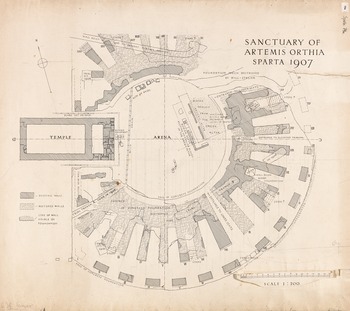
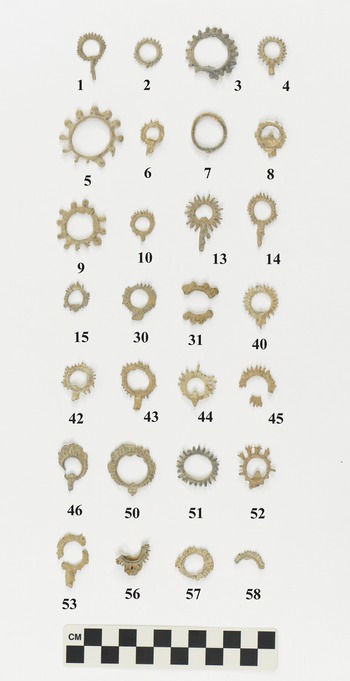
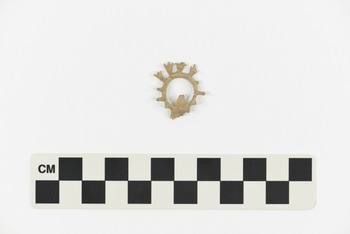
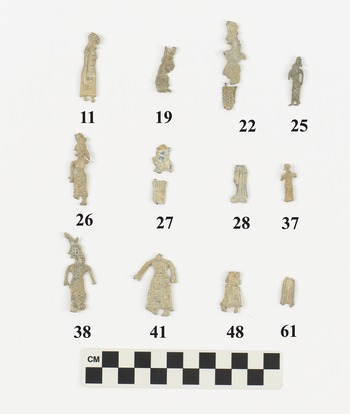
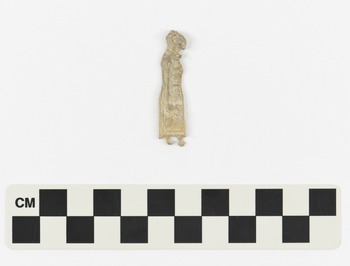
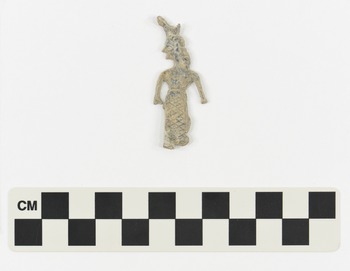
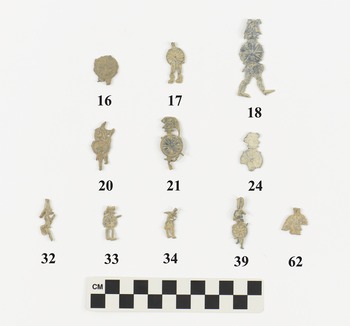
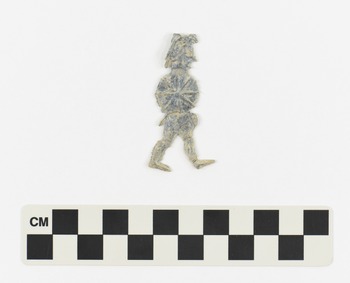
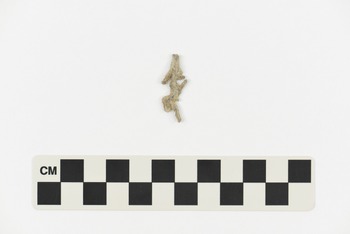
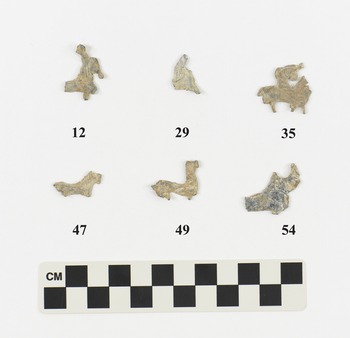
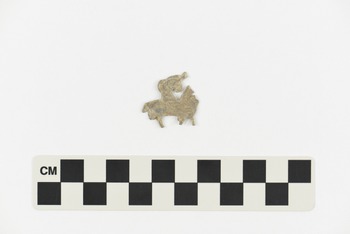
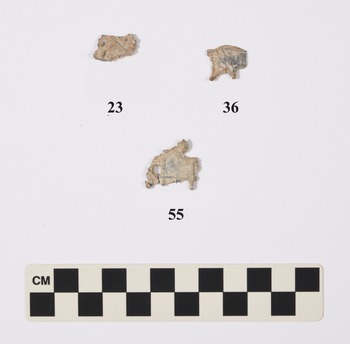


 Open access

