


Starter diets for sucking and weaned piglets are predominately based on cereals, such as wheat, barley, oats and (or) maize, and a combination of animal and (or) vegetable proteins. Recent studies in pigs have demonstrated that rice shows good potential for inclusion in diets as a replacement for some of these more traditional cereals (Li et al. Reference Li, Zhang, Piao, Han, Yang, Li and Lee2002; Piao et al. Reference Piao, Li, Han, Chen, Lee, Wang, Li and Zhang2002; Mateos et al. Reference Mateos, Martín, Latorre, Vicente and Lázaro2006). Furthermore, the use of cooked rice has been associated with reductions in post-weaning colibacillosis (PWC), porcine intestinal spirochaetosis and swine dysentery (Hopwood et al. Reference Hopwood, Pethick and Hampson2002, Reference Hopwood, Pethick, Pluske and Hampson2004; Pluske et al. Reference Pluske, Pethick, Hopwood and Hampson2002).
Rice is a cereal that is characterised by its high starch content, low NSP content and lower protein content in comparison with other cereals (Juliano, Reference Juliano1992). Many types of rice are grown and they differ in chemical characteristics such as amylose:amylopectin ratio, starch and resistant starch (RS) levels, and gelatinisation temperature (Marsono & Topping, Reference Marsono and Topping1993; Boisen et al. Reference Boisen, Duldulao, Mendoza and Juliano2001; Fitzgerald et al. Reference Fitzgerald, Martin, Ward, Park and Shead2003). These differences, in turn, most probably influence their physico-chemical behaviour in the gastrointestinal tract. For example, the low NSP and RS content of cooked rice reduces the level of fermentation in the distal regions of the gastrointestinal tract and so alters the efficiency of conversion of nutrients to empty body gain in comparison with diets containing more dietary fibre (DF) (McDonald et al. Reference McDonald, Pethick, Pluske and Hampson1999; Bird et al. Reference Bird, Hayakawa, Marsono, Gooden, Record, Correll and Topping2000).
Little or no data exist presently quantifying differences between rice types on physico-chemical effects in the gastrointestinal tract and pig growth. The present experiment investigated three cooked-rice-based diets on apparent starch digestibility, fermentation and digesta characteristics, shedding of β-haemolytic Escherichia coli and performance after weaning. The hypotheses tested were that rice containing a lower amylose:amylopectin ratio would cause a higher rate of starch digestion, and pigs fed cooked-rice-based diets would have a higher carcass weight percentage than pigs fed a diet containing higher amounts of DF.
Experimental methods
Animals and housing
Forty-eight entire male pigs (Large White × Landrace) aged 21 d and weighing 6·7 (se 0·24) kg were used in the experiment. Pigs were obtained from a commercial farm on the day of weaning and transported to the experimental facility at Murdoch University. Upon arrival, pigs were ear-tagged, weighed, and stratified into pens of four pigs each according to treatment. Pens were of wire-mesh construction with slatted metal floors, and measured 2·5 m2 in floor area. Each pen had an enclosed wooden box containing a heat lamp, and was equipped with a nipple water drinker and a feed trough. The ambient temperature varied between 19 and 26°C throughout the study. The Murdoch University Animal Ethics Committee approved this experiment.
Experimental design, diets and feeding
Pigs were allocated in a completely randomised block design having four experimental (dietary) treatments, with twelve pigs allocated to each treatment. The experiment was conducted in three replicates, with sixteen pigs (i.e. one pen of four pigs per dietary treatment) constituting a single replicate. The three rice-based diets in the experiment comprised: (i) medium-grain rice (variety Amaroo; Australian Ricegrowers' Cooperative, Leeton, NSW, Australia) plus an animal protein supplement (diet AM), (ii) long-grain rice (variety Doongara; Australian Ricegrowers' Cooperative, Leeton, NSW, Australia) plus an animal protein supplement (diet DOON), (iii) waxy rice (variety Double Elephant; imported from Thailand) plus an animal protein supplement (diet WAXY), and (iv) a weaner diet based predominately on wheat, barley and lupins (diet WBL) (Table 1). The rice types were chosen because they each differed in their chemical characteristics (for example, amylose:amylopectin ratio) and would therefore be expected to cause different physico-chemical effects in the gastrointestinal tract. The animal protein supplement consisted primarily of whey powder, fishmeal, meat and bone meal and blood meal (Table 1). The four diets were formulated to meet requirements for growth of newly weaned piglets (National Research Council, 1998). Neither antibiotics nor alternative antimicrobial substances were included in the diets.
Composition and analysis of experimental diets (air-dry basis; g/kg)

AM, medium-grain Amaroo diet; DOON, long-grain Doongara diet; WAXY, waxy Double Elephant diet; WBL, wheat, barley and lupin diet.
* Diets were formulated to contain 8 g Ca/kg and 4·5 g available P/kg.
† For details of diets, see left.
‡ Premix provided (mg/kg air-dry diet): retinyl acetate 3·44; cholecalciferol 0·065; α-tocopheryl acetate 20; menadione 4·4; riboflavin 4; pyridoxine 1·6; cyanocobalamin 0·02; pantothenic acid 14; nicotinic acid 20; Co 0·2 (sulfate); I 0·6 (potassium iodide); Fe 120 (sulfate); Mn 60 (oxide); Zn 100 (oxide); Cu 10 (sulfate); Se 0·13.
§ Sigma Chemical Company, St Louis, MO, USA.
The three diets based on rice were fed daily by mixing the cooked rice with the remainder of the diet (on an as-fed basis) immediately before feeding. A small amount (150–200 ml) of warm water was used to assist with mixing. Each rice type was cooked in an autoclave at 121°C for 20 min using a water:dry rice ratio of 2:1, and was left to cool overnight in a cool room (4°C) before feeding the following day. Diet WBL was fed as a meal. Pigs were fed between 09.00 and 10.30 hours daily, and any residue from the previous day was recorded. A sub-sample of feed residue, if appropriate, was taken and dried for calculation of DM intake. Pigs were fed the experimental diets on an ad libitum basis for 14 d, after which they were euthanased for sample collection (see later).
Faecal shedding of β-haemolytic Escherichia coli
All pigs were swabbed upon arrival by inserting a soft cotton bud into the anus of the pig. Swabs were then cultured for the presence of β-haemolytic E. coli on sheep blood agar plates (after McDonald et al. Reference McDonald, Pethick, Mullan and Hampson2001). Swabs from all pigs were also collected and subsequently cultured on days 1, 3, 6, 7 and 9 of the experiment. Plates were scored and the faecal consistency determined as described by Montagne et al. (Reference Montagne, Cavaney, Hampson, Lallès and Pluske2004).
Post-mortem procedures
Pigs in each pen were fed their morning meal on the day of sampling in a staggered fashion across each dietary treatment, such that the period of time between feeding and euthanasia was 4–5 h. Pigs were euthanased with a lethal dose of sodium pentobarbitone solution administered intravenously (Lethobarb®; May and Baker Pty Ltd, Melbourne, Victoria, Australia), and then exsanguinated. The gastrointestinal tract was removed and weighed, and then divided into four sections corresponding to the stomach, small intestine, caecum and colon. Each segment was weighed full and empty of contents. Samples of digesta from the ileum, caecum, proximal and distal colon, and rectum were then collected into plastic jars, placed immediately on ice, and later frozen at − 20°C for subsequent chemical analyses. The pH of digesta was measured by inserting the electrode of a calibrated portable pH meter (Schindengen pH Boy-2; Schindengen Electric MFG, Tokyo, Japan) into the collected sample. A sub-sample of digesta from the ileum and caecum was collected for determination of viscosity. The total length of time from the point of euthanasia to digesta samples being placed on ice was 10–12 min.
Analytical methods
The DM, total starch, amylose and amylopectin contents and fast digestible starch content of raw and cooked rice and (or) diets were determined as described previously (Kim et al. Reference Kim, Mullan, Simmins and Pluske2003). The RS contents were determined using a Megazyme Resistant Starch kit (Megazyme International Ireland Ltd, Wicklow, Republic of Ireland). Titanium dioxide (TiO2) content in feeds and digesta was measured according to the methods described by Short et al. (Reference Short, Gorton, Wiseman and Boorman1996). Volatile fatty acid (VFA) concentrations (C2:C6) in digesta (except ileum) were determined using a Hewlett Packard 5890 A capillary gas chromatograph (Agilent Technologies, Forrest Hill, Victoria, Australia), as described previously (McDonald et al. Reference McDonald, Pethick, Mullan and Hampson2001). Viscosity was measured within 10 min of euthanasia in fresh contents collected from the ileum and caecum by first placing a sample of digesta in an Eppendorf tube, mixing on a vortex, and centrifuging at 12 000 g for 8 min (Quantum Scientific Pty Ltd, Milton, QLD, Australia). The supernatant fraction (0·5 ml) was then placed in a Brookfield LVDV-II+ cone-plate rotational viscometer (CP40; Brookfield Engineering Laboratories Inc., Stoughton, MA, USA), and the viscosity of all samples was measured (cP) at 25°C applying a shear rate of 60/s.
Calculations and statistical analyses
Apparent starch digestibility at the terminal ileum and in the rectum was calculated using ratios of the TiO2 concentration in the feed and digesta according to the following calculation:

where ID and IF are the concentrations of marker (TiO2) in the diet and in digesta, and AD and AF are the starch concentrations in the diet and in digesta, respectively.
Empty body weight (EBW) was determined as the live weight of the pig minus the contents (digesta) contained in the stomach, small intestine, caecum, colon and bladder (if applicable). The percentage of the pig that was carcass was calculated as:

Statistical analyses were performed using Statview for Macintosh (version 5.0; SAS Institute Inc., Cary, NC, USA). ‘Replicate’ was included as an independent variable for all dependent variables analysed, but was removed whenever found to be non-significant and data were pooled (P>0·05). One-way ANOVA was then conducted on experimental variables and treatment means were separated using the Fisher's protected least significant difference test. The statistical unit was the pen of pigs for all production measurements and the individual pig for all other variables. For each variable using the individual pig, the equality of treatment variances was examined using Levene's test (Petrie & Watson, Reference Petrie and Watson1999). Where variances were found not to be equal, diet effects were tested using ranks derived from the Kruskal–Wallis non-parametric ANOVA (Kruskal & Wallis, Reference Kruskal and Wallis1952). Statistical significance was accepted at P < 0·05. Data for faecal consistency of pigs were analysed for the effect of diet using the χ2 test (Hollander & Wolfe, Reference Hollander, Wolfe and Wiley1973). Data are expressed as the mean faecal consistency value of pigs within a diet having normal faeces (a value of 0 %), moist faeces (a value of 33 %), wet faeces (a value of 66 %) or diarrhoea (a value of 100 %).
Results
One pig on the WAXY treatment was withdrawn from all data analyses due to poor performance.
Chemical characteristics of rice
Amylose:amylopectin ratios for rice types AM, DOON and WAXY were 0·22, 0·31 and 0·03, respectively. The low ratio for WAXY indicates that this rice type is almost exclusively amylopectin, with AM also having a higher level of amylopectin than DOON. The fast digestible starch content, expressed as a percentage of total starch, mirrors the amylose content of the rice types in both raw and cooked forms. The level of RS varied from 0·6 g/kg in Amaroo to 1·4 g/kg in Doongara. Diet WBL was found to have a lower total starch but higher RS content compared with the three rice types (Table 2).
Selected carbohydrate-related characteristics of the three rice types used and for the diet containing mainly wheat, barley and lupins (WBL)* (Mean values of three measurements)
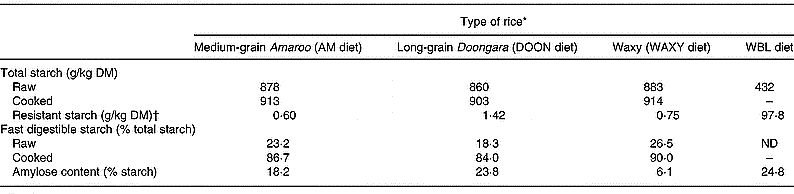
ND, not determined.
* For details of diets and procedures, see Table 1 and p. 299.
† Resistant starch content of cooked rice only.
Apparent digestibility of starch and viscosity
Apparent digestibility of starch measured at the terminal ileum was lowest in pigs fed diet DOON and diet WBL and highest in pigs fed diets AM and WAXY (P = 0·004). Starch had virtually been fully digested in the rectum but was still about 2 % digestibility units lower in pigs fed diet WBL compared with pigs fed any of the rice types (P < 0·001). Residual starch content reflected apparent starch digestibility, although digesta in the rectum from pigs fed diet WBL contained five to twelve times the level of starch compared with pigs fed the three rice-based diets (P < 0·001) (Fig. 1). Digesta viscosity was highest in pigs fed diet WBL in both the ileum (P < 0·001) and the caecum (P = 0·027) (Table 3).
Starch content in the terminal ileum () and rectum () of pigs fed different rice types (medium-grain Amaroo (AM), long-grain Doongara (DOON), waxy Double Elephant (WAXY)) or a wheat, barley and lupin diet (WBL) for 14 d after weaning.

Apparent digestibility of starch, residual starch content and viscosity of the digesta in pigs fed different diets after weaning* (Mean values and standard errors of difference)
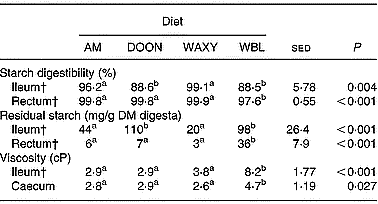
AM, medium-grain Amaroo diet; DOON, long-grain Doongara diet; WAXY, waxy Double Elephant diet; WBL, wheat, barley and lupin diet.
a,b Mean values within a row with unlike superscript letters were significantly different (P < 0·05).
* For details of diets and procedures, see Table 1 and p. 299.
† Data having a heterogeneous variance. Probability of diet effect was determined by the Kruskal–Wallis test.
Performance data
There were no statistically significant differences in body weight, rate of daily gain, EBW or EBW gain between diets after weaning (P>0·05). There was a significant replicate effect (P < 0·05) on daily gain, EBW and body weight of pigs after 14 d, which reflected unavoidable differences in starting weight (7·6, 6·9 and 5·5 kg for replicates 1, 3 and 2, respectively). Feed DM disappearance was not influenced by treatment (P < 0·05); however, wastage of feed, and particularly in the first week, occurred in all of the rice-based diets. Pigs fed diet WBL had a lower feed conversion ratio (P = 0·041) compared with pigs fed the rice-based diets over the 14 d period of the study only (Table 4).
The performance of pigs in pens fed different diets after weaning* (Mean values and standard errors of difference)

AM, medium-grain Amaroo diet; DOON, long-grain Doongara diet; WAXY, waxy Double Elephant diet; WBL, wheat, barley and lupin diet; EBW, empty body weight.
a,b Mean values within a row with unlike superscript letters were significantly different (P < 0·05).
* For details of diets and procedures, see Table 1 and p. 299.
† For details of calculation, see p. 300.
‡ Calculated as EBW at slaughter minus starting EBW (assuming EBW of 96·5 % of weight at weaning; Montagne et al. Reference Montagne, Cavaney, Hampson, Lallès and Pluske2004).
Organ weights and empty body weight gain
Pigs fed all rice-based diets had a higher carcass weight percentage than pigs fed diet WBL (P < 0·001). This difference reflected lower weights of the stomach (P = 0·002), caecum (P = 0·024) and colon (P = 0·032) commensurate with significantly less digesta (P < 0·025) being present in these organs. Less digesta (P = 0·010) was also present in the small intestine of pigs fed rice diets compared with pigs fed diet WBL. When expressed on a relative basis (% EBW), pigs fed diet AM had a significantly lighter caecum and colon than pigs fed diets DOON or WBL, whereas the relative weights of the caecum and colon of pigs fed diet WAXY were comparable with those in pigs fed diet DOON. The relative weight of the colon was heaviest (1·63 %; P < 0·001) in pigs fed diet WBL (Table 5).
Carcass weight percentage at euthanasia, organ weight (empty, and as percentage empty body weight), and the weight of organ contents in pigs fed different diets after weaning* (Mean values and standard errors of difference)
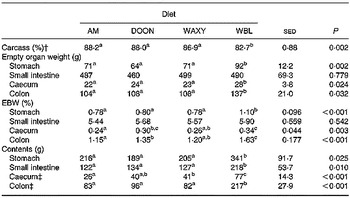
AM, medium-grain Amaroo diet; DOON, long-grain Doongara diet; WAXY, waxy Double Elephant diet; WBL, wheat, barley and lupin diet; EBW, empty body weight.
a,b,c Mean values within a row with unlike superscript letters were significantly different (P < 0·05).
* For details of diets and procedures, see Table 1 and p. 299.
† For calculation of empty body weight and carcass weight, see p. 300. Pen was used as the experimental unit (n 3).
‡ Data having a heterogeneous variance. Probability of diet effect was determined by the Kruskal–Wallis test.
Faecal shedding of Escherichia coli
Sporadic diarrhoea was observed in the present study, with only a few pigs developing serious diarrhoea. There were no significant differences between diets on days 1, 3 and 7 regarding the faecal E. coli score, although on day 9, pigs fed diets AM, WAXY and WBL shed less haemolytic E. coli in the faeces than pigs fed diet DOON (P = 0·011). The consistency of faeces varied considerably in pigs fed different diets after weaning, which prevented statistical differences between diets. There was a trend, however, for pigs fed diets DOON and WBL to have looser faeces on day 9 than pigs fed diets AM and WAXY (P = 0·112) (Table 6).
Haemolytic Escherichia coli score in faeces and the faecal consistency in pigs assessed at various time points after weaning* (Mean values and standard errors of difference)
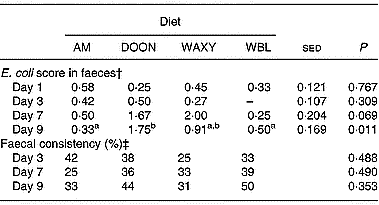
AM, medium-grain Amaroo diet; DOON, long-grain Doongara diet; WAXY, waxy Double Elephant diet; WBL, wheat, barley and lupin diet; EBW, empty body weight.
a,b Mean values within a row with unlike superscript letters were significantly different (P < 0·05).
* For details of diets and procedures, see Table 1 and p. 299.
† E. coli score in faeces is expressed as a mean score per diet. Higher values are associated with faeces containing the heaviest amount of viable haemolytic E. coli in faeces. P value for a diet effect was determined by ANOVA.
‡ Data for faecal consistency of pigs were analysed for the effect of diet using the χ2 test (Hollander & Wolfe, Reference Hollander, Wolfe and Wiley1973). Data are expressed as the mean faecal consistency value of pigs within a diet having normal faeces (a value of 0 %), moist faeces (a value of 33 %), wet faeces (a value of 66 %) or diarrhoea (a value of 100 %).
Fermentation characteristics
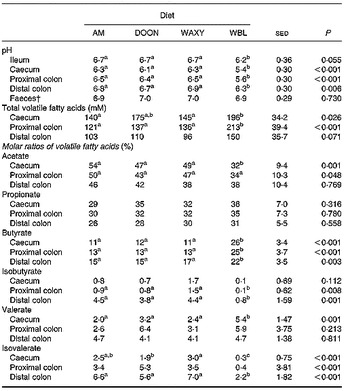
The acidity of digesta in the ileum (P = 0·055), and the caecum, proximal colon and distal colon (all P < 0·001), was highest for pigs fed diet WBL and not statistically significant between any of the three rice diets. Faecal pH was similar in pigs fed all diets. The total VFA concentrations in the caecum of pigs fed rice-based diets ranged from 140 to 175 mm, but only pigs fed diets AM and WAXY had less VFA than pigs fed diet WBL (196 mm; P = 0·026). In the proximal colon, pigs fed diet WBL had a significantly higher concentration of VFA than pigs fed the three rice-based diets (P < 0·001). Molar proportions of acetate were lower in both the caecum and proximal colon for pigs fed diet WBL (P = 0·001 and P = 0·048, respectively), while there were no statistical differences for propionate between diets. The molar proportion of butyrate was highest at all sites for pigs fed diet WBL ( < 0·001 < P < 0·003). Pigs fed rice-based diets had higher molar ratios of isobutyrate and isovalerate ( < 0·001 < P < 0·112) at all sites compared with pigs fed diet WBL (Table 7).
Fermentation characteristics of digesta in pigs fed different diets after weaning* (Mean values and standard errors of difference)
AM, medium-grain Amaroo diet; DOON, long-grain Doongara diet; WAXY, waxy Double Elephant diet; WBL, wheat, barley and lupin diet.
a,b,c Mean values within a row with unlike superscript letters were significantly different (P < 0·05).
* For details of diets and procedures, see Table 1 and p. 299.
† Data having a heterogeneous variance. Probability of diet effect was determined by the Kruskal–Wallis test.
Discussion
Starch digestion and body growth
The type of rice fed to pigs after weaning significantly influenced starch digestion at the terminal ileum. A greater disappearance of starch commensurate with less residual starch in the ileum of pigs fed diets based on rice types having a lower amylose:amylopectin ratio supports our hypothesis that cooked white rice containing more amylopectin is more digestible in the small intestine. These data support the conclusions of Black (Reference Black2001) and the work of Lindberg et al. (Reference Lindberg, Arvidsson and Wang2003) and Kim et al. (Reference Kim, Mullan and Pluske2005b) in barley and wheat, respectively, showing that the nature of the starch influences its digestibility at both the ileal and rectal sites in young pigs. Hopwood et al. (Reference Hopwood, Pethick, Pluske and Hampson2004) reported an apparent starch digestibility of 96 and 100 %, respectively, in the ileum and faeces of piglets killed 10 d after weaning after being fed a diet based on cooked white, medium-grain rice and animal protein sources, while Mateos et al. (Reference Mateos, Martín, Latorre, Vicente and Lázaro2006) reported a total tract digestibility coefficient for starch of 0·992 in weaned pigs fed cooked rice.
Hopwood et al. (Reference Hopwood, Pethick, Pluske and Hampson2004) showed that increasing amounts of pearl barley added at the expense of cooked white rice in diets significantly reduced starch digestibility in the ileum but faecal digestibility of starch was unaffected. In contrast, Högberg & Lindberg (Reference Högberg and Lindberg2004) reported no differences in ileal starch digestibility in pigs fed diets low or high in NSP, although in this study viscosity was much lower (about 2 cP) than that measured by Hopwood et al. (Reference Hopwood, Pethick, Pluske and Hampson2004) and in the present study, which in turn most probably caused the higher starch digestibility. Feeding diet WBL in the present study depressed starch digestion to the level of pigs fed diet DOON; however, in the rectum, starch digestibility was lower than all three rice-based diets concomitant with more starch present in the faeces (Fig. 1). Svihus et al. (Reference Svihus, Uhlen and Harstad2005) commented that the effects of the structural features of starch (for example, amylose:amylopectin) and negative interactions with other dietary compounds, such as viscous NSP and lipids, on starch digestibility are complex. Indeed, De Schrijver et al. (Reference De Schrijver, Vanhoof and Van de Ginste1999) reported that the consumption by pigs of diets higher in RS, fed as high-amylose maize starch, decreased apparent ileal and faecal fat and energy digestibility. The amylose:amylopectin ratio is known to determine many physical and chemical properties of processed rice. Generally, increased amylose content is associated with (i) increased water-holding capacity of the starch granule, (ii) increased capacity of retrogradation through increasing capacity of hydrogen bonding (Juliano, Reference Juliano1992), (iii) increased RS content (Sagum & Arcot, Reference Sagum and Arcot2000), and (iv) a decreased in vitro starch digestion index (Tetens et al. Reference Tetens, Biswas, Glitsø, Kabir, Thilsted and Choudhury1997). The present data confirm these mechanisms because pigs fed AM and WAXY had less RS, a higher rate in vitro of starch digestion (as fast digestible starch) and less residual starch in the terminal ileum (Table 3), which contributed to the results observed.
Cooked cereals are thought to improve post-weaning performance because the starch is more gelatinised and hence they assist in overcoming the (temporary) period of pancreatic amylase insufficiency that generally occurs after weaning (Lallès et al. Reference Lallès, Boudry, Favier, Le Floc'h, Luron, Montagne, Oswald, Piè, Piel and Sève2004), although evidence in the literature to support improved performance is equivocal (for example, Leibholz, Reference Leibholz1982; Hongtrakul et al. Reference Hongtrakul, Goodband, Behnke, Nelssen, Tokach, Bergström, Nessmith and Kim1998; Medel et al. Reference Medel, Baucells, Garcia, de Blas and Mateos2000, Reference Medel, Garcia, Lazaro, De Blas and Mateos2002, Reference Medel, Latorre, de Blas, Lazaro and Mateos2004; Zarkadas & Wiseman, Reference Zarkadas and Wiseman2002; Lawlor et al. Reference Lawlor, Lynch, Caffrey and O'Doherty2003). Even where improvements in starch digestion have been recorded, both short- and longer-term positive benefits on growth performance have not necessarily been demonstrated (for example, Medel et al. Reference Medel, Baucells, Garcia, de Blas and Mateos2002; Hopwood et al. Reference Hopwood, Pethick, Pluske and Hampson2004). This was confirmed in the present study because pigs fed diets AM and WAXY, which showed the greatest disappearance of starch at the ileum, did not grow significantly faster than pigs diets fed DOON or WBL.
Unfortunately the large variation in performance between pens precluded any statistical differences between diets in daily gain, even though pigs fed the rice-based diets appeared to eat more feed. There was considerable feed wastage in the pens where the rice-based diets were offered, and this contributed to the higher feed conversion ratio values for pigs fed these diets compared with pigs fed diet WBL. Furthermore, the digestible energy (DE) value used for rice in the formulation of the diets (14·2 MJ DE/kg) was lower than that measured in a subsequent study (15·1 MJ DE/kg; Kim et al. Reference Kim, Mullan, Hampson, Rijnen and Pluske2006). Subsequently the dietary DE content of the rice-based diets was lower relative to the essential amino acid content compared with diet WBL, which in turn would have favoured fat deposition over lean tissue deposition and caused a further deterioration in the feed conversion ratio in pigs fed these diets (Campbell & Dunkin, Reference Campbell, Dunkin, Gardner, Dunkin and Lloyd1990).
Nevertheless, the second part of our hypothesis was supported because pigs consuming all three rice-based diets had a higher carcass weight percentage than pigs fed diet WBL (Table 5). This reflects, in part, the lower visceral weights recorded for pigs eating rice (Table 5) and the greater digesta content found in pigs fed diet WBL. The lower carcass percentage compared with pigs fed all three rice-based diets concurs with previous work in both newly weaned pigs (for example, McDonald et al. Reference McDonald, Pethick, Pluske and Hampson1999, Reference McDonald, Pethick, Mullan and Hampson2001; Hopwood et al. Reference Hopwood, Pethick and Hampson2002, Reference Hopwood, Pethick, Pluske and Hampson2004; Pluske et al. Reference Pluske, Black, Pethick, Mullan and Hampson2003) and growing pigs weighing approximately 55 kg (Pluske et al. Reference Pluske, Pethick and Mullan1998). In the study by Pluske et al. (Reference Pluske, Pethick and Mullan1998), which lasted for 8–9 weeks, pigs fed diets based on sorghum and maize, which contained less DF, attained a higher carcass percentage than pigs fed diets having more DF (NSP and RS).
Gastrointestinal organs have a higher rate of energy expenditure relative to their size (Yen et al. Reference Yen, Nienaber, Hill and Pekas1989). Feeding diets to newly weaned pigs higher in DF most probably increases energy expenditure of the gastrointestinal tract that is associated with greater motility functions such as mixing, and contributes to the lower carcass weight percentage observed in pigs fed WBL. Moreover, some sources of DF have a greater water-holding capacity than others that would also decrease the proportion of the pig that is ‘empty body’. Pluske et al. (Reference Pluske, Black, Pethick, Mullan and Hampson2003) reported that the DM content of digesta from the ileum was significantly higher from pigs fed a diet identical to diet AM in the present study compared with pigs fed diets containing DF, indicating that this particular diet was associated with less water retention in the small intestine.
Fermentation indices and Escherichia coli shedding
Pigs receiving diet WBL had digesta with a lower pH commensurate with greater total VFA production in the hindgut indicative of enhanced bacterial fermentation of the substrates present. The presence of plant proteins of lower digestibility in the small intestine, compared with animal proteins of higher digestibility in the rice-based diets (McDonald et al. Reference McDonald, Pethick, Mullan and Hampson2001), would have caused more substrate to enter the caecum and colon and stimulate fermentation. Pigs fed the rice-based diets had proportionately more acetate in their hindgut digesta but less butyrate than pigs fed diet WBL. Wang et al. (Reference Wang, Zhu, Li, Wang and Jensen2004a) also reported lower molar ratios of acetate in a cooked-rice-based diet compared with the same cooked-rice-based diet containing 118 g sugar-beet pulp/kg, indicating that different fermentation products from different substrates can be achieved by the microbiota in the large intestine. Wang et al. (Reference Wang, Zhu, Li, Wang and Jensen2004b) reported different microbial populations in growing pigs fed rice-based diets containing various fermentable substrates.
The greater concentration of butyrate, which is trophic for colonocyte proliferation, found in the distal gastrointestinal tract of pigs fed diet WBL most probably reflects the greater levels of RS contained in this particular diet (Wang et al. Reference Wang, Zhu, Li, Wang and Jensen2004a). More isobutyrate and isovalerate were formed in the large intestine of pigs fed the rice-based diets, in agreement with earlier work (Pluske et al. Reference Pluske, Black, Pethick, Mullan and Hampson2003). Branched-chain fatty acids such as isobutyrate and isovalerate may be formed from the fermentation of amino acids that originate from proteolysis (Jensen, Reference Jensen, Piva, Bach Knudsen and Lindberg2001). Given the relatively high rate of starch disappearance at the ileum in rice-fed pigs, proportionally more proteinaceous material than carbohydrate would most probably have entered the hindgut causing greater production of isobutyrate and isovalerate (Williams et al. Reference Williams, Verstegen and Tamminga2001). These VFA and other nitrogenous compounds, such as NH3 and biogenic amines, have been implicated in the aetiology of PWC and (or) gastrointestinal malaise after weaning (Gaskins, Reference Gaskins, Lewis and Southern2001). In the present study, however, there was no clear association between higher concentrations of isobutyrate and isovalerate in pigs fed rice-based diets and the excretion of β-haemolytic E. coli after weaning. Nevertheless, Kim et al. (Reference Kim, Mullan, Hampson, Pluske and Paterson2005a) and Mateos et al. (Reference Mateos, Martín, Latorre, Vicente and Lázaro2006) reported reduced diarrhoea after weaning when pigs were offered oat hulls in cooked-rice-based diets, and in the work of Kim et al. (Reference Kim, Mullan, Hampson, Pluske and Paterson2005a) this reduction was associated with both a reduced blood urea level (indicative of reduced NH3 absorption) and biogenic amine levels in faeces.
Only sporadic instances of spontaneous diarrhoea were observed in the present study, and in general the health of all pigs remained high. It is difficult to draw conclusions from the present study where a natural infection is relied upon to examine dietary effects on PWC, and hence the results obtained are indefinite compared with a study where pigs are experimentally infected. However, pigs fed all three rice-based diets, particularly diets DOON and WAXY, shed haemolytic E. coli in their faeces, and in general at higher levels than pigs fed diet WBL. For example, on day 9 of the study, pigs fed diets DOON and WAXY had E. coli scores of 1·75 and 0·91 respectively compared with 0·33 and 0·50 for pigs fed diets AM and WBL, respectively. These data compare favourably with those presented by Hopwood et al. (Reference Hopwood, Pethick, Pluske and Hampson2004), who also reported no differences in faecal E. coli swab score in experimentally infected pigs fed cooked white rice or pearl barley. However, these authors used an infection model that causes a greater infection pressure in the gastrointestinal tract, and subsequently detected a significant amelioration of haemolytic E. coli in the small intestine in pigs fed cooked white rice. In these instances, the deleterious effects of increased digesta viscosity on PWC may be more apparent (Montagne et al. Reference Montagne, Cavaney, Hampson, Lallès and Pluske2004).
Conclusion
Data from the present experiment showed that pigs fed either the AM or WAXY diet had a superior starch digestibility in the small intestine than pigs fed the DOON diet or diet WBL. Pigs fed cooked rice had a higher carcass weight percentage than pigs fed diet WBL. Relatively low levels of infection with haemolytic E. coli were observed in the experiment and hence dietary effects on PWC were difficult to interpret. The appropriate balance between dietary carbohydrate and protein in association with animal-related factors such as the presence or absence of appropriate fimbriae, physico-chemical properties of the diet and the relative rates of production and absorption of VFA, appears important in understanding the aetiology of diseases such as PWC.
Acknowledgements
The Rice Sub-Programme of the Rural Industries Research and Development Corporation of Australia is thanked for financial support of the experiment. Dr M. Fitzgerald, NSW Agriculture Yanco, is thanked for helpful discussions. L. M. was financially supported for the present study by the Région Bretagne (contract no. B03925), INRA and ENSAR, to which we are grateful. An abstract of the present study has previously been published in Manipulating Pig Production X (Pluske et al. Reference Pluske, Montagne, Cavaney, Mullan, Pethick, Hampson and Paterson2005).



