


Research shows that, particularly in children and adolescents in developed countries, the prevalence of overweight and obesity has substantially increased (based on the International Obesity Task Force cut-offs). In 2013, 23.8% of boys and 22.6% of girls were overweight or obese worldwide (Fleming, Robinson, Thomson, Graetz, & Margono, Reference Fleming, Robinson, Thomson, Graetz and Margono2014). Multidisciplinary treatments focusing on a healthy lifestyle have shown promising weight loss in children and adolescents. However, relapse after treatment is still a common issue. Research reported that 14 months after a 10-month inpatient multidisciplinary weight loss treatment for children and adolescents, 51.9% of the participants had regained more than 10% over the ideal BMI (Braet, Tanghe, De Bode, Franckx, & Van Winckel, 2003). Therefore, studying the risk factors that contribute to youngsters’ relapse after treatment could be considered an important research topic.
Research in adults suggests that the emotional eating style of patients, defined as eating in response to emotions, is associated with their weight regain after weight loss treatment. Research found that the individuals’ level of emotional eating before participating in a weight loss program or undergoing bariatric surgery was negatively related to their weight loss 1 year after treatment (Canetti, Berry, & Elizur, Reference Canetti, Berry and Elizur2009). To our knowledge, only one study has examined this relationship in children and adolescents (Halberstadt et al., Reference Halberstadt, van Strien, de Vet, Eekhout, Braet and Seidell2015). This study found that girls between the ages of 8 and 19 years who scored higher on emotional eating before weight loss treatment had a higher weight regain in the year following treatment. However, results were inconclusive; when analyses were rerun with imputed data, this relationship was no longer significant.
Furthermore, the results of this study showed that the girls’ emotional eating style had not changed after the 1-year multidisciplinary weight loss treatment, even though the program incorporated techniques to treat emotional eating. In addition, Braet and colleagues (Braet et al., Reference Braet, Tanghe, De Bode, Franckx and Van Winckel2003; Braet, Tanghe, Decaluwe, Moens, & Rosseel, Reference Braet, Tanghe, Decaluwe, Moens and Rosseel2004) investigated in two studies whether the emotional eating style of the patients (10–17 years) had changed after a 10-month inpatient multidisciplinary weight loss treatment that incorporated cognitive behavioural therapy (CBT) to target emotional eating. In both studies, the emotional eating style of the youngsters had not changed between pretest and posttest or 14-month follow-up. Since the youngsters’ emotional eating style seems hard to change in treatment, and emotional eating might be related to youngsters’ weight regain after treatment, we wanted to examine which determinants might contribute to youngsters’ emotional eating after weight loss treatment.
Research suggests that emotional eating can be explained as a learned emotion regulation (ER) strategy (Booth, Reference Booth1994). According to Gibson (Reference Gibson2006), eating food rich in sugar and/or fat leads to a temporary increase in positive mood and reduction of stress, because these types of food induce sensory pleasure. Telch (Reference Telch1997) suggested that, in particular, individuals having difficulty regulating their emotions turned to food as an alternative ER strategy. Cross-sectional and longitudinal research in adults and children has demonstrated that individuals with an emotional eating style lack effective or adaptive ER strategies and/or use maladaptive or ineffective ER strategies, such as emotional suppression, to deal with negative emotions (Harrist, Hubbs-Tait, Topham, Shriver, & Page, Reference Harrist, Hubbs-Tait, Topham, Shriver and Page2013; Taube-Schiff et al., Reference Taube-Schiff, Van Exan, Tanaka, Wnuk, Hawa and Sockalingam2015). It is assumed that these maladaptive ER strategies fail to downregulate negative emotions in a persistent way, subsequently leading to the use of alternative ER strategies, like emotional eating. This assumption was supported by an experimental study, which demonstrated that randomly manipulating the adaptive and maladaptive ER strategies of females after a negative affect induction had a significant effect on the amount of comfort food eaten afterwards (Evers, Stok, & De Ridder, Reference Evers, Stok and de Ridder2010).
Deficits in ER can be traced back to early childhood, as research suggests that ER skills are learned in the interaction with caregivers and significant others (Barrett & Campos, Reference Barrett, Campos and Osofsky1987). Responsive, affectionate caregivers help the child to regulate their emotions by acknowledging the emotion, modelling ER strategies, and teaching the child ER strategies (Power, Reference Power2004). This helps the child to internalise effective ER strategies and to use them later on in the absence of caregivers. In contrast, this process of emotion socialisation is impeded in unresponsive, rejecting caregivers, which may lead to a lack of adaptive ER strategies and/or to the use of maladaptive ER strategies in children (Shipman et al., Reference Shipman, Schneider, Fitzgerald, Sims, Swisher and Edwards2007).
Parental rejection, conceptualised as the absence of parental warmth and/or disliking, disapproving or being indifferent towards the child, does not only have an influence on the development of children's ER. Rejecting behaviour of parents may also maintain the deficit in ER further in life, as this rejecting behaviour can instill a lack of confidence in the child. The child may believe that he or she will not be able to tackle stressful situations (Rhee, Pan, Norman, Crow, & Boutelle, Reference Rhee, Pan, Norman, Crow and Boutelle2013). Furthermore, the rejecting behaviour of parents itself can induce negative emotions, which in turn elicits maladaptive ER strategies. The relationship between parental rejection, reported by youngsters as well as by parents, and ER of youngsters has been confirmed in cross-sectional and longitudinal survey studies (Meesters & Muris, Reference Meesters and Muris2004; Wagner, Cohen, & Brook, Reference Wagner, Cohen and Brook1996).
Building on this knowledge, Vandewalle, Moens, and Braet (Reference Vandewalle, Moens and Braet2014) investigated the relation between maternal and paternal rejection, maladaptive ER strategies and emotional eating in youngsters with obesity (10–16 years) before their participation in a weight loss treatment program. The authors found that maternal rejection, and not paternal rejection, was related to the emotional eating of the youngsters, via the mediator maladaptive ER strategies of the youngster. These results offer support for the idea that parental rejection can trigger the use of maladaptive ER strategies in youngsters and that this in turn may lead to emotional eating. Furthermore, these results suggest that mothers have more influence on the ER of youngsters than fathers.
Aim of the Present Study
To conclude, research suggests that the emotional eating style of youngsters with obesity may be a stable feature, even when they receive treatment. Moreover, emotional eating may be linked to relapse after weight loss treatment. Therefore, getting insight into the determinants of emotional eating after treatment may provide useful knowledge on how to reduce emotional eating after treatment and subsequently prevent relapse. Research on the determinants of emotional eating before treatment suggests the influence of parental rejection and maladaptive ER strategies. In this present study, we want to extend on these results by conducting a follow-up (FU) when the youngsters are back in their home environment after inpatient multidisciplinary weight loss treatment.
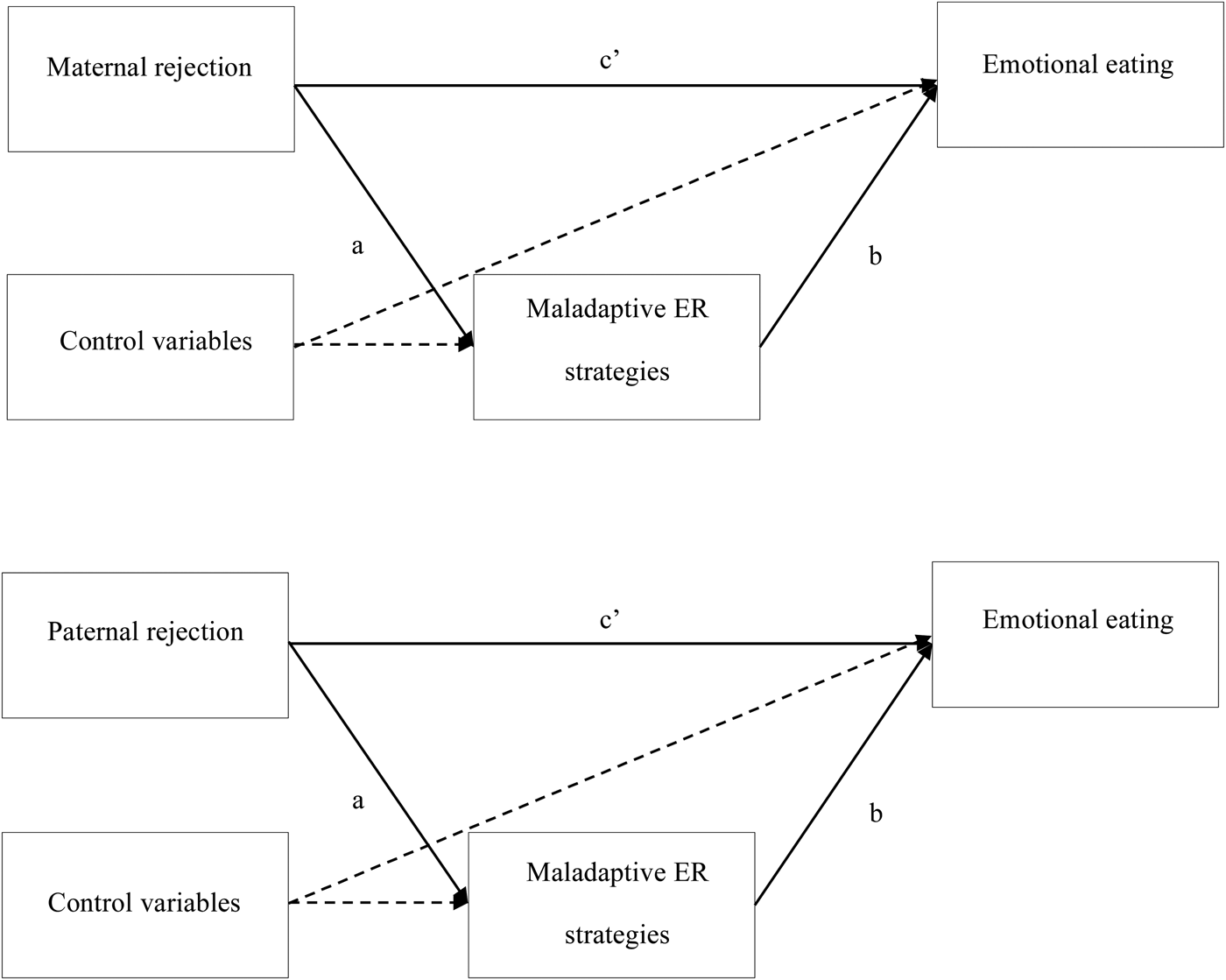
First, we want to test whether there are changes in maternal and paternal rejection, maladaptive ER strategies, emotional eating, and weight of the youngsters between pretest (PT) and FU. Based on the previous studies (Braet et al., Reference Braet, Tanghe, De Bode, Franckx and Van Winckel2003; Braet et al., Reference Braet, Tanghe, Decaluwe, Moens and Rosseel2004; Halberstadt et al., Reference Halberstadt, van Strien, de Vet, Eekhout, Braet and Seidell2015), we assume that emotional eating will not have changed between PT and FU. Additionally, we assume that the possible determinants of emotional eating, parental rejection and maladaptive ER will not have changed between PT and FU, which could explain the hypothesised stability of emotional eating. Furthermore, we expect that the weight of the youngsters will have significantly decreased between PT and FU. Next, the main objective of the present study is to test two mediation models. First, we assume that maternal rejection will be positively related to the emotional eating of the youngsters at FU and that this relation will be mediated by the maladaptive ER strategies of the youngsters. Second, based on previous results (Vandewalle et al., Reference Vandewalle, Moens and Braet2014), we hypothesise that paternal rejection will not be related to the emotional eating nor to the maladaptive ER strategies of youngsters at FU, which implies that mediation will not occur. Figure 1 depicts the mediation models we want to test. In addition, we want to examine whether the possible weight gain youngsters experience after treatment is related to the level of emotional eating of the youngsters at FU. Based on the previous research, we hypothesise that the weight gain after treatment will be positively associated with the level of emotional eating at FU (Canetti et al., Reference Canetti, Berry and Elizur2009; Halberstadt et al., Reference Halberstadt, van Strien, de Vet, Eekhout, Braet and Seidell2015).
Model of the relations between study variables investigated at follow-up.
Method
Participants
All subjects took part in a 1-year inpatient weight loss treatment program for youngsters at a Belgian medical centre. Participants were first addressed during the intake at the treatment centre (PT). The youngsters and their parents were given verbal and written information about the study. Additionally, participants were informed that the study would consist of two time moments (PT and follow-up), that participation was voluntary, and that they had the choice to drop out of the study at any given moment. Written informed consent was obtained from both the youngsters and their parents. At PT, 110 children and adolescents (42.7% boys and 57.3% girls) between 10 and 16 years (M = 13.59 years, SD = 1.64) participated. This sample was used in the study of Vandewalle et al. (Reference Vandewalle, Moens and Braet2014). The response rate at PT was 86%.
The participants were asked to participate a second time during a booster session at the treatment centre, 4 months after treatment (FU). If participants could not attend the booster session, instructions were provided via email or letter by the researcher to fill in the questionnaires online at home. Nineteen participants (17.27%) were excluded from the FU because they did not complete the 1-year treatment program. Of the 91 youngsters who were eligible, 52 youngsters participated at FU (28.8% boys and 71.2% girls, study drop-out 35.45%). Of these 52 youngsters, 33 participated during the booster session and 19 filled in the questionnaires at home. The time between end of treatment and FU (follow-up time) ranged from 93 to 217 days, with an average of 124 days (4 months). At FU, the youngsters were between the ages of 11 and 17 years (M = 14.85 years, SD = 1.70). The study was approved by the Institutional Ethical Committee.
Inpatient Treatment Program
The treatment program is a 1-year inpatient multidisciplinary non-diet healthy lifestyle program focusing on healthy eating habits, moderate exercises, and cognitive behavioural therapy (CBT). This last component consists of teaching the youngsters several self-regulation skills applied to an eating-related context, such as self-observation, self-instructions, self-evaluation, and self-reward. The purpose of this training is to enhance the self-awareness of the patients concerning their eating behaviour and to strengthen their capacity to modify their behavioural response (e.g., emotional eating in a high-risk situation like feeling alone). With regard to the parental involvement in this program, parents were requested to help their child to adopt their new lifestyle. Parents were stimulated to do so via family days at the treatment centre. These family days focused on exercising as a family, cooking healthy meals as a family, and supporting the new lifestyle as a family. More specifically, parents were instructed about motivational encouragement, supporting the self-image of the child, and parenting skills (Braet et al., Reference Braet, Tanghe, De Bode, Franckx and Van Winckel2003; Braet et al., Reference Braet, Tanghe, Decaluwe, Moens and Rosseel2004). Patients are often referred by their general practitioner.
Measures
Anthropometric measures
The youngsters were measured and weighed by a staff member at the treatment centre during the PT, at the end of the treatment (posttest), and during the booster session (FU). Youngsters who filled in the questionnaires at home at FU had to enter their height and weight online. BMI was calculated as weight (in kg)/height (in m)2. We used the percent over ideal BMI: (actual BMI/percentile 50 of BMI for age and gender)*100. This method allowed us to compare the BMI of children of different ages and gender. The 50th percentiles of the BMI for age and gender are based on normative data in a Flemish sample (Roelants & Hauspie, Reference Roelants and Hauspie2004). Percent over ideal BMI above 120% is classified as overweight, above 140% is classified as obese, and above 160% is classified as severe obese. To correct possible underestimation in the self-reported height and weight measures filled in by the youngsters at home at FU, we used the equations from Epstein, Valoski, Wing, and McCurley (Reference Epstein, Valoski, Wing and McCurley1994). This equation is based on data of over 1,000 pairs of measured and self-reported data: girls’ weight, YG = 2.472 + 1.006XG; boys’ weight, YB = .373 + 1.016XB; girls’ height, YG = 2.860 + .949XG; boys’ height, YB = 2.642 + .952 XB (with X = self-reported weight or height and Y = the corrected weight or height).
Maternal and paternal rejection
The EMBU-A (Egna Minnen Beträffande Uppfostran: My memories of child upbringing — Adolescent version; Gerlsma, Arrindell, Vanderveen, & Emmelkamp, Reference Gerlsma, Arrindell, Vanderveen and Emmelkamp1991), a Dutch adolescent version of the original EMBU, was used to assess maternal and paternal rejection at both PT and FU. The EMBU-A consists of 56 items assessing four domains of parental behaviour: emotional warmth, rejection, overprotection, and favouring subject. To limit the load on the participants, only the subscale rejection was assessed in the present study (19 items concerning mother and 19 items concerning father; e.g., ‘Is your mother/father ever harsh and unfriendly to you?’). All of the items are behaviour-oriented in their formulation, as such excluding an attributional evaluation. Items were to be answered for mother and father separately, on 4-point Likert-scale from 1 = no, never to 4 = yes, most of the time. In this study, the Cronbach's alphas were .91 and .90 at PT and .96 and .95 at FU for maternal rejection and paternal rejection respectively.
Emotion regulation of the youngster
The FEEL-KJ (Questionnaire to Assess Children's and Adolescents’ Emotion Regulation Strategies; Braet, Cracco, & Theuwis, Reference Braet, Cracco and Theuwis2013) was used to assess the ER of the youngsters at PT and FU. The FEEL-KJ is a 90-item, self-report measure used to assess 15 ER strategies in response to three emotions: anxiety, sadness, and anger. In this study, only ER strategies in response to sadness and anger were included in order to limit the load on the participants. The emotions sadness and anger were chosen, considering that sadness has been numerously associated with emotional eating (Goldschmidt, Tanofsky-Kraff, & Wilfley, Reference Goldschmidt, Tanofsky-Kraff and Wilfley2011) and that hostility and aggression have been associated with paternal rejection (Rohner, Reference Rohner2004). The FEEL-KJ also measures two secondary scales revealed by factor analysis: an adaptive strategies scale and a maladaptive strategies scale. The secondary maladaptive strategies scale, consisting of the emotions sadness and anger, was used in this study (10 items per emotion; e.g., ‘When I'm sad/angry, I don't want to see anyone’). Items were to be answered on 5-point Likert-scale from 1 = almost never to 5 = almost always. In this study, the Cronbach's alphas for the maladaptive strategies scale was .87 at PT and FU.
Emotional eating of the youngster
The Dutch Eating Behaviour Questionnaire — Child Version (DEBQ; Van Strien & Oosterveld, Reference Van Strien and Oosterveld2008) was used to assess the emotional eating of the youngsters at PT and FU. The DEBQ consists of 33 items assessing the presence of three types of disturbed eating behaviour: restrained eating, external eating, and emotional eating. Only the subscale emotional eating was assessed in the current study (13 items; e.g., ‘If you're angry, do you feel like eating something?’). Items are formulated as specific eating behaviours and have to be rated on their frequency of occurrence on a 5-point Likert scale from 1 = never to 5 = very often. In the present study, the coefficient alpha for the subscale emotional eating was .94 at PT and .96 at FU.
Analytic Plan
First, the descriptive analyses of the ‘percent over ideal BMI’ of the youngsters were performed. Second, as a preliminary analysis, a one-way analysis of variance (ANOVA) was conducted with the PT variables, comparing the FU dropouts (n = 39) with those who participated at FU (n = 52). Concerning the categorical variables gender, a Pearson's chi-square test was performed. In addition to this, to detect possible differences at FU between those who filled in the questionnaires during the booster session and those who filled in the questionnaires at home, a one-way ANOVA with the study variables at FU was conducted. Subsequently, using univariate repeated-measures analyses, the scores on the study variables maternal rejection, paternal rejection, maladaptive ER strategies, emotional eating and percent over ideal BMI were compared between PT and FU. Because the time between end of treatment and FU substantially varied between participants, this follow-up time was added as covariate in the analyses. Furthermore, Pearson's partial correlation coefficients were conducted between PT and FU score for each study variable, while controlling for follow-up time. Regarding the mediation analysis of the study variables at FU, we first checked for possible confounding variables (age, percent over ideal BMI at FU, and gender) using Pearson's correlation coefficient and univariate ANOVA. Then, two mediation analyses were executed, with follow-up time added as covariate. Mediation analyses were executed separately for the independent variables maternal rejection and paternal rejection. In this way, youngsters living with a single parent could still be included in one of the mediation analyses. The bootstrapping procedure was used to test the mediation model, considering this procedure imposes no distributional assumptions and takes into account the effect of control variables. The SPSS macro provided by Hayes and Preacher was used to perform the bias-corrected bootstrap procedure, with 5,000 resamples to derive the 95% confidence interval for the indirect effect. For mediation to occur, the indirect path between the independent variable (maternal or paternal rejection) and the dependent variable (emotional eating) through the mediator (maladaptive ER strategies) should be significant (ab-path; rather than a significant decrease in the direct effect). This is indicated by the 95% confidence interval not including zero. This indirect path (ab-path) can only be significant if the independent variable (maternal or paternal rejection) is significantly correlated with the supposed mediator (maladaptive ER strategies; a-path) and the mediator is significantly correlated with the dependent variable (emotional eating), after controlling for the independent variable (maternal or paternal rejection; b-path). Figure 1 illustrates the different paths tested, including the direct effect of the independent variables (maternal and paternal rejection) on the dependent variable (emotional eating), after controlling for the mediator (maladaptive ER strategies; c’-path). Furthermore, to examine the link between the emotional eating of the youngsters at FU and the difference in percent over ideal BMI scores between PT and FU, a Pearson's partial correlation coefficient was calculated, controlling for FU time.
Data were analysed using the SPSS version 22.0; p values less than .05 were considered statistically significant.
Results
Descriptive Analyses of Percent over Ideal BMI
At PT, the youngsters had a mean percent over ideal BMI of 186.11% (SD = 27.54). At FU, the mean percent over ideal BMI was 136.37% (SD = 19.65). In comparison with the percent over ideal BMI at the end of the treatment program (posttest; M = 125.08%, SD = 15.79), the percent over ideal BMI of the youngsters had increased an average of 11.03% between posttest and FU.
Preliminary Analyses
A one-way ANOVA showed no differences between the FU dropouts (n = 39) and those who participated at FU (n = 52) on the PT variables maternal rejection, maladaptive strategies, emotional eating, percent over ideal BMI, and age (all ps > .05). A Pearson's chi-square test showed a difference in gender between both groups, χ2(1) = 8.70, p = .003, showing that a bigger percentage of boys dropped out of the study compared to girls. Additionally, the one-way ANOVA showed no differences between the two groups at FU (booster session vs. online at home) on the FU variables maternal and paternal rejection, maladaptive strategies, emotional eating, and percent over ideal BMI (all ps > .05).
Changes in Study Variables Between Pretest and Follow-Up
Repeated-measures ANOVAs showed no differences in maternal rejection, paternal rejection, maladaptive ER strategies and emotional eating between PT and FU, while controlling for FU time (all ps > .05). Percent over ideal BMI, on the other hand, significantly decreased (see Table 1). Pearson partial correlation coefficients between PT and FU scores of maternal rejection (r = .59, p < .001), maladaptive ER strategies (r = .46, p = .004), emotional eating (r = .43, p = .007) and percent over ideal BMI (r = .51, p = .001) were significant. The Pearson partial correlation coefficient between PT and FU scores of paternal rejection was not significant (r = .30, p = .06).
Mean Scores (and Standard Deviations) Between Study Variables at Pretest and Follow-Up

Note: BMI = body mass index. *p < .001.
Mediation Analyses at Follow-up
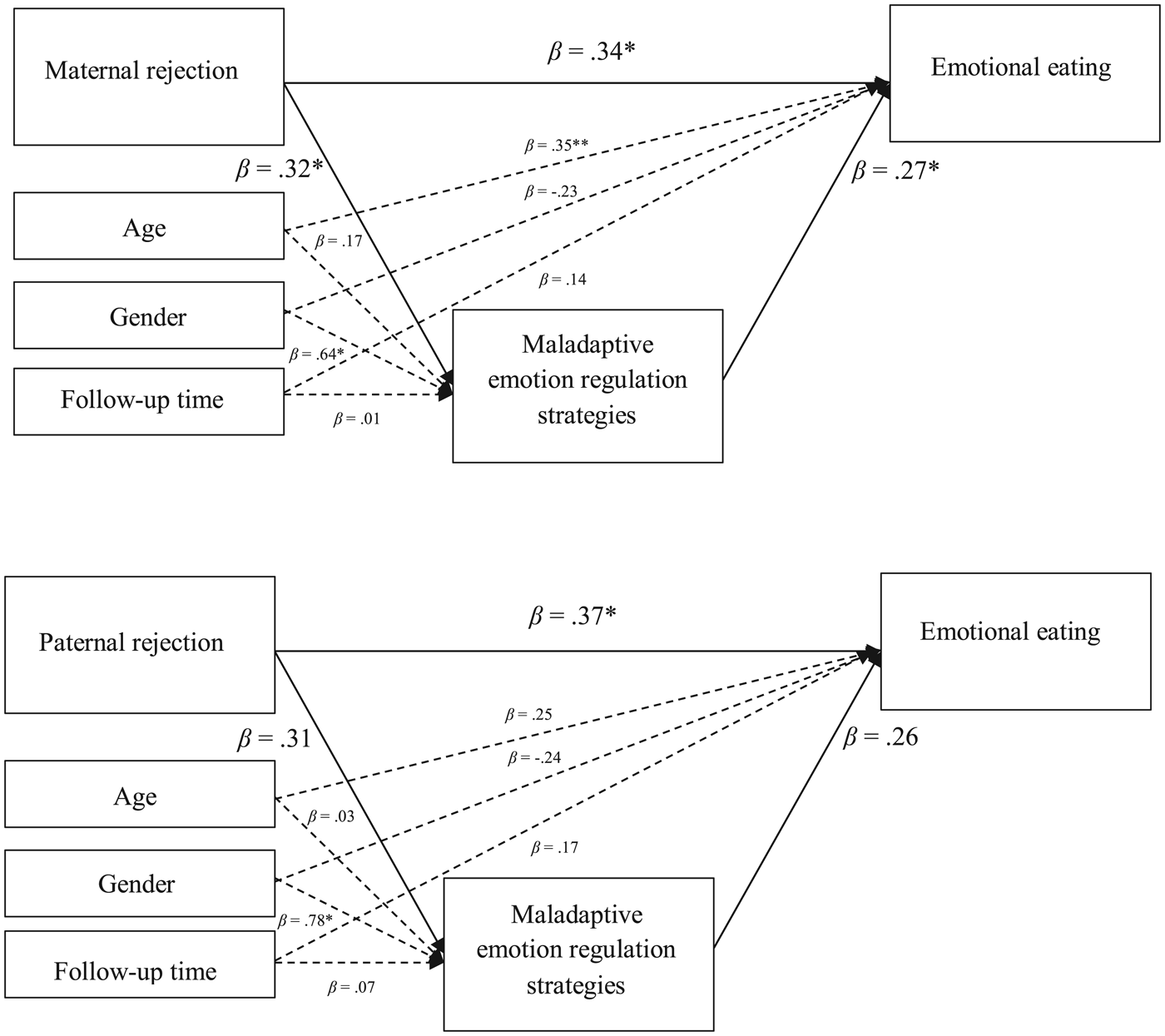
Concerning possible confounding variables, results showed that the age of the youngsters was related to the dependent variable of the emotional eating of the youngsters, r = .33, p = .02. Furthermore, the score on the mediator maladaptive ER strategies differed between boys and girls, with girls reporting significantly more maladaptive ER strategies, F(1, 50) = 6.55, p = .01. Percent over ideal BMI at FU was not related to the dependent variable or mediator. Consequently, age and gender were included as confounding variables in the mediation analyses, next to FU time.
Regarding the mediation analysis with maternal rejection as the independent variable, results confirmed a significant relation between maternal rejection and maladaptive ER strategies (a-path; β = .32, t = 2.23, p = .03). Second, results showed that maladaptive ER strategies were significantly related to emotional eating when controlling for maternal rejection (b-path; β = .27, t = 2.03, p = .048). The indirect effect of maternal rejection on emotional eating through the mediator maladaptive ER strategies (ab-path) was significantly different from zero (estimated to lie between 0.004 and 0.290, with 95% confidence interval). Furthermore, results showed a significant direct effect of maternal rejection on emotional eating, while controlling for maladaptive ER strategies (c’-path; β = .34, t = 2.62, p = .01). As such, the results indicated that partial mediation occurred. The model explained 39% of the variance in emotional eating (see Figure 2). Concerning the mediation analysis with paternal rejection as independent variable, results showed that paternal rejection was not significantly related to maladaptive ER strategies (a-path; β = .31, t = 1.99, p = .05). Moreover, the results showed that maladaptive ER strategies were not significantly related to emotional eating when controlling for paternal rejection (b-path; β = .26, t = 1.80, p = .08). Additionally, the indirect effect of paternal rejection on emotional eating through the mediator maladaptive ER strategies (ab-path) was not significantly different from zero (estimated to lie between −0.002 and 0.361, with 95% confidence interval). Thus, the results indicate that mediation did not occur. Besides this, results also showed that the direct effect of paternal rejection on emotional eating, while controlling for maladaptive ER strategies, was significant (c’-path: β = .37, t = 2.56, p = .02). The model explained 39% of the variance in emotional eating (see Figure 2).
Mediation models with maladaptive emotion regulation strategies as mediator between maternal and paternal rejection and emotional eating.
Link Between Emotional Eating at Follow-Up and Changes in Percent Over Ideal BMI After Treatment
A Pearson's partial correlation coefficient was calculated between the level of emotional eating at FU and the change score in percent over ideal BMI between the posttest and the FU, while controlling for FU time. Results showed that the change in percent over ideal BMI after treatment was not related to the level of emotional eating at FU, r = .09, p = .28.
Discussion
Building on previous studies in clinical samples of youngsters with obesity, the current study investigated the relation between maternal and paternal rejection, maladaptive ER and the emotional eating style of youngsters after they finished an inpatient weight loss treatment and were back in their home environment. Furthermore, this study examined the relation between the weight change youngsters experienced after treatment and the level of emotional eating of the youngster at FU.
Overall, the results showed that maternal rejection, maladaptive ER strategies and the emotional eating style of youngsters had not changed between PT and FU. The results may suggest that, after inpatient treatment, youngsters come home to a family climate that has not changed in terms of parental rejection. Additionally, the results may suggest that these youngsters have not changed in the way they deal with negative emotions in their home environment. The stability in emotional eating found in this study is in line with the results of Braet and colleagues (Braet et al., Reference Braet, Tanghe, De Bode, Franckx and Van Winckel2003; Braet et al., Reference Braet, Tanghe, Decaluwe, Moens and Rosseel2004) and Halberstadt et al. (Reference Halberstadt, van Strien, de Vet, Eekhout, Braet and Seidell2015). Furthermore, the results showed that maternal rejection was related to the youngsters’ level of emotional eating after treatment. In contrast to the results of Vandewalle et al. (Reference Vandewalle, Moens and Braet2014), the results showed that paternal rejection was also related to the emotional eating of the youngsters. These results suggest that when youngsters are back in their home environment after inpatient treatment, parental rejection may still influence the emotional eating of the youngsters. This may imply that youngsters struggle to apply what they have learned during the treatment, due to the unchanged family climate.
The results of the present study confirm partial mediation, in which maladaptive ER strategies are the mediator between maternal rejection and emotional eating. In contrast, the relation between paternal rejection and emotional eating was not mediated by the maladaptive ER strategies, as paternal rejection was not related to the maladaptive ER strategies. The results suggest that maternal rejection may have a broader influence on the ER of the youngster than paternal rejection. Previous research suggested that children may be more exposed to maternal, versus paternal influences, which may explain the greater impact on the children's ER (Kliewer, Fearnow, & Miller, Reference Kliewer, Fearnow and Miller1996). Furthermore, the results indicate that parental rejection may trigger youngsters’ emotional eating directly, or indirectly via the general ER strategies. This may suggest that, in time, emotional eating can become a habitual behaviour and ingrained strategy for dealing with negative emotions, without the use of other maladaptive ER strategies beforehand.
Lastly, we found that the percent over ideal BMI significantly decreased between PT and posttest but, on average, increased 11.3% after treatment (FU). However, this increase in percent over ideal BMI was not related to the level of emotional eating at FU, contrary to our hypothesis. Researchers suggest that emotional eating may be associated with other individual characteristics that diminish the risk of weight regain, such as attempting to restrict eating behaviour (Gibson, Reference Gibson2012). So, youngsters may compensate their emotional eating behaviour by increasing their food restriction afterwards. This combination of emotional eating and restriction may lead to weight gain in the long term. Thus, the non-significant correlation in our study may possibly be explained by the short timeframe between the end of the treatment and the FU.
There are some limitations that must be considered. A primary limitation of this study was the exclusive reliance on self-report measures. The youngsters’ perceptions on their ER strategies and emotional eating style may be influenced by their ability to assess their own behaviour. During the treatment patients could have become more conscious of their emotions, their eating behaviour and the association between the two. Thus, the lack of change in maladaptive ER strategies and emotional eating between PT and FU in our sample may be explained by the youngsters underreporting at PT. In terms of future research, it would be interesting to conduct a diary study, assessing current emotions and actual food intake, to avoid recall bias. Moreover, it would be interesting to include a control group, so results could be compared between a treatment- and waiting-list group. Second, the cross-sectional nature of the study does not allow us to determine the causal order among the variables. Therefore, it would be interesting to conduct an experiment to examine the influence of parental rejection on experimentally induced emotional eating behaviour. Finally, it would be desirable to repeat the study with a larger sample, as our study suffered from relatively high study attrition.
The results of this study suggest that the family climate may have an impact on the eating style of the youngsters after weight loss treatment, and therefore might be a topic in (relapse) prevention and treatment of emotional eating in youngsters. This implies first assessing and then, if necessary, improving the emotional bond between the parent and child in treatment. Although family-based interventions for childhood and adolescent obesity are numerous, only a small part of these interventions focus on the emotional bond between parent and child (Kitzmann & Beech, Reference Kitzmann and Beech2006). Most family-based treatments show a narrow family focus; parents are instructed on how they can increase children's healthy eating and exercise. However, some researchers have noted that greater parental involvement is more costly and that there is not always evidence of greater effectiveness (Haddock, Shadish, Klesges, & Stein, Reference Haddock, Shadish, Klesges and Stein1994). We therefore share the opinion of Kitzmann and Beech (Reference Kitzmann and Beech2006), who argue for a more individualised treatment approach. Schuetzmann, Richter-Appelt, Schulte-Markwort, and Schimmelman (Reference Schuetzmann, Richter-Appelt, Schulte-Markwort and Schimmelmann2008) posit that children with overweight, deviant eating behaviour and an adverse parent-child relationship may benefit much more from intensive family-based therapeutic interventions, than from solely behavioural therapeutic interventions focused on modifying weight-related behaviour.



