

Introduction
Sub-Saharan Africa is undergoing a religious transformation, as traditional denominations, like the Catholic church, lose followers to Pentecostal and Neo-Pentecostal movements (McClendonandRiedl, Reference McClendon and Riedl2016; McClendonandRiedl, Reference McClendon and Riedl2019; Miller et al., Reference Miller, Sargeant and Flory2013; Ranger, Reference Ranger2008). Between 2006 and 2011, the percentage of Pentecostal followers in Africa’s population increased from 12.0% to 14.8%.Footnote 1 Moreover, the World Religion Database reveals that in many countries with large Christian communities, Pentecostals represent 20–50% of the population.
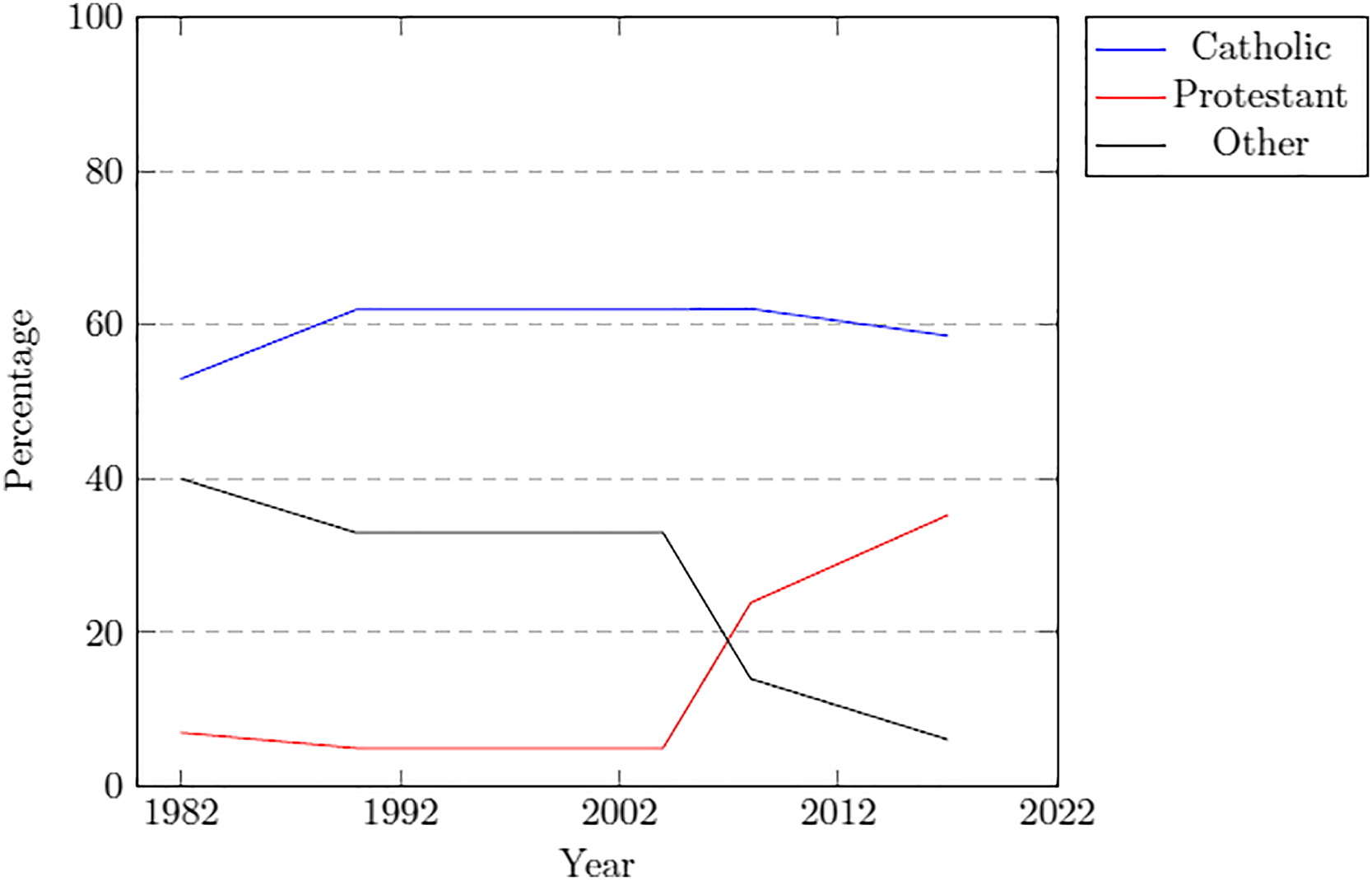
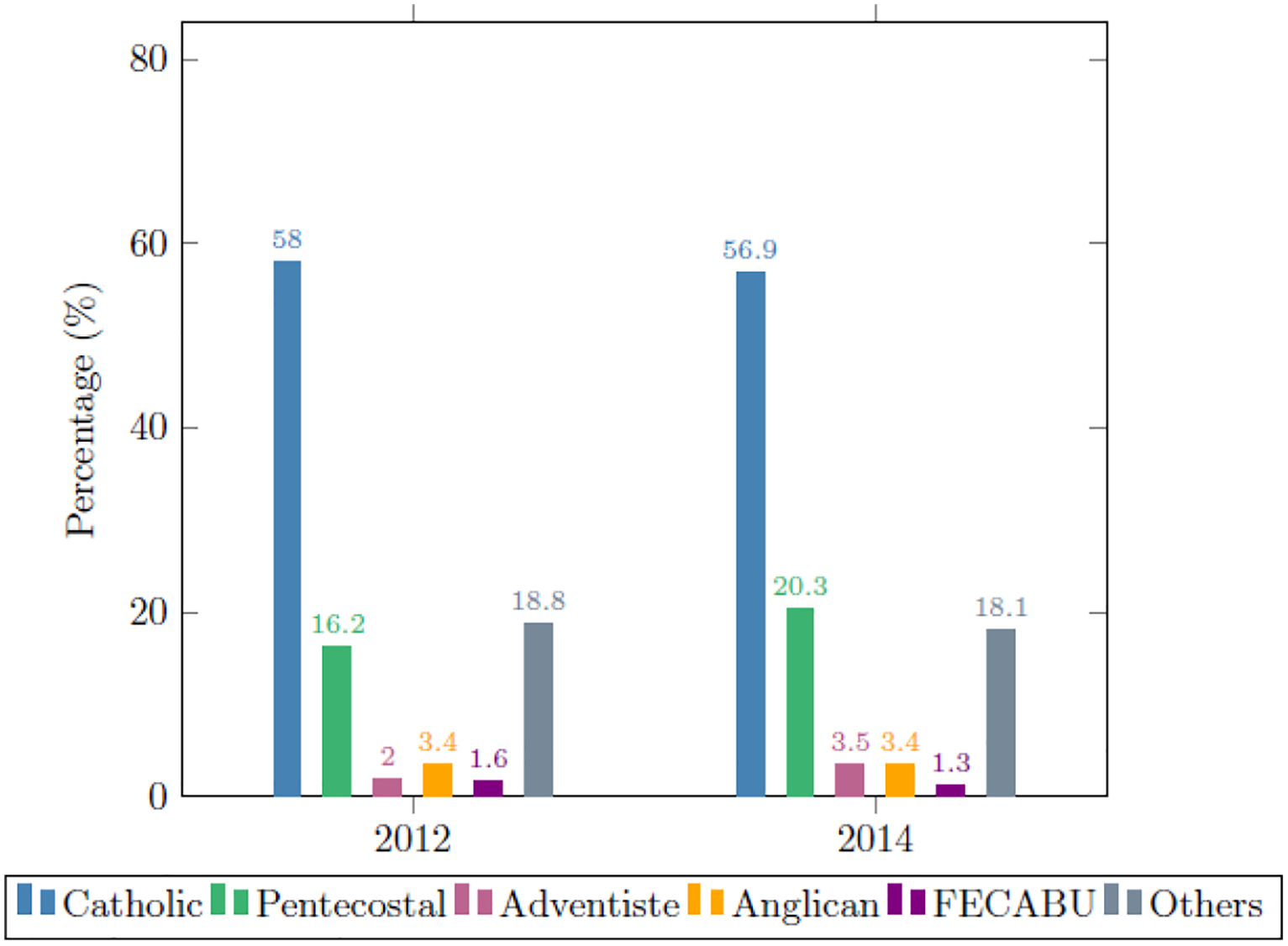
This pattern is also visible in Burundi. Over the past four decades, Catholic membership has stagnated or declined, non-Christian and non-affiliated groups remain small, and Protestant representation has increased (Figure 1). Afrobarometer data from 2012 to 2014—the most recent available breakdown by religious affiliation in Burundi—show sharp growth among Pentecostal and Adventist followers (25% and 75%, respectively), alongside a modest decline in Catholic membership and stable Anglican numbers (Figure 2).Footnote 2 The reasons for these shifts remain unclear.
Religious affiliation in Burundi.
Note: The “Others” category includes indigenous religions, Islam and non-religious individuals.
Source: World Religion Database (Brill), Burundi, accessed February 2026.

Religious affiliation in Burundi – Afrobarometer.
Note: The “Others” category includes all other religious affiliations not listed separately.
Source: Afrobarometer data.

Burundi’s religious landscape is overwhelmingly Christian. About 58.6% of Burundians are Catholic and 35.3% are Protestant, while Muslims (3.4%), other religions (1.3%), and those reporting no religion (1.3%) make up a small minority.Footnote 3 Within this Christian majority, the key divide for our purposes is between traditional churches—the long-established Catholic and Anglican churches—and the emerging denominations we study—Pentecostal, Evangelical, and Seventh-day Adventist. Traditional churches account for roughly 60% of the population, while emerging denominations account for roughly 25%.Footnote 4
We analyze six months of church service data to study factors shaping Burundi’s religious landscape, with a focus on intra-Christian competition. Our evidence comes from 125 transcripts of services held in five rural churches in Muramvya: Catholic, Anglican, Pentecostal, FECABU (Evangelical), and Adventist. We examine the structure, themes, tone, and keywords of services to understand how churches use worship to promote values and messages they consider important. We model churches as organizations that build group cohesion and sharpen group boundaries to expand their fellowship. The analysis sheds light on the recent religious changesFootnote 5 in Burundi and speaks to similar dynamics elsewhere in Sub-Saharan Africa.
We find clear differences between emerging and traditional denominations. Pentecostal and FECABU churches emphasize rituals more than scripture readings, adopt a more positive tone, and focus on congregants’ immediate concerns, such as income, health, agriculture, and children’s education. The Adventist Church also emphasizes rituals and a positive tone but maintains a stronger focus on scripture. We argue that this blend of approaches among emerging denominations strengthens group cohesion and enriches individual faith experiences, helping to attract followers. We propose that one reason for these differences is that traditional churches face higher institutional costs of adaptation—due to hierarchy, standardized liturgy, and inherited routines—which slow their response to congregants’ changing needs.
An important finding of our study is the Pentecostal Church’s distinctive approach. It places strong emphasis on morality, often presenting God in judgmental terms and linking Satan with undesirable actions. This strategy aligns with the concept of supernatural punishment and may reinforce norm compliance and deter free-riding. Similar punitive framings have been linked to stronger norm enforcement and cooperation in other contexts (Purzycki et al., Reference Purzycki, Apicella, Atkinson, Cohen, McNamara, Willard and Henrich2016).
Our approach differs from studies that explain religious choice through followers’ socioeconomic traits (Alfonsi et al. Reference Alfonsi, Bauer, Chytilová and Miguel2024; Buccione and Mello Reference Buccione and Mello2020). We treat religion as a market: churches provide services (the supply side), while individuals decide whether to participate (the demand side). Our focus is on the supply side. We argue that religious activities serve two core functions: enabling personal faith expression (believing) and fostering group membership (belonging) (Dunbar, Reference Dunbar2022; Henrich et al., Reference Henrich, Bauer, Cassar, Chytilová and Purzycki2019; Norenzayan et al. Reference Norenzayan, Shariff, Gervais, Willard, McNamara, Slingerland and Henrich2016). Within services, leaders mobilize these dimensions to build cohesion and sharpen group boundaries, which increase the benefits of membership, raise the costs of exit, and improve retention. Because church services are the main point of interaction—and around 90% of Burundians attend themFootnote 6—studying these strategies sheds light on competition among churches for followers.
Rural Burundi is a well-suited context for our study for several reasons. Weekly church attendance is widespread and central to community life; Christian denominations coexist and compete for members; pastors and priests have substantial discretion over liturgy, themes, and delivery; and in rural areas, church services are among the few regular mass gatherings, giving sermons both social and political weight. These features allow for systematic comparison of services across denominations.Footnote 7
We make three contributions to the political science literature on sermon content in Africa and beyond (McClendon and Riedl, Reference McClendon and Riedl2016, Reference McClendon and Riedl2019, Reference McClendon and Beatty Riedl2021; Trinitapoli and Weinreb, Reference Trinitapoli and Weinreb2012). First, we study sermons from rural Sub-Saharan Africa, moving beyond the common focus on urban settings and the global North. Second, we adopt a supply-side perspective guided by theories of group formation, collective action, and group boundaries (Dionne, Reference Dionne2015; Habyarimana et al. Reference Habyarimana, Humphreys, Posner and Weinstein2009; McClendon and Riedl Reference McClendon and Beatty Riedl2021). Third, we document the themes discussed in church services in Burundi, a country rarely examined in this literature.
Literature review
We study religious change through the lens of religious marketplaces (Iannaccone, Reference Iannaccone1998; Iyer, Reference Iyer2016). Churches compete for followers by adjusting to their preferences, while individuals choose denominations that maximize utility. Shifts in equilibrium can stem from changes in demand, such as evolving preferences among followers, or from changes in supply, such as churches adopting new strategies of worship to attract members.
Recent work focuses on the demand side, showing how economic conditions, human capital, and information shape religious affiliation. In Brazil, Costa et al. (Reference Costa, Marcantonio and Rocha2023) find that economic downturns increased Pentecostal affiliation. In Kenya, Alfonsi et al. (Reference Alfonsi, Bauer, Chytilová and Miguel2024) show that gains in human capital reduced switching from traditional to Pentecostal churches. Our work shifts the focus to the supply side. Using sermon transcripts, we study how churches shape and align congregants’ preferences through service design. Two recent studies adopt similar methods.
McClendon and Riedl (Reference McClendon and Riedl2016) analyze sermons and interviews from 100 Pentecostal churches in Nairobi. They find little variation in sermons across churches, despite differences in congregants’ socioeconomic backgrounds. They also show that, contrary to existing literatureFootnote 8, sermons emphasize individual autonomy, empowerment, and self-affirmation, rather than traditional collective ties. McClendon and Riedl (Reference McClendon and Riedl2019) study how sermons shape beliefs and behavior across Sub-Saharan Africa. They show that Pentecostal sermons stress individual responsibility and the possibility of change, while Catholic and Mainline Protestant sermons emphasize external constraints and present a more static view of the world.
Our study moves beyond the Pentecostal vs. Catholic/Mainline distinction by also analyzing Adventist and FECABU (Evangelical) churches. While our empirical approach is similar to McClendon and Riedl (Reference McClendon and Riedl2016, Reference McClendon and Riedl2019), we apply a different conceptual framework. We view church services as tools for building cohesion and sharpening group boundaries, which increase the benefits of membership, raise exit costs, and improve retention. This links our analysis to political science work on group formation and group boundaries (Dionne, Reference Dionne2015; Habyarimana et al., Reference Habyarimana, Humphreys, Posner and Weinstein2009).
Our study also connects to African scholarship that views charismatic growth as organizational innovation and as a reshaping of moral authority and community life. Kalu (Reference Kalu2008), for example, traces African Pentecostalism as an African-rooted movement and shows how its worship practices and organizational forms adapt to local contexts. Asamoah-Gyadu (Reference Asamoah-Gyadu2004) documents the rise of indigenous charismatic churches and explains how they reshape everyday religiosity through new styles of worship. Obadare (Reference Obadare2018) analyzes how Pentecostal actors translate religious authority into public authority, shaping political legitimacy and church–elite relations. We complement this work by examining these dynamics at the level of weekly services and by comparing the structure and content of services across emerging and traditional denominations.Footnote 9
Religion in Burundi
Burundi is a densely populated country in East Africa with about 12 million people (ISTEEBU, 2012). It is among the world’s poorest countries, with most of the population engaged in subsistence farming.Footnote 10 Its modern history is marked by a deep Hutu–Tutsi divide and repeated episodes of mass violence, culminating in a civil war that ended in 2005 (Lemarchand, Reference Lemarchand1996). These events left lasting social, political, and economic legacies, and ethnic identity remains salient in everyday life.
Religion is central to Burundian life. According to the World Religion Database (Zurlo, Reference Zurlo2026), only 1.3% of the population identifies as nonreligious. Religious practice is widespread and shapes daily behavior, social relations, and political views. Afrobarometer (2012) reports that 96% of Burundians consider religion important or very important and 90% attend church services weekly.
Since the colonial period, relations between churches and the Burundian state have mixed cooperation and conflict. Missions supported state control and service provision, while state backing expanded church influence (Longman, Reference Longman1998). Burundian scholarship also shows that evangelization did more than expand religious adherence. It helped create new forms of social organization and moral authority, often intertwined with state-building and identity formation (Mukuri, Reference Mukuri1989; Mvuyekure, Reference Mvuyekure1988).
After independence, Catholic and Protestant churches ran much of the education, health, and media sectors (Constantin, Reference Constantin and Coulon1997). This balance broke down after the 1972 genocide, when the state took over schools and closed church media amid suspicions of church support for Hutu communities Constantin and Coulon Reference Constantin and Coulon1997; Lemarchand, Reference Lemarchand1996). Relations improved in the 1990s but were again strained after the 1993 crisis, which exposed tensions between church leadership and local clergy.
Today, religious institutions wield significant power and resources, often rivaling those of the state (Longman, Reference Longman1998, Reference Longman2001). Churches engage closely with communities and play an important role in social and political life, with political leaders actively seeking their endorsement. In this context, churches retain substantial autonomy over their services and activities. Recent years have seen a clear shift in denominational composition in rural Burundi: Catholic and Anglican churches are losing followers, while Pentecostal, Adventist, and Evangelical congregations are expanding.
We conduct our study in Muramvya, a town of about 50,000 residents located between Bujumbura and Gitega. The town is surrounded by rural areas and has a strong Catholic presence alongside other denominations. Muramvya has around 20 churches, reflecting a variety of Christian traditions, each with multiple worship sites. As in many parts of Sub-Saharan Africa, religious boundaries are fluid, with individuals often switching denominations or attending services outside their own.
Five Christian Churches
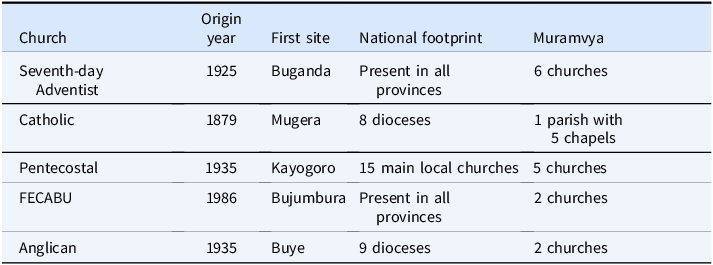
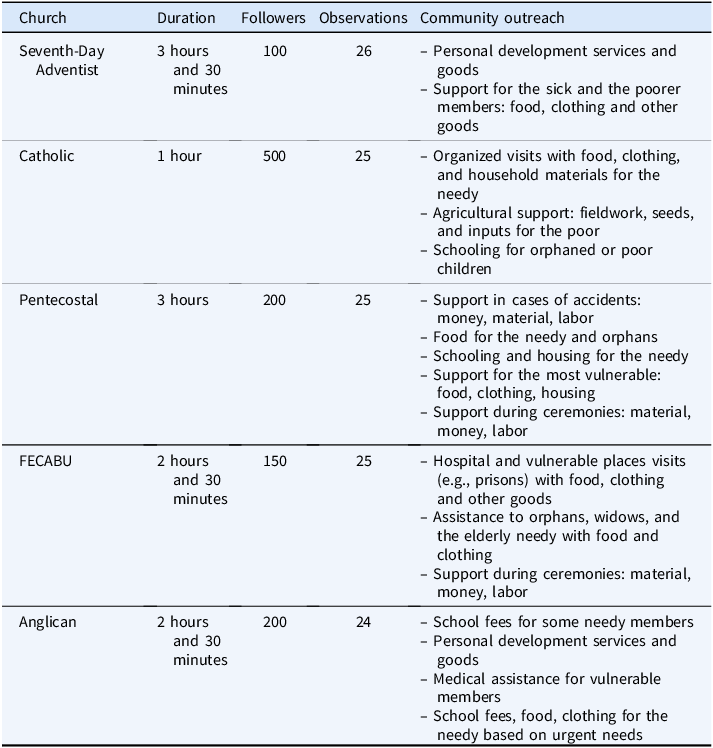
Table 1 summarizes the five Christian Churches studies in this article. We describe the five Christian churches in this study, drawing on interviews with church leaders.Footnote 11
Summary of five Christian churches in Burundi and their presence in Muramvya

Source: Anonymous interviews (Muramvya, Jan/Mar 2023; Bujumbura, Dec 2023/Jan 2024)
The Seventh-Day Adventist Church
Adventists have been present in Burundi since 1925 and are organized through a national church structure. In Muramvya, the denomination is relatively recent (2001), but now it has six churches (Anonymous interview, Muramvya, January 2023).
The Catholic Church
The Catholic Church is Burundi’s oldest and most institutionalized denomination. It operates through a hierarchical diocesan structure and follows a standardized liturgy. Burundi has eight dioceses, and the Muramvya parish includes five branches, or chapels (Anonymous interview, Muramvya, March 2023).
The Pentecostal Church
Pentecostal churches expanded in Burundi during the twentieth century (1935) and today operate through a national umbrella structure with substantial local variation in worship style. Muramvya hosts five Pentecostal churches (Anonymous interview, Muramvya, March 2023).
The FECABU Church
FECABU (Fraternité Evangélique du Christianisme Au Burundi) is a nationally present Evangelical federation that has expanded across five provinces through district structures. In Muramvya, it is a recent entrant with a small but growing presence, currently comprising two churches (Anonymous interview, Bujumbura, December 2023).
The Anglican Church
Anglicanism is long established in Burundi (1935) and organized through a national province divided into dioceses, with relatively standardized service formats. Muramvya contains two Anglican churches under the Bujumbura diocese (Anonymous interview, Bujumbura, January 2024).
Conceptual framework
Our empirical analysis builds on a conceptual framework informed by anthropology, psychology, and economics (Dunbar, Reference Dunbar2022; Norenzayan et al., Reference Norenzayan, Shariff, Gervais, Willard, McNamara, Slingerland and Henrich2016). We argue that religious activities serve two main social functions: believing, which allows individuals to express and practice faith, and belonging, which allows individuals to join and identify with a group. The five churches we study aim to maximize their number of followers. By fostering both believing and belonging, they strengthen group cohesion and sharpen group boundaries. Stronger cohesion and clearer boundaries increase the benefits of membership and raise the costs of leaving, supporting recruitment and retention.
Believing. Research suggests that religious beliefs may stem from cognitive processes originally evolved for other functions (Dunbar, Reference Dunbar2022; Norenzayan et al., Reference Norenzayan, Shariff, Gervais, Willard, McNamara, Slingerland and Henrich2016). While these beliefs are considered an evolutionary by-product, they fulfill a significant role for individuals, providing utility through the expression of faith either privately or collectively. Societies that channeled these cognitive inclinations toward greater social cohesion gained advantages in intergroup competition (Henrich, Reference Henrich2020; Norenzayan et al., Reference Norenzayan, Shariff, Gervais, Willard, McNamara, Slingerland and Henrich2016). Cultural evolution may have amplified the individual benefits of collectively practicing faith, particularly in communal settings such as church services.
Church services help followers fulfill their beliefs through three mechanisms. First, they promote rituals—structured, symbolic actions—that serve psychological functions and improve welfare (Fischer and Xygalatas, Reference Fischer and Xygalatas2014; Henrich, Reference Henrich2020; Henrich and Muthukrishna, Reference Henrich and Muthukrishna2021). Second, they involve synchronous activities such as dancing and singing, which have psychological benefits (Henrich, Reference Henrich2020; Henrich and Muthukrishna, Reference Henrich and Muthukrishna2021). Third, they strengthen belief in the supernatural, for example, through Bible readings, which deepen psychological experiences by reducing the perceived distance between the divine and the believer. Practicing these beliefs together transforms private faith into shared identity, builds trust, and strengthens cohesion (Naso, Reference Naso2025).
Belonging. Group membership offers advantages. Socio-economically, groups act as safety nets during hardship, create social connections that ease access to goods and services, and provide club goods (Auriol et al., Reference Auriol, Lassebie, Panin, Raiber and Seabright2020; Iannaccone, Reference Iannaccone1992). Psychologically, groups strengthen identity, provide emotional support, and reinforce feelings of security and belonging. A group’s ability to deliver these benefits—its level of cooperation—depends on its cohesiveness.
The cohesiveness of a religious group rests on two factors: the strength of social bonds among members and the alignment of their preferences. Social bonding refers to close relationships that foster unity (Charles et al., Reference Charles, Farias, van Mulukom, Saraswati, Dein, Watts and Dunbar2020). Preference alignment refers to the convergence of moral, political, and economic views. The more aligned these views are, the more cohesive the group becomes.
During church services, priests and pastors use two strategies to align their followers’ preferences.Footnote 12 First, they establish and reinforce religious norms by offering moral and behavioral guidance in sermons. Adherence to these norms strengthens cohesion by helping to identify and exclude free-riders. Because groups can only expand if they maintain sufficient cohesiveness, leaders must balance bringing in new members with preserving a tight-knit community (Levy and Razin, Reference Levy and Razin2012). Second, religious leaders address a wide range of topics beyond the church’s immediate concerns, including politics, economics, and history. By interpreting these issues through a religious lens, they seek to unify their followers’ viewpoints.Footnote 13 The goal is not necessarily to create consensus on details, but to build a shared societal understanding among congregants. This unifying process relies on the consistent discussion of diverse themes.
Faith reinforces these strategies and strengthens group cohesion. Religious leaders often invoke ideas of supernatural punishment and the afterlife to encourage adherence to norms (Atkinson and Bourrat, Reference Atkinson and Bourrat2011; Bourrat et al., Reference Bourrat, Atkinson and Dunbar2011; Johnson, Reference Johnson2005). The premise is that monitoring and enforcement go beyond peer surveillance: a supernatural presence punishes those who deviate from the group’s standards.
Churches’ objective function. Followers gain utility from practicing faith and from the cooperative benefits of membership. Churches seek to maximize their number of followers by retaining current members and recruiting new ones. Services are their main instrument. By shaping believing (doctrine, ritual, supernatural monitoring) and belonging (synchrony, shared norms, mutual aid), leaders increase cohesion and sharpen group boundaries. Greater cohesion and clearer boundaries raise the benefits of membership and the costs of exit. Denominations that design services more effectively along these dimensions should achieve higher retention and growth.
Given this objective, churches can still adopt different service strategies because the choice set and the marginal returns to change differ across denominations. Some face tighter institutional constraints—hierarchical oversight, standardized liturgy, and professionalized clerical training—which raise the cost of experimentation and make rapid adaptation harder, as is often the case for traditional churches. Others are more decentralized and can adjust content and format with lower internal frictions, as is often the case for emerging churches, which allows them to respond more quickly to congregants’ shifting needs. Furthermore, denominations enter the competition with different inherited assets—historical legitimacy, established networks, and physical infrastructure—which can reduce the immediate payoff to innovation for incumbents while increasing it for newer entrants.
Political implications. Stronger cohesion and sharper boundaries can also have political effects. When a congregation is cohesive, members trust each other more, share norms, and communicate regularly. This can make it easier for religious leaders to coordinate collective action and to circulate common political frames. Sharper boundaries also make religious identity a stronger social marker, which can shape who people see as legitimate leaders. As a result, churches can gain political influence as brokers between followers and elites, since they can credibly signal support and mobilize participation. At the same time, boundary-making can increase the risk of polarization. When sermons portray rivals or out-groups as threats, they can harden social divisions and reduce willingness to cooperate across groups.
Data
We collected data between October 22, 2022, and April 16, 2023, in five churches in Muramvya: Seventh-day Adventist, Catholic, Pentecostal, FECABU, and Anglican. Our survey team attended the main weekly service in each church every week. Documenting services is common in Burundi, where followers often record sermons to revisit clergy teachings.
We chose this period to observe a continuous sequence of weekly services. The window includes both ordinary weeks and key moments in the Christian calendar that predictably shape worship and preaching. This helps us capture stable features of service design. Our goal is comparative; we aim to identify systematic differences across denominations. These contrasts should be less sensitive to the specific weeks observed, even if some themes vary seasonally. We return to external validity in the Conclusion.
Table 2 reports service length and attendance and summarizes the main outreach activities each church provides.
Church services and community outreach comparison

Note: Data collected from 22/10/22 to 16/04/23 in five churches in the town of Muramvya. “Duration” refers to the scheduled duration of the Sunday (Saturday for Seventh-Day Adventist) service. “Followers” refers to the estimated number of followers attending the service in a typical Sunday/Saturday in the churches where we collected data. “Observations” refers to the number of transcriptions we have for each church. “Community Outreach” refers to each church’s key outreach efforts, reflecting their engagement with and support for the local community. “Personal development” refers to the church’s support for members’ initiatives, such as starting a business or educational pursuit, providing assistance through labor, financial aid, or materials, which may be either repayable or given as a grant.
We chose Muramvya for three reasons. It shares key features with many rural areas in Burundi in population size, economic development, and government structure. As a provincial capital, its churches also influence smaller congregations across the province. Finally, its location between Bujumbura and Gitega made fieldwork feasible.
Within Muramvya, we focused on the churches that attract the largest number of followers in the main weekly service. We selected denominations that match the main compositional shift shown in national data. These denominations belong to national church structures and share similar liturgical and organizational features across congregations.
The main content of weekly services is usually set by the diocese or higher ecclesiastical authorities. Still, pastors and priests retain considerable freedom in how they deliver it. This is especially true during sermons, when they often move beyond the prescribed material to address broader issues and reinforce religious norms. Interactions between followers and leaders during services are also unscripted and open-ended.
Text analysis and coding
Enumerators recorded church services using mobile phones. Recordings were transcribed with an app, then reviewed by the enumerators—bilingual in French and Kirundi—who corrected errors and translated the text into French. We produced 125 transcripts, averaging 4,478 words each.
We conducted a structured content analysis. Each service was segmented into activities, using contemporaneous observer notes and speaker turns. In the first round, we coded the text at the utterance level (a sentence or short turn of speech) for themes (13 categories) and tone (positive, negative, or mixed). In the second round, we coded thematic scope, thematic content, and keywords.
Enumerators coded the transcripts in collaboration with us. We prespecified dictionaries and anchor terms based on two reference transcripts, but allowed overrides when context required. We also standardized key Kirundi-to-French translations. To assess intercoder reliability, we double-coded a subset of transcripts and resolved discrepancies through review.
This method has three main limitations. First, it is descriptive and relies on human judgment. Second, assigning a single theme at the utterance level reduces nuance. Third, translation from Kirundi to French may blur meaning.
Analysis
We begin by analyzing word usage. We then examine the themes that emerge from the services, focusing on their frequency and tone. We conclude by identifying the words most closely associated with each theme.
Structure
We find a moderate positive correlation (0.43) between the total word count and the duration of services. The Catholic Church records the highest words-per-minute rate (64.2), followed by the Pentecostal (34.1), Anglican (29.2), FECABU (25.1), and Adventist (20.3) churches. This measure reflects how much verbal content is delivered per unit of time. A higher rate suggests less emphasis on nonverbal elements such as rituals and music.
Figure 3 breaks services into five activities: singing, Bible reading, sermon, fellowship (dialogue between clergy and congregation), and solo moments when clergy speak without interaction. Pentecostal services devote the largest share to singing (37.3%), followed by Adventist services (24.1), reflecting their use of synchronized activities to engage followers. In Pentecostal services, pastors actively encourage singing, signaling a strong emphasis on the believing dimension of worship:
“[…] So, when you hear someone singing thanks, listen and do not make fun of them. They may have their reasons to sing about God’s glory. A singer once said, ‘Even if the whole country mocks me, I will not stop singing the glory of God!’”Footnote 15
Word usage by activity across denominations (Means)Footnote 14. Data: 22/10/2022–16/04/2023, Muramvya.

Bible reading is most prominent in Adventist services, followed by Anglican, Catholic, Pentecostal, and FECABU services. Bible readings reinforce belief and articulate religious norms. The Adventist Church stands out for distributing a short Bible study guide that helps members interpret passages; pastors frequently encourage congregants to purchase and bring it to services.
Sermons provide clergy with the main opportunity to address congregants directly. The Pentecostal Church devotes the largest share of service content to sermons, followed by the Anglican and Adventist churches. Sermons often rely on accessible language and concrete moral examples, reflecting efforts to align congregants’ preferences.
The fellowship category captures clergy engagement with followers through dialogue. Pentecostal and Adventist churches devote the smallest share to such exchanges, consistent with their greater reliance on non-verbal communication. Catholic, FECABU, and Anglican churches allocate more time to dialogue, although some exchanges are scripted and therefore do not constitute genuine exchange, which we define as spontaneous and unscripted interaction.
Finally, the solo category captures moments when clergy speak without participation from followers. A higher share suggests lower congregational engagement. Pentecostal services have the highest solo share, followed by Anglican and Adventist services, indicating greater clerical control over service content.
Themes
We classify the themes addressed in services into 13 categories: morality, ceremonies, politics, economics, history, agriculture, public health, other religions, ethnicity, environment/ecology, crime, God, and Satan. We calculate the share of words devoted to each category relative to the total word count.
Across denominations, moral instruction dominates service content. Morality accounts for 7.5% of total words, far exceeding explicit discussion of politics (0.9%), economics (0.8%), or history (0.4%). This pattern fits our framework: leaders repeatedly define acceptable behavior and reinforce shared norms as a way to sustain cohesion, while most non-religious topics appear only in small doses.
In Catholic services, references to history (0.8%) and ethnicity (0.3%) appear more often than in other churches, though the differences are not statistically significant. This pattern may reflect the Catholic Church’s role in shaping the country’s modern trajectory, and its historical entanglement with the state (Longman, Reference Longman1998). Mentions of other religions are also more frequent (0.7% versus 0.3% on average), again not statistically significant but suggestive of a response to the Church’s decline in fellowship. By often portraying other religions in negative terms, clergy may seek to reinforce in- vs. out-group boundaries, so that it becomes more costly to leave the group or interact with out-group members.
FECABU services stand out for their emphasis on politics (1.9% versus 0.9% on average, statistically significant at the 10% level), economics (1.3% versus 0.8% on average, not statistically significant), and their lower frequency of references to ethnicity (0% versus 0.2%, statistically significant at the 5% level). This pattern may reflect the church’s effort to unite a congregation with diverse political views.
Adventist services cover fewer everyday topics than those of other churches, and no specific theme is discussed more frequently than the overall average. This narrower range may reflect a more uniform set of viewpoints among congregants. If followers are already aligned on these issues, clergy may have less need to address specific themes during services to align perspectives.
The Pentecostal church stands out for its strong emphasis on morality, with 9.0% of words devoted to moral themes compared to the 7.5% average of others, although this difference is not statistically significant. This suggests a rigorous approach to norm adherence within the denomination. Followers of other churches in the region view Pentecostal followers as observing a broader set of norms. The Pentecostal church places similar importance on ceremonies, such as offerings, healing, and prayers, potentially reflecting a greater emphasis on rituals, though here too the difference from other churches is not statistically significant. By contrast, the theme of other religions is mentioned less often in Pentecostal services, and this difference from other churches is statistically significant.
In Anglican services, the word count also shows a strong focus on morality. Words related to politics (1.0%), history (0.5%), and ethnicity (0.5%) appear more often than the average of other churches, though the differences are not statistically significant. This pattern may reflect the Anglican Church’s historical role and, like the Catholic Church, its long-standing entanglement with the state. This long history has attracted followers from diverse ethnic and demographic backgrounds. The congregation’s diversity likely requires more frequent discussion of ethnicity, as bridging ethnic divides is a central challenge for maintaining cohesion.
FECABU, Pentecostal, and Anglican churches each mention Satan at a rate of 0.1%, which suggests the strategy of invoking supernatural punishment to reinforce norm adherence.
Thematic scope
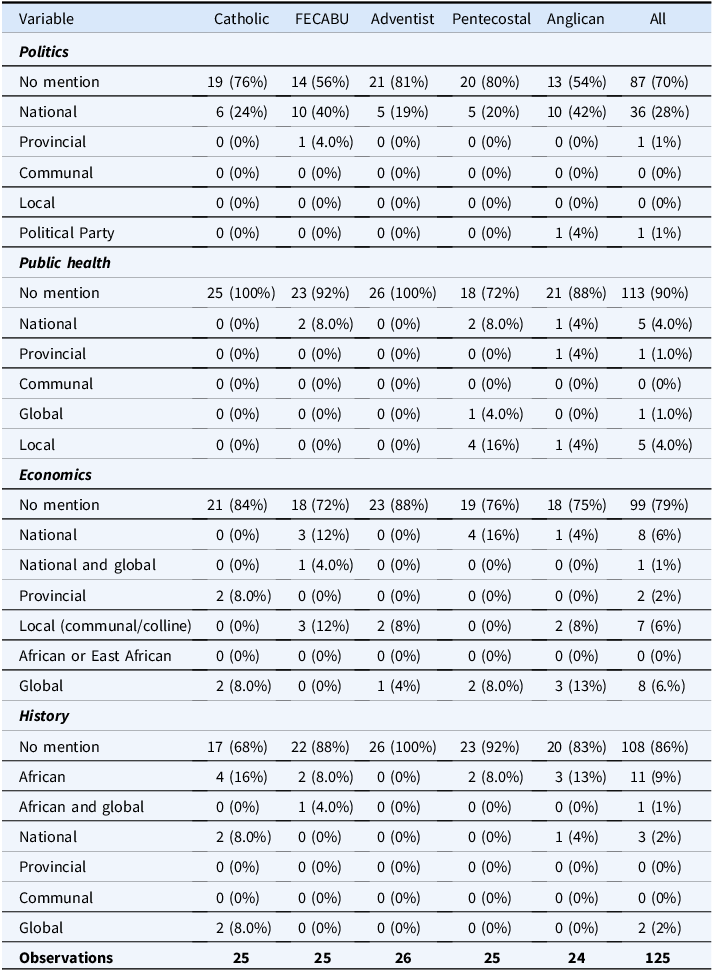
When discussing politics, priests and pastors focus mainly on the national level (see Table 3). In Burundi, where a dominant party holds significant influence and local leaders are often appointed by national representatives, national politics is most relevant. A similar pattern appears in references to history. Clergy use Burundian history to link local experiences with broader narratives.
Comparative overview of the thematic levels in church services in Muramvya

Note: Data collected from 22/10/22 to 16/04/23 in five churches in the town of Muramvya. The total number of observations is given for each church. We break the frequency in which each theme is mentioned in a service by administrative level. We present percentages in parentheses.
The sharpest denominational differences appear in discussions of economics. FECABU, Adventist, and Anglican churches focus on local economic conditions, i.e., village level. FECABU addresses the immediate concerns of its members. In a service on November 13, 2022, the pastor spoke to a common aspiration among rural youth—to build and move into their own homes:
“[…] And you young men, you worry and say: ‘How will we build homes to live in?’ I want to tell everyone: do not worry, because God’s promises for you will be fulfilled soon. Do not worry.”
By contrast, Pentecostal services do not address local economic conditions directly. They rarely discuss concrete strategies through which the village or its residents might improve their economic situation. Pastors instead invite testimonies of hardship and recovery or lead prayers to overcome economic challenges. The Catholic Church focuses on economic issues at the global or provincial level, with little reference to immediate economic concerns, such as employment and agricultural revenue.
One way to understand these differences is that churches emphasizing local issues and personal stories highlight the potential for individual action and changeFootnote 16, while those focusing on global or national matters suggest limits to individual influence. As outlined in our conceptual framework, these thematic choices may shape how churches align the preferences of their members.
These patterns also raise questions about identity. When leaders speak, do they situate followers mainly within a local community, or also within a wider religious organization? Several denominations we study are clearly embedded in larger bodies. For example, the Anglican Church of Burundi is part of the Anglican Communion, and Adventists belong to a worldwide church structure. Burundi’s evangelical umbrella organizations are also linked to global alliances. In principle, references to belonging to a larger church can foster national or transnational politico-religious identities. Such identities may mitigate group polarization by expanding people’s reference groups or intensify it if they reinforce a distinct “us” in opposition to outsiders. We do not test these identity effects, but our scope conditions suggest this as a plausible channel for future research.
Nature of mentioned themes
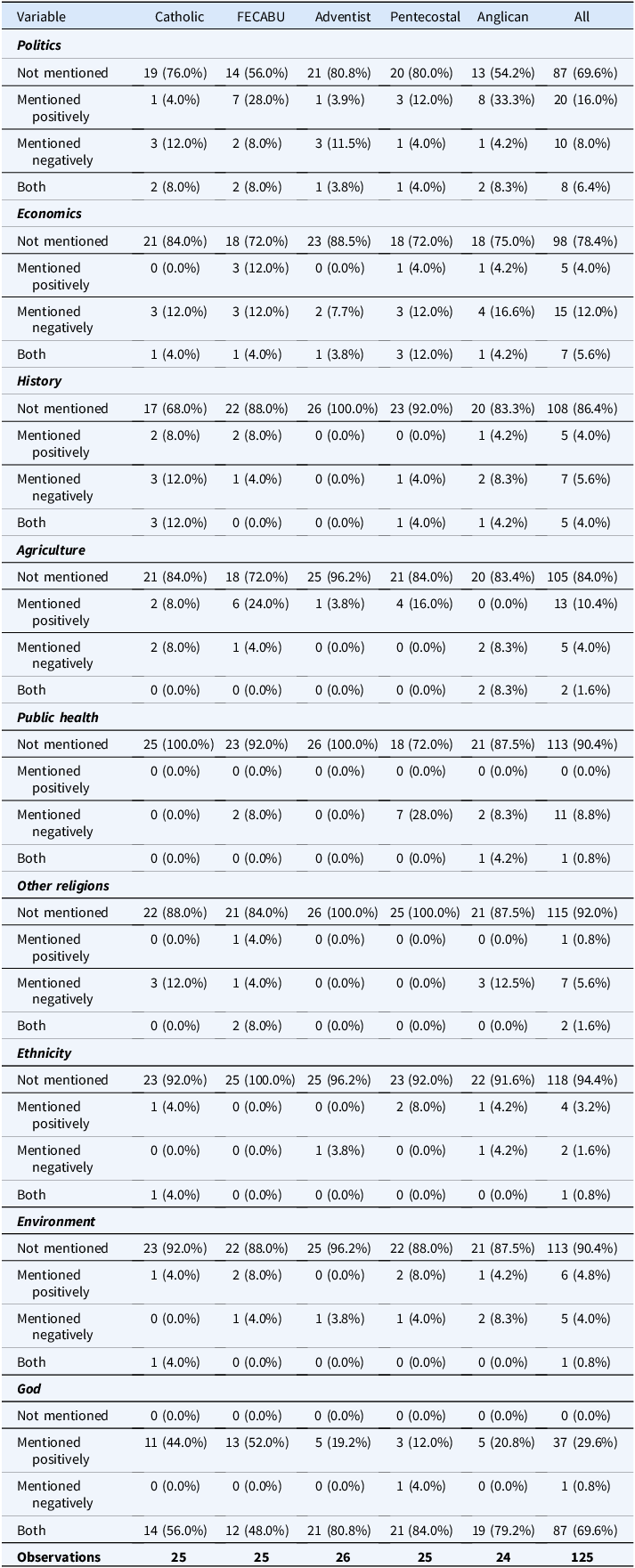
Table 4 summarizes the tone (positive, negative, and mixed) with which themes are discussed across denominations.
Comparative overview of the nature of the mentioned themes in church services in Muramvya

Table 4. Long description
The table presents data on the tone with which various themes are discussed across different denominations. It includes columns for Catholic, FECABU, Adventist, Pentecostal, Anglican, and All. The rows are categorized by themes such as Politics, Economics, History, Agriculture, Public Health, Other Religions, Ethnicity, Environment, and God. Each cell within the rows indicates the number and percentage of mentions for each tone category (Not mentioned, Mentioned positively, Mentioned negatively, Both). For example, under Politics, the Catholic denomination has 19 not mentioned, 1 mentioned positively, 3 mentioned negatively, and 2 both. The table provides a detailed breakdown of how each theme is addressed across the different denominations.
Note: Data collected from 22/10/22 to 16/04/23 in five churches in the town of Muramvya. The total number of observations is given for each church. Each row reports the nature of mentions (positive, negative, both) in church services.
Two patterns stand out. First, some themes are consistently framed more negatively than others: economics, public health, and other religions tend to attract negative framing, whereas politics, agriculture, ethnicity, the environment, and God are more often discussed in positive terms. This aligns with rural realities—economic hardship and health challenges are salient sources of concern—and with inter-denominational competition, where references to other religions often serve to draw boundaries.
Second, tone varies systematically across churches. We observe a clear gradient in overall negativity: Catholic services are the most negative on average, followed by Anglican, then Adventist and Pentecostal, while FECABU is the most positive. The clearest contrasts appear in two domains. When other religions are mentioned, Catholic and Anglican sermons consistently use a negative tone, which is consistent with boundary reinforcement in a competitive environment. For example, a Catholic priest (27 Nov 2022) criticized the “proliferation of churches” with “objectives different from the Catholic one,” linking religious pluralism to competition. An Anglican pastor (16 Apr 2023) similarly warned congregants about Pentecostals who “come to tell you… move to their church,” framing such outreach as a challenge to existing commitments.
In agriculture, FECABU, Adventist, and Pentecostal services more often adopt an optimistic tone, while Catholic and Anglican services emphasize risks and potential failure. Finally, Pentecostal services are distinctive in that they are the only ones to refer to God negatively (and often in mixed terms), linking God more frequently to judgment than other denominations; we treat this as suggestive because we did not run statistical tests for these differences.
Overall, we read tone as part of a trade-off: positive framing can strengthen cohesion by improving well-being, while negative framing can sharpen boundaries by defining threats and rivals. The more positive tone of emerging denominations may therefore support growth, while the more negative tone of established churches may reflect greater emphasis on boundary maintenance.
Key words
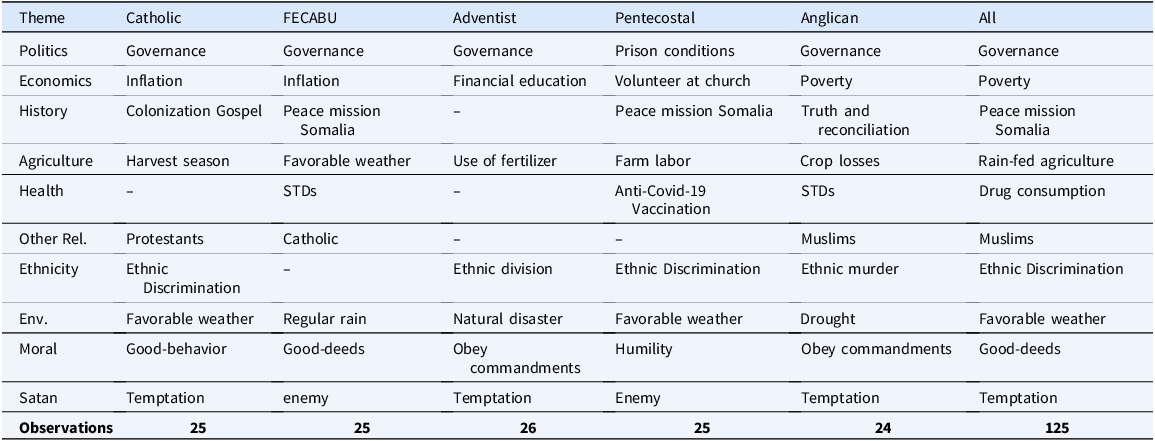
Table 5 presents the most frequently mentioned key words within each theme.
Most mentioned key word by theme and denomination in Muramvya services

Note: Each cell lists the most mentioned key word within that theme for the given denomination. “–” indicates no clear leading key word or not mentioned. Data collected 22/10/2022–16/04/2023 in five churches in Muramvya.
In political discussions, governance—with its broad and neutral meaning—is a central term in most churches. In Pentecostal services, however, the dominant term is prison conditions, which could reflect concerns among congregants with ties to the penal system.Footnote 17 In economic discussions, poverty and inflation are the most common terms. Pentecostal services instead emphasize volunteer work, reflecting efforts to involve members in church projects, while Adventist services focus on financial independence through education and savings groups.
Within the historical theme, the FECABU and Pentecostal churches emphasize the Somali peace mission, reflecting the large contingent of Burundian troops involved. By contrast, the Anglican and Catholic churches highlight broader historical themes. In agricultural discussions, references to weather shocks—such as rainfall, drought, and crop losses—are common and reflect an emphasis on divine provision, as discussions of weather are often paired with prayer or expressions of thanks. Practical farming advice also appears frequently, especially in Adventist services, where guidance on productivity highlights the tangible benefits of group membership.
Within public health, the FECABU and Anglican churches frequently discuss sexually transmitted diseases. References to drug consumption, primarily from the Pentecostal and Anglican churches, carry a moral undertone. Since drug use is not widespread, this emphasis likely serves more to align preferences than to address an actual problem.
All churches share a core moral vocabulary. Terms such as good deeds, obedience, and humility appear across denominations. Differences emerge in emphasis: avoidance is common except in FECABU, sexual abstinence is specific to FECABU, and patience appears mainly in Catholic and Anglican services.
Finally, all churches except the Catholic one depict Satan as the enemy. References to temptation are common across denominations. The Catholic Church stands out as the only one that links Satan to Burundi’s ethnic conflicts. In one passage, clergy suggest that Satan may have been a driver of these conflicts.
Discussion
Emerging denominations in our sample place relatively more weight on music and ritual, and—especially in Pentecostal and FECABU services—less on extended scripture readings. They also rely less on open verbal exchange with congregants than the Catholic and Anglican churches. In our framework, these choices can strengthen social bonding and make worship emotionally engaging, while also keeping teaching accessible to newcomers and marginal members.
Traditional denominations tend to emphasize history and ethnicity, topics that are politically charged in Burundi. These themes can sharpen group boundaries and serve as resources for political mobilization, but they also risk reinforcing social cleavages. By avoiding them, emerging denominations may limit internal tensions, though at the cost of leaving less space for debate about historical responsibility. Traditional churches—and the Pentecostal church as well—also tend to address issues that extend beyond local concerns. This broader framing can foster belonging to a larger and influential organization engaged with national and even transnational political and economic issues, but it may also distance followers if immediate needs receive less attention. Politically, it can strengthen a church’s capacity to coordinate messages and act as an interlocutor with elites.
Traditional denominations also adopt a more negative tone than emerging denominations, which more often mix positive and negative framing in the same narrative. This pattern is consistent with earlier work on African Christianity (Gifford, Reference Gifford2009; McClendon and Riedl, Reference McClendon and Riedl2019). The keyword analysis points in the same direction: emerging denominations more often link messages to immediate, practical concerns, whereas traditional churches more often speak in more abstract terms. This emphasis on day-to-day realities may increase the perceived relevance of emerging churches to congregants’ lives. Finally, Pentecostal services stand out in their emphasis on punishment and supernatural monitoring. They stress moral discipline, portray God more frequently in mixed or negative terms, and associate Satan with wrongdoingFootnote 18, a combination that may strengthen norm adherence and deter potential non-compliers.
Taken together, the evidence above supports a supply-side interpretation of religious change: churches differ in how well they combine worship, teaching, and community in ways that matter to people who are deciding where to attend. In our framework, growth in the number of followers is more likely when services make participation feel rewarding and strengthen cohesion, while decline is more likely when services are slower to respond to changing needs. We propose that part of this difference reflects unequal costs of adaptation. Traditional denominations often operate with more fixed routines and stronger institutional constraints, which can make it harder to experiment and to adjust services. We do not claim that service strategies are the only reason people switch churches. However, our findings are consistent with the view that differences in adaptive capacity help explain the rise of emerging denominations and the relative stagnation of traditional ones.
The patterns we document fit a broader account of how denominational competition unfolds in many parts of Sub-Saharan Africa. African scholarship describes Pentecostal and charismatic expansion as partly driven by innovations in worship style, rather than doctrine alone (Asamoah-Gyadu, Reference Asamoah-Gyadu2004; Kalu, Reference Kalu2008). It also emphasizes that these shifts can reshape public authority by creating new religious actors who can speak credibly to everyday concerns (Obadare, Reference Obadare2018). Our evidence is consistent with these arguments.
These patterns also matter for politics in Burundi, where churches are among the most influential organizations and political leaders seek their endorsement. As Pentecostal, Evangelical, and Adventist congregations expand, they introduce new religious actors into the arena where political elites seek legitimacy and cooperation. This can reshape church–elite relations in two main ways. First, it can weaken the historically privileged position of traditional churches by forcing elites to engage with a more fragmented set of religious authorities. Second, it can change the terms of engagement. Shifts in rituals, preaching style, and topic selection can alter which social problems receive attention, how responsibility is assigned, and what kinds of leadership are implicitly praised or criticized.
We do not test these political effects directly in this study, but recent events illustrate how church–elite relations can shift as the religious landscape changes. In 2015, the Catholic Church publicly questioned the fairness of the electoral process and withdrew from election observation amid unrest.Footnote 19 In 2020, the presidency publicly convened for the first time a meeting with representatives of major Protestant, Evangelical, and Pentecostal church coalitions.Footnote 20
Conclusion
Our analysis of six months of services across five denominations in rural Muramvya shows clear differences in how churches structure worship and communicate with followers. Emerging denominations—Pentecostal, Evangelical (FECABU), and Adventist—tend to rely more on music and ritual, use a more positive tone, and more often connect messages to day-to-day concerns. Traditional churches are more likely to retain standardized formats and to frame some themes more abstractly. In our framework, these contrasts matter because they shape how easily services create cohesion and sustain group boundaries in a competitive setting.
Our study has limitations. First, it is descriptive. We document systematic differences in the structure and content of services across denominations, but we do not identify a causal effect of service strategies on switching or membership growth. Second, external validity is limited. Our evidence comes from the main churches of the five major denominations in Burundi, observed in Muramvya, a provincial town that shares key features with many rural settings in terms of population, governance, and economic life. The findings are most likely to generalize to rural and peri-urban areas in Burundi with a similar denominational mix and comparable church organization. Generalization is weaker for urban parishes, for independent churches and small denominations with looser hierarchies, and for regions where church–elite relations differ, although ties between political elites and religious leaders appear relatively stable nationwide (Longman, Reference Longman1998). What we believe does generalize within Burundi are some of the contrasts we document, especially differences in time devoted to singing and rituals, and in moral instruction across emerging denominations.
Beyond Burundi, these contrasts are most likely to travel to settings where church competition has a similar structure—older mainline churches alongside expanding Pentecostal, Evangelical, and Adventist congregations—and where services remain a central forum for community life. These patterns align with organizational features observed elsewhere (see McClendon and Riedl Reference McClendon and Beatty Riedl2021 for Kenya). This suggests that, for Sub-Saharan Africa more broadly, the mechanisms we emphasize might apply, even if the mix of themes and sentiment varies across settings.
Finally, our data cover six months of services. Seasonal shocks, especially those linked to harvest periods, school calendars, or major religious holidays, may affect the salience of some themes. We, therefore, focus on denomination-level contrasts rather than precise levels at any given point in the year.
Despite these limitations, we hope our findings contribute to a deeper understanding of religious change in Burundi and provide insights relevant to other parts of Sub-Saharan Africa.
Acknowledgments
We thank Elysée Mfisumukiza, Gwyneth McClendon, Elizabeth Sperber, Timothy Longman, and Radha Sarkar for helpful comments and suggestions. We are grateful for the support of the Anglican Church of Burundi and the Christian University of Bujumbura. We also thank the anonymous reviewers and the editors for their valuable suggestions. We used AI tools only for language editing. The authors take full responsibility for the content of the manuscript.
Competing interests
None.
Pedro Naso is an economist at the Swedish University of Agricultural Sciences. His research uses experimental methods to study how religion and religious norms shape behavior and identity.
Jean Budurha is a junior lecturer at the Université Evangélique en Afrique and an environmental economist. His research uses experimental methods to study how incentives, social and religious norms, and institutions shape natural resource management and environmental policy.


 Open access

