

Confidentiality involves keeping private the information disclosed by someone using services. They may well consent to the sharing of information, for example with their family and/or other professionals. However, dilemmas arise when they refuse the sharing of information, even though breaching confidentiality could potentially protect or benefit that person or others.
Confidentiality is a complex matter in clinical practice, and particularly so in child mental healthcare. First, young people frequently present to child and adolescent mental health services (CAMHS) with sensitive and risk-related situations, including self-harm, suicidality, sexual behaviour, and alcohol and substance use. Second, young people often prefer such information not to be shared with parents and/or other professionals. Third, the child's level of competency may need to be taken into consideration.
Confidentiality represents an opportunity to engage a young person in developing a trustful engagement with services, with long-term positive consequences for their mental health. The development of autonomy is also an important task of adolescent maturity, and the opportunity to engage with services in a confidential, supportive manner can be an empowering experience in its own right. However, the need to decide whether to maintain or breach a young person's confidentiality can face clinicians without warning and immerse them in a quicksand of legal, ethical and clinical dilemmas.
This article explores various ethical, legal, regulatory and practical issues regarding confidentiality that can present in CAMHS, using four case scenarios (Box 1) to illustrate the application of principles in practice.
Ahmed
Ahmed is a 15-year-old boy who presents with anxiety disorder. His school counsellor remains concerned despite a package of cognitive–behavioural therapy; Ahmed's anxiety is significantly affecting his work. He arrives in the clinic by himself. Ahmed has read information online about medication with selective serotonin reuptake inhibitors and wants to give it a go. However, he is clear that he does not wish his family to know anything: they have other stresses and he does not wish to worry them further.
Adele
Adele is a 15-year-old girl attending CAMHS with depressive disorder. In an individual session, she reports self-harming by cutting regularly for several weeks. She also has occasional suicidal ideation, although has never had any firm intent or plan. She begs her doctor not to tell her family. She is concerned that if they found out, they would just get angry.
Frank
Frank is a 16-year-old boy recently diagnosed with autism spectrum disorder. During the assessment, he reports that for several months he has had repeated thoughts of killing people. There is no forensic history or history of aggression. He is not overly distressed by these thoughts, but recognises that others might be concerned if they knew about them. The potential targets change frequently; they tend to be peers at college whom he perceives as bullies. There is currently no specific target in mind, but Frank thinks it is possible he might do something sometime in the future.
Katie
Katie is a 14-year-old girl attending CAMHS with an eating disorder. In an individual session, she discloses that she was drunk at a party and a 19-year-old man had sex with her. She remembers little, although reports that the man, who was vaguely connected to her wider peer group, had been sending her sexually related messages online. She feels distressed at what happened and blames herself. She does not wish anyone to know; she feels embarrassed and does not want to cause trouble.
Ethics
Ultimately, clinicians want to do the right thing. The challenge of confidentiality is that it can frequently tear them in different directions when deciding what the right thing actually is. On one hand, it can feel right to respect a young person's confidentiality in order to maintain trust. On the other hand, it feels important to protect a young person from harm, and if breaching confidentiality is necessary for protection, then so be it. But what if the process of breaching confidentiality could exacerbate the risk? And what about parents’ rights – should they not be given information to enable them to protect their child? Dilemmas arise when such ethical values conflict. For any given situation, some sort of ethical calculation is needed to determine the most appropriate course of action.
The deontological and consequentialist positions
Two distinct strains of moral philosophy have historically dominated the ethical landscape. Deontological ethics, such as that proposed by Kant, argues that the morality of an action is to be judged by whether the action is in itself right or wrong, based on a wider system of rules, rights or doing one's duty (Reference KantKant 1964). In contrast, consequentialist or teleological ethics, such as utilitarianism proposed by Bentham and Mill, argues that the morality of an action is based solely on all the good and all the harm that consequentially arises (Reference MillMill 1863). Although these arguments have further evolved in contemporary moral philosophy, both perspectives still remain relevant when considering confidentiality issues.
Medical ethics: beneficence, non-maleficence and autonomy
Specific ethical principles have also been proposed for medical practice (Reference Beauchamp and ChildressBeauchamp 2001). Beneficence involves acting so as to improve the patient's health or welfare, whereas conversely non-maleficence involves acting so as to avoid harm. Autonomy involves respecting and supporting the right of patients to make their own healthcare choices. These principles can also be viewed from both deontological and consequentialist positions. The intrinsic duty of a clinician acting out of good will, striving to do good and avoid harm for the patient, could be seen deontologically as a good in itself, represented archetypically by the Hippocratic Oath. A consequentialist position would instead place the ethical onus on the specific situation, calculating a ‘harm/benefit ratio’ of consequences.
When beneficence and non-maleficence are applied to confidentiality issues, preserving confidentiality may benefit the young person by encouraging disclosure of all relevant clinical information, enabling the clinician to act effectively (Reference Ford, English and SigmanFord 2004). Furthermore, protecting confidentiality may enhance both the therapeutic relationship and service engagement, with potentially long-term benefits to health and risk (Reference Guedj, Sastre and MulletGuedj 2009). In contrast, when the clinician learns of a significant risk, breaching confidentiality and sharing information with parents or other authorities may help them minimise the risk of harm.
One may need to think beyond the individual situation and consider principles more universally. For example, if young people have little faith in the confidentiality of health services, this may lead them to keep sensitive but important information hidden or may even prevent them from attending at all. Guidance from the General Medical Council (GMC 2007) specifically requests clinicians to value the wider principle of ‘society's interest in maintaining trust between doctors and patients’ (p. 20) whenever a clinician deliberates on an individual case. In contrast, another universal principle could be applied to supporting the need to breach confidentiality: societies where information is freely shared within families and between services may help deter those who might otherwise abuse.
Autonomy is arguably more deontological in character. A young person's right to confidentiality lies in their right to autonomy; the freedom to make meaningful choices about one's own welfare is an important aspect of being human. With this argument, whether the choices ultimately prove good or bad is less important than the intrinsic freedom to make one's own choices. In fact, it is often through seemingly adverse outcomes that individuals learn from their mistakes and develop as human beings.
Developing autonomy and individuation from one's parents is particularly critical in adolescence (Reference Erikson and NortonErikson 1968). Confidentiality brings these tensions to the forefront: Reference TebbTebb (2011) notes the important role that clinicians can play both in helping young people in the transition to adulthood, encouraging them to take greater responsibility for making decisions about their own health, and in supporting parents accept the increasing independence of their children. Reference Applewhite and JosephApplewhite & Joseph (1994) observe that maintaining confidentiality indicates to both the young person and their parents that the child has a right to privacy and is capable of independent thought: ‘this value fosters the development of the separation and individuation needed for growth and development’.
Not all societies share autonomy as a fundamental right. Some cultures have a more collectivist orientation, where family elders bear more influence on an individual's decision-making (G Durà-Vilà, personal communication, 2015). Applewhite & Joseph meanwhile argue for a hierarchy of principles: safety and security, then autonomy, then parental autonomy and privacy (Reference Applewhite and JosephApplewhite 1994).
Finally, clinicians must always be mindful of their own ethical values, built up from their experiences and their cultural background (Reference Applewhite and JosephApplewhite 1994). Ethical judgements are significantly subjective processes, and such biases could influence us. We must reflect on our own ethical stance when making decisions that impact so heavily on others.
Legal and regulatory frameworks
Various legal frameworks attempt to apply such ethical principles. The United Nations Convention on the Rights of the Child (UNCRC) states that children have the right to express their views freely in all matters affecting them, in accordance with their age and maturity (Article 12). The UNCRC stipulates that, for any action relating to a child, their best interests must be considered. However, who decides what is in their best interests – the child, their parents or the State – is perhaps ambiguous, as is what happens when rights to autonomy conflict with rights to protection (Reference IltisIltis 2010).
In England and Wales, the Human Rights Act 1998 incorporates the European Convention for the Protection of Human Rights and Fundamental Freedoms (European Convention on Human Rights, ECHR), Article 8(1) of which specifies that everyone has the right to a private and family life. Preserving confidentiality respects the young person's right to a private life. In contrast, sharing information with parents respects the parental right to a family life, so that they can fulfil their responsibilities as parents. Article 8(1) could therefore be applied either way in a confidentiality dilemma, although many would generally prioritise a child's right to privacy over parental rights to know information about their child (Reference Applewhite and JosephApplewhite 1994). However, Article 8(2) defines situations which may supersede Article 8(1), such as to prevent crime or protect a person's health and welfare.
Most legislation relating to confidentiality arises from common law (i.e. case law that becomes accepted as legal). The common law duty of confidentiality mandates that information shared between a client and a professional (such as in the patient–doctor relationship) is generally confidential. However, both common law and Article 8(2) of the ECHR indicate that this duty is not absolute and disclosure can be justified when there is overriding ‘public interest’ (Reference Robshaw and SmithRobshaw 2004).
When it comes to children who do not have the maturity or understanding to make a decision, confidentiality can be breached if this is deemed to be in their best interests, reflecting the UNCRC. Meanwhile the Family Law Reform Act 1969 mandates that 16- to 17-year-olds can consent to medical treatment. For under-16-year-olds, case law on consent generally derives from Gillick v West Norfolk and Wisbech Area Health Authority [1986] (subsequently referred to as Gillick), where the House of Lords judged that children could consent so long as they had sufficient ‘competency’ (Table 1). These legal frameworks, however, more explicitly focus on children's rights to consent to treatment as opposed to their rights to confidentiality (Reference CaveCave 2009). However, in Gillick, Lord Scarman's statements indicate that such rights could be viewed equivalently. For example, he states that once a child is ‘competent’, then ‘parental rights yield to the child's right’, and this has since been interpreted to encompass rights to confidentiality.
Key examples of case law relating to children's rights to confidentiality

The case law that most explicitly relates to children's rights to confidentiality is R (Axon) v Secretary of State for Health [2006] (subsequently referred to as Axon) (Table 1). Justice Silber's High Court judgment noted that the ECHR and the UNCRC:
‘show why the duty of confidence owed by a medical professional to a competent young person is a high one and which therefore should not be overridden except for a very powerful reason. In my view, although family factors are significant and cogent, they should not override the duty of confidentiality owed to the child.’
However, it does beg the question as to what constitutes a ‘very powerful reason’ to override a competent young person's right to confidentiality. In Axon, the children were appropriately seeking beneficent access to healthcare. What if a child instead wanted to keep confidential information that would indicate that they, or others, were in danger: would it still be in the public interest to keep this type of information confidential?
The GMC defines ‘public interest’ as when:
‘the benefits which are likely to arise from the release of information outweigh both the child or young person's interest in keeping the information confidential and society's interest in maintaining trust between doctors and patients. You must make this judgement case by case, by weighing up the various interests involved […] You should consider the benefits and possible harms that may arise from disclosure […] You should disclose information […] to protect the child, or someone else, from risk of death or serious harm’ (GMC 2007: pp. 20 & 21).
Example situations cited include a child at risk of abuse or involved in behaviour that might put them or others at risk of serious harm (for example, serious addiction, self-harm or joyriding) or where the information would help in the prevention, detection or prosecution of serious crime (GMC 2007: p. 21). There are also situations where confidentiality needs to be breached in accordance with legal or regulatory statutes (Box 2).
In the following examples confidentiality can be breached in order for authorities to receive notification, in accordance with legal or regulatory statutes
Health and Social Care Act 2008
Death of a person who has been receiving a health or social care service
Death or unauthorised absence of someone detained (or liable to be detained) under the Mental Health Act 1983
Application to deprive a person of their liberty (under the Mental Capacity Act 2005)
Placement of a child on an adult psychiatric ward
Other frameworks
Security of medical records (Data Protection Act 1998)
Aiding police in matters relating to terrorism (Terrorism Act 2006)
Aiding regulatory bodies as part of their duties to investigate complaints, accidents or health professionals’ fitness to practise (GMC 2007)
When ordered by a judge or presiding officer of a court, as long as the information is relevant (GMC 2009)
Victims of mentally disordered offenders detained in hospital have a right to receive information regarding the patient's discharge (Domestic Violence, Crime and Victims Act 2004)
Disclosure of information (e.g. to mental health review tribunals) for statutory purposes under the Mental Health Act 1983
The GMC's position here is considerably consequentialist: decisions involve calculating the consequent harms and benefits of disclosure versus non-disclosure. The position allows the clinician significant leeway. First, the guidance invites clinicians themselves to weigh up the benefits and risks. Different clinicians may well prioritise different factors, on the basis of their own wider ethical perspectives. Second, clinicians may vary in how they judge ‘risk’ and what harm they count as ‘serious’. As Reference JellinekJellinek (2010) notes, ‘where judgment must play a role […] is in dissecting different degrees of danger. You may want to hold in confidence the idea that a teen has contemplated initiating a sexual relationship, while never hesitating to consult with parents about real and present dangers, such as the news that a child is planning to run away [or] is suicidal’.
Ultimately, there are various reasons why a child may wish for information to be kept confidential. They may feel that the information itself is too sensitive and personal, particularly if it would cause them embarrassment. They may worry about how their parents will react, particularly if they are already worried about their parents’ mental health or that disclosure would lead to family conflict. They may worry parents will intervene in a seemingly unhelpful way. Disclosure may therefore result in distress or other negative feelings that actually lead to an exacerbation of risk. The GMC guidance specifically notes that clinicians should consider the ‘possible harms that may arise from disclosure’ (GMC 2007).
Likewise, there are a good reasons why the sharing of information with parents can help a young person. Parents are well placed to support their children, and the Children Act 2004 endows them with an important role in both safeguarding and providing guidance to their children. The sensitive sharing of information could represent an opportunity to help support and develop family communication. Even if confidentiality is maintained, the GMC advises that ‘you should not refuse to listen to a patient's […] carers or others on the basis of confidentiality. Their views or the information they provide might be helpful in your care of the patient. You will, though, need to consider whether your patient would consider you listening to the concerns of others […] to be a breach of trust’ (GMC 2009: p. 26).
Case scenarios
The balance of ethical, legal and regulatory principles summarised in Table 2 is applicable in each of the case scenarios presented earlier (Box 1) depicting a young person wanting to keep information confidential. Deontological arguments generally support the young person's right to confidentiality in terms of their rights to autonomy and privacy, and this is further supported by case law such as Gillick and Axon. Parents also have rights to fulfil their parental responsibilities under the same Article 8(1) of the ECHR and under the Children Act 2004. Furthermore, Article 8(2) of ECHR can supersede Article 8(1) in order to protect someone's health or welfare. A balancing act in relation to the specific context needs to be considered, since consequentialist and legal arguments may vary depending on the case.
A summary of principles to consider when deciding whether to maintain or breach confidentiality of a competent young person

Access to treatment
The first scenario involves Ahmed, the 15-year-old with anxiety disorder who wants medication, but does not want his parents to know. This situation echoes that of Gillick, assuming that Ahmed is Gillick-competent. Although the original case related to accessing contraception, this case law now applies to any medical treatment. If the child is competent to access treatment, Gillick also implies that they would be competent to access it confidentially, and this is consolidated further in case law through Axon.
However, even if the legal argument justifies Ahmed's rights to confidentiality, the clinician also needs to make clinical and ethical judgements. The treatment would need to be warranted in terms of its potential effectiveness (‘beneficence’) significantly outweighing its potential for side-effects (‘non-maleficence’). Furthermore, Ahmed needs the required maturity and intelligence not just to understand the treatment (as per Gillick-competency), but to manage the practical aspects of attending appointments, picking up prescriptions, and storing and administering the medicine safely. What is the risk of him potentially misusing the medicine, even using it to self-harm or in a suicide attempt? All these judgements need to be made in terms of calculating beneficence and non-maleficence.
If it is felt that legally Ahmed is competent, that clinically the benefits outweigh the risks, and that practically access is feasible, then the treatment should arguably proceed in confidence. However, the GMC would generally advise the clinician still to encourage Ahmed to involve his parents, even if ultimately his confidentiality is respected (GMC 2007).
When considering Ahmed, we must also bear in mind the wider importance of trust between clinician and patient in society. In Axon, Justice Silber noted that between the decision of the Court of Appeal in Gillick (which originally upheld the mother's claim) and that of the House of Lords (which ultimately rescinded it), the number of under-16-year-olds who sought contraception fell by almost one-third.
In fact, research has convincingly shown that protecting confidentiality can improve, and restricting confidentiality can diminish, the likelihood that adolescents access healthcare (Reference Cheng, Savageau and SattlerCheng 1993; Reference Ford, Millstein and Halpern-FelsherFord 1997, Reference Ford, Bearman and Moody1999; Reference Kapphahn, Wilson and KleinKlein 1999; Reference Carlisle, Shickle and CorkCarlisle 2006). In one survey of adolescent girls attending family planning clinics, 60% said that they would stop using sexual health services if parents were notified of contraceptive prescribing (Reference Reddy, Fleming and SwainReddy 2002). In two large surveys, approximately one-quarter of adolescents reported not attending needed health services, 35% of them because they did not wish their parents to know (Reference Kaplan, Calonge and GuernseyKaplan 1998; Reference Logan and KingLogan 2002). Lehrer et al's survey found that 10.5% of boys and 14.3% of girls who reported not accessing healthcare services gave concern about confidentiality as their reason, particularly if they had high depressive symptoms and suicidal ideation (Reference Lehrer, Pantell and TebbLehrer 2007).
Parents meanwhile vary in their attitudes towards adolescent rights to confidential consultations. Reference Magnusson, Oakley and TownsendMagnusson et al (2007) showed that, although 92% of parents agreed that 16-year-olds should always have access to confidential appointments, this figure dropped to 52% when they considered under-16-year-olds. Ethnic and religious factors may also influence parental attitudes (G Durà-Vilà, personal communication, 2015).
Risk to self
Now let us turn to Adele, the 15-year-old with depression, self-harm and suicidal ideation, but no firm suicidal intent or plan, who does not wish her parents to know. This is a common scenario presenting to CAMHS services, and the principles illustrated in Table 2 apply.
GMC guidance advises that information can be disclosed if there is an overriding public interest in the disclosure in order to protect the child from risk of death or serious harm, including through self-harm (GMC 2007). A risk–benefit analysis is needed: ‘look to the consequences and determine which action produces the greatest proportionate good’ (Reference Applewhite and JosephApplewhite 1994). One needs to decide whether Adele's cutting and suicidal ideation, without suicidal intent, would constitute a risk of serious harm. On one hand, superficial cutting may arguably constitute a low risk of serious harm. Furthermore, given the lack of suicidal intent, and considering that about 30% of adolescents report having had suicidal ideation (the overwhelming majority of whom do not attempt suicide) (Reference Evans, Hawton and RodhamEvans 2005), again the risk of serious harm here does not appear high. Yet, research also indicates that self-harm is a risk factor for more significant suicide attempts, albeit in the longer term, so this would also need to be factored in. In addition, many other static and dynamic factors may influence risk, for example history of suicide attempts, mental disorder, adverse childhood events, interpersonal difficulties, low educational achievement, and drug and alcohol use (Reference Hawton, Saunders and O'ConnorHawton 2012).
The clinician needs to evaluate whether breaching confidentiality would ultimately reduce or increase risk. Although its aim would be to involve parents to help protect their child and thus reduce risk, the potential for risk exacerbation also needs consideration. Breaching confidentiality could lead to: increased stress for Adele, real or perceived stress for her parents, increased family conflict, damage to therapeutic rapport/effectiveness and disengagement from services.
The risk of such negative consequences is implicated in research. The risk that young people will not disclose sensitive issues such as substance use, mental illness and sexual behaviours (Reference Hawton, Saunders and O'ConnorCarlisle 2006) and that they might disengage from services altogether (Reference Ford, Millstein and Halpern-FelsherFord 1997; Reference Thrall, McCloskey and EttnerThrall 2000) is significant if they feel that their confidentiality may be breached. This in turn could have a negative impact on the adolescent's longer-term health and overall risk.
In contrast, research shows that parents value being told important information about their child. In one study, 87% of parents interviewed wished for issues concerning their adolescent children's mental health to be disclosed to them (Reference Duncan, Vandeleur and DerksDuncan 2011). However, 77% of the parents also acknowledged the value of adolescent confidentiality, which, as Reference TebbTebb (2011) notes, reflects some discordance in attitudes. Another study (Reference Carlisle, Shickle and CorkCarlisle 2006) reported that parents unanimously wished to be informed about their adolescent children's health and risky behaviour, often citing their ‘right to know’.
Various studies have surveyed clinicians’ attitudes on what influences them to breach confidentiality when a child expresses risk to self. Clinical child psychologists (Reference Rae, Sullivan and Pena RazoSullivan 2002) and school counsellors (Reference Sullivan and MoyerSullivan 2008) generally place much weight on the immediacy, seriousness, frequency, intensity and duration of the risky behaviour, and the need to protect the child. More moderate importance was attached to the negative effects of breaching on the family and on service attendance. A survey of clinical child psychologists found a significant lack of consensus in attitudes but the authors reflected that ‘ethical codes and guidelines allow for (and result in) individual differences in decision making’ (Reference Rae, Sullivan and Pena RazoRae 2002). Anecdotal experience of CAMHS services suggests that clinicians do hold disparate views on confidentiality, despite a general appreciation of its underlying principles, ethics and regulations.
If Adele's clinician decides to breach confidentiality, they would need to explain to her why they think it necessary, as well as monitoring her for any negative consequences and supporting her and her family so as to minimise any exacerbation of risk. If the clinician decides to maintain confidentiality, they could still encourage and work with Adele to help her to continue reflecting on the sharing of information with her parents (GMC 2007).
Risk to others
Let us now consider Frank, the 16-year-old with autism spectrum disorder and repetitive thoughts of killing people, but no specific intent or target. In contrast to the two previous scenarios, the potential risk is to others and so sharing information with other authorities (e.g. the police and/or children's services) may need consideration.
The GMC guidance states that ‘disclosure without consent may be justified in the public interest if failure to disclose may expose others to a risk of death or serious harm’ (GMC 2009: p. 21). It refers to the NHS code of practice on confidentiality in clarifying which serious crimes this may encompass:
‘Murder, manslaughter, rape, treason, kidnapping, child abuse or other cases where individuals have suffered serious harm may all warrant breaching confidentiality. […] In contrast, theft, fraud or damage to property where loss or damage is less substantial would generally not warrant breach of confidence’ (Department of Health 2003a: p. 35).
Had Frank actually made specific threats against a person, with some intent to kill, then confidentiality should be breached, and police and children's services informed, in accordance with GMC guidelines and ethical principles (since safety and protection would generally supersede rights to autonomy). However, the scenario is less clear-cut since Frank is currently not making any specific threats nor is there intent. One could argue that the potential outcome is so serious, one should have a low threshold, so that confidentiality should be breached even if the likelihood of him acting on his thoughts is low. Police and children's services might even offer support, which could attenuate risk. On the other hand, it could be argued that the short-term risk is low, and that breaching confidentiality might have a negative impact on his rights, his healthcare engagement and perhaps his social situation, any of which could exacerbate risk.
The specificity of intent and threat is legally important. In Palmer v Tees Health Authority [1999] a mother claimed that the health authority had been negligent by discharging a man with personality disorder who subsequently killed her child. However, the Court of Appeal dismissed the case as the man had not specifically threatened that particular child (Reference Agyapong, Kirrane and BangaruAgyapong 2009).
Frank's clinician should make a risk assessment, since other factors are also involved. An evidence-based tool such as the Structured Assessment of Violence Risk in Youth (SAVRY) could be particularly useful. The presence of autism spectrum disorder could work either way. The murderous thoughts may represent a concrete ‘black or white’ internal response to peer problems and consequent difficulty in emotional regulation, but little actual risk of carrying out violent acts. On the other hand, the lack of empathy associated with autism spectrum disorder may increase risk.
Ultimately, the lack of any history of aggression or forensic history (a significant risk factor for violence), as well as lack of current intent or threat, may tip the balance towards not sharing the information with authorities. However, the clinician should remain vigilant in case the level of intent or threat changes. Furthermore, it would still be useful to encourage Frank to have information shared with his parents, who may be well positioned to more closely monitor and support him.
Risk from others
Finally, let us consider Katie, the 14-year-old who discloses that a 19-year-old man had sent her sexually related messages and then had sex with her while she was drunk. Various factors would indicate abuse (Box 3): the significant age difference, the use of alcohol, and Katie being an age where her maturity to consent is questionable. This, and that Katie is under 16, indicates that the abuse is also criminal, while the sending of sexually elated messages suggests child exploitation and grooming.
The following factors concerning possible sexual abuse would indicate the need for reporting:
-
the young person is too immature to understand or consent
-
children under 13 years old are legally considered to be unable to consent to sexual activity
-
significant differences in age, maturity or power between the young person and the sexual partner
-
the young person's sexual partner having a position of trust or having a history of abusive relationships with children
-
the use of force or the threat of force, pressure, bribery or payment
-
the use of drugs or alcohol to influence a young person
Although the argument to breach confidentiality is particularly strong here to ensure appropriate safeguarding, it is worth reflecting on the various principles listed in Table 2 in order to appreciate the process. On one hand, there is the consideration of preserving engagement and therapeutic rapport, particularly important given Katie's eating disorder and the associated risks. Even in cases of potential child abuse, the GMC still notes the relative value of confidentiality: ‘although it may seem that parents would be the obvious people to disclose to in these circumstances, doctors should consider the potential adverse consequences. Doctors must also consider the impact that such a disclosure and its consequences could have on other young people and their trust in doctors’ (GMC 2015). This consequentialist position is shared by Gillon (Reference Williams, Hari Singh and NaishWilliams 1987), whereas Roche argues more deontologically that ‘information-sharing […] carries the risk of overwhelming any concern for children's rights and family privacy […] in a way that so clearly ignores the complex reality of children's lives and their voices’ (Reference RocheRoche 2008).
On the other hand, breaching confidentiality would allow services (e.g. police and children's services) to intervene and thus hopefully reduce the risk to both Katie and, potentially, others now and in the future. In situations of child abuse, particularly given the difference in the power dynamic, the child may not be in a position to adequately protect themselves from the risk of further abuse by a coercive perpetrator. Furthermore, there are also the rights of others to consider: first, those of her parents, who have an important role in safeguarding; second, there is the issue of public interest, i.e. other people's rights to be protected from the 19-year-old man, either victims currently being abused, or potential victims at risk in the future.
Overall, GMC guidance is clear:
‘Your first concern must be the safety of children and young people. You must inform an appropriate person or authority promptly of any reasonable concern that children or young people are at risk of abuse’ (GMC 2007: p. 25);
‘if a child or young person is involved in abusive or seriously harmful sexual activity, you must protect them by sharing relevant information with appropriate people or agencies, such as the police or social services’ (GMC 2007: p. 27).
The guidance Working Together to Safeguard Children explicitly states that:
‘fears about sharing information cannot be allowed to stand in the way of the need to promote the welfare and protect the safety of children […] If a professional has concerns about a child's welfare and believes they are suffering or likely to suffer harm, then they should share the information with local authority children's social care’ (Department for Education 2015: p. 17).
The need to ensure appropriate information-sharing between agencies involved in child protection has been highlighted by several high-profile cases and reports on child abuse. For example, the Laming inquiry which followed the Climbié case noted that more effective communication, interagency working and information management would eventually lead to better outcomes for children (Department of Health 2003b).
Interestingly, there is some discrepancy between the GMC guidance relating to competent children as opposed to competent adults. The guidance for adults advises that, although doctors should encourage patients to consent to disclosures necessary for their protection, they should ‘usually abide by a competent adult patient's refusal to consent to disclosure, even if their decision leaves them, but nobody else, at risk of serious harm’ (GMC 2009: p. 21). The greater onus on reporting child abuse may reflect significantly greater public interest in reporting it than in keeping it confidential. This would reflect the risks to the child in question, the potential or actual risks to other children and the overall vulnerability of children, even if they happen to be competent. Therefore, in Katie's case, where child abuse and criminal behaviour are implicated, GMC guidance would advise breaching confidentiality to children's services, and ultimately the police, to help ensure protection for her and, potentially, others.
Practical aspects
Confidentiality should be one of the first issues raised when initially meeting a young person and their parents; this helps them understand the principles from the start (Reference Lehrer, Pantell and TebbLehrer 2007; Reference TebbTebb 2011). Such transparency makes it easier if confidentiality has to be breached in the future and may help protect longer-term therapeutic rapport and engagement (Reference Ford, English and SigmanFord 2004). Despite this, only 3% of parents said their general practitioner (GP) had discussed with them confidentiality in relation to their adolescent children (Reference Magnusson, Oakley and TownsendMagnusson 2007).
Structuring sessions
Confidentiality concerns should influence how clinicians structure their sessions with young people if parents or carers are also involved. One model consists of breaking the session into distinct components: time with the young person alone, time with parents (or carers) alone and time with the family together.
Protected individual time with the young person maximises their opportunity to confide important but sensitive issues that could help determine the support and treatment offered. However, Reference Kapphahn, Wilson and KleinKapphahn et al (1999) found that 34% of boys and 43% of girls with high depressive symptom scores, and 25–41% of youth reporting substance use, high stress levels, physical abuse or sexual abuse, were not given an opportunity to speak privately with their doctor. The risks of future non-attending due to concerns over confidentiality have been previously discussed.
Protected time just for parents gives them the opportunity to share information or raise concerns that it would be inappropriate or distressing for their child to hear.
Time with the young person and their parents together allows information to be shared both ways, as well as enabling psychoeducation and discussions about the care plan. It also gives an opportunity to create a safe, supported space to encourage communication between the young person and the parents (Reference FordFord 2007). This is particularly important given the evidence that many girls who cite concerns about confidentiality as a reason for future nonattendance reported unsatisfactory communication with their parents (Reference Lehrer, Pantell and TebbLehrer 2007).
Evidence supports such a model. Roughly half of the adolescents in one online survey believed a parent's presence (or absence) had an effect on clinical conversations about their health (Reference Gilbert, Rickert and AalsmaGilbert 2014). Furthermore, the mean number of topics discussed was significantly higher when a young person was seen both individually and with family (4.11 topics), as opposed to only being seen with family (2.76 topics). The mean number of topics for individual-only sessions was 3.16, which, although not significantly different, implies that the split-session approach results in the best coverage of topics. The researchers also found that the topics most likely to be raised in individual time included mental health, stress, drugs and alcohol, and difficulties at school, problems frequently encountered in CAMHS.
Accidental disclosure
One occasion on which information is sometimes unwittingly shared is when letters to GPs are copied to parents. To avoid this pitfall, check with the competent young person each time whether they want any information to be excluded. They may actually consent for information to be conveyed to the GP, but not to their parents. If parents do not need to know, but the GP does, consider writing the GP a separate letter or contacting them by phone.
Weighing the decision and making the disclosure
When initially considering whether to breach confidentiality, negotiation could be used. For example, a teenager whose weight is dropping and who confides early signs of an eating disorder may agree to gain weight on a prescribed schedule and attend regular visits until you are assured that he or she has the problem under control. Sometimes it is useful to set up an agreed ‘if, then’ scenario. For example, ‘If your weight drops below the xth percentile or I feel you are in danger, I will need to raise the issue with your parents’ (Reference JellinekJellinek 2010).
Finally, the clinician has weighed up the pros and cons, the rights and the consequences, and has determined that on balance, confidentiality should be breached to parents and/or other authorities. Now what? Box 4 lists various practical aspects of disclosure. One qualitative survey found that adolescents generally wanted their doctor to ask them before telling a parent and to give them the opportunity to tell the parent themselves (Reference Carlisle, Shickle and CorkCarlisle 2006).
General principles
-
Tell the young person and/or family what you propose to disclose and why, unless that would significantly undermine the purpose or increase the risk of harm
-
Help them to understand the importance and benefits of sharing information, and reflect on the potential costs, so that ways to minimise them can be considered
-
Consider any views given by them on why you should not disclose the information
-
Appreciate that young people and families may understandably worry, particularly if they think they will be denied help, blamed or made to feel ashamed, or have had bad experiences or fear contact with the police or Social Services
-
Ask the young person for consent to the disclosure, if you judge them to be competent; even if not competent, ascertain their views on what information should be disclosed to whom, and how, and try to accommodate these views
-
Do not delay information-sharing if delay would increase the risk to the child or other children
-
Disclose the minimum information necessary to protect or benefit the child: information-sharing should be proportionate to the risk of harm
-
Disclose only to those who need to know
-
If in doubt whether to share information against the child's or family's wishes, seek advice from a senior colleague, a named doctor for child protection, or your organisation's Caldicott guardian; you could also discuss the case anonymously with children's services to get their initial opinion; bear in mind that a risk might become apparent only when a number of people with niggling concerns share them
-
Document any decisions made, including the reasons behind them
When disclosing to parents
-
Generally encourage young people to share information, where appropriate, with their parents and to involve them in making important decisions
-
Ask whether they would like to disclose the information themselves or whether they would like you do it for them; if the latter, ask whether they would like to be present or not
-
Ask the child how they would like to frame the information; alternatively, explain what you are going to say and ask them to suggest how they might edit it
-
Have a moment with child and parents all present before the session ends in order to evaluate how everyone has responded
Conclusions
We have explored how ethical, legal and regulatory principles can be applied to dilemmas relating to confidentiality that present to CAMHS services. It is useful to bear in mind deontological positions and individuals’ rights, as well as analysing the consequential benefits and harms of disclosure versus maintaining confidentiality. Research has usefully shown the importance of confidentiality in helping young people access and engage with services. However, decisions are often complex, and colleagues may well vary in their viewpoints. Ultimately, in negotiating the minefield of confidentiality clinicians are significantly helped by reflecting thoughtfully on the various issues presented by a case and carefully documenting the reasons for their actions.
MCQs
Select the single best option for each question stem
-
1 Deontological ethical philosophy argues that:
-
a the consequences of an action are what defines whether it is ethical or not
-
b we can never know exactly the subjective experience of other beings
-
c the morality of an action relates to the action itself and not its consequences
-
d free will is impossible
-
e consciousness is an illusion.
-
-
2 Article 8(1) of the European Convention on Human Rights specifies that:
-
a everyone has the right to have their private and family life respected
-
b everyone has the right to freedom of thought, conscience and religion
-
c everyone has the right to liberty and security
-
d everyone has the right to freedom of expression
-
e everyone's right to life shall be protected by law.
-
-
3 The case law that most explicitly relates to a young person's rights to confidentiality is:
-
a Gillick v West Norfolk and Wisbech Area Health Authority
-
b Palmer v Tees Health Authority
-
c Re R (A Minor)
-
d Re W (A Minor)
-
e R (Axon) v Secretary of State for Health.
-
-
4 Research shows that:
-
a a young person's belief that information will invariably be shared with parents does not affect the likelihood that they will disclose risky behaviours or attend healthcare services
-
b parents generally believe that they do not have a right to know about risks relating to their adolescent children
-
c aspects of confidentiality are rarely discussed with adolescent patients and their families in primary care
-
d when deciding whether to breach confidentiality, clinicians prioritise the risk of patient disengagement more than the seriousness, frequency, intensity and duration of the risky behavior
-
e ethnic and religious factors rarely influence parents’ attitudes towards their child's right to confidentiality.
-
-
5 Which factor does not support the protection of confidentiality in a competent young person?
-
a confidentiality may increase the likelihood of the young person disclosing information that helps guide treatment
-
b the individual has a right to autonomy, the development of which constitutes an important part of adolescence
-
c confidentiality may help to protect or enhance the therapeutic relationship and service engagement
-
d society has an interest in maintaining trust between doctor and patient, and so confidential medical care is recognised in law as being in the public interest
-
e parental rights to know information in order to help safeguard their child.
-
MCQ answers
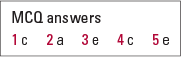
| 1 | c | 2 | a | 3 | e | 4 | c | 5 | e |
Acknowledgements
I would like to thank Dr Adrian Raby (Clinical Lecturer in Medical Ethics, Imperial College London) and Dr Shereen Haffejee (Consultant Child and Adolescent Psychiatrist and Named Doctor for Safeguarding Children, Surrey and Borders Partnership NHS Foundation Trust) for their advice.




eLetters
No eLetters have been published for this article.