


Amidst an abundance of wealth and food, hunger and food insecurity persist in the USA. Food-insecure households lack ‘access by all people at all times to enough food for an active, healthy life’(Reference Coleman-Jensen, Rabbitt and Gregory1). Food insecurity is a concept overlapping in many ways with the concept of poverty; however, the experience of food insecurity among youth is associated with a number of negative health outcomes such as chronic disease(Reference Seligman, Laraia and Kushel2), iron deficiency(Reference Eicher-Miller, Mason and Weaver3,Reference Skalicky, Meyers and Adams4) , depression, stress, anxiety(Reference Whitaker, Phillips and Orzol5–Reference Chilton, Knowles and Rabinowich8), BMI(Reference Jyoti, Frongillo and Jones9–Reference Frongillo and Bernal11) and oral health(Reference Chi, Masterson and Carle12). Many of these associations remain even after controlling for poverty(Reference Gundersen and Ziliak13,Reference Gundersen and Ziliak14) , making food insecurity a distinct public health problem(Reference Gundersen and Ziliak14–Reference Bauer17). In 2016, approximately 12% of US households were food insecure, with rates of 16·5% for households with children and 22·5 and 18·5% for Black- and Hispanic-headed households, respectively(Reference Coleman-Jensen, Rabbitt and Gregory1). Research focused on American Indian families found that they have a food insecurity prevalence ranging from 40 to 76%(Reference Pardilla, Prasad and Suratkar18,Reference Bauer, Widome and Himes19) . Fifty-three per cent of West African refugees with children resettled in the USA reported food insecurity; for households within their first year of arrival, the prevalence was 73%(Reference Hadley, Zodhiates and Sellen20). Thus, race, ethnicity, displacement and the presence of children are intimately connected to the unequal distribution of food and food insecurity.
With a focus on these specific food insecurity drivers, the present study examines the role of race and ethnicity among adolescent individuals in north-west Arkansas while paying special attention to Marshallese adolescents: a group displaced by a combination of global political actions, including US military weapons testing as well as the growing threat of anthropogenic climate change. The Marshallese are typically combined with other Pacific Islander and Asian groups in national-level data, obscuring information that could be gathered about them specifically. Tracking the population is complicated further by their ability to travel freely between the USA and the Marshall Islands without visas or time constraints under the 1986 Compacts of Free Association (COFA). However, the 2010 Census estimated that the population of Marshallese living within the USA more than tripled between 2000 and 2010, increasing to more than 22 000(Reference Hixson, Hepler and Kim21). Springdale, Arkansas is home to the largest population of Marshallese in the continental USA; an estimated 12 000 Marshallese live in the area(Reference Capps, Henderson and Kasarda22,Reference Whites-Koditschek23) .
Many of the Marshallese living in the USA occupy a unique ‘non-immigrant’ legal status which excludes them from federal food assistance and likely contributes to their elevated risk for a number of negative health and nutritional outcomes(Reference Woodall, Scollard and Rajan24–Reference Conard27). The Marshallese have rates of diabetes, hypertension and obesity – notably all diet-related diseases/outcomes often linked to food insecurity(Reference Seligman, Laraia and Kushel2,Reference Willis and Fitzpatrick10,Reference Irving28) – much higher than the national average(Reference McElfish, Rowland and Long29). While COFA migrants were initially eligible for health care through Medicaid, the Personal Responsibility and Work Opportunity Reconciliation Act (PRWORA) of 1996, colloquially referred to as ‘welfare reform’, excluded them from this and other social safety net programmes(Reference McElfish, Hallgren and S25).
The current study focuses on two central research questions. First, do Marshallese adolescents differ in their odds of food insecurity compared with other racial/ethnic groups? Second, do Marshallese adolescents differ relative to non-Marshallese adolescents in their odds of food insecurity even after controlling for several other sociodemographic variables and sets of risk and protective factors? Additionally, we examine the role of a set of risk and protective factors and how they correlate with food insecurity among adolescents while the racial/ethnic status of Marshallese is controlled for in the model. To address these questions, we analysed original survey data collected from 10th–12th graders attending high school in an area with the highest concentration of Marshall Islanders in the continental USA.
The present study is an examination of the structural determinants at play in the shaping of food insecurity. As such, we examine a racial/ethnic group with a unique historical and geopolitical relationship with the US government. In 1946, the area of Micronesia was designated a UN Strategic Trust Territory to be administered by the UN. According to this trusteeship agreement, the USA committed itself to ‘promote the economic advancement and self-sufficiency of the inhabitants, and to this end shall … protect the inhabitants against the loss of their lands and resources’(Reference Niedenthal30). The exact same year, the Marshall Islanders on Bikini Atoll were removed from their homes so the USA could begin Operation Crossroads, the testing of two atomic bomb blasts the size of the nuclear bomb dropped on Nagasaki, Japan. More testing would follow, as would additional displacement. The near starvation that immediately followed their removal and 2-year stay on Rongerik Atoll was just the beginning of the long shadow these structural forces would cast on the lives of Marshallese(Reference Niedenthal30). Indeed, in addition to a whole host of health issues the Marshallese face, the present study demonstrates that their access to basic needs such as food continues to this day.
Given the history of US–Marshall Islands relations, we argue that Marshallese food insecurity cannot be fully explained without attention to the global and political forces that have come to dramatically alter their everyday lives. Specifically, we borrow Paul Farmer’s concept of ‘structural violence’ to describe the social and economic forces which have shaped the lives of the Marshallese(Reference Yamada and Palafox31). Farmer notes that most human rights violations are ultimately driven by large-scale social inequalities, which leads him to conclude that ‘violence against individuals is usually embedded in entrenched “structural violence”’(Reference Farmer32). He argues that ‘it is in the context of these global forces that the suffering of individuals receives its appropriate context of interpretation’(Reference Farmer33). While we do not deploy Farmer’s preferred methodology (ethnography) to demonstrate the role of structural violence, we believe our attention to this political and historical context is necessary to understanding ‘how social forces ranging from poverty to racism become embodied as individual experience’(Reference Farmer33).
Risks and protections
Food insecurity has become a major public health problem and, as such, we use a risk and protective factors framework commonly found in the literature that describes the social determinants of adolescent health. Within this framework, a complex combination of structural and proximal determinants is hypothesized as critical to shaping health outcomes by influencing exposure to risks or access to protective resources. Food insecurity is not randomly or evenly spread throughout the population; rather, there are a number of risk and protective factors that shape the prevalence and severity of food insecurity across households and sociodemographic sub-populations. Individuals’ and households’ likelihood of experiencing food insecurity is, in part, a function of risk and protective factors and their relationship to, or relative position in, a number of social hierarchies. We note that resources are more than just the inverse of risks; rather they represent a unique set of factors that enhance one’s ability to adapt to risk(Reference Fitzpatrick, Piko and Wright34). Risks and protections conjoin in such a way as to shape the lives and health of individuals, making them more vulnerable or shielded from adverse health effects.
While many of the risk and protective factors examined in the present study – mental health, neighbourhood risk, family composition and peer social capital – are proximal, the role of race and ethnicity is directly tied to structural-level social determinants or ‘ways in which a society is set up with regards to social, economic, and political contexts’(Reference Viner, Ozer and Denny35). Structural-level social forces, such as group racial and ethnic composition, have also been described as ‘fundamental causes’ of health and disease because they place certain groups and/or individuals ‘at risk of risk’(Reference Link and Phelan36). The Marshallese do not just occupy a minority racial/ethnic status, they occupy a unique legal status: most of them are legally ‘non-immigrants’, placing them in a type of legal limbo. While the literature on immigrant and foreign-born populations shows they typically have higher odds of food insecurity(Reference Balistreri15,Reference Cook37) , the Marshallese do not have the same legal standing as other immigrant populations or access to supportive programming that can help to minimize struggles with food access and affordability. A number of non-citizen, immigrant populations are eligible for Supplemental Nutrition Assistance Program benefits, including refugees, victims of trafficking, asylum seekers, Cuban or Haitian entrants, members of Hmong or Highland Laotian tribes, and other non-citizen groups – the Marshallese – are not among them(38).
While significant attention is paid to these structural forces, we do not dismiss the role of proximate risk and protective factors. Controlling for these proximate factors can help us better understand the relationship of racial and ethnic group membership with food insecurity. Research on race at the national level makes it clear that minority families are at an increased risk for food insecurity(Reference Coleman-Jensen, Rabbitt and Gregory1); however, the structural reasons for why this unequal risk exists tend not to be addressed or discussed and smaller racial/ethnic groups such as the Marshallese are often overlooked because they are combined with other Hawaiian and Pacific Islander groups. Similar to race, gender operates at a structural level, shaping the norms and expectations of social arrangements both within and outside the family. Related to these norms and expectations are specific ideas about who should be shopping for, preparing and serving food; in other words, who is expected to do the work of feeding(Reference DeVault39). When it comes to food insecurity specifically, the burden of buffering the impact of food insecurity and its impact on children appears to have also fallen disproportionately on mothers(Reference Martin and Lippert40). Research on food insecurity among children shows that socio-economic status, and poverty in particular, plays a major role in shaping child food insecurity. Socio-economic background, or poverty, is a third structural-level determinant of health and access to food. Households with children that are at or near the poverty line have higher rates of household and child food insecurity, but it is also important to note that poverty, income and food insecurity do not all map on to one another perfectly(Reference Gundersen and Ziliak13,Reference Wight, Kaushal and Waldfogel41) . Still, the research is clear that poverty, in terms of family income and wealth, plays a major role in shaping food insecurity among youth. Altogether, the intersecting forces of race, poverty and gender clearly comprise three important structural-level determinants of food insecurity.
Additionally, research has identified a large number of risk factors for child food insecurity, but many of them have focused on parents, or other spokespersons, since there are very few data that assess food insecurity among youth populations directly(Reference Gundersen and Ziliak14,Reference Willis and Fitzpatrick42) . For example, the mental health of mothers has been linked to food insecurity among children(Reference Anderson, Butcher and Hoynes43,Reference Noonan, Corman and Reichman44) , but less attention has been given to the role of depression or depressive symptoms in youth themselves in shaping their likelihood of reporting food insecurity. We specifically examine adolescent depressive symptomatology in the current study. Another body of literature has identified several aspects of place which impact food insecurity(Reference Carter, Dubois and Tremblay45), including many neighbourhood-level characteristics(Reference Thomas46–Reference Morrissey, Oellerich and Meade48). In the present study, we examine the role of perceived neighbourhood risk. Students who do not feel safe in navigating their neighbourhoods may struggle disproportionately in accessing resources in that space regardless of their availability or affordability.
Beyond the risk factors listed above, there are also certain circumstances which have been shown to protect against food insecurity among children. Family composition has consistently been linked to food insecurity. More specifically, marital status and the presence of two parents in the household have consistently been associated with lower odds of food insecurity(Reference Seligman, Laraia and Kushel2,Reference Eicher-Miller, Mason and Weaver3,Reference Hixson, Hepler and Kim21,Reference Irving28) . Parents play a major role in food provision as income earners, but as discussed above, income is not the sole factor at play in determining food insecurity. The importance of family structure could be due to a variety of mechanisms, including the juggling of everyday activities necessary to take care of developing children. Family is a social resource(Reference Miller, Nepomnyaschy and Ibarra49). Similarly, peers are a social resource. Peer social capital has also been shown to offer protection against food insecurity among children specifically(Reference Willis and Fitzpatrick42). Youth are aware of food insecurity and actively take steps to cope with it(Reference Fram, Frongillo and Jones50), and among those steps may be leaning on close peer friendships. For example, food-insecure youth may ask to stay over at a friend’s house on weekends if food is scarce at their own home.
Study hypotheses
Given this body of literature on the risk and protective factors associated with child food insecurity, we propose the following hypotheses:
H1. Marshallese adolescents will have higher odds of food insecurity than other racial and ethnic groups even after controlling for sociodemographic, risk and protective factors.
H2. Risk factors, such as depression and neighbourhood risk, will be associated with higher odds of adolescent food insecurity.
H3. Protective factors, such as two-parent family composition and peer social capital, will be associated with lower odds of adolescent food insecurity.
Methods
The present study uses cross-sectional survey data collected from a self-administered questionnaire of 10th–12th grade students (n 1493). The number of students enrolled in the selected high school at the time of the survey was 2148. Ten classrooms (116 students) were unable to participate at the time of the survey, making 2032 students eligible to be surveyed. Of these 2032 students, approximately 22% refused to participate and 105 students were absent from school, yielding a response rate of approximately 78%. The final sample was composed of 14% Marshallese 10th–12th grade students. This sub-sample of 208 Marshallese students accounted for about 9% of the total K–12 (kindergarten through 12th grade) Marshallese student population in the school district where the survey data were collected. We believe this sample is representative of the school we collected the data from, where Hispanic/Latinx and Marshallese are the most prominent minority groups. When comparing our sample with Arkansas Department of Education data for the school, the racial composition is nearly a perfect match, with the largest differences amounting to no more than ±2 or ±3 percentage points.
Measurement
Food insecurity
The dependent variable used in the analysis was food insecurity. Given the significant time constraints of administering a survey within a school setting, food insecurity was measured using an abbreviated five-question module from the original nine-question child food security module developed by Connell and colleagues(Reference Connell, Nord and Lofton51) using cognitive interviewing methods to adapt questions from the US Food Security Survey Module. The items show strong internal consistency (Cronbach’s α = 0·88). Students were first given the following prompt: ‘Thinking about your experience with food over the past year’. Then, they are asked the following questions: ‘Did you worry that the food at home would run out before your family got money to buy more?’; ‘Did the food that your family bought run out and you didn’t have money to get more?’; ‘How often were you not able to eat a balanced meal because your family didn’t have enough money to buy food?’; ‘Did your meals include a few kinds of cheap foods because your family was running out of money to buy food?’; and ‘Have your meals been smaller because your family didn’t have enough money to buy food?’ For each of these questions, students could respond with ‘never’, ‘sometimes’ or ‘a lot’. These items were coded 0, 1 and 2, respectively. These items were combined into a single food insecurity score ranging from 0 to 10. A dichotomous variable was then computed to indicate food insecurity for any student whose combined score was ≥2 (coded 1); any student with a combined score of <2 (coded 0) was categorized as food secure.
Sociodemographic variables
The present study utilized three sociodemographic variables in the analysis including race and gender (males = 1). Racial categories of Marshallese, non-Hispanic Black, non-Hispanic White, Hispanic or Latinx, and other were constructed using student responses to both a race and ethnicity question in the survey. The other category includes students who selected ‘American Indian’, ‘Asian’ or ‘other’. Those categorized as Marshallese selected ‘Pacific Islander’ for the race question and answered ‘yes’ to an additional question asking if they identified as Marshallese. The remaining sociodemographic variable is poverty. We used a proxy measure, receiving free and reduced-price lunch, to assess poverty. To receive free lunches students must live in households at or below 130% of the poverty threshold and students receiving reduced-price lunches must live in households at or below 185% of the poverty line. These eligibility requirements based on household income and size make receipt of free and reduced-price school lunch a good indicator of students living in households near or below the official poverty line.
Risks
Depression
A measure of depressive symptomatology was included as a potential risk for food insecurity. This variable was measured with a shortened version of the twenty-item Center for Epidemiological Studies for Depression (CES-D) Scale, which has been used extensively to measure depressive symptoms in adolescents(Reference Radloff52). For our purposes, eight items from the CES-D scale were used to assess depressive symptomatology in our sample of high-school students. The weighted scale was reliable (Cronbach’s α = 0·92).
Students were asked how often over the past couple weeks they had felt sad, lonely, worrisome, or had trouble sleeping, getting up in the morning, etc. Possible responses ranged from 0 (less than one day) to 3 (five to seven days) for each item. The shortened CES-D scale used here was weighted by 2·5 (the number of items in the original measure divided by the number of items in our shortened measure) for comparison with studies using the full twenty-item questionnaire.
Neighbourhood risk
We examined perceptions of neighbourhood safety as a risk for food insecurity. The neighbourhood safety scale ranges from 3 to 15 with 3 being the safest and 15 being the least safe. The scale is based on three Likert-scale measures of perceptions of neighbourhood safety. Students responded to the following statements: ‘I feel safe in the area where I live’; ‘I think the area I live is a good place to live’; and ‘It is safe for younger children to play outside during the day’. We recoded the original responses ‘strongly disagree’, ‘disagree’, ‘neutral’, ‘agree’ and ‘strongly agree’ (1–5) to reflect an assessment of neighbourhoods as an unsafe space. The scale was reliable (Cronbach’s α = 0·88).
Protections
Family composition
According to the US Department of Agriculture, food insecurity tends to be more prevalent among households with children. However, among households with children, those headed by an intact couple show lower rates of food insecurity(Reference Coleman-Jensen, Rabbitt and Gregory1). Household composition was as coded 0 = no or one parent or 1 = both parents.
Peer social capital
A social capital index was included to measure social capital among students’ peers as a potential resource. This variable focuses on connections students had with peers and the quality of those connections. Four variables assessed social relationships/ friendships among students: number of close friends; has best friend; how often did they see their best friend; how often did they have other types of contact with their best friend?
Student responses for the first question were a numeric value. Responses to the second question were ‘no’ = 0 and ‘yes’ = 1. Possible responses for last two questions included ‘never or hardly ever’, ‘several times a year’, ‘at least once a month’, ‘once a week’, ‘several times a week’, ‘every day’ and ‘he/she lives with me’. These responses were coded from 1 to 7 in the order they were presented, beginning with ‘never or hardly ever’ coded as 1 and ending with ‘he/she lives with me’ coded as 7. This left a social capital scale ranging from 3 to 19.
Data analysis
Prior to the main analysis, we examined descriptive statistics for the sample and bivariate relationships between food insecurity and its correlates. The primary analysis includes a single logistic regression model which compares odds of food insecurity between each racial category and the Marshallese, as well as a hierarchical logistic regression analysis in which sets of variables are entered into the regression in blocks to estimate both their individual and collective impact on food insecurity. Specifically, we begin with a block which includes only sociodemographic variables, and then add a block including risks, and finally one that includes protective variables. In choosing this particular sequence, we highlight the consistency and stability of the relationship between being Marshallese and their odds of being food insecure even as new blocks of variables are entered.
Results
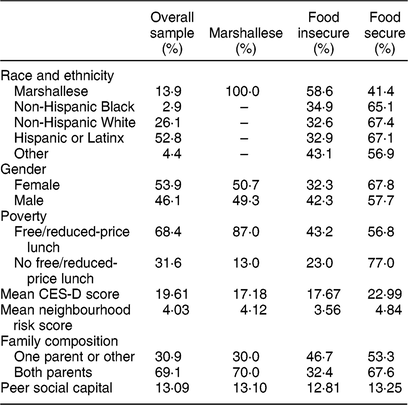
The results include descriptive statistics for the sample, bivariate analysis and multivariate logistic regression analysis to estimate OR for likelihood of experiencing food insecurity. Table 1 displays descriptive statistics for the sample and the Marshallese, as well as the prevalence of food insecurity across each group within the sample. The racial composition of the sample is predominantly Hispanic or Latinx, followed by non-Hispanic Whites and then Marshallese who make up 13·9% of the sample. The smallest racial groups in our sample include Black students and those who were categorized as other, which make up 2·9 and 4·4% of the sample, respectively. Notably, the prevalence of food insecurity among Marshallese (58·6%) is substantially higher than that of any other racial group. We also note that the Marshallese sample has a substantially higher prevalence of free and reduced-price lunch receipt (87·0%), a proxy for poverty, than the sample as a whole (68·4%). Females slightly outnumber males, making up 53·9% of the sample. More than two-thirds of the sample reported participating in free and reduced-price lunch; nearly half of those students who were food insecure likewise reported that free and reduced-price lunch was the primary way that they accessed food during the school day. The mean CES-D score for these students was 19·61; notably already 3·5 points higher than clinical caseness for the general population. The mean for perceived neighbourhood risk was 4·03. And nearly 70% of students reported living with both parents. The mean peer social capital score was 13·09.
Sociodemographic and descriptive statistics and food insecurity prevalence (row percentages) for the sample of 10th–12th grade students from north-west Arkansas, USA, May 2016
CES-D, twenty-item Center for Epidemiological Studies for Depression Scale.
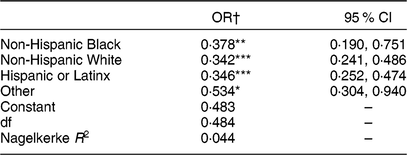
Table 2 displays bivariate analyses of food insecurity by racial and ethnic group. These results complement the findings in Table 1, which show a much higher prevalence of food insecurity among the Marshallese. In Table 2, however, we see that non-Hispanic Blacks and Whites, as well as Hispanic and Latinx students, all have lower odds of experiencing food insecurity compared with Marshallese students. A non-Hispanic Black student’s odds of food insecurity are 62% lower than the odds of food insecurity for Marshallese (P < 0·01). A non-Hispanic White student’s odds of food insecurity are 66% lower than the odds of food insecurity for Marshallese (P < 0·001). The odds of food insecurity for Hispanic or Latinx students are also approximately 66% lower than the odds among Marshallese adolescents (P < 0·001). Students identifying themselves as any other racial category also have much lower odds of food insecurity; specifically, 47% lower than that of Marshallese adolescents (P < 0·05).
Odds of food insecurity by race and ethnicity in the sample of 10th–12th grade students from north-west Arkansas, USA, May 2016
*P < 0·05, **P < 0·01, ***P < 0·001.
† Reference category: Marshallese.
Table 3 presents OR for food insecurity status estimated from logistic regression analysis. Model 1 includes dummy variables for each racial category with Marshallese as the reference, as well as the sociodemographic variables of gender and poverty (i.e. free and reduced-price lunch). Similar to the results of Table 2, Marshallese students continue to have higher odds of food insecurity than most other racial groups; however, after controlling for gender and poverty, the lower OR for non-Hispanic Black and other racial categories are no longer statistically significant. Non-Hispanic White and Hispanic or Latinx students continue to have lower odds of food insecurity in comparison to the Marshallese; this pattern continues throughout model 2 and model 3. Model 2 shows that Marshallese students have higher odds of food insecurity compared with non-Hispanic White and Hispanic or Latinx students even when controlling for risk factors such as depression and neighbourhood risk, which are both significantly associated with higher odds of food insecurity than those students reporting lower symptoms of depression and less neighbourhood threat to their personal safety (P < 0·001). In model 3, Marshallese students continue to have significantly higher odds of food insecurity when compared with non-Hispanic White and Hispanic or Latinx students, even after introducing protective factors such as family composition and peer social capital. Both protective factors were statistically associated with lower odds of food insecurity (P < 0·001). In all models, free and reduced-price lunch – a proxy for poverty – is the strongest predictor of food insecurity among adolescents. Students who received free and reduced-price lunch have odds of food insecurity ranging two to three times as high as those not on free and reduced-price lunch.
Logistic regression models for food insecurity (n 1233) in the sample of 10th–12th grade students from north-west Arkansas, USA, May 2016

CES-D, twenty-item Center for Epidemiological Studies for Depression Scale.
Model 1 includes dummy variables for each racial category with Marshallese as the reference, as well as the sociodemographic variables of gender and poverty (i.e. free and reduced-price lunch). Model 2 adds risk variables (depression and neighbourhood risk) and model 3 adds protective factor variables (family composition and peer social capital).
*P < 0·05, **P < 0·01, ***P < 0·001.
Altogether, these results paint a picture of persistent risk for food insecurity among Marshallese adolescents even after controlling for sociodemographic factors, as well as risk and protective factors commonly associated with food insecurity. Marshall Islanders appear to be uniquely vulnerable to food insecurity even when compared with some other historically oppressed racial groups in the USA; however, after controlling for additional variables the difference in odds of food insecurity were no longer statistically significant between Marshallese and non-Hispanic Black students, or those whose racial group was defined as other.
Discussion
The present study examines food insecurity among Marshallese and other high-school youth in a city in north-west Arkansas, USA. Consistent with past research, risk factors such as mental health and neighbourhood risk heighten the odds of food insecurity, while protective factors such as two-parent households and peer social capital lower the odds of food insecurity(Reference Gundersen and Ziliak13,Reference Willis and Fitzpatrick42–Reference Carter, Dubois and Tremblay45,Reference Miller, Nepomnyaschy and Ibarra49) . Yet, controlling for these risk and protective factors does not diminish the heightened odds of food insecurity for Marshallese adolescents compared with most non-Marshallese adolescents. While those students whose race was identified as non-Hispanic Black or other do not have statistically significant lower odds of food insecurity compared with the Marshallese after controlling for additional variables, we note that the prevalence of food insecurity among the Marshallese remains startling high in comparison to all racial groups (see Table 1).
To fully comprehend how this level of vulnerability to food insecurity developed, it is critical to examine the social, political and economic history between the USA and the Marshall Islands. While an extant body of research has previously demonstrated the heightened vulnerability of minority populations to food insecurity(Reference Coleman-Jensen, Rabbitt and Gregory1,Reference Gundersen and Ziliak13) , we find that Marshallese are more vulnerable than any other racial/ethnic group: neither Black nor Hispanic students experienced food insecurity at the levels of the Marshallese youth. These findings suggest that the Marshallese may occupy a uniquely vulnerable social position, with food insecurity levels more similar to American Indian or refugee populations than Black or Hispanic populations(Reference Coleman-Jensen, Rabbitt and Gregory1,Reference Pardilla, Prasad and Suratkar18–Reference Hadley, Zodhiates and Sellen20) . We argue that this heightened vulnerability is due largely to the role of state actors, namely the US government, in displacing them and subsequently excluding them from federal food assistance such as the Supplemental Nutrition Assistance Program. Further, the experience of displacement for the Marshallese is ongoing and not solely the result of the testing of bombs. Anthropogenic climate change driven primarily by developed and emerging economy nations such as the USA(53) is causing the shoreline of the Marshall Islands to gradually creep inwards – in short, the islands are slowly disappearing, leaving the Marshallese little choice when it comes to the decision of migrating to the USA under the COFA.
Study limitations
While the present study provides insight into a little-known population of adolescents and their struggle with food insecurity, it is not without limitations. First, the data are cross-sectional and, as such, do not allow us to make causal claims regarding the relationships between food insecurity and the risk and protective factors that are measured. Second, while the present study offers the first look at food insecurity among Marshallese adolescents in the continental USA, our sample is still limited to those living in a single city in north-west Arkansas. This, however, was also strategic since this area has the largest concentration of Marshallese, allowing us to capture a large enough sample of Marshallese by sampling an entire school rather than attempting to single them out for survey recruitment, a strategy that would have likely resulted in considerably fewer Marshallese students. Third, there is potential social desirability bias due to the self-reported nature of the data. However, due to the stigma of poverty in general, social desirability bias in terms of food insecurity is more likely to have led to under-reporting of food insecurity rather than over-reporting. Fourth, one of the major challenges for Marshallese youth transitioning to the USA has been school attendance(Reference Rylko-Bauer and Farmer54). This means that, even though a school survey was the most practical method collecting data on this population, there is likely a sizeable population of Marshallese adolescents not captured by such a method. Fifth, the quantitative approach used in the present study is prone to overlooking some of the everyday experiences of food insecurity and poverty captured by qualitative research. For example, studies of food insecurity among youth populations often reveal a multidimensional experience that includes both diminished food quality as well as social exclusion(Reference Farmer55). Finally, the survey setting of a school on a strict schedule required that we make every possible effort to reduce the response burden on students. In this effort, we asked only five of the nine items on the food insecurity module developed for children. However, as we note in the ‘Measurement’ section, the combination of these items has strong reliability and has been used in previous research for assessing food insecurity among younger populations(Reference Willis and Fitzpatrick42). Additionally, the five items in the measure cover the major conceptual dimensions of food insecurity, suggesting strong content validity.
Conclusion
Some violence is slow, playing out over decades, obscured by time and wilfully forgotten in the pages of history. This is the type of violence – structural violence(Reference Krieger56) – faced by the Marshallese whose islands were chosen by US government officials to be the site of atomic and nuclear bomb testing. It is the type of violence that the Marshallese population continues to endure today as they are structurally excluded from almost all major social safety net programmes in the USA. The higher prevalence and odds of food insecurity among Marshallese adolescents in the USA is not a fact we can make sense of separate from this fraught social and political context. Tracing this type of violence to the ubiquitous social structures that shape everyday lives can be difficult, but it is this type of understanding that is necessary to explain rather than merely describe unnecessary suffering(Reference Shek and Yamada57). On its surface, the story of food insecurity among the Marshallese is a simple one: a story about risk and lack of access to critical resources. However, as Nancy Krieger(Reference Van Hook and Balistreri58) has argued, bodies tell stories about the conditions of our existence – for example, our access to food – and more often than not, these are stories that powerful interests wish not to tell. The bodies of food-insecure Marshallese youth are inscribed with the history of political and structural violence that has pervaded their lives for more than half a century.
In sum, the Marshallese population was both displaced due to actions taken by the US government and systemically excluded from public assistance since the passage of PRWORA in 1996. These actions, at a structural level, effectively ensured that they would experience heightened vulnerability to food insecurity which likely contributes to their elevated rates of diet-related diseases(Reference McElfish, Rowland and Long29). If they came to the USA under the terms of COFA, they are allowed to reside and work in the country with ‘non-immigrant’ legal status, which does not allow them to vote, access federal food assistance, apply for student loans or become naturalized citizens at any point in the future. Additionally, COFA migrants were not initially eligible for access to health care through the expansion of Medicaid in Arkansas following the implementation of the Affordable Care Act, which could have contributed to the type of financial juggling which often leads low-income households to reduce their food purchasing and intake. Only recently, in 2018, were Marshallese youth made eligible for AR Kids First public health insurance. While this was an important step, barriers to health care remain; their enrolment in the public health insurance programme is extremely low and adults remain ineligible(Reference Whites-Koditschek23). While excluded from many public goods like food assistance and subsidized health insurance, they can and often do contribute to them. In fact, COFA residents are recruited heavily by the US military: they contribute the highest per capita Army recruitment compared with all US states(Reference Duke59). Thus, the unique vulnerability of Marshallese adolescents to food insecurity, and the many health complications that follow, is not an accidental occurrence, but the result of major political and social forces which have shaped Marshallese lives since the middle of the 20th century. The reversal of their vulnerability will require more than community-level efforts, but significant political and legislative action to reconsider the legal status of Marshallese and all of the rights and responsibilities that follow. Furthermore, a reversal of many of the restrictions on access to federal assistance put in place through PRWORA would be necessary as research has made it quite clear that this legislation has contributed to more persistent and higher levels of food insecurity among non-citizen children, suggesting that this punitive policy action has played a major role in the disproportionately high levels of food insecurity among Marshallese and other non-citizens(Reference Knight, O’Connell and Brannen60).
Acknowledgements
Acknowledgements: The authors want to thank the Tyson Foods Charitable Foundation for their generous support of this project. Their financial assistance was critical to advancing the data collection and reporting of these findings to a broader audience. In addition, they appreciate the assistance of graduate students, Gail O’Connor and Stephanie Collier, for their efforts in the collection and management of the data used for this project. Finally, the authors appreciate the support from the Springdale School District, principals, administrators, teachers and students for providing access to complete the data collection in a timely fashion. Financial support: This work was supported by a grant from the Tyson Foods Charitable Foundation. The Tyson Foundation had no role in the design, analysis or writing of this article. Conflict of interest: No known conflict of interest exists for either author in the preparation of this manuscript. Authorship: D.E.W. was the primary lead for this manuscript. In consultation with K.M.F., he designed the outline for the paper, wrote extensively on the front section of the paper, consulted with K.M.F. on the analysis, formatting and constructed the tables, and provided the primary observations and conclusions. K.M.F. is the lead investigator of the project that collected these data. He provided guidance on the writing and outline of the paper. He wrote sections of the front part of the paper including data and methods, analytical strategies, and results. Ethics of human subject participation: This study was conducted according to the guidelines laid down in the Declaration of Helsinki and the University of Arkansas Institutional Review Board approved all procedures involving human subjects. Written informed consent was obtained from all participants.



