





1 Introduction
Mori’s Bend-and-Break lemma is a fundamental tool for working with curves on projective varieties. Different versions of this important result have been established by (Reference MoriMor79; Reference MoriMor82; Reference Miyaoka and MoriMM86; Reference KollárKol96). Our main goal is to strengthen (Reference Miyaoka and MoriMM86, Theorem 5) and to apply it to lengths of extremal rays, answering questions posed by (Reference KollárKol96; Reference NikulinNik96; Reference MatsukiMat02; Reference FujinoFuj11) (and others).
Theorem 1.1. Let X be a projective variety over an algebraically closed field of arbitrary characteristic. Let H be a nef $\mathbb {R}$
-Cartier divisor on X. Suppose there exists an irreducible curve
$\mathbb {R}$
-Cartier divisor on X. Suppose there exists an irreducible curve $C \subset X$
contained in the smooth locus of X such that
$C \subset X$
contained in the smooth locus of X such that
 $$ \begin{align*}K_X \cdot C < 0.\end{align*} $$
Then for every closed point $x \in C$
, there exists a rational curve R containing x such that
$x \in C$
, there exists a rational curve R containing x such that
 $$ \begin{align*}H \cdot R \leq (\dim X + 1) \frac{H \cdot C}{-K_X \cdot C}.\end{align*} $$
The constant $(\dim X + 1)$
in Theorem 1.1 improves the constant
$(\dim X + 1)$
in Theorem 1.1 improves the constant $(2 \dim X)$
given in (Reference Miyaoka and MoriMM86, Theorem 5). Our improvement is optimal as we may let X be
$(2 \dim X)$
given in (Reference Miyaoka and MoriMM86, Theorem 5). Our improvement is optimal as we may let X be $\mathbb {P}^{n}$
and H be a hyperplane.
$\mathbb {P}^{n}$
and H be a hyperplane.
The proof of (Reference Miyaoka and MoriMM86, Theorem 5) uses the fact that a one-dimensional family of maps $C \to X$
with a fixed point must break off a rational curve. Our key technical statement (“Bend-and-Shatter,” Lemma 2.1) shows that a k-dimensional family of curves
$C \to X$
with a fixed point must break off a rational curve. Our key technical statement (“Bend-and-Shatter,” Lemma 2.1) shows that a k-dimensional family of curves $C \to X$
that fixes k points must break off k rational curves. When combined with the reduction steps of (Reference Miyaoka and MoriMM86, Theorem 5) and (Reference KollárKol96, II.5.8 Theorem), we obtain a quick proof of Theorem 1.1.
$C \to X$
that fixes k points must break off k rational curves. When combined with the reduction steps of (Reference Miyaoka and MoriMM86, Theorem 5) and (Reference KollárKol96, II.5.8 Theorem), we obtain a quick proof of Theorem 1.1.
1.1 Extremal rays
One of Mori’s first applications for Bend-and-Break was the study of extremal rays of the pseudo-effective cone of curves. (Reference MoriMor82, Theorem 1.4) proved that for a smooth projective variety X every $K_{X}$
-negative extremal ray of the pseudo-effective cone contains a rational curve C satisfying
$K_{X}$
-negative extremal ray of the pseudo-effective cone contains a rational curve C satisfying $-K_{X} \cdot C \leq \dim X + 1$
.
$-K_{X} \cdot C \leq \dim X + 1$
.
As a consequence of new advances in subadjunction theory, Kawamata proved a bound on the length of extremal rays for klt pairs $(X,\Delta )$
with
$(X,\Delta )$
with $\mathbb {Q}$
-coefficients. More precisely, (Reference KawamataKaw91) showed that the length of such an extremal ray is bounded by
$\mathbb {Q}$
-coefficients. More precisely, (Reference KawamataKaw91) showed that the length of such an extremal ray is bounded by $2n$
where n is the dimension of a fiber in the exceptional locus of the corresponding contraction. This was extended to dlt pairs with
$2n$
where n is the dimension of a fiber in the exceptional locus of the corresponding contraction. This was extended to dlt pairs with $\mathbb {R}$
-coefficients by Shokurov in the appendix to (Reference NikulinNik96) and by (Reference Birkar, Cascini, Hacon and McKernanBCHM10, Theorem 3.8.1). Using Theorem 1.1 in place of (Reference Miyaoka and MoriMM86, Theorem 5) in these arguments, we obtain the optimal degree bound:
$\mathbb {R}$
-coefficients by Shokurov in the appendix to (Reference NikulinNik96) and by (Reference Birkar, Cascini, Hacon and McKernanBCHM10, Theorem 3.8.1). Using Theorem 1.1 in place of (Reference Miyaoka and MoriMM86, Theorem 5) in these arguments, we obtain the optimal degree bound:
Theorem 1.2. Let $(X,\Delta )$
be a dlt pair over an algebraically closed field of characteristic
$(X,\Delta )$
be a dlt pair over an algebraically closed field of characteristic $0$
. Suppose that
$0$
. Suppose that $\pi : X \to Z$
is the contraction of a
$\pi : X \to Z$
is the contraction of a $(K_{X} + \Delta )$
-negative extremal face
$(K_{X} + \Delta )$
-negative extremal face $\mathcal {R}$
of
$\mathcal {R}$
of $\overline {\operatorname {NE}}(X)$
. For any positive-dimensional irreducible component F of a fiber of
$\overline {\operatorname {NE}}(X)$
. For any positive-dimensional irreducible component F of a fiber of $\pi $
, there is a rational curve C in F satisfying:
$\pi $
, there is a rational curve C in F satisfying:
-
1. The class of C is contained in the face $\mathcal {R}$
.
$\mathcal {R}$
. -
2. The deformations of C sweep out F.
-
3.
$-(K_{X} + \Delta ) \cdot C \leq \dim F + 1$
.


If furthermore $(X,\Delta )$
is klt and
$(X,\Delta )$
is klt and $\pi $
is a birational contraction, then we can ensure a strict inequality in (3).
$\pi $
is a birational contraction, then we can ensure a strict inequality in (3).
The arguments of (Reference FujinoFuj11, Theorem 18.2) extend this result to lc pairs with $\mathbb {R}$
-coefficients.
$\mathbb {R}$
-coefficients.
Theorem 1.3. Let $(X,\Delta )$
be an lc pair over an algebraically closed field of characteristic
$(X,\Delta )$
be an lc pair over an algebraically closed field of characteristic $0$
. Then every
$0$
. Then every $(K_{X}+\Delta )$
-negative extremal ray of the pseudo-effective cone of curves is generated by a rational curve C with
$(K_{X}+\Delta )$
-negative extremal ray of the pseudo-effective cone of curves is generated by a rational curve C with $-(K_{X} + \Delta ) \cdot C \leq \dim X+1$
.
$-(K_{X} + \Delta ) \cdot C \leq \dim X+1$
.
Note that this length bound was known previously for toric varieties by (Reference FujinoFuj03) and in the setting of LCIQ singularities by (Reference Chen and TsengCT09).
2 Breaking curves: low degree rational curves
In this section, we establish Bend-and-Shatter and use it to prove Theorem 1.1. For a numerical curve class $\beta $
on a projective variety X, we let
$\beta $
on a projective variety X, we let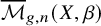 $\overline {\mathcal {M}}_{g,n}(X, \beta )$
denote the Kontsevich moduli stack of stable maps and let
$\overline {\mathcal {M}}_{g,n}(X, \beta )$
denote the Kontsevich moduli stack of stable maps and let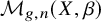 $\mathcal {M}_{g,n}(X, \beta )$
denote the open substack of maps with smooth irreducible domain. We refer to (Reference KontsevichKon95; Reference Behrend and ManinBM96; Reference Fulton and PandharipandeFP97; Reference Abramovich and OortAO01) for more details about the definition of these spaces and the structures that they carry (such as forgetful morphisms).
$\mathcal {M}_{g,n}(X, \beta )$
denote the open substack of maps with smooth irreducible domain. We refer to (Reference KontsevichKon95; Reference Behrend and ManinBM96; Reference Fulton and PandharipandeFP97; Reference Abramovich and OortAO01) for more details about the definition of these spaces and the structures that they carry (such as forgetful morphisms).
Lemma 2.1 (Bend-and-Shatter).
Let X be a projective variety over an algebraically closed field of arbitrary characteristic. Consider a non-negative integer g and a positive integer r such that $2g - 2 + r> 0$
. Fix a stable irreducible marked curve
$2g - 2 + r> 0$
. Fix a stable irreducible marked curve $(C, q_1, \dots , q_r) \in \mathcal {M}_{g,r}$
.
$(C, q_1, \dots , q_r) \in \mathcal {M}_{g,r}$
.
For some $k \leq r$
, let
$k \leq r$
, let $p_1, \dots , p_k$
be points of X and let
$p_1, \dots , p_k$
be points of X and let $\beta $
be a numerical curve class. Suppose there exists a k-dimensional locally closed substack
$\beta $
be a numerical curve class. Suppose there exists a k-dimensional locally closed substack $S \subset \mathcal {M}_{g,r}(X,\beta )$
parametrizing pointed maps
$S \subset \mathcal {M}_{g,r}(X,\beta )$
parametrizing pointed maps $s: (C, q_1, \ldots , q_r) \to X$
with
$s: (C, q_1, \ldots , q_r) \to X$
with $s(q_i) = p_i$
for all
$s(q_i) = p_i$
for all $i\leq k$
. Then there exists a stable map
$i\leq k$
. Then there exists a stable map $s^{\prime } : (C^{\prime }, q^{\prime }_1, \dots , q^{\prime }_r) \to X$
in the closure of S in
$s^{\prime } : (C^{\prime }, q^{\prime }_1, \dots , q^{\prime }_r) \to X$
in the closure of S in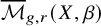 $\overline {\mathcal {M}}_{g,r}(X,\beta )$
such that
$\overline {\mathcal {M}}_{g,r}(X,\beta )$
such that
-
•
$s^{\prime }(q^{\prime }_i) = p_i$
for all
$i\leq k$
; -
• for each
$i \leq k$
there is a tree of rational curves
$C^{\prime }_{i} \subset C^{\prime }$
such that
$q^{\prime }_i \in C^{\prime }_i$
and
$s^{\prime }$
does not contract
$C_i^{\prime }$
to a point; and -
• the stabilization of
$(C^{\prime }, q^{\prime }_1, \dots , q^{\prime }_r)$
is
$(C, q_1, \dots , q_r)$
. In particular, the stabilization map
$(C^{\prime }, q^{\prime }_1, \dots , q^{\prime }_r) \to (C, q_1, \dots , q_r)$
contracts
$C^{\prime }_i$
to
$q_i \in C$
.







Proof. Let U be the preimage of S in $\mathcal {M}_{g,r+k}(X, \beta )$
under the map
$\mathcal {M}_{g,r+k}(X, \beta )$
under the map $\pi : \overline {\mathcal {M}}_{g,r+k}(X, \beta ) \to \overline {\mathcal {M}}_{g,r}(X, \beta )$
which forgets the last k points. Thus, U parametrizes maps in S together with the choice of k additional points
$\pi : \overline {\mathcal {M}}_{g,r+k}(X, \beta ) \to \overline {\mathcal {M}}_{g,r}(X, \beta )$
which forgets the last k points. Thus, U parametrizes maps in S together with the choice of k additional points $\{q_{r+i} \}_{i=1}^{k}$
in
$\{q_{r+i} \}_{i=1}^{k}$
in $C \setminus \{q_i \}_{i=1}^r$
. We also let
$C \setminus \{q_i \}_{i=1}^r$
. We also let $\psi : \overline {\mathcal {M}}_{g,r+k}(X, \beta ) \to \overline {\mathcal {M}}_{g,r+k}$
be the forgetful map and let
$\psi : \overline {\mathcal {M}}_{g,r+k}(X, \beta ) \to \overline {\mathcal {M}}_{g,r+k}$
be the forgetful map and let $\phi : \overline {\mathcal {M}}_{g,r+k} \to \overline {\mathcal {M}}_{g,r}$
be the map forgetting the last k markings. Note that the fiber F of
$\phi : \overline {\mathcal {M}}_{g,r+k} \to \overline {\mathcal {M}}_{g,r}$
be the map forgetting the last k markings. Note that the fiber F of $\phi $
over
$\phi $
over $(C, q_1, \ldots , q_r)$
is irreducible since it is birational to
$(C, q_1, \ldots , q_r)$
is irreducible since it is birational to $C^{k}$
. By construction the closure of the image of U under
$C^{k}$
. By construction the closure of the image of U under $\psi $
is F. Note that the nonempty fibers of
$\psi $
is F. Note that the nonempty fibers of $\psi : U \to F$
are isomorphic to S and thus have dimension k.
$\psi : U \to F$
are isomorphic to S and thus have dimension k.
Fix a very ample line bundle $\mathcal {L}$
on X. Set
$\mathcal {L}$
on X. Set $U_{0} = U$
and for
$U_{0} = U$
and for $1 \leq i \leq k$
define
$1 \leq i \leq k$
define $U_{i} \subset \mathcal {M}_{g,r+k}(X, \beta )$
inductively by choosing a general section
$U_{i} \subset \mathcal {M}_{g,r+k}(X, \beta )$
inductively by choosing a general section $D_{i}$
of
$D_{i}$
of $\mathcal {L}$
and letting
$\mathcal {L}$
and letting $U_{i}$
be the intersection of
$U_{i}$
be the intersection of $U_{i-1}$
with
$U_{i-1}$
with $ev_{r+i}^{-1}(D_{i})$
where
$ev_{r+i}^{-1}(D_{i})$
where $ev_{r+i}$
denotes the evaluation map at the corresponding marked point. In particular we choose
$ev_{r+i}$
denotes the evaluation map at the corresponding marked point. In particular we choose $D_{i}$
so that
$D_{i}$
so that $p_{i} \not \in D_{i}$
. We prove by induction that the dimension of the fiber of
$p_{i} \not \in D_{i}$
. We prove by induction that the dimension of the fiber of $\psi |_{U_{i}}$
over a general point of F is at least
$\psi |_{U_{i}}$
over a general point of F is at least $k-i$
.
$k-i$
.
By induction we know the fiber $V_{i-1}$
of
$V_{i-1}$
of $\psi |_{U_{i-1}}$
over a general point
$\psi |_{U_{i-1}}$
over a general point $(C,q_{1},\ldots ,q_{r+k})$
of F has positive dimension. Note that the image of
$(C,q_{1},\ldots ,q_{r+k})$
of F has positive dimension. Note that the image of $V_{i-1}$
in
$V_{i-1}$
in $\mathcal {M}_{g,0}(X, \beta )$
does not depend on the choice of marked points
$\mathcal {M}_{g,0}(X, \beta )$
does not depend on the choice of marked points $q_{r+i},\ldots ,q_{r+k}$
. Furthermore, this image must have positive dimension since
$q_{r+i},\ldots ,q_{r+k}$
. Furthermore, this image must have positive dimension since $V_{i-1}$
has positive dimension and parametrizes maps from a fixed marked curve. Thus for a general point of F the image
$V_{i-1}$
has positive dimension and parametrizes maps from a fixed marked curve. Thus for a general point of F the image $s(q_{r+i})$
sweeps out a locus of dimension
$s(q_{r+i})$
sweeps out a locus of dimension $\geq 1$
in X as we vary
$\geq 1$
in X as we vary $s \in V_{i-1}$
. We conclude that the preimage of the general divisor
$s \in V_{i-1}$
. We conclude that the preimage of the general divisor $D_{i}$
under the evaluation map
$D_{i}$
under the evaluation map $ev_{r+i}|_{U_{i-1}}$
meets
$ev_{r+i}|_{U_{i-1}}$
meets $V_{i-1}$
. In particular the dimension of the general fiber of
$V_{i-1}$
. In particular the dimension of the general fiber of $\psi |_{U_{i}}$
is at most one less than the dimension of the general fiber of
$\psi |_{U_{i}}$
is at most one less than the dimension of the general fiber of $\psi |_{U_{i-1}}$
, proving the claim.
$\psi |_{U_{i-1}}$
, proving the claim.
Let $\overline {U_{k}}$
be the closure of
$\overline {U_{k}}$
be the closure of $U_{k}$
in
$U_{k}$
in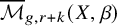 $\overline {\mathcal {M}}_{g,r+k}(X, \beta )$
. There is an element of
$\overline {\mathcal {M}}_{g,r+k}(X, \beta )$
. There is an element of $\overline {U_{k}}$
lying over the locus in F where
$\overline {U_{k}}$
lying over the locus in F where $q_{r+i}$
specializes to
$q_{r+i}$
specializes to $q_i$
for each i. Let
$q_i$
for each i. Let $s^{\prime }:(C^{\prime }, q^{\prime }_1, \dots , q^{\prime }_{r+k}) \to X$
be the corresponding stable map. Because
$s^{\prime }:(C^{\prime }, q^{\prime }_1, \dots , q^{\prime }_{r+k}) \to X$
be the corresponding stable map. Because $\pi (s^{\prime })$
lies in the closure
$\pi (s^{\prime })$
lies in the closure $\overline {S}$
of S in
$\overline {S}$
of S in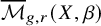 $\overline {\mathcal {M}}_{g,r}(X,\beta )$
, we know that the stabilization of
$\overline {\mathcal {M}}_{g,r}(X,\beta )$
, we know that the stabilization of $(C^{\prime },q^{\prime }_1,\dots ,q^{\prime }_r)$
must be
$(C^{\prime },q^{\prime }_1,\dots ,q^{\prime }_r)$
must be $(C, q_1, \dots , q_r)$
. Thus each
$(C, q_1, \dots , q_r)$
. Thus each $q^{\prime }_{i}$
is contained in a tree of rational curves (which also contains
$q^{\prime }_{i}$
is contained in a tree of rational curves (which also contains $q^{\prime }_{r+i}$
) that is contracted by the stabilization map. Likewise, because
$q^{\prime }_{r+i}$
) that is contracted by the stabilization map. Likewise, because $\pi (s^{\prime })$
lies in
$\pi (s^{\prime })$
lies in $\overline {S}$
we see that
$\overline {S}$
we see that $s^{\prime }(q^{\prime }_i) = p_i$
for all
$s^{\prime }(q^{\prime }_i) = p_i$
for all $i \leq k$
. For all
$i \leq k$
. For all $i,j \leq k$
, generality of
$i,j \leq k$
, generality of $D_j$
ensures it is disjoint from
$D_j$
ensures it is disjoint from $p_i$
. Because
$p_i$
. Because $s^{\prime }(q^{\prime }_{r+i})$
must lie in
$s^{\prime }(q^{\prime }_{r+i})$
must lie in $D_i$
, we see that the tree of rational curves containing
$D_i$
, we see that the tree of rational curves containing $q^{\prime }_{i}$
has to map to a curve in X connecting
$q^{\prime }_{i}$
has to map to a curve in X connecting $p_i$
to
$p_i$
to $D_i$
; in particular, some component is not contracted by
$D_i$
; in particular, some component is not contracted by $s'$
.
$s'$
.
The next proposition relates the dimension of a family of curves to the number of rational curves that can be broken off using Lemma 2.1.
Proposition 2.2. Let X be a projective variety and let C be a smooth projective curve of genus g over an algebraically closed field of arbitrary characteristic. Suppose $M \subset \operatorname {Mor}(C,X)$
is an irreducible locally closed subvariety. Set
$M \subset \operatorname {Mor}(C,X)$
is an irreducible locally closed subvariety. Set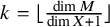 $k = \lfloor \frac {\dim M}{\dim X+1} \rfloor $
and let
$k = \lfloor \frac {\dim M}{\dim X+1} \rfloor $
and let $s : C \to X$
be any map parametrized by M. If
$s : C \to X$
be any map parametrized by M. If $2g - 2 + k> 0$
, then the closure of the image of M in
$2g - 2 + k> 0$
, then the closure of the image of M in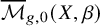 $\overline {\mathcal {M}}_{g,0}(X,\beta )$
contains a point parametrizing a map
$\overline {\mathcal {M}}_{g,0}(X,\beta )$
contains a point parametrizing a map $s^{\prime }: C^{\prime } \to X$
satisfying:
$s^{\prime }: C^{\prime } \to X$
satisfying:
-
•
$C'$
consists of the union of C with at least k trees of rational curves, and -
• at least k of these trees contain an irreducible component T such that
$s'$
realizes T as a noncontracted rational curve on X that passes through a general point of
$s(C)$
.


Proof. Let $q_1, \ldots , q_k \in C$
be k general points in C. Let
$q_1, \ldots , q_k \in C$
be k general points in C. Let $T_i = \{\tilde {s} \in M \mid \tilde {s}(q_i) = s(q_i)\}$
. Since
$T_i = \{\tilde {s} \in M \mid \tilde {s}(q_i) = s(q_i)\}$
. Since $s \in T_i$
for all i, the intersection
$s \in T_i$
for all i, the intersection $S := \cap _i T_i$
is nonempty. Moreover, as
$S := \cap _i T_i$
is nonempty. Moreover, as $\operatorname {codim}(T_i, M) \leq \dim X$
, we get
$\operatorname {codim}(T_i, M) \leq \dim X$
, we get $\operatorname {codim}(S, M) \leq k(\dim X)$
. Thus
$\operatorname {codim}(S, M) \leq k(\dim X)$
. Thus $\dim S \geq k$
.
$\dim S \geq k$
.
Because $2g - 2 + k> 0$
, the pointed curve
$2g - 2 + k> 0$
, the pointed curve $(C, q_1, \dots , q_k)$
has finite automorphism group, and hence the natural map
$(C, q_1, \dots , q_k)$
has finite automorphism group, and hence the natural map $\pi : S \to \overline {\mathcal {M}}_{g,k}(X, \beta )$
is generically finite. Apply Lemma 2.1 to a dense locally closed subset of
$\pi : S \to \overline {\mathcal {M}}_{g,k}(X, \beta )$
is generically finite. Apply Lemma 2.1 to a dense locally closed subset of $\pi (S)$
and let
$\pi (S)$
and let $s^{\prime }: (C^{\prime }, q_1^{\prime }, \ldots , q_k^{\prime }) \to X$
be the stable map it identifies. The desired stable map is obtained from
$s^{\prime }: (C^{\prime }, q_1^{\prime }, \ldots , q_k^{\prime }) \to X$
be the stable map it identifies. The desired stable map is obtained from $s'$
by forgetting the k marked points and stabilizing.
$s'$
by forgetting the k marked points and stabilizing.
We are now equipped to prove Theorem 1.1 via a dimension counting argument.
Proof of Theorem 1.1.
First suppose that our ground field is algebraically closed of characteristic $p> 0$
and that H is
$p> 0$
and that H is $\mathbb {Q}$
-Cartier. After rescaling H we may suppose it is Cartier. We write
$\mathbb {Q}$
-Cartier. After rescaling H we may suppose it is Cartier. We write $i: C' \to X$
for the normalization of C. For
$i: C' \to X$
for the normalization of C. For $m> 0$
, let
$m> 0$
, let $s_m : C^{\prime } \to X$
be the precomposition of i with the
$s_m : C^{\prime } \to X$
be the precomposition of i with the $m^{\text {th}}$
iterate of the Frobenius. The dimension
$m^{\text {th}}$
iterate of the Frobenius. The dimension $d_{m}$
of
$d_{m}$
of $\operatorname {Mor}(C^{\prime },X)$
at
$\operatorname {Mor}(C^{\prime },X)$
at $s_m$
satisfies
$s_m$
satisfies
 $$ \begin{align*}d_{m} \geq p^m(-K_X \cdot i_*C^{\prime}) - g\dim X,\end{align*} $$
where g is the genus of $C'$
. Let
$C'$
. Let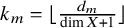 $k_{m} = \lfloor \frac {d_{m}}{\dim X + 1} \rfloor $
. For large m, Proposition 2.2 allows us to find a deformation of
$k_{m} = \lfloor \frac {d_{m}}{\dim X + 1} \rfloor $
. For large m, Proposition 2.2 allows us to find a deformation of $s_m$
that breaks off
$s_m$
that breaks off $k_{m}$
rational curves through
$k_{m}$
rational curves through $k_{m}$
general points of
$k_{m}$
general points of $s(C^{\prime })$
. Because H is nef, at least one of these rational curves has H-degree at most
$s(C^{\prime })$
. Because H is nef, at least one of these rational curves has H-degree at most
 $$ \begin{align*} \frac{H\cdot s_{m*}C^{\prime}}{k_{m}} = \frac{p^m(H \cdot i_*C^{\prime})}{k_{m}} \leq \frac{p^m(H \cdot i_*C^{\prime})}{p^{m}(-K_{X} \cdot i_{*}C^{\prime}) - (g + 1)\dim X}(\dim X + 1). \end{align*} $$
For large enough m the floor of this upper bound is at most $(\dim X + 1)\frac {H \cdot i_*C^{\prime }}{-K_X \cdot i_*C^{\prime }}$
. This proves that a general point of
$(\dim X + 1)\frac {H \cdot i_*C^{\prime }}{-K_X \cdot i_*C^{\prime }}$
. This proves that a general point of $s(C^{\prime })$
is contained in a rational curve whose H-degree satisfies the desired inequality. Since the existence of such a rational curve through a point is a closed condition, this statement holds for every closed point in
$s(C^{\prime })$
is contained in a rational curve whose H-degree satisfies the desired inequality. Since the existence of such a rational curve through a point is a closed condition, this statement holds for every closed point in $s(C')$
, and in particular for x.
$s(C')$
, and in particular for x.
The extension to ample $\mathbb {Q}$
-Cartier divisors in characteristic
$\mathbb {Q}$
-Cartier divisors in characteristic $0$
uses the spreading out argument of (Reference Miyaoka and MoriMM86, Step 3 of proof of Theorem 5). The extension to nef
$0$
uses the spreading out argument of (Reference Miyaoka and MoriMM86, Step 3 of proof of Theorem 5). The extension to nef $\mathbb {R}$
-Cartier divisors follows as in (Reference KollárKol96, Steps 4 and 5 of proof of II.5.8 Theorem).
$\mathbb {R}$
-Cartier divisors follows as in (Reference KollárKol96, Steps 4 and 5 of proof of II.5.8 Theorem).
Acknowledgements
We thank Izzet Coskun, Brendan Hassett, James McKernan, Joaquín Moraga, and Sho Tanimoto for helpful conversations. We are grateful to Yuchen Liu for suggesting we think about lengths of extremal rays.
Competing interests
The author have no competing interests to declare.
Funding statement
Eric Jovinelly was supported by an NSF postdoctoral research fellowship, DMS-2303335. Brian Lehmann was supported by Simons Foundation grant award number 851129. Eric Riedl was supported by NSF CAREER grant DMS-1945944 and Simons Foundation grants 00011850 and 00013673.


 Open access

