





Introduction
Globally, an estimated 149 million children under 5 years were stunted in 2022(1) – defined by the World Health Organization (WHO) as a child with a height-for-age z-score equal to or below −2. Stunting is nearly exclusively experienced in low- and middle-income countries (LMIC), particularly sub-Saharan Africa and Southeast Asia(Reference de Onis and Branca2), where infants are often born with low birth weight and/or have slower linear growth from birth compared with what would be expected under ideal conditions.
Stunting is a useful metric for assessing nutritional status as growth faltering correlates with poorer cognitive ability, reduced adult earnings and increased mortality(Reference Dewey and Begum3). It has long been recognised that poor growth in infants and children is associated with inadequate water, sanitation and hygiene (WASH)(Reference Merchant, Jones, Kiure, Kupka, Fitzmaurice and Herrera4). Diarrhoea, a well-known cause of growth faltering, is common in the first two years of life, particularly among infants raised in unsanitary conditions. Up to 25% of child linear growth faltering can be attributed to experiencing five or more episodes of diarrhoea during the first two years of life(Reference Checkley, Buckley, Gilman, Assis, Guerrant and Morris5). Despite the increased implementation of WASH interventions, these efforts have not led to significant improvements in child linear growth and ten proven child nutrition interventions at 90% coverage are estimated to only reduce the global burden of child stunting by 20%(Reference Bhutta, Das, Rizvi, Gaffey, Walker and Horton6). Highly powered rigorous household-level WASH interventions have shown no significant impact on linear growth, leading to further questioning of current understandings of the link between poor WASH and stunting (Reference Pickering, Null, Winch, Mangwadu, Arnold and Prendergast7).
Poor WASH environments affect the health of inhabitants far beyond symptomatic, clinical infections such as diarrhoea alone. Once termed tropical enteropathy, research has found that those living in unsanitary conditions face chronic exposure to intestinal pathogens that leads to an adaptive and progressive degeneration of the intestinal structure, notably leading to villous blunting, crypt hyperplasia, high immune activity and inflammation, and microbial translocation across the intestinal epithelium(Reference Baker and Mathan8,Reference Lindenbaum9) . This loosely defined cluster of changes owing to unsanitary environments is now commonly referred to as environmental enteric dysfunction (EED) or environmental enteropathy (EE; on the basis of histological confirmation) in recognition of its environmental rather than genetic cause(Reference Crane, Jones and Berkley10). With the realisation that EED may be a major driver of linear growth faltering(Reference Campbell, Elia and Lunn11,Reference Humphrey12) , possibly making part of the missing link between poor WASH and linear growth(Reference Mbuya and Humphrey13), significant advances have been made in EED and stunting research.
The gold standard for diagnosing EED is intestinal biopsy for histology, which allows for direct investigation into many of the hallmarks of EED(Reference Hodges, Tembo and Kelly14). However, intestinal biopsy is an invasive, time-consuming and expensive endeavour. Furthermore, it is ethically questionable and difficult to obtain consent from parents to perform the biopsy particularly in children who are otherwise asymptomatic, which is a common feature of EED. This has sparked rapid investigations into potential biomarkers of EED taken from non-invasive stool and serum samples, as well as urine samples from dual-sugar absorption tests.
However, the use of biomarkers to measure EED and its association with linear growth currently faces multiple challenges(Reference Jimenez and Duggan15). It is important to ascertain whether biomarkers investigated are indicative of a process (e.g. intestinal inflammation) that indeed leads to linear growth deficits, and whether a biomarker is a reliable measure of the process it is intended to reflect. This ambiguity highlights the need for systemic evaluation. Biomarkers measured are highly varied, with many studies measuring the association between novel biomarkers and linear growth, attempting to test new theories and identify new potent biomarkers(Reference Colston, Yori, Moulton, Olortegui, Kosek and Trigoso16). EED, however, is thought to be a transient, and possibly seasonal, degeneration of small intestine structure and function(Reference Marie, Ali, Chandwe, Petri and Kelly17), further complicating efforts to measure its impact on linear growth. Thus, it is critical for researchers to consider the nuances of measuring poor linear growth in association with EED, and whether the right biomarkers are chosen for the measure of growth employed. Significant research gaps remain in investigating which biomarkers are most strongly correlated with the severity of EED, whether biomarkers can be used to predict subsequent linear growth detriments, or if age modifies the association between EED and linear growth. For research groups interested in investigating the potential role of EED in linear growth faltering in a particular setting, the choice of appropriate biomarkers may be overwhelming. Therefore, this systematic review aimed to collate the evidence linking biomarkers of EED to linear growth in children aged 0–5 years, identifying patterns and research directions with the goal of providing recommendations and considerations for future research.
Methods
The protocol for this systematic review was registered on PROSPERO (no. CRD42023477534) after confirming the absence of registered systematic reviews with the same research questions. This review was written in accordance with the Preferred Reporting Items for Systematic Reviews and Meta-Analysis (PRISMA) guidelines for systematic reviews and meta-analysis (see details in Supplementary Table 1: PRISMA checklist)(Reference Moher, Liberati, Tetzlaff, Altman and The18).
Study selection and eligibility criteria
We included studies based on our research aims made using an adapted version of the Population, Intervention, Comparator, Outcomes and Studies (PICOS) framework(Reference Schardt, Adams, Owens, Keitz and Fontelo19), changing ‘Interventions’ to ‘Exposure’, and removal of ‘Comparator’ (PEOS).
Population: Children aged 0–5 years (or mean age between 0 and 5 years for studies with an age range exceeding 5 years) living in a LMIC as defined by the World Bank.
Exposure: A measurement/biomarker of EED (see ‘Search strategy’ for the definition used).
Outcome: A measurement of linear growth (height-for-age z-score [HAZ], length-for-age z-score [LAZ], absolute height, height-for-age deficit [HAD], length-for-age deficit [LAD] or any computation based on these units, including their change over time).
Studies: Observational and interventional studies, including cross-sectional, longitudinal and case-control designs that pertain to primary data collection with a statistical measurement of the association between the exposure and the outcome.
Exclusion criteria
Exclusion criteria were studies resulting from animal or laboratory research, conducted in a specific population suffering from a chronic or serious illness (e.g. inflammatory bowel disease, ulcerative colitis, malaria and HIV) or review articles. Articles were also excluded if they contained the same (and no additional) results as an already included article (e.g. an article reporting the same associations as another article arising from the same research project). Where a choice had to be made to include one of two or more articles, the article with the research aims most closely related to those investigated in this review was included and the other(s) were excluded. Studies were excluded if all the biomarkers of EED investigated were supplemented to participants as part of an intervention trial. Articles were also excluded if they had inaccessible full-texts and/or were written in languages other than English.
Domains of EED considered
The major domains of EED were determined by reviewing literature on EED and consulting highly cited reviews and overviews of the pathology of EED(Reference Crane, Jones and Berkley10,Reference Budge, Parker, Hutchings and Garbutt20–Reference Trehan, Kelly, Shaikh and Manary24) . Six domains of EED were generated: intestinal inflammation, intestinal damage and repair, intestinal permeability and reduced absorption, microbial translocation, systemic inflammation and composite indicators related to multiple domains of EED. Intestinal inflammation, as a response to chronic exposure to enteric pathogens, is a cornerstone of the pathology of EED(Reference Crane, Jones and Berkley10), and intestinal inflammation due to non-infectious exposures (e.g. inflammatory bowel disease) is also associated with poor linear growth(Reference Ishige25). Intestinal damage and repair can be seen in the blunting of the mucosal villi and overall structural and functional damage to the small intestine, accompanied by increased repair of the epithelium(Reference Crane, Jones and Berkley10,Reference Kelly, Besa, Zyambo, Louis-Auguste, Lees and Banda26) . Increased intestinal permeability and reduced nutrient absorption in the small intestine are thought to be a consequence of the breakages of tight junctions and reduction in absorptive surface area because of the chronic exposure to enteric pathogens implicated in EED. Microbial translocation is implicated in EED owing to damage to the intestinal structure and loss of tight junctions leading to the translocation of bacterial products such as lipopolysaccharide (LPS) or endotoxin from the intestinal lumen into systemic circulation(Reference Keusch, Denno, Black, Duggan, Guerrant and Lavery22). Whilst systemic inflammation has its own independent causes that do not involve the small intestine (e.g. respiratory disease, metabolic syndrome), it is a key component of EED. Intestinal damage and microbial translocation may trigger chronic low-grade systemic inflammation(Reference Oriá, Murray-Kolb, Scharf, Pendergast, Lang and Kolling27).
Search strategy
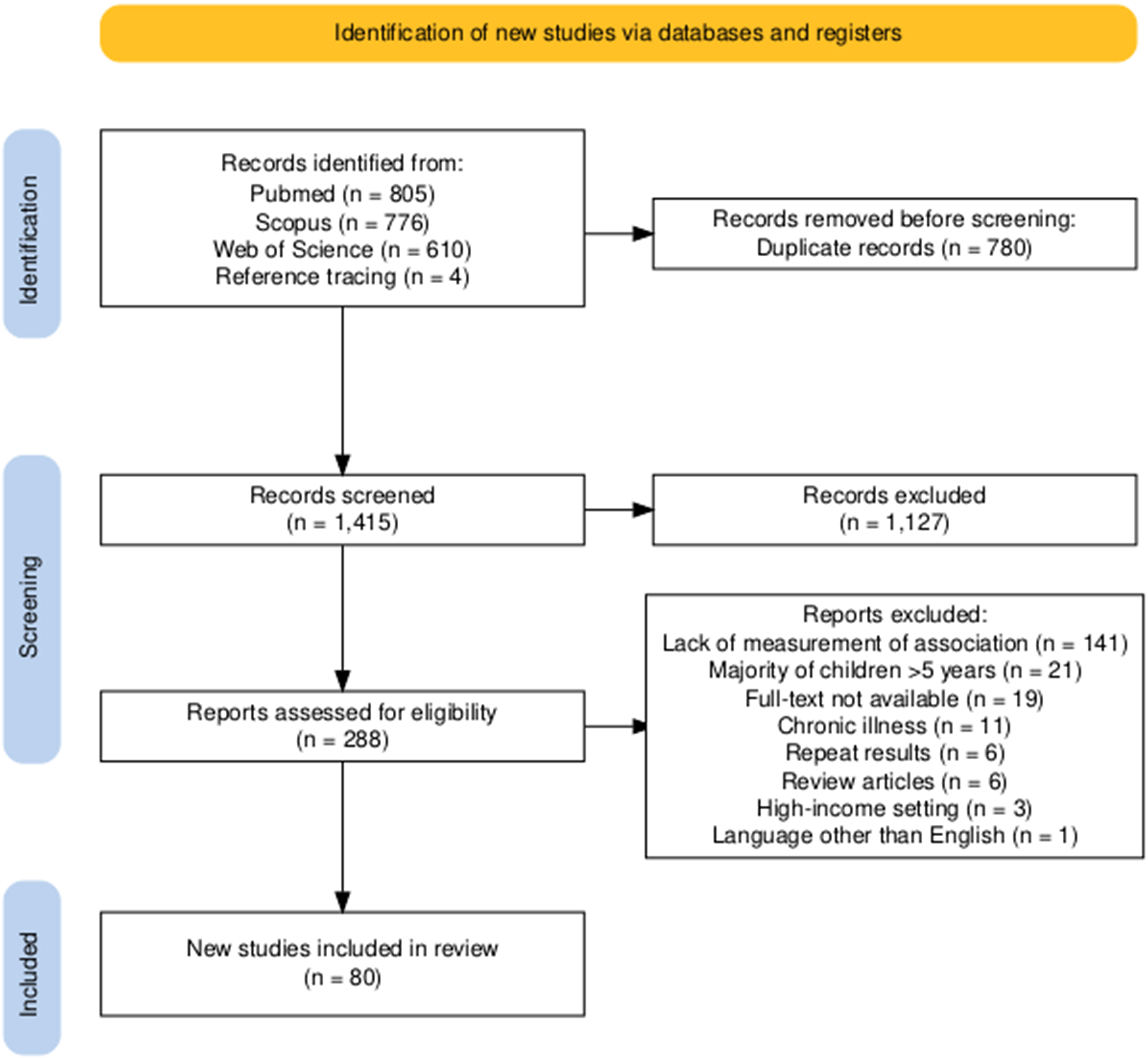
A systematic search of the literature was conducted on 7 November 2023 and updated on 20 January 2025. Databases searched included PubMed, Scopus and Web of Science. Blind screening was independently conducted by two reviewers (C.L. and T.T.), and a third reviewer (H.S.) was consulted if required. Reference lists of screened articles were reviewed to identify any missed potentially relevant articles, and the search strategy was updated. The search strategy involved two stages. First, a literature search aimed to find articles by title and abstract with text containing either a term for EED (‘environmental enteric dysfunction’, ‘environmental enteropathy’ and ‘tropical enteropathy’) or a specific major domain of EED (e.g. ‘intestinal permeability’, ‘intestinal damage’ and ‘crypt hyperplasia’), as well as a measure of child linear growth (e.g. ‘height-for-age’, ‘growth faltering’, ‘stunting’ and ‘length-for-age’). The articles were screened for potential biomarkers, which were then added into the search terms to form the second stage. The screening process of the articles from the first and second stage is combined in Fig. 1. Reference lists of final included articles were also screened for possible inclusions. Rayyan AI (https://www.rayyan.ai/) was used to digitalise the review screening process. Full details of the search strategy are available in Supplementary Material 1.
PRISMA flowchart of the article screening process.
Risk of bias
The quality of included articles was assessed using the Joanna Briggs Institute (JBI) Critical Appraisal tools checklists for cross-sectional, case–control and cohort studies. Responses to JBI checklist items are reported in Supplementary Material 3. For the JBI checklist for cohort studies, the categories ‘Were the two groups similar and recruited from the same population?’, ‘Was the exposure measured similarly to assign people to both exposed and unexposed groups?’, ‘Was the exposure measured in a valid and reliable way?’ and ‘Were the groups/participants free of the outcome at the start of the study (or at the moment of exposure)?’ were not included as they lacked relevance and applicability to the longitudinal measurement of the association between EED and linear growth.
Data extraction
Data extraction tables were developed for this systematic review and pilot-tested with a subset of eligible studies. Data extraction was performed for each included article, including first author’s surname, year of publication, abbreviation of study, country of study, location of study, type of study, time of research fieldwork, number of participants, age of participants, measurement of EED, measurement of linear growth, measurement of association (e.g. EED predict future attained height and EED predict past change in height), statistical tests and association between EED and linear growth (e.g. regression coefficient, mean difference, odds ratio and accompanying p-value). Where studies reported multiple measurements of the association between EED and linear growth, for example, the cross-sectional association between a biomarker and HAZ score alongside the association between the same biomarker and subsequent change in HAZ, all associations were extracted.
Data synthesis
Studies were tabulated on the basis of country of fieldwork, biomarker and biomarker domains investigated, age of study participants, frequency of EED measurements, measurement of linear growth and direction of association between EED and linear growth. The association between EED and linear growth was defined as positive when a higher level or presence of a biomarker was statistically significantly (p < 0·05) associated with improved linear growth (i.e. higher HAZ, higher dHAZ (change in HAZ over a time period) and reduced odds of stunting), negative if vice-versa, or neutral if there was no statistically significant associations between EED and linear growth.
Results
Screening results
The PRISMA flow chart of article screening is presented in Fig. 1. A total of 2191 articles were identified through PubMed, Scopus and Web of Science databases, with an additional 4 articles added through reference tracing, leading to a total of 2195 articles. Following this, 780 duplicates were removed, resulting in 1415 unique records for title/abstract screening. This led to the exclusion of 1127 records, and 288 records moved to full-text screening. After full-text screening, a total of 208 records were excluded with the most common reasons being the lack of measurement of an association between EED and growth (n = 141), studies among children older than 5 years (n = 21) and the unavailability of full-text (n = 19). This led to a final group of eighty articles comprising a total of 31 996 participants included in the review. Full data extraction tables are available in Supplementary Material 3.
Characteristics of the included studies
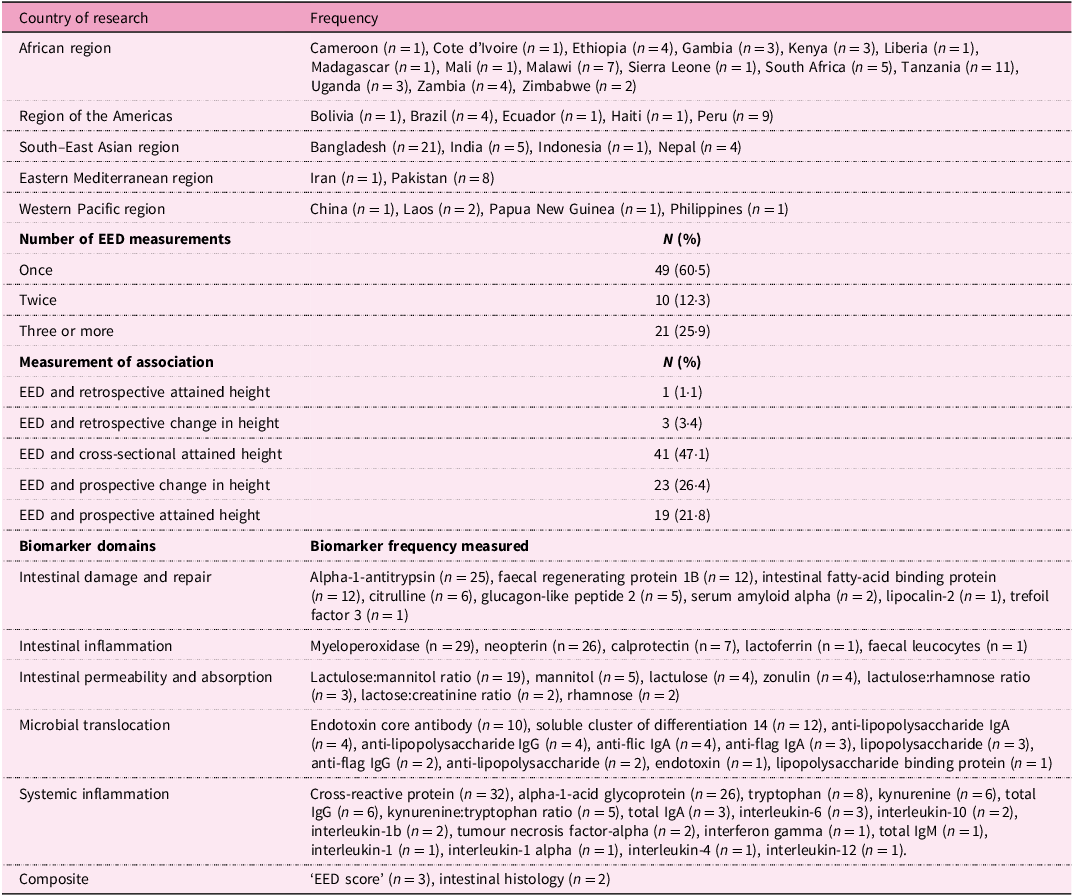
The studies included in the review were conducted in thirty-one countries (Table 1). The distribution of studies across countries was uneven, with over half of all studies (50·9%) pertaining to fieldwork conducted amongst children in Bangladesh (n = 21), Tanzania (n = 11), Peru (n = 9), Pakistan (n = 8) and Malawi (n = 7). Forty-nine (60·5%) of studies included a single measure of a biomarker of EED in association with growth(Reference Amadi, Zyambo, Chandwe, Besa, Mulenga and Mwakamui28–Reference Nakiranda, Malan, Ricci, Kruger, Nienaber and Visser76), whilst ten (12.3%) measured biomarker(s) on two occasions(Reference DeBoer, Elwood, Platts-Mills, McDermid, Scharf and Rogawski McQuade77–Reference Zambruni, Ochoa, Somasunderam, Cabada, Morales and Mitreva86) and twenty-one (25.9%) measured biomarker(s) on three or more occasions(Reference Campbell, Elia and Lunn11,Reference Colston, Yori, Moulton, Olortegui, Kosek and Trigoso16,Reference Lu, Zhou, Naylor, Kirkpatrick, Haque and Petri87–Reference Prendergast, Rukobo, Chasekwa, Mutasa, Ntozini and Mbuya105) . The most common measure of association was the cross-sectional association between an EED measurement and attained height on forty-one occasions. Less frequent was the measurement of the association between EED and subsequent growth faltering/change in height on twenty-three occasions. On nineteen occasions, studies measured the association between EED and prospective attained height. The least common measures were the association between EED and retrospective attained height on one occasion and the association between EED and retrospective change in height on three occasions.
Characteristics of included studies

Totals may sum above eighty-one owing to the inclusion of studies with multiple countries of fieldwork or multiple measurements of EED and linear growth. Numbers in parentheses after country names represent the number of studies conducted in that country.
Quality assessment
After critically appraising included articles (Supplementary Material 4), the overall quality of evidence was high owing to the majority of articles satisfying all aspects of the JBI items. However, twenty-two (27·5%) of articles did not adequately control for confounding factors (age, sex and a measure of socio-economic status) in the analysis, typically because of either a lack of a multivariate model or a lack of inclusion of these confounders in adjusted models. The measurement of child linear growth and EED was well described in the majority of articles.
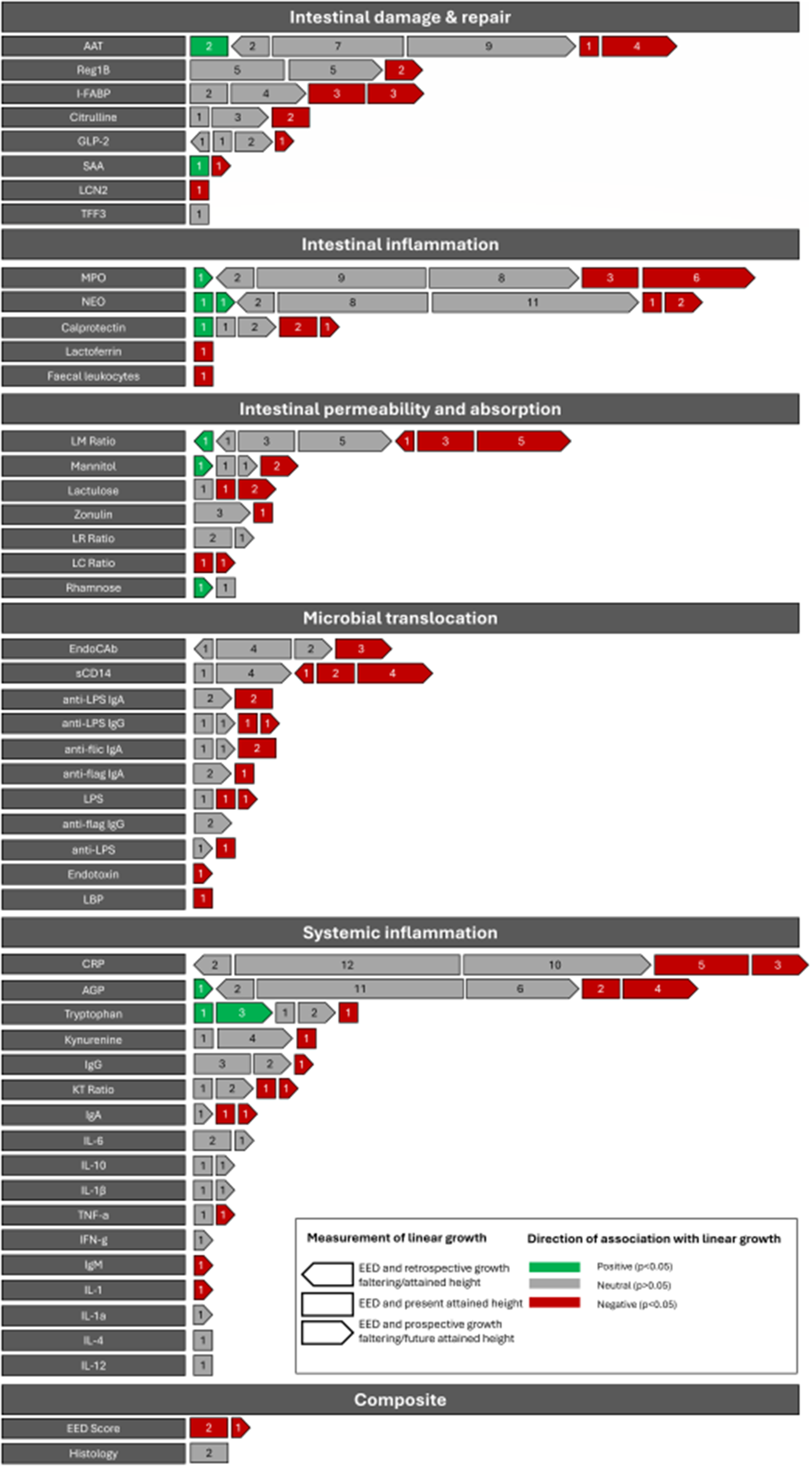
This systematic review identified forty-nine biomarkers of EED from biological samples of urine, stool, serum, saliva and intestinal biopsy. A breakdown of biomarkers and their specimens is presented in Supplementary Table 8. Intestinal damage and repair (n = 8; alpha-1-antitrypsin [AAT], citrulline, glucagon-like peptide 2 [GLP-2], intestinal fatty-acid binding protein [I-FABP], lipocalin-2 [LCN2], regenerating protein 1B [Reg1B] and serum amyloid alpha [SAA], trefoil factor 3 [TFF3]), intestinal inflammation (n = 5; calprotectin, faecal leucocytes, lactoferrin, myeloperoxidase [MPO] and neopterin [NEO]), intestinal permeability (n = 7; lactose to creatinine ratio [LC ratio], lactulose to mannitol ratio [LM ratio], lactulose to rhamnose ratio [LR ratio], lactulose, rhamnose, mannitol and zonulin), microbial translocation (n = 11, anti-flag IgA, anti-flag IgG, anti-flic IgA, anti-LPS, anti-LPS IgA, anti-LPS IgG, EndoCAb, endotoxin, lipopolysaccharide binding protein [LBP], lipopolysaccharide [LPS] and soluble cluster of differentiation 14 [sCD14]), systemic inflammation (n = 17, IL-1/1α/1β/4/6/10/12, cross-reactive protein [CRP], interferon gamma [IFN-γ], IgA, IgG, IgM, kynurenine to tryptophan ratio [KT ratio], kynurenine, tryptophan, tumour necrosis factor alpha [TNF-α] and alpha-1-acid glycoprotein [AGP]) and composite biomarkers (n = 2, EED score and intestinal histology).
Intestinal inflammation and linear growth
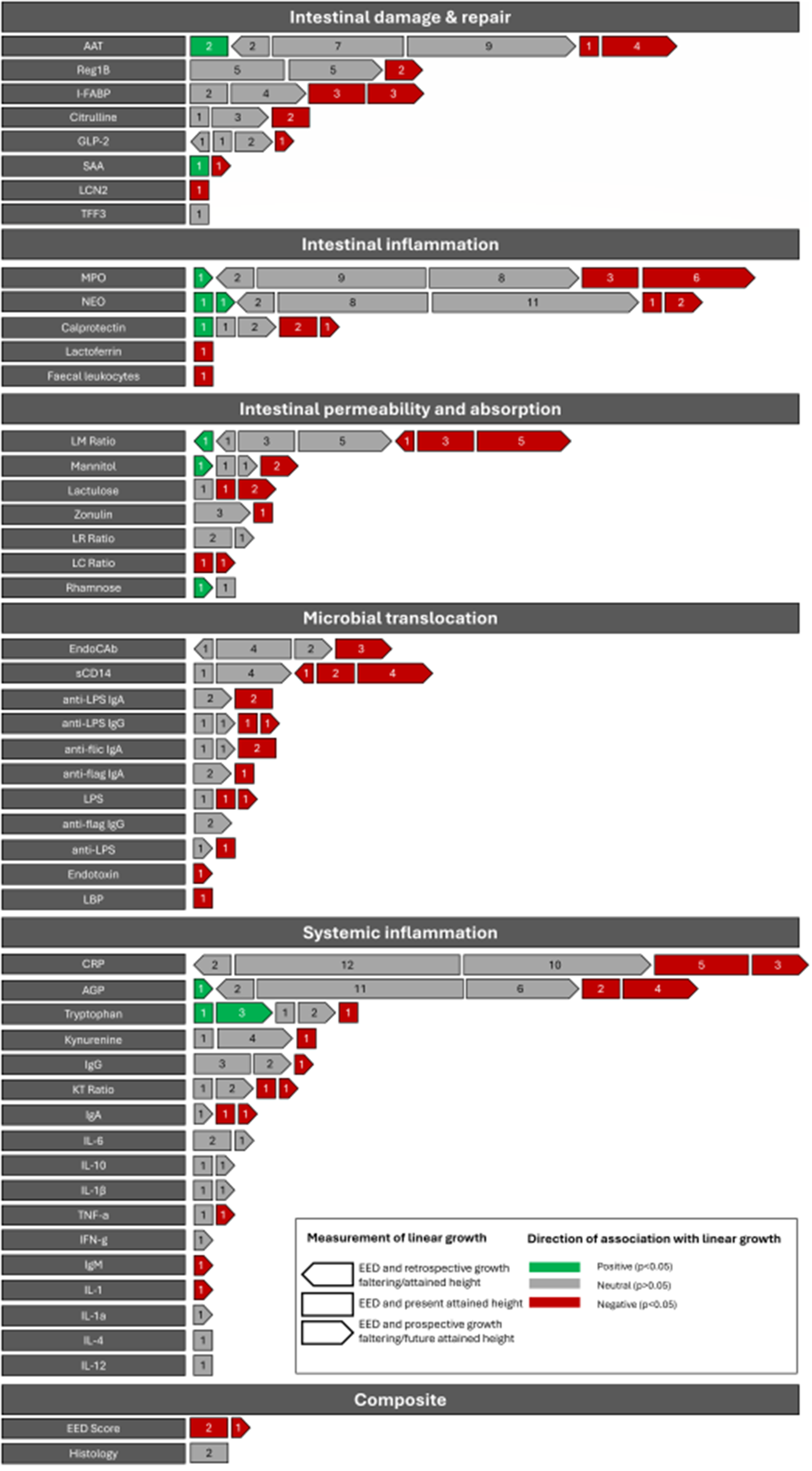
Despite the low diversity of biomarkers of intestinal inflammation compared with other domains of EED, there was good evidence of a negative association between higher levels of biomarkers of intestinal inflammation with poor linear growth. MPO was the most frequently observed biomarker with nine negative associations with growth(Reference Guerrant, Leite, Pinkerton, Medeiros, Cavalcante and DeBoer37,Reference Hasan, Gazi, Das, Fahim, Hossaini and Khan50,Reference Naylor, Lu, Haque, Mondal, Buonomo and Nayak60,Reference Sinharoy, Reese, Praharaj, Chang and Clasen70,Reference Gazi, Alam, Fahim, Wahid, Khan and Islam79,Reference Iqbal, Sadiq, Syed, Akhund, Umrani and Ahmed82,Reference Lu, Zhou, Naylor, Kirkpatrick, Haque and Petri87,Reference Arndt, Richardson, Ahmed, Mahfuz, Haque and John-Stewart96,Reference Kosek, Haque, Lima, Babji, Shrestha and Qureshi97) , followed by three observations for calprotectin(Reference Andriamanantena, Randrianarisaona, Rakotondrainipiana, Andriantsalama, Randriamparany and Randremanana29,Reference Luoma, Adubra, Ashorn, Ashorn, Bendabenda and Dewey44,Reference Liu, Sheng, Hu, Yu, Westcott and Miller49) , three for NEO(Reference Hasan, Gazi, Das, Fahim, Hossaini and Khan50,Reference Kosek, Haque, Lima, Babji, Shrestha and Qureshi97,Reference Campbell, McPhail, Lunn, Elia and Jeffries100) and one each for lactoferrin(Reference Jiménez Gutiérrez, Pineda, Calzada, Guerrant, Lima Neto and Pinkerton45) and faecal leucocytes(Reference Lefebo, Kassa and Tarekegn48).
No other biomarker had as many negative associations with growth as MPO. The frequency of measurement of calprotectin was far lower than that of MPO or NEO, but half of calprotectin measurements were significantly associated with worse linear growth compared with approximately 31% of MPO measurements and 11% of NEO measurements.
We also found that MPO, NEO and calprotectin had one (MPO and calprotectin) or two (NEO) positive associations with linear growth. The positive association between calprotectin and linear growth was also seen in the same cross-sectional study as one of the positive associations between NEO and linear growth(Reference Gazi, Alam, Fahim, Wahid, Khan and Islam79). This study, however, saw a negative association between MPO levels and LAZ. The one occasion where MPO levels were associated with positive linear growth was also the same study that saw the second positive association between NEO and linear growth(Reference Das, Chowdhury, Gazi, Fahim, Alam and Mahfuz90). This study found that for infants born with birth weight below 2·5 kg, higher MPO levels predicted lower odds of being stunted at 24-months, whilst if infants were born with birth weight above 2·5 kg, higher MPO levels led to greater odds of being stunted at 24-months. Contrastingly, higher NEO levels were associated with lower odds of being stunted at 24-months regardless of birth weight.
Intestinal damage and repair with linear growth
The most widely studied biomarker of intestinal damage and repair with linear growth, AAT, showed the most mixed associations; on two occasions it was positively associated with linear growth(Reference Hasan, Gazi, Das, Fahim, Hossaini and Khan50,Reference Gazi, Das, Siddique, Alam, Fahim and Hasan80) and was negatively associated on five occasions(Reference Andriamanantena, Randrianarisaona, Rakotondrainipiana, Andriantsalama, Randriamparany and Randremanana29,Reference Guerrant, Leite, Pinkerton, Medeiros, Cavalcante and DeBoer37,Reference Das, Chowdhury, Gazi, Fahim, Alam and Mahfuz90,Reference Richard, McCormick, Murray-Kolb, Lee, Seidman and Mahfuz94,Reference Kosek, Haque, Lima, Babji, Shrestha and Qureshi97) . Of these five negative associations, three predicted worse subsequent change in linear growth and one lower future attained height, indicating its potential utility in predicting subsequent height deficits. Both positive associations were between AAT and cross-sectional attained height. Interestingly, the positive association between AAT and HAZ was seen in the same study by Gazi and colleagues, where higher levels of NEO and calprotectin were associated with higher HAZ(Reference Gazi, Alam, Fahim, Wahid, Khan and Islam79).
Reg1B, is thought to be involved in the epithelial regeneration of the small intestine following damage. On ten occasions, no association was found between Reg1B and growth(Reference Guerrant, Leite, Pinkerton, Medeiros, Cavalcante and DeBoer37,Reference Fahim, Das, Gazi, Alam, Hasan and Hossain78,Reference Gazi, Alam, Fahim, Wahid, Khan and Islam79,Reference Iqbal, Sadiq, Syed, Akhund, Umrani and Ahmed82,Reference Syed, Iqbal, Sadiq, Ma, Akhund and Xin84,Reference Lu, Zhou, Naylor, Kirkpatrick, Haque and Petri87,Reference Mutasa, Ntozini, Mbuya, Rukobo, Govha and Majo91,Reference Liu, Fan, Ashorn, Cheung, Hallamaa and Hyöty95) , and on two occasions it was associated negatively with linear growth(Reference Naylor, Lu, Haque, Mondal, Buonomo and Nayak60,Reference Peterson, Buss, Easley, Yang, Korpe and Niu63) . In a study by Peterson and colleagues, Reg1B concentrations in the stool of 3-month Bangladeshi and Peruvian infants could predict lower LAZ as late as at age 24 months(Reference Peterson, Buss, Easley, Yang, Korpe and Niu63). Interestingly, the other study that found a significant negative association between Reg1B levels at 3-months old and the change in HAZ over the first year of life(Reference Naylor, Lu, Haque, Mondal, Buonomo and Nayak60).
I-FABP, a marker of enterocyte damage, showed similar proportions of significant negative associations with linear growth as MPO, with six neutral(Reference Amadi, Zyambo, Chandwe, Besa, Mulenga and Mwakamui28,Reference Arndt, Cantera, Mercer, Kalnoky, White and Bizilj31,Reference Zambruni, Ochoa, Somasunderam, Cabada, Morales and Mitreva86,Reference Lauer, Kirby, Muhihi, Ulenga, Aboud and Liu88,Reference Mutasa, Ntozini, Mbuya, Rukobo, Govha and Majo91,Reference Prendergast, Rukobo, Chasekwa, Mutasa, Ntozini and Mbuya105) and six negative associations with linear growth(Reference Guerrant, Leite, Pinkerton, Medeiros, Cavalcante and DeBoer37,Reference Diaz, Dulience, Wolthausen, Jiang, Gyimah and Pierre38,Reference Hasan, Gazi, Das, Fahim, Hossaini and Khan50,Reference Lauer, Pyykkö, Chembe, Billima-Mulenga, Sikazwe and Chibwe75,Reference Nakiranda, Malan, Ricci, Kruger, Nienaber and Visser76) . Citrulline, a biomarker of intestinal enterocyte mass(Reference Crenn, Messing and Cynober106), may be reduced in cases of severe intestinal damage. Citrulline was measured on six occasions with two negative associations with cross-sectional attained height(Reference Guerrant, Leite, Pinkerton, Medeiros, Cavalcante and DeBoer37,Reference Pesu, Mbabazi, Mutumba, Savolainen, Olsen and Mølgaard62) . SAA, a potential biomarker of intestinal injury and systemic inflammation, was measured in a single study by Guerrant et al. and associated positively with cross-sectional attained height but negatively with subsequent linear growth(Reference Guerrant, Leite, Pinkerton, Medeiros, Cavalcante and DeBoer37). TFF3, indicated as a measure of intestinal injury, was measured once and no association with linear growth was observed(Reference Hasan, Gazi, Das, Fahim, Hossaini and Khan50).
Intestinal permeability and absorption and linear growth
The LM ratio test is considered the most widely agreed upon biomarker of EED owing to its implied reflectivity of both increased intestinal permeability (leading to increased absorption of lactulose through breakages in tight junctions) and reduced absorption (leading to reduced absorption of mannitol). The increased urinary excretion of lactulose and reduced mannitol leads to a higher LM ratio, which was associated with poor linear growth in nine(Reference Campbell, Elia and Lunn11,Reference Andrews-Trevino, Webb, Shrestha, Pokharel, Acharya and Chandyo30,Reference Guerrant, Leite, Pinkerton, Medeiros, Cavalcante and DeBoer37,Reference Lin, Arnold, Afreen, Goto, Huda and Haque52,Reference Lauer, Duggan, Ausman, Griffiths, Webb and Bashaasha56,Reference Ordiz, Shaikh, Trehan, Maleta, Stauber and Shulman59,Reference Richard, McCormick, Murray-Kolb, Lee, Seidman and Mahfuz94,Reference Goto, Mascie-Taylor and Lunn98,Reference Lunn, Northropclewes and Downes101) out of nineteen occasions.
The LM ratio was negatively associated with both attained height prior to its measurement(Reference Lauer, Duggan, Ausman, Griffiths, Webb and Bashaasha56), attained height at the time of its measurement(Reference Lin, Arnold, Afreen, Goto, Huda and Haque52,Reference Goto, Mascie-Taylor and Lunn98,Reference Lunn, Northropclewes and Downes101) , future attained height(Reference Andrews-Trevino, Webb, Shrestha, Pokharel, Acharya and Chandyo30,Reference Richard, McCormick, Murray-Kolb, Lee, Seidman and Mahfuz94) , growth faltering prior to its measurement(Reference Campbell, Schulze, Shaikh, Raqib, Wu and Ali36) and subsequent growth faltering(Reference Campbell, Elia and Lunn11,Reference Guerrant, Leite, Pinkerton, Medeiros, Cavalcante and DeBoer37,Reference Ordiz, Shaikh, Trehan, Maleta, Stauber and Shulman59) . In one study, the mean LM ratio over 0–2 years of age amongst participants of the MAL-ED study was associated with attained height at 5 years of age, far beyond the time of its measurement, although it is not clear if this association was adjusted for height at 2 years old(Reference Richard, McCormick, Murray-Kolb, Lee, Seidman and Mahfuz94).
The only biomarker of intestinal permeability and absorption not derived from a urinary excretion test was zonulin, a marker of increased intestinal permeability(Reference Fasano107). Three studies reported neutral associations between zonulin and growth(Reference Guerrant, Leite, Pinkerton, Medeiros, Cavalcante and DeBoer37,Reference Zambruni, Ochoa, Somasunderam, Cabada, Morales and Mitreva86,Reference Mondal, Minak, Alam, Liu, Dai and Korpe92) , while one study of Brazilian infants 6–26 months old found a negative correlation between higher zonulin and lower HAZ at time of measurement(Reference Guerrant, Leite, Pinkerton, Medeiros, Cavalcante and DeBoer37).
Other, less frequently used sugar absorption tests were the LR ratio, LC ratio and some individual counterparts of the tests (lactulose, mannitol and rhamnose excretion). The LR ratio is thought to be superior to the LM ratio as it overcomes the issue of the LM ratio result being contaminated by background mannitol in urine present before the dual sugar administration(Reference Khan, Faubion, Dyer, Singh, Larson and Absah108). However, the LR ratio was not associated with linear growth in any of the three studies with its measurement(Reference Chen, McKune, Singh, Yousuf Hassen, Gebreyes and Manary35,Reference Tickell, Denno, Saleem, Ali, Kazi and Singa71,Reference Shivakumar, Sivadas, Devi, Jahoor, McLaughlin and Smith73) . The LC ratio, slightly similar in its meaning to the LM ratio, was associated negatively with both attained cross-sectional height and prospective linear growth in the one study with its measurement(Reference Panter-Brick, Lunn, Langford, Maharjan and Manandhar102). The constituents of the aforementioned tests were individually associated with linear growth; mannitol was positively associated with linear growth once(Reference Mutasa, Ntozini, Mbuya, Rukobo, Govha and Majo91) and negatively associated twice (Reference Naylor, Lu, Haque, Mondal, Buonomo and Nayak60,Reference Lu, Zhou, Naylor, Kirkpatrick, Haque and Petri87) , lactulose was negatively associated with linear growth three times(Reference Faubion, Camilleri, Murray, Kelly, Amadi and Kosek41,Reference Jamil, Iqbal, Idress, Ahmed, Sadiq and Mallawaarachchi51,Reference Weisz, Manary, Stephenson, Agapova, Manary and Thakwalakwa66) and rhamnose was positively associated with linear growth once(Reference Jamil, Iqbal, Idress, Ahmed, Sadiq and Mallawaarachchi51).
Microbial translocation and linear growth
Microbial translocation was the only domain of EED to which no positive associations between biomarker level and linear growth were observed. Microbial translocation was also the domain with the greatest proportion of associations with linear growth being significantly negative (48%) compared with intestinal damage and repair (26%), intestinal inflammation (30%), intestinal permeability and absorption (40%), and systemic inflammation (23%). The translocation of bacterial antigens such as endotoxin/LPS was measured, as well as antibodies directed to them. Of the three measurements of the association between serum LPS levels and linear growth, two were significant negative associations(Reference Amadi, Zyambo, Chandwe, Besa, Mulenga and Mwakamui28,Reference Guerrant, Leite, Pinkerton, Medeiros, Cavalcante and DeBoer37) and one measurement of closely related serum endotoxin levels was significantly negatively associated with subsequent growth(Reference Campbell, Elia and Lunn11). Antibodies to bacterial components with significant negative associations with linear growth included anti-LPS IgA on two occasions(Reference Lauer, Ghosh, Ausman, Webb, Bashaasha and Agaba54,Reference Syed, Iqbal, Sadiq, Ma, Akhund and Xin84) , anti-LPS IgG twice(Reference Lauer, Ghosh, Ausman, Webb, Bashaasha and Agaba54,Reference Lauer, Kirby, Muhihi, Ulenga, Aboud and Liu88) , anti-flic IgA twice(Reference Guerrant, Leite, Pinkerton, Medeiros, Cavalcante and DeBoer37,Reference Syed, Iqbal, Sadiq, Ma, Akhund and Xin84) , anti-flag IgA once(Reference Lauer, Ghosh, Ausman, Webb, Bashaasha and Agaba54) and all anti-LPS once(Reference Guerrant, Leite, Pinkerton, Medeiros, Cavalcante and DeBoer37). Three significant negative associations between EndoCAb, an antibody for endotoxin, and linear growth were observed(Reference Campbell, Elia and Lunn11,Reference Mondal, Minak, Alam, Liu, Dai and Korpe92) . Seven out of eleven measures of the association between sCD14, a marker of immune activation towards bacterial LPS, and linear growth were significantly negative(Reference Amadi, Zyambo, Chandwe, Besa, Mulenga and Mwakamui28,Reference Naylor, Lu, Haque, Mondal, Buonomo and Nayak60,Reference Lauer, Pyykkö, Chembe, Billima-Mulenga, Sikazwe and Chibwe75,Reference DeBoer, Elwood, Platts-Mills, McDermid, Scharf and Rogawski McQuade77,Reference Zambruni, Ochoa, Somasunderam, Cabada, Morales and Mitreva86,Reference Lu, Zhou, Naylor, Kirkpatrick, Haque and Petri87) . LBP, the binding protein of LPS, was negatively associated with linear growth in its sole study(Reference Amadi, Zyambo, Chandwe, Besa, Mulenga and Mwakamui28).
Systemic inflammation and linear growth
Two of the most common measures of systemic inflammation, CRP and AGP(Reference Menzel, Samouda, Dohet, Loap, Ellulu and Bohn109), were measured in association with linear growth thirty-one and twenty-six times respectively. CRP, an acute-phase protein, rises upon the onset of infection and/or inflammation, whilst AGP rises slower and remains elevated longer than CRP. Eight negative associations were reported between CRP and linear growth(Reference Merrill, Burke, Northrop-Clewes, Rayco-Solon, Flores-Ayala and Namaste47,Reference Hasan, Gazi, Das, Fahim, Hossaini and Khan50,Reference Lauer, Ghosh, Ausman, Webb, Bashaasha and Agaba54,Reference Naylor, Lu, Haque, Mondal, Buonomo and Nayak60,Reference Motadi, Mbhenyane, Mbhatsani, Mabapa and Mamabolo61,Reference Syed, Manji, McDonald, Kisenge, Aboud and Sudfeld81,Reference Iqbal, Sadiq, Syed, Akhund, Umrani and Ahmed82,Reference Prendergast, Rukobo, Chasekwa, Mutasa, Ntozini and Mbuya105) , and six between AGP and linear growth(Reference Luoma, Adubra, Ashorn, Ashorn, Bendabenda and Dewey44,Reference Merrill, Burke, Northrop-Clewes, Rayco-Solon, Flores-Ayala and Namaste47,Reference Harrison, Syed, Ehsan, Iqbal, Sadiq and Umrani53,Reference Wirth, Kitilya, Petry, PrayGod, Veryser and Mngara72,Reference Syed, Manji, McDonald, Kisenge, Aboud and Sudfeld81,Reference Iqbal, Sadiq, Syed, Akhund, Umrani and Ahmed82) .
The KT ratio has widely been used as a marker of systemic inflammation. A higher serum KT ratio is indicative of an increased conversion of tryptophan to kynurenine by indoleamine 2,3-dioxygenase 1 owing to immune activation and inflammation(Reference Tsuji, Ikeda, Yoshikawa, Taniguchi, Sawamura and Morikawa110). Two of five studies measuring the KT ratio identified negative associations with linear growth(Reference Gazi, Das, Siddique, Alam, Fahim and Hasan80,Reference Mutasa, Ntozini, Mbuya, Rukobo, Govha and Majo91) . Assessment of the individual constituents in association with linear growth was also measured; serum kynurenine levels were associated with poor linear growth once(Reference Wessells, Hinnouho, Barffour, Arnold, Kounnavong and Kewcharoenwong85) and lower tryptophan levels were associated with poor linear growth four times(Reference Colston, Yori, Moulton, Olortegui, Kosek and Trigoso16,Reference Ordiz, Semba, Moaddel, Rolle-Kampczyk, von Bergen and Herberth64,Reference Semba, Shardell, Sakr Ashour, Moaddel, Trehan and Maleta69,Reference Kosek, Mduma, Kosek, Lee, Svensen and Pan103) . Lower tryptophan levels in stunted children may not necessarily be an indicator of a higher KT ratio but rather of lower dietary intake/diversity(Reference Semba, Shardell, Sakr Ashour, Moaddel, Trehan and Maleta69).
Less frequently studied were the immunoglobulins IgG (six occasions), IgA (three occasions) and IgM (one occasion). Immunoglobulins are antibodies produced by B cells that are implicated in EED, where elevated serum concentrations indicate an inflammatory response to bacterial antigens that have translocated across a damaged small intestine. In an early study by Campbell and colleagues, higher levels of all three serum IgG, IgA and IgM were associated with lower linear growth rate(Reference Campbell, Elia and Lunn11). This study was unique with its high frequency of EED measurements – monthly sample collection over a cohort of infants in their first year of life – and was able to explain up to 78% of growth faltering with EED biomarkers. No other studies found significant associations between IgG or IgM with linear growth. One additional study found a significant association between salivary IgA levels and lower HAZ, which remained significant after adjusting for IgA concentration in breastmilk(Reference Miller and McConnell57).
Interleukins-1, 1α, 1β, 4, 6, 10 and 12, a group of cytokines with pro/anti-inflammatory modulating effects, were each infrequently measured in association with linear growth. Only IL-1 was negatively associated with future stunting status in a single study(Reference Harrison, Syed, Ehsan, Iqbal, Sadiq and Umrani53). IFN-γ, a pro-inflammatory cytokine, was measured once and was not associated with linear growth(Reference Colston, Yori, Moulton, Olortegui, Kosek and Trigoso16). TNF-α, another pro-inflammatory cytokine, was measured twice and associated with lower subsequent linear growth in one study(Reference Zambruni, Ochoa, Somasunderam, Cabada, Morales and Mitreva86).
Composite biomarkers of EED and linear growth
Two biomarkers were grouped as ‘composite’ as they related to multiple domains of EED. The first, intestinal histology, was derived from two studies that did not identify a significant difference in the cross-sectional association between intestinal histology findings and HAZ(Reference Hossain, Begum, Rahman, Parvez, Mazumder and Sarker46,Reference Jamil, VanBuskirk, Mweetwa, Mouksassi, Smith and Ahmed74) . The second composite biomarker (whilst technically not a unique biomarker) was the EED score developed by Kosek et al. (Reference Kosek, Haque, Lima, Babji, Shrestha and Qureshi97). The EED score, as intended, had been calculated by the authors as the sum of AAT, MPO and NEO quartiles with a simplified scoring system. Three studies that measured the association between the EED score and linear growth all found a negative association with either future change in linear growth(Reference Arndt, Richardson, Ahmed, Mahfuz, Haque and John-Stewart96) or current attained height(Reference Gizaw, Yalew, Bitew, Lee and Bisesi43,Reference Hasan, Gazi, Das, Fahim, Hossaini and Khan50) .
Number of biomarkers studied, categories of biomarkers and associations with child linear growth. Direction of bars indicate measurement of association: left-pointing bars indicate EED was measured in association with retrospective linear growth, flat bars indicate a cross-sectional association and right-pointing bars indicate EED was measured in association with prospective linear growth. Numbers in bar indicate the number of occasions measured in included articles. Grey bars indicate no significant association between EED and linear growth. Red bars indicate negative association (higher level or presence of biomarker associated with poorer linear growth outcome) and green bars indicate vice-versa (positive association). AAT, alpha-1-antitrypsin; Reg1B, faecal regenerating enzyme 1B; I-FABP, intestinal fatty-acid binding protein; GLP-2, glucagon-like peptide 2; LCN2, lipocalin 2; SAA, serum amyloid A; TFF3, trefoil factor 3; MPO, myeloperoxidase; NEO, neopterin; LM Ratio, lactulose:mannitol ratio; LR Ratio, lactulose:rhamnose ratio; LC Ratio, lactulose:creatinine ratio; EndoCAb, endotoxin core antibody; sCD14, soluble CD14; anti-LPS IgA, anti-lipopolysaccharide IgA; anti-flag IgA, anti-flagellin IgA; LBP, lipopolysaccharide binding protein; CRP, cross-reactive protein; AGP, alpha-1-acid glycoprotein; Ig, immunoglobulin; IL-, interluekin-; TNF-α, tumour necrosis factor alpha; IFN-γ, interferon gamma.
Ability of biomarkers to predict subsequent poor linear growth
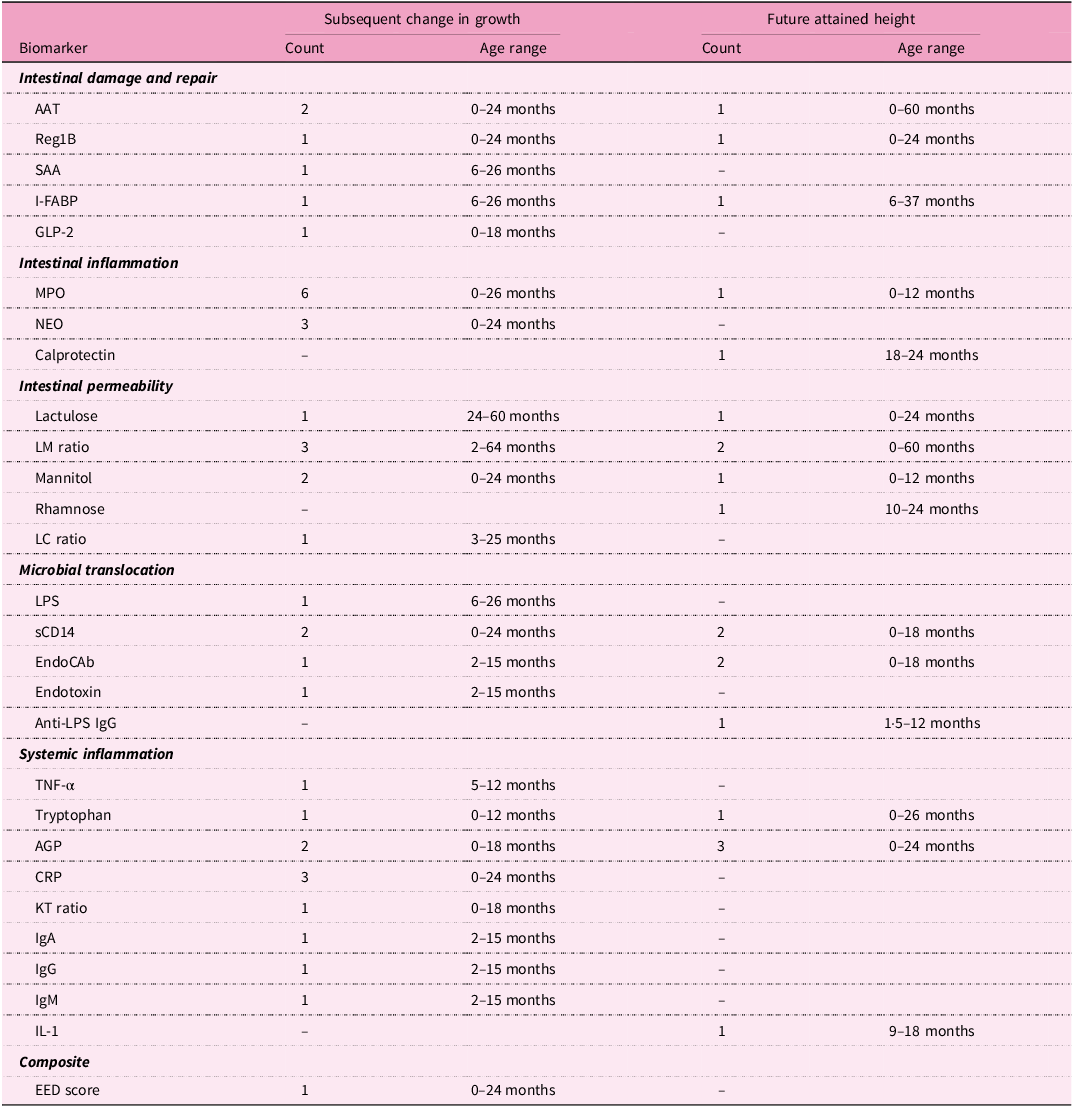
An interesting area of research is the ability of a level of a biomarker to predict subsequent change in linear growth, which would lead to the possibility of its use as a flag for nutritional intervention. We identified twenty-eight biomarkers that could predict with statistical significance (p < 0·05) either lower attained height or prospective growth faltering following their measurement (Table 2). Every major domain of EED had at least three biomarkers that could make this prediction, most frequently among infants in the first two years of life and less commonly amongst infants aged 2–5 years.
Frequency of biomarkers with reports of statistically significant associations with future attained height or change in growth
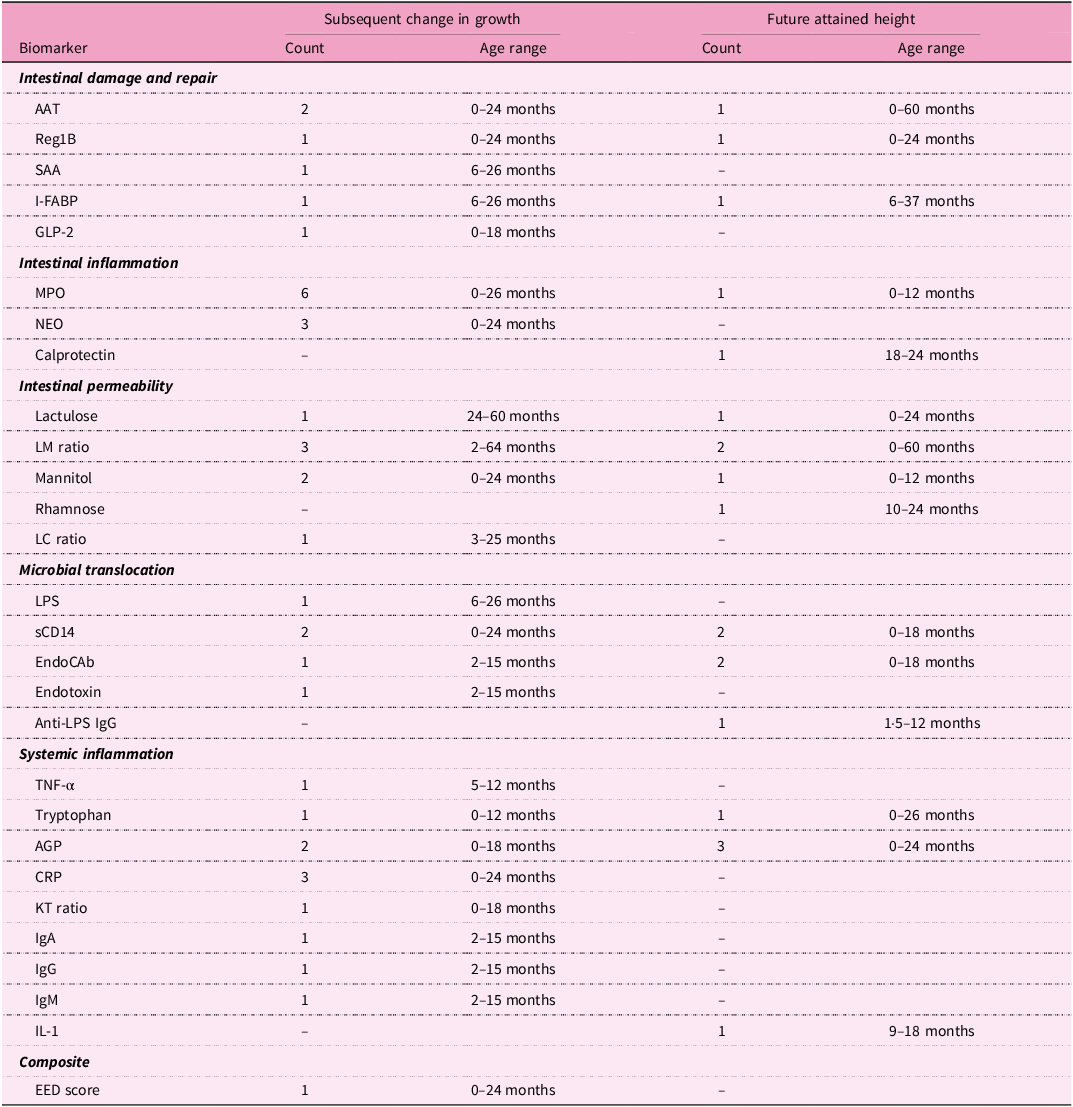
Age range is reported as the lowest to highest age of study participants for who each particular biomarker was quantified.
Discussion
This systematic review found mixed evidence regarding the ability of biomarkers to predict past, present and future linear growth. There was evidence that every broad domain of EED investigated in this review was associated with attained height and subsequent growth with at least five biomarkers per category (excluding composite) associated with linear growth. Biopsy of the small intestine remains the gold standard of ‘diagnosis’, yet was only measured in association with linear growth in one study. Measurement of the association between EED and linear growth is difficult(Reference Colston, Peñataro Yori, Colantuoni, Moulton, Ambikapathi and Lee111), but this review attempts to provide an overview of some of the challenges faced and insights into how some studies attempted to overcome them.
Some biomarkers appear more consistently associated with growth than others, namely, the LM ratio, lactulose urinary excretion, serum I-FABP and sCD14 levels. The LM ratio and sCD14 were the only two biomarkers that were associated negatively with both past, present and future linear growth, demonstrating their versatility. This suggests that their raised levels capture some of the chronic characteristics of EED. Biomarkers that deserve further future attention on the basis of presenting statistically significant but infrequent associations with linear growth include SAA, LCN2, lactoferrin, faecal leucocytes, LC ratio and markers of microbial translocation (anti-LPS and anti-flag). Our findings add to a review of inter-correlations between EED biomarkers and stunting published in 2018(Reference Harper, Mutasa, Prendergast, Humphrey and Manges21). Authors of this review noted a major rate limiting factor to the advancement of the understanding of EED and child linear growth is the minimal number of studies comparing non-invasive biomarkers of EED with intestinal histology findings. This issue persists, and we only identified one study that measured intestinal histology in association with linear growth. The difficulties and ethical concerns of conducting intestinal histology in apparently healthy infants is clearly a well-understood limitation; however, modelling EED with cutting-edge approaches such as the ‘intestine-on-a-chip’(Reference Bein, Fadel, Swenor, Cao, Powers and Camacho112) may be pivotal to advancing the selection of reliable EED biomarkers.
It was unsurprising that the LM ratio was one of the most studied biomarkers, as it has been used in some of the pioneering research behind EED and linear growth(Reference Campbell, Elia and Lunn11,Reference Lunn, Northropclewes and Downes101) . However, the LM ratio test has been subject to debate owing to concerns over its reliability and standard operating procedures, as well as ethical issues. Despite this, the LM ratio was a standout amongst other biomarkers predicting past linear growth (once), present attained height (thrice) and future growth (on five occasions), second only to MPO and CRP. This contradicted the notion that the LM ratio is not predictive of subsequent growth(Reference Kosek113). The alternative LR ratio showed no significant associations with growth, suggesting that the procedural benefits of the LR ratio may not translate to better predictions of linear growth. The individual constituents, lactulose, mannitol and rhamnose levels were all associated with linear growth, highlighting the utility of studies that report both the association between ratios and individual substituents with linear growth. The LM ratio may be one of the few biomarkers that is reflective of the cumulative sum of chronic intestinal insults and, therefore, future research should incorporate it to understand the meaning of other novel biomarkers.
The way that biomarkers of EED are measured in association with linear growth provides useful insights into the association between the two. Elevated levels of biomarkers associated with cross-sectional attained height may suggest they are reflective of prior development of EED. Guerrant et al. suggest that biomarkers that are predictive of recent translocation will be associated with subsequent growth(Reference Guerrant, Leite, Pinkerton, Medeiros, Cavalcante and DeBoer37), which is supported by the notion that recent translocation will lead to a systemic inflammatory response that hinders linear growth(Reference Campbell, Schulze, Shaikh, Raqib, Wu and Ali36). We found this to be well supported, as numerous studies found the translocation biomarkers EndoCAb, sCD14, anti-LPS IgG and LPS levels predicted subsequent poor linear growth. Owing to the small number of studies for the majority of biomarkers, and without rigorous meta-analysis, it is difficult to ascertain whether any biomarkers were more suited to assessing prior, current or future EED-induced linear growth faltering. However, it seems reasonable that microbial translocation markers are a good proxy for recent development of EED that may lead to imminent linear growth faltering, and systemic inflammatory biomarkers may be higher in stunted children who have already had development of EED.
There are several reasons for the lack of significant associations between biomarkers and linear growth reported by studies in this review. More research is required to understand the correlations between biomarkers of EED and to ascertain whether biomarkers are indeed indicative of EED through correlation with more grounded biomarkers such as intestinal histology or the LM ratio. Sufficient variation in exposure and outcome is required to detect statistically significant associations. Weaker study designs include those that measure the cross-sectional association between a biomarker measured once and attained height. This is because for a biomarker to be negatively associated with attained height in a cross-sectional study, it must be reflective of the chronic process that is linear growth faltering, which is unlikely for most biomarkers studied here, which could be elevated owing to a single isolated infection. Stool MPO and serum I-FABP levels, for example, are elevated in a single enterotoxigenic Escherichia coli (ETEC) infection(Reference Brubaker, Zhang, Bourgeois, Harro, Sack and Chakraborty114), which theoretically could occur in stunted and non-stunted infants. Most studies included in this review included only a single point at which biomarkers were measured, although this may be less of an issue in deliberate case–control studies. The LM ratio was cross-sectionally associated with attained height on three occasions, which is plausible, as the LM ratio may reflect the loss of absorptive surface area and damage to tight junctions associated with chronic exposure to enteric pathogens(Reference Barboza Junior, Silva, Guerrant and Lima115). In certain contexts, the association between EED and linear growth may be weak owing to other more dominant factors driving growth faltering, such as inadequate nutrient intake and dietary diversity. For example, Panter-Brick and colleagues found that a mucosal disease index (averaged LC ratio) was associated with linear growth faltering amongst middle-class Nepalese children but not poor squatter children, as growth faltering in the latter group may have been driven by undernutrition, which was less common in the former group(Reference Panter-Brick, Lunn, Langford, Maharjan and Manandhar102).
A third potential reason is the possible existence of a critical window where EED biomarker levels differ between stunted and non-stunted children before converging or even crossing. For example, in the work of Prendergast and colleagues in Zimbabwe, sCD14, EndoCAb, I-FABP (borderline association) and CRP were significantly higher in stunted infants compared with non-stunted infants at some point between 3 and 12 months, but either not different or significantly lower by 18 months(Reference Prendergast, Rukobo, Chasekwa, Mutasa, Ntozini and Mbuya105), which could be caused by a biological adaptation/down-regulation of the immune response unrelated to the underlying pathology. This highlights the desirability of studies that include repeat measurements of EED biomarkers over a sufficiently long window, likely between 6 and 24 months, as they elucidate this interaction between age, EED biomarker levels and linear growth. This may explain why no association was observed in studies such as that of Rostami and colleagues(Reference Rostami, Molaei and Motamed65) and Benzoni and colleagues(Reference Benzoni, Korpe, Thakwalakwa, Maleta and Stephenson33), which studied the association between MPO and EndoCAb levels, respectively, with subsequent 3-month change in HAZ in the older 2–5 year age group. It may be that only a significantly drastic increase in EED severity will correspond to elevated biomarker levels in this older age group. The majority of linear growth faltering occurs in the pre-natal period and the first two years of life where improved sanitation has its strongest influenced on linear growth compared to children aged 2–5 years(Reference Alderman and Headey116). Thus, it likely follows that EED would most strongly predict linear growth in infants aged 0–2 years. Again, an exception to this is the LM ratio, which was demonstrated to predict subsequent growth in older, 2–5-year-old children in two studies(Reference Ordiz, Shaikh, Trehan, Maleta, Stauber and Shulman59,Reference Weisz, Manary, Stephenson, Agapova, Manary and Thakwalakwa66) . The LM ratio is different, however, to biomarkers such as MPO or EndoCAb, as the LM ratio is not an internally produced protein, but rather an external test of intestinal function, and therefore could represent chronic intestinal insults that have developed over the first two years of life and persisted afterwards. More research is required in this area.
A fourth reason for the lack of association between biomarkers and growth could be related to uncaptured interactions between biomarkers and nutritional status. For example, Zambruni and colleagues demonstrated in a cohort of Peruvian infants, higher serum I-FABP levels at baseline were associated with lower LAZ gain amongst infants who became stunted by the 6-month follow-up. However, the direction of this association reversed amongst infants who were not stunted by follow-up(Reference Zambruni, Ochoa, Somasunderam, Cabada, Morales and Mitreva86). In this scenario, I-FABP may be preventing growth faltering by contributing to mucosal repair amongst healthier infants, but amongst infants stunted by follow-up, higher I-FABP levels were reflective of detrimental mucosal damage accompanied by reduced nutritional intake. Without this stratification by follow-up nutritional status, it is likely that the reported association would be non-significant. Another example of an interaction effect was observed in the work of Guerrant and colleagues(Reference Guerrant, Leite, Pinkerton, Medeiros, Cavalcante and DeBoer37). The study found that after categorising baseline MPO and NEO into low and high groups, subsequent linear growth over a 2–6-month follow-up, which whilst lowest in those infants who had high MPO and high NEO at baseline, the best growth was amongst those with low MPO but high NEO at baseline, i.e. better than those with both low MPO and low NEO at baseline. The authors suggested that the cause for this seemingly counterintuitive association may be that in the absence of inflammation marked by low MPO, high NEO levels are a sign of a healthy immune response towards enteric pathogens. This finding also should be taken as a sign of caution in the use of the EED score, which is a linear sum of MPO, EED and NEO percentiles that would miss this possible interaction. Another example where biomarkers may have double meanings that have opposing directions of association with linear growth is AAT. Whilst the reason for two studies reporting a statistically significant positive cross-sectional association between faecal AAT levels and attained height may be because of probability/random chance, it could be reflective of reduced nutritional intake resulting in less ability to produce AAT that may be expected amongst stunted children. Another observation of this was in the work of Das and colleagues, demonstrating higher MPO levels predicted lower odds of being stunted at 24-months among infants with low birth weight (LBW), but was associated with greater odds of being stunted in normal birth weight babies(Reference Das, Chowdhury, Gazi, Fahim, Alam and Mahfuz90). This ambiguity may be because in LBW infants, low MPO is a sign of an immature immune system that does not protect the host from infectious insults, whilst in normal birth weight infants, higher levels are reflective of a greater severity of EED. Adjusting for birth weight and the consideration of the influence of nutritional status on biomarker production should be performed in future studies.
There were some notable limitations in this review. Substantial variability in methods to measure the association between EED and linear growth limited comparability of findings between studies. Studies also varied significantly in the age of infants/children and frequency of EED measurements, and only rigorous meta-analysis would be possible to establish these effects on linear growth. Meta-analysis would also provide an opportunity to weight studies on the basis of sample size and penalise studies with weaker statistical methods, thus we caution readers in interpreting the associations between biomarkers and linear growth in smaller studies with less rigorous statistical methods. We did not include the growth hormone biomarkers GH/IGF-1/IGFBP owing to their downstream link to EED and to avoid an overly inclusive definition of EED. Furthermore, we did not include measures of gut microbiota composition, dysbiosis or small-intestinal bacterial overgrowth (SIBO) as potential domains of EED, as these factors are influenced by a wide range of causes beyond EED. However, as future research clarifies the relationship between these factors and EED, it will be important to update this review accordingly. We cannot deduce from this review whether these domains were independently associated with linear growth or dependent on one another, as evidence of correlation between domains is mixed(Reference Harper, Mutasa, Prendergast, Humphrey and Manges21) and the cross-sectional correlation of domains does not consider the temporal aspects of EED progression. Publication bias may be possible where studies identifying insignificant associations between EED biomarkers and linear growth are not published. Statistical methods to detect bias were not possible owing to the lack of meta-analysis. Articles in this review generally reported the associations between biomarkers and linear growth for all the biomarkers that were mentioned in the methods sections; however, selective reporting of the growth outcomes used may be possible as few studies used multiple growth outcomes (e.g. cross-sectional attained height, subsequent growth faltering and prior growth faltering).
The findings of this review demonstrate that, despite the large pool of evidence brought together, few studies have looked at longitudinal analysis of infants with repeat measures of biomarkers from multiple domains of EED over time for an in-depth investigation. Future research should investigate repeated measures of biomarkers over time, where feasible, to account for potential immune down-regulation and critical periods of the EED–growth association. Measurement of biomarkers of multiple domains, particularly when intestinal inflammatory biomarkers are included, will be an important area of future research to better validate and understand biomarker dynamics. In relation to this, investigation of biomarker levels amongst healthy infants in both tropical and non-tropical settings is desperately needed.
Conclusions
This review demonstrated that there is plausible evidence and an array of long existing and emerging biomarkers of EED associated with children’s linear growth, and ongoing research could lead to the development of a panel test of EED biomarkers that predict subsequent growth faltering and act as a flag for intervention. While some biomarkers, such as LM ratio, sCD14, lactulose urinary excretion and serum I-FABP, consistently demonstrated associations with linear growth, the lack of standardisation, high heterogeneity in study designs and limited longitudinal data restrict definitive conclusions. The findings underscore the complexity of EED’s role in growth faltering, influenced by interactions between biomarkers, nutritional status and critical windows where differences in biomarker levels may be more visible. Careful attention needs to be given in the measurement of association between EED and linear growth as outlined in this review, as the choice of biomarker seems just as important as the way it is measured in association with growth outcomes.
Supplementary material
The supplementary material for this article can be found at https://doi.org/10.1017/S0954422425100231.
Financial support
This work received no funding.
Competing interests
The authors have no conflicts of interest to declare.
Authorship
C.L. conceptualised the study. T.T., F.W., H.S., D.G. and M.K. advised on study design. C.L. and T.T. conducted the article screening. C.L. extracted the data and wrote the first draft. C.L., T.T., F.W., H.S., A.A., D.G. and M.K. reviewed and edited the first draft. All authors agreed to submission.


 Open access

