



A large body of evidence has shown that body dissatisfaction is common among females all over the world( Reference Adams, Sargent and Thompson 1 – Reference Sakamaki, Amamoto and Mochida 4 ). Asian countries report higher body dissatisfaction than Western countries( Reference Wardle, Haase and Steptoe 3 , Reference Jung and Forbes 5 ). The figure rating scale (FRS)( Reference Swami, Salem and Furnham 6 ) is a popular tool that is used to estimate body dissatisfaction by asking participants to choose a figure that they think represents their body and choose another figure that represents their ideal body shape. If the figures do not match, this represents body dissatisfaction. Body dissatisfaction is associated with many negative factors such as decreased self-esteem, reduced social effectiveness and eating disorders( Reference Jung and Forbes 5 ).
Most research on body dissatisfaction has focused on females; however, research has clearly shown that males are also dissatisfied with their bodies( Reference Ricciardelli and McCabe 7 – Reference Cafri, Thompson and Ricciardelli 9 ). Concerns in males are different from those in females. Many males want to increase their size, specifically muscularity, whereas females want to lose weight and want skinnier bodies( Reference Ricciardelli and McCabe 7 – Reference Cafri, Thompson and Ricciardelli 9 ). Previous research observed significantly higher levels of body dissatisfaction in females than in males( Reference Lawler and Nixon 10 – Reference Bucchianeri, Arikian and Hannan 12 ). McCabe and Ricciardelli( Reference McCabe and Ricciardelli 13 ) mentioned an interesting point that the low level of body dissatisfaction observed among boys might possibly be because boys prefer either a smaller body (observed by a positive FRS score) or a bigger body (observed by a negative FRS score), which makes the average scores close to zero; whereas most girls are more likely to prefer a smaller figure, which creates positive average scores. McCabe and Ricciardelli( Reference McCabe and Ricciardelli 13 ) suggested that among male participants, respondents who want smaller or bigger bodies should be evaluated differently.
Peer pressure is a strong contributing factor to body dissatisfaction. Being surrounded by peers who value slimness, possess dieting behaviours, discuss appearance, and tease about weight and shape is associated with increasing body dissatisfaction( Reference Nichter 14 – Reference Ferguson, Muñoz and Garza 16 ). Peer pressure differs by gender; girls report higher perceived feedback from both male and female best friends on their body image than boys( Reference McCabe and Ricciardelli 17 , Reference Helfert and Warschburger 18 ). Previous studies also observed that girls in mixed-gender schools paid more attention to boys and were less likely to be satisfied with life compared with girls in single-gender schools( Reference Cairns 19 , Reference Granleese and Joseph 20 ). Therefore, we hypothesized that Thai adolescents attending different school environments (single- or mixed-gender schools) would have different levels of body dissatisfaction.
Body dissatisfaction also has not been directly observed in Thai adolescents or males. However, body misconception (overestimation of weight) has been observed among Thai adult females( Reference Wardle, Haase and Steptoe 3 ). In addition, the literature contains few, if any, studies that have assessed weight-management practices among Thais.
Physical activity and dietary patterns of Thais have been determined in the National Health Examination Survey in Thailand( Reference Porapakkam and Boonyarattapan 21 , Reference Akeplakorn, Porapakkham and Taneepanichsakul 22 ). However, the National Health Examination Survey in Thailand might not accurately represent physical activity levels of adolescents because it included a broad range of participants (aged 15 years through adulthood) and used the Global Physical Activity Questionnaire (GPAQ)( 23 ) to determine physical activity levels. Assessment tools such as the Physical Activity Questionnaire for Adolescents (PAQ-A)( Reference Janz, Lutuchy and Wenthe 24 ) might be more suitable than the GPAQ in capturing adolescents’ physical activity.
The present study took McCabe and Ricciardelli’s( Reference McCabe and Ricciardelli 13 ) suggestion to observe whether Thai male adolescents had similar levels of body dissatisfaction to Thai female adolescents in single- and mixed-gender schools. Food choice behaviours, physical activity levels using PAQ-A and weight-management practices used by male or female Thai adolescents in single- or mixed-gender schools were observed and compared by gender and type of school. Also, the risk factors for body dissatisfaction among Thai adolescents were assessed in the current study.
Methods
The study was approved by the Oklahoma State University Institutional Review Board. Nine schools in Bangkok Metropolitan Region, Thailand were selected based on a convenience sampling method. The principals of all nine schools including single- and mixed-gender schools agreed to participate in the study. The parents of the 10th–12th grade students, aged 15–18 years, were informed about the study prior the questionnaire distribution and students were instructed that they were free to reject participation in the study. The requirement for written informed consent document was waived because it would have been the only document linking the participant with the study. The questionnaire was distributed in June and July 2014 to five to eight classes of 10th–12th grade students in each school. The school principals selected the participating classes based on schedule availability. The principal investigator distributed a questionnaire related to nutrition, physical activity, body dissatisfaction and weight-management practices to the students in classes. All students in the participating classes took the questionnaire and only two questionnaires were returned blank. Two thousand eight hundred and thirty-three questionnaires were returned, but 751 questionnaires were excluded due to incomplete responses (73·5 % completion rate).
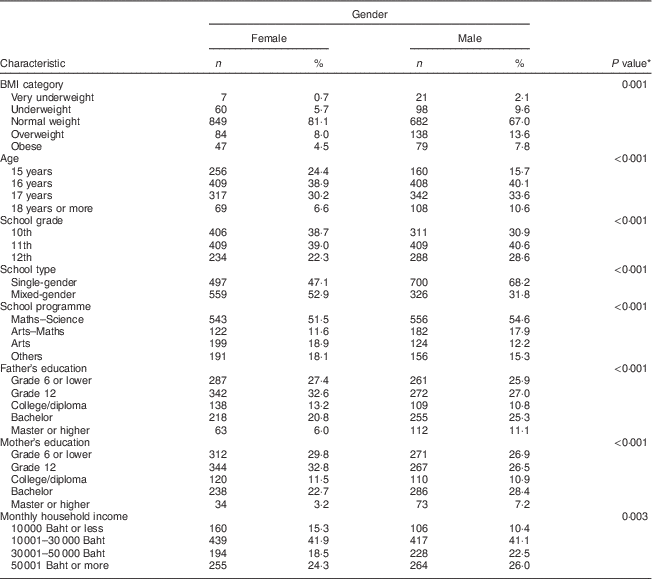
The questionnaire included demographic information including age, school grade, school programme, parental education and household income (refer to Table 1 for the options). Information about height, current and ideal body weight, body dissatisfaction, food choice behaviours, physical activity and weight-management practices were also obtained by the questionnaire.
Characteristics of participants: 10th–12th grade students aged 15–18 years (n 2082) from single- and mixed-gender schools located in Bangkok Metropolitan Region, Thailand, 2014
* Variables were analysed using the χ 2 test.
Body dissatisfaction was assessed using Stunkard’s FRS( Reference Stunkard, Sorensen and Schulsinger 25 ) in males and females. The FRS has been widely used as a self-reported measure of body dissatisfaction with well-known psychometric properties( Reference Stunkard, Sorensen and Schulsinger 25 ). The scale consists of nine male or female figures numbered 1–9, varying in size from very thin to very large. Participants were asked the following questions: (i) ‘Which figure looks most like your current body?’ and (ii) ‘Which figure looks most like your ideal body?’ Body dissatisfaction was measured as a discrepancy score between the current and ideal figures that the participant selected (current – ideal).
Food choice behaviours were determined with a modified version of questions from the Youth Risk Behavior Surveillance Survey (YRBSS) questionnaire( 26 ). This nine-item questionnaire asked the participants to recall their consumption during the past 7 d by indicating how many times per day participants ate or drank fruit juices, fruits, vegetables, soda, sweet drinks, milk and meals, and how many days per week they ate breakfast and snacks. The scores represented the consumption frequency of each food per day (for fruit juices, fruits, vegetables, soda, sweet drinks, milk and meals) or per week (for breakfast and snacks). The total scores from the nine items were calculated by adding up the scores of healthy choices (fruit juices, fruits, vegetables, milk, meals and breakfast) and subtracting the scores of less healthy choices (soda, sweet drinks and snacks); possible scores ranged from 0 to 27 points. The higher scores represent healthier food choices whereas lower scores indicate less healthy food choices.
Physical activity level was measured using a modified PAQ-A( Reference Janz, Lutuchy and Wenthe 24 ). PAQ-A was designed for students in grades 9–12 and has good internal consistency (Cronbach’s α=0·88)( Reference Janz, Lutuchy and Wenthe 24 ). The questionnaire was modified only on the list of example activities (question 1 of the PAQ-A) to match the common activities practised by Thais. Participants were asked to recall their activity during the previous week, i.e. how often they were active at different times of the day (physical education, lunch, after school, evening and weekend) in the last 7 d. This questionnaire consists of nine items, each scored on a 5-point scale. Item 9 was not used to calculate the score, but was used to identify and exclude thirty-seven participants who had unusual activity in the last 7 d period. The summary physical activity score is an average of eight items. A score of 1 indicates low physical activity and 5 indicates high physical activity. The Cronbach’s α in the current study was 0·867.
Weight-management practices were assessed using a modified version of a similar question from the National Health and Nutrition Examination Survey (NHANES)( 27 ). This scale asks about weight-management practices used by the participants to lose weight/body fat or build/increase muscle by asking, ‘Have you done any of the following practices? If yes, please indicate the purpose of each practice you have done.’ The scale consists of lists of activities/practices and spaces for participants to indicate other activities not listed. Examples of the weight-management practices were exercising, eating more fruits and vegetables, drinking a lot of water and eating more protein (see Table 5 for the complete list). Participants were asked to select all activities that they practised in the past 12 months or never practised. The scale also asked about the purpose of the activities practised (to lose weight/body fat or build/increase muscle). This scale was used to determine the frequency of weight-management practices used by the participants. The reliability coefficient of the scale was 0·86.
Current and ideal BMI were calculated from self-reported height and current or ideal weight. The BMI classifications were defined based on the WHO growth reference for school-aged children and adolescents( Reference de Onis, Onyango and Borghi 28 ). The gender-specific cut-offs used in the current study were calculated using an average of the WHO growth reference for each month in the year of age (15, 16, 17 or 18 years). The following cut-offs were used in the study: <−3 sd=very underweight; ≥−3 sd but <−2 sd=underweight; ≥−2 sd but ≤+1 sd=healthy weight; >+1 sd but ≤+2 sd=overweight; and >+2 sd=obese.
Data were analysed using the statistical software package IBM SPSS Statistics Version 21·0. Because the data were clustered within classrooms and schools, mixed-effect models were to be used to estimate the proportion of the total variance in dependent variables that was accounted by the schools and classes within each school. However, the variances of the random effect of the schools and classes within each school were observed not to be different from zero, with less than 3 % of the unexplained variance in the dependent variables shown to be at the school and class within school levels. Therefore, analyses with mixed-effect models were not performed. The χ 2 test was used to analyse categorical data. Univariate analysis was conducted on dependent variables with gender (male and female) and school type (single- or mixed-gender) as fixed factors, and controlled for parental education and household income. Multiple regression analysis was performed to evaluate the risk factors of body dissatisfaction. The independent variables, including gender, school type, parental education, household income, current BMI, food choice behaviours and physical activity levels, were entered in the equation. Significance was set at P<0·05.
Results
Two thousand and eighty-two students (1056 females and 1026 males) completed the questionnaires. Table 1 presents participants’ characteristics. Approximately 74 % of students had a normal BMI, while only 9 % were underweight or very underweight. Males and females had different BMI distributions (P<0·001); for example, males (14 %) were more likely to be overweight than females (8 %). A majority of male participants attended single-gender schools, while female participants attended either single- or mixed-gender schools (P<0·001). Over 50 % of participants were in maths–science programmes. Male participants’ parents were more likely than female participants’ parents to have a bachelor degree or higher (P<0·001). More female participants came from low-income families (monthly household income 10 000 Baht or less), while males came from higher-income families (household income >30 001 Baht; P<0·001).
Only 18 % of females and 21 % of males did not indicate body dissatisfaction using FRS (Table 2). Two-thirds of female participants reported wanting a smaller ideal figure than their current figure. In contrast, males reported desiring either a bigger or a smaller ideal figure than their current figure (44 % wanted a thinner figure and 35 % wanted a bigger figure; P<0·001). A majority of the participants reported one to two degrees of body dissatisfaction (Table 2).
Frequency of body dissatisfaction levels by gender among 10th–12th grade students aged 15–18 years (n 2082) from single- and mixed-gender schools located in Bangkok Metropolitan Region, Thailand, 2014
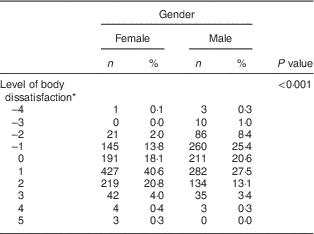
* Body dissatisfaction measured as a discrepancy score between the current and ideal figure that the participant selected (current – ideal). Negative score indicates desire for a bigger figure, positive score indicates desire for a smaller figure.
In univariate analysis, a similar pattern between current and ideal BMI was observed (Table 3). Male students reported significantly higher current and ideal BMI than females (P<0·001). A significant interaction (P<0·001) between gender and school type indicated that females in mixed-gender schools reported higher current and ideal BMI than females in single-gender schools. In contrast, males in single-gender schools reported higher current and ideal BMI than males in mixed-gender schools.
Differences in BMI, body dissatisfaction, physical activity and weight-management practices among 10th–12th grade students aged 15–18 years (n 2082) from single- and mixed-gender schools located in Bangkok Metropolitan Region, Thailand, 2014

The univariate analysis was performed using gender and school type as fixed factors, and controlled for parental education and household income.
* Body dissatisfaction measured as the absolute value of a discrepancy score between the current and ideal figure that the participant selected (current – ideal).
† Students whose current figure was smaller than the ideal figure.
‡ Students whose current figure was bigger than the ideal figure.
§ Higher score indicates higher physical activity level.
In the current study, body dissatisfaction was represented by the absolute value of a discrepancy score between the current and ideal figure that the participant selected (current – ideal). Univariate analysis found differences by school type but not gender in the degree of body dissatisfaction after controlling for differences in parental education and household income; students in single-gender schools had more body dissatisfaction. Among participants who wanted a bigger figure, males reported wanting a significantly bigger figure than females (P<0·001). There were no differences in body dissatisfaction by gender or school type among participants who desired smaller figures. Females reported less physical activity than males but used more weight-management practices (P<0·001). Students who attended different types of schools also differed in physical activity level. Students in mixed-gender schools had significantly higher physical activity levels than those in single-gender schools (P<0·001). However, the significant interaction between gender and school type indicated that females in mixed-gender schools had similar physical activity levels to females in single-gender schools but males in mixed-gender schools had higher physical activity levels than males in single-gender schools (Table 3).
Table 4 presents overall and specific food choice behaviours. Males reported healthier overall food choice behaviours compared with female students (P=0·002). Comparison between single- and mixed-gender schools also showed that the participants in mixed-gender schools reported less healthy consumption than the participants in single-gender schools in overall food choice behaviours as well as more frequent consumption of soda and sweet drinks. However, the participants in mixed-gender schools reported slightly more frequent consumption of fruit juices, fruits and vegetables than the participants in single-gender schools (P<0·05). There were also gender differences; females reported less frequent consumption of sweet drinks and milk and more frequent consumption of snacks compared with males (Table 4).
Food choice scores among 10th–12th grade students aged 15–18 years (n 2082) from single- and mixed-gender schools located in Bangkok Metropolitan Region, Thailand, 2014
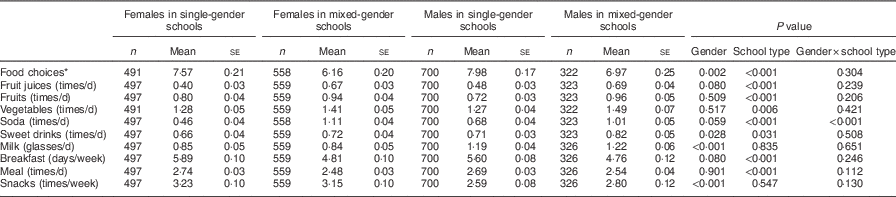
The univariate analysis was performed using gender and school type as fixed factors, and controlled for parental education and household income.
* Food choices indicate total scores calculated from nine items. Higher score indicates healthier food choice behaviours.
Table 5 presents weight-management practices used by the participants and also the purpose of the activities practised. Females were more likely to decrease their portion size, choose foods with less energy, and eat less fat and carbohydrates to lose weight, but less than 50 % of males used these practices. About half of the males reported increasing their protein intake to increase muscle, while few females used this practice. Females reported exercising to lose weight/body fat but males exercised to increase their muscle size. Both females and males skipped meals to lose weight/body fat. Few participants used a liquid diet formula, joined a weight-loss programme, followed a special diet, used prescribed or non-prescribed pills, smoked, took laxatives or induced vomiting. While females drank a lot of water and increased fruit and vegetable intake to lose weight/body fat, males used these practices to either lose weight or increase muscle size. Eating less sugar/candy/sweets, changing eating habits and eating less fast food were used to lose weight/body fat in both females and males (Table 5).
Differences in weight-management practices used during the past 12 months by gender among 10th–12th grade students aged 15–18 years (n 2082) from single- and mixed-gender schools located in Bangkok Metropolitan Region, Thailand, 2014
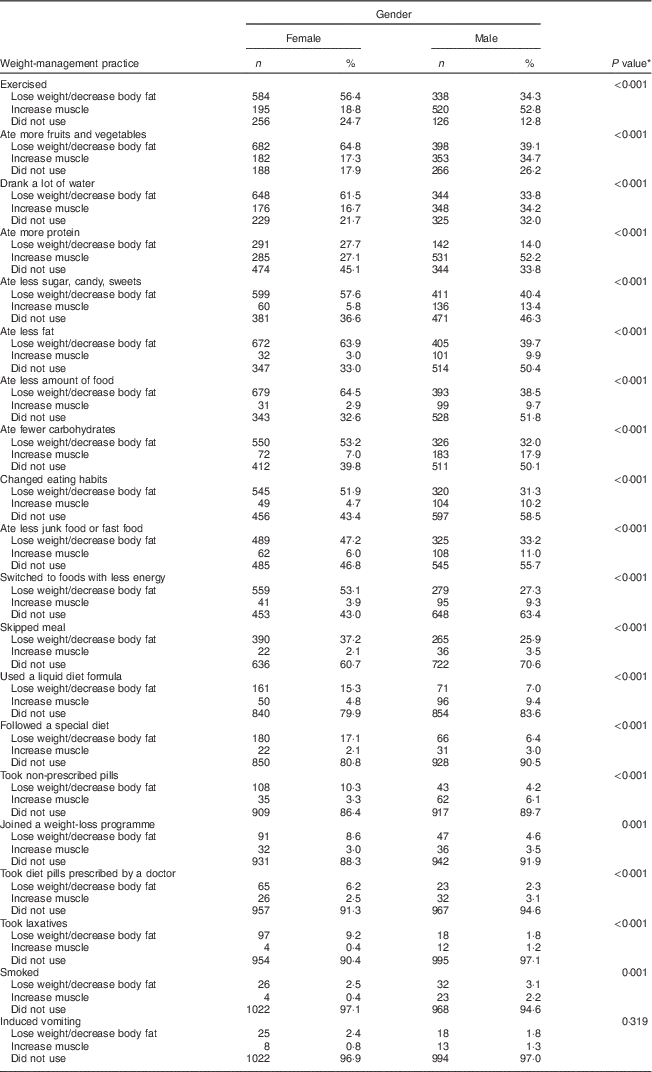
* Variables were analysed using the χ 2 test.
Table 6 presents risk factors of the degree of body dissatisfaction among Thai adolescents based on the absolute value of the discrepancy between current and ideal figures. The combined risk factors showed a significant effect on the degree of body dissatisfaction: F (8, 2008)=62·98, P<0·001, R 2=0·201. Gender (male or female), school type (single- or mixed-gender schools), household income, current BMI and physical activity made a significant contribution (P<0·001) to the degree of body dissatisfaction among Thai adolescents (Table 6). Being female, studying in single-gender schools, having lower household income, higher BMI and being less physically active were associated with a greater discrepancy between current and ideal body figures.
Risk factors of body dissatisfaction among 10th–12th grade students aged 15–18 years (n 2082) from single- and mixed-gender schools located in Bangkok Metropolitan Region, Thailand, 2014
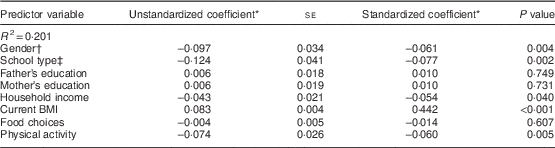
* Obtained from multiple regression analyses.
† Gender was coded as follows: 0=female, 1=male.
‡ School type was coded as follows: 0=single-gender schools, 1=mixed-gender schools.
Discussion
The results of the present study indicate that Thai male and female adolescents had similar levels of overall body dissatisfaction, but dissatisfaction was influenced by school type. Physical activity levels, the number of weight-management practices used and overall food choices differed by gender and school type. Risk factors for the degree of body dissatisfaction among Thai adolescents included current BMI, gender, school type, physical activity and income.
The majority of both male and female Thai students indicated dissatisfaction with their current body shape. Female students reported wanting smaller figures, which is similar to an exploratory study by Sharps et al. ( Reference Sharps, Price-Sharps and Hanson 29 ) that found Thai female participants desired a super-skinny body. In Sharps et al.’s study, the average desired body rated on FRS was 2·92 (sd 0·92)( Reference Sharps, Price-Sharps and Hanson 29 ), while the mean desired body shape of female participants in the current study was 3·14 (se 0·82). Even though Sharps et al.’s study had significantly fewer Thai female participants (n 24) and was conducted in a different region of Thailand( Reference Sharps, Price-Sharps and Hanson 29 ) compared with the current study, our results confirm that Thai females prefer skinny figures as observed in 2001. This finding was reinforced by the lower ideal BMI identified by female than male participants in the current study. The BMI identified by female participants as ideal was equivalent to about the 15th percentile in the WHO growth charts, while the males identified an ideal BMI that was at about the 50 % percentile( Reference de Onis, Onyango and Borghi 28 ). Females and males had similar levels of body dissatisfaction when it was measured as the absolute value of the discrepancy score (e.g. regardless of whether participants wanted bigger or smaller figures). However, a majority of females wanted to be thinner, while males wanted to be either smaller or bigger. These results support the contention of McCabe and Ricciardelli( Reference McCabe and Ricciardelli 13 ) that the dissatisfaction score from FRS for males should be calculated separately for those who want smaller or bigger figures, otherwise the average dissatisfaction score will result in under-reporting of body dissatisfaction.
Gender, school type, household income, BMI and physical activity levels explained approximately 20 % of the variation in the degree of body dissatisfaction. The current study observed a small association between degree of body dissatisfaction and gender (β=−0·06, P=0·004); females were more likely to have a greater discrepancy between their current and ideal figures compared with males. This is in agreement with a previous study in which US female adolescents reported higher body dissatisfaction than male adolescents using the body satisfaction scale( Reference Quick, Eisenberg and Bucchianeri 30 ). However, the univariate analysis in our study showed that male and female students had similar levels of body dissatisfaction. Differences in the number of independent variables included in the analyses might account for the dissimilarity. While only gender and school type were included in the univariate analyses, multiple regression analysis included eight independent variables. Multiple regression analysis also found that the participants in single-gender schools were at increased risk of developing body dissatisfaction, which coincides with the univariate analysis in that participants in single-gender schools reported higher body dissatisfaction than those in mixed-gender schools. The higher dissatisfaction may indicate that peer pressure related to body size is greater when adolescents receive feedback primarily from students of their own gender. However, the findings from the current study contrast with the study by Delfabbro et al. ( Reference Delfabbro, Winefield and Anderson 2 ) who found participants from single- and mixed-gender schools had similar levels of body dissatisfaction assessed by a 5-point physical appearance rating scale. The present results agree with previous studies that found lower socio-economic status( Reference Paxton, Eisenberg and Neumark-Sztainer 31 , Reference van den Berg, Mond and Eisenberg 32 ), higher BMI( Reference Quick, Eisenberg and Bucchianeri 30 , Reference Cromley, Knatz and Rockwell 33 ) and less physical activity( Reference Jensen and Steele 34 ) were associated with higher body dissatisfaction. This might be because participants with lower socio-economic status( Reference Pampel, Denney and Krueger 35 ) and those who were less physically active were at higher risk of being obese.
The reported physical activity of the Thai adolescents in our study was low. The mean PAQ-A score of all participants in the current study was 2·21 (se 0·64), which is lower than for adolescents in Auckland, New Zealand( Reference Maddison, Hoorn and Jiang 36 ), Iowa, USA( Reference Janz, Lutuchy and Wenthe 24 ) and Anand, India( Reference Dave, Desai and Phatak 37 ), with mean PAQ-A scores of 2·80 (sd 0·81), 2·80 (sd 0·65) and 2·62 (sd 0·72), respectively. This result coincides with a study that found leisure time-physical activity of university students in Thailand was very low compared with students in twenty-three other countries( Reference Haase, Steptoe and Sallis 38 ). In 2001, only 21 % of male and 2 % of female Thai university students met the recommendation for physical activity (>6 times in the past 2 weeks)( Reference Haase, Steptoe and Sallis 38 ). In contrast, the Thai National Health Examination Survey reported 77·5 % of Thais aged 15 years and older had enough physical activity in 2004( Reference Porapakkam and Boonyarattapan 21 ) by having moderate-intensity physical activity for at least 30 min/d, and this increased to 81·5 % in 2009( Reference Akeplakorn, Porapakkham and Taneepanichsakul 22 ). These reports determined physical activity using GPAQ version 2, which includes activity at work, travel to and from places, and recreational activity. The intensity, performance time and frequency of each activity were also included in the questionnaire( 23 ). Activity at work accounted for more than 60 % of Thai adults’ physical activity. The definition of physical activity and also the sampling distribution that included adults from extremely urbanized to vigorously labour-intensive agrarian areas might have provided higher results in the Thai National Health Examination Survey.
Consistently, previous research has observed differences in food choices between males and females in which females tended to make healthier food choices than males( Reference Wardle, Haase and Steptoe 39 – Reference Lutfiyya, Chang and Lipsky 42 ). A study by Wardle and colleagues( Reference Wardle, Haase and Steptoe 39 ) compared food choice behaviours in young adults from twenty-three countries. They found that women were more likely than men to eat fruits at least once daily( Reference Wardle, Haase and Steptoe 39 ). In Germany, adolescent girls also reported significantly higher vegetable consumption than adolescent boys( Reference Maier, Özel and Wagnerberger 41 ). In contrast with the available literature, males reported overall healthier food choice behaviours than females in the present study. However, we did not observe differences between genders in consumption of fruits or vegetables in our sample but there was a difference between single- and mixed-gender schools. Our findings coincide with the National Health Examination Survey in Thailand( Reference Akeplakorn, Porapakkham and Taneepanichsakul 22 ) that reported males and females aged 15–29 years had similar consumption of fruits and vegetables. In comparison to other Asian countries, Thai high-school students had poorer eating habits than Japanese and Korean college students( Reference Sakamaki, Amamoto and Mochida 4 ). The participants in the current study had less frequent consumption of fruits and vegetables but consumed snacks more often than Japanese and Korean participants. As also observed in the national survey, only 20 % of adult males and 24 % of females met the recommendations for fruit and vegetable consumption( Reference Akeplakorn, Porapakkham and Taneepanichsakul 22 ). These findings raise a concern at a public level about low fruit and vegetable consumption of the Thai population, which might need attention from the government to raise awareness about this issue.
Similar to a previous study among American college students( Reference Lee, Keenan and Ryu 43 ), exercise and increased fruit and vegetable consumption were the most frequent dieting behaviours used by the participants. Male participants were less likely to report using diet changes such as increasing intakes of fruits and vegetables to change body weight, which suggests that male adolescents should learn that healthy eating is one of the effective and healthy practices to manage their body weight. Unhealthy weight-loss practices that have been observed in Western societies include skipping meals, fasting, inducing vomiting and taking pills (i.e. diuretics, laxatives, diet pills, appetite suppressants)( Reference Lee, Keenan and Ryu 43 , Reference Lampard, MacLehose and Eisenberg 44 ). Unhealthy weight-loss practices such as using medications, smoking and inducing vomiting were also observed among Korean participants although few Korean participants reported using these practices( Reference Kim and Kim 45 ), this was similar to the low rates of these unhealthy weight-loss practices that were used by the Thai high-school students who participated in the current study.
There were several strengths in the present study. First, it recruited a large group of participants including students from single- and mixed-gender schools. Second, to the best of our knowledge, the current study is the first to examine body dissatisfaction in Thai males and also to compare single- and mixed-gender schools. The study obtained more current information about food choice behaviours and physical activity levels using the same methods as studies from other countries, and provided new information about body dissatisfaction and weight-management practices. Finally, the study assessed risk factors for body dissatisfaction specifically in Thai adolescents. However, several study limitations were identified. First, all participants were from the Bangkok Metropolitan Region and were part of a convenience sample, so the results are not nationally representative of all Thai adolescents. For example, the most recent National Health Examination Survey in Thailand, published in 2009, reported a mean BMI of about 22 kg/m2 for the female and male participants aged 15–29 years. These values are slightly higher than the BMI of the adolescents in the current study (mean BMI=20·5 kg/m2 in females and 21·3 kg/m2 in males); however, the National Health Examination Survey results included young adults who have higher BMI values than adolescents( Reference Flegal and Troiano 46 ). In comparison with the national survey, parental education of the study participants was higher than what was reported in the national survey. In the current study, over 40 % of the parents had college or higher education, whereas less than 20 % of the national survey participants aged 30–59 years who lived in Bangkok had similar education levels( Reference Akeplakorn, Porapakkham and Taneepanichsakul 22 ). The median household income of Thai adults in Bangkok aged 15–59 years was 17 000 Baht( Reference Akeplakorn, Porapakkham and Taneepanichsakul 22 ), while approximately 41 % of the participants in the current study had household income between 10 001 and 30 000 Baht. Second, the variables included in the current study explained a modest amount of variation in body dissatisfaction; however, other factors that could influence body dissatisfaction such as psychological variables or the influence of parents, peers and the media on body dissatisfaction were not included. These factors were shown to be significant contributors to body dissatisfaction in previous studies and provided better explanations (higher R 2) of body dissatisfaction when those factors were included in the models( Reference Baker and Wardle 40 , Reference Chen, Gao and Jackson 47 , Reference Mellor, McCabe and Ricciardelli 48 ). Finally, the present study was cross-sectional using a self-reported questionnaire. The results might be skewed because the responses were solely based on participants’ memories and willingness to provide accurate information.
Conclusion and implications
In conclusion, over 80 % of Thai male and female adolescents reported being dissatisfied with their current body shape. Male and female adolescents had similar levels of body dissatisfaction when it was measured as the absolute value of the discrepancy score. However, the genders differed in the type of dissatisfaction; while females wanted a smaller figure, males wanted a bigger figure. The participants attending different types of schools also differed in level of body dissatisfaction and use of weight-management practices. BMI was the strongest risk factor for developing body dissatisfaction in the current study; participants with higher BMI were at higher risk of being dissatisfied with their bodies. The current findings have implications for the development of intervention and prevention programmes. In the present study, school environment (single- or mixed-gender schools) affected food choice behaviours, physical activity level, number of weight-management practices used and level of body dissatisfaction. These findings suggest that prevention or intervention programmes that address body dissatisfaction should be delivered differently between single- and mixed-gender schools. For example, interventions that are designed to reduce the number of weight-management practices used might need to be implemented in mixed-gender schools before single-gender schools; while staff who develop programmes to prevent body dissatisfaction might need to consider single-gender schools as a priority. Policies in single-gender schools should encourage students to be more physically active. For example, Thai schools normally provide one or two classes of physical education per week; increasing the number of physical education classes and promoting the practice of moderate-to-vigorous physical activity during most of these classes would help increase physical activity levels, especially for female students and students in single-gender schools. Health and fitness information should be incorporated into physical education classes as well because this information has been integrated in the physical education curriculum of few Thai schools. Policies about healthy eating in mixed-gender schools should promote decreased consumption of soda and sweet drinks, whereas increased consumption of fruit juices, fruits and vegetables should be encouraged in the single-gender schools. The availability of snacks, soft drinks and sweet drinks should be controlled and the availability of healthy food choices should be increased in the school settings. Future research should further explore what factors influence the differences in body dissatisfaction, physical activity levels, number of weight-management practices used and food choice behaviours between high-school students in single- and mixed-gender schools.
Acknowledgements
Acknowledgements: The authors would like to thank all the participating students, and extend special thanks to the teachers and principals for allowing data collection. At the time of the study, P.C. was a doctoral candidate in the Department of Nutritional Sciences, Oklahoma State University (Stillwater, OK, USA). Financial support: This research received no specific grant from any funding agency in the public, commercial or not-for-profit sectors. Conflict of interest: None. Authorship: P.C. formulated the research questions, designed the study, collected data, analysed the data and wrote the article under the supervision of G.E.G. Ethics of human subject participation: This study was conducted according to the guidelines laid down in the Declaration of Helsinki and all procedures involving human subjects were approved by the Oklahoma State University Institutional Review Board. Written informed consent was not obtained because the documentation of consent would be the only record linking the subject with the research and this research presented no more than minimal risk. Prior the questionnaire distribution, the principal investigator provided verbal instructions and an information sheet that contained the elements of an informed consent form, but did not require a signature. The principal investigator also emphasized to subjects that it would be fine if they did not want to participate, they could leave the questionnaire blank. There would be no risk if they did not participate in the study.



