



The rise in childhood obesity is one of the most alarming public health issues, with approximately 110 million children diagnosed with obesity worldwide( Reference Cali and Caprio 1 ). Moreover, childhood obesity frequently persists into adulthood, and it has been reported that up to 80 % of obese children become obese adults. Excessive fat adipose tissue has been associated with chronic systemic low-grade inflammation, which is related to metabolic complications, such as the metabolic syndrome (MetS)( Reference Cali and Caprio 1 , Reference Alexopoulos, Katritsis and Raggi 2 ).
The prevalence of the MetS, which is characterised by a combination of cardiometabolic alterations including elevated TAG, reduced HDL, high blood pressure, impaired fasting glucose and increased abdominal circumference, has also increased( Reference Garg, Biggs and Carnethon 3 ). In a sample of fifty-seven obese Brazilian adolescents, it has been demonstrated that 33 % had a diagnosis of the MetS( Reference Corgosinho, de Piano and Sanches 4 ). In addition, the MetS has been associated with incident coronary artery disease, stroke and cardiovascular events in adults( Reference Garg, Biggs and Carnethon 3 , Reference Gami, Witt and Howard 5 ).
Poor nutritional habits and sedentarism are collectively related to increased obesity during adolescence( Reference Santaliestra-Pasías, Mouratidou and Huybrechts 6 ), which reinforces the importance of intervention studies that have aimed to increase dietary quality and physical activity levels during this phase of life( Reference Jiménez-Pavón, Sesé and Huybrechts 7 ). Multicomponent therapy plays an important role in improving outcomes and controlling metabolic alterations in obese adolescents, because this model of intervention has the main objective of changing lifestyle factors and promoting health( Reference Sanches, de Mello and Elias 8 , Reference Masquio, de Piano and Sanches 9 ). The combination of weight loss therapy with nutritional, psychological and physical exercise support has been shown to be effective, not only for obesity control but also for other related disorders, including non-alcoholic fatty liver disease, asthma and binge eating, in obese adolescents( Reference Dâmaso, de Piano and Campos 10 ). However, further exploration is needed to identify mechanisms that can better control the MetS parameters in obese adolescents to reduce cardiovascular risk factors and to improve the quality of life and health early in life.
Human obesity is characterised by high levels of pro-inflammatory circulating adipokines, such as leptin, in a condition known as hyperleptinaemia, in addition to elevations in C-reactive protein (CRP), plasminogen activator inhibitor 1 (PAI-1) and a reduction in adiponectin, which is an important anti-inflammatory adipokine( Reference Corgosinho, de Piano and Sanches 4 , Reference González, del Mar Bibiloni and Pons 11 ). This imbalance in pro/anti-inflammatory adipokines results in a chronic inflammatory state, which is thought to be associated with an increased incidence of the MetS in youth, leading to increases in cardiovascular risks( Reference González, del Mar Bibiloni and Pons 11 , Reference Zalesin, Franklin and Miller 12 ).
Leptin is an adipose tissue-derived hormone with functions related to human energy homeostasis and weight control under physiological conditions. However, hyperleptinaemia can be associated with disorders related to endothelial dysfunction( Reference Chai, Sun and Nie 13 ). In fact, previous findings have demonstrated that a high concentration of leptin in obese adolescents is related to cardiovascular risks and the atherosclerotic process. Hyperleptinaemic obese adolescents are unable to increase adiponectin levels after weight loss therapy, which suggests a role of hyperleptinaemia in the impaired attenuation of inflammation, thereby leading to a decrease in vascular protection( Reference Sanches, de Mello and Elias 8 ).
Moreover, low levels of adiponectin are related to obesity. Evidence has indicated that hypoadiponectinaemia is associated with increased cardiovascular risks, such as the MetS, type 2 diabetes, atherosclerosis and CVD, in obese patients( Reference Pérez, Ortiz and Fuentes-Mattei 14 , Reference Gidding, Palermo and DeLoach 15 ).
Given that obesity and the MetS are linked to low-grade inflammation, and that they both have the potential to influence the severity of CVD, strategies for controlling these conditions may improve metabolic status in obese patients. Thus, the first aim of the present study was to verify the role of multicomponent therapy in controlling the MetS, inflammation and carotid intima-media thickness (cIMT) in obese adolescents. The second objective was to investigate the possible relationships between pro/anti-inflammatory adipokines, the MetS parameters and cIMT in the analysed population.
Methods
Subjects
A total of 132 obese adolescents were recruited to participate in the Interdisciplinary Obesity Program/Obesity Study Group (GEO) of the Universidade Federal de São Paulo/Escola Paulista de Medicina. At the beginning of the year, the project was published in the media, newspapers and magazines in São Paulo to recruit adolescents. The inclusion criteria were age (15–19 years), post-pubertal Tanner stage ≥ 5( Reference Tanner and Whitehouse 16 ) and BMI>95th percentile of CDC guidelines( 17 ). The exclusion criteria included an identified genetic disease, previous drug use, chronic alcohol consumption, pregnancy and the inability to perform physical activities based on an electrocardiogram test. The sample size for the present study was a convenience sample determined by the number of participants meeting the GEO inclusion criteria.
For the present analysis, we excluded those patients who did not complete the therapy by attending more than 75 % of the treatment sessions and evaluations for 1 year. Thus, sixty-nine obese adolescents (forty-two girls and twenty-seven boys) were evaluated in the present study and concluded weight loss therapy in 1 year. The patients were distributed into two groups as follows: diagnosed with the MetS and not diagnosed with the MetS.
A MetS diagnosis was made when the waist circumference was higher than the 90th percentile for age and sex in association with two or more International Diabetes Federation (IDF) criteria, as follows: HDL ≤ 1·3 mmol/l ( ≤ 50 mg/dl) (girls) and ≤ 1·0 mmol/l ( ≤ 40 mg/dl) (boys); TAG>1·7 mmol/l (>150 mg/dl); glucose>5·6 mmol/l (>100 mg/dl); blood pressure ≥ 130/85 mmHg( Reference Zimmet, Alberti and Kaufman 18 ).
The present study was conducted according to the principles of the Declaration of Helsinki, was approved by the Institutional Ethical Committee (no. 72 538) and was registered with ClinicalTrials.gov (no. NCT01358773).
Medical screening
An endocrinologist completed a clinical interview to determine the inclusion and exclusion criteria. All subjects underwent electrocardiograms. Thereafter, the volunteers started the multicomponent weight loss intervention. All measurements were performed at baseline and after 1 year.
Anthropometric measurements and body composition
Body mass (kg), height (m), BMI (kg/m2) and waist circumference were measured using standard procedures( Reference Lohman, Roche and Martorrel 19 ). Body composition was estimated by plethysmography air displacement in a BOD POD system (version 1.69; Life Measurement Instruments)( Reference Fields, Higgins and Radley 20 ).
Visceral and subcutaneous fat were estimated using abdominal ultrasonography by the same physician blinded to the subject assignment groups. A 3·5 MHz multifrequency transducer (broad band) was used to reduce the risk of misclassification. Subcutaneous fat was defined as the distance between the skin and the superficial plane of the rectus abdominal muscle. Visceral fat was defined as the distance between the deep plane of the same muscle and the anterior wall of the aorta( Reference Ribeiro-Filho, Faria and Azjen 21 ).
Carotid intima-media thickness measurements
cIMT was measured using high-resolution ultrasound equipment (Logic 5 and Logic 7; General Electric) with a 7–14 MHz linear array transducer. The same experienced radiologist performed all scans, and was unaware of the medical and biochemical statuses of the subjects; three repeated measurements of the right and left common carotid deep wall were obtained at 2 cm proximal to the bulb bifurcation. The distance between the leading edge of the first bright line on the deep wall (lumen–intima interface) and the leading edge of the second bright line (media–adventitia interface) indicated the cIMT of the deep wall. The mean of the higher measurements for each side was used as the cIMT( Reference Guardamagna, Abello and Saracco 22 ).
Serum analysis
Blood samples were collected after a 12 h overnight fast. The serum was separated, and concentrations of glucose, insulin, total cholesterol, HDL-cholesterol (HDL-C), LDL-cholesterol (LDL-C), VLDL-cholesterol (VLDL-C) and TAG were determined by enzymatic colorimetric methods (CELM) immediately after blood collection. The serum samples were stored at − 80°C for subsequent adipokine analyses. Leptin, adiponectin, PAI-1 and high-sensitivity CRP (hs-CRP) were measured with an ELISA kit from R&D Systems. The CV for the adipokine procedure were as follows: adiponectin (4·5 %); leptin (4·07 %); PAI-1 (3·89 %); hs-CRP (7·90 %). For the present study, the leptin data were analysed according to the reference values described by Gutin et al. ( Reference Gutin, Ramsey and Barbeau 23 ). The pro-inflammatory leptin:adiponectin ratio and anti-inflammatory adiponectin:leptin ratio were calculated.
Insulin resistance was determined using the homeostasis model assessment for insulin resistance (HOMA-IR) according to the following equation( Reference Matthews, Hosker and Rudenski 24 ):
 $$\begin{eqnarray} HOMA-IR = fasting\,\,insulin\,(\mu U/ml)\times fasting\,\,blood\,\,glucose\,\,(mmol/l)/22.5. \end{eqnarray}$$
The homeostasis model assessment-adiponectin (HOMA-AD) was calculated as follows( Reference Matsuhisa, Yamasaki and Emoto 25 ):
 $$\begin{eqnarray} HOMA-AD = fasting\,\,glucose\,\,(mg/dl)\times fasting\,\,insulin\,\,(\mu U/l)/adiponectin\,(\mu g/ml). \end{eqnarray}$$
Insulin sensitivity was determined by the quantitative insulin sensitivity check index (QUICKI) as follows( Reference Katz, Nambi and Mather 26 ):
 $$\begin{eqnarray} QUICKI = 1/(log\,\,fasting\,\,insulin\,(\mu U/ml) + log\,\,fasting\,\,glucose\,(mg/dl)). \end{eqnarray}$$
The HOMA-IR cut-off value adopted for adolescents was 3·16( Reference Keskin, Kurtoglu and Kendirci 27 ) and that of insulin was 15·0( 28 ). (To convert insulin in μU/ml to pmol/l, multiply by 6·945; to convert glucose in mg/dl to mmol/l, multiply by 0·0555.)
Blood pressure
Systolic blood pressure (SBP) and diastolic blood pressure (DBP) were measured on the right arm using a mercury-gravity manometer (Unitec) with the appropriate cuff size; two measurements were performed after the subjects had been sitting for at least 5 min, and the mean value was used for the analyses. Mean blood pressure (MBP) was calculated as follows:
 $$\begin{eqnarray} MBP = DBP + ((SBP - DBP)/3). \end{eqnarray}$$
Research design
The multicomponent obesity therapy consisted of clinical, nutritional and psychological therapies and exercise training for 1 year, as detailed below.
Clinical therapy
Each month, the obese adolescents visited the endocrinologist with their parents to address their health and clinical parameters. For each of these visits, the entire GEO team was also present. The doctor monitored and evaluated all of the adolescents' clinical examinations and treated health problems during therapy. The medical follow-up included an initial medical history and a physical examination including blood pressure, cardiac frequency, and body weight, and the adolescents were assessed for their adherence to the multicomponent therapy. The team discussed some possible lifestyle changes to promote their health with the adolescents and their parents.
Nutritional therapy
Once a week, the adolescents had a nutritional orientation, and were provided information on the food pyramid, diet record assessment, weight loss, high-fat diets, food labels, dietetics, fat-free and low-energy foods, fast food calories and nutritional composition, good nutritional choices on special occasions, healthy sandwiches, shakes and products to promote weight loss, functional foods, and decisions on food choices. The lessons were taught by trained nutritionists to encourage the adolescents to follow healthy eating habits according to the food pyramid( Reference Philippi, Latterza and Cruz 29 ).
Each month, all patients received an individual nutritional consultation. Dietary energy intake was set at the level recommended by the dietary reference intake for subjects with low levels of physical activity of the same age and sex following a balanced diet( 30 ). No pharmacotherapies or antioxidants were recommended. At the individual nutritional consultation, some adjustments were made in the diet plan to adjust food habits and health.
At the beginning and at the end of the study, a 3-d dietary record was collected. Because most obese people under-report their food consumption, each adolescent was asked to record diet with the help from his/her parents. These dietary data were transferred to a computer by the same dietitian, and energy intake and nutrient composition were analysed by a PC programme developed at the Universidade Federal de São Paulo (Nutwin software for Windows; version 1.5) that used data from Western and local food tables.
Exercise therapy
The adolescents participated in personalised training for 60 min/session, three times a week (180 min/week) under the supervision of a sports therapist. The exercise protocol was based on the American College of Sports Medicine (ACSM) recommendations( Reference Donnelly, Blair and Jakicic 31 ) adapted by Foschini et al. ( Reference Foschini, Araújo and Bacurau 32 ) of combined exercise, including 30 min of aerobic training plus 30 min of resistance training per session.
The aerobic training consisted of running on a motor-driven treadmill (Model TR 9700HR; Life Fitness) at a cardiac frequency intensity representing the ventilatory threshold I (50–70 % of the maximum oxygen uptake), as determined by the results of an initial oxygen uptake test for aerobic exercise. The heart rate was controlled by physiologists, and was measured with a cardiometer (Polar–Model® FS1) at intervals of 5 min during the training sessions. After 6 weeks, aerobic tests were performed to assess physical capacity to make adjustments in physical training intensity( Reference Dâmaso, da Silveira Campos and Caranti 33 ).
Resistance training exercises targeted each of the main muscle groups. The sequence of physical exercises used large muscle groups before small ones, multiple-joint before single-joint exercises and higher-intensity before lower-intensity exercises. The exercises included the bench press, leg press, sit-ups, lat pull-downs, hamstring curls, lower-back exercises, the military press, calf raises, arm curls and triceps pushdowns. The first 2 weeks of the resistance training programme involved adaptation to training and learning the movements (three sets of a maximum of fifteen to twenty repetitions). Following this period, the training load was adjusted by inversely modifying the volume and intensity, decreasing the number of repetitions to between six and twenty for three sets. The intensity of resistance training was quantified as a percentage of the one-repetition maximum and was continued until volitional fatigue for each of the major muscle groups. These factors were adapted to each individual's habitual physical activity, physical function, health status, exercise responses and stated goals, as recommended for universal screening to enhance the safety of exercise. The rest interval between the series and exercises was as follows: fifteen to twenty repetition maximum = 45 s; ten to twelve repetition maximum = 1 min; six to eight repetitions maximum = 1·5 min( Reference Dâmaso, da Silveira Campos and Caranti 33 ).
Psychological therapy
The adolescents had a weekly psychological support group session to help them address their emotions, the relationship between their feelings and food consumption, and to discuss body image and eating disorders (bulimia, anorexia nervosa and binge eating, and their signs, symptoms and health consequences). Diagnoses of common psychological problems associated with obesity, such as depression, anxiety, body image disturbances, binge eating and bulimic symptoms, were established by validated questionnaires( Reference Gorenstein and Andrade 34 – Reference Cordás and Hochgraf 38 ). Individual psychological therapy was recommended when individuals were identified with nutritional and behavioural problems.
Statistical analyses
The distributional assumptions were verified by the Kolmogorov–Smirnov test. Parametric variables were expressed as the means and standard deviations, whereas non-parametric variables were expressed as the median (minimum–maximum). Comparisons between measurements at baseline and after the weight loss intervention were performed using dependent t tests for parametric variables and the Wilcoxon signed-rank test for non-parametric variables. Comparisons between groups at baseline and at the end of the therapy were made using the independent t test for parametric variables or Mann–Whitney test for non-parametric variables. The Pearson and Spearman correlations were performed to assess the direction and strength of the relationships between the study variables. Simple linear regression analysis was applied. The McNemar χ2 test was used to verify the changes in the prevalence at baseline and after therapy. All data were analysed using STATISTICA 7.0 (Statsoft), and the significance level was set at a P< 0·05.
Results
The effect of multicomponent therapy for the entire group
A total of 132 obese adolescents were enrolled in the programme; however, sixty-nine obese adolescents completed 1 year of the multicomponent weight loss therapy and more than 75 % of the treatment sessions. It is important to note that no differences were observed in any variables between the completers and non-completers. In the present study, the patients were analysed in two groups according to MetS diagnosis, as follows: MetS (n 19) and non-MetS (n 50). The results are presented for the entire study population, and there were no significant sex differences in the prevalence of the MetS or its variables.
The prevalence of the MetS was reduced from 27·5 to 13·0 % after 1 year of multicomponent therapy. We also observed significant reductions in the prevalence of the following altered MetS parameters after 1 year: waist circumference; SBP; DBP; hyperinsulinaemia; hyperleptinaemia (Fig. 1(a)). An increase was observed in the prevalence of patients with 0 and 1 alterations. However, there was a reduction in the prevalence of those with 2, 3 and 4 alterations (Fig. 1(b)).
The prevalence of metabolic syndrome (MetS) parameters, hyperinsulinaemia, high homeostasis model assessment for insulin resistance (HOMA-IR) and hyperleptinaemia (a) and the number of altered parameters in obese adolescents at baseline ( ) and after therapy (
 ) (b). The prevalence altered parameters was obtained according to parameters established from International Diabetes Federation (IDF) criteria. † Mean value was significantly different from that of baseline (P< 0·05; McNemar χ2 test). HDL-C, HDL-cholesterol; SBP, systolic blood pressure; DBP, diastolic blood pressure.

The effect of multicomponent therapy on the non-metabolic syndrome group
After therapy, the non-MetS group presented significant reductions in body mass, BMI, body fat, waist circumference, visceral and subcutaneous fat and the visceral:subcutaneous fat ratio (Table 1). Significant improvements in insulin, HOMA-IR, QUICKI, total cholesterol, LDL-C, VLDL-C, TAG, SBP, DBP, MBP and energy intake were also observed. Fat-free mass (kg and %) significantly increased. With regard to biomarkers of inflammation, leptin, the leptin:adiponectin ratio, PAI-1, cIMT and HOMA-AD were reduced. We also observed significant increases in adiponectin and the adiponectin:leptin ratio (Table 2).
Anthropometric, metabolic and clinical data for the obese adolescents in the metabolic syndrome (MetS) and non-MetS groups during multicomponent therapy (Mean values and standard deviations; median values and minimum–maximum)

HOMA-IR, homeostasis model assessment for insulin resistance; QUICKI, quantitative insulin sensitivity check index; HDL-C, HDL-cholesterol, LDL-C, LDL-cholesterol; VLDL-C, VLDL-cholesterol.
* Mean value was significantly different from that of non-MetS group at the same time point (P< 0·05).
† Mean value was significantly different from that of baseline (P< 0·05).
‡ To convert insulin in μU/ml to pmol/l, multiply by 6·945.
Adipokines and cardiovascular risks in the obese adolescents with and without the metabolic syndrome (MetS) during multicomponent therapy (Mean values and standard deviations; median values and minimum–maximum)

PAI-1, plasminogen activator inhibitor 1; hs-CRP, high-sensitivity C-reactive protein; cIMT, carotid intima-media thickness; HOMA-AD, homeostasis model assessment-adiponectin.
* Mean value was significantly different from that of non-MetS group at the same time point (P< 0·05).
† Mean value was significantly different from that of baseline (P< 0·05).
The effect of multicomponent therapy on the metabolic syndrome group
After therapy, the MetS group presented significant reductions in anthropometric parameters and body composition (body mass, BMI, body fat, waist circumference, visceral and subcutaneous fat, and visceral:subcutaneous fat ratio; Table 1). Fat-free mass (%) also increased in this group. Significant improvements in glucose, insulin, HOMA-IR and QUICKI were observed. With regard to the lipid profile, the MetS group showed reductions only in TAG and VLDL-C. Moreover, SBP, DBP and MBP were significantly reduced. This group presented with significant decreases in leptin, PAI-1, hs-CRP, cIMT and HOMA-AD. Adiponectin also increased significantly in the MetS group (Table 2).
Comparison between the groups
At baseline, the MetS group presented significantly higher values for waist circumference, glucose, insulin, and SBP and MBP, but these differences did not remain after therapy (Table 1). However, this group also presented significantly higher VLDL-C and TAG levels and a lower HDL-C level at baseline and after therapy. After intervention, variations (Δ) in insulin, HOMA-IR, SBP, MBP, PAI-1 and HOMA-AD were significantly increased in the MetS group compared with the non-MetS group (Tables 1 and 2).
Correlations and regression analysis
Entire group
At baseline, the number of MetS parameters was correlated with body mass, BMI, waist circumference and HOMA-IR (Table 3). The leptin concentration and leptin:adiponectin ratio and adiponectin:leptin ratio were correlated with BMI and body fat (% and kg). PAI-1 was correlated with SBP, DBP and MBP. hs-CRP was correlated with body mass, BMI, body fat (% and kg) and waist circumference.
Correlations between variables

HOMA-IR, homeostasis model assessment for insulin resistance; HOMA-AD, homeostasis model assessment-adiponectin; PAI-1, plasminogen activator inhibitor 1; SBP, systolic blood pressure; DBP, diastolic blood pressure; MBP, mean blood pressure; hs-CRP, high-sensitivity C-reactive protein; MetS, metabolic syndrome; QUICKI, quantitative insulin sensitivity check index; LDL-C, LDL-cholesterol; cIMT, carotid intima-media thickness.
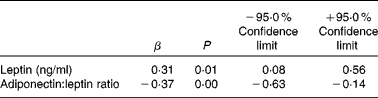
A positive correlation of the number of metabolic alterations with leptin and the leptin:adiponectin ratio and a negative correlation with the adiponectin:leptin ratio was also observed at the end of the therapy. In the regression analysis present in Table 4, leptin and the adiponectin:leptin ratio revealed a potential association with the number of MetS parameters in obese adolescents at the end of the therapy.
Simple regression analysis of leptin and the adiponectin:leptin ratio and the number of metabolic alterations in the obese adolescents (Beta values and confidence limits)
The Δ in leptin correlated with the Δ in body mass, BMI and body fat (kg and %) (Table 3). The Δ in adiponectin correlated with the Δ in glucose, HOMA-IR and TAG. The Δ in the leptin:adiponectin ratio correlated with the Δ in body fat (% and kg) and HOMA-AD, and the Δ in the adiponectin:leptin ratio correlated with the Δ in body mass, BMI and body fat (kg and %).
Non-metabolic syndrome group
At baseline, the number of MetS parameters was correlated with body mass, BMI, body fat, waist circumference and PAI-1 (Table 3). After weight loss intervention, the Δ in leptin was correlated with the Δ in body mass, BMI and body fat, and the Δ in the leptin:adiponectin ratio was correlated with body fat.
Metabolic syndrome group
At baseline, the number of MetS parameters was correlated with glucose, total cholesterol, LDL-C and cIMT (Table 3). cIMT was correlated with total cholesterol and LDL-C (Table 3). After weight loss intervention, the Δ in the adiponectin:leptin ratio was correlated with the Δ in glucose, QUICKI, total cholesterol, LDL-C and SBP. We also observed that the Δ in cIMT was correlated with the Δ in QUICKI, total cholesterol and LDL-C.
Discussion
The first aim of the present study was to verify whether multicomponent therapy effectively improved the MetS parameters, inflammation and cardiovascular risks in obese adolescents. At baseline, the obese individuals with the MetS had significantly higher waist circumference, glucose, insulin, SBP and MBP, VLDL-C, and TAG and lower HDL-C compared with obese individuals without the MetS. The most important finding was that this therapy promoted significant reductions in the prevalence of the MetS, the cardiometabolic profile, inflammation, pro-thrombotic factor and cIMT in obese adolescents after 1 year of intervention. All of these improvements are important in controlling obesity, CVD and subclinical atherosclerotic processes, because the presence of this cluster of cardiometabolic abnormalities during childhood raises the risk of CVD during adulthood( Reference Magnussen, Koskinen and Chen 39 ).
The MetS diagnoses in paediatric patients have been associated with a 2-fold increase in the risk of developing high cIMT during adulthood( Reference Magnussen, Koskinen and Chen 39 ). cIMT has been considered to be an important early screening tool for assessing subclinical manifestations of CVD, because it is the first subclinical sign of atherosclerosis and results from endothelial dysfunction that creates lipid deposits in the intima of systemic arteries( Reference de Lima Sanches, de Mello and Elias 40 ). In the present study, cIMT was reduced in both groups (MetS and non-MetS). It is important to note that the number of MetS parameters was correlated with cIMT in MetS obese adolescents. Our findings are consistent with those of other studies in which adults with the MetS presented higher cIMT values compared with patients without the MetS( Reference Aydin, Bulur and Alemdar 41 ). Leite et al. ( Reference Leite, Santos and Monteiro 42 ) demonstrated that adolescents with the MetS have increased cIMT compared with normal-weight and overweight adolescents. These results reinforce the link between obesity, cardiometabolic abnormalities and CVD, and it is crucial that they are considered during childhood in clinical practice.
Importantly, obese adolescents with the MetS did not show reductions in total cholesterol and LDL-C after therapy; such improvements were observed only in the non-MetS group (Table 1). The present findings also demonstrate that total cholesterol and LDL-C were correlated with higher cIMT values in the MetS patients (Table 3). These findings suggest that in obese adolescents with the MetS, the clustering of metabolic abnormalities and central obesity, two key factors related to the physiopathology of the MetS, may have a resistance effect on lipid metabolism in contrast with adolescents without the MetS, rendering metabolic control more difficult( Reference Fuentes, Fuentes and Vilahur 43 ).
Furthermore, we observed significant improvements in adiponectin, leptin, PAI-1, hs-CRP, HOMA-AD and HOMA-IR for both groups after therapy (Tables 1 and 2), contributing to the control of the pro-inflammatory state. Conversely, only the non-MetS adolescents presented significant improvements in adiponectin:leptin ratio and leptin:adiponectin ratio (Table 2). The modulation of the adiponectin:leptin ratio is an important factor for consideration in MetS patients, because this biomarker was found to be significantly correlated with the MetS parameters in the present study, especially the atherogenic lipid profile, which did not improve after intervention in the MetS group (Tables 2 and 3). Moreover, it has recently been demonstrated that an increase in the adiponectin:leptin ratio is an independent predictor of cIMT reduction in obese adolescents after weight loss( Reference Masquio, de Piano and Sanches 9 ). Together, these data demonstrate the key role of the adiponectin:leptin ratio in modulating cardiometabolic parameters and CVD progression in obese adolescents.
Previous findings have demonstrated that the leptin concentration is positively associated with the MetS parameters in children, adolescents and adults( Reference Smits, Woudstra and Utzschneider 44 – Reference Jiménez-Pavón, Sesé and Valtueña 46 ). Thus, hyperleptinaemia may be associated with CVD, endothelial dysfunction and myocardial infarction( Reference Chai, Sun and Nie 13 , Reference Nakamura, Fuster and Walsh 47 ). Importantly, in the present analysis, the prevalence of hyperleptinaemia was significantly reduced after therapy (Fig. 1(a)).
However, adiponectin is an anti-inflammatory adipokine that plays an important role in metabolic and cardiovascular homeostases. This adipokine exerts anti-atherosclerotic effects via the inhibition of pro-inflammatory cytokines, such as TNF-α and the stimulation of anti-inflammatory cytokines. Moreover, adiponectin is an insulin sensitiser that contributes to the delay and/or prevention of insulin resistance and type 2 diabetes( Reference Fuentes, Fuentes and Vilahur 43 ). The modulation of both the leptin and adiponectin concentrations is an important strategy for controlling the MetS.
For the second aim of the present study, we explored the possible relationships between pro/anti-inflammatory adipokines, the MetS parameters and cIMT in obese adolescents. Among the inflammatory markers, leptin and leptin:adiponectin ratio, and adiponectin:leptin ratio were correlated with the number of MetS parameters at the end of the therapy. However, in the regression analysis, only leptin and the adiponectin:leptin ratio showed potential associations with the number of MetS parameters in obese adolescents.
Importantly, the number of MetS parameters was positively correlated with increases in waist circumference, body mass, BMI and HOMA-IR for the entire group, confirming the role of adipose tissue and insulin resistance in promoting cardiometabolic alterations( Reference González, del Mar Bibiloni and Pons 11 ). Thus, clinical strategies for promoting weight loss and fat reduction can directly influence and control the MetS parameters, as was observed in the present study.
Another important finding is that changes in cIMT were correlated with changes in total cholesterol, LDL-C and QUICKI in the MetS group after therapy. The results of a previous longitudinal study showing that LDL-C is a predictor of cIMT progression and demonstrating that cIMT progression increases by 3 % for each 1 mg/dl (0·0259 mmol/l) increase in LDL-C are in agreement with our findings. Additionally, the authors also found a higher incidence of cIMT progression in adolescents with higher levels of LDL-C and total cholesterol( Reference Toledo-Corral, Davis and Alderete 48 ).
Correlations between the adiponectin:leptin ratio and the MetS parameters, such as glucose, QUICKI, total cholesterol, LDL-C and SBP, after therapy in the MetS group were validated in the present study. To confirm this hypothesis, we verified the role of adiponectin in controlling glucose metabolism, because it was found to be negatively correlated with glucose and HOMA-IR after the weight loss intervention for the entire group. These data reinforce the influence of the adiponectin:leptin ratio on the MetS parameters and cardiovascular risk in the MetS patients, as has been previously reported in other studies( Reference Mirza, Qu and Li 49 , Reference Vega and Grundy 50 ).
Additionally, in the present analysis, we verified that the baseline and Δ in leptin and the adiponectin:leptin ratio and leptin:adiponectin ratio were correlated with body mass, BMI and body fat, demonstrating the effects of both weight control and fat loss on the attenuation of the inflammatory process. Moreover, changes in the leptin:adiponectin ratio were correlated with the changes in insulin resistance estimated by the HOMA-AD. Accordingly, the results of the HELENA study that evaluated 1053 European adolescents indicated that leptin is a risk factor for insulin resistance in both boys and girls( Reference Jiménez-Pavón, Sesé and Valtueña 46 ).
It is also important to note that in the present analysis, a correlation was found between PAI-1 and blood pressure in the entire group as well as between PAI-1 and the number of MetS parameters in the non-MetS group. In agreement with these findings, a positive relationship between PAI-1 and the MetS parameters has previously been demonstrated, including the HOMA-IR and blood pressure, in obese adolescents( Reference Masquio, de Piano and Campos 51 ). PAI-1 is thought to be a pro-thrombotic adipokine involved in thrombus formation and cardiovascular risk and an important biomarker for vascular endothelial function, and it is increased in obese adolescents diagnosed with the MetS because of the inflammatory state caused by the excessive adipose tissue( Reference Masquio, de Piano and Campos 51 , Reference Wei, Liu and Yang 52 ).
Some limitations must be considered in the interpretation of these findings. A large sample size is needed to confirm the results observed in the present study. Additionally, further investigations should be performed of other inflammatory parameters. Nonetheless, the strengths of the present study include the positive effects of multicomponent therapy, such as nutrition, physical exercise, psychological and clinical support, that were observed, indicating the effectiveness of this clinical strategy for controlling the MetS, inflammation and cardiovascular risks in obese adolescents.
In conclusion, the multicomponent therapy promoted significant improvements in the metabolic parameters, the inflammatory profile and cIMT. However, the MetS patients showed resistance in the attenuation of the atherogenic lipid profile and leptin:adiponectin ratio and adiponectin:leptin ratio. These results suggest that the MetS patients have increased cardiovascular risks and that it is important to attempt to control the inflammatory process associated with obesity in clinical practice to improve adolescent health. Additionally, we were able to show the relationship of the MetS parameters with inflammatory markers and cIMT in obese adolescents.
CNPq (no. 141533/2012-9), CAPES (no. AUX-PE-PNPD 2566/2011), FAPESP (no. 2011/50 356-0; 2011/50 414-0; 2013/041364), UNIFESP, AFIP, CEPE and CEMSA supported the Interdisciplinary Obesity Program. Special thanks go to the volunteers and their families.
Acknowledgements
The authors' contributions are as follows: D. C. L. M., A. d. P., R. M. S. C., P. L. S. and A. R. D. designed the experiment, collected and analysed the data, and wrote the manuscript; J. C., B. D. M. N., J. P. C.-F., F. C. C., L. M. O. and C. M. O. N. designed the experiment, and collected and analysed the data; M. T. d. M., S. T. and A. R. D. conceived the study, participated in its design and coordination, and helped to draft the manuscript. All authors approved the final version of the study
The authors declare that they have no conflicts of interest.



