


Breakfast intake is considered an essential characteristic of a healthy diet pattern for adults and children, and has been found to correlate with attributes of a healthy lifestyle such as physical activity levels, cardiovascular health indices as well as cognitive and academic performance in youth( Reference Ruxton and Kirk 1 – Reference Hoyland, Dye and Lawton 3 ). With regard to the association of breakfast with diet quality in children and adolescents, it has been shown that those who regularly eat breakfast have a diet of higher overall quality( Reference Kontogianni, Farmaki and Vidra 4 , Reference Mariscal-Arcas, Rivas and Velasco 5 ), better food choices, regular eating patterns( Reference Affenito, Thompson and Barton 6 – Reference Hanes, Vermeersch and Gale 8 ), consistent energy intake( Reference Affenito, Thompson and Barton 6 ), and nutrient and fibre intakes that are more likely to meet the recommended values( Reference Rampersaud, Pereira and Girand 2 , 9 ). Concomitantly, skipping breakfast in children and adolescents has been associated with low overall diet quality( Reference Veugelers, Fitzgerald and Johnston 10 , Reference Woodruff, Hanning and Lambraki 11 ), inability to reach recommended intakes of micronutrients( 9 , Reference Nicklas, O’Neil and Berenson 12 – Reference Sampson, Dixit and Meyers 15 ), higher energy intake at dinner( Reference Moreno and Rodríguez 16 ), lower intakes of healthful foods( Reference Dubois, Girard and Potvin Kent 17 ) and increased intakes of low-nutritive-value foods( 9 , Reference Keski-Rahkonen, Kaprio and Rissanen 18 ), such as high-fat snacks, later in the day( Reference Resnicow 19 ). Apart from the favourable associations with diet quality, regular breakfast intake has been associated in children with lower obesity rates (as assessed by BMI)( 9 , Reference Firore, Travis and Whalen 20 , Reference Szajewska and Ruszczynski 21 ), whereas breakfast skipping is associated with increased BMI( Reference Rampersaud, Pereira and Girand 2 , 9 , Reference Utter, Scragg and Ni Mhurchu 22 , Reference Croezen, Visscher and Ter Bogt 23 ) and may be predictive of increased BMI in early adulthood( Reference Niemeier, Raynor and Lloyd-Richardson 24 ) even though skippers report lower energy intakes.
In view of the above data, the Expert Committee on Pediatric Obesity of the American Pediatric Academy included the daily intake of breakfast in the five most important behavioural recommendations aiming at the prevention of obesity( Reference Barlow 25 ). The 2010 Dietary Guidelines for Americans also recommend regular intake of nutrient-dense breakfast for children and adolescents to maintain healthy weight, prevent obesity and improve nutrient intakes( 9 ). A number of public initiatives, such as US Department of Agriculture’s School Breakfast Program( Reference Hirschman and Chriqui 26 ), the Primary School Free Breakfast Initiative in Wales( Reference Moore, Moore and Tapper 27 ) and the European Union’s Breakfast is Best campaign( 28 ), also promote regular breakfast intake.
Breakfast has been an indispensable component of past diets followed in Mediterranean societies, same as in many other societies in the Western world( Reference Grivetti 29 ). The study of traditional food practices in Cyprus shows that breakfast has been an essential element of Cypriots’ daily routine( Reference Yiagkou, Demetriou and Lazarou 30 ). Published data on the Cypriot population’s breakfast habits are scarce and, to date, no systematic work has been attempted to investigate the association of breakfast intake with lifestyle and health indices. However, recent data suggest that Cypriots have abandoned this healthy habit: in the CYFamilies (Cyprus Families) study (n 83, mean age 9·2 (sd1·7) years), daily breakfast intake was reported by 72 % of the children and consumption of breakfast cereals by 55 % of the children( Reference Lazarou, Panagiotakos and Chrysohoou 31 ); while in the nationwide CYKIDS (Cyprus Kids) study (n 1140, mean age 10·7 (sd 0·98) years), approximately 20 % of boys and 25 % of girls reported ‘not having breakfast on most days of the week’( Reference Lazarou, Panagiotakos and Kouta 32 ) and 12 % of all children had breakfast less than once per week( Reference Matalas, Lazarou and Panagiotakos 33 ). In the same study, it was observed that a dietary pattern of increased consumption of milk and cereals, typical of regular breakfast eaters, was related to lower obesity levels but only in girls( Reference Lazarou, Karaolis and Matalas 34 ). Thus, in view of the lack of data in this area, the aim of the present paper was to assess associations between breakfast intake and lifestyle attributes, i.e. diet quality and physical activity levels, as well as associations with Fe status and cardiovascular risk markers (i.e. obesity and serum cholesterol, TAG, fasting glucose and high-sensitivity C-reactive protein (hs-CRP)), in Cypriot children.
Materials and methods
Study sample
The CyFamilies study is a cross-sectional survey that was conducted during the 2006/07 school year among all primary-school students and their parents in the Troodos’ mountainous villages in the Republic of CyprusFootnote * aiming to evaluate anthropometric variables and dietary habits of the population. A total of 163 children aged 6–12 years were contacted and 160 agreed to participate (98·2 % participation rate). Those 160 children lived in five different villages, but since their schools were closed by the Ministry of Education during previous years, they all attended one school when the study was conducted.
Dietary intake of the children and their parents was assessed using a semi-quantitative FFQ, consisting of 154 food items (including all common foods of the local Greek-Cypriot cuisine) and three supplementary questionnaires that evaluated other aspects of dietary habits (i.e. dietary beliefs, meal patterns). A detailed description of these questionnaires has been published previously( Reference Lazarou, Panagiotakos and Kouta 32 ). For the present work, the KIDMED (Mediterranean Diet Quality Index for children and adolescents) questionnaire was also used to evaluate the children’s adherence to the Mediterranean diet( Reference Serra-Majem, Ribas and García 35 ). The KIDMED index (theoretical range −4 to 12 points), computed as detailed by Serra-Majem et al.( Reference Serra-Majem, Ribas and García 35 ), is derived from sixteen components that summarize the principles of the Mediterranean diet prototype; a score of −4 to 3 points reflects a poor diet relative to the Mediterranean diet principles, whereas scores of 4–7 points and 8–12 points, respectively, signify average and good adherence to the principles of the Mediterranean diet. More specifically, the KIDMED index presumes a daily consumption of at least one serving of fruit and vegetables, while consumption of at least two servings of each group is preferable. The KIDMED index also assesses levels of consumption of dairy products (at least three servings daily are recommended), grains and cereals (recommended daily in breakfast, while cereal-based dishes should be consumed at least five times weekly), nuts, fish (weekly consumption of at least two to three servings is advisable) and olive oil. Dietary behaviours that are viewed as detrimental and alien to the principles of the Mediterranean diet are also assessed, i.e. frequent intake of sweets and candies (defined as more than twice daily), use of commercially baked goods and pastries for breakfast, consumption of fast foods and abstinence from breakfast. The KIDMED questionnaire has been validated against two 24 h recalls. Briefly, it was found that the KIDMED score followed increases in the intake of most of the sixteen vitamins and minerals examined. Higher scores were associated with decreased prevalence of inadequate intake (<2/3 of the Reference Nutrient Intake) for Ca, Mg, vitamin B6 and vitamin C in boys and girls( Reference Barlow 25 ). For the present work, a modified KIDMED index (theoretical range −3 to 12 points) was used, after excluding the question on the regularity of breakfast intake, as this is the outcome to which all statistical evaluations were made. Dietary questionnaires were administered to pupils during class hours by a qualified nutritionist, following a standardized methodology for dietary data collection( Reference Lazarou, Panagiotakos and Chrysohoou 31 ); further details on study’s methodology can be found elsewhere( Reference Lazarou, Panagiotakos and Chrysohoou 31 ).
Regular breakfast intake was assessed via a question asking whether children usually have breakfast on most days of the week. Breakfast was considered to be any food eaten and drunk before the commencement of school classes. On weekends, breakfast was considered to be anything eaten and drunk within two hours after rising in the morning. Examples of typical breakfasts were given, in order to help accurate recall. Having just a glass of milk or juice was considered a breakfast, whereas having only a cup of tea was not accepted as breakfast. Children who responded that they had breakfast on most days of the week were classified as ‘breakfast eaters’, whereas children who gave a negative response were classified as ‘breakfast skippers’.
Physical activity levels in the children were estimated via the use of pedometers (DW-200; Yamax, Tokyo, Japan) following a specific protocol that has been described by other researchers( Reference Loucaides, Chedzoy and Bennett 36 ). Children wore the pedometer for at least two weekdays and one weekend day. Pedometers were not given to first grade students, as children of this age are not considered capable of accurately recording the number of counts on their pedometers.
Anthropometric data, i.e. weight, height and waist circumference (WC), were collected from children according to a standard protocol described by Heymsfield et al.( Reference Heymsfield, Lohman and Wang 37 ). Obesity was defined according to the International Obesity Task Force’s age- and gender-specific BMI threshold criteria( Reference Cole, Bellizzi and Flegal 38 ). Percentage of body fat (BF%) was derived via bioelectrical impedance analysis, using a model BC-558 analyser (Tanita Corp., Tokyo, Japan), according to the protocol suggested by McCarthy et al.( Reference McCarthy, Cole and Fry 39 ). BF% was categorized according to the reference values proposed by McCarthy et al.( Reference McCarthy, Cole and Fry 39 ) for children by age and gender.
We combined the two variables of WC and BF% into one categorical variable, named ‘WC and BF%’, with two categories. First, WC and BF% were each dichotomized as follows: for WC,<77 cm (‘normal’) v. ≥77 cm (‘above normal’), based on the 75th percentile threshold previously used in other studies among Cypriot children( Reference Savva, Tornaritis and Savva 40 , Reference Lazarou and Soteriades 41 ); for BF%, under normal and healthy fat (‘normal’) v. overweight and obese (‘above normal’), according to gender and age, as proposed by McCarthy et al.( Reference McCarthy, Cole and Fry 39 ). Children were classified in the ‘lower risk’ category if they had ‘normal’ values in both variables (WC and BF%) as defined above, whereas if they had at least one of the variables ‘above normal’ they were classified in the ‘increased risk’ category. Each ‘lower risk’ category was assigned a score of 0, while a score of 1 was assigned to each ‘increased risk’ category; the possible score range for the ‘WC and BF%’ variable was therefore 0 to 2. Having a higher score was an indicator of ‘increased obesity risk’.
Biochemical examinations were performed by the state hospital of this district( Reference Lazarou, Panagiotakos and Chrysohoou 31 ). A total of eighty-three children underwent serum analyses following a 12 h overnight fast. All children were without clinical evidence of acute infection, dental problems and were not taking medications (i.e. corticosteroids) that could affect the levels of biochemical markers being measured. Blood was collected from the antecubital vein between 08.00 and 10.00 hours, the whole blood specimens were aliquoted into separate tubes and the collection tubes were immediately centrifuged at 3000 rpm for 15 min (Eppendorf Centrifuge 5804) to obtain serum and plasma. Biochemical evaluations were performed by the same laboratory (Kyperounda State Hospital) in accordance with the criteria of the WHO Lipid Reference Laboratories. Haematological and biochemical measurements performed included whole blood cell count and serum Hb, Fe, ferritin, total cholesterol (TC), LDL cholesterol (LDL-C), HDL cholesterol (HDL-C), TAG, hs-CRP and fasting glucose levels. High-sensitivity CRP levels were assessed using particle-enhanced immune nephelometry in a model AU-400 automatic analyser (Olympus, Tokyo, Japan).
Cardiovascular disease risk index
Because descriptive univariate analyses failed to reveal any associations of blood lipids or hs-CRP with breakfast intake (Table 1), the synergistic effect of biochemical markers, i.e. blood lipids and hs-CRP, was examined by grouping them into one categorical variable, the ‘cardiovascular disease risk index’ (CDRI), to account for the magnitude of risk. Participating children were classified as having ‘normal’ biochemical indices using the American Heart Association’s reference values for children( 42 ): TC <170 mg/dl, HDL-C >60 mg/dl, LDL-C <110 mg/dl, TAG <150 mg/dl. The cut-off point for hs-CRP was set at <0·2 mg/dl, which represents average risk( Reference Pearson, Mensah and Alexander 43 ). Each ‘normal’ index was assigned a score of 0, whereas a score of 1 was assigned to every ‘above normal’ index. Therefore, the possible score range of the CDRI was 0 to 5. Having a higher score was an indicator of ‘increased cardiovascular risk’. Children were classified in the ‘lower risk’ category if they had ‘normal’ values in all of the biochemical indices mentioned above, whereas if they had one index ‘above normal’, they were classified in the ‘increased risk’ category. Fasting glucose levels were not included in the CDRI, because, in descriptive analyses, they were found to be associated with breakfast intake, a fact that could falsely inflate the results of the CDRI–breakfast intake association to statistical significance.
Descriptive characteristics by breakfast intake statusFootnote * among eighty-three primary-school children of the Troodos mountainous area in Cyprus, CYFamilies (Cyprus Families) study, 2006/07 school year

IQR, interquartile range; WC, waist circumference; BF%, body fat percentage; KIDMED, Mediterranean Diet Quality Index for children and adolescents; TC, total cholesterol; LDL-C, LDL cholesterol; HDL-C, HDL cholesterol; hs-CRP, high sensitivity C-reactive protein; CDRI, cardiovascular disease risk index.
P values obtained by the independent t test for normally distributed variables, by the Mann–Whitney U test for variables with non-normal distribution or by the χ 2 test for categorical variables.
* Breakfast skippers, most of the days do not take breakfast; breakfast eaters, most of the days take breakfast.
Bioethics
The research design was approved by the Ministries of Education and Culture (Department of Primary Education) and Health, as Cypriot law provides for studies that are performed at school during formal school hours. The study was conducted according to the guidelines laid down in the Declaration of Helsinki and all procedures involving human subjects were approved by the Ministry of Education and Culture and the Ministry of Health. Written informed consent was obtained from the parent or guardian of each child prior to enrolment.
Statistical analyses
Continuous variables are presented as mean and standard deviation or as median and interquartile range, as appropriate, whereas categorical variables are presented as absolute and relative frequencies. Normality of the variables’ distribution was evaluated using Q–Q plots and the Kolmogorov–Smirnov test. The hs-CRP variable was log transformed, as it was not normally distributed. Differences between the study groups (breakfast skippers, breakfast eaters) were tested by the independent t test for normally distributed variables, by the Mann–Whitney U test for variables with non-normal distribution or by the χ 2 test for categorical variables. We further applied binary logistic regression analysis to evaluate the association between the regularity of breakfast intake (dependent outcome) and overall diet quality (as assessed by a modified KIDMED score), BMI, WC, BF%, ‘WC and BF%’ variable, fasting glucose, serum Fe and CDRI (independent variables) adjusting for potential confounders (age, gender and physical activity). All reported P values are based on two-sided tests and the significance level was set to 0·05. The statistical software package IBM SPSS Statistics 18·0 for Windows was used for all statistical calculations.
Results
Selected demographic, anthropometric and lifestyle characteristics of the children by category of breakfast intake frequency are presented in Table 1. Significant differences were observed for overall diet quality (as assessed by the modified KIDMED score), fasting glucose levels and serum Fe levels. Specifically, KIDMED scores of breakfast skippers were, on average, one point lower compared with those of breakfast eaters. Further analyses (not shown here) showed that 14·0 % of breakfast skippers had a ‘poor diet quality’ and 34·0 % were classified in the ‘good diet quality’ group, whereas the corresponding values for breakfast eaters were 6·7 % and 44·0 %, respectively.
With regard to serum Fe, there was a difference of almost 13 μg/dl in mean values between the two breakfast groups, being higher for breakfast eaters. No differences were found, however, in the mean values of either ferritin or Hb (13·49 v. 13·82 g/dl; data for Hb not shown in table). Similarly, mean values of fasting glucose were 4mg/dl higher among breakfast skippers.
Obesity levels, as examined by BMI, did not differ between the two breakfast groups. The mean values of BF% and the ‘WC and BF%’ variable were slightly higher among breakfast skippers.
Mean levels of LDL-C, HDL-C, TC, TAG and hs-CRP, and mean CDRI values, did not differ significantly by breakfast intake. In addition, physical activity levels were not related to breakfast intake; although median values of physical activity levels (evaluated as pedometer counts) in the two breakfast intake categories differed largely, this difference did not reach statistical significance (median pedometer steps for breakfast-skippers, 18 707; for breakfast-eaters, 21 493).
Results of the multivariate logistic regression analyses, with breakfast intake frequency as the dependent outcome and BMI, WC, BF%, ‘WC and BF%’ variable and modified KIDMED score as independent variables, are presented in Table 2. After considering potential confounders, significant inverse associations were observed between breakfast intake and BMI, WC, BF% and the ‘WC and BF%’ variable, whereas a positive association was revealed between breakfast intake and adherence to the Mediterranean diet (assessed via the KIDMED score). Specifically, breakfast eaters were on average 40 % more likely to have a modified KIDMED score higher by one point, after accounting for obesity levels and other confounders (e.g. model for BF%: OR=1·41; 95 % CI 1·08, 1·85). Breakfast skippers, on the other hand, were 14 % more likely to exhibit a one unit increase in BF% (OR=0·86; 95 % CI 0·77, 0·95). Of same direction and similar magnitude was the relationship of BMI and WC to breakfast intake, and this relationship was significantly strengthened when combining BF% and WC into one categorical variable (OR=0·20; 95 % CI 0·06, 0·69).
Results from binary logistic regression analyses evaluating the association between breakfast intake statusFootnote * (dependent variable) and KIDMED score and obesity indices (independent variables) among eighty-three primary-school children of the Troodos mountainous area in Cyprus, CYFamilies (Cyprus Families) study, 2006/07 school year
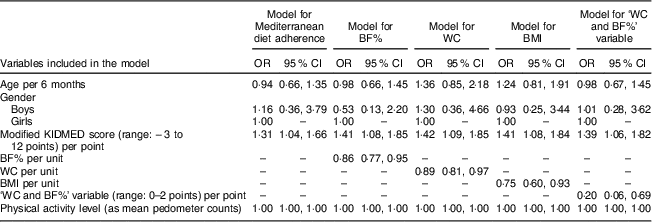
KIDMED, Mediterranean Diet Quality Index for children and adolescents; BF%, body fat percentage; WC, waist circumference.
* Regular breakfast intake (no v. yes).
The significant association between fasting glucose levels and breakfast intake observed in univariate descriptive analyses disappeared when a multivariate assessment was performed (results not shown here). With regard to serum Fe, it is of note that the relationship disappeared only after considering physical activity levels; when only age, gender and diet quality were used as covariates, children who regularly ate breakfast were 80 % less likely to have serum Fe levels lower than 65 μg/dl (OR=0·20; 95 % CI 0·07, 0·50; data not shown here).
Discussion
We have presented the results of the CYFamilies study conducted among Cypriot primary-school children living in the mountainous area of Cyprus, examining the relationship between breakfast intake and lifestyle attributes. The findings provide evidence that, after considering potential confounders, regular breakfast eaters were more likely to have higher adherence to the Mediterranean diet and lower BF%, BMI, WC and ‘WC and BF%’ variable than breakfast skippers. It is of note that serum Fe was positively associated with breakfast intake when controlling for age, gender and diet quality, but the association attenuated when physical activity was considered. Furthermore, regular breakfast intake was negatively associated with fasting glucose, but in descriptive analyses only.
Diet quality
The relationship between aspects of diet quality and breakfast intake is well established( Reference Ruxton and Kirk 1 , Reference Rampersaud, Pereira and Girand 2 , 9 ); studies on the association of breakfast intake with overall diet quality, however, are rather limited. In our study, a dietary index based on the Mediterranean diet prototype was used in order to assess the overall quality of diet. Our results are in line with a number of other studies that have also assessed diet quality via various holistic dietary indices (KIDMED index( Reference Kontogianni, Farmaki and Vidra 4 ), Modified Diet Quality Index International( Reference Mariscal-Arcas, Rivas and Velasco 5 ), Diet Quality Index International( Reference Veugelers, Fitzgerald and Johnston 10 ) and Healthy Eating Index-C( Reference Woodruff, Hanning and Lambraki 11 )) and showed that breakfast intake is associated with overall diet quality. To the best of our knowledge, the present study is the first one to evaluate the association of breakfast intake with Mediterranean diet adherence assessed by a modified KIDMED index, i.e. after omitting its breakfast component to exclude any bias in results. Adoption of the habit of taking a morning meal is regarded as an essential behaviour modification towards establishing a healthful diet and is also a target outcome in large public health initiatives among children( Reference Hirschman and Chriqui 26 , Reference Moore, Moore and Tapper 27 ). In the present study an association of serum Fe with children’s breakfast intake was detected, revealing a difference in the mean values of serum Fe between breakfast eaters and breakfast skippers as high as 10 μg/dl. However, this association disappeared after considering physical activity and, moreover, none of the other two Fe status indicators (ferritin and Hb) was significantly associated with breakfast intake, even in univariate descriptive analyses. Breakfast has been reported to be an important contributor to vitamin and mineral intakes (including Fe) in children( Reference Nicklas, O’Neil and Berenson 12 , Reference Albertson, Anderson and Crockett 44 ) and improved Fe status indicators are therefore expected, mainly because of the Fe-fortified ready-to-eat breakfast cereals commonly eaten at breakfast. Physical activity was found to be an important confounder, however, and appears to be a factor that mediates the relationship between serum Fe and breakfast. Moreover, it should also be recognized that serum Fe is an insensitive indicator of total Fe stores and may be extremely variable from day to day. Another explanation for the inability of the present study to demonstrate a stable association of any of the indicators of body Fe status with breakfast intake may be the small sample size. In any case, the relationship of breakfast intake with levels of nutritional biomarkers remains under-searched and deserves further study.
Obesity
Despite our expectations, examination of direct associations detected no significant relationships between breakfast intake and BMI, WC, BF% and the ‘WC and BF%’ variable (Table 1). (Being not a statistically significant difference, mean BF% was, however, one point higher among breakfast skippers.) In contrast, when the above variables were entered into multivariate logistic regression analysis, statistically significant relationships with breakfast intake emerged. Notably, when the composite variable ‘WC and BF%’ was entered in the model, a significant synergistic effect between the two variables became apparent, as revealed by the almost 60 % ‘improvement’ in the mean odds ratio between breakfast intake and the ‘WC and BF%’ variable compared with models where BMI, WC or BF% was used alone. Our findings are in line with the majority of previous studies, which are summarized in three reviews( Reference Rampersaud, Pereira and Girand 2 , 9 , Reference Szajewska and Ruszczynski 21 ). It is of note that while earlier reviews included cross-sectional studies mainly, the most recent and systematic review of the 2010 American Dietary Guidelines Committee excluded cross-sectional studies and, taking into account prospective and interventional data, concluded there is good evidence that children who do not eat breakfast are at increased risk for being overweight and obese; the evidence was stronger for adolescents( 9 ).
An advantage of our study is the use of four adiposity markers, including BF%, which is regarded as a more accurate method to assess obesity. A number of possible mechanisms may lie behind the inverse relationship of obesity with breakfast eating: (i) regular breakfast eaters generally have a better health profile and healthy lifestyle, including increased physical activity levels( Reference Keski-Rahkonen, Kaprio and Rissanen 18 , Reference Vereecken, Dupuy and Rasmussen 45 – Reference Sandercock, Voss and Dye 47 ), factors that have been associated with lower obesity levels; (ii) breakfast skippers have been found to have lower diet quality, increased consumption of high-energy/low-nutrient-density foods( Reference Timlin and Pereira 48 ) and higher energy intakes( Reference Nicklas, Reger and Myers 13 , Reference Dubois, Girard and Potvin Kent 17 , Reference Sjoberg, Hallberg and Hoglund 46 ), whereas regular breakfast intake is associated with consistent energy intake( Reference Timlin and Pereira 48 ); (iii) breakfast omission is associated with overconsumption of food and energy intake later in the day( Reference Moreno and Rodríguez 16 , Reference Dubois, Girard and Potvin Kent 17 , Reference Sjoberg, Hallberg and Hoglund 46 ), presumably because of increased hunger( Reference Astbury, Taylor and Macdonald 49 ); and (iv) large fluctuations in energy intake may lead to hyperinsulinaemia, which in turn may negatively influence metabolic rate( Reference Sesé, Jiménez-Pavón and Gilbert 50 , Reference Farshchi, Taylor and Macdonald 51 ) and may promote fat storage.
Cardiovascular risk
Fasting glucose levels were higher in children who were classified as breakfast skippers, compared with their counterparts, but only in descriptive analyses. None of the other cardiovascular risk markers (blood lipids and CDRI) was significantly associated with breakfast intake in either descriptive or multivariate analyses, despite the fact that the lipid profiles of breakfast skippers were slightly worse. The inability to reveal a potentially significant relationship may be due to the low number of participants or was mediated through obesity (at least partly), as others have reported( Reference Mekary, Giovannucci and Cahill 52 , Reference Smith, Gall and McNaughton 53 ). Indeed, when an obesity marker was incorporated into the CDRI, similarly to previous studies in children( Reference Sesé, Jiménez-Pavón and Gilbert 50 , Reference Bel-Serrat, Mouratidou and Börnhorst 54 ), breakfast intake became significantly associated with CDRI, even after controlling for confounders (data not shown). Generally, literature in this area is limited but available information from experimental, prospective and nationwide studies in adults( Reference Astbury, Taylor and Macdonald 49 , Reference Farshchi, Taylor and Macdonald 51 , Reference Mekary, Giovannucci and Cahill 52 , Reference Deshmukh-Taskar, Nicklas and Radcliffe 55 , Reference di Giuseppe, Di Castelnuovo and Melegari 56 ), as well as some studies in children( Reference Resnicow 19 , Reference Smith, Gall and McNaughton 53 , Reference Hallström, Labayen and Ruiz 57 ), provide evidence that omission of breakfast may impair serum lipid, postprandial insulin and glucose homeostasis. Furthermore, the importance of breakfast intake to cardiovascular health has been recently highlighted by findings in a prospective cohort of almost 27 000 healthy US men, indicating that men who skipped breakfast had a 27 % higher risk of cardiovascular heart disease( Reference Cahill, Chiuve and Mekary 58 ).
Physical activity levels
Although in our study the observed differences in physical activity levels, as shown in Table 1, did not reach statistical significance, it is of note that the difference in median values between the two breakfast intake categories was about 2500 steps/d. The relationship of breakfast intake with physical activity is generally less well studied than its relationship with diet quality and obesity. However, there are a number of studies that report a positive relationship of breakfast intake with physical activity levels( Reference Albertson, Anderson and Crockett 44 , Reference Godin, Anderson and Lambert 59 ), suggesting that regular breakfast eaters may be people who generally are more concerned about their health and more likely to pursue healthy lifestyles.
Strengths and limitations
Among the strengths of the present study is the use of four adiposity markers, including BF%, which were all significantly associated with breakfast intake in multivariate analysis. Second, the study is the first in children which examined the association of breakfast intake with Mediterranean diet adherence (after excluding the component of breakfast intake from the Mediterranean diet quality index for children, KIDMED). Third, even though the differences observed among the two categories of breakfast eaters in serum Fe, fasting glucose (data not shown) and physical activity levels did not reach statistical significance in multivariate analyses, it may be of practical significance and provides evidence of the favourable effects of breakfast intake on general health.
The present study has certain limitations which should be taken into account. First, it was designed as a cross-sectional study. Therefore, no conclusions can be made about plausible causes, but rather indications can be extracted. Second, there was only single measurement of blood tests which could have caused a misclassification of cases and thus influenced the results of the examined associations. However, none of the other studies in children, that had blood tests, had multiple blood measurements. Moreover, the sample size may not have been sufficiently powered to detect some associations. Nevertheless, we feel that our findings are in accordance with similar larger studies and, considering the scarcity of relevant data especially in Mediterranean and European populations, they may contribute in advancing knowledge and understanding of the importance of breakfast to children’s health.
Conclusions and implications
In conclusion, the present study demonstrates that Cypriot children who are regular breakfast consumers have higher adherence to the Mediterranean diet, lower BMI, WC and BF%, as shown by multivariate analyses, as well as higher serum Fe concentrations and lower fasting glucose, as shown by descriptive analyses. Public health professionals, educators and parents should prioritize on actions that will motivate children to regularly take breakfast.
Acknowledgements
Acknowledgements: The authors would like to thank the Ministry of Health and the State Hospital of Kyperounda for enabling the conduction of the study. Financial support: The study was supported by Cyprus Research Promotion Foundation and Vouros Chemicals’ Company. Cyprus Research Promotion Foundation and Vouros Chemicals’ Company had no role in the design, analysis or writing of this article. Conflict of interest: None. Authorship: The contributions of the authors were as follows. C.L. was responsible for the study design, obtaining the funding, the collection of data, the data analysis and the preparation of the manuscript; A.-L.M. contributed to the presentation and interpretation of the results and critically reviewed the paper. Both authors contributed to the final version of the manuscript. Ethics of human subject participation: The research design was approved by the Ministries of Education and Culture (Department of Primary Education) and Health, as Cypriot law provides for studies that are performed in the school environment during formal school hours.



