



Children’s growth, development and feeding patterns begin at conception and continue throughout life, impacting lifelong health( Reference Birch and Dietz 1 – Reference Sullivan and Birch 3 ). Nutrition education can help form the foundation of children’s healthy eating practices and support the prevention of malnutrition( Reference Holli and Beto 4 ). Caregivers’ knowledge, attitudes and beliefs about food and feeding practices affect children’s food intake, preferences and health status( Reference Anzman, Rollins and Birch 5 , Reference Fautsch Macías and Glasauer 6 ). Providing caregivers accurate nutrition and young child feeding (YCF) information is important to establish healthy YCF practices, and many countries worldwide depend on international health literature for nutrition and YCF guidance( Reference Fautsch Macías and Glasauer 6 , 7 ).
An estimated 11 % of Ghanaian children under 5 years of age are underweight, 19 % are stunted, 5 % are wasted( 8 ) and approximately 3 % are considered overweight( 9 ). Poor nutrition and improper infant and YCF practices, such as brief durations of breast-feeding (or lack thereof) and early initiation of complementary feeding, have been linked to child morbidity and mortality( 7 , 8 , 10 ).
In Ghana, the major source of health information is the health-care worker( Reference Gyampoh, Otoo and Aryeetey 11 – Reference Pelto and Armara-Klemesu 13 ). In the Komenda-Edina-Eguafo-Abrem (KEEA) region of Ghana, most mothers, who prepare the family’s food( Reference Nti, Hagan and Bagina 12 ), receive their education about nutrition and YCF from the nurses of the local health clinics( Reference Egyir, Ramsay and Bilderback 14 ). Many nurses who serve as health educators in sub-Saharan Africa do not have adequate nutrition and YCF knowledge( Reference Alles, Eussen and Ake-Tano 15 , Reference Kgaphola, Wodarski and Garrison 16 ). Nutrition and YCF practices suffer when caregivers are not provided with accurate nutrition and YCF information( Reference Lartey 17 ).
As nurses are often in key positions to provide health-supportive nutrition and YCF education( Reference Ilmonen, Isolauri and Laitinen 18 ), they must possess and maintain nutrition and YCF knowledge to effectively and accurately convey information to patients( Reference Kris-Etherton, Akabas and Bales 19 ). Worldwide, many health-care workers rely on educational materials provided by global organizations to supplement gaps in health knowledge and remain current on new information( Reference Pakenham-Walsh and Bukachi 20 ). However, further research exploring the nutrition and YCF knowledge of international health-care workers is needed, including the type and effectiveness of the education delivered to caregivers of young children( Reference Egyir, Ramsay and Bilderback 14 ). While global organizations and local surveying agencies gather health indicator data on children 0–5 years of age, such as underweight, stunting, wasting and overweight( 8 , 9 , 21 , 22 ), most currently published research on nutrition and YCF practices focuses on children 0–2 years of age, and not the ages of 2–5 years( 7 , Reference Gyampoh, Otoo and Aryeetey 11 , Reference Pelto and Armara-Klemesu 13 , Reference Jones, Ickes and Smith 23 – Reference Nti and Lartey 25 ).
The purpose of the present qualitative study was to examine the nutrition and YCF knowledge and education of Ghanaian nurses in the KEEA region in relation to global health guidelines, and how they served as educators on nutrition and YCF. This research is needed to understand the dissemination of nutrition and YCF information, which is likely to impact caregiver feeding practices and child health outcomes.
Materials and methods
Study design and framework
The current study used a qualitative approach of one-on-one (n 6) and small group (n 15) in-depth interviews guided by a structured questionnaire with categorical and free-response questions( Reference Fautsch Macías and Glasauer 6 ). While one-on-one interviews were preferred, small group interviews ensured inclusion of more participants to better represent the population, while minimizing burden (i.e. clinic schedules) and time constraints( Reference Morgan 26 ). Interviews were conducted by a trained researcher (J.N.D.) with experience in qualitative research, conducting interviews and analysing qualitative data. The study was approved as exempt by the University of Idaho Institutional Review Board and approval was obtained from the KEEA regional clinic director.
The structured questionnaire was administered to nurses employed at twelve public health clinics in KEEA region. Naturalistic environment settings, such as the location of the health clinic, are needed to provide a framework and perspective to best understand participants’ responses and investigators’ observations( Reference Monsen and Van Horn 27 ). As a qualitative research tool, the structured questionnaire was used to gather information about knowledge, attitudes and beliefs as related to nutrition and health outcomes( Reference Monsen and Van Horn 27 ).
Identifying and recruiting
The KEEA region Disease Control Officer recruited a purposive sample of maternal and child health nurses from a total population of approximately seventy-five nurses. They were purposively selected to build on previous research describing Ghanaian mothers’ perceptions of complementary feeding in young children( Reference Egyir, Ramsay and Bilderback 14 ).
Development of the research instrument
A structured questionnaire of both close-ended and open-ended free-response questions was developed to capture the nurses’ knowledge level and amount of education regarding nutrition and YCF, and how this information was imparted to caregivers with children aged 0–5 years. Close-ended questions were included to provide greater description of the population and included the location where nurses received their nursing education, type of education received, and the number of nutrition and YCF classes taken during and after nursing school (i.e. continuing education). Close-ended nutrition and YCF knowledge assessment questions and responses were chosen from the KAP Manual: Guidelines for Assessing Nutrition-Related Knowledge, Attitudes and Practices ( Reference Fautsch Macías and Glasauer 6 ) or developed by a YCF expert. A questionnaire previously used for a study at the KEEA region health clinics, and tested for content and face validity, provided demographic questions( Reference Egyir, Ramsay and Bilderback 14 ).
Open-ended free-response questions were developed to elicit the nurses’ descriptions of the nutrition and YCF education received during nursing school, and how they provided education about breast-feeding, complementary feeding, iron-deficiency anaemia, YCF practices (including food refusal), and food safety and sanitation. Nurses were asked to describe barriers encountered while educating about nutrition and YCF, what additional nutrition and YCF information was needed, and the nurses’ recommendation for more efficacious nutrition and YCF education offered by the local clinics. Relevant probes accompanied each free-response question. For example, when nurses were asked to describe how they provided complementary feeding education, probes included: what signs do caregivers look for, what foods should caregivers start with, what foods should caregivers avoid, and what nutrients are recommended? All questions and probes were reviewed by a nutrition and YCF expert.
The questionnaire was pilot-tested three times to confirm the questions’ accuracy, relevancy and cultural appropriateness. A Ghanaian nutrition and YCF specialist changed the terms ‘picky eating’ and ‘picky eater’ to ‘food refusal’ and ‘a child who refuses food.’ Also, the infant feeding term ‘introducing solid foods’ was changed to ‘complementary feeding’, as this terminology is used in Ghana. A registered nurse encouraged using the word ‘barrier’ instead of ‘difficulties’ when asking: ‘What are the barriers or challenges when talking to caregivers about nutrition/YCF?’ A paediatric nurse practitioner recommended no changes.
Procedure
After participants signed an informed consent, the primary investigator performed one-on-one (n 6) and group in-depth interviews (n 15; two to four nurses per interview) in English following the structured questionnaire; thus, nurses participated in either a one-on-one interview or a group interview. Each interview was audio-recorded and individual nurses’ responses were manually recorded for each question when interviews took place in group settings. Data saturation was reached after eighteen interviews; however, three additional interviews (individual, n 1; group, n 2) were conducted to ensure no further information could be garnered, per standard qualitative technique( Reference Krueger and Casey 28 ). Participants were given an incentive pen upon completion of the interview.
Data analysis
Descriptive statistics were gathered from close-ended categorical questions. Continuous data, such as age, height and weight, were analysed for mean, standard deviation and frequency using Microsoft® Excel for Mac 2011 version 14.6.0 (151221). Self-reported height and weight were used to calculate BMI.
The primary researcher transcribed audio-recordings of the interviews verbatim and an open coding process was employed to review, examine, compare, conceptualize and categorize responses to open-ended questions( Reference Straus and Corbin 29 ). As Strauss and Corbin’s theory of qualitative data analysis does not require an external auditor( Reference Straus and Corbin 29 ), the primary researcher independently coded the transcriptions, then discussed findings with a child nutrition expert (S.A.R.) to reach a consensus regarding conclusions. Method triangulation of the transcriptions, observations and field notes was used to gain a comprehensive understanding of the data( Reference Carter, Bryant-Lukosius and DiCenso 30 ). The text was read multiple times and field notes were used to confirm participant responses and observations made by the primary researcher( Reference Straus and Corbin 29 ). From the coded text, connections among codes were identified, meta-themes created and theories generated.
Results
Characteristics of participants
Twenty-one interviews were conducted with public health nurses (n 41), a 55 % response rate that is consistent with qualitative research( Reference Tashakkori and Teddlie 31 ). The nurses (female, n 40; male, n 1) ranged in age from 24 to 50 years, and their BMI classification was normal (n 17, 45 %), overweight (n 10, 26 %) and obese (n 11, 29 %). The majority of nurses were of the Akan (n 31, 76 %) or Ewe (n 4, 10 %) tribes (see summary in Table 1).
Summary of sociodemographic information of nurses from Komenda-Edina-Eguafo-Abrem region, Ghana, June 2015
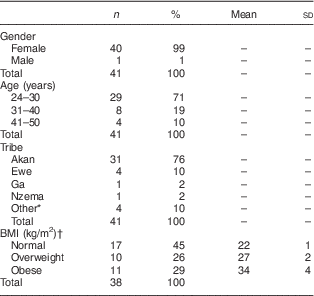
* ‘Other’ included one participant each from Akan and Ga, Kasem, Krobo and Sefwi tribes.
† Excludes pregnant participants (n 1) and participants (n 2) who self-reported a weight that is physically impossible.
Participants’ education
All but one participant (n 40, 98 %) held a 2-year training certificate, and most were educated at Winneba Community Nurse Training College (78 %, n 32); one held a 4-year nursing degree. Nutrition and YCF education was primarily received as part of the same class and in the same semester of nursing school (n 35, 85 %). One nurse reported receiving no prior YCF education, but did receive nutrition education.
During nursing school, nurses reported receiving nutrition and YCF education regarding basic nutrition science (i.e. the definition of nutrition and types of nutrients) and breast-feeding and complementary feeding recommendations. Workshops were the most common method of continuing education, with 78 % (n 32) previously attending a nutrition workshop and 66 % (n 27) previously attending a YCF workshop.
Nurses’ reported knowledge of nutrition and YCF was captured with close-ended questions on the following topics: breast-feeding, complementary feeding, iron-deficiency anaemia, YCF practices, and food safety and sanitation. Responses are summarized in Table 2. Nurses’ reported responses placed emphasis on exclusive breast-feeding to 6 months of age, beginning complementary feeding at exactly 6 months, feeding children iron-rich foods to prevent iron-deficiency anaemia, frequent hand-washing to prevent infantile diarrhoea and encouraging children to eat by serving food in colourful bowls.
Nurses’ reported knowledge of nutrition and young child feeding (YCF) education, Komenda-Edina-Eguafo-Abrem region, Ghana, June 2015

* Answers categorized as individual responses reported by individual nurses.
† No other response given.
‡ Responses listed are participants’ reported YCF strategies to encourage young children to eat.
Nurses’ reported primarily disseminating nutrition and YCF education during Child Welfare Clinics (CWC), clinic days focused on assessing children’s health. Nutrition and YCF education was given either at a health talk prior to beginning CWC or during CWC appointments.
A model to capture Ghanaian nurses’ nutrition and young child feeding education of caregivers with children aged 0–5 years
Five themes emerged from the open-ended free-response questions: (i) adequacy of nurses’ basic nutrition and YCF knowledge; (ii) nurses’ delivery of nutrition and YCF information; (iii) nurses’ evaluation of children’s health status as a measure of education effectiveness; (iv) nurses’ perceived barriers of caregivers’ ability to implement nutrition and YCF education; and (v) gaps in nurses’ knowledge and education (see Fig. 1).
Model to capture Ghanaian nurses’ nutrition and young child feeding (YCF) education of caregivers with children aged 0–5 years. *Past and current nutrition and YCF education includes all education received during nursing school as part of the school curricula and all continuing education received post-nursing school in learning environments such as workshops. †Nutrition and YCF information provided as reported by the nurses included: breast-feeding, complementary feeding, iron-deficiency anaemia, child feeding practices, and food safety/sanitation. ‡Demonstrations given as part of educational delivery methods included cooking demonstrations both at the health clinics and in the caregivers’ homes. §Nurses evaluated the effectiveness of their nutrition and YCF dissemination by weighing the children during clinic visits, conducting home visits and receiving feedback from caregivers. ║Nurses reported that the primary barriers to educating caregivers were the caregivers’ attitudes, state of poverty, knowledge levels and cultural beliefs. ¶Nurses reported gaps in nutrition and YCF knowledge and education specifically for children 2–5 years of age; qualitative analysis revealed these gaps as nurses’ nutrition and YCF knowledge was limited beyond education surrounding breast-feeding and complementary feeding, and global health recommendations on feeding children 2–5 years of age are limited

Theme 1: Nurses have adequate basic nutrition and young child feeding knowledge
Nurses demonstrated adequate basic nutrition and YCF knowledge by correctly answering questions regarding breast-feeding, complementary feeding, iron-deficiency anaemia, YCF practices, and food safety and sanitation (see Table 2 and Fig. 1).
Theme 2: Nurses’ delivery of nutrition and young child feeding information
Nurses described how nutrition and YCF information was delivered to caregivers and what information was delivered (see Fig. 1). Reported methods of delivery included: health talks, demonstrations, visual aids and songs. The information included: breast-feeding, complementary feeding, iron-deficiency anaemia, food safety and sanitation, and YFC practices.
Methods of delivery
Health talks emphasizing key nutrition and YCF messages at the beginning of CWC were the primary method used to deliver nutrition and YCF information. Additionally, visual aids and songs were used to communicate nutrition and feeding information. Cooking demonstrations were used to exhibit how to hygienically prepare nutritious complementary foods.
A nurse explained how she instructs caregivers to memorize a song to answer breast-feeding or complementary feeding questions when they cannot attend the clinic:
‘So we tell them … if you think that you don’t know how to start, then you just listen to this song … The person have to just memorize their song in the mind.’
Another nurse illustrated how she used a home demonstration of the preparation of porridge, a commonly offered complementary food, to caregivers:
‘[W]hen we go, we do demonstrations … We train them, we tell them how to prepare [porridge] so that they will know how to do it. And if you are able to explain everything to them, they … try it and then they accept it.’
Limited access to visual aids was a limiting factor to providing education to caregivers. A nurse clarified that having access to more resources would help her better deliver nutrition information:
‘By providing us with the logistics we need, like the flipcharts … It is colourful and the pictures are there. They’ll see it and then they’ll know what they need to know. You know when they see pictures, it sticks.’
Nutrition and young child feeding information delivered
Topics of nutrition and YCF information delivered included: breast-feeding, complementary feeding, iron-deficiency anaemia, sanitation and hygiene, and YCF practices. Proper positioning and attachment, benefits and the promotion of exclusive breast-feeding were emphasized. One nurse recounted how she educates caregivers on proper positioning to allow for mother–child bonding:
‘They have to position the baby well on the breast. So that the baby will feel comfortable and enjoy feeding on the breast. So that when the baby is enjoying the breast milk, there will be a bond of love between the baby and the mother.’
Complementary feeding education focused primarily on how to offer complementary foods to children, including which foods to offer and preferred methods of preparation, such as preparing food without spicy peppers. Nurses informed caregivers about the nutrients that should be present in complementary foods, such as feeding children available family foods rich in protein and iron, and discouraged the use of expensive ready-prepared foods. A nurse provided this description:
‘[W]hen the child gets 6 months, exactly 6 months, the mother should introduce all available food to the child. So, you tell the mother preparation, how to prepare the food. Then you start giving the child foods that you, the family, is also taking in order to know the type of food that the child will eat. So preparation is very important. You tell them to add more nutrients to get protein for the child. Iron … [v]itamins, all the necessary nutrients that is needed. We educate the mother to provide it for the child.’
Nurses’ delivery of food safety and sanitation education highlighted proper hygiene, such as frequent hand-washing, providing clean water and maintaining a clean home environment. As one nurse explained:
‘[T]hey should keep their environment clean. That is the first one. And then after when they are coming to feed the child, they should wash their hands with soap and water. And after maybe the child has soiled himself and you must change the napkins or the diaper, you have to wash his hands with soap and water. And then after he has finished feeding the children, the child, they have to wash the bowls, the child’s bowl, the cup, everything that he used with soap and water.’
Participants reported strategies on how to encourage young children to eat, including children refusing to eat. Nurses reported that caregivers who had time and patience during mealtimes would be the most successful at YCF. Indulgent feeding practices were recommended to encourage children to eat, including feeding children only preferred foods and allowing children to determine when and where to eat. A nurse further exemplified:
‘Well we were taught that you shouldn’t force them to eat … Because a child might play a little bit before he or she will come and eat so you have to be following the child and making sure that the child eats enough.’
Singing, playing and clapping were recommended to attract children to food and encourage them to eat. As one nurse stated:
‘I have to sing, play with the child. And, the food that will be given to the child must be delicious. Otherwise the child will not take it.’
Offering children food in colourful bowls was frequently recommended. One nurse illustrated:
‘We tell them that they should feed the child with coloured bowls, spoons, and the food should be colourful, like palm oil … When [children] see that the food is coloured something like flowers it will encourage them to eat it.’
Finally, nurses recommended that caregivers encourage dietary variety by not feeding children the same food every day, or ‘one-way foods’.
Theme 3: Evaluation of children’s health status as a tool to evaluate education effectiveness
To determine if and how well caregivers were following nutrition and YCF recommendations, the nurses used evaluation tools such as measuring children’s weight at the clinic, conducting home visits and receiving feedback from caregivers (see Fig. 1). Measuring a child’s weight was most frequently reported as the evaluation marker. A nurse described how she used this evaluation:
‘When they are telling us that they are practising it. And then when you weigh the children, too. You can see that the weight is ongoing.’
Conducting home visits was reported as not only necessary, as some clients could not attend the clinic, but also allowed nurses to see first-hand how the recommendations were put into practice. Some nurses stated that during home visits they asked caregivers to perform in-home food preparation. As one nurse explained:
‘Sometimes, when we go and visit them, we ask them how they prepare their food. How they feed their children. We just sit and watch them … if things are going all right.’
Receiving feedback from caregivers also was identified as a method to evaluate children’s health status and determine if nutrition and YCF recommendations were being followed. From this feedback, nurses and caregivers learned from each other to support the children’s health. As one nurse described:
‘We ask the mothers for their opinion about the food that they give to the children … They learn from us and we also learn from them.’
Theme 4: Nurses’ perceptions of caregivers’ ability to put nutrition and young child feeding education into practice
Nurses’ reported barriers to educating caregivers about nutrition and YCF were caregivers’ poverty, knowledge, attitudes and cultural beliefs (see Fig. 1).
Poverty
Poverty was a barrier as nurses reported caregivers restricted which foods were given to children based on availability and food preparation. One nurse empathized:
‘[Y]ou can’t tell them to go get cabbage, carrot, because she will tell you she doesn’t have money. And it’s not available at the village. So, she uses what she gets around her in preparing the food.’
Another nurse explained:
‘If you tell them to buy, to buy [what] they don’t have, the baby will not get plenty of the nutrients because … we didn’t allow them to talk about their needs. We have to come down to their level and teach them what they can afford.’
Knowledge
Nurses described their perception that caregivers were ignorant of best nutrition and YCF practices because of low knowledge, and this led to poor implementation of their recommendations. As one nurse described:
‘[T]hey need to be talked to all the time. So that they will understand it better and then believe that what we are saying is true. Because they are … ignorant around it. So when you are telling them, they will not take it seriously.’
Due to low knowledge, most education was provided verbally. Nurses expressed how this became a barrier when caregivers did not pay attention, particularly during the health talks given before CWC. One nurse summarized this barrier when she stated that she would like to know ‘how to convince mothers to accept what we are telling them to do’.
Attitudes
Nurses perceived themselves as effectively delivering the information caregivers needed, but caregivers failed to adhere to their recommendations. As one nurse stated:
‘Like I said we don’t have challenges in … giving the information about the feeding. But the mothers. Their attitude. Mother’s attitude…’
Another nurse further illustrated this point:
‘I will impart the knowledge that I have to the mother. If only the mother will apply it. Then, I too, will feel very comfortable. If the mother doesn’t apply it, I will never feel confident…’
Cultural beliefs
Nurses recounted that cultural beliefs prevented caregivers from following their recommendations, as many caregivers chose to follow traditions or inaccurate information from family members or friends. A nurse elucidated this point:
‘Sometimes, when you are educating them … they have a certain perception that some foods are no good for their children. So sometimes they don’t like to give it to the children.’
Another nurse described a common cultural belief that led to decreases in exclusive breast-feeding and the improper YCF practice of giving water to infants:
‘[M]ostly in our locality, others been telling them that one breast is for the milk and one breast is always for the food. Then when we go out, we teach them that it’s not like that. One breast contains …its own water and then food as well.’
Theme 5: Gaps in nutrition and young child feeding knowledge and education
By capturing the nurses’ knowledge of nutrition and YCF information, what and how the information was delivered, how nurses evaluated whether their recommendations were being followed and the perceived barriers preventing caregivers from implementing the recommendations, gaps in the nurses’ nutrition and YCF knowledge and education were revealed (see Fig. 1).
Nurses expressed a need for in-depth nutrition knowledge (n 16, 39 %), such as needing more information about the nutrient needs of children and what foods could be recommended to meet those nutrient needs (see Table 3). A desire for greater infant and YCF education was reported (n 20, 49 %). While YCF education was received in nursing school and continuing education, nurses wanted additional information on infant and YCF practices, such as how to encourage children to eat and enhanced knowledge of food preparation methods.
Summary of nurses’ expressed need for further nutrition and young child feeding (YCF) knowledge and education, Komenda-Edina-Eguafo-Abrem region, Ghana, June 2015
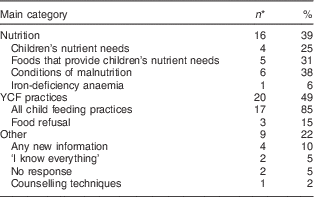
* Each answer categorized as a response reported by individual nurses.
While the nurses who were interviewed reported foundational knowledge in basic nutrition and YCF, particularly related to breast-feeding and complementary feeding, in-depth information was lacking. When asked about YCF, not one nurse spoke of feeding older children, that is children 2 years of age or older. When asked if their nursing or continuing education contained information on feeding this age group, they reported that the education was ‘not that specific’. A nurse further explained:
‘They only taught us exclusive and complementary feeding. They didn’t specify that you start from 6 or 10 years old or 8 or…’
This indicates that YCF education for children past the age of 2 years was limited in nursing education and in continuing education. However, children 2–5 years of age attend CWC and are seen and treated by the nurses, indicating a gap in education specific for this age group.
Receiving further nutrition and young child feeding knowledge and education
The nurses stated that in order to receive current nutrition and YCF knowledge they needed opportunities to attend regional workshops and be updated when new nutrition and YCF information emerged. After nursing school, their access to new or current nutrition and YCF information was limited, as expressed by one nurse:
‘Well … if, if they don’t organize workshops, mostly you don’t hear anything about it, so they should organize the workshops more often.’
As resources to expand their nutrition and YCF knowledge were limited, particularly in the remote rural health clinics, most nurses described their dependency on superiors to supplement knowledge gaps; specifically they would ask superiors for answers to questions they did not know. Few stated they would search for the information themselves, using resources such as books and the Internet. Seven nurses (17 %) stated they were never asked questions to which they did not know the answer.
Discussion
Qualitative analysis of KEEA region nurses’ responses to the interview questions identified both a need for nutrition support and gaps in nutrition and YCF knowledge and education. Meta-themes and sub-themes emerged, forming a model to capture Ghanaian nurses’ nutrition and YCF education of caregivers with children aged 0–5 years. The five meta-themes from the open-ended free-response questions were: (i) adequacy of nurses’ basic nutrition and YCF knowledge; (ii) nurses’ delivery of nutrition and YCF information; (iii) nurses’ evaluation of children’s health status as a measure of education effectiveness; (iv) nurses’ perceived barriers of caregivers’ ability to implement nutrition and YCF education; and (v) gaps in nurses’ knowledge and education.
The study confirmed prior research indicating the role of KEEA region nurses as the primary health educators for caregivers of young children( Reference Egyir, Ramsay and Bilderback 14 ). Descriptive information gathered from the nurses affirmed an adequate knowledge of basic nutrition and YCF practices, and adherence to infant and YCF guidelines put forth by the WHO, particularly for children 0–2 years of age( 7 , Reference Jones, Ickes and Smith 23 , Reference Wuehler, Hess and Brown 32 ). The responsibility of nurses to serve as the principal source of health education is common, but many nurses and health-care workers are not properly trained in nutrition and YCF practices( Reference Alles, Eussen and Ake-Tano 15 , Reference Kris-Etherton, Akabas and Bales 19 , Reference Majamanda, Maureen and Munkhondia 33 , Reference Johansson, Nyirenda and Johansson 34 ). This need for education in infant and YCF practices has been identified in other research regarding the implementation of international nutrition and YCF guidelines( Reference Ilmonen, Isolauri and Laitinen 18 , Reference Wuehler, Hess and Brown 32 , Reference Kim and Choue 35 ).
Nurses’ qualitative responses revealed methods of delivery of health information for educating populations in developing countries. The use of effective, culturally appropriate education methods targeting populations with low knowledge level is a necessary component of effective nutrition and YCF education( Reference Kim, Farmer and Porter 36 – Reference Schumer, Bernell and Bovbjerg 38 ). Many nurses in the present study used innovative techniques to educate local populations, including songs, pictorial aids and cooking demonstrations. While nurses identified a lack of resources to perform cooking demonstrations, they were the preferred method used to ameliorate improper complementary feeding practices.
The nurses descriptively reported the measuring of children’s weight as the most common method to evaluate children’s health status. This method to determine the presence of malnutrition is in line with global recommendations( Reference Jones, Ickes and Smith 23 ) and has been identified as a useful tool in previous research( 7 , 8 , Reference Alles, Eussen and Ake-Tano 15 , 39 ). Tracking WHO child health indicators, such as height, weight and mid-upper arm circumference( 21 ), is necessary to evaluate children’s health( Reference Jones, Ickes and Smith 23 , 39 , Reference de Onis, Onyango and Borghi 40 ). However, other measures of health and nutrition status, such as evaluating a child’s diet for diversity of foods, may be beneficial( Reference Onyango 41 , 42 ).
Poverty and low education levels were the primary barriers perceived by the nurses influencing how nutrition and YCF education was provided to caregivers of young children and preventing caregivers from implementing recommendations. This poverty barrier is reflected in the literature( Reference Majamanda, Maureen and Munkhondia 33 , Reference Bhutta, Das and Rizvi 43 – Reference Parmenter, Waller and Wardle 46 ). Nurses consistently reported that caregivers complained of being unable to afford the food the nurses suggested for their children, although the use of locally available foods was emphasized and the purchase of prepared foods discouraged. Food insecurity can alter and/or impact YCF practices, including increased use of restrictive and permissive parent feeding practices( Reference Feinberg, Kavanagh and Young 47 , Reference Oldewage-Theron, Dicks and Napier 48 ). However, children living in impoverished households can thrive when caregivers employ proper YCF techniques, such as responsive feeding( Reference Nti and Lartey 25 , Reference Ruel, Levin and Armar-Klemesu 49 ).
The perception that mothers’ attitudes and cultural beliefs inhibited the mothers’ acceptance of the provided nutrition and YCF education also was reported. Perceptions of health-care workers have been shown to influence how patients are evaluated and treated, sometimes deterring clients from seeking medical services( Reference Sakeah, McCloskey and Bernstein 50 ). Negative perceptions of health-care workers can be improved through targeted nutrition and YCF education, such as in-service trainings( Reference Puoane, Sanders and Ashworth 51 ).
The nurses stated a lack of nutrition and YCF information, particularly in-depth nutrition knowledge. While a few nurses did not feel they needed further nutrition or YCF knowledge, the majority reported a desire to be better informed. Nurses also did not report knowledge of or providing education on the feeding practices of children past 2 years of age. By not receiving YCF education from the nurses, caregivers of children aged 2–5 years may be at a disadvantage to employ appropriate feeding practices that promote adequate growth and development. The age of 2–5 years is a time when children develop feeding autonomy and self-regulation, which can impact nutrient intake( Reference Birch and Deysher 52 , Reference Birch and Marlin 53 ), and inferior feeding practices have been linked to poor child health outcomes( 7 , Reference Birch and Fisher 54 ).
Enhancing the nutrition and YCF training of nurses is not only a desire of those who participated in the current study, but also a need expressed by nurses and researchers throughout the literature( Reference Alles, Eussen and Ake-Tano 15 , Reference Ilmonen, Isolauri and Laitinen 18 , Reference Kris-Etherton, Akabas and Bales 19 , Reference Majamanda, Maureen and Munkhondia 33 , Reference Johansson, Nyirenda and Johansson 34 , Reference Kim, Farmer and Porter 36 ). Motivation for additional education may be important, as workers who lacked motivation did not improve nutritional status of at-risk populations with nutrition education( Reference Charlton, Kawana and Hendricks 55 ). The majority of nurses who participated in the current study reported being motivated to improve their ability to care for their clients through enhanced education.
Published research exists on the inclusion of YCF practices for children up to 7 years of age when evaluating adherence to nutrition guidelines, particularly in African countries( Reference Bowley, Pentz-Kluyts and Bourne 56 ); however, a paucity of research is available in international YCF guidelines for children aged 2 years or older. While the WHO tracks health indicators for children up to 5 years( 21 ), and promotes the use of proper YCF practices as a method to improve child health outcomes for children past the age of 23 months( 57 ), feeding recommendations for children past 24 months are not tracked or widely reported. Perhaps because of this, the knowledge and education beyond the introduction of complementary foods did not form part of the nurses’ YCF knowledge and education in the present study.
Limitations
Use of interviews inherently presents a limitation as the participants’ responses are their subjective recollections. While the study was originally designed as one-on-one interviews, group interviews (two to four nurses per interview) were conducted in order to accommodate the nurses’ schedules. A group interview atmosphere could have limited some nurses’ opportunity to express opinions or knowledge of nutrition and YCF, and could mask some nutrition and YCF beliefs, but the trained researcher ensured all nurses had the opportunity to respond to each question and appropriate probes were used to elicit responses. Interviews were conducted in English, and not in the primary language of many nurses, which could have limited their responses. Results from the study are specific to the KEEA region and cannot be inferred to other geographical locations.
Conclusion
In-depth nutrition education and further information on YCF practices for children past the age of 2 years is necessary to promote the health and development of the children in the KEEA region of Ghana, and throughout the world. The addition of this information may impact children’s health by providing international health-care workers the necessary tools to promote healthy YCF practices for children 2–5 years of age. As the influence of the health-care worker can enhance or diminish nutrition and YCF knowledge and practices among caregivers of young children, understanding the relationship between those who deliver health information and those who receive it is important. Information beyond breast-feeding and complementary feeding that includes greater in-depth nutrition and YCF education, particularly for children 2–5 years of age, is needed in international health recommendations.
Acknowledgements
Acknowledgements: The authors gratefully acknowledge the help and area expertise of Jonathan Kissi Prabeng, Disease Control Officer for the KEEA region of Ghana. His professional connections with the regional health clinics and respected rapport with the clinics’ nurses made this research both possible and successful. Financial support: This research received no specific grant from any funding agency in the public, commercial or not-for-profit sectors. Conflict of interest: None. Authorship: J.N.D. and S.A.R. formulated the research question, designed the study and analysed the data. J.N.D. carried out the study. All authors contributed to writing and reviewing the manuscript and have given approval to the final submission. Ethics of human subject participation: The study was approved as exempt by the University of Idaho Institutional Review Board and approval was obtained from the KEEA regional clinic director.



