Consumption of fruits and vegetables has been shown to prevent several chronic diseases like CHD( Reference Boeing, Bechthold and Bub 1 , Reference Dauchet, Amouyel and Hercberg 2 ). But health is more than just the absence of physical diseases, as recognized by the WHO definition of health as ‘a state of complete physical, mental and social well-being and not merely the absence of disease or infirmity’( 3 ). Thus, when examining the potential health benefits of fruit and vegetable consumption, one should also consider mental health and cognition.
Especially in older adults, mental health and cognitive performance have been described as one of the most important aspects in health maintenance. For example, cognitive functioning and mental health play an important role for social participation of older adults and vice versa( Reference Glei, Landau and Goldman 4 ): to remain autonomous older adults must maintain their mental health and cognitive performance. Consequently, preservation of cognitive functioning has also been shown to improve quality of life and prevent morbidity( Reference Sun, Stepanovic and Andreano 5 ). Besides cognition, another important aspect of health is mental health( Reference Austin, Mitchell and Goodwin 6 , Reference Khan Shahbaz, Vssr and Bhat 7 ). For example, mental health has been shown to be independently correlated with mortality( Reference Blazer, Hybels and Pieper 8 ), with the mortality rate increasing as much as fourfold in older adults suffering from depression( Reference Pilania, Bairwa and Kumar 9 – Reference Bruce and Leaf 11 ). Thus, declining mental and cognitive health represent a substantial global health problem for an ageing world population.
Although the contribution of a healthy diet to physical health is widely acknowledged, only some studies have examined the association between nutrition and mental and cognitive decline( Reference Nooyens, Bueno-de-Mesquita and van Boxtel 12 ), sometimes yielding inconsistent results regarding the role of fruit and vegetable consumption( Reference Kang, Ascherio and Grodstein 13 , Reference Miller, Thangthaeng and Poulose 14 ). Even fewer studies have analysed this purported relationship with participants from non-Western and developing countries; most studies have been conducted using comparatively small samples from industrialized Western countries like the USA and Germany( Reference Boeing, Bechthold and Bub 1 ). Thus, as previous studies have found difficulties in generalizing from populations like the US( Reference Henrich, Heine and Norenzayan 15 ), it seems imperative to examine whether the results of previous studies are indeed robust and generalizable to other populations like those in non-Western developing countries. Examining the health benefits of fruit and vegetable consumption might be especially important in the case of developing countries because the health systems in these countries typically tend to be much more limited in their resources. As such, one might expect healthy nutrition to play an even more important role in healthy ageing of these older adults. Thus, in the current study we ask: is fruit and vegetable consumption associated with cognitive and mental health in a large, cross-national and cross-sectional sample of older adults from six non-Western developing countries?
Methods
Study population
We used data from the first (and currently only available) wave of the WHO Study on Global Ageing and Adult Health (SAGE). The WHO SAGE collects cross-national data on health and well-being of older adults from low- and middle-income countries( Reference Kowal, Chatterji and Naidoo 16 ). A multistage cluster sampling design was implemented by the WHO in China, India, Mexico, Russia, South Africa and Ghana. In all countries standardized face-to-face survey instruments were used by trained interviewers. Wave 1 collected data from 2007 to 2010. The data and more detailed sampling information are available on the SAGE website (www.who.int/healthinfo/systems/sage). Originally, 35 334 interviews with older adults were conducted. After deleting participants with missing values, we obtained a final sample size of 28 078 adults aged 50 years or older.
Variables
Fruits and vegetables
Participants were asked to indicate the number of servings of fruit and vegetables they consume on a typical day. Participants were provided with a list of country-specific examples of fruits and vegetables to improve response accuracy. We used the self-reported number of servings of fruits and vegetables as indicators for general fruit consumption and vegetable consumption.
Cognition
We used verbal recall, delayed verbal recall, digit span and verbal fluency as indicators of cognitive functioning. Regarding verbal recall, the participants had to repeat ten unrelated words and were asked to immediately recall as many words as possible. The delayed verbal recall was based on the same list of ten words which were asked to be repeated about 10 min later; we used the number of correct words as indicators. In the digit span test participants had to repeat a list of several unrelated digits forwards and backwards; we used the mean score of the longest series of correctly forward and backward repeated numbers as indicator. Regarding verbal fluency, participants had to name as many distinct animals as possible in 1 min; we used the total number of mentioned distinct animals as the indicator.
Mental health
We used quality of life and the number of depressive symptoms as indicators of mental health. Regarding quality of life, we used the sum score of the eight-item version of the WHO Quality of Life scale (WHOQOL)( 17 ). The WHOQOL is a cross-culturally applicable psychometrically sound self-report quality of life assessment that was developed by the WHO across fifteen international field centres( Reference Anon 18 ).
Regarding depression, participants were first asked by the interviewer if they had a period, lasting more than 2 weeks, in the last year where they felt sad, empty, depressed, lost interest or were tired all the time. If they indicated to the interviewer that they had one such period, participants were further asked if they experienced different symptoms of depression during the last 2 weeks (loss of appetite, slowed-down thinking, problems falling asleep, waking up too early, difficulties concentrating, slowing down in moving around, feeling anxious or worried, being restless, feeling negative about oneself, feeling hopeless, losing interest in sex, suicidal ideation and suicidal behaviour). The number of depressive symptoms the respondent indicated to have experienced during the last 2 weeks was used as an indicator for depression. While it would have been preferable to use a psychometrically tested depression assessment procedure, the number of depressive symptoms is widely used as an indicator of depression and has been shown to be strongly related to depression severity( Reference Park, Sakong and Koo 19 ).
Covariates
As covariates we included self-reported gender, age, economic deprivation, smoking, daily alcohol consumption, physical activity and chronic conditions. Education was operationalized as the highest level of education completed. Economic deprivation was measured by asking participants how often in the last year they had to eat less because they had not enough food and were hungry but had not enough money to buy food. Smoking was measured by asking participants whether and how often they smoked currently. Alcohol consumption was measured by asking participants how many alcoholic beverages they drink on an average day. Physical activity was measured dichotomously by asking participants whether they engage in any form of moderate or vigorous physical work and/or sport activities in a typical week. The number of chronic conditions was measured by asking participants whether they were ever diagnosed with any number of seven common chronic health conditions (arthritis, stroke, angina, diabetes, chronic lung disease, asthma, hypertension) and using the sum of these conditions as the indicator.
Statistical analysis
All statistical analyses were performed with the R statistical software, version 3.50. We decided to analyse the aspects of cognitive and mental health separately to be as close to the literature as possible and to detect possible differential effects of our predictors. We first analysed the association between our variables via Pearson correlation analysis. As our participants are clustered within different countries, ignoring the multilevel structure of our sample could lead to biased estimates; consequently, to account for this, and the inter-correlations of our variables, we additionally used multilevel regression analysis, which is similarly interpreted to regular ordinary least-squares regression but is able to handle multilevel data. We predicted our several measures of health using all our predictors simultaneously (fruit consumption, vegetable consumption, gender, age, education, economic deprivation, smoking, daily alcohol consumption, physical activities and the number of chronic conditions).
Results
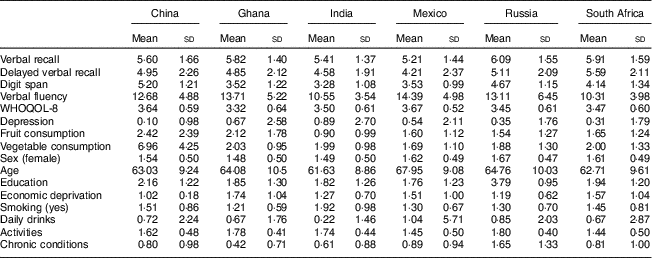
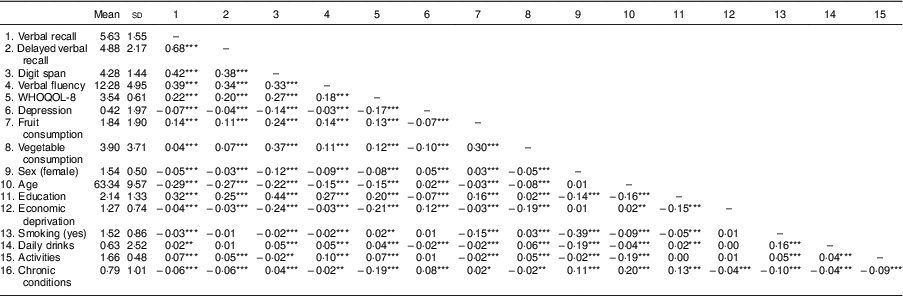
Table 1 displays the descriptive statistics and inter-correlations of our variables across countries (basic descriptive statistics within countries are displayed in the Appendix). Both fruit consumption and vegetable consumption correlated significantly with all our dependent variables. Fruit consumption and vegetable consumption correlated positively with verbal recall, delayed verbal recall, digit span, verbal fluency and quality of life, and correlated negatively with depression. The correlations of fruit consumption and vegetable consumption were small and comparable in size.
Means, sd and inter-correlations (Pearson) of cognitive health, psychological health, and fruit and vegetable consumption in older adults from China, India, Mexico, Russia, South Africa and Ghana (n 28 078); WHO Study on Global Ageing and Adult Health (SAGE), 2007–2010
WHOQOL-8, eight-item WHO Quality of Life scale.
*P<0·05; **P<0·01; ***P<0·001.
The covariates were also associated with most outcome variables in the Pearson correlation analyses. Being female, being older, economic deprivation, smoking, daily alcoholic drinks and chronic conditions were, in general, associated with worse cognitive and mental health. Contrarily, education and physical activity were associated with better cognitive and mental health.
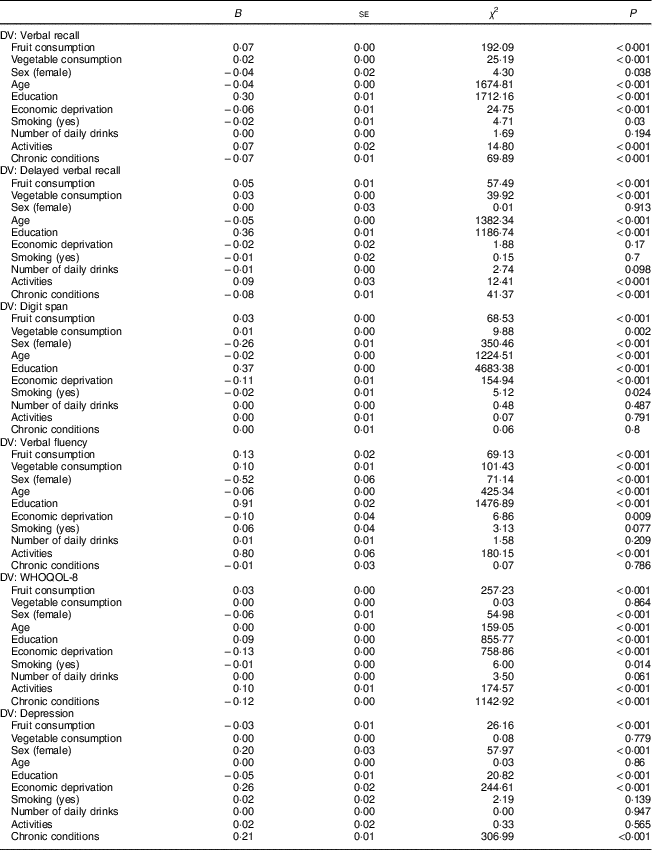
Table 2 displays the results of our multilevel regression analyses. When accounting for covariates (sex, age, education, economic deprivation, smoking, alcohol consumption, activities and chronic conditions) and the multilevel structure of our data (participants nested in countries: China, India, Mexico, Russia, South Africa and Ghana), different results emerged. Fruit consumption still predicted all our dependent variables significantly. Vegetable consumption predicted all dependent cognitive variables significantly but did not significantly predict the mental health dependent variables (WHOQOL and depression). Furthermore, the positive effects of fruit consumption were by far stronger than the positive effects of vegetable consumption.
Multilevel regression analysis of fruit and vegetable consumption predicting mental and psychological health in older adults from China, India, Mexico, Russia, South Africa and Ghana (n 28 078); WHO Study on Global Ageing and Adult Health (SAGE), 2007–2010
B, regression coefficient; DV, dependent variable; WHOQOL-8, eight-item WHO Quality of Life scale.
In our multilevel regression analyses, all covariates, besides the number of daily alcoholic drinks, predicted mental and psychological health in older adults in general. Being female, being older, economic deprivation, smoking and chronic conditions predicted, in general, worse cognitive and physical health. On the other hand, education and physical activity predicted, in general, better cognitive and mental health.
Discussion
The aim of the present study was to test whether fruit and vegetable consumption was associated with improved mental and cognitive health of older adults in low- and middle-income countries. We found strong associations between the frequency of fruit and vegetable intake and mental health and cognitive functioning. Specifically, fruit consumption showed strong effects for all our variables, whereas vegetable consumption seemed to be associated with improved cognitive functioning only.
Our findings are consistent with and build upon the literature. Several studies have shown that, besides sociodemographic factors like education and other lifestyle factors like smoking, a diet rich in fruits and vegetables is an important tool for prevention of physical, psychological and cognitive decline( Reference Polidori, Pratico and Mangialasche 20 – Reference Leenders, Boshuizen and Ferrari 22 ), but studies were lacking that analysed this relationship in non-Western low- and middle-income countries. Additionally, studies had shown conflicting findings regarding possible protective effects of fruits and vegetables concerning depression( Reference Martinez-Gonzalez and Sanchez-Villegas 23 – Reference Fresan, Bes-Rastrollo and Segovia-Siapco 26 ): while some studies showed that fruit and vegetable intake was associated with lower depression scores( Reference Xia, Wang and Yu 24 , Reference Saghafian, Malmir and Saneei 27 ), other publications failed to find effects of dietary patterns in predicting depression( Reference Chan, Chan and Woo 25 , Reference Northstone, Joinson and Emmett 28 ). Our results support the former studies in that fruit consumption showed strong protective effects on depression scores. Consequently, our results support the notion that fruits and, to a lesser degree, vegetables are essential for a healthy diet also among older adults in developing countries( Reference Lucas, Chocano-Bedoya and Schulze 29 – Reference Lademann, Schanzer and Meinke 31 ).
There are several possible mechanisms that might link fruit and vegetable consumption with mental and cognitive health. For example, the antioxidant status of fruits and vegetables might play a key role in preventing oxidative stress and thus protecting against damage of neural cell components, which occurs by reactive oxygen species and other free radicals( Reference Polidori, Pratico and Mangialasche 20 , Reference Lademann, Schanzer and Meinke 31 – Reference Yu, Kocher and Darvin 34 ). Additionally, it is well known that mental and cognitive health and inflammation are contingent on one another( Reference Kiecolt-Glaser, Derry and Fagundes 35 ). For example, patients with major depressive disorder also experience higher blood cytokine levels( Reference Liu, Ho and Mak 36 – Reference Dowlati, Herrmann and Swardfager 39 ). Fruit and vegetable consumption might influence these inflammation processes and, thereby, prevent depression. Moreover, a diet rich in fruits and vegetables generates a high fibre intake that positively influences gut microbiota, which might also be associated with better mental and cognitive health( Reference Miki, Eguchi and Kurotani 40 , Reference Calvani, Picca and Lo Monaco 41 ). Finally, fruits and vegetables contain several nutrients like zinc that have been shown to have direct neuroprotective effects( Reference Borre, Panagaki and Koelink 42 ). Future research must analyse which mechanisms are responsible for the observed protective effects of fruit and vegetable consumption.
Information about these mechanisms might also inform the creation and examination of interventions that try to increase the intake of vegetables and fruits, such as information campaigns, low-cost fruit and vegetable supplies or biofeedback( Reference Lademann, Schanzer and Meinke 31 , Reference Black, Penninx and Bot 43 , Reference Stahl and Sies 44 ). Especially in low- and middle-income countries with limited health-care resources, increasing fruit and vegetable intake might represent one cost-effective general prevention strategy. However, especially given that vegetable intake failed to significantly predict depression scores, future studies will be needed to investigate the detailed mechanisms of the influence of fruits and vegetables on the prevention of mental and cognitive decline.
There are several limitations regarding the current study. First, given the large sample size, we could only operationalize our measures using short assessment procedures like the eight-item version of the WHOQOL, instead of the full questionnaire. In the same vein, fruit and vegetable intake could only be included via aggregate measures. As such, the effects of fruit and vegetable consumption might also be due to specific sorts of fruits and vegetables or part of overall diet quality( Reference Marx, Moseley and Berk 45 ). Future studies might thus use more specific and comprehensive questionnaires to assess nutrition, mental health and cognitive functioning to examine this relationship more differentially. Additionally, we employed cross-sectional data and as such one must be careful to not ascribe causality to our effects. For example, it has been noted that depression is also associated with a lower intake of fruits and vegetables, so that the possibility of reverse causality must be taken into account when interpreting our results. Thus, future studies must use longitudinal data to replicate our results.
Conclusion
In conclusion, our study confirms the overall health benefits of a diet rich in fruits and vegetables: consumption of fruits is associated with improved cognitive and mental health in older adults from non-Western developing countries, and consumption of vegetables is associated with improved cognitive health. Thus, nutrition might be one promising factor to improve older adults’ overall health and well-being across the world. Future research must replicate the current study using more comprehensive operationalizations and should determine why the effects of fruit consumption and vegetable consumption differed.
Acknowledgements
Acknowledgements: The authors wish to express gratitude to the WHO for providing the data used in the current study. The WHO bears no responsibility for the interpretations presented or conclusions reached based on analysis of the data. Financial support: This research received no specific grant from any funding agency in the public, commercial or not-for-profit sectors. Conflict of interest: There is no conflict of interest. Authorship: K.H.G. and J.B. contributed equally to the paper. K.H.G. developed the study concept, wrote the first draft of the manuscript and wrote the final draft of the manuscript together with J.B. J.B. performed the data analysis, provided critical revisions to the first draft of the manuscript and wrote the final draft of the manuscript together with K.H.G. B.L.-A., W.K., M.C.M. and J.L. proofread the paper and provided critical revisions. Ethics of human subject participation: Not applicable.