


Introduction
Most severe mental illnesses (SMI) emerge during adolescence and young adulthood (63–75% by age 25) [Reference McGorry, Mei, Dalal, Alvarez-Jimenez, Blakemore and Browne1, Reference Solmi, Radua, Olivola, Croce, Soardo and Salazar de Pablo2]. The biological, cognitive, and social changes that occur during youth and adolescence create vulnerabilities to mental illness during these periods. Young people with psychosis, bipolar disorder, depression, or borderline personality disorder face an increased risk of developing persistent symptoms, reduced functioning, and a significantly heightened risk of developing SMI [Reference McGorry, Mei, Dalal, Alvarez-Jimenez, Blakemore and Browne1, Reference Delespaul3, Reference Arribas, Oliver, Patel, Kornblum, Shetty and Damiani4]. The unique challenges are best addressed by interventions tailored to this age group [Reference McGorry, Mei, Dalal, Alvarez-Jimenez, Blakemore and Browne1]. Thus, specialized psychosocial interventions and complex psychosocial interventions have been developed to promote recovery in young people at substantial risk of developing SMI [Reference Correll, Galling, Pawar, Krivko, Bonetto and Ruggeri5, Reference Bird, Premkumar, Kendall, Whittington, Mitchell and Kuipers6]. Specialized phase-specific services typically provide a multidisciplinary team that meets the needs of young individuals in the initial or early stages of illness. These complex psychosocial interventions aim to improve clinical, functional, and vocational outcomes and reduce barriers to accessing care through a coordinated and integrated combination of psychotherapy, psychoeducation, support with education, vocational therapy, and psychopharmacology interventions [Reference Correll, Galling, Pawar, Krivko, Bonetto and Ruggeri5].
The efficacy of specialized psychosocial and complex interventions provided in early intervention services compared to control intervention or standard treatment has primarily been examined in young people with early psychosis. Consequently, numerous reviews and meta-analyses have assessed these strategies in this population, demonstrating advantages over treatment as usual across various outcomes [Reference Correll, Galling, Pawar, Krivko, Bonetto and Ruggeri5–Reference Puntis, Minichino, De Crescenzo, Harrison, Cipriani and Lennox7].
A comprehensive review of the efficacy of specialized psychosocial and complex interventions in other mental disorders, such as early depression, early bipolar disorder, and early borderline personality disorder, is currently missing. This review should draw on evidence from reviews, meta-analyses, and controlled trials, similar to early psychosis, as these disorders also carry a risk of developing SMI [Reference Delespaul3, Reference Arribas, Oliver, Patel, Kornblum, Shetty and Damiani4]. Therefore, there is a need for an in-depth exploration of the evidence for specialized psychosocial and complex interventions in mental disorders beyond psychosis.
This review aims to assess the evidence for multi-professional collaborative specialized psychosocial and complex interventions, including psychoeducation and support in education and employment, whether provided together or as individual interventions alongside psychopharmacotherapy or psychotherapy for early depression, early bipolar disorder, and early borderline personality disorder. Additionally, we aim to present an updated review of the evidence regarding specialized psychosocial and complex interventions in early psychosis.
Methods
This review was prepared as part of the second revision of the evidence- and consensus-based guideline “Psychosocial therapies for severe mental illness” developed under the leadership of the German Society of Psychiatry and Psychotherapy, Psychosomatics and Neurology (DGPPN). The guideline, which identifies adults with SMI as the target group, defines SMI as a duration of illness of more than 2 years with significant impairments to psychosocial functioning [Reference Gühne, Becker, Salize and Riedel-Heller8].
This systematic review was conducted according to Preferred Reporting Items for Systematic Reviews and Meta-Analyses (PRISMA) guidelines [Reference Page, McKenzie, Bossuyt, Boutron, Hoffmann and Mulrow9]. A predetermined, unpublished protocol was followed (Supplementary Material 1).
Inclusion and exclusion criteria
The studies included in this systematic review met the stated PICO criteria: (1) Population: Patients experiencing their first episode of a mental illness at high risk for SMI within 5 years of the first diagnosis. Age: early intervention studies often focus on children and adolescents. For this review, we established the age criterion to include only those studies where at least most participants were over 18 years old; (2) Intervention: Psychosocial interventions were defined following the S3 guideline “Psychosocial therapies for severe mental illness” (DGPPN e. V. (Hrsg.) für die Leitliniengruppe 2019) [Reference Gühne, Weinmann, Riedel-Heller and Becker10] and included complex interventions with psychosocial components and circumscribed psychosocial interventions (e.g., psychoeducation, peer support, lifestyle intervention); (3) Comparison: other active interventions, or standard care; (4) Outcomes: a) classic clinical and patient-related outcome indicators (relapses, in-patient readmissions, psychiatric symptom severity, treatment continuity, utilization behavior), and b) treatment satisfaction and recovery-oriented indicators (e.g., empowerment, quality of life, inclusion in work, psychosocial functioning).
In an initial step, all reviews and meta-analyses that met the search criteria were included. In a second step, individual randomized controlled trials (RCTs) were considered for diagnostic groups for which no reviews or meta-analyses were available.
Search strategy
A systematic literature search was conducted on January 12, 2023 (with no limits applied for year of publication). It included five databases: The Cochrane Database of Systematic Reviews, The Cochrane Central Register of Controlled Trials, Pubmed, PsychInfo, and Embase. A manual review of reference lists from eligible publications and relevant review articles supplemented this search. In addition, studies known to the experts on the guideline committee were taken into account.
Search terms included keywords and MeSH terms and were arranged in groups; Group 1 for population: severe mental illness, severe psychiatric disorder, severe mental health problems, depression, depressive disorder, severe affective disorder, schizophrenia, psychosis, bipolar disorder, bipolar affective disorder, manic and depression, personality disorder, borderline personality disorder, AND Group 2 for stage: early-phase, early-stage, first-episode, first-presentation, AND Group 3 for interventions: early psychosocial intervention, early intervention, early treatment, early intervention or service or program, early psychosocial treatment, psychosocial intervention, integrated treatment, first episode program* or service, early onset team, AND Group 4 for study design: randomized controlled trial, random allocation, random trial or study, random allocation, systematic review or search, meta-analysis, and scoping review.
This review summarizes the Group 3 search terms under “specialized psychosocial and complex interventions.”
More information on the search strategy for each database can be found in Supplementary Material 1.
Following the previously described eligibility criteria, two reviewers screened each title and abstract independently (DR, UG); any differences in inclusion/exclusion determinations were discussed before proceeding with the review. Two reviewers (DR, UG) conducted every full-text screening, discussing and resolving differences.
Data extraction
Two review authors (DR, UG) extracted data from the included publications and compared the data extraction results. Any discrepancies were discussed.
Risk of bias and quality assessment
For the included reviews, two review authors (DR, UG) applied the AMSTAR 2 checklist. The AMSTAR 2 checklist is a tool for critically appraising systematic reviews of healthcare interventions [Reference Shea, Reeves, Wells, Thuku, Hamel and Moran11]. The raters assess the quality of a systematic review or meta-analysis using 16 items. When evaluating the overall certainty of the results of the included systematic reviews, we defined seven items as critical items based on the recommendations of the AMSTAR author group (questions 1, 4, 7, 9, 11, 13, 15).
Two reviewers (DR, UG) evaluated each RCT for risk of bias using the Cochrane Risk of Bias Tool (RoB 1) for Randomized Controlled Trials [Reference Higgins12]. This tool comprises seven categories of potential bias, and each category was assessed as having a low, high, or unclear risk of bias.
We examined the identified review articles for duplicates to ensure that RCTs were not overrepresented by being included in multiple reviews (Supplementary Table 4).
Qualitative synthesis
We described findings relating to the patient groups identified, including systematic reviews and RCTs. To enhance readability, the results section only presents the outcomes with consistently positive effects of the complex psychosocial interventions across reviews. These outcomes were: general symptoms, remission, psychosocial functioning, relapse rates, in-patient admissions, duration of in-patient admissions, and treatment discontinuation. All other outcomes are reported in Supplementary Material 1.
Results
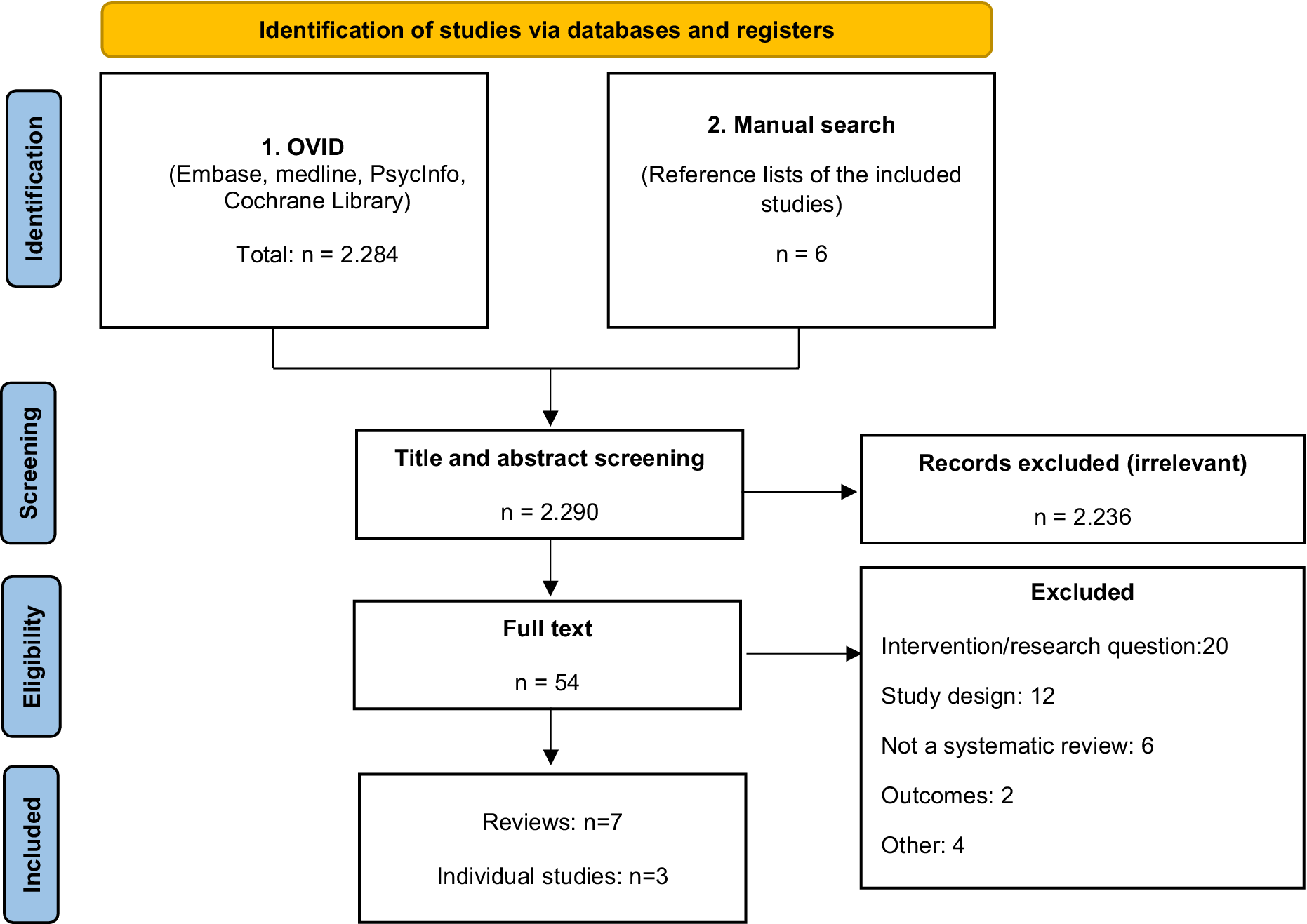
The systematic literature search identified seven review articles (six systematic reviews with meta-analyses [Reference Correll, Galling, Pawar, Krivko, Bonetto and Ruggeri5, Reference Puntis, Minichino, De Crescenzo, Harrison, Cipriani and Lennox7, Reference Frawley, Cowman, Lepage and Donohoe13–Reference Alvarez-Jimenez, Parker, Hetrick, McGorry and Gleeson16] and one systematic review [Reference Ratheesh, Hett, Ramain, Wong, Berk and Conus17]) and three RCTs [Reference Chanen, Betts, Jackson, Cotton, Gleeson and Davey18–Reference Chien and Bressington20] that met the inclusion criteria. The PRISMA flow chart (Figure 1) illustrates the number of studies included and excluded at each stage.
PRISMA flow-chart of included publications.

The results of the systematic reviews and meta-analyses will be presented first, followed by the individual studies.
The meta-analyses included participants with a median age range of 20 to 28.6 years and sample sizes between 1145 and 2811. The studies with the largest number of participants came from Australia and Great Britain (six each), followed by Hong Kong (five), Denmark and the USA (four each), Spain (three), China, Mexico, and the Netherlands (two each), and Italy, Norway, and Sweden (one each).
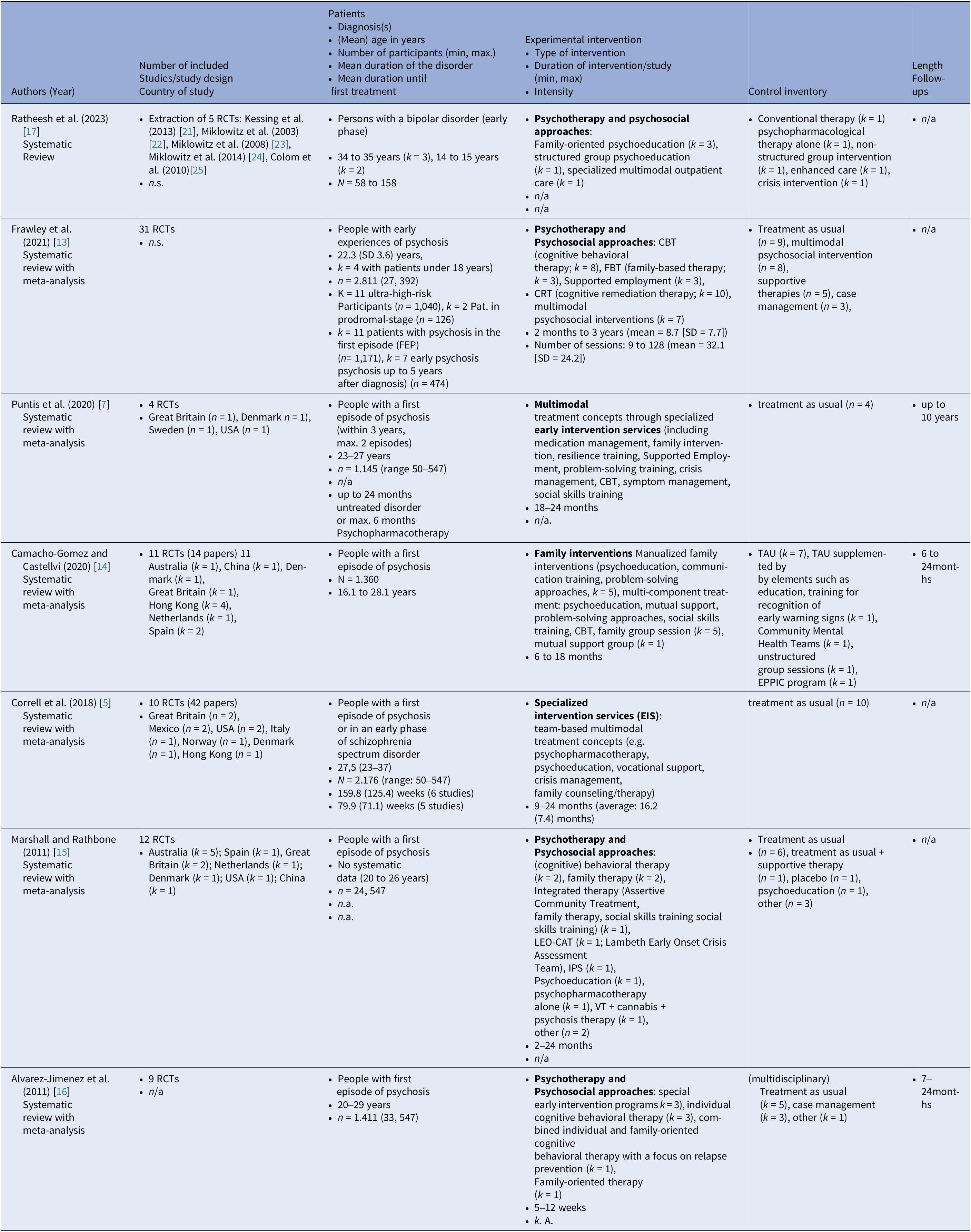
Most data for specialized psychosocial and complex interventions are currently available for people with early psychosis [Reference Correll, Galling, Pawar, Krivko, Bonetto and Ruggeri5, Reference Puntis, Minichino, De Crescenzo, Harrison, Cipriani and Lennox7, Reference Frawley, Cowman, Lepage and Donohoe13–Reference Alvarez-Jimenez, Parker, Hetrick, McGorry and Gleeson16]. Only one recent review was identified that included people with bipolar disorder in the early course of illness [Reference Ratheesh, Hett, Ramain, Wong, Berk and Conus17]. Most reviews examined specialized psychosocial and complex interventions or combinations of several evidence-based approaches consisting of psychosocial therapies and psychotherapy in the experimental interventions combined with psychopharmacological interventions in both the experimental and the control condition. Thus, isolating the effects of individual elements or combinations is challenging. Where possible, the focus is directed towards psychosocial approaches. All basic characteristics of the reviews are given in Table 1.
Overview of basic characteristics of the aggregated evidence on the effectiveness of coordinated care in people within the early course of disorders with increased risk of severe mental disorders

Based on the AMSTAR 2 ratings, the quality of evidence for systematic reviews and meta-analyses was graded as high [Reference Correll, Galling, Pawar, Krivko, Bonetto and Ruggeri5, Reference Marshall and Rathbone15], moderate [Reference Puntis, Minichino, De Crescenzo, Harrison, Cipriani and Lennox7, Reference Camacho-Gomez and Castellvi14, Reference Alvarez-Jimenez, Parker, Hetrick, McGorry and Gleeson16, Reference Ratheesh, Hett, Ramain, Wong, Berk and Conus17], or low [Reference Frawley, Cowman, Lepage and Donohoe13]. The details on the AMSTAR-2 assessment are given in Supplementary Table 1.
Evidence from meta-analysis and systematic reviews
Specialized psychosocial and complex interventions in the treatment of people with early psychosis
In a specialized early intervention service, a phase-specific, multidisciplinary team provides treatment to individuals in the early stages of a (psychotic) illness or those experiencing first-episode psychosis. This team offers a range of treatments, including psychopharmacotherapy, psychotherapy, psychoeducation, family intervention, support in education and employment, and other psychosocial therapies. Therefore, the services described in this section are considered comprehensive early intervention services.
In a recent Cochrane review, the effectiveness of specialized early intervention teams (SEI) was compared to TAU for individuals with first-episode psychosis [Reference Puntis, Minichino, De Crescenzo, Harrison, Cipriani and Lennox7]. Two studies reported on recovery from psychosis at the end of treatment, indicating that care by the SEI team led to a higher rate of recovery (defined here as a global state) compared to TAU (73% vs. 52%; RR = 1.41 [95% CI: 1.01–1.97]; p = 0.04; k = 2, n = 194; I 2 = 18%; low certainty). No apparent differences were observed during the follow-up period up to 60 months after the end of treatment. Effects were evident for lower service non-utilization or dropout risk with SEI (RR = 0.50 [95% CI: 0.31–0.79]; p = 0.003; k = 3; n = 630; I 2 = 0%; moderate certainty). There was low-certainty evidence that SEI at the end of treatment may lead to fewer admissions to psychiatric hospitals than TAU (52% vs. 57%; RR = 0.91 [95% CI: 0.82–1.00]; p = 0.04; k = 4, n = 1,145), and low-certainty evidence that SEI may be associated with fewer psychiatric hospital days (MD -27.00 days [95% CI: −53.68 to −0.32]; p = 0.04; k = 1; n = 547). Long-term follow-up (more than 60 months after treatment) showed no significant differences. Regarding psychosocial functioning, a significant difference in favor of SEI was observed at the end of treatment (SMD 0.37 [95% CI: 0.07–0.66]; p = 0.01; k = 2; n = 467 participants; I 2 = 45%; low-certainty evidence), however, not during the follow-up period. There was no effect on employment status (RR = 1.21 [95% CI: 0.94–1.55]; p = 0.15; k = 2; n = 951). Moreover, no substantial differences were observed regarding overall symptom severity at the end of treatment, risk of relapse, quality of life, or mortality. Significantly fewer SEI patients discontinued studies prematurely (RR = 0.63 [95% CI: 0.54–0.74]; p < 0.00001; k = 4; n = 1,145; I 2 = 0%; moderate certainty).
An earlier Cochrane Review by Marshall and Rathbone (2011) included psychosocial interventions among the evaluated approaches. The review also considered studies involving cognitive behavioral therapy, pharmacological treatments, and specialized early intervention teams. This broad scope led to significant heterogeneity among the studies, which were generally characterized by small sample sizes and numerous methodological limitations. As a result, meta-analyses were typically not feasible. Consequently, no reliable conclusions could be drawn regarding the effectiveness of the included psychosocial interventions [Reference Marshall and Rathbone15].
In a meta-analysis conducted by Correll et al. (2018), encompassing 10 RCTs with a total of 2,176 participants, a comparative analysis was undertaken between early intervention services (EIS) and TAU in individuals with early psychosis (Correll et al., 2018). The risk of treatment discontinuation could be reduced (21.3% vs. 31.3%; RR = 1: 0.70 [95% CI: 0.61–0.80]; p < .001; k = 10), the risk of psychiatric hospitalizations was reduced (at least one admission, RR = 0.74 [95% CI: 0.61–0.90] p = .003; k = 10), and overall symptom severity (SMD: −0.32 [95% CI: −0.47 to −0.17]; p < .001; k = 8). EIS also reduced the risk of relapse (RR = 0.71 [95% CI: 0.53–0.93]; p = .01, k = 7;), and promoted recovery, defined as symptom stability or minimal severity plus improved social, academic, and vocational development (RR = 1.24 [95% CI: 1.03–1.5], p = .02; k = 3), a positive effect on psychosocial functioning was also observed (SMD: 0.21 [95% CI: 0.09–0.34]; p = .001; k = 7). The superiority of EIS was consistent across almost all treatment time points (6, 9–12, and 18–24 months) [Reference Correll, Galling, Pawar, Krivko, Bonetto and Ruggeri5].
Overall, the mean effect sizes are considered small for continuous variables; effect sizes for categorical outcomes are considered small to moderate. More improvement compared to the TAU group was observed in other outcomes, such as remission (NNT = 5.7), relapse prevention (NNT = 10.0), hospitalization (NNT = 10.1), and treatment adherence (NNT = 12.4). Subgroup analyses were conducted; however, the small number of participants limited conclusions. Differences in adherence scales favored EIS (risk reduction by fidelity scales RR = 0.88 vs. 0.50; p = .001). Participation in education and employment and a better global functional level seemed to be associated primarily with vocational and educational counseling and family interventions.
A previous review showed that specialized early intervention programs are more effective in preventing relapse than standard treatment approaches. (OR = 1.80, 95% CI: 1.31–2.48; p < .001; NNT = 10; N = 679; k = 3) [Reference Alvarez-Jimenez, Parker, Hetrick, McGorry and Gleeson16]. These programs provided a comprehensive range of specialized and phase-oriented out-patient and in-patient treatments, including outreach services (antipsychotics, manualized CBT strategies, individual crisis management plans, family counseling, and psychoeducation). TAU was standard care provided by non-specialized psychiatric healthcare providers. There was no evidence of statistical heterogeneity (I 2 = 0; p = .82). Additionally, a statistically significant reduction in average days of in-patient treatment was observed for participants in the early intervention programs compared to those receiving usual treatment (weighted mean difference = 26.20 days [95% CI: 7.35–45.06 d; p < .01; I 2 = 0%, p = .71). A combined relapse prevention approach (individual and family-based) was marginally superior to SEI alone ((k = 1; OR = 0.21 [95% CI: 0.04–1.03], p = .06, k = 1; N = 81).
Early intervention in individuals with first-episode psychosis through specific psychosocial approaches
The following section considers those studies that focus on specific (early) interventions with a psychosocial focus.
The publication by Frawley et al. (2021) is relevant to this review as it explicitly sought studies examining changes in social and occupational functioning during the early stages of psychotic disorders [Reference Frawley, Cowman, Lepage and Donohoe13]. Social and occupational functioning, or participation, were assessed using the following criteria: (1) global functioning, measured by standardized instruments [e.g., Global Assessment of Functioning (GAF)], and (2) individual definitions of functioning covering one or more of the following areas: vocational participation, educational participation, level of independence, and social participation. Improvements in psychosocial functioning were observed across all interventions studied (SMD = 0.239 [95% CI: 0.115–0.364], p < 0.001). Effect sizes varied based on intervention type, stage of illness, treatment length, duration, and outcome measurements used. Multi-component interventions were associated with the most significant improvements [Reference Frawley, Cowman, Lepage and Donohoe13].
Camacho-Gomez and Castellvi (2020) investigated the effectiveness of family interventions for up to 24 months of follow-up in preventing relapses and other relapse-related outcomes in patients with first-episode psychosis [Reference Camacho-Gomez and Castellvi14]. Pooled results showed that compared to TAU and/or other psychosocial interventions, family interventions were effective in preventing relapses during follow-up (RR = 0.42 [95% CI: 0.29–0.61], p < 0.000001; k = 6, I 2 = 1%). Family interventions also proved to be effective compared to TAU alone (RR = 0.36 [95% CI: 0.21–0.63], p = 0.0003; I 2 = 9%; k = 4) and TAU plus other psychosocial measures (RR = 0.48 [95% CI: 0.27–0.86], p = 0.01; k = 2, I 2 = 14%). Family interventions also showed benefits in reducing the duration of hospital stay (TAU: MD = -3.31 days [95% CI:-6.48 to −0.14], I 2 = 71%; other interventions: MD = -4.57 days [95% CI: −7.49 to −1.65]; k = 8), and increased psychosocial functioning level (TAU: SMD = 1.36 [95% CI: 0.59–2.12; I 2 = 94%; other interventions: SMD = 1.41, 95% CI: 0.87–1.96; k = 6).
Specialized and complex psychosocial interventions for people with early bipolar disorder
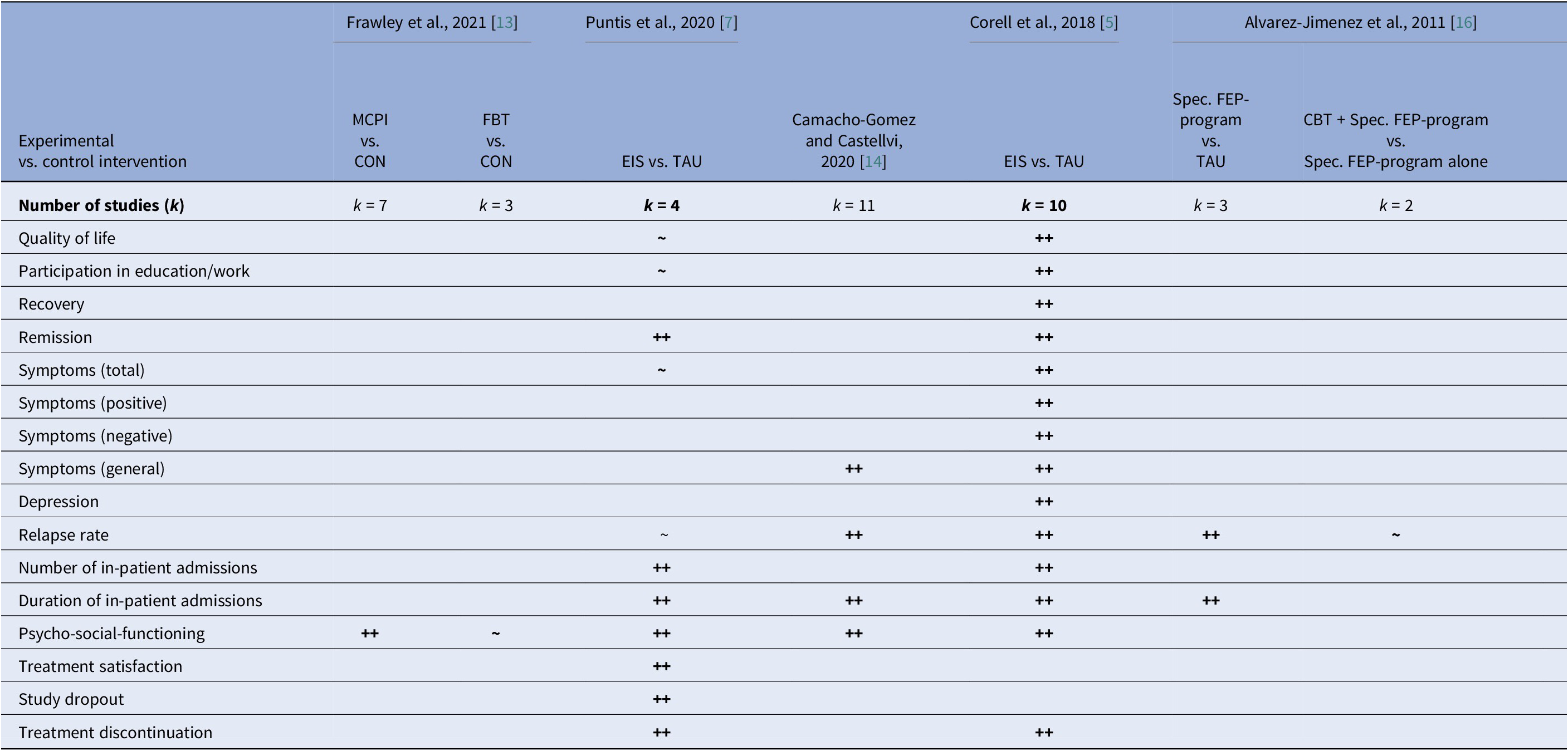
In a recent review, Ratheesh et al. (2023) investigated interventions for individuals with bipolar disorder in the early stages of the illness [Reference Ratheesh, Hett, Ramain, Wong, Berk and Conus17]. Family-focused therapy (FFT) was examined alongside psychopharmacological treatment in three RCTs, one of which demonstrated an extension of time to relapse: 73.5 weeks ±28.8 compared to 53.2 weeks ±39.6 in the comparator group (enhanced care, crisis management, or briefer family intervention) [Reference Miklowitz, O’Brien, Schlosser, Zinberg, De Silva and George26]. However, definitive conclusions regarding the effectiveness of FFT in preventing the recurrence of episodes in individuals with bipolar disorder in the early stage cannot be drawn. Two of the studies included adolescent patients. In another study (N = 158) identified by Ratheesh’s review, the effectiveness of specialized multi-modal out-patient care (guideline-conforming pharmacological interventions and group-based psychoeducation post-discharge) versus TAU (routine out-patient psychiatric services) was investigated [Reference Miklowitz, Axelson, Birmaher, George, Taylor and Schneck21]. The risk of later readmission was significantly lower among those receiving the specialized intervention (HR = 0.60, 95% CI: 0.37–0.97). Structured group psychoeducation, compared to supportive group intervention, led to a significant extension of time to relapse among participants with ≤6 prior episodes (log-rank 4.3, p = 0.04) but not among participants with >6 prior episodes [Reference Colom, Reinares, Pacchiarotti, Popovic, Mazzarini and Martínez-Arán25] (Table 2).
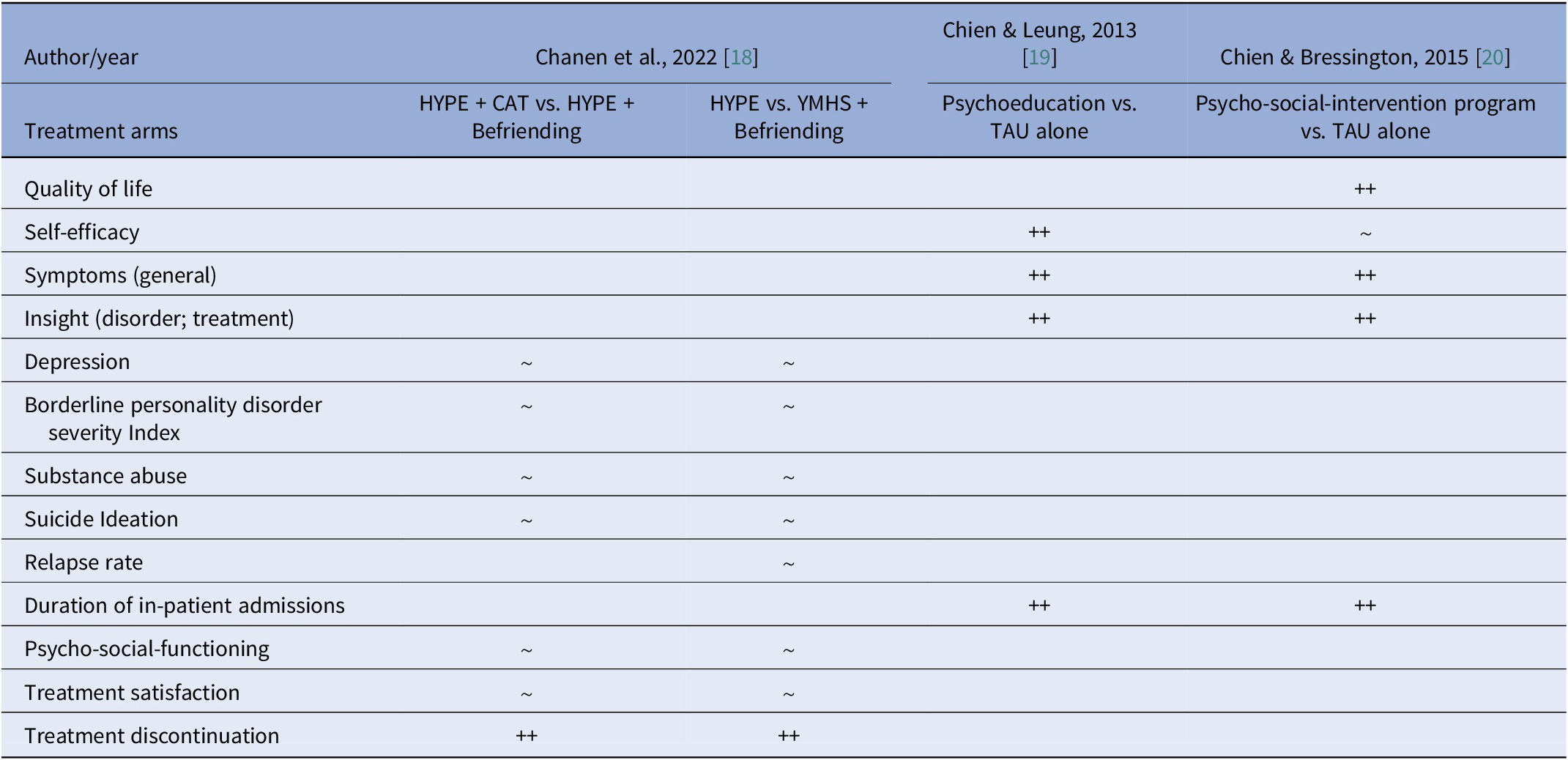
Effects of early interventions in people within early course of disorders with increased risk of severe mental disorders on various outcomes in systematic reviews/meta-analyses
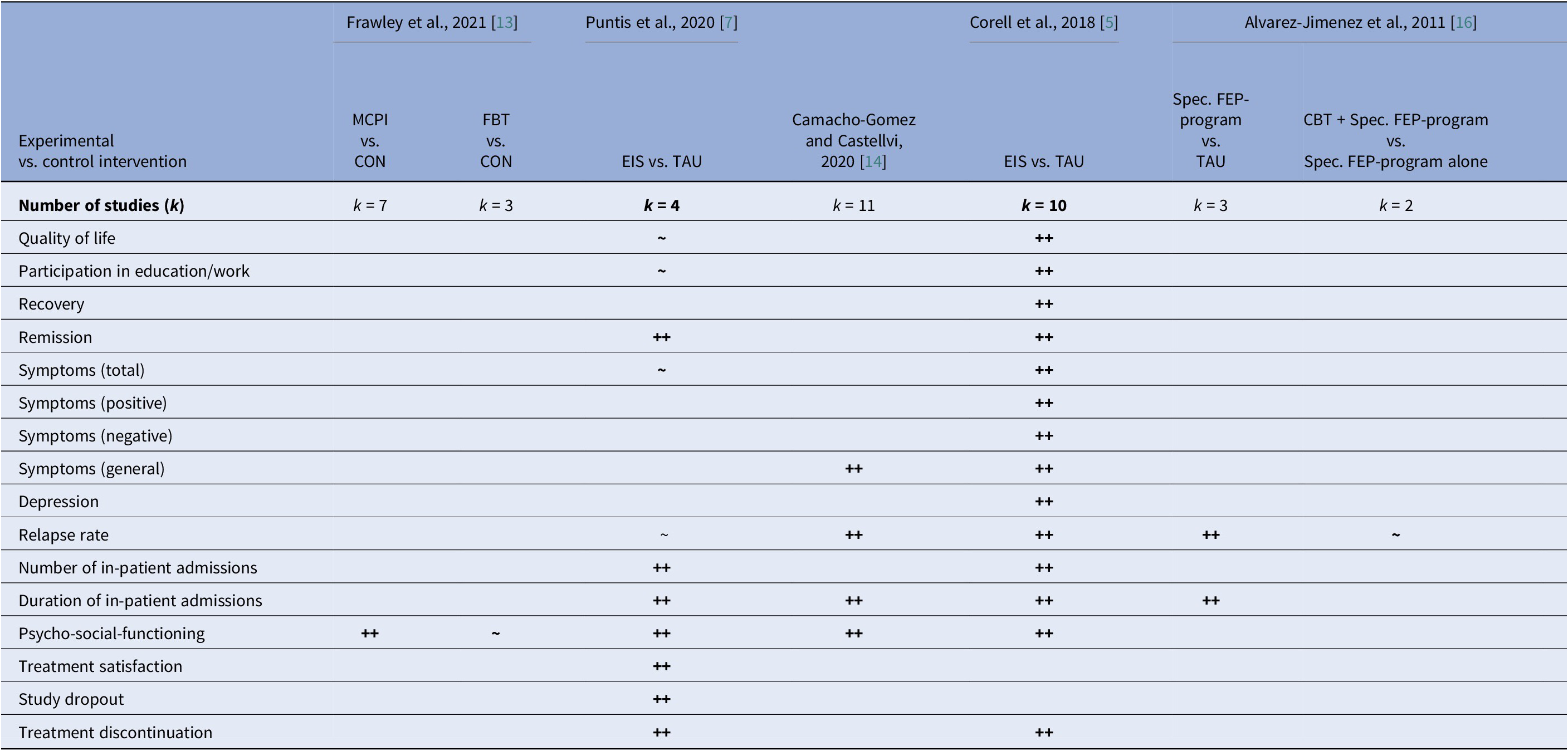
Note: ++: Significant advantage in experimental group compared to control group, +: tendential superiority without significant difference in experimental group compared to control group, ~: Results comparable in both groups, −: disadvantage in experimental group compared to control group.
Marshall and Rathbone (2011) [Reference Marshall and Rathbone15] was not included in the overview, as no reliable statements on psychosocial interventions are possible based on the analysis. Results based on k = 1 studies were excluded from this table.
Abbreviations: EIS, early intervention service; FBT, Family-Based Therapy; FEP, first episode psychosis; MCPI, multi-component psychosocial intervention; TAU, treatment as usual.
Evidence from individual studies
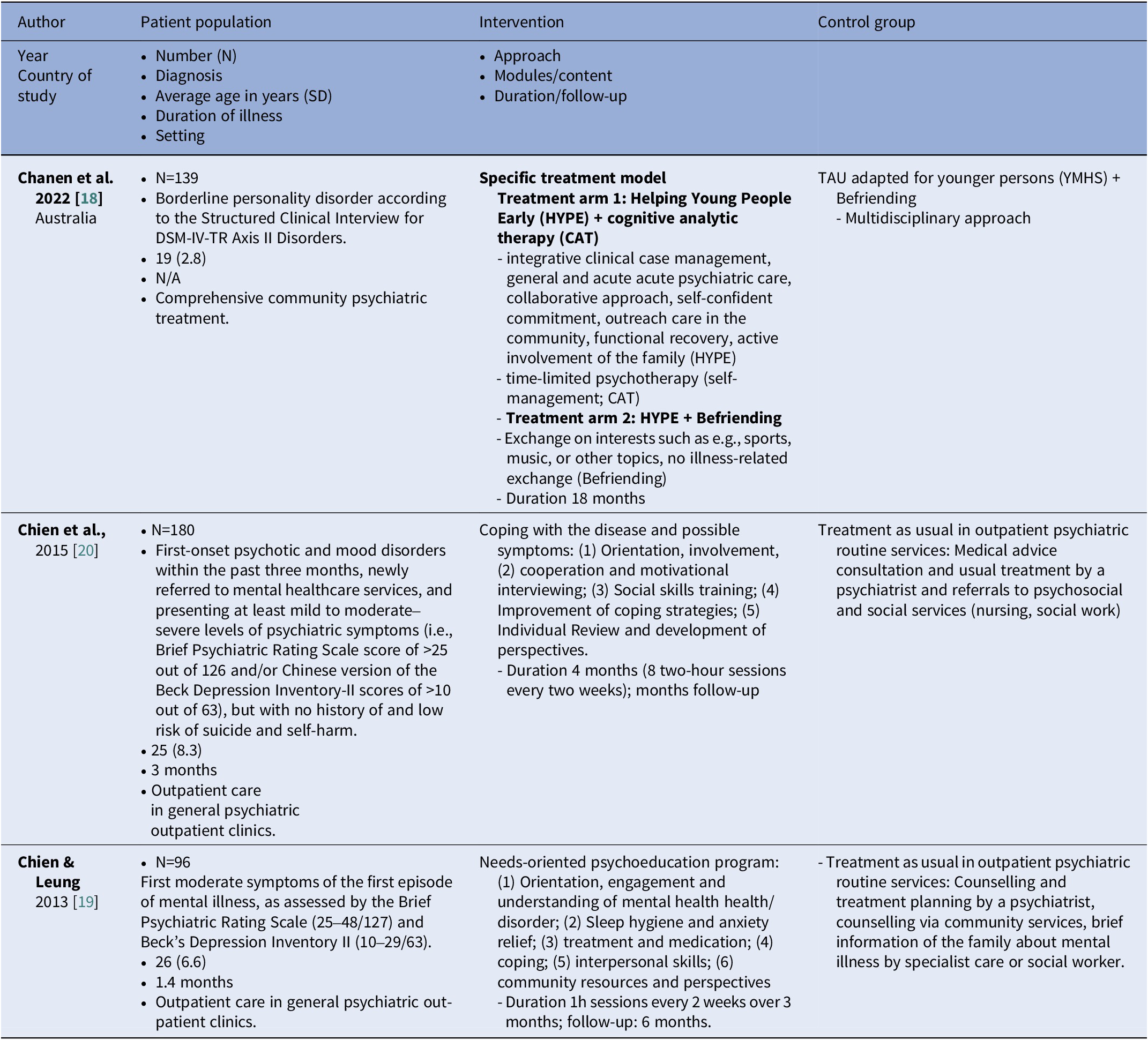
This systematic review additionally identified three individual studies. One involved young adults with early borderline personality disorder [Reference Chanen, Betts, Jackson, Cotton, Gleeson and Davey18], while the other two examined participants presented with early symptoms of SMI [Reference Chien and Leung19, Reference Chien and Bressington20] (Table 3). These three RCTs were included because they addressed diagnostic populations not covered by the identified reviews and meta-analyses.
Characteristics of individual studies on the effectiveness of specialized psychosocial and complex psychosocial interventions for early psychosis, early depression, early bipolar disorders, and early borderline personality disorders
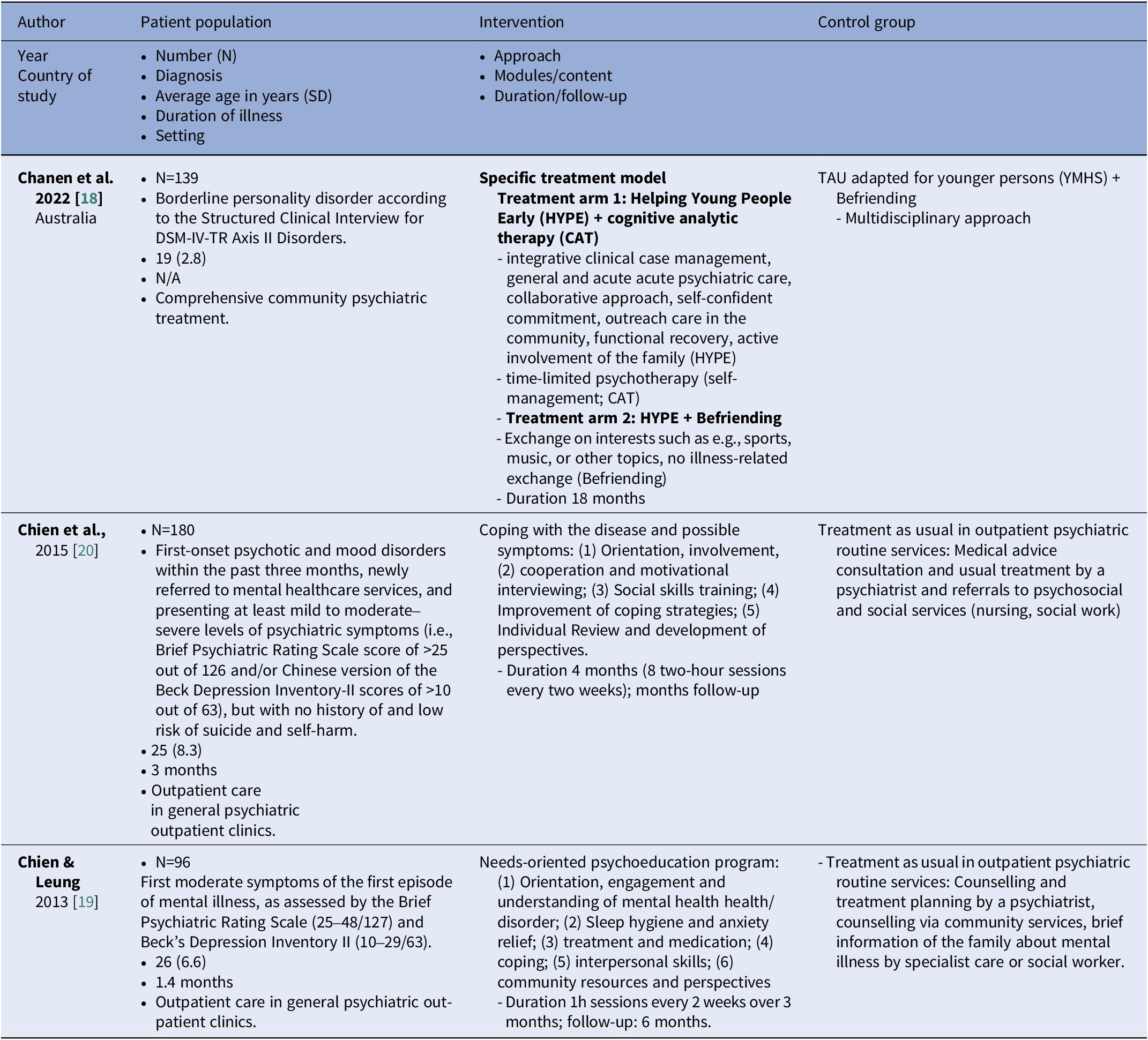
Age ranged from 19 to 26 years. The sample size varied from 96 to 180. Studies were conducted in Australia (k = 1) and Hong Kong (k = 2). The interventions evaluated included psychoeducation [Reference Chien and Leung19, Reference Chien and Bressington20] and combined approaches [Reference Chanen, Betts, Jackson, Cotton, Gleeson and Davey18]. All studies were conducted in out-patient or community mental health settings and included multi-component treatments.
Study quality: We graded all eligible trials (3/3, 100%) as low risk of bias in sequence generation [Reference Chanen, Betts, Jackson, Cotton, Gleeson and Davey18–Reference Chien and Bressington20]. The methods used for sequence generation were computer-generated sequencing or drawing a labeled card. All trials (3/3, 100%) had an unclear risk of bias for allocation concealment. Team-based and psychosocial interventions are complex care interventions and would be difficult to mask. Therefore, none of the three trials blinded participants and the treatment staff from the treatment arm allocation. We graded all three eligible studies as high risk of bias for blinding. We graded all studies at low risk of bias for blinding of outcome assessments. We graded three eligible trials (3/3, 100%) as low risk of bias concerning incomplete outcome data and for selective reporting. We did not think there was a high risk of other potential sources of bias within the included trials.
Chanen et al. (2022) evaluated the efficacy of three early intervention strategies for individuals with borderline personality disorder (BPD) in the early stages of illness. In this study, participants were either (1) provided with helping young people early (HYPE), a specialized BPD treatment model for young people, combined with weekly cognitive analytic therapy (CAT); (2) given HYPE in combination with weekly befriending psychotherapy as a control condition; or (3) offered a general youth psychiatric treatment model (YMHS), combined with befriending. Planned comparisons (YMHS + Befriending vs. HYPE; HYPE + CAT vs. Befriending) indicated that neither the care model nor the psychotherapeutic intervention was associated with a higher rate of change in psychosocial functioning up to the primary 12-month endpoint. HYPE outperformed YMHS + Befriending in terms of treatment engagement (median [IQR], 22 [19] vs. 3 [16] contacts; median duration, 200 [139.5] vs. 94 [125] days) and treatment completion (44 out of 92 [47.8%] vs. 9 out of 47 [19.2%]). HYPE + CAT surpassed Befriending in treatment engagement (median [IQR], 12 [16.5] vs. 3 [9.8] sessions) and treatment completion (24 out of 46 [52.2%] vs. 29 out of 93 [31.2%]). Early intervention for BPD in this study did not appear contingent on specialized psychotherapy [Reference Chanen, Betts, Jackson, Cotton, Gleeson and Davey18].
Chien and Bressington (2015) examined a nurse-led structured psychosocial intervention program incorporating psychoeducational elements implemented in a psychiatric out-patient setting for people with a first episode of mental disorders [Reference Chien and Bressington20]. These results showed significant positive effects compared to treatment-as-usual on psychiatric symptomatology (primary outcome; p = 0.001; ES = 0.56), insight into disorder, and quality of life during a 12-month follow-up period. Additionally, the program reduced the duration of recurrent hospitalizations compared to TAU.
Similarly, Chien and Leung (2013) evaluated a needs-based psychoeducation program led by specialized nursing staff for outpatients experiencing their first episode of a mental disorder (Tables 3 and 4) [Reference Chien and Leung19]. The findings demonstrated significant improvements in mental health outcomes compared to standard outpatient care (primary outcome; need-based psychoeducation: mean 3.0 vs. control: mean 4.8; p < 0.001), insight into disorder and need for treatment, self-efficacy, and duration of hospitalization over a 6-month follow-up period.
Effects on specialized psychosocial and complex psychosocial interventions for early psychosis, and early borderline personality disorders on various outcomes in single trials
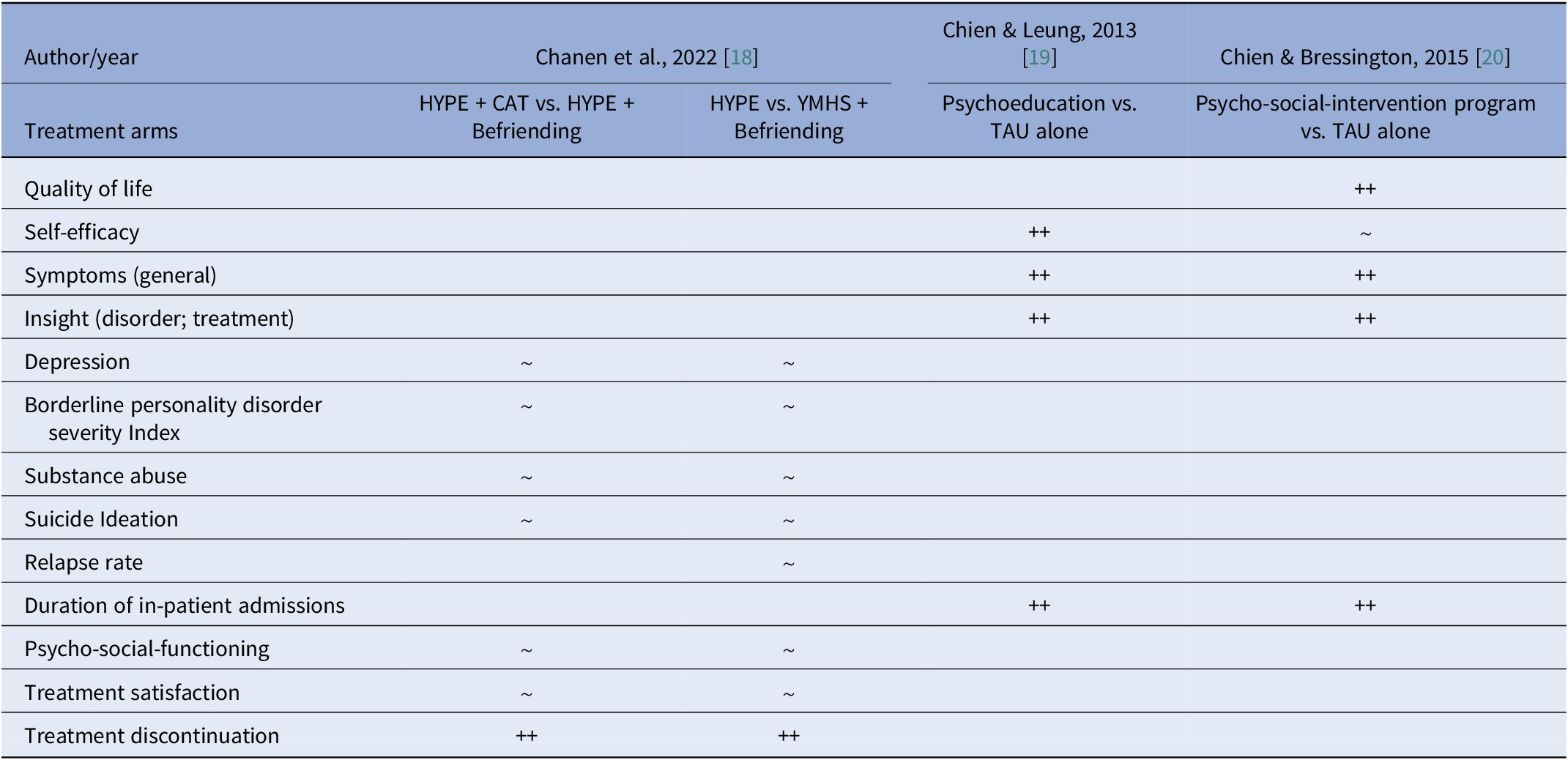
Notes: ++: A significant advantage in the experimental group compared to the control group, +: a tendency towards superiority without a significant difference in the experimental group compared to the control group, ~: Results are comparable in both groups, -: a disadvantage in the experimental group compared to the control group.
CAT: Cognitive Analytic Therapy; CSC: Coordinated Specialty Care; HYPE: Helping Young People Early; I-CAT: Integrated Coping Awareness Therapy; YMHS: Youth Mental Health Service.
Discussion
This systematic review aimed to evaluate specialized psychosocial and complex interventions for early psychosis, early bipolar disorder, early depression, and early borderline personality disorder. The systematic literature search identified seven review articles – six systematic reviews with meta-analyses and one systematic review – that met the inclusion criteria. Participants’ ages ranged from 20 to 28.6 years. The mostly high to moderate quality of evidence from reviews, meta-analyses, and trials allows for the drawing of reliable conclusions across different domains.
Early psychosis
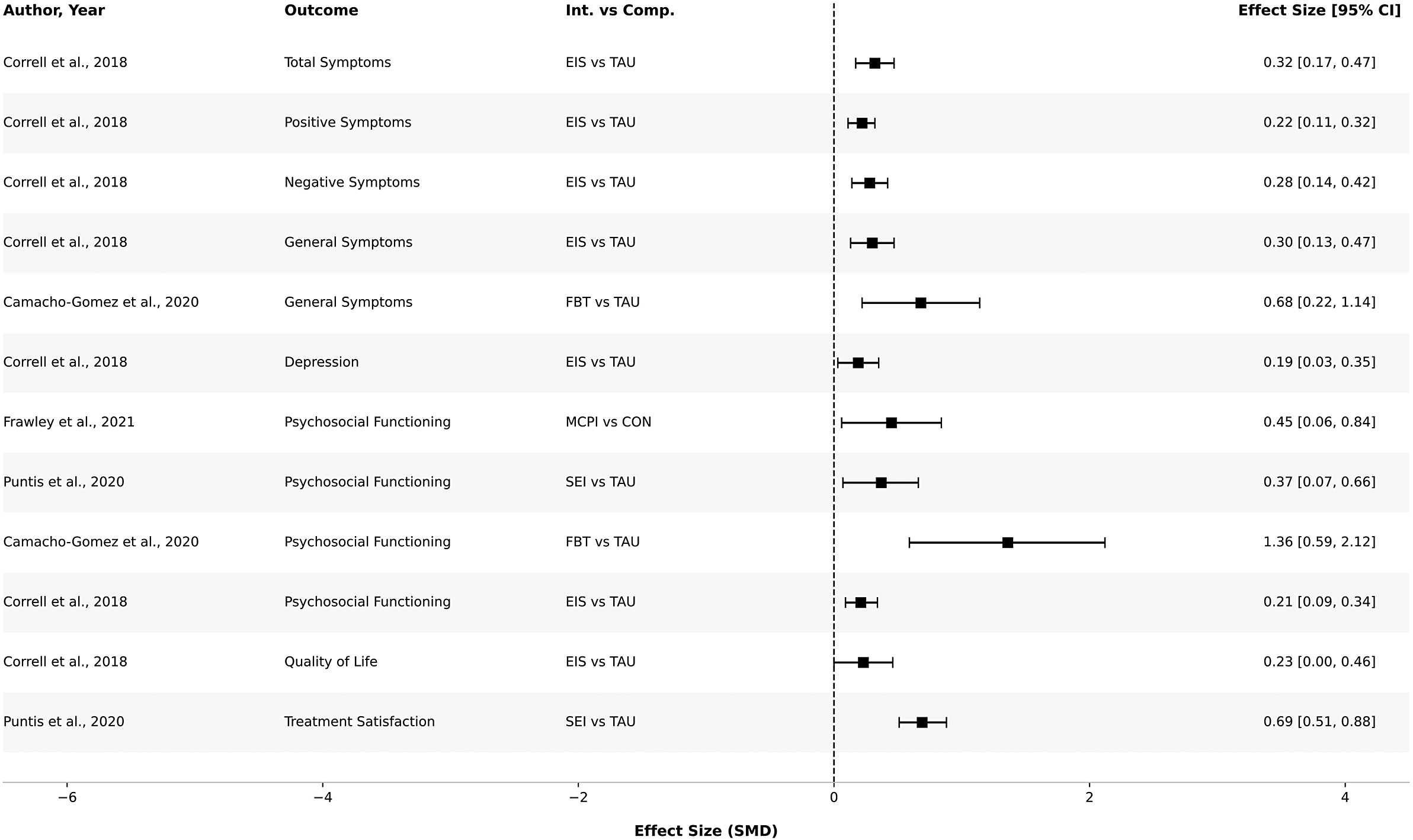
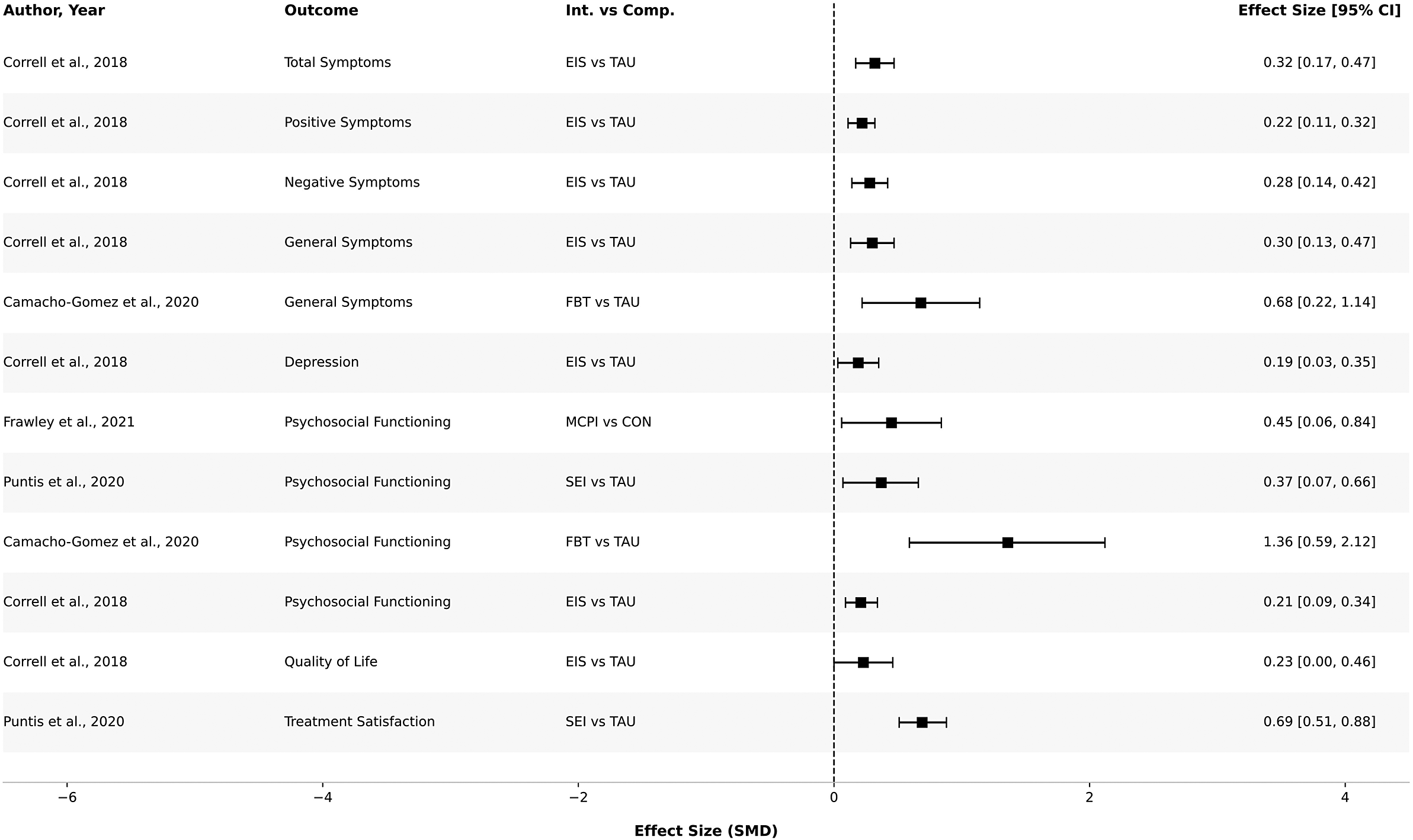
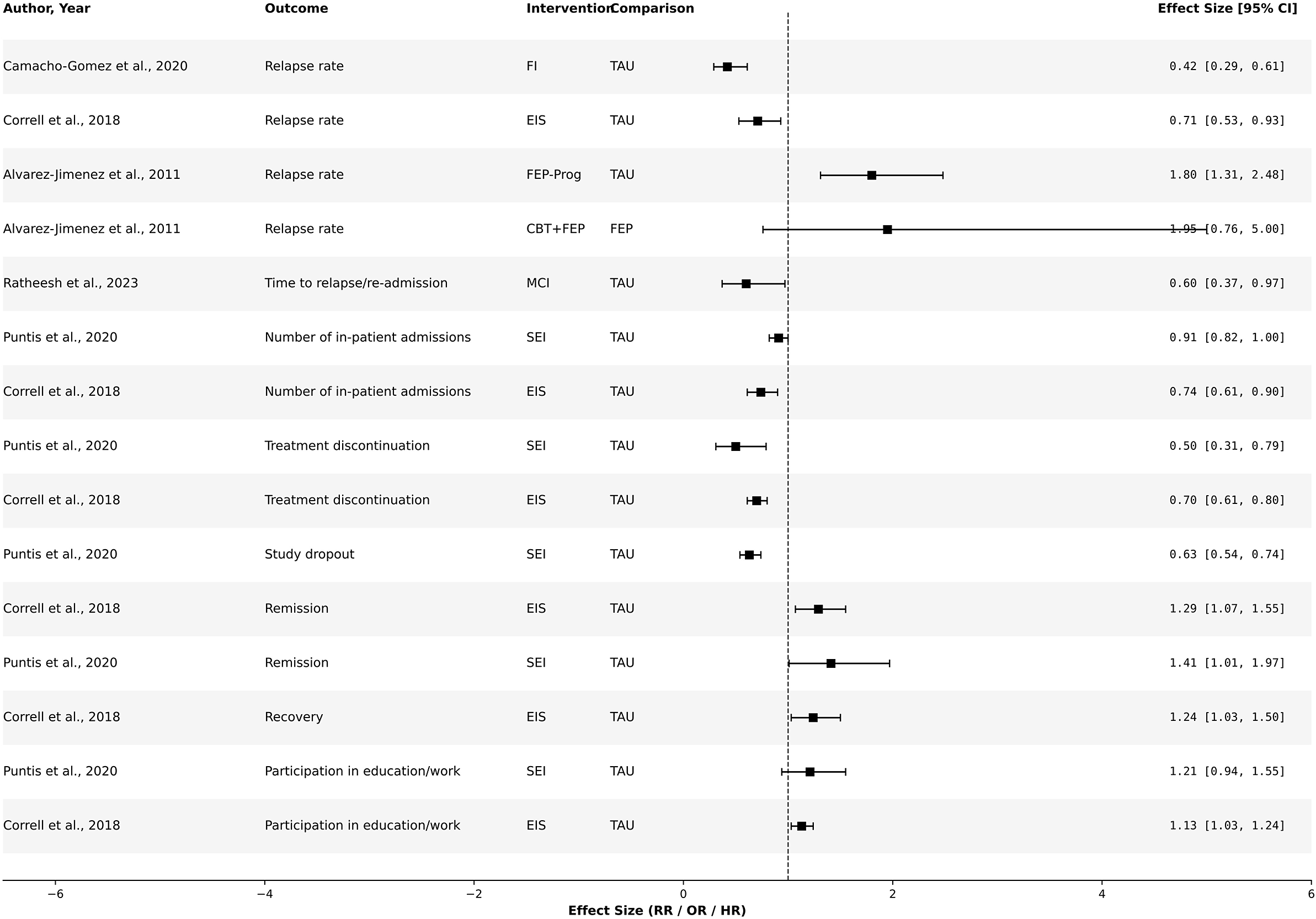
For individuals with early psychosis, multiple meta-analyses and systematic reviews consistently demonstrate the superiority of specialized, multicomponent early intervention services over treatment as usual. These complex interventions typically incorporate pharmacotherapy alongside psychosocial therapies such as cognitive behavioral therapy, psychoeducation, family intervention, supported employment, social training, and cognitive remediation. Continuous outcomes, such as psychosocial functioning and overall symptom severity, consistently demonstrate significant improvements, typically within the small to moderate range (Figure 2). Compared to individual interventions, complex approaches yielded the strongest functional improvements [Reference Frawley, Cowman, Lepage and Donohoe13]. Strong effects of early intervention in psychosis were also observed for dichotomous outcomes, particularly reductions in relapse and hospitalization rates (Figure 3). Moreover, coordinated assertive outreach and community-based care have been shown to improve treatment continuity and decrease service disengagement in individuals with early-stage psychosis [Reference Correll, Galling, Pawar, Krivko, Bonetto and Ruggeri5, Reference Puntis, Minichino, De Crescenzo, Harrison, Cipriani and Lennox7, Reference Frawley, Cowman, Lepage and Donohoe13]. Taken together, these results indicate that multimodal psychosocial interventions in early psychosis not only prevent deterioration of acute illness but also promote functional recovery and improvements in daily life, and engagement with services, thereby targeting both clinical stability and broader recovery-oriented outcomes. These benefits are reliably observed across different reviews and treatment durations, with interventions lasting longer than 6 months being particularly effective [Reference Frawley, Cowman, Lepage and Donohoe13].
Effect sizes of interventions on symptoms, psychosocial functioning, and subjective outcomes early psychosis. Note: Con, control group; EIS, early intervention services; FBT, family-based therapy; MCPI, multi-component psychosocial interventions; TAU, treatment as usual; SEI, specialized early intervention services. For improved interpretability, symptom reductions are presented as positive effect sizes in the forest plot. Due to the transformation of the standard error, the values of the 95% confidence intervals may differ slightly. Effect sizes with 95% confidence intervals that included null were excluded from the figure.
Effect sizes of binary endpoints in early psychosis and early bipolar disorders. Note: CBT, cognitive behavioral therapy; CI, crisis Intervention; EIS, early intervention services; FBT, family-based therapy; FEP-P, specialized first episode program; FFT, family-focused therapy; RP, relapse prevention; TAU, treatment as usual; SEI, specialized early intervention services. Due to the transformation of the standard error, the values of the 95% confidence intervals may differ slightly. Effect sizes with 95% confidence intervals that included the null were excluded from the figure.

Early bipolar disorder
For early bipolar disorder, the evidence base is more limited. Still, it indicates that combining pharmacotherapy with family-focused therapy or group-based psychoeducation within specialized mood disorder services can enhance illness management and treatment satisfaction [Reference Ratheesh, Hett, Ramain, Wong, Berk and Conus17]. Although these results are promising, more rigorous trials are needed to confirm the findings and their applicability to other outcomes.
Early borderline personality disorder
In early borderline personality disorder, a single trial suggests that developmentally targeted, integrated interventions may improve treatment engagement and adherence compared to standard care. While improvements in clinical symptomatology have not consistently reached statistical significance, the authors suggest that enhanced engagement represents an intermediate outcome that may help with long-term recovery [Reference Chanen, Betts, Jackson, Cotton, Gleeson and Davey18].
Early depression
This review did not identify reviews or RCTs evaluating specialized psychosocial interventions for early depression, highlighting a notable gap in the literature. Importantly, this absence of evidence does not imply that interventions in the early stages of depression lack empirical support. Recent meta-analyses have examined the efficacy of psychotherapy alone [Reference Cuijpers, Pineda, Ng, Weisz, Muñoz and Gentili28, Reference Eckshtain, Kuppens, Ugueto, Ng, Vaughn-Coaxum and Corteselli29] or in combination with antidepressant medication [Reference Robberegt, Brouwer, Kooiman, Stikkelbroek, Nauta and Bockting30] in early depression. However, these meta-analyses focused exclusively on children and adolescents and/or did not meet the inclusion criteria for complex psychosocial interventions of this review [Reference Cuijpers, Pineda, Ng, Weisz, Muñoz and Gentili28–Reference Robberegt, Brouwer, Kooiman, Stikkelbroek, Nauta and Bockting30].
The first episode of a mental disorder in general
For first-episode mental disorders across diagnoses, nurse-led psychoeducation and psychosocial programs significantly improved the duration of in-patient admissions, general symptoms, insight, self-efficacy, and quality of life compared to standard care [Reference Chien and Leung19, Reference Chien and Bressington20]. These interventions target newly referred patients who would otherwise face waiting times before their first specialist consultation. By offering immediate, needs-based, community-focused care, these programs were explicitly designed to fill gaps in community mental health care and provide low-threshold access to multimodal psychosocial interventions, leading to high rates of engagement and treatment completion.
Limitations
A methodological limitation of this review is the potential bias arising from the repeated inclusion of individual trials across meta-analyses and systematic reviews. However, the comparison (Supplementary Material 2, Table 4) showed that the overlap was relatively low, with the OPUS I trial appearing in three reviews [Reference Camacho-Gomez and Castellvi14–Reference Alvarez-Jimenez, Parker, Hetrick, McGorry and Gleeson16] and the RAISE trial in two reviews [Reference Correll, Galling, Pawar, Krivko, Bonetto and Ruggeri5, Reference Frawley, Cowman, Lepage and Donohoe13]. Additionally, this review focused on adult populations (see age range), which may have influenced the results and conclusions. Including younger participants in this review might have yielded different findings.
In conclusion, the main findings of this review show that for individuals with early psychosis, complex psychosocial interventions provide consistent benefits for relapse prevention, symptom reduction, treatment engagement, and across various functional domains. These effects may be due to the following mechanisms: 1. Multimodal frameworks – characterized by interdisciplinary collaboration and structured service delivery, ensure that complex individualized health needs are addressed [Reference Correll, Galling, Pawar, Krivko, Bonetto and Ruggeri5]. 2. Complex psychosocial interventions are particularly effective when delivered through assertive outreach and community-based models, as these offer easy access to care, ensure treatment continuity, and prevent disengagement from services [Reference Correll, Galling, Pawar, Krivko, Bonetto and Ruggeri5, Reference Puntis, Minichino, De Crescenzo, Harrison, Cipriani and Lennox7, Reference Frawley, Cowman, Lepage and Donohoe13]. Furthermore, complex psychosocial interventions may themselves enhance engagement with services and treatment satisfaction, as supported by the findings in early borderline personality disorder, early bipolar disorder, and first-episode mental disorders in general [Reference Ratheesh, Hett, Ramain, Wong, Berk and Conus17, Reference Chanen, Betts, Jackson, Cotton, Gleeson and Davey18], indicating the transdiagnostic potential of these interventions. The findings on first-episode mental disorders in general show that low-threshold, needs-based interventions can effectively bridge service gaps and achieve high engagement, further emphasizing their transdiagnostic potential [Reference Chien and Leung19, Reference Chien and Bressington20]. 3. Improvements in social and occupational functioning during early psychosis may result from multimodal services that include components such as vocational and educational support, as well as family-based therapy [Reference Correll, Galling, Pawar, Krivko, Bonetto and Ruggeri5, Reference Frawley, Cowman, Lepage and Donohoe13, Reference Camacho-Gomez and Castellvi14], since these interventions actively involve patients and their social environment in real-world settings.
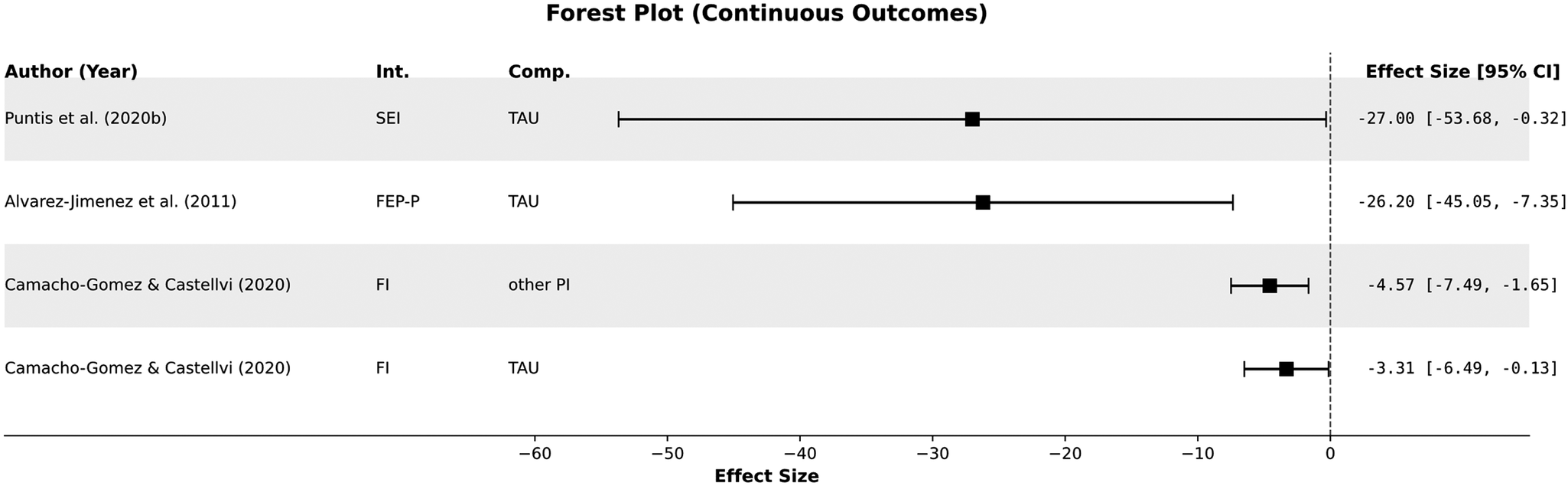
This review demonstrates that individuals experiencing early psychosis episodes benefit from timely, coordinated, and comprehensive care delivered by specialized multidisciplinary teams. Such services should integrate pharmacotherapy with evidence-based psychosocial interventions – including cognitive behavioral therapy, family interventions, psychoeducation, and vocational or educational support – delivered flexibly across service stages and settings, ideally within assertive outreach and community-based models. Multicomponent frameworks show promise for reducing relapse or inpatient admissions, and preventing further social and functional deterioration, thereby supporting both clinical stabilization and broader recovery-oriented outcomes (Figure 4).
Reduction of inpatient admission in days in early psychosis. Note: FEP-P, specialized first episode program; FI, family Intervention; PI, psychosocial Intervention; TAU, treatment as usual; SEI, specialized early intervention services. Due to the transformation of the standard error, the values of the 95% confidence intervals may differ slightly. Effect sizes with 95% confidence intervals that included the null were excluded from the figure.

Preliminary findings in bipolar disorder, borderline personality disorder, and first-episode mental disorders in general suggest that such complex psychosocial approaches may also enhance service engagement beyond psychosis. This preliminary evidence suggests a potential transdiagnostic value of multimodal, recovery-oriented interventions.
For all conditions beyond psychosis – particularly early depression – more high-quality research is needed to assess the effects of complex psychosocial interventions across a broader range of outcomes.
Supplementary material
The supplementary material for this article can be found at http://doi.org/10.1192/j.eurpsy.2026.10158.
Financial support
The DGPPN supports developing and revising the S3 guideline, “Psychosocial therapies for severe mental illness.”
Artificial intelligence
AI-assisted tools were employed solely for language refinement and stylistic editing during manuscript preparation.
Competing interests
H.M. has authored papers and book chapters on the psychotherapy of early psychosis and has participated on an advisory board for Boehringer-Ingelheim. A.B., T.B., U.G., R.H., S.G.R.-H., and R.H. declare no conflicts of interest.


 Open access


Comments
No Comments have been published for this article.