


Inconclusive results about the risks of intake of total fat and various fatty acids on diseases such as breast cancer( Reference Vera-Ramirez, Ramirez-Tortosa and Sanchez-Rovira 1 , Reference Khodarahmi and Azadbakht 2 ) and coronary diseases( Reference Chowdhury, Warnakula and Kunutsor 3 , Reference Kromhout, Geleijnse and Menotti 4 ) plague epidemiological research. This inconclusiveness may originate from limitations and errors in food composition databases (FCD) and dietary assessment methods to assess total fat and fatty acid intakes. FFQ are often used in epidemiological studies, since they are relatively cheap and pose a low burden on the participants. However, they are suspected to be affected by systematic and random errors that together obscure the true variation in fat intake between subjects. The observed association between fat intake and disease can be adjusted for these measurement errors by an attenuation factor derived from a validation study. The reference method used in the validation study should generate unbiased dietary intake data (i.e. no proportional scaling bias should be present) and have uncorrelated errors with the FFQ( Reference Kaaks, Riboli and Esteve 5 , Reference Kipnis, Midthune and Freedman 6 ). However, for most nutrients, including fatty acids, only imperfect reference methods are available such as 24 h recalls (24hR) or concentration biomarkers. Unfortunately, concentration biomarkers are informative only on ranking of individuals according to their intakes and not on their absolute levels of intake. Furthermore, use of plasma fatty acids as biomarkers of intake is limited to those fatty acids that are not produced endogenously (i.e. n-3 and n-6 fatty acids)( Reference Arab 7 ). The 24hR is able to assess the intake of a wide array of fatty acids but is biased and shows correlated errors with the FFQ for energy and protein( Reference Kipnis, Subar and Midthune 8 , Reference Prentice, Mossavar-Rahmani and Huang 9 ). Freedman et al.( Reference Freedman, Commins and Willett 10 ) recently recommended the use of regression calibration based on 24hR to adjust diet–health associations when no recovery biomarkers are available. However, based on their investigation on intakes of energy, protein, K and Na, they showed that the 24hR was certainly not a perfect reference method given the presence of intake-related bias and errors correlated with those of the FFQ. It is unclear how these limitations affect use of the 24hR as a reference method for validation of fatty acid estimates from an FFQ.
Previous research concluded that the duplicate portion method (DP) is a suitable reference method and preferable over a 24hR for FFQ validation for nutrients for which no recovery biomarker is available( Reference Trijsburg, de Vries and Boshuizen 11 ). The DP is a distinctive reference method as it does not depend on the availability and quality of the nutrient values in FCD; also, biases related to memory and estimation of portion sizes are less of a problem as compared with methods such as 24hR and FFQ. Altogether, the DP showed less proportional scaling bias and had a lower degree of correlated errors with the FFQ than the 24hR for protein, K and Na( Reference Trijsburg, de Vries and Boshuizen 11 ). In the present study we therefore compared the performance of the often used and more feasible 24hR as a reference method for validation of fatty acid estimates from an FFQ with the more distinct DP as reference method. We additionally assessed the ability of DP and 24hR to rank individuals according to their intake of n-3 fatty acids, linoleic acid (LA) and n-3:LA using an objective biomarker (plasma fatty acids) as reference method.
Participants and methods
Participants and study design
In the current Dutch validation study called DuPLO, which is part of the National Dietary Assessment Reference Database (NDARD)( Reference Brouwer-Brolsma, Streppel and van Lee 12 ), 200 Dutch adults (ninety-two men, 108 women) were enrolled. The recruitment and study procedures are described elsewhere( Reference Trijsburg, de Vries and Boshuizen 11 ). Briefly, between July 2011 and July 2014 each participant collected two DP (~5 months apart) and two blood samples (~13 months apart). Also, two FFQ (~7 months apart) were filled out. An average of five 24hR per participant were administrated by a telephone interview by a dietitian (~4 months apart). A varying number of 24hR per person (between zero and eight measurements) was collected because participants were enrolled in different sub-studies of the NDARD study. Participants with missing data for one or more of the methods were included in the analysis because they provided information for the other dietary assessment methods.
24 h recalls and FFQ
The 24hR administration followed a standardized protocol based on the five-step multiple-pass method( Reference Conway, Ingwersen and Vinyard 13 ). Participants received an unannounced telephone call from a trained dietitian. Portion sizes of foods or recipes were reported using household measures, standard portion sizes, weight in grams or volume in litres( Reference Donders-Engelen and van der Heijden 14 ).
The 180-item FFQ( Reference Siebelink, Geelen and De Vries 15 , Reference Streppel, De Vries and Meijboom 16 ) was administered via the Internet using the online open-source survey tool LimesurveyTM. The reference period for the FFQ was one month and frequencies of intake were combined with standard portion sizes and household measures to assess amounts of intake( Reference Donders-Engelen and van der Heijden 14 ). Self-reported dietary intake data from the 24hR and FFQ were converted into nutrient data using the Dutch FCD of 2011( 17 ).
Duplicate portion collection and analytical methods
Participants received verbal and written instructions preceding the collection of the DP. Participants collected all edible foods and drinks consumed over a 24 h period in collection baskets and stored them in a cool box (5°C). At the study centre, the DP were weighed, homogenized in a blender (Waring Commercial model 34BL22) and 2·5 ml of 0·02 % (w/v) tert-butylhydroquinone in ethanol was added per kilogram of DP as antioxidant. For each DP, an aliquot of the homogenized sample was stored within 1 h at −20°C, until further analysis. Total fat was measured gravimetrically by acid hydrolysis (AOAC method 14.019)( Reference Horwitz 18 ).
Blood sampling and fatty acid assessment
Blood samples were collected from the participants in a fasting state. EDTA plasma was stored at −80°C until further analysis. Cholesteryl esters from plasma were isolated using solid-phase extraction silica columns and the fatty acid profiles of the plasma cholesteryl esters were analysed by GC, as previously described( Reference de Goede, Verschuren and Boer 19 ).
Statistical analysis and measurement error models
In total 198 participants were included for analysis, ninety-two males and 106 females. Two participants became pregnant during the study. As it was expected that they had altered their habitual dietary intake, they were excluded from analysis. Means and 95 % CI were estimated for SFA, MUFA, n-3 fatty acids and LA in grams and as a percentage of the total amount of fatty acids for DP, 24hR and FFQ. The ratio n-3:LA (LA is an n-6 fatty acid) closer to one indicates a healthier distribution and this ratio was therefore included as an additional outcome measure in the current research. Because of their skewed distribution, a log transformation was used for all variables to obtain a normal distribution.
Our measurement error models assumed a linear relationship between the log(intake) according to DP, 24hR, FFQ or biomarker and the true unknown intake T, with intakes of the specific fatty acids expressed as percentages of the total fatty acid intake. Measurement error models were adjusted for BMI and gender. In our measurement error models, i indicates the person and j the occasion. Furthermore, in all measurement error models, α expresses the constant bias and β the proportional scaling bias. The person-specific bias for the method is given by $w_{{X_{i} }} $
and the random error by
$w_{{X_{i} }} $
and the random error by ${\epsilon}_{{X_{i} }} $
with mean of zero and constant variance.
${\epsilon}_{{X_{i} }} $
with mean of zero and constant variance.
To evaluate the comparability of the 24hR and the DP as reference methods for the FFQ (for both level of intake and ranking), measurement error model 1 (with equations (1) and (2)) was defined as below. In this model, the assumptions of negligible error correlation between the reference method and the FFQ, and between replicates of the reference method, and absence of proportional scaling bias in the reference method ( $\beta _{X} { \,\equals \,}1$
) were made to enable estimation of the model parameters.
$\beta _{X} { \,\equals \,}1$
) were made to enable estimation of the model parameters.
Reference method X (24hR or DP):
 $$X_{{ij}} { \,\equals \,}T{\plus}{\epsilon}_{{X_{{ij}} }} .$$
FFQ (Q):
 $$Q_{{ij}} { \,\equals \,}\alpha _{Q} {\plus}\beta _{Q} T{\plus}w_{{Q_{i} }} {\plus}{\epsilon}_{{Q_{{ij}} }} .$$
Validity coefficients (ρ XT , equation (3)) were estimated to assess the ability of the dietary assessment method to rank participants according to their intake:
 $$\rho _{{XT}} { \,\equals \,}\sqrt {{{\beta _{X}^{2} {\mathop{\rm var}} T} \over {\beta _{X}^{2} {\mathop{\rm var}} T{\plus} \left( {{{{\mathop{\rm var}} {\epsilon}_{{X_{{ij}} }} } \mathord{\left/ {\vphantom {{{\mathop{\rm var}} {\epsilon}_{{X_{{ij}} }} } k}} \right. \kern-\nulldelimiterspace} k}} \right){\plus}{\mathop{\rm var}} w_{{X_{i} }} }}} ,$$
where ${\mathop{\rm var}} T$
is the variance of the true nutrient intake,
${\mathop{\rm var}} T$
is the variance of the true nutrient intake, ${\mathop{\rm var}} {\epsilon}_{{X_{{ij}} }} $
is the variance of the random error of method X and
${\mathop{\rm var}} {\epsilon}_{{X_{{ij}} }} $
is the variance of the random error of method X and ${\mathop{\rm var}} w_{{X_{i} }} $
is the variance of the person-specific bias for method X.
${\mathop{\rm var}} w_{{X_{i} }} $
is the variance of the person-specific bias for method X.
The attenuation factor (λ X , equation (4)) provides information about the extent to which diet–health associations are affected by measurement error:
 $$\lambda _{X} { \,\equals \,}{{\rho _{{XT}}^{2} } \over {\beta _{X} }}.$$
As an additional check of the performance of the two reference methods, we used the biomarker to objectively compare the ranking based on individual fatty acid intakes when using the DP and the 24hR. Since the biomarker is valid only for n-3 and n-6 fatty acids(
Reference Arab
7
), this was done only for the n-3 fatty acids, LA and n-3:LA. Therefore, we specified measurement error model 2 (with equations (5) and (6)) as given below. In this model the assumptions of negligible error correlation between the biomarker and the DP or the 24hR, and between replicates of the biomarker, and absence of proportional scaling bias for the biomarker ( $\beta _{M} { \,\equals \,}1$
) were made to enable estimation of the model parameters.
$\beta _{M} { \,\equals \,}1$
) were made to enable estimation of the model parameters.
Biomarker (M):
 $$M_{{ij}} { \,\equals \,}T{\plus}{\epsilon}_{{M_{{ij}} }} .$$
Reference method X (24hR or DP):
 $$X_{{ij}} { \,\equals \,}\alpha _{{X }} {\plus}\beta _{X} T{\plus}w_{{X_{i} }} {\plus}{\epsilon}_{{X_{{ij}} }} .$$
All statistical tests were performed in the statistical software package SAS version 9.3 (2012).
Results
Baseline characteristics of the study population
At baseline, mean age of the study population was 55·7 (sd 10·2) years and mean BMI was 25·1 (sd 3·7) kg/m2; 52·5 % completed a high level (university or college) and 18·7 % a low level of education (primary or lower education).
Mean intakes of fatty acids
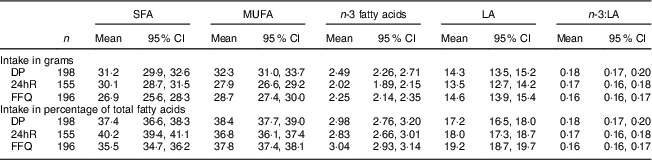
Mean intakes and the lower (2·5th) and higher (97·5th) percentiles of the specific fatty acids in grams and expressed as percentages of the total amount of fatty acids are shown in Table 1. SFA intake by the DP (31·2 g) and the 24hR (30·1 g) were both higher than by the FFQ (26·9 g). Also, MUFA and n-3 intakes were highest when assessed by the DP (32·3 g and 2·5 g), while intakes by the 24hR (27·9 g and 2·0 g) tended to be even lower than those by the FFQ (28·7 g and 2·3 g). For LA, DP intake (14·3 g) was rather similar to FFQ intake (14·6 g), while 24hR intake (13·5 g) tended to be slightly lower. Values of n-3:LA were rather similar. SFA intake as a percentage of total fatty acids was highest when assessed by the 24hR (40·2 %), followed by the DP (37·4 %) and FFQ (35·5 %). The MUFA intake percentage was highest when assessed by the DP (38·4 %), followed by the FFQ (37·8 %) and 24hR (36·8 %). The LA intake percentage was highest when assessed by the FFQ (19·2 %), with the 24hR (18·0 %) being slightly higher than the DP (17·2 %). For n-3 fatty acids and n-3:LA, percentages were rather similar for the three dietary assessment methods.
Mean intakes of SFA, MUFA, n-3 fatty acids, linoleic acid (LA) and n-3:LA, in grams and as a percentage of total fatty acids, for the duplicate portion (DP), 24 h recall (24hR) and FFQ among ninety-two men and 106 women aged 20–70 years, Wageningen, the Netherlands, July 2011–July 2014
Duplicate portion and 24 h recall as reference methods for FFQ validation
Validity coefficients for the FFQ were lower when the DP was used as reference method than when the 24hR was used as reference method when fatty acids were expressed as percentages of total fatty acids. This was especially true for MUFA (0·37 for DP, 0·65 for 24hR), LA (0·64 for DP, 0·80 for 24hR) and n-3:LA (0·33 for DP, 0·76 for 24hR; Table 2).
Validity coefficients and attenuation factors of the FFQ for fatty acids, expressed as a percentage of total fatty acids, with the duplicate portion (DP) or 24 h recall (24hR) as the reference method, among ninety-two men and 106 women aged 20–70 years, Wageningen, the Netherlands, July 2011–July 2014

LA, linoleic acid.
* Models were adjusted for BMI and gender.
† Estimates were obtained using model 1 (equations (1) and (2)) and equation (3).
‡ Estimates were obtained using model 1 (equations (1) and (2)) and equation (4).
For SFA and MUFA the attenuation factor was slightly higher when the DP was used as the reference method than when the 24hR was used. The other attenuation factors for the FFQ were rather similar when the DP was used as the reference method compared with the 24hR (Table 2).
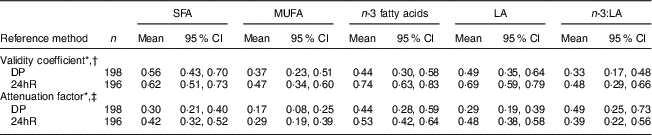
Also, for fatty acids expressed in grams, validity coefficients for the FFQ were lower when the DP was used as reference method than when the 24hR was used as reference method. This was especially true for n-3 fatty acids (0·44 for DP, 0·74 for 24hR) and LA (0·49 for DP, 0·69 for 24hR; Table 3). Attenuation factors for the FFQ were higher when the 24hR was used as the reference method for SFA (0·30 for DP, 0·42 for 24hR), MUFA (0·17 for DP, 0·29 for 24hR) and LA (0·29 for DP, 0·48 for 24hR).
Validity coefficients and attenuation factors of the FFQ for fatty acids, expressed in grams, with the duplicate portion (DP) or 24 h recall (24hR) as the reference method, among ninety-two men and 106 women aged 20–70 years, Wageningen, the Netherlands, July 2011–July 2014
LA, linoleic acid.
* Models were adjusted for BMI and gender.
† Estimates were obtained using model 1 (equations (1) and (2)) and equation (3).
‡ Estimates were obtained using model 1 (equations (1) and (2)) and equation (4).
Validity coefficients and attenuation factors for the FFQ were similar, whether they were expressed in grams or as a percentage of total fatty acids. However, a few values were lower when expressed in grams: for SFA and LA, both validity coefficients and attenuation factors for both the DP and 24hR as the reference method. Also, for MUFA and n-3:LA, the validity coefficient values with the 24hR as the reference method were lower when expressed in grams (0·47 v. 0·65 and 0·48 v. 0·76, respectively; Tables 2 and 3).
Ranking ability of duplicate portion and 24 h recall
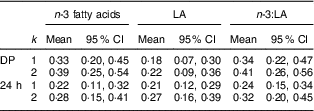
To additionally compare the performance of the DP and 24hR for ranking in an objective way, concentration biomarker measurements were used as reference method. Validity coefficients were used to assess the ability of both methods to rank individuals according to their fatty acid intake. The validity coefficient for the ranking based on a single DP (k=1) for the n-3 fatty acids (0·33) was slightly higher than for a single 24hR (0·22; Table 4). For LA and n-3:LA, validity coefficients were similar. A similar pattern was observed for validity coefficients based on two DP and two 24hR measurements as shown in Table 4 (k=2).
Validity coefficientsFootnote *,Footnote † of the duplicate portion (DP) and 24 h recall (24hR) for n-3 fatty acids, linoleic acid (LA) and n-3:LA, where the mean of two plasma fatty acid (biomarker) values, expressed as a percentage of total fatty acids, was used as reference method, among ninety-two men and 106 women aged 20–70 years, Wageningen, The Netherlands, July 2011–July 2014
k, number of measurements.
* Models were adjusted for BMI and gender.
† Estimates were obtained using model 2 (equations (5) and (6)) and equation (3).
Discussion
To investigate to what extent the 24hR, often used as a reference method for FFQ, reduces the bias in estimated risk parameters for the intake of fatty acids we compared its performance with that of the DP as reference method. Fatty acid intakes expressed in grams were (slightly) lower when assessed by the 24hR as compared with the DP. For the fatty acid intakes expressed as percentages of total fatty acids, differences between the dietary assessment methods did not show a clear pattern. Validity coefficients for fatty acid estimates by the FFQ were higher or comparable when the 24hR was used as reference method than when the DP was used for data expressed in grams and percentages of total fatty acids. For attenuation factors, however, the 24hR as reference method showed a slightly lower value for MUFA for data expressed in percentages of total fatty acids and a higher value when expressed in grams. For data expressed in grams, higher attenuation factors were also observed for SFA and LA when the 24hR was used as the reference method. Using plasma fatty acids as reference method showed that the 24hR was able to rank participants according to their intake of n-3 fatty acids, LA and n-3:LA to a similar degree or slightly worse than the DP.
Intakes of fatty acids in our study population were comparable with those of the general Dutch population based on the 2007–2010 Dutch National Food Consumption Survey (DNFCS)( Reference van Rossum, Fransen and Verkaik-Kloosterman 20 ). The DNFCS intake data are based on two telephone-based 24hR and the same FCD (2011) as we used to calculate nutrient intakes. Assessment of nutrient intake is among others limited by the availability and quality of the data in the FCD. Fatty acid composition of foods may change over time and vary among different brands. However, a study comparing calculated and analysed test diets for controlled dietary interventions found a reasonable agreement between the two for SFA and MUFA( Reference Siebelink, de Vries and Trijsburg 21 ), indicating the Dutch FCD performs reasonably well for these fatty acids.
Published data on validity coefficients for FFQ for fatty acid intake estimates are scarce. One study, using the method of triads with the biomarker and weighed food records as reference method, found a validity coefficient of 0·50 for n-3 fatty acids assessed by FFQ( Reference McNaughton, Hughes and Marks 22 ), which is comparable to our results. A study by Kabagambe et al., also using the method of triads, found validity coefficients for the FFQ for LA between 0·77 and 0·89( Reference Kabagambe, Baylin and Allan 23 ), using the biomarker and 24hR as reference methods. This is in line with our findings for LA when using the 24hR as reference method. A recent study in Brazilian adults, also using the method of triads with a biomarker, FFQ and 24hR, reported validity coefficients for the FFQ for SFA (0·28) and LA (0·31) which are lower than our results( Reference da Silva, Segheto and de Lima 24 ). Although differences in the statistical method to assess validity coefficients, adjustment for different covariates, study population, validity of the FCD and characteristics of the FFQ may hamper comparability of studies, our findings were in the same order of magnitude as the results previously published.
To be able to estimate model parameters, assumptions have to be made. These assumptions are universally made when the 24hR is used as reference method and are not specifically related to the use of measurement error models. In our first model, we made the assumptions of negligible error correlation between FFQ and DP or 24hR, and between replicates of the reference methods, and the absence of proportional scaling bias for the DP and 24 h. Previous research showed that correlated errors between FFQ and 24hR as well as between FFQ and DP were present, and so was proportional scaling bias for the DP and 24hR for energy, protein, K and Na intake( Reference Kipnis, Subar and Midthune 8 , Reference Prentice, Mossavar-Rahmani and Huang 9 , Reference Trijsburg, de Vries and Boshuizen 11 ). It would thus be likely that correlated errors and proportional scaling bias are also present when assessing fatty acid intake. The presence of correlated errors between FFQ and reference method will lead to an overestimation of validity coefficients and attenuation factors for the FFQ when using DP or 24hR as reference method( Reference Kaaks, Ferrari and Ciampi 25 ). We previously showed that less correlated errors were present between DP and FFQ than between 24hR and FFQ( Reference Trijsburg, de Vries and Boshuizen 11 ). This would imply that the validity coefficients of the FFQ obtained with the DP as the reference method would show less overestimation. We indeed observed lower validity coefficients for fatty acid estimates by the FFQ when the DP was used as reference method than when the 24hR was used. Correlation of errors between replicates would cause the validity coefficient to be underestimated( Reference Kaaks, Ferrari and Ciampi 25 ). We carefully designed the study in such a way that replicates were taken independently with enough time in between. However, this does not remove correlated errors due to e.g. under-reporting because of social desirability. For attenuation factors the influence of the proportional scaling bias also needs to be taken into account. Assuming this bias is mostly smaller than one( Reference Kipnis, Subar and Midthune 8 , Reference Trijsburg, de Vries and Boshuizen 11 , Reference Freedman, Midthune and Dodd 26 ), the attenuation factor will be overestimated.
In our second model we assumed negligible error correlation between biomarker and DP or 24hR and between replicates of the biomarker. In addition, absence of proportional scaling bias for the biomarker was assumed; however, if this assumption is not met this does not affect the comparability of validity coefficients for DP and 24hR. The assumption of uncorrelated errors between biomarker and DP or 24hR is likely to hold since the errors in the biomarker measurement are assumed to be mostly physiological whereas the errors in DP and 24hR are due to the reporting of dietary intake, although complete absence of error correlation cannot be assumed. However, an individual’s digestion, absorption and metabolism are likely to influence concentration biomarker measurements( Reference Willett 27 ), causing error correlations between replicates of the biomarker. Due to this error correlation, validity coefficients for the DP and 24hR will be underestimated, which limits their interpretation as the calculated values should be interpreted as the lower limit of the range of potential validity coefficient estimates. However, errors in the biomarker estimates are assumed to influence the validity coefficients for DP and 24hR equally, therefore the finding that the DP had comparable or slightly better ranking abilities than the 24hR is sound. Lastly, given that the collection of DP is expensive and labour-intensive, our sample size is relatively large, but compared with other validation studies, like the OPEN study( Reference Kipnis, Subar and Midthune 8 ), the sample size of our study is relatively small.
Using DP or 24hR as reference method for FFQ validation enables to assess the validity of a wide range of fatty acids, while plasma fatty acids can be used to evaluate ranking only based on intakes of fatty acids that are not produced endogenously. Furthermore, DP and 24hR can be used to assess the validity of absolute FFQ fatty acid intakes, while the plasma fatty acids can only be expressed as percentages of total fatty acids. Using 24hR as reference method has previously been found to reduce but not eliminate the bias in diet–health associations with intakes on a continuous scale and is recommended to be used when no recovery biomarker is available( Reference Freedman, Commins and Willett 10 ). DP are assumed to be superior as they are not affected by errors originating from the FCD, while also portion size estimation bias and the influence of memory are expected to be small( Reference Trijsburg, de Vries and Boshuizen 11 ). However, DP are expensive to collect and less feasible to include in validation studies. Also, 24hR with other software or instructions and DP with other instructions, or in other study populations, can yield other results; therefore, possible extrapolation of our results has to be done carefully.
Conclusion
In conclusion, taking into account that the assumptions made in our models prevent us from drawing firm conclusions, validity of assessment of fatty acid intake by FFQ differs slightly when the conventionally used 24hR is the reference method as compared with the DP. The 24hR seems to perform slightly worse than the DP when used to obtain validity coefficients for the FFQ, whereas for attenuation factors for the FFQ the use of DP or 24hR as reference method seems comparable. Therefore, the 24hR seems an acceptable reference method, given it is less burdensome for participants and researcher, for FFQ validation of fatty acid intakes.
Acknowledgements
Acknowledgements: The authors thank Professor Edith Feskens and Anne van de Wiel, MSc for making it possible to use data from the NQplus study. The authors thank Mira Mutiyani, MSc, Sanne Marije Seves, MSc and Cecilia Ferreira Lima, BSc for their help in analysing the duplicate portion samples, Corine Perenboom for her help in preparing the 24hR data and Mariӫll Voortman for her help in the fatty acid analysis of the duplicate portions. In addition, they thank the subjects of the DuPLO study for participating in the study. Financial support: The NQplus study was funded by ZonMw (grant number 91110030) and Wageningen University. The DuPLO study was funded by VLAG (Voeding, Levensmiddelentechnologie, Agrobiotechnologie en Gezondheid), a graduate school of Wageningen University. The sponsors had no role in the design, analysis or writing of this article. Conflict of interest: None. Authorship: L.T. collected the data, contributed to the study design, data analysis and interpretation of findings, and wrote the manuscript. J.H.M.d.V., P.vt.V. and A.G. contributed to the study design and interpretation of findings and revised the earlier versions of the manuscript. H.C.B. contributed to the data analysis and interpretation of findings and revised the earlier versions of the manuscript. P.J.M.H. and P.C.H.H. contributed to the study design and revised the earlier versions of the manuscript. All authors read and approved the final version of the manuscript. Ethics of human subject participation: This study was conducted according to the guidelines laid down in the Declaration of Helsinki and all procedures involving human subjects were approved by the medical ethics committee of Wageningen University. Written informed consent was obtained from all subjects.



