




Introduction
It is widely recognised that a nutritionally sound diet is fundamental to human health and wellbeing across the lifespan(1). A poor diet contributes to poor health and is a well-established, modifiable risk factor for the development of non-communicable diseases, which are leading causes of death globally(1). Traditionally, research has focused on the relationship between individual nutrients and health outcomes, yet this approach has often resulted in conflicting findings(Reference Hu2). Hence there has been a gradual shift in the past decade towards less reductionist approaches to examining diet–disease relationships (for example, dietary patterns analysis) that better capture the interaction of nutrients and bioactive compounds within the whole diet(Reference Hu2, Reference McNaughton3). However, people consume combinations of foods as meals and snacks rather than as individual foods and nutrients. Understanding the nutritional composition of meals and the ways in which different meal patterns make an impact on diet quality might help to elucidate important diet–disease relationships. Moreover, a meals-based approach could complement current dietary advice, which currently uses a food-based framework (for example, the Australian Dietary Guidelines)(4) to assist populations in achieving the recommended daily intakes of foods and nutrients. That is, dietary advice in the context of meals could help populations with their daily meal preparation and therefore be a more practical and salient way to assist populations to follow dietary guidelines.
Most of the research in this area, however, has focused on how different meal patterns (also referred to as eating patterns) make an impact on energy balance and weight status(Reference Mesas, Munoz-Pareja and Lopez-Garcia5, Reference Szajewska and Ruszczynski6). An oft-cited drawback to interpreting the evidence from these studies has been the different approaches employed to operationally define meals and/or snacks(Reference Mesas, Munoz-Pareja and Lopez-Garcia5, Reference Gregori, Foltran and Ghidina7). However, previous reviews of the impact of different definitions on the interpretation of meal pattern studies have examined snacking only(Reference Gregori, Foltran and Ghidina7, Reference Johnson and Anderson8). Moreover, to date there has been no comprehensive review of studies investigating associations between meal patterns and diet quality; previous reviews have focused on dietary contributions in relation to eating frequency or snacking(Reference Johnson and Anderson8, Reference Bellisle9).
Therefore, the primary purpose of the present paper is to provide an overview and critique of meal pattern research, including previous approaches to the characterisation, definition and measurement of ‘meals’. Second, the potential implication of these approaches will be further examined in a critical review of the literature of the contributions of meal patterns to energy and nutrient intakes and overall diet quality among adults.
Characterisation of meals
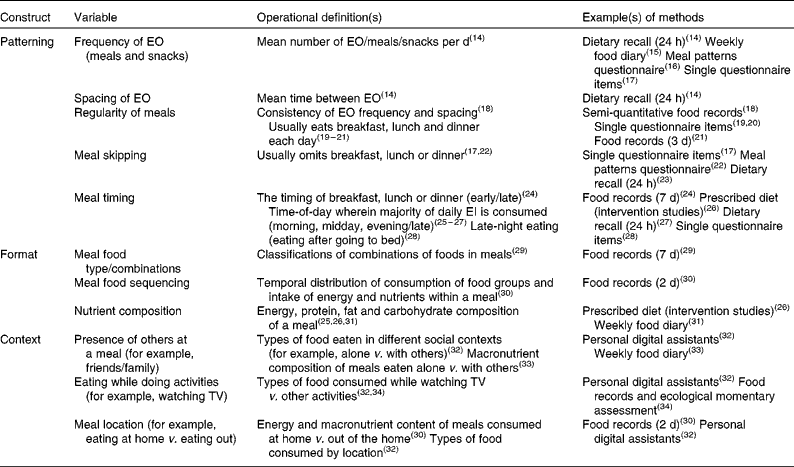
The term ‘meal patterns’ is an overarching construct that is often used to describe individuals' eating patterns at the level of a ‘meal’, such as a main meal (for example, breakfast, lunch or dinner) or a smaller-sized meal (for example, supper or snack). The neutral terms ‘eating occasion’ (EO) or ‘eating event’ are also used to describe any occasion where food or drink is ingested, and therefore incorporates all meal types. Meals have been described according to three constructs: (1) patterning (for example, frequency, spacing, regularity, skipping, timing); (2) format (for example, types of food combinations, sequencing of foods, nutrient profile/content); and (3) context (for example, eating with others or with the family, eating in front of the television or out of the home) (Table 1)(Reference Meiselman and Meiselman10–Reference Mattes13). Table 1(Reference Popkin and Duffey14–Reference Mak, Prynne and Cole34) provides an overview of these constructs, including a description of the different meal patterns variables that have been examined previously along with their corresponding operational definitions. Examples of how meals have been measured in past studies are also presented in Table 1.
Overview of the three meal pattern constructs, and examples of variables currently assessed in the literature and the assessment methods that have been used to collect the meal pattern data

EO, eating occasions; EI, energy intake; TV, television.
Meal definitions
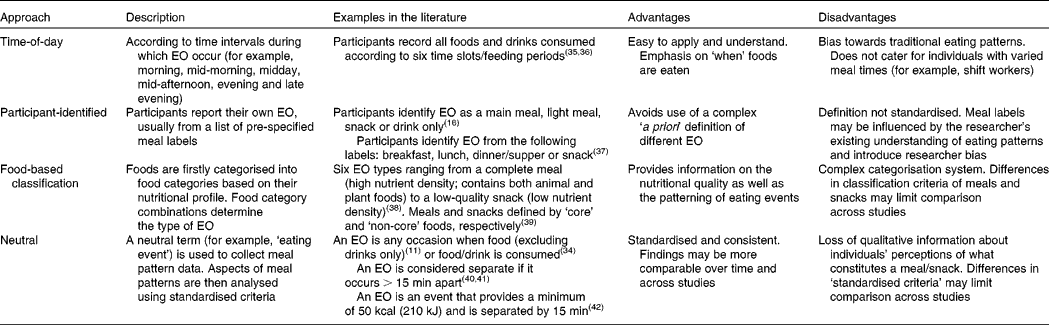
To date, a variety of approaches has been used in the literature to define EO (meals and snacks). The approaches are summarised below and in Table 2(Reference Mäkelä, Kjaernes and Pipping Ekström11, Reference Bertéus Forslund, Lindroos and Sjöström16, Reference Mak, Prynne and Cole34–Reference Ma, Bertone and Stanek42). The main approaches to defining meals are: participant-identified, time-of-day, food-based classification (FBC) and neutral. These definitions, along with examples from the literature and their respective advantages and disadvantages, are discussed below.
Summary of different approaches used to define different eating occasions (EO)
Time-of-day
As the name implies, this approach defines meals according to the time-of-day in which food was consumed. Explicitly, a ‘meal’ may be defined as the largest EO occurring between 06.00–10.00, 12.00–15.00 and 18.00–21.00 hours, with smaller EO and EO falling outside of these times considered as snacks(Reference Duffey, Pereira and Popkin43). While this approach is easy to understand and apply, the time parameters used are not always explicit, the number of meals per d is usually restricted to a maximum of three and it does not capture meals eaten at unusual times, such as among shift workers(Reference Almoosawi, Winter and Prynne35, Reference Summerbell, Moody and Shanks36). Ultimately, a time-of-day definition requires a measure of time of eating. It is also subject to bias of the researcher, as the time intervals to define a meal or snack are often based on their understanding of eating patterns, potentially influenced by local or cultural factors(Reference Gatenby44)
Participant-identified
This definition relies on the respondent to identify an EO as a meal or snack, often from a list of pre-specified meal labels (for example, breakfast, lunch, dinner/supper or snack)(Reference Gatenby44). While this definition avoids the imposition of a complex criterion to classify EO as meals or snacks(Reference Berteus Forslund, Torgerson and Sjostrom45–Reference Ovaskainen, Reinivuo and Tapanainen47), it is not standardised due to subjectivity in participants' allocation of an eating event as a meal or snack(Reference Gatenby44, Reference Howarth, Huang and Roberts48). Chamontin et al. (Reference Chamontin, Pretzer and Booth49) showed that the word ‘snack’, when used in its verb form (for example, ‘When did you last snack?’), elicited different conceptual responses from participants than when snack was used as a noun (for example, ‘When did you last have a snack?’). However, not all studies ask respondents to identify the EO(Reference Duffey, Pereira and Popkin43).
Food-based classification
Lennernäs & Andersson(Reference Lennernäs and Andersson38) developed the concept of a FBC of EO intended to reflect both qualitative and quantitative aspects of meal patterns. Initially, foods consumed were sorted into seven food categories that differed by nutritional profile (for example, animal/plant origin, nutrient density, energy density) and second, depending on the combination of food categories consumed, eating events were classified as one of six types of EO ranging from a ‘complete meal’ to a ‘low-quality snack’. Another variation of the FBC system, based on ‘core’ and ‘non-core’ foods has since been developed(Reference Macdiarmid, Loe and Craig39), but generally the FBC of EO has had limited uptake, probably due to the complexity of the FBC criteria. While this definition of a meal can capture the types of foods eaten, the researcher must decide which criteria should be used to classify meals and snacks (for example, a criterion based on different nutrient profiles v. a criterion based on the energy density of foods).
Neutral
In 1999, Mäkelä et al. (Reference Mäkelä, Kjaernes and Pipping Ekström11) recognised that conventional meal labels are culturally laden and therefore may mean different things for people from different cultural backgrounds. This led the authors to use the neutral term ‘eating event’ for an occasion where food was consumed. Once empirical data had been collected, different dimensions of meal patterns using standardised criteria (for example, time-of-day, number of hot/cold eating events) were used to describe the data. The advantage of a neutral definition is that it can be standardised and can allow for comparison across different population groups and cultures. However, despite this neutral definition, additional criteria have been applied in the literature with regards to the time intervals between EO, a minimum-energy criterion to define each individual EO and whether beverage-only EO are included or excluded. It is important to note that these additional criteria have also been applied to the time-of-day and participant-identified definitions in order to define an ‘individual’ or ‘separate’ meal and/or snack(Reference Bellisle, Dalix and Mennen15, Reference Piernas and Popkin50, Reference Summerbell, Moody and Shanks51), thus adding another layer of diversity to these meal definitions.
When the time of eating is recorded, researchers must decide how to delineate separate EO(Reference Almoosawi, Winter and Prynne35, Reference Kerver, Yang and Obayashi52). Indeed, the period of time used to separate different EO varies across studies, with intervals of 15 min(Reference Drummond, Crombie and Cursiter40, Reference Ma, Bertone and Stanek42, Reference Piernas and Popkin50), 30 min(Reference Ovaskainen, Tapanainen and Pakkala53) or 45 min(Reference Bellisle, Dalix and Mennen15) or 1 h(Reference Summerbell, Moody and Shanks51) reported. Some studies also include a minimum energy criterion as part of the meal definition. For example, in some studies, EO were only treated as an EO if they contributed a minimum amount of energy (for example, 210 kJ)(Reference Bellisle, Dalix and Mennen15, Reference Ma, Bertone and Stanek42, Reference Gibney and Wolever54). These variations in criteria are likely to make an impact on the frequency, spacing and nutritional contribution of the EO reported and on associations with health outcomes. In support of this, Murakami & Livingstone(Reference Murakami and Livingstone55) found the number of reported EO per d was reduced by two or more EO for both men and women after applying a minimum-energy criterion of 210 kJ. In the same study, the different definitions of an EO greatly affected the results of the association between eating frequency and BMI and waist circumference.
The methodological differences in spacing between EO and energy content may also indirectly influence the inclusion(Reference Piernas and Popkin50) or exclusion(Reference Smith, Blizzard and McNaughton56) of beverage-only occasions as part of the meal definition. A larger time interval criterion applied to 24 h recall data to separate individual EO may not be able to capture smaller EO (including beverage-only occasions). The findings from one study suggest that smaller intervals may also be useful to detect important changes in energy intake (EI) from beverage-only occasions over time(Reference Popkin and Duffey14).
Measurement of meals
There have been a number of different approaches to the measurement of meals. Much data on meal patterns have been derived from dietary assessment methods such as 24 h recalls and food records. These methods provide detailed information on the types and quantities of food/beverages consumed and, usually, time of consumption(Reference Popkin and Duffey14, Reference Bellisle, Dalix and Mennen15, Reference Summerbell, Moody and Shanks36, Reference Piernas and Popkin50, Reference Zizza, Siega-Riz and Popkin57).
During a 24 h recall, participants may be asked to report the type of EO as a main meal or a snack(Reference Popkin and Duffey14, Reference Piernas and Popkin50, Reference Zizza, Siega-Riz and Popkin57), whereas food records are often segregated by the researcher into meal time slots (for example, pre-breakfast, breakfast, mid-morning, etc.)(Reference Almoosawi, Winter and Prynne35, Reference Summerbell, Moody and Shanks36). Contextual information is not always collected as part of the recall or food record and thus only examination of meal patterning may be possible. While meal format could be examined with this type of data, little research in this area has been conducted. One possible reason for this is that there has been little exploration of statistical techniques that are able to examine complex combinations and sequencing of foods at a meal. Hearty & Gibney(Reference Hearty and Gibney29) explored the potential use of supervised data-mining techniques in meal pattern analysis, specifically to predict diet quality based on different combinations of foods at a meal. However, to our knowledge, this is the only study that has applied these analytic tools in meal pattern analysis.
Many food diaries collect data on time of eating, and/or self-identified meals, and similar to 24 h recalls, some collect contextual information (for example, location of eating, presence of others). The weekly food diary method developed by de Castro(Reference de Castro58), in addition to the time and amount of food eaten over a 7 d period, asks participants to record detailed contextual information (for example, mood and hunger levels before eating, the number and nature of other people eating with them). While this method elicits rich contextual information, participant burden is high, thus reducing its practicality in larger-scale studies. In a recent study, participants used personal digital assistant devices to record real-time information on dietary intake, EO type, location and context(Reference Laska, Graham and Moe32). As a result, the researchers were able to assess contextual influences on the types of foods that participants consumed at an EO. However, while this type of assessment method lends itself to the examination of meal patterning, format and context, these ‘real-time’ assessment devices have not yet been extensively developed(Reference Ngo, Engelen and Molag59).
FFQ are also commonly used to collect dietary data, particularly in large-scale studies(Reference Gibson60). While FFQ provide estimates of the frequency and types of foods that are usually consumed, they do not provide data that directly allow examination of EO, and additional questionnaires(Reference Bertéus Forslund, Lindroos and Sjöström16, Reference Smith, Blizzard and McNaughton56) or short questionnaire items(Reference Mekary, Giovannucci and Willett17) have been used to collect information on meal patterns. Example of questionnaire items include: ‘Indicate the times of day you usually eat’(Reference Mekary, Giovannucci and Willett17), ‘Do you eat regular breakfast, lunch and dinner or evening meal each day?’(Reference Sierra-Johnson, Unden and Linestrand19) or ‘Do you usually have the following meals (breakfast, lunch, snack, dinner, evening snack)?’(Reference Jääskeläinen, Schwab and Kolehmainen20). Some questionnaires may only ask about ‘eating’ frequency, and thus may not capture beverage-only EO. The reliability and validity of meal pattern questionnaires are often not reported(Reference Bertéus Forslund, Lindroos and Sjöström16)
Associations between meal patterns, nutrient intakes and overall diet quality
Due to the current limited methods available to collect meal pattern data, most research to date has examined meal patterning(Reference Mesas, Munoz-Pareja and Lopez-Garcia5, Reference McCrory and Campbell61), with relatively little focus on meal format(Reference Hearty and Gibney29) and context(Reference Laska, Graham and Moe32). As stated previously, studies on meal patterning have examined meal frequency, spacing, skipping and timing. However, these studies have differed in their approach to defining meals, and even within a given approach, there have been differences in the delineation of individual EO, meals and/or snacks. The ways these different methodological differences affect the characterisation of meal patterns have been little explored(Reference Murakami and Livingstone55) and, to the best of our knowledge, how these differences affect the associations between meal patterns and nutrient intakes or diet quality has not previously been examined. Understanding the relationships between adults' meal patterns and nutrient intakes and diet quality is necessary to determine if they are markers of the healthiness and variety of the whole diet(Reference Wirt and Collins62). Therefore, the associations between ‘meal patterning’, nutrient intake and overall diet quality among adults were examined considering the impact of different meal definitions used for the characterisation of meal patterns.
A literature search was undertaken in the PubMed and EMBASE electronic databases using the following terms: meal, snack, breakfast, lunch, dinner, eating frequency, eating pattern, eating behavior, eating behaviour, eating occasion, eating episode, diet quality, dietary quality, dietary pattern, dietary behavior, dietary behaviour, nutritional quality, dietary intake, food intake, energy intake, nutrient, macronutrient, dietary composition and nutritional composition. The search terms were limited to the title/abstract and the following filters were applied: journal article, humans, adult and English. Two searches were conducted; the first between February and May 2013 and the second between February and April 2014. The criteria for inclusion in the review were: original research studies that examined the nutritional contributions of meal patterns or associations between meal patterns and nutrient intakes and/or overall diet quality in free-living, healthy men and women aged 19 years and over. Diet quality was defined as the quality of a individual's overall food intake determined by compliance with national dietary guidelines or an a priori diet quality score(Reference Kant63). Studies that examined populations with conditions or circumstances that may affect meal patterns (for example, elite athletes, shift-workers, individuals with chronic diseases, recipients of meal programmes and pregnant or breast-feeding women), or examined associations with EI only, were excluded.
Characteristics of studies which examined associations between meal patterns and nutrient intakes
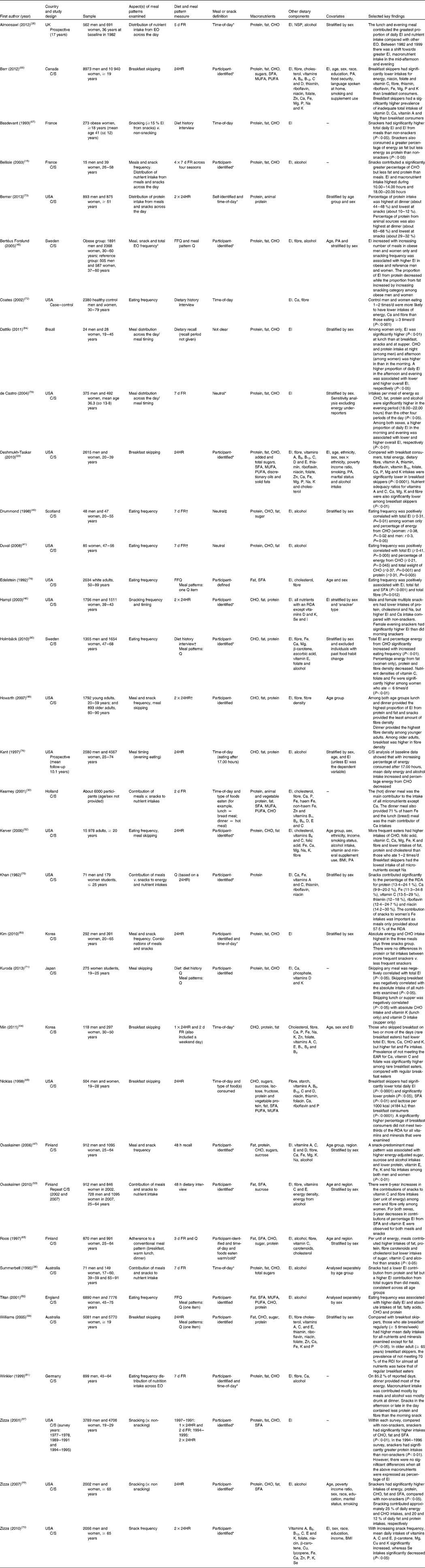
A total of thirty-four studies (Table 3) were identified which examined the nutritional contribution of different meal patterns, in adults. However, only thirteen of these examined more than one micronutrient(Reference Deshmukh-Taskar, Radcliffe and Liu23, Reference Kearney, Hulshof and Gibney30, Reference Hampl, Heaton and Taylor46, Reference Ovaskainen, Reinivuo and Tapanainen47, Reference Kerver, Yang and Obayashi52, Reference Min, Noh and Kang64–Reference Kuroda, Onoe and Yoshikata71). All except two studies(Reference Almoosawi, Winter and Prynne35, Reference Coates, Potter and Caan72) were cross-sectional. Of the studies, fifteen and five studies were conducted in the USA(Reference Duval, Strychar and Cyr41, Reference Hampl, Heaton and Taylor46, Reference Howarth, Huang and Roberts48, Reference Kerver, Yang and Obayashi52, Reference Zizza, Siega-Riz and Popkin57, Reference Nicklas, Myers and Reger68, Reference Zizza, Arsiwalla and Ellison70, Reference Coates, Potter and Caan72–Reference de Castro79) and Scandinavia(Reference Berteus Forslund, Torgerson and Sjostrom45, Reference Ovaskainen, Reinivuo and Tapanainen47, Reference Ovaskainen, Tapanainen and Pakkala53, Reference Roos and Prättälä65, Reference Holmbäck, Ericson and Gullberg80), respectively, with fewer studies conducted in Western Europe(Reference Bellisle, Dalix and Mennen15, Reference Kearney, Hulshof and Gibney30, Reference Basdevant, Craplet and Guy-Grand67, Reference Winkler, Döring and Keil81), the UK(Reference Almoosawi, Winter and Prynne35, Reference Drummond, Crombie and Cursiter40, Reference Titan, Bingham and Welch82), East Asia(Reference Min, Noh and Kang64, Reference Kuroda, Onoe and Yoshikata71, Reference Kim and Kim83), Australia(Reference Summerbell, Moody and Shanks36, Reference Williams69), Canada(Reference Barr, DiFrancesco and Fulgoni66) and Brazil(Reference Dattilo, Crispim and Zimberg84). Meal patterns were mostly participant-identified(Reference Bellisle, Dalix and Mennen15, Reference Deshmukh-Taskar, Radcliffe and Liu23, Reference Berteus Forslund, Torgerson and Sjostrom45–Reference Howarth, Huang and Roberts48, Reference Kerver, Yang and Obayashi52, Reference Ovaskainen, Tapanainen and Pakkala53, Reference Zizza, Siega-Riz and Popkin57, Reference Barr, DiFrancesco and Fulgoni66, Reference Williams69, Reference Zizza, Arsiwalla and Ellison70, Reference Khan and Lipke75, Reference Zizza, Tayie and Lino77, Reference Edelstein, Barrett-Connor and Wingard78, Reference Titan, Bingham and Welch82), although these studies varied in the additional criteria used to determine an individual EO, meal and/or snack, and their treatment of beverages. For example, eleven studies(Reference Deshmukh-Taskar, Radcliffe and Liu23, Reference Berteus Forslund, Torgerson and Sjostrom45–Reference Ovaskainen, Reinivuo and Tapanainen47, Reference Kerver, Yang and Obayashi52, Reference Barr, DiFrancesco and Fulgoni66, Reference Williams69, Reference Khan and Lipke75, Reference Edelstein, Barrett-Connor and Wingard78, Reference Holmbäck, Ericson and Gullberg80, Reference Titan, Bingham and Welch82) applied no additional criteria, whereas in other studies, EO were delineated using 15-min time intervals(Reference Zizza, Siega-Riz and Popkin57, Reference Zizza, Arsiwalla and Ellison70, Reference Zizza, Tayie and Lino77), a 30-min interval(Reference Ovaskainen, Tapanainen and Pakkala53), a 45-min interval plus a 50 kcal (210 kJ) energy criterion(Reference Bellisle, Dalix and Mennen15) and a 59-min interval (applied to meals only)(Reference Howarth, Huang and Roberts48). All beverage types (energy and non-energy) could constitute an individual EO in nine studies(Reference Almoosawi, Winter and Prynne35, Reference Berteus Forslund, Torgerson and Sjostrom45–Reference Ovaskainen, Reinivuo and Tapanainen47, Reference Ovaskainen, Tapanainen and Pakkala53, Reference Barr, DiFrancesco and Fulgoni66, Reference Zizza, Arsiwalla and Ellison70, Reference Khan and Lipke75, Reference Zizza, Tayie and Lino77), whereas other studies excluded water beverages(Reference Deshmukh-Taskar, Radcliffe and Liu23, Reference Kerver, Yang and Obayashi52), non-nutritive beverages (for example, water, tea, black coffee)(Reference Holmbäck, Ericson and Gullberg80) or did not address/include beverages as part of the definition(Reference Howarth, Huang and Roberts48, Reference Zizza, Siega-Riz and Popkin57, Reference Kuroda, Onoe and Yoshikata71, Reference Edelstein, Barrett-Connor and Wingard78, Reference Titan, Bingham and Welch82). Time-of-day definitions were also common(Reference Almoosawi, Winter and Prynne35, Reference Summerbell, Moody and Shanks36, Reference Min, Noh and Kang64, Reference Basdevant, Craplet and Guy-Grand67, Reference Coates, Potter and Caan72, Reference Kant, Schatzkin and Ballard-Barbash76) as well as a combination of two definitions (for example, self-identified and time-of-day, or time-of-day and type/combination of foods eaten)(Reference Kearney, Hulshof and Gibney30, Reference Roos and Prättälä65, Reference Nicklas, Myers and Reger68, Reference Berner, Becker and Wise73, Reference Winkler, Döring and Keil81).
Summary of studies that have examined the contribution of meal patterns to macronutrient and/or other nutrient intakes
EO, eating occasion; FR, food record; CHO, carbohydrate; EI, energy intake; C/S, cross-sectional; 24HR, 24 h recall; PA, physical activity;Q, questionnaire; RDA, recommended daily allowance; EAR, estimated average requirement; RDI, recommended daily intake.
* Beverages could qualify as a separate eating occasion.
† Energy misreporters or under-reporters excluded from analyses.
‡ Milk in excess of 0·5 pints (284 ml) was the only beverage that could qualify as a separate eating occasion.
The most common methods used to assess both dietary intake and meal patterns were 24 h recalls(Reference Deshmukh-Taskar, Radcliffe and Liu23, Reference Hampl, Heaton and Taylor46, Reference Howarth, Huang and Roberts48, Reference Kerver, Yang and Obayashi52, Reference Zizza, Siega-Riz and Popkin57, Reference Barr, DiFrancesco and Fulgoni66, Reference Nicklas, Myers and Reger68–Reference Zizza, Arsiwalla and Ellison70, Reference Berner, Becker and Wise73, Reference Kant, Schatzkin and Ballard-Barbash76, Reference Zizza, Tayie and Lino77, Reference Kim and Kim83) or food records (2–7 d)(Reference Bellisle, Dalix and Mennen15, Reference Kearney, Hulshof and Gibney30, Reference Almoosawi, Winter and Prynne35, Reference Summerbell, Moody and Shanks36, Reference Drummond, Crombie and Cursiter40, Reference Duval, Strychar and Cyr41, Reference Zizza, Siega-Riz and Popkin57, Reference Min, Noh and Kang64, Reference Roos and Prättälä65, Reference de Castro79, Reference Winkler, Döring and Keil81). Only four studies excluded energy misreporters(Reference Howarth, Huang and Roberts48, Reference Holmbäck, Ericson and Gullberg80) or energy under-reporters(Reference Drummond, Crombie and Cursiter40, Reference Duval, Strychar and Cyr41). There was significant variation in the aspects of meal patterning examined and these aspects could be broadly categorised as: meals v. snacks, eating frequency, meal skipping/regularity and meal timing. These categories are used below to direct discussion on the studies' findings in relation to associations with nutrient intakes. The potential impact of different definitions on the characterisation of meal patterns and their associations with nutrient intakes is also discussed.
Meals v. snacks in relation to nutrient intakes
A total of ten studies(Reference Bellisle, Dalix and Mennen15, Reference Kearney, Hulshof and Gibney30, Reference Almoosawi, Winter and Prynne35, Reference Summerbell, Moody and Shanks36, Reference Roos and Prättälä65, Reference Berner, Becker and Wise73, Reference Khan and Lipke75, Reference de Castro79, Reference Winkler, Döring and Keil81, Reference Dattilo, Crispim and Zimberg84) were identified that examined the contributions of meals and/or snacks to energy and nutrient intakes. In a prospective study of 1253 adults from the UK, Almoosawi et al. (Reference Almoosawi, Winter and Prynne35) examined 17-year changes in the contributions of breakfast, lunch and dinner to macronutrient intake. The authors found that the lunch and evening meal contributed the greatest proportion of total daily energy, protein, fat and carbohydrate intake, which was consistent over time. This is supported by other research highlighting that main meals are when the largest volume of food is normally consumed(Reference Bellisle, Dalix and Mennen15, Reference Winkler, Döring and Keil81). When the nutritional contribution of meals and snacks are analysed relative to their contribution to EI, a finding across five studies was that snacks provided a lower proportion of total energy from fat and/or protein than did meals(Reference Bellisle, Dalix and Mennen15, Reference Summerbell, Moody and Shanks36, Reference Howarth, Huang and Roberts48, Reference Roos and Prättälä65, Reference Berner, Becker and Wise73). This finding was consistent despite the difference in definitions adopted across these studies. Interestingly, two studies(Reference Summerbell, Moody and Shanks36, Reference Winkler, Döring and Keil81) reported that snacks provided a greater percentage of total sugars but not total carbohydrate than meals, and Winkler et al. (Reference Winkler, Döring and Keil81) noted that snacks eaten after lunchtime contained less protein and fibre than the morning snack. Two studies(Reference Berner, Becker and Wise73, Reference de Castro79) showed that the percentage of protein intake was highest in the evening, particularly among older adults(Reference Berner, Becker and Wise73). This suggests that macronutrient differences between meals and snacks may be influenced by both the type and timing of food consumed.
There is a paucity of information on the relative contributions of meals or snacks to intakes of micronutrients and other dietary components. Roos & Prättälä(Reference Roos and Prättälä65) examined the impact of adherence to a conventional Finnish meal pattern (breakfast, warm lunch and warm dinner plus two snacks) among 1861 adults aged 25–64 years and found, per unit of energy, that meals contributed more fibre and carotenoids but less sugar, vitamin C and alcohol than snacks. This finding remained consistent across sex and after adjustment for age and region. Additionally, a study on the adherence to a Dutch meal pattern (breakfast, morning snack, lunch bread meal, afternoon snack, hot dinner meal)(Reference Kearney, Hulshof and Gibney30) found that the (hot) dinner meal was the main contributor to the intakes of (haem) Fe, Zn and vitamins B1, B6, B12, C, D and E. Snacks may also be important in assisting populations to meet dietary guidelines for micronutrient intakes; one study(Reference Khan and Lipke75) of young adult students found that snacks contributed significantly to the percentage of the recommended daily allowances for Ca, Fe, vitamin C, thiamin, riboflavin and niacin. In the same study, snacks were important contributors of Fe and Ca intake among women, whose meal contributions of these micronutrients were only about 65 % and about 79 % of the RDA, respectively.
Eating frequency and nutrient intakes
Of eighteen studies that examined eating frequency (including snacking frequency), fourteen found that eating frequency was associated with higher EI(Reference Drummond, Crombie and Cursiter40, Reference Duval, Strychar and Cyr41, Reference Berteus Forslund, Torgerson and Sjostrom45–Reference Ovaskainen, Reinivuo and Tapanainen47, Reference Kerver, Yang and Obayashi52, Reference Zizza, Siega-Riz and Popkin57, Reference Basdevant, Craplet and Guy-Grand67, Reference Coates, Potter and Caan72, Reference Zizza, Tayie and Lino77, Reference Edelstein, Barrett-Connor and Wingard78, Reference Holmbäck, Ericson and Gullberg80, Reference Titan, Bingham and Welch82, Reference Kim and Kim83). However, the evidence to support associations with nutrient intake is less consistent. Two large population-based studies, one in US adults(Reference Kerver, Yang and Obayashi52) and the other in Swedish adults(Reference Holmbäck, Ericson and Gullberg80), found that those who ate six or more times per d had higher intakes of carbohydrate and fibre but lower intakes of fat and protein compared with adults who ate once or twice per d or less than three times per d, respectively. In these studies, a higher eating frequency was also associated with higher nutrient densities of folate, vitamin C and Fe(Reference Kerver, Yang and Obayashi52, Reference Holmbäck, Ericson and Gullberg80), and Ca and K(Reference Kerver, Yang and Obayashi52). Adjustment for multiple important sociodemographic and lifestyle-related confounders(Reference Kerver, Yang and Obayashi52) and exclusion of energy misreporters(Reference Holmbäck, Ericson and Gullberg80) did not attenuate the significance of the results in these two studies.
Snacking frequency also appears to be an important contributor to intakes of macro- and micronutrients among older US adults aged ≥ 65 years(Reference Zizza, Arsiwalla and Ellison70, Reference Zizza, Tayie and Lino77). Snackers (consumers of one or more snacks per d) had significantly higher intakes of protein, carbohydrate and fat compared with non-snackers(Reference Zizza, Tayie and Lino77), and a higher snacking frequency was associated with higher mean daily intakes of vitamins A, C and E, β-carotene, Mg and K(Reference Zizza, Arsiwalla and Ellison70), after controlling for important confounders in both of these studies.
In contrast, three studies(Reference Berteus Forslund, Torgerson and Sjostrom45, Reference Hampl, Heaton and Taylor46, Reference Basdevant, Craplet and Guy-Grand67) found that the proportion of energy from protein but not fat was negatively associated with snacking frequency. Additionally, Ovaskainen et al. (Reference Ovaskainen, Reinivuo and Tapanainen47) found that men with a snack-dominated meal pattern (defined as the majority of daily EI derived from snacks) had significantly lower fibre and micronutrient intake (vitamins A, C, E, Ca, K, Na, Fe, Mg) when compared with men with a meal-dominated pattern. The inconsistency in findings may be partly explained by how snacks have been examined relative to the overall eating pattern: that is, snack consumption in addition to main meals v. snacking in place of meals.
Meal skipping and nutrient intakes
A total of six studies(Reference Deshmukh-Taskar, Radcliffe and Liu23, Reference Min, Noh and Kang64, Reference Barr, DiFrancesco and Fulgoni66, Reference Nicklas, Myers and Reger68, Reference Williams69, Reference Kuroda, Onoe and Yoshikata71) were identified that examined the influence of breakfast skipping on nutrient intakes and only one study(Reference Kuroda, Onoe and Yoshikata71) was identified that examined the nutritional impact of omitting the lunch or dinner meal. Breakfast skipping was consistently associated with lower micronutrient intakes(Reference Deshmukh-Taskar, Radcliffe and Liu23, Reference Min, Noh and Kang64, Reference Barr, DiFrancesco and Fulgoni66, Reference Nicklas, Myers and Reger68, Reference Williams69, Reference Kuroda, Onoe and Yoshikata71), even after adjustment for EI and other important confounders(Reference Deshmukh-Taskar, Radcliffe and Liu23, Reference Gibson60, Reference Barr, DiFrancesco and Fulgoni66). Breakfast skipping was also associated with a higher prevalence of not meeting the recommended intakes for Ca(Reference Min, Noh and Kang64, Reference Barr, DiFrancesco and Fulgoni66, Reference Nicklas, Myers and Reger68, Reference Williams69), vitamin C(Reference Deshmukh-Taskar, Radcliffe and Liu23, Reference Min, Noh and Kang64, Reference Nicklas, Myers and Reger68, Reference Williams69), folate(Reference Min, Noh and Kang64, Reference Nicklas, Myers and Reger68, Reference Williams69), vitamin A(Reference Deshmukh-Taskar, Radcliffe and Liu23, Reference Barr, DiFrancesco and Fulgoni66, Reference Nicklas, Myers and Reger68, Reference Williams69) and Mg(Reference Deshmukh-Taskar, Radcliffe and Liu23, Reference Barr, DiFrancesco and Fulgoni66) compared with regular breakfast consumers. In addition, Williams(Reference Williams69) found that, among older Australian adults (aged ≥ 65 years), the prevalence of not meeting the recommended daily intakes for almost all nutrients examined was, among breakfast skippers, twice that of regular breakfast eaters. In a study of Japanese women students(Reference Kuroda, Onoe and Yoshikata71), skipping lunch or supper was negatively correlated (P< 0·05) with total EI and absolute intakes of carbohydrate and vitamin K (lunch only).
Meal timing and nutrient intakes
Only three studies were identified that examined associations between meal timing and EI(Reference Kant, Schatzkin and Ballard-Barbash76, Reference de Castro79, Reference Dattilo, Crispim and Zimberg84) or macronutrient intake(Reference Kant, Schatzkin and Ballard-Barbash76). In these studies, the proportion of EI consumed in the evening was positively associated with overall EI(Reference Kant, Schatzkin and Ballard-Barbash76, Reference de Castro79, Reference Dattilo, Crispim and Zimberg84). Among a large sample of US men and women, an increasing proportion of energy consumed after 17.00 hours was associated with an increase in mean daily alcohol intake but a decrease in mean carbohydrate intake (P< 0·05).
Studies examining meal patterns and overall diet quality
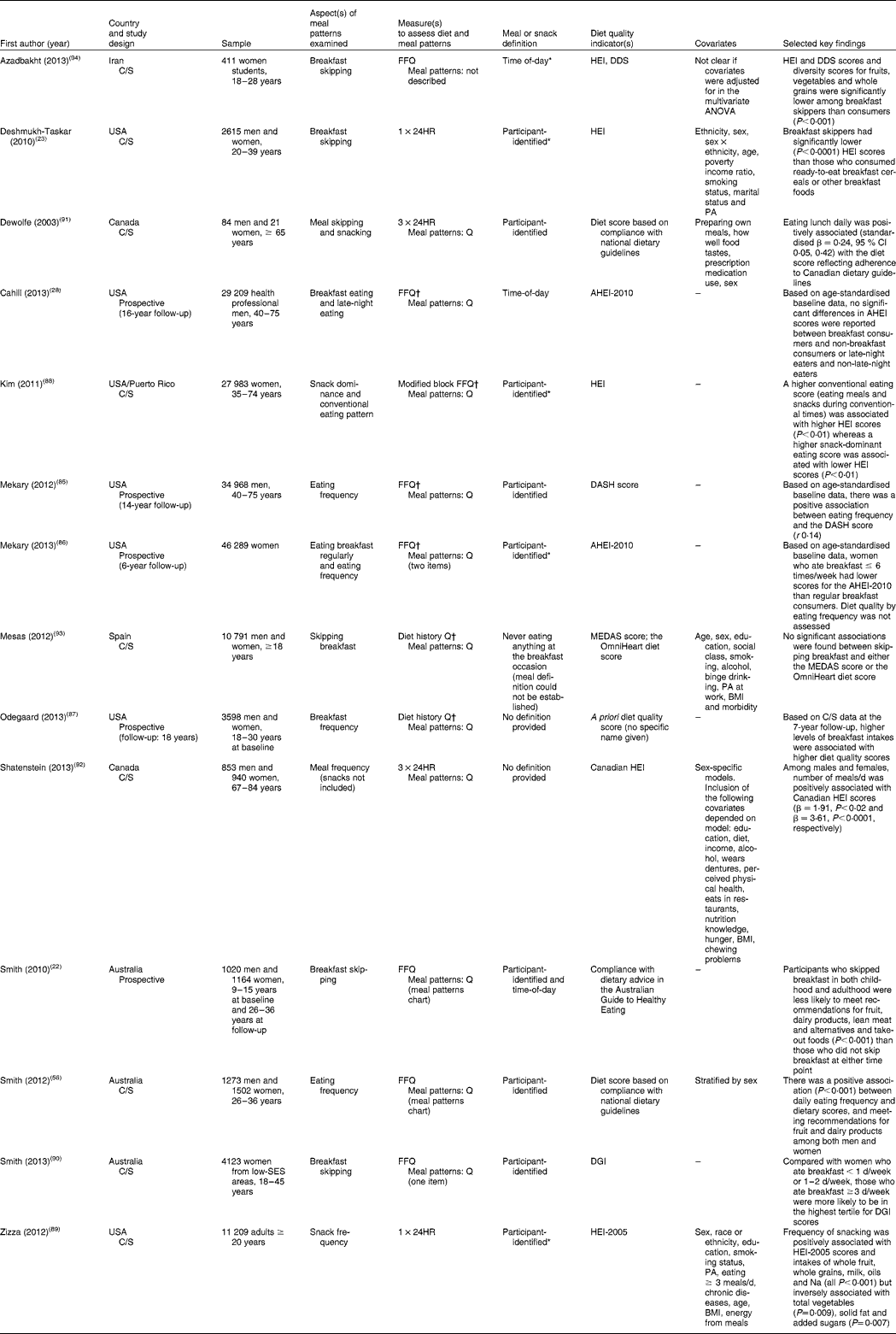
A total of fourteen studies were identified that examined associations between meal patterns and measures of overall diet quality (Table 4). Most studies were conducted in the USA(Reference Deshmukh-Taskar, Radcliffe and Liu23, Reference Cahill, Chiuve and Mekary28, Reference Mekary, Hu and Willett85–Reference Zizza and Xu89), with fewer studies conducted in Australia(Reference Smith, Gall and McNaughton22, Reference Smith, Blizzard and McNaughton56, Reference Smith, McNaughton and Cleland90), Canada(Reference Dewolfe and Millan91, Reference Shatenstein, Gauvin and Keller92), Western Europe(Reference Mesas, Guallar-Castillon and Leon-Munoz93) and Iran(Reference Azadbakht, Haghighatdoost and Feizi94). Of the studies, seven(Reference Smith, Gall and McNaughton22, Reference Cahill, Chiuve and Mekary28, Reference Smith, Blizzard and McNaughton56, Reference Mekary, Hu and Willett85–Reference Kim, DeRoo and Sandler88) used bivariate analyses to determine whether diet quality was associated with meal patterns with the purpose of identifying its role as covariate in the relationship between meal patterns and health outcomes. Meal patterns were mostly assessed using a participant-identified approach(Reference Deshmukh-Taskar, Radcliffe and Liu23, Reference Smith, Blizzard and McNaughton56, Reference Mekary, Hu and Willett85, Reference Mekary, Giovannucci and Cahill86, Reference Kim, DeRoo and Sandler88–Reference Dewolfe and Millan91); however, the methods used to measure participants' EO also varied across these studies. For example, some studies asked participants to report their EO in response to one or two questionnaire items(Reference Mekary, Hu and Willett85, Reference Mekary, Giovannucci and Cahill86, Reference Kim, DeRoo and Sandler88, Reference Smith, McNaughton and Cleland90, Reference Dewolfe and Millan91) whereas other studies used 24 h recall methodology(Reference Deshmukh-Taskar, Radcliffe and Liu23, Reference Zizza and Xu89). Importantly, where questionnaire items were used, the reliability and/or validity of these measures were rarely reported(Reference Smith, Blizzard and McNaughton56). Additionally, in three studies(Reference Odegaard, Jacobs and Steffen87, Reference Shatenstein, Gauvin and Keller92, Reference Mesas, Guallar-Castillon and Leon-Munoz93) the approach used to define a ‘meal’ could not be readily identified.
Characteristics of studies that have examined associations between meal patterns and overall diet quality
C/S, cross-sectional; HEI, Healthy Eating Index; DDS, dietary diversity score; 24HR, 24 h recall; PA, physical activity; Q, questionnaire; AHEI, Alternative Healthy Eating Index; DASH, Dietary Approaches to Stop Hypertension; MEDAS, Mediterranean Diet Adherence Score; OmniHeart, Optimal Macronutrient Intake Trial to Prevent Heart Disease; SES, socio-economic status; DGI, dietary guidelines index.
* Beverages could explicitly qualify as a separate eating occasion.
† Excluded individuals with implausible energy intakes.
The most common measure used to assess overall diet quality was a previously validated and reliability tested a priori diet quality index which reflects an individual's adherence to the dietary guidelines for the country of the sample population (for example, the Healthy Eating Index (HEI), the Alternative HEI (AHEI) and the Dietary Guidelines Index (DGI))(Reference Deshmukh-Taskar, Radcliffe and Liu23, Reference Cahill, Chiuve and Mekary28, Reference Mekary, Giovannucci and Cahill86, Reference Kim, DeRoo and Sandler88–Reference Smith, McNaughton and Cleland90, Reference Shatenstein, Gauvin and Keller92, Reference Azadbakht, Haghighatdoost and Feizi94). The measures used in the remaining studies were varied and included scores that measured adherence to: a traditional Mediterranean diet (MEDAS score)(Reference Mesas, Guallar-Castillon and Leon-Munoz93); Dietary Approaches to Stop Hypertension (DASH) diet score(Reference Cahill, Chiuve and Mekary28); a dietary approaches to prevent heart disease diet score (Optimal Macronutrient Intake Trial to Prevent Heart Disease (OmniHeart) score)(Reference Mesas, Munoz-Pareja and Lopez-Garcia5); hypothesised healthy eating patterns (a priori diet score)(Reference Odegaard, Jacobs and Steffen87); and national guidelines for healthy eating(Reference Smith, Gall and McNaughton22, Reference Smith, Blizzard and McNaughton56, Reference Dewolfe and Millan91). The associations between these diet quality measures and different meal patterns are discussed below.
Eating frequency and diet quality
Few studies have examined associations between eating frequency (including meal and/or snack frequency) and diet quality. Among US male health professionals, a higher eating frequency was associated with higher DASH scores, reflecting higher diet quality (r 0·14; no P value provided)(Reference Mekary, Hu and Willett85). A higher meal frequency was also associated with higher diet quality as measured by the Canadian HEI among older male and female adults aged 67–84 years old (men: β 1·91, P< 0·02; women: β 3·61, P< 0·0001)(Reference Dewolfe and Millan91). Of note, neither of these studies adjusted for total EI. The mean score for HEI-2005 also increased with increased daily snacking frequency (for example, no snacks = 49·3 (se 0·5) v. ≥ 4 snacks = 51·5 (se 0·6), P< 0·001) among US adults, after adjustment for sociodemographic factors, BMI, eating three or more meals daily and EI from meals(Reference Zizza and Xu89). Conversely, another study reported no association between snacking between meals and diet quality(Reference Dewolfe and Millan91), and Kim & Kim(Reference Kim and Kim83) found that a HEI score significantly decreased according to each increased quartile of a snack-dominant eating score (high snack frequency and low meal frequency) (P< 0·01). Again, neither study reported adjustment for total EI.
Meal skipping/regularity and diet quality
Of the nine studies identified that examined associations between skipping breakfast and diet quality, six found a negative association(Reference Smith, Gall and McNaughton22, Reference Deshmukh-Taskar, Radcliffe and Liu23, Reference Mekary, Giovannucci and Cahill86, Reference Odegaard, Jacobs and Steffen87, Reference Smith, McNaughton and Cleland90, Reference Azadbakht, Haghighatdoost and Feizi94) and three found no association(Reference Cahill, Chiuve and Mekary28, Reference Dewolfe and Millan91, Reference Mesas, Guallar-Castillon and Leon-Munoz93). However, the lack of association in two of these latter studies may be explained by their respective study populations; overall diet quality was high among men in the US Health Professionals Follow-up study(Reference Cahill, Chiuve and Mekary28) while Dewolfe & Millan(Reference Dewolfe and Millan91) used a small convenience sample of eighty-four female and twenty-one male older adults from a single region in Canada. In the latter study(Reference Dewolfe and Millan91), eating lunch daily was associated with higher diet quality scores that assessed compliance with the Canadian Guide to Healthy Eating. No other studies were identified that have examined skipping/regularity of meals other than breakfast.
Meal timing and diet quality
Studies examining associations between meal timing and diet quality are rare. In the US Health Professionals Follow-up study, Cahill et al. (Reference Cahill, Chiuve and Mekary28) found no association between late night eating (defined as eating after going to bed) and AHEI scores; however, as mentioned previously, the authors acknowledged that AHEI scores were high in this sample, irrespective of their reported meal patterns.
Potential impact of different meal definitions on the characterisation of meal patterns and associations with nutrient intakes and diet quality
Clear and objective definitions of what is a meal and what is a snack are critical for determining the energy and nutrient contributions of meals v. snacks, meal skipping or meal timing. Without a clear definition misclassification bias is likely, thus affecting the interpretation of associations with nutrients both within and across studies. In allowing participants to identify meals and snacks, subjective decision-making is inherently present. Previous research suggests that situational cues such as the type, quality or amount of food and the presence of others may affect a participant's decision to classify an EO as a meal or a snack(Reference Wansink, Payne and Shimizu95). It is also unclear whether the same meal or snack situation would be classified similarly by different individuals; research in this area is needed in order to better understand the between-subject variation when applying a participant-identified definition. While a time-of-day approach can be applied consistently for all participants, it may not capture meals and snacks eaten at varied times. Furthermore, it is unknown whether meals and snacks would be classified similarly if either a participant-identified or a time-of-day approach were applied. Research on the comparability of the different definitions that seek to define meals and snacks would help address this issue.
It is important to note that studies that have examined eating frequency (including meal and/or snack frequency) differ in both the methods used to define meals and snacks and the time-gap to separate individual EO, which may make an impact on the frequency of the respective EO reported. For example, while most meal or snack definitions include beverages alongside food, not all studies explicitly considered a beverage-only occasion as a separate EO(Reference Drummond, Crombie and Cursiter40, Reference Duval, Strychar and Cyr41, Reference Basdevant, Craplet and Guy-Grand67, Reference Coates, Potter and Caan72, Reference Edelstein, Barrett-Connor and Wingard78, Reference Titan, Bingham and Welch82). In addition, larger time intervals used to separate EO may result in EO, including beverage-only occasions, being overlooked and this may affect associations between eating frequency and energy and nutrient intakes. For example, Kant et al. (Reference Kant, Graubard and Mattes96) demonstrated a positive association between 24 h beverage EI with saturated fat, sugar, Na and alcohol intakes, after adjustment for EI from foods. However, a definition that excludes ‘low-energy’ beverage-only EO (for example, < 210 kJ) may also be important. A recent study(Reference Murakami and Livingstone55) showed that, compared with a definition that included all energy-containing EO, there was a stronger correlation between eating frequency and EI after applying a definition that used a minimum energy criterion of ≥ 210 kJ (men: r 0·45 v. 0·53; women r 0·39 v. 0·57, respectively), which remained after excluding energy misreporters.
As few studies have examined associations between meal patterns and diet quality, the impact of different meal definitions is difficult to assess. Breakfast skipping was consistently inversely associated with diet quality in six out of nine studies, despite the different definitions used (time-of-day(Reference Kim, DeRoo and Sandler88, Reference Azadbakht, Haghighatdoost and Feizi94) and participant identified(Reference Smith, Gall and McNaughton22, Reference Deshmukh-Taskar, Radcliffe and Liu23, Reference Cahill, Chiuve and Mekary28, Reference Mekary, Giovannucci and Cahill86, Reference Smith, McNaughton and Cleland90)), and in some cases, no clear definition was provided(Reference Odegaard, Jacobs and Steffen87, Reference Mesas, Guallar-Castillon and Leon-Munoz93).
Of note, many studies that have examined meal patterns and diet quality also used questionnaire items with unreported reliably and validity to collect meal pattern data. The lexical and semantic features of questionnaire items can differ between studies and may influence participant responses(Reference Schwarz97). For example, items may ask participants to indicate the times of the day they usually eat(Reference Cahill, Chiuve and Mekary28) or how many days they usually have something to eat for breakfast(Reference Smith, McNaughton and Cleland90), whereas other items provide additional instruction such as include all beverages(Reference Kim, DeRoo and Sandler88) or all nutritive beverages(Reference Mekary, Giovannucci and Cahill86). Questions that use the word ‘eat’ but provide no additional examples or cues as to what to include may therefore only elicit information about food-only EO or combined food and beverage EO but not beverage-only EO. However, until questionnaire items are validated against a pre-existing valid method (for example, a 24 h recall), how accurately they capture meal, snack and all EO (including beverages) remains unclear.
Discussion
Meal patterns are multidimensional and can be described according to their patterning, format and context. However, due to the limited dietary assessment methods available, most research has focused on meal patterning. To date, a variety of definitions has been used to examine meal patterns. In addition, a number of additional criteria have been adopted in meal pattern research, which may have an impact on the types of meal patterns reported and described in the literature. Although over the past few decades there has been general consensus that a universally accepted definition of a meal is crucial(Reference Gibney and Wolever54, Reference Oltersdorf, Schlettwein-Gsell and Winkler98), there have been few attempts to define meals in a consistent and standardised way.
Research suggests that different meal and/or snack patterns are related to both nutrient intakes and overall diet quality, with the most consistent finding being an inverse relationship between skipping breakfast and nutrient intakes/diet quality. Skipping meals other than breakfast has rarely been examined but may be important, particularly for vulnerable groups such as the elderly(Reference Williams69, Reference Dewolfe and Millan91). In addition the nutritional impact of snack, meal and overall eating frequency remains unclear and little research has looked at the how meal timing influences nutritional intake/overall diet quality. This may be an important area of research in light of preliminary evidence suggesting that the timing of energy and/or macronutrient intake during the day is associated with cardiometabolic risk(Reference Wang, Patterson and Ang27, Reference Cahill, Chiuve and Mekary28, Reference Almoosawi, Prynne and Hardy99, Reference Almoosawi, Prynne and Hardy100).
The conflicting findings for the associations between eating frequency (including snack/meal frequency) and nutrient intake/diet quality may be, in part, attributed to not only the heterogeneity of meal patterns examined, but also to different definitions of meals and snacks. While meals and snacks are hypothesised to exert different effects on EI and nutrient intake, some researchers suggest that the sociocultural and value-laden nature of the terms used to identify different meals and snacks precludes such delineation(Reference Chapelot101). Although it is widely acknowledged that different definitions used to define meals/snacks are likely to hamper interpretation of findings across studies(Reference Johnson and Anderson8, Reference Gatenby44), research explicitly examining the impact of these different definitions is rare(Reference Murakami and Livingstone55). There has been little attempt to examine meal patterns in a consistent and standardised way.
Another important consideration for future research examining eating frequency is potential overlap in the meal patterns that are being examined, which further complicates comparisons between studies. For example, a study that examines eating frequency comparing eating one or two times per d v. four to six times per d is also encapsulating meal skipping and meal patterns with snacks, respectively. That is, depending on cultural norms, an individual who only eats one or two times per d may also be considered to be skipping one or two EO. Categorising individuals as being high snack consumers may include individuals who consume snacks in lieu of meals, and therefore future research should consider eating frequency and/or snack frequency in the context of meal frequency/skipping to better differentiate the impact of different types of meal patterns. Some evidence(Reference Holmbäck, Ericson and Gullberg80) also suggests that healthy and unhealthy dietary patterns can exist among individuals who are high-frequency snack consumers. This may also partially explain the lack of consistent findings for the association between snack frequency and nutrient intakes, and therefore future research should consider examining meal patterns in the context of a individual's overall dietary pattern. Measures of eating frequency may include beverage-only occasions, however, these types of EO have not always been considered when examining the relationship between meal patterns and nutritional intake. This may be an important consideration given the emerging evidence of sugar-sweetened beverages (SSB) in the aetiology of obesity(Reference Malik, Schulze and Hu102, Reference Malik, Pan and Willett103) and cardiometabolic risk(Reference Bhupathiraju, Pan and Malik104, Reference Ambrosini, Oddy and Huang105). Moreover, beverage-only occasions may be especially relevant among certain subgroups of the population; for example, adolescent and young adult males have been shown to be high consumers of SSB(106).
A limitation of the literature to date on diet quality is that the primary purpose of many of the included studies was to examine associations between meal patterns and health outcomes. Therefore, few of these studies adjusted associations for total EI and important sociodemographic and lifestyle factors. Another limitation of these studies was that meal patterns were often assessed using simple questionnaires with unreported reliability or validity. Importantly, questions regarding meals in questionnaires may not be well defined and this may extend to how respondents should consider beverages.
Under-reporting of EI is a common and well-known limitation of studies that assess dietary intakes(Reference Livingstone and Black107). Despite this, very few studies on meal patterns have examined the impact of energy misreporting. As eating frequency is positively related to EI, it may be that those who under-report EI also under-report their eating frequency(Reference Berteus Forslund, Torgerson and Sjostrom45, Reference Bellisle, McDevitt and Prentice108). There is also some evidence that snacks are more prone to being under-reported(Reference Bellisle, McDevitt and Prentice108). Results from a pooled analysis of five large validation studies showed that under-reporting of EI with a single 24 h recall was approximately 15 %(Reference Freedman, Commins and Moler109). Unless adjusted for, energy misreporting may obscure important relationships between meal patterns, nutrient intakes/diet quality and, ultimately, health outcomes(Reference Howarth, Huang and Roberts48).
Recommendations to advance the field
To advance the area of meal pattern research, the methods used to collect meal pattern data require further development. Measures that are inexpensive to administer and have low participant burden (for example, questionnaire items) need to be developed and tested for reliability and validity. Contextual information is not always collected as part of a 24 h recall, yet additional questions about eating location and activities while eating(Reference Subar, Kirkpatrick and Mittl110) could be considered in order to better understand the contextual factors that influence associations between meal patterns and diet quality. While specific food records have been adapted to collect contextual information (for example, the Weekly Food Diary method(Reference de Castro58)), this method also involves a high participant burden. Dietary assessment methods that utilise new technology (for example, smartphones) may assist in the development of meal pattern research. Devices that people use and carry alongside them every day with the added capacity of a personal digital assistant used in a previous study(Reference Laska, Graham and Moe32) may be a low burden and efficient way to collect meal pattern data in ‘real time’. A major advantage of such technology would be that researchers could collect information allowing examination of all three meal pattern constructs: patterning, format and context. Furthermore, rich contextual data collected in real time could provide insight into the factors that influence participants' decisions to classify an EO as a meal or snack and therefore help in refining existing meal definitions. Currently little research has examined meal format; however, understanding how different combinations of foods in a meal influence overall diet quality could be an important step in developing a meals-based framework for dietary guidelines. Further work is also required in developing and applying innovative statistical techniques to examining meal patterns, with few applications tested in the literature.
However, it is important to acknowledge that developing new methods to collect and analyse meal patterns data will take considerable time. A major issue still remains of the different definitions available to researchers when conducting meal patterns research. Further analysis (for example, sensitivity analysis) that examines more than one definition from the current literature would facilitate understanding of how the choice of definition makes an impact on the characterisation of meal patterns and associations with outcomes such as nutrient intake and diet quality.
Conclusion
Overall, there are a number of gaps and limitations in meal pattern research that need to be addressed to further our understanding of how meal definitions influence the characterisation of meal patterns, and the contribution of different meal patterns to nutrient intake and overall diet quality. While current evidence suggests breakfast skipping may be detrimental to diet quality, the nutritional impact of eating frequency, skipping meals other than breakfast and meal timing is inconclusive and warrants further investigation. Future studies should consider how different contexts, beverage-only occasions and energy misreporting affect the relationship between meal patterns and diet quality. The heterogeneity of meal definitions is a major impediment to the interpretation of findings across studies in this field of research. Future research that examines the influence of different meal definitions on the characterisation of meal patterns will facilitate the interpretation of the existing literature, and provide recommendations on the most appropriate methods to advance the field.
Acknowledgements
R. M. L. is supported by an Australian Postgraduate Award Scholarship. S. A. M. is supported by an Australian Research Council (ARC) Future Fellowship (FT100100581). A. T. is supported by a National Heart Foundation of Australia Future Leader Fellowship (award no. 100046).
R. M. L. drafted the manuscript. S. A. M., A. W. and A. T. provided supervision and critical revision of the manuscript. All authors contributed to and approved the final version of the manuscript.
All authors declare no conflicts of interest.

 Open access

