


Stability over time of the three pillars of food security, availability, access and utilisation, is recognised as a crucial condition for food security in the short and longer term(Reference Stamoulis and Zezza1, 2).
In Sub-Saharan Africa and particularly in rural areas, seasonal climatic conditions and climatic hazards can seriously affect the stability of food security by causing seasonal food restrictions during the lean period of the year. Recurrent hazards such as drought or locust invasions can lead to particularly low yields and thus to limited access to cereals and other basic foodstuffs. In low-income countries, this can further decrease the household's income, increase farmers' debt and finally lead to serious food crises, such as the one that occurred in Niger in 2005(Reference Glenzer3).
This type of seasonal variation in food security has been extensively studied in rural areas and is well acknowledged; its assessment is the principal component of current food security early warning systems in Sahelian countries(Reference Tefft, McGuire and Maunder4, Reference Diouf, Egg and Gabas5). On the other hand, very little attention has been paid to the potential impact of seasonality on food security in urban areas, particularly among urban poor, even though the food security of poor urban dwellers can be particularly affected by adverse circumstances, as observed during the 2008 food price crisis(Reference Ruel, Garrett and Hawkes6).
The lack of interest in the urban facet of food security can be easily explained by the intensity of the phenomenon in rural areas but also by the demographic history: in the 1950s, less than 10 % of West Africans lived in urban areas and in 2000, still only 39 % did so(7). However, the number of urban dwellers is increasing very fast: +3·77 % per year over the period 2005–10 and, by 2020, more than half of the West African population will live in urban areas(7). At the same time, the number of urban poor is increasing(Reference Haddad, Ruel and Garrett8).
The few authors(Reference Garrett and Ruel9–Reference Camara11) who did include the season in their urban food security analyses have suggested a possible significant effect. Nonetheless, data on the impact of seasonality on urban household food security remain very scarce. And, aside from seasonality, only a few studies have tried to identify the determinants of household food security in cities in West Africa(Reference Camara11–Reference Briand13).
The objective of the present study was thus to assess household food security in Ouagadougou, the capital of Burkina Faso (West Africa) during the lean and post-harvest seasons through a composite indicator of food quantity and quality, taking potential sociodemographic and economic factors into account.
Methods
Setting and sampling
The setting and sampling are described in detail elsewhere(Reference Becquey, Martin-Prevel and Traissac14). Briefly, a longitudinal survey with two rounds was performed on a representative, self-weighting sample of 1056 households in Ouagadougou, the capital of Burkina Faso. For another phase of the same project(Reference Becquey and Martin-Prevel15), a larger cluster sample of 3017 households had already been randomly selected through a two-stage sampling design(Reference Magnani16) among the 1069 census enumeration areas covering the city, of which sixty areas were randomly selected proportional to their size in number of households, using the most recent census as the sampling frame(17). In each of these areas, fifty households were selected through the random-walk method from five starting points determined with a randomly numbered grid placed on the map of the area(Reference Grais, Rose and Guthmann18). The sample for the present study was constituted by randomly selecting one out of three households within each enumeration area.
The sample size was calculated using dietary data from a previous study in Ouagadougou(Reference Becquey and Martin-Prevel19). We hypothesised that the indicator of the adequacy of a household's diet used in the present study, and which is described below, would have a similar distribution as the mean probability of adequacy of individuals used in the previous study, of which the mean was 38 % with a standard deviation of 19 %. Using these estimates, assuming 70 % of complete data about food consumption and 15 % of loss to follow-up between rounds, with a 5 % level of statistical significance, 90 % statistical power and a design effect of 2, this sample size allowed variations of 5 percentage points (pp) of our indicator to be statistically significant across two rounds.
The first round of data collection took place during the lean season, from June to mid-August 2007, which corresponds to the beginning of the rainy season, and the second round took place during the post-harvest season, from November to mid-December 2007.
Collection of dietary data
On two non-consecutive days in each season, household dietary data were collected by trained and supervised investigators using a quantitative 24 h recall method in face-to-face interviews with the person in charge of food preparation. Quantitative 24 h recalls were performed at the household level and did not concern foods consumed at the individual level, inside or outside the home. First, all foods consumed in the household during the past 24 h were listed and qualitatively detailed for each eating occasion by the person in charge of food preparation. All mixed dishes prepared in the household were then described by listing all the ingredients used. The quantity of each food consumed in the household was then estimated using household measures, prices or standard portion sizes, taking leftovers into account. Finally, a prompt was made to check that no food had been forgotten. Also, for one of the two recalls for each season, individuals who were present in the home during the survey were invited to quantitatively describe all the foods that they had consumed outside the home the previous day, using prices, household measures or standard portion sizes. For 0–7-year-old children, the mother was the respondent.
Enumerators were equipped with domestic scales with a precision of 1 g and a maximum capacity of 3 kg (Tanita or Philips scales). Calibration of food prices, household measures and portion sizes was performed by enumerators on marketplaces and in households in parallel to the two rounds of the survey.
Dietary data management
According to his/her age, sex, weight and physiological status (pregnancy, lactation), and assuming light physical activity, each individual was attributed an energy requirement and recommended nutrient intakes (RNI) for eleven micronutrients(20, 21), except for children under 6 months of age for whom all requirements were considered to be covered by breast milk. All children of 6 months of age and older were assumed not to have any breast milk intake. The RNI were considered for the following micronutrients: thiamin, riboflavin, niacin, vitamin B6, folate, vitamin B12, vitamin C, Fe (5 % bioavailability) and Zn (15 % bioavailability). For vitamin A, we considered the recommended safe intakes and, for Ca, the adequate intakes. Requirements of all members of the household were summed for each nutrient.
From the subsample of individuals of whom out-of-home food consumption was recorded, we estimated the average shares of dietary energy requirements and of recommended micronutrient intakes, which were covered by each main meal taken outside the home (breakfast, lunch and dinner). This was done separately for three age groups (0–7, 8–14 and ≥ 15 years old). We used these results to approximate the shares of individual dietary energy requirements and individual recommended micronutrient intakes consumed outside the home in the case of the absence of an individual family member at a main meal. Corresponding amounts were excluded from the total household requirements.
Household adult equivalents (AE) were calculated based on dietary energy requirements and recommended micronutrient intakes(20, 21). A male aged 30–59 years with light physical activity was used as the reference adult. All members of the household were attributed 12 AE values by dividing their energy and eleven micronutrient requirements by the corresponding requirements for the reference adult. Then, in each household, individual AE values were summed, by nutrient. Also, the household energy requirement taking absences into account was divided by the household energy requirement assuming no absence and then split into tertiles to define low, middle or high participation of members at main meals.
A food composition table for Burkina Faso(Reference Becquey, Capon and Martin-Prevel22) was compiled from three food composition tables(Reference Barikmo, Ouattara and Oshaug23–25) by selecting the closest foods to those consumed in Ouagadougou and filling in missing nutrient values with values from similar foods, taking into account yield and retention factors(26). This table was complete for energy, macronutrients and eleven micronutrients. For vitamin A, although a newer recommendation exists, we used the older 6-to-1 conversion factor for β-carotene, based on the rationale that recommended vitamin A intakes were compiled using this older conversion factor(21).
The composition of individual household mixed dishes was estimated using the specific household recipes described during data collection or, if not applicable, using average recipes according to the season, compiled from all available recipes. For mixed dishes bought outside the home in small restaurants and brought back into the household for immediate consumption (defined as ‘ready-to-eat’ dishes), we principally used also the nutrient profile of the average household recipes according to the season, completed with a few average recipes collected in small restaurants of Ouagadougou for a previous study(Reference Becquey and Martin-Prevel19). Yields due to cooking were derived from locally collected data on moisture content of dishes. Standard micronutrient retention factors due to preparation or cooking were also applied(26).
Total energy, macronutrients and micronutrients consumed per recall were calculated for each household and divided by the total number of AE in the household to account for differences in the composition of the households. Observation days with evidence of over-reporting were then excluded from the dataset when energy intake per AE exceeded the 95 % upper limit of the Goldberg cut-off method(Reference Black27). Observation days reporting low energy intakes were not excluded because it was impossible to distinguish between under-reporting and reporting of true low intakes at the household level due to large extra-household intakes of individual members between meals.
As recommended in the literature, we took into account the measurement error inherent to dietary data collection and management by calculating, for energy, macronutrients and eleven micronutrients, the usual nutrient intakes by AE in each household, by season, using the software C-side (Iowa State University, Ames, IA, USA)(Reference Nusser, Carriquiry and Dodd28, Reference Nusser, Carriquiry and Dodd29).
These usual nutrient intakes were then used to calculate nutrient adequacy ratios, described in the literature as ‘the ratio of intake of a nutrient to its RDA’(Reference Kant30). In the present study, we defined the energy adequacy ratio as the ratio of usual energy intake per AE to dietary energy requirement per AE, truncated to 1 and then multiplied by 100. Similarly, eleven micronutrient adequacy ratios were calculated as the ratios of usual micronutrient intakes per AE to RNI per AE, also truncated to 1 and then multiplied by 100. For micronutrients, given that exceeding a micronutrient need is generally not associated with particular risks, as long as it remains within the acceptable range of intake, we used RNI (average requirement plus 2 standard deviations) so that a micronutrient adequacy ratio of 100 is associated with a nearly full (97·5 %) probability for a household to actually meet or exceed its needs(21). For energy, the recommended intake corresponds to the estimated average requirement, i.e. the average daily intake that meets the needs of 50 % of a group of individuals, in order to balance the risk of energy deficiency with the risk of overweight or obesity in the long term for those exceeding their energy needs(20).
The mean adequacy ratio (MAR) of a season for each household was the average of the energy adequacy ratio and the eleven micronutrient adequacy ratios of the season concerned(Reference Kant30). As a composite indicator of the energy and micronutrient adequacy of a household's diet, the MAR was used to approximate the dietary dimension of household food security.
Food basket prices
During the lean season, in parallel with the first round of data collection, a specific survey was made at all selling points in each enumeration area, to collect extensive data on the weight and price of sixteen pre-defined raw foods very frequently consumed in Ouagadougou: three cereals (rice, white maize flour and millet flour), five kinds of meat/fish (fresh beef, fresh mutton, fresh fish, smoked fish and dried fish) and eight vegetables/fruits/nuts (tomato paste, fresh tomato, fresh cabbage, fresh onion, fresh mango, dried baobab leaves, dried okra and groundnut paste). In each of the sixty enumeration areas, mean prices were calculated for each food over all selling points. When a food was not encountered in the area concerned, its mean price in Ouagadougou was used. The mean daily individual consumption of each of the sixteen foods was estimated from a previous individual quantitative food consumption survey, which took place in Ouagadougou in February–May 2006 among adult women(Reference Becquey and Martin-Prevel19). In each area, all sixteen prices were weighted by the weight (in g) of the daily individual consumption of the relative sixteen foods and summed by type of food (cereals, meat/fish or fruits/vegetables) to obtain a daily cereal basket price, a daily meat/fish basket price and a daily fruit/vegetable basket price for the lean season. No specific survey was performed during the post-harvest season but food prices are likely to have changed. To calculate the post-harvest season's daily food basket prices, we considered that the cereal, meat/fish and fruit/vegetable basket prices had changed according to the level of the country-wide changes in the prices of unprocessed cereals, meat and vegetables, respectively(31–34). Finally, food basket prices were classified into four categories.
Household expenditure
Household food expenditure was collected at each season by recall of daily expenses of the last day for foods bought daily, weekly expenses of the last week for foods bought weekly and monthly expenses of the last month for foods bought monthly. All expenses were recalculated as daily food expenditure, then summed and divided by the total number of AE in the household and finally classified into four categories.
Household socio-economics
During the first round of data collection, data on household characteristics and social network were collected from the head of the household and, when possible, individual characteristics of members were collected from each individual member. These characteristics were considered to be constant over the two seasons.
We used multiple correspondence analysis(Reference Abdi, Valentin and Salkind35) to derive a wealth score at the household level from variables describing housing, assets, electricity and water supply, sanitation and hygiene. As modalities associated with a low wealth status loaded negatively on the first factor and modalities associated with a good wealth status loaded positively, the score of each household on the first factor of the multiple correspondence analysis was used as a wealth score, which was then split into quintiles to determine five levels of wealth scores.
The mean education level of adults ( ≥ 18 years) was obtained by averaging the total number of successful years of school attendance of all adults in the household (minimum: 0; maximum: 14, corresponding to at least one successful year at university) and was further split into quartiles.
Data entry and data management
Experienced workers entered data with EpiData software version 3.1 (The EpiData Association, Odense, Denmark). Quality was ensured by automatic checks and double data entry. Data cleaning, data management and data analysis were performed using the Statistical Analysis Systems statistical software package version 9.1 (SAS Institute, Cary, NC, USA).
Statistical analyses
Nutrient adequacy ratios and food intakes according to season were described by simple descriptive statistics (percentage of observations, mean and standard error of the mean) taking the sampling design into account, and these data were compared using χ2 tests and non-parametric Wilcoxon tests.
Analysis of the seasonal change in the MAR, controlling for other determinants and confounders, was performed by mixed linear regression taking clustering and repetitions into account. The analysis was guided by the conceptual model presented in Fig. 1. We first analysed the relationship of each available variable with the MAR using univariate regressions and then in separate multivariate regressions for each cluster of factors, in order to identify possible collinearity between variables and to select those more strongly linked to the MAR and/or those with the most plausible causal link to the MAR. Then, selected variables were introduced in a full model and we used a manual step-by-step backward procedure to identify a final set of variables related to the MAR (P < 0·10). This final model was used to calculate predicted values of the MAR, in terms of adjusted means taking into account all covariates including the season, for each category of the variables identified as determinants. This model also allowed us to explore the modifying effect of other determinants of the MAR on seasonality. Using the final model, we tested interactions of the season with all other variables and considered interactions associated with the MAR with P < 0·15. All regressions were systematically performed, controlling for the participation of members at main meals. In all analyses, the level of significance for main effects was set at P < 0·05.
Main characteristics (in bold) and corresponding variables taken into account in the mixed linear regression analysis.

Ethics
The study was conducted according to the guidelines laid down in the Declaration of Helsinki and all procedures involving human subjects were approved by the Burkinabe National Committee of Ethics (Ministry of Health). Written informed consent was obtained from all heads of the household.
Results
Household diets were generally based on a staple dish made of cereals, mainly rice or white maize flour, with a sauce made of vegetables and oil. Fish and/or meat were also often added. Diets showed measurable differences between seasons (Table 1). During the lean season, staple dishes were more often bought ready-to-eat and contained fewer raw ingredients prepared at home than in the post-harvest season: an 11 pp higher consumption frequency of ready-to-eat rice was observed while raw rice was 6 pp lower. Similarly, a 9 pp higher consumption frequency was observed for ready-to-eat groundnut sauce while the raw groundnut paste used to cook this sauce was 4 pp lower. The great majority of fresh vegetables were prepared in smaller amounts (P < 0·0001 for fresh tomatoes, cabbage and eggplant) and by fewer households ( − 30 pp for tomatoes, − 8 pp for cabbage, − 5 pp for eggplant, P < 0·0001 for all) during the lean season, but onion and fresh leaves were used in larger amounts (P < 0·0001 for both). Also, consumption of beef was significantly more frequent (+8 pp) while consumption of mutton was significantly less frequent ( − 7 pp) during the lean season than in the post-harvest season (P < 0·0001 for both).
(Mean values with their standard errors)

AE, adult equivalents.
* Foods presented are all foods consumed in at least 10 % of recalls during one season, except condiments.
† χ2 test.
‡ Wilcoxon two-sample test (normal approximation).
§ Ready-to-eat foods.
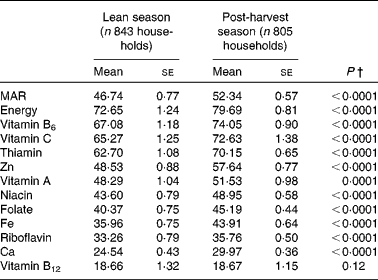
As a consequence of these diets, food intakes at the household level covered on average 73 % of energy requirements during the lean season and 80 % during the post-harvest season (Table 2). Vitamin B12 adequacy ratios were very low ( < 20 %) but Ca, riboflavin, Fe, folate and niacin were also problematic micronutrients (adequacy ratios < 50 %), whatever the season. Except for vitamin B12, micronutrient adequacy ratios were all lower during the lean season (24·54–67·08) than during the post-harvest season (29·97–74·05, P ≤ 0·0001 for all micronutrients). As a result, the MAR was lower during the lean season than during the post-harvest season (46·74 (se 0·77) and 52·34 (se 0·57), respectively, P < 0·0001). When the other determinants were controlled for, the effect of the season remained significant, although lower (49·61 (se 0·75) during the lean season and 53·57 (se 0·71) during the post-harvest season, P < 0·0001), highlighting the mediating effect of these determinants (Table 3).
(Mean values with their standard errors)
* The MAR and the nutrient adequacy ratios are expressed in percentages.
† Wilcoxon two-sample test (normal approximation).
(Number of households, adjusted mean values with their standard errors)

CFA, Communauté Financière d'Afrique.
* Results presented are predicted values for each category of the variables in the final model.
† The MAR is expressed in percentages. The mean is adjusted for the participation of members at main meals and for all covariates in the model, including the interactions between daily food expenditure and the season.
‡ Local currency 1 CFA Franc = 0·00152 Euro.
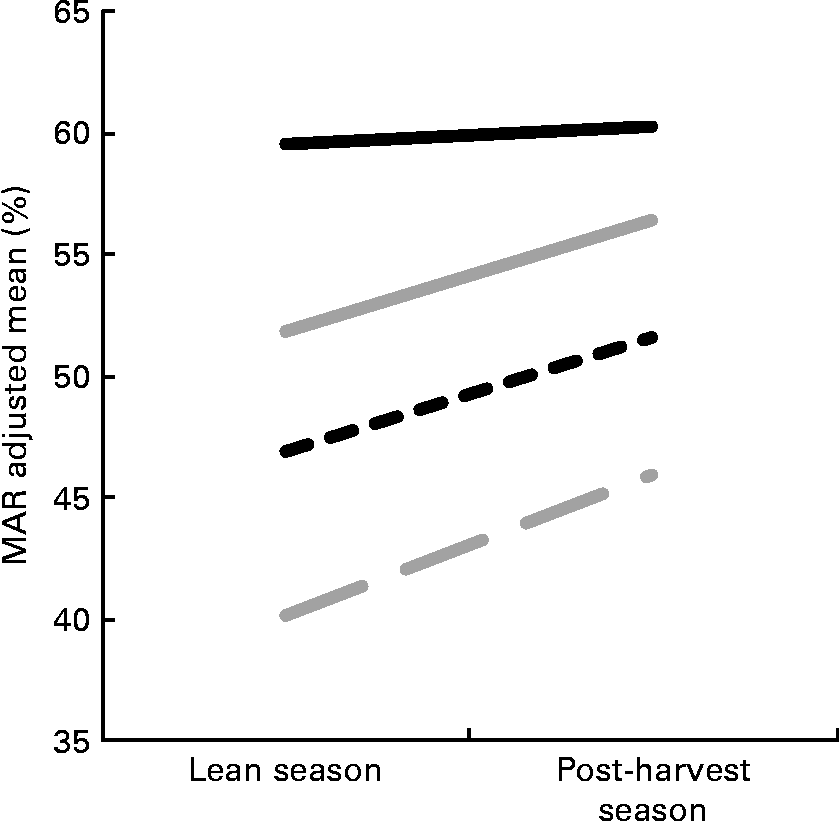
Moreover, seasonal changes in the MAR were not the same across all categories of food expenses (Fig. 2): households with the highest level of daily food expenditure had a relatively stable MAR over the two seasons, whereas the MAR was visibly lower during the lean season for the other categories (P = 0·083).
Interaction of the season with the daily food expenditure level (in Communauté Financière d'Afrique (CFA) Francs). Local currency 1 CFA Franc = 0·00152 Euro. Changes in adjusted mean values were significantly different (P = 0·083). MAR, mean adequacy ratio.  , ≥ 450 CFA Francs;
  , 300–449 CFA Francs;
  , 150–299 CFA Francs;
  , < 150 CFA Francs.
Independent of the season, food expenses had a measurable effect on the MAR: households who spent more than 450 Communauté Financière d'Afrique (CFA) Francs/d per AE on food had a 38 % higher MAR compared with households who spent less than 150 CFA Francs/d per AE on food (P < 0·0001). Also, the price of the meat/fish basket was significantly associated with the MAR (P = 0·026); in particular, the lowest price level was associated with a much higher MAR (55·41 v. 49·85–51·05 for higher price levels). Conversely, the level of prices of cereals and the level of prices of fruits/vegetables were not significantly associated with the MAR when the season was controlled for. Additionally, most of the economic characteristics of households were not associated with the MAR in the final model, except that households with completely economically dependent adults had a lower MAR (P = 0·021). At the same time, some more distal demographic and social characteristics of households were significantly associated with the MAR. In particular, household size was negatively associated with the MAR (P < 0·0001). Conversely, education level was positively associated with the MAR (P = 0·030), as was the number of close friends (at the limit of significance, P = 0·054) and having family members originating from other towns in Burkina Faso (P = 0·040). However, consumption of foods obtained directly from urban agriculture and the sex of the head of the household had no significant independent effect on the MAR.
Discussion
The purpose of the present study was to assess seasonal variations in food security in Ouagadougou. The results showed that at the household level, the MAR was lower during the lean season, except among households whose food expenses were higher than 450 CFA Francs/d per AE. Also, food security was negatively associated with food prices, economic dependence of adults and size of the household but positively associated with food expenditure, education, the social network of the head of the household, and the presence of adults originating from urban areas other than Ouagadougou.
We acknowledge some limitations of the present study. First, it was limited to a single year (2007) and is thus not representative of the seasonality of food security across several years. Second, our food security indicator, the MAR, compared intakes at the household level with aggregated dietary needs of individual members, which did not allow us to account for intra-household distribution of food. This would have required collecting individual quantitative 24 h dietary data from each individual member of all the households surveyed, which was not feasible under the conditions of the present study. For the same reason, our data collection method failed to take into account foods consumed at the individual level, inside or outside the home, whereas in urban areas, out-of-home eating is quite common. We dealt with this limitation by subtracting individual energy and micronutrient requirements from the household requirements in the case of the absence of a household member at a main meal, but we could not take into account foods consumed at the individual level between meals. From the subsample of individual dietary data, we estimated that 9 % of individuals consumed foods between meals which were bought and consumed outside the home and were therefore not captured by our data collection method. Also, there was a possible confounding effect due to the different data collection methods that we used for ready-to-eat foods and for home-prepared foods, both consumed at the household level. Indeed, despite both types of foods exhibiting similar nutrient profiles, the discrepancy was that the price of dishes was the preferred method to quantify ready-to-eat dishes, while home-prepared dishes were mainly quantified using prices of each ingredient. However, calibration of prices (of dishes and of ingredients) was performed by a unique dedicated fieldworker on main markets of Ouagadougou at each season, and most prices used to quantify foods were therefore specific to the season. Regarding the interpretation of nutrient adequacy ratios, since we used recommended intakes corresponding to the estimated average requirement for energy but to RNI for micronutrients, we observed a somewhat artificially better coverage of energy needs than of micronutrient needs. It has to be noticed, however, that we did not compare directly energy adequacy ratio with micronutrient adequacy ratios. Indeed, the MAR should not be interpreted as the mean coverage of energy and micronutrient requirements but rather as a composite indicator of energy and micronutrient adequacy of a diet, as stated in the Methods section and as it was used by others in similar contexts(Reference Hatloy, Torheim and Oshaug36, Reference Torheim, Barikmo and Parr37). Finally, the MAR is a measure of the dietary dimension of food security and does not take into account subjective aspects of food security, such as anxiety(Reference Maxwell38). However, among objective food security indicators, the MAR is one of the most complete as it covers both diet quality and diet quantity by taking into account energy and micronutrient intakes compared with recommendations.
The present results provided evidence that, during the lean season, more households relied on ready-to-eat meals, such as rice with groundnut sauce purchased on the street and brought back to the home to be consumed. As a consequence, households' meals were less often prepared at home and included less varied fresh vegetables used in smaller quantities in the sauce accompanying the staple dish. The lean season was associated with lower food security.
In our experience, many factors linked to the period of the year can explain these differences. First, one explanation for the lower consumption of fresh vegetables during the lean season is their price. Although all sorts of foods are available in markets, foods which are not typical of the season are not widespread and are only accessible to the richest households. In particular, among fresh vegetables traditionally used in Ouagadougou as basic ingredients of sauces, only green leaves and onions are really widespread and quite cheap during the lean season, meaning households have little choice of ingredients. For example, in 2007, at the national level, the price of vegetables was 29 % higher during the lean season than during the post-harvest season(31–34). Other explanations for seasonal differences in dietary habits are that the rain can complicate meal preparation when it prevents women from going to the market or when it floods the cooking area in the compound, which is often not covered. Moreover, wood, the main fuel used for cooking in Ouagadougou(Reference Ouedraogo39), is generally immature and/or wet during the lean season, further complicating cooking. Also, women who practise urban agriculture, a highly seasonal activity concerning 10 % of our sample, often do not have the time to cook during the lean season.
Although it is often stated that seasonality has less impact in urban than in rural areas, and despite few reports on this subject in the scientific literature, the present study is not the first to evidence the impact of the season on urban food security(Reference Garrett and Ruel9–Reference Camara11). In Bangladesh, in particular, the effect of the season on food security in an urban area was attributed to differences in dietary diversity across seasons and to lost work due to the weather(Reference Hillbruner and Egan10). In Bamako, it has been shown that, because of seasonal variations in food prices, compensations were made between food commodity groups and within food commodity groups to preserve the energy balance of the diet, but to the detriment of diet quality(Reference Camara11).
The present results also demonstrated that households who spent more money to buy food had higher food security. This was not surprising because in urban areas, the main provisioning pathway is purchase(Reference Ruel, Garrett and FAO40) and foods/diets considered as healthier due to their micronutrient density or macronutrient balance are generally more expensive in developing and emerging countries(Reference Temple, Steyn and Fourie41, Reference Chastre, Duffield and Kindness42), as indeed they are in many developed countries(Reference Cade, Upmeier and Calvert43–Reference Jetter and Cassady45). A maybe more interesting result is that diet quality was much lower during the lean season than during the post-harvest season for all households except the ones with the highest level of food expenditure, thus illustrating a seasonal accessibility – rather than availability – issue. Indeed, among all potential mediating factors analysed, a high level of food expenditure was the only characteristic preventing the deterioration of food security during the lean season. This demonstrates that it is definitely possible to better approach a nutritionally adequate diet even in the lean season but confirms that such a diet is not accessible to the majority of the population and that below a certain level of expenditure, it is not possible to maintain the same diet quality during the lean season as during the post-harvest season.
The effects of the other determinants of food security investigated in the present analysis did not differ in the two seasons. However, beyond seasonality, the present results showed that some had an independent effect on food security across the two seasons. First of all, independent of seasonal variations in price, a lower price of meat/fish in the area where the household lived had a positive impact on food security. Indeed, animal source foods are known to be very good sources of micronutrients(Reference Allen46) but are generally among the most expensive foods. Another economic determinant of food security in our sample was whether some adults in the household had no income at all. This also had a significant effect when controlling for food expenditure, suggesting that reduced income is not the only pathway through which the presence of such adults has a negative effect on food security. One possible explanation is that the dependency of these adults goes beyond the single dimension of food.
Some demographic determinants were also related to the MAR independent of the season and of economic determinants. In particular, the more numerous the members, the lower the MAR. This negative effect of household size on food security has been reported in other studies in urban Africa(Reference Garrett and Ruel9, Reference Camara11, Reference Zoyem, Diang'a and Wodon47). Because the effect was independent of food expenditure, large households may have lower-quality food utilisation due to their food choices and cooking, but the reasons why remain to be investigated.
Another determinant of the dietary dimension of food security was the level of education. This could be explained by two positive effects: educated subjects are more likely to have a better job and higher income; and their education level could lead them to prioritise food expenses and to have a better utilisation of food. The positive effect of education on many livelihood characteristics is well known. Concerning diet and nutrition, the level of education of the head of the household has been shown to improve household energy availability in urban Burundi(Reference Zoyem, Diang'a and Wodon47), and the level of education of mothers was highly associated with good feeding practices and nutritional status of young children in Accra and in urban Mozambique(Reference Garrett and Ruel9, Reference Armar-Klemesu, Ruel and Maxwell48).
The social networks of the head of the household also played a positive role in food security. In West Africa, social support comprises ‘giving’ and ‘receiving back’(Reference Briand13): exchanges within the social network may imply returns but contribute to food security by representing social safety nets strengthening resilience in the case of crisis – provided it does not affect the whole social network, which would reduce its efficacy(Reference Hadley, Mulder and Fitzherbert49).
Most migration characteristics did not have any individual effect on food security except if some adults of the household were native to other urban areas in Burkina Faso, in which case households enjoyed higher food security. The reason why is not clear. It could be due to different cultural beliefs, practices or attitudes linked to the origin of the person concerned. Cultural characteristics are known to have an impact on food utilisation such as cooking patterns, cooking skills and food preferences(Reference Renzaho and Mellor50).
On the other hand, the sex of the head of the household was not associated with food security. Despite the fact that households with female heads are often identified as being more food insecure, this is not always true and appears to depend on cultural and societal restrictions on women(Reference Mallick and Rafi51), which should not be that strong in Ouagadougou. As far as urban agriculture is concerned, in our population, 7·8 % of households consumed foods they grew themselves (data not shown). This practice had no effect on their food security status, in contrast to other urban areas where a positive impact has been shown on household food security or nutritional status of children(Reference Zezza and Tasciotti52–Reference Bukusuba, Kikafunda and Whitehead54). This may be because urban agriculture is not as widespread or as frequently self-consumed in Ouagadougou as in other cities. When it exists, the limited contribution of intakes from urban agriculture to total dietary intakes may also explain its absence of impact.
In conclusion, despite the fact that Ouagadougou, a capital city, is considered to have well-supplied markets, household food security is affected by the seasonality of food access as well as by the seasonality of dietary habits, including relying on ready-to-eat foods purchased outside the home, and by some livelihood characteristics of households. These findings indicate that efforts are needed to ensure accessibility to the most micronutrient-dense foods whatever the season.
Acknowledgements
We thank Benoît Antoine, Sabine Bambio and Hadjaratou Traoré for their help with the collection of food price data, and Pierre Traissac for his advice on statistics. This study was supported by grants from the Permanent Inter-State Committee for Drought Control in the Sahel (CILSS), the Embassy of France in Burkina Faso (MAEE, Paris) and the Institut de Recherche pour le Développement (IRD, France). E. B. was a recipient of a research allowance from the Pierre and Marie Curie University (UPMC-Paris 6, France). E. B. and Y. M.-P. designed and conducted the research and analysed the data; E. B., F. D. and Y. M.-P. wrote the manuscript. All authors participated in data interpretation, and read and approved the final manuscript. Y. M.-P. has primary responsibility for the final content. The authors declare that they have no conflicts of interest.



