




Introduction
The Arab conquests of the Byzantine and Sasanian empires, the two great powers of Late Antiquity, were one of the defining events in world history. At the height of its power, the first of the new Islamic polities, the Umayyad Caliphate, extended from the Indus to the Atlantic, its wealth and sophisticated political and fiscal systems outshining those of any contemporaneous European power (Marsham Reference Marsham2020). Under successive dynasties, including the Abbasids, this vast empire fragmented into emirates and rival caliphates; in what became the ‘Islamic West’, the Almoravid and Almohad caliphates of the eleventh–thirteenth centuries straddled north-western Africa and south-western Europe. In recent years, the impact of Muslim rule on Mediterranean societies in North Africa, Iberia and Sicily has been the focus of extensive research, as has the resurgence of European trade with the Islamic and Byzantine worlds from the eighth century and the growth of commercial trans-Mediterranean routes from the ninth century. As a result of the Arab conquests, the shrinkage of the Byzantine Empire and the rise of new Christian states in Europe, a complex frontier between opposing societies emerged across the Mediterranean, defined above all by religious differences. Yet the subsequent history of the region was not exclusively shaped by successive waves of religious conflict, conversion and expulsion, but rather by a broader spectrum of cultural encounters.
The latter include the concept of an Islamic ‘Green Revolution’ (henceforth IGR), popularised by the economic historian Andrew Watson (Reference Watson1974), which refers to the introduction of fundamentally new agrarian practices within regions that came under Muslim rule. Largely extrapolating from later Arabic literature, Watson argued that the diffusion of 18 new crops (e.g. cotton, rice, citrus fruits) alongside novel agricultural technologies (especially irrigation and summer cropping), was facilitated by Arab migratory culture, leading to an intensification in arable production. These changes stimulated population growth, urbanisation, manufacturing and economic reorganisation across the medieval Islamic world, leaving a legacy of new crops and agricultural practices that influenced European and, ultimately, post-Columbian American societies.
In recent decades, fractious debate has prompted the re-examination of the IGR model. Historians critiquing Watson have demonstrated that irrigation technology was not wholly new as, for example, it had already been intensively used in Sasanian Mesopotamia (Campopiano Reference Campopiano2017); meanwhile, crops (e.g. durum wheat and cotton) were exploited in the Mediterranean before the Arab conquests. Moreover, critics argued that Watson overestimated the extent of the impact of the new introductions, as barley and wheat remained the dominant staple grains, while newly introduced rice was never widely produced within the Mediterranean or Mesopotamia (Decker Reference Decker2009). In short, the scope and chronology of the original IGR model was deemed to be flawed (Squatriti Reference Squatriti2014). Indeed, Watson (Reference Watson and Cavaciocchi2007) revised some of his own conclusions. Another challenge has been the difficulty of connecting the agronomic literature with the physical evidence for the dissemination of IGR species (Retamero Reference Retamero, Laliena and Utrilla1998); nonetheless, here, some archaeological findings have raised questions about the chronology of Watson's model in relation to specific crops and cultivars (Decker Reference Decker2009; Fuks et al. Reference Fuks, Oriya and Ehud2020).
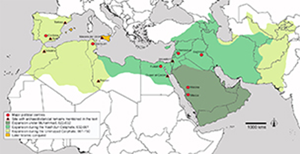
The clearest archaeobotanical evidence for IGR plants comes from outside the Mediterranean in the Red Sea port of Quseir al-Qadim where taro, sugarcane, aubergine, lime, banana and a new cultivar of watermelon were introduced in the eleventh–thirteenth centuries, while other crops such as sorghum, cotton, pearl millet, citrus fruits and rice became more extensively cultivated during this period (Van der Veen Reference Van der Veen2010). While some of these crops were cultivated in the Roman and Late Antique periods in zones such as the irrigated oases of Fazzan in south-western Libya (Pelling Reference Pelling2008), growing archaeological evidence for IGR plants points to their first appearance during the Middle Ages, including Israel (Jerusalem; Fuks et al. Reference Fuks, Oriya and Ehud2020), Spain (Ilbira and Tortosa; Alonso et al. Reference Alonso, Antolín and Kirchner2014; Peña-Chocarro et al. Reference Peña-Chocarro2019), Sicily (Mazara del Vallo; Carver & Molinari Reference Carver, Molinari, Winkler, Fitzgerald and Small2020: 143) and Morocco (Volubilis; Fuller & Pelling Reference Fuller, Pelling, Fentress and Limane2018; Figure 1). Yet, despite Van der Veen's (Reference Van der Veen2010) call to broaden the categories of agricultural innovations incorporated into the IGR model to include animals, growing conditions, tools and management practices, environmental archaeologists have refined their methods (Fuks et al. Reference Fuks, Oriya and Ehud2020) but remained largely focused on phytogeography, or the timing and diffusion of IGR crops.
Map showing the Arab (and later Berber) conquests in the Mediterranean, and sites, mentioned in the text, from which archaeobotanical remains of Watson's IGR species have been recovered. Dates: Tortosa tenth–twelfth century, Ilbira ninth–eleventh century, Volubilis seventh–ninth century, Mazara del Vallo ninth–tenth century, Fezzan eighth–ninth century, Quseir al-Qadim second–thirteenth century, Jerusalem eighth–ninth century (figure by the authors).

Meanwhile, archaeologists working at the landscape scale have reshaped our understanding of the impact of the Arab conquests, and the roles of subsequent regimes and population movements on land use. New understandings of long-term landscape changes have encompassed Syria (e.g. Braemer et al. Reference Braemer2009), the southern Levant (e.g. McQuitty Reference McQuitty2005; Avni Reference Avni2020), North Africa (Leone & Mattingly Reference Leone, Mattingly and Christie2004; Fenwick Reference Fenwick2020: 81–104; Fenwick et al. Reference Fenwick2021) and Sicily (Carver & Molinari Reference Carver, Molinari, Winkler, Fitzgerald and Small2020). The most detailed studies have focused on Iberian landscapes, where the issues of continuity and transformation in land use have divided opinions (Glick & Kirchner Reference Glick, Kirchner and Squatriti2000; Beltrán & Willi Reference Beltrán Lloris and Willi2011; Esquilache Reference Esquilache2018). Here, it is evident that the introduction in the medieval period of new technologies, such as the qanāt (system of tapping alluvial aquifers and conducting the water along underground tunnels by gravity to the surface) or the water lifting wheel (sāniya) were accompanied by the reorganisation of land use, alongside new legal and social frameworks to manage water conservation (Glick & Kirchner Reference Glick, Kirchner and Squatriti2000). Research has established the agency of peasants in driving such agricultural innovations, as well as the impact of later Christian conquests and the associated reorganisation of the Andalusi landscape (Torró & Guinot Reference Torró and Guinot2012, Reference Torró and Guinot2018; Kirchner Reference Kirchner2022). Levantine and Iberian studies have led the way in combining suites of archaeological and historical data in high-resolution localised studies (e.g. Esquilache Reference Esquilache2018; Kirchner Reference Kirchner2020; Kirchner & Sabaté Reference Kirchner and F.2021).
These developments prompt us to reframe the IGR in broader terms—as the long-term environmental impact of the Arab (and later Berber) conquests and subsequent population movements. Focusing on the Mediterranean, in this article, we argue for an integrated environmental archaeology of medieval societies as a means of assessing the socio-ecological impact of successive states, in relation to earlier and later societies in this region. Our aim is to provide a methodological framework and highlight theoretical tools that archaeologists working on medieval Mediterranean societies will find useful for contextualising their data. The hope is that this will result in a more nuanced and holistic understanding of how past societies responded to environmental challenges, including climatic variability, within this ideologically divided yet highly connected region.
A new approach to the ‘Green Revolution’
In moving beyond established approaches to the IGR, a broader ecological perspective can encompass the inter-connections between plants, animals, soils and water, set within the context of a fluctuating climate. While the scope of the original IGR thesis spanned the early medieval Islamic world, subsequent detailed studies have typically focused on individual regions. Building on the latter, a comparative, inter-regional approach offers the possibility to assess the homogeneity or diversity of the IGR's impact across the Mediterranean. As originally conceived, the IGR was defined as a phenomenon of the early medieval period, but agricultural change evidently occurred over a much longer period and so a broader chronological focus is required to contextualise trends and to characterise change and continuity. In broadening the timespan and moving away from the earlier emphasis on crop introductions and their diffusion, the theoretical tools of adaptive cycles and resilience enable a more meaningful interpretation of the IGR.
Expanding the range of data
The collection of evidence for IGR crops has relied on archaeobotanical research to identify plant remains in the form of macrofossils such as seeds, grains and fruits from archaeological contexts (Fuks et al. Reference Fuks, Oriya and Ehud2020). The somewhat erratic identification of IGR species reflects the need for specific preservation conditions and the use of appropriate sampling and processing techniques. Depositional contexts, whether in discrete pits or embedded within occupation horizons, typically represent traces of storage and consumption. What is usually absent or poorly represented in these contexts, is the connection between consumption and production. Plant macrofossils can indirectly inform us about production through their use in the coarse-grained reconstruction of land use; the analysis of plant carbon isotopes may allow for differentiation between irrigated versus rainfed agriculture, nitrogen isotopes may illuminate manuring practices, and potentially sulphur isotopes may allow identification of crop provenance; DNA analysis offers insights into crop evolution and diffusion. Higher resolution analyses of crop production require palynological evidence for the reconstruction of spatial and diachronic vegetation histories, combined with landscape and hydraulic archaeological approaches (e.g. Esquilache Reference Esquilache2018; Kirchner Reference Kirchner2020). These include retrogressive cartography for reconstructing the long-term biographies of land use and a consideration of archaeological features associated with agriculture, including sugar factories, mills, granaries, stores and the portable material culture associated with processing, transporting and consuming these crops (Glick & Kirchner Reference Glick, Kirchner and Squatriti2000; Kirchner Reference Kirchner2010). Landscape reconstructions are, in turn, informed by geoarchaeological studies of buried soils and sediments (Puy & Balbo Reference Puy and Balbo2013; Puy et al. Reference Puy, Balbo, Virgili and Kirchner2014). Pollen profiles from lacustrine, marine and terrestrial sediments, which can provide a robust chronology for vegetation change, are preserved unevenly across the Mediterranean, however, refined OSL techniques now make it increasingly possible to date the construction and maintenance of field systems (e.g. Bailiff et al. Reference Bailiff2015; Brown et al. Reference Brown2020; Turner et al. Reference Turner2021). Together, these types of data and analyses can provide a diachronic, multi-scalar understanding of agricultural production, which can be connected with the archaeological traces of consumption documented at settlement sites.
The role of animals in the IGR has often been sidelined in favour of crops. Yet plants and animals were inter-connected, both in terms of livestock provisioning through grazing and fodder, and the role of key stock species in driving demographic and economic growth. Zooarchaeological studies, alongside written sources, have demonstrated the long-term impact of conquest and migration on changes in livestock rearing, the introduction of new breeds, levels of hunting and fishing, scales of manufacturing utilising animal products, and shifts in butchery technology. If food is a defining feature of the IGR, then the role of meat must be included. Noticeable changes in livestock husbandry regimes, with an emphasis on caprines and a reduction in pig rearing, can be seen following the conquests in the Levant (Marom et al. Reference Marom2019), North Africa (King Reference King, Fentress and Limane2018), Iberia (Davis Reference Davis2008; García-García & Moreno-García Reference García-García and Moreno-García2018) and Sicily (Aniceti Reference Aniceti2019). These innovations reflected the introduction of new culinary practices, which can also be detected in changing ceramic forms, in residue analyses of pottery vessels and through stable isotope analyses of human bone to reconstruct dietary signatures at individual, group and societal levels (Alexander Reference Alexander and Quirós Castillo2016; Lundy et al. Reference Lundy2021).
The connection between livestock and land use is fundamental, with pasture—including drylands, wetlands, woodlands and uplands—defined by adequate grazing, water and access to salt (García-Contreras Ruiz Reference García-Contreras Ruiz, Klápste and Sommer2011). Alongside data on land use, the intensity and spatial distribution of large-scale livestock rearing can be traced through organic geochemistry. This includes species-specific compounds produced in the stomachs of certain animal species that are preserved in sediments, indicating their former presence in the landscape (Linseele et al. Reference Linseele2013), manure within terrace soils (Bull et al. Reference Bull, Betancourt and Evershed2001), and sedimentary DNA and coprophilous spores in lake cores providing important measures of the diachronic intensity of large-scale livestock rearing (Giguet-Covex et al. Reference Giguet-Covex2014; Baker et al. Reference Baker2016). Stable isotope analyses of animal bones from settlement sites can provide unique insights into foddering practices over time, connecting with off-site datasets for the management of pasture. Like crop cultivation, animal exploitation was socially managed and involved a range of agents.
The essential backdrop to agricultural production, and one that has only been casually incorporated into previous studies of the IGR, is the role of climate, and specifically, fluctuations in temperature and precipitation. Fluctuating climate resulted in unprecedented droughts during the sixth century, undermining the resilience of the Himyar kingdom in Arabia which in turn provided opportunities for the expansion of new Islamic polities (Fleitmann et al. Reference Fleitmann2022). On the other hand, cultural factors were more important drivers for resource management in the Levantine crusader states and later Mamluk state, than climatic trends (Xoplaki et al. Reference Xoplaki2018). A substantial body of climate data now covers the Mediterranean for the last two millennia, albeit with unevenly distributed proxies (Labuhn et al. Reference Labuhn2018; Lüning et al. Reference Lüning2019). Palaeoclimatic reconstructions indicate that the Mediterranean experienced climatic ‘flip-flops’ between the East and West. Much of Iberia experienced a dry period during the Medieval Climate Anomaly (MCA; AD 900–1350), while the Atlantic side of the peninsula saw increased humidity due to a persistent positive North Atlantic Oscillation (NAO) index, a fluctuating weather phenomenon that influences surface pressure (Trouet et al. Reference Trouet2009; Moreno et al. Reference Moreno2012; Lüning et al. Reference Lüning2019). The onset of the Little Ice Age between 1350 and 1850, in turn, is associated with generally wetter and colder climate conditions due to a negative shift in the NAO index. Regional and local variations, however, require further exploration and synchronisation with socio-environmental changes; levels of aridity appear to have peaked between 1200 and 1350 as indicated by the low frequency of large floods in Iberia (Luterbacher et al. Reference Luterbacher and Lionello2012), but not, for example, in Tunisia (Lüning et al. Reference Lüning2018). Moreover, responses to climate-related challenges have been shaped by cultural choices (Xoplaki et al. Reference Xoplaki2018). Future climate work should focus on synthesising existing data and obtaining new proxies to investigate regional and local differences. The methods outlined above represent a framework into which such individual datasets can be inserted to achieve a cumulative and increasingly nuanced synthesis.
Expanding the temporal and spatial range
A comparative approach to the IGR necessitates a radical expansion of its original chronological scope to take in the ‘medieval millennium’ of the sixth to sixteenth centuries, starting in the century before the Arab conquests and running through to the extension of Ottoman rule into North Africa. Such a long-term perspective will allow the IGR to be contextualised, encompassing not only earlier innovations adopted and scaled up by Muslim agriculturalists, but also subsequent adaptations and innovations adopted by Islamic and Christian societies in the later medieval period. This broader timeframe also meshes well with the chronological resolution typically used in palynological and climate studies.
The IGR model is often critiqued in relation to the Mediterranean because some of the IGR crops were already cultivated in certain regions during Antiquity. Chronologically, the picture is far more complicated. In North Africa, for example, some IGR crops were indeed cultivated in particular ecological niches in Antiquity, such as the irrigated oases of the Libyan Fazzan (to the south of the Roman Empire), but seem to be cultivated more widely from Late Antiquity and the Middle Ages (Fenwick Reference Fenwick2020: 95–6). For example, while durum wheat was cultivated in the Fazzan in Late Antiquity, it is attested in coastal Tunisia no earlier than the seventh century; in Morocco, it appears for the first time in the eighth to ninth centuries and in Algeria in the tenth century. Other newly introduced crops demonstrate their own pace and tempo. In Morocco, einkorn and emmer wheat are attested in the Neolithic, but not during subsequent millennia, and were seemingly reintroduced in the medieval period, perhaps related to increased connections with al-Andalus, where they formed an important staple during Antiquity (Fuller & Pelling Reference Fuller, Pelling, Fentress and Limane2018).
Alongside the varied tempo of known IGR introductions, there is evidence for the adaptation of existing uses of the landscape by Arab and Berber migrants, as well as the resilience of conquered communities. Examples of later innovations are also evident. In the Levant, the Crusading period (AD 1099–1291) is associated with a visible industrialisation of the agrarian landscape, more intensive than in the preceding Fatimid period and connected with specific forms of governance, particularly the military orders (Pluskowski et al. Reference Pluskowski, Boas and Gerrard2011). In Iberia, the Christian conquests from the twelfth century were followed by a colonisation process that involved population displacement and settlement of new Christian communities resulting in the opening of new areas of cultivation, crop substitutions and substantial changes in water distribution in irrigated areas (Torró & Guinot Reference Torró and Guinot2012, Reference Torró and Guinot2018; Kirchner Reference Kirchner2020, Reference Kirchner2022). The peak in terrace construction activity in parts of Iberia, Greece and Turkey also coincides with the late medieval period (Turner et al. Reference Turner2021). Data from this period, which has traditionally been studied separately from the earlier medieval Mediterranean, are essential for fully contextualising the IGR. In the same way, incorporating data from neighbouring regions that never formed part of any of the Islamic polities will provide an essential control, and test the permeability of the ideological frontier. In this respect, the innovative nature of the environmental transformations associated with the IGR can be effectively contextualised in both time and space.
Theoretical tools
Gauging the relative significance of the IGR requires suitable theoretical tools. Theoretical approaches to the archaeology of the IGR have included middle-range theory for reconstructing agricultural developments from archaeobotanical data (Fuks et al. Reference Fuks, Oriya and Ehud2020), as well as a recognition of multi-scalar agency in driving innovations. For example, in Islamic Iberia, distinctions can be made between peasant agency shaping agrarian strategies, and the codification of new cultivation techniques by Andalusi agronomists representing the elite stratum of society (Retamero Reference Retamero, Laliena and Utrilla1998). This is also visible in the choices regarding agricultural management made by successive Islamic and Christian societies (Kirchner & Sabaté Reference Kirchner and F.2021; Kirchner Reference Kirchner2022). In the eastern Mediterranean, the agency of political and commercial actors is visible during the Crusading period, when grain was principally sourced from Sicily and southern Italy, which experienced sub-optimal growing conditions at this time, despite the more favourable conditions conducive to agrarian intensification in parts of the Levant (Xoplaki et al. Reference Xoplaki2018).
Theories of resilience and adaptive cycles offer great potential for understanding the IGR, by framing it within a sequence of adaptations to environmental and social stresses in the Mediterranean during the ‘medieval millennium’. Commonly used within climate change archaeology, and occasionally applied to the medieval period, these theories recognise that societies undergo cycles of transformation reflecting the dynamic interaction of environmental factors and human actions, enabling continuities, tipping points and loci of resilience—the ability to withstand or adapt to stresses (Burke et al. Reference Burke2021). This model has been effectively used in the study of relationships between climate change, societal fragmentation and state formation (Holling Reference Holling2001). Regional analyses of past climate change have demonstrated responses were not necessarily synchronous and could result in different outcomes, with varying degrees of resilience. In the case of the medieval Mediterranean, the historically documented sequences of state formation, expansion, disintegration and reorganisation, can be linked to these adaptive cycles, by drawing on the synthesis of archaeological, palaeoenvironmental and historical data resulting from the integrated environmental archaeology methodology proposed above.
Moving forward
In this article we have argued for the need to reframe scholarly approaches to the agrarian impact of the Arab conquests in the Mediterranean world by moving beyond the traditional foci of new crops and irrigation to include a broader range of data, with the aim of connecting production with consumption. We have proposed an integrated environmental archaeological framework for Mediterranean societies during the medieval millennium, which provides the opportunity for existing and future archaeological and palaeoenvironmental studies to be integrated and contextualised. This involves broadening the traditional chronological focus of the IGR (seventh–tenth centuries) to include subsequent adaptation and resilience within later Islamic polities such as the Almohad Caliphate, as well as Christian states created through the related processes of conquest and migration. We advocate more than simply ‘big data palaeoecology’, as our approach involves the integration of conventional archaeological datasets for settlement and the long-term development of cultural landscapes. While the agency of migrating Islamic peasants has been widely documented in Iberia (Kirchner Reference Kirchner2020), the variable roles of urban elites and central authorities in driving environmental transformations, particularly in later centuries, requires further scrutiny.
This theoretical toolkit, when utilised for inter-regional synthesis, will enable diverse and complex datasets to be meaningfully contextualised within the sequence of adaptive cycles that can highlight the tempo and longevity of innovations. This will result in a step change in our understanding of how successive societal transformations shaped, and were shaped by, environments across the Mediterranean during a period of significant climatic fluctuations. In the process, there is a possibility that the relative significance of the IGR may diminish, at least for some regions, but the approach will enable us to identify and evaluate the long-term ecological legacy of the Arab conquests both within the Islamic polities of the Mediterranean and across neighbouring European and African regions, and even through to the Americas. The approach outlined in this paper will be implemented in the project “Re-thinking the Green Revolution in the Medieval Western Mediterranean (6th–16th centuries)”, recently funded by the European Research Council (grant agreement 101071726).
Acknowledgements
The authors would like to thank the following colleagues for their extensive discussions which contributed to this paper: R.Y. Banerjea, A. Brown, M. Alexander, A. Malpica Cuello, M. García-García, D. Fleitmann, R. Pelling, F. Retamero and A. Virgili.
Funding statement
This article was written during the development of the MEDGREENREV project, now funded by the European Research Council as project 101071726 — MEDGREENREV 2023-2029. A European Research Council grant for the EVERYDAYISLAM Project (grant no. 949367) supported Corisande Fenwick's time in writing this article. Guillermo García-Contreras was PI on the project A-HUM-308-UGR18- Medio Natural y Sociedad en la Andalucía Medieval (MENASAM), as well as International Co-I on the Landscapes of (Re)conquest project, funded by the AHRC (AH/R013861/1); Helena Kirchner was PI on PID2020-112764GB-I00- Agricultural Organisations and Iberian Conquests (12th-16th centuries): Comparative Studies, and Aleks Pluskowski was PI on the Landscapes of (Re)conquest project.


 Open access

