


Allergic diseases are the most common of all immunologically mediated conditions, and are increasing in prevalence in most developed countries. Food allergy has been thought to involve an excessive immune reaction against allergens permeating from the intestinal tract. Theoretically, the intestinal epithelium acts as a barrier restricting the permeation of macromolecules. However, a small proportion (10− 3–10− 4) of dietary proteins can cross the epithelium to access and activate effector cells, resulting in food allergy(Reference Kaminogawa, Hachimura and Nakajima-Adachi1).
It is hypothesised that altered intestinal barrier function permits increased transport of dietary antigens across the intestinal barrier and exposure of dietary antigens to the mucosal immune system, leading to the development of a dietary antigen-specific response(Reference Groschwitz and Hogan2). Consistent with this hypothesis, intestinal permeability in infants with food allergy, as assessed by the lactulose:mannitol ratio in urine, was significantly increased compared with that seen in healthy young children(Reference Ventura, Polimeno and Amoruso3). It is therefore conceivable that enhancing the barrier function of the intestinal epithelium would help prevent food allergy.
Our research team has established an in vitro system to evaluate allergen permeation using differentiated Caco-2 cells grown on a permeable filter(Reference Tanabe, Isobe and Miyauchi4). Caco-2 cells, human adenocarcinoma cell line derived from a colon carcinoma, have been used as an in vitro model for various purposes. For example, we estimated the transepithelial transport of dietary components, such as the flavonoid hesperidin, in the Caco-2 cell monolayer(Reference Kobayashi, Tanabe and Sugiyama5). Caco-2 cells differentiate under standard culture conditions to form confluent monolayers, and acquire many features of absorptive intestinal cells during culture. These cells spontaneously exhibit various enterocytic characteristics, including the formation of intercellular tight junctions (TJ).
Using this TJ model, we have reported that enzyme-modified cheese (EMC) inhibited the permeation of the representative food allergen ovalbumin (OVA). Asn-Pro-Trp-Asp-Gln (NPWDQ, amino acids 107–111 of αs2-casein) was isolated from the hydrolysate and identified as one of the responsible peptides for this inhibitory activity(Reference Tanabe, Isobe and Miyauchi4). Intestinal permeability of both fluorescein isothiocyanate-conjugated dextran and horseradish peroxidase decreased in Caco-2 cells by the addition of NPWDQ(Reference Isobe, Suzuki and Oda6). We also examined if NPWDQ inhibited allergen permeation ex vivo using rats with intestinal inflammation induced by subcutaneous injections of indomethacin. When OVA was injected into the jejunal and ileal loops of rats that were orally administered with NPWDQ, it was found that NPWDQ administration effectively diminished OVA permeation from both loops compared with that in rats that were not administered NPWDQ(Reference Isobe, Suzuki and Oda6). From these results, it was assumed that NPWDQ would enhance epithelial barrier function.
The epithelium maintains barrier function by the formation of complex protein–protein networks that mechanically link adjacent cells and seal the intercellular space. The protein networks that connect epithelial cells form three adhesive complexes: TJ, adherens and desmosomes. These complexes consist of transmembrane proteins that interact extracellularly with adjacent cells and intracellularly with adaptor proteins that link to the cytoskeleton(Reference Groschwitz and Hogan2). For example, TJ consist of several proteins, and among them zonula occludens-1 (ZO-1) was the first to be identified. It binds to transmembrane proteins, such as claudins and occludin, and links them to cytoskeletal actin. TJ proteins are regulated by phosphorylation by kinases, phosphatases and other signalling molecules.
In the present study, we investigated the changes in the mRNA expression of genes related to TJ in Caco-2 cells by the addition of NPWDQ using the microarray method. Western blot analyses of three major TJ proteins (occludin, claudin-1 and ZO-1) were also performed. We demonstrated that NPWDQ enforced TJ, at least partly, by increasing occludin expression.
Materials and methods
Caco-2 cells
Caco-2 cells were obtained from the American Type Culture Collection (Rockville, MD, USA). In the present study, cells were used between forty-five and fifty passages. The culture medium consisted of Dulbecco's modified Eagle's medium with 10 % fetal bovine serum, 1 % non-essential amino acids and antibiotics (100 units/ml penicillin, 100 μg/ml streptomycin and 50 μg/ml gentamycin). Dulbecco's modified Eagle's medium, non-essential amino acids, penicillin, streptomycin and gentamycin were all obtained from Invitrogen Corporation (Carlsbad, CA, USA). Fetal bovine serum was obtained from ICN Biomedicals, Inc. (Osaka, Japan).
Cells were cultured at 37°C under a humidified atmosphere of 5 % CO2. They were normally grown in 75 cm2 tissue culture flasks to approximately 80 % confluence, and seeded into a twelve-well Transwell cell culture chamber (0·4 μm in pore size and 12 mm in diameter) (Corning Coster, Cambridge, MA, USA) at a density of 5 × 10⁵ cells/cm2. Each well was placed in a cluster plate with an outside medium (basolateral side, 1·5 ml) and an inside medium (apical side, 0·5 ml). The cell monolayers were fed fresh medium every 24 h.
Transepithelial electrical resistance measurement
After 12–14 d of culture, transepithelial electrical resistance (TER) was measured using a Millicell-ERS instrument with Ag/AgCl electrodes (Millipore, Bedford, MA, USA). Caco-2 cell monolayers were used whose TER values were 550–700 Ω cm2. NPWDQ was synthesised according to the solid-phase method using a peptide synthesiser, and was purified by reversed-phase HPLC by Takara Bio (Osaka, Japan). To examine the effect of NPWDQ on TER, 0·5 ml of the culture medium containing NPWDQ (0, 10− 6, 10− 5 and 10− 4 m) was added to the apical side, and 1·5 ml of fresh culture medium without NPWDQ was added to the basolateral side. Then, cells were incubated for 24 h, after which, TER was measured.
Microarray analysis
After the above-mentioned experiments, RNA was extracted from Caco-2 cells, with or without incubation with NPWDQ (10− 6 m), using a TRIzol reagent (Invitrogen) according to the manufacturer's instructions. RNA was extracted from six wells of the twelve-well Transwell cell culture chamber and pooled.
Complementary RNA was synthesised using an Illumina® RNA Amplification kit (Illumina, San Diego, CA, USA) according to the manufacturer's instructions. In brief, total RNA (150 ng) from Caco-2 cells was reverse transcribed with T7-oligo (dT) primer to synthesise first- and second-strand complementary DNA, followed by clean-up. In vitro transcription was performed to synthesise biotin-labelled complementary RNA.
Labelled complementary RNA (1·5 μg) was hybridised to a BeadChip (Sentrix Human WG-6; Illumina) at 58°C for 18 h. Forty-eight thousand transcripts representing six whole-genome samples can be analysed on a single BeadChip. The hybridised BeadChip was washed and labelled with streptavidin-Cy3 (GE Healthcare Biosciences, Little Chalfont, Buckinghamshire, UK), and was scanned with an Illumina BeadStation 500GX-WG system (Illumina). Background-corrected values for each probe on the BeadChip array were extracted using BeadStudio (Illumina). These results were expressed as an arbitrary unit, and analysed by GeneViewer (version 1.0; Moritex, Tokyo, Japan).
Real-time RT-PCR
The level of occludin mRNA (n 6) was measured with the real-time RT-PCR method using SYBR® green. The experiment was performed twice independently. Total RNA was treated with DNase (TURBO DNA-free™ kit; Applied Biosystems, Foster City, CA, USA). The RT reaction was conducted with MultiScribe™ reverse transcriptase using a high-capacity complementary DNA reverse transcription kit (Applied Biosystems) at 25°C for 10 min and at 37°C for 120 min. The reaction was terminated by heating the reaction mixture at 85°C for 5 s followed by cooling at 4°C.
Real-time RT-PCR was performed with a Real-Time PCR system (Applied Biosystems) using Power SYBR® Green PCR Master Mix (Applied Biosystems). Primers were designed using the Primer Express® program (Applied Biosystems). Their sequences are given in Table 1. The reaction was performed at 95°C for 10 min, followed by forty cycles of 95°C for 15 s and 62°C for 1 min. The dissociation stage was analysed at 95°C for 15 s, followed by one cycle of 60°C for 15 s and 95°C for 15 s. The fluorescence of the SYBR green dye was determined as a function of the PCR cycle number, giving the threshold cycle number at which amplification reached a significant threshold. Data were analysed by generating a standard curve from a dilution series and presented as fold change in gene expression, after normalisation of the β-actin gene.
Sequences of primers used for real-time PCR

SDS-PAGE and Western blotting
The expressions of occludin, claudin-1 and ZO-1 were examined by the ordinary method (n 7). The experiment was performed twice independently. Briefly, Caco-2 cell monolayers were washed with ice-cold PBS thrice and lysed in the lysis buffer (25 mm Tris–HCl, 150 mm NaCl, 1 % Nonidet P-40, 1 % sodium deoxycholate and 1 % SDS, at pH 7·4). The cell suspensions were sonicated for 30 min using a sonicator (USK-3; As One Corporation, Osaka, Japan), and were centrifuged at 14 000 g for 30 min at 4°C to yield a clear lysate. The proteins were separated using 12·5 % gel for occludin and claudin-1 detection or 7·5 % gel for ZO-1 detection, and were then transferred onto blotting membranes (Immobilon-P PVDF; Millipore). After overnight blocking with PBS/Tween 20 supplemented with 1 % bovine serum albumin, the blots were incubated with primary (mouse anti-occludin, rabbit anti-claudin-1 or rabbit anti-ZO-1) and secondary antibodies (horseradish peroxidase-conjugated anti-mouse IgG or anti-rabbit IgG, as appropriate) for 1 h each at room temperature. Anti-claudin-1, anti-occludin and anti-ZO-1 antibodies were all obtained from Zymed Laboratories (South San Francisco, CA, USA). Horseradish peroxidase-conjugated anti-mouse IgG was obtained from Sigma-Aldrich (St Louis, MO, USA). Anti-rabbit IgG was obtained from Kirkegaard and Perry Laboratories (Baltimore, MD, USA). To confirm equal loading, the blots were reprobed with rat anti-α-tubulin antibody (Millipore). The proteins were visualised using chemiluminescence (enhanced chemiluminescence, GE Healthcare), and exposed to an X-ray film (Fujifilm, Kanagawa, Japan). Band densities were read using Scion Image Software (Scion, Frederick, MD, USA), and were normalised with α-tubulin. SDS-PAGE and Western blotting were performed in duplicate.
Statistical analyses
All data are expressed as the means and standard deviations. Statistical analysis was performed using the Tukey–Kramer method.
Results
Effect of Asn-Pro-Trp-Asp-Gln on transepithelial electrical resistance of Caco-2 monolayers
The effect of the addition of NPWDQ on the integrity of Caco-2 monolayers was evaluated by the measurement of TER. TER value increased in response to the addition of increasing NPWDQ concentrations (10− 6–10− 4 m), which suggests that this peptide enhanced epithelial barrier function (Fig. 1).
Changes in transepithelial electrical resistance (TER) by the addition of Asn-Pro-Trp-Asp-Gln (NPWDQ) to Caco-2 cells. NPWDQ (10− 6–10− 4 m) was added to the apical side, and cells were incubated for 24 h, after which, TER was measured (n 6 each). Mean values were significantly different for samples without the addition of NPWDQ ( − ): * P < 0·05, ** P < 0·01.

Microarray analysis of tight junction-related molecules
DNA microarray analysis was performed to investigate the effect of the addition of NPWDQ in detail. NPWDQ (10− 6 m) was added to the apical side of Caco-2 cells, and the cells were incubated for 24 h, after which, RNA was extracted. NPWDQ and the longer peptide Gly-Pro-Ile-Val-Leu-Asn-Pro-Trp-Asp-Gln (GPIVLNPWDQ) (amino acids 102–111 of αs2-casein) significantly inhibited OVA permeation in Caco-2 cells at a concentration of 10− 6 m as shown previously(Reference Tanabe, Isobe and Miyauchi4), so this concentration of NPWDQ was used in the present study.
Changes in 48 000 types of gene expressions by NPWDQ were evaluated. To select genes with an abundant level of expression, those showing an expression of more than 1000 arbitrary fluorescence units, a total of 7108 genes were chosen and further analysed. Among these genes, only two genes, fos (GenBank accession number NM_005252) and egr1 (NM_001964), were up-regulated by more than 2-fold, and three genes, mgc14376 (NM_032895), grb2 (NM_002086) and dusp1 (NM_004417), were up-regulated by 1·5–2-fold; the fold changes for fos, egr1, mgc14376, grb2 and dusp1 were 2·93, 2·92, 1·54, 1·53 and 1·51, respectively. In addition, none of the genes was down-regulated by more than 1·5-fold (Table 2). Therefore, it can be suggested that generally NPWDQ did not drastically affect mRNA expression in Caco-2 cells.
Summary of the changes in mRNA expressions in Caco-2 cells by the addition of Asn-Pro-Trp-Asp-Gln (NPWDQ) as evaluated by DNA microarray analysis
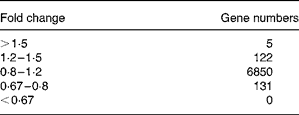
NPWDQ (10− 6 m) was added to the apical side, and cells were incubated for 24 h. RNA was extracted from Caco-2 cells with or without incubation with NPWDQ (n 6 each), and pooled. Changes in 48 000 types of gene expressions were evaluated.
In this table, the summary of 7108 genes that showed an expression of more than 1000 arbitrary fluorescence units is given.
Differences in gene expression of major TJ-related molecules, occludin, claudins and ZO, and junctional adhesion molecule families were analysed. As shown in Table 3, it was observed that occludin was up-regulated by 1·49-fold. On the other hand, gene expressions of claudin-1, -2, -3, -4, -7, -12, -14, -15, -19 and -23; ZO family (ZO-1, -2 and -3) and junctional adhesion molecule-1 were not remarkably changed (fold changes, 0·88–1·13). The genes of claudin-5, -6, -8, -9, -10, -11, -16, -17, -18, -20, and -22, and junctional adhesion molecule-2 and -3 showed expressions at < 100 arbitrary fluorescence units. From these data, it can be clearly suggested that NPWDQ up-regulated mRNA expression of occludin.
(Mean values and standard deviations)

n, Number of beads analysed; ZO, zonula occludens; JAM-1, junctional adhesion molecule-1.
The expressions of claudin-5, -6, -8, -9, -10, -11, -16, -17, -18, -20 and -22, and JAM-2 and -3 were < 100 arbitrary fluorescence units.
Effect of Asn-Pro-Trp-Asp-Gln on occludin expression
The effect of NPWDQ on the expression of the occludin gene was evaluated by real-time RT-PCR. As shown in Fig. 2, the addition of 10− 6 m NPWDQ increased occludin mRNA expression by 1·3-fold. To examine this phenomenon more clearly, increasing concentrations of NPWDQ (10− 5 and 10− 4 m) were added to the apical side of Caco-2 cells, and mRNA expression of occludin was examined. As a result, NPWDQ (10− 5 m) significantly (P < 0·01, 1·7-fold) increased occludin mRNA expression. The addition of 10− 4 m NPWDQ also increased occludin mRNA expression, but the effect (1·4-fold) was less than that produced with the addition of 10− 5 m NPWDQ.
Changes in the mRNA expression of occludin by the addition of Asn-Pro-Trp-Asp-Gln (NPWDQ) to Caco-2 cells. RNA was extracted from Caco-2 cells after the measurement of transepithelial electrical resistance (Fig. 1). The mRNA expression of occludin was evaluated by real-time RT-PCR (n 6 each). * Mean values were significantly different for samples without the addition of NPWDQ ( − ) (P < 0·05).

The effect of NPWDQ (10− 6 m) on the expression of major TJ-related proteins, occludin, claudin-1 and ZO-1, was evaluated by Western blotting. NPWDQ significantly (P < 0·05) increased the level of occludin by 1·5-fold (Fig. 3). Protein expressions of claudin-1 and ZO-1 were not changed by NPWDQ, which was consistent with the microarray data (Table 3). These data suggest that NPWDQ especially increased the protein level of occludin and enforced the TJ barrier.
Changes in the expressions of three tight junction proteins by the addition of Asn-Pro-Trp-Asp-Gln (NPWDQ) to Caco-2 cells. NPWDQ (10− 6 m) was added to the apical side, and cells were incubated for 24 h. Protein was extracted from Caco-2 cells with or without incubation with NPWDQ (n 7 each). Protein expressions were detected by Western blotting, and normalised with α-tubulin for comparison. (a) Occludin (with a representative blotting pattern), (b) Claudin-1 and (c) Zonula occludens-1 (ZO-1). * Mean values were significantly different for samples without the addition of NPWDQ ( − ) (P < 0·05).

Discussion
The intestine is constantly exposed to food components as well as to antigens, commensal microflora and pathogens. The epithelial TJ is therefore very important; several intestinal diseases have been reported to be associated with TJ dysfunction(Reference Amasheh, Andres and Amasheh7). The relationship between food components and the intestinal TJ barrier has not been completely elucidated, but information relating to glutamine(Reference Li, Lewis and Samuelson8), PUFA(Reference Jiang, Bryce and Horrobin9), Zn(Reference Finamore, Massimi and Conti Devirgiliis10) and polyphenols(Reference Suzuki and Hara11) is available. As for the modulation of occludin expression, Jiang et al. (Reference Jiang, Bryce and Horrobin9) reported that occludin was up-regulated by γ-linolenic acid in the human vascular endothelial cell line ECV304. Following this, TER was increased, and paracellular permeability to large molecules was thereby reduced. To our knowledge, the present study is the first to show that occludin expression was up-regulated by a food-derived peptide.
Since we have reported previously that NPWDQ inhibited OVA permeation in Caco-2 cells 24 h after the addition of the peptide(Reference Tanabe, Isobe and Miyauchi4), we performed the DNA microarray analysis using RNA from Caco-2 cells that was incubated with the peptide for 24 h. Indeed, the level of occludin mRNA expression did not change before 8 h incubation (data not shown). However, it would be interesting to examine whether the expression of other TJ molecules would change at an earlier stage(Reference Suzuki and Hara11).
We demonstrated that NPWDQ up-regulated occludin expression in Caco-2 cells using the DNA microarray method followed by real-time RT-PCR and Western blot analyses. Occludin is a transmembrane protein of TJ, and it has an important role in the assembly and maintenance of TJ(Reference Suzuki and Hara11–Reference Qin, Zhan and Hang14). For example, the interaction between the C-terminal region of occludin and ZO-1 is crucial for TJ assembly(Reference Suzuki, Elias and Seth13). Therefore, up-regulation of occludin by NPWDQ might have a great impact on TJ in Caco-2 cells, although occludin was the only molecule whose expression level was significantly changed by NPWDQ. Further studies are necessary to examine the effect of NPWDQ on the localisation of other TJ proteins and on TJ structure. The effect of NPWDQ was the most prominent at a concentration of 10− 5 m, and it reduced at 10− 4 m (Fig. 2). One possible explanation for this phenomenon is that in Caco-2 cells a relatively high dose of the peptide might be recognised as a signal for ingested nutrients, and this might trigger a decrease in TER in order to absorb the peptide. Nevertheless, these data imply that a food-derived peptide can fine-tune the epithelial barrier by modulating the expression of TJ proteins such as occludin.
Is the effect of NPWDQ on occludin expression dependent on the peptide sequence? Or, are amino acids in the peptide sequence enough for the effect?
With respect to the activity of the constitutive amino acids (N, P, W, D and Q) towards the intestine, the protective effects of glutamine and tryptophan on the intestine have been characterised(Reference Neu, DeMarco and Li15–Reference Kim, Kovacs-Nolan and Yang18). Glutamine supplementation was demonstrated to improve intestinal barrier function in highly stressed patients(Reference Neu, DeMarco and Li15) and in piglets with endotoxin-related changes in ileal permeability(Reference Dugan and McBurney16). As for tryptophan, Kobayashi & Watanabe(Reference Kobayashi and Watanabe17) reported that its ethyl ester inhibited OVA permeation in the Caco-2 cell monolayer. Also, Kim et al. (Reference Kim, Kovacs-Nolan and Yang18) recently reported that tryptophan exhibited a therapeutic effect in piglets suffering from dextran sodium sulphate-induced colitis. Therefore, it is possible that NPWDQ would be hydrolysed into amino acids, and subsequently P and W would trigger the up-regulation of occludin. However, investigations are needed to ascertain if the existence of P and W residues is sufficient, or if the specific amino acid sequence is indispensable for the up-regulation of occludin.
Nevertheless, it is highly probable that NPWDQ would act as a peptide form because proline-containing peptides are, in general, resistant to degradation by digestive enzymes(Reference Vermeirssen, Van Camp and Verstraete19). In this case, the next question is whether NPWDQ would be absorbed into Caco-2 cells before its function inside cells or whether it is transported into the paracellular space to act from outside the cells. The underlying mechanisms of occludin up-regulation by NPWDQ are also unclear. It was reported that occludin was regulated by collagen IV, one of the components of the extracellular matrix (ECM), in TJ of Sertoli cells(Reference Siu, Lee and Cheng20). Savettieri et al. (Reference Savettieri, Di Liegro and Catania21) also reported that ECM and neurons modulate the expression of occludin in rat brain endothelial cells. If NPWDQ were to be transported paracellularly and reacted with ECM, it would regulate occludin expression by reacting with molecules such as collagens in ECM. From our microarray data, it was found that NPWDQ did not drastically affect mRNA expressions of collagen IV-α3 and -α5 (data not shown). Further studies are necessary to examine the effect of NPWDQ on ECM in intestinal cells.
As mentioned earlier, TJ dysfunction leads to intestinal disorders such as inflammatory bowel disease. For an in vitro model of inflammatory bowel disease, cytokine (e.g. TNF-α) stimulated Caco-2 cells are frequently used(Reference Son, Satsu and Shimizu22, Reference Miyauchi, Morita and Okuda23). Upon stimulation, inflammatory cytokines, such as IL-8, are induced, and the TJ structure becomes loose. Several food components are under investigation for the treatment and/or prevention of inflammatory bowel disease using this cell model. For example, histidine was reported to inhibit TNF-α-induced IL-8 secretion in Caco-2 cells(Reference Son, Satsu and Shimizu22). Some types of lactobacilli also inhibited IL-8 production, and restored the protein expression of ZO-1 in TNF-α-treated Caco-2 cells(Reference Miyauchi, Morita and Okuda23). It would be interesting to examine if NPWDQ up-regulates occludin expression in such inflamed intestinal cells.
For practical intake of NPWDQ, food materials comprising this type of peptide are more acceptable to the industry than synthetic peptides. In this context, EMC seems to be favourable. We have found NPWDQ peptide from EMC that has an inhibitory activity towards allergen absorption in the intestine(Reference Tanabe, Isobe and Miyauchi4, Reference Isobe, Suzuki and Oda6). EMC is generally produced by the hydrolysis of cheese with commercial proteases, and it is currently used in the food industry. We hope that EMC will be used for the treatment of food allergy and intestinal disorders or for an intestinal barrier-promoting purpose in healthy people.
In conclusion, a casein-derived peptide NPWDQ, which has inhibitory effects against allergen permeation in the intestine, up-regulates occludin expression and enforces the TJ barrier. These data imply that a food-derived peptide can fine-tune the epithelial barrier.
Acknowledgements
The present study was partially supported by the Food Science Institute Foundation (Ryousyoku-kenkyukai, Kanagawa, Japan). We thank Dr Takuya Suzuki (Hiroshima University) for his valuable discussions. We also thank Dr Noriyuki Yanaka (Hiroshima University) for his technical support. The authors' responsibilities are as follows: H. Y. conducted all the experiments. S. T. designed the study and wrote the manuscript. Both the authors approved the final manuscript. The authors declare that there is no conflict of interest.



