


Undernutrition in the first 24 months following birth can result in delayed growth and development that is difficult to reverse, so good nutrition during this period is of utmost importance. Proximal causes of undernutrition from birth to 24 months are non-exclusive breast-feeding and inappropriate complementary feeding practices( 1 ).
Undernutrition has been reported repeatedly in children in the hill tribes of northern Thailand( Reference Tienboon and Wangpakapattanawong 2 – Reference Chotiboriboon, Tamachotipong and Sirisai 4 ). (‘Hill tribes’ is a translation of the official term used by The Ministry of Thailand, Chao Khao, and is not considered disrespectful.) In 2013, one-third of children in the Karen and Lua ethnic communities in the district of Mae Chaem were stunted( 5 ), a much higher prevalence than the national rural average of 8 %( Reference Rojroongwasinkul, Kijboonchoo and Wimonpeerapattana 6 ). Food insecurity and poverty have been identified as underlying causes of undernutrition in these communities( Reference Isvilanonda and Bunyasiri 7 ) which are remote, with roads frequently unpassable in the monsoon season. Historically, villagers lived by subsistence farming, more recently growing maize as a cash crop and sometimes selling animals.
The WHO and UNICEF have made recommendations to improve young children’s nutrition, including exclusive breast-feeding (EBF) for the first 6 months, after which safe, nutritionally adequate, age-appropriate and responsive complementary feeding should commence( Reference Dewey 8 , 9 ). Recently the UN General Assembly announced a ‘Decade of Action on Nutrition’ from 2016 to 2025, to address malnutrition and food insecurity. Governments are asked for a commitment to addressing undernutrition of children under 5 years of age. This global effort is supported in Thailand.
Extended duration of breast-feeding is well documented in Thailand, including in rural ethnic communities, but the period for which it is exclusive is relatively short( Reference Chotiboriboon, Tamachotipong and Sirisai 4 , Reference Chanprasit 10 ). Detailed information on complementary feeding practices is limited. Past studies of child nutrition in the ethnic hill tribes have described poor quality and quantity of food intake, and some relevant local beliefs have been documented( Reference Chotiboriboon, Tamachotipong and Sirisai 4 , Reference Chanprasit 10 , Reference Tienboon, Wangpakapattanawong and Thomas 11 ). In-depth exploration of local accounts for infant and young child feeding (IYCF) practices and the sociocultural context in which these are maintained has not been undertaken. However, research in other locations suggests that such an approach can provide valuable insights( Reference Aubel 12 , Reference Arts, Geelhoed and De Schacht 13 ).
A programme of research was undertaken with villagers in northern Thailand to inform the development of a locally tailored initiative to improve child nutrition( Reference Berti, Desrochers and Hoi Van 14 ). The aim of the present study was to gain in-depth understanding of current IYCF practices, including accompanying perceptions and beliefs, and the sociocultural context of practices not aligned with WHO recommendations. As recommended by Pelto et al.( Reference Pelto, Levitt and Thairu 15 ), the study was designed to draw out the complexity of these matters beyond that possible using a quantitative survey.
Materials and methods
A qualitative study was conducted in two Karen and two Lua ethnic hill tribe villages in the district of Mae Chaem, northern Thailand. These villages had already been chosen by the Knowledge Support Center for the Greater Mekong Sub-region (KSC-GMS) and the World Agroforestry Centre (ICRAF) in Chiang Mai as sites for an agricultural intervention. The villages are located at least 100km from Mae Chaem, the nearest major city. Only one of the villages had an electricity supply. The number of households in the villages ranged from approximately fifty to 100.
A workshop was held with local village health volunteers (VHV) in June 2014. The district public health officer invited two VHV from each village, where possible one male and one female; five men and three women attended. VHV are community members with basic training in health care, who support about ten households in relation to matters such as hygiene awareness and provision of medications.
The two-day workshop was designed to stimulate dialogue and to encourage participants to articulate their lived experiences around IYCF practices and their meanings, allowing different understandings to be shared and reflected upon( Reference Liamputtong 16 ). First, a healthy child was explored: what this meant and what it required. Participants formed two groups to discuss this topic, with a facilitator providing guide questions. Discussion points were shared when the two groups recombined, to stimulate further dialogue. This arrangement was followed repeatedly over the workshop.
A short presentation on undernutrition, prevalence of stunting in hill tribe children and contributing factors was given. In the two groups, then as a whole group, participants responded to this information and were prompted to discuss IYCF practices. At appropriate points, WHO recommendations were invoked, for example: ‘What does exclusive breast-feeding mean to you?’ Complementary feeding was similarly addressed.
On the second day, participants completed a quiz about WHO IYCF recommendations which was designed to stimulate discussion of the answers, including areas where villagers’ perspectives diverged. Prompt questions included: ‘How could you explain to people what exclusive breast-feeding is?’
Subsequently, in-depth interviews were undertaken with two of the VHV who attended the workshop, eight other individuals with roles in the local health system, and twenty villagers. The villagers were selected by VHV, ensuring they were carers of children aged 0–5 years. Topics for the in-depth interviews were similar to those for the workshop but with greater opportunity for individuals to shape the direction and focus of dialogue. While interviews with villagers continued until data saturation appeared to be reached, the number of interviews with health workers and officials was limited by the number employed in the area.
The workshop was conducted in Thai by experienced bilingual (Thai/English) facilitators, under the direction of the first author. All interviews were facilitated by a translator. All relevant components of the workshop and all interviews were recorded and later concurrently transcribed and translated into English by the facilitators and translators. Transcriptions were reviewed by the first author with meanings of words clarified and the terminology across facilitators/translators iteratively checked for consistency in the use of translated terms. Participants’ names have been changed for confidentiality.
Translated transcripts were coded and organized using the qualitative data analysis software NVivo 10 (QSR International Pty Ltd, Doncaster, Victoria, Australia). A detailed thematic analysis was conducted by the first author. Initially, specific words such as ‘breast milk’ and ‘rice’ were coded, as well as ages of children. Coding was gradually expanded to include specific feeding practices and explanations for them. Repeated patterns of meaning around IYCF practices (as well as exceptions) were then linked to the contextual factors invoked to support or legitimize them( Reference Braun and Clarke 17 ). The analysis was guided by a social constructionist epistemology( Reference Ellingson 18 ) and was inductive and iterative, with the first author progressively presenting extracts and interpretations to the second and last author for discussion, mapping themes and their interrelationships. Understanding of transcripts was supplemented by observations from the first author’s field notes, communication with the ICRAF team and with the Thai co-authors.
Prior to the workshop and the in-depth interviews, a participant information sheet was shared with villagers. Written informed consent was obtained from all participants. Participants received a small payment for their time.
Results
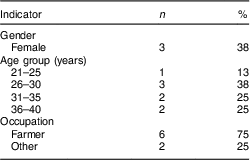
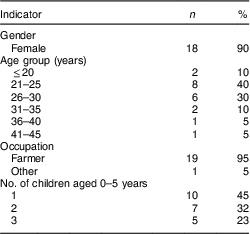
The workshop for VHV was attended by five men and three women, ranging in age from 24 to 38 years, all having at least one child of their own (see Table 1). In-depth interviews were subsequently undertaken with two of these VHV and with three district public health officers (PHO; range 30–48 years, one female), three community PHO (age range 29–45 years, one female) and two maternity nurses (both female, aged 25 and 32 years). Twenty other villagers were interviewed, two men and eighteen women, aged 20–42 years (see Table 2).
Characteristics of the village health volunteers (n 8) interviewed in the present qualitative study on infant and young child feeding practices, accompanying beliefs and their sociocultural context conducted in two Karen and two Lua ethnic hill tribe villages in the district of Mae Chaem, northern Thailand, June 2014
Characteristics of the villagers (n 20) interviewed in the present qualitative study on infant and young child feeding practices, accompanying beliefs and their sociocultural context conducted in two Karen and two Lua ethnic hill tribe villages in the district of Mae Chaem, northern Thailand, June 2014
Breast-feeding is widespread but not exclusive for 6 months
All participants said that children in the villages were breast-fed, in agreement with previous research( Reference Wangpakapattanawong and Pruenglampoo 19 ). Villagers saw breast-feeding as beneficial for the following reasons: ‘prevention of painful nipple’; ‘connecting with the child’; ‘warmth’; ‘protection against disease’; ‘high immunity’; ‘provision of all nutrition’ (somboon); ‘clean’; ‘economical’; ‘grow up quickly’; ‘it provides strong health’; ‘strength’; ‘makes the child well natured and easy to teach’ and ‘will be intelligent’. These understandings echo previous findings about the value placed on breast milk throughout Thai society( Reference Liamputtong and Kitisriworapan 20 ).
Breast-feeding was rarely exclusive for 6 months. Villagers’ understanding of EBF varied but, in general, EBF was not distinguished from other modes of breast-feeding. There seemed to be a common perception that breast milk was important, but exclusivity did not matter:
‘Maybe good give only milk of mother … up to the child some one and a half years some two year [give only milk of mother] … not sure doctor said 6 months.’ (Noin, mother)
‘One problem that mothers have is that when asked they are confused between exclusive breast-feeding and normal breast-feeding and mothers say yes, yes we give breast-feeding, but in between they are giving water.’ (PHO1)
Non-EBF was due to the cultural practice of feeding water or to early introduction of rice or both. Water was reported to be given by most mothers from as early as 1 month. The amount of water was reported to be the ‘tip of [a] teaspoon’, given to help ‘wash out’ milk and/or rice from the throat and prevent ‘dry throat’. Predominant breast-feeding (breast milk and other liquids) is common practice in Thailand( Reference Winichagoon 21 ) and other parts of Asia( Reference de Sa, Bouttasing and Sampson 22 – Reference Locks, Pandey and Osei 24 ).
Introduction of complementary foods before 6 months
Rice was introduced as early as 1 month and almost always within the first 3 months:
‘I will give rice one time a day … [because] the baby is crying and [will] not sleep. The people in the past, once they are born they just eat rice … like for them when they were born their parents immediately gave them rice.’ (Sarn, father)
The early introduction of rice is consistent with previous studies conducted throughout Thailand( Reference Chotiboriboon, Tamachotipong and Sirisai 4 , Reference Winichagoon 21 , Reference Shevasant, Sujumnonk and Stoeckel 25 ).
As illustrated in the quotes that follow, villagers often referred to a need to supplement breast milk with rice from approximately 3 months, due to a belief that breast milk was not sufficient as the child grew. The view that in the mountains mothers could not make sufficient breast milk, leaving the child hungry, appeared to be widespread. Rice was seen to strengthen the child (although it was unclear if it was seen to be nutritionally equivalent to breast milk):
‘If [we] stay long time in the city then [we are] able to [give only breast milk for 6 months], but up here in the mountains [we do] not have complementary food [referring to food that goes with rice] … The milk will not be full of all the different [food] groups up on the mountain.’ (Maew, mother and VHV)
‘Grandparents looking after [the child] give rice at 3 or 4 months because the child is hungry as the mother’s milk is not sufficient.’ (Maew, VHV and mother)
‘[Rice] has benefits. [I] give [it to my] child and [it] helps them grow if [my] child [does] not eat [it they] will be very thin and not strong.’ (Fan, mother)
It was also common for villagers to report that they fed children rice earlier than recommended, to prepare them for later feeding:
‘The grandparents said that if I don’t give rice in the beginning, then the child will not want to eat rice when they grow up.’ (Duk, father)
This concern appeared to be particularly related to the circumstance that the mother ‘may not be able to go to work’ if the child relies only on breast milk. The early introduction of complementary food built familiarity, and thus facilitated the mother’s return to work:
‘At birth the doctor said drink only breast milk for 6 months and then eat rice/food … Mash rice, make mash and give in the first month just one meal to practice eat then second month two meals and third month three meals. The child to practice because in the mountains [we do] not have complementary food [appears to be referring to infant formula].’ (Geb, mother)
Worldwide, the perception of insufficient breast milk is the most common reason for early supplementation and/or discontinuation of breast-feeding( Reference Dykes and Williams 26 , Reference Fewtrell, Morgan and Duggan 27 ). Past reasons described for early introduction of rice in Thailand have included following traditional practice( Reference Jackson, Imong and Wongsawasdii 28 , Reference Tontisirin and Winichagoon 29 ) as well as insufficient breast milk( Reference Winichagoon 21 , Reference Yimyam 30 ). Our work draws attention to the contextual significance of giving the child rice, which we now elaborate on.
Mothers return to work within a few months of giving birth
Some mothers returned to working in the fields as early as 1 month after birth but more often this was reported to occur from 3 months. This is similar to other rural, agricultural communities in Vietnam( Reference Dearden, Quan and Do 31 ). The time often corresponded to when the villagers felt the child was able to stay with another carer. Only one mother mentioned that she took her child to the field with the aid of another family member. Most mothers did not take their children to the field due to the labouring requirements, ‘weather’ and ‘difficult’ conditions. The time spent away from the child progressively increased, resulting in an increase in complementary feeding and a decrease in breast-feeding:
‘Give milk in the morning and go for half a day then need to return as have so much milk.’ (Yang, mother)
Mothers returning to farming work was usually seen as a necessity. It was a duty accepted without question:
‘I must go back to work … [I] do not have anyone to help with work … [parents] they are too old.’ (Raw, mother)
‘I feel I can [stay at home for first 6 months] but my husband goes [to work] alone and he will be tired, so we have to help each other. When we are going [to work] we are not harming our child ... we are doing it to raise him up.’ (Tiang, mother)
Pelto et al.( Reference Pelto, Levitt and Thairu 15 ) have drawn attention to the demands on women’s time, and specifically the heavy workloads for women in subsistence farming communities, as a major impediment to being able to care for their children through EBF for 6 months and appropriate complementary feeding. This has been described as women ‘balancing’ or ‘reconciling’ competing responsibilities. However, the strong cultural consensus around these arrangements makes it unlikely that it is a conscious process in the way these terms may suggest. In his theory of social practice, the sociologist Bourdieu proposes that as individuals grow up in a community, they are imbued with a set of dispositions and expectations, commensurate with their status( Reference Bourdieu 32 ). In this way, an apparent fit develops between a person’s expectations and their circumstances. Thus, women in the hill tribes accept that they must physically labour and that those who are older should look after infants and young children.
Duration of breast-feeding often to 2 years
The total duration of breast-feeding was variable although there were many reports of breast-feeding continuing beyond the child reaching age 2 years of age. Mothers stopped breast-feeding in various ways, often by using deterrents, such as plasters, medicine or other substances placed on the breasts. The need for independence to complete daily activities was often reported as the reason for ceasing breast-feeding:
‘If it is convenient for the mother, then that’s okay [to continue to breast-feed]. But it’s also related with the mother. Like the mother, myself, I need to go to a meeting, and [if] the child is attached to breast milk, then I can’t leave my child.’ (Maew, mother and VHV)
Other reasons also given for ceasing breast-feeding included the belief that the child was old enough to stop, painful breasts, and fears of poor child growth due to filling up on breast milk.
Infant formula is desired but in limited use
Most villagers had heard about formula or seen it in nearby cities. Formula was generally desired by families, but its use was limited:
‘I used to be in Chiang Mai looking after children and saw them eating formula, so that is how I know [about formula] – so I want to give [formula] to my own kids.’ (Sod, mother)
Some participants were aware that breast milk was preferable to formula:
‘I think by receiving only mother’s milk, the child’s immunity should be more than formula milk that is sold. [Breast milk] already has complete nutrients ... if we give breast milk … the child will get the warmth ... and the love.’ (Maew, mother and VHV)
The major limitation on the use of formula was its affordability. A mother talked of how she wanted to feed formula to her three children, but she did ‘not have the money to buy [it]’ (Sod, mother).
A VHV reported on how some villagers would dilute formula, to extend it:
‘They’re also very poor. They buy formula milk. But for 4 ounces, they put only one or two spoonfuls.’ (Kip, mother and VHV)
Undernutrition from diluting formula is a recognized problem in many countries( Reference Dewey 8 ). The current study was not designed to quantify the extent of formula use or its contribution to malnutrition, but it does not appear to be a notable contributor.
Little variety in transitional foods
Variety in complementary foods was not provided until much later than the WHO-recommended time of around 6 months( Reference Dewey 8 ). Rice and banana, occasionally egg, were given to children from 3 to 12 months. Vegetables and meat were rarely said to be given to children under 12 months of age. Absence or provision of these foods was predominantly related to perceptions of children’s readiness to eat different foods:
‘From the age of 3 years, they should be able to start eating these vegetables [referring to a range of vegetables].’ (Aek, father and VHV)
Villagers often reported introducing a food when the child could eat it independently:
‘When he wants to eat and can ask for food and eat by himself.’ (Song, mother)
This agrees with previous reports( Reference Chotiboriboon, Tamachotipong and Sirisai 4 , Reference Chanprasit 10 ). One mother reported that she will start meat at 9–10 months as that is when the child ‘starts to have teeth’ (Noin, mother).
Most villagers provided young children with foods that had suitable textures that did not require modification, limited in number. One exception was described by a mother of a 17-month-old:
‘I make the meat using a strainer and a bottle to press against it to make it small and the meat I would cut into small small pieces and put it into rice porridge to just give it flavour.’ (Yang, mother)
The mother indicated that other carers may not do this as ‘maybe it is too much work’.
Pelto et al. ( Reference Pelto, Levitt and Thairu 15 ) describe a spectrum of approaches to complementary feeding, from ‘controlling’ through to ‘disengaged’. These authors affirm that when children are expected to eat independently from an early age and there is little preparation of complementary foods, children are likely to be malnourished, especially between 6 and 12 months. The underlying issue, again, is seen to be the other demands on women’s time. In the hill tribes, widespread cultural agreement that complementary feeding should not be time-consuming fits with the expectation that mothers will labour to maintain household livelihood.
Villagers relied heavily on the foods available within and around the villages. This was necessary in view of geographic remoteness, seasonal impassability of roads and the cost of buying food in the nearest city:
‘The nutrition [villagers] might not be so aware about, they eat just what they have … the people here just get by, they try to eat what they can, but it is usually just the same old foods.’ (PHO1)
Rice and banana for infants were seen as available and affordable. At five baht each, eggs were seen as relatively expensive:
‘The problem with the hill tribe people is that they do not have the money. So I can tell them, “All you need to do is give your child one egg a day and then your child is getting all this protein.” And they are like “Yes, we know, but we don’t have the money to buy the eggs, so what are we going to do?”’ (PHO1)
A subtext of poverty and food insecurity is woven through these accounts. This underscores the point made by Pelto et al. ( Reference Pelto, Levitt and Thairu 15 ), among others, that improving complementary feeding depends on availability or access to appropriate foods as well as information.
A number of other factors were sporadically mentioned as constraining food choice for infants. One was fear of choking. For example, one mother of an 8-month-old said she avoided other food because:
‘When they mash rice with other food this gets stuck in the throat.’ (Song, mother)
According to a VHV, vegetables may be delayed due to belief they caused diarrhoea:
‘7–8 [months], not yet [give vegetables]. We’re afraid they’ll get diarrhoea. If they get diarrhoea, it’ll be really troublesome.’ (Maew, mother and VHV)
A few villagers mentioned concerns about pesticides on vegetables that were thought to cause diarrhoea.
The villagers have been exposed to campaigns to increase their awareness about worms. Worms were sometimes thought to be associated with consuming meat and vegetables:
‘Seventy per cent of the kids have [worms]. About over 10 years ago another survey [was] done in [village] and 80 to 90 % of children [had worms].’ (PHO2)
‘If I give meat I am scared the child will get worms and it is difficult to eat worm medicine as he is still too young.’ (Sarn, father)
Underpinning the concerns about choking, diarrhoea and worms was the distance to medical facilities, and therefore the potential risks to health and life:
‘The people in the mountains they don’t dare take a risk … because they see the danger of the hospital being really so far.’ (Noom, father and VHV)
Not only the distance was seen as a barrier, but also complicating factors of difficult terrain, needing a vehicle and driver, and the ability to speak Thai.
Information on infant and young child feeding may not be accessible
Currently, pregnant women receive information about IYCF in the Maternal and Child Health Book given at their first antenatal visit which is usually at the nearest public health office. The ‘pink book’ includes information with supporting pictures; however, the pictures rely on understanding detailed Thai explanations. Thai is rarely spoken within the villages. One PHO reported: ‘The problem here is the language because they are all hill tribes’. The first author clarified: ‘So do the women understand Thai?’ and the answer was ‘mostly not’.
Breast-feeding information in the ‘pink book’ includes the benefits of breast-feeding along with proper attachment and positioning and how to express. Complementary foods are explained including examples and portion sizes. No one was reported to formally verbally share complementary feeding information:
‘No one really has the duty to tell them [carers] that, [what foods to feed after 6 months] but they already know it. It is more like common sense – eat soft food – that is what they are doing anyways.’ (PHO3)
These findings agree with villagers reporting that they were ‘not recommended’ anything about complementary feeding.
Discussion
The present study explored IYCF practices and their meanings among hill tribe communities in northern Thailand. The study confirmed poor adherence to WHO IYCF recommendations, as reported previously( Reference Chotiboriboon, Tamachotipong and Sirisai 4 , Reference Chanprasit 10 ), but also drew out the sociocultural context for current views and practices. Key findings of the study are that EBF was impeded by the need for mothers to return to work, with infants usually cared for by older adults who would feed them water and rice mixtures instead of breast milk. Complementary foods were introduced earlier than 6 months, typically what children could eat with little preparation, and food variety was limited, reflecting local contingencies.
Women’s work is a common barrier to EBF in rural communities in Thailand( Reference Chotiboriboon, Tamachotipong and Sirisai 4 , Reference Chanprasit 10 , Reference Winichagoon 21 , Reference Yimyam 30 , Reference Yimyam and Morrow 33 ) and nearby countries( Reference Locks, Pandey and Osei 24 , Reference Dearden, Quan and Do 31 , Reference Popkin, Adair and Akin 34 ). The issue of other demands on women’s time undermining IYCF arose repeatedly in the review of sixteen case studies undertaken by Pelto et al. ( Reference Pelto, Levitt and Thairu 15 ). Women who were subsistence farmers were specifically mentioned as having heavy workloads.
Pelto et al. ( Reference Pelto, Levitt and Thairu 15 ) trace the history of the concept of care in relation to IYCF, incorporated into the UNICEF framework for the determinants of nutrition in 1990( 35 ), and elaborated on since( Reference Black, Allen and Bhutta 36 , Reference Gillespie and McLachlan 37 ). In the framework, inadequate maternal and child care is seen as an ‘underlying’ determinant of nutrition, on the same level as household food insecurity, unhealthy environments and lack of health services; the designated ‘basic’ determinants are economic, political and ideological.
For women in the hill tribes, caring for infants is displaced by work to ensure the livelihood of the household. The entrenched mode of household economic organization makes physical labour by women, within a relatively short time of giving birth, a culturally sanctioned duty. To be able to care through IYCF, women need time as well as support from the community (e.g. to redistribute workload) and greater autonomy; these are aspects of empowerment( Reference Smith, Ramakrishnan and Ndiaye 38 ). Cunningham et al. ( Reference Cunningham, Ruel and Ferguson 39 ) speculate that control over workload is especially important when children are very young.
Subsistence farmers work very hard in conditions of poverty, as reported for rural communities throughout Asia( Reference Dearden, Quan and Do 31 ). In a 2002 World Alliance for Breastfeeding Action forum, Menon( Reference Menon 40 ) drew attention to the role of globalization in further impoverishing people, especially women, in developing countries. Women who had historically survived by fostering subsistence economies have had their meagre livelihoods undermined as land is commercialized, cash crops are introduced and subsidized imported produce is ‘dumped’. The increasing struggle to meet basic needs was recognized as inhibiting breast-feeding and as difficult to address without attending to women’s empowerment.
Indigenous women in the Bolivian Andes, as described by Jones et al. ( Reference Jones, Agudo and Galway 41 ), face similar problems. Farming and herding are a heavy burden for these women, leaving only a small amount of time for household chores and food preparation, and there was low diversity of foods appropriate for infants. Jones et al. ( Reference Jones, Agudo and Galway 41 ) caution against targeting women with behaviour change communication strategies in the absence of changing the sociocultural constraints on food availability and livelihood security. This principle is widely recognized( Reference Pelto, Levitt and Thairu 15 , Reference Horton 42 , Reference Stewart, Iannotti and Dewey 43 ). While agricultural solutions appear promising, Jones et al. ( Reference Jones, Agudo and Galway 41 ) draw attention to the important matter that such interventions should not create further work for women farmers. Efforts are needed to ‘purposively transform caregiving environments and guide time use decisions toward child and maternal care’( Reference Jones, Agudo and Galway 41 ) (p. 1682), with the support of the whole community.
The appropriateness of collective parenting, at least before a child is 6 months old, is thus called into question( Reference Lewig, Arney and Salveron 44 ). Collective parenting is commonly seen in remote indigenous communities( Reference Chotiboriboon, Tamachotipong and Sirisai 4 , Reference Arts, Geelhoed and De Schacht 13 , Reference Aubel, Touré and Diagne 45 – Reference Semega-Janneh, Bøhler and Holm 48 ). As apparent in the present study, remoteness also means that outside influences, other views and new information are encountered only sporadically and therefore local knowledge carries most weight. Grandmothers are thus both involved in child care and a trusted source of information( Reference Arts, Geelhoed and De Schacht 13 , Reference Dearden, Quan and Do 31 , Reference Jones, Agudo and Galway 41 , Reference Aubel, Touré and Diagne 45 , Reference Bezner Kerr, Dakishoni and Shumba 49 , Reference Delgado, Sorensen and Van der Stuyft 50 ), reinforcing certain beliefs and practices that make collective parenting possible but are counterproductive for IYCF.
In such contexts, interventions should be sensitive to collective responsibility for parenting( Reference Davey, Davey and Adnish 51 ) and care is needed so as not to break trusted ties within a community( Reference Millard 52 ). For example, Aubel et al. ( Reference Aubel, Touré and Diagne 45 ) described providing nutrition education to grandmothers in Senegal and encouraging them to promote good nutritional practices related to pregnancy and infant feeding. For the hill tribes, a first step could entail translating the ‘pink book’ into the local language with lots of pictures to enhance understanding and sections that are specifically designed for grandmothers.
Along with the obligations on women, remoteness and poverty underlie the IYCF practices described by the hill tribe communities. There are seasonal variations in water supply and road traversability, with access to health and other services limited( Reference Wakerman and Lenthall 53 ). Improvements in infrastructure to decrease remoteness have been associated with improvements in nutrition elsewhere in Thailand and in South Asian countries as part of integrated and intersectoral programmes( Reference Cattaneo and Quintero-Romero 54 – Reference Heaver and Kachondam 56 ).
As part of an initiative to improve child nutrition in the hill tribe communities, it has been proposed to trial a nutrition-sensitive agriculture intervention, involving giving families chickens and seeds for homestead gardens, accompanied by nutritional education( Reference Berti, Krasevec and FitzGerald 57 ). From accounts in the present study, eggs are culturally appropriate, already seen to be suitable for IYCF. Gardens could enable women to work closer to home, but more direct efforts, such as cash or food transfers to enable women to remain at home for 6 months and a village-level complementary feeding programme( Reference Ruel and Alderman 58 ), may be required to change long-standing household arrangements and women’s roles. Furthermore, other nutrition-sensitive initiatives may be worth investigating in the hill tribes( Reference Ruel and Alderman 58 ).
A limitation of the study was that the researchers were outsiders, although the Thai co-authors have detailed knowledge of the hill tribe communities. To address this, perspectives were sought from a range of people with different roles in the local health system and villagers were included until saturation appeared to occur. Villagers were interviewed in Thai, which was their second language, and this may have prevented full expression of their perspectives. However, interviews were generally unhurried and the translators understood the need for villagers to find the words they wanted, sometimes with help from other family members, often men (who were more fluent in Thai). Grandmothers’ views were often obtained with assistance from parents, which again may have affected what was said, but on the other hand grandmothers are respected authorities on the care and feeding of children. We acknowledge that interpretations of translated accounts have been made, and these will be influenced by our theoretical and epistemological stances( Reference Braun and Clarke 17 ). To reduce this form of bias, the analysis was undertaken in sections with three researchers repeatedly reflecting on the integrity of the interpretation, following which the entire analysis was considered by two Thai academics.
Further research with these communities could provide other insights into the child nutrition situation. For example, research with a specific focus on grandmothers or on men, especially those with leadership roles, would be useful. It may be possible to compare feeding practices for stunted and non-stunted children. Flowing from the present study, it would be worth exploring arrangements by which women might be relieved from work for 6 months following birth of a child and how support for this could be built.
Conclusion
In conclusion, the present study draws out the ways in which underlying factors that feature in the UNICEF framework( 35 ) form a nexus that perpetuates poor nutrition in children in the hill tribe communities. Cultural practices and beliefs are shaped by what is possible( Reference Bourdieu 32 ), as illustrated here. This reinforces the need to address underlying determinants in order to create possibilities for changing practices and collective meaning making. Determinants include the heavy burden of work on childbearing women in the poor, remote villages, along with other structural barriers that contribute to lack of food availability and low diversity.
Acknowledgements
Acknowledgements: The authors thank all participants including the villagers, public health officers, village health volunteers and nursing staff at Mae Chaem Hospital. They also thank the following for advice and practical assistance: Posri Leelaprat, Dr Sakda Pruenglampoo and Somluck Nimsakul from the Research Institute for Health Sciences; Pailin Limwattanachai, Golbang Jafari, Surachet Jinakeaw, Palika Champrasert, Anantika Ratnamhin, Natjan Chairat and Tanawit Wongsur from KSC-GMS/ICRAF; Dr Peter Berti of HealthBridge, Canada; and Dr Chawapornpan Chanprasit and Dr Ari Patcharaporn from Chiang Mai University. Financial support: This research received no specific grant from any funding agency in the public, commercial or not-for-profit sectors. Conflict of interest: A.R. was supported by a scholarship from the Faculty of Health and Medical Sciences, University of Adelaide, and a Prime Minister’s Australia–Asia Scholarship. In-kind support was provided by KSC-GMS, ICRAF and the Research Institute of Health Sciences within Chiang Mai University. P.Wa. from KSC-GMS and ICRAF was involved in the study design, conduct of the study and preparation of the manuscript. Two members of the Research Institute of Health Sciences were involved in the study design and the conduct of the study. Authorship: Formulation of the research question: A.R., V.M., L.G.S., P.Wa. and P.Wi. Study design: A.R., V.M., L.G.S., P.Wa. and P.Wi. Carrying out the study: A.R. Analysing the data: A.R., V.M. and L.G.S. Writing the article: A.R., V.M., L.G.S., P.Wa. and P.Wi. Ethics of human subject participation: This study was conducted according to the guidelines laid down in the Declaration of Helsinki and all procedures involving human subjects were approved by the University of Adelaide, Australia (HREC# H-2014-51) and the Research Institute of Health Sciences, Thailand (study code 4/57). Written informed consent was obtained from all subjects.



