





1 Introduction
Symbolic dynamics has a wide range of applications in the study of smooth dynamical systems. For instance, a well-known result of Bowen [Reference BowenBo1] states that any uniformly hyperbolic diffeomorphism on a compact manifold admits a Markov partition. The Markov partition provides a finite-to-one semiconjugacy between a subshift of finite type and most of the original system. Several applications to the study of the ergodic theory and thermodynamic formalism of the diffeomorphism follow from the study of symbolic dynamics (see [Reference BowenBo3]). Similarly, a uniformly hyperbolic flow on a compact manifold can be coded as a suspension flow over a subshift of finite type (see [Reference BowenBo2, Reference RatnerRa]). In particular, this applies to the geodesic flow on a closed negatively curved manifold. For striking applications of the coding to the counting of periodic orbits, see [Reference LalleyLa, Reference Parry and PollicottPP].
More recently, Sarig [Reference SarigSa5] constructed Markov partitions for surface diffeomorphisms with positive topological entropy. Specifically, for any given $\epsilon>0$
, he constructed a countable Markov shift wherein every ergodic measure with entropy greater than
$\epsilon>0$
, he constructed a countable Markov shift wherein every ergodic measure with entropy greater than $\epsilon $
can be lifted to the symbolic space. Remarkable dynamical results have been obtained making use of this coding. For instance, Buzzi, Crovisier and Sarig [Reference Buzzi, Crovisier and SarigBCS] proved that a positive entropy
$\epsilon $
can be lifted to the symbolic space. Remarkable dynamical results have been obtained making use of this coding. For instance, Buzzi, Crovisier and Sarig [Reference Buzzi, Crovisier and SarigBCS] proved that a positive entropy $C^\infty $
diffeomorphism of a closed surface admits at most finitely many ergodic measures of maximal entropy. It is worth pointing out that the use of countable Markov shifts to code the dynamics is natural in the non-uniformly hyperbolic setting, as subsets with sufficient hyperbolicity are non-compact in phase space. In recent years, several other non-uniformly hyperbolic dynamical systems have been coded with countable Markov shifts, or suspension flows over a countable Markov shift in the case of flows. For instance, see the work of Lima and Matheus [Reference Lima and MatheusLM], Ben Ovadia [Reference Ben OvadiaBe], Lima and Sarig [Reference Lima and SarigLS], to mention a few.
$C^\infty $
diffeomorphism of a closed surface admits at most finitely many ergodic measures of maximal entropy. It is worth pointing out that the use of countable Markov shifts to code the dynamics is natural in the non-uniformly hyperbolic setting, as subsets with sufficient hyperbolicity are non-compact in phase space. In recent years, several other non-uniformly hyperbolic dynamical systems have been coded with countable Markov shifts, or suspension flows over a countable Markov shift in the case of flows. For instance, see the work of Lima and Matheus [Reference Lima and MatheusLM], Ben Ovadia [Reference Ben OvadiaBe], Lima and Sarig [Reference Lima and SarigLS], to mention a few.
In a slightly different direction, inducing schemes have been widely used in the study of the thermodynamic formalism of the geometric potential, for instance, see [Reference Bruin and ToddBT, Reference Pesin and SentiPS, Reference YoungY]. In this case, the lifting process allows to transfer information to the full shift on a countable alphabet, which is an example of particular interest in this work.
1.1 Thermodynamic formalism
In this article, we study various aspects of the thermodynamic formalism of countable Markov shifts (CMSs). This subject has been extensively investigated by Gurevich [Reference GurevicGu], Gurevich and Savchenko [Reference Gurevic and SavchenkoGS], Walters [Reference WaltersW], Mauldin and Urbański [Reference Mauldin and UrbánskiMU1], Sarig [Reference SarigSa1, Reference SarigSa2, Reference SarigSa3], Sarig and Buzzi [Reference Buzzi and SarigBS], among others. Countable Markov shifts are non-compact generalizations of subshifts of finite type. In contrast to their compact counterparts, they can have infinite topological entropy and may not be locally compact.
Let $(\Sigma ,\sigma )$
be a one-sided countable Markov shift. Equivalently,
$(\Sigma ,\sigma )$
be a one-sided countable Markov shift. Equivalently, $\Sigma $
is the space of infinite one-sided walks on a directed graph with countably many vertices and
$\Sigma $
is the space of infinite one-sided walks on a directed graph with countably many vertices and $\sigma :\Sigma \to \Sigma $
is the shift map. We refer to a function
$\sigma :\Sigma \to \Sigma $
is the shift map. We refer to a function $\phi :\Sigma \to {\mathbb {R}}$
as a potential. The measure-theoretic pressure of
$\phi :\Sigma \to {\mathbb {R}}$
as a potential. The measure-theoretic pressure of $\phi $
is defined by
$\phi $
is defined by
 $$ \begin{align*} P(\phi)=\sup_{\mu\in {\mathcal{M}}(\sigma)}\bigg\{h_\mu(\sigma)+\int \phi\,d\mu:\int\phi\,d\mu>-\infty\bigg\}, \end{align*} $$
where ${\mathcal {M}}(\sigma )$
is the space of invariant probability measures of
${\mathcal {M}}(\sigma )$
is the space of invariant probability measures of $(\Sigma ,\sigma )$
and
$(\Sigma ,\sigma )$
and $h_\mu (\sigma )$
denotes the measure theoretic entropy of
$h_\mu (\sigma )$
denotes the measure theoretic entropy of $\mu $
. Let
$\mu $
. Let
 $$ \begin{align*} {\mathcal{M}}_{\phi}(\sigma)=\bigg\{\mu\in{\mathcal{M}}(\sigma):\int \phi\,d\mu>-\infty\bigg\}. \end{align*} $$
We say that $\mu \in {\mathcal {M}}_\phi (\sigma )$
is an equilibrium state of
$\mu \in {\mathcal {M}}_\phi (\sigma )$
is an equilibrium state of $\phi $
if
$\phi $
if $P(\phi )=h_{\mu }(\sigma )+\int \phi \,d\mu $
. In physical terms, an equilibrium state maximizes the free energy of the system (see [Reference RuelleRu]). We are interested in properties of the pressure, equilibrium states and the pressure map of
$P(\phi )=h_{\mu }(\sigma )+\int \phi \,d\mu $
. In physical terms, an equilibrium state maximizes the free energy of the system (see [Reference RuelleRu]). We are interested in properties of the pressure, equilibrium states and the pressure map of $\phi $
:
$\phi $
:
 $$ \begin{align*} \mu\in {\mathcal{M}}_{\phi}(\sigma)\mapsto h_{\mu}(\sigma)+\int \phi\,d\mu. \end{align*} $$
An important difference between the thermodynamic formalism of subshifts of finite type and countable Markov shifts is that, in the latter, regular potentials may not admit equilibrium states. In its simplest form, a countable Markov shift can have finite entropy but no measure of maximal entropy (see [Reference GurevicGu, Reference RuetteRt]).
In general, by the definition of the measure-theoretic pressure, we are guaranteed of the existence of sequences of measures $(\mu _n)_n$
in
$(\mu _n)_n$
in ${\mathcal {M}}_\phi (\sigma )$
such that
${\mathcal {M}}_\phi (\sigma )$
such that
 $$ \begin{align*} P(\phi)=\lim_{n\to\infty}\bigg( h_{\mu_n}(\sigma)+\int \phi\, d\mu_n\bigg). \end{align*} $$
For subshifts of finite type and continuous potentials $\phi $
, it is well known that every limit measure of the sequence
$\phi $
, it is well known that every limit measure of the sequence $(\mu _n)_n$
is an equilibrium state. This follows directly from the upper semicontinuity of the entropy map and the weak
$(\mu _n)_n$
is an equilibrium state. This follows directly from the upper semicontinuity of the entropy map and the weak $^*$
compactness of
$^*$
compactness of ${\mathcal {M}}(\sigma )$
. We are interested in the behaviour of the sequence
${\mathcal {M}}(\sigma )$
. We are interested in the behaviour of the sequence $(\mu _n)_n$
for a general countable Markov shift and a potential
$(\mu _n)_n$
for a general countable Markov shift and a potential $\phi $
with mild regularity assumptions. More precisely, consider the following class of potentials:
$\phi $
with mild regularity assumptions. More precisely, consider the following class of potentials:
 $$ \begin{align*} {\mathcal{H}}=\{\phi\in C_{uc}(\Sigma): \sup(\phi), \text{var}_2(\phi),P(\phi)<\infty\},\end{align*} $$
where $C_{uc}(\Sigma )$
is the space of uniformly continuous potentials on
$C_{uc}(\Sigma )$
is the space of uniformly continuous potentials on $\Sigma $
, equipped with the metric d defined in §2, and
$\Sigma $
, equipped with the metric d defined in §2, and $\text {var}_n(\phi )$
denotes the nth variation of
$\text {var}_n(\phi )$
denotes the nth variation of $\phi $
. We will study the problem of existence and non-existence of equilibrium states for potentials in
$\phi $
. We will study the problem of existence and non-existence of equilibrium states for potentials in ${\mathcal {H}}$
.
${\mathcal {H}}$
.
1.2 Compactness in the space of invariant measures
For a transitive countable Markov shift $(\Sigma ,\sigma )$
, the space of invariant probability measures
$(\Sigma ,\sigma )$
, the space of invariant probability measures ${\mathcal {M}}(\sigma )$
is non-compact. For countable Markov shifts satisfying a combinatorial property known as the
${\mathcal {M}}(\sigma )$
is non-compact. For countable Markov shifts satisfying a combinatorial property known as the $\mathcal {F}$
-property, this issue can be addressed by considering the space of invariant sub-probability measures, which we denote by
$\mathcal {F}$
-property, this issue can be addressed by considering the space of invariant sub-probability measures, which we denote by $\mathcal {M}_{\le 1}(\sigma )$
, endowed with the topology of convergence on cylinders, which provides a compactification of
$\mathcal {M}_{\le 1}(\sigma )$
, endowed with the topology of convergence on cylinders, which provides a compactification of ${\mathcal {M}}(\sigma )$
(see [Reference Iommi and VelozoIV, Theorem 1.2] and §2.2).
${\mathcal {M}}(\sigma )$
(see [Reference Iommi and VelozoIV, Theorem 1.2] and §2.2).
A sequence $(\mu _n)_n$
is said to converge on cylinders to
$(\mu _n)_n$
is said to converge on cylinders to $\mu $
if
$\mu $
if $\lim _{n\to \infty } \mu _n(C) = \mu (C)$
for every cylinder set
$\lim _{n\to \infty } \mu _n(C) = \mu (C)$
for every cylinder set $C \subseteq \Sigma $
. The topology of convergence on cylinders, or cylinder topology, is the topology that induces this mode of convergence. A key difference between the weak
$C \subseteq \Sigma $
. The topology of convergence on cylinders, or cylinder topology, is the topology that induces this mode of convergence. A key difference between the weak $^*$
topology and the cylinder topology is that, in the latter, sequences of invariant probability measures can converge to sub-probability measures, it is possible to lose mass.
$^*$
topology and the cylinder topology is that, in the latter, sequences of invariant probability measures can converge to sub-probability measures, it is possible to lose mass.
Countable Markov shifts with finite entropy and those that are locally compact have the ${\mathcal {F}}$
-property. In the latter case, the cylinder topology coincides with the vague topology, and the compactness of the space of invariant sub-probability measures follows from the Riesz representation theorem. However, the full shift on a countable alphabet does not have the
${\mathcal {F}}$
-property. In the latter case, the cylinder topology coincides with the vague topology, and the compactness of the space of invariant sub-probability measures follows from the Riesz representation theorem. However, the full shift on a countable alphabet does not have the ${\mathcal {F}}$
-property. For countable Markov shifts without the
${\mathcal {F}}$
-property. For countable Markov shifts without the ${\mathcal {F}}$
-property, the space of invariant probability measures cannot be compactified using the cylinder topology. This is because there exist sequences of invariant probability measures that converge to functionals that are finitely additive but not countably additive (see [Reference Iommi and VelozoIV, Proposition 4.19]).
${\mathcal {F}}$
-property, the space of invariant probability measures cannot be compactified using the cylinder topology. This is because there exist sequences of invariant probability measures that converge to functionals that are finitely additive but not countably additive (see [Reference Iommi and VelozoIV, Proposition 4.19]).
To address the absence of a natural compactification for the space of invariant probability measures, we establish the following compactness result.
Theorem 1.1. Let $(\Sigma ,\sigma )$
be a transitive countable Markov shift and
$(\Sigma ,\sigma )$
be a transitive countable Markov shift and $\phi \in {\mathcal {H}}$
. Let
$\phi \in {\mathcal {H}}$
. Let $(\mu _n)_n$
be a sequence in
$(\mu _n)_n$
be a sequence in ${\mathcal {M}}_\phi (\sigma )$
such that
${\mathcal {M}}_\phi (\sigma )$
such that $\liminf _{n\to \infty }\int \phi \,d\mu _n$
is finite. Then,
$\liminf _{n\to \infty }\int \phi \,d\mu _n$
is finite. Then, $(\mu _n)_n$
has a subsequence that converges on cylinders to a measure
$(\mu _n)_n$
has a subsequence that converges on cylinders to a measure $\mu \in {\mathcal {M}}_{\le 1}(\sigma )$
, where
$\mu \in {\mathcal {M}}_{\le 1}(\sigma )$
, where $\int \phi \,d\mu>-\infty $
.
$\int \phi \,d\mu>-\infty $
.
Theorem 1.1 is a key result that we use in some technical lemmas and applications. As noted above, it is needed to handle systems without the $\mathcal {F}$
-property, particularly those with infinite topological entropy.
$\mathcal {F}$
-property, particularly those with infinite topological entropy.
1.3 Pressure at infinity and the upper semicontinuity of the pressure map
We study the pressure at infinity of a potential, generalizing the concept of entropy at infinity of $(\Sigma ,\sigma )$
, as studied in [Reference BuzziBu, Reference Iommi, Todd and VelozoITV, Reference RuetteRt], to non-zero potentials. We define the measure theoretic pressure at infinity as follows:
$(\Sigma ,\sigma )$
, as studied in [Reference BuzziBu, Reference Iommi, Todd and VelozoITV, Reference RuetteRt], to non-zero potentials. We define the measure theoretic pressure at infinity as follows:
 $$ \begin{align*} P_\infty(\phi)=\sup_{(\mu_n)_n\to 0}\limsup_{n\to\infty}\bigg(h_{\mu_n}(\sigma)+\int \phi\,d\mu_n\bigg),\end{align*} $$
where the supremum runs over all sequences $(\mu _n)_n$
in
$(\mu _n)_n$
in ${\mathcal {M}}_{\phi }(\sigma )$
that converge on cylinders to the zero measure. If there is no such sequence, we set
${\mathcal {M}}_{\phi }(\sigma )$
that converge on cylinders to the zero measure. If there is no such sequence, we set $P_\infty (\phi )=-\infty $
. In §3, we define the topological pressure at infinity of
$P_\infty (\phi )=-\infty $
. In §3, we define the topological pressure at infinity of $\phi $
, denoted by
$\phi $
, denoted by $P^{\mathrm {top}}_\infty (\phi )$
, which is analogous to the topological pressure, or Gurevich pressure, of
$P^{\mathrm {top}}_\infty (\phi )$
, which is analogous to the topological pressure, or Gurevich pressure, of $\phi $
. We prove a variational principle for the pressures at infinity.
$\phi $
. We prove a variational principle for the pressures at infinity.
Theorem 1.2. Let $(\Sigma ,\sigma )$
be a transitive countable Markov shift and
$(\Sigma ,\sigma )$
be a transitive countable Markov shift and $\phi :\Sigma \to {\mathbb {R}}$
a potential with summable variations and finite pressure. Then,
$\phi :\Sigma \to {\mathbb {R}}$
a potential with summable variations and finite pressure. Then, $P_\infty (\phi )=P^{\mathrm {top}}_\infty (\phi )$
.
$P_\infty (\phi )=P^{\mathrm {top}}_\infty (\phi )$
.
The following result relates the escape of mass phenomenon with the upper semi-continuity of the pressure map. For a potential $\phi :\Sigma \to {\mathbb {R}}$
with finite pressure, we define
$\phi :\Sigma \to {\mathbb {R}}$
with finite pressure, we define
 $$ \begin{align*}s_\infty(\phi)=\inf\{t\in [0,1]:P(t\phi)<\infty\}.\end{align*} $$
Theorem 1.3. Let $(\Sigma ,\sigma )$
be a transitive countable Markov shift and
$(\Sigma ,\sigma )$
be a transitive countable Markov shift and $\phi \in C_{uc}(\Sigma )$
a potential such that
$\phi \in C_{uc}(\Sigma )$
a potential such that $\mathrm{var}_2(\phi )$
and
$\mathrm{var}_2(\phi )$
and $P(\phi )$
are finite. Let
$P(\phi )$
are finite. Let $(\mu _n)_n$
be a sequence in
$(\mu _n)_n$
be a sequence in ${\mathcal {M}}_\phi (\sigma )$
that converges on cylinders to
${\mathcal {M}}_\phi (\sigma )$
that converges on cylinders to $\unicode{x3bb} \mu $
, where
$\unicode{x3bb} \mu $
, where $\unicode{x3bb} \in [0,1]$
and
$\unicode{x3bb} \in [0,1]$
and $\mu \in {\mathcal {M}}_\phi (\sigma )$
. Suppose that
$\mu \in {\mathcal {M}}_\phi (\sigma )$
. Suppose that $\liminf _{n\to \infty }\int \phi \,d\mu _n>-\infty $
or that
$\liminf _{n\to \infty }\int \phi \,d\mu _n>-\infty $
or that $s_\infty (\phi )<1$
. Then,
$s_\infty (\phi )<1$
. Then,
 $$ \begin{align*} \limsup_{n\to\infty}\bigg(h_{\mu_n}(\sigma)+\int \phi\,d\mu_n\bigg)\le \unicode{x3bb} \bigg(h_\mu(\sigma)+\int \phi \,d\mu\bigg)+(1-\unicode{x3bb})P_\infty(\phi).\end{align*} $$
Moreover, the inequality is sharp.
Theorem 1.3 is a generalization of [Reference Iommi, Todd and VelozoITV, Theorem 1.1], where the authors proved that the result holds when $(\Sigma ,\sigma )$
has finite topological entropy and
$(\Sigma ,\sigma )$
has finite topological entropy and $\phi =0$
. In our case, the finite entropy condition is replaced by a finite pressure assumption. In the context of homogeneous dynamics and for the geodesic flow on non-compact pinched negatively curved manifolds, similar results have been obtained in [Reference Einsiedler and KadyrovEK, Reference Einsiedler, Kadyrov and PohlEKP, Reference Einsiedler, Lindenstrauss, Michel and VenkateshELMV, Reference Gouëzel, Schapira and TapieGST, Reference Riquelme and VelozoRV1, Reference VelozoV]. The pressure at infinity has also been studied in the context of countable Markov shifts in [Reference Rühr and SarigRS] and for the geodesic flow on non-compact pinched negatively curved manifolds in [Reference Gouëzel, Schapira and TapieGST], where a similar upper semicontinuity result was obtained.
$\phi =0$
. In our case, the finite entropy condition is replaced by a finite pressure assumption. In the context of homogeneous dynamics and for the geodesic flow on non-compact pinched negatively curved manifolds, similar results have been obtained in [Reference Einsiedler and KadyrovEK, Reference Einsiedler, Kadyrov and PohlEKP, Reference Einsiedler, Lindenstrauss, Michel and VenkateshELMV, Reference Gouëzel, Schapira and TapieGST, Reference Riquelme and VelozoRV1, Reference VelozoV]. The pressure at infinity has also been studied in the context of countable Markov shifts in [Reference Rühr and SarigRS] and for the geodesic flow on non-compact pinched negatively curved manifolds in [Reference Gouëzel, Schapira and TapieGST], where a similar upper semicontinuity result was obtained.
1.4 Some applications
As a consequence of our methods, we derive applications to the thermodynamic formalism of countable Markov shifts, ergodic optimization and the thermodynamic formalism of suspension flows over countable Markov shifts.
1.4.1 Existence and non-existence of equilibrium states
In [Reference SarigSa3], Sarig introduced the class of strongly positive recurrent (SPR) potentials. The thermodynamic formalism of SPR potentials closely resembles that of Hölder potentials in subshifts of finite type. For SPR potentials, a spectral gap holds on suitable Banach spaces and the Ruelle–Perron–Frobenius (RPF) measure exhibits exponential decay of correlations (see [Reference Cyr and SarigCS, Reference SarigSa3]).
More recently, it was shown in [Reference Rühr and SarigRS] that if $\phi $
is weakly Hölder, bounded above and has finite pressure, then
$\phi $
is weakly Hölder, bounded above and has finite pressure, then $\phi $
is SPR if and only if
$\phi $
is SPR if and only if $P_\infty (\phi ) < P(\phi )$
. More generally, we say that
$P_\infty (\phi ) < P(\phi )$
. More generally, we say that $\phi \in C_{uc}(\Sigma )$
is SPR if
$\phi \in C_{uc}(\Sigma )$
is SPR if $P(\phi )$
is finite and
$P(\phi )$
is finite and $P_\infty (\phi ) < P(\phi )$
.
$P_\infty (\phi ) < P(\phi )$
.
The following result is a consequence of Theorems 1.1 and 1.3. It provides a criterion for the existence of equilibrium states for potentials in $\mathcal {H}$
(without assuming summable variations) and describes what happens when no equilibrium state exists.
$\mathcal {H}$
(without assuming summable variations) and describes what happens when no equilibrium state exists.
Theorem 1.4. Let $(\Sigma ,\sigma )$
be a transitive CMS and
$(\Sigma ,\sigma )$
be a transitive CMS and $\phi \in {\mathcal {H}}$
. Let
$\phi \in {\mathcal {H}}$
. Let $(\mu _n)_n$
be a sequence in
$(\mu _n)_n$
be a sequence in ${\mathcal {M}}_{\phi }(\sigma )$
such that
${\mathcal {M}}_{\phi }(\sigma )$
such that $P(\phi )=\lim _{n\to \infty } (h_{\mu _n}(\sigma )+\int \phi \, d\mu _n).$
Then, we have the following.
$P(\phi )=\lim _{n\to \infty } (h_{\mu _n}(\sigma )+\int \phi \, d\mu _n).$
Then, we have the following.
-
(1) If $\phi $
is SPR and either
$s_\infty (\phi )<1$
or
$\liminf _{n\to \infty }\int \phi \,d\mu _n>-\infty $
, then
$(\mu _n)_n$
has a subsequence that converges in the weak
$^*$
topology to an equilibrium state of
$\phi $
. In particular,
$\phi $
has an equilibrium state.
$\phi $
is SPR and either
$s_\infty (\phi )<1$
or
$\liminf _{n\to \infty }\int \phi \,d\mu _n>-\infty $
, then
$(\mu _n)_n$
has a subsequence that converges in the weak
$^*$
topology to an equilibrium state of
$\phi $
. In particular,
$\phi $
has an equilibrium state. -
(2) If
$\phi $
does not have an equilibrium state, then there exists a subsequence
$(\mu _{n_k})_k$
that either converges to the zero measure or satisfies that
$\lim _{k\to \infty }\int \phi \,d\mu _{n_k}=-\infty $
.





1.4.2 Ergodic optimization
For $\phi \in C_{uc}(\Sigma )$
, define
$\phi \in C_{uc}(\Sigma )$
, define
 $$ \begin{align*}\beta(\phi)=\sup_{\mu\in {\mathcal{M}}(\sigma)}\int \phi \,d\mu.\end{align*} $$
We say that $\mu \in {\mathcal {M}}(\sigma )$
is a maximizing measure for
$\mu \in {\mathcal {M}}(\sigma )$
is a maximizing measure for $\phi $
if
$\phi $
if $\beta (\phi )=\int \phi \,d\mu $
. Maximizing measures are a central object of study in ergodic optimization. Natural questions in this context include what conditions ensure the existence of a maximizing measure and, if such measures exist, what can be said about their dynamical properties and support. For a general account of ergodic optimization, we refer the reader to [Reference BochiB, Reference JenkinsonJe].
$\beta (\phi )=\int \phi \,d\mu $
. Maximizing measures are a central object of study in ergodic optimization. Natural questions in this context include what conditions ensure the existence of a maximizing measure and, if such measures exist, what can be said about their dynamical properties and support. For a general account of ergodic optimization, we refer the reader to [Reference BochiB, Reference JenkinsonJe].
For a continuous and compact dynamical system, the existence of maximizing measures for continuous potentials is a standard result, which follows from the weak $^*$
compactness of the space of invariant probability measures and the continuity of the integral map. In our setting, however,
$^*$
compactness of the space of invariant probability measures and the continuity of the integral map. In our setting, however, ${\mathcal {M}}(\sigma )$
is non-compact and this same argument does not apply. In fact, it is relatively straightforward to construct potentials that do not admit any maximizing measure (see Example 7.4). In general, hypotheses on the potential are necessary to guarantee the existence of a maximizing measure. This problem has been studied for the renewal shift in [Reference IommiIo]. For different classes of coercive potentials, the existence of maximizing measures was established in [Reference Bissacot and FreireBF, Reference Freire and VargasFV, Reference Jenkinson, Mauldin and UrbánskiJMU].
${\mathcal {M}}(\sigma )$
is non-compact and this same argument does not apply. In fact, it is relatively straightforward to construct potentials that do not admit any maximizing measure (see Example 7.4). In general, hypotheses on the potential are necessary to guarantee the existence of a maximizing measure. This problem has been studied for the renewal shift in [Reference IommiIo]. For different classes of coercive potentials, the existence of maximizing measures was established in [Reference Bissacot and FreireBF, Reference Freire and VargasFV, Reference Jenkinson, Mauldin and UrbánskiJMU].
In analogy to the pressure at infinity, we define
 $$ \begin{align*}\beta_\infty(\phi)=\sup_{(\mu_n)_n\to0}\limsup_{n\to\infty}\int \phi \,d\mu_n,\end{align*} $$
where the supremum runs over all sequences in ${\mathcal {M}}(\sigma )$
that converge on cylinders to the zero measure. If there is no such sequence, we set
${\mathcal {M}}(\sigma )$
that converge on cylinders to the zero measure. If there is no such sequence, we set $\beta _\infty (\phi )=-\infty $
. The quantity
$\beta _\infty (\phi )=-\infty $
. The quantity $\beta _\infty (\phi )$
was introduced in [Reference Riquelme and VelozoRV2] in the context of the geodesic flow on non-compact pinched negatively curved manifolds. In [Reference Riquelme and VelozoRV2], the authors proved that for uniformly continuous potentials that are bounded above, the condition
$\beta _\infty (\phi )$
was introduced in [Reference Riquelme and VelozoRV2] in the context of the geodesic flow on non-compact pinched negatively curved manifolds. In [Reference Riquelme and VelozoRV2], the authors proved that for uniformly continuous potentials that are bounded above, the condition $\beta _\infty (\phi )<\beta (\phi )$
implies the existence of a maximizing measure for
$\beta _\infty (\phi )<\beta (\phi )$
implies the existence of a maximizing measure for $\phi $
. In §7, we prove an inequality that relates the upper semi-continuity of the integral map
$\phi $
. In §7, we prove an inequality that relates the upper semi-continuity of the integral map $\mu \mapsto \int \phi \,d\mu $
to
$\mu \mapsto \int \phi \,d\mu $
to $\beta _\infty (\phi )$
, which is analogous to Theorem 1.3 (see Theorem 7.7). As an application, we obtain a criterion for the existence of a maximizing measure.
$\beta _\infty (\phi )$
, which is analogous to Theorem 1.3 (see Theorem 7.7). As an application, we obtain a criterion for the existence of a maximizing measure.
Theorem 1.5. Let $(\Sigma ,\sigma )$
be a transitive CMS and
$(\Sigma ,\sigma )$
be a transitive CMS and $\phi \in {\mathcal {H}}$
a potential such that
$\phi \in {\mathcal {H}}$
a potential such that ${\beta _\infty (\phi )<\beta (\phi )}$
. Then,
${\beta _\infty (\phi )<\beta (\phi )}$
. Then, $\phi $
has a maximizing measure.
$\phi $
has a maximizing measure.
A finer description, analogous to Theorem 1.4, is given in Theorem 7.8. The assumptions in Theorem 1.5 allow for the consideration of potentials with any behaviour at infinity. For a coercive potential, we have $\beta _\infty (\phi )=-\infty $
. However, in Proposition 7.9, we prove that zero temperature limits of potentials in
$\beta _\infty (\phi )=-\infty $
. However, in Proposition 7.9, we prove that zero temperature limits of potentials in ${\mathcal {H}}$
with summable variations and such that
${\mathcal {H}}$
with summable variations and such that $\beta _\infty (\phi )<\beta (\phi )$
are maximizing measures (see also [Reference Freire and VargasFV, Theorem 1]).
$\beta _\infty (\phi )<\beta (\phi )$
are maximizing measures (see also [Reference Freire and VargasFV, Theorem 1]).
1.4.3 Suspension flows
In §8, we study aspects of the thermodynamic formalism of suspension flows defined over countable Markov shifts, a subject studied in [Reference Barreira and IommiBI, Reference KemptonKe, Reference Iommi and JordanIJ].
Suspension flows over a countable Markov shift are continuous-time dynamical systems where the base dynamics is a countable Markov shift, and a roof function $\tau :\Sigma \to (0,\infty )$
specifies the return time to the base. We denote the suspension flow associated with
$\tau :\Sigma \to (0,\infty )$
specifies the return time to the base. We denote the suspension flow associated with $(\Sigma ,\sigma )$
and
$(\Sigma ,\sigma )$
and $\tau $
by
$\tau $
by $(Y,\Theta =(\theta _t)_{t\ge 0})$
. The space of flow-invariant probability (respectively, sub-probability) measures on Y is denoted by
$(Y,\Theta =(\theta _t)_{t\ge 0})$
. The space of flow-invariant probability (respectively, sub-probability) measures on Y is denoted by ${\mathcal {M}}(\Theta )$
(respectively,
${\mathcal {M}}(\Theta )$
(respectively, ${\mathcal {M}}_{\le 1}(\Theta )$
). In [Reference Iommi and VelozoIV, §6], the authors defined a topology on
${\mathcal {M}}_{\le 1}(\Theta )$
). In [Reference Iommi and VelozoIV, §6], the authors defined a topology on ${\mathcal {M}}_{\le 1}(\Theta )$
that is analogous to the cylinder topology in
${\mathcal {M}}_{\le 1}(\Theta )$
that is analogous to the cylinder topology in ${\mathcal {M}}_{\le 1}(\sigma )$
, which we still refer to as the cylinder topology (for details, see §8).
${\mathcal {M}}_{\le 1}(\sigma )$
, which we still refer to as the cylinder topology (for details, see §8).
We consider the following class of roof functions:
 $$ \begin{align*}\Psi=\{\psi\in C_{uc}(\Sigma): \inf \psi>0, \text{var}_2(\psi)<\infty, P(-\psi)<\infty\}.\end{align*} $$
If $\tau \in \Psi $
, then the topological entropy of
$\tau \in \Psi $
, then the topological entropy of $(Y,\Theta )$
is finite. Under this assumption, we prove a result similar to Theorem 1.1 (see also Theorem 2.3).
$(Y,\Theta )$
is finite. Under this assumption, we prove a result similar to Theorem 1.1 (see also Theorem 2.3).
Theorem 1.6. Let $(\Sigma ,\sigma )$
be a transitive countable Markov shift with a roof function
$(\Sigma ,\sigma )$
be a transitive countable Markov shift with a roof function $\tau \in \Psi $
. Let
$\tau \in \Psi $
. Let $(Y,\Theta )$
be the associated suspension flow. Then,
$(Y,\Theta )$
be the associated suspension flow. Then, ${\mathcal {M}}_{\le 1}(\Sigma ,\sigma ,\tau )$
is compact with respect to the cylinder topology. Furthermore,
${\mathcal {M}}_{\le 1}(\Sigma ,\sigma ,\tau )$
is compact with respect to the cylinder topology. Furthermore, ${\mathcal {M}}(\Theta )$
is dense in
${\mathcal {M}}(\Theta )$
is dense in ${\mathcal {M}}_{\le 1}(\Theta )$
.
${\mathcal {M}}_{\le 1}(\Theta )$
.
We define the pressure of $\phi :Y\to {\mathbb {R}}$
by the formula
$\phi :Y\to {\mathbb {R}}$
by the formula $P^\Theta (\phi )=\sup _{\nu \in {\mathcal {M}}(\Theta )} (h_\nu (\Theta )+\int \phi \,d\nu ),$
where
$P^\Theta (\phi )=\sup _{\nu \in {\mathcal {M}}(\Theta )} (h_\nu (\Theta )+\int \phi \,d\nu ),$
where $h_\nu (\Theta )$
is the entropy of
$h_\nu (\Theta )$
is the entropy of $\nu $
with respect to the time one map
$\nu $
with respect to the time one map $\theta _1$
. We have added the superscript
$\theta _1$
. We have added the superscript $\Theta $
to emphasize that the dynamical system under consideration is the suspension flow
$\Theta $
to emphasize that the dynamical system under consideration is the suspension flow $(Y,\Theta )$
. We define the pressure at infinity of
$(Y,\Theta )$
. We define the pressure at infinity of $\phi $
as
$\phi $
as
 $$ \begin{align*}P^\Theta_\infty(\phi)=\sup_{(\nu_n)_n\to 0} \limsup_{n\to\infty} \bigg(h_{\nu_n}(\Theta)+\int \phi\,d\nu_n\bigg),\end{align*} $$
where the supremum runs over all sequences $(\nu _n)_n$
in
$(\nu _n)_n$
in ${\mathcal {M}}(\Theta )$
that converge on cylinders to the zero measure. If there is no such sequence, we set
${\mathcal {M}}(\Theta )$
that converge on cylinders to the zero measure. If there is no such sequence, we set $P^\Theta _\infty (\phi )=-\infty $
. For suspension flows over countable Markov shifts the entropy at infinity was first defined and studied in [Reference Iommi, Riquelme and VelozoIRV]. In this context, we prove a result analogous to Theorem 1.3. Define the following class of potentials:
$P^\Theta _\infty (\phi )=-\infty $
. For suspension flows over countable Markov shifts the entropy at infinity was first defined and studied in [Reference Iommi, Riquelme and VelozoIRV]. In this context, we prove a result analogous to Theorem 1.3. Define the following class of potentials:
 $$ \begin{align*}{\mathcal{H}}_Y=\{\phi\in C_b(Y): \Delta_\phi\in C_{uc}(\Sigma), \text{var}_2\Delta_\phi<\infty\},\end{align*} $$
where $C_b(Y)$
is the space of continuous and bounded functions on Y.
$C_b(Y)$
is the space of continuous and bounded functions on Y.
Theorem 1.7. Let $\tau \in \Psi $
and
$\tau \in \Psi $
and $\phi \in {\mathcal {H}}_Y$
. Let
$\phi \in {\mathcal {H}}_Y$
. Let $(\nu _n)_n$
be a sequence in
$(\nu _n)_n$
be a sequence in ${\mathcal {M}}(\Theta )$
that converges on cylinders to
${\mathcal {M}}(\Theta )$
that converges on cylinders to $\unicode{x3bb} \nu $
, where
$\unicode{x3bb} \nu $
, where $\unicode{x3bb} \in [0,1]$
and
$\unicode{x3bb} \in [0,1]$
and $\nu \in {\mathcal {M}}(\Theta )$
. Then,
$\nu \in {\mathcal {M}}(\Theta )$
. Then,
 $$ \begin{align*} \limsup_{n\to\infty} \bigg(h_{\nu_n}(\Theta)+\int \phi\,d\nu_n\bigg)\le \unicode{x3bb} \bigg(h_{\nu}(\Theta)+\int\phi \,d\nu\bigg)+(1-\unicode{x3bb})P_\infty^\Theta(\phi). \end{align*} $$
Moreover, this inequality is sharp.
In this context, we say that $\phi :Y\to {\mathbb {R}}$
is SPR if
$\phi :Y\to {\mathbb {R}}$
is SPR if $P^{\Theta }(\phi )$
is finite and
$P^{\Theta }(\phi )$
is finite and $P_\infty ^{\Theta }(\phi )<P^\Theta (\phi )$
. At the end of §8, we prove that if
$P_\infty ^{\Theta }(\phi )<P^\Theta (\phi )$
. At the end of §8, we prove that if $\tau \in \Psi $
and
$\tau \in \Psi $
and $\phi \in {\mathcal {H}}_Y$
is SPR, then
$\phi \in {\mathcal {H}}_Y$
is SPR, then $\phi $
has an equilibrium state (see Theorem 8.6).
$\phi $
has an equilibrium state (see Theorem 8.6).
1.5 Organization of the article
-
• Section 2. We review known facts about the thermodynamic formalism of countable Markov shifts, the topology of convergence on cylinders, the entropy at infinity of a CMS and, finally, a useful recoding that will be needed later in the article.
-
• Section 3. We study the topological pressure at infinity and establish a formula in terms of the topological pressure. We also prove Theorem 1.2, which provides the variational principle for pressures at infinity.
-
• Section 4. We characterize the existence of sequences of invariant probability measures that converge on cylinders to the zero measure, in terms of a combinatorial property of the graph associated with a countable Markov shift.
-
• Section 5. We consider a Markov potential with values in
${\mathbb {N}}$
, construct a new countable Markov shift and calculate its entropy at infinity. We prove Theorem 1.1. -
• Section 6. Using the countable Markov shift constructed in §5, we prove Theorem 1.3, the main upper semi-continuity result for the pressure map.
-
• Section 7. We apply the previously obtained results to prove Theorem 1.4. We prove that
$\beta _\infty (\phi )$
is the asymptotic slope of the pressure at infinity and establish an upper semi-continuity result for the integral map which is analogous to Theorem 1.3. Furthermore, we prove Theorem 1.5 and obtain a result concerning zero temperature limits of a suitable class of potentials. -
• Appendix A. We state a condition that we interpret as tightness in the cylinder topology and use it to prove a tightness result for the full shift on a countable alphabet.


2 Preliminaries
In this section, we review some facts about countable Markov shifts and their thermodynamic formalism. Good references on this topic include [Reference SarigSa6] and [Reference Mauldin and UrbánskiMU2, §2].
2.1 Countable Markov shifts
Let S be an alphabet with countably many symbols and $M=(M_{i,j})_{i,j\in S}$
a
$M=(M_{i,j})_{i,j\in S}$
a $S\times S$
matrix with entries
$S\times S$
matrix with entries $0$
or
$0$
or $1$
. The symbolic space associated to S and M is given by
$1$
. The symbolic space associated to S and M is given by
 $$ \begin{align*} \Sigma=\{(x_1,x_2,\ldots)\in S^{{\mathbb{N}}}: M_{x_i,x_{i+1}}=1\text{ for all }i\in {\mathbb{N}}\}. \end{align*} $$
We endow S with the discrete topology and $S^{{\mathbb {N}}}$
with the product topology. On
$S^{{\mathbb {N}}}$
with the product topology. On $\Sigma $
, we consider the topology induced by the natural inclusion
$\Sigma $
, we consider the topology induced by the natural inclusion $\Sigma \subseteq S^{{\mathbb {N}}}$
. The shift map
$\Sigma \subseteq S^{{\mathbb {N}}}$
. The shift map $\sigma :\Sigma \to \Sigma $
is given by
$\sigma :\Sigma \to \Sigma $
is given by $\sigma (x_1,x_2,x_3,\ldots )=(x_2,x_3,\ldots )$
. The dynamical system
$\sigma (x_1,x_2,x_3,\ldots )=(x_2,x_3,\ldots )$
. The dynamical system $(\Sigma ,\sigma )$
is called a countable Markov shift (CMS).
$(\Sigma ,\sigma )$
is called a countable Markov shift (CMS).
Remark 2.1. We will always assume that S is infinite. Since ${\mathbb {N}}$
has a natural order, it is sometimes convenient to identify S with
${\mathbb {N}}$
has a natural order, it is sometimes convenient to identify S with ${\mathbb {N}}$
. Depending on the context and convenience, we might use either S or
${\mathbb {N}}$
. Depending on the context and convenience, we might use either S or ${\mathbb {N}}$
as our alphabet.
${\mathbb {N}}$
as our alphabet.
Given $x\in \Sigma $
, we denote by
$x\in \Sigma $
, we denote by $x_i$
to its ith coordinate; equivalently, the first coordinate of
$x_i$
to its ith coordinate; equivalently, the first coordinate of $\sigma ^{i-1}(x)$
. A cylinder of length m is a set of the form
$\sigma ^{i-1}(x)$
. A cylinder of length m is a set of the form
 $$ \begin{align*}[a_1,\ldots,a_{m}]=\{x\in\Sigma: x_i=a_i\text{ for all } i\in\{1,\ldots ,m\}\}.\end{align*} $$
An admissible word is a sequence $a_1\cdots a_n$
of symbols in S such that
$a_1\cdots a_n$
of symbols in S such that $M_{a_i,a_{i+1}}=1$
for every
$M_{a_i,a_{i+1}}=1$
for every $i\in \{1,\ldots ,n-1\}$
. A cylinder
$i\in \{1,\ldots ,n-1\}$
. A cylinder $[a_1,\ldots ,a_n]$
is non-empty if and only if
$[a_1,\ldots ,a_n]$
is non-empty if and only if $a_1\cdots a_n$
is an admissible word. The collection of cylinders is a basis for the topology on
$a_1\cdots a_n$
is an admissible word. The collection of cylinders is a basis for the topology on $\Sigma $
.
$\Sigma $
.
We define a metric d on $\Sigma $
by declaring
$\Sigma $
by declaring $d(x,y)=0$
if
$d(x,y)=0$
if $x=y$
;
$x=y$
; $d(x,y)=1$
if
$d(x,y)=1$
if ${x_1\ne y_1}$
; and
${x_1\ne y_1}$
; and $d(x,y)=2^{-k}$
if k is the length of the longest cylinder containing x and y. Note that balls in the metric d are cylinder sets. Given a potential
$d(x,y)=2^{-k}$
if k is the length of the longest cylinder containing x and y. Note that balls in the metric d are cylinder sets. Given a potential $\phi :\Sigma \to {\mathbb {R}}$
, we define its n-variation as
$\phi :\Sigma \to {\mathbb {R}}$
, we define its n-variation as
 $$ \begin{align*}\text{var}_n(\phi)=\sup\{|\phi(x)-\phi(y)|: \text{ for all } x,y\in \Sigma \text{ such that}\,d(x,y)\le 2^{-n}\}.\end{align*} $$
Let $S_n\phi (x)=\sum _{k=0}^{n-1}\phi (\sigma ^k x)$
be the Birkhoff sums of
$S_n\phi (x)=\sum _{k=0}^{n-1}\phi (\sigma ^k x)$
be the Birkhoff sums of $\phi $
.
$\phi $
.
We say that $\phi $
is bounded away from zero if
$\phi $
is bounded away from zero if $\inf \phi>0$
. The space of continuous functions on
$\inf \phi>0$
. The space of continuous functions on $\Sigma $
is denoted by
$\Sigma $
is denoted by $C(\Sigma )$
. The space of bounded and continuous functions on
$C(\Sigma )$
. The space of bounded and continuous functions on $\Sigma $
is denoted by
$\Sigma $
is denoted by $C_b(\Sigma )$
. For
$C_b(\Sigma )$
. For $\phi \in C_b(\Sigma ),$
we consider the
$\phi \in C_b(\Sigma ),$
we consider the $C^0$
-norm
$C^0$
-norm $\|\phi \|_0=\max _{x\in \Sigma }|\phi (x)|$
, which defines the
$\|\phi \|_0=\max _{x\in \Sigma }|\phi (x)|$
, which defines the $C^0$
-topology. The space of uniformly continuous functions on
$C^0$
-topology. The space of uniformly continuous functions on $\Sigma $
with respect to d is denoted by
$\Sigma $
with respect to d is denoted by $C_{uc}(\Sigma )$
. Note that
$C_{uc}(\Sigma )$
. Note that $\phi \in C_{uc}(\Sigma )$
if and only if
$\phi \in C_{uc}(\Sigma )$
if and only if $\lim _{k\to \infty } \text {var}_k(\phi )=0$
. Let
$\lim _{k\to \infty } \text {var}_k(\phi )=0$
. Let $C_{b, uc}(\Sigma )=C_b(\Sigma )\cap C_{uc}(\Sigma )$
. We say that
$C_{b, uc}(\Sigma )=C_b(\Sigma )\cap C_{uc}(\Sigma )$
. We say that $\phi $
has summable variations if
$\phi $
has summable variations if $\sum _{n\ge 2} \text {var}_n(\phi )<\infty $
. We say that
$\sum _{n\ge 2} \text {var}_n(\phi )<\infty $
. We say that $\phi $
is weakly Hölder if there exist
$\phi $
is weakly Hölder if there exist $\unicode{x3bb} \in (0,1)$
and a constant
$\unicode{x3bb} \in (0,1)$
and a constant $C>0$
such that
$C>0$
such that $\text {var}_n(\phi )\le C \unicode{x3bb} ^n$
for every
$\text {var}_n(\phi )\le C \unicode{x3bb} ^n$
for every $n\ge 2$
. A function
$n\ge 2$
. A function $\phi $
is called locally constant depending on n coordinates if
$\phi $
is called locally constant depending on n coordinates if $\text {var}_n(\phi )=0$
. We say that
$\text {var}_n(\phi )=0$
. We say that $\phi $
is locally constant if
$\phi $
is locally constant if $\text {var}_n(\phi )=0$
for some
$\text {var}_n(\phi )=0$
for some $n\in {\mathbb {N}}$
.
$n\in {\mathbb {N}}$
.
In §1, we defined
 $$ \begin{align*} {\mathcal{H}}=\{\phi\in C_{uc}(\Sigma): \sup(\phi), \text{var}_2(\phi),P(\phi)<\infty\}.\end{align*} $$
Note that locally constant potentials are dense in ${\mathcal {H}}$
(uniformly continuous potentials can be
${\mathcal {H}}$
(uniformly continuous potentials can be $C^0$
-approximated by locally constant potentials). We are interested in the study of the thermodynamic formalism of potentials in
$C^0$
-approximated by locally constant potentials). We are interested in the study of the thermodynamic formalism of potentials in ${\mathcal {H}}$
.
${\mathcal {H}}$
.
We say that $(\Sigma , \sigma )$
is topologically transitive (or transitive) if for each pair
$(\Sigma , \sigma )$
is topologically transitive (or transitive) if for each pair ${(a,b) \in S \times S}$
, there exists an admissible word starting with a and ending with b. We say that
${(a,b) \in S \times S}$
, there exists an admissible word starting with a and ending with b. We say that $(\Sigma , \sigma )$
is topologically mixing (or mixing) if for each pair
$(\Sigma , \sigma )$
is topologically mixing (or mixing) if for each pair $(a,b) \in S \times S$
, there exists a number
$(a,b) \in S \times S$
, there exists a number $N(a,b)$
such that for every
$N(a,b)$
such that for every $n \geq N(a,b)$
, there is an admissible word of length n starting with a and ending with b.
$n \geq N(a,b)$
, there is an admissible word of length n starting with a and ending with b.
A directed graph can be associated with a CMS. If $(\Sigma , \sigma )$
is the CMS with alphabet S and transition matrix M, consider the graph
$(\Sigma , \sigma )$
is the CMS with alphabet S and transition matrix M, consider the graph $G = (V, E)$
, where the set of vertices V is identified with S, and
$G = (V, E)$
, where the set of vertices V is identified with S, and $(i, j) \in E$
if and only if
$(i, j) \in E$
if and only if $M_{i, j} = 1$
. Points in
$M_{i, j} = 1$
. Points in $\Sigma $
correspond to infinite forward paths over G and the shift map represents the motion along these paths. Note that
$\Sigma $
correspond to infinite forward paths over G and the shift map represents the motion along these paths. Note that $(\Sigma , \sigma )$
is transitive if and only if G is strongly connected.
$(\Sigma , \sigma )$
is transitive if and only if G is strongly connected.
2.2 Topologies on the space of invariant measures
We denote by ${\mathcal {M}}_{\le 1}(\sigma )$
the space of invariant sub-probability measures of
${\mathcal {M}}_{\le 1}(\sigma )$
the space of invariant sub-probability measures of $(\Sigma , \sigma )$
. More precisely,
$(\Sigma , \sigma )$
. More precisely, $\mu \in {\mathcal {M}}_{\le 1}(\sigma )$
if
$\mu \in {\mathcal {M}}_{\le 1}(\sigma )$
if $\mu $
is a non-negative countably additive Borel measure such that
$\mu $
is a non-negative countably additive Borel measure such that $\mu (\Sigma ) \in [0,1]$
and
$\mu (\Sigma ) \in [0,1]$
and $\mu (A) = \mu (\sigma ^{-1}A)$
for every Borel set
$\mu (A) = \mu (\sigma ^{-1}A)$
for every Borel set $A \subseteq \Sigma $
. The mass of
$A \subseteq \Sigma $
. The mass of $\mu \in {\mathcal {M}}_{\le 1}(\sigma )$
is given by
$\mu \in {\mathcal {M}}_{\le 1}(\sigma )$
is given by $|\mu | := \mu (\Sigma )$
. We denote by
$|\mu | := \mu (\Sigma )$
. We denote by ${\mathcal {M}}(\sigma )$
the space of invariant probability measures of
${\mathcal {M}}(\sigma )$
the space of invariant probability measures of $(\Sigma ,\sigma )$
, that is, elements in
$(\Sigma ,\sigma )$
, that is, elements in ${\mathcal {M}}_{\le 1}(\sigma )$
with mass equal to one. The zero measure is the measure that assigns zero to every Borel set and it is the unique element in
${\mathcal {M}}_{\le 1}(\sigma )$
with mass equal to one. The zero measure is the measure that assigns zero to every Borel set and it is the unique element in ${\mathcal {M}}_{\le 1}(\sigma )$
with zero mass.
${\mathcal {M}}_{\le 1}(\sigma )$
with zero mass.
In this article, we are interested in the behaviour of the pressure under limits of invariant probability measures. To describe such limits, we use two related topologies on ${\mathcal {M}}_{\le 1}(\sigma )$
.
${\mathcal {M}}_{\le 1}(\sigma )$
.
We say that $(\mu _n)_n$
converges in the weak
$(\mu _n)_n$
converges in the weak $^*$
topology to
$^*$
topology to $\mu $
if
$\mu $
if $\lim _{n\to \infty } \int f\,d\mu _n=\int f\,d\mu $
for every
$\lim _{n\to \infty } \int f\,d\mu _n=\int f\,d\mu $
for every $f\in C_b(\Sigma )$
. If
$f\in C_b(\Sigma )$
. If $(\mu _n)_n$
is a sequence in
$(\mu _n)_n$
is a sequence in ${\mathcal {M}}(\sigma )$
, then any weak
${\mathcal {M}}(\sigma )$
, then any weak $^*$
limit is also in
$^*$
limit is also in ${\mathcal {M}}(\sigma )$
. We say that
${\mathcal {M}}(\sigma )$
. We say that $(\mu _n)_n $
converges on cylinders to
$(\mu _n)_n $
converges on cylinders to $\mu $
if
$\mu $
if $\lim _{n\to \infty }\mu _n(C)=\mu (C)$
for every cylinder
$\lim _{n\to \infty }\mu _n(C)=\mu (C)$
for every cylinder $C\subseteq \Sigma $
. This notion of convergence induces the topology of convergence on cylinders, or cylinder topology, on
$C\subseteq \Sigma $
. This notion of convergence induces the topology of convergence on cylinders, or cylinder topology, on ${\mathcal {M}}_{\le 1}(\sigma )$
. This topology is metrizable, for instance, consider the metric
${\mathcal {M}}_{\le 1}(\sigma )$
. This topology is metrizable, for instance, consider the metric $\rho :{\mathcal {M}}_{\le 1}(\sigma )\times {\mathcal {M}}_{\le 1}(\sigma )\to {\mathbb {R}}_{\ge 0},$
given by
$\rho :{\mathcal {M}}_{\le 1}(\sigma )\times {\mathcal {M}}_{\le 1}(\sigma )\to {\mathbb {R}}_{\ge 0},$
given by
 $$ \begin{align} \rho(\mu_1,\mu_2)=\sum_{i\in {\mathbb{N}}}\frac{1}{2^i}|\mu_1(C_i)-\mu_2(C_i)|,\end{align} $$
where $(C_i)_i$
is an enumeration of the set of cylinders of
$(C_i)_i$
is an enumeration of the set of cylinders of $\Sigma $
.
$\Sigma $
.
Remark 2.2. If $(\mu _n)_n$
is a sequence in
$(\mu _n)_n$
is a sequence in ${\mathcal {M}}(\sigma )$
that converges on cylinders to
${\mathcal {M}}(\sigma )$
that converges on cylinders to $\mu $
, and
$\mu $
, and $\mu $
is a probability measure, then
$\mu $
is a probability measure, then $(\mu _n)_n$
converges weak
$(\mu _n)_n$
converges weak $^*$
to
$^*$
to $\mu $
(see [Reference Iommi and VelozoIV, Lemma 3.7]).
$\mu $
(see [Reference Iommi and VelozoIV, Lemma 3.7]).
We say that $(\Sigma ,\sigma )$
has the
$(\Sigma ,\sigma )$
has the ${\mathcal {F}}$
-property if, for every
${\mathcal {F}}$
-property if, for every $a\in S$
and
$a\in S$
and $n\in {\mathbb {N}}$
, there are finitely many admissible words of length n that start and end with a. Equivalently, there are only finitely many periodic points of a given period in
$n\in {\mathbb {N}}$
, there are finitely many admissible words of length n that start and end with a. Equivalently, there are only finitely many periodic points of a given period in $[a]$
.
$[a]$
.
Theorem 2.3. [Reference Iommi and VelozoIV, Theorem 1.2]
Let $(\Sigma , \sigma )$
be a transitive CMS with the
$(\Sigma , \sigma )$
be a transitive CMS with the ${\mathcal {F}}$
-property. Then,
${\mathcal {F}}$
-property. Then, ${\mathcal {M}}_{\le 1}(\sigma )$
is a compact metric space with respect to the cylinder topology. Furthermore,
${\mathcal {M}}_{\le 1}(\sigma )$
is a compact metric space with respect to the cylinder topology. Furthermore, ${\mathcal {M}}(\sigma )$
is dense in
${\mathcal {M}}(\sigma )$
is dense in ${\mathcal {M}}_{\le 1}(\sigma )$
.
${\mathcal {M}}_{\le 1}(\sigma )$
.
Remark 2.4. If $(\Sigma ,\sigma )$
has finite topological entropy, then it satisfies the
$(\Sigma ,\sigma )$
has finite topological entropy, then it satisfies the ${\mathcal {F}}$
-property. In particular, Theorem 2.3 applies for finite entropy CMS. However, if
${\mathcal {F}}$
-property. In particular, Theorem 2.3 applies for finite entropy CMS. However, if $(\Sigma ,\sigma )$
does not have the
$(\Sigma ,\sigma )$
does not have the ${\mathcal {F}}$
-property, then
${\mathcal {F}}$
-property, then ${\mathcal {M}}_{\le 1}(\sigma )$
is non-compact (see [Reference Iommi and VelozoIV, Proposition 4.19]).
${\mathcal {M}}_{\le 1}(\sigma )$
is non-compact (see [Reference Iommi and VelozoIV, Proposition 4.19]).
Let $C_0(\Sigma )$
be the space of test functions for the cylinder topology. This space is defined as the
$C_0(\Sigma )$
be the space of test functions for the cylinder topology. This space is defined as the $C^0$
-closure of the set of functions that can be written as a finite sum of characteristic functions of cylinders (for a detailed description, see [Reference Iommi and VelozoIV, §3.4]). For instance, the function
$C^0$
-closure of the set of functions that can be written as a finite sum of characteristic functions of cylinders (for a detailed description, see [Reference Iommi and VelozoIV, §3.4]). For instance, the function $V=\sum _{k\in {\mathbb {N}}}({1}/{k})1_{[k]}$
is in
$V=\sum _{k\in {\mathbb {N}}}({1}/{k})1_{[k]}$
is in $C_0(\Sigma )$
. A sequence
$C_0(\Sigma )$
. A sequence $(\mu _n)_n$
in
$(\mu _n)_n$
in ${\mathcal {M}}(\sigma )$
converges on cylinders to
${\mathcal {M}}(\sigma )$
converges on cylinders to $\mu \in {\mathcal {M}}_{\le 1}(\sigma )$
if and only if
$\mu \in {\mathcal {M}}_{\le 1}(\sigma )$
if and only if $\int f \,d\mu _n \to \int f\,d\mu $
for every
$\int f \,d\mu _n \to \int f\,d\mu $
for every $f \in C_0(\Sigma )$
.
$f \in C_0(\Sigma )$
.
We conclude this subsection with an inequality that will be needed later in the article.
Lemma 2.5. Let $\phi \in C_{uc}(\Sigma )$
be a non-negative function. Let
$\phi \in C_{uc}(\Sigma )$
be a non-negative function. Let $(\mu _n)_n$
be a sequence in
$(\mu _n)_n$
be a sequence in ${\mathcal {M}}(\sigma )$
that converges on cylinders to
${\mathcal {M}}(\sigma )$
that converges on cylinders to $\mu \in {\mathcal {M}}_{\le 1 }(\sigma )$
. Then,
$\mu \in {\mathcal {M}}_{\le 1 }(\sigma )$
. Then,
 $$ \begin{align*}\liminf_{m\to\infty}\int \phi \,d\mu_m\ge \int \phi \,d\mu.\end{align*} $$
Proof. Since $\phi \in C_{uc}(\Sigma )$
, we have that
$\phi \in C_{uc}(\Sigma )$
, we have that $\text {var}_m(\phi )\to 0$
as
$\text {var}_m(\phi )\to 0$
as $m\to \infty $
. Let
$m\to \infty $
. Let $m\in {\mathbb {N}}$
be large enough such that
$m\in {\mathbb {N}}$
be large enough such that $\text {var}_m(\phi )<\infty $
. Define
$\text {var}_m(\phi )<\infty $
. Define $\phi _m(x)=\sup \{\phi (y):y\in [x_1,\ldots , x_{m}]\}$
, where
$\phi _m(x)=\sup \{\phi (y):y\in [x_1,\ldots , x_{m}]\}$
, where $x=(x_1,x_2,\ldots )$
. Note that
$x=(x_1,x_2,\ldots )$
. Note that $\phi _m$
is non-negative,
$\phi _m$
is non-negative, $\text {var}_m(\phi _m)=0$
, and
$\text {var}_m(\phi _m)=0$
, and $\|\phi -\phi _m\|_0\le \text {var}_m(\phi )$
. In particular,
$\|\phi -\phi _m\|_0\le \text {var}_m(\phi )$
. In particular, $\|\phi -\phi _m\|_0\to 0$
as
$\|\phi -\phi _m\|_0\to 0$
as $m\to \infty $
. Let
$m\to \infty $
. Let $(C_i^m)_i$
be an enumeration of the set of cylinders of length m. Define
$(C_i^m)_i$
be an enumeration of the set of cylinders of length m. Define $A^m_k=\bigcup _{i=1}^k C_i^m$
. It follows that
$A^m_k=\bigcup _{i=1}^k C_i^m$
. It follows that
 $$ \begin{align*}\liminf_{n\to\infty}\int \phi_m\,d\mu_n\ge \lim_{n\to\infty}\int \phi_m 1_{A^m_k}\,d\mu_n=\int \phi_m 1_{A_k^m}\,d\mu.\end{align*} $$
Sending $k\to \infty $
, we get that
$k\to \infty $
, we get that $\liminf _{n\to \infty }\int \phi _m\,d\mu _n\ge \int \phi _m\,d\mu .$
Finally, send
$\liminf _{n\to \infty }\int \phi _m\,d\mu _n\ge \int \phi _m\,d\mu .$
Finally, send $m\to \infty $
and use that
$m\to \infty $
and use that $|\!\int \phi \,d\nu -\int \phi _m\,d\nu |\le \|\phi -\phi _m\|_0$
for every
$|\!\int \phi \,d\nu -\int \phi _m\,d\nu |\le \|\phi -\phi _m\|_0$
for every $\nu \in {\mathcal {M}}_{\le 1}(\sigma )$
.
$\nu \in {\mathcal {M}}_{\le 1}(\sigma )$
.
2.3 Entropy at infinity
Let $(\Sigma ,\sigma )$
be a transitive CMS with alphabet
$(\Sigma ,\sigma )$
be a transitive CMS with alphabet ${\mathbb {N}}$
. Fix
${\mathbb {N}}$
. Fix $a\in {\mathbb {N}}$
. Let
$a\in {\mathbb {N}}$
. Let $\text {Per}_a(n)=\{x\in [a]:\sigma ^n(x)=x\}$
. We define the topological entropy (or entropy) of
$\text {Per}_a(n)=\{x\in [a]:\sigma ^n(x)=x\}$
. We define the topological entropy (or entropy) of $(\Sigma ,\sigma )$
by the formula
$(\Sigma ,\sigma )$
by the formula $h_{\textrm {top}}(\sigma )=\limsup _{n\to \infty } ({1}/{n})\log \# \text {Per}_a(n),$
which is independent of a. Let
$h_{\textrm {top}}(\sigma )=\limsup _{n\to \infty } ({1}/{n})\log \# \text {Per}_a(n),$
which is independent of a. Let
 $$ \begin{align*} \text{Per}_a(q,M,n)=\bigg\{x\in \text{Per}_a(n): \#\{k\in\{1,\ldots,n\}:x_k\le q\}\le \frac{n}{M}\bigg\}, \end{align*} $$
where $q,M\in {\mathbb {N}}$
. Define
$q,M\in {\mathbb {N}}$
. Define
 $$ \begin{align*} \delta_\infty(M,q)=\limsup_{n\to\infty} \frac{1}{n}\log \# \text{Per}_a(q,M,n) \quad\text{and}\quad \delta_\infty=\inf_{q}\inf_{M} \delta_\infty(M,q). \end{align*} $$
We refer to $\delta _\infty $
as the topological entropy at infinity of
$\delta _\infty $
as the topological entropy at infinity of $(\Sigma ,\sigma )$
. It follows from the transitivity of
$(\Sigma ,\sigma )$
. It follows from the transitivity of $(\Sigma ,\sigma )$
that
$(\Sigma ,\sigma )$
that $\delta _\infty $
is independent of a. Note that
$\delta _\infty $
is independent of a. Note that $\text {Per}(q,M,n)\subseteq \text {Per}(q',M',n)$
, whenever
$\text {Per}(q,M,n)\subseteq \text {Per}(q',M',n)$
, whenever $M\ge M'$
and
$M\ge M'$
and $q\ge q'$
. In particular, we have that
$q\ge q'$
. In particular, we have that $\delta _\infty =\lim _{q\to \infty }\lim _{M\to \infty } \delta _\infty (M,q).$
Define
 $$ \begin{align*}h_\infty=\sup_{(\mu_n)_n\to 0}\limsup_{n\to\infty}h_{\mu_n}(\sigma),\end{align*} $$
where the supremum runs over all sequences $(\mu _n)_n$
converging on cylinders to the zero measure. If there is no such sequence, we set
$(\mu _n)_n$
converging on cylinders to the zero measure. If there is no such sequence, we set $h_\infty =-\infty $
(we consider this definition to be consistent with the definition of the pressure at infinity). The quantity
$h_\infty =-\infty $
(we consider this definition to be consistent with the definition of the pressure at infinity). The quantity $h_\infty $
is called the measure theoretic entropy at infinity of
$h_\infty $
is called the measure theoretic entropy at infinity of $(\Sigma ,\sigma )$
. It is proved in [Reference Iommi, Todd and VelozoITV, Theorem 1.4] that if
$(\Sigma ,\sigma )$
. It is proved in [Reference Iommi, Todd and VelozoITV, Theorem 1.4] that if $(\Sigma ,\sigma )$
has finite entropy, then
$(\Sigma ,\sigma )$
has finite entropy, then $h_\infty =\delta _\infty $
. We refer to this property as the variational principle for the entropies at infinity.
$h_\infty =\delta _\infty $
. We refer to this property as the variational principle for the entropies at infinity.
Remark 2.6. If $(\Sigma ,\sigma )$
has infinite topological entropy, then
$(\Sigma ,\sigma )$
has infinite topological entropy, then $\delta _\infty =\infty $
(see [Reference Iommi, Todd and VelozoITV, Proposition 8.3]). If there exists a sequence of invariant probability measures that converges to the zero measure, then
$\delta _\infty =\infty $
(see [Reference Iommi, Todd and VelozoITV, Proposition 8.3]). If there exists a sequence of invariant probability measures that converges to the zero measure, then $h_\infty =\infty $
(see Lemma 3.5), otherwise,
$h_\infty =\infty $
(see Lemma 3.5), otherwise, $h_\infty =-\infty $
. In the infinite entropy setting, it is possible that there is no sequence in
$h_\infty =-\infty $
. In the infinite entropy setting, it is possible that there is no sequence in ${\mathcal {M}}(\sigma )$
that converges on cylinders to the zero measure (see [Reference Iommi and VelozoIV, Example 4.17]). We will discuss this issue in §4.
${\mathcal {M}}(\sigma )$
that converges on cylinders to the zero measure (see [Reference Iommi and VelozoIV, Example 4.17]). We will discuss this issue in §4.
The entropy at infinity is related to the upper semi-continuity of the entropy map when escape of mass is allowed, as we can see in the next result.
Theorem 2.7. [Reference Iommi, Todd and VelozoITV, Theorem 1.1]
Let $(\Sigma ,\sigma )$
be a transitive CMS with finite entropy. Let
$(\Sigma ,\sigma )$
be a transitive CMS with finite entropy. Let $(\mu _n)_{n}$
be a sequence in
$(\mu _n)_{n}$
be a sequence in ${\mathcal {M}}(\sigma )$
that converges on cylinders to
${\mathcal {M}}(\sigma )$
that converges on cylinders to $\unicode{x3bb} \mu $
, where
$\unicode{x3bb} \mu $
, where $\mu \in {\mathcal {M}}(\sigma )$
and
$\mu \in {\mathcal {M}}(\sigma )$
and $\unicode{x3bb} \in [0,1]$
. Then,
$\unicode{x3bb} \in [0,1]$
. Then,
 $$ \begin{align*}\limsup_{n\to \infty} h_{\mu_n}(\sigma)\le \unicode{x3bb} h_{\mu}(\sigma)+(1-\unicode{x3bb})\delta_\infty.\end{align*} $$
Moreover, the inequality is sharp.
2.4 Thermodynamic formalism
Let $(\Sigma ,\sigma )$
be a transitive CMS. Fix
$(\Sigma ,\sigma )$
be a transitive CMS. Fix $a\in S$
. For a potential
$a\in S$
. For a potential $\phi :\Sigma \to {\mathbb {R}},$
we define
$\phi :\Sigma \to {\mathbb {R}},$
we define
 $$ \begin{align*} Z_n(\phi,a)=\sum_{\sigma^n x=x} e^{S_n \phi(x)}1_{[a]}(x) \quad\text{and}\quad P^{\mathrm{top}}(\phi,a)=\limsup_{n\to \infty} \frac{1}{n}\log Z_n(\phi,a). \end{align*} $$
If $P^{\mathrm {top}}(\phi , a)$
is independent of
$P^{\mathrm {top}}(\phi , a)$
is independent of $a \in S$
, we refer to this value as the topological pressure, or Gurevich pressure, of
$a \in S$
, we refer to this value as the topological pressure, or Gurevich pressure, of $\phi $
. The topological pressure of
$\phi $
. The topological pressure of $\phi $
is denoted by
$\phi $
is denoted by $P^{\mathrm {top}}(\phi )$
. If
$P^{\mathrm {top}}(\phi )$
. If $\phi $
has summable variations, then the topological pressure is well defined. Furthermore, if
$\phi $
has summable variations, then the topological pressure is well defined. Furthermore, if $(\Sigma ,\sigma )$
is mixing, then the limsup is a limit (see [Reference SarigSa1, Theorem 1]). Note that the topological pressure of the zero potential is the topological entropy of
$(\Sigma ,\sigma )$
is mixing, then the limsup is a limit (see [Reference SarigSa1, Theorem 1]). Note that the topological pressure of the zero potential is the topological entropy of $(\Sigma ,\sigma )$
.
$(\Sigma ,\sigma )$
.
Define
 $$ \begin{align*} Z_n^*(\phi,a)=\sum_{\sigma^nx=x} e^{S_n\phi(x)}1_{\psi_a=n}(x) \quad\text{and}\quad P^*(\phi,a)=\limsup_{n\to\infty}\frac{1}{n}\log Z_n^*(\phi,a), \end{align*} $$
where $\psi _a(x)=1_{[a]}(x)\inf \{n\ge 1:\sigma ^n x\in [a]\}$
. Extending notions studied for Markov chains, Sarig [Reference SarigSa1] classified potentials according to their recurrence properties.
$\psi _a(x)=1_{[a]}(x)\inf \{n\ge 1:\sigma ^n x\in [a]\}$
. Extending notions studied for Markov chains, Sarig [Reference SarigSa1] classified potentials according to their recurrence properties.
Definition 2.8. Let $(\Sigma ,\sigma )$
be a transitive CMS and
$(\Sigma ,\sigma )$
be a transitive CMS and $\phi $
a potential with summable variations and finite pressure. Set
$\phi $
a potential with summable variations and finite pressure. Set $\unicode{x3bb} =\exp P^{\mathrm {top}}(\phi )$
.
$\unicode{x3bb} =\exp P^{\mathrm {top}}(\phi )$
.
-
(1) If
$\sum _{n\ge 1}\unicode{x3bb} ^{-n}Z_n(\phi ,a)$
diverges, we say that
$\phi $
is recurrent. -
(2) If
$\sum _{n\ge 1}\unicode{x3bb} ^{-n}Z_n(\phi ,a)$
converges, we say that
$\phi $
is transient. -
(3) If
$\phi $
is recurrent and
$\sum _{n\ge 1}n\unicode{x3bb} ^{-n}Z^*_n(\phi ,a)$
converges, we say that
$\phi $
is positive recurrent. -
(4) If
$\phi $
is recurrent and
$\sum _{n\ge 1}n\unicode{x3bb} ^{-n}Z^*_n(\phi ,a)$
diverges, we say that
$\phi $
is null recurrent.


The transfer operator $L_\phi $
associated with
$L_\phi $
associated with $\phi $
is given by
$\phi $
is given by
 $$ \begin{align*}L_\phi f(x)=\sum_{\sigma y=x} e^{\phi(y)}f(y),\end{align*} $$
which also induces a dual operator $L_\phi ^*$
acting on the space of Borel measures. Sarig [Reference SarigSa1, Reference SarigSa2] proved that
$L_\phi ^*$
acting on the space of Borel measures. Sarig [Reference SarigSa1, Reference SarigSa2] proved that $\phi $
is recurrent if and only if there exists a positive continuous function h, and a conservative measure
$\phi $
is recurrent if and only if there exists a positive continuous function h, and a conservative measure $\nu $
finite and positive on cylinders such that
$\nu $
finite and positive on cylinders such that $L_\phi h=e^{P^{\mathrm {top}}(\phi )}h$
and
$L_\phi h=e^{P^{\mathrm {top}}(\phi )}h$
and $L^*_\phi \nu =e^{P^{\mathrm {top}}(\phi )}\nu $
. The measure
$L^*_\phi \nu =e^{P^{\mathrm {top}}(\phi )}\nu $
. The measure $h\,d\nu $
is the Ruelle–Perron–Frobenius measure (RPF measure) associated to
$h\,d\nu $
is the Ruelle–Perron–Frobenius measure (RPF measure) associated to $\phi $
. Moreover,
$\phi $
. Moreover, $\phi $
is positive recurrent if and only if
$\phi $
is positive recurrent if and only if $h\,d\nu $
is a finite measure. In this case, we define
$h\,d\nu $
is a finite measure. In this case, we define $\mu _\phi =(\int h\,d\nu )^{-1}h\,d\nu $
. If
$\mu _\phi =(\int h\,d\nu )^{-1}h\,d\nu $
. If $\phi $
is positive recurrent and
$\phi $
is positive recurrent and $\int \phi \,d\mu _\phi>-\infty $
, then
$\int \phi \,d\mu _\phi>-\infty $
, then $\mu _\phi $
is an equilibrium state of
$\mu _\phi $
is an equilibrium state of $\phi $
. A fundamental result in this setting is that a potential with summable variations has at most one equilibrium state (see [Reference Buzzi and SarigBS, Theorem 1.2]). However, if
$\phi $
. A fundamental result in this setting is that a potential with summable variations has at most one equilibrium state (see [Reference Buzzi and SarigBS, Theorem 1.2]). However, if $\phi $
has an equilibrium state, then
$\phi $
has an equilibrium state, then $\phi $
is positive recurrent and
$\phi $
is positive recurrent and $\mu _\phi $
is the unique equilibrium state of
$\mu _\phi $
is the unique equilibrium state of $\phi $
.
$\phi $
.
Example 2.9. Let $({\mathbb {N}}^{\mathbb {N}},\sigma )$
be the full shift on a countable alphabet and
$({\mathbb {N}}^{\mathbb {N}},\sigma )$
be the full shift on a countable alphabet and $\phi :{\mathbb {N}}^{\mathbb {N}}\to {\mathbb {R}}$
a potential such that
$\phi :{\mathbb {N}}^{\mathbb {N}}\to {\mathbb {R}}$
a potential such that $\text {var}_1(\phi )=0$
. In this case,
$\text {var}_1(\phi )=0$
. In this case, $\phi (x)=a(x_1)$
, where
$\phi (x)=a(x_1)$
, where $x_1$
is the first coordinate of
$x_1$
is the first coordinate of $x\in {\mathbb {N}}^{\mathbb {N}}$
and
$x\in {\mathbb {N}}^{\mathbb {N}}$
and $a:{\mathbb {N}}\to {\mathbb {R}}$
is a function. Then,
$a:{\mathbb {N}}\to {\mathbb {R}}$
is a function. Then, $P(\phi )=\log (\sum _{i\in {\mathbb {N}}}e^{a(i)}).$
2.4.1 Variational principle
The measure-theoretic pressure of $\phi $
is defined by the formula
$\phi $
is defined by the formula
 $$ \begin{align*} P(\phi)=\sup_{\mu\in {\mathcal{M}}_\phi(\sigma)}\bigg(h_\mu(\sigma)+\int \phi \,d\mu\bigg), \end{align*} $$
where ${\mathcal {M}}_\phi (\sigma )=\{\mu \in {\mathcal {M}}(\sigma ): \int \phi\, d\mu>-\infty \}$
. If
${\mathcal {M}}_\phi (\sigma )=\{\mu \in {\mathcal {M}}(\sigma ): \int \phi\, d\mu>-\infty \}$
. If $(\Sigma ,\sigma )$
is mixing and
$(\Sigma ,\sigma )$
is mixing and $\phi $
has summable variations, then
$\phi $
has summable variations, then $P^{\mathrm {top}}(\phi )=P(\phi )$
(see [Reference SarigSa1, Theorem 3] and [Reference Iommi, Jordan and ToddIJT, Theorem 2.10]). This statement is known as the variational principle for the pressure. In the following remark, we discuss how to deduce the variational principle for transitive CMS from the mixing case, both for completeness and for later use.
$P^{\mathrm {top}}(\phi )=P(\phi )$
(see [Reference SarigSa1, Theorem 3] and [Reference Iommi, Jordan and ToddIJT, Theorem 2.10]). This statement is known as the variational principle for the pressure. In the following remark, we discuss how to deduce the variational principle for transitive CMS from the mixing case, both for completeness and for later use.
Remark 2.10. Let $(\Sigma , \sigma )$
be a transitive CMS with alphabet S and period p, that is, p is the greatest common divisor of the set of periods of periodic orbits in
$(\Sigma , \sigma )$
be a transitive CMS with alphabet S and period p, that is, p is the greatest common divisor of the set of periods of periodic orbits in $\Sigma $
. Assume
$\Sigma $
. Assume $p>1$
(a CMS is mixing if and only if
$p>1$
(a CMS is mixing if and only if $p=1$
). Let us define an equivalence relation on S. We say that
$p=1$
). Let us define an equivalence relation on S. We say that $a\sim b$
if
$a\sim b$
if $a=b$
or if there exists an admissible word
$a=b$
or if there exists an admissible word $aq_1\cdots q_{n-1} b,$
where n is a multiple of p. There are p equivalence classes
$aq_1\cdots q_{n-1} b,$
where n is a multiple of p. There are p equivalence classes $S_1,\ldots , S_p$
in the alphabet S. Define
$S_1,\ldots , S_p$
in the alphabet S. Define $\Sigma _i=\{x\in \Sigma : x_1\in S_i\}$
. It follows that
$\Sigma _i=\{x\in \Sigma : x_1\in S_i\}$
. It follows that $\Sigma =\bigcup _{i=1}^p \Sigma _i$
,
$\Sigma =\bigcup _{i=1}^p \Sigma _i$
, $\sigma (\Sigma _i)=\Sigma _{i+1},$
and
$\sigma (\Sigma _i)=\Sigma _{i+1},$
and $\sigma ^p(\Sigma _i)=\Sigma _i$
(maybe after reordering the equivalent classes). The dynamical system
$\sigma ^p(\Sigma _i)=\Sigma _i$
(maybe after reordering the equivalent classes). The dynamical system $(\Sigma _i,\sigma ^p)$
is a CMS whose alphabet is given by the set of admissible words
$(\Sigma _i,\sigma ^p)$
is a CMS whose alphabet is given by the set of admissible words $\{\tilde {a}=a_1\cdots a_{p}: a_1\in S_i\}$
, where
$\{\tilde {a}=a_1\cdots a_{p}: a_1\in S_i\}$
, where $\tilde {a}\tilde {b}$
is admissible if and only if
$\tilde {a}\tilde {b}$
is admissible if and only if $a_{p}b_1$
is admissible in
$a_{p}b_1$
is admissible in $\Sigma $
. The period of
$\Sigma $
. The period of $(\Sigma _i,\sigma ^p)$
is equal to one, in other words, it is mixing. The partition
$(\Sigma _i,\sigma ^p)$
is equal to one, in other words, it is mixing. The partition $\{\Sigma _i\}_{i=1}^p$
is called the spectral decomposition of
$\{\Sigma _i\}_{i=1}^p$
is called the spectral decomposition of $\Sigma $
.
$\Sigma $
.
Note that if we induce on $\Sigma _1$
, the first return time is constant and equal to p. Let
$\Sigma _1$
, the first return time is constant and equal to p. Let ${\overline {\phi }=S_p\phi }$
be the induced potential on
${\overline {\phi }=S_p\phi }$
be the induced potential on $\Sigma _1$
, and for
$\Sigma _1$
, and for $\mu \in {\mathcal {M}}(\sigma )$
, we set
$\mu \in {\mathcal {M}}(\sigma )$
, we set $\bar {\mu }(\cdot )=\mu (\Sigma _1\cap \cdot )/\mu (\Sigma _1)$
(note that
$\bar {\mu }(\cdot )=\mu (\Sigma _1\cap \cdot )/\mu (\Sigma _1)$
(note that $\mu (\Sigma _1)> 0$
for every
$\mu (\Sigma _1)> 0$
for every $\mu \in {\mathcal {M}}(\sigma )$
). The map
$\mu \in {\mathcal {M}}(\sigma )$
). The map $\mu \mapsto \bar {\mu }$
is a bijection between
$\mu \mapsto \bar {\mu }$
is a bijection between ${\mathcal {M}}(\sigma )$
and
${\mathcal {M}}(\sigma )$
and ${\mathcal {M}}(\Sigma _1,\sigma ^p)$
with inverse
${\mathcal {M}}(\Sigma _1,\sigma ^p)$
with inverse $\nu \mapsto ({1}/{p})\sum _{i=0}^{p-1}\sigma _*^i\nu $
. It follows by Kac’s and Abramov’s formulae that
$\nu \mapsto ({1}/{p})\sum _{i=0}^{p-1}\sigma _*^i\nu $
. It follows by Kac’s and Abramov’s formulae that $h_{\bar {\mu }}(\sigma ^p)+\int \overline {\phi }\,d\bar {\mu }=p(h_\mu (\sigma )+\int \phi \,d\mu )$
for every
$h_{\bar {\mu }}(\sigma ^p)+\int \overline {\phi }\,d\bar {\mu }=p(h_\mu (\sigma )+\int \phi \,d\mu )$
for every ${\mu \in {\mathcal {M}}(\sigma )}$
. In particular,
${\mu \in {\mathcal {M}}(\sigma )}$
. In particular, $P(\overline {\phi })=pP(\phi )$
. However,
$P(\overline {\phi })=pP(\phi )$
. However, $Z_n(\phi ,a)$
is different from zero only if n is a multiple of p; therefore,
$Z_n(\phi ,a)$
is different from zero only if n is a multiple of p; therefore,
 $$ \begin{align*}P^{\mathrm{top}}(\phi)=\limsup_{k\to\infty}\frac{1}{kp}\log Z_{kp}(\phi,a).\end{align*} $$
Choose $a\in S_1$
. Then,
$a\in S_1$
. Then,
 $$ \begin{align*}P^{\mathrm{top}}(\phi)=\limsup_{k\to\infty}\frac{1}{kp}\log Z_{kp}(\phi,a)=\frac{1}{p}\limsup_{k\to\infty}\frac{1}{k}\log Z_{k}(\overline{\phi},a)=\frac{1}{p}P^{\mathrm{top}}(\overline{\phi}).\end{align*} $$
Finally, since $(\Sigma _1,\sigma ^p)$
is mixing, we have that
$(\Sigma _1,\sigma ^p)$
is mixing, we have that $P(\overline {\phi })=P^{\mathrm {top}}(\overline {\phi })$
and, therefore,
$P(\overline {\phi })=P^{\mathrm {top}}(\overline {\phi })$
and, therefore, $P(\phi )=P^{\mathrm {top}}(\phi )$
.
$P(\phi )=P^{\mathrm {top}}(\phi )$
.
Remark 2.11. Observe that $|P^{\mathrm {top}}(\phi ,a)-P^{\mathrm {top}}(\phi ',a)|\le \|\phi -\phi '\|_0$
and that
$|P^{\mathrm {top}}(\phi ,a)-P^{\mathrm {top}}(\phi ',a)|\le \|\phi -\phi '\|_0$
and that $|P(\phi )-P(\phi ')|\le \|\phi -\phi '\|_0$
. In particular, the pressure functions
$|P(\phi )-P(\phi ')|\le \|\phi -\phi '\|_0$
. In particular, the pressure functions $\phi \mapsto P(\phi )$
and
$\phi \mapsto P(\phi )$
and $\phi \mapsto P^{\mathrm {top}}(\phi ,a)$
are continuous with respect to the
$\phi \mapsto P^{\mathrm {top}}(\phi ,a)$
are continuous with respect to the $C^0$
-norm. Since potentials with summable variations are dense in
$C^0$
-norm. Since potentials with summable variations are dense in ${\mathcal {H}}$
, we conclude that the topological pressure is well defined for potentials in
${\mathcal {H}}$
, we conclude that the topological pressure is well defined for potentials in ${\mathcal {H}}$
and that the variational principle still holds.
${\mathcal {H}}$
and that the variational principle still holds.
2.5 A recoding
Let $(\Sigma ,\sigma )$
be a CMS with alphabet S and transition matrix M. In this subsection, we describe a recoding of
$(\Sigma ,\sigma )$
be a CMS with alphabet S and transition matrix M. In this subsection, we describe a recoding of $(\Sigma ,\sigma )$
, which will be used in §6.1. Fix
$(\Sigma ,\sigma )$
, which will be used in §6.1. Fix ${m\in {\mathbb {N}}}$
. Define
${m\in {\mathbb {N}}}$
. Define $S_m=\{(a_1,\ldots ,a_m)\in S^m: \prod _{i=1}^{m-1}M_{a_i,a_{i+1}}=1\}$
and the
$S_m=\{(a_1,\ldots ,a_m)\in S^m: \prod _{i=1}^{m-1}M_{a_i,a_{i+1}}=1\}$
and the $S_m\times S_m$
incidence matrix
$S_m\times S_m$
incidence matrix $M_m$
, given by
$M_m$
, given by $(M_m)_{(a_1,\ldots ,a_m),(b_1,\ldots ,b_m)}=1$
, if
$(M_m)_{(a_1,\ldots ,a_m),(b_1,\ldots ,b_m)}=1$
, if $a_{i+1}=b_i$
for all
$a_{i+1}=b_i$
for all $1\le i\le m-1$
, and zero otherwise. The CMS with alphabet
$1\le i\le m-1$
, and zero otherwise. The CMS with alphabet $S_m$
and transition matrix
$S_m$
and transition matrix $M_m$
is denoted by
$M_m$
is denoted by $(\Sigma _m,\sigma _m)$
.
$(\Sigma _m,\sigma _m)$
.
Let $\pi _m:\Sigma _m\to \Sigma $
be the canonical map that sends
$\pi _m:\Sigma _m\to \Sigma $
be the canonical map that sends $x=((x_1,\ldots ,x_{m}),(x_2,\ldots , x_{m+1}),\ldots )$
to
$x=((x_1,\ldots ,x_{m}),(x_2,\ldots , x_{m+1}),\ldots )$
to $\pi _m(x)=(x_1,x_2,\ldots )$
. It follows by construction of
$\pi _m(x)=(x_1,x_2,\ldots )$
. It follows by construction of $\Sigma _m$
that
$\Sigma _m$
that $\pi _m$
is a bijection and that
$\pi _m$
is a bijection and that $\pi _m\circ \sigma _m=\sigma \circ \pi _m$
. Observe that
$\pi _m\circ \sigma _m=\sigma \circ \pi _m$
. Observe that
 $$ \begin{align}\pi_m([(a_1,\ldots,a_m),(a_2,\ldots,a_{m+1}),\ldots,(a_{k},\ldots,a_{k+m-1})])=[a_1,\ldots,a_{k+m-1}]\end{align} $$
for every $k\in {\mathbb {N}}$
. Note that
$k\in {\mathbb {N}}$
. Note that $\pi _m$
maps a basis of the topology of
$\pi _m$
maps a basis of the topology of $\Sigma _m$
to a basis of the topology of
$\Sigma _m$
to a basis of the topology of $\Sigma $
. In particular,
$\Sigma $
. In particular, $\pi _m$
is a homeomorphism, and then
$\pi _m$
is a homeomorphism, and then $\pi _m$
is a topological conjugacy between
$\pi _m$
is a topological conjugacy between $(\Sigma _m,\sigma _m)$
and
$(\Sigma _m,\sigma _m)$
and $(\Sigma ,\sigma )$
. It follows that the push forward
$(\Sigma ,\sigma )$
. It follows that the push forward $(\pi _m)_*:{\mathcal {M}}(\sigma _m)\to {\mathcal {M}}(\sigma )$
is a homeomorphism with respect to the weak
$(\pi _m)_*:{\mathcal {M}}(\sigma _m)\to {\mathcal {M}}(\sigma )$
is a homeomorphism with respect to the weak $^*$
topologies. The map
$^*$
topologies. The map $(\pi _m)_*$
induces a bijection between
$(\pi _m)_*$
induces a bijection between ${\mathcal {M}}_{\le 1}(\sigma _m)$
and
${\mathcal {M}}_{\le 1}(\sigma _m)$
and ${\mathcal {M}}_{\le 1}(\sigma )$
, which is not necessarily a homeomorphism with respect to the cylinder topologies (see Example 2.13). For
${\mathcal {M}}_{\le 1}(\sigma )$
, which is not necessarily a homeomorphism with respect to the cylinder topologies (see Example 2.13). For $\mu \in {\mathcal {M}}_{\le 1}(\sigma ),$
we set
$\mu \in {\mathcal {M}}_{\le 1}(\sigma ),$
we set $\tilde {\mu }=(\pi _m)_*^{-1}\mu \in {\mathcal {M}}_{\le 1}(\sigma _m)$
.
$\tilde {\mu }=(\pi _m)_*^{-1}\mu \in {\mathcal {M}}_{\le 1}(\sigma _m)$
.
Remark 2.12. Note that $\pi _m$
maps cylinders of length k in
$\pi _m$
maps cylinders of length k in $\Sigma _m$
to cylinders of length
$\Sigma _m$
to cylinders of length $m+k-1$
in
$m+k-1$
in $\Sigma $
. In particular, if
$\Sigma $
. In particular, if $(\mu _n)_n$
is a sequence in
$(\mu _n)_n$
is a sequence in ${\mathcal {M}}(\sigma )$
that converges on cylinders to
${\mathcal {M}}(\sigma )$
that converges on cylinders to $\mu \in {\mathcal {M}}_{\le 1}(\sigma )$
, then
$\mu \in {\mathcal {M}}_{\le 1}(\sigma )$
, then $(\tilde {\mu }_n)_n$
converges on cylinders to
$(\tilde {\mu }_n)_n$
converges on cylinders to $\tilde {\mu }$
. However, if
$\tilde {\mu }$
. However, if $(\tilde {\mu }_n)_n$
is a sequence in
$(\tilde {\mu }_n)_n$
is a sequence in ${\mathcal {M}}(\sigma _m)$
that converges on cylinders to
${\mathcal {M}}(\sigma _m)$
that converges on cylinders to $\tilde {\mu }\in {\mathcal {M}}_{\le 1}(\sigma _m)$
, then
$\tilde {\mu }\in {\mathcal {M}}_{\le 1}(\sigma _m)$
, then $\lim _{n\to \infty }\mu _n(C)=\mu (C)$
for all cylinders
$\lim _{n\to \infty }\mu _n(C)=\mu (C)$
for all cylinders $C\subseteq \Sigma $
of length greater than m.
$C\subseteq \Sigma $
of length greater than m.
Example 2.13. Consider the full shift $({\mathbb {N}}^{\mathbb {N}},\sigma )$
and the periodic points
$({\mathbb {N}}^{\mathbb {N}},\sigma )$
and the periodic points $p_n=\overline {1n}$
. Each periodic point
$p_n=\overline {1n}$
. Each periodic point $p_n$
defines a periodic measure
$p_n$
defines a periodic measure $\mu _n=\tfrac 12(\delta _{p_n}+\delta _{\sigma (p_n)})$
. Observe that
$\mu _n=\tfrac 12(\delta _{p_n}+\delta _{\sigma (p_n)})$
. Observe that $(\mu _n)_n$
satisfies that
$(\mu _n)_n$
satisfies that $\mu _n([1])=\tfrac 12$
and
$\mu _n([1])=\tfrac 12$
and $\lim _{n\to \infty }\mu _n([a,b])=0$
for every
$\lim _{n\to \infty }\mu _n([a,b])=0$
for every $a,b\in {\mathbb {N}}$
. Consider the construction above for
$a,b\in {\mathbb {N}}$
. Consider the construction above for $m=2$
and note that the sequence
$m=2$
and note that the sequence $(\tilde {\mu }_n)_n$
converges on cylinders to the zero measure, but
$(\tilde {\mu }_n)_n$
converges on cylinders to the zero measure, but $(\mu _n)_n$
does not converge to a countably additive measure. In Remark 6.4, we provide a condition that rules out this type of behaviour.
$(\mu _n)_n$
does not converge to a countably additive measure. In Remark 6.4, we provide a condition that rules out this type of behaviour.
3 Pressure at infinity and the variational principle
In this section, we study the pressure at infinity for potentials defined on countable Markov shifts. We consider two versions of the pressure at infinity: one based on measure-theoretic data and the other on topological data. We will prove Theorem 1.2, which states that both versions coincide for potentials with summable variations and finite pressure. To prove the variational principle for the pressures at infinity, we first derive a formula for the topological pressure at infinity in terms of the topological pressure (see Proposition 3.2). Finally, in the last subsection, we introduce some definitions and prove several useful results needed in later sections.
3.1 Topological pressure at infinity
Let $(\Sigma ,\sigma )$
be a transitive CMS with alphabet
$(\Sigma ,\sigma )$
be a transitive CMS with alphabet ${\mathbb {N}}$
. Fix
${\mathbb {N}}$
. Fix $a\in {\mathbb {N}}$
. Recall that
$a\in {\mathbb {N}}$
. Recall that $\text {Per}_a(n)=\{x\in \Sigma :x_1=a,\text { and }\sigma ^n(x)=x\}$
, and
$\text {Per}_a(n)=\{x\in \Sigma :x_1=a,\text { and }\sigma ^n(x)=x\}$
, and $\text {Per}_a(q,M,n)=\{x\in \text {Per}_a(n): \#\{k\in \{1,\ldots ,n\}:x_k\le q\}\le {n}/{M}\},$
where
$\text {Per}_a(q,M,n)=\{x\in \text {Per}_a(n): \#\{k\in \{1,\ldots ,n\}:x_k\le q\}\le {n}/{M}\},$
where $q,M\in {\mathbb {N}}$
.
$q,M\in {\mathbb {N}}$
.
Definition 3.1. Given a potential $\phi :\Sigma \to {\mathbb {R}},$
and
$\phi :\Sigma \to {\mathbb {R}},$
and $q,M\in {\mathbb {N}}$
, we define
$q,M\in {\mathbb {N}}$
, we define
 $$ \begin{align*}Z_n(\phi,a; q,M)=\sum_{x\in \text{Per}_a(q,M,n)}\exp(S_n\phi(x)).\end{align*} $$
If $\text {Per}_a(q,M,n)=\emptyset $
, we set
$\text {Per}_a(q,M,n)=\emptyset $
, we set $Z_n(\phi ,a;q,M)=0$
. Define
$Z_n(\phi ,a;q,M)=0$
. Define
 $$ \begin{align*} & P^{\mathrm{top}}_\infty(\phi,a;q,M)=\limsup_{n\to\infty} \frac{1}{n}\log Z_n(\phi,a;q,M)\quad\text{and}\quad \\ & \quad P^{\mathrm{top}}_\infty(\phi,a)=\inf_q\inf_M P_\infty(\phi,a;q,M). \end{align*} $$
If $P^{\mathrm {top}}_\infty (\phi ,a)$
is independent of
$P^{\mathrm {top}}_\infty (\phi ,a)$
is independent of $a,$
we refer to this value as the topological pressure at infinity of
$a,$
we refer to this value as the topological pressure at infinity of $\phi $
, which we denote by
$\phi $
, which we denote by $P^{\mathrm {top}}_\infty (\phi )$
.
$P^{\mathrm {top}}_\infty (\phi )$
.
Since $\text {Per}_a(q,M,n)\subseteq \text {Per}_a(q',M',n)$
, whenever
$\text {Per}_a(q,M,n)\subseteq \text {Per}_a(q',M',n)$
, whenever $M\ge M'$
and
$M\ge M'$
and $q\ge q'$
, it follows that
$q\ge q'$
, it follows that
 $$ \begin{align*} P_\infty(\phi,a)=\lim_{q\to\infty}\lim_{M\to\infty} P_\infty(\phi,a;q,M). \end{align*} $$
In the next proposition, we establish a useful formula for the topological pressure at infinity of a potential. Let $\text {Per}_a(q,M,n)^c=\text {Per}_a(n)\setminus \text {Per}_a(q,M,n).$
Proposition 3.2. Let $\phi :\Sigma \to {\mathbb {R}}$
be a potential with summable variations. Let
$\phi :\Sigma \to {\mathbb {R}}$
be a potential with summable variations. Let $V=\sum _{k=1}^\infty {1}/{k} 1_{[k]}\in C_0(\Sigma )$
. Then,
$V=\sum _{k=1}^\infty {1}/{k} 1_{[k]}\in C_0(\Sigma )$
. Then,
 $$ \begin{align*}P^{\mathrm{top}}_\infty(\phi,a)=\lim_{t\to\infty} P(\phi-tV).\end{align*} $$
Proof. We will first prove that $P^{\mathrm {top}}_\infty (\phi ,a)=P^{\mathrm {top}}_\infty (\phi -tV,a)$
for every
$P^{\mathrm {top}}_\infty (\phi ,a)=P^{\mathrm {top}}_\infty (\phi -tV,a)$
for every $t\ge 0$
. Observe that if
$t\ge 0$
. Observe that if $x\in \text {Per}_a(q,M,n)$
, then
$x\in \text {Per}_a(q,M,n)$
, then $S_nV(x)\le ({n}/{M})+({n}/{q})$
. It follows that
$S_nV(x)\le ({n}/{M})+({n}/{q})$
. It follows that
 $$ \begin{align*}Z_n(\phi-tV,a;q,M)\ge Z_n(\phi,a;q,M)\exp\bigg(\!{-}\,nt\bigg(\frac{1}{M}+\frac{1}{q}\bigg)\bigg),\end{align*} $$
and therefore,
 $$ \begin{align*}P^{\mathrm{top}}_\infty(\phi-tV,a;q,M)\ge P^{\mathrm{top}}_\infty(\phi,a;q,M)-t\bigg(\frac{1}{M}+\frac{1}{q}\bigg).\end{align*} $$
Sending q and M to infinity, we obtain $P^{\mathrm {top}}_\infty (\phi -tV,a)\ge P^{\mathrm {top}}_\infty (\phi ,a)$
. The other inequality follows from
$P^{\mathrm {top}}_\infty (\phi -tV,a)\ge P^{\mathrm {top}}_\infty (\phi ,a)$
. The other inequality follows from $\phi \ge \phi -tV$
. We conclude that
$\phi \ge \phi -tV$
. We conclude that $P_\infty ^{\mathrm {top}}(\phi ,a)=P_\infty ^{\mathrm {top}}(\phi -tV,a)$
.
$P_\infty ^{\mathrm {top}}(\phi ,a)=P_\infty ^{\mathrm {top}}(\phi -tV,a)$
.
Since $P^{\mathrm {top}}_\infty (\phi ,a)=P^{\mathrm {top}}_\infty (\phi -tV,a)\le P(\phi -tV)$
, we have
$P^{\mathrm {top}}_\infty (\phi ,a)=P^{\mathrm {top}}_\infty (\phi -tV,a)\le P(\phi -tV)$
, we have $P^{\mathrm {top}}_\infty (\phi ,a)\le \lim _{t\to \infty } P(\phi -tV)$
. To complete the proof, we need to show that
$P^{\mathrm {top}}_\infty (\phi ,a)\le \lim _{t\to \infty } P(\phi -tV)$
. To complete the proof, we need to show that $\lim _{t\to \infty }P(\phi -tV)\le P^{\mathrm {top}}_\infty (\phi ,a)$
.
$\lim _{t\to \infty }P(\phi -tV)\le P^{\mathrm {top}}_\infty (\phi ,a)$
.
Fix $q,M\in {\mathbb {N}}$
. If
$q,M\in {\mathbb {N}}$
. If $x\in \text {Per}_a^c(q,M,n)$
, then
$x\in \text {Per}_a^c(q,M,n)$
, then $\#\{1\le k\le n:x_k\le q\}> ({n}/{M})$
. In particular,
$\#\{1\le k\le n:x_k\le q\}> ({n}/{M})$
. In particular, $S_nV(x)> ({n}/{Mq}).$
Then,
$S_nV(x)> ({n}/{Mq}).$
Then,
 $$ \begin{align*}\sum_{x\in \text{Per}_a^c(q,M,n)}\exp(S_n(\phi-tV)(x))\le \exp\bigg(\!{-}\,\frac{tn}{Mq}\bigg)\sum_{x\in \text{Per}_a^c(q,M,n)}\exp(S_n\phi(x)).\end{align*} $$
By definition of the pressure, there exists $n_0\in {\mathbb {N}}$
such that if
$n_0\in {\mathbb {N}}$
such that if $n\ge n_0,$
then
$n\ge n_0,$
then $\sum _{x\in \text {Per}_a^c(q,M,n)} \exp (S_n\phi (x))\le \exp (n(P(\phi )+1)).$
Therefore,
$\sum _{x\in \text {Per}_a^c(q,M,n)} \exp (S_n\phi (x))\le \exp (n(P(\phi )+1)).$
Therefore,
 $$ \begin{align*} \sum_{x\in \text{Per}_a^c(q,M,n)}\exp(S_n(\phi-tV)(x))\le \exp\bigg(n\bigg(P(\phi)+1-\frac{t}{Mq}\bigg)\bigg) \end{align*} $$
for every $n\ge n_0$
. Finally, for
$n\ge n_0$
. Finally, for $n\ge n_0$
and
$n\ge n_0$
and $t>qM(P(\phi )+1+\kappa )$
, we have
$t>qM(P(\phi )+1+\kappa )$
, we have
 $$ \begin{align*} Z_n(\phi-tV,a)&=\sum_{x\in \text{Per}_a(q,M,n)}\exp(S_n(\phi-tV)(x))+\sum_{x\in \text{Per}_a^c(q,M,n)}\exp(S_n(\phi-tV)(x))\\ &\le \sum_{x\in \text{Per}_a(q,M,n)}\exp(S_n\phi(x))+e^{-\kappa n} \end{align*} $$
for every $\kappa>0$
. We conclude that
$\kappa>0$
. We conclude that $P(\phi -tV)\le \max \{P^{\mathrm {top}}_\infty (\phi ,a;q,M),-\kappa \}$
and, therefore,
$P(\phi -tV)\le \max \{P^{\mathrm {top}}_\infty (\phi ,a;q,M),-\kappa \}$
and, therefore, $\lim _{t\to \infty }P(\phi -tV)\le P^{\mathrm {top}}_\infty (\phi ,a;q,M)$
.
$\lim _{t\to \infty }P(\phi -tV)\le P^{\mathrm {top}}_\infty (\phi ,a;q,M)$
.
Remark 3.3. It follows from Proposition 3.2 that if $\phi :\Sigma \to {\mathbb {R}}$
has summable variations, then
$\phi :\Sigma \to {\mathbb {R}}$
has summable variations, then $P^{\mathrm {top}}_\infty (\phi ,a)$
is independent of
$P^{\mathrm {top}}_\infty (\phi ,a)$
is independent of $a\in {\mathbb {N}}$
. In particular,
$a\in {\mathbb {N}}$
. In particular, $P^{\mathrm {top}}_\infty (\phi )$
is well defined. This can also be proved directly, similar to the proof of the independence of the base symbol for the topological pressure.
$P^{\mathrm {top}}_\infty (\phi )$
is well defined. This can also be proved directly, similar to the proof of the independence of the base symbol for the topological pressure.
3.2 Measure-theoretic pressure at infinity and the variational principle
In §1, we defined the measure-theoretic pressure at infinity as
 $$ \begin{align*} P_\infty(\phi)=\sup_{(\mu_n)_n\to 0}\limsup_{n\to\infty}\bigg(h_{\mu_n}(\sigma)+\int \phi\,d\mu_n\bigg),\end{align*} $$
where the supremum runs over all sequences $(\mu _n)_n$
in
$(\mu _n)_n$
in ${\mathcal {M}}_{\phi }(\sigma )$
that converge on cylinders to the zero measure. If there is no such sequence, we set
${\mathcal {M}}_{\phi }(\sigma )$
that converge on cylinders to the zero measure. If there is no such sequence, we set $P_\infty (\phi )=-\infty $
. The next two results state some basic properties of the measure-theoretic pressure at infinity.
$P_\infty (\phi )=-\infty $
. The next two results state some basic properties of the measure-theoretic pressure at infinity.
Lemma 3.4. The following hold:
-
(1)
$P_\infty (\phi )\le P(\phi )$
; -
(2)
$P_\infty (\phi +c)=P_\infty (\phi )+c$
for every
$c\in {\mathbb {R}}$
; -
(3) if
$\phi \le \psi $
, then
$P_\infty (\phi )\le P_\infty (\psi )$
; -
(4)
$|P_\infty (\phi )-P_\infty (\psi )|\le \|\phi -\psi \|_0$
; -
(5) the function
$t\mapsto P_\infty (t\phi )$
is convex whenever finite; -
(6)
$P_\infty (\phi +g)=P_\infty (\phi )$
, whenever
$g\in C_0(\Sigma )$
.


Proof. Parts (1)–(5) follow easily from the definition. For part (6), note that $\lim _{n\to \infty } \int g\,d\mu _n=0$
for every sequence
$\lim _{n\to \infty } \int g\,d\mu _n=0$
for every sequence $(\mu _n)_n$
that converges on cylinders to the zero measure.
$(\mu _n)_n$
that converges on cylinders to the zero measure.
Lemma 3.5. Suppose that there exists a sequence in ${\mathcal {M}}(\sigma )$
that converges on cylinders to the zero measure. Let
${\mathcal {M}}(\sigma )$
that converges on cylinders to the zero measure. Let $\phi \in C(\Sigma )$
be a potential such that
$\phi \in C(\Sigma )$
be a potential such that $P(\phi )=\infty $
. Then,
$P(\phi )=\infty $
. Then, $P_\infty (\phi )=\infty $
.
$P_\infty (\phi )=\infty $
.
Proof. Since periodic measures are dense in ${\mathcal {M}}(\sigma )$
, there exists a sequence
${\mathcal {M}}(\sigma )$
, there exists a sequence $(\nu _n)_n$
in
$(\nu _n)_n$
in ${\mathcal {M}}_\phi (\sigma )$
that converges on cylinders to the zero measure. By the variational principle, there exists a sequence
${\mathcal {M}}_\phi (\sigma )$
that converges on cylinders to the zero measure. By the variational principle, there exists a sequence $(\mu _n)_n$
in
$(\mu _n)_n$
in ${\mathcal {M}}_\phi (\sigma )$
such that
${\mathcal {M}}_\phi (\sigma )$
such that $h_{\mu _n}(\sigma )+\int \phi \,d\mu _n\ge n^2$
. Define
$h_{\mu _n}(\sigma )+\int \phi \,d\mu _n\ge n^2$
. Define ${\eta _n=(1-({1}/{n}))\nu _n+({1}/{n})\mu _n}$
. The sequence
${\eta _n=(1-({1}/{n}))\nu _n+({1}/{n})\mu _n}$
. The sequence $(\eta _n)_n$
converges to the zero measure and satisfies that
$(\eta _n)_n$
converges to the zero measure and satisfies that $h_{\eta _n}(\sigma )+\int \phi \,d\eta _n\ge n$
.
$h_{\eta _n}(\sigma )+\int \phi \,d\eta _n\ge n$
.
The next proposition is the key ingredient to prove the variational principle for the pressures at infinity.
Proposition 3.6. Let $\phi :\Sigma \to {\mathbb {R}}$
be a potential with summable variations and finite pressure. Let
$\phi :\Sigma \to {\mathbb {R}}$
be a potential with summable variations and finite pressure. Let $(\mu _n)_n$
be a sequence in
$(\mu _n)_n$
be a sequence in ${\mathcal {M}}_\phi (\sigma )$
that converges on cylinders to the zero measure. Then,
${\mathcal {M}}_\phi (\sigma )$
that converges on cylinders to the zero measure. Then,
 $$ \begin{align} \limsup_{n\to\infty} \bigg(h_{\mu_n}(\sigma)+\int \phi\, d\mu_n\bigg)\le P^{\mathrm{top}}_\infty(\phi ). \end{align} $$
If $P^{\mathrm {top}}_\infty (\phi )>-\infty $
, then there exists a sequence of invariant probability measures, as described above, for which equality holds.
$P^{\mathrm {top}}_\infty (\phi )>-\infty $
, then there exists a sequence of invariant probability measures, as described above, for which equality holds.
Proof. Let $V=\sum _{k=1}^\infty ({1}/{k})1_{[k]}$
. Note that
$V=\sum _{k=1}^\infty ({1}/{k})1_{[k]}$
. Note that $\lim _{n\to \infty }\int Vd\mu _n=0$
. By the standard variational principle, we have that
$\lim _{n\to \infty }\int Vd\mu _n=0$
. By the standard variational principle, we have that
 $$ \begin{align*} \limsup_{n\to\infty}\bigg(h_{\mu_n}(\sigma)+\int\phi \,d\mu_n\bigg)=\limsup_{n\to\infty}\bigg(h_{\mu_n}(\sigma)+\int (\phi -tV)\,d\mu_n\bigg)\le P(\phi -tV). \end{align*} $$
In particular, the left-hand side is bounded from above by $\lim _{t\to \infty }P(\phi -tV)$
. Inequality (3) follows from Proposition 3.2.
$\lim _{t\to \infty }P(\phi -tV)$
. Inequality (3) follows from Proposition 3.2.
Let us suppose now that $M:=P^{\mathrm {top}}_\infty (\phi )>-\infty $
. We will prove that inequality (3) is sharp. It follows from Proposition 3.2 that
$M:=P^{\mathrm {top}}_\infty (\phi )>-\infty $
. We will prove that inequality (3) is sharp. It follows from Proposition 3.2 that $P(\phi -tV)\ge M$
holds for all
$P(\phi -tV)\ge M$
holds for all $t\in {\mathbb {R}}$
. The variational principle guarantees the existence of
$t\in {\mathbb {R}}$
. The variational principle guarantees the existence of $\sigma $
-invariant probability measures
$\sigma $
-invariant probability measures $(\nu _n)_n$
such that
$(\nu _n)_n$
such that
 $$ \begin{align} h_{\nu_n}(\sigma)+\int (\phi-nV) \,d\nu_n\ge P(\phi -nV)-\frac{1}{n},\end{align} $$
where $\int (\phi -nV)\,d\nu _n>-\infty $
. In particular,
$\int (\phi -nV)\,d\nu _n>-\infty $
. In particular, $\int \phi \,d\nu _n>-\infty $
. We claim that
$\int \phi \,d\nu _n>-\infty $
. We claim that $(\nu _n)_n$
converges on cylinders to the zero measure. We argue by contradiction and suppose that
$(\nu _n)_n$
converges on cylinders to the zero measure. We argue by contradiction and suppose that $\limsup _{n\to \infty }\nu _n(C)>0$
for some cylinder
$\limsup _{n\to \infty }\nu _n(C)>0$
for some cylinder $C\subseteq \Sigma $
. In this case, we would have that
$C\subseteq \Sigma $
. In this case, we would have that $\limsup _{n\to \infty }n\int V\,d\nu _n=\infty $
, which is not possible because inequality (4) implies that
$\limsup _{n\to \infty }n\int V\,d\nu _n=\infty $
, which is not possible because inequality (4) implies that $P(\phi )-n\int V\,d\nu _ n\ge M-1$
. However,
$P(\phi )-n\int V\,d\nu _ n\ge M-1$
. However,
 $$ \begin{align*} P^{\mathrm{top}}_\infty(\phi )=\lim_{n\to\infty}P(\phi -nV) &\le \liminf_{n\to\infty}\bigg(h_{\nu_n}(\sigma)+\int \phi\,d\nu_n-n\int V\,d\nu_n\bigg)\\ &\le \liminf_{n\to\infty} \bigg(h_{\nu_n}(\sigma)+\int \phi\,d\nu_n\bigg). \end{align*} $$
In conclusion, $(\nu _n)_n$
is a sequence in
$(\nu _n)_n$
is a sequence in ${\mathcal {M}}_\phi (\sigma )$
that converges on cylinders to the zero measure and
${\mathcal {M}}_\phi (\sigma )$
that converges on cylinders to the zero measure and $P^{\mathrm {top}}_\infty (\phi )=\lim _{n\to \infty } h_{\nu _n}(\sigma )+\int \phi \,d\nu _n.$
Proof of Theorem 1.2
In Proposition 3.6, we proved that $P_\infty (\phi )\le P^{\mathrm {top}}_\infty (\phi )$
and that equality holds if
$P_\infty (\phi )\le P^{\mathrm {top}}_\infty (\phi )$
and that equality holds if $P^{\mathrm {top}}_\infty (\phi )>-\infty $
. Observe that inequality
$P^{\mathrm {top}}_\infty (\phi )>-\infty $
. Observe that inequality $P_\infty (\phi )\le P^{\mathrm {top}}_\infty (\phi )$
also implies that if
$P_\infty (\phi )\le P^{\mathrm {top}}_\infty (\phi )$
also implies that if $P^{\mathrm {top}}_\infty (\phi )=-\infty $
, then
$P^{\mathrm {top}}_\infty (\phi )=-\infty $
, then $P_\infty (\phi )=-\infty $
.
$P_\infty (\phi )=-\infty $
.
Remark 3.7. Let $\phi $
be a potential with summable variations. Note that if
$\phi $
be a potential with summable variations. Note that if $\phi $
has finite pressure and there is no sequence in
$\phi $
has finite pressure and there is no sequence in ${\mathcal {M}}(\sigma )$
that converges to the zero measure, then
${\mathcal {M}}(\sigma )$
that converges to the zero measure, then $P_\infty (\phi )=P^{\mathrm {top}}_\infty (\phi )=-\infty $
(see Proposition 3.6). Suppose now that
$P_\infty (\phi )=P^{\mathrm {top}}_\infty (\phi )=-\infty $
(see Proposition 3.6). Suppose now that $P(\phi )=\infty $
. Then, the following hold.
$P(\phi )=\infty $
. Then, the following hold.
-
(1)
$P^{\mathrm {top}}_\infty (\phi )=\infty $
(see Proposition 3.2). Then,
$P(\phi )<\infty $
if and only if
$P_\infty ^{\mathrm {top}}(\phi )<\infty $
. -
(2) If there exists a sequence in
${\mathcal {M}}(\sigma )$
that converges on cylinders to the zero measure, then
$P_\infty (\phi )=\infty $
(see Lemma 3.5). If there is no sequence converging to the zero measure, then by definition,
$P_\infty (\phi )=-\infty $
.




Remark 3.8. Observe that $|P_\infty ^{\mathrm {top}}(\phi ,a)-P_\infty ^{\mathrm {top}}(\phi ',a)|\le \|\phi -\phi '\|_0$
and that
$|P_\infty ^{\mathrm {top}}(\phi ,a)-P_\infty ^{\mathrm {top}}(\phi ',a)|\le \|\phi -\phi '\|_0$
and that $|P_\infty (\phi )-P_\infty (\phi ')|\le \|\phi -\phi '\|_0$
. In particular, the pressure at infinity functions
$|P_\infty (\phi )-P_\infty (\phi ')|\le \|\phi -\phi '\|_0$
. In particular, the pressure at infinity functions $\phi \mapsto P_\infty (\phi )$
and
$\phi \mapsto P_\infty (\phi )$
and $\phi \mapsto P_\infty ^{\mathrm {top}}(\phi ,a)$
are continuous with respect to the
$\phi \mapsto P_\infty ^{\mathrm {top}}(\phi ,a)$
are continuous with respect to the $C^0$
-norm. Since potentials with summable variations are dense in
$C^0$
-norm. Since potentials with summable variations are dense in ${\mathcal {H}}$
, we conclude that the topological pressure at infinity is well defined for potentials in
${\mathcal {H}}$
, we conclude that the topological pressure at infinity is well defined for potentials in ${\mathcal {H}}$
and that if
${\mathcal {H}}$
and that if $\phi \in {\mathcal {H}}$
, then
$\phi \in {\mathcal {H}}$
, then $P_\infty ^{\mathrm {top}}(\phi )=P_\infty (\phi )$
.
$P_\infty ^{\mathrm {top}}(\phi )=P_\infty (\phi )$
.
3.3 Further properties and classes of potentials
In this subsection, we introduce some definitions and establish useful facts for later use.
For a potential $\phi \in C(\Sigma )$
with finite pressure, we define
$\phi \in C(\Sigma )$
with finite pressure, we define
 $$ \begin{align*}s_\infty(\phi )=\inf\{t\in [0,\infty):P(t\phi )<\infty\}. \end{align*} $$
By definition, $s_\infty (\phi )\in [0,1]$
. Note that if
$s_\infty (\phi )\in [0,1]$
. Note that if $\|\phi _1-\phi _2\|_0<\infty $
, then
$\|\phi _1-\phi _2\|_0<\infty $
, then $s_\infty (\phi _1)=s_\infty (\phi _2)$
.
$s_\infty (\phi _1)=s_\infty (\phi _2)$
.
Lemma 3.9. Let $\phi \in C(\Sigma )$
be a potential with finite pressure. Suppose that
$\phi \in C(\Sigma )$
be a potential with finite pressure. Suppose that $s_\infty (\phi )<1$
. Let
$s_\infty (\phi )<1$
. Let $(\mu _n)_n$
be a sequence in
$(\mu _n)_n$
be a sequence in ${\mathcal {M}}_\phi (\sigma )$
such that
${\mathcal {M}}_\phi (\sigma )$
such that $\lim _{n\to \infty }\int \phi \,d\mu _n=-\infty $
. Then,
$\lim _{n\to \infty }\int \phi \,d\mu _n=-\infty $
. Then,
 $$ \begin{align*}\lim_{n\to\infty}h_{\mu_n}(\sigma)+\int \phi\,d\mu_n=-\infty.\end{align*} $$
Proof. Since the pressure is convex whenever finite, it follows that $P(t\phi )<\infty $
for every
$P(t\phi )<\infty $
for every $t\in (s_\infty (\phi ),1]$
. Consider
$t\in (s_\infty (\phi ),1]$
. Consider $\epsilon>0$
small such that
$\epsilon>0$
small such that $P((1-\epsilon )\phi )<\infty $
, and note that
$P((1-\epsilon )\phi )<\infty $
, and note that
 $$ \begin{align*}h_{\mu_n}+\int \phi\,d\mu_n\le P((1-\epsilon)\phi)+\epsilon\int\phi\,d\mu_n\end{align*} $$
for every $n\in {\mathbb {N}}$
.
$n\in {\mathbb {N}}$
.
Lemma 3.10. Let $\phi \in C(\Sigma )$
be a potential with finite pressure. Assume that
$\phi \in C(\Sigma )$
be a potential with finite pressure. Assume that $s_\infty (\phi )<1$
and that
$s_\infty (\phi )<1$
and that $P_\infty (\phi )>-\infty $
. Let
$P_\infty (\phi )>-\infty $
. Let $(\mu _n)_n$
be a sequence in
$(\mu _n)_n$
be a sequence in ${\mathcal {M}}_\phi (\sigma )$
that converges on cylinders to the zero measure and such that
${\mathcal {M}}_\phi (\sigma )$
that converges on cylinders to the zero measure and such that $\lim _{n\to \infty }(h_{\mu _n}(\sigma )+\int \phi \,d\mu _n)=P_\infty (\phi )$
. Therefore,
$\lim _{n\to \infty }(h_{\mu _n}(\sigma )+\int \phi \,d\mu _n)=P_\infty (\phi )$
. Therefore, $\liminf _{n\to \infty }\int \phi \,d\mu _n>-\infty $
.
$\liminf _{n\to \infty }\int \phi \,d\mu _n>-\infty $
.
Proof. We argue by contradiction and assume that $\liminf _{n\to \infty }\int \phi \,d\mu _n=-\infty $
. In particular, there exists a subsequence whose limit is
$\liminf _{n\to \infty }\int \phi \,d\mu _n=-\infty $
. In particular, there exists a subsequence whose limit is $-\infty $
. The result now follows from Lemma 3.9.
$-\infty $
. The result now follows from Lemma 3.9.
In §1, we defined
 $$ \begin{align*}\Psi=\{\phi\in C_{uc}(\Sigma): \inf \phi>0, \text{var}_2(\phi)<\infty, P(-\phi)<\infty\}.\end{align*} $$
Note that if $\phi \in \Psi $
, then
$\phi \in \Psi $
, then $t\mapsto P(-t\phi )$
is strictly decreasing and, therefore,
$t\mapsto P(-t\phi )$
is strictly decreasing and, therefore, $P(-t\phi )$
is finite for
$P(-t\phi )$
is finite for $t\in (s_\infty (-\phi ),\infty )$
and
$t\in (s_\infty (-\phi ),\infty )$
and $P(-t\phi )=\infty $
if
$P(-t\phi )=\infty $
if $t\in (0,s_\infty (-\phi ))$
. Furthermore,
$t\in (0,s_\infty (-\phi ))$
. Furthermore, $-t\phi \in {\mathcal {H}}$
for every
$-t\phi \in {\mathcal {H}}$
for every $t>0$
and, therefore, Remark 3.8 applies.
$t>0$
and, therefore, Remark 3.8 applies.
Definition 3.11. Let $\phi \in \Psi $
. Define
$\phi \in \Psi $
. Define
 $$ \begin{align*}h(\phi)=\inf\{t:P^{\mathrm{top}}_\infty(-t\phi)\le 0\}.\end{align*} $$
We say that $\phi $
belongs to
$\phi $
belongs to $\Psi _1$
if there exists
$\Psi _1$
if there exists $s>0$
such that
$s>0$
such that $P^{\mathrm {top}}_\infty (-s\phi )\in (0,\infty )$
. We say that
$P^{\mathrm {top}}_\infty (-s\phi )\in (0,\infty )$
. We say that $\phi \in \Psi _2$
if
$\phi \in \Psi _2$
if $\phi $
does not belong to
$\phi $
does not belong to $\Psi _1$
.
$\Psi _1$
.
Remark 3.12. Note that $P(-t\phi )<\infty $
if and only if
$P(-t\phi )<\infty $
if and only if $P_\infty ^{\mathrm {top}}(-t\phi )<\infty $
(see Remark 3.7(1)). In particular,
$P_\infty ^{\mathrm {top}}(-t\phi )<\infty $
(see Remark 3.7(1)). In particular, $h(\phi )\ge s_\infty (-\phi )$
. Moreover, if
$h(\phi )\ge s_\infty (-\phi )$
. Moreover, if $t>s_\infty (-\phi )$
, then
$t>s_\infty (-\phi )$
, then $P_\infty ^{\mathrm {top}}(-t\phi )=P_\infty (-t\phi )$
(see Remark 3.8). Furthermore, the following hold.
$P_\infty ^{\mathrm {top}}(-t\phi )=P_\infty (-t\phi )$
(see Remark 3.8). Furthermore, the following hold.
-
(1) If
$\phi \in \Psi _1$
, then there exists a unique real number
$s_\phi>s_\infty (-\phi )$
such that
$P^{\mathrm {top}}_\infty (-s_\phi \phi )=0$
. In this case,
$h(\phi )=s_\phi $
. -
(2) If
$\phi \in \Psi _2$
, then
$P^{\mathrm {top}}_\infty (-s\phi )<0$
for every
$s> s_\infty (-\phi )$
. In this case,
$h(\phi )=s_\infty (-\phi )$
.


The quantity $h(\phi )$
has a clear dynamical interpretation, as it represents the entropy at infinity of the suspension flow over
$h(\phi )$
has a clear dynamical interpretation, as it represents the entropy at infinity of the suspension flow over $(\Sigma ,\sigma )$
with roof function
$(\Sigma ,\sigma )$
with roof function $\phi $
(see §8).
$\phi $
(see §8).
4 SPR potentials and the existence of sequences converging to the zero measure
In his study of phase transitions, Sarig [Reference SarigSa3] introduced the class of strongly positive recurrent potentials (referred to as SPR). The thermodynamic formalism of SPR potentials is similar to that of Hölder potentials in subshifts of finite type. For instance, a weakly Hölder SPR potential is positive recurrent and the RPF measure has exponential decay of correlations (see [Reference Cyr and SarigCS, Reference SarigSa3]). Furthermore, it is proven in [Reference Cyr and SarigCS, Theorem 2.2] that the space of SPR potentials is open and dense in the space of weakly Hölder potentials with finite pressure (in the $C^0$
and finer topologies).
$C^0$
and finer topologies).
Let $(\Sigma ,\sigma )$
be a CMS with alphabet S and transition matrix M. Let
$(\Sigma ,\sigma )$
be a CMS with alphabet S and transition matrix M. Let $a\in S$
and define
$a\in S$
and define $\Sigma (a)$
as the set of points in
$\Sigma (a)$
as the set of points in $[a]$
that return to
$[a]$
that return to $[a]$
infinitely many times. Let
$[a]$
infinitely many times. Let ${\sigma _a:\Sigma (a)\to \Sigma (a)}$
be the first return map to
${\sigma _a:\Sigma (a)\to \Sigma (a)}$
be the first return map to $\Sigma (a)$
. The system
$\Sigma (a)$
. The system $(\Sigma (a),\sigma _a)$
is conjugate to the full shift on a countable alphabet. The Markov partition on
$(\Sigma (a),\sigma _a)$
is conjugate to the full shift on a countable alphabet. The Markov partition on $\Sigma (a)$
is given by cylinders of the form
$\Sigma (a)$
is given by cylinders of the form $[a,b_1,\ldots ,b_n]$
, where each
$[a,b_1,\ldots ,b_n]$
, where each $b_i\ne a$
and
$b_i\ne a$
and $b_na$
is an admissible word. Denote by
$b_na$
is an admissible word. Denote by ${\tau _a:\Sigma (a)\to {\mathbb {N}}}$
the first return time. The function
${\tau _a:\Sigma (a)\to {\mathbb {N}}}$
the first return time. The function $\tau _a$
is locally constant and depends only on the first coordinate of the Markov structure on
$\tau _a$
is locally constant and depends only on the first coordinate of the Markov structure on $\Sigma (a)$
. For a potential
$\Sigma (a)$
. For a potential $\psi :\Sigma \to {\mathbb {R}}$
, we denote by
$\psi :\Sigma \to {\mathbb {R}}$
, we denote by $\overline {\psi }:\Sigma (a)\to {\mathbb {R}}$
the induced potential, that is,
$\overline {\psi }:\Sigma (a)\to {\mathbb {R}}$
the induced potential, that is, $\overline {\psi }(x)=\sum _{i=0}^{\tau _a(x)-1}\psi (\sigma ^i x)$
for every
$\overline {\psi }(x)=\sum _{i=0}^{\tau _a(x)-1}\psi (\sigma ^i x)$
for every $x\in \Sigma (a)$
. Let
$x\in \Sigma (a)$
. Let $\Phi $
be the set of weakly Hölder potentials in
$\Phi $
be the set of weakly Hölder potentials in $\Sigma $
that are bounded above and have finite pressure.
$\Sigma $
that are bounded above and have finite pressure.
Remark 4.1. If $\psi \in \Phi $
is recurrent and
$\psi \in \Phi $
is recurrent and $P(\psi )=0$
, then
$P(\psi )=0$
, then $\overline {\psi }$
is weakly Hölder, positive recurrent and
$\overline {\psi }$
is weakly Hölder, positive recurrent and $P(\overline {\psi })=0$
(see [Reference SarigSa3, Lemma 3]).
$P(\overline {\psi })=0$
(see [Reference SarigSa3, Lemma 3]).
Let $\phi \in \Phi $
. Define
$\phi \in \Phi $
. Define $p_a^*(\phi )=\sup \{t:P(\overline {\phi +t})<\infty \}.$
It is proved in [Reference SarigSa3] (see also [Reference Cyr and SarigCS, §7.3]) that
$p_a^*(\phi )=\sup \{t:P(\overline {\phi +t})<\infty \}.$
It is proved in [Reference SarigSa3] (see also [Reference Cyr and SarigCS, §7.3]) that $p_a^*(\phi )=-P^*(\phi ,a)$
(see §2.4). The discriminant of
$p_a^*(\phi )=-P^*(\phi ,a)$
(see §2.4). The discriminant of $\phi $
at
$\phi $
at $a\in S$
is defined as
$a\in S$
is defined as
 $$ \begin{align}\Delta_a(\phi)=\sup\{P(\overline{\phi+t}): t<p_a^*(\phi)\}.\end{align} $$
The following result was proved by Sarig in [Reference SarigSa3, Theorem 2].
Theorem 4.2. (Discriminant theorem)
Let $(\Sigma ,\sigma )$
be a mixing CMS and
$(\Sigma ,\sigma )$
be a mixing CMS and $\phi \in \Phi $
. Let
$\phi \in \Phi $
. Let ${a\in S}$
.
${a\in S}$
.
-
(1) The equation
$P(\overline {\phi +t})=0$
has a unique solution
$t=p(\phi )$
if
$\Delta _a(\phi )\ge 0$
and no solution if
$\Delta _a(\phi )<0$
. Moreover,
$$ \begin{align*} P(\phi)= \begin{cases} -p(\phi) & \text{ if }\Delta_a(\phi)\ge 0,\\ -p^*_a(\phi) & \text{ if } \Delta_a(\phi)<0. \end{cases} \end{align*} $$
-
(2)
$\phi $
is positive recurrent if
$\Delta _a(\phi )>0$
and transient if
$\Delta _a(\phi )<0$
. If
$\Delta _a(\phi )=0$
, then
$\phi $
is either positive recurrent or null recurrent.


We say that $\phi \in \Phi $
is strongly positive recurrent if
$\phi \in \Phi $
is strongly positive recurrent if $\Delta _a(\phi )>0$
. If the zero potential is SPR, we say that
$\Delta _a(\phi )>0$
. If the zero potential is SPR, we say that $(\Sigma ,\sigma )$
is strongly positive recurrent. The class of SPR (or stable-positive recurrent) countable Markov shifts has been extensively studied by Gurevich and Savchenko in [Reference Gurevic and SavchenkoGS]. It was proved in [Reference Rühr and SarigRS, Theorem 8.2] that if
$(\Sigma ,\sigma )$
is strongly positive recurrent. The class of SPR (or stable-positive recurrent) countable Markov shifts has been extensively studied by Gurevich and Savchenko in [Reference Gurevic and SavchenkoGS]. It was proved in [Reference Rühr and SarigRS, Theorem 8.2] that if $\phi \in \Phi $
, then
$\phi \in \Phi $
, then $\phi $
is SPR if and only if
$\phi $
is SPR if and only if $P_\infty (\phi )<P(\phi )$
. It is natural to consider the following definition.
$P_\infty (\phi )<P(\phi )$
. It is natural to consider the following definition.
Definition 4.3. We say $\phi \in C(\Sigma )$
is SPR if
$\phi \in C(\Sigma )$
is SPR if $P(\phi )$
is finite and
$P(\phi )$
is finite and $P_\infty (\phi )<P(\phi )$
.
$P_\infty (\phi )<P(\phi )$
.
Let $G=(V,E)$
be the directed graph associated with
$G=(V,E)$
be the directed graph associated with $(\Sigma ,\sigma )$
. Recall that the set of vertices V is identified with S and
$(\Sigma ,\sigma )$
. Recall that the set of vertices V is identified with S and $(i,j)\in E$
if and only if
$(i,j)\in E$
if and only if $M_{i,j}=1$
. A subset
$M_{i,j}=1$
. A subset $F\subseteq V$
is called a uniform Rome if there exists
$F\subseteq V$
is called a uniform Rome if there exists $N\in {\mathbb {N}}$
such that
$N\in {\mathbb {N}}$
such that $V\setminus F$
has no paths in G of length greater than N. A finite uniform Rome is a uniform Rome where F is a finite set. In the next result, the equivalence between parts
$V\setminus F$
has no paths in G of length greater than N. A finite uniform Rome is a uniform Rome where F is a finite set. In the next result, the equivalence between parts $(1)$
and
$(1)$
and $(2)$
was proved by Cyr in [Reference CyrCy, Theorem 2.1], and the equivalence between parts
$(2)$
was proved by Cyr in [Reference CyrCy, Theorem 2.1], and the equivalence between parts $(2)$
and
$(2)$
and $(3)$
follows from [Reference Cyr and SarigCS, Theorem 2.3].
$(3)$
follows from [Reference Cyr and SarigCS, Theorem 2.3].
Theorem 4.4. Let $(\Sigma ,\sigma )$
be a mixing CMS and G the associated directed graph. Then, the following statements are equivalent.
$(\Sigma ,\sigma )$
be a mixing CMS and G the associated directed graph. Then, the following statements are equivalent.
-
(1) The graph G has a finite uniform Rome.
-
(2) The set of transient potentials in
$\Phi $
is empty. -
(3) Every potential in
$\Phi $
is SPR.


We add another statement to the equivalences mentioned above.
Theorem 4.5. Let $(\Sigma ,\sigma )$
be a mixing CMS and G the associated directed graph. Then, the following statements are equivalent.
$(\Sigma ,\sigma )$
be a mixing CMS and G the associated directed graph. Then, the following statements are equivalent.
-
(1) The graph G has a finite uniform Rome.
-
(2) The set of transient potentials in
$\Phi $
is empty. -
(3)
$P_\infty ^{\mathrm {top}}(\phi )=-\infty $
for every
$\phi \in \Phi $
. In particular, every potential in
$\Phi $
is SPR. -
(4) There is no sequence in
${\mathcal {M}}(\sigma )$
that converges on cylinders to the zero measure.


Proof. Let $\phi \in \Phi $
. It follows from Proposition 3.6 that if
$\phi \in \Phi $
. It follows from Proposition 3.6 that if $P_\infty ^{\mathrm {top}}(\phi )>-\infty $
, then there are sequences of invariant probability measures that converge on cylinders to the zero measure. We conclude that part (4) implies that
$P_\infty ^{\mathrm {top}}(\phi )>-\infty $
, then there are sequences of invariant probability measures that converge on cylinders to the zero measure. We conclude that part (4) implies that $P_\infty ^{\mathrm {top}}(\phi )=-\infty $
and, therefore,
$P_\infty ^{\mathrm {top}}(\phi )=-\infty $
and, therefore, $\phi $
is SPR. In other words, part (4) implies part (3). By Theorem 4.4, to complete the proof, it is enough to show that part (1) implies part (4). Let
$\phi $
is SPR. In other words, part (4) implies part (3). By Theorem 4.4, to complete the proof, it is enough to show that part (1) implies part (4). Let $F\subseteq V$
be a finite uniform Rome of
$F\subseteq V$
be a finite uniform Rome of $G=(V,E)$
. It follows from the definition of uniform Rome that if
$G=(V,E)$
. It follows from the definition of uniform Rome that if $\mu \in {\mathcal {M}}(\sigma )$
is a periodic measure, then
$\mu \in {\mathcal {M}}(\sigma )$
is a periodic measure, then $\mu (\bigcup _{s\in F} [s])\ge 1/(N+1)$
. In particular, there are no sequences of periodic measures that converge on cylinders to the zero measure. Since periodic measures are dense in
$\mu (\bigcup _{s\in F} [s])\ge 1/(N+1)$
. In particular, there are no sequences of periodic measures that converge on cylinders to the zero measure. Since periodic measures are dense in ${\mathcal {M}}(\sigma )$
, we conclude that part (4) holds.
${\mathcal {M}}(\sigma )$
, we conclude that part (4) holds.

5 A modified countable Markov shift
Let $(\Sigma ,\sigma )$
be a countable Markov shift with alphabet S and transition matrix M. Let
$(\Sigma ,\sigma )$
be a countable Markov shift with alphabet S and transition matrix M. Let $\tau :\Sigma \to {\mathbb {N}}$
be a potential that only depends on the first two coordinates, that is,
$\tau :\Sigma \to {\mathbb {N}}$
be a potential that only depends on the first two coordinates, that is, $\text {var}_2(\tau )=0$
. The potential
$\text {var}_2(\tau )=0$
. The potential $\tau $
defines a function on
$\tau $
defines a function on $Q:=\{(a,b)\in S\times S:M_{a,b}=1\},$
which we still denote by
$Q:=\{(a,b)\in S\times S:M_{a,b}=1\},$
which we still denote by $\tau $
. With these data, we will construct a countable Markov shift
$\tau $
. With these data, we will construct a countable Markov shift $(\widehat {\Sigma },\widehat {\sigma })$
with alphabet
$(\widehat {\Sigma },\widehat {\sigma })$
with alphabet $\widehat {S}$
and transition matrix
$\widehat {S}$
and transition matrix $\widehat {M}$
as follows.
$\widehat {M}$
as follows.
-
(1) For each
$(a,b)\in Q,$
we consider a collection of symbols
$\{c^{a,b}_1,\ldots ,c^{a,b}_{\tau (a,b)}\}$
, where
$c^{a,b}_1=a$
. We assume that the symbols
$(c^{a,b}_i)_{i,a,b}$
, where
$2\le i\le \tau (a,b)$
and
${(a,b)\in Q,}$
are pairwise different and not in S. Set
$\widehat {S}=\bigcup _{(a,b)\in Q} \{c^{a,b}_1,\ldots ,c^{a,b}_{\tau (a,b)}\}$
. -
(2) If
$i\in \{1,\ldots ,\tau (a,b)-1\}$
, we set
$\widehat {M}_{c_i^{a,b}, j}=1$
if and only if
$j=c_{i+1}^{a,b}$
. Additionally,
$\widehat {M}_{c^{a,b}_{\tau (a,b)},q}=1$
if and only if
$q=b$
.


The countable Markov shift $(\widehat {\Sigma },\widehat {\sigma })$
can be described in simple terms by considering its associated directed graph. Let
$(\widehat {\Sigma },\widehat {\sigma })$
can be described in simple terms by considering its associated directed graph. Let $G=(V,E)$
be the directed graph associated with
$G=(V,E)$
be the directed graph associated with $(\Sigma ,\sigma )$
. The function
$(\Sigma ,\sigma )$
. The function $\tau $
assigns a natural number to each edge
$\tau $
assigns a natural number to each edge $e\in E$
. If
$e\in E$
. If $\tau (e)>1$
, we subdivide the edge e into
$\tau (e)>1$
, we subdivide the edge e into $\tau (e)$
sub-edges, preserving the orientation. If
$\tau (e)$
sub-edges, preserving the orientation. If $\tau (e)=1,$
we do not modify the edge e. The resulting graph
$\tau (e)=1,$
we do not modify the edge e. The resulting graph $\widehat {G}$
represents
$\widehat {G}$
represents $(\widehat {\Sigma },\widehat {\sigma })$
. Infinite paths in
$(\widehat {\Sigma },\widehat {\sigma })$
. Infinite paths in $\widehat {G}$
are in one-to-one correspondence with infinite paths in G, but the dynamics on the edges is slowed down according to the function
$\widehat {G}$
are in one-to-one correspondence with infinite paths in G, but the dynamics on the edges is slowed down according to the function $\tau $
. Note that
$\tau $
. Note that $(\widehat {\Sigma },\widehat {\sigma })$
is transitive if and only if
$(\widehat {\Sigma },\widehat {\sigma })$
is transitive if and only if $(\Sigma ,\sigma )$
is transitive.
$(\Sigma ,\sigma )$
is transitive.
For $(a,b)\in Q$
, we define the admissible word in
$(a,b)\in Q$
, we define the admissible word in $(\widehat {\Sigma },\widehat {\sigma })$
,
$(\widehat {\Sigma },\widehat {\sigma })$
,
 $$ \begin{align*} w_{a,b}=c^{a,b}_1\cdots c^{a,b}_{\tau(a,b)}. \end{align*} $$
Note that $w_{a,b}w_{p,q}$
is admissible if and only if
$w_{a,b}w_{p,q}$
is admissible if and only if $b=p$
. We will use the words
$b=p$
. We will use the words $(w_{a,b})_{(a,b)\in Q}$
to define points and cylinders in
$(w_{a,b})_{(a,b)\in Q}$
to define points and cylinders in $\widehat {\Sigma }$
. These points and cylinders are understood to have entries corresponding to those in the admissible words.
$\widehat {\Sigma }$
. These points and cylinders are understood to have entries corresponding to those in the admissible words.
Let ${\mathcal {A}}=\bigcup _{s\in S} [s]\subseteq \widehat {\Sigma }$
and set
${\mathcal {A}}=\bigcup _{s\in S} [s]\subseteq \widehat {\Sigma }$
and set $\pi :\Sigma \to {\mathcal {A}}$
, given by
$\pi :\Sigma \to {\mathcal {A}}$
, given by $\pi (a_1,a_2,a_3,\ldots )=(w_{a_1,a_2}, w_{a_2,a_3},\ldots )$
, which is well defined by construction of
$\pi (a_1,a_2,a_3,\ldots )=(w_{a_1,a_2}, w_{a_2,a_3},\ldots )$
, which is well defined by construction of $\widehat {\Sigma }$
.
$\widehat {\Sigma }$
.
Lemma 5.1. Let $T:{\mathcal {A}}\to {\mathcal {A}}$
be the induced transformation of
$T:{\mathcal {A}}\to {\mathcal {A}}$
be the induced transformation of $\widehat {\sigma }$
on
$\widehat {\sigma }$
on ${\mathcal {A}}$
. Then,
${\mathcal {A}}$
. Then, $\pi $
is a topological conjugacy between
$\pi $
is a topological conjugacy between $(\Sigma ,\sigma )$
and
$(\Sigma ,\sigma )$
and $({\mathcal {A}},T)$
.
$({\mathcal {A}},T)$
.
Proof. It follows by the definition of $\widehat {\Sigma }$
that every
$\widehat {\Sigma }$
that every $x\in {\mathcal {A}}$
can be uniquely written as
$x\in {\mathcal {A}}$
can be uniquely written as $x=(w_{a_1,a_2},w_{a_2,a_3},\ldots )$
for some
$x=(w_{a_1,a_2},w_{a_2,a_3},\ldots )$
for some $y=(a_1,a_2,\ldots )\in \Sigma $
. Equivalently, the map
$y=(a_1,a_2,\ldots )\in \Sigma $
. Equivalently, the map $\pi $
is a bijection. Moreover, note that
$\pi $
is a bijection. Moreover, note that $T(x)=(w_{a_2,a_3},w_{a_3,a_4},\ldots )$
and, therefore,
$T(x)=(w_{a_2,a_3},w_{a_3,a_4},\ldots )$
and, therefore, $\pi (\sigma (y))=T(\pi (y))$
. We conclude that
$\pi (\sigma (y))=T(\pi (y))$
. We conclude that $\pi $
conjugates
$\pi $
conjugates $(\Sigma ,\sigma )$
and
$(\Sigma ,\sigma )$
and $({\mathcal {A}},T)$
. It remains to prove that
$({\mathcal {A}},T)$
. It remains to prove that $\pi $
is a homeomorphism. Indeed, observe that
$\pi $
is a homeomorphism. Indeed, observe that $\pi ([a_1,a_2,\ldots , a_n])=[w_{a_1,a_2},w_{a_2,a_3},\ldots , w_{a_{n-1},a_n}]$
and that the collection of cylinders of the form
$\pi ([a_1,a_2,\ldots , a_n])=[w_{a_1,a_2},w_{a_2,a_3},\ldots , w_{a_{n-1},a_n}]$
and that the collection of cylinders of the form $[w_{a_1,a_2}, w_{a_2,a_3},\ldots , w_{a_{n-1},a_n}]$
is a basis of the topology of
$[w_{a_1,a_2}, w_{a_2,a_3},\ldots , w_{a_{n-1},a_n}]$
is a basis of the topology of $\widehat {\Sigma }$
. Since
$\widehat {\Sigma }$
. Since $\pi $
maps a basis of
$\pi $
maps a basis of $\Sigma $
to a basis of
$\Sigma $
to a basis of $\widehat {\Sigma }$
, the claim follows.
$\widehat {\Sigma }$
, the claim follows.
Remark 5.2. The induced transformation $T:{\mathcal {A}}\to {\mathcal {A}}$
is given by
$T:{\mathcal {A}}\to {\mathcal {A}}$
is given by $T|_{[a,c_{2}^{a,b}]}=\widehat {\sigma }^{\tau (a,b)}$
. In other words,
$T|_{[a,c_{2}^{a,b}]}=\widehat {\sigma }^{\tau (a,b)}$
. In other words, $\tau $
specifies the first return time to
$\tau $
specifies the first return time to ${\mathcal {A}}$
. The dynamical system
${\mathcal {A}}$
. The dynamical system $(\widehat {\Sigma },\widehat {\sigma })$
is a discrete suspension flow over
$(\widehat {\Sigma },\widehat {\sigma })$
is a discrete suspension flow over $({\mathcal {A}},T)$
or, equivalently,
$({\mathcal {A}},T)$
or, equivalently, $(\Sigma ,\sigma )$
. The roof function, which depends only on the first two coordinates, is given by
$(\Sigma ,\sigma )$
. The roof function, which depends only on the first two coordinates, is given by $\tau :\Sigma \to {\mathbb {N}}$
and the time-one map of the suspension flow corresponds to
$\tau :\Sigma \to {\mathbb {N}}$
and the time-one map of the suspension flow corresponds to $\widehat {\sigma }$
. In particular, there is a correspondence between
$\widehat {\sigma }$
. In particular, there is a correspondence between $\sigma $
-invariant measures on
$\sigma $
-invariant measures on $\Sigma $
and
$\Sigma $
and $\widehat {\sigma }$
-invariant measures on
$\widehat {\sigma }$
-invariant measures on $\widehat {\Sigma }$
. In the next subsection, we elaborate on this correspondence, which is explicit in this context, as well as on the relation between the cylinder topologies. We will use Kac’s formula and Abramov’s formula to relate the integral and entropy of invariant measures on these two CMS.
$\widehat {\Sigma }$
. In the next subsection, we elaborate on this correspondence, which is explicit in this context, as well as on the relation between the cylinder topologies. We will use Kac’s formula and Abramov’s formula to relate the integral and entropy of invariant measures on these two CMS.
5.1 Measures on
$(\widehat {\Sigma },\widehat {\sigma })$
and convergence on cylinders

Lemma 5.3. Let $\nu $
be a
$\nu $
be a $\widehat {\sigma }$
-invariant sub-probability measure on
$\widehat {\sigma }$
-invariant sub-probability measure on $(\widehat {\Sigma },\widehat {\sigma })$
different from the zero measure. Then,
$(\widehat {\Sigma },\widehat {\sigma })$
different from the zero measure. Then, $\nu ({\mathcal {A}})>0.$
Proof. Since $\nu $
has positive mass, there exists a cylinder
$\nu $
has positive mass, there exists a cylinder $[c_i^{a,b}]$
such that
$[c_i^{a,b}]$
such that $\nu ([c_i^{a,b}])$
is positive. If
$\nu ([c_i^{a,b}])$
is positive. If $i=1$
, there is nothing to prove. Assume that
$i=1$
, there is nothing to prove. Assume that $i>1$
, in particular,
$i>1$
, in particular, $\tau (a,b)\ge 2$
. In this case,
$\tau (a,b)\ge 2$
. In this case, $\sigma ^{-(i-1)}[c_i^{a,b}]=[c_1^{a,b}, c_2^{a,b}]$
and, therefore,
$\sigma ^{-(i-1)}[c_i^{a,b}]=[c_1^{a,b}, c_2^{a,b}]$
and, therefore, $\nu ([a,c_2^{a,b}])=\nu ([c_i^{a,b}])>0.$
Let ${\mathcal {M}}(\sigma ;\tau )=\{\mu \in {\mathcal {M}}(\sigma ): \int \tau \,d\mu <\infty \}$
. Define
${\mathcal {M}}(\sigma ;\tau )=\{\mu \in {\mathcal {M}}(\sigma ): \int \tau \,d\mu <\infty \}$
. Define $\varphi :{\mathcal {M}}(\widehat {\sigma })\to {\mathcal {M}}(\sigma ;\tau )$
by the formula
$\varphi :{\mathcal {M}}(\widehat {\sigma })\to {\mathcal {M}}(\sigma ;\tau )$
by the formula
 $$ \begin{align*}\varphi(\nu)(E)=\frac{1}{\nu({\mathcal{A}})}\nu(\pi(E)).\end{align*} $$
The function $\varphi $
is the normalized restriction map to
$\varphi $
is the normalized restriction map to ${\mathcal {A}}$
, where we have used the identification between
${\mathcal {A}}$
, where we have used the identification between $\Sigma $
and
$\Sigma $
and ${\mathcal {A}}$
given by
${\mathcal {A}}$
given by $\pi $
. It follows from general results in ergodic theory that
$\pi $
. It follows from general results in ergodic theory that $\varphi (\nu )$
is a
$\varphi (\nu )$
is a $\sigma $
-invariant probability measure and that it belongs to
$\sigma $
-invariant probability measure and that it belongs to ${\mathcal {M}}(\sigma ;\tau )$
. Indeed, by Kac’s formula, we have that
${\mathcal {M}}(\sigma ;\tau )$
. Indeed, by Kac’s formula, we have that $\int {\tau }\,d \varphi (\nu )={1}/({\nu ({\mathcal {A}})})<\infty $
for every
$\int {\tau }\,d \varphi (\nu )={1}/({\nu ({\mathcal {A}})})<\infty $
for every $\nu \in {\mathcal {M}}(\widehat {\sigma })$
(see Lemma 5.3). In general, Kac’s formula states that for
$\nu \in {\mathcal {M}}(\widehat {\sigma })$
(see Lemma 5.3). In general, Kac’s formula states that for $f\in L^1(\widehat {\Sigma },\nu )$
, it holds that
$f\in L^1(\widehat {\Sigma },\nu )$
, it holds that
 $$ \begin{align}\int_{\widehat{\Sigma}} f\,d\nu=\frac{1}{\int {\tau}\,d\varphi(\nu)}\int_\Sigma \sum_{k=0}^{{\tau}(x)-1}f(\widehat{\sigma}^k \pi(x))\,d\varphi(\nu)(x).\end{align} $$
The relationship between the measures $\nu $
and
$\nu $
and $\varphi (\nu )$
is explicit in terms of the measure of cylinders. Consider a cylinder in
$\varphi (\nu )$
is explicit in terms of the measure of cylinders. Consider a cylinder in $\widehat {\Sigma }$
, which, by the structure of
$\widehat {\Sigma }$
, which, by the structure of $\widehat {\Sigma }$
, has either the form
$\widehat {\Sigma }$
, has either the form
 $$ \begin{align} C_1=[c_i^{a,b},\ldots ,c_{j}^{a,b}],\end{align} $$
where $1\le i\le j\le \tau (a,b)$
, or
$1\le i\le j\le \tau (a,b)$
, or
 $$ \begin{align} C_2=[c_i^{a,p_1},\ldots ,c_{\tau(a,p_1)}^{a,p_1},w_{p_1,p_2}\cdots w_{p_{n-1},p_n}, c_1^{p_n,b},\ldots ,c_j^{p_n,b}],\end{align} $$
where $1\le i\le \tau (a,p_1)$
and
$1\le i\le \tau (a,p_1)$
and $1\le j\le \tau (p_n,b)$
. Note that
$1\le j\le \tau (p_n,b)$
. Note that $D_1=\widehat {\sigma }^{-(i-1)}C_1=[w_{a,b}]$
(excluding the case when
$D_1=\widehat {\sigma }^{-(i-1)}C_1=[w_{a,b}]$
(excluding the case when $i=j=1$
, where
$i=j=1$
, where $C_1=[a]$
) and
$C_1=[a]$
) and $D_2=\widehat {\sigma }^{-(i-1)}C_2=[w_{a,p_1},\ldots , w_{p_n,b}]$
. It follows from Kac’s formula (6) for
$D_2=\widehat {\sigma }^{-(i-1)}C_2=[w_{a,p_1},\ldots , w_{p_n,b}]$
. It follows from Kac’s formula (6) for $f=1_{D_i}$
that
$f=1_{D_i}$
that
 $$ \begin{align} &\nu(C_1)=\frac{1}{\int {\tau} \,d\varphi(\nu)}\varphi(\nu)([a,b])\quad\text{and}\quad \nonumber\\ & \nu(C_2)=\frac{1}{\int {\tau} \,d\varphi(\nu)}\varphi(\nu)([a,p_1,p_2,\ldots,p_n,b]). \end{align} $$
In particular, it also holds that
 $$ \begin{align}\nu([a])=\sum_{b: M_{a,b}=1}\nu([a,c_1^{a,b}])=\frac{1}{\int {\tau} \,d\varphi(\nu)}\sum_{b: M_{a,b}=1} \varphi(\nu)([a,b])=\frac{1}{\int {\tau} \,d\varphi(\nu)}\varphi(\nu)([a]).\end{align} $$
Equations (9) and (10) explicitly demonstrate that $\varphi $
is a bijection. Indeed, for
$\varphi $
is a bijection. Indeed, for $\mu \in {\mathcal {M}}(\sigma ;\tau )$
, we define
$\mu \in {\mathcal {M}}(\sigma ;\tau )$
, we define
 $$ \begin{align*}\widehat{\mu}(C):=\frac{1}{\int {\tau}\,d\mu}\mu([a,p_1,\ldots ,p_n,b]),\end{align*} $$
where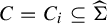 $C=C_i\subseteq \widehat {\Sigma }$
as in (7) or (8). We thus obtain a
$C=C_i\subseteq \widehat {\Sigma }$
as in (7) or (8). We thus obtain a $\widehat {\sigma }$
-invariant probability measure on
$\widehat {\sigma }$
-invariant probability measure on $\widehat {\Sigma }$
(it defines a measure by Kolmogorov extension theorem, and its invariance can be verified on cylinders). Note that the map
$\widehat {\Sigma }$
(it defines a measure by Kolmogorov extension theorem, and its invariance can be verified on cylinders). Note that the map $\mu \mapsto \widehat {\mu }$
is the inverse of
$\mu \mapsto \widehat {\mu }$
is the inverse of $\varphi $
.
$\varphi $
.
Remark 5.4. It follows from (9) and (10) that for every cylinder $C\subseteq \widehat {\Sigma }$
, there exists a cylinder
$C\subseteq \widehat {\Sigma }$
, there exists a cylinder $D\subseteq \Sigma $
such that
$D\subseteq \Sigma $
such that $\widehat {\mu }(C)={1}/({\int \tau \,d \mu })\mu (D)$
for every measure
$\widehat {\mu }(C)={1}/({\int \tau \,d \mu })\mu (D)$
for every measure $\mu \in {\mathcal {M}}(\sigma ;\tau )$
. Analogously, given a cylinder
$\mu \in {\mathcal {M}}(\sigma ;\tau )$
. Analogously, given a cylinder $D\subseteq \Sigma $
, there exists a cylinder
$D\subseteq \Sigma $
, there exists a cylinder $C\subseteq \widehat {\Sigma }$
such that
$C\subseteq \widehat {\Sigma }$
such that $\widehat {\mu }(C)={1}/({\int \tau \,d \mu })\mu (D)$
for every measure
$\widehat {\mu }(C)={1}/({\int \tau \,d \mu })\mu (D)$
for every measure $\mu \in {\mathcal {M}}(\sigma ;\tau )$
.
$\mu \in {\mathcal {M}}(\sigma ;\tau )$
.
In the next subsection, we will calculate the entropy at infinity of $(\widehat {\Sigma }, \widehat {\sigma })$
in relation to quantities defined on
$(\widehat {\Sigma }, \widehat {\sigma })$
in relation to quantities defined on $\Sigma $
. The next two lemmas will help to establish this connection. The first lemma is a direct consequence of Remark 5.4.
$\Sigma $
. The next two lemmas will help to establish this connection. The first lemma is a direct consequence of Remark 5.4.
Lemma 5.5. Let $(\mu _n)_n$
be a sequence in
$(\mu _n)_n$
be a sequence in ${\mathcal {M}}(\sigma ;\tau )$
.
${\mathcal {M}}(\sigma ;\tau )$
.
-
(1) Assume that
$\limsup _{n\to \infty }\int \tau \,d\mu _n<\infty $
. Then,
$(\widehat {\mu }_n)_n$
converges on cylinders to the zero measure if and only if
$(\mu _{n})_n$
converges on cylinders to the zero measure. -
(2) If
$\lim _{n\to \infty }\int {\tau }\, d\mu _{n}=\infty $
, then
$(\widehat {\mu }_n)_n$
converges on cylinders to the zero measure.


Lemma 5.6. Let $(\mu _n)_n$
be a sequence in
$(\mu _n)_n$
be a sequence in ${\mathcal {M}}(\sigma ;\tau )$
that converges on cylinders to
${\mathcal {M}}(\sigma ;\tau )$
that converges on cylinders to $\unicode{x3bb} _1 \mu $
, where
$\unicode{x3bb} _1 \mu $
, where $\mu \in {\mathcal {M}}(\sigma ;\tau )$
and
$\mu \in {\mathcal {M}}(\sigma ;\tau )$
and $\unicode{x3bb} _1\in [0,1]$
. Assume that
$\unicode{x3bb} _1\in [0,1]$
. Assume that $\lim _{n\to \infty }\int {\tau }\,d\mu _n=\unicode{x3bb} _2\int {\tau } \,d\mu $
. Then,
$\lim _{n\to \infty }\int {\tau }\,d\mu _n=\unicode{x3bb} _2\int {\tau } \,d\mu $
. Then, $(\widehat {\mu }_n)_n$
converges in the cylinder topology of
$(\widehat {\mu }_n)_n$
converges in the cylinder topology of $\widehat {\Sigma }$
to
$\widehat {\Sigma }$
to $({\unicode{x3bb} _1}/{\unicode{x3bb} _2})\widehat {\mu }$
.
$({\unicode{x3bb} _1}/{\unicode{x3bb} _2})\widehat {\mu }$
.
Proof. Let $C\subseteq \widehat {\Sigma }$
be a cylinder. By Remark 5.4, there exists a cylinder
$C\subseteq \widehat {\Sigma }$
be a cylinder. By Remark 5.4, there exists a cylinder $D\subseteq \Sigma $
such that
$D\subseteq \Sigma $
such that $\widehat {\mu }(C)={1}/({\int {\tau }\,d\mu })\mu (D)$
for every
$\widehat {\mu }(C)={1}/({\int {\tau }\,d\mu })\mu (D)$
for every $\mu \in {\mathcal {M}}(\sigma ;\tau )$
. Then,
$\mu \in {\mathcal {M}}(\sigma ;\tau )$
. Then,

We conclude that $(\widehat {\mu }_n)_n$
converges on cylinders to
$(\widehat {\mu }_n)_n$
converges on cylinders to $({\unicode{x3bb} _1}/{\unicode{x3bb} _2})\widehat {\mu }$
.
$({\unicode{x3bb} _1}/{\unicode{x3bb} _2})\widehat {\mu }$
.
5.2 Entropy at infinity of
$(\widehat {\Sigma },\widehat {\sigma })$

Abramov’s formula states that $h_{\widehat {\mu }}(\widehat {\sigma })={1}/({\int {\tau } \,d\mu }) h_\mu (\sigma )$
for every
$h_{\widehat {\mu }}(\widehat {\sigma })={1}/({\int {\tau } \,d\mu }) h_\mu (\sigma )$
for every $\mu \in {\mathcal {M}}(\sigma ;\tau )$
(see Remark 5.2). It follows that
$\mu \in {\mathcal {M}}(\sigma ;\tau )$
(see Remark 5.2). It follows that $h_{\textrm {top}}(\widehat {\sigma })=\inf \{t\in {\mathbb {R}}: P(-t{\tau })\le 0\}.$
Remark 5.7. Since $\tau \ge 1$
, the map
$\tau \ge 1$
, the map $t\mapsto P(-t\tau )$
is strictly decreasing. In particular, if
$t\mapsto P(-t\tau )$
is strictly decreasing. In particular, if $P(-{\tau })<\infty $
, then
$P(-{\tau })<\infty $
, then $h_{\textrm {top}}(\widehat {\sigma })<\infty $
.
$h_{\textrm {top}}(\widehat {\sigma })<\infty $
.
Proposition 5.8. The following hold.
-
(1) If
$\tau \in \Psi _1$
, then
$h_\infty (\widehat {\sigma })=s_{\tau }$
. -
(2) If
$\tau \in \Psi _2$
, then
$h_\infty (\widehat {\sigma })= s_\infty (-\tau )$
.


In other words, if $\tau \in \Psi $
, then
$\tau \in \Psi $
, then $h_\infty (\widehat {\sigma })=h(\tau )$
(see Remark 3.12).
$h_\infty (\widehat {\sigma })=h(\tau )$
(see Remark 3.12).
Proof.
Case 1. There exists a sequence $(\mu _n)_n$
in
$(\mu _n)_n$
in ${\mathcal {M}}(\sigma ;\tau )$
that converges to the zero measure and such that
${\mathcal {M}}(\sigma ;\tau )$
that converges to the zero measure and such that $\lim _{n\to \infty }(h_{\mu _n}(\sigma )- s_\tau \int \tau d\mu _n)=0$
. Then, by Abramov’s formula,
$\lim _{n\to \infty }(h_{\mu _n}(\sigma )- s_\tau \int \tau d\mu _n)=0$
. Then, by Abramov’s formula, $\lim _{n\to \infty }h_{\widehat {\mu }_n}=s_\tau $
and
$\lim _{n\to \infty }h_{\widehat {\mu }_n}=s_\tau $
and $(\widehat {\mu }_n)_n$
converges to the zero measure (see Lemma 5.5). It follows that
$(\widehat {\mu }_n)_n$
converges to the zero measure (see Lemma 5.5). It follows that $h_\infty (\widehat {\sigma })\ge {s}_{\tau }$
.
$h_\infty (\widehat {\sigma })\ge {s}_{\tau }$
.
Let $(\nu _n)_n$
be a sequence of measures in
$(\nu _n)_n$
be a sequence of measures in ${\mathcal {M}}(\widehat {\sigma })$
that converges to the zero measure and such that
${\mathcal {M}}(\widehat {\sigma })$
that converges to the zero measure and such that $\lim _{n\to \infty }h_{\nu _n}(\widehat {\sigma })=h_\infty (\widehat {\sigma })$
(the existence of such a sequence is given by Theorem 2.3). Let
$\lim _{n\to \infty }h_{\nu _n}(\widehat {\sigma })=h_\infty (\widehat {\sigma })$
(the existence of such a sequence is given by Theorem 2.3). Let $\eta _n$
be the measure in
$\eta _n$
be the measure in ${\mathcal {M}}(\sigma ;\tau )$
such that
${\mathcal {M}}(\sigma ;\tau )$
such that $\widehat {\eta }_n =\nu _n$
. Then,
$\widehat {\eta }_n =\nu _n$
. Then,
 $$ \begin{align*} \lim_{n\to\infty}\bigg(\frac{h_{\eta_n}(\sigma)-h_\infty(\widehat{\sigma})\int \tau\,d\eta_n}{\int \tau\,d\eta_n}\bigg)=0. \end{align*} $$
If $\limsup _{n\to \infty }\int \tau \,d\eta _n<\infty $
, then
$\limsup _{n\to \infty }\int \tau \,d\eta _n<\infty $
, then $(\eta _n)_n$
converges on cylinders to the zero measure (see Lemma 5.5) and
$(\eta _n)_n$
converges on cylinders to the zero measure (see Lemma 5.5) and $\lim _{n\to \infty }(h_{\eta _n}(\sigma )-h_\infty (\widehat {\sigma })\!\int \! \tau \,d\eta _n)=0.$
In particular,
$\lim _{n\to \infty }(h_{\eta _n}(\sigma )-h_\infty (\widehat {\sigma })\!\int \! \tau \,d\eta _n)=0.$
In particular, ${{P}_\infty (-h_\infty (\widehat {\sigma })\tau )\ge 0}$
and, therefore,
${{P}_\infty (-h_\infty (\widehat {\sigma })\tau )\ge 0}$
and, therefore, ${s}_{\tau }\ge h_\infty (\widehat {\sigma })$
. If
${s}_{\tau }\ge h_\infty (\widehat {\sigma })$
. If $\limsup _{n\to \infty }\int \tau \,d\eta _n=\infty $
, then there exists a subsequence for which the integral diverges. Maybe after passing to a subsequence can we assume that
$\limsup _{n\to \infty }\int \tau \,d\eta _n=\infty $
, then there exists a subsequence for which the integral diverges. Maybe after passing to a subsequence can we assume that $\lim _{n\to \infty }\int \tau \,d\eta _n=\infty $
. Fix
$\lim _{n\to \infty }\int \tau \,d\eta _n=\infty $
. Fix $\epsilon>0$
and note that
$\epsilon>0$
and note that
 $$ \begin{align} \limsup_{n\to\infty} \frac{h_{\eta_n}(\sigma)}{\int \tau\,d\eta_n}\le (s_\infty(-\tau)+\epsilon)+\limsup_{n\to\infty}\frac{P(-(s_\infty(-\tau)+\epsilon)\tau)}{\int \tau\,d\eta_n}=s_\infty(-\tau)+\epsilon.\end{align} $$
Therefore, $h_\infty (\widehat {\sigma })\le s_\infty (-\tau )$
. This is not possible since we already proved that
$h_\infty (\widehat {\sigma })\le s_\infty (-\tau )$
. This is not possible since we already proved that $h_\infty (\widehat {\sigma })\ge {s}_{\tau }$
.
$h_\infty (\widehat {\sigma })\ge {s}_{\tau }$
.
Case 2. Set $s=s_\infty (-\tau )$
. We claim that
$s=s_\infty (-\tau )$
. We claim that $h_\infty (\widehat {\sigma })\ge s$
. We assume that
$h_\infty (\widehat {\sigma })\ge s$
. We assume that $s>0$
, otherwise there is nothing to prove. Fix
$s>0$
, otherwise there is nothing to prove. Fix $\epsilon>0$
small. Since
$\epsilon>0$
small. Since $P(-(s-\epsilon )\tau )=\infty $
, there exists a sequence
$P(-(s-\epsilon )\tau )=\infty $
, there exists a sequence $(\mu _n)_n$
in
$(\mu _n)_n$
in ${\mathcal {M}}(\sigma ;\tau )$
such that
${\mathcal {M}}(\sigma ;\tau )$
such that
 $$ \begin{align} \lim_{n\to\infty}\bigg(h_{\mu_n}(\sigma)-(s-\epsilon)\int \tau\,d\mu_n\bigg)=\infty. \end{align} $$
In particular, the limit is greater than zero and, therefore, $\liminf _{n\to \infty }h_{\widehat {\mu }_n}(\widehat {\sigma })\ge s-\epsilon $
. It is enough to prove that
$\liminf _{n\to \infty }h_{\widehat {\mu }_n}(\widehat {\sigma })\ge s-\epsilon $
. It is enough to prove that $\limsup _{n\to \infty }\int \tau \,d\mu _n=\infty $
, in which case,
$\limsup _{n\to \infty }\int \tau \,d\mu _n=\infty $
, in which case, $(\widehat {\mu }_n)_n$
has a subsequence that converges to the zero measure (see Lemma 5.5) and
$(\widehat {\mu }_n)_n$
has a subsequence that converges to the zero measure (see Lemma 5.5) and $\epsilon>0$
was arbitrary. Suppose otherwise that
$\epsilon>0$
was arbitrary. Suppose otherwise that $\limsup _{n\to \infty }\int \tau \,d\mu _n<\infty $
and, therefore, there exists M such that
$\limsup _{n\to \infty }\int \tau \,d\mu _n<\infty $
and, therefore, there exists M such that $\int \tau \,d\mu _n\le M$
for all
$\int \tau \,d\mu _n\le M$
for all $n\in {\mathbb {N}}$
. It follows that
$n\in {\mathbb {N}}$
. It follows that $h_{\mu _n}(\sigma )\le M+P(-\tau )$
, which contradicts (12).
$h_{\mu _n}(\sigma )\le M+P(-\tau )$
, which contradicts (12).
We now claim that $h_\infty (\widehat {\sigma })\le s$
. Let
$h_\infty (\widehat {\sigma })\le s$
. Let $(\nu _n)_n$
be a sequence in
$(\nu _n)_n$
be a sequence in ${\mathcal {M}}(\widehat {\sigma })$
that converges to the zero measure and such that
${\mathcal {M}}(\widehat {\sigma })$
that converges to the zero measure and such that $\lim _{n\to \infty }h_{\nu _n}(\widehat {\sigma })=h_\infty (\widehat {\sigma })$
. Let
$\lim _{n\to \infty }h_{\nu _n}(\widehat {\sigma })=h_\infty (\widehat {\sigma })$
. Let $\eta _n$
be the measure in
$\eta _n$
be the measure in ${\mathcal {M}}(\sigma ;\tau )$
such that
${\mathcal {M}}(\sigma ;\tau )$
such that $\widehat {\eta }_n =\nu _n$
. Then,
$\widehat {\eta }_n =\nu _n$
. Then,
 $$ \begin{align*}\lim_{n\to\infty}\bigg(\frac{h_{\eta_n}(\sigma)-h_\infty(\widehat{\sigma})\int \tau \,d\eta_n}{\int \tau \,d\eta_n}\bigg)=0.\end{align*} $$
If $\limsup _{n\to \infty }\int \tau \,d\eta _n<\infty $
, then
$\limsup _{n\to \infty }\int \tau \,d\eta _n<\infty $
, then $\lim _{n\to \infty }(h_{\eta _n}(\sigma )-h_\infty (\widehat {\sigma })\int \tau \,d\eta _n)=0$
and
$\lim _{n\to \infty }(h_{\eta _n}(\sigma )-h_\infty (\widehat {\sigma })\int \tau \,d\eta _n)=0$
and $(\eta _n)_n$
converges to the zero measure (see Lemma 5.5). In particular,
$(\eta _n)_n$
converges to the zero measure (see Lemma 5.5). In particular, $P_\infty (-h_\infty (\widehat {\sigma })\tau )\ge 0$
. If
$P_\infty (-h_\infty (\widehat {\sigma })\tau )\ge 0$
. If $h_\infty (\widehat {\sigma })> s$
, then
$h_\infty (\widehat {\sigma })> s$
, then $\tau \in \Psi _1$
, which contradicts our assumption. We therefore have that
$\tau \in \Psi _1$
, which contradicts our assumption. We therefore have that $h_\infty (\widehat {\sigma })\le s$
. Now, suppose that
$h_\infty (\widehat {\sigma })\le s$
. Now, suppose that $\limsup _{n\to \infty }\int \tau \,d\nu _n=\infty .$
Maybe after passing to a subsequence can we assume that
$\limsup _{n\to \infty }\int \tau \,d\nu _n=\infty .$
Maybe after passing to a subsequence can we assume that $\lim _{n\to \infty }\int \tau \,d\nu _n=\infty $
. Inequality (11) implies that
$\lim _{n\to \infty }\int \tau \,d\nu _n=\infty $
. Inequality (11) implies that $h_\infty (\widehat {\sigma })\le s$
.
$h_\infty (\widehat {\sigma })\le s$
.
5.3 Proof of Theorem 1.1
In this subsection, we will prove Theorem 1.1, a compactness result for sequences of invariant probability measures on countable Markov shifts that may not have the ${\mathcal {F}}$
-property. This result will be frequently used in later applications concerning the existence of equilibrium states and maximizing measures.
${\mathcal {F}}$
-property. This result will be frequently used in later applications concerning the existence of equilibrium states and maximizing measures.
Proof of Theorem 1.1
Consider $M \in \mathbb {R}$
such that
$M \in \mathbb {R}$
such that $\sup \phi < M$
. Define
$\sup \phi < M$
. Define ${\psi = -(\phi - M)}$
. Note that
${\psi = -(\phi - M)}$
. Note that $\psi \in \Psi $
. Define
$\psi \in \Psi $
. Define $\tau :\Sigma \to {\mathbb {R}}$
by
$\tau :\Sigma \to {\mathbb {R}}$
by $\tau (x) = \sup _{y \in [x_1, x_2]} \lceil \psi (y) \rceil $
, where
$\tau (x) = \sup _{y \in [x_1, x_2]} \lceil \psi (y) \rceil $
, where $x = (x_1, x_2, \ldots )\in \Sigma $
. Since
$x = (x_1, x_2, \ldots )\in \Sigma $
. Since $\text {var}_2(\phi )=\text {var}_2(\psi )$
is finite, it follows that
$\text {var}_2(\phi )=\text {var}_2(\psi )$
is finite, it follows that $\|\tau - \psi \|_0 < \infty $
. In particular,
$\|\tau - \psi \|_0 < \infty $
. In particular, $P(-\tau )<\infty $
. Moreover,
$P(-\tau )<\infty $
. Moreover, $\tau $
takes values in
$\tau $
takes values in $\mathbb {N}$
and
$\mathbb {N}$
and $\text {var}_2(\tau ) = 0$
.
$\text {var}_2(\tau ) = 0$
.
Let $(\widehat {\Sigma }, \widehat {\sigma })$
be the CMS constructed at the beginning of this section for the pair
$(\widehat {\Sigma }, \widehat {\sigma })$
be the CMS constructed at the beginning of this section for the pair $(\Sigma , \sigma )$
and
$(\Sigma , \sigma )$
and $\tau $
. Note that
$\tau $
. Note that $(\widehat {\Sigma },\widehat {\sigma })$
is transitive, because
$(\widehat {\Sigma },\widehat {\sigma })$
is transitive, because $(\Sigma ,\sigma )$
is transitive. Additionally,
$(\Sigma ,\sigma )$
is transitive. Additionally, $h_{\textrm {top}}(\widehat {\sigma })$
is finite (see Remark 5.7). By Theorem 2.3,
$h_{\textrm {top}}(\widehat {\sigma })$
is finite (see Remark 5.7). By Theorem 2.3, ${\mathcal {M}}_{\le 1}(\widehat {\sigma })$
is compact with respect to the cylinder topology. As before, we denote by
${\mathcal {M}}_{\le 1}(\widehat {\sigma })$
is compact with respect to the cylinder topology. As before, we denote by $\widehat {\nu }$
the measure in
$\widehat {\nu }$
the measure in ${\mathcal {M}}(\widehat {\sigma })$
associated to
${\mathcal {M}}(\widehat {\sigma })$
associated to $\nu \in {\mathcal {M}}(\sigma ;\tau )$
. Maybe after passing to a subsequence can we assume that
$\nu \in {\mathcal {M}}(\sigma ;\tau )$
. Maybe after passing to a subsequence can we assume that $(\widehat {\mu }_n)_n$
converges on cylinders to
$(\widehat {\mu }_n)_n$
converges on cylinders to $\unicode{x3bb} \widehat {\mu }$
, where
$\unicode{x3bb} \widehat {\mu }$
, where $\unicode{x3bb} \in [0,1]$
and
$\unicode{x3bb} \in [0,1]$
and $\mu \in {\mathcal {M}}(\sigma ;\tau )$
. Maybe after passing to a further subsequence can we assume that
$\mu \in {\mathcal {M}}(\sigma ;\tau )$
. Maybe after passing to a further subsequence can we assume that $A:=\lim _{n\to \infty }\int \tau d\mu _n$
is well defined and finite (the limsup is finite by assumption). Let C be a cylinder in
$A:=\lim _{n\to \infty }\int \tau d\mu _n$
is well defined and finite (the limsup is finite by assumption). Let C be a cylinder in $\Sigma $
. By Remark 5.4, there exists a cylinder
$\Sigma $
. By Remark 5.4, there exists a cylinder $D\subseteq \widehat {\Sigma }$
such that
$D\subseteq \widehat {\Sigma }$
such that $\widehat {\nu }(D)={1}/({\int \tau \,d\nu })\nu (C)$
for every
$\widehat {\nu }(D)={1}/({\int \tau \,d\nu })\nu (C)$
for every $\nu \in {\mathcal {M}}(\sigma ;\tau )$
. Then,
$\nu \in {\mathcal {M}}(\sigma ;\tau )$
. Then, $\lim _{n\to \infty }\mu _n(C)= {\unicode{x3bb} A}/({\int \tau \,d\mu })\mu (C).$
We conclude that
$\lim _{n\to \infty }\mu _n(C)= {\unicode{x3bb} A}/({\int \tau \,d\mu })\mu (C).$
We conclude that $(\mu _n)_n$
converges on cylinders to
$(\mu _n)_n$
converges on cylinders to $\mu _0={\unicode{x3bb} A}/({\int \tau \,d\mu })\mu $
. Note that
$\mu _0={\unicode{x3bb} A}/({\int \tau \,d\mu })\mu $
. Note that $\int \tau \,d{\mu _0}<\infty $
and, therefore,
$\int \tau \,d{\mu _0}<\infty $
and, therefore, $\int \phi \,d{\mu }_0>-\infty $
(see Lemma 2.5).
$\int \phi \,d{\mu }_0>-\infty $
(see Lemma 2.5).
The next result follows from Theorem 1.1 and will be used in the proof of Lemma 6.5.
Corollary 5.9. Let $\tau \in \Psi $
and
$\tau \in \Psi $
and $m\in {\mathbb {N}}$
. Let
$m\in {\mathbb {N}}$
. Let $(\mu _n)_n$
be a sequence in
$(\mu _n)_n$
be a sequence in ${\mathcal {M}}(\sigma )$
and
${\mathcal {M}}(\sigma )$
and $\mu \in {\mathcal {M}}_{\le 1}(\sigma )$
. Assume that
$\mu \in {\mathcal {M}}_{\le 1}(\sigma )$
. Assume that $\limsup _{n\to \infty }\int \tau d\mu _n<\infty $
. Then,
$\limsup _{n\to \infty }\int \tau d\mu _n<\infty $
. Then, $(\mu _n)_n$
converges on cylinders to
$(\mu _n)_n$
converges on cylinders to $\mu $
if and only if
$\mu $
if and only if $\lim _{n\to \infty }\mu _n(C)=\mu (C)$
for every cylinder
$\lim _{n\to \infty }\mu _n(C)=\mu (C)$
for every cylinder $C\subseteq \Sigma $
of length m.
$C\subseteq \Sigma $
of length m.
Proof. Suppose that $\lim _{n\to \infty }\mu _n(C)=\mu (C)$
for every cylinder
$\lim _{n\to \infty }\mu _n(C)=\mu (C)$
for every cylinder $C\subseteq \Sigma $
of length m. It follows by Theorem 1.1 (applied to the potential
$C\subseteq \Sigma $
of length m. It follows by Theorem 1.1 (applied to the potential $-\tau $
) that every subsequence of
$-\tau $
) that every subsequence of $(\mu _n)_n$
has a subsubsequence that converges on cylinders to a countably additive measure
$(\mu _n)_n$
has a subsubsequence that converges on cylinders to a countably additive measure $\nu \in {\mathcal {M}}_{\le 1}(\sigma )$
. Since
$\nu \in {\mathcal {M}}_{\le 1}(\sigma )$
. Since $\nu (C)=\mu (C)$
, for every cylinder of length m, it follows that
$\nu (C)=\mu (C)$
, for every cylinder of length m, it follows that $\nu =\mu $
. We conclude that
$\nu =\mu $
. We conclude that $(\mu _n)_n$
converges on cylinders to
$(\mu _n)_n$
converges on cylinders to $\mu $
. The forward implication follows by definition.
$\mu $
. The forward implication follows by definition.
6 Upper semi-continuity properties of the pressure map
In this section, we establish some upper semi-continuity results for the pressure map of uniformly continuous potentials. We will prove Theorem 1.3, which generalizes Theorem 2.7, and allows for the consideration of countable Markov shifts with infinite entropy and mild regularity assumptions on the potential.
6.1 A first upper semicontinuity result for the pressure
Proposition 6.1. Let $(\Sigma ,\sigma )$
be a transitive CMS and
$(\Sigma ,\sigma )$
be a transitive CMS and $\tau :\Sigma \to {\mathbb {N}}$
be a potential such that
$\tau :\Sigma \to {\mathbb {N}}$
be a potential such that $P(-\tau )$
is finite and
$P(-\tau )$
is finite and $\mathrm{var}_2(\tau )=0$
. Let
$\mathrm{var}_2(\tau )=0$
. Let $(\mu _n)_n$
be a sequence in
$(\mu _n)_n$
be a sequence in ${\mathcal {M}}_{-\tau }(\sigma )$
that converges on cylinders to
${\mathcal {M}}_{-\tau }(\sigma )$
that converges on cylinders to $\unicode{x3bb} \mu $
, where
$\unicode{x3bb} \mu $
, where $\unicode{x3bb} \in [0,1]$
and
$\unicode{x3bb} \in [0,1]$
and $\mu \in {\mathcal {M}}_{-\tau }(\sigma )$
. Assume that
$\mu \in {\mathcal {M}}_{-\tau }(\sigma )$
. Assume that ${\limsup _{n\to \infty }\int \tau \,d\mu _n<\infty} $
. Then,
${\limsup _{n\to \infty }\int \tau \,d\mu _n<\infty} $
. Then,
 $$ \begin{align} \limsup_{n\to\infty}\bigg(h_{\mu_n}(\sigma)-h(\tau)\int \tau\,d\mu_n\bigg)\le \unicode{x3bb}\bigg(h_{\mu}(\sigma)-h(\tau)\int \tau\,d\mu\bigg). \end{align} $$
Proof. It is sufficient to prove the proposition in the case where $(\int \tau \,d\mu _n)_n$
is convergent (otherwise, we can consider a subsequence for which the limsup in (13) is a limit and then pass to a further subsequence for which the integral converges). By Lemma 2.5, we have that
$(\int \tau \,d\mu _n)_n$
is convergent (otherwise, we can consider a subsequence for which the limsup in (13) is a limit and then pass to a further subsequence for which the integral converges). By Lemma 2.5, we have that $\int \tau \,d\mu <\infty $
. Set
$\int \tau \,d\mu <\infty $
. Set $\unicode{x3bb} _0$
such that
$\unicode{x3bb} _0$
such that $\lim _{n\to \infty }\int \tau \,d\mu _n=\unicode{x3bb} _0\int \tau \,d(\unicode{x3bb} \mu )$
, which, by Lemma 2.5, also satisfies that
$\lim _{n\to \infty }\int \tau \,d\mu _n=\unicode{x3bb} _0\int \tau \,d(\unicode{x3bb} \mu )$
, which, by Lemma 2.5, also satisfies that $\unicode{x3bb} _0\ge 1$
.
$\unicode{x3bb} _0\ge 1$
.
Let $(\widehat {\Sigma },\widehat {\sigma })$
be the CMS associated with
$(\widehat {\Sigma },\widehat {\sigma })$
be the CMS associated with $(\Sigma ,\sigma )$
and
$(\Sigma ,\sigma )$
and $\tau $
constructed in §5. By Remark 5.7,
$\tau $
constructed in §5. By Remark 5.7, $h_{\textrm {top}}(\widehat {\sigma })$
is finite. It follows by Lemma 5.6 that
$h_{\textrm {top}}(\widehat {\sigma })$
is finite. It follows by Lemma 5.6 that $(\hat {\mu }_n)_n$
converges on cylinders to
$(\hat {\mu }_n)_n$
converges on cylinders to ${1}/({\unicode{x3bb} _0})\hat {\mu }$
. We use Theorem 2.7 and Proposition 5.8 to conclude that
${1}/({\unicode{x3bb} _0})\hat {\mu }$
. We use Theorem 2.7 and Proposition 5.8 to conclude that

Then,
 $$ \begin{align*}\limsup_{n\to\infty} h_{\mu_n}(\sigma) \le \unicode{x3bb} h_\mu(\sigma) +\bigg(\lim_{n\to\infty}\int \tau\,d\mu_n-\unicode{x3bb} \int \tau \,d\mu\bigg)h(\tau),\end{align*} $$
which is equivalent to inequality (13).
We will extend Proposition 6.1 to include potentials in $\Psi $
. Let
$\Psi $
. Let $\Psi _n$
be the class of potentials in
$\Psi _n$
be the class of potentials in $\Psi $
that are locally constant and depend only on the first n coordinates of
$\Psi $
that are locally constant and depend only on the first n coordinates of $\Sigma $
; that is, their n-variation is zero. First, we will prove that Proposition 6.1 holds for potentials in
$\Sigma $
; that is, their n-variation is zero. First, we will prove that Proposition 6.1 holds for potentials in $\Psi _2$
, removing the assumption that the potential takes values in
$\Psi _2$
, removing the assumption that the potential takes values in ${\mathbb {N}}$
. Next, we will prove that the proposition holds for potentials in
${\mathbb {N}}$
. Next, we will prove that the proposition holds for potentials in $\Psi _n$
and, finally, that it holds for potentials in
$\Psi _n$
and, finally, that it holds for potentials in $\Psi $
. We begin with a lemma.
$\Psi $
. We begin with a lemma.
Lemma 6.2. Let $(\phi _n)_n, \phi $
be potentials in
$(\phi _n)_n, \phi $
be potentials in $\Psi $
such that
$\Psi $
such that $\lim _{k\to \infty }\|\phi -\phi _k\|_0=0.$
Then,
$\lim _{k\to \infty }\|\phi -\phi _k\|_0=0.$
Then, $\lim _{n\to \infty }h(\phi _n)=h(\phi )$
.
$\lim _{n\to \infty }h(\phi _n)=h(\phi )$
.
Proof. If $\|\phi -\phi _k\|<\infty $
, then
$\|\phi -\phi _k\|<\infty $
, then $P(-t\phi )=\infty $
if and only if
$P(-t\phi )=\infty $
if and only if $P(-t\phi _k)=\infty $
. It follows that
$P(-t\phi _k)=\infty $
. It follows that $s_\infty (-\phi )=s_\infty (-\phi _k)$
. By Lemma 3.4, we have also that
$s_\infty (-\phi )=s_\infty (-\phi _k)$
. By Lemma 3.4, we have also that $\lim _{k\to \infty } P_\infty (-t\phi _k)=P_\infty (-t\phi )$
.
$\lim _{k\to \infty } P_\infty (-t\phi _k)=P_\infty (-t\phi )$
.
Let us first consider the case where $\phi \in \Psi _1$
. Choose
$\phi \in \Psi _1$
. Choose $\epsilon>0$
small such that
$\epsilon>0$
small such that $P_\infty (-(s_\phi -\epsilon )\phi )>0>P_\infty (-(s_\phi +\epsilon )\phi )$
. Then,
$P_\infty (-(s_\phi -\epsilon )\phi )>0>P_\infty (-(s_\phi +\epsilon )\phi )$
. Then, $P_\infty (-(s_\phi -\epsilon )\phi _k)>0>P_\infty (-(s_\phi +\epsilon )\phi _k)$
for large enough k and, therefore,
$P_\infty (-(s_\phi -\epsilon )\phi _k)>0>P_\infty (-(s_\phi +\epsilon )\phi _k)$
for large enough k and, therefore, $|s_\phi -s_{\phi _k}|<\epsilon $
. It follows that for large enough k, we have that
$|s_\phi -s_{\phi _k}|<\epsilon $
. It follows that for large enough k, we have that $\phi _k\in \Psi _1$
and that
$\phi _k\in \Psi _1$
and that $\lim _{k\to \infty }s_{\phi _k}=s_\phi $
, which proves the claim in this case.
$\lim _{k\to \infty }s_{\phi _k}=s_\phi $
, which proves the claim in this case.
Suppose that $\phi \in \Psi _2$
. For every
$\phi \in \Psi _2$
. For every $\epsilon>0$
, we have that
$\epsilon>0$
, we have that $P_\infty (-(s_\infty (-\phi )+\epsilon )\phi )<0$
. Therefore, for large enough k, we have that
$P_\infty (-(s_\infty (-\phi )+\epsilon )\phi )<0$
. Therefore, for large enough k, we have that $P_\infty (-(s_\infty (-\phi )+\epsilon )\phi _k)<0$
and, thus,
$P_\infty (-(s_\infty (-\phi )+\epsilon )\phi _k)<0$
and, thus, $s_{\phi _k}\le s_\infty (-\phi )+\epsilon $
. This implies that
$s_{\phi _k}\le s_\infty (-\phi )+\epsilon $
. This implies that $\limsup _{n\to \infty } s_{\phi _k}\le s_\infty (-\phi )$
. Since
$\limsup _{n\to \infty } s_{\phi _k}\le s_\infty (-\phi )$
. Since $s_\infty (-\phi )=s_\infty (-\phi _k)$
and
$s_\infty (-\phi )=s_\infty (-\phi _k)$
and $h(\phi )=s_\infty (-\phi )$
, the claim follows.
$h(\phi )=s_\infty (-\phi )$
, the claim follows.
Proposition 6.3. Proposition 6.1 holds when $\tau \in \Psi _2$
.
$\tau \in \Psi _2$
.
Proof. Define $\tau _k(x)={1}/{k}\lceil k\tau (x)\rceil $
and observe that
$\tau _k(x)={1}/{k}\lceil k\tau (x)\rceil $
and observe that $\lim _{k\to 0}\|\tau -\tau _k\|_0=0$
. Set
$\lim _{k\to 0}\|\tau -\tau _k\|_0=0$
. Set $f_k=k\tau _k$
and note that
$f_k=k\tau _k$
and note that $h(f_k)={1}/{k}h(\tau _k)$
. The function
$h(f_k)={1}/{k}h(\tau _k)$
. The function $f_k$
takes values in
$f_k$
takes values in ${\mathbb {N}}$
and
${\mathbb {N}}$
and ${\text {var}_2(f_k)=0}$
. Proposition 6.1 holds for the functions
${\text {var}_2(f_k)=0}$
. Proposition 6.1 holds for the functions $f_k$
, which is equivalent to say that the proposition holds for
$f_k$
, which is equivalent to say that the proposition holds for $\tau _k$
. By Lemma 6.2, it follows that
$\tau _k$
. By Lemma 6.2, it follows that $\lim _{k\to \infty }h(\tau _k)=h(\tau )$
. Additionally,
$\lim _{k\to \infty }h(\tau _k)=h(\tau )$
. Additionally, $|\!\int \tau _k\,d\nu -\int \tau \,d\nu |\le \|\tau -\tau _k\|_0$
for every
$|\!\int \tau _k\,d\nu -\int \tau \,d\nu |\le \|\tau -\tau _k\|_0$
for every $\nu \in {\mathcal {M}}(\sigma )$
. All of this together implies that Proposition 6.1 holds for
$\nu \in {\mathcal {M}}(\sigma )$
. All of this together implies that Proposition 6.1 holds for $\tau \in \Psi _2$
.
$\tau \in \Psi _2$
.
In §2.5, we constructed a CMS $(\Sigma _m,\sigma _m)$
, which is a recoding of
$(\Sigma _m,\sigma _m)$
, which is a recoding of $(\Sigma ,\sigma )$
, and defined a canonical conjugacy
$(\Sigma ,\sigma )$
, and defined a canonical conjugacy $\pi _m:\Sigma _m\to \Sigma $
. The map
$\pi _m:\Sigma _m\to \Sigma $
. The map $(\pi _m)_*:{\mathcal {M}}_{\le 1}(\sigma _m)\to {\mathcal {M}}_{\le 1}(\sigma )$
is a bijection. For
$(\pi _m)_*:{\mathcal {M}}_{\le 1}(\sigma _m)\to {\mathcal {M}}_{\le 1}(\sigma )$
is a bijection. For $\mu \in {\mathcal {M}}_{\le 1}(\sigma )$
, we defined
$\mu \in {\mathcal {M}}_{\le 1}(\sigma )$
, we defined $\tilde {\mu }=(\pi _m)^{-1}_*{\mu }\in {\mathcal {M}}_{\le 1}(\sigma _m)$
.
$\tilde {\mu }=(\pi _m)^{-1}_*{\mu }\in {\mathcal {M}}_{\le 1}(\sigma _m)$
.
Remark 6.4. Let $(\mu _n)_n$
be a sequence in
$(\mu _n)_n$
be a sequence in ${\mathcal {M}}(\sigma )$
such that
${\mathcal {M}}(\sigma )$
such that $\limsup _{n\to \infty }\int \tau \,d\mu _n<\infty $
, where
$\limsup _{n\to \infty }\int \tau \,d\mu _n<\infty $
, where $\tau \in \Psi $
. Then,
$\tau \in \Psi $
. Then, $(\mu _n)_n$
converges on cylinders to
$(\mu _n)_n$
converges on cylinders to $\mu \in {\mathcal {M}}_{\le 1}(\sigma )$
if and only if
$\mu \in {\mathcal {M}}_{\le 1}(\sigma )$
if and only if $(\tilde {\mu }_n)_n$
converges on cylinders to
$(\tilde {\mu }_n)_n$
converges on cylinders to $\tilde {\mu }$
(see Remark 2.12 and Corollary 5.9).
$\tilde {\mu }$
(see Remark 2.12 and Corollary 5.9).
In the next lemma, we have added superscripts $\Sigma $
and
$\Sigma $
and $\Sigma _m$
to the pressure to indicate the CMS we are considering. Let
$\Sigma _m$
to the pressure to indicate the CMS we are considering. Let $\tau _m=\tau \circ \pi _m$
.
$\tau _m=\tau \circ \pi _m$
.
Lemma 6.5. $h(\tau )=h(\tau _m)$
.
$h(\tau )=h(\tau _m)$
.
Proof. Observe that $h_\mu (\sigma )=h_{\tilde {\mu }}(\sigma _m)$
and
$h_\mu (\sigma )=h_{\tilde {\mu }}(\sigma _m)$
and $\int \tau \,d\mu =\int \tau _m\,d\tilde {\mu }$
for every
$\int \tau \,d\mu =\int \tau _m\,d\tilde {\mu }$
for every $\mu \in {\mathcal {M}}(\sigma )$
. It follows that
$\mu \in {\mathcal {M}}(\sigma )$
. It follows that $P^{\Sigma _m}(-t\tau _m)=P^{\Sigma }(-t\tau )$
and, therefore,
$P^{\Sigma _m}(-t\tau _m)=P^{\Sigma }(-t\tau )$
and, therefore, $s_\infty (-\tau _m)=s_\infty (-\tau )$
.
$s_\infty (-\tau _m)=s_\infty (-\tau )$
.
We will prove that if $t>s_\infty (-\tau )$
, then
$t>s_\infty (-\tau )$
, then $P_\infty ^{\Sigma _m}(-t\tau _m)=P^{\Sigma }_\infty (-t\tau )$
. It follows from this fact that
$P_\infty ^{\Sigma _m}(-t\tau _m)=P^{\Sigma }_\infty (-t\tau )$
. It follows from this fact that $\tau \in \Psi _1$
if and only if
$\tau \in \Psi _1$
if and only if $\tau _m\in \Psi _1$
, and that
$\tau _m\in \Psi _1$
, and that ${s}_\tau ={s}_{\tau _m}$
, which finishes the proof of the lemma, as we can conclude that
${s}_\tau ={s}_{\tau _m}$
, which finishes the proof of the lemma, as we can conclude that $h(\tau )=h(\tau _m)$
.
$h(\tau )=h(\tau _m)$
.
If there exists a sequence $(\mu _n)_n$
in
$(\mu _n)_n$
in ${\mathcal {M}}(\sigma )$
that converges on cylinders to the zero measure and such that
${\mathcal {M}}(\sigma )$
that converges on cylinders to the zero measure and such that $\lim _{n\to \infty }(h_{\mu _n}(\sigma )-t\int \tau \,d\mu _n)=P_\infty (-t\tau )$
, then
$\lim _{n\to \infty }(h_{\mu _n}(\sigma )-t\int \tau \,d\mu _n)=P_\infty (-t\tau )$
, then $(\tilde {\mu }_n)_n$
converges to the zero measure (see Remark 2.12) and
$(\tilde {\mu }_n)_n$
converges to the zero measure (see Remark 2.12) and $\lim _{n\to \infty }(h_{\tilde {\mu }_n}(\sigma _m)-t\int \tau _m\,d\tilde {\mu }_n)=P_\infty (-t\tau )$
. Therefore, we have
$\lim _{n\to \infty }(h_{\tilde {\mu }_n}(\sigma _m)-t\int \tau _m\,d\tilde {\mu }_n)=P_\infty (-t\tau )$
. Therefore, we have $P_\infty ^{\Sigma _m}(-t\tau _m)\ge P^{\Sigma }_\infty (-t\tau )$
. If no such sequence exists, then we still have the inequality
$P_\infty ^{\Sigma _m}(-t\tau _m)\ge P^{\Sigma }_\infty (-t\tau )$
. If no such sequence exists, then we still have the inequality $P_\infty ^{\Sigma _m}(-t\tau _m)\ge P^{\Sigma }_\infty (-t\tau )$
. Note that if
$P_\infty ^{\Sigma _m}(-t\tau _m)\ge P^{\Sigma }_\infty (-t\tau )$
. Note that if $P_\infty ^{\Sigma _m}(-t\tau _m)=-\infty $
, then
$P_\infty ^{\Sigma _m}(-t\tau _m)=-\infty $
, then $P_\infty ^{\Sigma }(-t\tau )=-\infty $
. We will now suppose that
$P_\infty ^{\Sigma }(-t\tau )=-\infty $
. We will now suppose that $P_\infty ^{\Sigma _m}(-t\tau _m)>-\infty $
.
$P_\infty ^{\Sigma _m}(-t\tau _m)>-\infty $
.
Let $(\tilde {\mu }_n)_n$
be a sequence in
$(\tilde {\mu }_n)_n$
be a sequence in ${\mathcal {M}}_{-\tau _m}(\sigma _n)$
that converges on cylinders to the zero measure and such that
${\mathcal {M}}_{-\tau _m}(\sigma _n)$
that converges on cylinders to the zero measure and such that $P_\infty ^{\Sigma _m}(-t\tau _m)=\lim _{n\to \infty }(h_{\tilde {\mu }_n}(\sigma _m)-t\int \tau _m\,d\tilde {\mu }_n)$
. Since
$P_\infty ^{\Sigma _m}(-t\tau _m)=\lim _{n\to \infty }(h_{\tilde {\mu }_n}(\sigma _m)-t\int \tau _m\,d\tilde {\mu }_n)$
. Since ${t>s_\infty (-\tau _m),}$
we have that
${t>s_\infty (-\tau _m),}$
we have that $\limsup _{n\to \infty }\int \tau _m \,d\tilde {\mu }_n<\infty $
(see Lemma 3.10); equivalently,
$\limsup _{n\to \infty }\int \tau _m \,d\tilde {\mu }_n<\infty $
(see Lemma 3.10); equivalently, $\limsup _{n\to \infty }\int \tau \,d\mu _n<\infty $
. By Remark 6.4,
$\limsup _{n\to \infty }\int \tau \,d\mu _n<\infty $
. By Remark 6.4, $(\mu _n)_n$
converges to the zero measure and, therefore,
$(\mu _n)_n$
converges to the zero measure and, therefore, $P_\infty ^{\Sigma _m}(-t\tau _m)\le P^{\Sigma }_\infty (-t\tau )$
. We conclude that
$P_\infty ^{\Sigma _m}(-t\tau _m)\le P^{\Sigma }_\infty (-t\tau )$
. We conclude that $P_\infty ^{\Sigma _m}(-t\tau _m)=P^{\Sigma }_\infty (-t\tau )$
for every
$P_\infty ^{\Sigma _m}(-t\tau _m)=P^{\Sigma }_\infty (-t\tau )$
for every $t>s_\infty (-\tau )$
.
$t>s_\infty (-\tau )$
.
Proposition 6.6. Proposition 6.1 holds when $\tau \in \Psi _m$
for
$\tau \in \Psi _m$
for $m\ge 3$
.
$m\ge 3$
.
Proof. Let $(\mu _n)_n$
be a sequence in
$(\mu _n)_n$
be a sequence in ${\mathcal {M}}_{-\tau }(\sigma )$
that converges on cylinders to
${\mathcal {M}}_{-\tau }(\sigma )$
that converges on cylinders to $\unicode{x3bb} \mu $
, where
$\unicode{x3bb} \mu $
, where ${\mu \in {\mathcal {M}}_{-\tau }(\sigma )}$
and
${\mu \in {\mathcal {M}}_{-\tau }(\sigma )}$
and $\unicode{x3bb} \in [0,1]$
. By assumption,
$\unicode{x3bb} \in [0,1]$
. By assumption, $\limsup _{n\to \infty }\int \tau \,d\mu _n<\infty $
. Consider
$\limsup _{n\to \infty }\int \tau \,d\mu _n<\infty $
. Consider $(\Sigma _m,\sigma _m)$
and note that
$(\Sigma _m,\sigma _m)$
and note that $\tau _m\in \Psi _1$
, as it only depends on the first coordinate of
$\tau _m\in \Psi _1$
, as it only depends on the first coordinate of $\Sigma _m$
. We can apply Proposition 6.3 to the pair
$\Sigma _m$
. We can apply Proposition 6.3 to the pair $(\Sigma _m,\sigma _m)$
and
$(\Sigma _m,\sigma _m)$
and $\tau _m$
. Since
$\tau _m$
. Since $(\tilde {\mu }_n)_n$
converges on cylinders to
$(\tilde {\mu }_n)_n$
converges on cylinders to $\unicode{x3bb} \tilde {\mu }$
(see Remark 2.12), we have that
$\unicode{x3bb} \tilde {\mu }$
(see Remark 2.12), we have that
 $$ \begin{align*} \limsup_{n\to\infty}\bigg(h_{\tilde{\mu}_n}(\sigma_m)-h(\tau_m)\int \tau_m \,d{\tilde{\mu}_n}\bigg)\le \unicode{x3bb}\bigg(h_{\tilde{\mu}}(\sigma_m)-h(\tau_m)\int \tau_m \,d{\tilde{\mu}}\bigg). \end{align*} $$
Finally, recall that $h_\nu (\sigma )=h_{\tilde {\nu }}(\sigma _m)$
and
$h_\nu (\sigma )=h_{\tilde {\nu }}(\sigma _m)$
and $\int \tau \,d\nu =\int \tau _m\,d\tilde {\nu }$
for every
$\int \tau \,d\nu =\int \tau _m\,d\tilde {\nu }$
for every $\nu \in {\mathcal {M}}(\sigma )$
, and that
$\nu \in {\mathcal {M}}(\sigma )$
, and that $h(\tau )=h(\tau _m)$
(see Lemma 6.5). We conclude that inequality (13) holds for
$h(\tau )=h(\tau _m)$
(see Lemma 6.5). We conclude that inequality (13) holds for $\tau $
.
$\tau $
.
Theorem 6.7. Let $(\Sigma ,\sigma )$
be a transitive CMS and
$(\Sigma ,\sigma )$
be a transitive CMS and $\tau \in \Psi $
. Let
$\tau \in \Psi $
. Let $(\mu _n)_n$
be a sequence in
$(\mu _n)_n$
be a sequence in ${\mathcal {M}}_{-\tau }(\sigma )$
that converges on cylinders to
${\mathcal {M}}_{-\tau }(\sigma )$
that converges on cylinders to $\unicode{x3bb} \mu $
, where
$\unicode{x3bb} \mu $
, where $\mu \in {\mathcal {M}}_{-\tau }(\sigma )$
and
$\mu \in {\mathcal {M}}_{-\tau }(\sigma )$
and $\unicode{x3bb} \in [0,1]$
. Suppose that
$\unicode{x3bb} \in [0,1]$
. Suppose that $\limsup _{n\to \infty }\int \tau \,d\mu _n<\infty $
. Then,
$\limsup _{n\to \infty }\int \tau \,d\mu _n<\infty $
. Then,
 $$ \begin{align*} \limsup_{n\to\infty}\bigg(h_{\mu_n}(\sigma)-h(\tau)\int \tau\,d\mu_n\bigg)\le \unicode{x3bb}\bigg(h_{\mu}(\sigma)-h(\tau)\int \tau\,d\mu\bigg). \end{align*} $$
Proof. Since $\tau \in \Psi $
, we have that
$\tau \in \Psi $
, we have that $\text {var}_2(\tau )<\infty $
and that
$\text {var}_2(\tau )<\infty $
and that $\lim _{n\to \infty }\text {var}_n(\tau )=0$
. Fix
$\lim _{n\to \infty }\text {var}_n(\tau )=0$
. Fix ${m\ge 2}$
and define
${m\ge 2}$
and define $\tau _m(x)=\sup \{\tau (y):y\in [x_1,\ldots , x_{m}]\}$
, where
$\tau _m(x)=\sup \{\tau (y):y\in [x_1,\ldots , x_{m}]\}$
, where $x=(x_1,x_2,\ldots )$
. Note that
$x=(x_1,x_2,\ldots )$
. Note that $\|\tau -\tau _m\|_0\le \text {var}_m(\tau )$
and that
$\|\tau -\tau _m\|_0\le \text {var}_m(\tau )$
and that $\text {var}_2(\tau _m)<\infty $
. Moreover,
$\text {var}_2(\tau _m)<\infty $
. Moreover, $\tau _m\in \Psi _m$
and by Proposition 6.6, we have that
$\tau _m\in \Psi _m$
and by Proposition 6.6, we have that
 $$ \begin{align*} \limsup_{n\to\infty}\bigg(h_{\mu_n}(\sigma)-h(\tau_m)\int \tau_m \,d\mu_n\bigg)\le \unicode{x3bb}\bigg(h_{\mu}(\sigma)-h(\tau_m)\int \tau_m\,d\mu\bigg). \end{align*} $$
Since $|\!\int \tau _m\,d\nu -\int \tau \,d\nu |\le \|\tau _m-\tau \|_0$
for every
$|\!\int \tau _m\,d\nu -\int \tau \,d\nu |\le \|\tau _m-\tau \|_0$
for every $\nu \in {\mathcal {M}}(\sigma )$
, and
$\nu \in {\mathcal {M}}(\sigma )$
, and $\|\tau _m-\tau \|_0\to 0$
, we obtain the desired inequality (see Lemma 6.2).
$\|\tau _m-\tau \|_0\to 0$
, we obtain the desired inequality (see Lemma 6.2).
6.2 Proof of Theorem 1.3
This subsection is devoted to the proof of Theorem 1.3. First, we prove that the pressure map is upper semi-continuous on the full shift over a countable alphabet for a suitable class of potentials. For a general CMS, our strategy is to induce on a cylinder of length one and use the results obtained for the full shift.
Lemma 6.8. Let $({\mathbb {N}}^{\mathbb {N}},\sigma )$
be the full shift. Let
$({\mathbb {N}}^{\mathbb {N}},\sigma )$
be the full shift. Let $\phi \in C_{uc}({\mathbb {N}}^{\mathbb {N}})$
be a potential such that
$\phi \in C_{uc}({\mathbb {N}}^{\mathbb {N}})$
be a potential such that $\mathrm{var}_1(\phi )$
and
$\mathrm{var}_1(\phi )$
and $P(-\phi )$
are finite. Then,
$P(-\phi )$
are finite. Then,
 $$ \begin{align}\lim_{n\to\infty} \inf_{x\in [n]} \phi(x)=\infty.\end{align} $$
Moreover, if a sequence $(\nu _n)_n$
in
$(\nu _n)_n$
in ${\mathcal {M}}(\sigma )$
converges on cylinders to the zero measure, then
${\mathcal {M}}(\sigma )$
converges on cylinders to the zero measure, then $\lim _{n\to \infty }\int \phi \,d\nu _n=\infty $
.
$\lim _{n\to \infty }\int \phi \,d\nu _n=\infty $
.
Proof. Let $a:{\mathbb {N}}\to {\mathbb {R}}$
be given by
$a:{\mathbb {N}}\to {\mathbb {R}}$
be given by $a(n)=\inf _{x\in [n]}\phi (x)$
. Define
$a(n)=\inf _{x\in [n]}\phi (x)$
. Define $\phi _1:{\mathbb {N}}^{\mathbb {N}}\to {\mathbb {R}}$
, where
$\phi _1:{\mathbb {N}}^{\mathbb {N}}\to {\mathbb {R}}$
, where $\phi _1(x)=a(k)$
if
$\phi _1(x)=a(k)$
if $x\in [k]$
. Note that
$x\in [k]$
. Note that $\|\phi -\phi _1\|_0\le \text {var}_1(\phi )$
. In particular,
$\|\phi -\phi _1\|_0\le \text {var}_1(\phi )$
. In particular, $P(-\phi _1)=\log (\sum _{n=1}^\infty e^{-a(n)})$
is finite (see Example 2.9). We conclude that
$P(-\phi _1)=\log (\sum _{n=1}^\infty e^{-a(n)})$
is finite (see Example 2.9). We conclude that $\lim _{n\to \infty } a(n)=\infty $
.
$\lim _{n\to \infty } a(n)=\infty $
.
Let us now suppose that $(\nu _n)_n$
converges on cylinders to the zero measure. We argue by contradiction and suppose that
$(\nu _n)_n$
converges on cylinders to the zero measure. We argue by contradiction and suppose that $\liminf _{n\to \infty }\int \phi\, d\nu _n<\infty $
. In this case, the inequality
$\liminf _{n\to \infty }\int \phi\, d\nu _n<\infty $
. In this case, the inequality
 $$ \begin{align*} 1-\nu_n\bigg(\bigcup_{k< n}[k]\bigg)=\nu_n\bigg(\bigcup_{k\ge n}[k]\bigg)\le \frac{\int \phi\,d\nu_n}{\inf \{\phi(x):x\in \bigcup_{k\ge n}[k]\}}=\frac{\int \phi\,d\nu_n}{\inf_{k\ge n} a(k)} \end{align*} $$
implies that $(\nu _n)_n$
does not converge on cylinders to the zero measure.
$(\nu _n)_n$
does not converge on cylinders to the zero measure.
Remark 6.9. If $\phi : {\mathbb {N}}^{\mathbb {N}} \to {\mathbb {R}}$
is a potential such that both
$\phi : {\mathbb {N}}^{\mathbb {N}} \to {\mathbb {R}}$
is a potential such that both $P(-\phi )$
and
$P(-\phi )$
and $\text {var}_1(\phi )$
are finite, then it follows by Lemma 6.8 that
$\text {var}_1(\phi )$
are finite, then it follows by Lemma 6.8 that $\phi $
is bounded below. Additionally, suppose
$\phi $
is bounded below. Additionally, suppose $\phi \in \Psi $
and
$\phi \in \Psi $
and $t> s_\infty (-\phi )$
. In this case,
$t> s_\infty (-\phi )$
. In this case, $P_\infty (-t\phi ) = -\infty $
(see Lemmas 3.10 and 6.8). In particular,
$P_\infty (-t\phi ) = -\infty $
(see Lemmas 3.10 and 6.8). In particular, $\phi \in \Psi _2$
and, therefore,
$\phi \in \Psi _2$
and, therefore, $h(\phi )=s_\infty (-\phi )$
.
$h(\phi )=s_\infty (-\phi )$
.
Proposition 6.10. Let $({\mathbb {N}}^{\mathbb {N}},\sigma )$
be the full shift and
$({\mathbb {N}}^{\mathbb {N}},\sigma )$
be the full shift and $\phi \in C_{uc}({\mathbb {N}}^{\mathbb {N}})$
be a potential such that
$\phi \in C_{uc}({\mathbb {N}}^{\mathbb {N}})$
be a potential such that $\mathrm{var}_1(\phi )$
and
$\mathrm{var}_1(\phi )$
and $P(-\phi )$
are finite. Let
$P(-\phi )$
are finite. Let $(\mu _n)_n$
be a sequence in
$(\mu _n)_n$
be a sequence in ${\mathcal {M}}_{-\phi }(\sigma )$
that converges weak
${\mathcal {M}}_{-\phi }(\sigma )$
that converges weak $^*$
to
$^*$
to $\mu \in {\mathcal {M}}_{-\phi }(\sigma )$
. Suppose that
$\mu \in {\mathcal {M}}_{-\phi }(\sigma )$
. Suppose that $\limsup _{n\to \infty } \int \phi \,d\mu _n<\infty $
. Then,
$\limsup _{n\to \infty } \int \phi \,d\mu _n<\infty $
. Then,
 $$ \begin{align*} \limsup_{n\to\infty}\bigg( h_{\mu_n}(\sigma)-\int \phi\,d\mu_n\bigg)\le h_\mu(\sigma)-\int \phi\,d\mu. \end{align*} $$
Proof. By Remark 6.9, the potential $\phi $
is bounded below. After adding a positive constant, we can assume that
$\phi $
is bounded below. After adding a positive constant, we can assume that $\phi $
is bounded away from zero and, therefore,
$\phi $
is bounded away from zero and, therefore, $\phi \in \Psi $
. By Remark 6.9, we also have that
$\phi \in \Psi $
. By Remark 6.9, we also have that $\phi \in \Psi _2$
and, therefore,
$\phi \in \Psi _2$
and, therefore, $h(\phi )=s_\infty (-\phi )$
. It follows by Theorem 6.7 that
$h(\phi )=s_\infty (-\phi )$
. It follows by Theorem 6.7 that
 $$ \begin{align*}\limsup_{n\to\infty}\bigg( h_{\mu_n}(\sigma)-s_\infty(-\phi)\int \phi\,d\mu_n\bigg)\le h_\mu(\sigma)-s_\infty(-\phi)\int \phi\,d\mu.\end{align*} $$
Lemma 2.5 implies that
 $$ \begin{align*}\limsup_{n\to\infty}-(1-s_\infty(-\phi))\int \phi\,d\mu_n\le -(1-s_\infty(-\phi))\int \phi\,d\mu.\end{align*} $$
The result follows from adding these inequalities together.
Remark 6.11. Under the assumptions in Proposition 6.10, assume further that ${s_\infty (-\phi )<1}$
. If
${s_\infty (-\phi )<1}$
. If $\lim _{n\to \infty }(h_{\mu _n}(\sigma )-\int \phi \,d\mu _n)=h_\mu (\sigma )-\int \phi \,d\mu $
, then
$\lim _{n\to \infty }(h_{\mu _n}(\sigma )-\int \phi \,d\mu _n)=h_\mu (\sigma )-\int \phi \,d\mu $
, then $\lim _{n\to \infty }\int \phi \,d\mu _n=\int \phi \,d\mu $
and
$\lim _{n\to \infty }\int \phi \,d\mu _n=\int \phi \,d\mu $
and $\lim _{n\to \infty }h_{\mu _n}(\sigma )=h_\mu (\sigma )$
.
$\lim _{n\to \infty }h_{\mu _n}(\sigma )=h_\mu (\sigma )$
.
The next proposition is the key ingredient in the proof of Theorem 1.3.
Proposition 6.12. Let $(\Sigma ,\sigma )$
be a mixing CMS, and
$(\Sigma ,\sigma )$
be a mixing CMS, and $\phi $
a weakly Hölder potential such that
$\phi $
a weakly Hölder potential such that $P(-\phi )$
and
$P(-\phi )$
and $\mathrm{var}_2(\phi )$
are finite. Let
$\mathrm{var}_2(\phi )$
are finite. Let $(\mu _n)_n$
be a sequence in
$(\mu _n)_n$
be a sequence in ${\mathcal {M}}_{-\phi }(\sigma )$
that converges on cylinders to
${\mathcal {M}}_{-\phi }(\sigma )$
that converges on cylinders to $\unicode{x3bb} \mu $
, where
$\unicode{x3bb} \mu $
, where $\unicode{x3bb} \in [0,1]$
and
$\unicode{x3bb} \in [0,1]$
and $\mu \in {\mathcal {M}}_{-\phi }(\sigma )$
. Suppose that
$\mu \in {\mathcal {M}}_{-\phi }(\sigma )$
. Suppose that $\limsup _{n\to \infty } \int \phi \,d\mu _n<\infty $
. Then,
$\limsup _{n\to \infty } \int \phi \,d\mu _n<\infty $
. Then,
 $$ \begin{align*}\limsup_{n\to\infty}\bigg(h_{\mu_n}(\sigma)-\int \phi \,d\mu_n\bigg)\le \unicode{x3bb}\bigg(h_\mu(\sigma)-\int \phi \,d\mu\bigg)+(1-\unicode{x3bb})P(-\phi).\end{align*} $$
Proof. The case $\unicode{x3bb} =0$
follows from the variational principle. Suppose that
$\unicode{x3bb} =0$
follows from the variational principle. Suppose that $\unicode{x3bb}>0$
. We will further suppose that
$\unicode{x3bb}>0$
. We will further suppose that $P(-\phi )=0$
(otherwise, we can subtract
$P(-\phi )=0$
(otherwise, we can subtract $P(-\phi )$
from both sides and consider the potential
$P(-\phi )$
from both sides and consider the potential $\phi '=\phi +P(-\phi )$
).
$\phi '=\phi +P(-\phi )$
).
Fix $a\in S$
such that
$a\in S$
such that $\mu ([a])>0$
. We will induce on the 1-cylinder
$\mu ([a])>0$
. We will induce on the 1-cylinder $[a]$
. As described in §4, the induced system
$[a]$
. As described in §4, the induced system $(\Sigma (a),\sigma _a)$
is topologically conjugate to the full shift and cylinders in
$(\Sigma (a),\sigma _a)$
is topologically conjugate to the full shift and cylinders in $\Sigma (a)$
are certain cylinders in
$\Sigma (a)$
are certain cylinders in $\Sigma $
. Let
$\Sigma $
. Let $\tau :\Sigma (a)\to {\mathbb {N}}$
be the first return time map and
$\tau :\Sigma (a)\to {\mathbb {N}}$
be the first return time map and $\overline {\phi }:\Sigma (a)\to {\mathbb {R}}$
the induced potential, which is defined by
$\overline {\phi }:\Sigma (a)\to {\mathbb {R}}$
the induced potential, which is defined by $\overline {\phi }(x)=\sum _{i=0}^{\tau (x)-1}\phi (\sigma ^i x)$
. Let
$\overline {\phi }(x)=\sum _{i=0}^{\tau (x)-1}\phi (\sigma ^i x)$
. Let ${\mathcal {M}}^{[a]}(\sigma )=\{\mu \in {\mathcal {M}}(\sigma ): \mu ([a])>0\}$
. For
${\mathcal {M}}^{[a]}(\sigma )=\{\mu \in {\mathcal {M}}(\sigma ): \mu ([a])>0\}$
. For $\nu \in {\mathcal {M}}^{[a]}(\sigma )$
, define
$\nu \in {\mathcal {M}}^{[a]}(\sigma )$
, define ${\overline {\nu }(\cdot )={1}/{(\nu ([a]))}\nu (\cdot \cap [a]),}$
which is a measure supported on
${\overline {\nu }(\cdot )={1}/{(\nu ([a]))}\nu (\cdot \cap [a]),}$
which is a measure supported on $\Sigma (a)$
. By Kac’s formula, we have that
$\Sigma (a)$
. By Kac’s formula, we have that $\int \tau \,d\overline {\nu }={1}/{(\nu ([a]))}$
and
$\int \tau \,d\overline {\nu }={1}/{(\nu ([a]))}$
and $\int \phi \,d\nu ={1}/{(\int \tau \,d\overline {\nu })}\int \overline {\phi }\,d\overline {\nu }$
for every
$\int \phi \,d\nu ={1}/{(\int \tau \,d\overline {\nu })}\int \overline {\phi }\,d\overline {\nu }$
for every $\nu \in {\mathcal {M}}^{[a]}(\sigma )$
. Moreover, the map
$\nu \in {\mathcal {M}}^{[a]}(\sigma )$
. Moreover, the map $\nu \mapsto \overline {\nu }$
is a bijection between
$\nu \mapsto \overline {\nu }$
is a bijection between ${\mathcal {M}}^{[a]}(\sigma )$
and
${\mathcal {M}}^{[a]}(\sigma )$
and ${\mathcal {M}}_\tau (\sigma _a)$
.
${\mathcal {M}}_\tau (\sigma _a)$
.
Since $\lim _{n\to \infty }\mu _n([a])=\unicode{x3bb} \mu ([a])$
, we can assume that
$\lim _{n\to \infty }\mu _n([a])=\unicode{x3bb} \mu ([a])$
, we can assume that $\mu _n([a])>0$
for all
$\mu _n([a])>0$
for all $n\in {\mathbb {N}}$
. Then,
$n\in {\mathbb {N}}$
. Then, $\mu , (\mu _n)_n$
are in
$\mu , (\mu _n)_n$
are in ${\mathcal {M}}^{[a]}(\sigma )$
. Since
${\mathcal {M}}^{[a]}(\sigma )$
. Since $(\mu _n)_n$
converges on cylinders to
$(\mu _n)_n$
converges on cylinders to $\unicode{x3bb} \mu $
, we have that
$\unicode{x3bb} \mu $
, we have that
 $$ \begin{align} \lim_{n\to\infty}\int \tau\, d\overline{\mu}_n=\lim_{n\to\infty}\frac{1}{\mu_n([a])}=\frac{1}{\unicode{x3bb}\mu([a])}=\frac{1}{\unicode{x3bb}}\int \tau\,d\overline{\mu}.\end{align} $$
Moreover, since cylinders in $\Sigma (a)$
are cylinders in
$\Sigma (a)$
are cylinders in $\Sigma $
, it follows that
$\Sigma $
, it follows that
 $$ \begin{align*}\lim_{n\to\infty}\overline{\mu}_n(C)=\lim_{n\to\infty}\frac{1}{\mu_n([a])}\mu_n(C)=\frac{1}{\mu([a])}\mu(C)=\overline{\mu}(C)\end{align*} $$
for every cylinder $C\subseteq \Sigma (a)$
. In particular,
$C\subseteq \Sigma (a)$
. In particular, $(\overline {\mu }_n)_n$
converges weak
$(\overline {\mu }_n)_n$
converges weak $^*$
to
$^*$
to $\overline {\mu }$
(see Remark 2.2). Set
$\overline {\mu }$
(see Remark 2.2). Set $M:=\sup _n \int \phi \,d\mu _n$
. It follows from Kac’s formula that
$M:=\sup _n \int \phi \,d\mu _n$
. It follows from Kac’s formula that $\int \overline {\phi }\,d\overline {\mu }_n \le M \int \tau \,d\overline {\mu }_n$
and, therefore,
$\int \overline {\phi }\,d\overline {\mu }_n \le M \int \tau \,d\overline {\mu }_n$
and, therefore, $\limsup _{n\to \infty } \int \overline {\phi }\,d\overline {\mu }_n<\infty $
. Note that
$\limsup _{n\to \infty } \int \overline {\phi }\,d\overline {\mu }_n<\infty $
. Note that $\text {var}_1(\overline {\phi })\le \text {var}_2(\phi )<\infty $
.
$\text {var}_1(\overline {\phi })\le \text {var}_2(\phi )<\infty $
.
We will consider two cases.
Case 1: ( $-\phi $
is recurrent). In this case, we have that
$-\phi $
is recurrent). In this case, we have that $P(-\overline {\phi })=0$
(see Remark 4.1). It follows by Proposition 6.10 that
$P(-\overline {\phi })=0$
(see Remark 4.1). It follows by Proposition 6.10 that
 $$ \begin{align*} \limsup_{n\to\infty}\bigg( h_{\overline{\mu}_n}(\sigma_a)-\int \overline{\phi}\,d\overline{\mu}_n\bigg)\le h_{\overline{\mu}}(\sigma_a)-\int \overline{\phi}\,d\overline{\mu}. \end{align*} $$
Combining this with (15), we obtain that
 $$ \begin{align*} \limsup_{n\to\infty}\bigg( h_{\mu_n}(\sigma)-\int \phi d\mu_n\bigg)=\limsup_{n\to\infty}\bigg(\frac{h_{\overline{\mu}_n}(\sigma_a)-\int \overline{\phi} \,d\overline{\mu}_n}{\int \tau \,d\overline{\mu}_n}\bigg)&\le \unicode{x3bb}\bigg(\frac{h_{\overline{\mu}}(\sigma_a)-\int \overline{\phi} \,d\overline{\mu}}{\int \tau \,d\overline{\mu}}\bigg)\\ &=\unicode{x3bb}\bigg(h_\mu(\sigma)-\int \phi\,d\mu\bigg).\end{align*} $$
Case 2: ( $-\phi $
is transient). Set
$-\phi $
is transient). Set $t_0 := \Delta _a(-\phi ) < 0$
, where
$t_0 := \Delta _a(-\phi ) < 0$
, where $\Delta _a(-\phi )$
is the a-discriminant of
$\Delta _a(-\phi )$
is the a-discriminant of $-\phi $
(see (5)). By the discriminant theorem (see Theorem 4.2),
$-\phi $
(see (5)). By the discriminant theorem (see Theorem 4.2), $-\phi + t1_{[a]}$
is transient for every
$-\phi + t1_{[a]}$
is transient for every $t \in [0, -t_0)$
. It follows that
$t \in [0, -t_0)$
. It follows that $P(-\phi + t1_{[a]}) = 0$
for every
$P(-\phi + t1_{[a]}) = 0$
for every $t \in [0, -t_0]$
(see [Reference Cyr and SarigCS, Lemma 4.1]). Since
$t \in [0, -t_0]$
(see [Reference Cyr and SarigCS, Lemma 4.1]). Since $\Delta _a(-\phi - t_0 1_{[a]}) = 0$
, the discriminant theorem implies that
$\Delta _a(-\phi - t_0 1_{[a]}) = 0$
, the discriminant theorem implies that $-\phi _0 := -\phi - t_0 1_{[a]}$
is recurrent. Note that
$-\phi _0 := -\phi - t_0 1_{[a]}$
is recurrent. Note that $P(-\phi _0)=0$
and that
$P(-\phi _0)=0$
and that $-\phi _0$
satisfies the assumption in Case 1, so we obtain that
$-\phi _0$
satisfies the assumption in Case 1, so we obtain that
 $$ \begin{align*} \limsup_{n\to\infty}\bigg(h_{\mu_n}(\sigma)-\int \phi\,d\mu_n-t_0\mu_n([a]) \bigg)\le \unicode{x3bb}\bigg(h_\mu(\sigma)-\int \phi\,d\mu-t_0\mu([a])\bigg). \end{align*} $$
Since $\lim _{n\to \infty }\mu _n([a])=\unicode{x3bb} \mu ([a])$
, we conclude that
$\lim _{n\to \infty }\mu _n([a])=\unicode{x3bb} \mu ([a])$
, we conclude that
 $$ \begin{align}\limsup_{n\to\infty}\bigg(h_{\mu_n}(\sigma)-\int \phi\,d\mu_n \bigg)\le \unicode{x3bb}\bigg(h_\mu(\sigma)-\int \phi \,d\mu\bigg).\end{align} $$
In particular, inequality (16) holds in both cases.
Proposition 6.13. Let $(\Sigma ,\sigma )$
be a transitive CMS and
$(\Sigma ,\sigma )$
be a transitive CMS and $\phi \in C_{uc}(\Sigma )$
a potential such that
$\phi \in C_{uc}(\Sigma )$
a potential such that $P(-\phi )$
and
$P(-\phi )$
and $\mathrm{var}_2(\phi )$
are finite. Let
$\mathrm{var}_2(\phi )$
are finite. Let $(\mu _n)_n$
be a sequence in
$(\mu _n)_n$
be a sequence in ${\mathcal {M}}_{-\phi }(\sigma )$
that converges on cylinders to
${\mathcal {M}}_{-\phi }(\sigma )$
that converges on cylinders to $\unicode{x3bb} \mu $
, where
$\unicode{x3bb} \mu $
, where $\unicode{x3bb} \in [0,1]$
and
$\unicode{x3bb} \in [0,1]$
and $\mu \in {\mathcal {M}}_{-\phi }(\sigma )$
. Suppose that
$\mu \in {\mathcal {M}}_{-\phi }(\sigma )$
. Suppose that $\limsup _{n\to \infty }\int \phi \,d\mu _n<\infty $
. Then,
$\limsup _{n\to \infty }\int \phi \,d\mu _n<\infty $
. Then,
 $$ \begin{align*}\limsup_{n\to\infty}\bigg(h_{\mu_n}(\sigma)-\int \phi \,d\mu_n\bigg)\le \unicode{x3bb}\bigg(h_\mu(\sigma)-\int \phi \,d\mu\bigg)+(1-\unicode{x3bb})P_\infty(-\phi).\end{align*} $$
Proof. We will assume that $(\Sigma ,\sigma )$
is mixing and explain how to derive the transitive case from the mixing case in the remark below. Fix
$(\Sigma ,\sigma )$
is mixing and explain how to derive the transitive case from the mixing case in the remark below. Fix $m\ge 2$
and define
$m\ge 2$
and define $\phi _m(x)=\sup \{\phi (y):y\in [x_1,\ldots , x_{m}]\}$
, where
$\phi _m(x)=\sup \{\phi (y):y\in [x_1,\ldots , x_{m}]\}$
, where $x=(x_1,x_2,\ldots )$
. Note that
$x=(x_1,x_2,\ldots )$
. Note that $\|\phi -\phi _m\|_0\le \text {var}_m(\phi )$
and that
$\|\phi -\phi _m\|_0\le \text {var}_m(\phi )$
and that $\text {var}_2(\phi _m)\le \text {var}_2(\phi )$
. Moreover, the potential
$\text {var}_2(\phi _m)\le \text {var}_2(\phi )$
. Moreover, the potential $\phi _m$
is locally constant (in particular, weakly Hölder) and
$\phi _m$
is locally constant (in particular, weakly Hölder) and $\limsup _{n\to \infty }\int \phi _m\,d\mu _n<\infty $
. Let
$\limsup _{n\to \infty }\int \phi _m\,d\mu _n<\infty $
. Let $V=\sum _{k\in {\mathbb {N}}}({1}/{k})1_{[k]}$
. Note that
$V=\sum _{k\in {\mathbb {N}}}({1}/{k})1_{[k]}$
. Note that $\phi _m+tV$
satisfies the hypothesis in Proposition 6.12 and, therefore,
$\phi _m+tV$
satisfies the hypothesis in Proposition 6.12 and, therefore,
 $$ \begin{align*} &\limsup_{n\to\infty}\bigg(h_{\mu_n}(\sigma)-\int (\phi_m+tV)\,d\mu_n\bigg)\\ &\quad \le \unicode{x3bb}\bigg(h_\mu(\sigma) -\int (\phi_m+tV)\,d\mu\bigg)+(1-\unicode{x3bb})P(-\phi_m-tV). \end{align*} $$
Since $\lim _{n\to \infty }\int V\,d\mu _n=\unicode{x3bb} \int V\,d\mu $
, we obtain that
$\lim _{n\to \infty }\int V\,d\mu _n=\unicode{x3bb} \int V\,d\mu $
, we obtain that
 $$ \begin{align*} & \limsup_{n\to\infty}\bigg(h_{\mu_n}(\sigma)-\int \phi_m\,d\mu_n\bigg)\le \unicode{x3bb}\bigg(h_\mu(\sigma) -\int \phi_m\,d\mu\bigg)+(1-\unicode{x3bb})P(-\phi_m-tV). \end{align*} $$
It follows from Proposition 3.2 that
 $$ \begin{align*} \limsup_{n\to\infty}\bigg(h_{\mu_n}(\sigma)-\int \phi_m\,d\mu_n\bigg)\le \unicode{x3bb}\bigg(h_\mu(\sigma)-\int \phi_m\,d\mu\bigg)+(1-\unicode{x3bb})P_\infty(-\phi_m). \end{align*} $$
Finally, use that $\|\phi -\phi _m\|_0\to 0$
to conclude the desired inequality.
$\|\phi -\phi _m\|_0\to 0$
to conclude the desired inequality.
Remark 6.14. Let $(\Sigma ,\sigma )$
be a transitive CMS. In Remark 2.10, we described the spectral decomposition of a transitive CMS; in this paragraph, we will follow the notation introduced in Remark 2.10. Recall that
$(\Sigma ,\sigma )$
be a transitive CMS. In Remark 2.10, we described the spectral decomposition of a transitive CMS; in this paragraph, we will follow the notation introduced in Remark 2.10. Recall that $\Sigma =\bigcup _{i=1}^p \Sigma _i$
, where p is the period of
$\Sigma =\bigcup _{i=1}^p \Sigma _i$
, where p is the period of $\Sigma $
,
$\Sigma $
, $\sigma (\Sigma _i)=\Sigma _{i+1}, \Sigma _{p+1}=\Sigma _1$
and
$\sigma (\Sigma _i)=\Sigma _{i+1}, \Sigma _{p+1}=\Sigma _1$
and $(\Sigma _i,\sigma ^p)$
is mixing. We induce on
$(\Sigma _i,\sigma ^p)$
is mixing. We induce on $\Sigma _1\subseteq \Sigma $
, where the first return time map is constant with values equal to p. It worth noticing that
$\Sigma _1\subseteq \Sigma $
, where the first return time map is constant with values equal to p. It worth noticing that $(\Sigma ,\sigma )$
can be identified with the CMS constructed from the pair
$(\Sigma ,\sigma )$
can be identified with the CMS constructed from the pair $(\Sigma _1,\sigma ^p)$
and
$(\Sigma _1,\sigma ^p)$
and $\tau :\Sigma _1\to {\mathbb {N}}$
, where
$\tau :\Sigma _1\to {\mathbb {N}}$
, where $\tau $
is constant equal to p. Note that
$\tau $
is constant equal to p. Note that $h_{\bar {\mu }}(\sigma ^p)+\int \overline {\phi }\,d\bar {\mu }=p(h_\mu (\sigma )+\int \phi \,d\mu )$
, where
$h_{\bar {\mu }}(\sigma ^p)+\int \overline {\phi }\,d\bar {\mu }=p(h_\mu (\sigma )+\int \phi \,d\mu )$
, where $\bar {\mu }$
is the measure in
$\bar {\mu }$
is the measure in ${\mathcal {M}}(\Sigma _1)$
corresponding to
${\mathcal {M}}(\Sigma _1)$
corresponding to $\mu \in {\mathcal {M}}(\sigma )$
, and that a sequence
$\mu \in {\mathcal {M}}(\sigma )$
, and that a sequence $(\mu _n)_n$
in
$(\mu _n)_n$
in ${\mathcal {M}}(\sigma )$
converges on cylinders to
${\mathcal {M}}(\sigma )$
converges on cylinders to $\unicode{x3bb} \mu \in {\mathcal {M}}_{\le 1}(\sigma )$
if and only if
$\unicode{x3bb} \mu \in {\mathcal {M}}_{\le 1}(\sigma )$
if and only if $(\bar {\mu }_n)_n$
converges on cylinders to
$(\bar {\mu }_n)_n$
converges on cylinders to $\unicode{x3bb} \bar {\mu }\in {\mathcal {M}}_{\le 1}(\sigma ^p)$
. It follows that
$\unicode{x3bb} \bar {\mu }\in {\mathcal {M}}_{\le 1}(\sigma ^p)$
. It follows that $P_\infty (\overline {\phi })=pP_\infty (\phi )$
. Since
$P_\infty (\overline {\phi })=pP_\infty (\phi )$
. Since $(\Sigma _1,\sigma ^p)$
is mixing, we can apply Proposition 6.13 to the sequence
$(\Sigma _1,\sigma ^p)$
is mixing, we can apply Proposition 6.13 to the sequence $(\bar {\mu }_n)_n$
and deduce the desired conclusion for the sequence
$(\bar {\mu }_n)_n$
and deduce the desired conclusion for the sequence $(\mu _n)_n$
.
$(\mu _n)_n$
.
Lemma 6.15. Let $(\Sigma ,\sigma )$
be a transitive CMS and
$(\Sigma ,\sigma )$
be a transitive CMS and $\phi \in C_{uc}(\Sigma )$
a potential such that
$\phi \in C_{uc}(\Sigma )$
a potential such that $P(-\phi )$
and
$P(-\phi )$
and $\mathrm{var}_2(\phi )$
are finite. Let
$\mathrm{var}_2(\phi )$
are finite. Let $(\mu _n)_n$
be a sequence in
$(\mu _n)_n$
be a sequence in ${\mathcal {M}}_{-\phi }(\sigma )$
that converges on cylinders to
${\mathcal {M}}_{-\phi }(\sigma )$
that converges on cylinders to $\unicode{x3bb} \mu $
, where
$\unicode{x3bb} \mu $
, where $\unicode{x3bb} \in [0,1]$
and
$\unicode{x3bb} \in [0,1]$
and $\mu \in {\mathcal {M}}_{-\phi }(\sigma )$
. Suppose that
$\mu \in {\mathcal {M}}_{-\phi }(\sigma )$
. Suppose that $s_\infty (-\phi )<1$
. Then,
$s_\infty (-\phi )<1$
. Then,
 $$ \begin{align*}\limsup_{n\to\infty}\bigg(h_{\mu_n}(\sigma)-\int \phi \,d\mu_n\bigg)\le \unicode{x3bb}\bigg(h_\mu(\sigma)-\int \phi \,d\mu\bigg)+(1-\unicode{x3bb})P_\infty(-\phi).\end{align*} $$
Proof. Maybe after passing to a subsequence that maximizes the left-hand side can we assume that $(\int \phi \,d\mu _n)_n$
converges to a real number or to
$(\int \phi \,d\mu _n)_n$
converges to a real number or to $\infty $
. If
$\infty $
. If $\lim _{n\to \infty }\int \phi \,d\mu _n<\infty $
, the result follows from Proposition 6.13. If
$\lim _{n\to \infty }\int \phi \,d\mu _n<\infty $
, the result follows from Proposition 6.13. If $\lim _{n\to \infty }\int \phi \,d\mu _n\kern1.3pt{=}\kern1.3pt\infty $
, then
$\lim _{n\to \infty }\int \phi \,d\mu _n\kern1.3pt{=}\kern1.3pt\infty $
, then $\lim _{n\to \infty }h_{\mu _n}(\sigma )-\int \phi \,d\mu _n=-\infty $
(see Lemma 3.9), in which case, the inequality trivially holds.
$\lim _{n\to \infty }h_{\mu _n}(\sigma )-\int \phi \,d\mu _n=-\infty $
(see Lemma 3.9), in which case, the inequality trivially holds.
Proof of Theorem 1.3
The proof of the inequality follows by Proposition 6.13 and Lemma 6.15 for the potential $-\phi $
. To see that the inequality is sharp, consider a sequence
$-\phi $
. To see that the inequality is sharp, consider a sequence $(\nu _n)_n$
in
$(\nu _n)_n$
in ${\mathcal {M}}_\phi (\sigma )$
that converges to the zero measure and such that
${\mathcal {M}}_\phi (\sigma )$
that converges to the zero measure and such that $\lim _{n\to \infty }(h_{\mu _n}(\sigma )+\int \phi \,d\mu _n)=P_\infty (\phi )$
. Set
$\lim _{n\to \infty }(h_{\mu _n}(\sigma )+\int \phi \,d\mu _n)=P_\infty (\phi )$
. Set $\eta _n=\unicode{x3bb} \mu +(1-\unicode{x3bb} )\nu _n$
. Note that
$\eta _n=\unicode{x3bb} \mu +(1-\unicode{x3bb} )\nu _n$
. Note that $(\eta _n)_n$
converges to
$(\eta _n)_n$
converges to $\unicode{x3bb} \mu $
and that it realizes the equality.
$\unicode{x3bb} \mu $
and that it realizes the equality.
Corollary 6.16. Let $(\Sigma ,\sigma )$
be a transitive CMS with finite entropy and
$(\Sigma ,\sigma )$
be a transitive CMS with finite entropy and ${\phi \in C_{b,uc}(\Sigma )}$
. Let
${\phi \in C_{b,uc}(\Sigma )}$
. Let $(\mu _n)_n$
be a sequence in
$(\mu _n)_n$
be a sequence in ${\mathcal {M}}(\sigma )$
that converges on cylinders to
${\mathcal {M}}(\sigma )$
that converges on cylinders to $\unicode{x3bb} \mu $
, where
$\unicode{x3bb} \mu $
, where $\unicode{x3bb} \in [0,1]$
and
$\unicode{x3bb} \in [0,1]$
and $\mu \in {\mathcal {M}}(\sigma )$
. Then,
$\mu \in {\mathcal {M}}(\sigma )$
. Then, $\limsup _{n\to \infty }(h_{\mu _n}(\sigma )+\int \phi \,d\mu _n)\le \unicode{x3bb} (h_\mu (\sigma )+\int \phi \,d\mu )+ (1-\unicode{x3bb} )P_\infty (\phi ).$
7 Existence of equilibrium states and maximizing measures
In this section, we derive applications of Theorems 1.1 and 1.3 to the problem of existence and non-existence of equilibrium states and maximizing measures. Recall that we have defined ${\mathcal {H}}=\{\phi \in C_{uc}(\Sigma ): \sup (\phi ), \text {var}_2(\phi ),P(\phi )<\infty \}$
.
${\mathcal {H}}=\{\phi \in C_{uc}(\Sigma ): \sup (\phi ), \text {var}_2(\phi ),P(\phi )<\infty \}$
.
7.1 Existence and non-existence of equilibrium states
We will now prove Theorem 1.4, which provides a criterion for the existence of equilibrium states and describes what occurs when no equilibrium state exists.
Proof of Theorem 1.4
(1) Observe that if $s_\infty (\phi )<1$
and
$s_\infty (\phi )<1$
and $\liminf _{n\to \infty }\int \phi \,d\mu _n=-\infty $
, then
$\liminf _{n\to \infty }\int \phi \,d\mu _n=-\infty $
, then $\liminf _{n\to \infty } (h_{\mu _n}(\sigma )+\int \phi \,d\mu _n)=-\infty $
(see Lemma 3.9), which is not possible. We can therefore assume that
$\liminf _{n\to \infty } (h_{\mu _n}(\sigma )+\int \phi \,d\mu _n)=-\infty $
(see Lemma 3.9), which is not possible. We can therefore assume that $\liminf _{n\to \infty }\int \phi \,d\mu _n>-\infty $
. It follows by Theorem 1.1 that
$\liminf _{n\to \infty }\int \phi \,d\mu _n>-\infty $
. It follows by Theorem 1.1 that $(\mu _n)_n$
has a subsequence that converges on cylinders to
$(\mu _n)_n$
has a subsequence that converges on cylinders to $\unicode{x3bb} \mu \in {\mathcal {M}}_{\le 1}(\sigma )$
, where
$\unicode{x3bb} \mu \in {\mathcal {M}}_{\le 1}(\sigma )$
, where $\unicode{x3bb} \in [0,1]$
and
$\unicode{x3bb} \in [0,1]$
and $\mu \in {\mathcal {M}}_{\phi }(\sigma )$
. By Theorem 1.3,
$\mu \in {\mathcal {M}}_{\phi }(\sigma )$
. By Theorem 1.3,
 $$ \begin{align*} \limsup_{n\to\infty}\bigg(h_{\mu_n}(\sigma)+\int \phi\,d\mu_n\bigg)\le \unicode{x3bb}\bigg(h_\mu(\sigma)+\int \phi \,d\mu\bigg)+(1-\unicode{x3bb})P_\infty(\phi). \end{align*} $$
Therefore, $P(\phi )= \unicode{x3bb} (h_\mu (\sigma )+\int \phi \,d\mu )+(1-\unicode{x3bb} )P_\infty (\phi )$
. Finally, note that
$P(\phi )= \unicode{x3bb} (h_\mu (\sigma )+\int \phi \,d\mu )+(1-\unicode{x3bb} )P_\infty (\phi )$
. Finally, note that $P_\infty (\phi )<P(\phi )$
implies that
$P_\infty (\phi )<P(\phi )$
implies that $\unicode{x3bb} =1$
and, therefore,
$\unicode{x3bb} =1$
and, therefore, $\mu $
is an equilibrium state.
$\mu $
is an equilibrium state.
(2) If there is no subsequence for which the integral goes to $-\infty $
, then we have that
$-\infty $
, then we have that $\liminf _{n \to \infty } \int \phi \, d\mu _n> -\infty $
. In this case, Theorem 1.1 implies that
$\liminf _{n \to \infty } \int \phi \, d\mu _n> -\infty $
. In this case, Theorem 1.1 implies that $(\mu _n)_n$
has a subsequence that converges on cylinders to a measure
$(\mu _n)_n$
has a subsequence that converges on cylinders to a measure $\unicode{x3bb} \mu \in {\mathcal {M}}_{\le 1}(\sigma )$
, where
$\unicode{x3bb} \mu \in {\mathcal {M}}_{\le 1}(\sigma )$
, where $\unicode{x3bb} \in [0,1]$
and
$\unicode{x3bb} \in [0,1]$
and $\mu \in {\mathcal {M}}_{\phi }(\sigma )$
. By Theorem 1.3, we have that
$\mu \in {\mathcal {M}}_{\phi }(\sigma )$
. By Theorem 1.3, we have that
 $$ \begin{align*}\limsup_{n\to\infty}\bigg(h_{\mu_n}(\sigma)+\int \phi \,d\mu_n\bigg)\le \unicode{x3bb}\bigg(h_\mu(\sigma)+\int \phi \,d\mu\bigg)+(1-\unicode{x3bb})P_\infty(\phi).\end{align*} $$
Therefore, $P(\phi )\kern1.4pt{=}\kern1.4pt\unicode{x3bb} (h_\mu (\sigma )\kern1.4pt{+}\kern1.4pt\int \phi \,d\mu )\kern1.4pt{+}\kern1.4pt(1-\unicode{x3bb} )P_\infty (\phi )$
. Since
$P(\phi )\kern1.4pt{=}\kern1.4pt\unicode{x3bb} (h_\mu (\sigma )\kern1.4pt{+}\kern1.4pt\int \phi \,d\mu )\kern1.4pt{+}\kern1.4pt(1-\unicode{x3bb} )P_\infty (\phi )$
. Since ${h_\mu (\sigma )\kern1.4pt{+}\kern1.4pt\int \phi \,d\mu \kern1.4pt{<}\kern1.4pt P(\phi )}$
, we conclude that
${h_\mu (\sigma )\kern1.4pt{+}\kern1.4pt\int \phi \,d\mu \kern1.4pt{<}\kern1.4pt P(\phi )}$
, we conclude that $\unicode{x3bb} =0$
.
$\unicode{x3bb} =0$
.
Remark 7.1. Let $\phi \in {\mathcal {H}}$
and define
$\phi \in {\mathcal {H}}$
and define $f(t)=P(t\phi )$
. If
$f(t)=P(t\phi )$
. If $t>s_\infty (\phi )$
and
$t>s_\infty (\phi )$
and $t\phi $
is SPR, then
$t\phi $
is SPR, then $t\phi $
has an equilibrium state (note that
$t\phi $
has an equilibrium state (note that $s_\infty (t\phi )<1$
). If
$s_\infty (t\phi )<1$
). If $\phi $
is SPR and
$\phi $
is SPR and $s_\infty (\phi )=1$
, then it admits an equilibrium state if and only if the slopes of the supporting lines for the graph of f at
$s_\infty (\phi )=1$
, then it admits an equilibrium state if and only if the slopes of the supporting lines for the graph of f at $(t,f(t))$
remain bounded as
$(t,f(t))$
remain bounded as $t\to 1^+$
.
$t\to 1^+$
.
Remark 7.2. Let $\phi \in {\mathcal {H}}$
be a potential that does not have an equilibrium state. Let
$\phi \in {\mathcal {H}}$
be a potential that does not have an equilibrium state. Let $(\mu _n)_n$
be a sequence in
$(\mu _n)_n$
be a sequence in ${\mathcal {M}}_{\phi }(\sigma )$
such that
${\mathcal {M}}_{\phi }(\sigma )$
such that $P(\phi )=\lim _{n\to \infty } (h_{\mu _n}(\sigma )+\int \phi\, d\mu _n).$
Then, the following hold.
$P(\phi )=\lim _{n\to \infty } (h_{\mu _n}(\sigma )+\int \phi\, d\mu _n).$
Then, the following hold.
-
(1) If
$(\Sigma ,\sigma )$
has finite topological entropy, then
$(\mu _n)_n$
converges to the zero measure. -
(2) If
$(\Sigma ,\sigma )$
is the full shift on a countable alphabet and
$\text {var}_1(\phi )<\infty $
, then
$\lim _{n\to \infty }\int \phi \,d\mu _n=-\infty $
(see Lemma 6.8). -
(3) If
$P_\infty (\phi )=-\infty $
, then
$(\mu _n)_n$
does not have any subsequence converging to the zero measure (otherwise,
$P_\infty (\phi )=P(\phi )$
). Therefore,
$\lim _{n\to \infty }\int \phi \,d\mu _n=-\infty $
.


Example 7.3. Let $(\Sigma ,\sigma )$
be a null recurrent finite entropy CMS. As described in §4, the induced transformation over a
$(\Sigma ,\sigma )$
be a null recurrent finite entropy CMS. As described in §4, the induced transformation over a $1$
-cylinder
$1$
-cylinder $[a]$
is conjugate to the full shift
$[a]$
is conjugate to the full shift $({\mathbb {N}}^{\mathbb {N}},\sigma _f)$
. Let
$({\mathbb {N}}^{\mathbb {N}},\sigma _f)$
. Let $\tau :{\mathbb {N}}^{\mathbb {N}}\to {\mathbb {N}}$
be the first return time map and set
$\tau :{\mathbb {N}}^{\mathbb {N}}\to {\mathbb {N}}$
be the first return time map and set $f(t)=P(-t\tau )$
. Note that
$f(t)=P(-t\tau )$
. Note that $\tau $
depends only on the first coordinate, that is,
$\tau $
depends only on the first coordinate, that is, $\text {var}_1(\tau )=0$
. Since
$\text {var}_1(\tau )=0$
. Since $(\Sigma ,\sigma )$
is null recurrent, we have that
$(\Sigma ,\sigma )$
is null recurrent, we have that $f(t)=\infty $
if
$f(t)=\infty $
if $t<h_{\textrm {top}}(\sigma )$
and
$t<h_{\textrm {top}}(\sigma )$
and $f(h_{\textrm {top}}(\sigma ))=0$
. The potential
$f(h_{\textrm {top}}(\sigma ))=0$
. The potential $\phi :=-h_{\textrm {top}}(\sigma )\tau $
is positive recurrent (see [Reference SarigSa4, Corollary 2]; see also Proposition A.2). Let
$\phi :=-h_{\textrm {top}}(\sigma )\tau $
is positive recurrent (see [Reference SarigSa4, Corollary 2]; see also Proposition A.2). Let $\mu _\phi $
be the RPF measure of
$\mu _\phi $
be the RPF measure of $\phi $
. Since
$\phi $
. Since $(\Sigma ,\sigma )$
has no measure of maximal entropy, we have that
$(\Sigma ,\sigma )$
has no measure of maximal entropy, we have that $\int \tau \,d\mu _\phi =\infty $
or
$\int \tau \,d\mu _\phi =\infty $
or $\int \phi \,d\mu _\phi =-\infty $
; equivalently,
$\int \phi \,d\mu _\phi =-\infty $
; equivalently, $\phi $
does not have an equilibrium state in the classical sense. For
$\phi $
does not have an equilibrium state in the classical sense. For $t>1,$
the potential
$t>1,$
the potential $t\phi $
has a unique equilibrium state, which we denote by
$t\phi $
has a unique equilibrium state, which we denote by $\mu _t$
. Then,
$\mu _t$
. Then,
 $$ \begin{align*}0=P(\phi)=\lim_{t\to1^+}\bigg( h_{\mu_t}(\sigma)+\int \phi \,d\mu_t\bigg)\quad\text{and}\quad\lim_{t\to 1^+}\int \phi\, d\mu_t=-\infty.\end{align*} $$
In this example, we observe that the finiteness condition on the integral of the sequence of measures cannot be removed from the assumptions in Theorem 1.4(1) to guarantee the existence of an equilibrium state.
7.2 Ergodic optimization
For $\phi \in C(\Sigma )$
, we define
$\phi \in C(\Sigma )$
, we define
 $$ \begin{align*}\beta(\phi )=\sup_{\mu\in {\mathcal{M}}(\sigma)}\int \phi\,d\mu.\end{align*} $$
We say that $\mu \in {\mathcal {M}}(\sigma )$
is a maximizing measure of
$\mu \in {\mathcal {M}}(\sigma )$
is a maximizing measure of $\phi $
if
$\phi $
if $\beta (\phi )=\int \phi \,d\mu $
. As mentioned in §1, we consider a quantity analogous to the pressure at infinity. Define
$\beta (\phi )=\int \phi \,d\mu $
. As mentioned in §1, we consider a quantity analogous to the pressure at infinity. Define
 $$ \begin{align*}\beta_\infty(\phi)=\sup_{(\mu_n)_n\to 0}\limsup_{n\to\infty} \int \phi\,d\mu_n,\end{align*} $$
where the supremum runs over sequences in ${\mathcal {M}}(\sigma )$
that converge on cylinders to the zero measure. If there is no such sequence, we define
${\mathcal {M}}(\sigma )$
that converge on cylinders to the zero measure. If there is no such sequence, we define $\beta _\infty (\phi )=-\infty $
. Note that
$\beta _\infty (\phi )=-\infty $
. Note that $P_\infty (\phi )\ge \beta _\infty (\phi )$
.
$P_\infty (\phi )\ge \beta _\infty (\phi )$
.
Continuous potentials on subshifts of finite type admit maximizing measures. This is not generally the case for countable Markov shifts and we are interested in establishing a criterion for the existence of a maximizing measure in this setting. It is fairly easy to construct potentials without maximizing measures, as we can see in the following example.
Example 7.4. Let $(\Sigma ,\sigma )$
be a CMS for which there exists a sequence
$(\Sigma ,\sigma )$
be a CMS for which there exists a sequence $(\mu _n)_n$
in
$(\mu _n)_n$
in ${\mathcal {M}}(\sigma )$
that converges on cylinders to the zero measure (for instance, if
${\mathcal {M}}(\sigma )$
that converges on cylinders to the zero measure (for instance, if $h_{\textrm {top}}(\sigma )$
is finite; see also Theorem 4.5). Let
$h_{\textrm {top}}(\sigma )$
is finite; see also Theorem 4.5). Let $\phi =1-\sum _{k=1}^\infty ({1}/{k})1_{[k]}$
. Note that
$\phi =1-\sum _{k=1}^\infty ({1}/{k})1_{[k]}$
. Note that $\lim _{n\to \infty }\int \phi \,d\mu _n=1$
and, therefore,
$\lim _{n\to \infty }\int \phi \,d\mu _n=1$
and, therefore, $\beta (\phi )\ge 1.$
Since
$\beta (\phi )\ge 1.$
Since $\phi <1$
, we conclude that
$\phi <1$
, we conclude that $\beta (\phi )=1$
and that
$\beta (\phi )=1$
and that $\phi $
does not have any maximizing measure. Furthermore, note that
$\phi $
does not have any maximizing measure. Furthermore, note that $\beta _\infty (\phi )=1$
.
$\beta _\infty (\phi )=1$
.
We will prove a result that describes the limiting behaviour of the integral of a potential when escape of mass is allowed, which is analogous to Theorem 1.3 and improves Lemma 2.5. For this, we will use the fact that $\beta _\infty $
is the asymptotic slope of the map
$\beta _\infty $
is the asymptotic slope of the map $t\mapsto P_\infty (t\phi )$
.
$t\mapsto P_\infty (t\phi )$
.
Lemma 7.5. Let $\phi \in {\mathcal {H}}$
. Then,
$\phi \in {\mathcal {H}}$
. Then,
 $$ \begin{align*}\beta_\infty(\phi)=\lim_{t\to\infty}\frac{1}{t}P_\infty(t\phi).\end{align*} $$
Proof. First, note that $P_\infty (t\phi )\ge \beta _\infty (t\phi )=t\beta _\infty (\phi )$
and, therefore,
$P_\infty (t\phi )\ge \beta _\infty (t\phi )=t\beta _\infty (\phi )$
and, therefore, $\liminf _{t\to \infty }({1}/{t}) P_\infty (t\phi )\ge \beta _\infty (\phi )$
. Set
$\liminf _{t\to \infty }({1}/{t}) P_\infty (t\phi )\ge \beta _\infty (\phi )$
. Set $A=\limsup _{t\to \infty }({1}/{t})P_\infty (t\phi )$
. Observe that
$A=\limsup _{t\to \infty }({1}/{t})P_\infty (t\phi )$
. Observe that $P_\infty (t\phi )\le tP_\infty (\phi )$
for all
$P_\infty (t\phi )\le tP_\infty (\phi )$
for all $t\ge 1$
, and therefore,
$t\ge 1$
, and therefore, $A\le P_\infty (\phi )<\infty $
. We claim that
$A\le P_\infty (\phi )<\infty $
. We claim that $A\le \beta _\infty (\phi )$
. We will assume that
$A\le \beta _\infty (\phi )$
. We will assume that $P_\infty (t\phi )>-\infty $
for all
$P_\infty (t\phi )>-\infty $
for all $t>0$
, otherwise
$t>0$
, otherwise $A=\beta _\infty (\phi )=-\infty $
.
$A=\beta _\infty (\phi )=-\infty $
.
Let $(t_n)_n$
be a sequence going to infinity such that
$(t_n)_n$
be a sequence going to infinity such that $\lim _{n\to \infty }({1}/{t_n})P_\infty (t_n\phi )=A$
. Denote by
$\lim _{n\to \infty }({1}/{t_n})P_\infty (t_n\phi )=A$
. Denote by $\nu _0$
the zero measure. Let
$\nu _0$
the zero measure. Let $(\nu _n)_n$
be a sequence in
$(\nu _n)_n$
be a sequence in ${\mathcal {M}}(\sigma )$
such that
${\mathcal {M}}(\sigma )$
such that $\rho (\nu _n,\nu _0)\le {1}/{n}$
(see (1)) and
$\rho (\nu _n,\nu _0)\le {1}/{n}$
(see (1)) and $(h_{\nu _n}(\sigma )+t_n\int \phi \,d\nu _n)\in [P_\infty (t_n\phi )-({1}/{n}),P_\infty (t_n\phi )+({1}/{n})]$
. We conclude that
$(h_{\nu _n}(\sigma )+t_n\int \phi \,d\nu _n)\in [P_\infty (t_n\phi )-({1}/{n}),P_\infty (t_n\phi )+({1}/{n})]$
. We conclude that
 $$ \begin{align*} \lim_{n\to\infty}\bigg(\frac{1}{t_n}h_{\nu_n}(\sigma)+\int \phi \,d\nu_n\bigg)=A \end{align*} $$
and that $(\nu _n)_n$
converges to the zero measure. Note that
$(\nu _n)_n$
converges to the zero measure. Note that
 $$ \begin{align*}\frac{t_n-1}{t_n}h_{\nu_n}(\sigma)+\bigg(\frac{1}{t_n}h_{\nu_n}(\sigma)+\int \phi\,d\nu_n\bigg)\le P(\phi)\end{align*} $$
and, therefore, $\limsup _{n\to \infty }h_{\nu _n}(\sigma )$
is finite. We obtain that
$\limsup _{n\to \infty }h_{\nu _n}(\sigma )$
is finite. We obtain that $\lim _{n\to \infty }({1}/{t_n})h_{\nu _n}(\sigma )=0$
. Finally, note that
$\lim _{n\to \infty }({1}/{t_n})h_{\nu _n}(\sigma )=0$
. Finally, note that $A=\lim _{n\to \infty }\int \phi \,d\nu _n\le \beta _\infty (\phi )$
, which concludes the proof of the lemma.
$A=\lim _{n\to \infty }\int \phi \,d\nu _n\le \beta _\infty (\phi )$
, which concludes the proof of the lemma.
Remark 7.6. It is known that if $\phi \in {\mathcal {H}}$
, then
$\phi \in {\mathcal {H}}$
, then $\beta (\phi )=\lim _{t\to \infty }({1}/{t})P(t\phi )$
(the proof is analogous to the proof of Lemma 7.5).
$\beta (\phi )=\lim _{t\to \infty }({1}/{t})P(t\phi )$
(the proof is analogous to the proof of Lemma 7.5).
Theorem 7.7. Let $(\Sigma ,\sigma )$
be a transitive CMS and
$(\Sigma ,\sigma )$
be a transitive CMS and $\phi \in {\mathcal {H}}$
. Let
$\phi \in {\mathcal {H}}$
. Let $(\mu _n)_n$
be a sequence in
$(\mu _n)_n$
be a sequence in ${\mathcal {M}}(\sigma )$
that converges on cylinders to
${\mathcal {M}}(\sigma )$
that converges on cylinders to $\unicode{x3bb} \mu $
, where
$\unicode{x3bb} \mu $
, where $\unicode{x3bb} \in [0,1]$
and
$\unicode{x3bb} \in [0,1]$
and $\mu \in {\mathcal {M}}(\sigma )$
. Then,
$\mu \in {\mathcal {M}}(\sigma )$
. Then,
 $$ \begin{align*} +\limsup_{n\to\infty} \int \phi\,d\mu_n \le \unicode{x3bb}\int \phi\,d\mu+(1-\unicode{x3bb})\beta_\infty(\phi). \end{align*} $$
Moreover, the inequality is sharp.
Proof. Maybe after passing to a subsequence can we assume that $\lim _{n\to \infty }\int \phi \,d \mu _n$
is well defined. By Lemma 2.5, we have that
$\lim _{n\to \infty }\int \phi \,d \mu _n$
is well defined. By Lemma 2.5, we have that $\int \phi \,d\mu>-\infty $
. By Theorem 1.3, applied to the potential
$\int \phi \,d\mu>-\infty $
. By Theorem 1.3, applied to the potential $t\phi $
, for
$t\phi $
, for $t\ge 1$
, we obtain
$t\ge 1$
, we obtain
 $$ \begin{align*}\limsup_{n\to\infty}\bigg(\frac{1}{t}h_{\mu_n}(\sigma)+\int \phi\,d\mu_n\bigg)\le \unicode{x3bb}\bigg(\frac{1}{t}h_\mu(\sigma)+\int \phi\,d\mu\bigg)+(1-\unicode{x3bb})\frac{1}{t}P_\infty(t\phi).\end{align*} $$
Sending t to infinity, we obtain the desired inequality (see Lemma 7.5). To see that the inequality is sharp, consider a sequence $(\nu _n)_n$
converging to the zero measure and such that
$(\nu _n)_n$
converging to the zero measure and such that $\lim _{n\to \infty }\int \phi \,d\nu _n=\beta (\phi )$
, and define
$\lim _{n\to \infty }\int \phi \,d\nu _n=\beta (\phi )$
, and define $\eta _n=\unicode{x3bb} \mu +(1-\unicode{x3bb} )\nu _n$
. The sequence
$\eta _n=\unicode{x3bb} \mu +(1-\unicode{x3bb} )\nu _n$
. The sequence $(\eta _n)_n$
converges to
$(\eta _n)_n$
converges to $\unicode{x3bb} \mu $
and achieves equality in the inequality above.
$\unicode{x3bb} \mu $
and achieves equality in the inequality above.
The next result is analogous to Theorem 1.4 and the proof is essentially the same, considering Theorem 7.7 instead of Theorem 1.3. We leave the details to the reader.
Theorem 7.8. Let $(\Sigma ,\sigma )$
be a transitive CMS and
$(\Sigma ,\sigma )$
be a transitive CMS and $\phi \in {\mathcal {H}}$
. Let
$\phi \in {\mathcal {H}}$
. Let $(\mu _n)_n$
be a sequence in
$(\mu _n)_n$
be a sequence in ${\mathcal {M}}(\sigma )$
such that
${\mathcal {M}}(\sigma )$
such that $\lim _{n\to \infty }\int \phi\, d\mu _n=\beta (\phi )$
. Then, the following hold.
$\lim _{n\to \infty }\int \phi\, d\mu _n=\beta (\phi )$
. Then, the following hold.
-
(1) If
$\beta _\infty (\phi )<\beta (\phi )$
, then
$(\mu _n)_n$
has a subsequence that converges weak
$^*$
to a maximizing measure of
$\phi $
. In particular,
$\phi $
admits a maximizing measure. -
(2) If
$\phi $
does not have a maximizing measure, then
$(\mu _n)_n$
converges on cylinders to the zero measure.


Note that Theorem 1.5 is a direct consequence of Theorem 7.8. We finish this subsection with a result about zero temperature limits for a suitable class of potentials.
Proposition 7.9. Let $(\Sigma ,\sigma )$
be a transitive CMS and
$(\Sigma ,\sigma )$
be a transitive CMS and $\phi \in {\mathcal {H}}$
a potential with summable variations such that
$\phi \in {\mathcal {H}}$
a potential with summable variations such that $\beta _\infty (\phi )<\beta (\phi )$
. Then, there exists
$\beta _\infty (\phi )<\beta (\phi )$
. Then, there exists $t_0\in [0,\infty )$
such that
$t_0\in [0,\infty )$
such that $t\phi $
has a unique equilibrium state
$t\phi $
has a unique equilibrium state $\mu _t$
for every
$\mu _t$
for every $t\in (t_0,\infty )$
. Moreover, if
$t\in (t_0,\infty )$
. Moreover, if $(t_n)_n$
goes to
$(t_n)_n$
goes to $\infty $
, then
$\infty $
, then $(\mu _{t_n})_n$
has a subsequence that converges weak
$(\mu _{t_n})_n$
has a subsequence that converges weak $^*$
to a maximizing measure of
$^*$
to a maximizing measure of $\phi $
.
$\phi $
.
Proof. Since $\beta _\infty (\phi )=\lim _{t\to \infty }({1}/{t})P_\infty (t\phi )$
and
$\beta _\infty (\phi )=\lim _{t\to \infty }({1}/{t})P_\infty (t\phi )$
and $\beta _\infty (\phi )<\beta (\phi )$
, it follows that
$\beta _\infty (\phi )<\beta (\phi )$
, it follows that $P_\infty (t\phi )< t\beta (\phi )\le P(t\phi )$
for large enough t. Therefore, there exists
$P_\infty (t\phi )< t\beta (\phi )\le P(t\phi )$
for large enough t. Therefore, there exists $t_0\ge 1$
such that if
$t_0\ge 1$
such that if $t>t_0$
, then
$t>t_0$
, then $t\phi $
is SPR. Since
$t\phi $
is SPR. Since $s_\infty (t\phi )=({1}/{t})s_\infty (\phi )<1$
for all
$s_\infty (t\phi )=({1}/{t})s_\infty (\phi )<1$
for all $t>t_0$
, we conclude that
$t>t_0$
, we conclude that $t\phi $
has an equilibrium state (see Theorem 1.4). Since
$t\phi $
has an equilibrium state (see Theorem 1.4). Since $t\phi $
has summable variations, the equilibrium state is unique. Note that
$t\phi $
has summable variations, the equilibrium state is unique. Note that $P'(t\phi )=\int \phi \,d\mu _t$
for every
$P'(t\phi )=\int \phi \,d\mu _t$
for every $t>t_0$
(see [Reference SarigSa3]). By convexity of the map
$t>t_0$
(see [Reference SarigSa3]). By convexity of the map $t\mapsto P(t\phi )$
,
$t\mapsto P(t\phi )$
, $\lim _{t\to \infty }P'(t\phi )=\lim _{t\to \infty }({1}/{t})P(t\phi )=\beta (\phi )$
(see Remark 7.6). Then,
$\lim _{t\to \infty }P'(t\phi )=\lim _{t\to \infty }({1}/{t})P(t\phi )=\beta (\phi )$
(see Remark 7.6). Then, $\lim _{t\to \infty }\int \phi \,d\mu _t=\beta (\phi )$
and the result follows from Theorem 7.8.
$\lim _{t\to \infty }\int \phi \,d\mu _t=\beta (\phi )$
and the result follows from Theorem 7.8.
8 Pressure at infinity of suspension flows
Let $(\Sigma , \sigma )$
be a transitive CMS and
$(\Sigma , \sigma )$
be a transitive CMS and $\tau $
a continuous potential bounded away from zero, that is, there exists
$\tau $
a continuous potential bounded away from zero, that is, there exists $c=c(\tau )>0$
such that
$c=c(\tau )>0$
such that $\tau (x)\ge c$
for every
$\tau (x)\ge c$
for every $x\in \Sigma $
. Define
$x\in \Sigma $
. Define
 $$ \begin{align*} Y= \{ (x,t)\in \Sigma \times {\mathbb{R}} \colon 0 \le t \le\tau(x) \}/\sim, \end{align*} $$
where we identify the points $(x,\tau (x))$
and
$(x,\tau (x))$
and $(\sigma (x),0)$
for all
$(\sigma (x),0)$
for all $x\in \Sigma $
. The suspension flow over
$x\in \Sigma $
. The suspension flow over $\sigma $
with roof function
$\sigma $
with roof function $\tau $
is the semi-flow
$\tau $
is the semi-flow $\Theta = ( \theta _t)_{t \ge 0}$
on Y defined by
$\Theta = ( \theta _t)_{t \ge 0}$
on Y defined by
 $$ \begin{align*} \theta_t(x,s)= (x,s+t)\quad \text{whenever } s+t\in[0,\tau(x)]. \end{align*} $$
Denote by ${\mathcal {M}}(\Theta )$
the space of
${\mathcal {M}}(\Theta )$
the space of $\Theta $
-invariant probability measures on Y, and
$\Theta $
-invariant probability measures on Y, and ${\mathcal {M}}_{\le 1}(\Theta )$
the space
${\mathcal {M}}_{\le 1}(\Theta )$
the space $\Theta $
-invariant sub-probability measures on Y. Let
$\Theta $
-invariant sub-probability measures on Y. Let ${\mathcal {M}}(\sigma ;\tau )=\{\mu \in {\mathcal {M}}(\sigma ): \int \tau\, d\mu <\infty \}$
. It follows from a classical result of Ambrose and Kakutani [Reference Ambrose and KakutaniAK] that the map
${\mathcal {M}}(\sigma ;\tau )=\{\mu \in {\mathcal {M}}(\sigma ): \int \tau\, d\mu <\infty \}$
. It follows from a classical result of Ambrose and Kakutani [Reference Ambrose and KakutaniAK] that the map $\varphi : {\mathcal {M}}(\sigma ;\tau ) \to {\mathcal {M}}(\Theta ),$
defined by
$\varphi : {\mathcal {M}}(\sigma ;\tau ) \to {\mathcal {M}}(\Theta ),$
defined by $\varphi (\mu )= ({\mu \times \mathrm{Leb}})/({\int \tau \,d\mu }),$
where
$\varphi (\mu )= ({\mu \times \mathrm{Leb}})/({\int \tau \,d\mu }),$
where $\mathrm{Leb}$
is the one-dimensional Lebesgue measure, is a bijection. In particular, a measure
$\mathrm{Leb}$
is the one-dimensional Lebesgue measure, is a bijection. In particular, a measure $\nu \in {\mathcal {M}}_{\le 1}(\Theta )$
different from the zero measure can be uniquely written as
$\nu \in {\mathcal {M}}_{\le 1}(\Theta )$
different from the zero measure can be uniquely written as $\nu =\unicode{x3bb} ({\mu \times \mathrm{Leb}})/({\int \tau \,d\mu })$
for some
$\nu =\unicode{x3bb} ({\mu \times \mathrm{Leb}})/({\int \tau \,d\mu })$
for some $\mu \in {\mathcal {M}}(\sigma ;\tau )$
and
$\mu \in {\mathcal {M}}(\sigma ;\tau )$
and $\unicode{x3bb} \in (0,1]$
.
$\unicode{x3bb} \in (0,1]$
.
Recall that $\Psi =\{\psi \in C_{uc}(\Sigma ): \inf \psi>0, \text {var}_2(\psi )<\infty , P(-\psi )<\infty \}.$
For our applications, we will be mainly interested in the case where
$\Psi =\{\psi \in C_{uc}(\Sigma ): \inf \psi>0, \text {var}_2(\psi )<\infty , P(-\psi )<\infty \}.$
For our applications, we will be mainly interested in the case where $\tau \in \Psi $
.
$\tau \in \Psi $
.
8.1 Topology of convergence on cylinders
In [Reference Iommi and VelozoIV, §6], the authors introduced a topology on the space ${\mathcal {M}}_{\le 1}(\Theta )$
that is analogous to the cylinder topology on
${\mathcal {M}}_{\le 1}(\Theta )$
that is analogous to the cylinder topology on ${\mathcal {M}}_{\le 1}(\sigma )$
.
${\mathcal {M}}_{\le 1}(\sigma )$
.
Definition 8.1. Let $(\nu _n)_n$
and
$(\nu _n)_n$
and $\nu $
be measures in
$\nu $
be measures in ${\mathcal {M}}_{\le 1}(\Theta )$
. We say that
${\mathcal {M}}_{\le 1}(\Theta )$
. We say that $(\nu _n)_n$
converges on cylinders to
$(\nu _n)_n$
converges on cylinders to $\nu $
if
$\nu $
if
 $$ \begin{align*}\lim_{n\to\infty}\nu_n(C\times [0,c])=\nu(C\times[0,c])\end{align*} $$
for every cylinder $C\subseteq \Sigma $
, and
$C\subseteq \Sigma $
, and $c=c(\tau )$
.
$c=c(\tau )$
.
This notion of convergence induces the cylinder topology on ${\mathcal {M}}_{\le 1}(\Theta )$
. Let
${\mathcal {M}}_{\le 1}(\Theta )$
. Let $(C_i)_{i\in {\mathbb {N}}}$
be an enumeration of the cylinders of
$(C_i)_{i\in {\mathbb {N}}}$
be an enumeration of the cylinders of $\Sigma $
. The function
$\Sigma $
. The function $\rho _\tau :{\mathcal {M}}_{\le 1}(\Theta )\times {\mathcal {M}}_{\le 1}(\Theta )\to {\mathbb {R}}_{\ge 0},$
given by
$\rho _\tau :{\mathcal {M}}_{\le 1}(\Theta )\times {\mathcal {M}}_{\le 1}(\Theta )\to {\mathbb {R}}_{\ge 0},$
given by
 $$ \begin{align*}\rho_\tau(\nu_1,\nu_2)=\sum_{i\in {\mathbb{N}}}\frac{1}{2^i}|\nu_1(C_i\times [0,c])-\nu_2(C_i\times [0,c])|,\end{align*} $$
is a metric on ${\mathcal {M}}_{\le 1}(\Theta )$
, compatible with the cylinder topology (see [Reference Iommi and VelozoIV, Lemma 6.6]). A sequence
${\mathcal {M}}_{\le 1}(\Theta )$
, compatible with the cylinder topology (see [Reference Iommi and VelozoIV, Lemma 6.6]). A sequence $(\nu _n)_n$
in
$(\nu _n)_n$
in ${\mathcal {M}}(\Theta )$
converges on cylinders to
${\mathcal {M}}(\Theta )$
converges on cylinders to $\nu \in {\mathcal {M}}(\Theta )$
if and only if
$\nu \in {\mathcal {M}}(\Theta )$
if and only if $(\nu _n)_n$
converges in the weak
$(\nu _n)_n$
converges in the weak $^*$
topology to
$^*$
topology to $\nu $
(see [Reference Iommi and VelozoIV, Lemma 6.7]). In other words, the cylinder topology on
$\nu $
(see [Reference Iommi and VelozoIV, Lemma 6.7]). In other words, the cylinder topology on ${\mathcal {M}}_{\le 1}(\Theta )$
induces the weak
${\mathcal {M}}_{\le 1}(\Theta )$
induces the weak $^*$
topology on
$^*$
topology on ${\mathcal {M}}(\Theta )$
.
${\mathcal {M}}(\Theta )$
.
By Kac’s formula, we have that $\nu (C\times [0,c])=({c\mu (C)})/({\int \tau \,d\mu }),$
whenever
$\nu (C\times [0,c])=({c\mu (C)})/({\int \tau \,d\mu }),$
whenever ${\nu \in {\mathcal {M}}(\Theta )}$
and
${\nu \in {\mathcal {M}}(\Theta )}$
and $\nu =\varphi (\mu )$
. In particular, a sequence
$\nu =\varphi (\mu )$
. In particular, a sequence $(\nu _n)_n$
in
$(\nu _n)_n$
in ${\mathcal {M}}(\Theta )$
converges on cylinders to
${\mathcal {M}}(\Theta )$
converges on cylinders to $\unicode{x3bb} \nu $
, where
$\unicode{x3bb} \nu $
, where $\unicode{x3bb} \in [0,1]$
and
$\unicode{x3bb} \in [0,1]$
and $\nu \in {\mathcal {M}}(\Theta )$
, if and only if
$\nu \in {\mathcal {M}}(\Theta )$
, if and only if
 $$ \begin{align} \lim_{n\to\infty}\frac{\mu_n(C)}{\int \tau \,d\mu_n}=\unicode{x3bb}\frac{\mu(C)}{\int \tau\,d\mu}\end{align} $$
for every cylinder $C\subseteq \Sigma $
, where
$C\subseteq \Sigma $
, where $\varphi (\mu _n)=\nu _n$
and
$\varphi (\mu _n)=\nu _n$
and $\varphi (\mu )=\nu $
(see [Reference Iommi and VelozoIV, Remark 6.5]). A more detailed analysis on the relation given by (17) gives us the following useful fact.
$\varphi (\mu )=\nu $
(see [Reference Iommi and VelozoIV, Remark 6.5]). A more detailed analysis on the relation given by (17) gives us the following useful fact.
Lemma 8.2. Let $(\mu _n)_n, \mu $
be measures in
$(\mu _n)_n, \mu $
be measures in ${\mathcal {M}}(\sigma ;\tau )$
and set
${\mathcal {M}}(\sigma ;\tau )$
and set $\nu _n=\varphi ^{-1}(\mu _n)$
,
$\nu _n=\varphi ^{-1}(\mu _n)$
, $\nu =\varphi ^{-1}(\mu )$
. Then, the following statements are equivalent.
$\nu =\varphi ^{-1}(\mu )$
. Then, the following statements are equivalent.
-
(1)
$(\nu _n)_n$
converges on cylinders to the zero measure. -
(2) Every subsequence of
$(\mu _n)_n$
has a subsubsequence
$(\mu _{n_k})_k$
that converges on cylinders to the zero measure or such that
$\lim _{k\to \infty }\int \tau \,d\mu _{n_k}=\infty $
.


Similarly, the following statements are equivalent.
-
(1)
$(\nu _n)_n$
converges on cylinders to
$\unicode{x3bb} \nu $
, where
$\unicode{x3bb} \in (0,1]$
. -
(2) Every subsequence of
$(\mu _n)_n$
has a subsubsequence
$(\mu _{n_k})_k$
that converges on cylinders to
$\unicode{x3bb} _1\mu $
and
$\lim _{k\to \infty }\int \tau \,d\mu _{n_k}=\unicode{x3bb} _2\int \tau \,d\mu $
for some
$\unicode{x3bb} _1\in (0,1]$
and
$\unicode{x3bb} _2\in [1,\infty )$
satisfying
$\unicode{x3bb} =\unicode{x3bb} _1/\unicode{x3bb} _2$
.


Remark 8.3. It follows by Lemma 8.2 that $(\nu _n)_n$
converges weak
$(\nu _n)_n$
converges weak $^*$
to
$^*$
to $\nu $
if and only if
$\nu $
if and only if $(\mu _n)_n$
converges weak
$(\mu _n)_n$
converges weak $^*$
to
$^*$
to $\mu $
and
$\mu $
and $\lim _{n\to \infty } \int \tau \,d\mu _n=\int \tau \,d\mu $
, where
$\lim _{n\to \infty } \int \tau \,d\mu _n=\int \tau \,d\mu $
, where $\nu _n=\varphi ^{-1}(\mu _n)$
,
$\nu _n=\varphi ^{-1}(\mu _n)$
, $\nu =\varphi ^{-1}(\mu )$
.
$\nu =\varphi ^{-1}(\mu )$
.
We now provide a proof of Theorem 1.6, which is analogous to Theorem 2.3 in the finite entropy case.
Proof of Theorem 1.6
Let $(\nu _n)_n$
be a sequence in
$(\nu _n)_n$
be a sequence in ${\mathcal {M}}(\Theta )$
and set
${\mathcal {M}}(\Theta )$
and set $\mu _n=\varphi ^{-1}(\nu _n)$
. We will prove that
$\mu _n=\varphi ^{-1}(\nu _n)$
. We will prove that $(\nu _n)_n$
has a convergent subsequence. Maybe after passing to a subsequence can we assume that
$(\nu _n)_n$
has a convergent subsequence. Maybe after passing to a subsequence can we assume that $(\int \tau \,d\mu _n)_n$
converges to
$(\int \tau \,d\mu _n)_n$
converges to $\infty $
or a real number. Note that if
$\infty $
or a real number. Note that if $\lim _{n\to \infty }\int \tau \,d\mu _n=\infty $
, then by Lemma 8.2,
$\lim _{n\to \infty }\int \tau \,d\mu _n=\infty $
, then by Lemma 8.2, $(\nu _{n})_n$
converges on cylinders to the zero measure. Let us now suppose that
$(\nu _{n})_n$
converges on cylinders to the zero measure. Let us now suppose that $\lim _{n\to \infty }\int \tau \,d\mu _n<\infty $
. It follows by Theorem 1.1 (applied to
$\lim _{n\to \infty }\int \tau \,d\mu _n<\infty $
. It follows by Theorem 1.1 (applied to $-\tau $
) that there exists a subsequence
$-\tau $
) that there exists a subsequence $(\mu _{n_k})_k$
that converges on cylinders to
$(\mu _{n_k})_k$
that converges on cylinders to $\unicode{x3bb} \mu $
, where
$\unicode{x3bb} \mu $
, where $\unicode{x3bb} \in [0,1]$
and
$\unicode{x3bb} \in [0,1]$
and $\mu \in {\mathcal {M}}(\sigma ;\tau )$
. By Lemma 8.2, the sequence
$\mu \in {\mathcal {M}}(\sigma ;\tau )$
. By Lemma 8.2, the sequence $(\nu _{n_k})_k$
converges on cylinders to a measure in
$(\nu _{n_k})_k$
converges on cylinders to a measure in ${\mathcal {M}}_{\le 1}(\Theta )$
. In general, if
${\mathcal {M}}_{\le 1}(\Theta )$
. In general, if $(\nu _n)_n$
is any sequence in
$(\nu _n)_n$
is any sequence in ${\mathcal {M}}_{\le 1}(\Theta )$
, we consider a subsequence where the mass converges and apply the discussion above.
${\mathcal {M}}_{\le 1}(\Theta )$
, we consider a subsequence where the mass converges and apply the discussion above.
To prove the density of ${\mathcal {M}}(\Theta )$
in
${\mathcal {M}}(\Theta )$
in ${\mathcal {M}}_{\le 1}(\Theta ),$
it is enough to prove that there exists a sequence
${\mathcal {M}}_{\le 1}(\Theta ),$
it is enough to prove that there exists a sequence $(\nu _n)_n$
in
$(\nu _n)_n$
in ${\mathcal {M}}(\Theta )$
that converges to the zero measure. Indeed, if
${\mathcal {M}}(\Theta )$
that converges to the zero measure. Indeed, if $\unicode{x3bb} \mu \in {\mathcal {M}}_{\le 1}(\Theta )$
, then we can consider the sequence
$\unicode{x3bb} \mu \in {\mathcal {M}}_{\le 1}(\Theta )$
, then we can consider the sequence $(\unicode{x3bb} \nu +(1-\unicode{x3bb} )\nu _n)_n$
that converges to
$(\unicode{x3bb} \nu +(1-\unicode{x3bb} )\nu _n)_n$
that converges to $\unicode{x3bb} \nu $
. If
$\unicode{x3bb} \nu $
. If $(\Sigma ,\sigma )$
has finite entropy, then there exists a sequence
$(\Sigma ,\sigma )$
has finite entropy, then there exists a sequence $(\mu _n)_n$
that converges to the zero measure (see [Reference Iommi and VelozoIV, Lemma 4.6]). If
$(\mu _n)_n$
that converges to the zero measure (see [Reference Iommi and VelozoIV, Lemma 4.6]). If $(\Sigma ,\sigma )$
has infinite entropy, consider a sequence
$(\Sigma ,\sigma )$
has infinite entropy, consider a sequence $(\mu _n)_n$
in
$(\mu _n)_n$
in ${\mathcal {M}}(\sigma )$
such that
${\mathcal {M}}(\sigma )$
such that $\lim _{n\to \infty }h_{\mu _n}(\sigma )=\infty $
; since
$\lim _{n\to \infty }h_{\mu _n}(\sigma )=\infty $
; since $h_{\mu _n}(\sigma )-\int \tau \,d\mu _n\le P(-\tau )$
, we conclude that
$h_{\mu _n}(\sigma )-\int \tau \,d\mu _n\le P(-\tau )$
, we conclude that $\lim _{n\to \infty }\int \tau \,d\mu _n=\infty $
. In both cases, it follows by Lemma 8.2 that
$\lim _{n\to \infty }\int \tau \,d\mu _n=\infty $
. In both cases, it follows by Lemma 8.2 that $(\varphi (\mu _n))_n$
converges to the zero measure.
$(\varphi (\mu _n))_n$
converges to the zero measure.
8.2 Entropy and pressure at infinity for suspension flows
The entropy of a measure ${\nu \in {\mathcal {M}}(\Theta )}$
is denoted by
${\nu \in {\mathcal {M}}(\Theta )}$
is denoted by $h_\nu (\Theta )$
(this is defined as the entropy of
$h_\nu (\Theta )$
(this is defined as the entropy of $\nu $
with respect to the time one map
$\nu $
with respect to the time one map $\theta _1$
). By Abramov’s formula, we have that
$\theta _1$
). By Abramov’s formula, we have that $h_\nu (\Theta )=({h_\mu (\sigma )})/({\int \tau \,d\mu }),$
where
$h_\nu (\Theta )=({h_\mu (\sigma )})/({\int \tau \,d\mu }),$
where ${\varphi (\mu )=\nu }$
. The entropy of the suspension flow
${\varphi (\mu )=\nu }$
. The entropy of the suspension flow $(Y,\Theta )$
is defined by
$(Y,\Theta )$
is defined by $h_{\textrm {top}}(\Theta )=\sup _{\nu \in {\mathcal {M}}(\Theta )} h_\nu (\Theta ).$
Similarly, for a potential
$h_{\textrm {top}}(\Theta )=\sup _{\nu \in {\mathcal {M}}(\Theta )} h_\nu (\Theta ).$
Similarly, for a potential $\phi :Y\to {\mathbb {R}}$
, we define its pressure by the formula
$\phi :Y\to {\mathbb {R}}$
, we define its pressure by the formula
 $$ \begin{align*}P^\Theta(\phi)=\sup_{\nu\in{\mathcal{M}}(\Theta)} \bigg(h_\nu(\Theta)+\int \phi \,d\nu\bigg).\end{align*} $$
We added the superscript $\Theta $
to emphasize that the base dynamical system is the suspension flow
$\Theta $
to emphasize that the base dynamical system is the suspension flow $(Y,\Theta )$
. We define the pressure at infinity of
$(Y,\Theta )$
. We define the pressure at infinity of $\phi $
by the formula
$\phi $
by the formula
 $$ \begin{align*} P^\Theta_\infty(\phi)=\sup_{(\nu_n)_n\to 0} \limsup_{n\to\infty}\bigg( h_{\nu_n}(\Theta)+\int \phi\,d\nu_n\bigg), \end{align*} $$
where the supremum runs over all sequences $(\nu _n)_n$
in
$(\nu _n)_n$
in ${\mathcal {M}}(\Theta )$
that converge on cylinders to the zero measure. If there is no such sequence, we set
${\mathcal {M}}(\Theta )$
that converge on cylinders to the zero measure. If there is no such sequence, we set $P^\Theta _\infty (\phi )=-\infty $
. The entropy at infinity of
$P^\Theta _\infty (\phi )=-\infty $
. The entropy at infinity of $(Y,\Theta )$
, which we denote by
$(Y,\Theta )$
, which we denote by $h_{\infty }(\Theta )$
, is defined as the pressure at infinity of the zero potential.
$h_{\infty }(\Theta )$
, is defined as the pressure at infinity of the zero potential.
For a potential $\phi :Y\to {\mathbb {R}}$
, we define
$\phi :Y\to {\mathbb {R}}$
, we define $\Delta _\phi :\Sigma \to {\mathbb {R}}$
by the formula
$\Delta _\phi :\Sigma \to {\mathbb {R}}$
by the formula $\Delta _\phi (x)=\int _0^{\tau (x)}\phi (\theta _t x)\,dt$
. It follows by Kac’s formula that
$\Delta _\phi (x)=\int _0^{\tau (x)}\phi (\theta _t x)\,dt$
. It follows by Kac’s formula that $\int \phi \,d\nu =({\int \Delta _\phi \,d\mu })/({\int \tau \,d\mu })$
, where
$\int \phi \,d\nu =({\int \Delta _\phi \,d\mu })/({\int \tau \,d\mu })$
, where $\mu =\varphi ^{-1}(\nu )$
. Therefore,
$\mu =\varphi ^{-1}(\nu )$
. Therefore,
 $$ \begin{align} P^\Theta(\phi)=\inf\{t: P(\Delta_\phi- t\tau)\le 0\}. \end{align} $$
We will prove that a similar formula holds for the pressure at infinity.
Lemma 8.4. $P_\infty ^\Theta (\phi )=\inf \{t: P^{\mathrm {top}}_\infty (\Delta _\phi - t\tau )\le 0\}.$
Proof. Since $\tau $
is bounded away from zero, the function
$\tau $
is bounded away from zero, the function $f(t)=P^{\mathrm {top}}_\infty (\Delta _\phi - t\tau )$
is decreasing. Define
$f(t)=P^{\mathrm {top}}_\infty (\Delta _\phi - t\tau )$
is decreasing. Define $s=\inf \{t: P^{\mathrm {top}}_\infty (\Delta _\phi - t\tau )<\infty \}$
and set
$s=\inf \{t: P^{\mathrm {top}}_\infty (\Delta _\phi - t\tau )<\infty \}$
and set $a=\inf \{t: P^{\mathrm {top}}_\infty (\Delta _\phi - t\tau )\le 0\}$
. Note that
$a=\inf \{t: P^{\mathrm {top}}_\infty (\Delta _\phi - t\tau )\le 0\}$
. Note that $f(t)=\infty $
if
$f(t)=\infty $
if $t<s$
and
$t<s$
and $f(t)<\infty $
if
$f(t)<\infty $
if $t>s$
.
$t>s$
.
If there is no sequence in ${\mathcal {M}}(\Theta )$
that converges to the zero measure, then there is no sequence in
${\mathcal {M}}(\Theta )$
that converges to the zero measure, then there is no sequence in ${\mathcal {M}}(\sigma )$
that converges to the zero measure (see Lemma 8.2). In this case, we have that
${\mathcal {M}}(\sigma )$
that converges to the zero measure (see Lemma 8.2). In this case, we have that $P_\infty ^\Theta (\phi ) = -\infty $
and that
$P_\infty ^\Theta (\phi ) = -\infty $
and that $P^{\mathrm {top}}_\infty (\Delta _\phi - t\tau ) = -\infty $
for all t (see Remark 3.7), and thus the formula holds. Let us now assume that there exists a sequence in
$P^{\mathrm {top}}_\infty (\Delta _\phi - t\tau ) = -\infty $
for all t (see Remark 3.7), and thus the formula holds. Let us now assume that there exists a sequence in ${\mathcal {M}}(\Theta )$
that converges to the zero measure. In particular,
${\mathcal {M}}(\Theta )$
that converges to the zero measure. In particular, $P_\infty (\phi )$
can be realized by a sequence of measures converging to the zero measure.
$P_\infty (\phi )$
can be realized by a sequence of measures converging to the zero measure.
Fix $t>a$
. Let
$t>a$
. Let $(\nu _n)_n$
be a sequence in
$(\nu _n)_n$
be a sequence in ${\mathcal {M}}(\Theta )$
that converges to the zero measure and such that
${\mathcal {M}}(\Theta )$
that converges to the zero measure and such that $P_\infty ^\Theta (\phi )=\lim _{n\to \infty }(h_{\nu _n}(\Theta )+\int \phi \,d\nu _n)$
. Set
$P_\infty ^\Theta (\phi )=\lim _{n\to \infty }(h_{\nu _n}(\Theta )+\int \phi \,d\nu _n)$
. Set $\mu _n\in {\mathcal {M}}(\sigma )$
such that
$\mu _n\in {\mathcal {M}}(\sigma )$
such that $\varphi (\mu _n)=\nu _n$
. Maybe after passing to a subsequence can we assume that
$\varphi (\mu _n)=\nu _n$
. Maybe after passing to a subsequence can we assume that $(\int \tau \,d\mu _n)_n$
converges to a real number or
$(\int \tau \,d\mu _n)_n$
converges to a real number or $\infty $
. In the first case, we have that
$\infty $
. In the first case, we have that $(\mu _n)_n$
converges to the zero measure (see Lemma 8.2) and, therefore,
$(\mu _n)_n$
converges to the zero measure (see Lemma 8.2) and, therefore, $\limsup _{n\to \infty }(h_{\mu _n}(\sigma )+\int (\Delta _\phi -t\tau )\,d\mu _n)< 0$
, which implies that
$\limsup _{n\to \infty }(h_{\mu _n}(\sigma )+\int (\Delta _\phi -t\tau )\,d\mu _n)< 0$
, which implies that $\lim _{n\to \infty }(h_{\nu _n}(\Theta )+\int \phi \,d\nu _n)< t$
. In the second case, consider
$\lim _{n\to \infty }(h_{\nu _n}(\Theta )+\int \phi \,d\nu _n)< t$
. In the second case, consider $\epsilon>0$
and note that
$\epsilon>0$
and note that
 $$ \begin{align*}h_{\mu_n}(\sigma)+\int (\Delta_\phi-t\tau)\,d\mu_n\le P(\Delta_\phi- (t+\epsilon)\tau)+\epsilon\int \tau\,d\mu_n,\end{align*} $$
which implies that $\lim _{n\to \infty }h_{\nu _n}(\Theta )+\int \phi \,d\nu _n\le t+\epsilon $
(observe that
$\lim _{n\to \infty }h_{\nu _n}(\Theta )+\int \phi \,d\nu _n\le t+\epsilon $
(observe that $P(\Delta _\phi - (t+\epsilon )\tau )<\infty $
, because
$P(\Delta _\phi - (t+\epsilon )\tau )<\infty $
, because $P^{\mathrm {top}}_\infty (\Delta _\phi - (t+\epsilon )\tau )<\infty $
, see Remark 3.7(1)). In both cases, we conclude that
$P^{\mathrm {top}}_\infty (\Delta _\phi - (t+\epsilon )\tau )<\infty $
, see Remark 3.7(1)). In both cases, we conclude that $P_\infty ^\Theta (\phi )<t$
for every
$P_\infty ^\Theta (\phi )<t$
for every $t>a$
and, therefore,
$t>a$
and, therefore, $P_\infty ^\Theta (\phi )\le a$
.
$P_\infty ^\Theta (\phi )\le a$
.
It remains to prove that $P_\infty ^\Theta (\phi )\ge a$
. We consider two cases.
$P_\infty ^\Theta (\phi )\ge a$
. We consider two cases.
Case 1: ( $s<a$
). In this case, we have that
$s<a$
). In this case, we have that $P^{\mathrm {top}}_\infty (\Delta _\phi -a\tau )=0$
. Therefore, there exists a sequence
$P^{\mathrm {top}}_\infty (\Delta _\phi -a\tau )=0$
. Therefore, there exists a sequence $(\mu _n)_n$
that converges on cylinders to the zero measure such that
$(\mu _n)_n$
that converges on cylinders to the zero measure such that $\lim _{n\to \infty }(h_{\mu _n}(\sigma )+\int (\Delta _\phi -a\tau )\,d\mu _n)=0$
and, thus,
$\lim _{n\to \infty }(h_{\mu _n}(\sigma )+\int (\Delta _\phi -a\tau )\,d\mu _n)=0$
and, thus, $\lim _{n\to \infty }(h_{\nu _n}(\Theta )+\int \phi \,d\nu _n)=a$
, where
$\lim _{n\to \infty }(h_{\nu _n}(\Theta )+\int \phi \,d\nu _n)=a$
, where $\nu _n=\varphi (\mu _n)$
. The sequence
$\nu _n=\varphi (\mu _n)$
. The sequence $(\nu _n)_n$
converges to zero and, therefore,
$(\nu _n)_n$
converges to zero and, therefore, $P_\infty ^\Theta (\phi )\ge a$
.
$P_\infty ^\Theta (\phi )\ge a$
.
Case 2: ( $s=a$
). Fix
$s=a$
). Fix $\epsilon>0$
. Since
$\epsilon>0$
. Since $P^{\mathrm {top}}_\infty (\Delta _\phi -(s-\epsilon )\tau )=\infty $
, it follows that
$P^{\mathrm {top}}_\infty (\Delta _\phi -(s-\epsilon )\tau )=\infty $
, it follows that $P(\Delta _\phi -(s-\epsilon )\tau )=\infty $
. There exists a sequence
$P(\Delta _\phi -(s-\epsilon )\tau )=\infty $
. There exists a sequence $(\mu _n)_n$
in
$(\mu _n)_n$
in ${\mathcal {M}}(\sigma )$
such that
${\mathcal {M}}(\sigma )$
such that
 $$ \begin{align*}\lim_{n\to\infty}\bigg(h_{\mu_n}(\sigma)+\int (\Delta_\phi-(s-\epsilon)\tau)\,d\mu_n\bigg)=\infty.\end{align*} $$
Then, $\limsup _{n\to \infty }(h_{\nu _n}(\Theta )+\int \phi \,d\nu _n)\ge s-\epsilon $
, where
$\limsup _{n\to \infty }(h_{\nu _n}(\Theta )+\int \phi \,d\nu _n)\ge s-\epsilon $
, where $\nu _n=\varphi (\mu _n)$
. Note that
$\nu _n=\varphi (\mu _n)$
. Note that
 $$ \begin{align*}h_{\mu_n}(\sigma)+\int (\Delta_\phi-(s-\epsilon)\tau)\,d\mu_n\le P(\Delta_\phi-(s+\epsilon)\tau)+2\epsilon \int \tau\,d\mu_n\end{align*} $$
and, therefore, $\lim _{n\to \infty } \int \tau \,d\mu _n=\infty $
. We conclude that
$\lim _{n\to \infty } \int \tau \,d\mu _n=\infty $
. We conclude that $(\nu _n)_n$
converges to zero and then
$(\nu _n)_n$
converges to zero and then $P_\infty ^\Theta (\phi )\ge s-\epsilon $
. Since
$P_\infty ^\Theta (\phi )\ge s-\epsilon $
. Since $\epsilon>0$
was arbitrary, it follows that
$\epsilon>0$
was arbitrary, it follows that $P_\infty ^\Theta (\phi )\ge s$
.
$P_\infty ^\Theta (\phi )\ge s$
.
Remark 8.5. Let $\tau \in \Psi $
. Note that
$\tau \in \Psi $
. Note that $h_{\textrm {top}}(\Theta )<\infty $
(see (18)). In particular, if
$h_{\textrm {top}}(\Theta )<\infty $
(see (18)). In particular, if $\phi \in C_b(Y)$
, then
$\phi \in C_b(Y)$
, then $P^\Theta (\phi )<\infty $
. Furthermore, the entropy at infinity of
$P^\Theta (\phi )<\infty $
. Furthermore, the entropy at infinity of $(Y,\Theta )$
is given by
$(Y,\Theta )$
is given by $h_\infty (\Theta )=h(\tau )$
(see Definition 3.11 and Lemma 8.4).
$h_\infty (\Theta )=h(\tau )$
(see Definition 3.11 and Lemma 8.4).
We now provide a proof of Theorem 1.7, which is similar to Theorem 1.3 and analogous to Corollary 6.16, where we considered a finite entropy CMS and a bounded potential.
Proof of Theorem 1.7
Maybe after passing to a subsequence can we assume that $(h_{\nu _n}(\Theta )+\int \phi \,d\nu _n)_n$
is convergent and converges to the limsup. Set
$(h_{\nu _n}(\Theta )+\int \phi \,d\nu _n)_n$
is convergent and converges to the limsup. Set $\mu _n=\varphi ^{-1}(\nu _n)$
and
$\mu _n=\varphi ^{-1}(\nu _n)$
and $\mu =\varphi ^{-1}(\nu )$
. Assume that
$\mu =\varphi ^{-1}(\nu )$
. Assume that $\unicode{x3bb} \in (0,1]$
, otherwise, the result follows by definition of the pressure at infinity. By Lemma 8.2, maybe after passing to a subsequence, we can assume that
$\unicode{x3bb} \in (0,1]$
, otherwise, the result follows by definition of the pressure at infinity. By Lemma 8.2, maybe after passing to a subsequence, we can assume that $(\mu _{n})_n$
converges on cylinders to
$(\mu _{n})_n$
converges on cylinders to $\unicode{x3bb} _1\mu $
and
$\unicode{x3bb} _1\mu $
and $\lim _{k\to \infty }\int \tau \,d\mu _{n}=\unicode{x3bb} _2\int \tau \,d\mu $
, where
$\lim _{k\to \infty }\int \tau \,d\mu _{n}=\unicode{x3bb} _2\int \tau \,d\mu $
, where $\unicode{x3bb} _1\in (0,1]$
,
$\unicode{x3bb} _1\in (0,1]$
, $\unicode{x3bb} _2\in [1,\infty )$
and
$\unicode{x3bb} _2\in [1,\infty )$
and $\unicode{x3bb} =\unicode{x3bb} _1/\unicode{x3bb} _2$
.
$\unicode{x3bb} =\unicode{x3bb} _1/\unicode{x3bb} _2$
.
By Lemma 8.4, we have that if $t>P_\infty ^\Theta (\phi )$
, then
$t>P_\infty ^\Theta (\phi )$
, then $P^{\mathrm {top}}_\infty (\Delta _\phi -t\tau )<0$
. Note that
$P^{\mathrm {top}}_\infty (\Delta _\phi -t\tau )<0$
. Note that $\Delta _\phi -t\tau $
is uniformly continuous with finite second variation and finite pressure (see Lemma 3.5). In particular, we can apply Theorem 1.3 and conclude that
$\Delta _\phi -t\tau $
is uniformly continuous with finite second variation and finite pressure (see Lemma 3.5). In particular, we can apply Theorem 1.3 and conclude that

and therefore,

which is equivalent to
 $$ \begin{align*}\limsup_{n\to\infty} \bigg(h_{\nu_n}(\Theta)+\int \phi \,d\nu_n\bigg)\le \unicode{x3bb} \bigg(h_{\nu}(\Theta)+\int\phi\,d\nu\bigg)+(1-\unicode{x3bb})t.\end{align*} $$
Since $t>P_\infty ^\Theta (\phi )$
was arbitrary, we obtain the desired inequality.
$t>P_\infty ^\Theta (\phi )$
was arbitrary, we obtain the desired inequality.
We now prove that the inequality is sharp. Let $(\eta _n)_n$
be a sequence in
$(\eta _n)_n$
be a sequence in ${\mathcal {M}}(\Theta )$
that converges to the zero measure and such that
${\mathcal {M}}(\Theta )$
that converges to the zero measure and such that $\lim _{n\to \infty } (h_{\eta _n}(\Theta )+\int \phi \,d\eta _n)=P_\infty ^\Theta (\phi )$
. The existence of such a sequence follows by Theorem 1.6. Set
$\lim _{n\to \infty } (h_{\eta _n}(\Theta )+\int \phi \,d\eta _n)=P_\infty ^\Theta (\phi )$
. The existence of such a sequence follows by Theorem 1.6. Set $\nu _n=\unicode{x3bb} \nu +(1-\unicode{x3bb} )\eta _n.$
Note that
$\nu _n=\unicode{x3bb} \nu +(1-\unicode{x3bb} )\eta _n.$
Note that $(\nu _n)_n$
converges to
$(\nu _n)_n$
converges to $\unicode{x3bb} \nu $
and it achieves equality in the pressure inequality.
$\unicode{x3bb} \nu $
and it achieves equality in the pressure inequality.
Analogous to the case of CMS, we say that $\phi :Y\to {\mathbb {R}}$
is SPR if
$\phi :Y\to {\mathbb {R}}$
is SPR if $P^\Theta (\phi )>P_\infty ^\Theta (\phi )$
. The next result follows from combining Theorems 1.6 and 1.7. The proof is analogous to the proof of Theorem 1.4 and we leave the details to the reader.
$P^\Theta (\phi )>P_\infty ^\Theta (\phi )$
. The next result follows from combining Theorems 1.6 and 1.7. The proof is analogous to the proof of Theorem 1.4 and we leave the details to the reader.
Theorem 8.6. Let $\tau \in \Psi $
and
$\tau \in \Psi $
and $\phi \in {\mathcal {H}}_Y$
. Let
$\phi \in {\mathcal {H}}_Y$
. Let $(\nu _n)_n$
be a sequence in
$(\nu _n)_n$
be a sequence in ${\mathcal {M}}(\Theta )$
such that
${\mathcal {M}}(\Theta )$
such that $P^\Theta (\phi )=\lim _{n\to \infty } ( h_{\nu _n}(\Theta )+\int \phi \,d\nu _n)$
. Then, the following hold.
$P^\Theta (\phi )=\lim _{n\to \infty } ( h_{\nu _n}(\Theta )+\int \phi \,d\nu _n)$
. Then, the following hold.
-
(1) If
$\phi $
is SPR, then
$(\nu _n)_n$
has a subsequence that converges in the weak
$^*$
topology to an equilibrium state of
$\phi $
. In particular,
$\phi $
admits equilibrium states. -
(2) If
$\phi $
does not have an equilibrium state, then
$(\nu _n)_n$
converges to the zero measures. In this case,
$P_\infty ^\Theta (\phi )=P^\Theta (\phi )$
.


Acknowledgements
The author was supported by FONDECYT Iniciación 11220409 and FONDECYT Regular 1250928.
A Appendix. Tightness in the space of invariant probability measures
Let $(\Sigma ,\sigma )$
be a transitive countable Markov shift. Let
$(\Sigma ,\sigma )$
be a transitive countable Markov shift. Let $(\mu _n)_n$
be a sequence in
$(\mu _n)_n$
be a sequence in ${\mathcal {M}}(\sigma )$
. The condition
${\mathcal {M}}(\sigma )$
. The condition
 $$ \begin{align}\lim_{k\to\infty}\limsup_{n\to\infty}\mu_n\bigg(\bigcup_{s\ge k}[s]\bigg)=0,\end{align} $$
says that $(\mu _n)_n$
does not lose mass in the cylinder topology. In Lemma A.1, we prove that this condition is equivalent to saying that
$(\mu _n)_n$
does not lose mass in the cylinder topology. In Lemma A.1, we prove that this condition is equivalent to saying that $(\mu _n)_n$
is tight. Since
$(\mu _n)_n$
is tight. Since $\Sigma $
may not be locally compact, it is convenient to replace tightness with something more suitable to our setup.
$\Sigma $
may not be locally compact, it is convenient to replace tightness with something more suitable to our setup.
Lemma A.1. Let $(\mu _n)_n$
be a sequence in
$(\mu _n)_n$
be a sequence in ${\mathcal {M}}(\sigma )$
such that (A.1) holds. Then, there exists a subsequence of
${\mathcal {M}}(\sigma )$
such that (A.1) holds. Then, there exists a subsequence of $(\mu _n)_n$
that converges in the weak
$(\mu _n)_n$
that converges in the weak $^*$
topology.
$^*$
topology.
Proof. We follow closely the idea of the proof of [Reference Iommi and VelozoIV, Proposition 4.11]. By countability of the set of cylinders, we can find a subsequence $(\mu _{n_\ell })_\ell $
such that
$(\mu _{n_\ell })_\ell $
such that $\lim _{\ell \to \infty }\mu _{n_\ell }(C)=:F(C)$
is well defined for every cylinder
$\lim _{\ell \to \infty }\mu _{n_\ell }(C)=:F(C)$
is well defined for every cylinder $C\subseteq \Sigma $
. We claim that F extends to a countably additive measure on
$C\subseteq \Sigma $
. We claim that F extends to a countably additive measure on $\Sigma $
. As explained in [Reference Iommi and VelozoIV, Proposition 4.11], it is enough to prove that
$\Sigma $
. As explained in [Reference Iommi and VelozoIV, Proposition 4.11], it is enough to prove that
 $$ \begin{align} \lim_{k\to\infty}\lim_{\ell\to\infty}\mu_{n_\ell}\bigg(\bigcup_{s\ge k}[a_1,\ldots, a_m,s]\bigg)=0 \end{align} $$
for every cylinder $[a_1,\ldots , a_m]$
. Since
$[a_1,\ldots , a_m]$
. Since $\mu _n([s])=\mu _n(\sigma ^{-m}[s])\ge \mu _n([a_1,\ldots , a_m,s])$
, it follows that (A.1) implies that (A.2). We conclude that F extends to a countably additive measure
$\mu _n([s])=\mu _n(\sigma ^{-m}[s])\ge \mu _n([a_1,\ldots , a_m,s])$
, it follows that (A.1) implies that (A.2). We conclude that F extends to a countably additive measure $\mu $
and that
$\mu $
and that $(\mu _{n_\ell })_\ell $
converges on cylinders to
$(\mu _{n_\ell })_\ell $
converges on cylinders to $\mu \in {\mathcal {M}}_{\le 1}(\sigma )$
(see [Reference Iommi and VelozoIV, Proposition 4.11 and Lemma 4.1]). Observe that (A.1) implies
$\mu \in {\mathcal {M}}_{\le 1}(\sigma )$
(see [Reference Iommi and VelozoIV, Proposition 4.11 and Lemma 4.1]). Observe that (A.1) implies $\lim _{k\to \infty }(1-\mu (\bigcup _{s<k} [s]))=0$
and, therefore,
$\lim _{k\to \infty }(1-\mu (\bigcup _{s<k} [s]))=0$
and, therefore, $\mu $
is a probability measure. Since
$\mu $
is a probability measure. Since $(\mu _{n_\ell })_\ell $
converges on cylinders to a probability measure, we conclude that the sequence converges in the weak
$(\mu _{n_\ell })_\ell $
converges on cylinders to a probability measure, we conclude that the sequence converges in the weak $^*$
topology.
$^*$
topology.
We apply Lemma A.1 to prove that, for the full shift, the escape of mass can be completely ruled out in certain cases.
Proposition A.2. Let $({\mathbb {N}}^{\mathbb {N}}, \sigma )$
be the full shift and
$({\mathbb {N}}^{\mathbb {N}}, \sigma )$
be the full shift and $\psi \in C_{uc}(\Sigma )$
a potential such that
$\psi \in C_{uc}(\Sigma )$
a potential such that $\mathrm{var}_1(\psi )$
and
$\mathrm{var}_1(\psi )$
and $P(\psi )$
are finite. Let
$P(\psi )$
are finite. Let $(\mu _n)_n$
be a sequence in
$(\mu _n)_n$
be a sequence in ${\mathcal {M}}(\sigma )$
such that
${\mathcal {M}}(\sigma )$
such that
 $$ \begin{align*}P(\psi)=\lim_{n\to\infty}\bigg(h_{\mu_n}(\sigma)+\int \psi\,d\mu_n\bigg).\end{align*} $$
Then, $(\mu _n)_n$
has a subsequence that converges in the weak
$(\mu _n)_n$
has a subsequence that converges in the weak $^*$
topology.
$^*$
topology.
Proof. Maybe after passing to a subsequence can we assume that $\lim _{n\to \infty }\mu _n(C)$
is well defined for every cylinder
$\lim _{n\to \infty }\mu _n(C)$
is well defined for every cylinder $C\subseteq \Sigma $
. By Lemma A.1, it is enough to prove that
$C\subseteq \Sigma $
. By Lemma A.1, it is enough to prove that
 $$ \begin{align*}\lim_{k\to\infty}\lim_{n\to\infty}\mu_n\bigg(\bigcup_{s\ge k}[s]\bigg)=0.\end{align*} $$
We argue by contradiction and suppose that this is not the case. Since the sequence $(\lim _{n\to \infty }\mu _n(\bigcup _{s\ge k}[s]))_k$
is decreasing, there exists
$(\lim _{n\to \infty }\mu _n(\bigcup _{s\ge k}[s]))_k$
is decreasing, there exists $\epsilon>0$
such that
$\epsilon>0$
such that
 $$ \begin{align*}\lim_{n\to\infty}\mu_n\bigg(\bigcup_{s\ge k}[s]\bigg)\ge \epsilon\end{align*} $$
for every $k\in {\mathbb {N}}$
. Set
$k\in {\mathbb {N}}$
. Set $A_k=\bigcup _{s\ge k}[s]$
. In particular,
$A_k=\bigcup _{s\ge k}[s]$
. In particular,
 $$ \begin{align*}P(\psi+t1_{A_k})\ge \limsup_{n\to\infty} \bigg(h_{\mu_n}(\sigma)+\int \psi\,d\mu_n+t\mu_n(A_k)\bigg)\ge P(\psi)+t\epsilon\end{align*} $$
for all $t\in [0,+\infty )$
and
$t\in [0,+\infty )$
and $k\in {\mathbb {N}}$
. Consider
$k\in {\mathbb {N}}$
. Consider $\psi _0(x)=\sup \{\psi (y):y\in [x_1]\}$
, where
$\psi _0(x)=\sup \{\psi (y):y\in [x_1]\}$
, where ${x=(x_1,\ldots )\in {\mathbb {N}}^{\mathbb {N}}}$
. Note that since
${x=(x_1,\ldots )\in {\mathbb {N}}^{\mathbb {N}}}$
. Note that since $\text {var}_1(\psi )$
is finite,
$\text {var}_1(\psi )$
is finite, $\|\psi -\psi _0\|_0=: M<\infty $
. Also note that
$\|\psi -\psi _0\|_0=: M<\infty $
. Also note that $\text {var}_1(\psi _0)=0$
. The inequality above implies that
$\text {var}_1(\psi _0)=0$
. The inequality above implies that
 $$ \begin{align*}P(\psi_0+t1_{A_k})\ge P(\psi_0)+t\epsilon-2M\end{align*} $$
for all $t\in [0,+\infty )$
and
$t\in [0,+\infty )$
and $k\in {\mathbb {N}}$
. Note that
$k\in {\mathbb {N}}$
. Note that $P(\psi _0)\le P(\psi )+M<\infty $
. By Example 2.9, we have that
$P(\psi _0)\le P(\psi )+M<\infty $
. By Example 2.9, we have that $P(\psi _0)=\log (\sum _{i\in {\mathbb {N}}}e^{\psi _0(i)})$
and, therefore, the series
$P(\psi _0)=\log (\sum _{i\in {\mathbb {N}}}e^{\psi _0(i)})$
and, therefore, the series $\sum _{i\in {\mathbb {N}}}e^{\psi _0(i)}$
converges. Set
$\sum _{i\in {\mathbb {N}}}e^{\psi _0(i)}$
converges. Set $t_0\in [0,+\infty )$
such that
$t_0\in [0,+\infty )$
such that $(t_0\epsilon -2M)>2$
, and
$(t_0\epsilon -2M)>2$
, and $m\in {\mathbb {N}}$
such that
$m\in {\mathbb {N}}$
such that $\sum _{i\ge m}e^{\psi _0(i)}<e^{P(\psi _0)-t_0}$
. It follows that
$\sum _{i\ge m}e^{\psi _0(i)}<e^{P(\psi _0)-t_0}$
. It follows that
 $$ \begin{align*} P(\psi_0)+2< P(\psi_0)+(t_0\epsilon-2M)&<P(\psi_0+t_01_{A_m})\\ &=\log\bigg(\sum_{i<m}e^{\psi_0(i)}+\sum_{i\ge m}e^{\psi_0(i)+t_0}\bigg)\\ &\le \log\bigg(\sum_{i<m}e^{\psi_0(i)}+e^{P(\psi_0)}\bigg)\\ &\le \log(2e^{P(\psi_0)})\\ &=P(\psi_0)+\log2, \end{align*} $$
which is a contradiction. We conclude that the sequence $(\mu _n)_n$
satisfies (A.1) and by Lemma A.1, we conclude that
$(\mu _n)_n$
satisfies (A.1) and by Lemma A.1, we conclude that $(\mu _n)_n$
has a subsequence that converges in the weak
$(\mu _n)_n$
has a subsequence that converges in the weak $^*$
topology to an invariant probability measure.
$^*$
topology to an invariant probability measure.


 Open access

