


Fe deficiency is the most prevalent micronutrient deficiency globally. It is an important cause of anaemia( 1 ) that affects 42 % of pregnant women and nearly one-third of all non-pregnant women of reproductive age( Reference McLean, Cogswell and Egli 2 ). Low dietary Fe content, often combined with low bioavailability from plant-based diets, are important causes of Fe deficiency, especially in pregnant women with increased Fe requirements( Reference Zimmermann and Hurrell 3 ).
The degree of Fe absorption depends on the form of Fe consumed and by the presence of dietary enhancers or inhibitors of its absorption. Highly bioavailable haem Fe is likely to be consumed infrequently and in small amounts by people in resource-poor settings. The majority of dietary Fe consumed in such countries is in the form of non-haem Fe, which is often poorly absorbed due to the presence of dietary inhibitors such as phytate and tannins.
The present study was carried out in Bhaktapur municipality in semi-urban communities in the Kathmandu valley. A previous survey carried out in this population has reported an anaemia prevalence of 12 % and that 54 % consumed inadequate amounts of Fe( Reference Chandyo, Strand and Ulvik 4 ). The 2011 Demographic Health Survey showed that 39 % of lactating women in Nepal (15–49 years old) were anaemic( 5 ). Another study conducted among pregnant women in the south-eastern plains of Nepal reported that dietary intake of haem Fe was significantly associated with a lower risk for Fe deficiency without anaemia( Reference Makhoul, Taren and Duncan 6 ). However, few studies carried out in developing-country settings have related the measures of dietary intake to the biochemical measures of Fe status( Reference Backstrand, Allen and Black 7 ). Furthermore, a systematic review on dietary micronutrient intakes of women in resource-poor settings has concluded that there is a need for more documentation of the risk of inadequate micronutrient intakes among women living in low-income settings( Reference Torheim, Ferguson and Penrose 8 ).
Therefore, the main objective of the present study was to examine the association between dietary Fe intake and dietary predictors of Fe status and Hb concentration in a representative sample among lactating women in Bhaktapur, Nepal.
Methods
Study area and population
A cross-sectional survey was carried out among 500 randomly selected healthy lactating women (17–44 years old) from Bhaktapur municipality, Nepal. Bhaktapur is an urban area located 15 km east of the capital Kathmandu and was chosen because of the socio-economic diversity of this population, which gave us a unique opportunity to explore dietary variation. It has a total population of approximately 75 000, predominantly of the Newari ethnic group, and mostly farmers, semi-skilled or unskilled labourers and daily wage earners.
Study design and participants
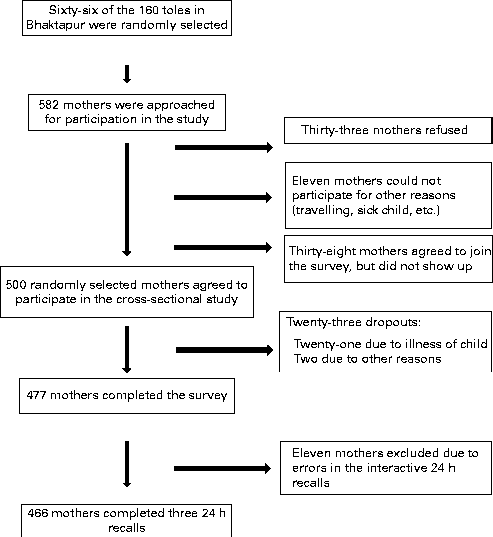
From a public health perspective, we wanted to detect deficiencies of micronutrients such as Zn, Fe and vitamin B12 with a prevalence of >25 %. It was calculated that 450 mothers would be adequate to detect this prevalence with an absolute precision of 4 %, i.e. with a 95 % CI ranging from 21 to 29 %. Assuming incomplete sampling from approximately 10 % of these women, we calculated a final desired sample size of 500 women. In the first stage of sampling, we used a population-proportional-to-size method to select sixty-six of 160 geographical areas (‘toles’). In the second stage, we obtained the census lists of all women living in the sixty-six toles and selected the subjects randomly from these lists. We approached 582 women in order to enrol 500 women in the study (Fig. 1). A total of 500 lactating (encompassing both exclusive and partial) women were enrolled in the study and completed the first 24 h dietary recall. Due to the dropouts, the sample sizes for the second and third 24 h recalls were 487 and 477, respectively. A total of eleven women were excluded due to errors in the interactive 24 h recalls, and thus the final sample size consisted of 466 lactating women who had completed three 24 h recalls.
Flow chart of the recruitment of the study subjects.
Women came to the hospital to receive physical examinations, dietary interviews and blood draws. The first woman was enrolled in January 2008 and the last in February 2009. The inclusion criteria were that they were lactating, had no self-reported on-going infections and were able to provide household information. Women with anaemia (Hb levels < 123 g/l) were offered free treatment with Fe supplements according to the national guidelines. All women gave written informed consent before the start of the study, which was approved by the ethical review board of the Institute of Medicine, Tribhuvan University. Women were classified as literate if they could read and write, and illiterate if they could do neither or only one of the two. Schooling was defined as primary school (1st–3rd grade), secondary school (4th–10th grade), school-leaving certificate, intermediate school or Bachelor's degree.
Dietary assessment
Nepali-speaking, trained fieldworkers performed the interactive 24 h recalls, and each woman participated in three interactive 24 h recalls( Reference Gibson and Ferguson 9 ). Every fieldworker in the present survey received training by a dietitian for a period of 2 months. The fieldworkers were trained in interview techniques, how to use the electronic scales, how to estimate the volume of different foods, how to collect recipes, how to use the food codes, how to handle difficult situations and how to calibrate the weights before every interview. They were not only trained as a group, but also practised 24 h recalls on each other and on at least five women from the community before conducting the recalls for the present study. To ensure that the days represented normal intake and to minimise interviewer biases, the recalls were obtained to represent three different weekdays with each recall period separated by 2–11 d, and conducted by three different fieldworkers. Saturdays (weekends) were excluded. The 24 h recalls were collected during 1 year in order to cover the seasonal variation in food supply across the participants in the study area. The same procedure was used to collect the 24 h recalls for each of the 3 d. First, the participants were asked to name all the food and drinks consumed during the preceding day, including anything consumed outside the home and the time of consumption. Second, they were asked to describe the ingredients and cooking methods for each recipe. Third, the amounts of foods and dishes were estimated using an electronic scale (Philips) with a precision of 1 g and a maximum capacity of 5 kg. The scales were calibrated daily. Cooked rice was used for estimating the volume of rice, vegetable stew (‘tarkari’) and pickles, and water was used to estimate the volume of lentils (‘dal’). Fresh vegetables were used to measure the size and quantity of vegetables used in the recipes. The amounts of meat, fish, bread and fruits were estimated by food models and pictures made exclusively for the present study according to Gibson & Ferguson( Reference Gibson and Ferguson 9 ). Clay models were used for estimating the portions of meat and fish, wooden models were used for bread, whereas pictures were used for estimating the amounts of fruits consumed. Finally, the participants were asked to recall snacks consumed between meals during the last 24 h from a list of snack foods, made especially for the present study. The personal recipes of the participants were collected. Standard recipes were made for tea, spices (masala), lentils, bread, vegetable stew (tarkari) and pickles, and were used when the participants had bought ready-made food or when the food had been eaten at someone else's place. The standard recipes were developed from a collection of recipes in a pilot study, and the average of the ingredients from at least twelve recipes for each dish was calculated. Information on the consumption of fortified foods was not collected. Most of the fortified food available in the study area were designed for infants and preschool children, and thus were not commonly consumed by adults.
Intake of iron supplements in pregnancy
Information on the consumption of Fe supplements in pregnancy was collected through questionnaires. The women were encouraged at the hospital to take Fe supplements during pregnancy, and bought Fe supplements from the hospital or from local drug stores. In the questionnaire, the women were asked for how many months they consumed Fe supplements in pregnancy and in which trimester they started to have the supplements. Information on the frequency of consumption, the dosage or the brand name of Fe supplements was not collected, and thus the intake of supplements was not included in the analysis of dietary Fe intake. The common practice for the administration of Fe supplements was 60 mg of elemental iron sulphate from the second trimester of pregnancy.
Nutrient analysis
Because there is no standard food composition table (FCT) available for Nepal, a FCT was compiled for the present study (‘Composite Bhaktapur FCT’). In this FCT, nutrient values and foods were derived from WorldFood 2( 10 ), the ‘Nutritive Value of Indian Foods’( Reference Gopalan, Rama Sastri and Balasubramanian 11 ) and, where necessary, from the Thai FCT( 12 ) or the US FCT( 13 ). The three 24 h dietary recalls and the ‘Composite Bhaktapur FCT’ were entered in nutrient analysis software designed exclusively for the present study. The source of phytate data was the Indian FCT( Reference Gopalan, Rama Sastri and Balasubramanian 11 ). Intake of haem Fe was calculated based on the assumption that haem Fe makes up 40 % of Fe in meat, poultry or fish. The usual intake distributions were calculated by the multiple source method, which is characterised by a two-part shrinkage technique applied to the residuals of two regression models: one for the positive daily intake data and another for the event of consumption( Reference Haubrock, Nothlings and Volatier 14 , Reference Harttig, Haubrock and Knuppel 15 ).
Estimation of adequacy of dietary iron intake
Estimation of dietary Fe availability in this population was made according to the method described by Murphy et al. ( Reference Murphy, Beaton and Calloway 16 ), using quantitative data on the intake of haem Fe, non-haem Fe, coffee and tea, as well as on the amount of ascorbic acid and protein from meat, fish and poultry per 4184 kJ (1000 kcal) of energy consumed. The average bioavailability of dietary Fe intake in this population was calculated to be 4·5 %. The bioavailability of dietary Fe was also calculated according to the algorithm developed by Bhargava et al. ( Reference Bhargava, Bouis and Scrimshaw 17 ). This algorithm includes estimation of Fe stores, intake of fish and meat, ascorbic acid, phytate, non-haem Fe and haem Fe, which was developed for Bangladeshi women, a population that might be equalled to that of the present study. This algorithm gave an estimated average bioavailability of 1·8 %. The WHO recommends the use of the calculation of 5 or 10 % Fe absorption in developing countries depending on the diet( 18 ). We therefore used the 5 % bioavailability assumption for the evaluation of Fe intake in the present study.
The 2004 Estimated Average Requirements (EAR) and Recommended Nutrient Intake (RNI) of the FAO/WHO were used to evaluate the nutritional adequacy of the women's diets depending on post-partum. The RNI of Fe for lactating women (0–3 months) and women aged 19–50 years is 30 and 58·8 mg, respectively, when the bioavailability is 5 %. The risk of inadequate dietary Fe intake for women who had been lactating for < 3 months was classified using the following definitions: very high risk (average dietary Fe intake below the EAR); moderate risk (average dietary Fe intake between the EAR and the RNI); low risk (average dietary Fe intake higher than the RNI)( Reference Torheim, Ferguson and Penrose 8 ). A full probability approach was used( Reference Allen, de Benois, Dary and Hurrell 19 ) that estimated the risk of inadequate dietary Fe intake as a total product of the probability of inadequacy for a given range of intake multiplied by the percentage of women with intakes in that range.
Anthropometric measurements
Weight was measured using a UNICEF weighing scale (Seca; Salter). Height was measured with a locally made board in the clinic and calibrated weekly. Maternal BMI was calculated as weight/(height)2 (kg/m2). BMI < 18·5 kg/m2 was considered as underweight, 18·5 kg/m2>BMI < 25 kg/m2 as normal weight and BMI ≥ 25 kg/m2 as overweight( 20 ).
Laboratory tests
During the first hospital visit, the first of the three 24 h recalls was performed, and a venous blood sample was collected from a cubital vein into a micronutrient-free, heparinised polypropylene tube (Sarstedt). Hb concentration was measured immediately by HemoCue (Vedbæk)( 21 ), which was regularly calibrated as recommended by the manufacturer. After centrifuging the sample at 760 g for 10 min at room temperature, plasma was transferred to micronutrient-free polypropylene vials (Eppendorf, Hinz, Germany) and stored at − 70oC before transport on dry ice to Norway, and then further stored at − 80oC until analysis was performed at the Laboratory of Clinical Biochemistry, Haukeland University Hospital, Bergen. The plasma concentration of biochemical components was determined on a Modular Analytics System by Roche Diagnostics (Roche Diagnostics GmbH), with the analytical CV being 5 % for each test. Plasma ferritin concentration was analysed by an electrochemiluminescence immunoassay, while soluble transferrin receptor (TfR) concentration was analysed by immunoturbidimetry.
Cut-off limits for the analytical test
After adjusting for the altitude of the study area (1400 m), anaemia in this population was defined as Hb levels < 123 g/l( Reference Goodman 22 ). Mild anaemia was defined as Hb levels between 103 and 122 g/l, moderate anaemia as Hb levels between 73 and 102 g/l and severe anaemia as Hb levels < 73 g/l( Reference Goodman 22 ). Fe deficiency, expressed as depleted Fe stores, was defined as plasma ferritin levels < 15 μg/l( 1 ). Increased need of Fe in the erythropoietic bone marrow and peripheral tissues was defined as TfR levels >4·4 mg/l( Reference Kolbe-Busch, Lotz and Hafner 23 ). As increased concentration of C-reactive protein is a sensitive marker of inflammation, women with C-reactive protein levels >5 mg/l were excluded from the analyses in which plasma ferritin was involved.
Calculation of body iron stores
Body Fe assessed as surplus (positive value) or deficit (negative value) of Fe in the tissues was calculated by using the formula described by Cook et al. ( Reference Cook, Flowers and Skikne 24 ). The formula was derived from a close linear relationship that was found between the logarithm of the ratio of the concentration of soluble serum TfR and plasma ferritin (R:F ratio, μg/μg) and body Fe expressed as mg Fe/kg body weight, corrected for the absorption of dietary Fe:
 $$\begin{eqnarray} mg\,Fe/kg = - (log(R:F\ ratio) - 2\cdot 8229)/0\cdot 1207. \end{eqnarray}$$
Since analysis of TfR refers to the in-house ELISA developed by Flowers et al. ( Reference Flowers, Skikne and Covell 25 ), the results obtained for TfR by the Roche method were converted by using the regression equation presented by Pfeiffer et al. ( Reference Pfeiffer, Cook and Mei 26 ):
 $$\begin{eqnarray} TfR\hyphen Flowers = 1\cdot 5\times TfR\hyphen Roche + 0\cdot 35. \end{eqnarray}$$
Data processing and statistical analysis
Data were analysed using SPSS version 17 (SPSS, Inc.), STATA version 12 (Stata Corporation) and R version 2.16 (r-project.org). Continuous data that were not normally distributed are presented as medians and 25th (P25) and 75th (P75) percentiles. Two-tailed tests with a significance level of 5 % were used for all analyses. We measured the association of relevant independent variables with dependent variables (Hb and body Fe) using multiple linear regression models. The variables that were known to influence Hb concentration and body Fe as well as selected socio-economic variables were included in initial crude models. Candidate variables included dietary Fe intake, vitamin C intake, vitamin A intake (β-carotene), phytate intake, use of Fe supplements in pregnancy (for at least 6 months), mother's age, mother's BMI, mother's literacy, parity and infant's age at the time of the baseline visit. All covariates showing a linear association (P< 0·10) in the crude regression models were included in a preliminary multiple regression model. The variables that were still significantly associated in this model (P< 0·10) were retained in the final model( Reference Hosmer and Lemeshow 27 ). Analysis of the residuals was performed in order to examine the fit of the model. In the final model, the following interactions between the independent variables were assessed and included if the interaction term was significant (P< 0·10): (Dietary Fe intake × vitamin C (dichotomous variable, intake P25 (42 mg/d) and P75 (72 mg/d)) and time since birth (dichotomous variable, cut-off 6 months) × prenatal Fe supplement for at least 6 months). We explored and depicted the linearity of the associations between the independent and dependent variables in generalised additive models( Reference Wood 28 ). We adjusted for clustering of outcomes due to the sampling design using the SVY group of commands for complex survey data in STATA.
Results
The mean age of the 500 enrolled women was 25·8 years, and the majority were literate, had a healthy BMI and less than three children. The intake of Fe supplements in pregnancy was reported by 90 % of the women, the mean duration of which was 4·8 months, and more than half of them started the supplementation during the second trimester (Table 1).
Demographic and anthropometric characteristics of 500 lactating women in Bhaktapur, Nepal (Mean values and standard deviations; number of subjects and percentages)
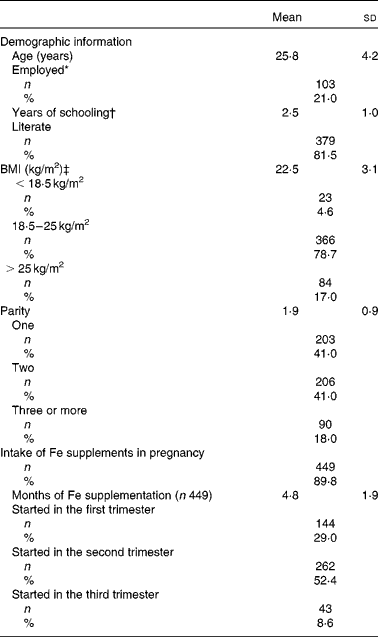
* Farmers, carpet factory workers, daily wage earners, self-employed or service workers.
† Primary school (1st–3rd grade); secondary school (4th–10th grade); school-leaving certificate; intermediate school; or Bachelor's degree.
‡ BMI < 18·5 kg/m2 defined as underweight; BMI 18·5–25 kg/m2 defined as normal weight; BMI>25 kg/m2 defined as overweight.
Intakes of dietary iron and risk of inadequate intakes of iron
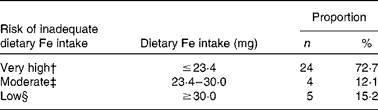
The intake of dietary Fe and other dietary factors with the potential to affect Fe absorption are presented in Table 2. The median daily Fe intake from food was 17·5 mg and almost all the Fe consumed was in the form of non-haem Fe (98 %). The daily dietary intake of phytate (3304 mg/d) was well above the level known to adversely affect Fe absorption, and the main sources were rice, dal, potato and whole-wheat flour. Enhancers of Fe absorption (meat, fish and poultry, and vitamin C) were consumed in moderate amounts. The principal sources of dietary Fe in this population were mustard leaves, rice flakes (‘beaten rice’), turnip leaves, rice and whole-wheat flour (Table 3). Based on the EAR of the WHO/FAO for women consuming a diet with low bioavailability (5 %), 72·7 % of the women who were ≤ 3 months post-partum (n 33) were considered to have a very high risk of inadequate dietary Fe intake. Only 15 % of the women who were ≤ 3 months post-partum were at a low risk of inadequate dietary Fe intake (Table 4). Using a full probability approach for women who were >3 months post-partum (n 432), the total prevalence of inadequate intake of dietary Fe was estimated to be 78 %.
Dietary intakes* of energy, nutrients, foods and constituents influencing iron absorption in 466 lactating women in Bhaktapur, Nepal (Mean values and standard deviations; median values and 25th–75th percentiles)
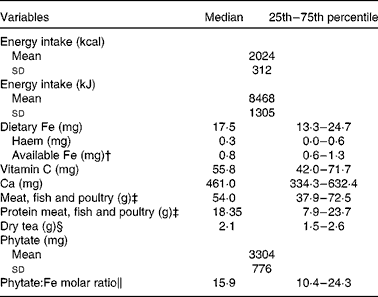
* Usual intakes based on three 24 h recalls per women.
† 5 % bioavailability calculated according to Murphy et al. ( Reference Murphy, Beaton and Calloway 16 ).
‡ n 327.
§ n 425.
∥ Gibson & Ferguson( Reference Gibson and Ferguson 9 ).
Main sources of dietary iron in Bhaktapur, Nepal
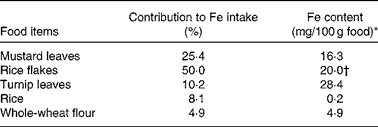
* Value obtained from the Indian food composition table( Reference Gopalan, Rama Sastri and Balasubramanian 11 ).
† When using a value from Suma et al. ( Reference Suma, Sheetal and Jyothi 33 ), the contribution to iron intake was 18 % and the iron content was 5·2 mg.
Proportion of different risk groups of inadequate iron intake for thirty-three lactating women (≤3 months post-partum) consuming a diet with 5 % iron bioavailability* in Bhaktapur, Nepal (Number of subjects and percentages)
* Iron bioavailability calculated according to Murphy et al. ( Reference Murphy, Beaton and Calloway 16 ) and WHO recommendations( 18 ).
† Average dietary iron intake is less than or equal to the estimated average requirement for lactating women.
‡ Average dietary iron intake is greater than the estimated average requirement and less than or equal to the recommended nutrient intake for lactating women.
§ Average dietary iron intake is greater than the recommended nutrient intake for lactating women.
Iron status and anaemia
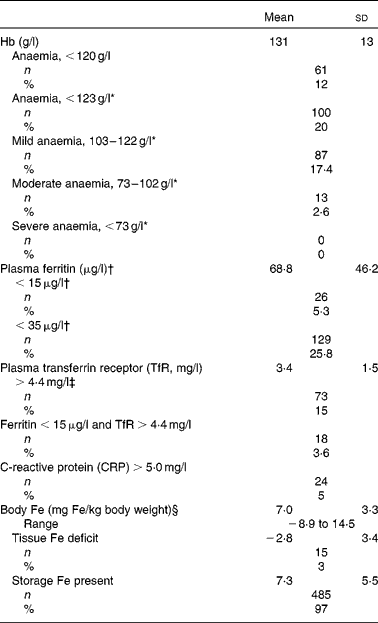
After adjusting for the altitude of the study area (1400 m), the prevalence of anaemia (Hb levels < 123 g/l) was 20 % and mild anaemia (Hb levels 103–122 g/l) was 17 %. Of the women, only 5 % (n 26) had depleted Fe stores with plasma ferritin levels < 15 μg/l, while 15 % (n 73) had TfR levels >4·4 mg/l, indicating an insufficient supply of Fe to the erythropoietic bone marrow and peripheral tissues. Of the women with plasma ferritin levels < 15 μg/l, 69 % (n 18) also had TfR levels >4·4 mg/l as a sign of empty Fe stores with accompanying Fe-deficient erythropoesis evidenced by a mean Hb concentration of 112 (sd 1·3) g/l. Thus, the prevalence in the whole study group of true Fe-deficient anaemia was 3·6 %. The remaining eight subjects with plasma ferritin levels < 15 μg/l and no increase in the levels of TfR had a sufficient supply of Fe to the tissues despite depleted Fe stores.
Of the study participants, 103 had plasma ferritin levels between 15 and 35 μg/l, which is compatible with depleted or very small Fe stores in many women( Reference Hallberg, Bengtsson and Lapidus 29 ). In this subgroup, twenty-one women had TfR levels >4·4 mg/l, indicating restricted synthesis of Hb due to an insufficient supply of Fe to the bone marrow. Since low levels of plasma ferritin may be the evidence of a negative Fe balance, it is conceivable that thirty-nine (53 %, with plasma ferritin levels < 35 mg/l) of the seventy-three women with increased TfR values could be explained by a restricted supply of Fe to the tissues.
Body Fe calculated from the logarithm of the geometric mean of the R:F ratios (95·6) was 7·0 (sd 3·3) mg Fe/kg body weight with a range between − 8·9 and 14·5 mg Fe/kg. Of the women, fifteen (3 %) had negative values indicating tissue Fe deficiency, with a mean of − 2·8 (sd 3·4) mg Fe/kg. The rest of the group (n 485, i.e. 97 %) had a mean body Fe stores of 7·3 (sd 5·5) mg Fe/kg (Table 5).
Hb, plasma ferritin and transferrin receptor concentrations among 500 lactating women in Bhaktapur, Nepal (Mean values and standard deviations or ranges; number of subjects and percentages)
* Threshold for defining anaemia is adjusted for altitude( Reference Goodman 22 ).
† n 476; twenty-four women excluded due to the elevated WHO cut-off levels of CRP for the depletion of iron stores( 21 ).
‡ Cut-off point for iron-deficient erythropoiesis( Reference Kolbe-Busch, Lotz and Hafner 23 ).
§ Negative value indicates a quantitative measure of tissue iron deficit (i.e. lack of stored iron).
Dietary predictors of iron status and anaemia
In the linear regression models (Table 6), intake of Fe supplements in pregnancy predicted Hb concentration. Dietary Fe intake and intake of Fe supplements in pregnancy predicted body Fe. Intake of Fe supplements in pregnancy was associated with a higher Hb concentration of 0·29 (95 % CI 0·04, 0·54) g/l (P= 0·03). Dietary Fe intake and potential enhancers and inhibitors of Fe absorption were not associated with Hb concentration. There was a weak positive association between dietary intake of Fe and body Fe (β 0·03, 95 % CI 0·014, 0·045). In addition, for women with children aged < 6 months, but not for those with older infants (P for interaction < 0·01), intake of Fe supplements in pregnancy was positively associated with body Fe stores. We identified the same predictors in the multiple linear regression models using ferritin and TfR concentrations as the dependent variables. The R 2 values in the models with ferritin and TfR were 0·22 and 0·09, respectively. The association of dietary Fe intake with biochemical markers is also depicted in the graphs obtained from generalised additive models (Fig. 2).
Multiple linear regression models of the relationship between dietary iron intake, Hb concentration and body iron (n 500) (β Coefficients and 95 % confidence intervals)

* Both models included mother's age, parity, literacy and child's age.
† Intake of Fe supplements in pregnancy at least 6 months, dichotomous variable (yes/no).
‡ No significant interaction between time since birth (dichotomous variable, cut-off 6 months) and iron supplements in pregnancy for at least 6 months.
§ Interaction between time since birth (dichotomous variable, cut-off 6 months) and iron supplements in pregnancy for at least 6 months.
∥ Continuous variable.
¶ Dichotomous variable (yes/no).
Association between daily iron intake and concentrations of (a) Hb, (b) plasma ferritin and (c) plasma transferrin receptor in lactating women (n 466) in Bhaktapur, Nepal. The graph was constructed using the generalised additive models in R. The solid curves depict the estimated dose–response curve; the shaded areas represent the 95 % CI. The small vertical lines on the x-axis show the distribution of the observations.

Discussion
In the population of lactating women in Bhaktapur, we found that more than 98 % of dietary Fe intake consumed was in the form of non-haem Fe and that the intake of phytate was high. Therefore, >70 % of these women were estimated to be at the risk of inadequate Fe intake. At the same time, only 5 % of the women had plasma ferritin levels indicative of Fe deficiency and 15 % of the women had elevated levels of TfR mainly indicative of Fe-deficient erythropoiesis. We demonstrated that dietary Fe intake and intake of Fe supplements in pregnancy predicted body Fe. Furthermore, intake of Fe supplements in pregnancy, but not dietary variables, showed a strong positive association with Hb concentration.
Dietary iron intake
The Fe consumed by these Nepali women was almost exclusively in the form of non-haem Fe. It should be noted that no fortified food staples were available to this population at the time of data collection. The main contributors of dietary Fe intake were cooked green leaf relishes, unrefined whole-meal bread ‘roti’ and rice flakes, all of which contained significant amounts of phytate based on available food composition data( 10 , Reference Gopalan, Rama Sastri and Balasubramanian 11 ), and therefore impaired the bioavailability of Fe. In addition, meat that enhances the uptake of non-haem Fe( Reference Bothwell, Charlton and Cook 30 ) was not commonly consumed. In contrast, intakes of vitamin C were about 70 % of the RNI for lactating women and obtained from vegetable relishes commonly eaten with meals, which may have had a positive impact on the bioavailability of Fe. Tea consumption is unlikely to have had any substantial negative impact on the bioavailability of Fe because it is typically not consumed with meals.
The dietary Fe sources were similar to that of a previous study among non-pregnant, non-lactating women in Bhaktapur; however, that study reported lower mean intakes of Fe (8·4 mg/d)( Reference Chandyo, Strand and Ulvik 4 ). This may in part be due to the different FCT used. The previous study used exclusively data from the WorldFood Dietary Assessment System( 10 ), whereas we used primarily the Indian food composition data( Reference Gopalan, Rama Sastri and Balasubramanian 11 ) because Indian foods were more specific to food items consumed in Nepal. The Fe content of mustard leaves, turnip leaves, rice flakes, refined rice and whole-wheat flour was consistently higher in the Indian FCT, compared with similar substitute foods in WorldFood. These values may be higher than the true Fe content of these common Nepali foods. However, a study in the Kathmandu valley found that dietary Fe intakes based on chemical analysis of 24 h diet composites were three times higher than the calculated dietary intakes for the same 24 h period using the US Department of Agriculture database( Reference Moser, Reynolds and Acharya 31 ). Therefore, it is possible that the Fe content of the foods consumed in Bhaktapur is higher than estimated. There is a clear need for a Nepal-specific FCT.
Probability of inadequacy
Based on plasma ferritin and TfR levels, we found the prevalence of Fe deficiency to be 5·3 and 14·6 %, respectively. Yet, we estimated that 70 % of the women were at the risk of inadequate dietary Fe intake. There are several possible reasons for this discrepancy. First, by using a cut-off value of plasma ferritin < 15 μg/l for depleted Fe stores, we have probably underestimated the prevalence of Fe deficiency as signalled by this biomarker (the prevalence of Fe deficiency was 25·8 % by using the cut-off values of plasma ferritin < 35 μg/l). As shown in the study by Hallberg et al. ( Reference Hallberg, Bengtsson and Lapidus 29 ), at this cut-off value, the diagnostic sensitivity and specificity of plasma ferritin are 75 and 98 %, respectively. They have found that the Fe stores could be negligible at plasma ferritin concentrations from 35 μg/l and below. Second, 90 % of the women had used Fe supplements in pregnancy and more than half of them initiated the supplementation in the second trimester. Thus, temporary Fe supplementation in pregnancy is likely to have had a positive effect on Fe stores during the first few months of lactation, but probably not later( 5 ) when Fe loss increased due to the return of menstruation and probably because Fe supplementation was stopped. Third, we may have overestimated the probability of inadequate dietary Fe intake because we used the EAR for all non-pregnant, non-lactating women who were >3 months post-partum. Many of these women may still have had lactation amenorrhoea and therefore had lower Fe requirements than what was the basis of the EAR used. However, the risk of inadequate dietary Fe intake for women ≤ 3 months post-partum, for whom lactation amenorrhoea was taken into account, was similar to those who had given birth earlier. Fourth, as discussed above, the food composition data used may not have accurately reflected the true Fe, phytate and vitamin C contents of Nepali foods. It is possible that the Fe content of several foods is higher and/or the phytate content is lower than what was estimated based on the available data.
The calculation of body Fe based on the ratio between the concentrations of TfR and plasma ferritin gives a more precise picture of the tissue Fe content than what is achieved by using the cut-off limits of the biochemical tests. The present results in Fe-replete and Fe-deficient women were somewhat different from what was reported by Cook et al. ( Reference Cook, Flowers and Skikne 24 ) in their study of women between 20 and 45 years of age. In women with normal Fe status, they have found mean Fe stores of 5·5 (sd 3·35) v. 7·3 (sd 5·5) mg Fe/kg in the present study, and in women with Fe deficiency, they have found a mean deficit in tissue Fe of − 3·9 (sd 3·23) v. − 2·8 (sd 3·4) mg/kg in the present study. As discussed above, the Fe status of women in the present study may have benefited from Fe supplementation and less Fe loss due to amenorrhoea.
Dietary predictors of iron status and anaemia
We found a significant, albeit weak, positive association between body Fe and dietary Fe intake, and also demonstrated that this association was linear. The lack of an association between dietary Fe intake and Hb concentration may in part be due to the fact that only a small proportion of anaemia in this population was Fe-deficiency anaemia; 82 and 63 % of the anaemic women did not have low plasma ferritin or elevated TfR levels, respectively. However, the generalised additive model curve revealed a linear association between dietary Fe intake and Hb concentration at lower dietary Fe intakes (Fig. 2). However, this effect is small compared with the strong association between the intake of Fe supplements in pregnancy and Hb concentration in the present study. As discussed earlier, this effect persists in the lactation period. In addition, the 2011 Nepal Demographic and Health Survey showed that 80 % of Nepali women took Fe supplementation during last pregnancy and 41 % consumed Fe supplements post-partum( 5 ). Lastly, other micronutrient deficiencies may also have been responsible for lower Hb concentrations observed in the present study, such as folate, vitamin B12 and vitamin A( 32 ), but their relationships to Hb were not studied.
Strengths and weaknesses
The present study had a number of strengths. We had a representative sample of lactating women, with a relatively large sample when compared with that used in most other dietary studies. We had three interactive 24 h recalls with personal recipes adapted to local foods. We trained local staff to perform the recall interviews and the interviews were done throughout the year, covering the seasonal variation in food intake at a group level. Using plasma ferritin and TfR as biomarkers, the near-linear association of their relevant changes with dietary Fe intake indicates strong relative validity of our adapted interactive 24 h recall method. Inflammation will obscure the interpretation of plasma ferritin, but not TfR, which can explain the difference in the prevalence of Fe deficiency based on plasma ferritin and TfR. However, chronic and acute illness was an exclusion criterion in the present study and very few (n 24 women) had elevated C-reactive protein levels. Therefore, we believe that the difference in prevalence is not due to inflammation. The primary weakness of the present study was the reliance of external FCT, which may not reflect the true nutrient composition of local Nepali foods. Our findings may have also been adversely affected by bias caused by the fact that participating women knew they were coming in for a dietary interview and may have altered their diet. However, the fact that few women had insufficient Fe intake may suggest that potential bias would have been towards the overestimation, rather than underestimation, of Fe intake.
Conclusion
Probably due to a high dietary intake of non-haem Fe combined with low bioavailability, a high proportion of the lactating women in the present study were at the risk of inadequate intake of Fe. The low prevalence of anaemia and Fe deficiency may be explained by the majority of the women consuming Fe supplements in pregnancy.
Acknowledgements
The present study was funded by a grant from the Norwegian Council of Universities' Committee for Development Research, Education (project no. NUFUSM-2007/10177), Research Council of Norway (project no. 172226), and a grant from the GCRieber Funds and Feed the Future Food Security Innovation Lab: Collaborative Research on Nutrition which is funded by the United States Agency for International Development. A. L. T.-L. was supported by the National Institutes of Health training grant T32 #DK 007703.
The contributions of the authors were as follows: T. A. S., R. C., S. H., W. W. F. and P. S. S. designed the research; R. C., M. U., E. S. and S. H. conducted the research; S. H., A. T.-L., R. J. U., L. L. and T.A.S analysed the data; S. H. and M. M. wrote the paper; S. H. and T. A. S. had primary responsibility for the final content. All authors read and approved the final manuscript.
None of the authors has any conflict of interest to declare.



