


Introduction
Malaysia is the second largest grower of oil palm Elaeis guineensis (U.S. Department of Agriculture, Foreign Agricultural Service, 2017). However, the expansion of the industry has had serious implications: during 1995–2005, 55–59% of Malaysian oil palm plantations were established through forest conversion (Koh & Wilcove, Reference Koh and Wilcove2008), and oil palm agriculture has adverse impacts on biodiversity (Yue et al., Reference Yue, Brodie, Zipkin and Bernard2015; Vijay et al., Reference Vijay, Pimm, Jenkins and Smith2016). Wildlife that enter plantations are at risk of being hunted, or subject to retribution for damaging crops (Meijaard et al., Reference Meijaard, Buchori, Hadiprakarsa, Utami-Atmoko, Nurcahyo and Tjiu2011; Azhar et al., Reference Azhar, Lindenmayer, Wood, Fischer and Zakaria2014; Luskin et al., Reference Luskin, Christina, Kelley and Potts2014). Oil palm plantations can be nutritionally poor for some species, such as orang-utans Pongo spp. (Campbell-Smith et al., Reference Campbell-Smith, Campbell-Smith, Singleton and Linkie2011), whereas others utilize the abundance of palm fruits and rodents as prey (Rajaratnam et al., Reference Rajaratnam, Sunquist, Rajaratnam and Ambu2007; Nakashima et al., Reference Nakashima, Nakabayashi and Sukor2013). Certain species can use oil palm landscapes as corridors (Campbell-Smith et al., Reference Campbell-Smith, Campbell-Smith, Singleton and Linkie2011; Estes et al., Reference Estes, Othman, Ismail, Ancrenaz, Goossens and Ambu2012) and feeding and resting sites (Nakashima et al., Reference Nakashima, Nakabayashi and Sukor2013; Ancrenaz et al., Reference Ancrenaz, Oram, Ambu, Lackman, Ahmad and Elahan2015).
Borneo is a stronghold for the sun bear Helarctos malayanus (Augeri, Reference Augeri2005), which is categorized as Vulnerable on the IUCN Red List (Fredriksson et al., Reference Fredriksson, Steinmetz, Wong and Garshelis2008). Previous research on Borneo showed that sun bears are sensitive to extreme variation in supra-annual mast fruiting events, with some bears starving during long inter-mast periods (Wong et al., Reference Wong, Servheen, Ambu and Norhayati2005; Fredriksson et al., Reference Fredriksson, Danielsen and Swenson2007) and others using croplands to supplement their diet (Fredriksson, Reference Fredriksson2005; Cheah, Reference Cheah2013). With oil palm plantations now bordering many forests in Borneo, this crop could, to some degree, be a potential supplementary food source for bears, especially during periods of low natural food availability. However, increased reliance on agricultural products for food often comes with the risk of conflict and persecution (Fredriksson, Reference Fredriksson2005; Liu et al., Reference Liu, McShea, Garshelis, Zhu, Wang and Shao2011; Scotson et al., Reference Scotson, Vannachomchan and Sharp2014).
Interview surveys have been used successfully to gauge perceptions and attitudes towards wildlife in oil palm plantations (Azhar et al., Reference Azhar, Lindenmayer, Wood, Fischer and Zakaria2014; Luskin et al., Reference Luskin, Christina, Kelley and Potts2014; Ancrenaz et al., Reference Ancrenaz, Oram, Ambu, Lackman, Ahmad and Elahan2015). We used interview surveys to understand the use of plantations by sun bears, whether their feeding damaged crops, and whether people perceived them as a threat. We hypothesized that conversion of forest to oil palm would force sun bears to use this resource more, compounding retaliation against them. We collected information on multiple species for comparison with sun bears.
Study area
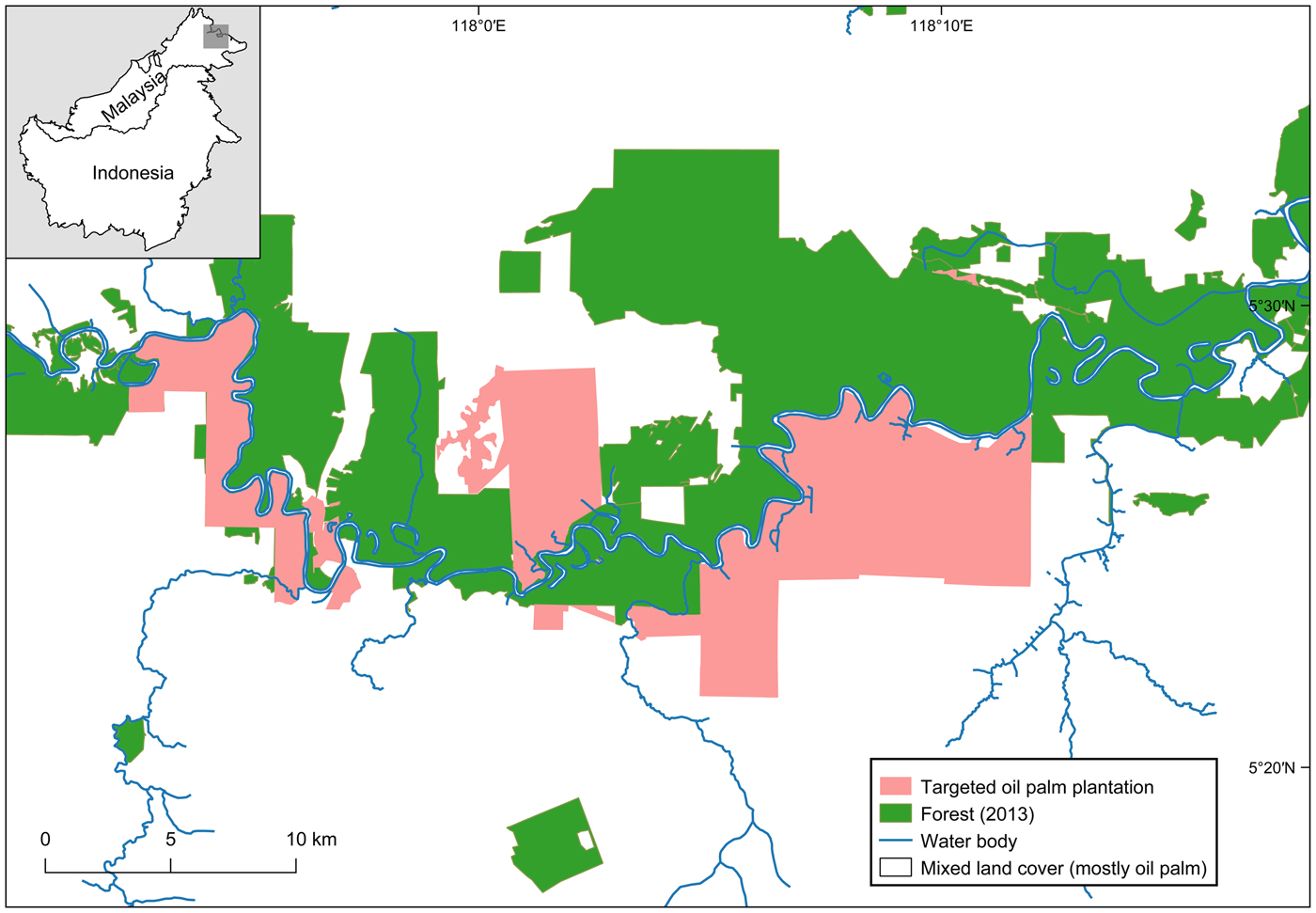
Our study area was the Lower Kinabatangan floodplain in Sabah, Malaysian Borneo (Fig. 1). The original forest landscape has been altered by logging and agriculture, beginning in the 1950s (Azmi, Reference Azmi1998), leaving degraded, fragmented forest surrounded by oil palm. Most of the remaining forest (c. 45,000 ha) lies within the Lower Kinabatangan Wildlife Sanctuary and several forest reserves. Forest types in the floodplain include mangrove forest, Nypa fruticans swamp, freshwater swamp forest, peat swamp forest, and mixed dipterocarp forest (Abram et al., Reference Abram, Xofis, Tzanopoulos, MacMillan, Ancrenaz and Chung2014). Besides the sun bear, prominent wildlife species include the Bornean orang-utan Pongo pygmaeus, the Bornean elephant Elephas maximus borneensis and the Sunda clouded leopard Neofelis diardi.
Locations of oil palm plantations targeted for interviews in the Lower Kinabatangan, Sabah, Malaysian Borneo.
Methods
Data collection
We interviewed 117 respondents from oil palm plantations in June 2013 and during May–October 2014, within a section of the Lower Kinabatangan (Fig. 1). We sampled plantations where we gained permission: 10 oil palm estates (hereafter estates) and 17 small farms (known as kebun). In estates we interviewed the operations staff, whereas in kebun we spoke to the farmers themselves. We obtained information on the total planted area (hereafter plantation size), the presence of immature and mature palms (mature > 3 years old), and whether the plantation bordered forest (hereafter border). We asked respondents their age (hereafter age) and how long they had worked in the plantation (hereafter time, in four categories: < 1 year, 1–5 years, 6–10 years, > 10 years).
We asked respondents to identify wildlife encountered in plantations (mammals and certain reptiles), using reference images of protected species in Sabah (Sabah Wildlife Department, 1997; WWF-Malaysia, 2013). We did not include birds, squirrels or monitor lizards Varanus spp., but recorded these when respondents provided information on them. We asked respondents to rate how often they saw specific species (rarely or commonly; we did not provide guidance on these terms), where they saw them (within plantation, plantation–forest border, and/or secondary forest within plantations) and at what time the encounter(s) took place (morning, afternoon and/or night).
We asked whether the observed species fed on loose palm fruits that had fallen to the ground (hereafter loose fruits), harvested fruit bunches on the ground (hereafter fruit bunches), fruits on the palms (hereafter palm fruits), and/or oil palm shoots (hereafter palm shoots). We asked respondents to identify species that were destructive (yes or no) towards oil palms as a result of their feeding habits.
We also asked whether each species was considered to be dangerous (yes or no); if the respondent answered yes, we asked them to rate this qualitatively (least dangerous, dangerous, or extremely dangerous). We asked respondents to provide details of their reaction to encounters with dangerous species: did they retreat, chase the animal away, capture it and/or kill it? We ended each interview by asking respondents how they felt about hunting and protecting wildlife. These questions were asked towards the end to minimize any bias in reporting.
Data analysis
We conducted all analyses in R 3.2.2 (R Development Core Team, 2015). For examination of wildlife encounters we grouped seven species into three groups: macaques (Macaca fascicularis, M. nemestrina), snakes (Naja sumatrana, Python reticulatus, Python breitensteini), and civets (Viverra tangalunga, Paradoxurus hermaphroditus). We excluded squirrels, birds and monitor lizards from all summaries and analyses regarding wildlife encounters. For the purpose of ranking we calculated the mean commonness (1 = rare, 2 = common), destructiveness (0 = yes, 1 = no), and perceived danger level (0 = not dangerous, 1 = least dangerous, 2 = dangerous, 3 = extremely dangerous) of each species (Marchal & Hill, Reference Marchal and Hill2009). We did not include non-answers in these calculations because we assumed if respondents did not answer, it meant they had no opinion.
We then separated all species into two groups based on body size, as we predicted larger species might be perceived as being more destructive and dangerous, as well as more visible. One group included all large-bodied mammals (> 15 kg; hereafter large mammals); the other group included smaller-bodied mammals and snakes (hereafter small wildlife). We summed the number of species in each group per respondent.
We fit Poisson generalized linear models with the total count of small wildlife or large mammals encountered per respondent as the response. We included the binary variables border, immature and mature palms, the categorical variable plantation type, and the continuous variable plantation size as plantation-level predictors. We also included the categorical variable time and the continuous variable age as respondent-level predictors. We began by fitting single covariate models and subsequently adding predictors that were present in models with the lowest Akaike information criterion corrected for small sample sizes (ΔAICc < 2) in each successive step. We selected top-ranked models based on AICc and model weights, ignoring competing models with only one additional variable to a better ranked model (Arnold, Reference Arnold2010). We checked all top-ranked models for overdispersion by dividing model residual deviance by degrees of freedom. We assessed multicollinearity between model predictors using generalized variance inflation factor values. We judged model fit visually by plotting residuals against fitted values. As respondents from the same plantation might have had correlated observations, we further fit Poisson generalized linear mixed models with plantation as the random intercept. We compared the generalized linear model and generalized linear mixed model coefficients and 95% confidence intervals.
For all analyses regarding wildlife feeding habits we included observations of birds and squirrels, as the goal was to understand food resource use and perceived destructiveness. We removed observations that solely involved second-hand information received by respondents about depredations. To model the effects of feeding behaviours and plantation characteristics on destructiveness, we fit binomial generalized linear models with destructive behaviour as the binary response variable, and the binary predictor variables loose fruits, fruit bunches, palm fruits, palm shoots, immature and mature palms. We also included plantation type as a categorical predictor variable. We selected models and checked for multicollinearity in the same way as for the Poisson generalized linear models. We assessed model fit by visually inspecting binned residual versus fitted plots. We calculated area under the receiver operating characteristics curve to discern model predictive power. We fit a binomial generalized linear mixed model to compare model coefficients and 95% confidence intervals with the generalized linear model.
Results
Estates (n = 10,  $\bar x$ mean area = 1,389 ± SD 766.6 ha) were much larger than kebun (n = 17, $\bar x$ mean area = 3 ± SD 1.7 ha). Most plantations (77.8%) had only mature palms, 7.4% had only immature palms, and 14.8% had a combination of both. Most respondents (45.8%) had worked in their plantation for > 10 years; 16.1% had worked for 6–10 years, 26.3% for 1–5 years, and 9.3% for < 1 year. Most respondents felt that protecting wildlife was necessary (93.2%). Some (29.7%) felt that they should be allowed to hunt, but a larger number (64.4%) felt this was not necessary (the rest did not answer). More than half the respondents (53.7%) felt they should be allowed to keep wildlife as pets.
Respondents encountered at least 25 species (Table 1). Most (57%) encounters occurred within the oil palm plantation, with another 40.8% occurring at the border of forest and plantation, and 2.2% in secondary forest patches. Encounters often took place in the morning (42.5%), but also in the afternoon (34%) and at night (23.5%). Respondents rarely encountered sun bears within plantations (Table 1). Sun bears were encountered somewhat more commonly than clouded leopards and Sunda pangolins Manis javanica, but less commonly than elephants and orang-utans. The most commonly reported species were macaques, bearded pigs Sus barbatus, civets and leopard cats Prionailurus bengalensis.
Mean ± SD commonness ranks, with the total number of records of mammals and reptiles encountered by respondents (n = 117) from oil palm plantations in the Lower Kinabatangan, Sabah, Malaysia (Fig. 1), and the number of records in which respondents were able to rank the species.
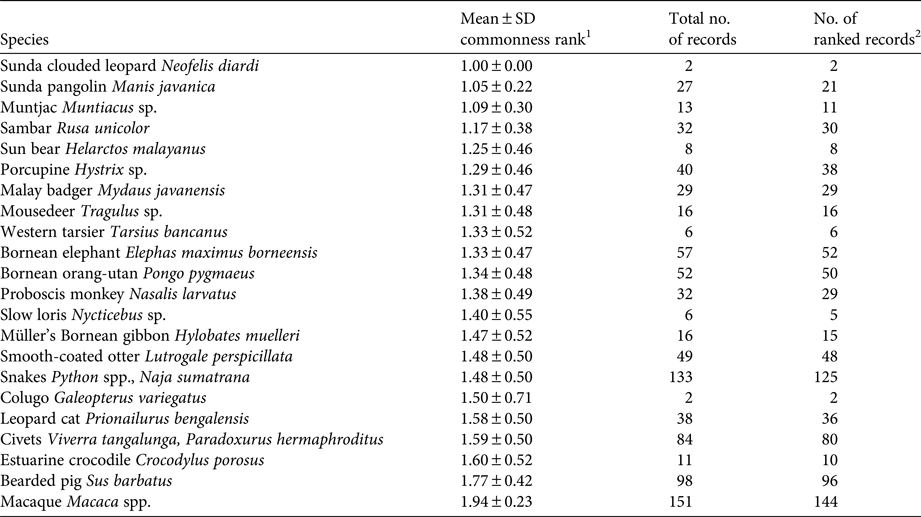
1 Ranks: 1, rarely encountered; 2, commonly encountered.
2 This number was used in the calculation of the mean commonness rank.
The top-ranked Poisson generalized linear models (ΔAICc < 2) for encounters with small wildlife contained the predictors age, immature palms, border and time (Table 2). For large mammals, top-ranked models (ΔAICc < 2) contained the same predictors, along with mature palms (Table 3). Overdispersion parameters for all models were < 1.5, supporting use of the Poisson distribution. Generalized variance inflation factor values were < 3, indicating that multicollinearity between predictors was not significant. Residuals versus fitted plots displayed good fits. The generalized linear mixed model for small wildlife failed to converge, and there was no variation between the random components (SD = 0) of the large mammal generalized linear mixed model.
Top-ranked models (ΔAICc < 2) for small wildlife (small-bodied mammals and snakes) encountered by respondents from oil palm plantations in the Lower Kinabatangan, Sabah, Malaysia (Fig. 1), with number of parameters (k), log likelihood, Akaike's information criterion adjusted for small sample sizes (AICc), change in AICc (ΔAICc), and Akaike weight.
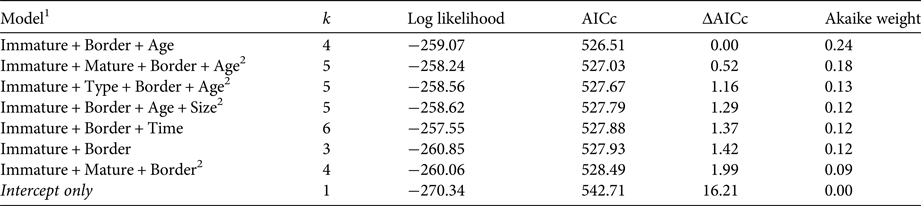
1 Immature, oil palms < 3 years of age; Mature, oil palms > 3 years of age; Type, plantation type; Border, bordering intact forest; Age, respondent age; Size, total planted area; Time, length of time respondent worked in plantation.
2 Models with an additional parameter within ΔAICc ≤ 2 of an otherwise similar better-ranked model were not considered to be competitive despite having strong support. The extra parameter represents noise and thus does not necessarily infer biological significance.
Top-ranked models (ΔAICc < 2) for large mammals encountered by respondents from oil palm plantations in the Lower Kinabatangan, Sabah, Malaysia (Fig. 1), with number of parameters (k), log likelihood, Akaike's information criterion adjusted for small sample sizes (AICc), change in AICc (ΔAICc), and Akaike weight.

1 Immature, oil palms < 3 years of age; Mature, oil palms > 3 years of age; Type, plantation type; Border, bordering intact forest; Age, respondent age; Size, total planted area.
2 Models with an additional parameter within ΔAICc ≤ 2 of an otherwise similar better-ranked model were not considered to be competitive despite having strong support. The extra parameter represents noise and thus does not necessarily infer biological significance.
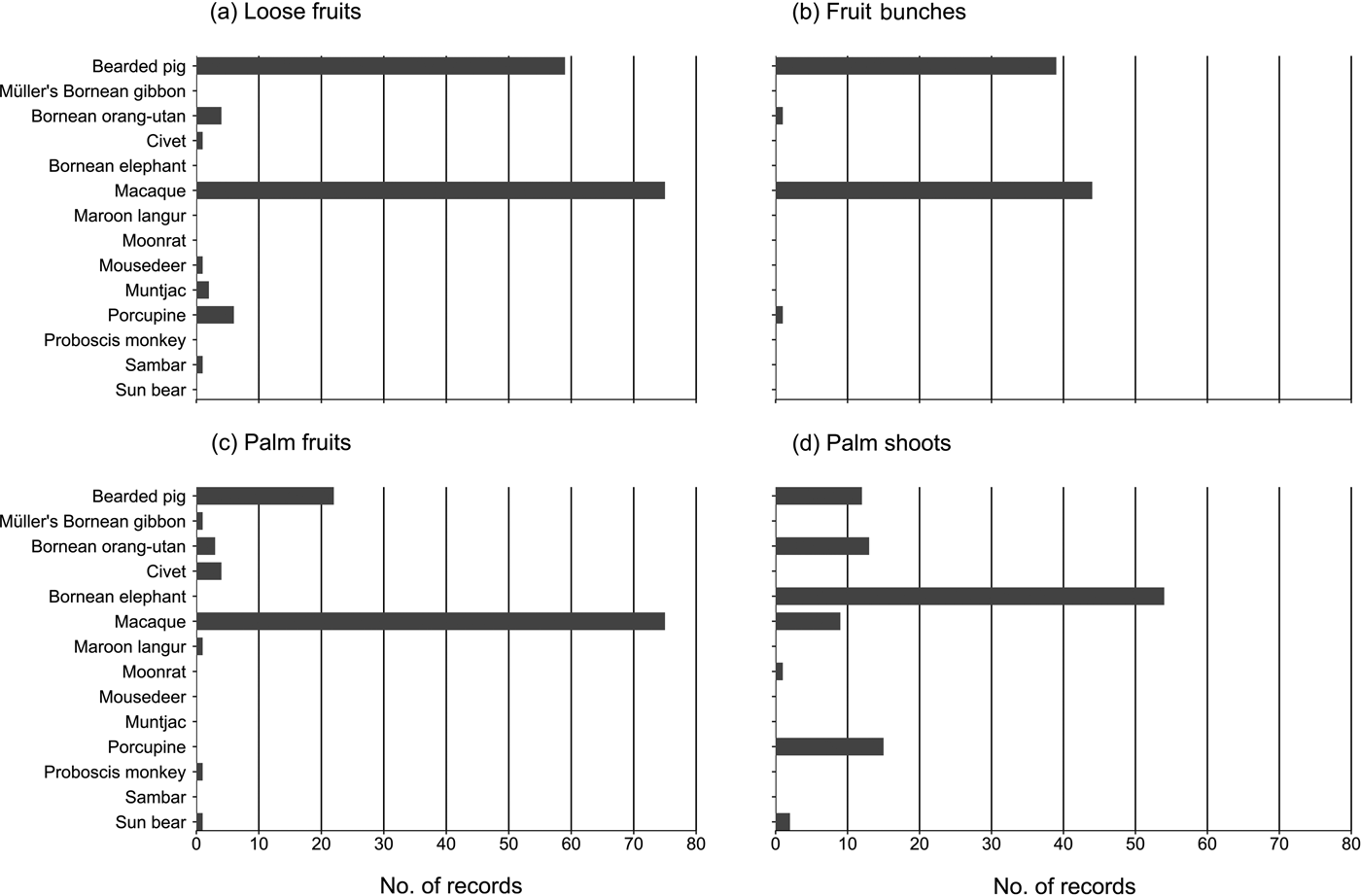
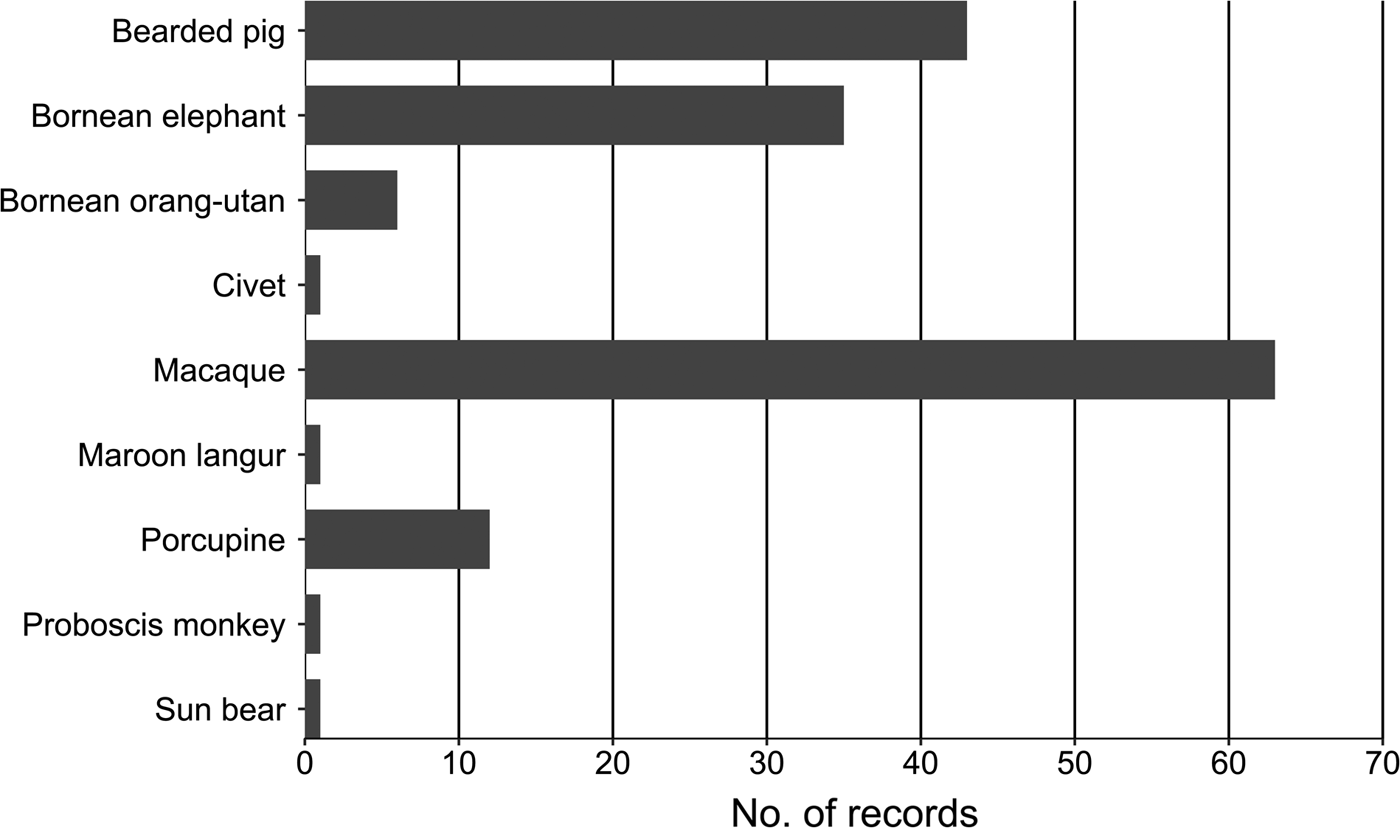
Respondents (n = 104) identified eight species (excluding squirrels and birds) that fed on loose palm fruits, four that fed on harvested fruit bunches, and eight that fed on fruits still on the palm (Fig. 2). Only one respondent reported sun bears depredating oil palm fruits, and said they climbed the palms to feed. Respondents identified another seven species that fed on palm shoots, including two respondents who said this was true of sun bears (Fig. 2). Respondents identified these feeding habits based on visual observations (74.5%), feeding signs (21.5%) and information received from others (4%). No respondent could describe or show us any feeding sign by sun bears.
Records of wildlife species feeding on (a) loose fruits scattered on the ground, (b) harvested fruit bunches on the ground, (c) fruits on the palm tree, and (d) oil palm shoots, as reported by respondents (n = 104) from oil palm plantations in the Lower Kinabatangan, Sabah, Malaysian Borneo (Fig. 1).
Respondents considered nine species to be destructive to the oil palm crop but there was considerable variation among these in terms of perceived destructiveness (Fig. 3). Compared to macaques, pigs and elephants, sun bears caused little damage (Table S1). Model selection for the binomial generalized linear models identified top-ranked models that all contained palm shoots as a predictor of destructive behaviour (ΔAICc < 2; Table 4). Other variables included in the top-ranked models were plantation type and bunch. Generalized variance inflation factor values suggested that multicollinearity was not significant. Binned residual versus fitted plots displayed a good fit. Area under the curve for all models was 0.6–0.7, indicating adequate predictive power. The binomial generalized linear mixed model failed to converge.
Wildlife species considered to be destructive to the oil palm crop according to respondents (n = 74) from oil palm plantations in the Lower Kinabatangan, Sabah, Malaysian Borneo (Fig. 1).
Top-ranked models for wildlife destructiveness in oil palm plantations in the Lower Kinabatangan, Sabah, Malaysia (Fig. 1), with number of parameters (k), log likelihood, Akaike's information criterion adjusted for small sample sizes (AICc), change in AICc (ΔAICc), and Akaike weight.
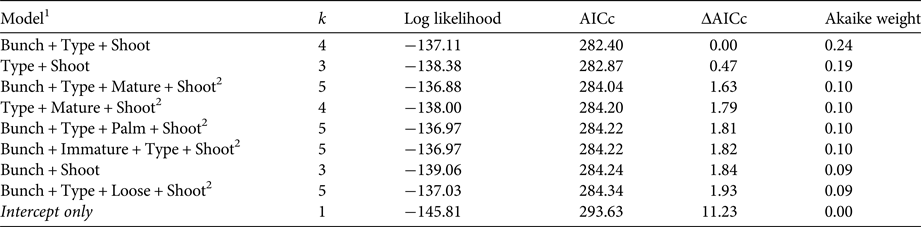
1 Loose, loose oil palm fruits; Bunch, harvested fruit bunches; Palm, fruits on the oil palm; Shoot, oil palm shoots; Mature, oil palms > 3 years of age; Immature, oil palms < 3 years of age; Type, plantation type
2 Models with an additional parameter within ΔAICc ≤ 2 of an otherwise similar better-ranked model were not considered to be competitive despite having strong support. The extra parameter represents noise and thus does not necessarily infer biological significance.
Eight species were considered to be dangerous (n = 84 respondents; Table 5). Among these, clouded leopards and estuarine crocodiles Crocodylus porosus were considered to be most dangerous. Sun bears were perceived to be as dangerous as orang-utans. Respondents could recount only one mauling by a clouded leopard and three by sun bears. Most respondents said they would retreat from a dangerous animal (58.3%), but 34.6% said they would sometimes chase the animal away. Very few admitted that they would capture (1.9%) or kill (5.1%) a dangerous animal.
Mean ± SD danger level ranks of wildlife species according to respondents (n = 84) from oil palm plantations in the Lower Kinabatangan, Sabah, Malaysia (Fig. 1), with the total number of records and the number of records in which respondents were able to rank the species.
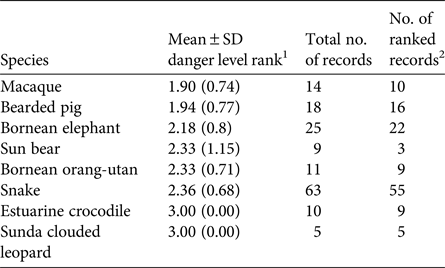
1 Ranks: 1, least dangerous; 2, dangerous; 3, extremely dangerous.
2 This number was used in the calculation of the mean danger level rank.
Discussion
Macaques and bearded pigs were the most commonly encountered species, successfully utilizing the oil palm landscape. Snakes, leopard cats and civets were also commonly encountered, attracted by the abundance of rodent prey (Rajaratnam et al., Reference Rajaratnam, Sunquist, Rajaratnam and Ambu2007). Sun bears, however, were rarely encountered, which suggests either avoidance of plantations or elusive behaviour by the species.
Respondents from plantations containing immature oil palms encountered more species. Wildlife may be more visible in these plantations, and the palms readily consumed. Encounters with large mammals were associated with palms of both age classes, suggesting that cover was attractive to them. Respondents encountered more species in plantations bordering forest, which probably serves as a refuge (Rajaratnam et al., Reference Rajaratnam, Sunquist, Rajaratnam and Ambu2007; Nakashima et al., Reference Nakashima, Nakabayashi and Sukor2013); for example, although radio-collared sun bears ventured into oil palm plantations far (> 4 km) from forest, they retreated to cover during daylight (Normua et al., Reference Normua, Higashi, Ambu and Mohamed2004; Cheah, Reference Cheah2013).
Older respondents encountered more species, probably because they had worked for longer at the plantation. We found a positive association between years in a plantation and the number of small wildlife species encountered.
Elephants, porcupines Hystrix sp., macaques and bearded pigs were all perceived to be particularly destructive of oil palm crops, in line with results from other studies (Sabah Wildlife Department, 2010; Azhar et al., Reference Azhar, Lindenmayer, Wood, Fischer and Zakaria2014; Luskin et al., Reference Luskin, Christina, Kelley and Potts2014). These species fed on palm shoots, a strong indicator of destructive feeding. Young palms are particularly at risk as the shoot is exposed and the palm easily destroyed. Sun bears also apparently fed on palm shoots, but rarely compared to other species (Fig. 2). Feeding on fruit bunches was also considered to be destructive. Bunches were mainly consumed by bearded pigs and macaques, both abundant and occurring in large groups. Ripe fruit bunches are destined for oil palm mills, making any loss highly undesirable. Kebun respondents were more apt to perceive wildlife as being destructive, probably because of their limited yield and lack of resources to mitigate crop depredation.
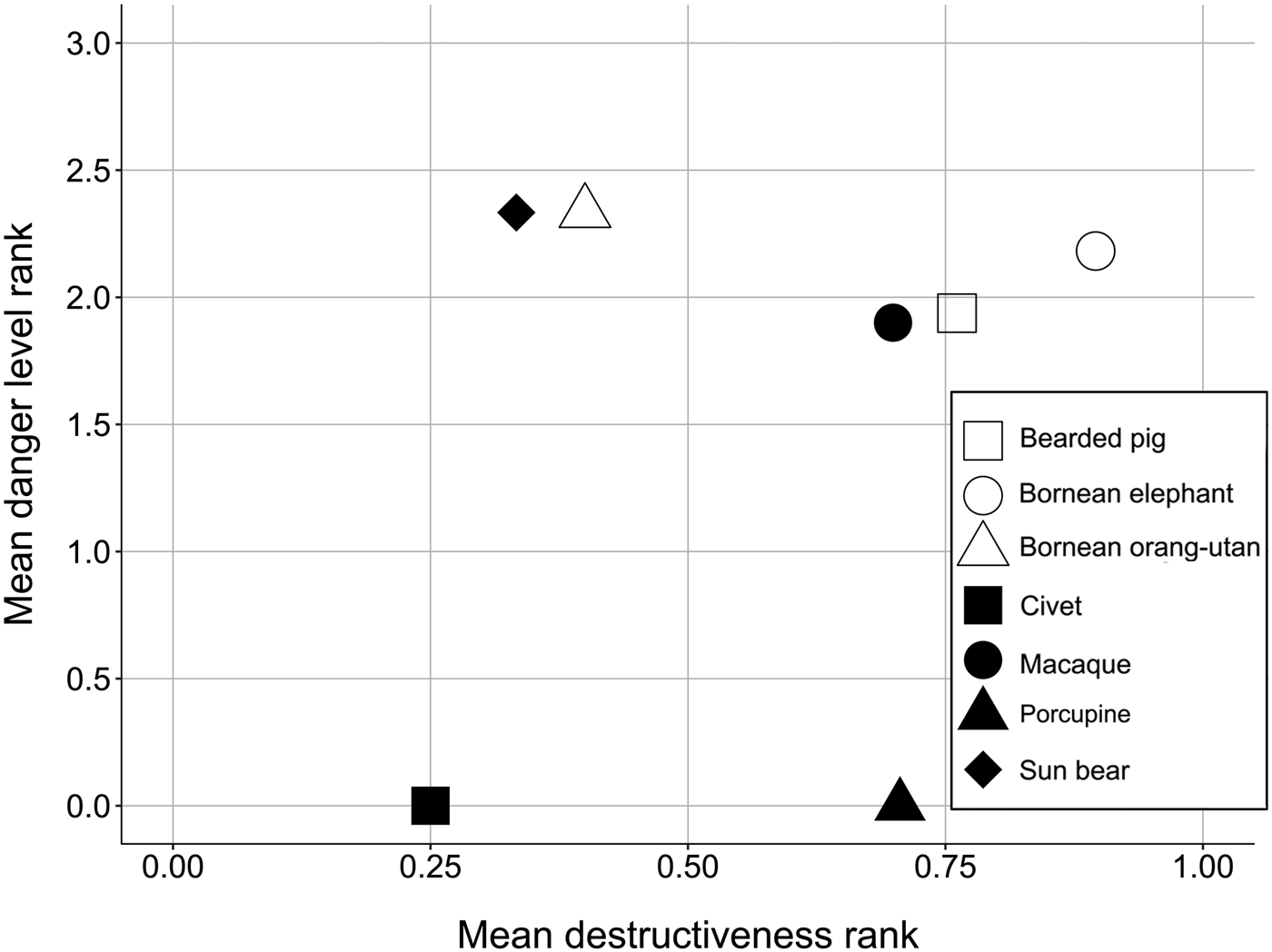
Three species ranked highly in terms of both destructiveness and danger: elephants, macaques and bearded pigs (Fig. 4). Among these, elephants are at the forefront of human–wildlife conflict in Sabah (Sabah Wildlife Department, 2010), and now also in adjacent Kalimantan, Indonesia (Suba et al., Reference Suba, van der Ploeg, van't Zelfde, Lau, Wissingh and Kustiawan2017). Sun bears were considered to be negligibly destructive but were often feared, although only a few attacks were reported. In other parts of their range, attacks by sun bears are reportedly more common (Sethy & Chauhan, Reference Sethy and Chauhan2013).
Mean destructiveness and danger level ranks assigned to species by respondents from oil palm plantations in the Lower Kinabatangan, Sabah, Malaysian Borneo (Fig. 1). Civets and porcupines have a mean danger level rank of 0, as no respondent reported them as being dangerous.
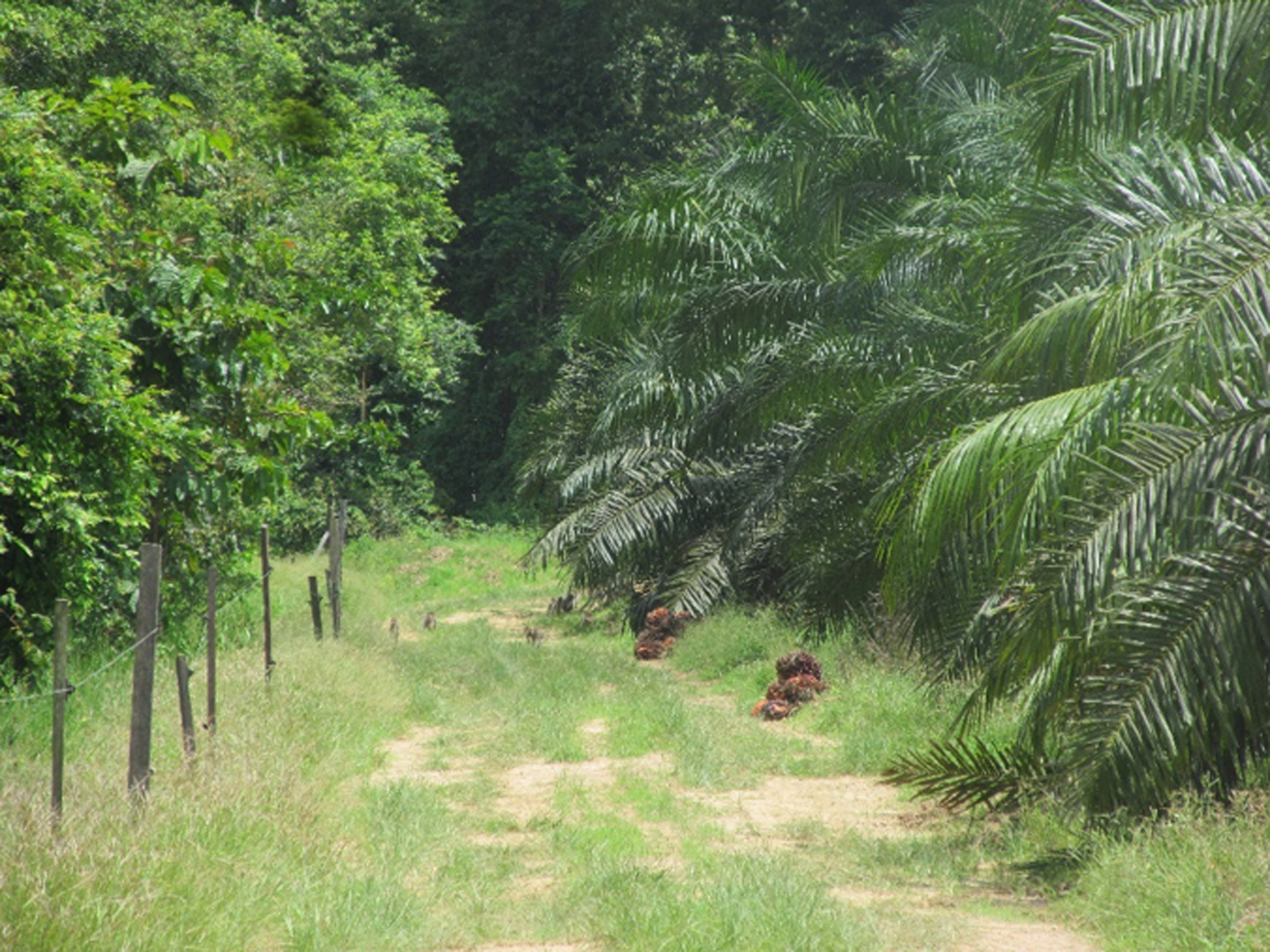
We were surprised that respondents tended not to view bears as being destructive to oil palms, as other studies have found them to be destructive to many other crops, as evidenced by conspicuous feeding sign and damage (Fredriksson, Reference Fredriksson2005; Sethy & Chauhan, Reference Sethy and Chauhan2013; Scotson et al., Reference Scotson, Vannachomchan and Sharp2014; Wong et al., Reference Wong, Leader-Williams and Linkie2015). We suspect that the bears fed largely on loose fruits and fruit bunches (Plate 1), which would cause little visible damage and leave no definitive evidence of their presence (Fig. 2). We knew of a sun bear feeding in a plantation but we could not find any feeding sign; however, we found abundant fresh sign (claw marks on trees) in neighbouring forest. Camera-trapped sun bears in forest adjacent to plantations were active mainly during crepuscular and nocturnal hours, when human presence is minimal (R. Guharajan et al., unpubl. data), which explains why few respondents saw them. Sun bears are known to become more nocturnal when feeding on crops (Normua et al., Reference Normua, Higashi, Ambu and Mohamed2004; Sethy & Chauhan, Reference Sethy and Chauhan2013; Wong et al., Reference Wong, Leader-Williams and Linkie2015); for example, sun bears fitted with global positioning system collars in Krau Wildlife Reserve, Peninsular Malaysia, made frequent night-time incursions into adjacent oil palm plantations (Cheah, Reference Cheah2013).
A typical forest–oil palm interface in the Lower Kinabatangan, Sabah, Malaysian Borneo (Fig. 1). Sun bears Helarctos malayanus can easily pass under electric fences (on the left) designed to keep elephants Elephas maximus borneensis out of plantations, and feed on the abundant loose fruits and fruit bunches on the ground.
We presumed that oil palm plantations not only reduced the area of natural forest but also increased the mortality risk to bears. We could not discern whether bears were subject to increased mortality; however, respondents’ perceptions suggest that bears are not a target of retribution. They may still be killed opportunistically but this would occur rarely, given that they are rarely seen. Mortality may also occur from by-catch: sun bears at a forest–oil palm interface in Peninsular Malaysia had a high incidence of injuries from snares set for ungulates (Cheah, Reference Cheah2013). We did not find evidence of this from camera-trap photographs in our study area (R. Guharajan et al., unpubl. data), nor did respondents report it. However, discoveries of butchered sun bears (L. Liman, WWF-Malaysia, pers. comm.) suggest that targeted poaching may occur, although the scale is unclear.
It is likely that sun bears benefit nutritionally from eating oil palm fruits, especially in inter-mast years when fruits are scare in the forest, and insects alone are insufficient (Wong et al., Reference Wong, Servheen, Ambu and Norhayati2005; Fredriksson et al., Reference Fredriksson, Wich and Trisno2006). Camera traps in our study area indicated that sun bears were in good physical condition (R. Guharajan, unpubl. data), suggesting that they were supplementing their diet from plantations. In Peninsular Malaysia, bears that routinely fed in oil palm plantations were some of the heaviest recorded from the wild (Cheah, Reference Cheah2013). Such feeding entails risks; however, unlike the destructive feeding of bears on other crops, sun bears can feed on oil palm fruits without causing damage. This behaviour, combined with mainly nocturnal, solitary feeding, increases the ability of sun bears to persist in this landscape. However, we do not suggest that the loss of cover and fruit and insect diversity, components of natural forest that are used and presumably needed by sun bears, is compensated for by accessing oil palm fruits.
Acknowledgements
We thank the Sabah Biodiversity Centre and Sabah Wildlife Department for their support; and Lorraine Scotson and N. Guharajan for comments on interview design. We thank all staff of FGV-Pontian United Plantations, Gomantong, Linddale and Sungai Pin estates, as well as residents of Kg. Menggaris, Kg. Batu Putih, and Kg. Perpaduan Datuk Moh. Funding was provided by the Association of Zoos and Aquariums, Columbus Zoo and Aquarium, Hauser Bears, the International Association for Bear Research and Management, Bell Museum of Natural History, and Wildlife Reserves Singapore.
Author contributions
RG, BG, STW and DLG conceived the project. RG and MAM collected the data. RG analysed the data. RG and DLG wrote the article, with editing by NKA and BG. SKSSN assisted with the permits.
Biographical sketches
Roshan Guharajan and Mohd Azzumar Magguna are interested in practical research and conservation initiatives. Nicola Abram promotes effective land-use planning in oil palm–forest landscapes. Benoît Goossens studies biodiversity responses to habitat fragmentation and degradation. Siew Te Wong works on sun bear conservation through holistic approaches. Senthilvel K.S.S. Nathan oversees wildlife management in Sabah. David L. Garshelis facilitates bear research and conservation worldwide.



