


Child undernutrition is one of the world’s most serious international development challenges. Undernutrition is caused by a combination of inadequate diet (both quality and quantity) as well as repeated infectious diseases( Reference Black, Allen and Bhutta1 ). Nearly half of all deaths of children under the age of five are attributable to undernutrition( 2 ). Poor nutritional status is usually determined by a lack of either weight or height for one’s age (underweight and stunting, respectively), being thin for one’s height (wasting), or deficiency in vitamins and minerals (‘hidden hunger’ such as anaemia). Those who survive childhood undernutrition are more likely to suffer from poorer cognitive functions( Reference Grantham-McGregor, Cheung and Cueto3 ), a less resilient immune system( Reference Rytter, Kolte and Briend4 ) and, in later life, cardiovascular diseases and metabolic diseases such as diabetes( Reference Darnton-Hill, Nishida and James5 ). Furthermore, females who suffer undernutrition are more likely to give birth to undernourished babies( 6 ), thereby continuing the intergenerational transmission of life-threatening disadvantage. Unlike many other forms of disadvantage however, the impacts of child undernutrition are difficult to reverse( Reference Shrimpton, Victora and de Onis7 , Reference Victora, de Onis and Hallal8 ). The Sustainable Development Goals have committed to ending all forms of undernutrition by 2030, including agreed targets on stunting and wasting in children. This is an ambitious target, riding on what appears to be an unprecedented and strong global momentum to address child undernutrition( Reference Smith and Haddad9 ). Given the prevalence and intractable nature of child undernutrition, the challenge lies in converting a global commitment into effective practice.
According to the 2016–2017 Global Competitiveness Report, South Asia has overtaken China as the world’s fastest growing region, reflecting a track record of strong and stable economic growth and momentum as well as years of investment in health and education( 10 ). And yet, South Asia is also one of the regions in the world where child undernutrition is highest. Despite recent progress in reducing the prevalence of child undernutrition, South Asia is still home to 40 % of the world’s stunted children( 2 ). Unfortunately this is not a new observation. Some 20 years ago, Ramalingaswami and colleagues described the prevalence of undernutrition in the subcontinent as the ‘South Asia enigma’( Reference Ramalingaswami, Jonsson, Rohde and Adamson11 ). The reasons attributed to such high rates of undernutrition in South Asia include gender inequality( Reference Menon12 ), poor sanitation( Reference Aguayo and Menon13 ), poor diets and low dietary diversity( Reference Smith and Haddad9 ) and ineffective nutritional programmes( Reference Headey, Hoddinott and Ali14 ). While the overall scenario in South Asia looks bleak, Bangladesh offers some glimmer of hope and optimism. In 1974, three years after the country’s Independence, the prevalence of stunting was 71 %( 15 ). This has decreased significantly to 36 %, while the prevalence rates for underweight currently stand at 33 % and wasting at 14 %( 16 ). Meanwhile, 33 % of under-fives have anaemia( Reference Ahmed, Hossain and Mahfuz17 ).
Notwithstanding progress, Bangladesh presents a number of intriguing challenges. First, while reduction rates are impressive, the prevalence of child undernutrition remains high. One in three children under the age of five in Bangladesh is still affected by stunting, and although rural–urban differences are decreasing( Reference Headey, Hoddinott and Ali14 ), the prevalence of stunting in rural areas is still higher( Reference Nisbett, Davis and Yosef18 ). Bangladesh is unlikely to meet the World Health Assembly target of 40 % reduction in stunting by 2025( Reference Ahmed, Hossain and Mahfuz17 ), and the reduction in stunting has not matched progress in other areas of socio-economic life. Bangladesh has enjoyed over a decade of strong and stable economic growth and achieved higher levels of social development than other countries with similar per capita incomes( Reference Asadullah, Savoia and Mahmud19 ). Thus, the final report on Bangladesh’s progress against the Millennium Development Goals notes remarkable achievements in inter alia reducing poverty, increasing food security, improving primary school enrolment and ensuring gender parity in primary and secondary level education, improving immunisation coverage, reducing the incidence of communicable diseases, and lowering the infant and under-five mortality rate as well as the maternal mortality ratio( 20 ). The high prevalence of undernutrition sits uncomfortably with success in other areas of social development, particularly improvements in immunisation cover, reductions in communicable diseases, and decreases in infant and maternal mortality. It is not clear why this misalignment has occurred. Indeed, some authors have recently argued that the aetiology of stunting in Bangladesh is not clear( Reference Ahmed, Hossain and Mahfuz17 ), thus strengthening the calls for further research and analysis into the specific characteristics of undernutrition in Bangladesh.
This paper seeks to make a distinct contribution to the understanding of child undernutrition. While it is universally acknowledged that poverty is an underlying cause of undernutrition, recent analysis of socio-economic inequities and stunting has highlighted a need to understand more about the poorest quintile. Thus, Rabbani et al., drawing on their analysis of six rounds of the Bangladesh Demographic and Health Survey data (1996/97–2014), found that a child from the poorest quintile was twice more likely to fail to reach their growth potential compared with a child from the richest quintile( Reference Rabbani, Khan and Yusuf21 ). Bangladesh’s macroeconomic position is buoyant and the country is currently on track to achieve middle-income status by 2021. However, as it does so, there is evidence of increasing levels of inequality and concerns over how this might impact upon growth progress in other socio-economic areas( Reference Devine, Wood, Devine, Wood, Ali and Alam22 ). If inequalities continue to rise – as is predicted in Bangladesh – the challenge of tackling child undernutrition among the very poorest will intensify.
The Economic Empowerment of the Poorest (EEP) programme, also known as shiree – the Bengali word for ‘steps’ and an acronym for ‘Stimulating Household Improvements Resulting in Economic Empowerment’ – worked with nationwide national and international Non-Government Organisations (NGO) to implement income generating activities (IGA) for extreme poor households. Examples of IGA included the provision of livestock, working capital or equipment to start or grow businesses( 23 ). The programme, which ended in 2016, successfully moved 1·19 million extreme poor people, covering the bottom 3–4 % of the poorest households in the country, out of extreme poverty( Reference Ali, Devine, Wood, Maitrot and Devine24 ), helped 80 % of households achieve the Millennium Development Goal on sanitation, and supported over 1·17 million people surpass a food security threshold.
This paper examines the impact of the IGA programme on changes in child and mothers’ undernutrition in rural Bangladesh as well as the interrelationships between nutritional status and socio-economic indicators using a unique dataset focused on the extreme poor.
Methods
Study setting, intervention and sample selection
The shiree programme ran from 2008 to 2016 and funded twenty-nine national and international NGO to deliver projects aimed at reducing extreme poverty in Bangladesh. The programme worked mostly in rural areas of Bangladesh with the highest concentrations of extreme poor including the northwest of the country (affected by seasonal hunger), the southern coastal belt (highly vulnerable to severe climatic shocks including cyclones), and the Chittagong Hill Tracts (an ethnically diverse region), and the northeast region (prone to devastating floods every year during the monsoon). The programme also worked in some urban slums in Dhaka, the country’s capital city.
Overview of the intervention
A range of IGA programmes were supported under each project, based on the partner NGO’s specific project design, and in consultation with each recruited household. These included asset (e.g. livestock, rickshaws, seeds and trees) and technology transfers (training), strengthening market linkages, development of small businesses (seed capital and skills), access to khas land (government owned land), and improving access to rights and social entitlements.
Sample selection
Extreme poor households were recruited into the programme based on the overall value of their assets and income before any intervention (including IGA) took place. Thus, extreme poor households had an income of less than 1500 Taka per month (1USD was equivalent to 70 Taka in 2010 and 78 Taka in 2016), possessed total IGA assets worth less than 3000 Taka, had no more than two meals per day for four months a year, had no access to or membership of any financial network, and did not own any cultivatable land.
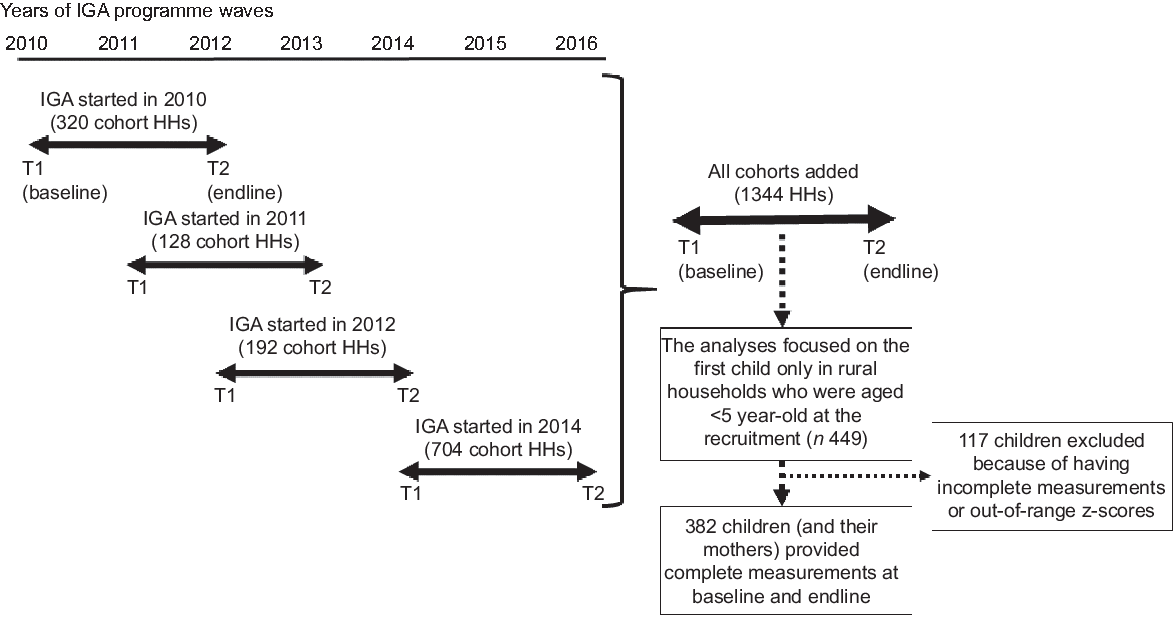
In 2010, 2011, 2012 and 2014 new households were recruited into the programme, and from these random samples were selected for the study (320, 128, 192 and 704 households respectively, see Fig. 1), and followed up annually in March/April each year. The selected households were carefully checked with other households in the programme for homogeneity across a number of variables, including family size, age, gender of household head, having child(ren) under 5 years of age or not. In the combined household data across all four years of recruitment (total 1344 households) there were 449 households in rural areas with children under 5 years of age at baseline. The first child in the household was selected for the analysis. Urban children were excluded from the analyses because only one urban area was studied (Dhaka) where a high migration rate was observed, and, moreover, the characteristics of urban and rural households were very different and the IGA activities in urban areas were limited to non-farming or animal rearing.
The time and the cohort recruited in four waves of programme and the selection of the sample
Data analysis
Variables of socio-economic status
Both cash and in-kind income were ascertained based on thirty different sources and total expenditure on everyday household items (following the Bangladesh official Household and Income and Expenditure Survey guidelines( 25 )), and health and food expenditure were also calculated. Net income was calculated as the difference between household total income and total expenditure and the extent of cash savings was also determined. Food coping strategies were used as a proxy for household food security based on the World Food Programme (WFP) and the Food and Agriculture Organization definitions( Reference Maxwell, Watkins, Wheeler and Collins26 , Reference Maxwell and Caldwell27 ), i.e. households were defined as food insecure if they used one or more food coping strategies in the previous 7 d from a total of nine strategies (consuming smaller portions, consuming fewer than three meals per day, consuming food of lower than normal quality, consuming gathered food, consuming no food in 24 h, borrowing money to secure food, buying food on credit, sending family member elsewhere to eat, and giving more food to earning household members). To determine dietary quality, an indicator of food diversity was used based on the Food and Nutrition Technical Assistance (FANTA) household indicator guide( 28 , Reference Swindale and Bilinsky29 ) measured by thirteen items (rice, flour, pulse, potato, green leafy and other vegetables, fruit, milk, eggs, fresh/dried fish, poultry and meat) consumed in the previous 7 d. This question also allowed for an examination of animal protein intake, measured by consumption of poultry, meat and fish in the previous 7 d. Two key health and sanitation indicators were selected for analysis: child health, measured by the presence of fever or diarrhoea (which are generally easily identified by mothers) in the previous 7 d, and whether households did or did not practice open defecation (households tend to build latrines as disposable income increases).
Nutritional measurements
Children below 5 years of age and their mothers had their height and weight measured. Child height-for-age (HAZ), weight-for-age (WAZ), weight-for-height (WHZ) and Body Mass Index z-score (BMIZ) were based on WHO 2006 standards( 30 ). Undernutrition was defined by a z-score <–2·00 for HAZ (stunting), WAZ (underweight), and WHZ (wasting). For those over 5 years of age, WAZ was replaced by BMIZ (thinness). There is a very high correlation between WHZ and BMIZ (r = +0·97), thus WHZ or BMIZ <–2 is referred to as ‘wasting’ in this paper. Mothers were defined as being undernourished if their Body Mass Index (BMI) was below 18·5 (Chronic Energy Deficiency, CED)( Reference Shetty and James31 ). Technical Error of Measurement was performed and accepted with >95 % intra- and inter-observer accuracy( Reference Ulijaszek and Kerr32 ).
A blood spot was collected by finger prick and the haemoglobin concentration was determined using a portable HemoCue (HemoCue Ltd., Ängelholm, Sweden). Children were anaemic if haemoglobin concentration was below 110 g/l for children younger than 60 months of age and below 115 g/l for children between 5 and 11 years of age( 33 ). Women’s cut-off for anaemia was below 120 g/l for non-pregnant women and below 110 g/l for pregnant women.
Statistical analyses
Of the 449 children, 382 children provided complete measurements at baseline (T1) and endline (T2); 117 children were excluded because they were either absent on the day of the measurement (N = 96) or they had out-of-range z-scores using WHO criteria (N = 21)( 30 ). There were no significant differences between compliant (i.e. sample children) and non-compliant (the 117 children excluded) groups at baseline in terms of sex ratio, mean age and the four z-scores. The prevalence of CED and anaemia in mothers was also not different. Although the locations and recruitment year varied in the four cohorts, there were no significant cohort differences of the four z-scores in children and prevalence of CED and anaemia in mothers at baseline, which allowed for an analysis of the four cohorts together.
Each type of nutritional status (stunting, underweight, wasting and anaemia in children and CED and anaemia in mothers) was analysed separately. Changes in the nutritional status of children and mothers were categorised as binary variables; (i) non-undernourished: in children, without stunting, underweight, wasting and anaemia at both baseline and endline (coded as 0), in mothers without CED and anaemia at both baseline and endline (coded as 0); and (ii) undernourished: in children suffering stunting, underweight, wasting and anaemia at baseline and/or at endline (coded 1), in mothers’ CED and anaemia in mothers at baseline and/or endline (coded as 1).
Changes in continuous variables (net income, cash savings (logged), food and health expenditures (logged), food diversity (number of food items eaten in the last 7 d) and food coping (number of strategies used in the last 7 d) of households, animal protein intake (number of day eaten poultry, meat and fish in the last 7 d) were calculated by subtracting endline value minus baseline value. The changes in the prevalence of fever or diarrhoea in last7 d was coded as a binary variable: (i) no fever or diarrhoea at both baseline and endline (coded as 0); and (ii) presence of fever or diarrhoea at baseline and/or endline (coded as 1). Similarly, change in open defecation was coded (i) not practising open defecation at both baseline and endline (coded as 1); and (ii) practising open defecation at baseline and/or endline (coded as 1). Paired-sample t-tests and McNemar tests were used to examine within-individual changes in nutritional status and socio-economic indicators (see Table 1).
Child nutritional status and socio-economic indicators at baseline (T1) and endline (T2) and the changes over two years (T1–T2)
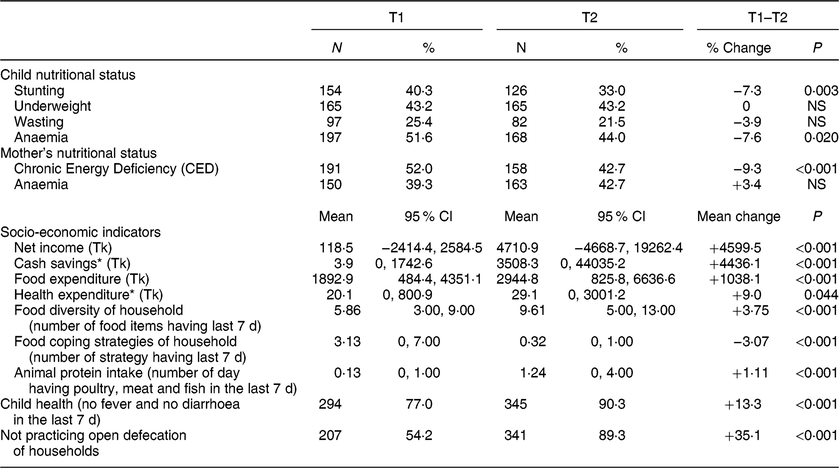
Tk (1 USD = 70 Taka in 2010 and 78 Taka in 2016).
* Geometric mean was used.
After controlling for age and sex, a sequential binary logistic regression was used to test which socio-economic indicators best predicted changes in nutritional status (i.e. non-undernourished and undernourished); (i) testing each socio-economic indicator (net income, cash savings, food expenditure, health expenditure, food diversity and food coping strategies of household, animal protein intake, child health (no fever and no diarrhoea in the last 7 d or not) and sanitation (not practising open defecation of households or not)) separately; and (ii) those socio-economic indicators which showed significant associations with changes in nutritional status were used to create the best model (see Tables 2 and 3). All analyses were performed using IBM SPSS Statistics version 25.
Associations of the changes in socio-economic indicators and mothers’ nutritional status with the changes in child undernutrition (only significant independent variables are shown)
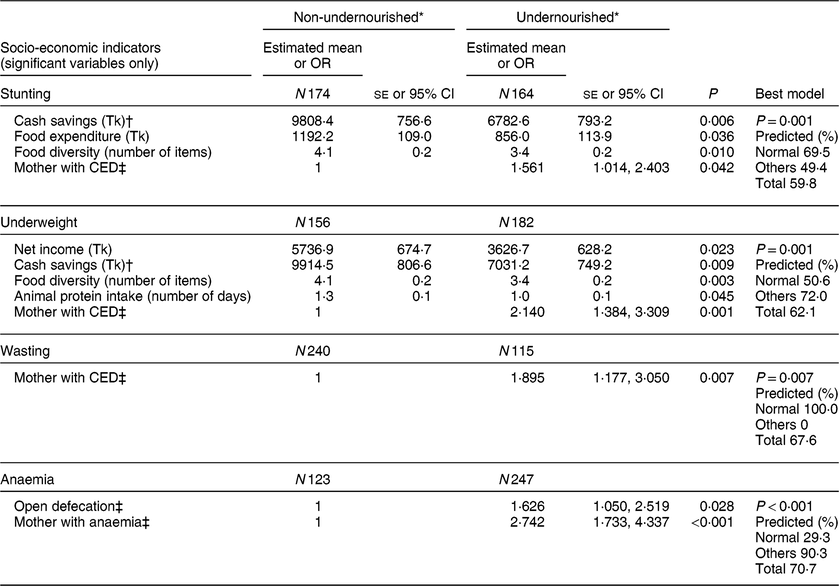
* Changes in the nutritional status of children were categorised as binary variables: (i) ‘non-undernourished’ (coded as 0) included normal at both baseline and endline and (ii) ‘undernourished’ (coded as 1) included undernourished (i.e. stunting, underweight, wasting and anaemia) at baseline or/and endline.
† Cash saving was log-transfer and calculated estimated geometric mean after controlling for age and sex effects on children’s undernutrition in the best model.
‡ Reference values in socio-economic indicators: Mother with CED; being not CED (0) and others being or became CED at baseline or/and endline as CED (1), Open defecation; not practising open defecation (0) and others practising open defecation at baseline or/and endline (1), Mother with anaemia; being not anaemic (0) and others being or became anaemic baseline or/and endline as anaemic (1).
Significant associations between changes in socio-economic indicators and mothers nutritional status
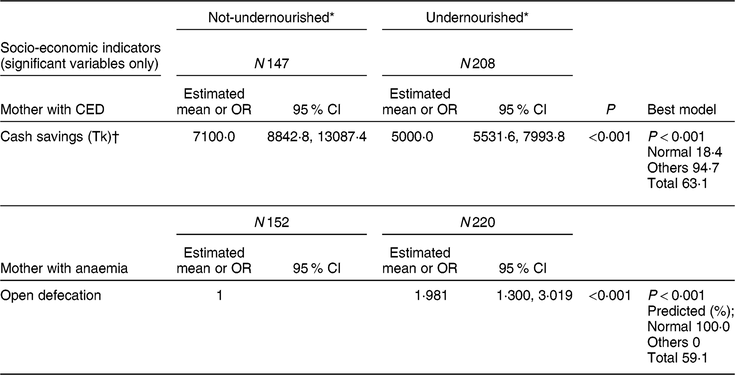
* Changes in the nutritional status of mothers were categorised as binary variables: (i) ‘non-undernourished’ (coded as 0) included normal at both baseline and endline and (ii) ‘undernourished’(coded as 1) included undernourished (i.e. CED and anaemia) at baseline or/and endline.
† Cash saving was log-transformed and calculated estimated mean.
‡ Open defecation: not practising open defecation is reference (0) and others at baseline or/and endline practising open defecation (1).
Results
Changes of children’s nutritional status and socio-economic indicators over the 2 years
At baseline, 40 % of the children were stunted, 43 %, were underweight, about 25 % were wasted, and more than a half of the children were suffering from anaemia (Table 1). After 2 years of the IGA programme, there were some significant improvements: the prevalence of stunting declined to 33·0 % (P = 0·003), and the prevalence of anaemia also declined to 44·0 % (P = 0·020). However, the prevalence of underweight did not change (remaining at 43·2 %) and the prevalence of wasted children reduced to 21·5 % but it was not a significant reduction. In terms of mothers’ nutritional status, 52 % suffered from CED and 39 % had anaemia at baseline. At endline, the prevalence of CED reduced significantly to 42·7 % (P < 0·001), and although anaemia slightly increased to 42·7 %, but this was not a significant change.
The EEP programme focused on reducing extreme poverty through IGA initiatives and, not surprisingly, there were highly significant improvements in household socio-economic status. Before the IGA programme commenced, extreme households had a net income of 113·5 Taka per month and little cash savings (3·9 Taka per household) with just under 2000 Taka to spend on food and about 20 Taka for health. Following the IGA, household net income increased nearly forty times, debt fell from 41 % at baseline to 12 % at endline (not shown in the table), cash savings increased 900 fold while food and health expenditure increased about 1·5 fold. Furthermore following the IGA, almost all households no longer relied on food coping strategies, dietary diversity increased from 5·9 items to 9·6 items, and households eating animal protein increased from 0·13 d to 1·24 d in the previous 7 d. In terms of health and sanitation, at endline 90 % of children had not suffered from either fever or diarrhoea in the previous 7 d and only 11 % of households were using open defecation.
Relationships between the changes in nutritional status of children and the changes in socio-economic indicators
The changes from baseline to endline in cash savings, food expenditure, food diversity and mothers with CED were all significantly related to changes in stunting (Table 2). Households with non-stunted children (at both baseline and endline) had about 45 % more cash savings (+3025 Taka), about 40 % more food expenditure (+336 Taka) and 0·7 more items of food diversity than households where the child was stunted at baseline or endline (P = 0·006, 0·036 and 0·010, respectively). Households with stunted children were 1·6 times more likely to have mothers who did not change their CED at baseline or endline (P = 0·042). The model with the four significant variables predicted 59·7 % of children not stunted and 53·2 % of children suffering from stunting at either or baseline or endline (overall prediction was 56·5 %).
Changes in children underweight were significantly associated with changes in net income, cash savings, food diversity and animal protein intake as well as with having a mother with CED (Table 2). Households with non-underweight children had about 58 % more net income (+2110 Taka), 41 % more cash savings (+2883 Taka), on average 0·7 more items of food diversity and 0·3 d more eating animal protein in the last 7 d than those households with children who suffered from underweight at baseline and/or endline (P = 0·023, 0·009, 0·003 and 0·045, respectively). Underweight children were 2·1 times more likely to have mothers who did not change CED (P = 0·001). The model with all five significant variables predicted 48·5 % of non-underweight children and 72·8 % of children suffering from underweight at baseline and/or endline (overall prediction was 61·6 %).
Changes in wasting of children were not associated with any of the socio-economic changes but were associated with mothers suffering from CED. Households with children who were wasted were 1·9 times more likely to have mothers who did not change CED (P = 0·007, the overall prediction was 67·6 %, although the model predicted 100·0 % of children not wasted and 0 % of children with wasting at baseline and/or endline).
Changes in the prevalence of anaemia in children were associated with sanitation (practising open defecation) and the change in mothers’ anaemia. Households with children who were anaemic were 1·6 times more likely to live in households practising open defecation. Children who were anaemic were 2·7 times more likely to have mothers who suffered from anaemia at baseline and/or endline (P < 0·001). The two variables predicted 29·3 % of children with normal condition and 90·3 % of children suffering from anaemia at either or both baseline and endline (overall prediction was 70·7 %).
Associations between mothers’ undernutrition and socio-economic indicators
Table 3 shows that households with non-CED mothers had 42 % more cash savings (+2100 Taka) than those households with mothers who had CED (P < 0·001). Mothers with anaemia were 2·0 times more likely to live in households practising open defecation at baseline and/or endline (P < 0·001). The changes of cash savings predicted 18·4 % of non-CED mothers and 94·7 % in mothers with CED (overall 63·1 %). Practising open defecation is a significant, but a poor, predictor (100 % of mothers not suffering from anaemia compared with 0 % in mothers with anaemia (overall 59·1 %)).
Discussion
The most significant finding from this study is the reduction in chronic undernutrition and anaemia of children living in the very poorest households of Bangladesh. After two years participation in an IGA programme, stunting fell from 40·3 % to 33·0 % while anaemia fell from 51·6 % to 44·0 %. The prevalence of stunting fell from above to below the national average (36 %) while anaemia remained above the national figure (33 %) for under-five year olds( Reference Asadullah, Savoia and Mahmud19 ). The national annual average rate of stunting reduction is 2·8 % over the period of 1996–2011( Reference Hasan, Soares Magalhaes and Williams34 ) which is less than that observed in this study, reinforcing the notion the poverty is the underlying cause of undernutrition( Reference Black, Allen and Bhutta1 ). From these analyses, it can be concluded that it is possible to bring about a substantial improvement in the nutritional status of children in extreme poor households by addressing the core socio-economic needs of the same households. Nutrition specific interventions bring obvious benefits( Reference Bhutta, Ahmed and Black35 – Reference Ruel and Alderman37 ) but the current analyses suggest that tackling household socio-economic vulnerability is an effective way to reduce undernutrition. Furthermore, given the growing inequality in Bangladesh, the prospects of further reducing child undernutrition will depend on the effectiveness of programmes that address the socio-economic disadvantages experienced by the extreme poor. In policy terms, this suggests that targeting extreme poor households and other marginalised groups may be a more preferable option that extending universal coverage.
Households without stunted or underweight children had 41–45 % more cash savings, and households without underweight children had 58 % more net income. Wealth or income are one of the strongest predictors of poor nutritional status( Reference Smith and Haddad9 ), and this is true for Bangladesh( Reference Rabbani, Khan and Yusuf21 ). Cash savings is a proxy of wealth accumulation and provides a safety net to ease problems of households who fall into a ‘shock’ resulting from, for example, ill health or loss of employment( Reference Holmes, Farrington and Rahman38 ). The IGA programme provided households with long-term economic security and stability, which is associated with a significant reduction in stunting( Reference Black, Allen and Bhutta1 ).
This study, however, did not find any significant change in the prevalence of children’s weight growth, i.e. underweight and wasting, before and after the IGA programme. As shown by Ngwira et al. (2017) the pathways by which children become stunted, underweight and wasted are complex and different; stunting is primarily a failure of linear growth while underweight and wasting are related to lack of muscle and fat mass( Reference Ngwira, Munthali and Vwalika39 ). South Asian children may not develop much lean body mass during infancy due to mother’s low BMI and the condition also remains at older ages, which may explain the persistence of wasting( Reference Martorell and Young40 ). The improvement in the quality of food observed in this study, however, may not be sufficient to reduce underweight and wasting significantly. For example, de Groot et al. (2016) reviewed the impact of cash transfer programmes in Latin America and sub-Saharan Africa on child nutrition based on six systematic reviews and meta-analysis, and did not find any conclusive evidence of a positive impact of the programmes on child nutritional status. They concluded that the mechanisms of impact on child nutrition were not clearly understood( Reference de Groot, Palermo and Handa41 ).
Food security and dietary quality are prime determinants of a child’s nutritional status( Reference Black, Allen and Bhutta1 ), and this finding has been repeatedly observed in Bangladesh( Reference Nisbett, Davis and Yosef18 ). People become food insecure not because of food unavailability but because they cannot afford it or cannot access it. For example, as a direct result of the 2011 global hike in food prices, almost 70 % of all households in Bangladesh experienced some form of food insecurity. However, the impact on the extreme poor was significantly greater as they ended up spending a far larger percentage of their income on food( Reference Richards42 ).
Children with any form of undernutrition were 1·6–2·1 times more likely to have mothers with CED or anaemia. Maternal iron status during pregnancy reflects infant’s iron endowments( Reference Scholl43 ). Foetal iron stores increase as the foetal liver grows, and most (>66 %) of the infant’s total body iron is acquired during the final trimester. An infant weighing 1500 g has half the body iron content of a 3000 g infant( Reference Faldella, Corvaglia and Lanari44 ). A study in Indonesia showed that low birth weight interacted with the smaller iron stores associated with women with anaemia during pregnancy and increased an infant’s anaemia risk by nearly four times( Reference de Pee, Bloem and Sari45 ).
Mothers with anaemia were about 2·0 times more likely to practise open defecation and, similarly, children with anaemia were 2·7 times more likely to practise open defecation. Among the extreme poor, 46 % practised open defecation at baseline but this reduced to 11 % in two years. Open defecation is associated with increased risk of adverse pregnancy outcomes including preterm births, low birth weight, spontaneous abortions and stillbirths( Reference Padhi, Baker and Dutta46 ). It is worth highlighting the significance of open defecation. Bangladesh has made considerable progress reducing the number of households and people practising open defecation. In 2003, 42 % of the population practised open defecation while in 2015 that figure stood at only 1 %( Reference Richards42 ). Open defecation is an issue that can be eradicated completely in Bangladesh, and this would have a significant impact upon undernutrition.
The World Bank recently reported that Bangladesh had performed better than any other South Asian or Lower Middle-Income country in all criteria except for stunting, and concluded that 52 % of potential productivity was lost due to current education and health conditions( 47 ). In other words, the ‘South Asia enigma’ still remains. Although Bangladesh has made significant progress in reducing the number of children suffering undernutrition, current rates and prevalence remain high. Recent research has drawn attention to the links between inequality and undernutrition, and to the gap in understanding the experience and impact of undernutrition on the very poorest. This paper attempts to address this gap, however the quantitative study design does not provide information on how household economic empowerment impacts on child and maternal nutrition and more detailed investigation through a qualitative approach should be conducted.
There are three main findings that lead directly to policy reflections. First, even among the country’s very poorest, it is possible to achieve very significant improvements in child nutrition through interventions that support household livelihood security. The current study showed significant reductions in undernutrition among extreme poor in Bangladesh and suggests that child undernutrition is a multidimensional phenomenon that requires multi-pronged and complementary interventions. Specifically, the analysis suggests that future interventions to improve children’s nutritional status, especially among the extreme poor, need to focus on the broader goal of household livelihood security. Targeting extreme poor households may be a more preferable option than extending universal coverage. Second, improvements in asset accumulation, health, diets, food security and quality, sanitation, and mothers’ nutritional status all have positive impacts upon the nutritional status of children. In particular, this analysis shows strong associations between child undernutrition and the health status of mothers. Positive changes in mothers’ health are strongly associated with cash savings, food diversity, and improved sanitation. In policy terms, this suggests continued focus on the mothers of children both in terms of their health status as well as their caring practices. Finally, a significantly higher than average percentage of extremely poor households practise open defecation. There were strong associations between open defecation practices and child stunting, and levels of anaemia as well as energy deficiency in mothers.
Acknowledgements
Acknowledgements: The authors wish to thank the EEP/shiree management information systems team, programme managers, survey supervisors, data entry personnel, and the field staff who conducted interviews and collected measurements for the panel surveys. Additionally, we would like to thank the EEP/shiree partner NGOs for helping to administer the annual survey, and to express our special appreciation for the study participants in EEP/shiree programme. Final thanks are due to the donors, the UK Department for International Development (DFID) and the Swiss Agency for Development and Cooperation (SDC), and the Government of Bangladesh for making the study possible. Financial support: The Economic Empowerment of the Poorest (EEP) programme and its research was funded by the DFID and SCD in partnership with the Government of Bangladesh. Conflict of interest: No conflict of interest. Authorship: R.G. and C.G.N.M.-T. undertook the study design and data analysis. R.G., J.D. and C.G.N.M.-T. drafted the initial paper. J.O. and J.A.J. operated and supervised the surveys, data collection and data entry. All authors have read, contributed and confirmed to the final manuscript. Ethics of human subject participation: The project was approved by the Bangladesh Medical Research Council. Informed consent (written and oral) was obtained from the participants in accordance with the Declaration of Helsinki. Verbal consent was witnessed and formally recorded. Participants could withdraw from the surveys at any point of time. If the participants had severe anaemia they were referred to a doctor/hospital for immediate treatment.



