




We weren't joining a network, they were joining us
Grahame Bulfield, Roslin Institute director, 1988–2002Footnote 1This paper details institutional change in the context of changing funding, policy and institutional environments in the latter part of the twentieth century. I focus on the Roslin Institute and its antecedents, such as the Animal Breeding Research Organisation (ABRO, until 1986) and the Edinburgh Research Station (ERS) of the Institute of Animal Physiology and Genetics Research (IAPGR, 1986–93). I will mostly refer to this institution as the Roslin Institute or Roslin.
Roslin is most famous for the birth of Dolly the sheep in 1996, the first mammal to be cloned from an adult somatic (rather than germ-line) cell. Recent work has established that this was the culmination of a transgenics research programme dating back to the 1980s.Footnote 2 This paper will build on that research by focusing on the period from the late 1980s onwards. I will detail the importance of the advent of a genomics research programme to Roslin's strategic response to budget cuts and institutional change, a response which made use of the institute's long-held quantitative genetics expertise alongside newer developments in molecular biology there. Through this programme of work, Roslin made itself indispensable to a wider scientific community through developing networks of the burgeoning field of livestock genomics, in particular pig genomics, and centrally positioning itself within them. In examining the strategic response of lower-level actors such as individual institutions, this paper also speaks to the history of genomics, the role of the European Commission (EC) in the research ecosystem, and international collaboration.
Genomics, as a term and as a project, emerged from the mid-1980s onwards.Footnote 3 Developments in mapping methods and data infrastructures encouraged some administrators and researchers to begin advocating for the systematic mapping and sequencing of genomes, and in particular the human genome.Footnote 4 Genomic research on other species was also being pursued, such as on the nematode worm Caenorhabditis elegans and yeast (Saccharomyces cerevisiae), both of which are model organisms, studied to understand broader phenomena rather than purely for their own sake. It was against this background that genomics was seen as a possible domain that researchers and institutions working on other organisms could enter. In this paper I show how Roslin went about entering that domain, and in doing so helped to generate an ongoing programme of research centred on the mapping and then sequencing of the pig genome; the creation of infrastructures to create, collect, store and analyse genomic data; and the fashioning of a collaborative international network to coordinate the activity. Mapping the pig genome would allow Roslin to make use of the existing resources and skills it possessed, to continue to develop the molecular-biological capabilities it had been fostering since its strategic reorientation in the early 1980s, and to access ever increasing levels of funding for biotechnological research from sources such as the EC. It would allow them to produce data and knowledge to aid the identification and localization of genes tied to key production traits that would be of use to the pig-breeding industry, with whom the institution had ties dating back to the 1960s. Crucially, in building institutional capabilities to produce and analyse data on pig genomes, it could also make itself useful for other researchers and sectors with an interest in the pig beyond its being a source of food. Genomics, in its means of production and outputs, is polyvalent; it constitutes not so much a field in itself but a set of resources and infrastructures that can be used across the biological sciences, and enable forms of work and research that would not otherwise be possible. It was for this reason that heavy investments into genomics were made by public and charitable bodies, and why they were initially focused towards Homo sapiens and model organisms.Footnote 5 It was for this same reason that it was an attractive line of work for an institution needing to be flexible, to diversify and to be adaptable while experiencing turbulent conditions.
Indeed, from the early 1980s onwards, Roslin experienced considerable upheaval and instability. There were significant shifts in the level, source, stability, length and type of funding; in the institute's location; in relationships with its sponsoring research council and the nearby University of Edinburgh; in leadership; and in research direction. Just as important as the actual changes wrought were the constant examination, evaluation and audit of its organization, management, activities and plans. This constant state of review and uncertainty persisted into the 1990s. This state was imposed by the Agricultural and Food Research Council (AFRC, as the Agricultural Research Council – the ARC – was reconfigured and renamed from 1983) and other governmental initiatives, which included the eventual abolition of the AFRC.
I use the term ‘precarity’ to characterize this situation, and aspects thereof. Precarity is most commonly used to capture the instability and uncertainty of the employment status of people without, for instance, permanent or fixed-hours contracts, or substantial job security. The parallels at an institutional level are evident when Roslin's situation is considered. Roslin may have experienced it more acutely than other facilities, but the rising precarity was widespread at all levels and in all parts of the publicly funded agricultural research system. Indeed, however acute the circumstances of the Roslin Institute were, its situation was not unique. Institutions across Europe performing research relevant to animal breeding faced greater (e.g. Wageningen University in the Netherlands) or lesser (e.g. the Institut national de la recherche agronomique, INRA, in France) changes to their management, organization and funding over this period.Footnote 6 In the UK, as a consequence of the policy developments and shifting administrative regime set in train by the Thatcher and Major governments of the 1980s and 1990s, other AFRC institutes faced similar stresses to Roslin; some were abolished or privatized.Footnote 7
I begin by outlining the general background of changes in the funding and organization of agricultural research in the UK from the 1980s, before focusing on how this impacted Roslin. Following this, I detail one strategy for coping with these circumstances, the development of pig genomics research and capabilities.
Key to this strategy were the collaborative relationships that crystallized through the two successive Pig Gene Mapping Projects (PiGMaP) funded by the EC – PiGMaP I (1991–4) and PiGMaP II (1994–6) – and which persisted in subsequent collaborations. PiGMaP involved genetic and physical mapping, with the intention of producing integrated genome maps. It was intended to help the livestock-breeding industry make more effective selective breeding decisions; to improve knowledge of the relationship between pig genomes and those of cattle, mice and humans; to seed comparative genomics; and to aid ‘the development of porcine models of human disease which are amenable to experimental manipulation’.Footnote 8 It involved the production of high-density maps incorporating well-spaced genetic markers; tools for the identification of quantitative trait loci (QTLs, parts of the genome associated with variation in phenotypic traits of interest); and the creation of databases, software and statistical methods.
Accompanying this was the formation of stable and permanent networks or platforms that had strong industry involvement and even leadership. In this way, Roslin adroitly capitalized on the opportunities for increased collaboration in scientific research created by the EC, paralleled by the wider rising internationalization of collaboration.Footnote 9 In addition to the increased funds provided by the EC, its directorate-general responsible for research (DG-XII) developed new models for the organization of research.Footnote 10 They encouraged (and often mandated) cross-border, multinational collaborative projects; the mobility and networking of researchers; industry involvement; and the sharing of data and materials.Footnote 11 As well as the role of the EC here, the internationalization of research was supported by improvements in information and communications technology (ICT), the advent of databases, the geographical dispersion of key research materials, lagging domestic public funding of research and greater researcher mobility.Footnote 12
Roslin's shaping of and involvement in collaborative projects translated into a way of adjusting to precarity through the capabilities they established and the networks they forged. A crucial aspect of this was in constituting itself as a centre of calculation.Footnote 13 As well as producing and mobilizing resources of its own, it coordinated the mobilization of resources produced by others, notably genotyping data. It then stabilized these data and made them combinable by developing the capacity to produce and interpolate new data and forms of data, creating new and progressively more refined genomic resources as a result. Roslin was able to leverage these resources and this position to play a key role in further international collaborations, including the eventual sequencing of the whole pig genome.
The challenging background
Changes in the wider research system
By the close of the 1970s, agricultural research in Britain faced two main challenges that would force it to alter direction. The post-Second World War focus on increasing agricultural production had led to surpluses. Consequently, there was pressure to shift from a model of agriculture based on increasing output, towards ensuring that livestock production was competitive, economically sustainable and (from the 1990s) environmentally sustainable.Footnote 14 This had implications for the kinds of research that the ARC/AFRC would be expected to support. Higher-level changes in funding arrangements would make agricultural research establishments more subject to shifts in policy at the governmental level. In 1971, former ARC chairman Lord Rothschild made a decisive intervention in long-running disputes over the independence and governance of agricultural research funded by the state, and its relation to practical or applied problems. Among other recommendations in his 1971 report ‘The organisation and management of government R & D’, he introduced the customer–contractor principle into the funding of applied science in agricultural research. The customer would be the Ministry of Agriculture, Fisheries and Food (MAFF), which would define research programmes based on perceived practical needs and contract this work to the research councils. This principle was founded on a strict but pragmatic distinction between basic/pure and applied science, based on the intended practical application of the research. Having established substantial freedom to direct its own research programming at its foundation in 1931, and gaining more control over the direction of agricultural research at the expense of MAFF in the 1956 Agricultural Research Act, the ARC now faced losing a huge part of its portfolio – and budget (53 per cent eventually being transferred to MAFF).Footnote 15 The implications of this were not fully realized until accompanied by multiple additional changes that were initiated by the Thatcher government (1979–90), and consolidated and extended by the subsequent Major government (1990–7). I detail more specific consequences in the following sections; here I provide a broader contextual outline.
In his examination of science policy in the Thatcher era, Jon Agar foregrounds a number of shifts that are particularly pertinent to this study, which occurred in two main phases of her premiership. The first, lasting until 1987, involved cost control, a concern with accountability and responsiveness, and deep disquiet with perceived failures to commercially exploit the findings of state-funded research. The push to encourage a more entrepreneurial culture among research scientists working in publicly funded institutions and effect more technology transfer to industry accompanied a more general aim to replace the jobs lost due to the accelerated deindustrialization provoked by the government's policies.Footnote 16 One of the areas earmarked for this purpose was the nascent biotechnology sector. A raft of reforms encouraged the growth of venture capital and investment in start-up biotechnology firms, and an increasing array of incentives and rewards were provided to scientists and publicly funded research institutions aimed at improving their engagement with industry, the acquisition and licensing of intellectual property on research advances, and the creation of spin-off companies.Footnote 17 This policy thrust also encouraged attempts to exploit research on livestock for biotechnological purposes, including at Roslin.Footnote 18
The second phase began in 1987, with an abrupt shift that was intended to resolve the frustrations with the outcomes of the prior policies. The conventional tripartite division of scientific work into ‘basic’, ‘strategic’ and ‘applied’, with a role for publicly funded research in each division, gave way to a distinction between two new formulations: ‘curiosity-driven’ and ‘near-market’ research. The state was to support ‘curiosity-driven’ research, with funding for ‘near-market’ research cut; the private sector was expected to pick up the tab instead.Footnote 19 This led influential science policy advisers within government to extend the logic of the Rothschild reforms to encourage competition between publicly funded research establishments for winning research contracts. This implied a change in the institutional status of these establishments. While there were advocates for widespread privatization, a range of other outcomes were pursued as well, including making institutions into government agencies or legally independent bodies supported by the state in some (diminished) way.Footnote 20 Throughout, these shifts all accompanied – and in many cases caused – changes in the mode, extent and stability of funding. These changes have been associated with the introduction and implementation of an administrative vision called New Public Management, which promoted changes in the relationship between government (and other public bodies such as research councils) and publicly funded institutions such as research institutes, to encourage the formation of customer–contractor relationships. This entailed institutions developing a wider customer base and the public sector making use of a wider array of contractors on a competitive basis. The removal of the security of receiving guaranteed support, and the imposition of certain managerial and administrative standards, were intended to aid this transition and make the institutions that were subject to them more flexible and responsive.Footnote 21
The policy shifts detailed above were reflected in the changing programme, funding policy and organization of the ARC and AFRC. There was a move from longer-term structural funding to shorter-term project-based funding; this has been characterized as a ‘projectification of science’.Footnote 22 In 1994, the dissolution of the AFRC and the founding of the Biotechnology and Biological Sciences Research Council (BBSRC) further shifted focus away from agricultural research. The increasing precarity of funding and support, and of institutional status, characterizes the challenge to Roslin in this period. At the outset of the 1980s, the mission of one of Roslin's main precursors – ABRO – was to aid production in the private sector. The imposition of a regime of precarity can be understood as a way of making an institution responsive to additional sectors beyond those with which they have established relationships. In the context of attempts to retool science to aid in the development and competitiveness of new biotechnology industries, this introduction of changes to the nature and behaviour of individual institutions was crucial.Footnote 23 An institution can react to precarity by enhancing its capability to be responsive, even entrepreneurial, or struggle to continue to exist.Footnote 24 Indeed, from the early 1980s onwards, the situation for animal genetics research at ABRO was one of institutional and financial flux. To capture what this involved in the period this paper focuses on, I first outline Roslin's changes in institutional form and location. Then, in successive sections, I illustrate the difficult relationship with its partner institution near Cambridge; changes in funding arrangements; and the frequent reviews that threatened cuts, further reorganizations and alterations in institutional status.
Changes to Roslin's institutional form and location
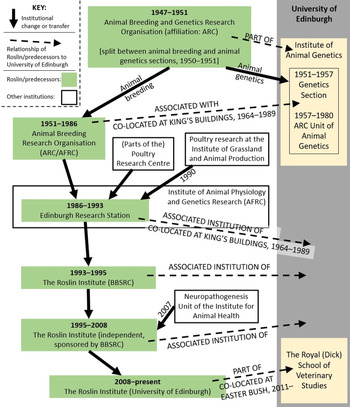
From the 1980s onwards, Roslin has changed its institutional form several times (see Figure 1). A reorganization of AFRC institutes in the mid-1980s culminated in the merger of multiple institutes into so-called ‘super-institutes’. Among these were the IAPGR, which was a merger of ABRO, parts of the Poultry Research Centre (PRC) based at a site near the village of Roslin (south of Edinburgh), and the Institute of Animal Physiology located in Babraham, Cambridgeshire. The merged institute was initially based on three sites, at Babraham, Roslin and the King's Buildings in southern Edinburgh, the latter being where the science departments of the University of Edinburgh are situated. The Edinburgh Research Station (ERS, as the former ABRO and PRC elements of the IAPGR came to be known) still maintained links with the university as an associated institute. These links were weakened when the remaining ERS staff based at the King's Buildings campus moved five miles outside the city to the former PRC site near Roslin. This move, and the consolidation of the ERS on a single site, was completed in 1989.
Diagram depicting the key institutional changes experienced by the Roslin Institute and predecessor institutions, and the shifting relationship with the nearby University of Edinburgh.
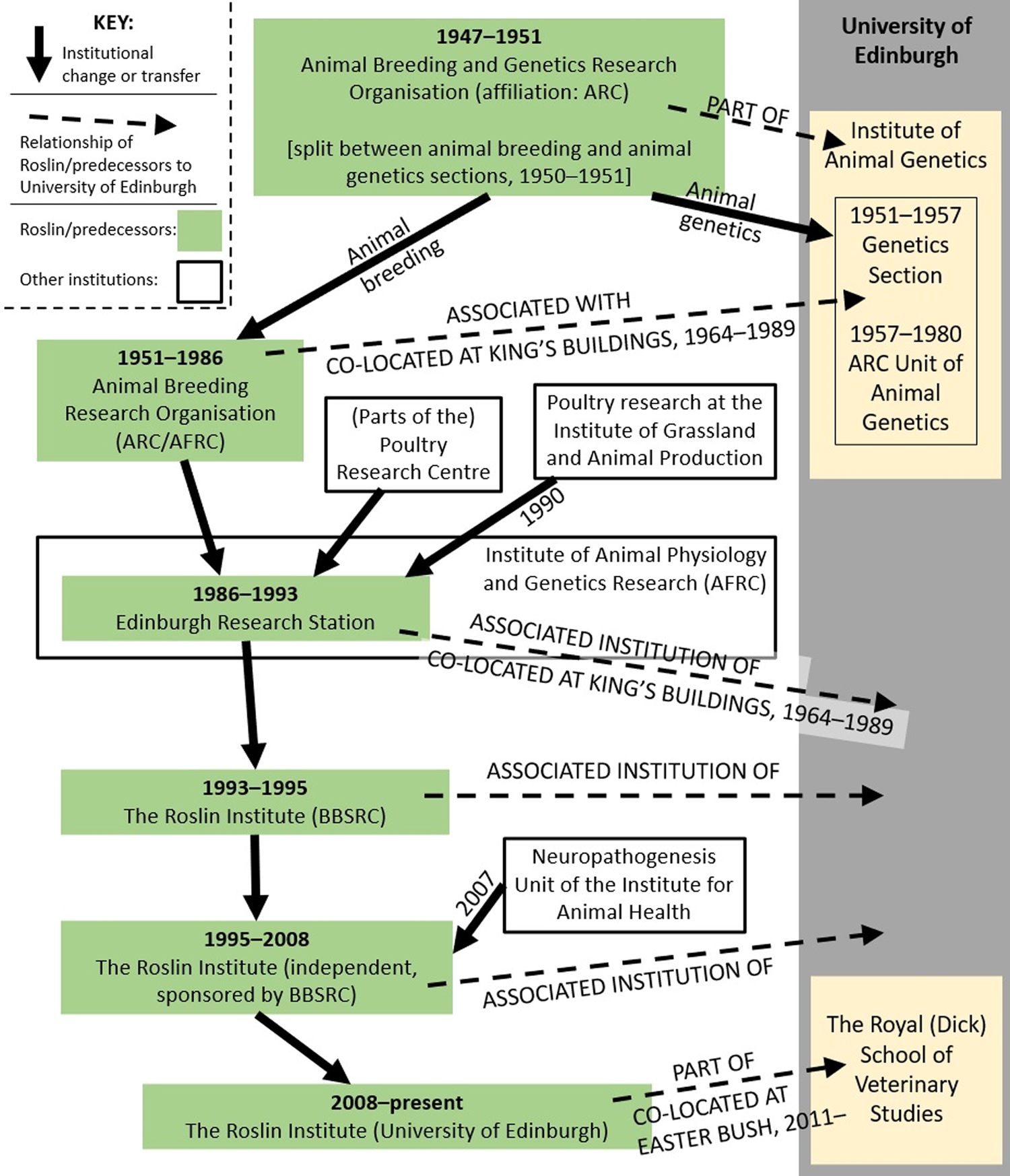
In 1990, the rest of the poultry research that had been placed in the Institute of Grassland and Animal Production in the mid-1980s reorganization became part of the ERS.Footnote 25 In 1993, the IAPGR was dissolved into its constituent entities. The Cambridge Research Station (CRS) comprising the Babraham-based portion of the super-institute became the Babraham Institute, while the ERS became the Roslin Institute. Upon independence, the Roslin Institute was initially an institute of the AFRC, and then the BBSRC. In 1995 it became an independent institute (becoming a company limited by guarantee and a Scottish charity) sponsored by the BBSRC. Since 1993 it has suffered periodic funding crises ahead of its incorporation into the University of Edinburgh in 2008, moving to the university's new Easter Bush campus in 2011.
The relationship with the CRS
After becoming part of the super-institute in 1986, the ERS also had to deal with the challenges of being in the same institution as the CRS, four hundred miles away. The CRS had a larger budget and staff, roughly two-thirds of the overall IAPGR. The overall institute director (Sir Barry Cross 1986–9, Sir Brian Heap 1989–93) also served as head of the CRS, and was based in Babraham. Collaboration within the super-institute was weak. For instance, a 1992 visiting group (an external party of reviewers that monitors research council-funded institutes, often on a five-year cycle) report noted, ‘Of the 174 and 145 external collaborations at CRS and ERS respectively, only 5 involved collaboration between CRS and ERS. The level of collaboration was no greater than might be expected between two separate UK research establishments of comparable size and complementary interests.’Footnote 26
Substantial operational problems were created by the structure of the super-institute, and the distance between its two main component parts. Distrust of the overall institute management by the ERS leadership was fomented by a perception that the leadership of the institute and the CRS was not allocating resources fairly to the ERS, that the ERS was marginalized in the overall decision making of the institute, and that mooted reorganizations – ostensibly to make the institute more functional and achieve the economies implied by the merger – were intended to concentrate further power (and resources) at the CRS.
This came to a head in a ‘discussion paper’ circulated by the IAPGR institute secretary Philip Shaw in June 1991. Shaw proposed that new posts of institute finance officer and institute engineer in the central Institute Office be created and based in Babraham, and that further responsibilities be added to the post of institute secretary, therefore centralizing control over these functions at the institute level; or, alternatively interpreted, at the CRS. Shaw justified his proposed removal of budgetary competencies from stations as a means of circumventing conflicts engendered by ‘the way finance is addressed’ – disputes over the allocation of resources.Footnote 27
ERS head of station (1988–93) Grahame Bulfield responded swiftly to Shaw's proposals. He acknowledged Shaw's observations concerning the ERS's perception of the ‘unequal treatment of the two Stations and the goal post [sic] continually moving’ and the difficulties ‘of managing two sites 350 miles apart, with different scientific philosophies, and different management problems’, but contended that these issues could not be resolved with a greater concentration of staff and decision-making powers in a central institute office.Footnote 28
Despite serious differences of opinion between Bulfield (and the ERS), Heap and Shaw, Bulfield's characterization of the fundamental cleavage in IAPGR was shared by Sir Brian, who has emphasized the significance of funding differences between the ERS and the CRS in shaping distinct cultures. At the time, the CRS was largely dependent on AFRC funds, ergo on the commitment of the research council to funding it. The ERS, however, was more dependent on periodic competitive MAFF funding. The ERS had been conducting a great deal of ‘near-market’ research, the CRS far less.Footnote 29 The organizational configurations required to deal with these different funding regimes, and the distinct orientations of the work conducted as a result, meant that establishing IAPGR-wide ways of working would clash with the preferred arrangements of one or both of the stations.
Neither Shaw's proposal, Bulfield's rebuttal and counterproposal nor other schemes put forward to resolve the cultural and administrative contradictions between the two stations were implemented. Instead, in the light of the 1992 visiting group report, a review group (chaired by AFRC council member Professor William V. Shaw) was commissioned by the AFRC council to examine the options for the future of the institute.Footnote 30 The group reported in September 1992, recommending that the IAPGR be split into two institutes, which became the Roslin Institute and the Babraham Institute on 1 April 1993.Footnote 31
Funding changes
I have already indicated some of the general changes in levels and balance of funding. Here I outline the concrete impact that these had on Roslin. While the ERS was adapting to being the smaller partner in a super-institute and developing a research programme based more heavily on molecular biology, it also suffered the unexpected death of its head, Roger Land, amid further changes in research policy and funding. Most notably, the Barnes review applied the radical and largely unanticipated government decision to no longer fund ‘near-market’ agricultural research from 1987/8 onwards.Footnote 32 The ERS was still significantly oriented to performing the research that would be included in the vague designation of ‘near-market’, so this decision represented yet more destabilizing news.
Throughout this, the ERS was also having to reorient itself towards competing for more external and competitive funds. In a report issued to members of the visiting group ahead of their arrival at Roslin in 1992, the shift in funding was laid out in stark figures:
On the amalgamation of ABRO and PRC to form ERS in 1986, the Station had approximately 50:50 funding from DES [Department of Education and Science] and MAFF. The MAFF funding is now about 42% and DES 30%, the remainder being made up of external and competitive funds of about 28%. Indeed, there has been a 5.5-fold increase in external funding since 1988 and together with collaborative grants with non-ERS institutions there are over 90 contracts/grants of total value £10.5M.Footnote 33
The subsequent review group led by William V. Shaw critiqued some of the effects of recent policy changes, noting ‘with concern the continuing decline in real terms in the volume of research commissioned by MAFF with AFRC Institutes following the withdrawal of Government funding for near market research’. Furthermore, they observed,
The need of [MAFF] Policy Divisions to respond in their commissioning decisions to economic and political pressures introduced instability within the system which had serious consequences for AFRC … The Group concluded that this instability threatened the structure of the science base, and made long term planning and resourcing of AFRC science programmes, and the supporting [of] facilities and expertise, very difficult.Footnote 34
The precarity that Roslin faced did not therefore just manifest itself in concrete changes requiring a response, but in an environment in which prospective changes in the future could not necessarily be anticipated or prepared for.
Frequent reviews
In addition to the regular reports of the visiting group and internal IAPGR reviews and proposals that occasioned much back-and-forth debate between the two stations, the ERS also experienced regular reviews and reports by the AFRC's Management Audit Unit (MAU), which had been formed in 1985.Footnote 35 The increased role for auditing of management and performance within the AFRC was a reflection of the wider adoption of regimes of performance audits as part of the implementation of New Public Management from the late 1970s in the UK and elsewhere.Footnote 36 In June–July 1988, September–October 1989 and January 1992, the MAU conducted ‘fieldwork’ at the ERS, interviewing staff, issuing questionnaires, receiving reports and touring the facilities. Each time, the MAU made sweeping recommendations concerning staff cuts, redeployments and regrading. The ERS leadership believed that the motive for this was to downgrade posts rather than offer the constructive managerial and operational advice that was supposedly the MAU's remit.Footnote 37
In addition to the internal AFRC and institute reviews mentioned above, Roslin also faced further uncertainties due to the government's launch of a series of reviews into the future of publicly funded research institutions in the wake of their 1993 White Paper, Realising Our Potential: A Strategy for Science, Engineering and Technology. The initial review, the Multi-departmental Scrutiny of Public Sector Research Establishments, was rapidly conducted by the government's Efficiency Unit in 1994.Footnote 38 The follow-up Prior Options Review of Public Sector Research Establishments was then set in motion to examine the institutions not privatized by the previous review, and only concluded in 1997. Both looked at Roslin, among other institutions. The Prior Options Review considered ‘the scope for privatisation’ – that is, the removal of direct government support – and introducing ‘flexibility’ in the form of fixed-term contracts for new hires to prepare institutes for privatization.Footnote 39 While full privatization did not occur for Roslin, their core funding from the BBSRC continued to decline in real terms, and their reliance on short-term (typically three-year) research commissions from MAFF instituted at least some of the ‘flexibility’, or instability, that it would have entailed.
For Roslin, an evolving regime of precarity was set in train in the 1980s. There was no one moment of crisis precipitating the multiple dimensions of this, but the ongoing introduction of a series of changes to policies, and the embedding of new organizational and managerial logics within institutions upon which Roslin relied. The ongoing manifestation of precarity therefore required a response well into the 1990s and beyond.
Adjusting to precarity: establishing and leading an international collaboration to map the pig genome
While still part of the super-institute, one of the ways in which Roslin navigated the challenges specified above was by adopting a programme of transgenics research with allied commercialization, which culminated in the birth of Dolly.Footnote 40 However, it also adopted another strategy for responding to the precarity it was facing, which I will now explore. Internal strategic reviews identified genome mapping as an opportunity for the ERS that could build upon existing lines of research, capabilities and material resources; that could be of interest to industry; and that could attract European funding. This led to Roslin forging and leading an international network to map the pig genome, and creating new informatics resources, materials and tools to make itself an attractive collaborative partner. As a result, it positioned itself at the centre of pig genome research networks in Europe and beyond, from the late 1980s to the present, opening up new and varied funding opportunities.
Launching genomics research
A tradition of conducting genetics research relevant to the problems of animal breeding, and ties with the livestock-breeding industry, persisted at the ERS.Footnote 41 In addition to the nascent transgenics work in the mid-1980s, there were two main lines of genetic research. The first was molecular, characterized by the work of Alan Archibald, who had come to animal genetics from a biochemistry background. The second line of research was quantitative, and was typified by the work of Chris Haley, who came to Roslin following postdoctoral research at the University of Birmingham.Footnote 42 Archibald spent 1982–3 learning recombinant-DNA techniques at the European Molecular Biology Laboratory in Heidelberg.Footnote 43 From the mid-1980s, he conducted work on the genetics of a condition called porcine stress syndrome. This work concentrated on the establishment of the order of genes around a locus where the responsible mutated gene was hypothesized to reside. This was one of the lines of research that led him into pig gene mapping. He was joined in this work by livestock geneticists from around the world, from both quantitative and molecular backgrounds.Footnote 44 This research helped to consolidate links between some of the key actors who would participate in PiGMaP.
The intersection of both quantitative and molecular approaches underpinned pig genome research, and the establishment of Roslin as a centre of data, calculation, coordination and communication. The coming together of these two lines was facilitated by processes set in place by Grahame Bulfield when he became the head of station at the ERS in November 1988, taking advantage of the degree of autonomy that ERS had within the super-institute. In the months immediately after his appointment, he talked to all of the institute's scientists about their work. These conversations led to the delineation of possible future work, which fed into the creation of thirteen ‘working parties’. The working parties allowed researchers to formulate the basis for new research programmes that better meshed with their skills and interests, within the overall framework of adapting the ERS's research strategy towards a changed funding environment.
Working Party 7, on ‘Genome Analysis’, led by Archibald, decided on the basis of two reports and three meetings that creating a map of a livestock animal genome based on a kind of marker called restriction fragment length polymorphisms (RFLPs) would both be practically feasible and enable the identification and location of quantitative trait loci, sites associated with phenotypic variation. Pigs were chosen due to the availability of reference families of crosses between imported Meishan pigs and members of the British Large White breed. Meishan pigs are a Chinese breed, and a population of them was imported to the UK in 1987, with animals going to pig-breeding companies and Roslin itself. Their prolificacy was of interest to breeding companies because of the potential for increasing the number of piglets born to commercially bred sows, and to Roslin for the reproductive research that could be conducted on them. For genomics, their value lay in their genetic distinctiveness from European domesticated breeds, as discussed below. The report of the working party noted that ‘ERS has a unique ability to generate reference families for mapping, handle large number [sic] of DNA samples for RFLP mapping, and the theoretical geneticists and the databases for such analyses’. Although funding arrangements from the AFRC similar to the Transgenic Animal Programme already in place were mooted, it was acknowledged that ‘[i]nternational collaboration, possibly through the EEC [European Economic Community] might be necessary’.Footnote 45
Wider collaboration was deemed to be important to gaining access to funds and different populations of pigs, but also because the scale of research required could not be carried out at the relatively small ERS. Genomics entailed a collaborative mode of work. The drive towards European cooperation was due to the paucity of institutions with which Roslin could collaborate on livestock genomics within the UK, the need for other institutions in Europe to collaborate beyond their own walls and borders, and the research agenda of the EC itself.
PiGMaP comes together
The first fruit of the strategy of Working Party 7 was a successful application for funds by Archibald and Haley from the Pig Science Programme of the AFRC. The ERS received £159,774 of the total £243,000 for ‘AG202/419 (PSP) “A molecular and physical map of the pig genome”’ with the CRS. The three-year programme of research from 1990 to 1993 overlapped with the eventual tasks that the ERS and the CRS promised to fulfil as part of PiGMaP.
In August 1989, Archibald began contacting leading pig geneticists around Europe about an application for a gene-mapping project to the EC's BRIDGE programme. One of his correspondents was Louis Ollivier, a quantitative geneticist at the INRA Station de génétique quantitative et appliquée, at Jouy-en-Josas near Paris.Footnote 46 Ollivier informed Joël Gellin of Laboratoire de génétique cellulaire at INRA Centre recherches de Toulouse about these plans, and on 11 September Gellin wrote to Archibald suggesting that they come together to formulate a common project.Footnote 47 Gellin noted that a ‘round-table discussion on gene mapping … with a EEC point of view’ had been arranged at the CRS by Elizabeth Tucker for November 1989. This meeting took place on 11 November, and involved forty participants from across Europe. A scientific staff member in DG-XII, Hervé Bazin, was present.Footnote 48 Bazin was ‘a key supporting figure for getting the PiGMaP project funded’, according to Archibald, and guided the mappers through the process.Footnote 49 In that same month, Archibald and Haley began receiving the contributions to the overall application from the prospective laboratories. These were soon integrated into an overall proposal, which was accepted for funding from BRIDGE in May 1990. It was funded as an ‘N’ (networked) project, with a 1.2 million ECU budget (approximately £850,000).Footnote 50
Collaboration in PiGMaP
Reflecting norms within livestock genetics communities, data generated within PiGMaP were shared only with those contributing data towards it. Through the sharing of data and materials, PiGMaP helped to strengthen the hitherto weak ties across the pig genetics community that had been established in the 1980s. It also contributed to the forging of links between institutions in European Community countries and those in non-community countries in Europe and beyond (including Australia, Japan and the USA), through a wider collaboration centred on PiGMaP.
PiGMaP used the strengths and research interests of the participating laboratories, with some efforts to avoid duplication (e.g. the use of subsets of reference families of pigs rather than genotyping them all) and informally divided labour through ad hoc groups and meetings of relevant participants. Alan Archibald served as coordinator, and Roslin hosted a computer system and databases, as well as developing statistical tools for the analysis of data arriving from participating laboratories. There was no strict top-down direction of the dissemination of tasks or division of labour in PiGMaP. Roslin's status as coordinator meant, though, that new laboratories wanting to participate in PiGMaP II – or the wider collaborative network of which it formed the heart – went through Roslin, and more specifically through Archibald. PiGMaP meetings were not open to any who wished to attend, but outside participants were invited to contribute, for example a regular attendee was the United States Department of Agriculture's (USDA) extramural pig genome coordinator Max Rothschild. In 1990, Archibald and Haley went to the Allerton conference in the USA that led to the development of two USDA-funded initiatives there. Before this meeting, many US actors were not aware of the British and European efforts and participants.
There was considerable incentive for European laboratories to work together. Each came to PiGMaP with their own support from national funding agencies and ministries, and in some cases from the private sector. The European funding, the collaboration and the sharing and integration of outputs constituted added value. As many non-European researchers and institutions wanted to work with European collaborators, Roslin's position at the centre of the European network was leveraged into a central role in international efforts.
Roslin at the centre of PiGMaP
In addition to using the reference family of Meishan–Large White crosses to perform linkage analysis, a crucial part of Roslin's programme of work within PiGMaP was to develop statistical and computational tools for the integration and analysis of the data being submitted to Roslin.Footnote 51 This multifunctional role was to be another hedge against precarity, in making itself useful in a variety of contexts, enabling it to take up and develop different opportunities as they arose.
Chris Haley at Roslin, together with (primarily) INRA and Wageningen University, led the work on the development of statistical tools and software. Haley was inspired to develop statistical methods for the mapping of genes and quantitative trait loci in pigs by a 1988 paper reporting the mapping of loci in tomatoes.Footnote 52 It was not a simple matter to adapt tools developed for plant genome mapping or human genome mapping to the mapping of genes in pigs. Pig populations are not inbred to anything like the same degree as tomatoes, and, in contrast to humans, reference families comprising pigs with known pedigrees could be created.Footnote 53
Reference families, at Roslin at least, consisted of three generations, the second generation being the result of crosses between Meishan and Large White pigs of the first (grandparental) generation. These pig breeds are genetically and phenotypically distinct. The different breeds were hypothesized to be likely to carry different alleles for equivalent genes. Crosses between breeds should therefore regularly produce offspring heterozygous for those alleles, to provide data on linkage for mapping. Wild boar were used in crosses with Large White pigs by some other PiGMaP groups in order to achieve the same end.
Making use of data arising from crossing experiments conducted across Europe, however, required an informatics capacity that was not in place for pig genome mapping at the start of the 1990s. Acquiring the funds for a computer system that could host a database specifically designed for the requirements of pig genome mapping was a capital spending priority for the ERS for the 1991–2 financial year. An alternative suggestion from elsewhere in the super-institute that PiGMaP use the Genome Database (GDB) at the Medical Research Council's Human Genome Mapping Project Resource Centre was rejected by the ERS. Human genome mapping – for which GDB had been designed – involved a different level of mapping resolution, and was not equipped to incorporate reference family pedigree information alongside the linkage data. Additionally, as the editing of the database would be under the control of the Human Genome Mapping Project, this would clash with the EC requirement that there should be a separate database for animal genome mapping.Footnote 54 Bazin had given Roslin an indication that they were the preferred home for this. He emphasized that setting up and hosting such a database would allow them to establish themselves as the centre for all mapping project data for farm animal genome projects, and therefore set themselves up for further capacity-building informatics funding from the EC's third framework programme. Roslin got the computer system they needed. This set them up to be able to develop and host two databases for PiGMaP: the more widely accessible PiGBASE holding mapping data, and ResPig for genotyping data sent by (and only accessible to) contributing members of the consortium and the wider collaboration around it. ResPig was the result of a suggestion by Bazin to seek funding to develop the databases being populated by PiGMaP data. This yielded 300,000 ECUs to Roslin and INRA Jouy-en-Josas for the Genome Mapping Informatics Infrastructure (GEMINI) project, as part of the BIOTECH 1 programme.Footnote 55
The development of Roslin's calculative and analytical capacity depended on the adaptation of existing tools and approaches, to be able to deal with the kind of data produced by pig reference families, crosses and genotyping data. PiGBASE was developed from an existing database for mouse genetics, GBase, developed at the Jackson Laboratory in the USA. Roslin staff worked with the Jackson Laboratory's Alan Hillyard to ensure that PiGBASE was equipped for the kinds of data that would be entered into it either manually at Roslin or remotely from elsewhere. First Archibald, and then Archibald with Max Rothschild, edited the database. Another database (GEMMA) was established at the INRA station near Toulouse. While there was regular contact between researchers at Roslin (Archibald and Haley) and INRA (Denis Milan), the databases were never fully integrated. Roslin, nevertheless, was a key point of passage for the inclusion of data in the European side of the mapping effort. Through international contacts, Roslin was also involved in efforts to publish maps based on the data contained in these databases, including integrated maps such as those for swine chromosomes 2 and 5.Footnote 56
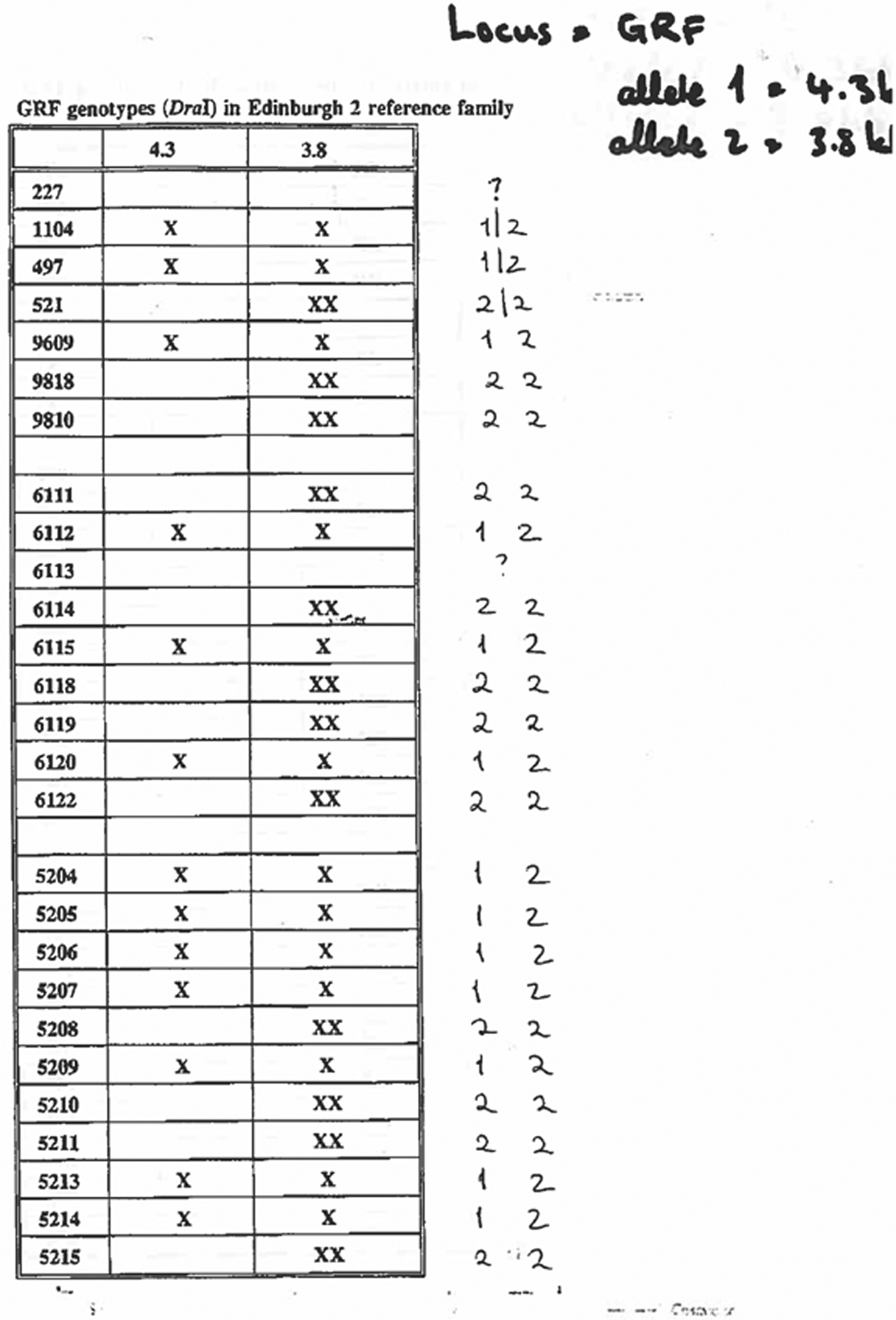
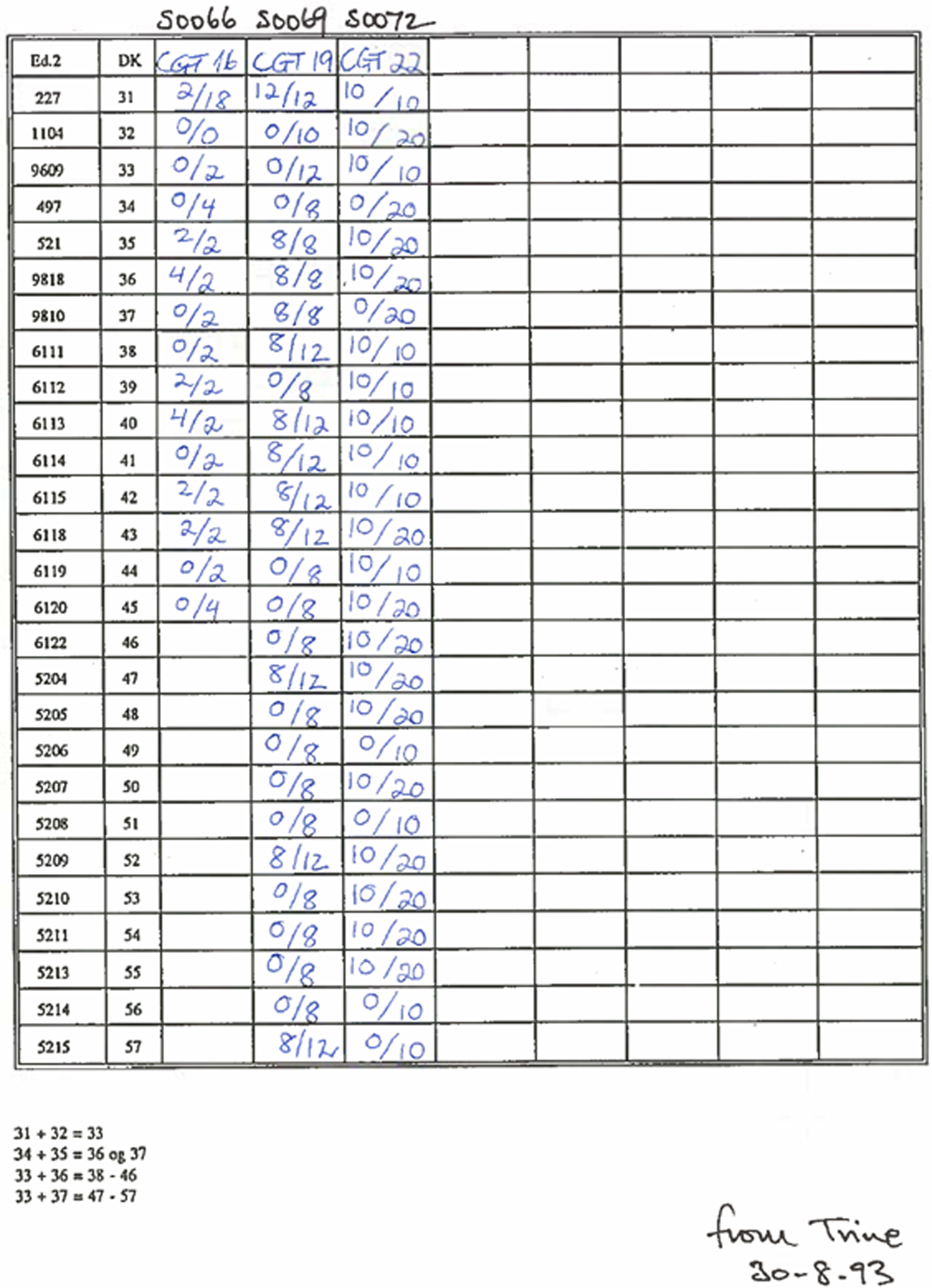
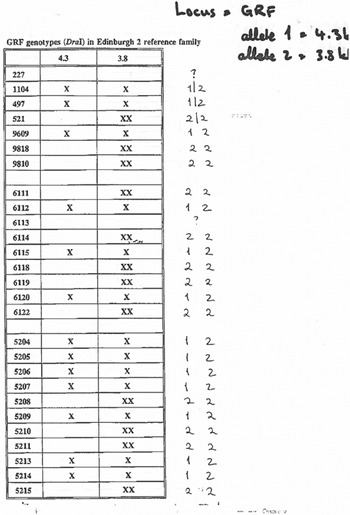
PiGMaP participants would send genotyping data to Roslin based on the crosses they performed. This was not in a standardized form, as different data submissions demonstrate (see Figures 3 and 4). In the early years, these data would be manually checked by Archibald. Later, the Roslin bioinformatician Andy Law developed a system that spotted errors or inconsistencies in the results of linkage analyses performed using submitted data. Towards the end of the project, he also created means by which participants could remotely enter data. In addition to checking, entering and analysing data (using statistical tools built into software), the supply of data was monitored from Roslin.Footnote 57 PiGMaP participants were able to pursue their work in their own way to a considerable extent. Roslin, however, as the coordinator of the project responsible to the EC for the delivery of promised outputs, had the role of regulating the moral economy of the collaboration.Footnote 58 This entailed ensuring that the distribution of (prospective as well as actual) credit motivated and reflected the due sharing of data and contributions towards the overall outputs of the collaboration, as well as the aims and interests of the individual groups.
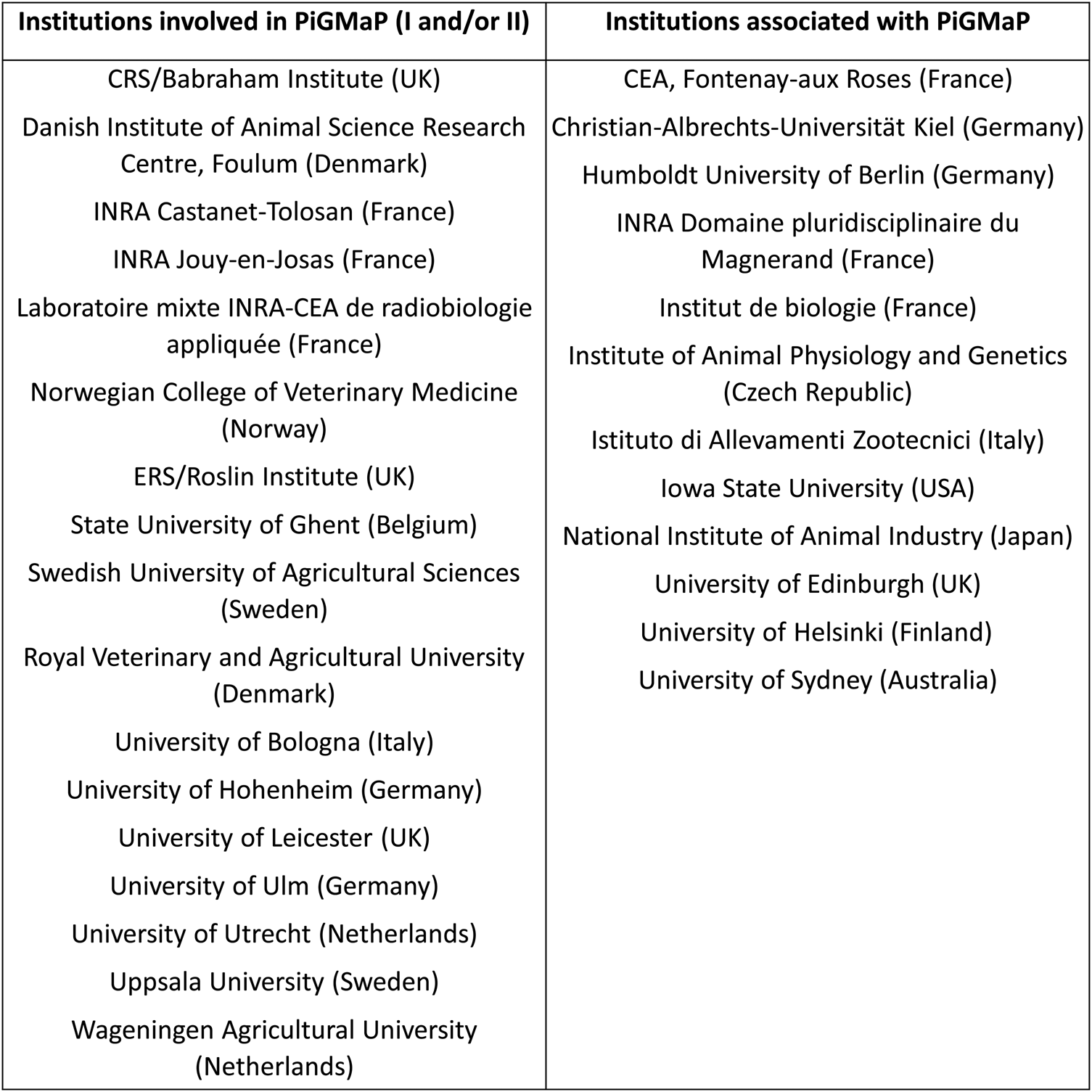
Institutions involved with PiGMaP. The left-hand column lists institutions that received EC funds as contractors. The right-hand column lists other institutions that contributed to publications produced by PiGMaP.
Genotyping data sent to Alan Archibald at the Roslin Institute by Vivi Hunnicke Nielsen at the National Institute of Animal Science Research Centre, Foulum, Denmark, 4 June 1993. Alan Archibald's personal papers, folder ‘AA4_13 PiGMaP – Foulum’.
Genotyping data sent to Alan Archibald at the Roslin Institute by Trine Winterö at the Royal Veterinary and Agricultural University, Copenhagen, 30 August 1993. Alan Archibald's personal papers, folder ‘AA4_4 PiGMaP – Copenhagen’.
Funding support for databases and software was time-limited: PiGBASE expired in 2002. Subsequently, Archibald secured BBSRC grants for the development – led again by Andy Law – of a new database to host data for a range of farmed animals: ArkDB.Footnote 59 Roslin was not alone in trying to secure funds to establish and maintain these community resources, and to develop tools to aid researchers in exploiting them as fully as possible.Footnote 60 They are, however, fine examples of how Roslin made itself a dynamic attractor for data and mapping analyses over this period, from a standing start in 1989.
As a key location for the development and the hosting of databases and statistical and software tools for the reception and integration of data sent in various forms, Roslin functioned as a centre of calculation for data and their interpretation. Centres of calculation are key actors in creating and maintaining circulations of resources and people, and in analysing, classifying and inscribing data in abstract representative forms like mapping relations stored on a database.Footnote 61 In Roslin's case, the existing relationship with the breeding sector had contributed two facets of this before PiGMaP: it was a training centre for geneticists who would go on to work in industry and in other publicly funded research institutes, and it had access to reference families of pigs that were a valuable genetic resource. Roslin also led the forging of the network that would enable linkage experiment data to feed into it. This allowed Roslin staff to calculate linkage relationships and then hypothesize relative map positions of genetic markers across the genome. A progressively greater resolution of different kinds of markers across the map could then be used in the hunt for ‘candidate genes’, the characterization of which was intended to provide a more targeted base for selective breeding. The charting of these markers, in turn, iteratively allowed ever-finer-grained mapping as the database entries and inferred linkages between markers flowed out of Roslin alongside DNA samples from their reference families. This allowed the other institutions in the network to generate more data, and to begin to test associations between what was mapped and the data they had collected on the phenotypes of their animals. The results could then be combined with – and tested against – subsequent mapping, data derived from new kinds of genetic markers, data produced using different methods (including physical mapping methods such as radiation hybrid mapping), and maps produced by other projects, such as the one based at the USDA Meat Animal Research Center in Nebraska.Footnote 62 Through this activity and these circulations, the strength and connectedness of the networks Roslin had helped to foster were enhanced, as was Roslin's own prominence within them.
Post-PiGMaP
In terms of specific projects, the EC framework programmes were no less ephemeral than domestic funding sources. In the early 1990s, delays in the approval of the fourth framework programme created uncertainty around funding. Furthermore, funded projects ran for relatively short periods of two to four years, and the demands placed on collaborators were inconsistent. EC funding for research did, however, still serve as a buffer against precarity. Partly this was through the addition of a new source of funds, although these were never a significant proportion of Roslin's income. Mainly, though, it was through new capabilities developed through EC-funded projects (for instance, leading to Roslin developing software such as QTL Express and GridQTL, which became significant internationally used tools), and the platforms and networks that were established from the collaborations that Roslin had helped to forge.
Roslin played a role in securing funding for – and leading – European-funded collaborations beyond PiGMaP. These involved the further identification and mapping of genetic markers, and the continued development of maps, statistical methods, software tools and databases. These methods and resources were then deployed, for example, in EC-funded collaborations throughout the rest of the 1990s and into the 2000s to study pig genetic diversity, to help identify candidate genes or quantitative trait loci relevant to livestock production, and to develop the means to introgress (transfer) an allele from one breed to another.
Roslin was also involved in the creation of genome libraries, in which fragments of DNA are stored in viruses or microorganisms. Genome libraries can be used to search for and analyse particular markers, genes or sequences of interest, to enable the mapping and characterizing of genes. A library was created using the P1 bacteriophage during PiGMaP. Later, over 1997 and 1998, Roslin constructed and evaluated a Bacterial Artificial Chromosome library (PigEBAC).
From the late 1990s onwards, efforts were made to obtain backing to sequence the whole pig genome. Initially, attempts to get the USDA and the US National Institutes of Health to fund this were unsuccessful. But from the year 2000, Archibald acquired funds to begin the process of systematically constructing a physical map of the whole genome, to form the basis for subsequent sequencing. When the sequencing project finally commenced, Archibald and Roslin were key players. This time, they did not host a database or conduct the sequencing, but functioned as a community node, and an organizational and intellectual contributor. The pig genomics community that had developed in the 1980s, and strengthened ties through collaborations throughout the 1990s, conceived and managed the sequencing project through the Swine Genome Sequencing Consortium. The Sanger Institute in Cambridgeshire, UK, was contracted to perform key, technology-intensive parts of the physical mapping and sequencing. Four genome libraries were used, including PigEBAC. Archibald frequently visited and liaised with the Sanger Institute. Once the initial stages of assembly were conducted at the Sanger Institute and the Genome Analysis Centre in nearby Norfolk, further assembly was performed at Roslin by Archibald, and Roslin scientists also contributed towards the genome annotation.Footnote 63
In 2017, a new high-quality version of the swine reference genome was published. This project was led by Archibald and Tim Smith of the USDA Meat Animal Research Center – and significant portions of the work took place at Roslin. This demonstrates how what had begun as one strategy among many to cope with new forms of precarity actually resulted in the establishment of Roslin as an indispensable centre of communication, circulation, calculation and integration within twenty-first-century livestock genomics. Through developing itself as a centre for genomics research, it has also been able to take advantage of the polyvalence of genomics to establish collaborations beyond livestock genomics. From the 1990s onwards, it has leveraged its capabilities, resources and reputation to participate in projects to assess the diversity and evolutionary relations of the pig, as well as collaborating on more biomedical areas of research, diversifying its research portfolio and opening itself up to more and different kinds of funding and support as a result.Footnote 64
Conclusion
Grahame Bulfield has recounted that running Roslin ‘was like riding bareback on a wild horse’.Footnote 65 His predecessor died suddenly. Regular threats to the funding and status of the institution caused ongoing strife for those working there. The merger with a distant and culturally distinct institution was still bedding down, funds for ‘near-market’ research were withdrawn, and core non-competitive funding was declining. New, untested, regimes of audit and measurement of scientific activity augmented existing external monitoring processes.
One strategy to adjust to all this was to target the new opportunities opened up by European funding. This was no less short-term than domestic sources, and its consequences remained: ephemeral jobs, ephemeral databases, ephemeral data. It did, however, offer another stream of funding, and the opportunity to forge and shape international networks, and to position itself advantageously within them. In this, Roslin was able to take advantage of improved ICT, but had to fight to secure it, aided by Bazin's guidance, and to demonstrate the worth of the database and software resources it produced. It made use of existing resources such as the Meishan pigs, augmented these with new resources such as PigEBAC, and coordinated the production and circulation of materials and data from other centres. Roslin encouraged and made use of researcher mobility and the cultivation of new connections with collaborative potential. It achieved this through the training of researchers, contacts with industry and other academics, and the development and coordination of PiGMaP. Roslin's activity therefore demonstrates how an institution can not only respond to changes in the research environment that encourage collaboration, but also construct new niches, thereby modifying that environment to further enhance its collaborative links and embed its own indispensability.
With partners across Europe, through pig genome mapping Roslin was able to build stable configurations of research collaborators, successive research projects, and permanent networks dedicated to promoting livestock genomics research. This has created a centre of gravity that has guaranteed continued support for this research.Footnote 66 The EC actors, at the level of DG-XII and Bazin, were interested in capacity building. This meant identifying certain institutions that could help with this, and aiding the construction of collaborative networks that would provide the impetus for continued development. This took a different form in pig genomics, compared to other contemporary European genomics programmes, such as the Yeast Genome Sequence Project (YGSP, 1989–96). For example, in the YGSP, while sequencing was distributed among many laboratories, the project was formally organized in a top-down and hierarchical way. A designated bioinformatics coordinator (the Martinsried Institute for Protein Sequences) collated, analysed and published sequencing data from all participants, and each chromosome or part thereof was under the stewardship of a named coordinator. In PiGMaP, however, Roslin's role emerged, in part, through its own initiative; it was not stipulated in official plans, and it was never total. Archibald and Haley, and Roslin more broadly, exhibited ‘network power’ by stimulating and coordinating interaction and shaping their own position within the collaboration rather than fulfilling a pre-established role.Footnote 67 The YGSP took the form it did because of the strategic salience of it as a flagship for the EC, the importance of yeast as a model organism, the utility of yeast genomics for biotechnology and human genomics, and the entry of US actors as potential competitors and collaborators.Footnote 68 PiGMaP took the form it did in large part because of the nature and agency of the participating institutions, who were facing similar pressures to differing degrees across the Continent. The articulation of genomics that resulted was reflected in the control and involvement of the pig genomics community – forged in projects like PiGMaP – in the eventual effort to fully sequence the pig genome.Footnote 69
Rather than trying to produce comprehensive maps and sequences, Roslin and their collaborators targeted and prioritized particular markers, genes and regions that were known to be of interest to members of the community, leading to different kinds of products than those resulting from yeast and human genomics. This community involvement in shaping and conducting genomics even affected how institutions such as the Human and Vertebrate Analysis and Annotation (HAVANA) group at the Sanger Institute saw their role. Their collaboration with the pig genomics community led them to develop a model of “community annotation” in which they facilitated researchers to annotate areas of the genome of interest to them, rather than conducting the annotation themselves.Footnote 70 This paper has therefore shown how detailed attention to institutional history can illuminate larger-scale processes and outcomes such as the creation and organization of projects to map and sequence genomes.
Roslin's strategy represented a readjustment of their alignment with the ‘working-world’ problems of livestock breeding.Footnote 71 It further shifted their focus away from direct involvement in breed improvement, towards instead providing data on genomic variants and their possible relation to phenotypic variation, and developing statistical and computational tools and models that could be used by breeding companies. In so adapting itself, Roslin exhibited resilience, defined as ‘an organization's ability to anticipate potential threats, to cope effectively with adverse events, and to adapt to changing conditions’.Footnote 72 The adoption of genomics as one of the ways in which it helped to effect this readjustment is significant. In its polyvalence, genomics constitutes a platform; it is something that provides a basis for a multitude of other forms of work, through the provision of data but also in terms of the technologies, techniques, infrastructures and materials that it provides.Footnote 73 It can enable and connect forms of work that are not possible in its absence. Developing the means by which to become a centre for genomics research, expertise and infrastructure was therefore an effective way for Roslin to make itself useful to a wider range of potential collaborators – and funders – across the public and private sectors. It therefore enabled it to diversify and become more flexible and adaptive to an ever-changing research environment.
Whether Roslin's reorientation reflected an existing resilience built through its own institutional history preceding the challenges discussed in this paper, or built resilience as a result of its own response to them, is an open question. One way to address this would be to examine comparator institutions over a similar period, and to combine this historical research with contemporary studies of how these institutions are responding to new uncertainties and stresses. These might include medical research institutions that were relatively sheltered from some of the issues faced by agricultural research institutions, as well as other agricultural research institutions that responded in different ways.
Acknowledgements
For their valuable feedback and guidance on various iterations of this paper, I would like to thank Miguel García-Sancho, Dmitriy Myelnikov, Robert Bud, Doug Lowe, interlocutors at the 2017 British Society for the History of Science and 2018 European Society for the History of Science conferences, Amanda Rees and the two anonymous reviewers for the BJHS. I am grateful to all those who have provided me with archival materials or agreed to be interviewed by me, and to the staff of the Centre for Research Collections at the University of Edinburgh. The research and writing of this paper was conducted through the TRANSGENE: Medical Translation in the History of Modern Genomics project, funded by the European Research Council (ERC) under the European Union's Horizon 2020 research and innovation programme, grant agreement no. 678757. This support is deeply appreciated.



 Open access

