


The prevalence of obesity in Western countries has steadily increased in the last decade, and has became a major public health problem(Reference Ledoux1–Reference Tjepkema and Shields3). Obesity, and more specifically abdominal obesity, has been shown to increase the risk of CVD and type 2 diabetes(4, Reference Kissebah5) and in women, CVD remains the first cause of mortality after menopause(6–Reference Mosca, Manson, Sutherland, Langer, Manolio and Barrett-Connor8). While dietary treatment is the basic therapeutic approach for obesity, its long-term impact on weight management is disappointing(Reference Wing and Phelan9). In fact, approximately 20–30 % of overweight or obese individuals succeed in maintaining their weight loss after 1–3 years following a hypoenergetic diet, and a lower percentage succeed after 3–5 years(Reference Wing and Phelan9). On the other hand, dieting in order to control weight is very prevalent in our modern society, especially among women. In fact, results from the National Health and Nutrition Examination Survey 2001–2 underline that restraining food intake is the most prevalent weight-control practice, either in women wanting to lose weight or trying not to gain weight(Reference Weiss, Galuska, Khan and Serdula10).
The Three-Factor Eating Questionnaire is one of the most widely used scales in behavioural research, developed in order to measure cognitive dietary restraint, disinhibition and susceptibility to hunger(Reference Stunkard and Messick11). Even if each method to assess eating behaviours has its strengths and weaknesses, results from a study comparing four questionnaires of dietary restraint measurement has shown that the Three-Factor Eating Questionnaire cognitive dietary restraint scale was the most valid measure of the intent to diet and of actual energy restriction(Reference Williamson, Martin, York-Crowe, Anton, Redman and Han12).
The associations between eating behaviours and body-weight management have been studied extensively but some inconsistency remains. More precisely, some intervention studies underlined that dietary restraint was a predictor of weight loss(Reference Drummond, Dixon, Griffin and De Looy13). On the other hand, other studies found no association between cognitive dietary restraint and BMI(Reference Dykes, Brunner, Martikainen and Wardle14, Reference Provencher, Drapeau, Tremblay, Despres and Lemieux15). Higher scores of disinhibition, which is defined as a loss of control over eating in response to different stimuli that leads to an overconsumption of food(Reference Stunkard and Messick11), have been associated more systematically to higher BMI(Reference Provencher, Drapeau, Tremblay, Despres and Lemieux15–Reference Hays, Bathalon, McCrory, Roubenoff, Lipman and Roberts19). The inconsistent associations between restraint and BMI could be partly explained by the fact that in some studies, increased restriction has been associated with increased disinhibition(Reference Westenhoefer, Stunkard and Pudel20, Reference McLean, Barr and Prior21).
Since change in food choices is the cornerstone of obesity management and because eating behaviours are related to obesity, better knowledge with regard to eating behaviours and their relationship with food and drink consumption and meal pattern could be helpful to improve dietary treatment of obesity. Some studies evaluated the relationship between eating behaviours and food consumption(Reference Borg, Fogelholm and Kukkonen-Harjula22–Reference Contento, Zybert and Williams27). Accordingly, cognitive dietary restraint has been previously associated with frequent use of reduced-energy and reduced-fat foods(Reference Rideout, McLean and Barr26, Reference Kirkley, Burge and Ammerman28). Furthermore, French et al. demonstrated that subjects who self-reported that they were dieting to lose weight (which is related to increased dietary restraint)(Reference French, Jeffery and Forster29) had lower self-reported intake of several high-fat/high-energy foods, including sweets, meat, soft drinks, French fries and dairy products(Reference French, Jeffery and Forster29).
In most studies, associations between eating behaviours, BMI and food intakes have been examined in premenopausal women(Reference Tuschl, Platte, Laessle, Stichler and Pirke23, Reference Moreira, de Almeida and Sampaio25–Reference Contento, Zybert and Williams27, Reference Westerterp-Plantenga, Wijckmans-Duijsens, Verboeket-van de Venne, de Graaf, het Hof and Weststrate30–Reference Beiseigel and Nickols-Richardson32) and studies have generally not considered a wide set of dietary variables and rather focused on energy intake, macronutrient composition of the diet and only a few food groups. Fewer studies have been performed in healthy postmenopausal women not under treatment, under ‘real-life settings’. Also, to our knowledge, no study has yet investigated whether the presence of disinhibition could modulate the association between restraint and the pattern of food consumption among postmenopausal women. Therefore, the present cross-sectional study aimed at examining the relationship between eating behaviours (cognitive dietary restraint, disinhibition and susceptibility to hunger) and habitual food and drink consumption as well as energy and nutrient intake, energy density and meal pattern. We also wanted to verify the hypothesis that the presence of disinhibition could modulate the association between restraint and dietary variables under study.
Research design and methods
Subjects
The present study was conducted in a sample of 112 postmenopausal women (aged between 46 and 68 years) in a real-life uncontrolled context recruited through the media in the Quebec City metropolitan area. Those reporting that they did not had menses for at least 1 year were considered as postmenopausal and were included in the study. A measure of the follicle-stimulating hormone was used to confirm the menopausal status (follicle-stimulating hormone value between 28 and 127 IU/l). All women included in the present study were free from metabolic disorders, were not using any type of hormonal therapy and were not under treatment for CHD, diabetes, dyslipidaemias or endocrine disorders (except stable thyroid disease). Five women included in the present study were smokers. None of the participants had received a diagnosis of type 2 diabetes before the study. All participants signed an informed consent document before entering the study, which was approved by the Laval University Medical Centre and the Laval University Research Ethics Committees.
Dietary profile
Food intake was assessed by a 3 d weighed food record, which was completed during two weekdays and one weekend day. The food record was explained and reviewed by the study registered dietitian. Copies of food record examples were also provided to each subject. In addition, participants were encouraged to consume the usual amount of typical foods and drinks. The food record included a section for recording information about recipes. Women were asked to weigh foods with a scale provided by the dietitian. Evaluation of nutrient intake derived from the 3 d food record was performed using the Nutrition Data System for Research software (version 4.03, developed by the Nutrition Coordination Center, University of Minnesota, Minneapolis, MN, Food and Nutrient Database 31, released in November 2000)(Reference Schakel, Sievert and Buzzard33). Each 3 d food record was reviewed to determine daily portions for 121 categories of food items that were further regrouped in twenty-eight food groups. Food categories used were adapted from the food list derived from a FFQ developed by Goulet et al. (Reference Goulet, Nadeau, Lapointe, Lamarche and Lemieux34) (see Appendix 1 for more details).
Each subject also had to identify in the 3 d food record the time of day and location for each meal consumed. Total energy intake for each day was divided by the total weight of the foods and beverages reported to determine daily energy density values(Reference Ledikwe, Blanck, Khan, Serdula, Seymour, Tohill and Rolls35). Similarly, energy density was also calculated for each meal.
Anthropometric measurements
Height (cm), body weight (kg) and BMI (kg/m2) were determined following the procedures recommended at the Airlie Conference(Reference Lohman, Roche, Martorell, Lohman, Roche and Martorell36). Anthropometric measurements were performed after the completion of the weighed food record.
Questionnaire about history of weight
A questionnaire about weight and diet history was administered by a registered dietitian. Participants had to indicate whether they had previously been on a diet to lose weight and when was their last dieting attempt. They also had to indicate their body weight at age 20 years.
Three-Factor Eating Questionnaire
Postmenopausal women filled out a French version at home of the Three-Factor Eating Questionnaire. The Three-Factor Eating Questionnaire is a fifty-one-item questionnaire developed by Stunkard & Messick in 1985(Reference Stunkard and Messick11). The purpose of this questionnaire is to assess three factors related to cognitions and behaviours associated with eating. These factors are cognitive dietary restraint, disinhibition, and susceptibility to hunger. More precisely, cognitive dietary restraint is a conscious control over food intake with concerns about shape and weight (twenty-one items, score ranging from 0 to 21). Disinhibition is an overconsumption of food in response to a variety of stimuli, such as emotional stress, associated with a loss of control on food intake (sixteen items, score ranging from 0 to 16). Finally, susceptibility to hunger refers to food intake in response to feelings and perceptions of hunger (fourteen items, score ranging from 0 to 14)(Reference Stunkard and Messick11). This questionnaire has been validated, and all three of these scales have good test–retest reliability(Reference Stunkard and Messick11, Reference Laessle, Tuschl, Kotthaus and Pirke37, Reference Lluch38).
Statistical analyses
Pearson correlation analyses were performed to assess how eating behaviours were associated with BMI, energy intake and energy density. The whole sample of women was divided according to the median of the distribution of cognitive dietary restraint (score of 9) and of disinhibition (score of 6), resulting in the formation of four subgroups (low restraint–low disinhibition; low restraint–high disinhibition; high restraint–low disinhibition; high restraint–high disinhibition). Comparisons between groups were performed by ANOVA. In the presence of significant effects, Duncan's multiple comparison test was used to determine precisely the location of significant differences. The χ2 frequency procedure was used to compare the frequency of dieters in the four groups described above. Moreover, participants were also divided in two subgroups using the median of the distribution of susceptibility to hunger score (4 units). Student's t tests were then computed to evaluate differences between these two subgroups.
Finally, ordinary least squares regression was performed to determine the independent contribution of cognitive dietary restraint, disinhibition and their interaction to the determination of dietary variables studied. All analyses were performed with the SAS statistical package version 8.02 (SAS Institute, Inc., Cary, NC, USA).
Results
Postmenopausal women had a mean age of 56·8 (sd 4·4) years, a mean menopause duration of 8·3 (sd 6·9) years and a mean BMI of 28·5 (sd 5·9) kg/m2. BMI was significantly correlated with dietary restraint (r − 0·33; P = 0·0003), disinhibition (r 0·49; P < 0·0001) and susceptibility to hunger (r 0·39; P < 0·0001). Neither eating behaviours nor BMI were significantly correlated with energy intake. However, cognitive dietary restraint and disinhibition were both significantly associated with daily energy density of the diet (r − 0·30, P = 0·002; r 0·21, P = 0·04, respectively). Because both cognitive dietary restraint and disinhibition were significantly associated with energy density, regression analysis was also performed to determine the contribution of restraint, disinhibition and the interaction between restraint and disinhibition to the variance in energy density. Results showed that only cognitive dietary restraint tended (P = 0·06) to be an independent predictor of energy density. Neither disinhibition (P = 0·97) nor the interaction between restraint and disinhibition (P = 0·51) was a predictor of energy density.
The whole sample of women was separated according to median values of the distribution of restraint and disinhibition levels. Accordingly, four subgroups were compared: low restraint–low disinhibition; low restraint–high disinhibition; high restraint–low disinhibition; high restraint–high disinhibition. It is shown in Table 1 that women with low restraint and low disinhibition scores were characterised by a higher BMI than women from the other three groups (P < 0·05). Also, women with low restraint and high disinhibition gained significantly more weight since the age of 20 years than women characterised by low restraint and low disinhibition and than both subgroups of women with a higher restraint. Women with low restraint and high disinhibition also had a higher BMI at the age of 20 years than women with low restraint and low disinhibition (P < 0·05). It is also shown in Table 1 that both groups of women with high restraint level had a lower energy density than the two groups of women with lower restraint level. Although all women were weight stable at the time of investigation, some of them had already experienced dieting in the past. It was found that women with low restraint and low disinhibition scores were less susceptible to have been dieting in the past than women from the other three groups.
(Mean values and standard deviations)

a,b Values with unlike superscript letters are significantly different (P < 0·05).
Table 2 presents differences in consumption of food and drinks according to restraint and disinhibition levels. Women with high restraint and low disinhibition were different from women with lower restraint for some dietary variables. In fact, they had a lower consumption of red meat and processed meat than women with low restraint and high disinhibition. They also presented higher intakes of whole grains than both groups of women with low restraint (i.e. low restraint–low disinhibition and low restraint–high disinhibition). In addition, women with high restraint and low disinhibition consumed fewer diet soft drinks than women with low restraint and high disinhibition.
(Mean values and standard deviations)

a,b Mean values with unlike superscript letters are significantly different (P < 0·05).
Women with high restraint and high disinhibition also showed some differences when compared with women with lower restraint level. In fact, they had lower consumption of refined grains than women with low restraint and low disinhibition and lower consumption of diet soft drinks than women with low restraint and high disinhibition. When the two groups of women with high restraint values were directly compared with each other it was found that only the consumption of whole grains differed between the two groups (women with high restraint and low disinhibition having a higher consumption).
Low restraint combined with either high or low disinhibition differentially influenced dietary intake. Specifically, women with both low restraint and low disinhibition consumed less processed meat, less dessert and fewer soft drinks than women with low restraint and high disinhibition.
Subjects were also compared according to their susceptibility to hunger score (high v. low). Women characterised by a low susceptibility to hunger score had significantly lower total energy intakes than women with a higher score (7695 (sd 1685) v. 8648 (sd 1982) kJ respectively; P = 0·007) (Table 3). No significant differences were observed for macronutrient partition, energy density and number of meals per d. However, energy partition at breakfast and lunch tended to be significantly different between the two groups of women (breakfast: 32·6 (sd 26·9) % of daily energy for low v. 24·8 (sd 19·1) % for high susceptibility to hunger, P = 0·08; lunch: 23·2 (sd 11·7) % of daily energy for low v. 27·1 (sd 9·8) % for high susceptibility to hunger, P = 0·056).
(Mean values and standard deviations)
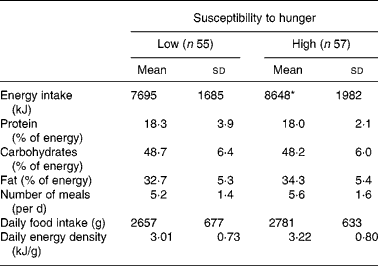
* Mean value was significantly different from that of the group with low susceptibility to hunger (P ≤ 0·05).
Consumption of meat substitutes (i.e. legumes, tofu, nuts, seeds) (P = 0·04), desserts (P = 0·009) and diet soft drinks (P = 0·04) were significantly higher and consumption of fruit juices was significantly lower (P = 0·03) in subjects with a high susceptibility to hunger score than in women with lower susceptibility to hunger (Table 4).
(Mean values and standard deviations)

Discussion
The main purpose of the present study was to examine how eating behaviours were associated with dietary profile, meal pattern and energy density in healthy postmenopausal women. The present results showed that women characterised by a high restraint level (presenting either high or low disinhibition) had a diet with a lower energy density as compared with women with lower restraint level. Differences in the consumption of red meat and processed meat, whole grains, refined grains and diet soft drinks were also observed between women with high restraint compared with those with lower restraint. Contrary to our hypothesis, the presence of disinhibition in women with high restraint did not seem to have a major impact on the overall pattern of food and drink consumption.
Our data also revealed that there was no significant association between eating behaviours and energy intake. Although some studies have shown that highly restrained individuals are more susceptible to report a lower consumption of energy(Reference Moreira, de Almeida and Sampaio25, Reference Rideout, McLean and Barr26, Reference de Lauzon, Romon, Deschamps, Lafay, Borys, Karlsson, Ducimetière and Charles39–Reference de Castro41), a lower energy intake has not been systematically reported in highly restrained eaters(Reference Tepper, Trail and Shaffer42). The lack of consistency in reported associations between dietary restraint and actual physiological energy restriction might be explained by the fact that dietary restraint is a heterogeneous concept and can also reflect a state of perceived deprivation (eating less than wanted without creating energy deficit)(Reference Lowe and Levine43). In addition, it is recognised that restraint could be imposed either by those who are currently dieting to lose weight or in those who have successfully lost weight and wish to maintain their weight status. Also some restrained eaters imposed restraint simply because they do not want to gain weight(Reference Weiss, Galuska, Khan and Serdula10). It is also possible that highly restrained subjects are more likely to underreport their dietary intake(Reference Bathalon, Tucker, Hays, Vinken, Greenberg, McCrory and Roberts44). However, the significant negative association between cognitive dietary restraint and BMI in the present study suggests that women with higher cognitive dietary restraint have an energy intake which is more accurately adapted to actual energy needs.
The present results also showed that women with low restraint and high disinhibition had the highest BMI and the more important body-weight gain since the age of 20 years, which suggests persistent positive energy balance. From the present results, it is difficult to determine whether the gain in body weight was a factor responsible for the determination of eating behaviours or whether eating behaviours had an impact on body-weight variation. Furthermore, we can not assume that eating behaviours measured after menopause are representative of eating behaviours measured at the age of 20 years since previous studies have shown that eating behaviours are likely to change over time(Reference Drapeau, Provencher, Lemieux, Despres, Bouchard and Tremblay31, Reference Rizvi, Stice and Agras45).
Although eating behaviours were not significantly associated with energy intake, the present results showed that cognitive dietary restraint was negatively and disinhibition was positively associated with energy density of the diet. Furthermore, regression analyses revealed that only cognitive dietary restraint tended to be a significant predictor of energy density. This is concordant with the fact that women with high restraint, irrespective of disinhibition level, had a diet with lower energy density than women with lower restraint level. The lower energy density of the diet of women with high restraint might be one of the factors explaining the significant association between higher cognitive dietary restraint and lower BMI. In fact, dietary energy density has been suggested as a determinant of energy intake and of body weight(Reference Yao and Roberts46–Reference Kant and Graubard48).
With regard to food and drink consumption, we found some differences between women with high v. low cognitive dietary restraint. The lower consumption of red meat and processed meat and the higher consumption of whole grains in women with high restraint and low disinhibition when compared with women with lower restraint level are suggestive of a healthier dietary pattern. In fact, lower consumption of red meat and increased consumption of whole grains are components of the Alternate Healthy Eating Index that has been previously described as a dietary pattern associated with lower risk of major chronic diseases(Reference McCullough, Feskanich, Stampfer, Giovannucci, Rimm, Hu, Spiegelman, Hunter, Colditz and Willett49). However, the lower consumption of diet soft drinks in women with high cognitive restraint is somehow discordant with previous studies suggesting that restrained eaters are more likely to avoid high-energy food items(Reference Laessle, Tuschl, Kotthaus and Pirke50) and to prefer food generally labelled as ‘low-calorie’(Reference Laessle, Tuschl, Kotthaus and Pirke50). On the other hand, the lower consumption of diet soft drinks might be an additional indicator of an overall healthier diet. In fact, it has been recently shown by Dhingra et al. (Reference Dhingra, Sullivan, Jacques, Wang, Fox, Meigs, Di'Agostino, Gaziano and Vasan51) that the incidence of the metabolic syndrome was increased in middle-aged adults consuming at least one soft drink per d, regardless of whether it was regular or diet.
Contrary to our hypothesis, the presence of disinhibition did not seem to influence to a large extent the association between cognitive dietary restraint and food and drink consumption. In fact, the only difference between women with high restraint–low disinhibition and women with high restraint–high disinhibition was a higher whole grain intake in women with low disinhibition. Therefore, it appears that the presence of cognitive dietary restraint might be a more important determinant of food and drink consumption than disinhibition. This is concordant with regression analysis showing that cognitive dietary restraint tended to be a significant predictor of energy density whereas neither disinhibition nor the interaction between restraint and disinhibition predicted energy density. However, from the present results it can be postulated that the impact of disinhibition on food pattern might vary according to cognitive dietary restraint. In fact, among women with lower restraint, the presence of disinhibition was associated with the consumption of more processed meat, more desserts and more diet soft drinks which can overall explain, at least partially, the increased BMI observed in women with low restraint and high disinhibition when compared with the other three groups of women tested.
The relationship between meal pattern and eating behaviours has not been thoroughly investigated so far. It has been reported that subjects with either high or low dietary restraint eat similar numbers of meals per d, but restrained eaters consumed more snacks(Reference Kirkley, Burge and Ammerman28). In the present study, no significant difference in variables related to meal pattern was noted between groups of women separated on the basis of eating behaviour scores. However, women characterised by a low susceptibility to hunger consumed less energy and tended to consume a larger proportion of energy at breakfast than women with high susceptibility to hunger. It has been previously reported that the proportion of intake in the morning was negatively correlated with total daily intake(Reference de Castro52). De Castro also reported that human subjects demonstrated less satiety from a given amount of food later in the day than earlier(Reference de Castro53), suggesting that a larger proportion of total intake in the morning is related to a smaller total intake. According to the present results, women with low susceptibility to hunger score consumed less energy on a daily basis and had a lower body weight. Therefore, we could hypothesise that women with high susceptibility to hunger could benefit from eating a larger amount in the morning when the satiating value of food is higher and, thus, this may contribute to regulate their energy intake and probably their body weight. However, we agree that changes in daily meal partition may be difficult to achieve and maintain in a real-life context. Further studies will be needed to understand the interrelationship between susceptibility to hunger, meal pattern and body-weight regulation.
Conclusion
The present results suggest associations between eating behaviours, energy and nutrient intakes, dietary food choices and meal pattern in healthy postmenopausal women. In the present study, postmenopausal women with higher cognitive dietary restraint appear to have a healthier dietary profile while the presence of disinhibition and susceptibility to hunger were rather associated with a less healthy dietary profile. Although nutritional advice per se is a key component in weight management, results from the present study suggest that intervention aiming at modifying eating behaviours may also influence food choices that will in turn impact on the regulation of energy balance and body weight.
Acknowledgements
J. G. is a recipient of a studentship from the Fonds de la Recherche en Santé du Québec (FRSQ). V. P. is a recipient of a studentship from FRSQ and A. L. is a recipient of a studentship from the Canadian Institute of Health Research and the FRSQ. The present study was supported by the Canada Institutes of Health Research (MOP-37957) and by the Heart and Stroke Foundation of Canada.
The authors would like to express their gratitude to the subjects for their excellent collaboration and to the staff of the Lipid Research Centre, the Physical Activity Sciences Laboratory, and the Diabetes Research Unit for their contribution to the present study. We especially want to thank Louise Corneau MSc RD, Nancy Gilbert MSc RD, Rolande Couture, Danielle Aubin, Fanny Therrien, Marie Tremblay and George Cousineau for their help in the collection and analysis of the data.
None of the authors had a personal or professional conflict of interest.
J. G. performed data analysis and drafted the manuscript. M. E. P. and V. P. participated in data collection. A. L. participated in data analysis. S. J. W., A. N., J. B. and S. L. conceived the study, and participated in its design and coordination.
Appendix 1
Food list
Vegetables. Cruciferous vegetables, orange vegetables, dark green vegetables, tomatoes, other vegetables, garlic, potatoes.
Fruits. Citrus fruits, other raw fruits, fruit sauce, dried fruits.
Fruit juices. 100 % fruit juices.
Legumes. Legumes, tofu.
Nuts. Peanut butter (hydrogenated or not), other nut butter, nuts and seeds.
Whole-grain bread and cereals. Bread, crackers, bagels, English muffins, pita bread, homemade muffins, pasta, brown rice, whole-grain couscous, breakfast cereals, hot cereals, granola bars, other (linseeds, wheat germ), croissants, waffles, pancakes.
Refined bread and cereals. Bread, crackers, bagels, English muffins, pita bread, homemade muffins, pasta, rice, couscous, breakfast cereals, hot cereals, granola bars, other (linseeds, wheat germ), croissants, waffles, pancakes.
Skimmed and partly skimmed dairy products. Milk (1 or 2 % fat), soya milk, sour cream (less than 5 % fat), cottage cheese (1 or 2 % fat), yoghurt (skimmed, 1 or 2 % fat), frozen milk or yoghurt (less than 5 % fat), milk dessert (skimmed, 1 or 2 % fat).
Whole dairy products. Milk (3·25 % fat), yoghurt (2 % fat or more), regular cottage or ricotta cheese, cheese, cream, sour cream (5 % fat or more), ice cream.
Processed meat. Delicatessen, sausages, headcheese (brawn), bacon.
Red meat. Beef, pork, veal, lamb, hamburgers, other red meat.
Organ meat. Liver, kidney, liver pâté, etc.
Poultry. Chicken, turkey, duck, other white meat not mentioned above.
Fish and seafoods. Fresh, frozen and canned fish, shrimps, scallops, etc.
Other food categories. Fries.
Eggs. Eggs, recipes (quiche, omelette).
Saturated and trans fat. Butter, lard, shortening, hydrogenated margarine.
Unhydrogenated fat. Unhydrogenated margarine, olive oil, rapeseed oil, other oils, olives, mayonnaise, salad dressing (regular or light).
Fast food. Poutine (French fries, cheese curds and gravy), chicken (nuggets or fried), fish (nuggets or fried), meat pie.
Pizza. All dressed, cheese, vegetarian.
Snacks. Popcorn, salted crackers, pretzels, chips (crisps).
High-energy drinks. Regular soft drinks, fruit punch.
Low-energy drinks. Diet soft drinks, other drinks low in energy (diet fruit drinks), excluding water.
Alcohol. Beer, wine, spirits.
Other beverages. Water, coffee, tea, herbal tea.
Soup. Soup, cream.
Dessert, sweets. Chocolate, candy, cookies, pie, cake, doughnuts, bars.
Side dishes. Sauce (ketchup, mustard, etc), jam, syrup, honey, sugar.
Notes
For dairy products we have established that a portion was equivalent to one cup of milk or enriched soya beverages, 50 g cheese or 175 g yoghurt.
For red meat and processed meat, poultry, or fish, one portion was equivalent to 1 ounce (about 30 g).
For the meat substitutes component we have established that a portion was equivalent to half a cup of legumes, quarter a cup of nuts or seeds or 100 g tofu.
For grains products we have established that a portion was equivalent to one slice of bread, half a cup of pasta, rice or couscous, 30 g cereal.
For fruits and vegetables we have established that a portion was equivalent to half a cup or one medium fruit or vegetable (fruit and vegetable juices included).
For added fat a portion was equivalent to one teaspoon.
For sweets, we have established that a portion was equivalent, for example, to 1/12 of cake, 1/6 of pie or one regular chocolate bar.
For soft drinks a portion was equivalent to a cup.
For snacks a portion was equivalent to one cup of pop maize or ten saltine crackers, pretzels, chips (crisps) or nachos.



