





Introduction
Legal pluralism, defined conventionally here as the coexistence of multiple legal systems within the same social field,Footnote 1 has raised a wide array of challenges in the protection and management of cultural heritage across the globe.Footnote 2 This has been the case in the Pacific, particularly for the highly culturally and linguistically diverse island nations of Melanesia such as Papua New Guinea, Vanuatu, and Solomon Islands.Footnote 3 In these regions, traditional governance systems are characterized by their exceptional variability, differing from island to island, and often layered and competing claims of customary political authority. For many of these predominantly aid-dependent nations, protecting cultural heritage at the state level is often complicated further by a lack of governmental resourcing and robust legislative frameworks.
In Solomon Islands, which gained independence from Britain in 1978 and established a written constitution based on the Westminster system, the practice and effects of its legal plural system on society have been studied fairly comprehensively.Footnote 4 Much of the literature has centered on legal studies, policy, economics, land tenure, and state governance. Only minor attention has been given to the impacts of the coexistence of English common law and customary law in Solomon Islands on the management and protection of its rich cultural heritage.Footnote 5
Craig Forrest and Jennifer Corrin have explored the contested issue of ownership of World War II (WWII) American, Allied, and Japanese heritage lying in customary land in Solomon Islands.Footnote 6 They examined a 2010 High Court case centered on a request from the Ballalae community in the Western Province to the minister of culture and tourism to cancel a license issued to an Australian businessman and exporter of Japanese aircraft. The license was issued under the Protection of Wrecks and War Relics Act of 1980. The people of Ballalae expressed concern over their removal, arguing that it not only affected tourism potential but also meant the removal of part of the WWII history of the province and its people. Forrest and Corrin have also examined barriers to protecting underwater cultural heritage in Solomon Islands, which is yet to ratify the United Nations Educational, Scientific, and Cultural Organization’s (UNESCO) 2001 Convention on the Protection of Underwater Cultural Heritage.Footnote 7 These barriers included the multi-layered ownership and use of customary land and sea,Footnote 8 legal complications of delineating land below high water marks,Footnote 9 as well as a shortage of local legal experts and experienced legislative drafters. To mitigate some of these barriers, they advocated for the use of Model Law due to its adaptability and resource and time efficient nature in implementing and mediating international conventions.
Legal and social challenges in efforts to inscribe some of Solomon Islands’ incredible natural heritage as World Heritage Sites (WHS) and in managing its single WHS, East Rennell, have also been documented. In the 1980s, Marovo Lagoon, which is the largest double barrier reef in the world located in the Western Province, was proposed to be inscribed as a WHS.Footnote 10 This failed, however, due to a number of conservation and management challenges, particularly logging.Footnote 11 East Rennell, which forms part of the largest raised coral island in the world and has the largest lake, Lake Tegano, in the insular Pacific, was significantly the first WHS ever to be inscribed based on natural criteria under customary ownership and management.Footnote 12
In her 2011 study, Anita Smith examined the misunderstandings and frustrations experienced by East Rennell peoples regarding their nomination submission to the World Heritage Centre in 1997.Footnote 13 They believed the submission would result in the recognition not only of the environmental significance of East Rennell but also their cultural identity. Additionally, they anticipated a rise in eco-tourism that would benefit their remote community following its inscription. These never came, however, and the WHS has not brought many economic benefits to this day.Footnote 14 Smith has argued this was due partly to civil strife that arose two years after the site’s inscription in 1998 but also misconceptions of the “beauty pageant” potential of the World Heritage List. A more recent study by Gabriel Kiddle and others has similarly shown that the World Heritage conservation measures do not adequately align with East Rennell peoples’ traditional conservation and ecological protocols, as well as their aspirations and priorities to improve their landscapes, livelihoods, and cultural preservation.Footnote 15
Since Smith’s study, legal scholar Stephanie Price has evaluated the implementation of Solomon Islands’ Protected Areas Act 2010 (No. 4 of 2010) to protect East Rennell.Footnote 16 She found that the act was helpful in addressing some of the threats to the WHS; however, it provided little protection against activities such as bauxite mining and logging that were occurring outside the site’s boundaries in West Rennell. Importantly, Price highlighted also that “the Act is unlikely to be effective unless the relationship between the legislative regime and customary law is carefully considered in the establishment and design of the protected area.”Footnote 17 Moreover, her research demonstrated the act tended to be applied in isolation of other relevant legislative frameworks such as the Forest Resources and Timber Utilisation Act (Cap 40), the Wild Life Protection and Management Act 1998 (No 10. of 1998), the Fisheries Management Act 2015 (No. 2 of 2015), and the Land and Titles Act (LTA) (Cap 133).
Our review builds upon the limited literature on the legal complexities of cultural heritage management and protection in Solomon Islands by focusing on the nation’s vulnerable Indigenous cultural heritage. “Indigenous cultural heritage” is defined here as cultural heritage originally created by Indigenous Solomon Islanders in contrast to American, Japanese, and other European or foreign (e.g., Chinese) colonial cultural heritage. Importantly, we draw from our expertise in archaeology and legal studies, and our insider knowledge as Solomon Islanders with lived experiences of working, navigating, and studying cultural heritage and the law in our home country. The first author is a Solomon Islander by birth of I-Kiribati and British ancestry who has undertaken anthropological and archaeological research in the country, namely on ancient village, shrine, and pottery sites on Choiseul, Arnavons, and Santa Isabel, for over a decade. The second is a legal historian, development legal consultant, and an Indigenous Solomon Islander of Malaitan ancestry.
We begin the paper with an examination of how “cultural heritage” is defined and perceived in Solomon Islands, and we describe its WWII and Indigenous cultural heritage. Second, we evaluate the legislation and policies that serve the protection of Indigenous cultural heritage. Third, we explore the dynamic nature in which archaeological sites, known more commonly as tambu ples in Solomon Islands Pijin, are used as spatial identity markers to assert customary land rights in legal forums.Footnote 18 This section includes an examination of the survey of tambu sites during land acquisition processes of two ongoing, major infrastructural development projects in Solomon Islands, the Tina Hydropower Project and the Bina-Talifu Fisheries Project. Importantly, our examination of these two case studies draws upon a comprehensive review of local courts, Customary Land and Appeals Courts (CLACs), and High Court judgments and legal community service work carried out by the second author. Building upon Forrest and Corrin’s Reference Forrest and Corrin2013 querying of ownership of contested cultural heritage, this study examines the fluid way in which Indigenous cultural heritage is legally defined and used as kastom evidence in local courts and CLACs. Additionally, we discuss and propose pathways to improving the legal recognition, management, and protection of Solomon Islands’ Indigenous cultural heritage.
Defining “cultural heritage” in Solomon Islands’ plural legal system
The Constitution of Solomon Islands 1978 was founded on an allegiance to kastom, a Pijin term that broadly encapsulates Indigenous traditional beliefs, values, and knowledge.Footnote 19 In its preamble, there is an acknowledgment of the country’s “customs” and “Diverse Heritage” with one of the five national pledges stipulating, “We the people of Solomon Islands, proud of the wisdom and the worthy customs of our ancestors, mindful of our common and diverse heritage and conscious of our common destiny, do now, under the guiding hand of God, establish the sovereign democratic State of Solomon Islands.”
The Constitution, under Section 15(1), protects fundamental rights. However, Section 15(5)(d) restricts this provision, stating that it shall “not apply to any law so far as that law makes provision for the application of customary law.” While this restriction is open to different interpretations, a more likely one, as Corrin points out, is that it “is aimed at protecting laws specifying how, when, and to whom customary law should apply.”Footnote 20 Such an aim aligns with the recognition of customary law in the preamble of the Constitution.
To integrate customary law as part of the formal legal system, the Constitution under Section 75(2) provides that Parliament, when making laws, has a duty to “have particular regard to the customs, values and aspirations of the people of Solomon Islands.” However, the application of customary law as outlined by paragraph 3(2) of Schedule 3 to the Constitution depends on its consistency with the Constitution or statutory law.
While the national government and many Solomon Islanders place immense value on their kastom knowledge and heritage, woven within the country’s Supreme Law (the Constitution), there is very limited infrastructural and governmental support given to the protection of its cultural heritage. The term “indigenous in the Constitution resembles the conceptualization of “Indigenous cultural heritage” used in this study. It defines the term as “any person who is, or one of whose parents is, or was, a British protected person and or a group, tribe or line indigenous to Solomon Islands.”Footnote 21 This definition is used as a test to determine who qualifies for automatic citizenship.Footnote 22
The term “Indigenous” is associated with “Solomon Islander,” which, under Section 113(2) of the Constitution, is given the same meaning as in the LTA. Section 2(1) of the LTA defines a Solomon Islander as “a person born in Solomon Islands who has two grandparents who were members of a group, tribe or line indigenous to Solomon Islands.” This definition is specific to customary land tenure and perpetual estates, whereas Section 17 of the Interpretation and General Provisions Act (Cap 85) provides a broader definition of “Islander” to cover “any person whose parents are or were members of an indigenous group, tribe, or line in Solomon Islands; or any person who has lineage to any island in Melanesia, Micronesia, or Polynesia, and who lives in Solomon Islands in the traditional way of life of that race, group, tribe, or line.”
The following sections examine two key facets of Solomon Islands’ cultural heritage. The first, arguably its best protected form of heritage, is its wartime heritage associated with WWII. These include wrecks, relics, human remains, and famous battle sites between Japan, America, and Allied forces.Footnote 23 The second is its Indigenous cultural heritage, representing both tangible (e.g., tambu sites) and intangible forms (e.g., kastom knowledge). Colonial-era trade and administrative heritage, Christian missionary, and earlier European-contact heritage, which stretches to the mid-sixteenth century, are not examined as they are beyond the scope of this article.Footnote 24
Wartime heritage
Solomon Islands’ WWII heritage represents one of the nation’s most internationally renowned forms of cultural heritage and receives the most exclusive state-level legislative protection. Over 200 WWII-era shipwrecks and over 2,000 aircraft are missing in the sea or on land in the country.Footnote 25 Economically, wartime heritage forms an integral part of the country’s tourist market.Footnote 26 For example, in 2023, which saw the first spike in tourists since the COVID-19 pandemic, Australians (41.8%), New Zealanders (6.9%), and Americans (6.8%) accounted for the majority of visitors. Famous battle sites such as Bloody Ridge and Iron Bottom Sound are popular tourist sites. Also, the WWII wreck-littered reefs contribute to Solomon Islands’ frequent ranking as one of the top dive sites in the world.
Solomon Islander Charlie Panakera has described WWII as one of the most significant events that “united the Solomons as a people with a common purpose.”Footnote 27 The influx from 1942 of American personnel, cash, and material goods that could be traded, acted as an eye-opener for many craftspeople and the blossoming of an industry of “tourist arts.”Footnote 28 To meet the demands of a booming market, locals began to revive woodcarving and other handicrafts and manufactured copies of eye-catching traditional artefacts. Similarly, Solomon Islander historian Annie Kwai has argued the Pacific War significantly changed the social attitudes and outlooks of its Indigenous peoples. “For the first time since Britain had established a protectorate over Solomon Islands,” Kwai wrote, “individual islanders were able to interact on a new level with white men: sharing cigarettes, eating together and performing the same tasks as the white soldiers.”Footnote 29
While contributing significantly to Solomon Islands’ international image as an attractive tourist destination, recognition of this shared heritage of struggle and sacrifice is also channeled in diplomatic ties between Solomon Islands, USA, Australia, New Zealand, and other Commonwealth Pacific countries. This was exemplified by the Regional Assistance Mission to Solomon Islands (RAMSI) in 2003 following a political coup in June 2000 and an intensification of ethnic conflict during the “Ethnic Tension,” which lasted between 1998 and 2003. RAMSI’s intervention contributed significantly to restoring law and order, restabilizing the government machinery, and obtaining and destroying illegal firearms, many of which were refurbished WWII arms. In 2017, fourteen years after RAMSI landed in the capital city Honiara, a permanent exhibition was erected at the Solomon Islands National Museum (SINM) to commemorate the peace-building achievements and friendship formed between Solomon Islanders and RAMSI personnel.
Since the 1990s, American, Australian, and Japanese governments have also invested millions of dollars to fund multiple research and repatriation projects of human remains and to recover dangerous unexploded ordnances scattered across the nation.Footnote 30 Additionally, in more recent years, China has increased its geopolitical presence in the region by capitalizing on its favorable relationship with the Solomon Islands Government (SIG), which switched bilateral relations from Taiwan (ROC) to China (PRC) in 2019. Since the switch, the United States has attempted to restrengthen its ties with Solomon Islands by appealing to the two countries’ entwined history of allegiance and by reopening the US Embassy in Honiara in January 2023 after a three-decade downgraded absence.
From a legal standpoint, the elevated recognition of the country’s WWII heritage is reflected in the country’s single cultural heritage act dedicated to preventing looting, exportation, and the destruction of WWII wrecks and relics. As we demonstrate later, the same cannot be said for the country’s Indigenous cultural heritage.
Indigenous cultural heritage (kastom)
With a human history stretching back 30,000 years and its peoples being highly culturally diverse and speaking over 70 languages, Solomon Islands’ Indigenous cultural heritage is highly layered and rich. As we highlighted earlier, kastom is interwoven within the fabric of the country’s political and social identity. Marketed internationally as the “Hapi Isles,” many Solomon Islanders also take pride in the archipelago being an island paradise and home to traditional, “untouched” ways of living. Despite all these qualities, kastom beliefs, practices, knowledge, and the physical heritage associated with them remain some of the most threatened and vulnerable forms of heritage in the country.
It is beyond the scope of this article to list and define the types and nature of all of Solomon Islands’ Indigenous ancient and living forms of cultural heritage. Well-known examples, however, are worth noting. Held in many international museums around the world, some of the rarer and most prized examples of its physical heritage include tavau (red feather money) unique to Santa Cruz Island in Temotu Province, intricate shell rings and fretworks such as bakiha and mbarava most often associated with Western Province, Malaitan tafuliae (shell money) and panpipe wind instruments. Today, the most popularized forms of Solomon Islands’ intangible forms of cultural heritage are its artistic styles, handicraft expertise, and music. These are expressed in wooden and stone carving, shell inlay, basketry and weaving, shell money making, and more contemporary practices of painting and textile printing. These artforms and commercialized crafts are concentrated in Honiara at the Craft Market Centre, the National Art Gallery, and the Central Market (Figure 1).
Craft Market Centre (left) and examples of wooden carvings and shell jewelry (right). Photos: TripAdvisor.

Rurally, there are several regional markets that sell handicrafts, such as Auki Market in Malaita and Gizo Market in the Western Province, alongside smaller village or private family business–run markets found across the country. Provincial festivals play a prominent role in preserving cultural heritage, such as the Shell Money Festival held in Langalanga Lagoon in Malaita, the Wagosia Festival in Makira, the Roviana Lagoon Festival in Western Province, and the Kodili Festival held in Isabel. Similarly, international festivals such as the Festival of Pacific Arts and Culture (FestPac) and Melanesian Arts and Cultures Festival (MACFEST), have been culturally significant but also politically charged platforms to celebrate and preserve kastom dances, songs, languages, and arts.Footnote 31
Some key challenges to the sustainability of local handicrafts and artistry in Solomon Islands, and the organization of provincial cultural festivals, are their dependence on tourism and commercial sales amid a meager tourist market. Another is political and economic instability at the national, provincial, and village levels.Footnote 32 Media outlets have demonstrated other human impacts, such as dynamite fishing reducing shellfish availability for Langalanga Lagoon shell money makers, as well as climate change–induced land loss, to also be pressing concerns.Footnote 33
Solomon Islands’ intangible cultural heritage is often the most difficult to legally define and monitor. Some of the most vulnerable are Indigenous languages, traditional songs, hymns and dances, traditional diets, and knowledge of food preparation and cooking techniques.Footnote 34 Traditional knowledge and skills pertaining to many aspects of life such as customary land tenure systems and gardening that would be passed on intergenerationally in the village are also being impacted by increasing urbanization of youth.Footnote 35 Perhaps the most famous example of the abuse of Solomon Islands’ living heritage was the French musical group Deep Forest wrongly attributing a Malaitan lullaby to a Pygmy tribe in Central Africa in their 1992 hit “Sweet Lullaby.” Despite the economic success of the song, no benefits or payments of any kind were received by the late singer of the lullaby, Afunakwa, nor her Baegu community from Deep Forest or other broadcasting networks that used the recording as theme songs.
Having defined Solomon Islands’ Indigenous cultural heritage and underlined some of the most vulnerable forms, the next section evaluates the current state of its legal recognition and protection.
Legislative protection of Indigenous cultural heritage
Presently, Solomon Islands does not have a comprehensive cultural heritage law. The only national act developed specifically to preserve cultural heritage—the Protection of Wrecks and War Relics Act 1980—provides greater protection for Japanese and Allied WWII heritage than it does for the country’s own Indigenous heritage. Table 1 lists what we believe to be the most relevant legislation and policies that provide, in varying degrees, protection for and guidance in managing and preserving kastom heritage in Solomon Islands. Subsequently, we briefly evaluate the most pertinent acts and regulations, describe the provincial ordinances and national policies, and give a summary of our assessment of the legal landscape. Brief reviews of the acts, conventions, and treaties not described in detail here are given in the Supplemental Material.
Legislative acts, regulations, conventions, treaties, policies and provincial ordinances relevant to the protection of Solomon Islands’ Indigenous cultural heritage

Protection of Wrecks and War Relics Act 1980
This is the clearest and most publicly known act of protection of cultural heritage in the nation, albeit targeted toward American and Japanese WWII heritage. The act defines “war relic” as “any object or artefact brought into Solomon Islands by or for the use of any combatants in WWII” (Clause 2). Overseen by the Ministry of Culture and Tourism, the act states that “a person commits an offense if he/she exports or attempts to export from Solomon Islands any wrecked vessel, aircraft or war relic or any part thereof or article formerly lying therein, whether or not the vessel or aircraft concerned is one upon which salvage operations have been carried out pursuant to a licence granted under Section 4(2), without having first obtained the consent of the Minister to the export thereof” (Clause 6). Penalties and enforcement of the act are meager, with offenders liable on summary conviction to a fine not exceeding 2,000 Solomon dollars (SBD) (USD $250) or six months imprisonment or both such fine and imprisonment (Clause 8, 2). As described earlier, the removal of war relics has only been raised to the High Court once since the act was established, with the decision ruling in favor of the Australian aircraft exporter.Footnote 36
Environment Act 1998
The Environment Act 1998 provides peripheral protection of Indigenous cultural heritage. It defines “environment” as including “all natural and social systems and their constituent parts, and the interactions of their constituent parts, including people, communities and economic, aesthetic, culture and social factors” (Part 1, Clause 2). The act makes one mention of “world heritage properties,” specifically that a division appointed in accordance with the act can “collaborate with relevant public authorities in assisting in the conservation and management of world heritage properties” (Part 2, Clause 6e). Its penalties include fines not exceeding SBD $10,000 (USD $1,200) or 12 months imprisonment or both (Part 3, Clause 19). An Environmental Advisory Committee, which the minister of environment appoints, can issue a stop notice, for example if pollution is poorly managed. No High Court cases involving breaches and destruction of cultural heritage in accordance with the act have been reported.
Under the act, a landowner can either be a person with a registered interest or a person who owns land according to existing customary usage (Section 2). However, the act is silent on what role the landowner can play to promote its objects. Instead, any investor interested in developing customary land for mining and logging operations must provide an environmental impact assessment (EIA) statement before such operations can proceed. While the EIA requirement indicates how the law intends to protect the environment, it is often not enforced or complied with.
Protected Areas Act 2010 and Protected Areas Regulations 2012
Succeeding the Environment Act, the Protected Areas Act 2010 is an act “for the declaration and management of protected areas or areas where special measures need to be taken to conserve biological diversity and the regulation of biological diversity and prospecting research and for related matters.” It defines “biological resources” as including “genetic resources, traditional knowledge, organisms or parts thereof, populations of species, any other biotic component of ecosystems with actual or potential use or value for humanity” (Part 1, Clause 2).
Importantly, it allows the minister for environment to declare environmentally and culturally significant places as “protected areas,” which are overseen by an Advisory Committee appointed by the minister. Relevant penalties include fines of up to SBD $100,000 (USD $12,000) or imprisonment for a term not exceeding two years (Part 7, Clause 24e). Inspectors appointed by the minister also have the power to give infringement notices and to stop and search any person, vessel, vehicle, or thing within a protected area if the inspector has reasonable grounds to suspect contravention of the act. Price has shown how the act can be effective in safeguarding environmental and cultural resources within the delineated protected zones but provides little protection against activities occurring outside site boundaries.Footnote 37 From our examination of High Court judgments, the act has not been utilized to persecute any destruction, damage, or looting of cultural heritage that may fall under its protection within the approximately 94 internationally recognized protected areas in the country.Footnote 38
The act is supported by the Protected Areas Regulations 2012, which provides further clarity on the management principles for protected areas, including access to customary land and local community involvement. Part 8 of the regulations deals with protected areas under customary tenure. It outlines how an application by customary owners is determined. If customary owners of a protected area intend to register it, they can do so under relevant provisions of the LTA (Section 45). Part 10 of the regulations provides for the establishment of a management fund for communities looking after protected areas. Sources of funding can include donations and endowments, money paid into protected area trust funds, income from investments, and government and international grants. The Arnavon Community Marine Park, originally established in 1995 by three separate ethnic groups from Kia, Wagina, and Katupika in partnership with The Nature Conservancy, is an excellent example of an impactful and well-supported protected area.Footnote 39
Cultural Policy Frameworks
Solomon Islands has two national policies on cultural heritage. The first, developed by Solomon Islands National Museum (SINM) and Cultural Centre staff in 1992 following a heritage policy conference held in Honiara,Footnote 40 is the Solomon Islands National Museum and Cultural Centre Policy 1992. It outlined the functions of the SINM concerning collecting and preserving traditional artefacts, exhibiting collections to engage the public, and contributing to the revitalization of kastom practices, among other responsibilities and duties. While holding no legal power, the 1992 policy was significant as it cemented the centralized authority and key role the SINM played in mandating national cultural conservation goals for provincial cultural centers that had gradually been developing since independence.
Superseding the 1992 policy, the Division of Culture partnered with the Secretariat of the Pacific Community (SPC) to formulate the Solomon Islands Nasinol Policy Framework 2012. The document provides a valuable overview of areas of strengths, weaknesses, and high risk for the management and protection of the country’s Indigenous cultural heritage. Key challenges, it highlights, to the effective delivery of the policy framework’s recommendations include lacking human and economic resourcing and political will, insufficient financial support to undertake cultural mapping, inadequate reporting processes, and a lack of data.Footnote 41 Importantly, the policy stresses the need for a national archaeological site register and an effective management system, which would greatly improve cultural heritage management and expedite legal processes concerning land.
Provincial Ordinances
Six of Solomon Islands’ nine provinces have enacted ordinances for the preservation and protection of traditional cultural heritage. These are Makira, Guadalcanal, Temotu, Western Province, Malaita, and Choiseul. The history of their development can be attributed partly to the Maasina Ruru Movement, an Indigenous-led anticolonial movement aimed at codifying kastom, and other pro-independence sentiments arising in the mid to late twentieth century.Footnote 42 In particular, the promotion of cultural heritage through the establishment of custom houses from the 1970s onward would have been strongly influential. A guiding principle of the Guadalcanal Cultural Centre Division, for example, which was formed in 1981 and was one of the first government-backed cultural centers of its kind, was to “do all possible to document, record, maintain and encourage the traditional ways of life, art and cultural achievements of the peoples of Guadalcanal.”Footnote 43
Critically, these ordinances are geographically limited to the cultural heritage lying within or belonging to each province. An advantage of their specificity, however, is that they can be tailored to accommodate the cultural beliefs, oral historical evidence, and places of significance unique to each province. Furthermore, the ordinances provide some of the clearest regulations protecting both tangible and intangible cultural heritage that may be at risk from infrastructural development such as logging and mining as well as unauthorized, extractive environmental or cultural research.
Of the ordinances, the Guadalcanal Province Policy of Historical Places Ordinance 1985 and the Western Province Preservation of Culture Ordinance 1989 provide some of the most detailed definitions and layered protection of Indigenous cultural heritage. This is demonstrated by their high level of detail and clarity in terminological definitions, in the severity of penalties with fines ranging between SBD $2,000 and$5,000 (USD $250–600) and/or one to two years’ imprisonment, and in outlining legislative processes required for their implementation. These processes include the appointment of advisory committees to oversee the submitting, processing, and approving of claims put forward by customary landowners for the recognition of a protected place.
Forrest and Corrin have commended a more recently developed ordinance from Guadalcanal—the Moli Ward Chiefs Council Ordinance 2010—for its inclusions of “song, chant, dance costume or clothing, ritual, ceremonial object or practice, folklore, painting, carving, art, weapon, architecture, traditional knowledge and any other authentic activity or object attributed to the customs and traditions of Moli Ward.”Footnote 44 Under this ordinance, the chiefs are also authorized to declare marine protected areas. In addition, Section 59(1) of the ordinance states that every person in the Moli Ward shall “be bound by and respect cultural norms, values, beliefs, and tradition as passed on or inherited from our forefathers.” The penalty for breaching this provision is a fine not exceeding SBD $1,000 (USD $120) or traditional kompasesen (“compensation”) of one pig or shell money.
Summary
Our evaluation demonstrates that the Protected Areas Act 2010 and its 2012 Regulations currently offer the most protection for Solomon Islands’ Indigenous cultural heritage. They have the harshest penalties and authorize government inspectors and customary landowners to issue Stop Notices if tambu sites are at risk. The Protected Areas Act is certainly limited, however, as has previously been demonstrated,Footnote 45 by failing to protect tangible cultural heritage lying outside area boundaries. Furthermore, the process of obtaining protected area status can be very time-consuming, and very few of the protected areas in the country, most of which are marine or coastal, are regularly monitored and sustainably financed. Some headway has recently been made on this front with the development of a national network of protected areas funded by Secretariat of the Pacific Regional Environment Programme (SPREP) and the International Union for Conservation of Nature (IUCN) that appears to be nearing completion,Footnote 46 and Makira-Ulawa Province celebrating, in March 2025, the launch of its first ever protected forest area.Footnote 47 Time will tell, however, how effective such a national network will be and how effectively the government will resource it.
Provincial ordinances, due to their geographic and cultural specificity, provide clearer protection and recognition of the complexity of the country’s living and tangible kastom heritage. An important quality, as the Moli Ward Ordinance demonstrated, is that they incorporate traditionally recognized protocols and forms of conflict resolution and reconciliation. Kompasesen, for example, which refers to compensation owed to another individual, family, or community for breaking kastom, has traditionally centered more on the repairing of the social relationship between the two parties rather than the amount or type of compensation given. This can be helpful when dealing with neighboring families or tribes but is less effective and can be inducive when dealing with foreign logging or other extractive companies.
While the provincial ordinances are also geographically limited to six of the country’s nine provinces, their value has been noted by the few archaeological staff employed at SINM who deal with many of the day-to-day complaints, queries, and disputes expressed by citizens concerning the destruction of ancestral sites. They have found, for example, that provincial ordinances have proven more effective than acts in framing advice to customary landowners and in actioning legal protection of tambu sites.Footnote 48 This has involved alerting logging companies to tambu sites in physical danger of logging activity and giving government-backed warnings of applicable penalties.
While these penalties exist, the enforcement and administration of fines are not well managed. For instance, communities may be unaware of the legal processes involved in making complaints about logging or other development companies destroying tambu sites. Also, penalties relevant to the most potentially destructive entities such as logging, mining, or development infrastructure are barely a deterrent. In Aotearoa, for example, its principle cultural heritage law, Heritage New Zealand Pouhere Taonga Act 2014 No. 26 (Section 87), imposes fines of NZD $60,000–300,000 for the damaging or destruction of archaeological sites. In the state of South Australia, government authorities announced in May 2023 that maximum penalties for the damaging or destruction of Aboriginal heritage sites would increase substantially to up to AUD $2 million for companies, and up to $250,000 or two years imprisonment for individuals.Footnote 49 This was following the highly controversial destruction by Rio Tinto of two 46,000-year-old Juukan Gorge cave sites in Western Australia.
Recent developments that have contributed significantly to enhancing national recognition of Solomon Islands’ Indigenous cultural heritage was the 2018 ratification of UNESCO’s 2003 Convention for the Safeguarding of Intangible Cultural Heritage, led by the Solomon Islands Division of Culture. Since its ratification, a capacity-building workshop was held in 2019 for government ministries, nongovernmental organization (NGOs), and community practitioners. While COVID impacted its momentum and planning from 2020 onward, long-term capacity-building programs have more recently commenced that have been aimed at training local intangible cultural inventory recorders.Footnote 50
Another important achievement has been the drafting and submission of a National Heritage Bill to Parliament in 2021.Footnote 51 This would mark the first national legislation dedicated to preserving the nation’s Indigenous cultural heritage, although disappointingly it does not appear to have yet been tabled by Parliament. Also, we are not aware of how much consultation was undertaken during its drafting with archaeological and legal experts and provincial and village stakeholders. This raises the risk that while it would be provide the first blanket legal protection and recognition of the country’s Indigenous cultural heritage, it may still leave gaps in encompassing the incredible diversity of this heritage and in combating the threats communities recognize to be the most concerning.
Another piece of legislation not yet tabled in Parliament, but which shows promise in more effectively protecting underwater cultural heritage, is the bill for domesticating the UNESCO 2001 Convention for the Protection of Underwater Cultural Heritage. This developed following a consultation workshop organized in Honiara in June 2021 by the Ministry of Culture and Tourism in partnership with the UNESCO Office for Pacific States and The Major Projects Foundation that brought together government, industry, and development partner stakeholders and international experts to examine the protection of the country’s underwater cultural heritage.Footnote 52 Similarly, for years there have been recommendations for the development of a National World Heritage Site legislation. Its delay has hindered local efforts by customary landowners such as the Lake Tegano World Heritage Site Association (LTWHSA) in managing and protecting the country’s only WHS.
Using indigenous cultural heritage (kastom) as legal evidence in courts
This section explores the way in which Indigenous cultural heritage, such as ancestral sites, genealogical narratives, and traditional heirlooms, has been used as kastom evidence in legal forums in Solomon Islands. It does this through an examination of compulsory and negotiated land acquisition in the cases of two of the largest infrastructural development projects in the country, the Tina Hydro Project on Guadalcanal and the Bina-Talifu Project on Malaita.
To give context to government land acquisition in the country, the LTA Part V provides for land acquisition that involves either purchase or lease of the land (Division 1) and compulsory land acquisition (Division 2). Importantly, both processes typically involve surveying and cultural mapping of tambu sites to determine land ownership and often experience delays due to land disputes and other factors.
It should also be noted that there is currently no explicit statutory guideline regarding how cultural heritage as kastom evidence is pleaded in the courts. But, under case law, the courts have often treated kastom evidence relating to custom practices and usages as questions of fact.Footnote 53 Section 239(2) of the LTA allows courts to refer to written documents as evidence of custom practices and usages and accept anything covered in the document as prima facie evidence of the usage in question. What this means is that any written record, including records produced under the Customary Land Records Act (CLRA), can be admitted as evidence. However, Section 77 of the Evidence Act 2009 limits the use of earlier written court decisions to prove a finding of fact. Section 119(3) further stipulates that, in cases where evidence of rights or customs is claimed, the hearsay rule or the opinion rule “does not apply to a previous representation or an opinion regarding the existence, non-existence, or content of the traditional laws and customs of a Solomon Islander tribal group.” Such a claim as required by r. 5.3(d) of the Solomon Islands (Civil Procedure) Rules 2007 must “state the custom law” in the pleadings with sufficient detail regarding its nature, effect, and how and where and to whom it is applied.Footnote 54
Following our analysis of each case study, they are compared in greater detail in the discussion.
Compulsory Land Acquisition—Tina Project
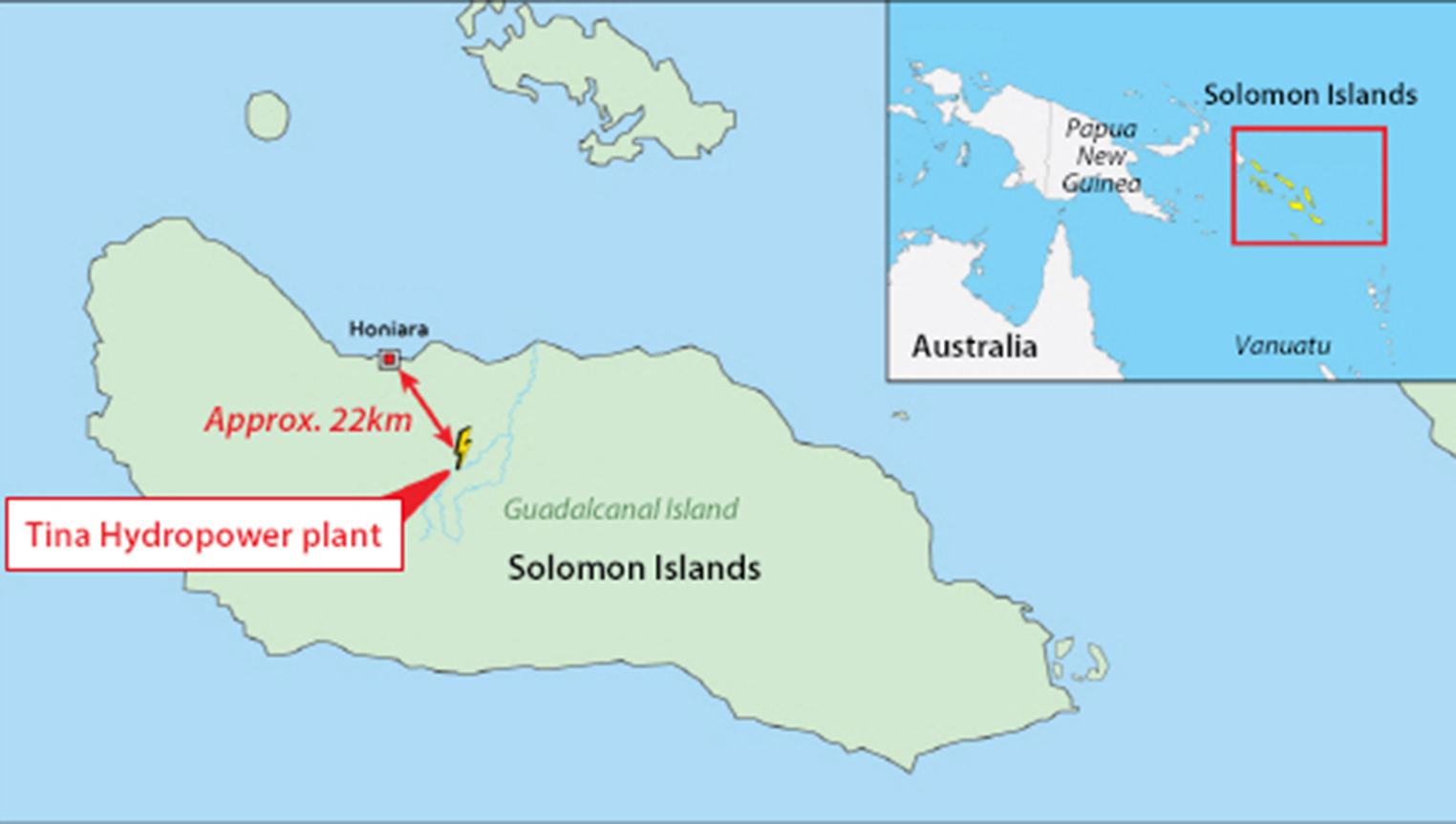
The Tina River Hydropower Development Project (TRHDP),Footnote 55 herein shortened to Tina Project, is a hydropower plant being constructed on the Tina River in Central Guadalcanal, about 22 km southeast of Honiara (Figure 2). Projected to be completed in 2028, the plant aims to provide over 70% of Honiara’s electricity needs, substantially reducing its reliance on diesel power generation. The Tina Project is a national project coordinated by the Ministry of Mines, Energy and Rural Electrification (MMERE) and the Ministry of Lands, Housing, and Survey (MLHS). It evolved from a World Bank pre-feasibility study conducted in 2006 identifying the Tina tributary of Ngalimbiu River as harboring significant hydropower development potential. This eventually led to the setting up in 2009 of the Tina River Hydro Task Force under the MMERE, and the SIG showed commitment to pursue the project by compulsorily acquiring land. Since 2009, the behemoth project has gained and lost multiple funding bodies due to continuous uncertainties and disputes over land ownership. We provide some insight into this long story and build upon previous critical analyses of the Tina Project and the “freezing” or limiting of Indigenous communities’ agency through state-induced land registration.Footnote 56 We demonstrate the politically charged and fluid nature of collective decision-making regarding customary land ownership among clans, how land groups can expand or contract their group identities to maximize benefits or control, and emphasize the vital role ancestral sites and kastom evidence play in shaping disputes and resolutions.
Map of Guadalcanal showing the location of the Tina Project. Image source: Gye-man and Hyo-jin 2019 Pulse article (https://pulse.mk.co.kr/news/english/9000900).

The Project Office (PO), established following Australian funding via the Pacific Regional Infrastructure Facility (PRIF), serves as a central point for the project’s progress management. Over time, the PO has assumed primary identity as the TRHDP in the eyes of most people in the Tina region, replacing the Tina River Hydro Task Force originally established in 2009. During this period, the Tina River Hydro Landowner Council (TRHLC) was established by people in the area with a mandate to organize and speak on behalf of the Central Guadalcanal people, particularly those from the Ghaobata and Malango areas. Prominent leaders within the council were also able to present their political agenda to the TRHLC, whose members, in turn, placed their support behind these members in the 2010 general elections.
Following the 2010 general elections, the TRHLC continued its attempts to represent the people’s interest in the form of representation vis-à-vis the Tina Project. As the TRHLC continued to evolve, the number of represented groups on the council grew to 27, each one purporting to represent a distinct clan within the Ghaobata and Malango areas. This considerably exceeded the two main lineages (manukama and manukiki) consisting of four or five sublineages, which are all often referred to as tribes, recognized as being the basic units of social grouping in Guadalcanal.Footnote 57 The SIG mandated the TRHLC to undertake land identification, including dealing with landowner concerns. However, despite being paid more than SBD $3 million to do this work, the TRHLC failed to effectively carry out its mandate.
The work was delayed because the TRHLC was involved in an impasse with the Malango and Bahomea Houses of Chiefs. Due to that internal conflict, the project was prevented from accessing the area, despite having paid SBD $2.7 million under an “access agreement,” or $100,000 to each of the 27 members of the TRHLC. There were strong perceptions that certain individuals leading the TRHLC were serving their own interests, either in terms of using the resources given for programs or advancing positions that were overly obstructive to the advancement of the project. Importantly, there was a total absence of women in the TRHLC despite Guadalcanal being culturally recognized as a matrilineal society.Footnote 58
Due to the danger of halting due to nonprogress on land matters, the PO contracted Pacific Horizon Consultancy Group (PHCG) in 2011 to assist with land mapping in coordination with TRHLC. Motivated by the continued difficulty with land identification processes and access agreements, including the World Bank’s requirement of protection systems for Indigenous people and other safeguards, the PHCG introduced an Indigenous Terrain Mapping (ITM) approach.Footnote 59 This approach was based on the understanding that the area earmarked for the hydro plant has a historical, social, spiritual, and cultural dimension that is part of the Indigenous people themselves and their knowledge system. It characterized “indigenous terrain” as “places identified on the basis of settlements, plantings and gardens, sites of sacrifice and prayer, graves, and sites of legendary significance.”Footnote 60
Based on the ITM work, PHCG recommended that any progress on land in this project would require the Indigenous landowner not to “lose” their land. This key recommendation was considered the basis for the project plans. It also provided the pathway for establishing a Core Land Company with equally split ownership, where the SIG and landowning tribes would jointly hold the perpetual estate title to the land that would be used for the project. Following the ITM, the SIG continued to engage with the TRHLC to work toward acquiring the core land area identified for the project.
Another key development in the Tina Project was the establishment in December 2012 of the “Bahomea Land ID Committee” (BLIC), comprised largely of chiefs from the Bahomea tribe who aimed to resolve and identify the agreed names of land, land histories, and landowning tribes in the Tina Project core land area. They identified four tribes as collectively owning the core land ideal for building the hydropower infrastructure, namely the Roha tribe (171 ha), the Buhu-Garo tribe which was two lineages combined (161.5 ha), the Kochiabolo tribe (65.7 ha), and the Viurulingi tribe (14.0 ha).
The PO reviewed the BLIC’s findings by considering the following: evidence regarding customary land, including court decisions (local court, CLAC, and High Court) concerning land ownership in the core land; the boundaries that were surveyed by tribal representatives in collaboration with a qualified land surveyor; tambu sites identified by the tribal representatives, who also worked alongside the surveyor; and support from neighboring tribes regarding the established land boundaries. This process refined BLIC’s initial findings regarding smaller land parcels and clarified boundary lines to establish the land boundaries that determined benefits for the relevant tribes.Footnote 61
Following this process, the PO negotiated with 6–10 representatives of each relevant tribe on how to proceed with land acquisition over a period of about six months in 2014. The PO funded a lawyer from the Landowner’s Advocacy and Legal Support Unit of the Public Solicitors Office to provide independent legal advice to each tribal group. The outcome of this process was the signing of a Process Agreement by representatives of each of the tribes identified by BLIC and verified by the PO. A fourth tribe, the Uluna-Sutahuri tribe (two lineages combined, 29.9 ha), was later included in the Process Agreement after it successfully claimed under the land acquisition process the portion of land identified for the reservoir. Significantly, the Process Agreement provided the impetus for the acquisition of the land to proceed, and the government recognized the tribes identified by BLIC as holding primary rights to the core land.
The Commissioner of Lands (CoL), acting under Section 79 of the LTA, compensated members of the relevant tribes for their claims regarding their interests in the core land. The CoL paid them after evaluating their claims based on the customary evidence of land ownership they submitted. The kastom evidence included narratives of ancestral settlements and the spirits linked to various landowning groups. These narratives were supported by tambu sites or historical agreements, such as heirloom shell money necklaces. Genealogies also connected current tribal members to their ancestors and their land ownership stories.Footnote 62 The Environment and Social Impact Assessment (ESIA) 2017 sets out the Cultural Heritage Management Plan, which governs how tambu sites are compensated, ranging from SBD $10,000 to $50,000 (USD $1,200–6,000) in fines.Footnote 63 Landowners of other tribes whose interests were diminished by the government’s acquisition, whose claims were dismissed by the CoL, took the matter to court, but were unsuccessful.Footnote 64
Negotiated Land Acquisition—Bina-Talifu Project
The Bina Harbour Tuna Processing Plant project, hereby referred to as the Bina-Talifu Project, is one of the longest-running and most hotly contested cases of government land acquisition for development in Solomon Islands’ history. Importantly, Bina-Talifu land and its harbor region involves both saltwater and inland tribes, and the area is characterized by a complex history of human migration and intermarriage, ethnic divisions between “bush” and “saltwater” peoples, artificial island construction, and inter-island exchange systems going back centuries.Footnote 65 Here, we give an overview of the history of the land acquisition and build on previous research on the “legalscape” of the Bina area.Footnote 66 Anthropologist Pei-yi Guo, for example, has argued that “law” has served more as a genre of discourse appropriated by customary landowners rather than as its intended function as a whole, defined system of rules. In our review, we describe a failed attempt in the 1990s of the government to acquire the land and the culmination of a 2016 High Court ruling that, arguably, resolved the primary landowners of the Bina-Talifu area and those entitled to secondary rights.Footnote 67 Despite the ruling being final and “not to be questioned in any proceedings whatsoever” in accordance with Section 66 (4) of the LTA (Cap 133), we highlight how some claimants attempted to circumvent and ignore High Court outcomes and also modified kastom evidence to bolster their claims.
Bina-Talifu is situated on the southwestern coast of Malaita between three major cultural–linguistic groups—Langalanga, Kwaio, and Kwara’ae—and adjacent to Bina Village (Figure 3). Its desirability as the site of a harbor was first documented in 1922 by the British Solomon Islands Protectorate Crown surveyor, Stanley G. C. Knibbs, who surveyed and mapped the area.Footnote 68 No significant developments took place there, however, under British colonial administration. The SIG revisited the prospect of developing Bina immediately after the country gained independence in 1978. In the 1980s, it introduced the Bina Harbour Infrastructure Development (BHID) project concept. The implementation of this concept did not gain much traction, however, due to land disputes and a lack of budgetary support, leadership, institutional mandate, and focused capacity.Footnote 69
Aerial photograph of Bina-Talifu area, facing southwest, and proposed locations of the infrastructure. Image source: SIBC 25 April 2022 (https://solomons.gov.sb/bina-harbour-tuna-processing-plant-well-on-track/).

The earliest documented Bina-Talifu land dispute cases date to the 1970s, and they continued mainly in the lower courts into the 1980s and 1990s.Footnote 70 In many of the lower court hearings, the disputing parties relied on oral testimonies regarding elements of kastom, such as tambu sites, histories of migration, and genealogies to claim ownership rights over Bina-Talifu. Since 1990, a total of eight inland tribes have claimed Bina-Talifu land, and fifteen saltwater tribes have claimed the Bina Harbour, islets, and surrounding area.
Following the fizzling of the BHID, the SIG renewed its commitment in the early 1990s to commence negotiating Bina-Talifu land acquisition to host a national fishery. It appointed David Totorea, from South Malaita, as the land acquisition officer (LAO). When determining who had the right to lease or sell the Bina-Talifu land, Totorea reviewed the earlier local court and CLAC decisions and expressed that the cases were inaccurate because they involved claimants from different lands. He held that the Bina land was situated on the disputed boundary between the Kwara’ae and Kwaio tribes, who reside in the area in three sections—Kwara’ae, Kwaio, and Langalanga (saltwater). The LAO then heard oral testimonies from various tribal representatives and undertook a land survey. During the hearings, the LAO appointed two panels of chiefs, one for the land claims and the other for the harbor/islets claims. The Chiefs Panel convened for more than three years. Ultimately, the LAO determined in 1994 that nine individuals had the right to sell or lease the Bina-Talifu land and that four saltwater tribes held the rights for the harbor/islets area. Aggrieved tribal representatives challenged the LAO’s 1994 acquisition report and appealed to the Magistrate Court. The Magistrate Court, subsequently, quashed the LAO’s findings in 1995 and held that the land acquisition process was null and void.
The SIG made a second attempt to acquire Bina-Talifu land in September 1999. It appointed David Gina from Western Province as the LAO. The LAO conducted hearings on demarcating the Bina-Talifu land boundaries and identifying trustees. The hearing involved 14 identified trustees from two main tribes in the area (Rafea and Kwaleunga) and 13 claimants representing various tribes and clans. Notably, the LAO in his assessment pointed out that Bina-Talifu had a long history of land court cases and everyone “around the area including the claimants are now familiar with the customs, genealogies, tambu sites and shrines, names of rituals, wallstone, descendants, inheritance and other relevant background stories of others.”Footnote 71 Further, the LAO stressed that many of the claims could have been triggered and formulated based on experiences and outcomes of the land cases.
The LAO, after analyzing, assessing, and considering all the written and oral testimonies surrounding evidence on customs, genealogies, identities, inheritance, and custom beliefs, determined 13 personsFootnote 72 as representatives of their tribes or clans had the right to lease the land to the national government. Tribal representatives dissatisfied with the 1999 land acquisition determination engaged in forum shopping. For example, representatives of the Usa’alai and Baekwa tribes (claimants), in an attempt to circumvent the land acquisition process, simultaneously brought proceedings in the Lafari House of Chiefs in August 1999, claiming ownership of Bina-Talifu. Lafari House of Chiefs ruled in their favor. Then following the LAO’s determination, dissatisfied tribal representatives appealed to the Auki Magistrate Court in 2000. After hearing the evidence, the Auki Magistrate, Flickson Samani, dismissed the appeal.Footnote 73 He affirmed the 1995 High Court decision in Unufana’adalo v Walesua that Walesua and Samosia and their “lines are the primary ownership; Toloau and his line have secondary rights.” Aggrieved parties alleged that the Auki magistrate, Samani, committed an error of law when he held that land ownership of Bina-Talifu had already been determined in Unufana’adalo v Walesua. They challenged the Magistrate Court ruling in four appeal cases.Footnote 74 These cases were consolidated along with a 2010 consent order signed by the attorney general, representing the national government, and all the other parties to the appeals.Footnote 75
The 2010 consent order provided for the creation of an interim Trust Board consisting of trustees representing tribal parties involved in the appeals proceedings. The interim Trust Board would hold the subject land of the acquisition process, which the MLHS had already divided into separate parcels instead of one. Parties who signed the consent order agreed that the successful landowning group would nominate or elect new trustees to replace the interim trustees once the appeals were finally determined.
The 2016 High Court ruling dealt with the appeals of Orkley Ramolelea, Vincent Talauburi, and Poeni Noda v Alpheus Samosia and Renaldo Wanesua, and Elijah Toloau. Footnote 76 It was significant as it affirmed the Auki magistrate’s ruling in 2000 that the 1995 High Court decision would stand that Walesua and Samosia and their “lines are the primary ownership; Toloau and his line have secondary rights.” Despite the High Court ruling being final in accordance with the law, several tribal parties attempted to circumvent this. For example, in 2017, representatives of Usualai and Baekwa tribes (claimants) initially sought a declaration in Bofanata v Samosia. Footnote 77 They subsequently amended their claim and sought judicial review of earlier court decisions, arguing that the determined parties were bound by the Lafari House of Chiefs decision in 1999 and that the 2016 High Court ruling was not conclusive evidence of Bina-Talifu land ownership. The High Court, however, dismissed their claim and maintained that ownership of the land had been determined and affirmed by the 2016 High Court ruling.Footnote 78
Other tribal groups attempted to challenge the 2016 High Court decision by continuing to litigate ownership of the Bina-Talifu land in cases such as William Siarani v Hellen Samosia, Boniface Falafulu and Dickson Ma’aria and Bina Talifu Land Interim Trust Board and the Commissioner of Lands and Registrar of Titles,Footnote 79 and Nelson Nole and John Dui v Bina Talifu Land Interim Trust Board and Registrar of Title. Footnote 80 Other tribes, such as the Kwao-Kafobila tribe, that took part in the 1999 land acquisition process but were not a party to the subsequent appeals proceedings claimed they had ownership rights over the Bina-Talifu land. Interestingly, parties to these court proceedings took part in the two land acquisition processes (1994 and 1999), which were linked to the appeals proceedings that the 2016 High Court had already ruled on. Despite this, parties found ways to challenge it, including forum shopping and bending kastom evidence such as tambu sites, migration stories, and genealogies to strengthen their claims.
Therefore, this demonstrates the need to not only rely on oral histories but also consider the development of a more robust framework involving archaeological site surveying, dating techniques, and a national heritage site register. We argue this would have potential to contribute to substantiating kastom evidence such as tambu sites, maps, and chronologies brought to court and empower communities to come to more informed decisions when negotiating land and marine zone claims.
Discussion
The Tina and Bina-Talifu case studies exhibit the legal fluidity of customary land and marine territory claims in Solomon Islands and the iterative and highly political way in which Indigenous cultural heritage has been implemented as evidence in legal forums to support or dispute these claims.
Notably, our analysis demonstrates the layered complications and pressures of neoliberal economic development and the ongoing commodification of land or “land grabs” impacting Solomon Islands and other developing nations in the Indo-Pacific region.Footnote 81 As Kabutaulaka, Monson, Allen, and others have previously argued, the agency of Indigenous groups regarding land tenure has been increasingly confined to limits established by the state and international development standards.Footnote 82 In agreement with such authors, we recognize that not all Indigenous land groups are passive victims in development and land acquisition processes. This was exemplified by the modification of kastom evidence, forum shopping, and skirting of legal processes described in the case studies. Crucially, however, current legal, political, and capitalist development mandates in Solomon Islands induce competitive attitudes and a system that rewards exclusion, favors politicians and those already in positions of power, and requires land groups to legitimize their identities and sense of ownership.Footnote 83
Moreover, this system is largely steered by and for men as was demonstrated by the prevalence of male representatives and chiefs in the legal proceedings and tribal decision-making described for the two case studies. This reinforces arguments made previously regarding the inequitable and highly patriarchal nature of land registration and entitlement in the country.Footnote 84 Overall, these entangled socioeconomic, political, and legal issues impact customary land and marine tenure, development, and how kastom heritage is perceived, valued, and managed by its custodians. As we have emphasized in this article, the commodification of land in Solomon Islands has entrenched a money-hungry social attitude and a disruptive, unsustainable expectation of cash payments accompanying virtually any form of customary land access.Footnote 85
In terms of legislation, Solomon Islands’ LTA is explicit on the legal process of land acquisition. Nonetheless, customary landowners often challenge it. The Tina Hydro case study, for instance, showed landowners’ desire for an Indigenous “land identification” process rather than relying entirely on the LAO, as is usually the case when the government intends to acquire customary land for a public purpose. Such a desire is motivated by several well-known issues triggered by the LAO’s role.Footnote 86 First, LAOs are required by law to conduct a public hearing and exclusively determine landownership without relying on work done by chiefs or elders. In such hearings, sacred and secret customary knowledge can and has been known to be recorded, recycled, and reused by other claimants, leading to a modification of kastom elements and a corrupted process that permanently erodes legitimacy. Second, the LAO is not required to entertain ambiguous or overlapping claims. The LAO is only required to determine who has ownership rights to land that is the subject of acquisition and who does not. This is problematic, as we highlighted earlier, because traditional land tenure systems in Solomon Islands often emphasize collective custodianship inherited by patrilineage or matrilineage or both based on an ancestral covenant to protect and care for the landscape rather than individual or binary forms of ownership that promote exclusive rights.Footnote 87 Third, the appeal litigation process is expensive. Most times, only those with better resources and lawyers can afford to engage in such a process. These are some of the factors contributing to creating incomplete acquisition of customary land and generating the perception that customary land can be impossible to deal with.
Tribal claims over land or marine territory ownership, in the two case studies, were often based on order of arrival and where people originated from, the location and significance of shrines and other tambu sites, as well as historical marriages through female and male lineages. Importantly, in the case of the Bina-Talifu harbor, which encloses artificial and natural islands, it was demonstrated how the legal claims were made more complex by saltwater tribes claiming the sea area. Their claims included traditional practices such as the worship of different sharks, fishing rituals, and dolphin hunting rituals. Previous studies of customary marine tenure in Solomon Islands have emphasized the nuance in the delineation of boundaries and traditional practices of sharing resources within sea territory claims.Footnote 88 While rivers, mountain ridges, and other permanent features are common land boundaries, marine boundaries are often more fragile and environmentally unstable. They may include coastlines, estuaries, barrier reefs, and ancestral skull burials or coral shrines found on the coast or on low-lying islets adjacent to a boundary.Footnote 89
In the rest of the discussion, we elaborate on the legal role of tambu ples in the country’s legal plural system and summarize our assessment of the legislative protection of Indigenous cultural heritage. We argue that archaeologists, especially trained Solomon Islander archaeologists, should be playing a greater role in land surveying and cultural mapping, both for externally driven or state-led commercial development and internally driven research and community needs. We then briefly discuss kastom versus national law and highlight the need for researchers and others who document information concerning land claims to be mindful about how the information (e.g., maps, genealogies) can be used as evidence in customary land court proceedings in the country and can significantly impact landowners.
Tambu ples (archaeological sites) and their protection
Tambu ples are considered sacred spaces in kastom beliefs, including but not limited to origin places, ancestral graves, and worship sites. They are historical repositories of past human activities. In the late 1970s and 1980s, provincial governments in Solomon Islands established area councils to promote, protect, and preserve tambu sites as part of culture. The Western Provincial Government, for instance, enacted the Western Province Area Council Ordinance 1989 to establish area councils in the Western Province. These area councils were authorized under the ordinance to record and preserve local kastoms, promote the establishment of local cultural centers, and encourage and support the surveying, recording, and registration of tambu sites. However, area councils were abolished under the Provincial Government Act 1997.
While area councils have ceased to exist, other forums such as the chiefs panels, local courts, and the CLAC continue to recognize tambu ples as physical evidence of customary land ownership and other user rights. As illustrated in Rifalea v Rarabu, tambu ples represent “sacrificial sites, burial sites, shark/snake caves, old village sites or even sites of witches or devils (not necessarily ancestral spirits). There are also different sacrificial sites like sites for worshipping the ancestors of the land, and sites for offering sacrifices for blessing and protection.”Footnote 90 These different forms of tambu ples are elements of kastom.
Indigenous land groups, when claiming land ownership, make reference to kastom, particularly special knowledge of oral histories, migration stories, legends, genealogy, and boundary markers such as special landscape features, rocks, trees, and tambu sites.Footnote 91 Proving these kastom elements as issues of fact in the lower courts, as shown by the case studies, requires some form of site survey to determine their existence and relationship to tribal names and histories. Archaeologists have rarely been involved in cultural mapping and land or marine surveying related to legal claims or large development projects involving the acquisition of customary land in Solomon Islands. This is mainly due to the lack of awareness in Solomon Islands of the profession of archaeology and what it can offer, its absence from regulatory frameworks, and the limited number of archaeologists working in the country who take on legal or commercial work.Footnote 92
Vitally, this limits customary landowners and surveyors to their memory, traditional knowledge, and what they recognize and can demonstrate to be a tambu ples in the landscape. The Chiefs Panel and the lower courts, in most cases, would assess such evidence and deliver decisions reflecting their subjective interpretation of the facts and kastom without critically examining the correlation and chronology between genealogies, movement of tribal groups, settlement formations, burial sites, and tambu ples. This is where archaeology can be drawn upon, in combination with linguistics and historical and paleoenvironmental methods, to assist landowners, chiefs, and court justices with identifying and mapping sites based on artefactual evidence that they may not immediately recognize.
Earthenware pottery is a good example of this, as it was once commonly made between 2,000–3,000 years ago and can be found in coastal areas across much of Solomon Islands.Footnote 93 Today, the craft is traditionally practiced by only one community in northern Choiseul, and ancient pottery fragments are rarely recognized by untrained eyes.Footnote 94 Genetics is also frequently drawn upon in the subfield of biological anthropology. But we raise this with respect that genetic testing, of ancient or modern populations, requires far greater ethical consideration to be utilized in legal forums.
Archaeology can also assist with excavation and radiocarbon dating, which can accurately inform landowners of the age of their ancestral sites and serve as a powerful tool to corroborate or expand upon genealogies and oral tradition. Previous research comparing the dating of shrine sites and oral traditions of migrations in Roviana, for example, demonstrated a close relationship between genealogical age and radiocarbon age. Footnote 95 Ethically, it is understandable why professionals may choose not to use archaeology to politically favor the interests of one party over another. Especially, when it may result in the disenfranchisement of land, identity, and the loss of potentially life-changing benefits for one Indigenous party over another. In the case of land surveying and registration in Solomon Islands, however, we see value in training more Solomon Islander archaeologists to fill these gaps to serve the current land registration and legal system.
We also recognize that archaeological, historical, and anthropological research has the potential to expand our understanding about the fluidity of customary collective custodianship, shared access to economic resources, and dynamic tenure systems that characterized the past and that are still relevant today. This aligns with numerous legal scholars and anthropologists who have previously stressed, in the case of Solomon Islands and in other parts of the Pacific, the epistemological and ontological incongruence of determining “absolute ownership” of customary land or marine zones.Footnote 96 Ultimately, we do not argue that archaeology offers an objective solution to establishing “true” ownership of customary land. Rather, we advocate for it as a powerful tool to better navigate the land acquisition and registration process in Solomon Islands and empower grassroots community members, not just those listed as trustees, to negotiate sustainable access and use of land and marine zones.
In parts of Solomon Islands, some communities do not impart information or knowledge about their cultural heritage easily, especially when it comes to dealing with tambu ples. There are some sites that are considered so sacred and spiritually powerful that people no longer want to visit or talk about them, in fear of getting sick or dying prematurely.Footnote 97 Training more Solomon Islander archaeologists and anthropologists, who could empathize with those landowners, build rapport, and provide viable options to safely record those sites (e.g., remote site recording), would be an ethical and effective method of assisting in these scenarios.
Kastom versus national law
Since time immemorial, kastom has been the lore that regulated Solomon Islands’ societies and its peoples’ behaviors and lives. As we highlighted earlier, the 1978 constitutional recognition of kastom as a source of law authorizes legal forums such as the House of Chiefs or lower courts, when dealing with timber rights or customary land disputes, to recognize kastom.
Local courts rule on a range of matters, including disputes over customary land.Footnote 98 According to the Local Courts (Amendment) Act 1985 (No. 9 of 1985), matters regarding customary land should be dealt with first by the Chiefs Panel in the locality. If parties are dissatisfied with the Chiefs Panel’s findings, they can appeal to the local court. Further appeal goes to the CLAC, which is established in each of the nine provinces. However, the justices of both local court and CLAC hearing the appeals are often not individuals from the locality. This can be problematic because appeals to these lower courts involve matters of kastom (e.g., tambu sites and genealogy) that only those from the locality could reliably validate. In some instances, the justices also apply their knowledge of kastom subjectively, in a very rudimentary way, as if kastom is homogeneous, when it is not. These issues contribute to the perpetuation of forum shopping and disputes. Unfortunately, there are no appeal mechanisms to address these issues at the lower courts because they are considered issues of fact.
Under Section 239(2) of the LTA, the Local Courts and CLAC have jurisdiction to consider academic scholarship or any other work (written or not) as prima facie evidence to ascertain customary land usage “unless and until the contrary is proved.” The danger of this provision is that when sacred kastom elements such as tambu sites, ancestral names, shrines, and prayer rituals become part of written records, any person can access and use them to assert their land claims in customary land court proceedings. Therefore, when writing about or documenting kastom heritage that has a relationship with customary land, it is crucial to do so responsibly and understand how such work impacts the Indigenous communities that have generously shared that knowledge.Footnote 99 Such an approach is essential because it contributes to respecting and protecting Solomon Islands’ cultural heritage.
Conclusion
As knowledge holders and custodians of the rich cultural heritage that characterizes the nation, the people of Solomon Islands provide the first and strongest line of defense for the protection of the country’s Indigenous cultural heritage. This is exemplified by the incredible work being done on kastom knowledge preservation and language revitalization by Indigenous community organizations such as the Baru Conservation AllianceFootnote 100 and the Kulu Language Institute,Footnote 101 to name a few. Community organizations, however, cannot operate sustainably and effectively alone. To be more impactful, they need greater government resourcing and support. Up-to-date, culturally informed and stricter legislation and government services are needed to support and equip Solomon Islanders in this cultural priority and national endeavor.
Our review of Solomon Islands’ legislation on cultural heritage demonstrated that there is currently better recognition and protection of American and Japanese WWII heritage than the country’s own Indigenous heritage. The Protected Areas Act 2010 and its 2012 regulations provide peripheral protection and some of the strongest penal deterrents. We also highlighted the unique qualities of the provincial ordinances. These included, for example, how they incorporate traditional protocols of conflict resolution such as kompasesen and how they have previously been found to be effective by the few government-employed field archaeologists in responding to and deterring the destruction of tambu sites. Prominently, the government has been slow to table and enact bills, namely a National Heritage Bill submitted in 2021, which would fill a major gap in providing the first state-wide, blanket protection. This is especially important for rural communities whose legal actions and advocacy simply cannot compete with the speed and extent of logging and other development ventures, as well as the growing impacts of climate change.
The Tina Hydro and Bina-Talifu case studies demonstrated the legally and politically fluid way in which Indigenous cultural heritage, namely ancestral settlement sites, shrines, genealogies, and heirlooms, are used as evidence in court cases over customary land. To mitigate some of the challenges of legally verifying kastom evidence in these forums and to better equip communities to identify tambu sites and negotiate delineating of land or marine zone boundaries, we argued for greater integration of archaeological expertise and the development of a national heritage site register. This would be most effectively done through increased training of more Solomon Islander archaeologists and heritage professionals. In turn, this would contribute to bolstering the commendable but insufficient efforts by being made the Ministry of Culture, SINM, and other local community and international organizations and institutes to preserve Solomon Islands’ vulnerable cultural heritage.
Supplementary material
The supplementary material for this article can be found at http://doi.org/10.1017/S0940739126100216.
Acknowledgments
We acknowledge those before us and those continuing to advocate for better protection and recognition of Solomon Islands’ rich and diverse kastom heritage, especially those who have lost or are at risk of losing their Indigenous languages, traditional knowledge systems, beliefs and practices, and ancestral sites. We acknowledge the customary landowners and tribes of Tina and Bina-Talifu areas, whose heritage and legal experiences we examine. Tagio tumas (thank you very much) to Unaisi, Kris, and Rhys for including us in the special issue and to the anonymous reviewers who greatly improved the paper. Thanks also to Andrew Radclyffe for commenting on an early version of the paper.




 Open access

