





Introduction
The global expansion of agricultural production, urbanization, and natural habitat destruction has led to an increased proximity of humans and wildlife (Lark et al. Reference Lark, Spawn, Bougie and Gibbs2020; Urbanek and Nielsen Reference Urbanek and Nielsen2013). Each year, more than 80% of farmers and ranchers in the United States experience economic losses due to wildlife-related crop damage (MacGowan et al. Reference MacGowan, Humberg, Beasley, DeVault and Retamosa2006). Between 2014 and 2023, the U.S Department of Agriculture’s Animal and Health Plant Inspection Service distributed more than US$500 million to farmers and ranchers to implement practices to prevent and control wildlife damage to agriculture (USDA-APHIS 2024a). Deer are among the major contributors to crop damage throughout the United States (Wywialowski Reference Wywialowski1994). White-tailed deer populations in Missouri and throughout the United States have increased significantly in recent decades (Hinton et al. Reference Hinton, Strickland, Demarais, Eubank and Jones2017), and research has shown that crop damage by deer is increasing (Conover and Decker Reference Conover and Decker1991; Swihart and DeNicola Reference Swihart and DeNicola1997).
The most widely adopted and potentially effective method for controlling white-tailed deer populations in agricultural lands has been through regulated hunting (Vercauteren et al. Reference VerCauteren, Anderson, vanDeelen, Drake, Walter, Vantassel and Hygnstrom2011). However, declining participation in hunting in recent decades has contributed to an imbalance between an increasing deer population and management capabilities (Andersen et al. Reference Andersen, Wam, Mysterud and Kaltenborn2014), and may entail negative public backlash when agricultural producers opt to control white-tailed deer through selective culling (Curtis and Sullivan Reference Curtis and Sullivan2001; Riley et al. Reference Riley, Decker, Enck, Curtis, Lauber and Brown2003). These circumstances, along with other potential barriers to hunting such as lack of hunter access to private land, land-use conflicts (Palmer et al. Reference Palmer, Payne, Wingard and George1985), and changing wildlife regulations (Winkler and Warnke Reference Winkler and Warnke2013) have prompted the development of alternative methods to mitigate profit losses caused by deer.
Common alternative strategies for preventing deer damage to crops are generally site-specific and include the use of fencing and the timely application of repellents. Repellents are substances or devices intended to modify wildlife behavior and keep animals away from crops, gardens, and landscapes around homes (Wagner and Nolte Reference Wagner and Nolte2001). Several repellents currently being marketed are considered to be minimum-risk pesticides, and therefore are exempt from registration and efficacy testing under the Federal Insecticide, Fungicide, and Rodenticide Act (US CFR 2025). Currently available deer repellents are generally composed of mixes of active ingredients such as ammonium soaps of fatty acids, whole egg solids, and dried bovine blood (AMVAC 2015; Bobbex 2018; Tree World 2020). Previous research has shown that the effectiveness of deer repellents may vary depending on the plant species. For example, white-tailed deer browsing on fell by 83% and 93%, respectively, when the repellents Hinder (AMVAC Chemical Corporation, Newport Beach, CA) and Bobbex (Bobbex Inc, Monroe, CT) were applied to yew trees (Taxus baccata L.) compared with browsing when a physical exclusion fence was used as a deer control method (Ward and Williams Reference Ward and Williams2010). Similarly, Lemieux et al. (Reference Lemieux, Maynard and Johnson2000) found that deer browsing on English yew trees fell by 61% after two applications 10 wk apart with a the repellent called Deer-Away (manufacturer unidentified) compared with controls. However, white-tailed deer consumption of milo (Sorghum bicolor L.) fell by only 30% when the repellent Liquid Fence (Spectrum Brands, Middleton, WI) was applied compared with controls in a study in Kansas (Arjo et al. Reference Arjo, Wagner, Richardson and Nolte2005). The repellent DeerPro Great Oak Inc., Redding Center, CT) resulted in a reduction in white-tailed deer browsing soybean by only 17% at 13 and 23 d after application in a study in Michigan (DeDecker and Tollini Reference DeDecker and Tollini2019). Repellent efficacy can also be influenced by the frequency of application, with multiple treatments potentially needed for sustained effectiveness (Bobbex 2018). These studies reveal the potential for repellents to be a successful method of deterring white-tailed deer browsing in soybean crops.
The ability to mix multiple pesticide products in a single tank allows growers to address pest issues in an efficient manner by reducing the number of times they must apply the products in a given season (Akins Reference Akins2023). However, labels of registration-exempt repellents generally do not contain information about their compatibility with pesticides, leaving growers uncertain whether any of the mixtures have antagonistic or synergistic effects. There is a risk that such combinations may reduce the effectiveness of one or both components (Hernández et al. Reference Hernández, Gil and Lacasaña2017). This is a critical gap in understanding the value of integrating deer repellents into agricultural pesticide programs.
Due to an increasing population of white-tailed deer and their potential for causing economic damage to crop fields (Boyer et al. Reference Boyer, Chen, Perez-Quesada and Smith2024), new research is needed to determine the effectiveness of applying commercially available deer repellents to soybean, the largest crop grown in the United States in 2024 (USDA-NASS 2024b). Therefore, this research was conducted to 1) determine the efficacy of sequential applications of deer repellent and pesticide combinations in deterring white-tailed deer browsing soybean crops, and 2) assess the effects that various repellent and herbicide tank mixtures had on controlling weeds and soybean crop injury.
Materials and Methods
Site Description
In 2023 and 2024, a deer browsing experiment was conducted near Bradford Research Center in Columbia, Missouri, in two soybean fields (West Rangeline and East Rangeline) located adjacent to areas of timber and with a history of heavy white-tailed deer feeding. Proximity to timber was important for this study because previous research had described how white-tailed deer feeding patterns vary spatially throughout agricultural fields with damage often occurring within 50 m of a field edge with forested borders (DeVault et al. Reference DeVault, Beasley, Humberg, MacGowan, Retamosa and Rhodes2007; Hinton et al. Reference Hinton, Strickland, Demarais, Eubank and Jones2017; Rogerson et al. Reference Rogerson, Bowman, Tymkiw, Colligan and Vasilas2014). Research for this experiment was conducted between May and October in both years. Average annual precipitation was 85.2 cm.
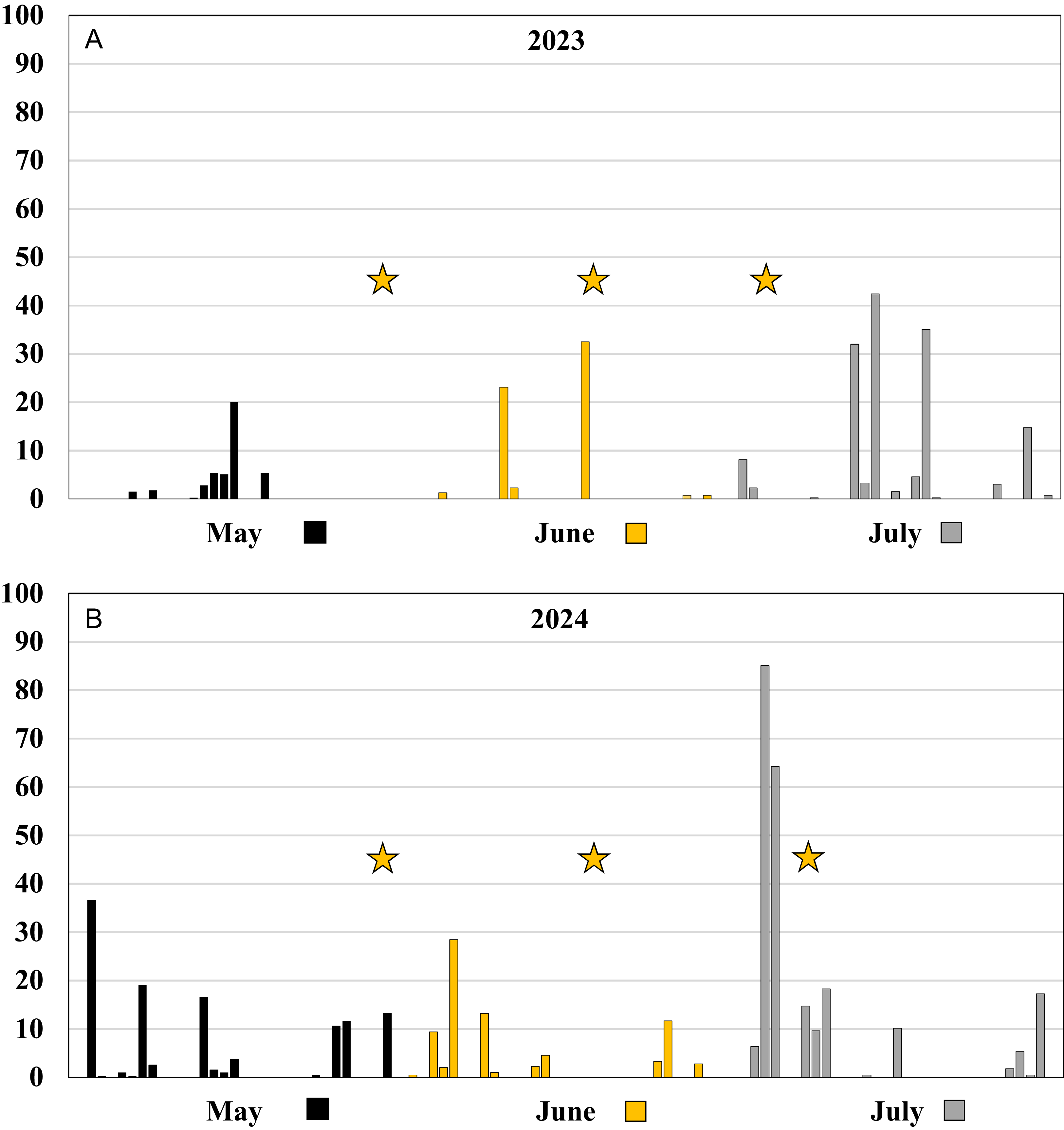
Also, in 2023 and 2024, a deer repellent and herbicide tank-mix experiment was conducted in two separate fields (single field each year) at the Bradford Research Center. These locations were within 1 mile (1.6 km) of the browsing experiment locations; however, they were farther from areas of known deer feeding activity. Research was conducted between May and October in both years with similar annual precipitation (Figure 1). Vegetation included a variety of grass and broadleaf weed species.
Daily precipitation for the West and East Rangeline experiments in 2023 (A) and 2024 (B). Stars represent timings of PRE, EPOST, and LPOST applications.

Deer Browsing Experiment
The West Rangeline field consisted of 9- by 16-m plots with three replications in 2023 and 2024. The East Rangeline field consisted of 9- by 18-m plots with three replications in 2023 and four replications in 2024. All experiments were arranged in a randomized complete block design. Glyphosate-, glufosinate-, and 2,4-D-resistant soybean seeds (P38T05E; Corteva, Indianapolis, IN) were planted in all fields in 76-cm-wide rows at a seeding rate of 346,000 seeds ha−1. In 2023, soybean planting occurred on May 23 and 24 at the West and East Rangeline fields, respectively, whereas in 2024, planting occurred on May 23 and 30.
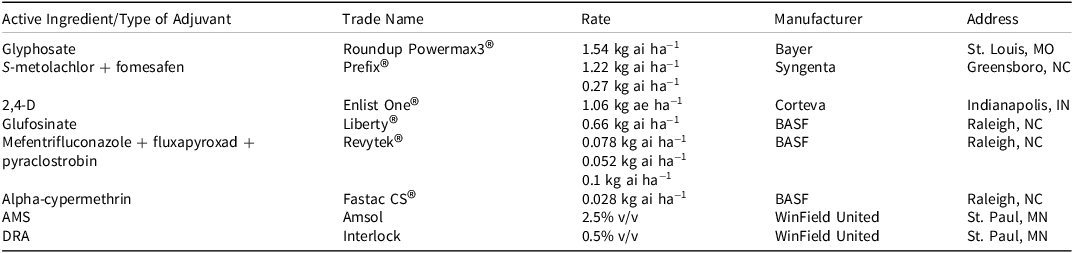
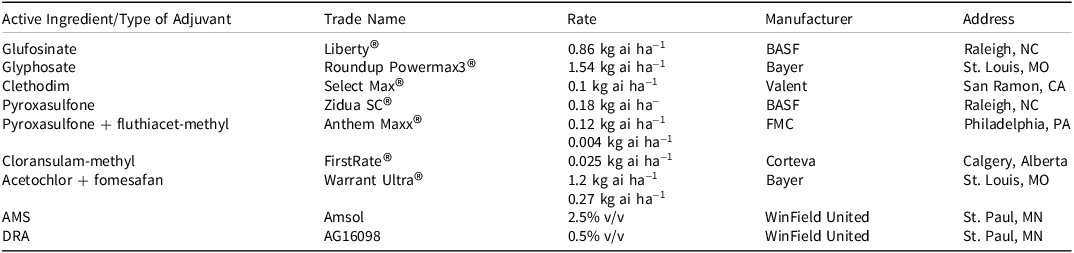
Five commercially available repellent products—Liquid Fence, Hinder, Bobbex, Plantskydd + (Tree World, Bridgeton, MO), and Penergetic bWV (Penergetic Solutions, Monro, WA)—were analyzed for their deterrent abilities when combined with common herbicide/pesticide applications made to soybean. Penergetic bWV was not available in 2023 but was included in the experiment during the 2024 growing season following a local recommendation of its repellent potential. Each repellent was applied either once, twice, or three times sequentially throughout the growing season in conjunction with the pre-plant, early postemergence, and late postemergence herbicide and pesticide applications that typically occur in soybean production. Preemergence applications of glyphosate (1.5 kg) + S-metolachlor (1.2 kg) + fomesafen (0.27 kg ha−1) occurred either on the same day or 1 to 2 d following planting. Early postemergence applications of 2,4-D (1.06 kg) + glufosinate (0.66 kg ha−1) were applied 20 to 22 d after the preemergence treatment to soybean that were in the V1 to V2 stage of growth. Late-postemergence applications of 2,4-D (1.06 kg) + glufosinate (0.66 kg) + mefentrifluconazole (0.078 kg) + fluxapyroxad (0.052 kg) + pyraclostrobin (0.1 kg ha−1) were applied 18 to 21 d after the early postemergence application to soybean that were in the V3 to V5 stage of growth. A detailed list of all repellents, pesticides, and adjuvants and their application rates is provided in Tables 1, 2, and 3.
Sources and rates of deer repellents used in all experiments.

Sources and rates of pesticides and adjuvants used in the browsing experiments.

Sources and rates of pesticides and adjuvants used in the tank-mix experiment.

All repellents and pesticides were applied with a CO2-pressurized backpack sprayer calibrated to deliver 140 L ha−1 at a traveling speed of 4.8 km h−1 and a height of 0.6 m above the crop canopy or soil surface. Repellents and pesticides were applied with a 3-m boom that contained AIXR 11002 nozzles (TeeJet Technologies;, Glendale Heights, IL).
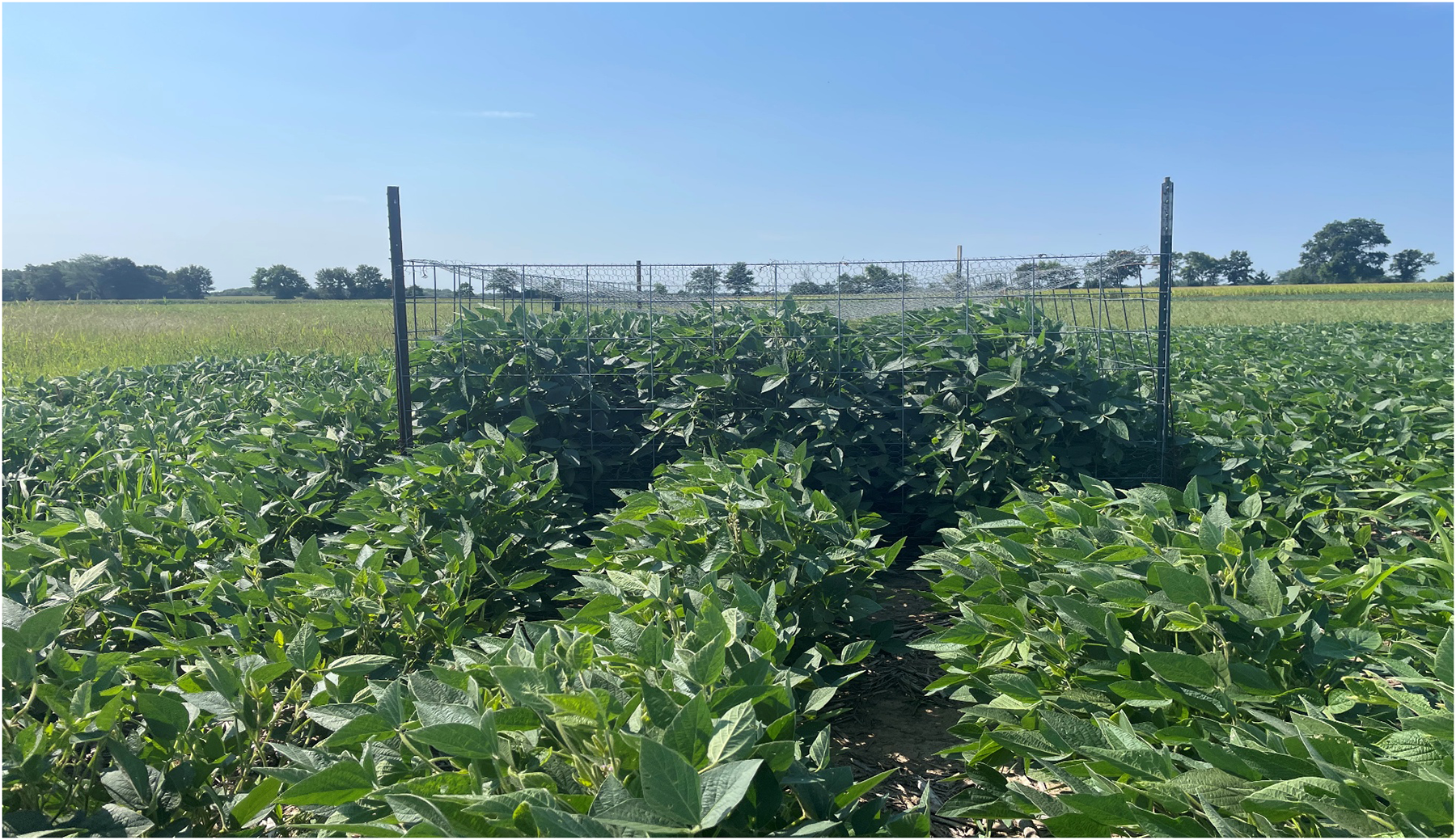
Three control plots were established in each replication. The first was a no-herbicide, no-repellent, weedy, nontreated control; the second was an herbicide-only, no-repellent control; and the third was an herbicide-only exclusion cage control (Figure 2). Exclusion cages consisted of 2.4 by 5 m cattle panel fences with poultry hex netting wired to the tops of the cattle panels to provide a complete enclosure that prevented deer feeding, similar to exclusion cages described by DeCalesta and Schwendeman (Reference DeCalesta and Schwendeman1978) and Rogerson et al. (Reference Rogerson, Bowman, Tymkiw, Colligan and Vasilas2014).
Exclusion cages for prevention of deer browsing in control plots.

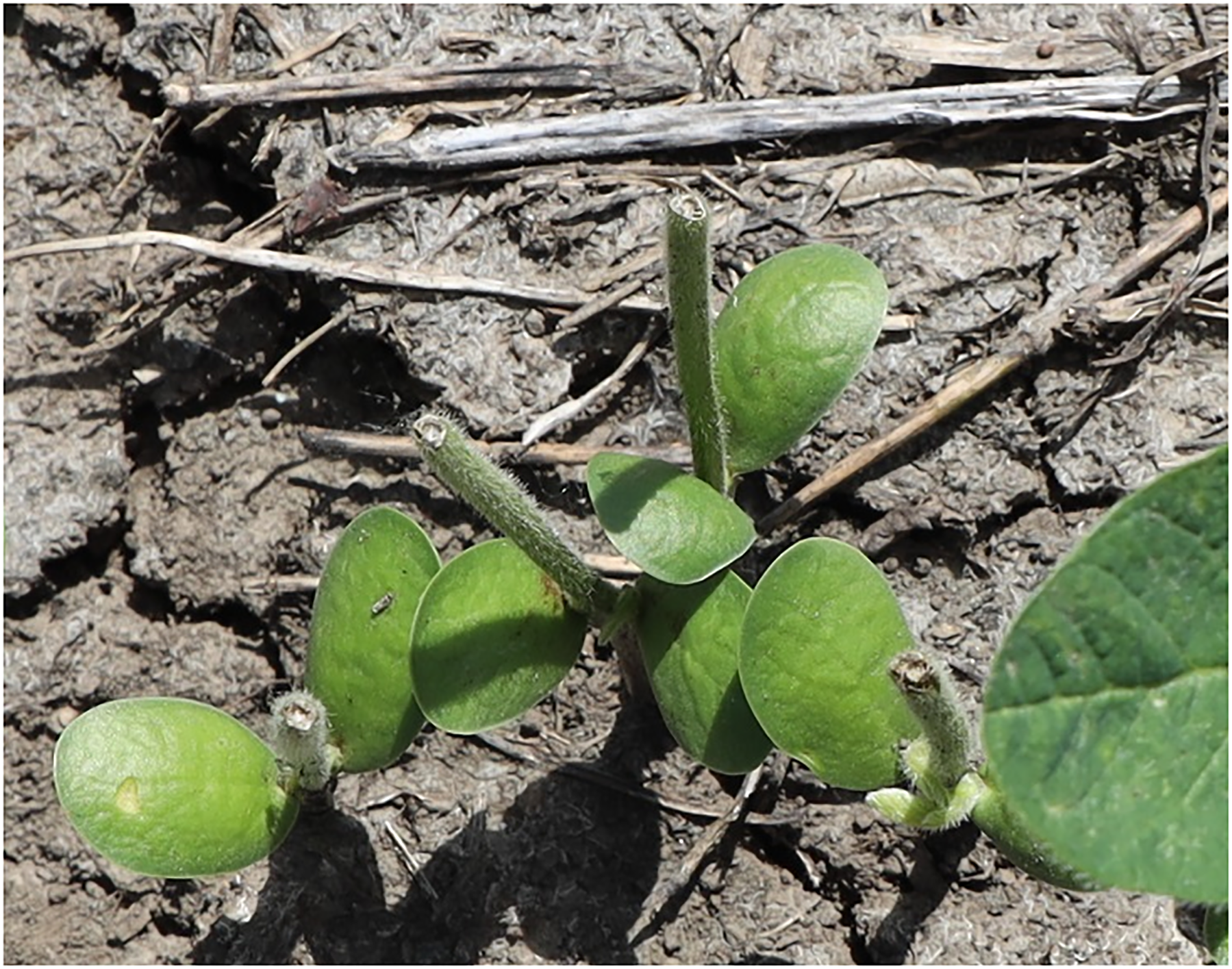
Following the initial preemergence application, weekly visual evaluations and counts of deer browsing were made within the same location in each subplot for 10 wk during the season. Soybean plants within one, 1-m section of the soybean row located 2.5 m from the start of each subplot were carefully examined for signs of deer feeding each week, according to the methodologies described by Conover and Kania (Reference Conover and Kania1987) and Stephens et al. (Reference Stephens, Mengak, Gallagher, Osborn and Miller2005). Because white-tailed deer do not possess upper incisors, browsed stems have a rough-cut (Figure 3) appearance (Craven and Hygnstrom Reference Craven and Hygnstrom1994). Older browsing of soybean plants presents itself as stems with brown, callused tissue, while newly browsed stems have a glossy green appearance. Only newly browsed soybean plants were included in the weekly evaluations. The number of browsed plants was divided by the total number of soybean plants in each 1-m section of row to determine the percent of browsing in each subplot. Percentages were averaged across subplots into a single plot value for analysis.
Illustration of rough-cut stems and soybean defoliation by white-tailed deer feeding.

Harvesting of each experimental subplot was conducted with an AGCO 4205 (Massey-Ferguson; Duluth, GA) small-plot combine equipped with the HarvestMaster H2 GrainGages system (Juniper Systems, Logan, UT). The middle two rows of each plot were harvested, the moisture content was determined, and the seed yields were adjusted to 13% moisture content. Soybean plants within exclusion cages were carefully harvested and yields were extrapolated to subplot dimensions of the field. Moisture content was also adjusted to 13%. To evaluate the comparison effects of pesticide-repellent combinations to control treatments on browsing and soybean grain yield, data were analyzed using the GLIMMIX procedure with SAS software (v.9.4; SAS Institute Inc, Cary, NC). Treatment, year, and their interaction were considered fixed effects, whereas replication nested within year and location were considered random factors. There was not a significant effect of year in either location (P > 0.05); therefore, the data were pooled and presented over years for the East and West Rangeline locations. Means were separated using a Fisher protected LSD test at α = 0.05.
Tank-Mix Experiment
A deer repellent and herbicide tank-mix experiment was also conducted in separate fields at the Bradford Research Center in 2023 and 2024. Dicamba-, glyphosate-, and glufosinate-resistant soybean (AG39XF3; Bayer Crop Science, St. Louis, MO) seeds were planted in 76-cm-wide rows at a seeding rate of 346,000 seeds ha−1. In 2023, soybean planting occurred on May 19, and in 2024, the soybean crop was planted on May 23.
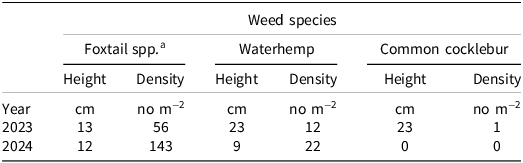
In both years, a single postemergence application of the repellent and herbicide combinations occurred on June 27 to soybeans that were in the V4 to V5 stages of growth and ranged in height from 25 to 30 cm. Each of the five repellent products was applied in combination with the following seven herbicide treatments: glufosinate (0.86 kg ha−1), glufosinate (0.86 kg) + glyphosate (1.54 kg ha−1), glufosinate (0.86 kg) + clethodim (0.1 kg ha−1), glufosinate (0.86 kg) + pyroxasulfone (0.18 kg ha−1), glufosinate (0.86 kg) + fluthiacet-methyl (0.004 kg) + pyroxasulfone (0.12 kg ha−1), glufosinate (0.86 kg) + cloransulam-methyl (0.025 kg ha−1), and glufosinate (0.86 kg) + acetochlor (1.2 kg) + fomesafen (0.27 kg ha−1) (Table 3). All treatments included spray-grade ammonium sulfate at a rate of 25 ml L− 1. All herbicides were applied with the same CO2-pressurized backpack sprayer with AIXR 11002 nozzles and settings described previously. The height and density of weeds present at the time of the postemergence application is shown in Table 4. A nontreated control, herbicide-only control, and repellent-only control were included for comparison. Individual plot sizes were 3 by 14 m, and all treatments were arranged in a randomized complete block design with four replications.
Weed height and density at the time of application in the tank-mix experiment.

a Includes a mix of giant and yellow foxtail.
Following application, weed control and soybean injury ratings were conducted 14 d after application. Weed control and soybean injury were both rated on a scale of 0% to 100%, with 0% signifying no weed control or crop injury and 100% signifying total weed control or complete crop death. Injury estimates included chlorosis, necrosis, and growth inhibition compared with nontreated controls. The middle two rows of each plot were harvested with the same small-plot combine and equipment as described previously, and seed yields were adjusted to 13% moisture content. To evaluate the comparison effects of herbicide-repellent combinations to control treatments on weed control, crop injury, and soybean grain yield, data were analyzed using the GLIMMIX procedure with SAS software (v. 9.4). Year, herbicide, and their interaction were considered fixed effects, whereas replication nested within year was considered a random factor. There was no significant treatment-by-year interaction (P > 0.05); therefore, data were pooled and presented over years. Means were separated using a Fisher protected LSD test at α = 0.05.
Results and Discussion
Deer Browsing Experiment
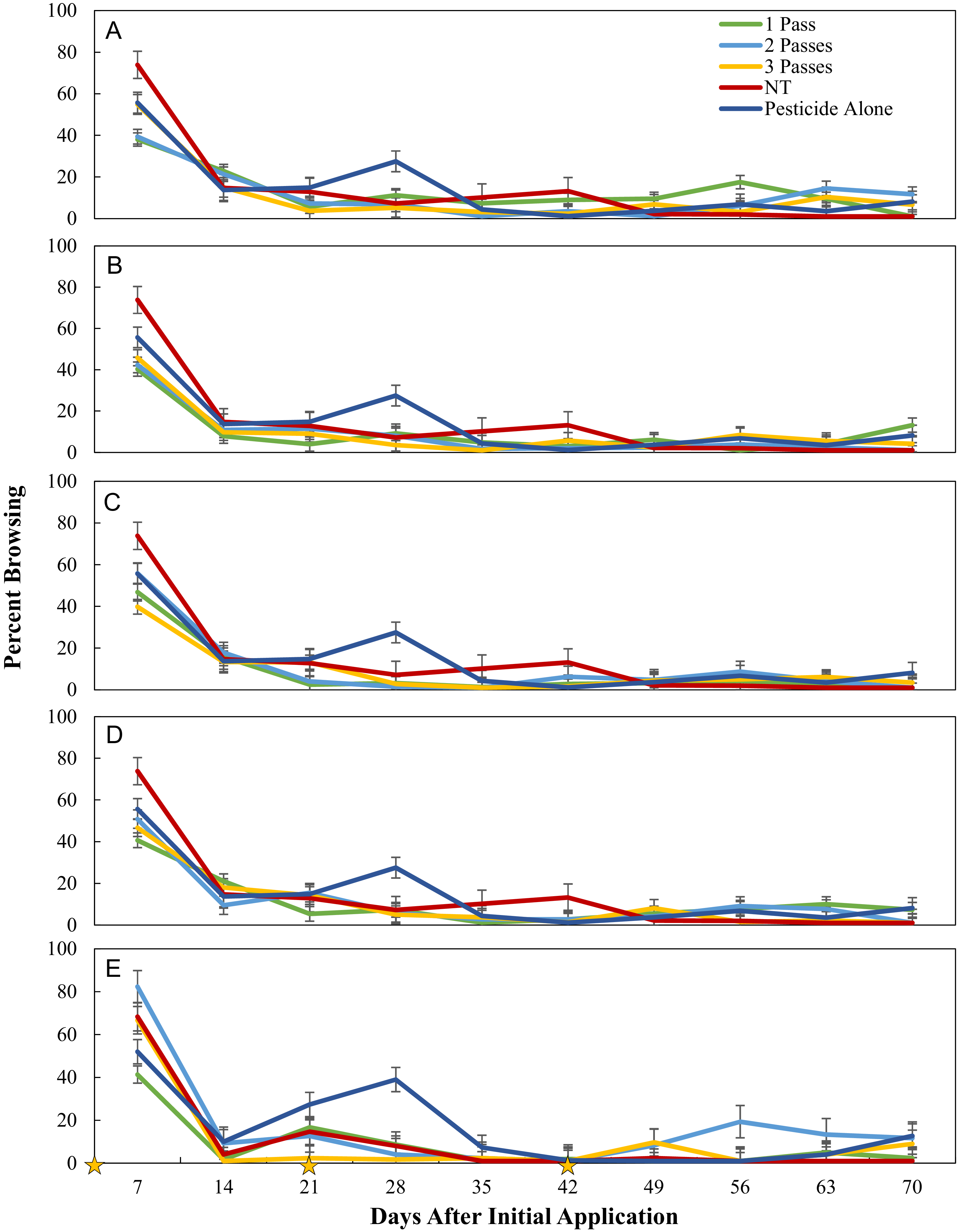
In the West Rangeline experiment, browsing by white-tailed deer diddecline; however, no consistent patterns emerged with respect to application frequency or deer repellent product (Figure 4). Browsing percentages varied significantly across treatments. Specifically, among repellent treatments, browsing rates ranged from 0% to 54% when Liquid Fence was applied, 0% to 45% for Bobbex, 0% to 56% for Hinder, and 0% to 51% for Plantskydd + throughout the season. Penergetic bWV resulted in browsing rates that from 0% to 82% in 2024 (the only year this treatment was evaluated). In contrast, the pesticide-only and nontreated controls exhibited browsing levels of 0% to 56% and 0% to 74%, respectively. At the West Rangeline location, white-tailed deer browsing was generally greatest during the first 2 wk following planting, which was similar to observations reported by other researchers (Colligan Reference Colligan2007; DeCalesta and Schwendeman Reference DeCalesta and Schwendeman1978; Garrison and Lewis Reference Garrison and Lewis1987). Although this level of browsing was not sustained throughout the experiment, it highlights the potential for environmental influences, such as a lack of alternative forage early in the season, to influence deer browsing behavior (Jackson Reference Jackson2024).
Evaluation of deer browsing for the West Rangeline experiment for 2023 and 2024. Stars represent timings of PRE, EPOST, and LPOST applications. Error bars represent Standard Error of the Mean. Repellents include (A) Liquid Fence, (B) Bobbex, (C) Hinder, (D) Plantskydd +, and (E) Penergetic bWV. Penergetic bWV consists of 2024 results only.

Significant reductions in browsing occurred with certain repellent treatments 21 and 28 d after application (DAA) compared to the pesticide-only control (Figure 4). By 21 DAA, white-tailed deer browsing fell by 11% to 12% when Bobbex and Hinder were applied once, and when Hinder was applied twice sequentially. By 28 DAA, compared with the pesticide-only control, deer browsing dropped by at least 16% with all repellent treatments, whether they were applied once or twice. No repellent-pesticide combination led to reduced deer browsing during the remainder of the season.
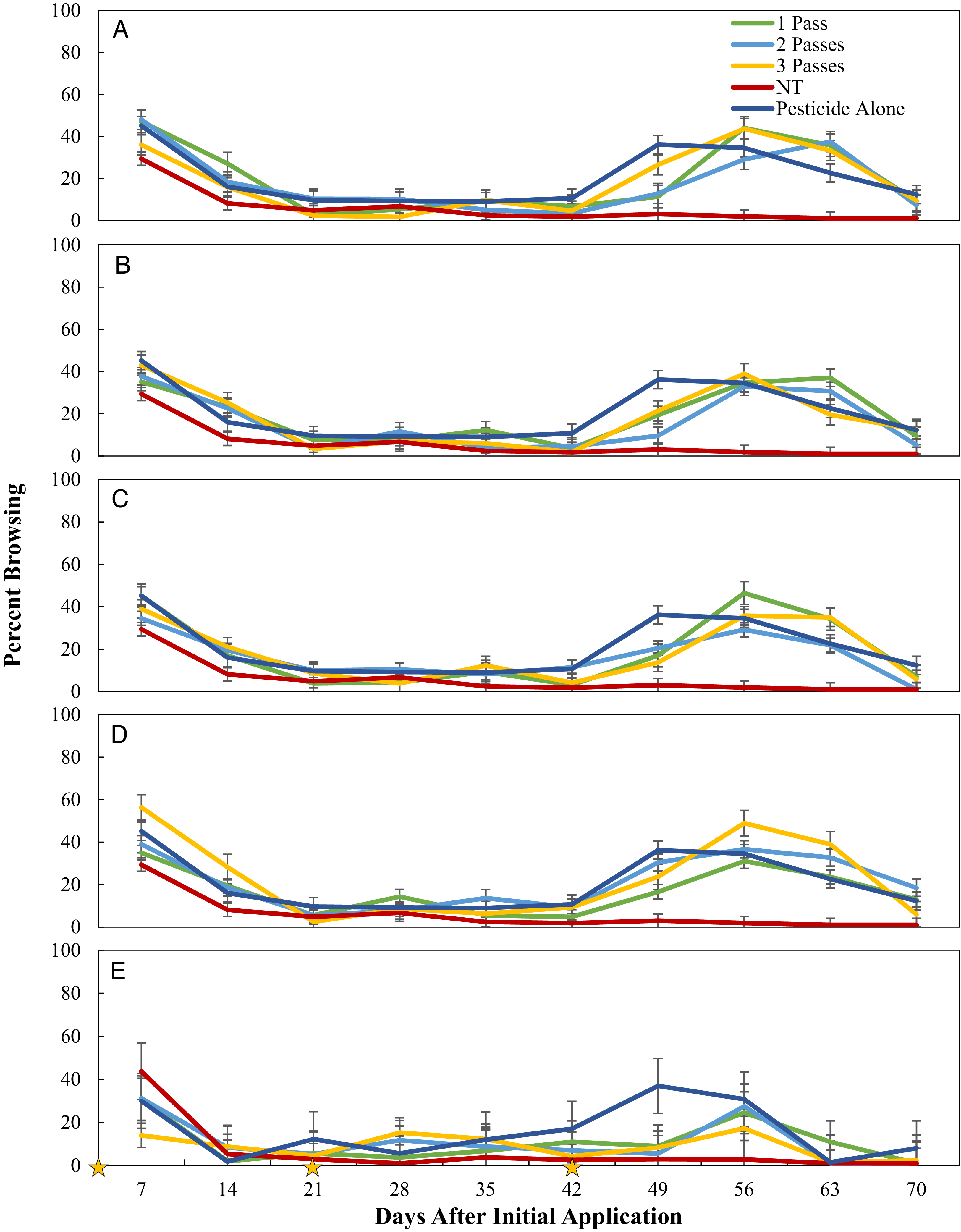
In the East Rangeline experiment, white-tailed deer browsing was highest early in the season (0 to 21 DAA) and then again later in the season from 42 to 70 DAA (Figure 5). This inconsistency in browsing behavior among the white-tailed deer in this experiment may be attributable to decreased repellent efficacy over time or it may be a result of environmental factors influencing browsing behavior. Throughout the season, browsing rates ranged from 2% to 48% in response to an applications of Liquid Fence, 2% to 43% with Bobbex, 0% to 47% with Hinder, and 2% to 56% with Plantskydd +. Applications of Penergetic bWV resulted in browsing rates of 0% to 31% in 2024, whereas browsing in the pesticide-only and nontreated control plots ranged from 2% to 45% and 0% to 44%, respectively. Unlike in the West Rangeline experiment, in the East Rangeline experiment, no repellent reduced browsing until 49 DAA. Then, browsing reductions occurred with either one, two, or three applications of Liquid Fence, Bobbex, or Hinder, and also with Plantskydd + applied once. In 2024 alone, Penergetic bWV applied once, twice, and three times also led to reduced browsing at 49 DAA. At 70 DAA, less browsing occurred when Hinder was applied twice. Interestingly, less white-tailed deer browsing occurred in the nontreated weedy control than most Liquid Fence, Bobbex, Hinder, and Plantskydd + treatments and the pesticide-only, no-repellent control between 49 and 63 DAA, and less browsing occurred with applications of Penergetic bWV when assessed at 56 DAA. Greater weed density in these nontreated control plots later in the season could have acted as a physical deterrent to deer browsing, they may have encouraged deer to selectively browse higher-quality soybeans that were less affected by competition from weed species, or both may have occurred (Berteaux et al. Reference Berteaux, Crête, Huot, Maltais and Ouellet1998, Pierce et al. Reference Pierce, Vandeloecht and Flinn2022). In both the West and East Rangeline experiments, the addition of a fungicide and an insecticide to the late postemergence application did not influence browsing compared to any other treatments. DeDecker and Tollini (Reference DeDecker and Tollini2019) also reported that sequential applications of the repellent DeerPro did not reduce white-tailed deer browsing soybean crops. Research by Tanner and Dimmick (Reference Tanner and Dimmick1983) found that within 3 wk following application of the repellent Hinder, 98% of treated soybean plants were damaged by deer. Similar results have also been observed in other crop species. Conover and Kania (Reference Conover and Kania1987) reported that multiple applications of a product called BigGameRepellent (manufacturer unidentified) were ineffective in preventing deer browsing on young apple trees (Malus spp.) in Connecticut. Angradi and Tzilkowski (Reference Angradi and Tzilkowski1987) found that among white ash and black cherry seedlings, selenium deterred deer browsing in white ash but not black cherry.
Evaluation of deer browsing for the East Rangeline experiment for 2023 and 2024. Stars represent timings of PRE, EPOST, and LPOST applications. Error bars represent Standard Error of the Mean. Repellents include (A) Liquid Fence, (B) Bobbex, (C) Hinder, (D) Plantskydd +, and (E) Penergetic bWV. Penergetic bWV consists of 2024 results only.

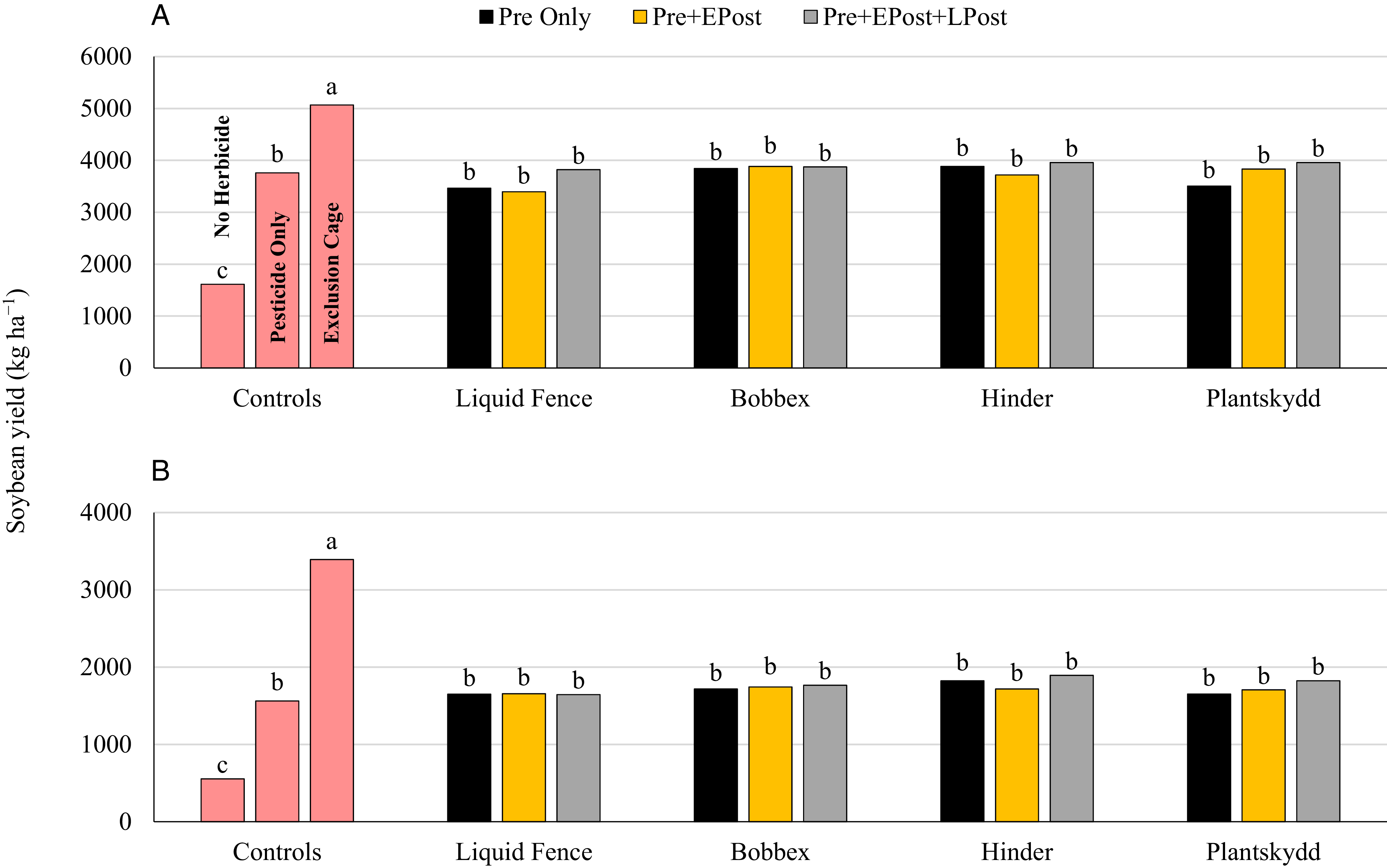
In both experimental locations, all deer repellent-pesticide combinations resulted in soybean yields that were lower than yields from the exclusion cage control plots (Figure 6). In the West Rangeline experiment, deer browsing reduced soybean yields by 11% to 35%, while in the East Rangeline experiment, where deer browsing was higher, soybean yields were reduced by 25% to 63%. Additionally, at both experimental locations, all deer repellent-pesticide combinations resulted in soybean yields that were similar to that of the pesticide-only controls but higher than the no-pesticide controls. These results are consistent with the results pertaining to deer browsing (Figures 5 and 6), because no single treatment consistently deterred browsing over another. DeCalesta and Schwendeman (Reference DeCalesta and Schwendeman1978) found similar results when investigating the effects of deer browsing on soybean yield. They found that early browsing damage (within the first week following emergence) reduced soybean yields by up to 80% compared to non-browsed plants. Wallace et al. (Reference Wallace, Palmer, Yarrow, Shipes, Dunphy and Reese1993) also reported that deer browsing across multiple soybean genotypes reduced yields by an average of 44% compared with yields from protected soybeans. Tollini et al. (Reference Tollini, DeDecker, Jean and Kosal2020) also reported that applications of the repellents Plantskydd and DeerPro were unable to control deer browsing soybean to the point of significantly protecting yield. This demonstrates that while market-available repellents may occasionally deter browsing, they are not likely to be effective in preserving soybean yields.
Yields of multiple repellent treatments for the (A) West and (B) East Rangeline browsing experiments for 2023 and 2024. Bars followed by the same letter are not statistically different α = 0.05.

Tank-Mix Experiment
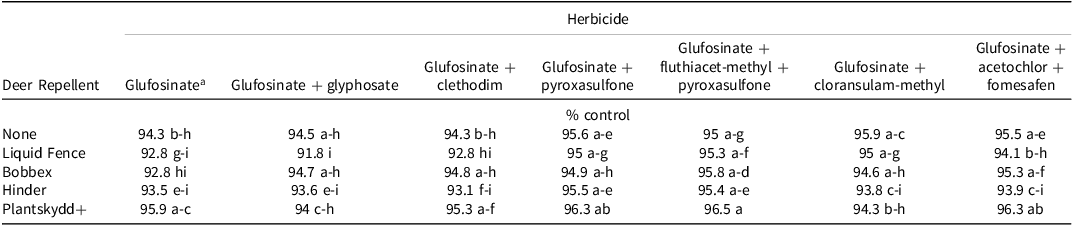
Waterhemp control ranged from 92% to 97% at 14 DAA, and only a few times did adding a deer repellent to the herbicide treatment result in reduced control compared with an herbicide treatment alone (Table 5). For example, compared with herbicide treatments alone, waterhemp was controlled only when Liquid Fence was added to the glufosinate + glyphosate treatment and Hinder was added to the glufosinate + acetochlor treatment, but these were the only two instances when this occurred. Penergetic bWV added to glufosinate + cloransulam-methyl also provided less control of waterhemp.
Influence of deer repellent and glufosinate herbicide combinations on waterhemp control 14 days after application (DAA).

a Means followed by the same letter are not different according to Fisher’s LSD (α = 0.05).
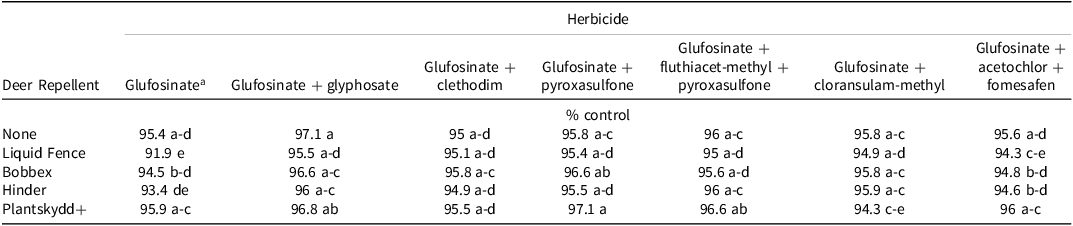
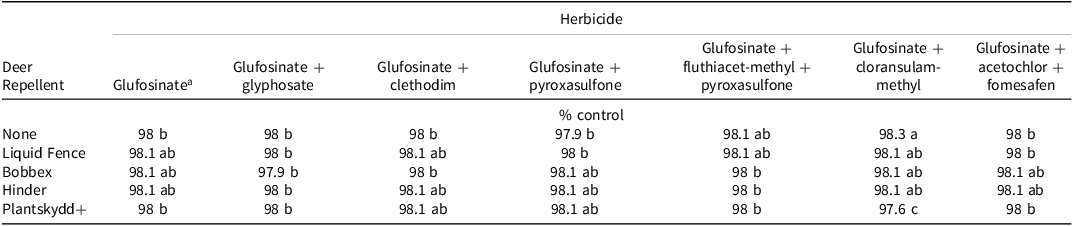
Adding Liquid Fence to glufosinate also resulted in less control of foxtail species compared with applying glufosinate alone, but this was the only instance we noticed that foxtail species control was less when a herbicide-repellent combination was used (Table 6). All other treatments resulted in 92% to 97% control of foxtail species at 14 DAA. Similarly, only one instance of reduced common cocklebur control occurred when Plantskydd was added to glufosinate + cloransulam-methyl compared to the control provided by the herbicides alone (Table 7). Overall, we observed very few instances of reduced weed control when a deer repellent was added to a standard postemergence herbicide treatment of soybean.
Influence of deer repellent and glufosinate herbicide combinations on foxtail species control 14 days after application (DAA).

a Means followed by the same letter are not different according to Fisher’s LSD (α = 0.05).
Influence of deer repellent and glufosinate herbicide combinations on cocklebur control 14 days after application (DAA).

a Means followed by the same letter are not different according to Fisher’s LSD (α = 0.05).
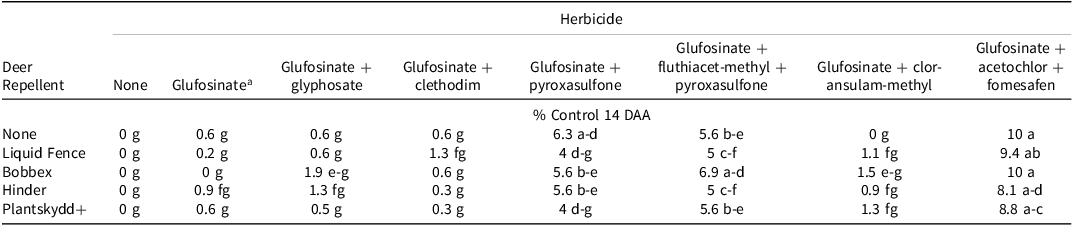
Soybean visual injury in response to these deer repellent and herbicide combinations0 ranged from 0% to 10% across all treatments and controls when Liquid Fence, Bobbex, Hinder, and Plantskydd + were used (Table 8). In 2024, injury to soybean when Penergetic bWV was used ranged from 0% to 20%. Additionally, at 14 DAA, there were differences in soybean injury among the repellent-herbicide combinations and the herbicide-only controls. These findings further support the idea that deer repellents do not significantly affect herbicide activity when applie to soybean.
Influence of deer repellent and glufosinate herbicide combinations on crop injury 14 days after application (DAA).

a Means followed by the same letter are not different according to Fisher’s LSD (α = 0.05).
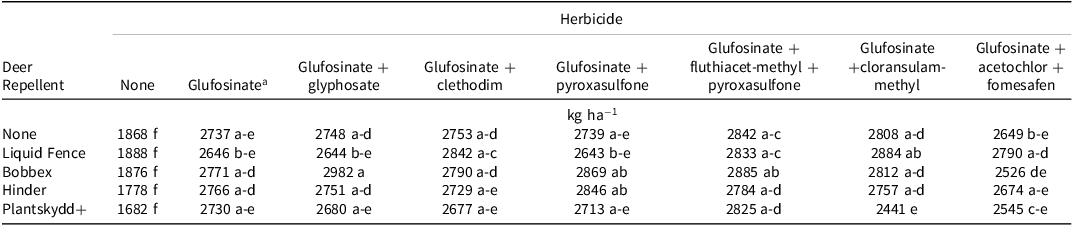
Soybean yields ranged from 1,682 to 2,982 kg/ha, and there were very few differences among herbicide-repellent combinations and herbicide-only controls (Table 9). Only the addition of Plantskydd + to the glufosinate + cloransulam-methyl treatment resulted in lower soybean yields than the herbicide-alone treatment. Additionally, none of the herbicides add to the tank mix with glufosinate resulted in soybean yields that were different than glufosinate applied alone. In 2024, no combination of Penergetic bWV with herbicides resulted in significantly different yields compared to the herbicide-only control. This is consistent with our overall results indicating that adding these deer repellents to standard postemergence herbicide treatments does not affect herbicide efficacy to the point of causing a lower soybean yield. Furthermore, as a result of weed competition, and as expected, yields from all repellent-only and nontreated control treatments were lower than all herbicide and herbicide-repellent combinations.
Influence of deer repellent and glufosinate herbicide combinations on soybean yield.

a Means followed by the same letter are not different according to Fisher’s LSD (α = 0.05).
Practical Implications
Adding these repellent products to common herbicide applications will most likely not negatively affect weed control or soybean injury. These additions are unlikely to significantly improve weed control or soybean yields. Although we are unaware of any other research to have examined the effects of deer repellent and herbicide combinations on weed control, a variety of other research has investigated the effects of co-applications of herbicides and fertilizers; and herbicides, insecticides, or biostimulants on weed control (Bernards et al. Reference Bernards, Thelen and Penner2005; Daramola et al. Reference Daramola, MacDonald, Kanissery and Devkota2023; Katsenios et al. Reference Katsenios, Panagiotis, Vitsa, Leonidakis and Efthimiadou2023). In most instances, these combinations have rarely affected herbicide performance, and is similar to the response we have reported here with co-applications of a deer repellent and a herbicide.
Collectively, the results from these experiments suggest that while deer may be deterred from browsing for short periods of time by some repellents, a prolonged reduction in browsing following single or even sequential applications is unlikely. Overall, careful consideration should be given to incorporating wildlife repellent products in tank mixtures of a herbicide or pesticide when being applied to soybeans. If one wishes to use wildlife repellents as a means of deterring white-tailed deer browsing on soybeans, then it should be integrated with other management practices to fully achieve deterrence and crop protection.
Acknowledgments
We thank Del Knerr for their technical support, and our fellow graduate students for their help during the growing season.
Competing interests
The authors declare they have no competing interests.


 Open access

