


Investing in breastfeeding protection, promotion, and support programmes is important to promote optimal child health and child development throughout the lifespan, including maternal health, and foster economic growth(Reference Victora, Bahl and Barros1,Reference Hansen2) .
Since the early 1990s, Colombia has identified breastfeeding and child welfare programmes as key strategies to reduce infant mortality and morbidity as well as to improve child developmental potential(Reference Ochoa Parra and Casallas Murillo3). The enabling of a breastfeeding friendly environment began in 1992 with the development of the Breastfeeding Support National Plan and three central policies that endorsed the WHO International Code of Marketing of Breast-milk Substitutes (WHO’s Code), the Baby Friendly Hospital Initiative (BFHI) and the formation of a National Breastfeeding Committee; however, oversight and regulatory responsibility for these policies were not granted to a specified entity(4,Reference Perez-Escamilla5) . Since then, the National Breastfeeding Committee has disbanded and BFHI implementation remains limited. Of the 51 430 private and public health institutions licensed to provide maternal and child care in 2009, only 330 (0·64 %) were accredited as BFHI(Reference Ochoa Parra and Casallas Murillo3,6,7) . This is not surprising given that that the country lacks a centralized coordinating entity empowered to recommend and implement needed breastfeeding policies and programmes(Reference Escobar, Giedion and Giuffrida8–10).
Primary indicators for assessing in-country breastfeeding practices include early initiation of breastfeeding (EIBF) and exclusive breastfeeding (EBF). EIBF has been shown to be associated with positive infant morbidity and mortality outcomes, associated with colostrum feeding and overall duration of breastfeeding(Reference Victora, Bahl and Barros1,6) . In Colombia, breastfeeding practices have not improved over the years. Indeed, early breastfeeding initiation rates decreased from 61 % in 2000 to 48·9 % in 2005 and then partially rebounded to 57 % in 2010. Furthermore, EBF decreased from 47 % in 2005 to 43 % in 2010(11–13). To our knowledge, the reasons for this trend have not been studied. In our study we hypothesize that this may be influenced by healthcare system-adjacent modifiable risk factors(Reference Ochoa Parra and Casallas Murillo3,Reference Ogbo, Page and Idoko14) combined with population level factors such as household and maternal characteristics(7,Reference Escobar, Giedion and Giuffrida8) . There is a dearth of studies investigating the determinants of EIBF and EBF in Colombia. Thus, it is important to identify relevant modifiable risk factors for improving breastfeeding that can be integrated into and delivered through a package of interventions to improve optimal breastfeeding practices more rapidly in Colombia(Reference Lutter and Morrow15). Examples of modifiable risk factors to improve breastfeeding practices through healthcare system interventions are maternal nutrition status, pregnancy intention, type and place of delivery, prenatal and prelacteal feedings. Hence, the primary aim of this study is to identify modifiable risk factors for improving EIBF and EBF among infants under 24 months and 6 months of age, respectively.
Methods
Study setting
The study used data from the Colombian Demographic and Health Survey (DHS) conducted from November 2009 through November 2010. Colombia is an upper middle-income country with the fourth highest rate of maternal mortality in South America (92 per 100 000 live births) and relatively high rates of infant mortality (15 per 1000 live births)(16). Data on maternal and child health and nutrition outcomes were collected in the DHS for children born in the 36 months preceding data collection, and then our analyses subsets were restricted to the relevant age ranges (i.e. born during the previous 24 months for EIBF and during the previous 6 months for EBF analyses). The survey’s sampling framework was based on a stratified, multiple-stage cluster sampling design, drawing from national level census data, and regional/household level registries across geographical areas(12).
Outcome variables
This study has two primary outcomes operationalized based on the following definitions from the WHO Infant and Young Child Feeding (IYCF) guidelines(17).
Early initiation of breastfeeding was defined as the ‘proportion of children born in the last 24 months who were put to breast within 1 h of birth’ (18). The outcome variable was delayed breastfeeding initiation, i.e. not being breastfed within the 1 h of birth.
Exclusive breastfeeding was defined as the ‘proportion of infants 0–5 months of age who were fed exclusively with breastmilk’ and was based on maternal current status recall in reference to the previous day(18). EBF was categorized based on nineteen questions querying the mother if her child consumed 29 specific food or liquid items other than breastmilk in the previous day. Infants were considered to be exclusively breastfed if breastmilk was the only source of nutrition and hydration, without any additional solid or liquid supplement including water(18). The outcome variable ‘EBF interruption’ was defined as not being exclusively breastfed in the last 24 h before the interview.
Independent variables
The explanatory variables were grouped into four (EIBF model) and five (EBF model) distal to proximal blocks. Both models included household, maternal, health systems, and child characteristics, and the EBF analysis also included the early feeding environment (see conceptual model in Fig. 1). Breastfeeding initiation and exclusivity are influenced by a range of interrelated and temporally distinct factors at different levels of proximity. Conceptual hierarchical frameworks are an appropriate technique to evaluate the individual determinants of health outcomes as outlined by Victora et al.(Reference Victora, Huttly and Fuchs19). Specifically, hierarchical models have been recommended and applied to study breastfeeding outcomes globally(Reference Boccolini, Carvalho and Oliveira20–Reference Rollins, Bhandari and Hajeebhoy22).
Conceptual model: description of hierarchical interrelationship between explanatory and outcome variables. *Maternal Employment variable only considered in outcome 2, exclusive breastfeeding model

The DHS composite wealth index was used to describe household wealth and is based on a standard list of household assets classified into five wealth quintiles (income quintile variable). The number of adults in the household was estimated by subtracting the number of children living in the residence from the total number of usual household residents plus the number of visitors who slept in the house the previous night. A skilled attendant at birth was affirmed if delivery was performed by a doctor or nurse (yes); and not performed by a skilled attendant if it involved others, including auxiliary nurse and traditional birth attendant (no). DHS anthropometric measurements (height and weight) were assessed directly at the time of the survey using a measuring board and properly calibrated scale. Maternal overweight/obesity was estimated using the standard BMI cut-off points; i.e. ≥25 for overweight and ≥30 for obesity. Newborns were considered to have received prenatal feeds when any one of nineteen questions querying regarding any liquids given to the infant in the first 3 d post birth, including infant formula and water with or without sugar, were affirmed. Prelacteal feeding was considered to have not occurred only when all nineteen items were not affirmed(Reference Garret, Sanga and Kothari23). The number of prenatal visits were considered to be adequate if they were at least four based on Colombia’s guidelines(Reference Osorio, Tovar and Rathmann24). Prenatal visits numbering ten or more was considered potentially indicative of a higher risk pregnancy(Reference Carter, Tuuli and Caughey25).
Analytical sample
In the EIBF analysis the initial sample included 6694 children under 24 months of age born to women aged 13–49 years old. After excluding multiple births, children who did not live in the maternal household, and non-living children, the analytical sample included 6592 children born within the 24 months preceding data collection. In the EBF analysis, the initial sample included 1537 infants under 6 months of age. After excluding multiple births, children who did not live in the maternal household, and non-living children the analytical sample included 1512 infants under 6 months of age. Figure 2 presents detailed information regarding analytical sample selection.
Flow chart depicting analytical sample selection criteria.

Data analyses
Statistical analyses were performed using STATA version 15.1 (Stata Corp.). Separate modified Poisson logistic regressions with robust error variance weighted by the DHS weight statistic (iweight = wgt) for nationally representative proportions were conducted to identify explanatory factors for each outcome. We used the statistical command meglm with (iweight = wgt) option as it is the preferred command to fit mixed-effects generalized linear models to hierarchical datasets with normally distributed effects, such as described in our DHS dataset(26,Reference Zou27) . The study was exempt from IRB review as no primary data were available from a deidentified data asset in the public domain.
Initially, descriptive statistics expressed as counts and frequencies were tabulated for all explanatory variables (Step 1). Next, unadjusted bivariate analyses examined the associations between the independent variable and each of the outcomes (Step 2). Variables associated with a P < 0·20 were then entered into multivariable analyses examining each block of the hierarchical conceptual model (Step 3). Finally, variables associated with a P < 0·20 in the within block analyses were entered as control variables in Step 4, i.e. multivariate hierarchical modelling. Blocks of variables were entered as following in the hierarchical modelling: (i) ‘Household Variables’; (ii) ‘Maternal Variables’; (iii) ‘Health Systems Variables’; (iv) ‘Child Variables’; (v) ‘Early Feeding Environment Variables’ (EBF model only) (Fig. 1). The associations between independent variables and outcomes were determined to be significant at the 5 % P-level. For both outcomes, within the healthcare system block we tested the interaction between C-section and number of prenatal visits (block 3) to find out if the simultaneous presence of both increased the risk of poor breastfeeding outcomes in a multiplicative (v. additive) way.
Results
Early breastfeeding initiation
Table 1 shows the analytical sample characteristics and the prevalence of delayed breastfeeding initiation across outcome variables. The prevalence of EIBF within the first hour after birth was 66 %. The majority of respondents delivered in public health facilities (95·2 %) had at least a primary-level education (75·5 %), and 18·1 % were adolescent mothers. The prevalence of C-section was 37·1 % and 8·2 % of infants had low birth weight. Proportionally more mothers who delivered via C-section (51·4 %) did not practice EIBF relative to those who had a vaginal birth (24·6 %). There was a statistically significant interaction between C-section and number of prenatal visits, the risk of delayed breastfeeding initiation was higher among those who had a C-section and had fewer than four visits (OR = 1·44 CI 95 % = 1·20, 1·72) or had ten visits or more (OR = 1·50, CI 95 % = 1·27, 1·78) compared with those who had four to nine visits (data not shown).
Descriptive characteristics of analytical sample (n 13 567), and bivariate analyses of delayed breastfeeding initiation among children aged under 24 months and unadjusted prevalence ratios (Demographic Health Surveys, Colombia 2010)
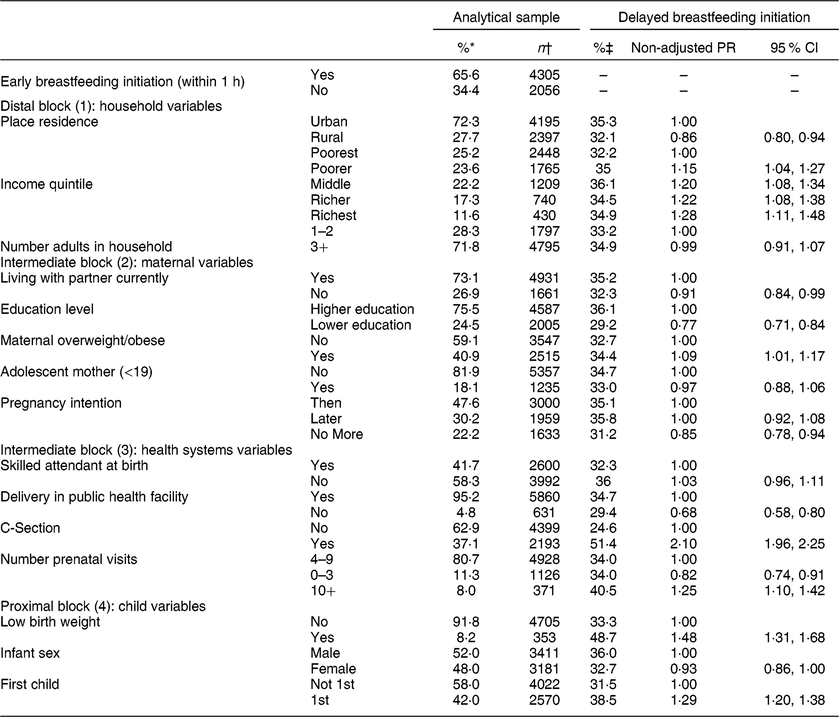
* Percentages are nationally representative with DHS weighted variable.
† This analysis included alive, singleton birth, infants under 24 months of age at time of survey.
‡ Percentages are nationally representative with DHS weighted variable.
Table 2 describes the results from the multivariate hierarchical modelling analysis by block. The modifiable risk factors associated with delayed breastfeeding initiation identified were: C-section delivery (PR = 2·08, CI 95 % = 1·92, 2·25), no skilled attendant at birth (PR = 1·09, CI 95 % = 1·01, 1·18), and maternal overweight/obesity (PR = 1·09, CI 95 % = 1·01, 1·17). Non-modifiable risk factors associated with delayed breastfeeding initiation identified were: maternal primiparity (PR = 1·23, CI 95 % = 1·12, 1·35), infant low birth weight (PR = 1·37, CI 95 % = 1·20, 1·56), and higher household income quintile (PR = 1·20, CI 95 % = 1·08, 1·34). Mother not living with partner (PR = 0·91, CI 95 % = 0·83, 1·00) and lower maternal education (PR = 0·81, CI 95 % = 0·74, 0·89) were protective factors for EIBF. Supplementary material provides detailed information regarding the hierarchical EIBF models.
Final multiple hierarchical model to identify the factors associated with delayed breastfeeding initiation in children aged under 24 months (n 6592) (Colombia, DHS 2010)
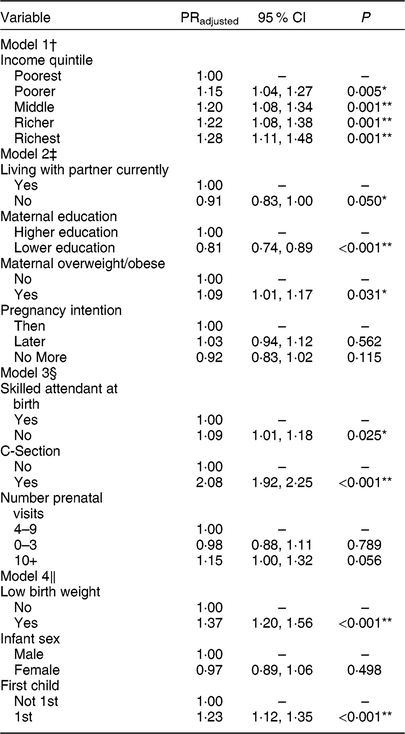
* Significant at P < 0·05 **Significant at P < 0·001– reference category; no prevalence ratios or CI calculated.
† Model 1: Income quintile and infant age.
‡ Model 2: Model 1 + mother living with partner, maternal education, maternal overweight/obese and pregnancy intention.
§ Model 3: Model 2 + skilled attendant at birth, C-section and number of prenatal visits.
‖ Model 4: Model 3 + low infant birth weight, infant sex, and maternal primiparity.
Exclusive breastfeeding
Table 3 shows the analytical sample characteristics (n 1512) and the prevalence of non-EBF across variables. A total of 688 infants (43 %) were exclusively breastfed through the first 6 months after birth. The majority of respondents were delivered in public health facilities (95·2 %), had at least a primary-level education (77·3 %) and were non-adolescent mothers between 20 to 49 years of age (76·6 %). The prevalence of C-section was 36·5 % and 8·3 % of infants had low birth weight. Around 60 % had initiated breastfeeding within the first hour after birth and prelacteal feeds were used very frequent (62·4 %). There was a statistically significant interaction between C-section and number of prenatal visits, the risk of interrupting EBF was increased among those who had a C-section and had ten visits or more (OR = 1·24, CI 95 % = 1·03, 1·51) compared with those who had four to nine visits (data not shown).
Descriptive characteristics of analytical sample (n 1512) and bivariate analyses of EBF interruption among children aged under 6 months and unadjusted prevalence ratios (Demographic Health Surveys, Colombia 2010)
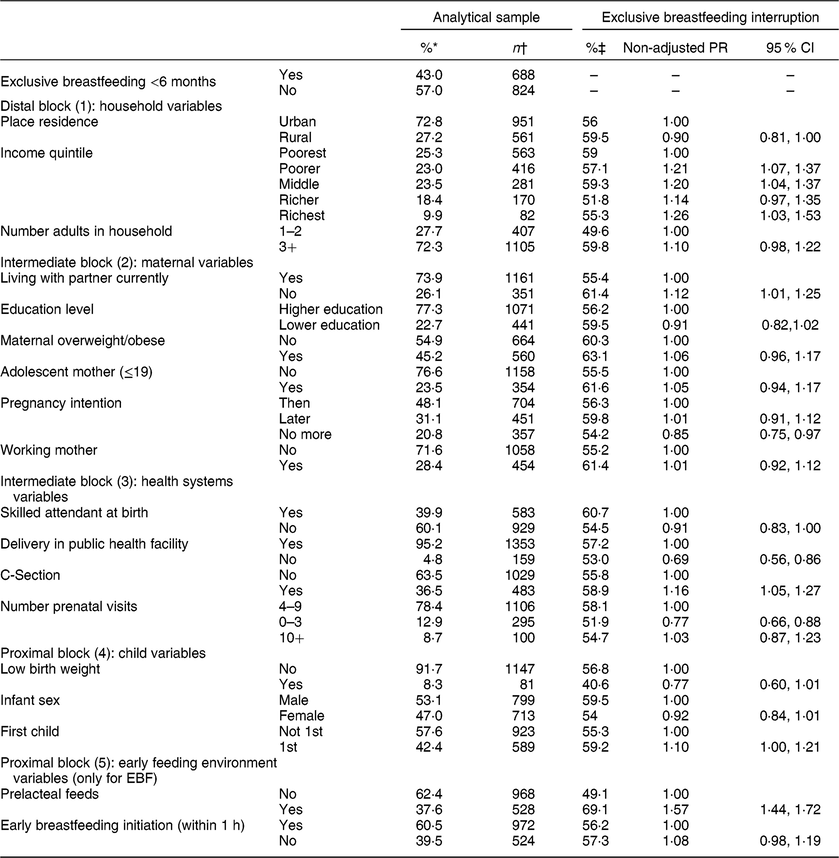
* Percentages are nationally representative with DHS weighted variable.
† This analysis included alive, singleton birth, infants under 6 months of age at time of survey.
‡ Percentages are nationally representative with DHS weighted variable.
Table 4 describes the results from the multivariate hierarchical modelling analysis by block. The independent modifiable risk factors identified for EBF interruption were: C-section delivery (PR = 1·12, CI 95 % = 1·02, 1·23) and prelacteal feeding (PR = 1·51, CI 95 % = 1·37, 1·68). Non-pregnancy intention was a protective factor against EBF interruption (PR = 0·82, CI 95 % = 0·72, 0·93). The non-modifiable risk factor associated with EBF interruption was higher household income quintile (PR = 1·23, CI 95 % = 1·08, 1·40). Supplementary material provides detailed information regarding the EBF hierarchical models.
Final multiple hierarchical model to identify the factors associated with interrupting EBF in children aged under 6 months (n 1512) (Colombia, DHS 2010)
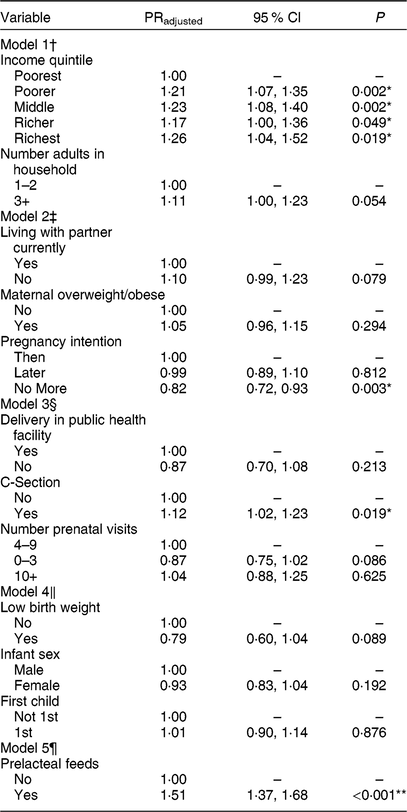
* Significant at P < 0·05 **Significant at P < 0·001– reference category; no prevalence ratios or CI calculated.
† Model 1: income quintile, number of adults in household, and infant age.
‡ Model 2: Model 1 + mother living with partner, maternal overweight/obese, and pregnancy intention.
§ Model 3: Model 2 + delivery in public health facility, C-section, and number of prenatal visits.
‖ Model 4: Model 3 + low infant birth weight, infant sex, and maternal primiparity.
¶ Model 5: Model 3 + prelacteal feeds.
Discussion
To our knowledge, this is the first study to investigate determinants of breastfeeding practices in Colombia looking at modifiable risk factors from a healthcare system perspective. C-section, lack of skilled attendant at birth, prelacteal feeding, and maternal overweight/obesity were the identified modifiable risk factors that can be integrated and addressed through a package of health system interventions to improve breastfeeding outcomes in Colombia. Evidence has shown that designing tailored interventions focusing on multiple relevant risk factors increases breastfeeding rates, particularly in non-high income countries such as Colombia(Reference Victora, Bahl and Barros1,Reference Haroon, Das and Salam28) . Strategies that promote breastfeeding and engage individuals, facilities, and communities in interventions that integrate education and support for optimal breastfeeding practices at multiple levels have been successful in improving breastfeeding indicators and achieving country-level goals(Reference Victora, Bahl and Barros1,Reference Haroon, Das and Salam28,Reference Sinha, Chowdhury and Sankar29) .
In our study, C-section was a risk factor for both delayed breastfeeding initiation and interruption of EBF. C-section is often associated with obstetric complications that may lead to mother–newborn separation, which in turn can reduce the likelihood of EIBF and the duration of any breastfeeding or EBF(Reference Rowe-Murray and Fisher30–Reference Cato, Sylvén and Lindbäck32). The prevalence of C-section is higher in Latin America relative to other low-and-middle income (LMIC) regions, accounting for 24–45 % of births in public and private sector facilities(Reference Benova, Macleod and Footman33,Reference Oakley, Benova and Macleod34) . This high prevalence combined with the dearth of skilled birth attendants found in our study points to a key barrier for EIBF. Skilled attendants at birth, particularly those who are properly trained in supporting optimal breastfeeding practices, are shown to improve maternal EIBF as well as longer-term feeding practices(Reference Selim35). Therefore, it is important to acknowledge that addressing barriers for timely breastfeeding initiation is a crucial first step for achieving longer term EBF and any breastfeeding success(Reference Cato, Sylvén and Lindbäck32,Reference Esteves, Daumas and Oliveira36,Reference DiGirolamo, Grummer-Strawn and Fein37) . Additionally, consistent evidence from countries across world regions has identified C-section as a risk factor for influencing pre-lacteal feeding(Reference Boccolini, Pérez-Escamilla and Giugliani38). Indeed, Boccolini et al. analysed data from Latin America and the Caribbean, including Colombia and found important inequities between C-section delivery and risk of prelacteal feeds. Specifically, women of lower socio-economic status experienced a heightened risk of milk-based prelacteal feeding associated with C-section delivery(Reference Boccolini, Pérez-Escamilla and Giugliani38). Pre-lacteal feeding is of serious concern as it has consistently been identified as a risk factor for EBF in cohort and cross-sectional studies globally(Reference Pérez-Escamilla, Segura-Millán and Canahuati39). These findings combined with the high rates of hospital or clinic births (95·6 %) in Colombia indicate an opportunity for improving healthcare system support and protection of breastfeeding mothers in the perinatal and postnatal period in Colombia.
Maternal pregnancy intention is generally described in the literature as associated with positive breastfeeding behaviour as compared with lack of intention at the time of conception(Reference Keddem, Frasso and Dichter40). However, in our study, non-pregnancy intention was associated with longer EBF perhaps because, in the Colombian context, women with unplanned pregnancies may have received more attention and support with regards to their breastfeeding plans. More than 50 % of pregnancies are not planned(Reference Sedgh, Singh and Hussain41), thus, providing breastfeeding education during the antenatal care is key to encouraging non-intentional pregnant women to breastfeed. A patient-centred approach to such promotion activities, such as incorporating pregnancy intention into counselling, is key to achieving optimally targeted and effective interventions(Reference Taylor and Cabral42,Reference Murray, Ricketts and Dellaport43) . Maternal overweight/obesity is a recognized risk factor for delayed breastfeeding initiation and is also implicated in shorter overall breastfeeding duration(Reference Amir and Donath44,Reference Wojcicki45) owing to biological, mechanical, behavioural and/or psychological factors. This characteristic is of particular relevance in the global context as prevalence of obesity is increasing worldwide and in LMIC such as Colombia(Reference Hossain, Kawar and El Nahas46). Providing timely support and counselling for obese and overweight women is crucial to improving both EIBF and EBF(Reference Claesson, Larsson and Steen47).
Several non-modifiable factors associated with suboptimal breastfeeding were found in our study. The finding of increased EBF interruption with higher income quintiles is consistent with findings from other LMIC(Reference Victora, Bahl and Barros1). Indeed, in these countries poorer women are more likely to initiate and continue breastfeeding for longer periods of time as compared with their richer counterparts(Reference Victora, Bahl and Barros1). Consistent with our findings, infant low birth weight and primiparity have been previously found to be associated with suboptimal breastfeeding practices(Reference Chapman and Perez-Escamilla31,Reference Patil, Turab and Ambikapathi48) . Lower maternal education and mother not living with partner were protective factors to delayed breastfeeding initiation in Colombia, which is somewhat consistent with some but not all studies previously conducted(Reference Patel, Bucher and Pusdekar49,Reference Dewey, Nommsen-Rivers and Heinig50) .
It is important to acknowledge that Colombia has been working for several years towards building an enabling breastfeeding environment. In 2010, a ‘Ten Year Plan’ (2010–2020) was formulated to strengthen breastfeeding programmes(7,Reference Betancourt51) . Universal maternity leave up to 18-weeks and maternal workplace protection strategies were recently legislated(52,53) . However, our findings clearly indicate that there are key modifiable risk factors that can be addressed through healthcare systems interventions. Indeed, the modifiable factors identified in this study can inform the development of a package of interventions to strengthen the coordination of efforts on breastfeeding counselling and support, including enhancing BFHI implementation(Reference Perez-Escamilla5,6) and breastfeeding counselling within the Colombian health systems(Reference Victora, Bahl and Barros1,Reference Rollins, Bhandari and Hajeebhoy22) . Evidence has shown that these identified factors are amenable to change and improvement through clear and specific recommendations and interventions to better support breastfeeding practices, underscoring the strong focus needed on the healthcare systems(54–Reference Perez-Escamilla and Engmann56).
Our findings must be carefully interpreted due to the cross-sectional survey design, precluding the establishment of the temporality of associations. The retrospective nature of the surveying method also introduces potential recall bias. The external validity of the study was tested and both analytical samples were similar for most household and maternal variables analysed, differing only slightly in place of residence, marital status, and maternal age. However, these characteristics were not associated with both outcomes; therefore, we believe that this limitation did not significantly affect the external validity of the study. It is also important to note that the study data were from 2010; nevertheless, our literature review indicates that the findings are still very applicable to the current breastfeeding context in Colombia and can be used to generate hypotheses to be tested through future quasi-experimental and experimental studies(Reference Victora, Huttly and Fuchs19).
In conclusion, women in Colombia need additional breastfeeding support at multiple levels to engage in optimal infant feeding practices. The identification of modifiable risk factors for EIBF and EBF can help inform the development of a tailored package of interventions to improve the coverage and quality of breastfeeding counselling through the healthcare system in Colombia.
Acknowledgements
Acknowledgements: Not applicable. Financial support: This research received no specific grant from any funding agency, commercial or not-for-profit sectors. No other entity besides the authors had a role in the design, analysis, or writing of this article. Conflicts of interest: None. Authorship: S.F. was responsible for formulating the research question, analysing the data, and writing the article with advice, reviewing, and editing from R.P.-E. and G.B. Ethics of human subject participation: This research did not involve human subjects but relied on secondary data analysis of a deidentified dataset. Ethical standards were upheld in the research process.
Supplementary material
To view supplementary material for this article, please visit https://doi.org/10.1017/S1368980019002180



