





Introduction
The settlement of European “organizational migrants” such as soldiers, corporate expatriates, diplomats, missionaries, scholars, and aid workersFootnote 1 in Senegambia, a region located between the Senegal and Gambia rivers, dates back to the second half of the fifteenth century when the Portuguese navigators called lançados (Portuguese Jewish emigrants) frequented the Senegalese coast. They created stopovers on the Petite-Côte, the coastal area between Gorée and Casamance, at Rio Fresco (Rufisque), Porto d’Ale (Portugal), and Joala (Joal) to trade with the local populations. In doing so, some formed unions with the local women, whom they called “seniorita” (madam), and thus created so-called Métis communities or Afro-Europeans.Footnote 2 The mixed-race women from these unions were called “signaras” by the Portuguese travellers to indicate the high social status they held within the Métis community of the Petite-Côte.Footnote 3 It was the French who transformed the term “senhora” into signare in the late seventeenth century. Between the eighteenth and nineteenth centuries, intermarriage between Europeans (French, English) and Afro-European and Black signares contributed to the expansion of an Afro-European eliteFootnote 4 that shaped the urban landscape of Gorée and Saint-Louis, two migrant cities where populations of diverse origins lived (Europeans, Wolofs, Serrer, Bambara).
Afro-Europeans, such as those living in Gorée and Saint-Louis, were key intermediaries in the Atlantic slave trade. The accumulation of capital from the slave trade enabled them to build elaborate stone houses. Their building involved members of the Afro-European community, some of whom became entrepreneurs in masonry, carpentry, weaving, and ironworking. These intermediaries were particularly active in the construction of civilian buildings. Indeed, they were not neutral or passive; instead, they always adapted and translated the techniques they conveyed or received.Footnote 5 Towards the end of the eighteenth century, the Afro-European signares brought French master masons to Senegal and built beautiful provincial houses with architecture born of the complex cultural mix between Europeans and African.sFootnote 6 Indeed, the construction of these houses has also benefited from an allogeneic expertise, especially European and Bambara. These experts were migrants. As for the French administration, it was obsessed with the defensive architecture of its trading posts due to the English occupations of Gorée (1758–63) and Saint-Louis (1758–79) following the Seven Years’ War. Saint-Louis was also occupied between 1809 and 1814 by the English following the Napoleonic wars. It was not until the 1820s that the French administration began to take an interest in public architecture and urban planning.
Building materials evolved according to the construction techniques adopted and the financial capital of the owners. Between the seventeenth century and the beginning of the eighteenth century, the first constructions (forts and some private houses) called en dur (literally, “of hard materials”)Footnote 7 were made with local materials (wood, stones, lime, straw). In the second half of the eighteenth century, imported wood, stone, and tiles were used in the construction of private houses and administrative buildings. In the second half of the nineteenth century, with high traffic on the France-Senegal maritime route due to the development of the gum arabic and peanut trade, the architect engineers of the French administration demanded more imported materials such as bricks, wood, tiles, stones, nails, tar, pozzolan, asphalt, and hydraulic lime for the construction of administrative and religious buildings. But due to economic constraints and administrative delays, French architect engineers were forced to use local materials to reduce costs.
Trade routes were vectors not only of diffusion of architectural materials but also of knowledge, ideas, techniques, and innovations in several fields such as architecture, textiles,Footnote 8 and military weaponryFootnote 9 around the world. In the field of architecture, Carlos Marreiros has shown that Macau, a Portuguese city in China of great strategic importance to the growth of international trade in the middle of the sixteenth century, is built on a mixed architectural and urbanization of Portuguese and Western roots or influences with Chinese features.Footnote 10 The Portuguese in Mozambique used pedreiros (masons) from the former trading posts of Portuguese India (Daman, Diu, and Goa).Footnote 11 Stéphane Pradines’s studies show that the Swahili coast, a crossroads of world trade between the fifteenth and nineteenth centuries, features architecture with Arab, European, and African influences.Footnote 12 Senegambia was involved in the dynamic exchange of construction and planning techniques that transformed the French trading cities, places of cultural and economic exchange between Europeans and native populations. The material culture and precolonial architecture and urbanism of the trading cities of Gorée and Saint-Louis have been the subject of a few studies.Footnote 13 Some of these studies focus on the cultural and anthropological aspects of architecture,Footnote 14 while others deal with the evolution of urban planning and the field of the sociology of space in a colonial context.Footnote 15 However, such studies do not give precise details on the political and economic conditions that made the success of the European architecture and urban planning model possible in Senegambia. But these gaps can be filled by the studies of Gauvin Alexander Bailey, Benjamin Steiner, and Liora Bigon and Eric RossFootnote 16 which focus in the French Empire while providing important information on architecture and urbanism in Senegambia. Bailey studied architecture and urbanism in the French Atlantic and provides some information on the builders and nature of the materials used in the construction of civic, military, and public buildings.Footnote 17 Steiner follows in Bailey’s footsteps by studying these builders of empire at the construction site itself: the engineers, artisans, experts, workers, and slaves – all those builders who were responsible for the establishment of material constructs that formed the backbone of the early modern French Empire.Footnote 18 However, Steiner provides less information on the builders and materials used to construct the buildings at Saint-Louis and Gorée. In terms of urban planning, Liora Bigon and Eric Ross studied the plan en damier (grid plan) approved by the French colonial administration for the urban transformation of cities such as Gorée, Saint-Louis, and Dakar.Footnote 19
The history of architectural techniques and urban planning in the trading cities of Gorée and Saint-Louis is poorly documented. Most of the archives relate the military architecture (forts) put in place by the French authorities to defend their African possessions and trade.Footnote 20 Such buildings, as well as public buildings and more general urban planning works, were designed by the royal engineer architects who belonged to the Army Corps of Engineers, known by many names: first as the “ingénieurs du Roi,” then the “Génie militaire” (after 1743), the “corps du Génie” (in the 1750s), and after 1776 the “corps royal du Génie.”Footnote 21 The few sources available are silent on the involvement of French architects in the construction of private houses in Gorée and Saint-Louis,Footnote 22 indicating that the French administration did not intervene in their construction. It had completely abandoned this field in the hands of French and Afro-European civil entrepreneurs (master masons) with no Western-style architectural training.
The emergence of architecture and urban planning in Gorée and Saint-Louis was intimately associated with the presence of Europeans on the continent during the precolonial era. In these cities, the techniques of knowledge production and their transmission were of interest not only to producers but also to builders, entrepreneurs, merchants, traders, artists, consumers, local authorities, travellers, and others.Footnote 23
Using a microhistorical approach to highlight global technological dialogue,Footnote 24 this article offers a novel study of the interactions between capitalism, entrepreneurship, and “technological dialogue”Footnote 25 in architecture and urbanism between France and Senegambia in the context of the trading economy by crossing colonial sources, maps, and plans, as well as the study of buildings. It highlights how slave capitalism enabled the technological dialogue between European architects and experts with African builders and materials in the urban context of Senegambia, which created innovative architecture, construction techniques, and urbanism. Why was the French administration particularly slow in the process of urban transformation of the towns of Gorée and Saint-Louis between the ban on the slave trade in 1815 and the start of colonization in 1854? Why was it trying to replicate the European city model in Senegambia? What explains the success and limitations of hybrid architecture in Senegambia?
In this essay, I first analyse the urban architecture of the migrant cities of Gorée and Saint-Louis, to understand how the economy of slavery was at the origin of the establishment of a mixed architecture model blending various materials and construction techniques. Then, I turn to the architectural and urban planning model put in place by the French administration to transform the public space of the cities of Gorée and Saint-Louis according to the urbanization standards of European cities. Finally, I focus on the successes and limitations of technological dialogue in the context of hybrid architecture.
Private Métis Houses in the Eighteenth Century: Slavery and Luxury Architecture at the Intersection
The creation of the towns of Gorée and Saint-Louis is closely linked to the Atlantic slave trade. In 1617, the island of Gorée was occupied by the Dutch, who built two forts there. In 1677, France occupied the island and its two forts. As for the founding of Saint-Louis, its history began in 1659 when the clerk Louis Caullier built a fort on a small island, a league upriver from the sea, which seemed better protected against the attack of the waves. The island, called Ndar by local populations, would be baptized in the name of Saint-Louis in honour of King Louis XIV. The forts of Gorée and Saint-Louis were among the few masonry structures that existed in Senegambia. Along with the forts, the first constructions en dur in Gorée and Saint-Louis were fortified establishments with housing for European civilian and military personnel, and warehouses for trading goods and gunpowder. The authorities could not call on the know-how of the local population, who principally lived in straw dwellings or tents along the coast.Footnote 26 The French sent some qualified people, among which were engineers, masons, and carpenters who were engaged in construction work and repairs of ships and military buildings.Footnote 27
The architecture of the forts of Gorée and Saint-Louis was a more or less clumsy replica of the European forts.Footnote 28 Political and economic symbols designed to protect European traders, the forts were places of battle between European nations. The weakness of their defence was one of the reasons why they were destroyed by the enemy and why they were constantly being repaired. It appears quickly that Europeans had to rely on local manpower and knowledge to build or repair these structures. In fact, due to lack of financial means, the forts were built with locally produced materials: stones, wood, and straw for the thatched roofs by “people who are intelligent and able to draw the works well, and to have them executed solidly.”Footnote 29 Europeans have always used local materials (lime, wood) to maintain their forts. The Compagnie des Indes used local shellfish to produce lime. Indeed, European stone or brick houses are completely different from African straw and wood dwellings, but African workers were employed in these construction sites and rapidly acquired the knowledge to build as European employers wanted.
Thus, from the early years, Gorée and Saint-Louis continued to grow and attract native migrants, both free and captive. Next to the forts, huts were built to accommodate the surplus population. The forts that were European constructions for military use and the huts, Wolof habitats, coexisted in Gorée and Saint-Louis. The Wolof used degradable plant materials (wood, reeds, straw) to build their houses. The few huts built with solid material (clay soil) were the work of the Gambian Mandingos. The Mandingos displayed great ingenuity in the construction of their houses, as Xavier Golberry reports:
The Mandingos Nègres of the Gambia generally build their houses more solidly and conveniently than the Jolofs [Wolofs]. The Albreda huts are almost all square, composed of a ground floor formed in timber, whose voids are filled by a well kneaded and well-tightened clay earth; the inner and outer walls are coated with the same earth, with a thickness of six inches; And this well-beaten clay, soon takes the hardness and solidity of the brick baked in the sun, and resists for a very long time the insults of the times; the roof is built of frame and covered with millet straw or rice. All the houses of free men are built in this way, and the round huts, made of straw, are inhabited by slaves.Footnote 30
In 1749, Michel Adanson, who was visiting Gambia, asserted that the Mandingos owed their taste for architecture to the Portuguese, who had settled in Senegambia before the arrival of the English and French in the seventeenth century.Footnote 31 The Mandingos of Gambia originated in the empire of Mali, where earthen and stone architecture developed in trading cities such as Timbuktu, Jenné, and Gao, which facilitated connection between North Africa and Sub-Saharan Africa. The architecture of these medieval commercial cities is similar to the Moroccan style.Footnote 32 It is built using the adobe (or banco) technique, which uses hand-moulded and dried earthen bricks commonly known as “Koïra fere”’ (dried earth).Footnote 33 The architecture of these medieval cities spread throughout West Africa along the routes of trans-Saharan trade and the Atlantic trade. In the Chadian region of Kanem, the most conspicuous material vestiges known are the ruins of fired-brick elite locations, some of which are demonstrably associated with the Kanem-Borno Sultanate and dated to the eleventh to fourteenth centuries.Footnote 34 From the thirteenth to the fifteenth centuries, the Mandingos of Mali migrated to the Gambia River for commercial reasons. Pre-colonial African migrations were mainly linked to the trade in gold, kola nuts, salt, and captives.Footnote 35 People emigrate with their culture and know-how, and in the field of architecture, trade-related migration promoted technological dialogue.Footnote 36 This is the reason why the Mandingo who settled in Gambia for commercial reasons reproduced the same types of earthen construction that they knew well from Mali.
In the eighteenth century, many populations and types of architecture coexisted in the young cities of Gorée and Saint-Louis. Some, such the constructions en dur, were already the result of the circulation of techniques from within the Niger Basin. However, it is the constitution of a mixed racial elite that will bring us the first practical examples of a technological dialogue in the field of architecture and urban planning of these cities. The Afro-European elite was part of the socio-economic and cultural reality of the trading cities of Gorée and Saint-Louis. Europeans, their mixed-race descendants, slaves, and natives lived together, and the mixed-race population played an important role as intermediaries between Europeans and local merchants. The Afro-European and Black signares owned several domestic slaves, which they rented to the Compagnie des Indes. The European presence enabled Afro-Europeans and slaves to acquire the knowledge from European engineers and become themselves masons, carpenters, joiners, painters, metal workers.Footnote 37
The number of Blacks and Métis settled on the island of Gorée grew steadily: 197 in 1749, 1,430 in 1776, 1,566 in 1785.Footnote 38 Until the middle of the eighteenth century, the inhabitants of Gorée and Saint-Louis (mixed-race and Black) lived in huts bounded by tapades. Footnote 39 The inhabitants gradually replaced the straw huts with stone ones. The 1723 map drawn up by Des Wallons shows the presence of indigenous villages and huts belonging to the inhabitants of Gorée (figure 1). However, it does not distinguish between stone huts and straw huts. According to Knight-Baylac, there were more straw huts on the island.Footnote 40 The construction of the stone huts was the result of not only multicultural contacts between skilled European workers, mixed-race men, and slaves, but also of economic contacts thanks to the capital accumulation of the Afro-European and Black signares involved in the economy of slavery.
Map of Gorée Island, 1723.

In Gorée and Saint-Louis, the Afro-European and Black signares, supported by European husbands, traded gum, gold, and textiles while living in precarious dwellings combining stone and straw.Footnote 41 Masonry construction was only accessible to those with money and manpower: merchants and traders.Footnote 42 The Afro-European network extended beyond the borders of Senegambia, and many had family members in France who supported them economically and protected them from the authoritarian excesses of the French royal administration. The socio-economic and political environment of the trading-post era enabled the Afro-European community to control trade, intervene in the political scene, and make their own decisions in the management of their city. It was against this backdrop of political inclusion that, in 1764, Charles Thévenot was appointed the first mixed-race mayor of Saint-Louis.Footnote 43 It was this political environment based on clientelism and marriage à la mode du pays (contractual marriage)Footnote 44 between signares and Europeans that facilitated the circulation of techniques and know-how between Europeans and wealthy Métis entrepreneurs. As a result, the construction of certain houses in Gorée was supervised by French master masons. Like their Métis brothers, the signares brought in French master masons to build their homes. One example is Martin Touranjou, the mixed-race son of François Touranjou, a master carpenter and mason employed by the Compagnie des Indes.Footnote 45 Martin came from France at the request of the signares of Gorée in 1763 to teach the domestic slaves the art of building Western-style houses. In 1763, the village of Gorée was made up of seven poor stone houses, the rest being built with straw only.Footnote 46 In 1770, Mr. Laffitte, trader in Bordeaux, built the fifteenth construction en dur of the island. At the end of October 1779, there were twenty-three and in March 1784, eighty-one.Footnote 47 Martin supervised the construction of most of Gorée’s eighty-one stone houses built between 1763 and 1784.Footnote 48 He passed on his know-how to the slaves and made the island of Gorée a centre of excellence for European-style building trades.
The Afro-Europeans were no longer mere intermediaries, but wealthy commercial entrepreneurs. Some of them – Martin Touranjou and Pierre Turpin – even owned construction companies in Gorée. They had at their disposal slaves qualified in the construction of buildings. Domestic slavery, trade, and the fortunes bequeathed to them by their short-lived husbands, who usually returned to Europe permanently at the end of their mission, enabled the signares to amass colossal fortunes, enabling them to build beautiful stone houses. They developed a “Métis architecture” or hybrid architecture blending local, neoclassical, and neo-regional styles from Marseille or Bordeaux. Between 1763 and 1784, all of Gorée’s buildings had straw roofs, with the exception of the Saint-Jean house, whose roof was a Moorish practice which the French called terrasse à l’italienne (Italian style),Footnote 49 and the hospital, covered with flat tiles.Footnote 50
However, from 1786, there was a revolution in roof construction techniques. Italian-style terraces and mortar roofs commonly known as argamasse – a mixture of earth and lime cement – began to replace straw.Footnote 51 Argamasse was used in the construction of roofs of houses in Timbuktu. The cover made of argamasse rests on the load-bearing walls that transmit the loads to the floor. It is made up of a structure of palm wood, placed on the walls in the direction of width with a spacing of 50 cm that contains the wooden perches (gaulettes) on which are placed vegetal mats that receive the covering earth of a thickness of 15 cm.Footnote 52 Many of the slaves on Gorée came from the Bambara states of the Niger River area, whose most famous trading centres were Segu, Jenné, and Timbuktu, where a culture of building clay houses had developed. In Gorée, they lived in the Bambara quarter.Footnote 53 They were undoubtedly instrumental in the circulation of Sudanese-style building techniques in Senegambia. It is very likely that the technique of building argamasse roofs was introduced to the island of Gorée by the Bambara and Mandingo slaves bought from Galam,Footnote 54 region now located on the border between Senegal and Mali. It was these Bambara slaves who worked for the India Company as a masons, carpenters, and soldiers in the early eighteenth century, and later in the mid-eighteenth century for Afro-European mason entrepreneurs. No doubt they passed on African building techniques to Afro-European contractors like Martin Touranjou. The technological dialogue goes both ways. For example, many Portuguese migrant masons in Brazil and Morocco, or Goa and Ceylon, learnt and developed tropical African and Asian skills and techniques in these places, and the use of new materials and autochthonous knowledge of climate and spatial approaches never seen before in Europe, which they would reproduce in Macau.Footnote 55
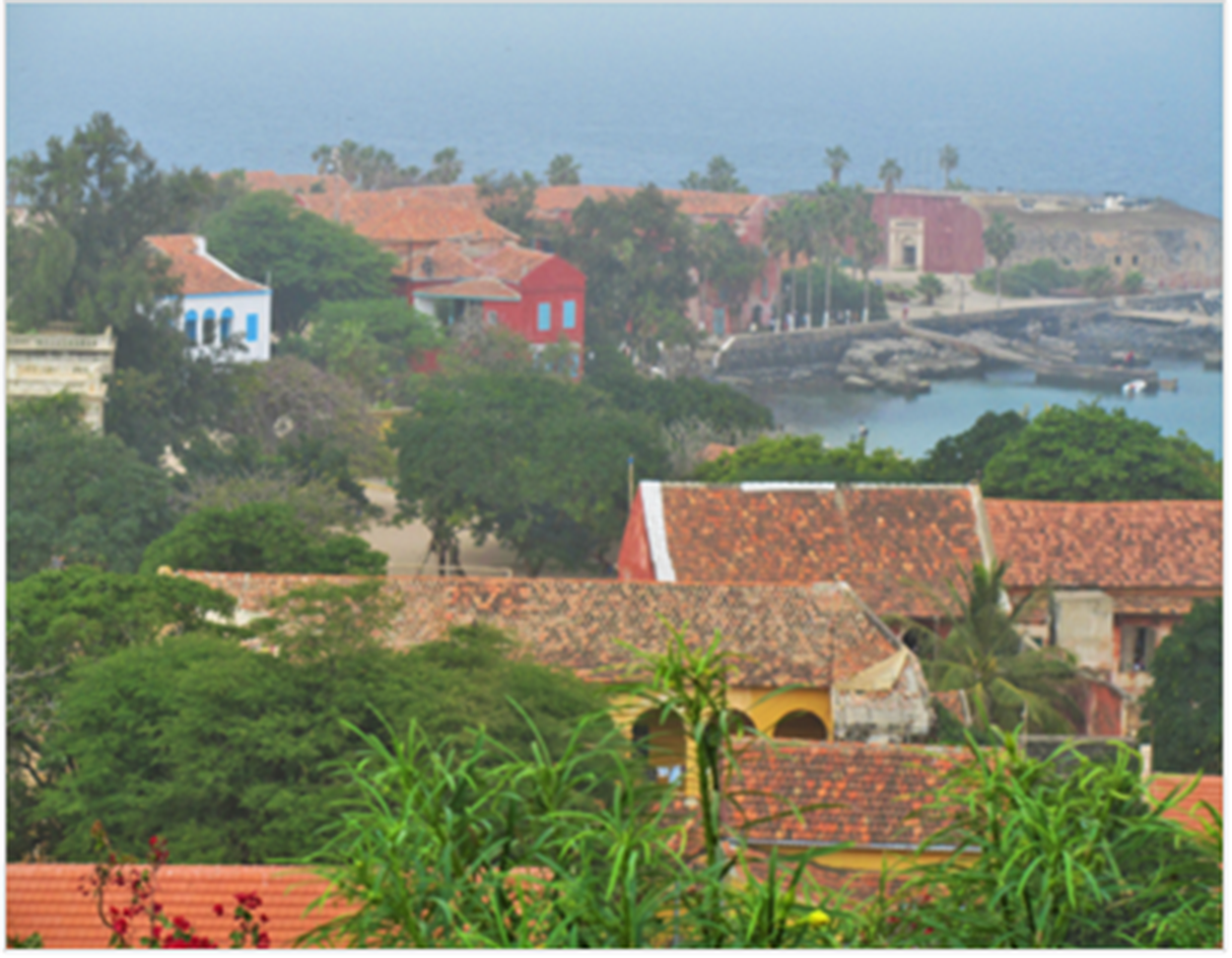
Argamasse roofs were probably cheaper than red tile roofs imported from France. But in the second half of the nineteenth century, the flat roof covered in argamasse was gradually replaced by a double-sloped roof (figure 2). Some roofs were covered with wood shingles imported from America, over which were laid baked clay tiles made in Marseille.Footnote 56 The houses are very simple to build, and the materials used depend on the location. In Gorée, basalt stones were used to build the houses. But many materials were imported from Europe (trachyandesites from the Canaries, red tiles from Marseille, metal beams, etc.) and North America (pitch pine wood).Footnote 57
Gorée houses with tile roofs.
A number of businessmen of mixed-race background, well known in commerce, ventured into the masonry business. One example is Pierre Turpin, mayor of Gorée from 1817 to 1826. This wealthy businessman had a construction company staffed by slaves: two carpenters (Lapaix and Gorée), an apprentice carpenter (Pierre Alkanguila), two joiners (Guilène and Biram), and a master mason (Jupiter Sarre) who oversaw three other masons (Espérance, Latsabe, and Gabriel Ding).Footnote 58 The circulation of construction technologies was mediated by family, and commercial and political networks. The Touranjou and Turpin families were linked by marriage and politics. Jean François Pierre Turpin (1793–1815), Pierre Turpin’s brother, was married to Cathy Martin Touranjou (1795–1845), Martin’s daughter.Footnote 59 These two families owned slaves skilled in masonry work and controlled construction and repair work on the island. Repair, modification, and maintenance work were very common on the island of Gorée, where architecture evolved according to the knowledge and construction techniques acquired over time. As I have shown previously, towards the end of the eighteenth century, straw roofs were replaced by argamasse which was then replaced by red tiles imported from France around the second half of the nineteenth century. Undoubtedly, the houses by the seaside suffered from the storms of the temperate climate and the humid winds of the Atlantic Ocean, which degraded the façades and paint, hence the need to repair them frequently in order to keep them alive. This is what Ignaz Strebel calls the “living building,” which owes its long life to frequent repair and maintenance operations.Footnote 60
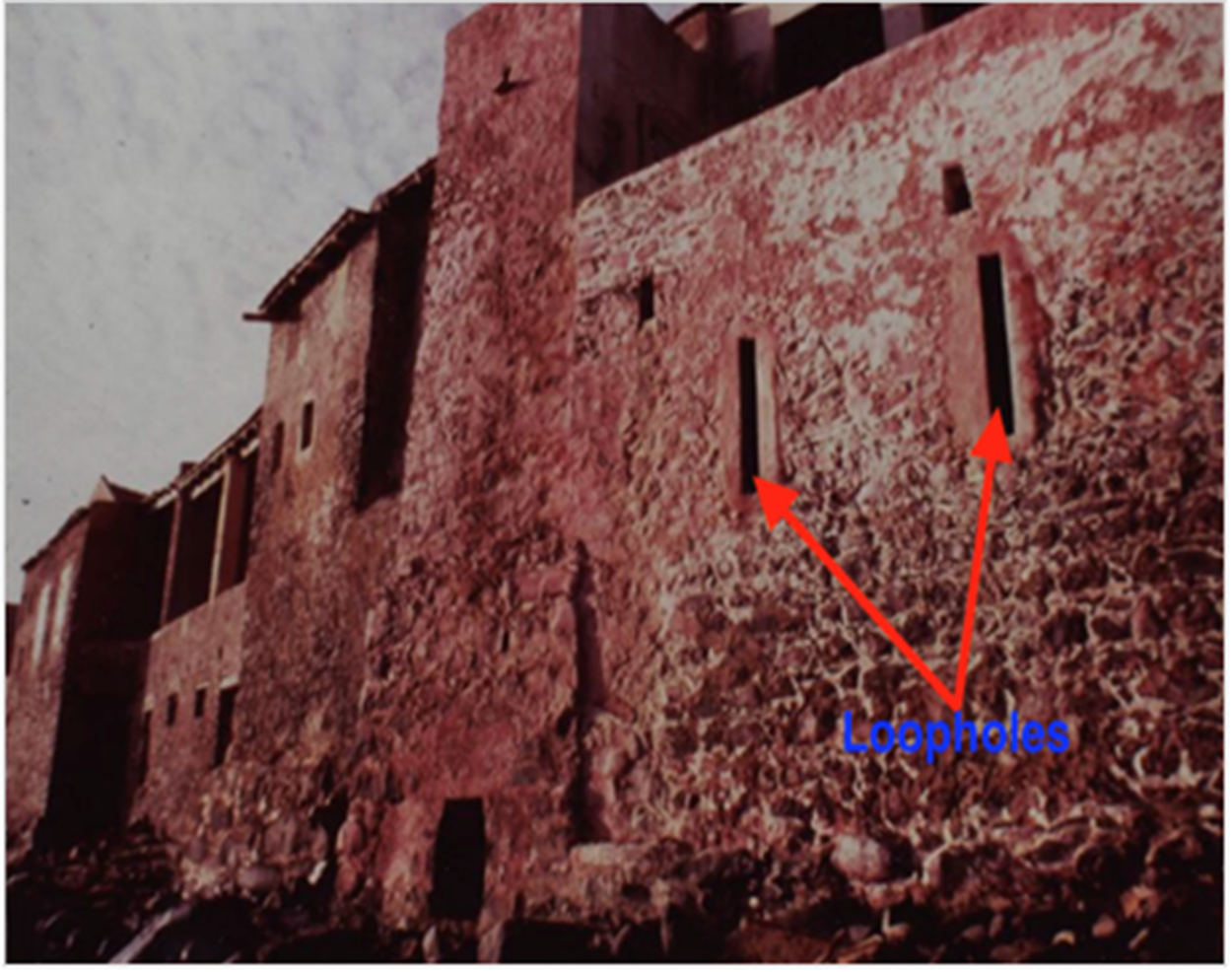
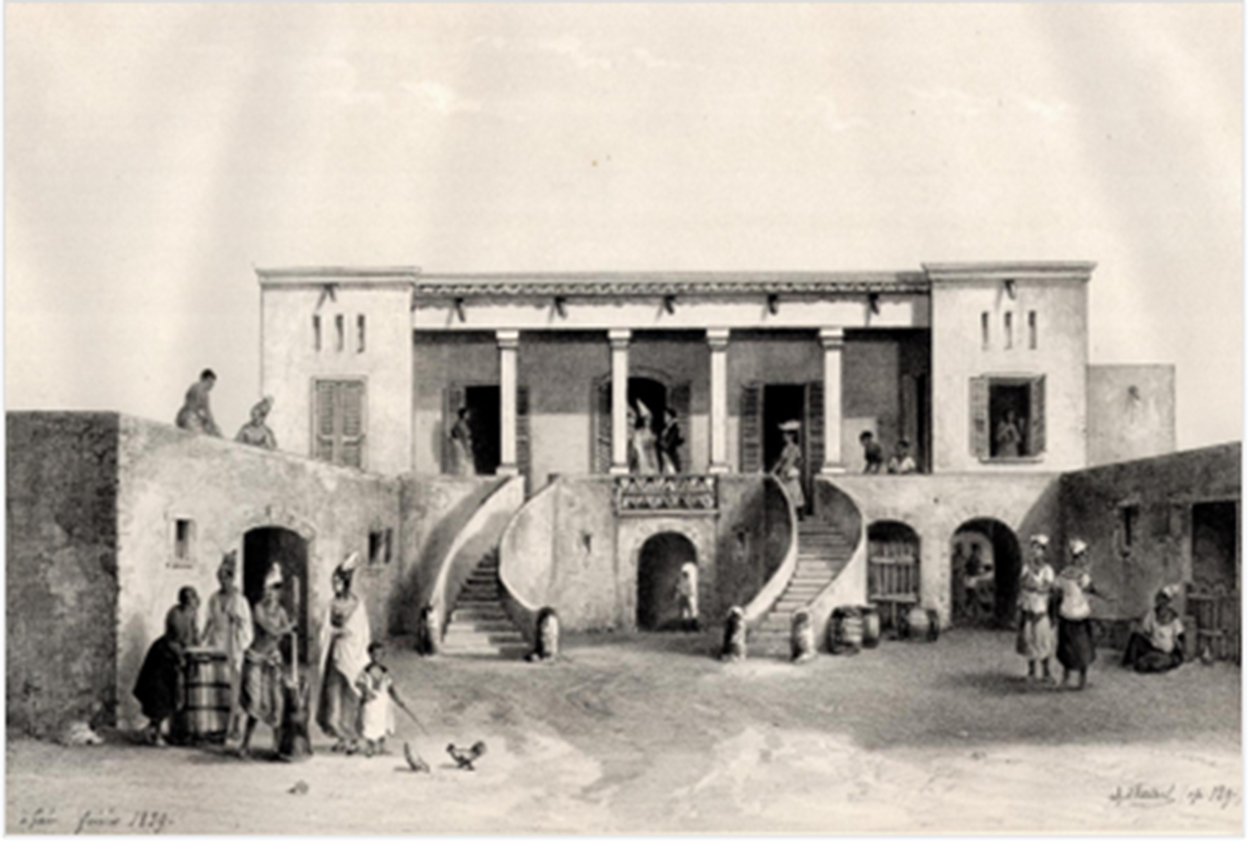
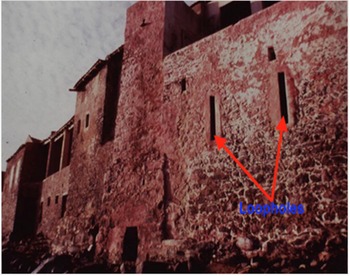
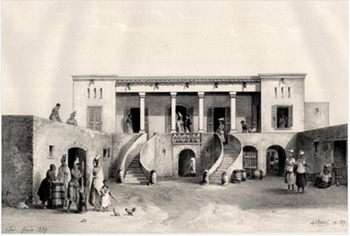
By the end of the eighteenth century, all Gorée’s houses were en dur. The architecture varies from one town to the next, not so much because of their respective cultural influences as because of their distinct functions. The architecture of Gorée, for example, combines residential, defensive, and commercial functions. The houses were to be built of stones or bricks, and the walls facing the ocean have holes in them for musketry in case of attack (figure 3).Footnote 61 The first floor of the houses consisted of warehouses for goods (gum arabic, leather, food products) and housing for domestic slaves. The second floor was used to house the owners. Most houses in Gorée have balconies on the upper floor. The façade, often bordered by neoclassical pilasters or corner chains and marked by a cornice, is organized with regular bays superimposed and framed (figure 4).
Wall with loopholes. Rear façade (seaside) of the house of signare Anna Colas Pépin in Gorée.
Main façade of the house of signare Anna Colas Pépin. Painted by d’Hastrel de Rivedoux in 1839.
The adoption of masonry techniques was too slow in Saint-Louis. In 1786, the French engineer Xavier Golberry noted the slowness of local workers: “It can be established that, in general, Nègres workers in Senegal, employed in masonry construction, should be expected to do only half the work of good workers of this kind in France; and I have observed that, while the good French worker builds his cubic toise in France in four days, it will take the Nègres eight days to carry out the same work in Africa.”Footnote 62 The narratives of European travellers are full of negative judgments about native populations. Golberry should be able to understand that the dissemination of technology is a learning process that can sometimes take a long time. In some places, the pace of dissemination accelerated, while elsewhere, within the same country or even the same town, the process was slower.Footnote 63 The slow progress of the work was probably related to the servile condition of the workers, the climatic conditions, the nature of the flood-prone soils of Saint-Louis, and limited access to construction materials. Indeed, the geological nature of the cities of Gorée and Saint-Louis was different. Gorée is an island filled with stones while Saint-Louis had no stones. It was then necessary to find a way to produce bricks. Towards the end of the eighteenth century, most houses were “made of brick, simply baked in the sun for very common constructions, and kiln-fired for constructions that were intended to last.”Footnote 64 Bricks were irregular in shape, very poorly made, and so easily crumbled that a large number always had to be discarded.Footnote 65 In 1786, Golberry succeeded in improving the quality of bricks by purging the soil of some of the heterogeneous matter mixed in it, which was causing them to crumble. He proposed building a brickworks on the island of Thiong, a peninsula located 3 km from Saint-Louis, which had the right soil, and training local workers to make the bricks, which would then be sold to the local population.Footnote 66 Thus, in 1787, when Gorée had more than eighty houses en dur, Saint-Louis had only about twenty brick houses.Footnote 67 It is not known exactly what year the brickworks were set up. What is certain is that it was operational by 1820.Footnote 68
The French and even English authorities, who had to occupy Gorée and Saint-Louis,Footnote 69 very rarely intervened in the construction techniques of private houses. During the period of English occupation from 1779 to 1783, the number of houses en dur increased considerably, as the English authorized construction in the area known as Les 50 pas du Roi (literally, “The Fifty Steps of the King”), located on the seafront and on the site of the old ramparts, on condition that the new owners establish a loopholed corridor on the seafront.Footnote 70 Between 1786 and 1787, the Chevalier de Boufflers, the French governor of Senegal, distributed around Fort Saint-François of Gorée land that would become free for their occupants if they built in the year.Footnote 71 However, with regard to the urban planning and construction of military and public buildings, the French authorities were constantly issuing instructions to French architect engineers.
Planning and Control of Public Space: Building “European” Cities in Senegambia
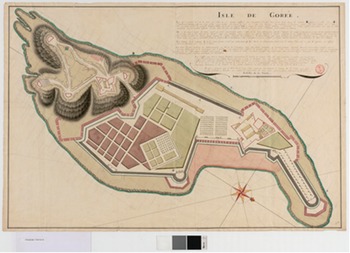
Until the end of the eighteenth century, the urban transformation of Gorée and Saint-Louis did not seem to be a priority of the French administration occupied with the defence policy of these two cities, which frequently fell into the hands of the English. Nevertheless, it made efforts to replicate the European urban model in Gorée and Saint-Louis. A study of Gorée’s earliest plans reveals that the huts were perfectly aligned, in line with the island’s urbanization plan drawn up by French engineers. This was also noted by French botanist Michel Adanson, present in Senegambia between 1749 and 1754: “The nègres keep little symmetry in the position of their houses. The French have accustomed them to observe a certain regularity and uniformity in the size of their tapades.”Footnote 72 Adanson’s remarks can be seen in the map of Gorée below (figure 5).
“Plan de l’île de Gorée”.

The development plan for the island of Gorée as shown on this map of 1766 appears to be a model of the grid plan applied in Europe. The streets seemed to be well cleared and perpendicular, facilitating the mobility of users. The Jardin du Roy, where plants were grown for the Royal Garden of Paris, was located outside the dwellings, giving the small town of Gorée the appearance of a European garrison city. The same model of town planning practiced in Gorée was under way on the island of Saint-Louis, where the French administration ensured that the dwellings surrounding the fort were well aligned. According to Jean-Baptiste-Léonard Durand, director of the Compagnie de la gomme in Senegal, in 1787 “there is a fort, a gunpowder warehouse, a hospital, a church and around twenty houses built of brick on the small stretch of the island of Saint-Louis. The nègres, slaves or free, live in wooden huts surrounded and covered with straw, finished in sugar loaf. All streets are wide, perfectly aligned; which produces a pleasant effect on the eye.”Footnote 73 Durand’s words seem to be confirmed by Dominique Lamiral’s 1789 plan of the island of Saint-Louis (figure 6). However, the village of Guet Ndar on the Langue de Barbarie facing the island of Saint-Louis was inhabited by fishermen who lived in non-aligned straw huts (figure 6).
Map of the island of Saint-Louis.

Towards the end of the eighteenth century, the transformation of the urban landscape of Gorée was well advanced while that of Saint-Louis had just begun. Indeed, the latter continued to grow with the arrival of a large number of freemen from neighbouring states (Kajoor, Waalo) who settled in the uninhabited areas of the southern end of the island where they built precarious homes made of wood and reeds.Footnote 74 Estimated at about six thousand people (whites, free Blacks, mixed-race people, slaves, and captives) in 1787 by Xavier Golberry, the population of Saint-Louis grew to ten thousand individuals in 1801.Footnote 75 At the end of the second English occupation of Saint-Louis (1809–14), the city’s urban landscape had not changed from what it was towards the end of the eighteenth century, although the population was constantly increasing. Indeed, Saint-Louis welcomed more and more French traders attracted by the gum arabic trade and later by peanuts from the 1830s onwards.Footnote 76 Many of the French traders in Senegambia were from Bordeaux, a very active port in the Atlantic slave trade.Footnote 77 Justin Devès and Victor Calvé, a doctor, who had survived the shipwreck of the raft La Méduse on 2 July 1816 off the coast of present-day Mauritania, both settled in Saint-Louis and converted to the gum arabic trade.Footnote 78 In 1822, Hubert Prom arrived in Gorée and settled in Saint-Louis. Auguste Teisseire arrived in Saint-Louis in 1830. Philippe Lafargue settled in Saint-Louis in 1834, where he was introduced to the colonial trade by Hilaire Maurel from Bordeaux, who had arrived in Senegal in 1830.Footnote 79 The richest traders built houses with one or two floors in the European style.Footnote 80
In the 1820s, the French administration began to take an interest in the urban transformation of Saint-Louis by investing in public and military buildings, led by engineers from the Corps Royal du Génie and civilian master masons. In 1828, an urban plan drawn up by the engineers of the Ponts-et-Chaussées focused on the alignment of the streets. However, the completion of the project required the eviction of a large number of residents in order to accommodate the new road layout. As a result, the project provoked many protests, including residents who built houses on future road rights-of-way and more particularly from those who built houses made of sustainable materials.Footnote 81 These protests were cultural and political in nature. Indeed, the inhabitants of Saint-Louis, especially the traders, did not care about having a beautiful city with clear, European-style streets. In a way, they did not accept the dictate of the French authority, which sought to reproduce its urban model for its own development and socio-cultural well-being. The French administration was obliged to resort to negotiation and compensation in order to convince the inhabitants to leave the public space dedicated to roads. Residents who complied with the alignment requirements acquired titles to property that protected them from further change.Footnote 82 The French administration even offered bonuses to inhabitants who committed themselves to replace their straw huts with brick buildings.Footnote 83 Indeed, straw constructions were a real public safety problem because of the frequent fires they suffered.
Thus, at the time when people were investing in the construction of houses en dur, the French administration was engaged in a process of urbanization of the city and construction of public and military buildings. In 1829, the French administration published a technical notice explaining the method of construction of terrace roofs, written in 1820 by the engineer and captain Burck-o-farel:
This method which is very simple, consists in establishing on a line of beam or rafters inclined of 0.003 per meter, a fir floor as well joined as possible, and whose upper part remains raw. … The whole must be covered with a layer of hot tar with a thickness of 0,01 m to be sprinkled with quicklime until it forms a putty and the tar loses its glow when cooled, a layer of mortar of 0,005 m thick is spread on it and before it is completely dry, it is scratched in all directions in order to bind on this first layer, a second which is applied after three days, and then a third in the same way and at the same interval of time, the last must dry under the trowel.Footnote 84
The use of tar in the construction of terraces seems to be a novelty. In Gorée, the terraces were simply made of a mixture of sand, lime, shells, and crushed brick.Footnote 85 This technical advice from Burck-o-farel was to be applied by the builders of public and military buildings under the supervision of the French administration.
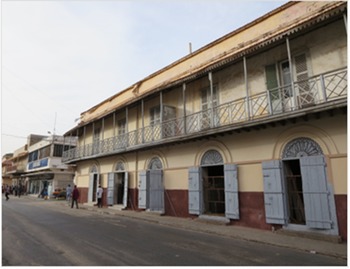
From the second half of the nineteenth century, architecture and urban planning evolved in Saint-Louis. According to the “Rapport sur l’Etat de la colonie à l’époque du 1er Janvier 1837,” in 1837, the French administration intended to complete the construction of the hospital embankments, only half of which could be carried out in 1836, and to begin construction of the quay of the public market, known as the butcher’s quay.Footnote 86 The same report states that “the progress of civic construction over the last eighteen months has exceeded all expectations. Brick huts are erected on all sides. The alignment of the streets is beginning to offer only the occasional glimpse of the wretched appearance of tapades and straw huts.”Footnote 87 Fires were increasingly rare. Only two fires were reported in 1836 and losses of 43 straw huts.Footnote 88 In 1838, of the 3,237 buildings on the island of Saint-Louis, 2,917 were huts. Although the number of dwellings en dur was increasing, they accounted for less than 10 per cent of the total, and remained the preserve of wealthy traders.Footnote 89 Unlike public buildings that adopted a neoclassical style, some private buildings adopted a Mediterranean-style architecture appropriate to the tropical climate and colonial environment: houses around a courtyard, spreading light and freshness.Footnote 90 The civilian architecture of Saint-Louis had a commercial function. Traders built houses with shops on the ground floor (figure 7).
Two-story house in Saint-Louis with shops on the ground floor.

The alignment of streets seemed to be an obsession for the French administration, which was trying by all means to change the urban landscape of Saint-Louis. In the 1840s, masonry construction techniques were so widespread in Saint-Louis that the city underwent an urban expansion and urban planning comparable to that of European cities. Abbé Boilat confirms that “the streets are aligned and spacious, and the houses are built of brick and rebuilt with lime, giving them an air of continual cleanliness. All the buildings are generally only one story.”Footnote 91 Once the streets were lined up, Jean-Baptiste Montagniès de La Roque, governor of Senegal, ordered road works: “I ordered that all the houses in the city of St. Louis be numbered. In addition to the guarantees of order and good policing that this provision provides, it can also be considered as a route to more serious measures to conduct a population census, an operation constantly hindered by the prejudices of the inhabitants of the country.”Footnote 92 The alignment of streets should facilitate the population census, which would enable public authorities to collect the information needed to implement the facilities and infrastructure useful to this population. The influence of European architecture in Saint-Louis and Gorée is a combination of success and limitations.
Success and Limitations of Dialogue on Construction Techniques
Successes and failures are very common in technological dialogue, and depend on a number of complex factors, from the specific environment of each country to the needs of the populations and their ability to adapt.Footnote 93 In the field of architecture and masonry, European construction techniques have been well adapted and integrated with local techniques. This success was made possible by the leadership and managerial innovationsFootnote 94 acquired by the Afro-European class and the synergy of the commercial and political cooperation they enjoyed with the French administration. However, it should be noted that the Europeans shared only rudimentary construction techniques with the local workers, some of whom had developed a not European but an African masonry culture. This success was also due to the commercial dimension that shaped the technological dialogue. Many building materials were imported by French merchants, enabling them to consolidate their leading position in long-distance trade. The transfer of construction technologies seems to have been the most widely shared activity in Senegambia. Indeed, each player had his own sphere of influence. The Europeans supplied building materials and techniques, and the Afro-Europeans took care of adapting these materials to local building techniques. But this structural mode of technological dialogue based on the prefabrication of certain materials from Europe limited the training of a local workforce capable of constructing European-style buildings using only local materials.
In the second half of the nineteenth century, the cities of Gorée and Saint-Louis became successful models of European architecture and urban planning. Gorée consisted of houses imitating European architecture and delimited by small streets connected to each other, public (church, hospital) and military buildings (fort), and a public garden. As for the urban transformation of Saint-Louis, it was accompanied by the construction of public and military buildings in response to the expansion of the city and the increase in its population. The French administration commissioned these in the neoclassical style, often referred to as colonial architecture. Examples include the Saint-Louis church erected in 1828 (figure 8); the military and civil hospitals opened in 1822 and 1840; the courthouse built between 1844 and 1846; the barracks of Orléans and Rognat, erected in 1830 and 1843 respectively; the institution of the Soeurs de Saint-Joseph de Cluny built in 1826; the school of the frères de Ploërmel founded in 1841; and the mosque completed in 1847.Footnote 95 Local expertise was solicited by the French administration. Indeed, local workers – skilled slaves working on behalf of their masters – were hired for the work. For example, during the construction of the Saint-Louis church, the inhabitants of Saint-Louis provided skilled labour free of charge. As for the purchase of materials, these were paid for by the government.Footnote 96
The neoclassical Church of Saint-Louis. Source: Colonial Architecture Project, https://www.colonialarchitectureproject.org. Courtesy of Gauvin Alexander Bailey.

In Gorée as in Saint-Louis, some civic, public, and military constructions had limits. The plans of the civic buildings were not adapted to the local climatic conditions: the rooms were numerous and poorly ventilated; windows were small and did not provide good ventilation. The inhabitants copied the principles of houses built by Europeans who had themselves reproduced the spatial configurations of dwellings in their country of origin.Footnote 97 These construction defects led some owners to modify their buildings in order to adapt them to the climate, in particular by widening the openings and modifying the rooms so that they became larger and sometimes open on two sides, thus ensuring better ventilation.Footnote 98 In warm and often humid areas, the construction of buildings with galleries open to the outside was almost an architectural rule to be respected.Footnote 99
The forts were constantly maintained and modified throughout the eighteenth and nineteenth centuries. The plans for the houses on Gorée were not drawn by professional architects. Indeed, the role of architect, as it was known in Europe, was thus accomplished, presumably, by an owner – European, mixed-race, or African – and their African workforce. This probably explains the island’s extensive renovation work and the large number of slaves involved (metal workers, masons, joiners, and carpenters).Footnote 100 Through maintenance and repair, slave workers gained experience and know-how to build houses en dur. Maintenance and repair of existing technologies led to as many innovations, as did unique moments of ingenuity.Footnote 101 Maintenance and repair are highly effective ways of appropriating foreign technology and adopting it to local needs, in order to produce innovative, mixed, and unique techniques. For example, in the 1850s, the military hospital in Saint-Louis was undergoing modifications and repairs all the time, which slowed down the progress of the work being carried out. During this period, iron (beams, posts) were an integral part of European construction methods.Footnote 102 However, due to the cost of quality materials, the use of wooden beams was combined with metal ones in the construction of the hospital building. The walls were also built with a mix of stone and brick,Footnote 103 often with the stone forming the lower parts and brick used in the upper parts. In order to ensure the resistance of the buildings, the Ponts-et-Chaussées engineers wanted most of the materials to come from France (stones for the gallery and staircase, bricks, hydraulic lime) and the Canary Islands (stones). These foreign materials would be supplemented by local materials (stones from the Magdalen Island in Dakar and bricks from the country) for minor works.Footnote 104 Indeed, it would be impossible or even useless to want to import all building materials when those produced locally could well be used. By mixing these materials, the French administration aimed to save money. Despite this, however, this hybrid use of materials did not impact the solidity of the building.
Some local materials such as palm wood for the manufacture of frames in Gorée lasted only three years. As for the straw from the roofs, it was renewed every year.Footnote 105 To remedy these problems, Gambian mangrove wood was adopted for frame construction. Planks of French fir were used to make laths.Footnote 106 Some buildings like the curtain wall of the fort fell into ruin because the wall had been built “without mortar, with stones and earth only.”Footnote 107 The French administration advised the deputy director of the Génie “to establish all his escarpments in masonry made with good mortar and all the care necessary to obtain well-constructed and solid walls.”Footnote 108 The deputy director was also instructed to pay the greatest attention to the construction of the pillboxes, procure a few good masons, and supervise them carefully. He was also advised to use a mortar containing ⅓ or ¼ of pozzolan on ⅔ or ¾ of sand in order to obtain masonries whose mortars would harden quickly and offer great resistance. Pozzolan was imported from the port of Toulon in France.Footnote 109 The fort had several anomalies, as can be seen in the “Observations du Directeur du Dépôt des fortification des Colonies”: “The masonry of Bastion 3 of the fort of Gorée was begun in 1839, and completed in 1840…. In his Report of 26 January 1843, the leader of the Génie announces that towards the end of November 1842, cracks appeared on the covering of the left side and the right flank of the bastion, and that in addition the covering of the right side is blown over a length of 20 metres…. He attributes these cracks to the fact that the foundations of the wall were not given the proper thickness.”Footnote 110 This repair work encouraged the transfer of new building materials from France. In 1846, the “Génie requested asphalt for the repair of the vaults of the Parados barracks of the fort of Gorée and the work of the hospital.”Footnote 111 The French administration was concerned about the durability of its buildings, which symbolized its power and control over the city of Saint-Louis.
One of the most important projects before the beginning of the colonization of Senegal in 1854 was the reconstruction of the military hospital of Saint-Louis. Before construction began in 1822, the initial plan proposed by the French administration of Saint-Louis in 1820 was rejected by the Ministère de la Marine et des Colonies for lack of financial resources. That plan provided for the construction of a new modern European-style hospital outside the city to the north so that “the fumes from the hospital cannot be harmful to the inhabitants.”Footnote 112 It also “provided for the construction of isolated buildings, parallel to each other, each intended to accommodate a certain type of population (officers, non-commissioned officers …) and a certain type of patient (fever, dysentery …) The ground floors of the buildings should serve as stores and could receive additional patients in times of epidemic. The galleries that were to surround the rooms would serve as protection against the sun’s rays.”Footnote 113 But the urban dynamics of the city of Saint-Louis pushed the French administration to expand the hospital. In 1841, it bought a house and land next to the hospital to build new buildings and increase the hospital’s capacity.Footnote 114 Since 1849, the hospital has been the subject of serious studies aimed to transform it profoundly.Footnote 115 It was not until 1851 that the Ministère de la Marine et des Colonies accepted a new plan to expand the hospital and entrusted the work to the “deputy head engineer of the Ponts-et-Chaussées, Laurent Dubut” and to Jean Théodore Pécarrère, contractor for government works.Footnote 116 These French builders did not bother to carry out studies and technical tests to produce basic building materials locally. They wanted to import from France and the Canary Islands materials that already existed on site (brick, lime, stones). This implies that they thought that materials made in France were better than those available locally. However, buildings built with local materials (clay or dried bricks, wood) dating from medieval times are still visible in the public space of several Sudanese cities, such as Timbuktu and Jenné. In addition, furnaces for the manufacture of lime and a brick factory were functional in Saint-Louis. I would argue that construction in the colonies had to support the French economy, contractors, and shipping companies with orders for materials.
The rejection of some local materials was very common in the French Empire. For example in Guadeloupe in 1765, the engineer responsible for the monumental development plan of Fort Saint-Charles in Basse-Terre felt that the quality of bricks was rather mediocre and some materials deteriorated over time. He requested 50,000 briques de provence, 6,000 tiles, and 300 pounds of German steel (acier d’Allemagne).Footnote 117 Not only was the transportation of materials from France to Senegal expensive, but also the validation of expenses by the Ministère de la Marine et des Colonies was a long and complicated administrative process. The slowness observed in the supply of materials pushed Laurent Dubut to start work with bricks and lime from Saint-Louis. In 1639, a similar case had occurred in Martinique where the slowness of sending qualified personnel pushed the French to continue building “à la mode du pays,”Footnote 118 i.e., building houses and storehouses using local materials and local staff.
On 24 June 1851, the governor of Senegal entrusted the work of the hospital to the Génie Militaire (Army Corps of Engineers).Footnote 119 The plans of the hospital were constantly modified by the Génie in Paris, which wanted not only to lower expenditure such as reducing the height of floors and removing double-ramp stairs, but also to respect sanitary barriers by insulating patients and ventilating their rooms.Footnote 120 The head of the Génie in charge of the works should “approximate as much as possible the provisions of the counter-project, which has other advantages, namely, that of being less expensive. We say as much as possible of the counter-project because when it arrives in the colony, it is feared that the parts he removes or modifies are too advanced to be demolished or abandoned without having to incur a higher expense.”Footnote 121 The hospital was an original composition of local building recommendations and practices, both of which are linked without ever being consistent. Indeed, the plans present corridors leading nowhere, rooms that are difficult to access, and at the same time, aligned rooms, regulatory ceiling heights, earthenware tiles similar to those of Parisian hospitals.Footnote 122 The hospital in its massive architecture that dominates the island of Saint Louis is the mark of the intervention of the French state for its expatriate staffFootnote 123 and of a French administration that sought to reduce costs. Nevertheless, it is the symbol of the success of the adaptation of European construction techniques in Senegambia.
Conclusion
Between the seventeenth and nineteenth centuries, the economy of Senegambia attracted many local and European economic migrants. The latter are at the origin of an Afro-European community that plays a key role in economic and political affairs of the trading cities of Gorée and Saint-Louis. Thanks to their wealth, they built hybrid houses combining European and African construction techniques. The hybrid architecture that has emerged in Gorée and Saint-Louis was the result of the ethnic and cultural mixing within these migrant cities populated by Wolof, Serrer, Peul, Bambara, and Europeans. Commercial activities between France and the cities of Saint-Louis and Gorée encouraged the circulation of building techniques. Indeed, the technological dialogue in the field of building construction was the initiative of the wealthy Métis and Black traders of Gorée and Saint-Louis, who controlled the trading economy and had the means to build European-style houses. Housing construction techniques varied according to context and natural environment. Between the eighteenth and nineteenth centuries, building techniques evolved with the introduction of new European materials (tiles, fir wood, tar, pozzolan, hydraulic lime, stone). The French administration supported the construction of houses en dur and encouraged people to respect a grid plan. Following the ban of the slave trade by the Congress of Vienna in 1815, the French administration embarked on a very slow process of urbanization in Saint-Louis, which lagged behind Gorée.
Saint-Louis, the outlet for the legitimate trade that succeeded the slave trade, attracted more and more French traders for the gum arabic trade. The French administration was obliged to build public and military buildings for the political management of the city. Some buildings such as the hospital, court, and barracks of Saint-Louis were built on the nineteenth-century French neoclassical architecture model, with galleries to adapt them to climatic conditions. These buildings were erected to impress the local population and impose on them the greatness of France. Many of these buildings, adapted to the local climate, have technical defects because the French administration did not intend to invest large sums in a territory that was not yet colonized. Until the beginning of the French colonial conquest, Saint-Louis and Gorée were in full urban transformation.
The face of architecture and urban planning changed in 1854, when Louis Faidherbe was appointed governor of Senegal. As soon as he was appointed, he began colonizing the country and was able to intervene in public works without listening to the opinion of the merchants of Saint-Louis who were vital for the economy of the city. These merchants were not very enthusiastic about the urbanism policy advocated by France in the first half of the nineteenth century. From 1854 to 1865, the city of Saint-Louis experienced even more intense urbanisation. It became the capital of Senegal in 1872, and reached its peak in 1895, becoming the capital of French West Africa.
Acknowledgements
I would like to thank Rémi Dewière and Floris van Swet, the editors of this special issue; the anonymous reviewers; Gauvin Alexander Bailey for image rights; and the participants of the workshop “Migration and Entrepreneurship in Early Modern Technology Transfers” for their helpful comments.




 Open access

