


Whole grains and foods containing whole grains, such as whole-grain breads, porridge and ready-to-eat cereals, are considered to be beneficial to health. Epidemiological evidence suggests an inverse linear association between whole grain consumption and the risk of many non-communicable diseases, such as CVD, type 2 diabetes (T2D), obesity and some cancers( Reference Ye, Chacko and Chou 1 , Reference Kyrø, Skeie and Loft 2 ). Observational studies have shown that those consuming 2–3 servings of whole grains per d (the upper level in most studies) have around a 21 % reduction in the risk of CVD and around a 26 % reduction in the risk of T2D compared with never or rare consumers( Reference Ye, Chacko and Chou 1 , Reference Ferruzzi, Jonnalagadda and Liu 3 ). However, intervention studies have shown no such reduction in the risk of CVD markers in whole grain consumers over a 4-month period( Reference Brownlee, Moore and Chatfield 4 ). Consumers of whole grain have also been shown to have a better overall diet quality, particularly for increased fibre intake( Reference Reicks, Jonnalagadda and Albertson 5 ). Along with insoluble fibre, bioactive components found in bran and germ of whole grains, such as antioxidant micronutrients, carotenoids, minerals, polyphenols and vitamins (to name a few), are attributed to the protective effects of whole grains on health( Reference Fardet 6 ).
The recommendation to increase whole grain consumption is now global; however, dietary and quantity-specific guidance across countries is variable, with no quantitative recommendation in the UK( Reference Ferruzzi, Jonnalagadda and Liu 3 ). A recent analysis of the UK dietary data has shown that the average whole grain intake is low in both adults (20 g/d) and children (13 g/d)( Reference Mann, Pearce and McKevith 7 ), much lower than the suggested 2–3 daily servings (32–48 g/d) recommended by the US Department of Agriculture (USDA) in the 2010 Dietary Guidelines for Americans( 8 ), and the recommendation of 75 g whole grain/10 MJ from the Danish Nutrition Foundation( 9 ). It is important to understand whether the health benefits associated with whole grain intake previously attributed to higher levels of intake are still present at these low levels of consumption seen in the UK.
The aim of the present study was to investigate the association of whole grain intake with intakes of other foods, nutrients and markers of health (anthropometric and blood measures) in the National Diet and Nutrition Survey rolling programme (NDNS-RP) 2008–11.
Methods
Study population
The NDNS-RP assesses the diet, nutritional intake and status of individuals aged 1·5 years and above, living in private households in the UK (England, Scotland, Wales and Northern Ireland). Between April 2008 and March 2011, 3073 randomly selected adults and children were invited to complete a 4-d food diary, interviewed and asked to provide blood and urine samples. Further details of the NDNS-RP methodology have been described elsewhere( 10 , Reference Almoosawi, Cole and Nicholson 11 ). In brief, participants completed an estimated food diary recording all foods and drinks consumed both at home and away from home for four and, in some cases (n 53, 2 %), three consecutive days. Participants also completed a computer-assisted personal interview, collecting information on dietary habits and lifestyle, and had height and weight measured. In a follow-up nurse visit to the household, waist:hip ratio and blood pressure were measured, and fasting blood samples were taken for those aged 4 years and above.
Food diaries for those aged 11 years and younger were completed by a parent/carer with help from the child. Processing of the food diary data was done by trained coders and editors. Food intakes were entered into the MRC HNR's (Medical Research Council, Human Nutrition Research) dietary assessment system, Diet In Nutrients Out( 12 ). The food composition data used was from the Department of Health's NDNS Nutrient Databank. Data coders matched each food/drink item recorded in the diary with a food code and portion code from Diet In Nutrients Out. For composite items (e.g. sandwiches) and home-made meals, their component parts were assigned individual food codes. Further details of data coding and editing are outlined in Appendix A of the NDNS-RP official report( 13 ). Food intake groups included milk, cheese, yogurt, eggs, fats, meat, fish, fruit, vegetables, pasta, rice, bread, ready-to-eat cereals, biscuits, buns, cakes, pastries, confectioneries, savoury crisps and snacks. Average daily food and nutrient intakes were derived from the food diary data by the NDNS-RP team.
Height and weight were measured at the first participant visit using a portable stadiometer and weighing scales. BMI was calculated, and for participants whose height could not be measured, estimated height based on demispan (the distance between the mid-point of the sternal notch and the finger roots with the arm outstretched laterally) was used to calculate the BMI( Reference Hirani and Mindell 14 ). Waist and hip circumferences were measured during a nurse visit to the participants aged 11 years and above using a tape measure. All measurements were taken twice and a third was taken if there was a discrepancy between the first two measurements above a given value (height ≥ 0·5 cm, weight ≥ 0·2 kg, waist and hip circumferences ≥ 3 cm). For the purpose of this analysis, the mean of the closest two measurements was used.
Blood pressure level, collected during the nurse visit to the participant, was measured in the sitting position using an automated, validated machine (Omron HEM907), after 5 min of rest. Blood pressure level was only collected for participants aged 4 years and above. The mean of the second and third blood pressure readings taken at 1 min intervals in participants who had not eaten, drunk alcohol, exercised or smoked in the preceding 30 min was used. Individuals who did not have three valid blood pressure readings were excluded from the analysis.
Overnight fasting blood samples were obtained from those aged 4 years and above and from non-diabetics, otherwise non-fasting samples were obtained. However, for the purpose of this analysis, only blood analytes from participants aged 11 years and above have been investigated due to small numbers (19 %) of participants aged 1·5–10 years providing blood samples. We included data from 13/37 adults with diabetes who provided non-fasting samples and for whom analyte data were available. Blood samples were analysed for a range of analytes( 10 ), including Hb, serum total cholesterol, HDL-cholesterol, LDL-cholesterol, C-reactive protein (CRP), TAG, plasma creatinine and leucocyte counts.
The NDNS-RP was conducted according to the guidelines laid down in the Declaration of Helsinki, and ethical approval for all procedures was granted by Local Research Ethics Committees covering all areas covered in the survey. All participants gave informed consent.
Estimation of whole grain intake
As has been described previously( Reference Mann, Pearce and McKevith 7 ), food diary data were investigated for foods containing any whole-grain ingredient (n 221), using the HEALTHGRAIN definition of whole grain( Reference Van Der Kamp, Poutanen and Seal 15 ) and classification of whole-grain ingredients outlined in the study by Seal and colleagues( Reference Seal, Jones and Whitney 16 ). Whole-grain content of each food identified was calculated per 100 g, on a DM as consumed basis, and absolute daily whole grain intake in grams was calculated for consumers along with tertiles of intake. A non-consumer of whole grain was defined as an individual who did not consume any foods containing any amount of whole-grain ingredient.
Weighting the data
Data used in the analysis were weighted in order to exclude any potential selection bias in the observed results arising from non-response bias in the NDNS-RP. Weighting variables to account for any potential bias in households, main food provider, individual selection, seasonality and for age, sex and regional profiles of participating individuals was provided by the NDNS team. Weighting for non-response to nurse visit and providing a blood sample were also used in the respective analyses. Full details of weight computation are described in Appendix B of the NDNS national report( 17 ).
Statistical analysis
Means and standard deviations of food and nutrient intakes were calculated for non-consumers of whole grain and by tertile of intake for consumers. Means and standard deviations of health marker measures were also calculated for non-consumers of whole grain and by tertile of intake for consumers. Associations across whole grain intakes (non-consumers and tertile groups) and intakes of other foods, nutrients and health markers were investigated using linear regression with values adjusted for sex and age in multivariable models; the dependent variable was the outcome of interest (e.g. fibre intake) and the independent predictor was intake group (non-consumer, tertile 1, tertile 2 and tertile 3). To eliminate potential confounding by sex and age, any significant associations were then adjusted for sex and, if the association remained significant, further adjusted for age. Differences between non-consumers and tertiles of whole grain intake were assessed using independent t tests, adjusting for sex, within the regression modelling. P< 0·05 was used to denote significance throughout all statistical analysis.
All statistical analysis was performed in Stata version 12 (StataCorp) utilising the complex survey functions.
Results
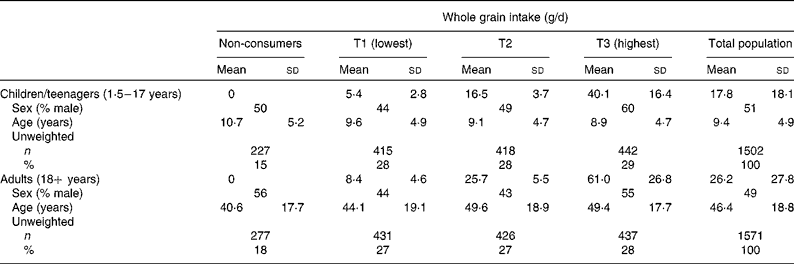
In this population of 1052 children/teenagers (1·5–17 years) and 1521 adults (18+ years), 15 % of children/teenagers and 18 % of adults did not consume any whole grain (Table 1). The mean whole grain intake ranged from 5·4 (sd 2·8) g/d in tertile 1 to 40·1 (sd16·4) g/d in tertile 3 for children/teenagers and from 8·4 (sd 4·6) g/d in tertile 1 to 61 (sd 26·8) g/d in tertile 3 for adults. The mean whole grain intake of consumers included only in tertile 3 (29 % of children/teenagers, 28 % of adults and 29 % of the total population) achieved the minimum recommendation (32 g/d) for reduced risk of non-communicable disease. The percentages of males and females across non-consumers and tertile groups were similar in children/teenagers and adults, although there was a higher proportion of child/teenage males in tertile 3 (Table 1). Mean age was lower across non-consumers and tertile groups in children/teenagers and was greater across adult non-consumers and tertile groups. Age differences in whole grain intake have been reported elsewhere( Reference Mann, Pearce and McKevith 7 ).
Whole grain intake in children/teenagers and in adults (Mean values and standard deviations, and numbers and percentages of participants)
T, tertile.
Intakes of nutrients
Whole grain consumers had significantly different intakes of some nutrients than non-consumers (Table 2). Nutrient intakes reported here come exclusively from foods consumed over the diet diary and do not include vitamin or mineral supplements. Significant associations for higher intakes of whole grain were seen with greater intake of total energy and energy from protein, carbohydrates and total sugar (in children/teenagers only). Higher intake of whole grain was also significantly associated with greater intake of fibre, Fe, Ca, vitamin E (in adults only), K, P, Mg, thiamin, riboflavin, niacin (in children/teenagers only), vitamin B12 (in adults only) and vitamin D (in adults only). Higher intake of whole grain was significantly associated with lower intake of energy from non-milk extrinsic sugar, fat and alcohol (in adults only).
Mean nutrient intakes of non-consumers and by tertiles (T) of whole grain intake

NME, non-milk extrinsic.
* Values are significantly different from non-consumers (P< 0·05; t test, adjusted for sex).
† Association across intakes of whole grain and nutrient intakes (linear regression, adjusted for sex).
Compared with non-consumers of whole-grain foods, consumers in tertile 3 had significantly higher intakes of total energy, energy from protein (in adults only), carbohydrates and total sugar (in children/teenagers only) and significantly higher intakes of fibre, Fe, Ca, vitamin E (in adults only), K, P, Mg, thiamin, riboflavin, niacin (in children/teenagers only), vitamin B12 (in adults only) and vitamin D (in adults only) (Table 2). Consumers in tertile 3 also had significantly lower intakes of energy from non-milk extrinsic sugar (in adults only), fat (in children/teenagers only) and alcohol (in adults only), and significantly lower intakes of Na compared with non-consumers of whole-grain foods.
After adjustment for sex and age, the associations of higher intake of whole grain with greater intakes of vitamins B12 and D in adults only were no longer significant. Adjustment for sex and age did not attenuate any other of the associations found with nutrient intakes.
Intakes of other foods
Higher intake of whole grain was significantly associated with greater intake of milk, cheese (in children/teenagers only), yogurt, fats and spreads, fish (in adults only), fruit and vegetables, wholemeal bread, ready-to-eat cereals, biscuits and cakes (in adults only) (Table 3). Higher intake of whole grain was also significantly associated with lower intake of white meat (in children/teenagers only), red meat (in adults only), white bread and savoury crisps and snacks (in adults only).
Mean intakes of other foods in non-consumers and by tertiles (T) of whole grain intake

RTEC, ready-to-eat cereals.
* Values are significantly different from non-consumers (P< 0·05; t test, adjusted for sex).
† Association across intakes of whole grain and other food intakes (linear regression, adjusted for sex).
Mean intakes of milk, cheese (in children/teenagers only), yogurt, fish (in adults only), fruit and vegetables, wholemeal bread, ready-to-eat cereals, biscuits, cakes (in adults only) and sugar confectioneries (in children/teenagers only) were significantly higher in consumers in tertile 3 compared with non-consumers (Table 3). However, mean intakes of white meat (in children/teenagers only), red meat (in adults only), white bread, and savoury crisps and snacks (in adults only) were significantly lower in consumers in tertile 3 compared with non-consumers. Adjustment for age and sex did not attenuate any of the associations found with intakes of other foods.
Health markers
Significant associations were seen from lowest to highest levels of whole grain intake with a fall in systolic blood pressure (in children/teenagers only) and a fall in leucocyte counts (Table 4). After adjustment for age, the association with systolic blood pressure in children/teenagers was no longer significant. In comparison with non-consumers of whole grain, adult consumers in tertile 1 had significantly lower CRP concentrations (tertile 1: 2·8 v. 3·8 mg/l; P= 0·04). However, the reductions in CRP concentrations of adult consumers in tertile 2 and tertile 3, although present, were not significantly different from non-consumers (Table 4). Child/teenage consumers in tertile 2 and tertile 3 had significant lower systolic blood pressure than non-consumers (tertile 2: 107·1, tertile 3: 107·4 v. 110·3 mmHg, tertile 2: P= 0·02, tertile 3: P= 0·01); however, this association did not remain after adjustment for age. No other significant associations or differences were seen between whole grain intake and other health markers.
Mean health marker outcome for non-consumers and by tertiles (T) of whole grain intake

* Values are significantly different from non-consumers (P< 0·05; t test, adjusted for sex).
† P< 0·05 association across intakes of whole grain and health marker (linear regression, adjusted for sex).
Discussion
In this UK population, with low consumption of whole grain( Reference Mann, Pearce and McKevith 7 ), a significant decrease in leucocyte counts was seen across groups of intake, after adjustment for age and sex. In adults, CRP concentrations were significantly lower in low consumers compared with non-consumers. However, no other significant associations were seen in either adults or children/teenagers with other markers of health. Intakes of other foods and nutrients in whole grain consumers were closer to dietary reference values and indicative of an overall better diet.
We have shown in this population that the diets of whole grain consumers was more nutrient dense than that of non-consumers. Intakes of a number of vitamins and minerals (e.g. Fe and magnesium and several B vitamins) were significantly increased in those consuming whole grain. This reflects the naturally higher content of these nutrients in whole-grain foods that are lost in the manufacture of refined flours unless replaced by mandatory fortification. It is difficult to rule out confounding of overall healthy diet and lifestyle that comes hand in hand with whole grain consumption, so it is not clear whether these differences in nutrient intake are solely due to the intake of whole grain or the combined effect of consuming a healthier diet overall. However, this pattern of improved nutrient profile has also seen in similar population studies investigating the difference between whole grain consumers and non-consumers in North America and Europe (18–22).
For many populations, including the US population, whole-grain foods make a substantial contribution to total dietary fibre intake( Reference Reicks, Jonnalagadda and Albertson 5 ). Our findings, for this cross-section of the UK population, confirm this observation, with nutritionally significant higher fibre intakes in those that consume even a small amount of whole grain (on average 5 g/d more in children/teenagers and 8 g/d more in adults). It is important to note that the higher dietary fibre intake reported here may not exclusively come from whole-grain foods, but may also come from other sources such as fruit and vegetables, intakes of which were significantly higher in both children/teenager and adult whole grain consumers compared with non-consumers (Table 3). However, the recommended intake of five portions of fruit and vegetables per d was not achieved by 25 % of the study population( 10 ). Most whole-grain cereals are a rich source of fibre; for example, whole-grain wheat contains between 9 and 17 g of fibre per 100 g, more than most vegetables (generally < 6 g/100 g)( Reference Fardet 6 ). This suggests that the majority of the increase in fibre intake may be attributed to the increase in whole grain intake. On the basis of the epidemiological evidence of the benefits of increased whole grain and fibre intakes, the recently revised Nordic nutrition recommendations( 23 ) now state that fibre intake should come from ‘foods naturally rich in dietary fibre such as whole grain…’ whereas whole grains had not been mentioned before. A greater emphasis on a recommendation to increase whole grain intake in the UK would potentially contribute to increasing fibre intakes in this population, as seen in a 4-month whole-grain food intervention study where a marked increase in dietary fibre intake was achieved compared with baseline( Reference Brownlee, Moore and Chatfield 4 ). Putting greater emphasis on increasing whole grain consumption will be essential if the recommendation by the UK Scientific Advisory Committee on Nutrition to increase the dietary reference value for dietary fibre for an adult population to 30 g/d is to be achieved( 24 ).
In addition to the fibre contained in whole grains, there are also fatty acids, oligosaccharides and antioxidants that have anti-inflammatory and immune stimulating properties in the human body( Reference Fardet 6 ). Across tertiles of whole grain intake, we observed a significant reduction in leucocyte counts and a difference in adult CRP concentrations between non-consumers and low whole grain consumers. Leucocyte counts and CRP concentrations are markers of immune response and inflammation within the body, and are linked to the pathogenesis of CVD and T2D( Reference Donath and Shoelson 25 , Reference Masters, Liese and Haffner 26 ). It is interesting that even at the reported low level of whole grain intake in this population, such associations were observed. Similar changes in CRP were seen in two cross-sectional studies where CRP concentrations were lower in whole-grain bread consumers( Reference Montonen, Boeing and Fritsche 27 ) and across whole grain intake categories( Reference Lutsey, Jacobs and Kori 28 ). In contrast to the results reported here, the associations of whole grain intake with inflammatory markers are not consistently supported by intervention studies( Reference Buyken, Goletzke and Joslowski 29 ). Many of these studies have reported no change in inflammatory markers, notably CRP and IL-6 over 4-month, 12- and 6-week intervention periods( Reference Brownlee, Moore and Chatfield 4 , Reference Tighe, Duthie and Vaughan 30 , Reference Anderson, Tengblad and Karlstrom 31 ). The difference in observation may be due to short-term dietary intervention period, seasonality and small number of participants in the intervention groups. Further and more detailed investigation into markers of inflammation and increase in whole grain intake is required.
In common with some cross-sectional and observational studies, we were unable to see significant differences in blood pressure, BMI and blood analytes( Reference Bellisle, Hébel and Colin 21 , Reference Cheng, Karaolis-Danckert and Libuda 32 , Reference Zanovec, O'Neil and Cho 33 ), including cholesterol concentrations between consumers and non-consumers and across levels of intake( Reference Jensen, Koh-Banerjee and Franz 34 ). This may be due to the overall low whole grain intake seen in this population, and also the relatively small sample size. Fewer than 30 % of the population achieved the minimum recommended whole grain intake that may reduce the risk of CVD, T2D, overweight and obesity( Reference Ferruzzi, Jonnalagadda and Liu 3 ). With the majority of population consuming such low levels of whole grain, it will be difficult to detect any improvement in health markers.
Conclusion
Whole grain intake for over 70 % of this population fell below dietary recommendation in other countries for decreased risk of CVD and T2D. This low intake of whole grain may explain the small variation across markers of health in this population. After adjustment for sex and age, only significant associations of increased whole grain intake with a fall in leucocyte counts and a significant difference in CRP concentrations between the low consumers and non-consumers (in adults only) were seen. The nutrient intakes of whole grain consumers compared with the non-consumers were closer to dietary reference values, particularly for fibre intake, suggesting that increasing whole grain intake is associated with improved diet quality. The results suggest that even small intakes of whole grain may contribute to better health and diet pattern, and that increased whole grain intake should be encouraged.
Acknowledgements
The authors thank the NatCen Social Research, MRC Human Nutrition Research and University College London Medical School for conducting and coordinating the NDNS-RP, the UK data archive for supply of the data and all the participants of the NDNS-RP.
The NDNS-RP was funded by the Department of Health and Foods Standard Agency. The present study was supported by Cereal Partners Worldwide who had no influence over the design or analysis of the present study.
The authors' contributions are as follows: K. D. M. and C. J. S. obtained the data from the UK data archive; K. D. M. was responsible for analysing and interpreting the data; K. D. M. drafted the article; C. J. S. and M. S. P. supervised the study and contributed to the writing of the manuscript; B. M. and F. T. critically revised the manuscript for intellectual content. All authors approved the final version of the manuscript.
K. D. M. and C. J. S. have received unrestricted research funding from Cereal Partners Worldwide. There are no other conflicts of interest to declare.


 Open access

