





Growth impairment experienced by infants and young children due to deficiency and imbalance in nutritional intake has been a major problem in low-income countries. In particular, sub-Saharan Africa registers high incidences of child stunting and underweight( Reference Lombard 1 ). Malawi is one of the least developed nations, where the recent rates of stunting, underweight and wasting are 42, 17 and 4 %, respectively( 2 ).
Wasting, stunting and underweight are the three popular indicators of undernutrition. Wasting can be caused by an extremely low energy intake (e.g. due to famine), nutrient losses due to infection, or a combination of both. Caregivers and health providers can sometimes contribute to wasting if the child is placed on an improper diet( Reference Mangili, Murman and Zampini 3 , Reference Mitch and Goldberg 4 ). Stunting is multifactorial impairment in linear growth that results from undernutrition, recurrent infections with water-borne diseases, substandard health care and environmental enteropathy due to improper sanitation( Reference Smith, Stoltzfus and Prendergast 5 , Reference Neumann and Harrison 6 ). Underweight is a composite measure of wasting and stunting, and is regarded as the overall extent of undernutrition among children( Reference Nandy and Miranda 7 ).
The most direct cause for child undernutrition is deficiency in macro- and micronutrients. Diets dominated by staples tend to lead to deficiency in protein, fat and micronutrients, particularly the amino acid lysine( Reference Prasanna, Vasal and Kassahun 8 ). In fact, a survey by the Malawi Vulnerability Assessment Committee revealed that the starchy cereals, primarily maize, account for more than 70 % of daily energy intake in Malawi( 9 ). By contrast, intake of legumes provides access to all nine essential amino acids, as well as the B-vitamin group, ascorbic acid and carotene( Reference Messina 10 ). Pigeon pea, for instance, has a protein content of 21–26 %( Reference Okpala and Okoli 11 ). Small grain cereals like finger millet, for example, contains 340 mg Ca/100 g, three times the concentration in milk( Reference Kannan 12 ), is gluten-free and easily digestible by the human body. Legumes and small grain cereals together would complement maize-based diets and help to achieve improved health and growth outcomes. Notwithstanding the availability of crops in Malawi, utilisation of such complementary food ingredients, especially finger millet and pigeon pea, remains low on average due to food consumption traditions and limited awareness of the nutrient content and its health benefits. Diets among smallholders in rural Malawi have traditionally been dominated by a single staple crop, which is maize in most parts of the country and sorghum to a lesser extent( Reference Snapp and Fisher 13 ). Women cook hard porridge called nsima from maize and the family consumes it at home( Reference Mlotha, Mwangwela and Kasapila 14 ). Rural households tend to produce such crops as finger millet and pigeon pea for other purposes such as brewing and trading for economic benefits. Higher consumption of such crops would contribute to enhancing dietary diversification and better nutritional outcomes.
Another important factor affecting child growth is food safety. Aflatoxin (Aspergillus flavus) is a harmful mycotoxin that contaminates a variety of food crops( Reference Wild and Gong 15 ). It alters the cellular and biochemical functions of the intestine, affects intestinal architecture, inhibits intestinal regeneration, triggers Zn deficiency( Reference Lombard 1 , Reference Smith, Stoltzfus and Prendergast 5 ) and hinders vitamin A absorption( Reference Williams, Phillips and Jolly 16 ). Chronic aflatoxin exposure impairs child growth( Reference Turner 17 ) by restraining dietary nutrient uptake( Reference Williams, Grubb and Davis 18 ) and suppressing immunity, which leads to susceptibility to endemic diseases( Reference Keenan, Jolly and Preko 19 ). Forty-five per cent of maize samples from Malawi were contaminated with more than 4 ppb of aflatoxin, the proposed upper limit for human consumption( Reference Matumba, Monjerezi and Chirwa 20 ). Likewise, 46 and 23 % of groundnut samples collected in Malawi in 2008 and 2009, respectively, were contaminated( Reference Monyo, Njoroge and Coe 21 ). Improper pre- and post-harvest crop management is the primary factor causing high levels of aflatoxin contamination in crops( Reference Atehnkeng, Ojiambo and Cotty 22 , Reference Cotty, Bayman and Egcl 23 ). Aflatoxin levels in man decrease with the degree of dietary diversity and dependence on single staple foods exposes consumers to aflatoxin hazard( 24 ). Moreover, no cases of severe aflatoxin contamination in finger millet and pigeon pea crops have been reported thus far.
In addition to nutrition diversification and aflatoxin control, water, sanitation and hygiene (WASH) practices also play a fundamental role in improving health outcomes. The WHO estimates that 50 % of undernutrition cases are associated with repeated diarrhoea or intestinal worm infections caused by unsafe water, poor sanitation and insufficient hygiene( Reference Velleman and Pugh 25 ).
Our intervention programme adopted the Positive Deviance (PD)/Hearth model, which is a method of conducting training of mothers through group activities in contrast to individual counselling. The method was developed and employed in the 1980s( Reference Berggren, Alvarez and Genece 26 ) and was replicated in later years. In this approach, ‘positive deviant’ (PD) mothers living in resource-poor conditions who are raising healthy and well-nourished children are selected to lead sessions attended by small groups of undernourished children and their mothers living in the same resource-poor conditions( Reference Zeitlin, Ghassemi and Mansour 27 ). The aim is to find out the PD mothers’ practices that allow their children to be well nourished; for example, the way complementary food is used. Community health practitioners can then incorporate these PD behaviours into their nutrition programmes, knowing that the behaviours are both affordable and culturally acceptable since they are already being practised by members of the community( Reference Bullen 28 ). In different programmes around the world, the PD/Hearth method has worked to improve health habits, enhance nutrition knowledge and consequently rehabilitate undernourished children( Reference Bullen 29 , Reference Le Roux, le Roux and Mbeutu 30 ). In Malawi, a few non-governmental organisations such as GOAL and I-LIFE have successfully adopted the PD/Hearth approach in their nutrition programmes to date, although quantitative impact assessment has not been conducted( Reference Ashworth and Ferguson 31 , Reference Nanchukwa 32 ).
Most of the previous nutrition intervention programmes incorporating the PD/Hearth model entailed qualitative assessment or, if quantitative, descriptive statistics such as mean/percentage and comparison tests (e.g. t test, χ 2 test). Those analyses are useful enough to derive strong qualitative implications. However, to quantify the programme effects on undernutrition indicators with minimised estimation bias, it is imperative to employ a more sophisticated method of quantification of impacts. For this purpose, the present study utilised a combination of the randomised controlled trial and panel regression analyses. Another unique aspect of our assessment is that the undernutrition indicators were measured four times during the 21d intervention programme, including the baseline and endline, which enabled us to monitor how the effects on different indicators evolved during the programme period. As such, the present article focuses on the immediate effects of the intervention rather than the long-term consequences, which will be studied in a separate article.
While it is widely believed that tangible progress in improving nutritional outcomes and child health can be obtained through better nutrition knowledge( Reference Appoh and Krekling 33 ), improved feeding practices( Reference Marriott, White and Hadden 34 ), hygiene( Reference Brundtland 35 ) and food safety management( Reference Tchana, Moundipa and Tchouanguep 36 , Reference Gong, Cardwell and Hounsa 37 ), formulation of an integrated approach to transforming conventional practices into improved ones would be accelerated with accumulated scientific and empirical evidence from the ground.
The objective of the present study was to evaluate the effectiveness of a training programme that combined four elements from different initiatives around the world: (i) dietary diversification using locally produced affordable food; (ii) WASH practices; (iii) food safety management, specifically aflatoxin control; and (iv) the PD/Hearth model as a method of information sharing. Furthermore, the effectiveness was quantified by methods beyond descriptive statistics.
Methodology
Household survey
The survey was undertaken during the 2014/15 post-harvest storage period. There is one rainy season in Malawi that usually ends in April. Although food availability is better during the post-harvest than during the pre-harvest season, aflatoxin contamination is more salient in the former due to smallholders’ unfavourable storage environments. Water sanitation is also worse during the dry season( Reference Wright 38 ).
Purposive sampling was used to select districts based on the extent of: (i) additional crop (especially legume crops) production other than maize; (ii) aflatoxin contamination in groundnut and maize( Reference Monyo, Njoroge and Coe 21 ); and (iii) the stunting rate. Two hundred and forty-one mothers/caregivers who had children aged 6–23 months who had started consuming complementary food, had no congenital disorder and were capable of swallowing complementary food were randomly recruited from rural communities in Mchinji (n 41), Balaka (n 100) and Mzimba (n 100) districts.
A semi-structured questionnaire was converted into the ODK (Open Data Kit) form to electronically capture the household-level data on demographic and socio-economic characteristics, knowledge on complementary feeding, WASH, aflatoxin awareness, ingredients for complementary foods, agricultural practices, and infant and young child feeding practices, to establish the current knowledge, attitudes and practices towards hygiene, aflatoxin and nutrition. Seven types of dietary indices were also collected in accordance with the Household Dietary Diversification Score (HDDS)( Reference Kennedy, Ballard and Dop 39 , Reference Swindale and Bilinsky 40 ). Grain samples of maize, groundnut and sorghum were collected for aflatoxin assay, while urine samples were collected from the children to assess levels of the aflatoxin M1 (AFM1) biomarker.
Randomised controlled trial
The training and follow-up measurements were conducted in Mzimba and Balaka districts. Among the 200 households in these districts at baseline, 179 households that explicitly showed interest participated in the randomised controlled trial whereby ninety-one households (forty-six from Mzimba and forty-five from Balaka) were randomly assigned to the intervention group and the remaining eighty-eight to the control group. In the study, there was one intervention group that received the intervention programme and one control group that did not. On the day before the start of the trial (i.e. day 0), anthropometric measurements were collected from the children and their 24 h dietary recall was also recorded. During the 21d trial, information on disease incidences and food acceptability was collected every day, while follow-up anthropometric measurements were registered on day 7, day 14 and day 21. The contents and schedule of the intervention programme can be found in the ‘Training programme’ subsection below.
Indicators of child undernutrition
The Z-scores for wasting, stunting and underweight( Reference Seetharaman, Chacko and Shankar 41 ) were adopted as main indicators of child undernutrition. Anthropometric measurements were conducted on all children participating in the study. Their height, weight and age were used to calculate their weight-for-height Z-score (wasting), height-for-age Z-score (stunting) and weight-for-age Z-score (underweight), which were calculated using WHO Anthro software version 3.2.2. Children were categorised as severely undernourished, moderately undernourished and overnourished if the corresponding Z-score was below −3·0, between −3·0 and −2·0, and above +2·0, respectively. Z-scores between −2·0 and +2·0 indicate normal nutritional status. Additionally, mid-upper arm circumference (MUAC), which indicates the muscle mass of the upper arm, was also measured. According to the WHO standard, wasting and MUAC are considered as criteria for severe acute undernutrition, while stunting indicates chronic undernutrition( Reference Blössner and De Onis 42 ).
The children’s weight was measured using calibrated Salter scales. To measure their height, recumbent length measurements were adopted using a stadiometer. MUAC was measured to the nearest 0·1 cm using a MUAC tape wrapped around the mid-upper arm.
Crop sample collection and aflatoxin B1 assay
One hundred grams of maize grains that would have been used for complementary food preparation were collected from each of the sampled households for aflatoxin detection. During sample collection, a representative sample was obtained by mixing ten sub-samples, each weighing 10 g and collected from different parts of each storage bag, to constitute a sample of 100 g that was used to assay for aflatoxin contamination. The 100 g samples were weighed and powdered finely, and then two replicate samples of about 20 g each were mixed with 100 ml of 70 % methanol (v/v) containing 0·5 % potassium chloride (w/v) and were blended further. The mixture was then transferred to a 250 ml conical flask, shaken at 300 rpm for 30 min (Gallenkamp Orbital Shaker, CAT # SCM 300 0101, UK) and filtered through Whatman No. 41 filter paper (GE Healthcare, UK). The filtrate was then analysed using indirect competitive ELISA using a ninety-six-well ELISA plate (F96 MAXISORP; Thermo Fisher Scientific, Denmark) as indicated earlier( Reference Monyo, Njoroge and Coe 21 ). In brief, the samples were tested using polyclonal antibody produced against aflatoxin B1–bovine serum albumin conjugate. Alkaline phosphatase-conjugated anti-rabbit antibodies (Sigma-Aldrich, USA) were used as a secondary antibody and p-nitrophenyl phosphate (Sigma-Aldrich) was used as a substrate. The colorimetric reaction was measured in an ELISA plate reader (Multiscan Reader; Thermo Fisher Scientific, China) at 405 nm.
Urine sample collection and aflatoxin biomarker assay
Each mother in the study was provided with urine sample collection vials and was advised to collect early-morning urine samples of her child. These vials were collected from the mothers immediately and transported to the ICRISAT laboratory in an ice box. The urine samples were stored at −20°C until use. The analysis was performed using a commercial ELISA kit (Sigma-Aldrich) according to the manufacturer’s instruction. The urine samples collected from children were given lab numbers and filtered, and the clear solution was taken for the analysis. The AFM1 standards provided in the kit (0·0, 0·15, 0·40, 0·8, 1·5 and 4 ng/ml) and the urine samples collected from the children were aliquoted 1:20 (50 µl+950 µl distilled water) into 2 ml microfuge tubes. Then 100 µl of each sample/standard was added to mix wells (provided in kit) with 200 µl of assay buffer, using the multichannel micropipette three to five times. Then 100 µl was taken from each well and added to AFM1 antibody-coated wells of the ELISA plate provided in the kit. After an hour of incubation at 37°C, the plate was washed three times with phosphate-buffered saline–Tween. One hundred microlitres of horseradish peroxidase conjugate was added to each well, incubated for 15 min and washed with phosphate-buffered saline–Tween. Finally, 100 µl of the tetramethylbenzidine substrate was added to each well and stored in a dark place for 15 min. The reaction was stopped by adding stop solution, the yellow colour intensity was read using the plate reader at 450 nm, and then the urine AFM1 concentration was calculated by plotting against the standards.
Training programme
The PD/Hearth model was adopted for delivering education to mothers on dietary diversification, WASH practices and aflatoxin control in the rural setting. The key steps for this approach were followed from the PD/Hearth programme manual produced by the Nutrition Working Group, Child Survival Collaborations and Resources Group (CORE)( 43 ) and were modified according to the context of the locality. During the 21d training period, all mothers and their children from the treatment group gathered at a central place. The nutrition extension staff from the districts participated as facilitators to share with the mothers the importance of different micro- and macronutrient contents in complementary feeding, good hygienic practices, how to choose quality grains to reduce aflatoxin exposure, and how to formulate and prepare porridge from diversified food groups using locally available ingredients. The training was participatory and hands-on, whereby all the mothers were grouped into small groups consisting of six to eight mothers and on each day the porridge was prepared in each group. Each group of mothers took charge of the preparation of complementary food while ensuring that all the appropriate practices were followed by their fellow participants properly. Sessions were conducted for 3 h each day and at the end of each day the mothers were also provided with the complementary flour mix to prepare food at home. The mothers’ practices at home were documented in detail. Leftover food was recorded, if any. Observations were also made to check how the water was treated and how they stored the food and beverages.
More specifically, the following activities were undertaken in the treatment group.
-
1. Hearth sessions were conducted over 21d by teaching complementary food preparation and feeding, hygiene and food safety modules. During the sessions, small groups of mothers with undernourished children met with PD mothers (so-called ‘volunteer facilitators’) in one of their homes, where they jointly prepared complementary food for their children and fed them.
-
2. Preparation of complementary porridge consisting of pigeon pea, finger millet, groundnut, maize, carrot and amaranthus leaves by incorporating good feeding practices in the community. The proportions were calculated to provide the children with the required amount of protein, fat and carbohydrate, and the essential micronutrients including vitamin A, Zn, Fe and Ca at the right frequency.
-
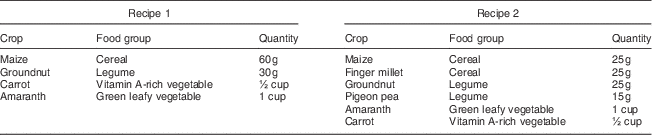
3. The mothers received hands-on experience in cooking recipes formulated for the children throughout the training period. The recommended recipes are presented in Table 1. Sensory evaluation was conducted to choose one recipe over the other.
-
4. For the preparation of complementary flour, volunteer mothers were trained to ensure that they used good-quality grains by following appropriate steps, including grading the grains based on the quality. The mothers were also educated on the ill effects of aflatoxin and how best to avoid contamination. They were taught post-harvest crop handling methods: segregating damaged and rotten grains, identifying good-quality grains, and grading and storing them appropriately.
-
5. The volunteer mothers were trained to monitor other mothers for good hygiene practices during feeding: use of boiled water for drinking and cooking, washing hands before preparation/feeding and after using the toilet, washing utensils after preparation and feeding, washing vessels before cooking, and maintaining cleanliness of the surroundings. Thereafter, the volunteer PD mother recorded hygiene practices that were followed by other mothers each day.
Complementary food recipes recommended for the intervention programme to mitigate child undernutrition in rural Malawi
Analytical methods
To quantify the effects of the training, regression analysis was employed, which allowed us to control for covariates and to obtain standard errors for the treatment effect. Furthermore, our sampling design enabled us to adopt the difference-in-difference model, which is a capable tool to estimate treatment effects by systematically comparing the pre- and post-treatment differences in the outcome between a treatment group and a control group. The difference-in-difference estimation can be utilised only in the presence of multiple-period data sets( Reference Donald and Lang 44 , Reference Lechner 45 ). Moreover, in our case, unobservable time-invariant household characteristics (i.e. fixed effects) can be controlled for since household-level panel data were available, which is a remarkable advantage in minimising estimation bias( Reference Tsusaka, Orr and Msere 46 ). In our study, there are four time points: i.e. t=day 0, day 7, day 14 and day 21. Therefore, there are three difference-in-difference dummy variables corresponding to day 7, day 14 and day 21, with day 0 being the base.
The most important assumption with the difference-in-difference estimation is the parallel trends assumption. Provided this assumption holds and we can credibly rule out any other heterogeneous changes over time that may confound the treatment, then the estimators are highly reliable. This assumption holds better when the measurement interval is short, which is the case with our study. All the quantitative analyses, both regression and descriptive statistics, were handled with the statistical software package STATA version 14.
Results
Current practices
Socio-economic profile and farming practices
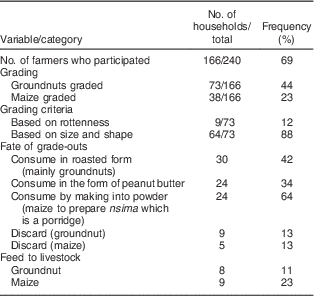
The sampled children had an equal gender balance, with the mean age being 8·5 months. Accordingly, the mean age of the sampled mothers was 26 years. Sixty-nine per cent of the households earned their living from farming as the main occupation. The mean asset holding was about $US 20. All sampled farmers were smallholder farmers producing maize for household consumption purposes. The second and third most common crops were groundnut and soyabean, grown for both consumption and sale. The mean landholding size was 0·77 ha (1·9 acres). Most of the farmers did not grade their grain during post-harvest crop handling and storage. Only 23 % of maize producers and 12 % of groundnut producers graded their respective grains. Among those who graded, there were several uses of grade-outs in different forms (Table 2).
Baseline agricultural practices of the studied households in Mchiniji, Mzimba and Balaka districts, rural Malawi, 2014–2015
Food consumption practices
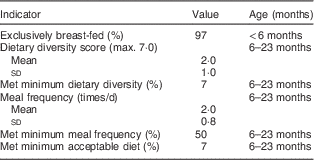
Most (96 %) of the sampled children were still fed with breast milk. Eighty-eight per cent of the sampled children had started consuming complementary food with maize porridge. One-third of the children had started consuming complementary food before 6 months of age. Less than a quarter of the mothers had knowledge of the importance of nutrients in complementary food. The proportion of children meeting the minimum dietary diversity was 7 %, with a mean dietary diversity score of 2·0 (sd 1·0), and the proportion of children meeting the minimum meal frequency was 50 %. The dietary diversity score suggested that most children were fed with staples (maize) and vegetables (green leafy) within the last 24 h before the day of the baseline assessment, while other food groups were inadequately consumed, resulting in the composite scale mean score of 2·0 (sd 1·0) out of the full score of 7·0 (Table 3).
Baseline indicators of dietary habits of infants and young children in the sampled households in Mchiniji, Mzimba and Balaka districts, rural Malawi, 2014–2015
Water, sanitation and hygiene practices
The main source of drinking-water for most (>90 %) of the households were boreholes. The majority (87 %) of the participants reported to have never treated water before drinking. One-quarter of the households did not have access to protected pit latrines (i.e. with a slab), which could be a medium for transmitting micro-organisms that cause pathogenic diarrhoea. Nearly 80 % of the children had experienced diarrhoea.
Aflatoxin contamination
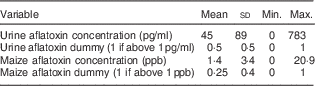
Table 4 indicates that the children’s exposure to aflatoxin was largely varied. While half of the children had no or a non-detectable level of aflatoxin in urine (AFM1), the mean urine AFM1 level in 44 % of the samples was 45 pg/ml with the highest AFM1 level of 783 pg/ml. Aflatoxin contamination in the sampled crops was much less heterogeneous and contamination in many of the samples was below the critical level, although there were some high contamination cases. Against the odds, the t test did not show a significant relationship between aflatoxin contamination in food and urine (Table 5). Table 6 shows the difference in children’s undernutrition indicators by presence of AFM1 in urine. AFM1 in urine was significantly associated with wasting, but not with stunting and underweight. Albeit not presented, the same tendency was confirmed by least-squares regression analysis.
Baseline aflatoxin concentration in maize and urine of the sampled children (n 241) from households in Mchiniji, Mzimba and Balaka districts, rural Malawi, 2014–2015
Mean difference in baseline aflatoxin concentration in urine (pg/ml) by maize contamination status in the sampled children (n 241) from households in Mchiniji, Mzimba and Balaka districts, rural Malawi, 2014–2015
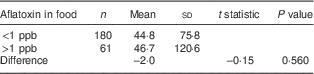
Mean difference in baseline undernutrition indicators by urine aflatoxin status in the sampled children (n 241) from households in Mchiniji, Mzimba and Balaka districts, rural Malawi, 2014–2015

Undernutrition status
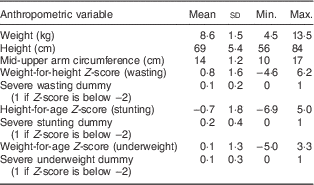
Table 7 summarises the children’s anthropometric measurements and undernutrition indicators. The Z-scores of the sampled children were not notably inferior to the norm except for stunting. However, there was a non-negligible proportion of children who were severely undernourished. The MUAC was relatively homogeneous, averaged at 14 cm.
Baseline undernutrition status of the children (n 241) from households in Mchiniji, Mzimba and Balaka districts, rural Malawi, 2014–2015
Impacts of training on undernutrition status
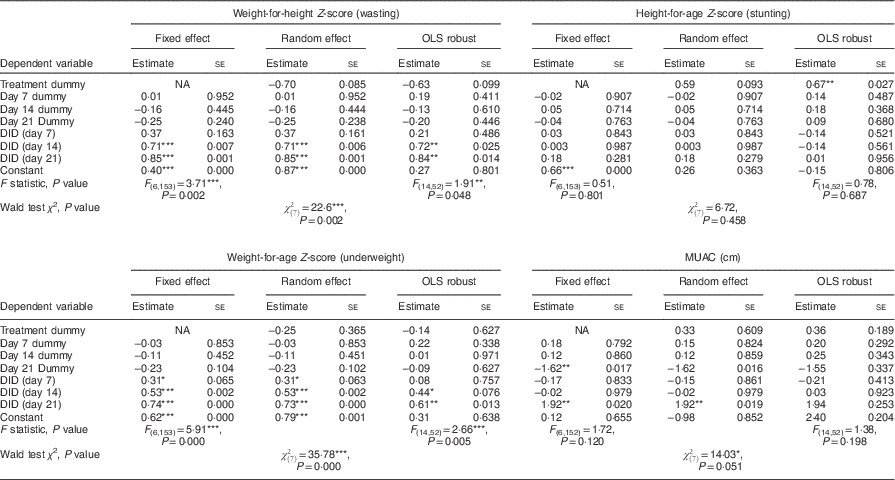
Tables 8 shows the difference-in-difference estimation results of training impacts on wasting, stunting, underweight and MUAC. The models presented are fixed effect, random effect and ordinary least squares (OLS) with standard errors clustered on households.Footnote *
Impacts of the training to mitigate child undernutrition on wasting, stunting, underweight and mid-upper arm circumference (MUAC) of children from households in Mzimba and Balaka districts, rural Malawi, 2014–2015: difference-in-difference estimations (DID; n 179)
NA, not applicable.
Control variables in the ordinary least squares (OLS) and random-effect regression models are not shown, which are mother’s age, household head’s sex, household head’s age, household head’s education, household size and asset holding.
*P<0·10, **P<0·05, ***P<0·01.
For wasting, the impacts of the training were found to be insignificant on day 7 and significant on day 14 and day 21, with the largest magnitude observed on day 21. The result clearly indicates that the continued good practice enforced by the training led to alleviating the status of wasting among the children. The quantitative interpretation is that receiving the continued training raises the Z-score for wasting by 0·85 within 3 weeks, which appears to be a remarkable effect given the short period of time. Besides, all the children in the intervention group underwent a positive change in wasting during the 21d training.
By contrast, for stunting the impacts did not reach significance within the 21d time frame, which is comprehensible since height is much less variable than weight even for children in the growth phase. It should be noted, however, that the P value decreased largely from day 14 to day 21, suggesting that the effect would become significant over a slightly longer time horizon. In fact, a change was observed among moderately stunted children. Six out of the eleven children who had been moderately stunted at the beginning of the training registered improvement in their height during the 3-week training period.
For underweight, the impacts were similar to those in the case of wasting. The only difference is that the effect was already weakly significant on day 7, as indicated by the panel regression output. Quantitatively, receiving the continued training raised the Z-score for underweight by 0·73 on average, in a matter of 3weeks.
For MUAC, positive and significant impacts were found on day 21. Although there was no sign of improvement until day 14, the effect emanated in the third week of the intervention. Quantitatively, receiving the continued training raised the mean MUAC by 1·92 cm within 3weeks, although the growth was invisible until the second week of improved practice.
Apart from the impacts on the undernutrition indicators, the frequency of diarrhoea decreased significantly after the first week of the training only in the intervention group, indicating that the hygiene practices were effective as far as diarrhoea was concerned. Furthermore, the dietary diversity score increased from 2·0 to 4·0, suggesting the usefulness of the complementary food used in the intervention composed of diverse and nutritious ingredients such as legumes, coarse cereals, vitamin A-rich vegetables and green leafy vegetables.
Lastly and very importantly, the recommended recipes (Table 1) were met with the acceptability rate of 82 % in the intervention group. Children were particularly fond of Recipe 2 described in Table 1.
Discussion
All recruited participants from both districts were engaged in maize production as maize is their staple food stored throughout the year. This explains why most of the infants and young children received whole-grain maize porridge as a complementary diet. The descriptive statistics also suggest that the sampled households were poor, and the dietary diversity was limited. The government and non-governmental organisations in Malawi have been promoting enriching maize flour porridge with other ingredients such as groundnut flour, soya flour, cooking oil and vegetables. However, child undernutrition rates remain unacceptably high, which implies that despite the promotion, adoption of diversified diets is slow, and that food safety and hygiene practices also need to be addressed, e.g. acute and chronic illnesses caused by poor hygiene, insufficient time taken by mothers on child care, and aflatoxin contamination.
Aflatoxin was detected in the urine samples of more than half of the children, while high contamination was found in maize samples from a quarter of the households. Given that there are two channels of aflatoxin absorption by children, i.e. complementary feeding and breast-feeding, our statistics suggest that there had been transmission of aflatoxin from mothers via breast-feeding as well. Moreover, consuming poor-quality food containing grade-outs as described by the study participants (Table 2) leads to increased aflatoxin exposure as likelihood of the presence of aflatoxin in grade-outs is high( Reference Munthali, Charlie and Kachulu 47 ). In the present study aflatoxin exposure among children was significantly associated with wasting status, which is consistent with a study conducted in West Africa( Reference Gong, Cardwell and Hounsa 37 ) that reported a strong association between aflatoxin exposure upon weaning and impaired growth of children.
At baseline, diarrhoea was rampant due to unclean water and other improper sanitation factors. Yet, the intervention contributed to quickly reducing the incidence of diarrhoea, which is regarded as an indirect cause for undernutrition. This indicates the effectiveness of the improved hygiene practices covered by the training.
The regression results proved the positive effects of the comprehensive training on the indicators of undernutrition among children, particularly wasting, underweight and MUAC. The 3-week training was conducive to increasing the Z-scores for wasting and underweight by 0·85 and 0·73, respectively, and MUAC by 1·92 cm on average. Albeit less significant, the result on stunting suggests a positive sign that behavioural changes arising from continuous feeding of a safe and balanced diet can also benefit height in a longer time frame. Although the health outcome of the training was positive, it is worth considering the acceptability of the recipe used. In our case, four out of five households in the intervention group accepted the recipe, indicating promising potential for upscaling similar capacity-building programmes. Nevertheless, there is still room for improvement in the recipe by incorporating the preferences of the remaining fifth, so that the knowledge dissemination would be sustainable.
There are three major limitations in the present study. First, since the study focused on the impacts of the comprehensive training, there was only one treatment group which received the entire package of intervention. In other words, the impact of a specific subject of training was not distinguished from that of another subject. Hence, there remains a question as to the extent to which each subject of training was effective and what synergy the combination of subjects brought forth. Second, since our focus was on the real-time impacts of the 3-week programme, longer-term impacts were beyond the scope of the study. The sustainability of the effects of the training would require further attention. These two remaining themes will be studied and documented in another article. Third, the blood aflatoxin–albumin biomarker is a more appropriate measure for chronic exposure status over the past few months( Reference Watson, Gong and Routledge 48 ). In our case, however, the mothers were willing to provide urine samples only and hence the urine aflatoxin biomarker (AFM1) was employed, which is an indicator of 24 h exposure of aflatoxin contamination through food.
Another factor to note is that the present study employed common and conventional measures of undernutrition (wasting, stunting) and their composite (underweight). However, Nandy and Miranda( Reference Nandy and Miranda 7 ) argue that results on underweight can be contradictory to results on wasting and stunting, and suggest use of the Composite Index of Anthropometric Failure (CIAF) which is always consistent with the conventional indicators. Our result on underweight may alter to some extent with use of the CIAF. Nevertheless, in light of the consistency observed in our results between underweight and the two conventional indicators, the result and implication, arguably, would not change to a significant extent. Since the CIAF incorporates the failure in height-for-age which is not expected to change drastically within 3weeks, it may mask the short-term phenomena in our study.
Lastly, the children’s acceptability of Recipe 2 was high presumably due to the inclusion of pigeon pea and finger millet which were absent in Recipe 1. In particular, pigeon pea seemed to enhance the taste of the porridge in Recipe 2. The cereals and legumes chosen in Recipe 2 complement each other for protein and micronutrient requirements, which is absent in the usual maize porridge prepared by mothers. Details on the acceptance and nutrient contents of different recipes are beyond the scope of the present study, but will be illustrated in another ongoing study.
Conclusion
Undernutrition in children has been detrimental to economic and social development in low-income countries, particularly sub-Saharan Africa. In an attempt to accumulate empirical evidence, the current paper offered the first quantitative estimation from Malawi of the impacts on undernutrition indicators of an intervention incorporating the PD/Hearth approach in which the mothers were educated on three subjects: diversified complementary diets, hygiene and food safety. A randomised controlled trial and difference-in-difference regression revealed significant improvement in health outcomes within 21d by virtue of the comprehensive training implemented. Moreover, the article presented the first results on aflatoxin assay of children’s urine in Malawi, showing that more than half of the sampled children were contaminated with aflatoxin.
The results unequivocally suggest that the comprehensive training immediately led to behavioural changes among mothers and that the improved practices took progressive effects in ameliorating children’s undernutrition. Direct observation of the immediate outcome will convince mothers to maintain the good practices that are affordable in the communities. Further elicitation and incorporation of local preferences and tastes would help guarantee sustainable adoption. In all likelihood, the result implies the need for policies and institutions to incentivise development agencies and governments to invest in upscaling intervention programmes of this sort targeted at relevant mothers in resource-poor rural communities.
Acknowledgements
Acknowledgements: The authors sincerely thank Mr Gift H. Twanje and Dr Judith Mkwaila for their technical support in this research. Financial support: This work was funded by the Collaborative Crop Research Program of the McKnight Foundation and CGIAR Research Programs on A4NH (Agriculture for Nutrition and Health) and GL (Grain Legumes). The funders had no role in the design, analysis or writing of this article. Conflict of interest: None. Authorship: A.S., T.W.T. and P.O. contributed to the conception, design, analysis, interpretation and discussion of the data, and wrote the final version of the manuscript. T.W.M., M. Musukawa, L.K., N.K. and M. Musoke contributed to data collection and analysis. A.M., Z.K. and T.M. contributed to writing and revised the manuscript. Ethics of human subject participation: This study was approved by the Ministry of Health, Malawi.


 Open access

