




Introduction
According to scientific evidence, appropriate nutrition enhances athletic performance and supports recovery during sports activities(Reference Thomas, Erdman and Burke1). Therefore, it is crucial for an athlete’s diet to be optimal in both quality and quantity of food to replenish energy stores and obtain the necessary nutrients for the proper functioning and recovery of bodily systems. This helps prevent fatigue, injuries and ill health(Reference Gastrich, Quick and Bachmann2).
In addition to adequate nutrition, body composition is a critical determinant of athletic performance(Reference Sitko, Cirer-Sastre and López Laval3). A more favourable body composition, characterised by higher muscle mass and appropriate body fat levels, has been associated with improvements in strength, endurance and overall physical performance(Reference Carvalho de Moura, de Moura Costa and Pinheiro Ferreira4). Maintaining optimal body composition is also essential for injury prevention, longevity in sports and overall health and wellbeing(Reference Campa, Toselli and Mazzilli5).
Multiple factors influence an athlete’s dietary behaviour, including physiological, psychological, social, economic and organoleptic aspects, as well as convenience, beliefs and nutrition knowledge(Reference Birkenhead and Slater6). It has been reported that the level of nutrition knowledge attained by an athlete positively affects their dietary behaviour(Reference Wiita and Stombaugh7–Reference Tektunalı Akman, Gönen Aydın and Ersoy12). Key areas of nutrition-related knowledge for athletes may include energy requirements, body composition, macronutrient needs, vitamins and minerals, hydration, training diet, supplements and ergogenic aids(Reference Rodriguez, Di Marco and Langley13).
Female athletes experience growth and development differently compared with male athletes, resulting in substantial differences in body size and composition, as well as a unique hormonal environment(Reference Mcmanus and Armstrong14). These distinctive physiological characteristics cause females to face specific nutrition and health challenges related to physiological changes and nutrition stress induced by strenuous exercise, factors that can significantly impact overall wellbeing.
Research on female athletes frequently reports restrictions in energy intake, leading to inadequate coverage of energy and nutrition needs, which negatively impacts athletic performance. Some female athletes may deliberately restrict their calorie intake for performance or aesthetic reasons, while others may have insufficient energy intake owing to other factors such as increased training load or lack of education on proper nutrition according to their sports demands(Reference Black, Baker and Sims15). If this energy deficit persists, a condition known as low energy availability (LEA) develops. LEA occurs when caloric intake does not meet the energy expenditure of exercise, leaving insufficient energy for essential bodily functions, which affects health and performance(Reference Mountjoy, Ackerman and Bailey16). In the long term, it can disrupt the physiological and psychological functioning of athletes, compromising metabolism, reproductive function, bone and muscle health, the immune system and cardiovascular health. This state, known as relative energy deficiency in sport (RED-S), increases the risk of injuries and may reduce athletic performance(Reference Mountjoy, Ackerman and Bailey16).
Studies report that nutrition knowledge among this population is insufficient(Reference Wiita and Stombaugh7,Reference Davar17,Reference Vázquez-Espino, Rodas-Font and Farran-Codina18) . The lack of well-structured and effective nutrition education interventions, combined with the widespread dissemination of misinformation in sports environments and the contradictory dietary advice from friends, family, coaches and online sources(Reference Manore, Patton-Lopez and Meng19), highlight the need to incorporate nutrition education into sports programmes, as this is one of the few modifiable determinants of dietary behaviours(Reference Janiczak, Devlin and Forsyth20).
Nutritional education is a structured process that provides knowledge and skills to make informed decisions about diet and physical activity. Its goal is to promote healthy habits by encouraging appropriate food choices at both individual and community levels(Reference Heaney, O’connor and Michael21). Interventions in this field aim to enhance the target population’s nutritional knowledge to foster healthier eating habits(Reference Murimi, Kanyi and Mupfudze22). Nutrition education can be implemented in various modalities, including group education sessions(Reference Patton-Lopez, Manore and Branscum23), the use of technological platforms(Reference Simpson, Gemming and Baker24), graphic materials(Reference Gonçalves, Nogueira and Da Costa25) and interactive workshops that incorporate practical skills such as cooking, daily menu planning or grocery shopping(Reference Aguilo, Lozano and Tauler26,Reference Philippou, Middleton and Pistos27) . In contrast, individual nutrition consultations(Reference Valliant, Emplaincourt and Wenzel10) are dynamic, two-way interactions where the client actively participates in defining and implementing key behavioural changes. These consultations build upon the client’s existing nutritional knowledge and typically take place within an ongoing professional relationship, where the nutrition advisor works privately with the client across multiple individualised sessions(Reference Fiorini, Neri and Guglielmetti28). Given that some studies report that coaches and other sports specialists have inadequate nutrition knowledge(Reference Torres-McGehee, Pritchett and Zippel29), which could impact the knowledge acquired by the athletes themselves, planned nutrition education could be directed at both athletes and coaches.
Although general research on athletes has historically been more extensive in men(Reference Simpson, Gemming and Baker24,Reference Zeng, Fang and Qin30–Reference Rossi, Landreth and Beam33) , interest in nutritional education interventions for female athletes has been increasing. This indicates a significant effort to study this population in the context of nutrition education. However, it remains essential to expand research to ensure comprehensive coverage across different sports, age groups and competitive levels. Female athletes face particular challenges, including specific nutritional needs, a higher risk of low energy availability and RED-S. In addition, some studies suggest that there are differences in preferred learning styles according to gender(Reference Wehrwein, Lujan and DiCarlo34) and also in emotional aspects linked to engagement in learning(Reference Santos, Simões and Cefai35). Accordingly, female athletes may respond differently to the same nutrition education intervention than male athletes, and aggregating data from both sexes in such interventions, or analysing the data without considering gender, may result in a gender bias. Despite these factors, although reviews on nutritional education interventions in athletes have been conducted(Reference Boidin, Tam and Mitchell8,Reference Tam, Beck and Manore36–Reference Bentley, Mitchell and Backhouse38) , none have focused exclusively on female athletes, highlighting the need to address this gap in literature.
Consequently, this systematic review was conducted exclusively with female athletes to analyse and evaluate the available evidence on the effect of nutrition interventions on knowledge and dietary intake. In addition, it aims to determine whether these interventions influenced the athletes’ body composition, given its critical role in performance, injury prevention and overall health. This information will facilitate the design and implementation of effective interventions to enhance nutrition knowledge, dietary intake and/or body composition among female athletes.
Materials and methods
This systematic review was conducted following the recommendations and criteria outlined in the Preferred Reporting Items for Systematic Reviews and Meta-Analysis (PRISMA)(Reference Moher, Shamseer and Clarke39) statement guidelines and was registered on Prospero (CRD42023406986).
Search strategy
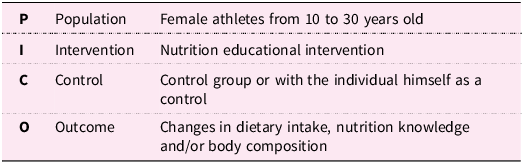
To identify potential studies, a search was conducted in the electronic databases PubMed/Medline, Scielo, Cinahl, Web of Science and Scopus. The search strategy was structured on the basis of the Population, Intervention, Control, and Outcome (PICO) framework (Table 1), incorporating keywords and controlled vocabulary, athlete*, sport*, team sport*, ‘nutrition feedback’, ‘educational intervention’, ‘nutrition intervention’, ‘nutrition intervention’, ‘nutrition education’, ‘nutrition program*’, ‘health education’, ‘dietary intervention’, ‘dietary program*, ‘energy intake’, ‘energy balance’, ‘feeding behavior’, ‘dietary intake’, ‘dietary behav*’, ‘dietary pattern*’, ‘dietary habit*’, ‘dietary assessment’, ‘eating behav*’, ‘eating patterns’, ‘eating habits’, ‘nutrition intake’, ‘nutrition habits’, ‘nutrition patterns’, ‘nutrition status’, ‘food choice’, ‘food habit*’, ‘nutrition knowledge’, ‘health knowledge’, ‘food knowledge’, ‘diet knowledge’, ‘body composition’, ‘weight management’.
PICO strategy used in the systematic review

The systematic literature search to identify studies was conducted by one researcher (M. V.) in March 2023 and repeated in May 2024 to identify newly published articles. The search strategy used was the same for all databases (Supplementary Table S1), applying filters for language (English, Spanish, Italian, French, Portuguese, and Catalan), publication year (since 1990) and studies involving human subjects. In addition, a manual search using the snowball strategy was conducted to identify any additional articles not initially captured in the search.
Inclusion and exclusion criteria
Studies meeting the following criteria were included in our review: (1) population: female athletes aged between 10 and 30 years old, of different ethnicities, nationalities, sports and competitive levels; (2) type of intervention: administration of a nutrition education programme without restrictions regarding duration or modality; (3) outcomes: assessment of dietary intake, nutrition knowledge and/or nutrition status, before and after the intervention; (4) control: studies could include a control group with or without intervention, or no control group; (5) study designs: randomised controlled trials (RCTs), quasi-experimental studies and community intervention trials; (6) type of publication: peer-reviewed articles and doctoral dissertations.
The exclusion criteria were: (1) athletes diagnosed with eating disorders or any chronic pathology that requires special dietary planning (for example, diabetes); (2) type of intervention: studies administering dietary supplements or psychological interventions concurrently with nutrition education, or those solely providing dietary guidelines without nutrition education; (3) study designs: case studies and nutrition intervention studies assessing only the final outcome; (4) type of publication: abstracts, conference posters, narrative reviews, systematic reviews, meta-analyses and letters to the editor; (5) studies that do not report results disaggregated by sex.
Selection of studies
After performing the predetermined search strategy across the above-mentioned databases, the first author (M. V.) exported all results to the Rayyan reference management system (RAYYAN, Cambridge, MA, USA) and proceeded to remove duplicate references. Then, manuscript titles and abstracts were examined independently by two authors (M. V. and A. F.). Full-text versions of studies that met the inclusion criteria were then screened. Discrepancies regarding the inclusion of studies between authors were resolved by consensus with a third author (R. F.). When an article contained insufficient details, we tried to obtain the missing information by contacting the authors via email (M. V.). If translation of the articles was necessary, the DeepL application was employed (DeepL, Köln, Germany), with the translated version subsequently verified by the first author (M. V.).
Data extraction
Data extraction was independently conducted by two authors (M. V. and A. F.) using an Excel data extraction form. This form included fields for demographic characteristics (authors’ names, publication year, country where the study was conducted, sport, sample size, mean age and standard deviation, and/or age range), intervention details (type of intervention, delivery mode, duration and frequency, nutrition education curriculum and facilitator), outcomes (tools/questionnaires/parameters/tests used for each analysed variable) and main findings (increased/decreased/unchanged effects on dietary intake, nutrition knowledge and/or body composition). The studies were grouped according to their design: one Excel data extraction form was used for single-arm studies (intervention group only) and another for double-arm studies (intervention and control groups).
Given that most of the included studies assessed nutrition knowledge, the total scores of each administered questionnaire and pre- and post-intervention scores were extracted and tabulated in a spreadsheet.
Quality assessment
Study quality was independently assessed in duplicate by two authors (M.V. and A.F.), with a third author (R.F.) consulted to resolve any discrepancies. A modified version of the Downs and Black checklist(Reference Downs and Black40) was used (Supplementary Table S2). Out of the original twenty-seven items, twenty-four were retained, while items 8, 13 and 17 were eliminated(Reference Boidin, Tam and Mitchell8). In addition, two items from the Academy of Nutrition and Dietetics (AND) quality criteria checklist were incorporated(41). Specifically, these were item 9, ‘Are conclusions supported by results with biases and limitations taken into consideration?’ and item 10, ‘Is bias due to study funding or sponsorship unlikely?’(Reference Boidin, Tam and Mitchell8).
In the checklist, each question is answered with a ‘yes’ if the criteria are satisfied or a ‘no’ if they are not. A score of 1 point was assigned for all items answered ‘yes’ (with 0 points given for ‘no’), except for items 5 and 18, which could score a maximum of 2 points.
For studies employing single-arm designs, items 14, 15, 21, 22, 23 and 24 were excluded. Thus, the maximum score for studies utilising this design was 22 points, with the following scoring criteria applied: ≤ 11 points for poor quality, 12–15 points for fair quality, 16–19 points for good quality and 20–22 points for excellent quality. For studies using double-arm designs, the maximum score was 28 points. The scoring criteria adopted were as follows: ≤ 14 points for poor quality, 15–19 points for fair quality, 20–25 points for good quality and 26–28 points for excellent quality(Reference Boidin, Tam and Mitchell8).
Data analysis
Owing to the heterogeneity of the instruments used to assess nutrition knowledge and dietary intake, it was not appropriate to conduct a meta-analysis.
To facilitate inter-study comparisons, original raw scores from nutrition knowledge questionnaires were converted into percentages when necessary. Data were represented in a tree diagram for convenience of presentation. Although the collected data did not meet criteria for meta-analysis as per Cochrane guidelines, effect sizes were calculated to quantify the magnitude of intervention impacts(Reference Reeves, Deeks and Higgins42). Effect sizes (ES) with their 95% confidence intervals were calculated using Hedges’ g for double- and single-arm studies that had reported means and standard deviations (SD). Effect sizes were interpreted using Cohen’s cut-off points (very small effect <0·2; 0·2≤ small effect <0·5; 0·5≤ moderate effect <0·8; large effect ≥0·8). All the statistical calculations were performed using the STATA software version 18 (StataCorp LLC, College Station, TX, USA).
Results
Study selection
Out of the 2788 articles identified from the combined searches, 1813 remained after removing duplicates. Screening on the basis of title and abstract narrowed down the selection to fifty articles for full-text review. Following evaluation against the inclusion and exclusion criteria, twenty-eight articles were ultimately selected for the systematic review (Fig. 1)(Reference Abood, Black and Birnbaum9–Reference Tektunalı Akman, Gönen Aydın and Ersoy12,Reference Patton-Lopez, Manore and Branscum23,Reference Gonçalves, Nogueira and Da Costa25–Reference Philippou, Middleton and Pistos27,Reference Wenzel, Valliant and Chang43–Reference Yannakoulia, Sitara and Yannakoulia60) .
PRISMA flow diagram showing the study inclusion process.

Study characteristics
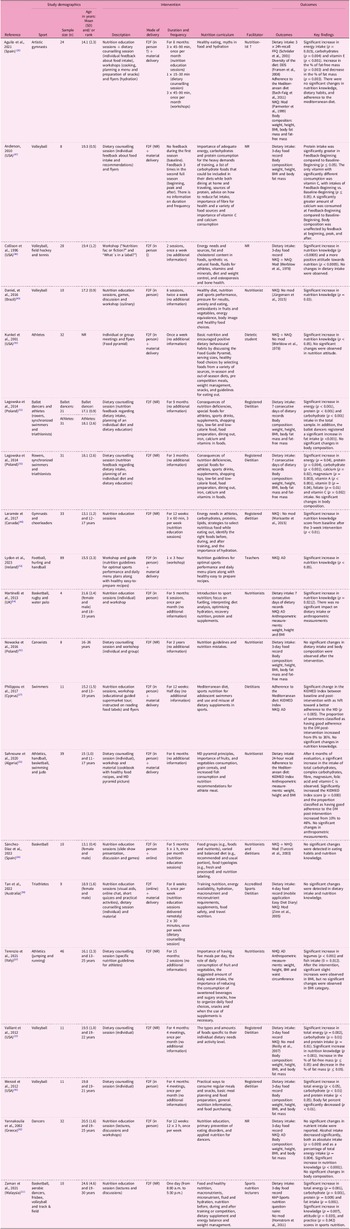
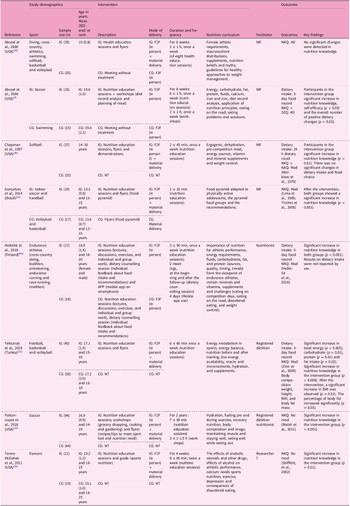
Of the twenty-eight included studies, 71% (n = 20) employed a single-arm design, while 29% (n = 8) utilised a double-arm design. The characteristics of single-arm and doubled-arm studies are shown in Tables 2 and 3, respectively. It is noteworthy that although Laramée et al.(Reference Laramée, Drapeau and Valois46) implemented a double-arm design, both groups received some form of intervention (intervention group: nutrition education plus behaviour change; control group: nutrition education only). Therefore, this study was analysed as a single-arm design, with only the control group data included in the data analysis, because psychological interventions were beyond the scope of this review. There is some possibility that the studies by Valliant et al.(Reference Valliant, Emplaincourt and Wenzel10) and Wenzel et al.(Reference Wenzel, Valliant and Chang43) were actually conducted on the same sample and are in fact the same study. Given the impossibility of obtaining this information from the authors, we have chosen to consider them as two separate studies.
Study demographics, intervention details, outcomes and key findings for single-arm studies
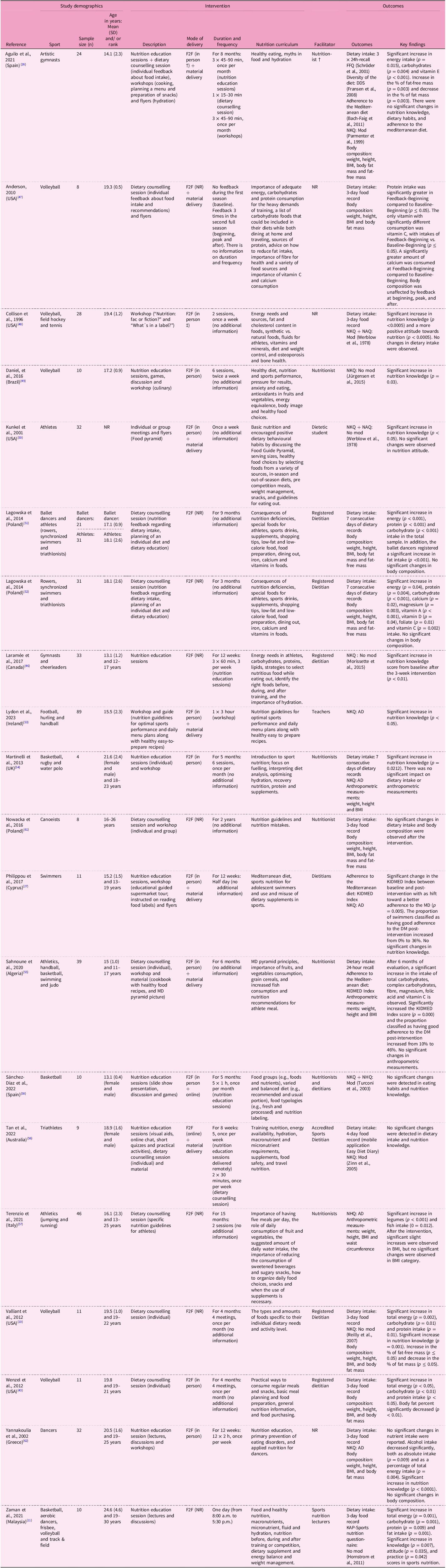
SD, standard deviation; F2F, face to face; NR, not reported; FFQ, food frequency questionnaire; DDS, diet diversity score; NKQ, nutrition knowledge questions; NAQ, nutrition attitudes questions; NHQ, nutrition habits questions; KAP, knowledge, attitude, and practice; AD, author designed instrument; Mod, modified pre-existing instrument; No mod, used original instrument without modification.
†Additional information provided by author
‡Deduced by the researcher
Study demographics, intervention details, outcomes and key findings for double-arm studies
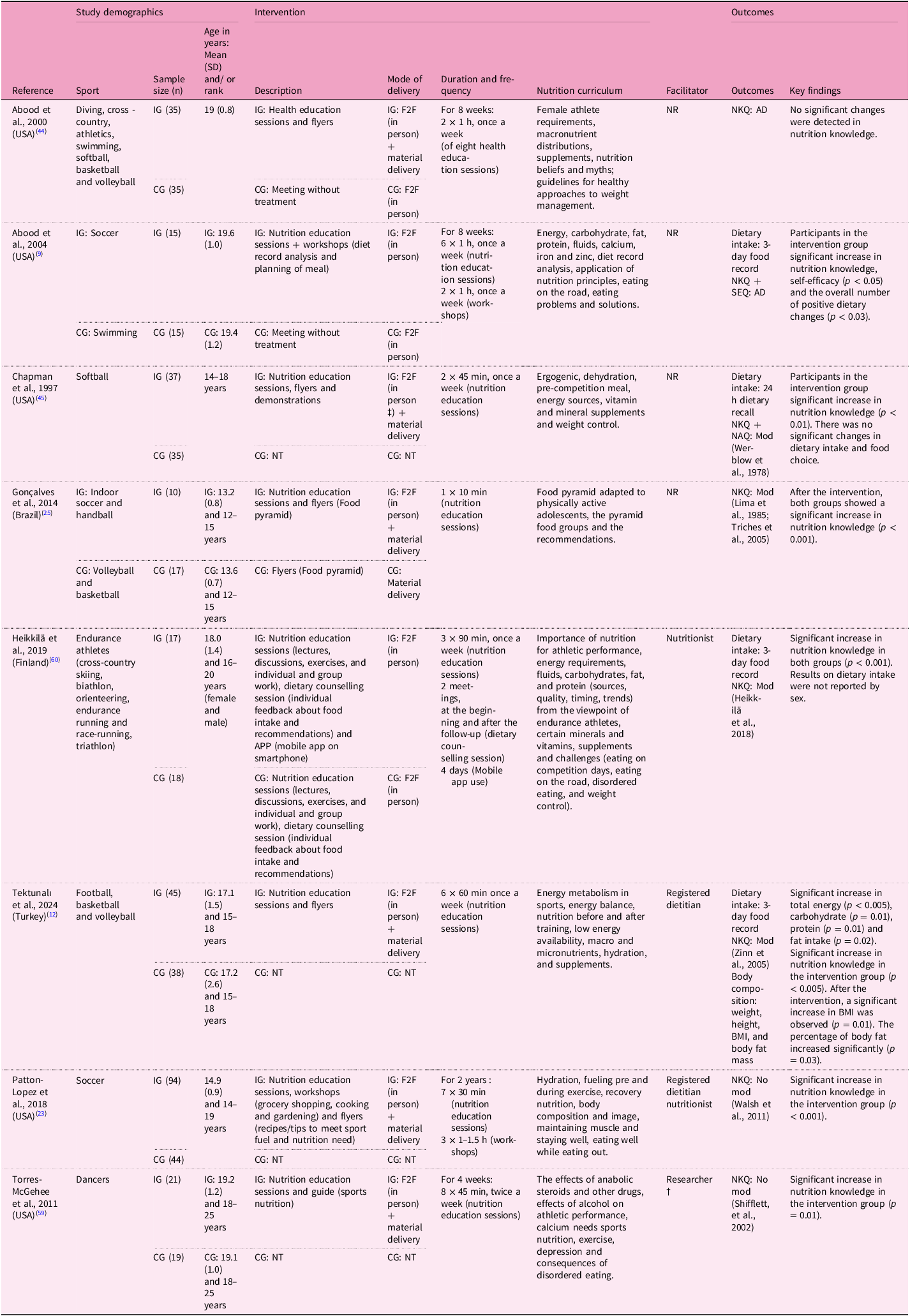
IG, intervention group; CG, control group; SD, standard deviation; F2F, face to face; NT, no treatment; NR, not reported; NKQ, nutrition knowledge questions; NAQ, nutrition attitudes questions; SEQ, self-efficacy questions; AD, author designed instrument; Mod, modified pre-existing instrument; No mod, used original instrument without modification.
†Additional information provided by author
‡Deduced by the researcher
Among the studies included in this review, sixteen focused exclusively on female athletes, while twelve covered both sexes. The total sample consisted of 993 female athletes, with individual study samples ranging from 4 to 138 participants. The weighted mean age of the athletes was 16·9 (SD = 1·7) years (range: 11–30 years). Four studies(Reference Wenzel, Valliant and Chang43,Reference Chapman, Toma and Tuveson45,Reference Kunkel, Bell and Luccia50,Reference Nowacka, Leszczyńska and Kopeć61) were omitted from age calculations owing to inadequate reporting of mean age and/or standard deviation.
The studies were conducted across various regions, including the USA (n = 10), Poland (n = 3), Brazil (n = 2), Spain (n = 2), Algeria (n = 1), Australia (n = 1), Canada (n = 1), Cyprus (n = 1), Finland (n = 1), Greece (n = 1), Ireland (n = 1), Italy (n = 1), Malaysia (n = 1), Turkey (n = 1) and UK (n = 1). Most of the studies involved female athletes that engaged in only one type of sport (n = 15), while the remaining studies included samples with more than one type of sport (n = 13). The representation of twenty-one different sports was observed, with athletics or endurance athletes (n = 14) and volleyball (n = 9) emerging as the most predominant among them. A one-arm study included two population groups and reported the results separately (ballet dancers and athletes)(Reference Lagowska, Kapczuk and Jeszka51).
Regarding the outcomes, in single-arm studies (n = 20), fifteen assessed dietary intake(Reference Valliant, Emplaincourt and Wenzel10,Reference Zaman, Muhamad and Jusoh11,Reference Aguilo, Lozano and Tauler26,Reference Wenzel, Valliant and Chang43,Reference Anderson47,Reference Collison48,Reference Lagowska, Kapczuk and Jeszka51,Reference Łagowska, Kapczuk and Friebe52,Reference Martinelli54–Reference Sánchez-Díaz, Raya-González and Yanci58,Reference Yannakoulia, Sitara and Yannakoulia60,Reference Nowacka, Leszczyńska and Kopeć61) , three assessed adherence to the Mediterranean diet(Reference Aguilo, Lozano and Tauler26,Reference Philippou, Middleton and Pistos27,Reference Sahnoune and Bouchenak55) , thirteen assessed nutrition knowledge(Reference Valliant, Emplaincourt and Wenzel10,Reference Zaman, Muhamad and Jusoh11,Reference Aguilo, Lozano and Tauler26,Reference Philippou, Middleton and Pistos27,Reference Laramée, Drapeau and Valois46,Reference Collison48–Reference Kunkel, Bell and Luccia50,Reference Lydon, McCloat and Mooney53,Reference Martinelli54,Reference Tan, Rogers and Brown56,Reference Sánchez-Díaz, Raya-González and Yanci58,Reference Yannakoulia, Sitara and Yannakoulia60) and eight assessed body composition(Reference Valliant, Emplaincourt and Wenzel10,Reference Aguilo, Lozano and Tauler26,Reference Wenzel, Valliant and Chang43,Reference Anderson47,Reference Lagowska, Kapczuk and Jeszka51,Reference Łagowska, Kapczuk and Friebe52,Reference Yannakoulia, Sitara and Yannakoulia60,Reference Nowacka, Leszczyńska and Kopeć61) . In double-arm studies (n = 8), three evaluated dietary intake(Reference Abood, Black and Birnbaum9,Reference Tektunalı Akman, Gönen Aydın and Ersoy12,Reference Chapman, Toma and Tuveson45) , eight evaluated nutrition knowledge(Reference Abood, Black and Birnbaum9,Reference Tektunalı Akman, Gönen Aydın and Ersoy12,Reference Patton-Lopez, Manore and Branscum23,Reference Gonçalves, Nogueira and Da Costa25,Reference Abood and Black44,Reference Chapman, Toma and Tuveson45,Reference Torres-McGehee, Green and Leaver-Dunn59,Reference Heikkilä, Lehtovirta and Autio62) , and one evaluated body composition(Reference Tektunalı Akman, Gönen Aydın and Ersoy12).
Intervention characteristics
Facilitator
The facilitator of the educational intervention was reported in 75% (n = 21) of the studies, with professional nutritionists or dietitians (n = 17) being the most common providers. The remaining 25% (n = 7) of the studies did not specify the intervention facilitator.
Description of the intervention
Intervention strategies varied across studies. Eighteen studies of twenty-eight implemented nutrition education sessions, twelve conducted individual nutrition consultations, eleven organised workshops, and two employed gamification. Among double-arm studies, only one included individual nutrition consultation. Several studies combined intervention modalities; for instance, three studies integrated both group educational sessions and nutrition consultations. Most control groups received no treatment; only two studies reported holding meetings with control participants, without specifying the content. Regarding intervention scope, two studies(Reference Aguilo, Lozano and Tauler26,Reference Philippou, Middleton and Pistos27) included parents while three studies(Reference Tektunalı Akman, Gönen Aydın and Ersoy12,Reference Patton-Lopez, Manore and Branscum23,Reference Aguilo, Lozano and Tauler26) involved coaches. From a conceptual perspective, some interventions were grounded in theoretical learning models (n = 3)(Reference Daniel, Jürgensen and Padovani49,Reference Kunkel, Bell and Luccia50,Reference Heikkilä, Lehtovirta and Autio62) and were based on behaviour change theories (n = 6)(Reference Abood, Black and Birnbaum9,Reference Zaman, Muhamad and Jusoh11,Reference Laramée, Drapeau and Valois46,Reference Daniel, Jürgensen and Padovani49,Reference Martinelli54,Reference Heikkilä, Lehtovirta and Autio62) . The remaining studies do not report on the theoretical frameworks used to design the intervention.
Mode of delivery
All studies employed face-to-face delivery modalities, with eighteen explicitly reporting in-person intervention, one reporting an online intervention and one using a mixed approach. Eight studies did not report the delivery mode. Two studies(Reference Chapman, Toma and Tuveson45,Reference Collison48) were inferred to be face-to-face because their publication dates predated the widespread adoption of the internet. In addition, thirteen studies reported providing supplementary materials to participants.
Nutrition education topics
Nutrition education topics varied across studies. General principles of sports nutrition were addressed in twenty-two studies, while twelve studies included individual nutrition plans or weight control strategies, and eighteen studies included a combination of nutrition topics covering energy consumption, macronutrients, micronutrients and hydration principles. Other incorporated topics were: the use of supplements (n = 11); eating away from home (n = 9); addressing eating problems and their solutions (n = 8); understanding food groups and dietary guidelines (n = 8); managing food portions, meal frequency and timing (n = 4); debunking myths and addressing beliefs (n = 2); exploring principles of the Mediterranean diet (n = 1). It should be noted that only one study(Reference Torres-McGehee, Green and Leaver-Dunn59) addressed the topic of alcohol consumption, specifically its effects on athletic performance.
It should be noted that only three studies(Reference Aguilo, Lozano and Tauler26,Reference Daniel, Jürgensen and Padovani49,Reference Heikkilä, Lehtovirta and Autio62) reported considering the participants’ prior knowledge when deciding on the topics of the intervention.
Duration
The number of educational sessions varied from one to twelve during the intervention period. The duration of each session ranged between 10 and 480 min (1-d educational session; 8.00 to 17.30). The total duration of the interventions varied from 1 d to 2 years.
Outcomes
Nutrition knowledge
Nutrition knowledge was assessed in twenty-one studies (thirteen single-arm and eight double-arm design studies). As reported by the authors, in sixteen studies(Reference Abood, Black and Birnbaum9–Reference Tektunalı Akman, Gönen Aydın and Ersoy12,Reference Patton-Lopez, Manore and Branscum23,Reference Gonçalves, Nogueira and Da Costa25,Reference Chapman, Toma and Tuveson45,Reference Laramée, Drapeau and Valois46,Reference Collison48–Reference Kunkel, Bell and Luccia50,Reference Lydon, McCloat and Mooney53,Reference Martinelli54,Reference Torres-McGehee, Green and Leaver-Dunn59,Reference Yannakoulia, Sitara and Yannakoulia60,Reference Heikkilä, Lehtovirta and Autio62) , the nutrition knowledge of the participants showed significant increases. Regarding the assessment instruments used, six studies employed a questionnaire created specifically for their research(Reference Abood, Black and Birnbaum9,Reference Philippou, Middleton and Pistos27,Reference Abood and Black44,Reference Lydon, McCloat and Mooney53,Reference Martinelli54,Reference Yannakoulia, Sitara and Yannakoulia60) , seven studies utilised an original questionnaire(Reference Valliant, Emplaincourt and Wenzel10,Reference Zaman, Muhamad and Jusoh11,Reference Patton-Lopez, Manore and Branscum23,Reference Laramée, Drapeau and Valois46,Reference Daniel, Jürgensen and Padovani49,Reference Kunkel, Bell and Luccia50,Reference Torres-McGehee, Green and Leaver-Dunn59) and eight studies used an original questionnaire with modifications(Reference Abood, Black and Birnbaum9,Reference Tektunalı Akman, Gönen Aydın and Ersoy12,Reference Gonçalves, Nogueira and Da Costa25,Reference Aguilo, Lozano and Tauler26,Reference Chapman, Toma and Tuveson45,Reference Tan, Rogers and Brown56,Reference Sánchez-Díaz, Raya-González and Yanci58,Reference Heikkilä, Lehtovirta and Autio62) . Questionnaire validation was reported in sixteen studies (76·2%). However, validation was not documented in five studies: three using author-designed tools(Reference Gonçalves, Nogueira and Da Costa25,Reference Chapman, Toma and Tuveson45,Reference Yannakoulia, Sitara and Yannakoulia60) , and two employing modified versions of original instruments(Reference Philippou, Middleton and Pistos27,Reference Lydon, McCloat and Mooney53) . Only four studies(Reference Patton-Lopez, Manore and Branscum23,Reference Laramée, Drapeau and Valois46,Reference Yannakoulia, Sitara and Yannakoulia60,Reference Heikkilä, Lehtovirta and Autio62) assessed the maintenance of knowledge over time, reporting significant increases both in the immediate post-intervention period and at the follow-up period.
Facilitators’ qualifications and knowledge dissemination methods were reported in varying details across studies. Among the twenty-one studies, twelve indicated that registered dietitians or nutritionists were responsible for planning and delivering the educational interventions, potentially ensuring that participants received quality nutrition information, two reported a researcher/professor as facilitators, and one utilised a dietetics student. Six studies did not report this information.
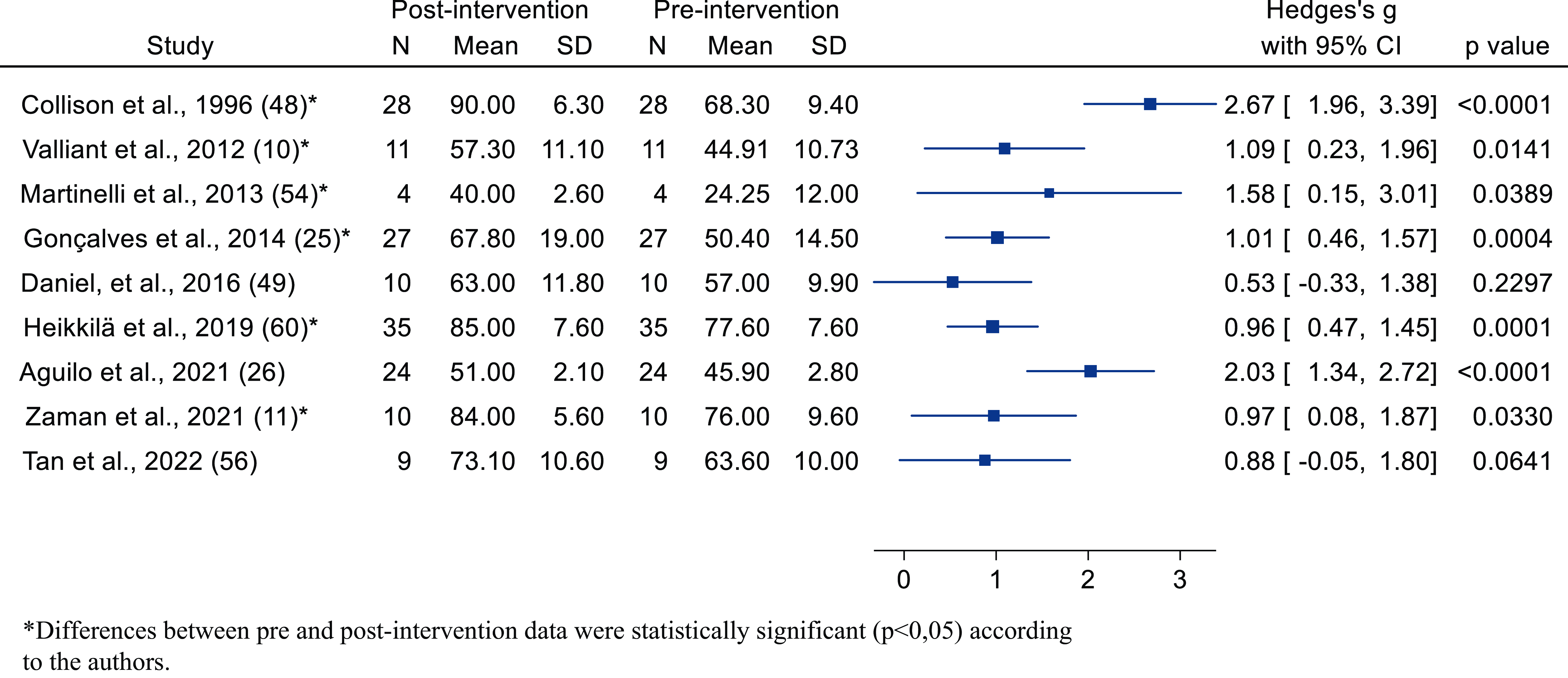
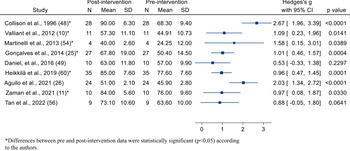
When comparing the results of nutrition knowledge from single-arm studies (Fig. 2), seven studies were included, while six(Reference Philippou, Middleton and Pistos27,Reference Laramée, Drapeau and Valois46,Reference Kunkel, Bell and Luccia50,Reference Lydon, McCloat and Mooney53,Reference Sánchez-Díaz, Raya-González and Yanci58,Reference Yannakoulia, Sitara and Yannakoulia60) were excluded owing to the lack of necessary data for calculations. In addition, two double-arm studies(Reference Gonçalves, Nogueira and Da Costa25,Reference Heikkilä, Lehtovirta and Autio62) were included, considering that the authors reported pooled data from female athletes who participated in both arms, as no statistically significant differences between the two interventions were reported. It is worth noting that in the study by Heikkilä et al.(Reference Heikkilä, Lehtovirta and Autio62), the standard deviation (SD) by sex was not provided; therefore, to include their results in the analysis, we assumed it was the same as that of the total sample, which included both men and women. The weighted mean scores for nutrition knowledge increased from 60·7% (9·7) before the intervention to 72·6% (10·4) after the intervention, resulting in an average improvement of 11·9 (10·1) percentage points. The effect size was calculated for these nine studies (Fig. 2). Seven studies(Reference Valliant, Emplaincourt and Wenzel10,Reference Zaman, Muhamad and Jusoh11,Reference Gonçalves, Nogueira and Da Costa25,Reference Collison48,Reference Martinelli54,Reference Heikkilä, Lehtovirta and Autio62) reported significant changes, of which six had a large effect size (ES >0·8).
Forest plot and effect sizes of changes in nutritional knowledge score (expressed as percentage) from pre- to post-intervention for single-arm studies.
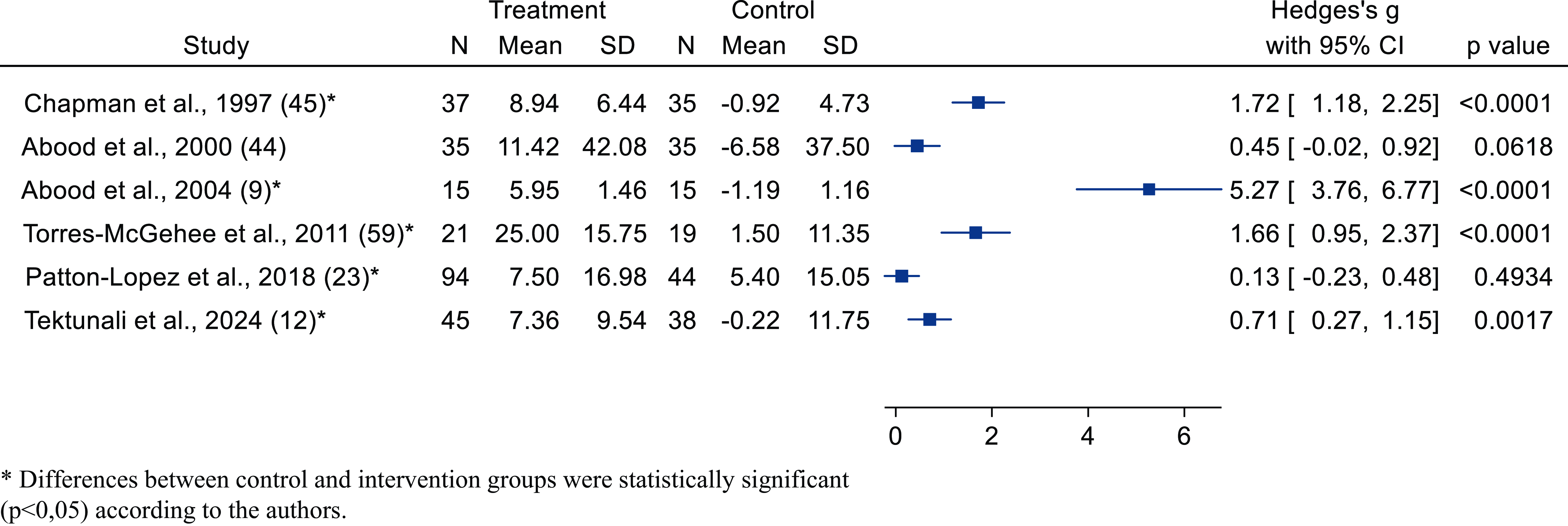
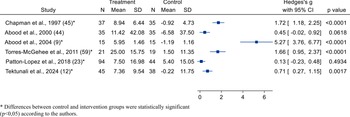
For the comparison of nutrition knowledge outcomes from double-arm studies, all studies were included except those included in the analysis of the single-arm studies. In the study by Patton-Lopez et al.(Reference Patton-Lopez, Manore and Branscum23), the SD was not reported by sex. To include these results in our analysis, we assumed the SD for females was equivalent to that of the total sample, which comprised both males and females, because no differences in knowledge distribution were detected between both sexes. The weighted mean score of nutrition knowledge before and after the nutrition education intervention was 53·0% (20·0) and 62·4% (20·0), respectively, with a mean increase of 9·4% (20·0) from pre-intervention. The weighted mean scores of knowledge before and after the test for the control groups were 50·7% (19·1) and 50·6% (18·7), respectively, indicating an average variation of −0·1% (18·9). The effect size was calculated in all studies (Fig. 3). Three out of the five studies that reported significant changes had a large effect size (ES >0·8)(Reference Abood, Black and Birnbaum9,Reference Chapman, Toma and Tuveson45,Reference Torres-McGehee, Green and Leaver-Dunn59) .
Forest plot and effect sizes of changes in nutritional knowledge score (expressed as percentage) of treatment and control groups for double-arm studies.
Dietary intake
We collated findings from eighteen studies (fifteen single-arm and three double-arm design) exploring the impact of nutrition education interventions on dietary intake among female athletes. The primary assessment methods included the 3-d dietary record, utilised in eleven studies(Reference Abood, Black and Birnbaum9–Reference Tektunalı Akman, Gönen Aydın and Ersoy12,Reference Wenzel, Valliant and Chang43,Reference Anderson47,Reference Collison48,Reference Tan, Rogers and Brown56,Reference Yannakoulia, Sitara and Yannakoulia60–Reference Heikkilä, Lehtovirta and Autio62) , followed by the consecutive 7-d dietary record in three studies(Reference Lagowska, Kapczuk and Jeszka51,Reference Łagowska, Kapczuk and Friebe52,Reference Martinelli54) , a 24-h dietary recall in three studies(Reference Aguilo, Lozano and Tauler26,Reference Chapman, Toma and Tuveson45,Reference Sahnoune and Bouchenak55) , a food frequency questionnaire in one study(Reference Aguilo, Lozano and Tauler26) and an eating habits questionnaire in two studies(Reference Terenzio, Cassera and Gervasoni57,Reference Sánchez-Díaz, Raya-González and Yanci58) . It should be noted that the study published by Aguilo et al.(Reference Aguilo, Lozano and Tauler26) employed both 24-h recall and the food frequency questionnaire. Regarding the implementation of dietary records (3- and 7-d records), verbal and/or written instructions were provided to subjects prior to recording in seven of the thirteen studies(Reference Abood, Black and Birnbaum9–Reference Zaman, Muhamad and Jusoh11,Reference Wenzel, Valliant and Chang43,Reference Anderson47,Reference Collison48,Reference Martinelli54) . Regular contact to verify accuracy and provide clarifications was reported in seven studies(Reference Valliant, Emplaincourt and Wenzel10,Reference Wenzel, Valliant and Chang43,Reference Collison48,Reference Lagowska, Kapczuk and Jeszka51,Reference Łagowska, Kapczuk and Friebe52,Reference Martinelli54,Reference Tan, Rogers and Brown56) , while seven studies provided photographs or illustrations to guide portion sizes(Reference Abood, Black and Birnbaum9,Reference Zaman, Muhamad and Jusoh11,Reference Lagowska, Kapczuk and Jeszka51,Reference Łagowska, Kapczuk and Friebe52,Reference Tan, Rogers and Brown56,Reference Yannakoulia, Sitara and Yannakoulia60,Reference Nowacka, Leszczyńska and Kopeć61) , and one study utilised a mobile application for image-based record submission(Reference Zaman, Muhamad and Jusoh11).
In relation to nutrient intake (evaluated in sixteen studies), all studies assessed macronutrient intake, while seven specifically examined fibre intake(Reference Abood, Black and Birnbaum9,Reference Aguilo, Lozano and Tauler26,Reference Anderson47,Reference Lagowska, Kapczuk and Jeszka51,Reference Łagowska, Kapczuk and Friebe52,Reference Sahnoune and Bouchenak55,Reference Heikkilä, Lehtovirta and Autio62) . Micronutrient intake, focusing primarily on vitamin C, iron, and calcium, was evaluated in nine studies(Reference Abood, Black and Birnbaum9,Reference Tektunalı Akman, Gönen Aydın and Ersoy12,Reference Aguilo, Lozano and Tauler26,Reference Anderson47,Reference Lagowska, Kapczuk and Jeszka51,Reference Łagowska, Kapczuk and Friebe52,Reference Martinelli54–Reference Tan, Rogers and Brown56) . Alcohol consumption was assessed in three studies(Reference Abood, Black and Birnbaum9,Reference Martinelli54,Reference Yannakoulia, Sitara and Yannakoulia60) .
In addition to assessing changes in dietary intake, only two studies reported the number of participants meeting nutrition recommendations(Reference Anderson47,Reference Nowacka, Leszczyńska and Kopeć61) . Both studies provided data on the percentage of participants who met macronutrient intake recommendations, while only one study reported the proportion of participants meeting micronutrient recommendations(Reference Anderson47).
Significant changes in nutrient intake were reported in nine out of thirteen single-arm design studies(Reference Valliant, Emplaincourt and Wenzel10,Reference Zaman, Muhamad and Jusoh11,Reference Aguilo, Lozano and Tauler26,Reference Wenzel, Valliant and Chang43,Reference Anderson47,Reference Lagowska, Kapczuk and Jeszka51,Reference Łagowska, Kapczuk and Friebe52,Reference Sahnoune and Bouchenak55,Reference Yannakoulia, Sitara and Yannakoulia60) and in two of three double-arm design studies(Reference Abood, Black and Birnbaum9,Reference Tektunalı Akman, Gönen Aydın and Ersoy12) .
Regarding observed changes in dietary intake, seven studies reported an increase in energy intake(Reference Valliant, Emplaincourt and Wenzel10–Reference Tektunalı Akman, Gönen Aydın and Ersoy12,Reference Aguilo, Lozano and Tauler26,Reference Wenzel, Valliant and Chang43,Reference Lagowska, Kapczuk and Jeszka51,Reference Łagowska, Kapczuk and Friebe52) , eight reported an increase in carbohydrate intake(Reference Valliant, Emplaincourt and Wenzel10–Reference Tektunalı Akman, Gönen Aydın and Ersoy12,Reference Aguilo, Lozano and Tauler26,Reference Wenzel, Valliant and Chang43,Reference Lagowska, Kapczuk and Jeszka51,Reference Łagowska, Kapczuk and Friebe52,Reference Sahnoune and Bouchenak55) , seven observed an increase in protein intake(Reference Valliant, Emplaincourt and Wenzel10–Reference Tektunalı Akman, Gönen Aydın and Ersoy12,Reference Wenzel, Valliant and Chang43,Reference Anderson47,Reference Lagowska, Kapczuk and Jeszka51,Reference Łagowska, Kapczuk and Friebe52) and three reported an increase in fat intake(Reference Zaman, Muhamad and Jusoh11,Reference Tektunalı Akman, Gönen Aydın and Ersoy12,Reference Lagowska, Kapczuk and Jeszka51) . Micronutrient intake increased in four studies(Reference Aguilo, Lozano and Tauler26,Reference Anderson47,Reference Łagowska, Kapczuk and Friebe52,Reference Sahnoune and Bouchenak55) , and one study reported a significant decrease in alcohol consumption(Reference Yannakoulia, Sitara and Yannakoulia60). Out of the two studies that evaluated eating habits, one of them reported significant changes(Reference Terenzio, Cassera and Gervasoni57). It should be noted that while Heikkilä et al.(Reference Heikkilä, Lehtovirta and Autio62) evaluated dietary intake, the data were not disaggregated by sex. Consequently, this study was excluded from our analysis of dietary intake outcomes.
Finally, it is important to note that energy availability was assessed in only two of the included studies(Reference Lagowska, Kapczuk and Jeszka51,Reference Łagowska, Kapczuk and Friebe52) , both conducted within the same research project, with the second being an expanded version of the first. The aim of this project was to evaluate the influence of a nutritional education intervention on the menstrual cycle of young athletes with amenorrhea or oligomenorrhea, an approach that is closely aligned with the assessment of energy availability.
Body composition
Changes in athletes’ body compositions were evaluated in nine studies (eight single-arm and one double-arm). All studies measured body fat percentage(Reference Valliant, Emplaincourt and Wenzel10,Reference Tektunalı Akman, Gönen Aydın and Ersoy12,Reference Aguilo, Lozano and Tauler26,Reference Wenzel, Valliant and Chang43,Reference Anderson47,Reference Lagowska, Kapczuk and Jeszka51,Reference Łagowska, Kapczuk and Friebe52,Reference Yannakoulia, Sitara and Yannakoulia60,Reference Nowacka, Leszczyńska and Kopeć61) , mainly using bioimpedance(Reference Valliant, Emplaincourt and Wenzel10,Reference Wenzel, Valliant and Chang43,Reference Anderson47) and plethysmography(Reference Tektunalı Akman, Gönen Aydın and Ersoy12,Reference Aguilo, Lozano and Tauler26,Reference Lagowska, Kapczuk and Jeszka51,Reference Łagowska, Kapczuk and Friebe52,Reference Yannakoulia, Sitara and Yannakoulia60,Reference Nowacka, Leszczyńska and Kopeć61) . Within the studies reporting significant changes, two employed air displacement plethysmography with the Bod-Pod body composition system(Reference Valliant, Emplaincourt and Wenzel10,Reference Wenzel, Valliant and Chang43) , while one study used a multifrequency bioimpedance body composition analyser(Reference Aguilo, Lozano and Tauler26). The duration of the interventions in these three studies ranged from 4 months(Reference Valliant, Emplaincourt and Wenzel10,Reference Wenzel, Valliant and Chang43) to 8 months(Reference Aguilo, Lozano and Tauler26) and all included individual dietary counselling.
Among the nine studies evaluating body composition changes, three single-arm studies reported significant changes, including decreases in body fat percentage(Reference Valliant, Emplaincourt and Wenzel10,Reference Aguilo, Lozano and Tauler26,Reference Wenzel, Valliant and Chang43) and increases in lean mass percentage(Reference Valliant, Emplaincourt and Wenzel10,Reference Aguilo, Lozano and Tauler26) . The sole double-arm design study assessing body composition changes reported significant increases in both BMI (p = 0·01) and fat mass (p = 0·03)(Reference Tektunalı Akman, Gönen Aydın and Ersoy12).
Other variables of interest
Adherence to the Mediterranean diet (MD) was evaluated in three studies using the KIDMED Index(Reference Aguilo, Lozano and Tauler26,Reference Philippou, Middleton and Pistos27,Reference Sahnoune and Bouchenak55) . Four studies assessed nutrition attitude(Reference Zaman, Muhamad and Jusoh11,Reference Chapman, Toma and Tuveson45,Reference Kunkel, Bell and Luccia50,Reference Lydon, McCloat and Mooney53) , while four examined the risk of eating disorders(Reference Tektunalı Akman, Gönen Aydın and Ersoy12,Reference Abood and Black44,Reference Torres-McGehee, Green and Leaver-Dunn59,Reference Yannakoulia, Sitara and Yannakoulia60) . Two studies evaluated body dissatisfaction(Reference Daniel, Jürgensen and Padovani49,Reference Yannakoulia, Sitara and Yannakoulia60) . Single studies assessed self-esteem(Reference Abood and Black44), self-efficacy(Reference Abood, Black and Birnbaum9), stage of intention to change eating behaviour(Reference Daniel, Jürgensen and Padovani49) and restrictive dietary behaviours to lose weight(Reference Laramée, Drapeau and Valois46).
Regarding adherence to the MD, two studies(Reference Philippou, Middleton and Pistos27,Reference Sahnoune and Bouchenak55) reported significant increases in KIDMED Index scores, indicating an improvement in the proportion of participants classified as having good adherence to the MD.
Study quality
Methodological quality was assessed for all studies (Supplementary Tables S3 and S4). Single-arm studies scored between 7 and 21 points, with a mean of 14·9 (3·6) points, while double-arm studies scored between 18 and 24 points, with a mean of 21·4 (1·8) points. On the basis of these results, three studies were classified as poor quality, ten as fair quality, thirteen studies as good quality and two studies as excellent quality.
Discussion
To our knowledge, this systematic review is the first to evaluate the effectiveness of different nutrition education interventions on nutrition knowledge, dietary intake and body composition on female athletes. Overall, the results indicate that the implemented interventions significantly improved nutrition knowledge (fifteen of twenty-one studies that assessed this variable) and dietary intake (twelve of eighteen studies). Significant changes in body composition were reported in only four of the nine studies, the results suggest that nutrition education can be an effective tool for promoting healthier dietary behaviours in this population. These outcomes reinforce the importance of developing and implementing targeted educational interventions for female athletes, considering that their nutritional needs and physiological responses may differ from those of male athletes. Factors such as hormonal fluctuations throughout the menstrual cycle, the higher risk of relative energy deficiency in sport (RED-S) and the high prevalence of micronutrient deficiencies, including iron and calcium, can negatively impact both athletic performance and long-term health. Despite these specific considerations, many current sports nutrition strategies continue to be based primarily on evidence derived from male populations, highlighting the urgent need for interventions and research specifically focused on female athletes.
The heterogeneity of educational interventions complicates direct comparisons between studies and makes it difficult to determine the most effective type of intervention or method worth replicating in future research. Moreover, the lack of specific details regarding the characteristics of the interventions, such as their duration, exact content, methodology and the profile of the professionals delivering them, limits the interpretation of the results. It is important to verify that the contents of the educational intervention consider the specific needs of female athletes. In addition, the scarce reporting on the theoretical underpinnings of the interventions, including learning models and behaviour change theories, further constrains the understanding of the mechanisms through which these interventions may have influenced outcomes. This lack of information not only prevents drawing definitive conclusions but also hinders the practical application of the evaluated strategies, thereby reducing their potential impact in real-world settings. Therefore, it is essential for future studies to provide detailed descriptions of their interventions to enhance replicability and optimise the design of evidence-based educational strategies. The effectiveness of an intervention is defined by its ability to produce the desired outcome, which requires adequate description for evaluation(Reference Murimi, Kanyi and Mupfudze22). Therefore, studies should include detailed reports of intervention elements such as curriculum, facilitator qualifications, delivery mode, duration, frequency and total session count. In our review, fifteen of twenty-eight studies reported session durations, and twenty-one of twenty-eight indicated intervention frequency.
Notably, none of the studies included in our review cited existing guidelines for intervention planning and design. This oversight is common, as observed by Hand et al.(Reference Hand, Abram and Brown63). Their ‘Guide for Effective Nutrition Interventions and Education (GENIE)’, published in 2015, offers a checklist to aid researchers and programe planners in designing higher quality and more consistent educational interventions. A key GENIE recommendation is the involvement of field experts in interventions. However, in seven of our reviewed studies, this aspect was unclear owing to lack of information about the professionals responsible for planning and delivering the nutrition education.
The interventions in the included studies varied in their delivery mode, duration and frequency. Most were conducted in face-to-face group settings, though eight studies did not specify whether delivery mode was in person or online. Regarding the type of intervention, the majority involved group nutrition education sessions, often supplemented with workshops and the provision of educational materials. Solly et al.(Reference Solly, Badenhorst and McCauley64), investigating the preferences of 124 athletes regarding nutrition education, found that 25% of participants preferred a combination of group and individual in-person sessions, while only 13% favoured exclusively online delivery. In addition, participants expressed preference for practical activities and discussions with a facilitator. These findings highlight the importance of considering athletes’ preferences when designing nutrition education interventions to maximise their engagement and effectiveness. It would also be relevant to explore whether female athletes have specific preferences in this area. While studies such as that of Solly et al.(Reference Solly, Badenhorst and McCauley64) analyse athletes’ preferences in general, future research should examine whether gender-specific factors influence participation and the effectiveness of nutrition education in female athletes.
Group-based nutrition education sessions can offer benefits in terms of human and time resources, potentially enhancing cost-effectiveness. The second most common type of intervention was dietary counselling or feedback on dietary intake. Among the eleven studies that implemented this approach, 72·7% reported significant changes in dietary intake, compared with 57·1% of the seven studies that did not employ it. These findings suggest that dietary counselling is an effective strategy for modifying dietary intake. A review by Fiorina et al.(Reference Fiorini, Neri and Guglielmetti28), which examined the effect of nutrition counselling on athletes, concluded that this intervention type induces positive and measurable behavioural effects in athletes, improving nutrition knowledge and promoting the adoption of appropriate eating patterns.
Regarding duration, interventions were generally short-term (typically less than 4 weeks), with sessions usually lasting less than 1 h. Total contact time was less than 350 min for interventions where this could be calculated. However, intervention time could only be determined for sixteen of the twenty-eight studies, as 43% reported only session frequency or total intervention duration in months, without specifying individual session lengths. This situation mirrors findings by Boidin et al.(Reference Boidin, Tam and Mitchell8), where intervention duration could be quantified in minutes for only three of twelve studies assessing the effectiveness of nutrition education programmes on athletes’ dietary intake.
The sample sizes varied widely across studies, ranging from 4 to 138 participants. Only 29% of the included studies were RCTs, incorporating both an intervention group and a control group. Despite the limited number of studies with a RCT design, the majority (87·5%) were classified as having good or excellent methodological quality. This finding contrasts with the results reported in the review by Sánchez et al.(Reference Sánchez-Díaz, Yanci and Castillo37) in their review of male and female athletes, where five of seven studies with both intervention and control groups were categorised as having poor or fair quality.
Most studies in our review employed single-arm designs (71%), with over half classified as having poor or fair methodological quality (60%). This aspect may influence the interpretation and application of the study results, affecting their external validity. Therefore, it is essential to improve methodological quality in future research through more rigorous designs to obtain more robust, reliable and applicable findings.
Effects of nutrition education interventions on nutrition knowledge
In this review, the majority of studies assessing nutrition knowledge reported significant increases (15 of 21 studies) following nutrition education interventions. In nine studies where effect sizes could be calculated, a large effect size (>0·8) was demonstrated. This finding suggests a substantial increase in nutrition knowledge, indicating effective understanding by the athletes of the nutrition concepts presented.
As established, study tools should undergo sufficient validation to ensure result reliability(Reference Janiczak, Devlin and Forsyth20). In our review, 5 of 21 studies (23·8%) did not report validating their measurement instruments. Comparatively, Tam et al.(Reference Tam, Beck and Manore36) found that 53·1% of included studies used a knowledge questionnaire without prior validation. The lack of prior validation of the questionnaire can be troublesome for several reasons. First, it introduces uncertainty about whether the questionnaire actually measures the intended construct (in this case, knowledge of sports nutrition) and whether it can effectively discriminate between different levels of knowledge. Second, a lack of reliability may result in inconsistent and unstable results over time or other factors. These limitations not only undermine the precision and accuracy of the results obtained with the questionnaire but also hinder comparability with other studies. The use of non-validated questionnaires might be acceptable when assessing the acquisition of very specific and clearly defined knowledge (e.g. to find out whether athletes know which liquids to drink for hydration depending on the duration of exercise), but this is rarely the unique purpose of sports nutrition research. Usually, the aim is to assess general knowledge. However, including all the aspects of sports nutrition knowledge in a questionnaire is not feasible, so the selection of items and the vocabulary and wording used must be appropriate to the target group. Finally, the instrument should be validated in accordance with the construct of interest in order to demonstrate that the instrument meets the requirements mentioned above.
Remarkably, only 3 studies extended the educational intervention to include coaches. This is significant because athletes’ lack of nutrition knowledge may be associated with coaches’ insufficient understanding and misinformation(Reference Andrews, Wojcik and Boyd65). The study published by Vázquez-Espino et al.(Reference Vázquez-Espino, Rodas-Font and Farran-Codina18) reported that young athletes most frequently cited family (57%) and coaches (49%) as their main sources of nutrition information, reinforcing the importance of the support staff’s role in conveying knowledge in this area. Extending nutrition education to athletes’ support personnel can be crucial for enhancing the comprehension and application of nutrition concepts within this group(Reference Martín-Rodríguez, Belinchón-deMiguel and Rubio-Zarapuz66). This approach presents an important consideration for future research(Reference Magee, Jones and Fields67).
Effects of nutrition education interventions on dietary intake
Most studies evaluating dietary intake (twelve of eighteen) reported significant increases following nutrition education interventions. It is noteworthy that various methods were used to assess athletes’ intake. While weighed food records are more precise, they present significant practical challenges. Athletes’ irregular training and eating schedules often make weighing each food and drink consumed difficult owing to time constraints and patience limitations(Reference Magkos and Yannakoulia68). Consequently, food records are the most used method for dietary assessment in research; however, self-reported records may underestimate actual intake(Reference Hill and Davies69). To address this limitation, it is crucial to conduct an initial meeting with participants to explain procedures in detail and emphasise the importance of accurately recording all foods and beverages consumed throughout the day(Reference Shim, Oh and Kim70). The use of information technologies, such as capturing images via mobile phones, have been reported to potentially enhance the accuracy of participant-recorded data(Reference Boushey, Spoden and Zhu71–Reference Capling, Beck and Gifford74). In addition, regular researcher–participant contact should be maintained to ensure data accuracy. These practices were implemented in only seven of the thirteen studies that utilised dietary records, highlighting an area for improvement in future research. In addition to the variety of methods used to assess dietary intake, it is important to acknowledge the limitations associated with certain approaches. In the study published by Sahnoune et al.(Reference Sahnoune and Bouchenak55), a 24-h recall was used to assess micronutrient intake, a method that is inadequate for evaluating habitual intake. This method captures data for just 1 d, which may not accurately reflect the usual dietary patterns of athletes. Because athletes’ diets tend to vary from day to day, for example, variations due to periodised training cycles, a single-day recall may miss fluctuations in nutrient intake caused by intra-individual variability. For more accurate estimates of habitual energy, macro- and micronutrient consumption, a dietary recording period of 3–7 d is recommended(Reference Magkos and Yannakoulia68).
Furthermore, it is crucial to estimate the proportion of participants not meeting nutrition requirements, rather than solely focusing on mean intake values, as this approach provides a more comprehensive assessment of the intervention’s effectiveness in the studied population(Reference Heaney, O’connor and Gifford75). Unfortunately, most studies only reported mean intake values, with some comparing them to age-specific recommendations for the sample. Only one study(Reference Nowacka, Leszczyńska and Kopeć61) reported the percentage of athletes meeting nutrition requirements.
Of the eleven studies that evaluated both nutritional knowledge and dietary intake, nine reported significant improvements in knowledge, and five of them also showed significant changes in dietary intake. Previous studies have demonstrated that good nutritional knowledge is associated with improvements in dietary behaviour(Reference Birkenhead and Slater6,Reference Janiczak, Devlin and Forsyth20,Reference Pelly, Thurecht and Slater76,Reference Spronk, Kullen and Burdon77) . However, it is important to consider that food choices are influenced by various factors, such as food availability, socioeconomic conditions, family and community resources, and food literacy(Reference Alcock, Hislop and Vidgen78). The latter encompasses the set of knowledge, skills and behaviours necessary to plan, manage, select, prepare and consume food appropriately(Reference Alcock, Hislop and Vidgen78). Therefore, while improving nutritional knowledge is a key step, it does not necessarily guarantee changes in dietary habits.
Effects of nutrition education interventions on body composition
Optimal body composition is essential for athletic performance, as it enhances physical fitness and reduces the risk of injuries(Reference Campa, Toselli and Mazzilli5). Therefore, it is important to investigate whether nutritional education interventions can positively influence athletes’ body composition.
Of the nine studies assessing changes in body composition, significant improvements were observed in three. Body composition can be assessed using various methods, such as bioimpedance, dual-energy X-ray absorptiometry and skinfold measurements, which often complicates direct comparisons(Reference Jakše, Jakše and Čuk79).
A review by Sánchez-Díaz et al.(Reference Sánchez-Díaz, Yanci and Castillo37), which included athletes of both sexes participating in team sports, found that five studies evaluated the effects of nutrition education interventions on body composition, with three reporting significant changes (reduction in fat mass). It is relevant to mention that two of the studies reporting significant changes in that review were also included in our review(Reference Valliant, Emplaincourt and Wenzel10,Reference Wenzel, Valliant and Chang43) .
The lack of changes observed in most studies evaluating body composition may be attributed to the athletes having optimal body composition variables at baseline. This could be related to their physical condition, which is necessary for managing training sessions and competition(Reference Sánchez-Díaz, Yanci and Castillo37).
Limitations and future directions
This review presents some limitations that influence the interpretation of reported results. First, the variability in nutrition education strategies complicates inter-study comparisons and identification of the most effective educational methods for improving the studied variables. Second, heterogeneity in methodologies for assessing nutrition knowledge, dietary intake and body composition limits the integration of data and the ability to draw clear conclusions. The use of different measurement instruments, assessment scales or methods of analysis can introduce biases and affect the reliability and validity of results. Third, small sample sizes in some studies limit their statistical power and generalisability to the broader population of female athletes, impacting the robustness of the observed findings. Fourth, the scarcity of studies incorporating both intervention and control groups is concerning, as such designs offer a more robust level of evidence compared with single-arm studies. Fifth, thirteen of twenty-eight studies were rated as having poor to fair quality, highlighting the need for improved study designs and methods used in intervention studies. Sixth, tracking attendance at planned educational interventions is crucial for evaluating the fidelity of interventions, assessing outcome impacts, and identifying potential barriers. However, this aspect was reported in only fifteen of twenty-eight studies. Lastly, there is a possibility that studies with non-significant effects in the interventions may not have been published.
Conclusions
Nutrition education interventions are generally considered an effective strategy to improve nutrition knowledge and dietary intake in female athletes. However, the heterogeneity of the intervention strategies applied (modality of delivery, frequency and duration) makes it challenging to identify the specific characteristics that ensure the success of a nutrition education intervention in meeting its established objectives. This indicates that nutrition education programmes should consider the needs of female athletes.
Future research should prioritise more robust study designs, appropriate sample sizes and inclusion of both intervention and control groups, ideally employing RCT designs. This approach will enable a more precise evaluation of intervention effects and help reduce the risk of bias. Furthermore, educational intervention designs should incorporate recommendations from established guidelines such as the Guide for Effective Nutrition Interventions and Education (GENIE)(Reference Hand, Abram and Brown63), which assists in planning, self-assessment and enhancing nutrition education programmes.
Finally, advancing the standardisation of methodologies for assessing nutrition knowledge, dietary intake and body composition in athletes through consensus guidelines or expert recommendations is crucial. Ensuring the psychometric validation of applied questionnaires will improve comparability across studies and enhance the quality of the collected data.
Supplementary material
The supplementary material for this article can be found at https://doi.org/10.1017/S0954422425100152.
Acknowledgments
Research Group on Physical Activity, Food and Health (GRAFAiS), and the National Agency for Research and Development (ANID), Chile.
Authorship
Conceptualisation: A.F.C. Methodology: A.F.C and M.V.P. Formal analysis: M.V.P. and A.F.C. Investigation: M.V.P., A.F.C. and R.F.A. Data curation: M.V.P. Writing – original draft preparation: M.V.P. Writing – review and editing: A.F.C. and M.V.P. Supervision: A.F.C.
Financial support
M.V.P. was supported by the National Agency for Research and Development (ANID)/Scholarship Program/DOCTORADO BECAS CHILE/2022-72220321. This study was supported by the Government of Catalonia through the AGAUR SGR program for Consolidated Research Groups (GRAFAiS, Generalitat de Catalunya 2021SGR/01190). The funders had no role in study design, data collection and analysis, decision to publish or preparation of the manuscript.
Competing interests
The authors declare no conflicts of interest.



 Open access

