




Introduction
Grass-fed dairy and beef products are valued by consumers for their unique nutrient profile, enhanced animal welfare and lower environmental footprint compared to conventional produce derived from animals reared indoors on higher volumes of concentrate feeds (O'Callaghan et al., Reference O'Callaghan, Vázquez-Fresno, Serra-Cayuela, Dong, Mandal, Hennessy, McAuliffe, Dillon, Wishart, Stanton and Ross2018; Moscovici Joubran et al., Reference Moscovici Joubran, Pierce, Garvey, Shalloo and O'Callaghan2021). For the current study, pasture-based production of dairy and beef is defined as a system within which cattle graze freely outdoors on green pasture for ≥6 months per year, using grazed grass as the primary feed source (Läpple et al., Reference Läpple, Hennessy and O'Donovan2012). While pasture-based milk and beef production systems typically exhibit a considerably lower carbon footprint than indoor systems (Wassenaar et al., Reference Wassenaar, Grandgirard, Monni, Biala, Leip and Weiss2009; O'Brien et al., Reference O'Brien, Shalloo, Patton, Buckley, Grainger and Wallace2012, Reference O'Brien, Capper, Garnsworthy, Grainger and Shalloo2014), the impacts of intensive management of perennial ryegrass pastures and high stocking rates may have adverse effects on the environment and biodiversity (Delaby et al., Reference Delaby, Finn, Grange and Horan2020). This type of intensive grass-based production is particularly popular in island countries characterized by temperate maritime/oceanic climates where grass grows for most of the year; and is predominant in the Republic of Ireland (ROI) and New Zealand (NZ) and widely practiced throughout the United Kingdom (UK) (DEFRA, 2019). For example, according to Teagasc National Farm Survey, in Ireland, in 2017, the diet of a typical Irish dairy cow constituted 95.4% of grass, from which 73.4% was grazed grass and 22.1% was grass silage (O'Brien et al., Reference O'Brien, Moran and Shalloo2019). Due to the length of grass growing season, pasture-based agriculture in these countries differs from continental pasture-based systems, e.g., Alpine cattle grazing in which cows graze high mountain meadows during summer, transhumance and other traditional approaches practiced on the continent (Carafa et al., Reference Carafa, Navarro, Bittante, Tagliapietra, Gallo, Tuohy and Franciosi2020). Moreover, in contrast to continental pasture-based agriculture, pasture-based dairy and beef sectors in island countries presented in this review are major contributors to growth in economic activity across the rural economy, milk processing/distribution, export marketing (>90% of milk and beef produced in ROI and NZ are destinated for exports) and research (Fitzgerald, Reference Fitzgerald2019; Lee-Jones, Reference Lee-Jones2019). Thus, to identify pro-environmental activities specific to the pasture-based system of interest, the selection of the reviewed studies was limited to research conducted in ROI, the UK and NZ—main island countries producing pasture-based milk and beef.
The ramifications of the intensive grass-based agriculture for the local environment may include trees/shrubs removal and increased biocide or fertilizer usage, potentially resulting in decreased levels of local flora and fauna (Delaby et al., Reference Delaby, Finn, Grange and Horan2020). Several studies report that further simplification, homogenization and intensification of grass-based production will result in greater biodiversity losses and environmental pollution, including eutrophication and acidification of terrestrial and aquatic ecosystems (Bouwman et al., Reference Bouwman, Van Vuuren, Derwent and Posch2002; Chislock et al., Reference Chislock, Doster, Zitomer and Wilstopn2013). Accordingly, farm management methods must be rethought and redesigned to ensure food security and nutrition while providing social and economic equity by protecting the ecosystem services on which agriculture depends (United Nations, 2015).
While there is a myriad of definitions used to characterize pro-environmental diversification, drawing on perspectives provided by Morris et al. (Reference Morris, Henley and Dowell2017), Ridier and Labaethe (Reference Ridier, Labaethe, Lemaire, De Faccio Carvalho, Kronberg and Recous2019) and Sutherland et al. (Reference Sutherland, Toma, Barnes, Matthews and Hopkins2016), in this paper, we defined pro-environmental diversification as ‘on-farm change or changes in agricultural practices that benefit the natural environment, promote agrobiodiversity, potentially leading to lowering of greenhouse gas emissions (GHG)’.
Notwithstanding its undoubted importance, to the best of the authors' knowledge, to date, no large-scale review has examined the pro-environmental diversification options available to pasture-based dairy and beef farmers in ROI, the UK and NZ and their motivations to undertake these activities. Accordingly, the present study sought to (1) identify and synthesize available peer-reviewed scientific literature on the pro-environmental diversification of dairy and beef farms in ROI, UK and NZ, and (2) identify and synthesize the literature pertaining to the underlying attitudes and motivations of dairy and beef farmers toward pro-environmental diversification.
The authors believe that the outputs from this study will contribute to a better understanding of pro-environmental actions applicable to pasture-based dairy and beef production in these countries. It further aims to enhance current knowledge of farmer decision-making processes underlying the implementation of pro-environmental diversification and thus assist in designing effective, attractive, evidence-based schemes and policies.
Methods
As most studies identified in this review focused on differing aspects of pro-environmental diversification and/or employed varying study designs, meta-analysis based on a systematic review was not considered possible, with a scoping review approach consequently chosen. Scoping reviews follow a similar methodology to systematic reviews and are often used to systematically map cross-cutting findings from a predefined subject and identify key concepts and gaps within the field to inform future research and/or policy (White and Schmidt, Reference White and Schmidt2005; O'Brien et al., Reference O'Brien, Colquhoun, Levac, Baxter, Tricco, Straus, Wickerson, Nayar, Moher and O'Malley2016). However, unlike systematic reviews, the main focus of scoping reviews is on the research findings themselves; methodologies used to obtain them may differ between reviewed studies (Weeks and Strudsholm, Reference Weeks and Strudsholm2008).
A methodological framework previously employed for several high-impact reviews (Arksey and O'Malley, Reference Arksey and O'Malley2005; O'Brien et al., Reference O'Brien, Colquhoun, Levac, Baxter, Tricco, Straus, Wickerson, Nayar, Moher and O'Malley2016; Tricco et al., Reference Tricco, Lillie, Zarin, O'Brien, Colquhoun, Kastner, Levac, Ng, Sharpe, Wilson, Kenny, Warren, Wilson, Stelfox and Straus2016; Andrade et al., Reference Andrade, O'Dwyer, O'Neill and Hynds2018) was followed. The five phases of the framework are:
• Phase 1: Defining the research question(s)
• Phase 2: Identification of potentially relevant studies
• Phase 3: Screening and selection of relevant literature
• Phase 4: Data extraction and thematic analysis
• Phase 5: Synthesis of results and identification of research gaps
Defining research questions and keywords
The primary research questions were:
1) What pro-environmental diversification approaches for grass-based dairy and beef production in ROI, the UK and NZ were presented in the scientific literature?
2) What are beef and dairy farmer attitudes toward pro-environmental diversification?
3) What research gaps and scientific challenges are associated with the diversification of grass-based dairy and beef production?
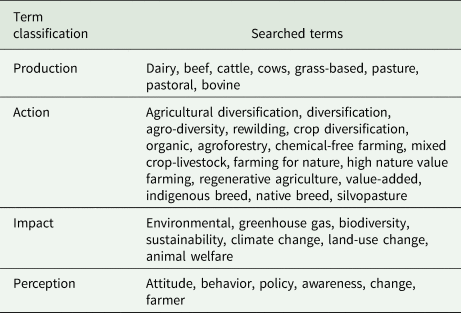
After defining research questions, relevant keywords (Table 1) were identified for searching and identifying potentially applicable studies on pro-environmental diversification of pasture-based dairy and beef production.
Terms used in database search and correspondent classifications
Search strategy
A systematic search of published papers was conducted in Scopus and Web of Science. Search terms and keywords defining the type of production, diversification action, impact and attitudes were used (Table 1). The search was limited to peer-reviewed journal papers published in English between 1 January 2000 and 25 September 2020. Literature scans employed Boolean positional operators (‘AND’, ‘OR’, ‘AND NOT’) to appropriately refine literature identification, with supplementary searches of article bibliographies employed to ensure saturation. Research papers reporting on the impacts of pro-environmental diversification on product quality, animal welfare, biodiversity, livestock performance, the environment and farmer attitudes toward diversification were included for review. Due to the relatively high volume of papers on attitudes toward policy instruments such as agri-environmental schemes (AES) and the absence of a direct link to pro-environmental action as such, this issue was excluded from this review.
Inclusion/exclusion criteria and quality assessment
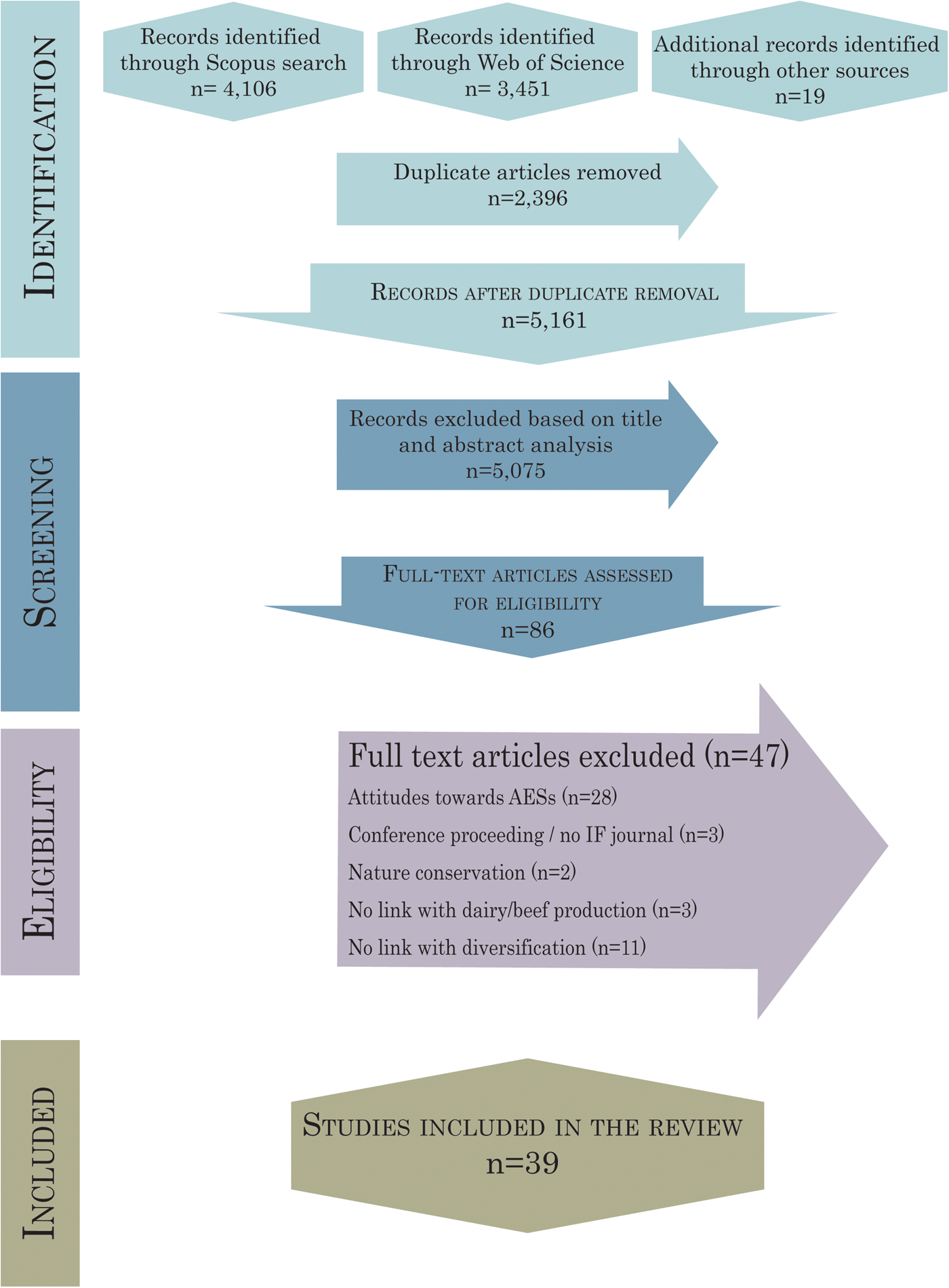
The overarching literature identification and selection process are presented in Figure 1. As shown, 7557 potentially relevant articles were identified via Scopus and Web of Science, with an additional 19 records identified based on reference (snowball) analysis. Both sets of 4106 (Scopus) and 3451 (Web of Science) articles were consolidated using EndNote X9.2 (The EndNote Team, 2013, Clarivate, Philadelphia, PA, USA). After duplicates removal, 5161 records were identified. The first screening phase was undertaken using EndNote software via an article title, year and abstract assessment and based upon developed eligibility criteria (Table 2). Reviews, book chapters and conference proceedings were excluded at this stage, resulting in 86 articles continuing forward for further assessment. All 86 articles were independently assessed by two researchers based on full-text analysis, again using developed eligibility criteria (Table 2). Only peer-reviewed papers published in journals with a current impact factor were included to ensure study quality.
Systematic review protocol employed during the current study including results of literature identification, screening, eligibility assessment and final study inclusion.
Eligibility (inclusion/exclusion) criteria employed for literature screening

Articles excluded during the review phase were those that:
i) reviewed results of previously published studies,
ii) identified attitudes toward policy instruments (e.g., AES) rather than diversification itself,
iii) provided a vague or unclear description of study participants, i.e., no specific reference to dairy and beef farmers,
iv) investigated management practices such as manipulation of diet to control or reduce specific pollutants.
Qualitative data analysis
Data extraction, coding and thematic analyses were performed using NVivo 12 (QSR International Pty Ltd, 2018). NVivo is a qualitative data analysis software frequently used within scientific literature for qualitative and mixed-methods data analysis (Amrutha and Geetha, Reference Amrutha and Geetha2020).
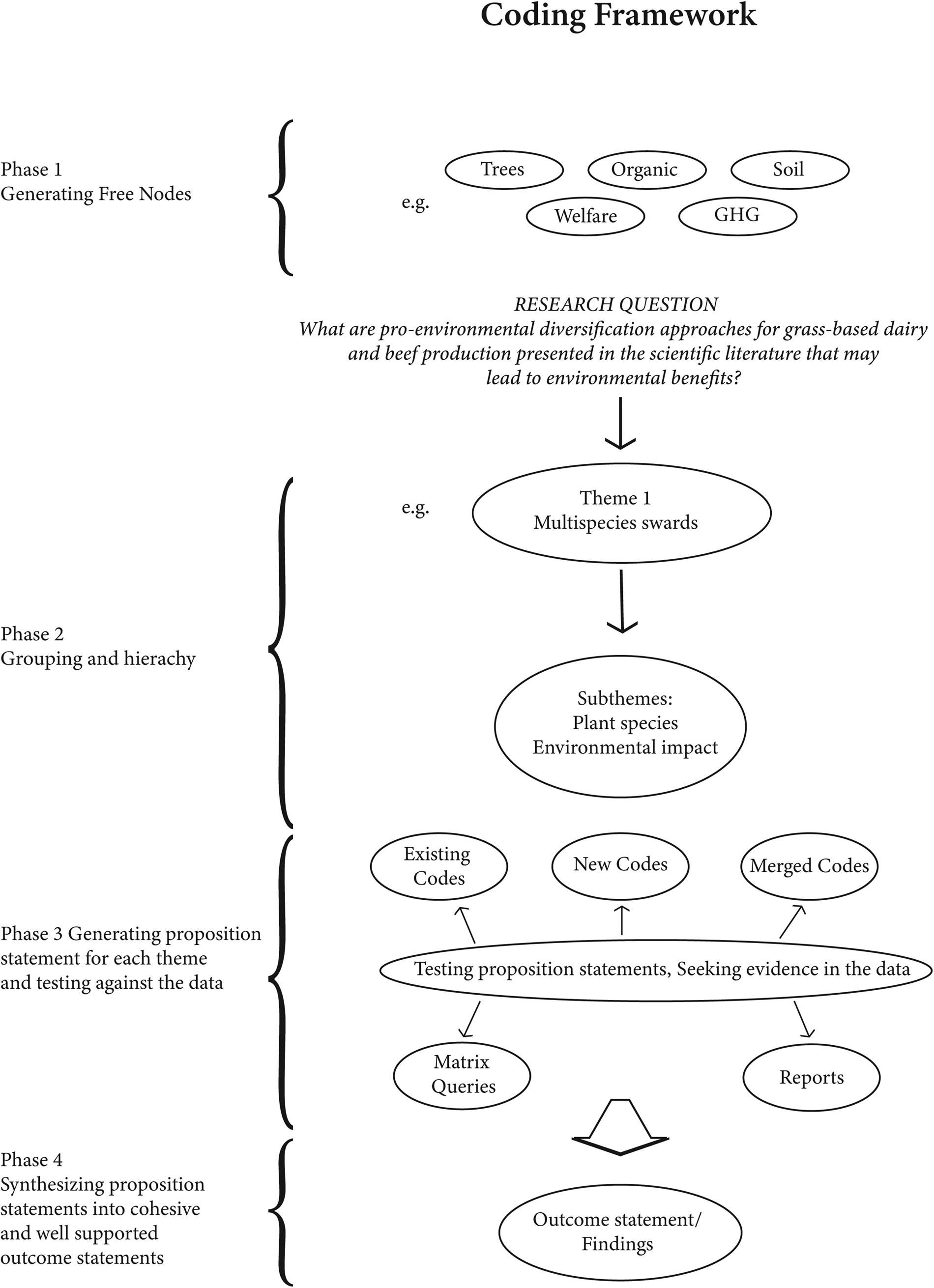
After full-text analysis of 86 papers, 39 papers (referred to as cases in NVivo) were identified as eligible for the current review based on the inclusion criteria conditions. In NVivo, the case stores all relevant qualitative data. All cases were given the attributes such as author, year, country, category (diversification/attitude) and were classified accordingly. Thematic analysis was conducted following criteria defined by Braun and Clarke (Reference Braun and Clarke2014) and prioritized establishing meanings and themes across data sets and cases, making it optimal for qualitative analysis (Mooney et al., Reference Mooney, O'Dwyer and Hynds2020). As part of thematic analysis, manual interpretive coding was employed, with the developed coding framework presented in Figure 2. Initially, in order to become familiar with the data, each paper was read and assigned into two main categories: ‘pro-environmental diversification’ or ‘attitudes towards diversification’, followed by extraction and analysis which consisted of creating free codes designed to identify the major categories of the analysis. Subsequently, similar codes were clustered, and themes were generated. In the following phase, thematic mapping and refinement, definition and labeling of themes were conducted. A thematic map of the coding hierarchy is presented in Figure 3. In order to establish coding intersections between two codes or codes and attributes, matrix coding was employed. Hierarchy charts such as tree maps were used to see patterns in coding or the attribute values of cases. Column charts and heat maps were also employed to examine and analyze the data. Finally, the results of the reviewed studies were synthesized using a qualitative descriptive approach.
Coding framework.
Thematic map of coding hierarchy.

Results
Included studies
Overall, 39 articles were identified, of which 30 focused on pro-environmental options applied on dairy and/or beef farms; eight papers focused on the attitudes of dairy and beef farmers toward pro-environmental diversification and one article covered both aspects.
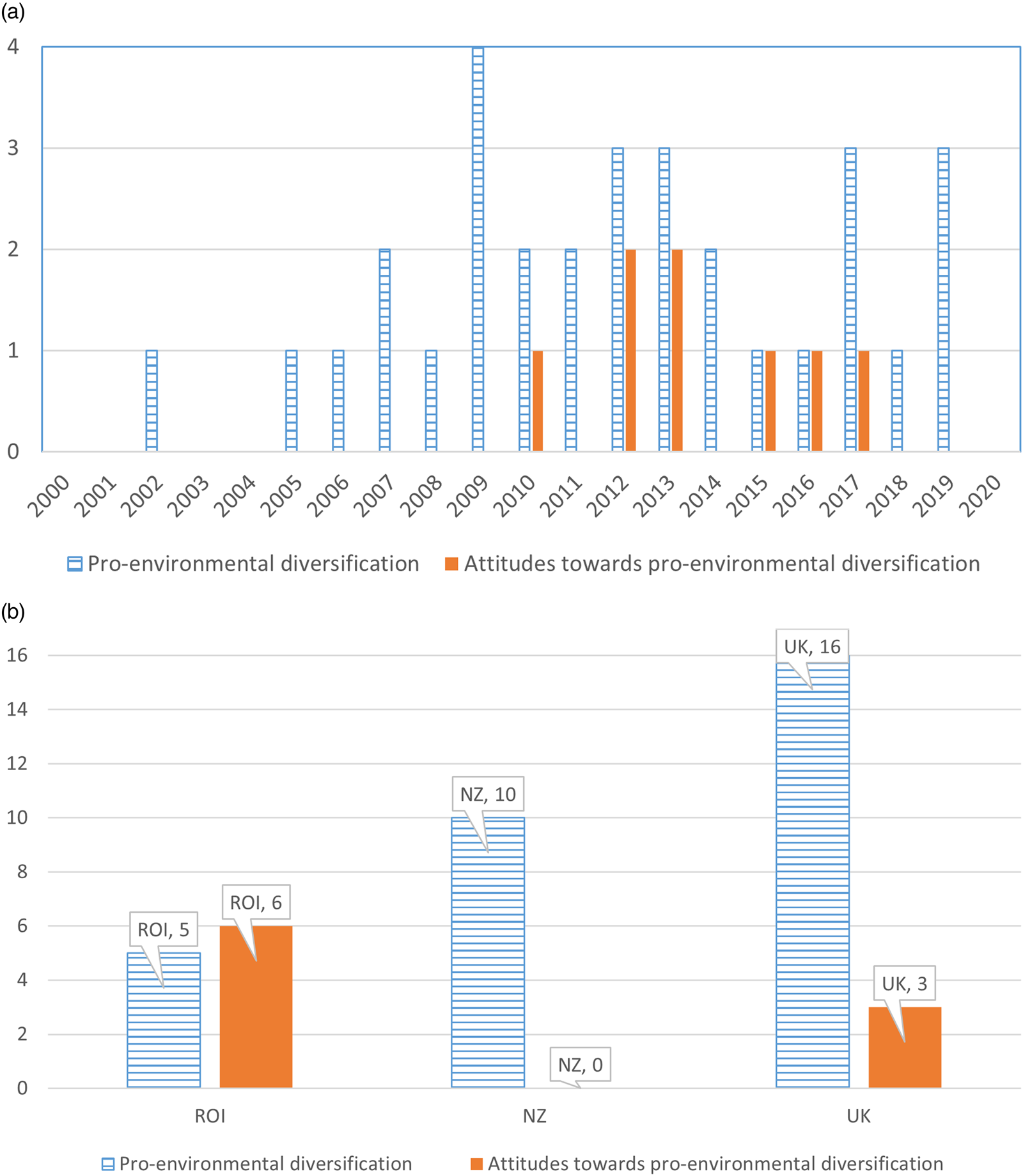
All articles (n = 39) were published between 2000 and 2020, with a maximum (n = 4) number of articles on diversification options published during 2009 and on farmer attitudes during 2012 (n = 2) and 2013 (n = 2) (Fig. 4a). Overall, 49% of identified studies (n = 19) originated from the UK; ten studies originated from ROI and NZ, respectively (25.5% for each country) (Fig. 4b).
Bar chart displaying frequency of article categories by year (A) and by country (B).
Pro-environmental diversification for dairy and beef enterprises and their impact on the environment, biodiversity, animal performance and animal welfare
Studies describing pro-environmental measures available for use on dairy and beef farms were delineated into seven main themes:
1 Environmentally sensitive management practices (ESMPs)—i.e., stubbles, patches of seed-rich crops, low-input grasslands, field margin management, hedges and ditches management, watercourse margin (riparian buffer) management, replacement of species-poor agricultural grassland with other plants
2 Multispecies swards (MSS)
3 Alternative farming systems—i.e., organic farming
4 Grazing of semi-natural rough grasslands (SNRG) and species-rich grasslands
5 Mixed grazing, where two or more herbivorous animals graze the same land
6 Agroforestry
7 Rare/indigenous breeds
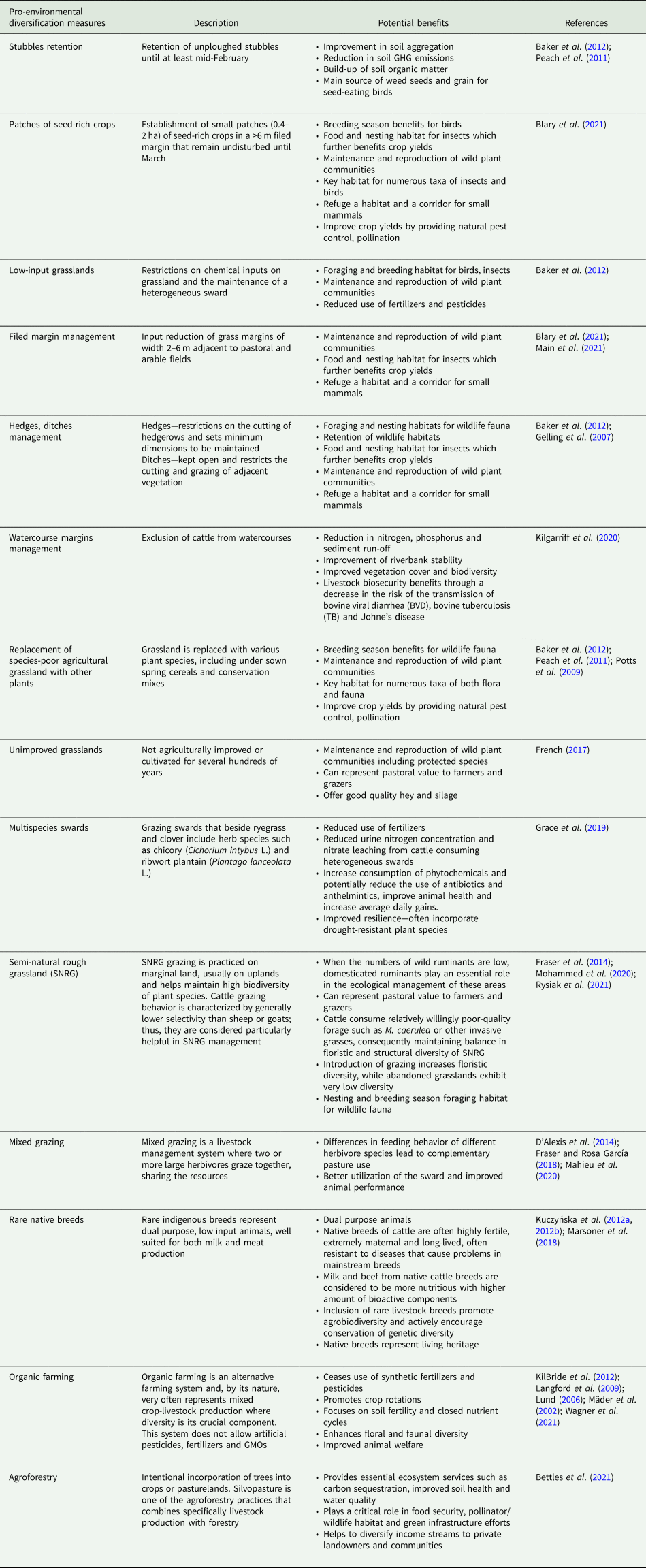
During thematic analysis, 12 distinct pro-environmental management practices potentially benefiting the environment, biodiversity, or animal welfare when implemented on dairy and beef farms were distinguished (Table 3). MSS (n = 8), ESMPs (n = 7) and organic farming (n = 7) were the most frequently studied diversification options (Fig. 5a). Analysis of the impact(s) addressed by each diversification option is presented in Figure 5b and Table 4. Overall, 58% of identified articles in ‘pro-environmental diversification’ category focused on the impact of diversification on biodiversity (n = 18), while 41% (n = 13) concentrated on livestock performance (Fig. 5b). However, no identified study addressed all five impacts (product quality, animal welfare, biodiversity, livestock performance, environment), while only studies on organic farming examined impacts on animal welfare.
Heat maps displaying frequency of diversification measures and attitudes by country (A) and their impact on product quality, animal welfare, biodiversity, livestock performance, environment (B). Colors and numbers correspond to number of papers identified.

Description of pro-environmental diversification measures identified during review process
Impact of different diversification measures on biodiversity and environment
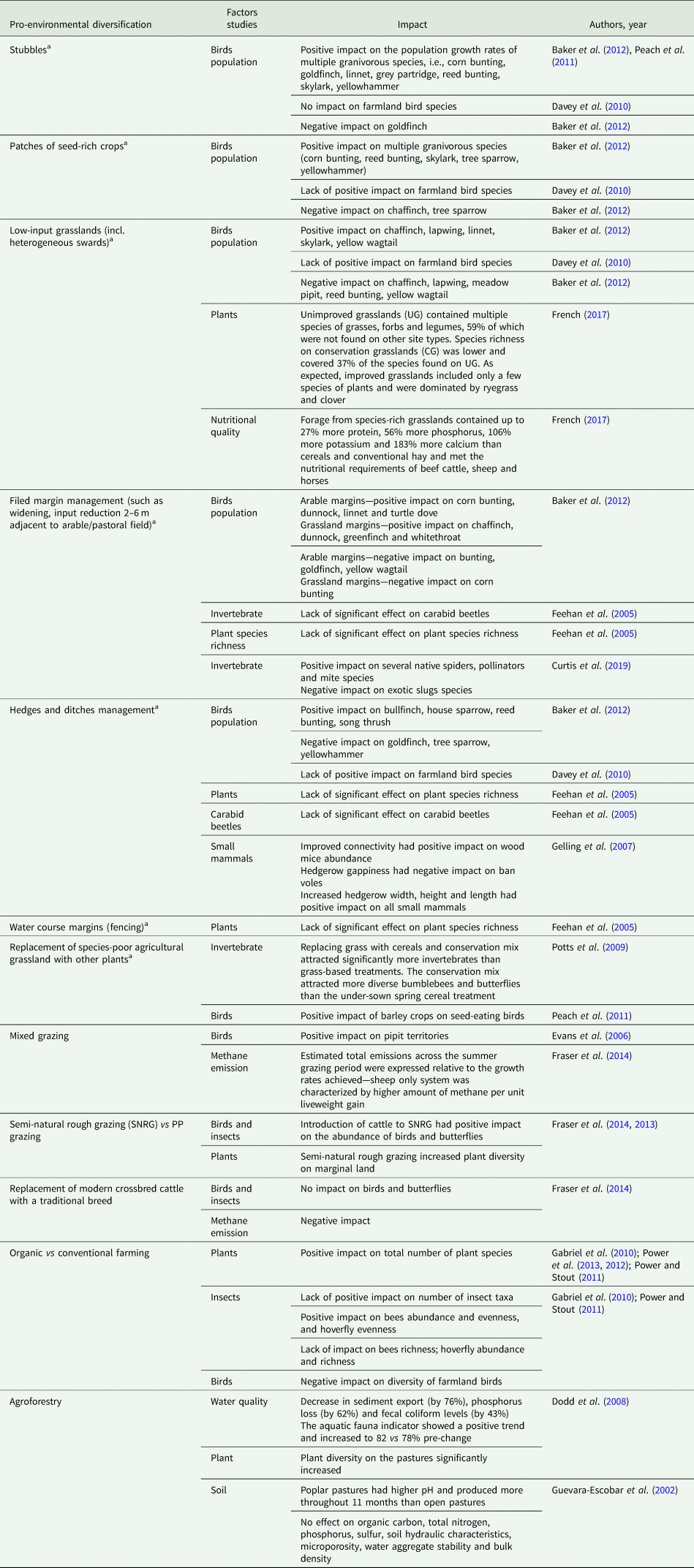
a Actions identified as environmentally sensitive management practices (ESMPs).
Environmentally sensitive management practices
ESMPs are often undertaken by farmers to enhance the biodiversity status of their farms. In Europe, these actions are encouraged by AES, an important part of European agricultural policy (McGurk et al., Reference McGurk, Hynes and Thorne2020).
Seven ESMPs were identified (Fig. 3), with boundary (ditches and hedgerow) management as the most frequently studied ESMP (n = 4). Five articles (Feehan et al., Reference Feehan, Gillmor and Culleton2005; Potts et al., Reference Potts, Woodcock, Roberts, Tscheulin, Pilgrim, Brown and Tallowin2009; Peach et al., Reference Peach, Dodd, Westbury, Mortimer, Lewis, Brook, Harris, Kessock-Philip, Buckingham and Chaney2011; Baker et al., Reference Baker, Freeman, Grice and Siriwardena2012; Curtis et al., Reference Curtis, Bowie and Hodge2019), three from the UK and one each from NZ and ROI, investigated the impact of field margins (n = 3) and replacement of grassland with other plant species (n = 2) on biodiversity. The impacts of individual ESMPs on biodiversity are summarized in Table 4.
Two studies (Baker et al., Reference Baker, Freeman, Grice and Siriwardena2012; Curtis et al., Reference Curtis, Bowie and Hodge2019) report that ESMPs, including stubble, patches of seed-rich crops, low-input heterogeneous grasslands, and field margins and corners, had a positive effect on invertebrate species and multiple granivorous birds by increasing their numbers; however, not all granivorous birds species reacted positively to these changes, with some species found to decline (Table 4). Conversely, both Davey et al. (Reference Davey, Vickey, Boatman, Chamberlain and Parry2010) and Feehan et al. (Reference Feehan, Gillmor and Culleton2005) found no significant pattern across farmland bird species, carabid beetles population and plant species richness in response to ESMPs.
Environmentally sensitive management of hedgerows via increased connectivity, width, height and length had a positive impact on small mammal populations and specific granivore bird species; however, again, not all granivore birds reacted positively with goldfinch, tree sparrow and yellowhammer exhibiting a decline in numbers (Gelling et al., Reference Gelling, Macdonald and Mathews2007; Baker et al., Reference Baker, Freeman, Grice and Siriwardena2012), yet again, Davey et al. (Reference Davey, Vickey, Boatman, Chamberlain and Parry2010) and Feehan et al. (Reference Feehan, Gillmor and Culleton2005) reported no significant impact between boundary management and numbers of farmland birds, carabid beetles and plant species richness.
The effect of replacing species-poor agricultural grassland with other plants on invertebrate and bird populations was studied twice in the UK (Potts et al., Reference Potts, Woodcock, Roberts, Tscheulin, Pilgrim, Brown and Tallowin2009; Peach et al., Reference Peach, Dodd, Westbury, Mortimer, Lewis, Brook, Harris, Kessock-Philip, Buckingham and Chaney2011). The study by Peach et al. (Reference Peach, Dodd, Westbury, Mortimer, Lewis, Brook, Harris, Kessock-Philip, Buckingham and Chaney2011) provided strong evidence that including cereals intended for silage in intensive livestock systems can offer practical conservation measures for seed-eating farmland birds. However, the authors noted that early harvest of cereal crops for silage could be harmful to breeding attempts of late-nesting species.
Potts et al. (Reference Potts, Woodcock, Roberts, Tscheulin, Pilgrim, Brown and Tallowin2009) studied the abundance of bumblebees and butterflies on grasslands on which modified management practices such as no summer disturbance or raised mowing height were applied, and on the fields where grassland was replaced with various plant species including under-sown spring cereal and a diverse conservation mix with kale, mixed cereals, linseed and legumes. Replacement of grass aimed to attract a diversity of invertebrates rather than feed livestock. Indeed the results confirmed that replacing grass with cereals and conservation mix attracted significantly more invertebrates than grass-based treatments. Treatment that combined kale, cereals, linseed and legumes attracted more diverse bumblebees and butterflies than under-sown spring cereal treatment.
Multispecies swards
Seven studies were conducted in NZ and one in the UK, all of which focused on utilizing MSS for dairy production (Table 5). The main studied aspects were associated with the effects of MSS on livestock performance, milk production/composition and nitrogen excretion. Even though MSS, by their nature, increase diversity of plants and potentially encourage more biodiversity on the farm, this factor has not been studied in identified papers which addressed grass-based dairy and beef production in ROI, the UK and NZ.
Overview of the studies reviewed in the paper—multispecies swards
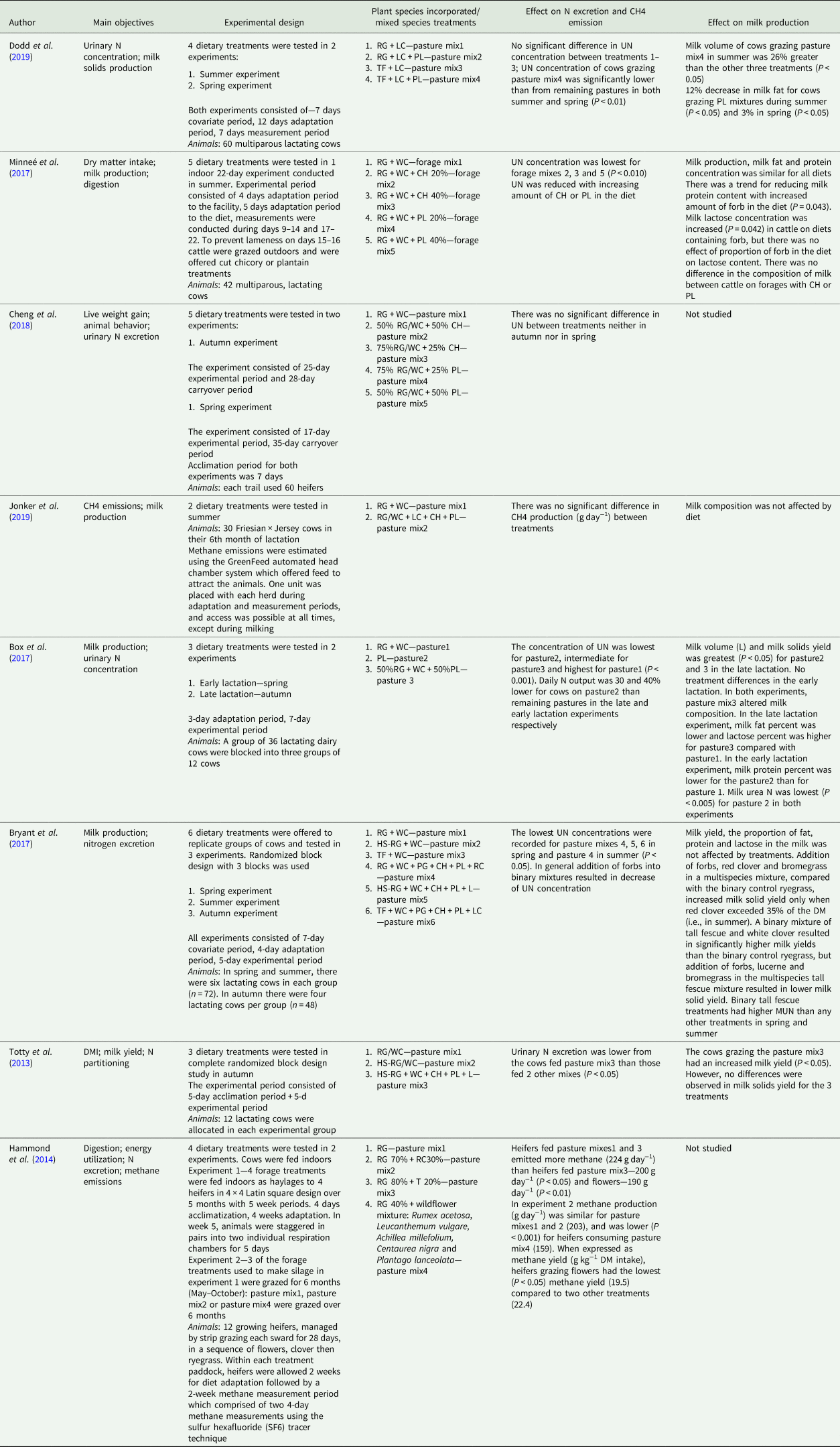
RG, ryegrass; WC, white clover; LC, lucerne; PL, plantain; TF, tall fescue; CH, chicory; HS-RG, high sugar ryegrass; PG, prairie grass; RC, red clover; L, lotus; T, trefoil; UN, urinary nitrogen.
Plant species most frequently added to researched swards included plantain (n = 7) and chicory (n = 5), with one study (Hammond et al., Reference Hammond, Humphries, Westbury, Thompson, Crompton, Kirton, Green and Reynolds2014) examining the effects of a wildflower mixture (Table 5). Decreased nitrogen concentrations in urine from cows fed mixtures containing herbs (also referred to as forbs in scientific publications) was noted in five papers (Totty et al., Reference Totty, Greenwood, Bryant and Edwards2013; Box et al., Reference Box, Edwards and Bryant2017; Bryant et al., Reference Bryant, Miller, Greenwood and Edwards2017; Minneé et al., Reference Minneé, Waghorn, Lee and Clark2017; Dodd et al., Reference Dodd, Dalley, Wims, Elliott and Griffin2019). However, Cheng et al. (Reference Cheng, Al-Marashdeh, McCormick, Guo, Chen, Logan, Tao, Carr and Edwards2018) did not find any effect between the addition of chicory or plantain and urinary nitrogen. Two studies investigated the impact of MSS on methane emissions (Hammond et al., Reference Hammond, Humphries, Westbury, Thompson, Crompton, Kirton, Green and Reynolds2014; Jonker et al., Reference Jonker, Farrell, Scobie, Dynes, Edwards, Hague, McAuliffe, Taylor, Knight and Waghorn2019). Jonker et al. (Reference Jonker, Farrell, Scobie, Dynes, Edwards, Hague, McAuliffe, Taylor, Knight and Waghorn2019) observed that adding lucerne, chicory and plantain to ryegrass/white clover swards had no effect on methane production. Conversely, Hammond et al. (Reference Hammond, Humphries, Westbury, Thompson, Crompton, Kirton, Green and Reynolds2014) noted a significant decrease in daily methane emissions from cattle consuming a ryegrass—wildflower mixture. Three studies (Totty et al., Reference Totty, Greenwood, Bryant and Edwards2013; Box et al., Reference Box, Edwards and Bryant2017; Dodd et al., Reference Dodd, Dalley, Wims, Elliott and Griffin2019) reported that the addition of herbs to pasture increased milk production compared to control treatments, while Jonker et al. (Reference Jonker, Farrell, Scobie, Dynes, Edwards, Hague, McAuliffe, Taylor, Knight and Waghorn2019) and Minneé et al. (Reference Minneé, Waghorn, Lee and Clark2017) did not find any change in yield following addition of forbs.
Organic farming
Seven studies of organic farming on dairy farms were identified—four from the UK and three from ROI. Three studies explored the impact of organic agriculture on animal welfare, with four focusing on biodiversity. Results indicate that animal welfare indicators were generally higher on organic farms as compared to conventional operations where lactating animals had to have access to grazing over the summer (Table 6). Certified organic farms were also characterized by a lower culling rate due to health problems and experienced fewer pre-identified health-related issues than cows on farms that were not certified organic (Langford et al., Reference Langford, Rutherford, Jack, Sherwood, Lawrence and Haskell2009; Rutherford et al., Reference Rutherford, Langford, Jack, Sherwood, Lawrence and Haskell2009). Moreover, Kilbride et al. (Reference Kilbride, Mason, Honeyman, Pritchard, Hepple and Green2012) reported that participation in organic certification schemes significantly reduced the risk of non-compliance with animal welfare regulations (Langford et al., Reference Langford, Rutherford, Jack, Sherwood, Lawrence and Haskell2009; Kilbride et al., Reference Kilbride, Mason, Honeyman, Pritchard, Hepple and Green2012).
Animal welfare indicators for organic and conventional farms

a Livestock unit per hectare.
All studies examining the impact of organic farming on biodiversity (n = 4) reported significantly higher plant diversity than that found on pasture-based conventional (not organic) farms, with positive impacts on insect abundance and evenness also described (Gabriel et al., Reference Gabriel, Sait, Hodgson, Schmutz, Kunin and Benton2010; Power and Stout, Reference Power and Stout2011; Power et al., Reference Power, Kelly and Stout2012; Reference Power, Kelly and Stout2013). Gabriel et al. (Reference Gabriel, Sait, Hodgson, Schmutz, Kunin and Benton2010) identified 10 × 10 km landscapes containing high or low number of organic farms, i.e., organic hot-spots, which were characterized by >15% of available land used for organic farming and organic cold-spots characterized by <5% of available land used for organic farming. The authors explored the impacts of land use at multiple spatial scales (field-level to regional) on biodiversity, with biodiversity surveys indicating a higher abundance of plants, arthropods and butterflies in both organic fields and organic hot-spots than in conventional plots or organic cold-spots.
Mixed and semi-natural rough grasslands grazing
Mixed grazing is a livestock management system where two or more large herbivores graze together, sharing the resources (Fraser and Rosa García, Reference Fraser and Rosa García2018; Mahieu et al., Reference Mahieu, Arquet, Fleury, Bonneau and Mandonnet2020). This practice offers potential benefits for animal productivity and performance, species diversity within animal production systems and wildlife (D'Alexis et al., Reference D'Alexis, Periacarpin, Jackson and Boval2014; Mahieu et al., Reference Mahieu, Arquet, Fleury, Bonneau and Mandonnet2020). Differences in feeding behavior of different herbivore species lead to complementary pasture use and have been associated with better utilization of the sward and improved animal performance (D'Alexis et al., Reference D'Alexis, Periacarpin, Jackson and Boval2014).
SNRG grazing can be practiced on marginal land, usually uplands. The productivity of SNRGs is generally lower than those of permanent improved pastures. However, currently, in Europe, these ecosystems are one of the most important providers of multiple services such as provisioning services (e.g., wild foods, crops), regulating services (e.g., carbon storage, pollination) and cultural services (e.g., recreation, aesthetic values) (Nowak-Olejnik et al., Reference Nowak-Olejnik, Mocior, Hibner and Tokarczyk2020). When the numbers of wild ruminants are low, domesticated ruminants play an essential role in the ecological management of these areas. Cattle grazing behavior is characterized by generally lower selectivity than sheep or goats; thus, they are considered particularly helpful in SNRG management (Fraser et al., Reference Fraser, Moorby, Vale and Evans2014; Mohammed et al., Reference Mohammed, Animut, Urge and Assefa2020). Furthermore, cattle consume relatively willingly poor-quality forage such as Molinia caerulea or other invasive grasses, consequently maintaining balance in floristic and structural diversity of SNRG (Fraser et al., Reference Fraser, Moorby, Vale and Evans2014).
Seven studies were identified on mixed grazing (n = 4) and SNRG (n = 5), with two papers researching the implementation of both practices. Out of seven studies, only two explored the combined impact of SNRG and mixed-grazing on animal performance, and just one investigated the effect of SNRG on meat quality. All studies originated from the UK. The results on mixed grazing referred to the British upland grazing systems.
Study outcomes indicated that incorporating suckler cows and calves into sheep-only systems improved total production per unit area of permanent pasture and improved lamb performance without compromising cattle performance (Fraser et al., Reference Fraser, Davies, Vale, Hirst and Wright2007, Reference Fraser, Vale and Dhanoa2013, Reference Fraser, Moorby, Vale and Evans2014). Highest collective lamb and calf live weight gains were recorded where sheep and Limousin-crossbred cattle grazed permanent pastures at a ratio of 6:1, with cattle subsequently removed to semi-natural vegetation for ten weeks. Live weight gain for mixed grazing of cattle and sheep was 216 vs 142 kg ha−1 for sheep only grazing (Fraser et al., Reference Fraser, Moorby, Vale and Evans2014). While suckling calf growth rates were lower on SNRG than improved pasture, their growth rate was still reported as being commercially viable—calf final weight was 207 kg for Limousin calves raised on permanent pasture only and 201 kg for Limousin calves removed to SNRG for 10 weeks (Fraser et al., Reference Fraser, Vale and Dhanoa2013).
Studies also suggested that increased weight gains of animals in the combined SNRG and mixed-grazing systems were associated with decreased methane emissions, estimated based on gross energy intake (Fraser et al., Reference Fraser, Moorby, Vale and Evans2014). Richmond et al. (Reference Richmond, Wylie, Laidlaw and Lively2014) compared methane emissions from beef cattle grazing on SNRG uplands and improved lowland pastures. Lower mean daily methane emissions were associated with cattle grazing on SNRG; however, these animals reached finishing weight later; thus, their overall lifetime emissions were higher than those on improved lowland pastures. In terms of beef quality, it was shown that carcasses of SNRG-grazed animals were of inferior quality compared to those from animals fed on permanent pasture; SNRG-grazed beef was characterized by higher vitamin E content compared to beef obtained from permanent pasture (Fraser et al., Reference Fraser, Davies, Vale, Nute, Hallett, Richardson and Wright2009).
Agroforestry
Two studies from NZ examined inclusion of trees on cattle farms. It was reported that land-use change and integration of trees onto farmland resulted in several economic and environmental benefits, including improved water quality characterized by a significant decrease in sediment export (−76%), phosphorus loss (−62%) and fecal coliform levels (−43%). Additionally, plant diversity within pastures significantly increased (+25%) (Dodd et al., Reference Dodd, Quinn, Thorrold, Parminter and Wedderburn2008). Further results indicate that the inclusion of trees in pastures increased their productivity, accelerated soil formation and decreased erosion (Guevara-Escobar et al., Reference Guevara-Escobar, Mackay, Hodgson and Kemp2002).
Rare breeds
The utilization of rare breeds was explored in three studies from the UK. Results from two studies demonstrated that a rare breed—Belted Galloway (BG) calves exhibited lower live weight gains in the mixed cattle/sheep system with cattle grazing SNRG over 3 months summer period than Limousin calves (0.85 vs 1.17 kg day−1). However, in this type of system, BG cows were characterized by higher performance, with live weight change +0.3 vs −0.225 kg day−1 for Limousin cows (Fraser et al., Reference Fraser, Vale and Dhanoa2013, Reference Fraser, Moorby, Vale and Evans2014). In the case of 9-month-old Walsh Black (WB) and Charolais bulls, it was reported that both genotype and pasture had a significant effect on measured growth rates, which were the highest for WB on permanent pasture. In the case of 14- and 20-month-old bulls, only pasture type significantly affected live weight gains with higher growth rates encountered on permanent pasture. No between-breed differences were observed when cattle grazed grassland dominated by invasive hill grass species such as M. caerulea (Fraser et al., Reference Fraser, Davies, Vale, Nute, Hallett, Richardson and Wright2009). The results did not confirm that native cattle breed attracted more wild fauna (e.g., birdlife) than conventional cattle at similar stocking densities (Fraser et al., Reference Fraser, Moorby, Vale and Evans2014).
Attitudes toward diversification
Nine papers reporting on attitudes toward diversification options were identified and primarily focused on afforestation, energy crops and comparison of attitudes between organic and non-organic farmers toward the environment, profit and on-farm biodiversity (Table 7).
Overview of the studies reviewed in the paper—attitudes toward different diversification options

Attitudes toward afforestation and energy crops
Six studies pertaining to farmer attitudes toward afforestation (n = 4) and energy crops (n = 3) were identified, with one paper researching both aspects. Two papers from ROI concentrated on afforestation, one focused on energy crops, while UK studies focused on forestry (n = 1), forestry and energy crops (n = 1), and two papers focused solely on energy crops (Table 7).
Results indicated that farm size (too small) and land quality (too good) are the main barriers to switching from ‘traditional’ agricultural systems to forestry (Duesberg et al., Reference Duesberg, Upton, O'Connor and Dhubháin2014; Howley et al., Reference Howley, Buckley, O'Donoghue, Ryan, O Donoghue and Ryan2015). Furthermore, farmers did not find forestry as ‘satisfying’ as livestock farming (Convery et al., Reference Convery, Robson, Ottitsch and Long2012; Duesberg et al., Reference Duesberg, O'Connor and Dhubháin2013; Howley et al., Reference Howley, Buckley, O'Donoghue, Ryan, O Donoghue and Ryan2015), with substantial payments within forestry schemes not seen as being appropriately compensatory for the loss in non-pecuniary benefits associated with more traditional agriculture (Convery et al., Reference Convery, Robson, Ottitsch and Long2012; Howley et al., Reference Howley, Buckley, O'Donoghue, Ryan, O Donoghue and Ryan2015). The relatively quick land use cycling associated with agricultural land compared to that under forestry and farming lifestyle were identified as two main benefits of traditional farming (Duesberg et al., Reference Duesberg, O'Connor and Dhubháin2013; Howley et al., Reference Howley, Buckley, O'Donoghue, Ryan, O Donoghue and Ryan2015). Moreover, Irish farmer resentment toward forestry was shown to be associated with historical reasons such as previous oppression by English landlords, tenant farming and the Great Famine. These rationales may explain Irish farmers’ relationship with ‘good agricultural land’, which they believe should be used for food production rather than forestry (Duesberg et al., Reference Duesberg, O'Connor and Dhubháin2013).
Farmers were reported as being more willing to increase renewable energy production than plant forestry (Sutherland et al., Reference Sutherland, Toma, Barnes, Matthews and Hopkins2016). In the UK, engagement in renewable energy was more likely on profit-oriented farms, while afforestation was rarely seen as an economic diversification strategy (Sutherland et al., Reference Sutherland, Toma, Barnes, Matthews and Hopkins2016; Hopkins et al., Reference Hopkins, Sutherland, Ehlers, Matthews, Barnes and Toma2017). In Ireland, the primary reason to switch to energy crops was associated with farmers demonstrating a lack of confidence in their enterprise (Augustenborg et al., Reference Augustenborg, Finnan, McBennett, Connolly, Priegnitz and Müller2012). Identified studies also showed that Scottish farmers already engaged in afforestation and energy crop production did not plan to abandon these activities and were more likely to consider further expansion (Sutherland et al., Reference Sutherland, Toma, Barnes, Matthews and Hopkins2016; Hopkins et al., Reference Hopkins, Sutherland, Ehlers, Matthews, Barnes and Toma2017). Moreover, it was concluded that young, organic farmers who are well educated, receive subsidies, have off-farm income and started farming relatively recently demonstrated more enthusiasm for agri-environmental diversification and showed more interest in AES participation, woodland expansion and renewable energy production than other farming cohorts (Sutherland et al., Reference Sutherland, Toma, Barnes, Matthews and Hopkins2016; Hopkins et al., Reference Hopkins, Sutherland, Ehlers, Matthews, Barnes and Toma2017).
Attitudes toward organic farming
Three papers from Ireland evaluated organic and non-organic (conventional) beef farmer characteristics, their attitudes toward the environment and factors influencing leaving the organic farming scheme. A comparison of farm and household characteristics revealed that conventional farms are typically larger and are characterized by higher stocking densities than organic and ex-organic farms. Organic farmers were more likely to have an off-farm income, were typically younger, better educated and more likely female (Läpple, Reference Läpple2010, Reference Läpple2013).
It was shown that having achievements such as ‘best livestock and pastures’ was more important among conventional than organic farmers; however, production-oriented behaviors and attitudes—‘a farmer conscientious running of the farm towards business success’ were comparable across both groups (Power et al., Reference Power, Kelly and Stout2013). Furthermore, the approach to the environment, biodiversity and nature was similar for organic and conventional farmers. However, organic farmers were more likely to introduce environmentally oriented behaviors such as habitat management and were more ‘environmentally informed’ (Läpple, Reference Läpple2013; Power et al., Reference Power, Kelly and Stout2013). Organic and ex-organic farmers were less risk-averse than conventional farmers and more eager to learn new techniques and acquire new knowledge (Läpple, Reference Läpple2013). Additionally, farmers with significant environmental concerns were less likely to leave organic schemes than those who joined the scheme mainly for economic reasons. Conversely, farmers with off-farm incomes were more likely to leave organic farming, while those with higher stocking densities were more likely to remain. The lack of organic market outlets was highly correlated with the decision to leave these schemes (Läpple, Reference Läpple2010).
Discussion
According to the Intergovernmental Science Policy Platform on Biodiversity and Ecosystem Services, 1 million plant and animal species are currently threatened with extinction (Jaspers, Reference Jaspers2020). Moreover, GHG emissions are still increasing globally, with the projection that the carbon budget set to meet the Paris Agreement target of 2°C will be exhausted before 2050 (Baiardi and Morana, Reference Baiardi and Morana2021). Consumer awareness of climate and biodiversity crisis continues to increase, leading to change in dietary habits and many questioning the sustainability of Western diets (Clonan et al., Reference Clonan, Wilson, Swift, Leibovici and Holdsworth2015). In high-income societies, it is well-recognized that climate change and biodiversity loss are twin disasters and need to be addressed urgently (Baiardi and Morana, Reference Baiardi and Morana2021).
Agroecosystem diversification is considered an important tool in combatting the negative impact of agriculture on biodiversity and climate change (Kronberg and Ryschawy, Reference Kronberg, Ryschawy, Lemaire, De Faccio Carvalho, Kronberg and Recous2019). The present review identified several overarching (i.e., thematic) pro-environmental diversification measures for cattle production, frequently linked to the diversity of land and landscape use and, consequently, financial performance.
Environmentally sensitive management practices, mixed grazing and SNRGs
ESMPs comprise a suite of relatively simple actions often undertaken by farmers to enhance the environmental credential status of their farms. Identified studies branded seven practices—stubble retention, patches of seed-rich crops, low-input grasslands, field margins, boundary management, watercourse margins and replacement of species-poor grasslands with other plants—as ESMPs. Based on qualitative analysis, it may be concluded that ESMPs positively impact biodiversity, particularly granivorous birds, albeit not in all contexts or situations. Presently, most grass-based dairy and beef farms are characterized by a lack of arable crops. Consequently, the absence of spring-sown cereals and winter stubbles results in a deficiency of nesting habitats and winter supply of seeds and grains (Peach et al., Reference Peach, Dodd, Westbury, Mortimer, Lewis, Brook, Harris, Kessock-Philip, Buckingham and Chaney2011). Thus, inclusion of conservation mixes (e.g., seed-rich plants and/or crops) into an agricultural landscape predominated by grasslands enable provision of winter food for granivorous birds and would seem to be an effective method for attracting more bird species in decline onto farmlands (Peach et al., Reference Peach, Dodd, Westbury, Mortimer, Lewis, Brook, Harris, Kessock-Philip, Buckingham and Chaney2011; Baker et al., Reference Baker, Freeman, Grice and Siriwardena2012).
Nonetheless, several barriers limiting the success and uptake of ESMPs have been identified. Implementation of meaningful biodiversity mitigation strategies depends on the scale at which these measures are applied (Baker et al., Reference Baker, Freeman, Grice and Siriwardena2012). Despite frequently positive responses of birds to ESMPs, overall populations of examined species continue to decline, with a significant increase in the uptake of selected ESMPs thus required to assist in reversing this trend (Baker et al., Reference Baker, Freeman, Grice and Siriwardena2012). Furthermore, changing land use for grassland to arable, even though beneficial for granivorous birds, is often linked with the increased release of carbon dioxide from the soil, reducing its organic matter levels caused by tillage. Reducing or eliminating primary tillage operations, known as no-tillage, can improve soil aggregation and reduce GHG emissions (Hati et al., Reference Hati, Jha, Dalal, Jayaraman, Dang, Kopittke, Kirchhof and Menzies2021). Nevertheless, recent studies on implementing this practice on farms not certified organic in north-western Europe present conflicting results on its environmental benefits; thus, more research is needed to understand better the trade-offs of no-tillage practice (Skaalsveen et al., Reference Skaalsveen, Ingram and Clarke2019).
Moreover, since many research funders and programs provide funding for a maximum of 4–5 years, the time required to observe biodiversity changes represents another (inherent) limitation. Several authors have stated that study periods are typically too brief to observe the long-term impacts of proposed diversification and amended management practices (Davey et al., Reference Davey, Vickey, Boatman, Chamberlain and Parry2010; Baker et al., Reference Baker, Freeman, Grice and Siriwardena2012). For example, a 9-year study by Baker et al. (Reference Baker, Freeman, Grice and Siriwardena2012) reports that ESMPs positively affect granivorous bird species (Table 4). However, an earlier study surveying bird population changes over a considerably shorter time period (3 years) found no significant trend across farmland bird species in response to ESMPs (Davey et al., Reference Davey, Vickey, Boatman, Chamberlain and Parry2010). Replacement of grassland with conservation mixes seemed to have a relatively rapid positive impact on invertebrate populations; however, these authors also noted year-on-year variability, with highest positive impacts found during year 2 of the 4-year study (Potts et al., Reference Potts, Woodcock, Roberts, Tscheulin, Pilgrim, Brown and Tallowin2009). Furthermore, a paucity of baseline biodiversity data that would help long-term monitoring and improve pro-environmental actions also presents a significant knowledge gap for researching the impact of ESMP (Feehan et al., Reference Feehan, Gillmor and Culleton2005; Davey et al., Reference Davey, Vickey, Boatman, Chamberlain and Parry2010; Berg et al., Reference Berg, Cronvall, Eriksson, Glimskär, Hiron, Knape, Pärt, Wissman, Żmihorski and Öckinger2019).
According to several studies identified in the current review, SNRG and mixed grazing would seem to offer ‘win-win’ solutions for biodiversity conservation, enhancing animal productivity and reducing GHG emissions (Fraser et al., Reference Fraser, Davies, Vale, Hirst and Wright2007, Reference Fraser, Vale and Dhanoa2013, Reference Fraser, Moorby, Vale and Evans2014; Richmond et al., Reference Richmond, Wylie, Laidlaw and Lively2014). However, the implications of these systems have only been studied by two research teams, both from the UK and both limited to mixed grazing of cattle and sheep. Sequential grazing systems, including sequential grazing of ruminants and monogastric, have not been studied to date, albeit a growing interest among extensive, small-scale pasture-based dairy and beef farmers to integrate poultry into crop, expressed mostly through social media farming groups and other internet channels, is recognized. Hilimire et al. (Reference Hilimire, Gliessman and Muramoto2013) have demonstrated that poultry integration to crop agroecosystems increases soil fertility and crop growth. Furthermore, poultry included into pasture systems consumes weeds and insects, potentially improving the management of crop pests and controlling fly/parasite problems (Bare and Ziegler-Ulsh, Reference Bare and Ziegler-Ulsh2012). However, peer-reviewed scientific evidence testing this hypothesis was not identified as part of the current review.
Multispecies swards
MSS offer relatively low input-high impact potential to diversify plant species within pastures, attract more fauna, decrease chemical usage, including fertilizers and reduce nitrogen excretion from cattle. Potentially, MSS can also improve animal health, beef and milk quality and methane emissions (Richmond et al., Reference Richmond, Wylie, Laidlaw and Lively2014; Dodd et al., Reference Dodd, Dalley, Wims, Elliott and Griffin2019; Grace et al., Reference Grace, Lynch, Sheridan, Lott, Fritch and Boland2019). Most of the identified research on MSS (87.5%) originated from NZ; however, the topic is now also increasingly studied in the ROI and the UK. Examples of ongoing projects that explore the utilization of MSS for cattle, among others, include SMART SWARD and HEARTLAND projects from Ireland and The Diverse Forages Project from the UK (Cummins et al., Reference Cummins, Finn, Richards, Lanigan, Grange, Brophy, Cardenas, Misselbrook, Reynolds and Krol2021; McCarthy et al., Reference McCarthy, Lynch, Pierce, McDonald, Fahey, Gath and Mulligan2021a, Reference McCarthy, Walsh, van Wylick, McDonald, Lynch, Pierce, Fahey, Boland, Sheridan and Mulligan2021b).
Studies on MSS included in this review primarily focused on animal performance, basic milk composition and GHG emissions. Conversely, product quality in terms of bio-active components, impact on biodiversity and animal health and welfare were not addressed. Furthermore, studies were limited to dairy cows and did not include beef cattle; however, to the best of authors' knowledge, a UK-Irish study has been initiated in this area. More information on the impact of MSS on biodiversity, animal welfare, chemical fertilizer and herbicide use, and plant nutritive value over time, through long-term grazing studies, is required to improve current knowledge on their applications and limitations (McCarthy et al., Reference McCarthy, McAloon, Lynch, Pierce and Mulligan2020).
Organic farming and native breeds
The EU Commission's Farm to Fork and Biodiversity Strategies aim for 25% of agricultural land to be under organic farming by 2030 (European Commission, 2020). NZ has also committed to achieving carbon neutrality by 2050 and is introducing changes within the agricultural sector to attain this long-term goal (Yang et al., Reference Yang, Rennie, Ledgard, Mercer and Lucci2020). According to the Research Institute of Organic Agriculture and the International Federation of Organic Agriculture Movements, 1.5% of global farmland is currently organic, with Oceania and the European Union representing the highest spatial shares of organic agriculture—9.6 and 8.1%, respectively. The UK, ROI and NZ organic shares of entire agricultural land are relatively low by EU standards at 2.6, 1.6 and 0.8%, respectively (FiBL & IFOAM—Organics International, 2021).
Results from the current review would seem to confirm that organic systems on grass-based dairy farms have a positive impact on biodiversity and animal welfare compared to conventional, non-organic systems (Langford et al., Reference Langford, Rutherford, Jack, Sherwood, Lawrence and Haskell2009; Rutherford et al., Reference Rutherford, Langford, Jack, Sherwood, Lawrence and Haskell2009; Gabriel et al., Reference Gabriel, Sait, Hodgson, Schmutz, Kunin and Benton2010; Power and Stout, Reference Power and Stout2011; Power et al., Reference Power, Kelly and Stout2012). However, research on this topic is limited, with just seven studies identified over the 20-year review period. Research on the impact of alternative grass-fed milk and beef production systems, including organic agriculture, on product quality, animal productivity and performance, GHG emissions and soil or water quality were not identified. According to Niggli et al. (Reference Niggli, Andres, Willer and Baker2017), current research funding dedicated to organic agriculture represents less than 1% of private and public R&D budgets. Consequently, innovation in the organic sector is mainly driven by farmers without significant input from researchers or farm advisors. Prior to a full appraisal of its potential role in producing sustainable, biodiversity and climate-friendly grass-based milk and beef is possible, more research on the impact of organic systems on the environment, biodiversity, animal welfare and product quality is required.
In contrast to intensive dairy and beef production, which is based on a limited number of high-output cattle breeds, organic farming is often associated with native, low-input breeds well adapted to the local environment. Moreover, according to The Second Report on the State of the World's Animal Genetic Resources, ‘Livestock diversity facilitates the adaptation of production systems to future challenges and is a source of resilience in the face of greater climatic variability […] coping with climate change, new disease challenges, and restrictions on the availability of natural resources’ (FAO, 2015). The report goes on to state that changing market demands will require a diverse range of animal genetic resources.
Notwithstanding the recommendations of FAO Genetic Resources Commission, just three studies, all of which were undertaken in the UK, sought to measure the impact of native breeds (BG and WB) on animal productivity and biodiversity; beef quality and GHG emissions were studied only once (Fraser et al., Reference Fraser, Davies, Vale, Nute, Hallett, Richardson and Wright2009, Reference Fraser, Vale and Dhanoa2013, Reference Fraser, Moorby, Vale and Evans2014). The product quality from native Irish breeds such as Kerry, Dexter and Irish Moiled cattle and their role in biodiversity conservation remains unknown. Meanwhile, demand for organic produce from ‘old’ native breeds has been linked to positive consumer perception, with respondents believing that these products do not contain chemical residues and contain more nutrients than their non-organic equivalents (Kuczyńska et al., Reference Kuczyńska, Puppel, Gołȩbiewski, Metera, Sakowski and Słoniewski2012b). A recent meta-analysis conducted by Srednicka-Tober et al. (Reference Srednicka-Tober, Barański, Seal, Sanderson, Benbrook, Steinshamn, Gromadzka-Ostrowska, Rembiałkowska, Skwarło-Sońta, Eyre, Cozzi, Krogh Larsen, Jordon, Niggli, Sakowski, Calder, Burdge, Sotiraki, Stefanakis, Yolcu, Stergiadis, Chatzidimitriou, Butler, Stewart and Leifert2016) reports that organic meat is characterized by a higher proportion of n-3 PUFA than non-organic meat. Several studies have also confirmed significant differences in the chemical composition and improved nutritional quality of organic milk and dairy products compared to their non-organic equivalents (Bergamo et al., Reference Bergamo, Fedele, Iannibelli and Marzillo2003; Belletti et al., Reference Belletti, Gatti, Bottari, Neviani, Tabanelli and Gardini2009; Butler et al., Reference Butler, Stergiadis, Seal, Eyre and Leifert2011; Kuczyńska et al., Reference Kuczyńska, Puppel, Golebiewski, Kordyasz, Grodzki and Brzozowski2012a). The higher proportion of n-3 PUFA in milk and meat has been associated with grass-based diets, which are central to organic farming standards. Further studies are required to establish the difference, if any, in the composition of organic meat and milk relative to grass-fed products that are not certified organic, as these issues have not been addressed in the scientific literature to date.
Agroforestry
Agroforestry represents another emerging agricultural system that remains understudied in ROI, the UK and NZ. Intercropping or polyculture offers multiple advantages and is considered an important future solution to restoring on-farm biodiversity (Nerlich et al., Reference Nerlich, Graeff-Hönninger and Claupein2013). However, agroforestry systems are still rare in temperate maritime climates as both mean air temperature and sunlight intensity are considered too low for two- or three-layer plantings.
Just two studies from NZ sought to provide evidence on the effects of tree plantations on pastures. Nevertheless, by using appropriate tree density, this system has been found suitable for ruminant production in the temperate oceanic climate of Ireland and showed advantages such as reducing nutrient leakage, increasing biodiversity and creating spatial heterogeneity in the canopy and soil (McAdam et al., Reference McAdam, Short and Hoppé2006). According to McAdam et al. (Reference McAdam, Short and Hoppé2006), incorporating agroforestry into pasture-based ruminant production improves sustainability and contributes to the growth of rural economies (McAdam et al., Reference McAdam, Short and Hoppé2006). However, the establishment of silvopasture requires several years before cattle can be (re)introduced. Therefore, studies and solutions for different stages of implementation of this system are needed. Furthermore, every farm's environment and micro-climate differ; thus, a one-size-fits-all solution is unlikely. Building and strengthening farmer–researcher networks and collecting data from multiple farms will be critical to future research in agroforestry (Niggli et al., Reference Niggli, Andres, Willer and Baker2017).
Economic implications of pro-environmental diversification
It is anticipated that the inclusion of pro-environmental diversification and reduction of chemical inputs will decrease feed production, lower animal productivity and, consequently, farmer income (Zhou et al., Reference Zhou, Liu, Zeng, Zhang and Chen2020; Brown et al., Reference Brown, Kovács, Herzon, Villamayor-Tomas, Albizua, Galanaki, Grammatikopoulou, McCracken, Olsson and Zinngrebe2021; Kragt et al., Reference Kragt, Burton, Zahl-Thanem and Otte2021); however, these concerns were seldom addressed in identified literature. Two studies conducted a cost analysis of proposed diversification actions, with results indicating that the inclusion of trees on the pastures and replacement of grass silage with cereal silage had either a positive or neutral effect on overall production and farmer income (Dodd et al., Reference Dodd, Quinn, Thorrold, Parminter and Wedderburn2008; Peach et al., Reference Peach, Dodd, Westbury, Mortimer, Lewis, Brook, Harris, Kessock-Philip, Buckingham and Chaney2011). According to Niggli and Riedel (Reference Niggli and Riedel2020), reports on polycultures implemented in different parts of the world indicate that these systems are characterized by 40–145% higher yields than monocropping. Similarly, conservation grazing and utilization of SNRG in summer allow for the production of winter feed in the form of silage or hay from permanent pastures, adding to the profitability of this practice (Fraser et al., Reference Fraser, Vale and Dhanoa2013).
Moreover, most biodiversity-rich land represents wetlands, moorlands, woodlands, hedgerows and areas of low agricultural value. Thus, according to Delaby et al. (Reference Delaby, Finn, Grange and Horan2020), biodiversity protection does not have to affect farm productivity and profitability adversely. Unpublished findings from a series of interviews undertaken by the current authors and conducted with Irish, UK and French farmers who initiated diversification approaches indicate that pro-environmental diversification can offer solutions to generate additional income on the farm. For example, inclusion of wildflower strips and field margins provide valuable feed for bees that can produce honey; tree plantations can generate income from timber, fruits and thinning. More case studies demonstrating the financial benefits of pro-environmental diversification reaching beyond financial incentives are needed to improve current understanding of the economic consequences of these actions for both individual farmers and society.
Farmer's attitudes toward pro-environmental diversification
The intention to balance food production, environmental preservation, consumer satisfaction and adequate income generation for farmers has been highlighted in political and civil society debates (Brunori et al., Reference Brunori, D'Amico, Rossi, Lemaire, De Faccio Carvalho, Kronberg and Recous2019). However, research on farmer attitudes toward available diversification options was limited to biomass production in ROI and UK and organic beef production in ROI. No studies on attitudes among NZ farmers to diversification were identified. Additionally, there was a notable lack of research on conventional dairy farmer attitudes and behavioral barriers toward the organic dairy farming system.
Likewise, while a reasonable body of evidence regarding attitudes toward afforestation and bio-energy crops was identified, no relevant peer-reviewed research in the regions defined by the current study on ESMPs and agroforestry was found. Rois-Díaz et al. (Reference Rois-Díaz, Lovric, Lovric, Ferreiro-Domínguez, Mosquera-Losada, den Herder, Graves, Palma, Paulo, Pisanelli, Smith, Moreno, García, Varga, Pantera, Mirck and Burgess2018) examined motivations among European farmers to undertake agroforestry, with the authors observing that negative attitudes were linked with concerns around reduced farm productivity. Non-organic farmers, in particular, may be less inclined to adopt agroforestry (incentivized or otherwise) due to the perceived trade-off of a reduction in arable land parcels. As agroforestry does not necessarily result in curtailment of productive land and can increase farm-net margins, where implemented appropriately, a lack of knowledge has previously been cited as a primary barrier to pro-environmental diversification in this instance (Isaac et al., Reference Isaac, Erickson, Quashie-Sam and Timmer2007). Evidence suggests that attitudes toward pro-environmental diversification may also be associated with farmer ethos and professional background. For instance, European farmers with an educational and/or professional background in nature conservation have repeatedly been demonstrated to display a more positive disposition toward agroforestry and conservation agriculture (Casagrande et al., Reference Casagrande, Peigné, Payet, Mäder, Sans, Blanco-Moreno, Antichi, Bàrberi, Beeckman, Bigongiali, Cooper, Dierauer, Gascoyne, Grosse, Heß, Kranzler, Luik, Peetsmann, Surböck, Willekens and David2016; Rois-Díaz et al., Reference Rois-Díaz, Lovric, Lovric, Ferreiro-Domínguez, Mosquera-Losada, den Herder, Graves, Palma, Paulo, Pisanelli, Smith, Moreno, García, Varga, Pantera, Mirck and Burgess2018).
Moreover, problems associated with afforestation and agroforestry are also linked to the irreversibility of land-use change from agricultural to forestry. This factor was considered as a barrier for Irish farmers who planned to leave an inheritance of traditional agricultural practices to their children and was ranked as the second most significant barrier to participation in afforestation projects (Connolly and Kinsella, Reference Connolly and Kinsella2006; McDonagh et al., Reference McDonagh, Farrell, Mahon and Ryan2011). Furthermore, the irreversibility of investments in conservation and agroforestry schemes has been globally recognized as a hindrance to the uptake of these schemes (Schatzki, Reference Schatzki2003; Wiemers and Behan, Reference Wiemers and Behan2004; Behan et al., Reference Behan, McQuinn and Roche2006). Thus, policymakers should address the importance of the flexibility of AES when designing new schemes (Vidyaratne et al., Reference Vidyaratne, Vij and Regan2020).
The small number of studies identified via the current review concerning farmer motivations is mirrored in the broader literature examining agricultural diversification. Investigations of farmer motivations to implement ESMPs tended to focus on the benefits of AES membership as opposed to personal motivations for including pro-environmental measures on their farm. In light of the increasing prominence (and necessity) for both on- and off-farm diversification methods and the ever-expanding functional role of farmers (e.g., ecosystem service providers, direct food vendors), identification of the motivations underpinning conventional, organic and pro-environmental agricultural practices represents an important research agenda for the future of farming (Giller et al., Reference Giller, Delaune, Silva, Descheemaeker, van de Ven, Schut, van Wijk, Hammond, Hochman, Taulya, Chikowo, Narayanan, Kishore, Bresciani, Teixeira, Andersson and van Ittersum2021). As farmer decisions to revert from organic and sustainable agriculture to conventional agriculture have generally been based on economic reasons, recurring issues such as farm scale, land requirements and market proximity must be addressed in monetary as well as political terms (Sahm et al., Reference Sahm, Sanders, Nieberg, Behrens, Kuhnert, Strohm and Hamm2013).
Conclusions
Given the importance of environmental sustainability within dairy and beef production, holistic studies investigating management practices that can potentially decrease GHG emissions and strengthen both biodiversity and the provision of ecosystem services on dairy and beef farms are urgently needed. Moreover, evidence-based studies pertaining to the economic and social impacts of pro-environmental diversification are urgently required. The current review focused on research from temperate, high-income island countries characterized by widespread grass-based beef and dairy production; this approach was employed to effectively recognize specific knowledge gaps within this particular system. Outcomes of the presented analyses highlight that pro-environmental diversification represents multiple disciplines that encompass agricultural sciences, food sciences, environmental sciences, sociology and economics. However, results are frequently fragmented, focusing on only one or two impacts. For example, ESMPs have been studied mainly from a biodiversity perspective, leaving animal welfare, GHG emissions and animal productivity unexplored. This might result from the nature of the funding available for the research; however, studying the solutions from only one perspective (agriculture/ecology/food science) often does not cover the entire spectrum required for meaningful transformation. Addressing all three pillars of sustainability, namely social equity, economic viability and environmental protection, is thus crucial to generate positive, acceptable change among farmers and consumers. Researching several impacts concurrently would show diversification trade-offs more comprehensively. However, this approach requires funding for long-term research (>8 years), which is not provided by most funding agencies.
Including farmers in the scientific process and fostering interdisciplinary systemic approaches would significantly benefit the design of solution-oriented agroecological studies. Farmers, together with policymakers and consumers, play an important role in redesigning the food systems of the future. However, top-down measures are frequently limited to financial incentives and forgo educational, communicative interventions. The knowledge of farmers’ values and motivations pertaining to pro-environmental diversification is limited. As such, it is challenging to validate existing claims about farmer acceptance and motivations toward pro-environmental diversification. Meanwhile it has been documented that many farmers display a genuine inclination to farm in harmony with nature and may be compliant to adopt environmental management measures where pre-existing values and motivations are appropriately addressed (Mills et al., Reference Mills, Gaskell, Short, Boatman and Winter2013).
Development of practical solutions for farming based on circular economies and custodianship should be prioritized by advisory and scientific bodies. Accordingly, increased financial support from public funding institutions and the private R&D sector is required. Furthermore, additional strategies are necessary to increase consumer awareness of the environmental impact of intensive grass-based dairy and beef systems on biodiversity and climate change to motivate their sustainable choices and behaviors.
Acknowledgements
This work was supported by the Irish Environmental Protection Agency (EPA) [grant number 2019-CCRP-DS.20].
Conflict of interest
None.


 Open access

