


The consensus definition of remission in schizophrenia defines remission as:
a state in which patients have experienced an improvement in core signs and symptoms to the extent that any remaining symptoms are of such low intensity that they no longer interfere significantly with behavior and are below the threshold typically utilized in justifying an initial diagnosis of schizophrenia. Reference Andreasen, Carpenter, Kane, Lasser, Marder and Weinberger1
The operationalisation of this definition consists of two elements: the absence or low intensity of eight core symptoms of schizophrenia (severity criterion) and the maintenance of this state for a minimum of 6 months (time criterion). The consensus definition is aimed at facilitating research on the course of illness, at improving the comparability of studies and at helping clinicians and patients focus on positively formulated treatment outcomes. Reference Andreasen, Carpenter, Kane, Lasser, Marder and Weinberger1,Reference van Os, Burns, Cavallaro, Leucht, Peuskens and Helldin2 The definition has been used in several studies of schizophrenia, exploring cognitive ability and antipsychotic medication, Reference Helldin, Kane, Karilampi, Norlander and Archer3,Reference Sethuraman, Taylor, Enerson and Dunayevich4 and is validated by several studies using functional outcome, symptom severity, need for care and/or quality of life as outcome measures. Reference Boden, Sundstrom, Lindstrom and Lindstrom5–Reference Wunderink, Nienhuis, Sytema and Wiersma9 However, these outcome measures are mostly clinician-rated and standardised, whereas real-life validation using self-report measures of actual functioning (e.g. time spent with others and in goal-directed activities) and real-life experiences is lacking. We therefore aimed to validate the remission criterion using a momentary assessment strategy investigating symptom level and functioning in patients with schizophrenia spectrum disorders. We investigated positive symptoms, negative symptoms and functional outcome in the flow of daily life in patients meeting the severity criterion of the symptomatic remission definition, patients not meeting that criterion and a healthy comparison group, the last allowing a comparison with a ‘normal’ level of functioning.
Method
The sample consisted of 191 patients diagnosed with schizophrenia spectrum disorders and a control group of 168 healthy individuals. Data for this study were pooled from three previous Experience Sampling Method (ESM) studies. Reference Lataster, Collip, Lardinois, van Os and Myin–Germeys10–Reference Thewissen, Bentall, Lecomte, van Os and Myin–Germeys12 Inclusion criteria for all studies were age 18–65 years and sufficient command of the Dutch language to understand and complete the questionnaires. Exclusion criteria were brain disease and history of head injury with loss of consciousness. Control participants were excluded if presenting with a lifetime history of psychotic or affective disorder or a family history of psychotic disorder. In all three studies, patients were recruited from mental health facilities in the south of The Netherlands and in Flanders, Belgium. A full description of this procedure is given in the earlier studies of the three study samples. Reference Myin–Germeys, Delespaul and deVries11–Reference Lataster, Collip, Lardinois, van Os and Myin–Germeys13 Interview data and clinical record data were used to complete the Operational Criteria Checklist for Psychotic Illness yielding DSM-III-R and DSM-IV diagnoses in two of the study samples, Reference Myin–Germeys, Delespaul and deVries11,Reference Thewissen, Bentall, Lecomte, van Os and Myin–Germeys12 or the Comprehensive Assessment of Symptoms and History, Reference Andreasen, Flaum and Arndt14 yielding DSM-IV diagnoses in one study sample. Reference Lataster, Collip, Lardinois, van Os and Myin–Germeys13 The ESM questionnaires were set up identically in terms of mood, symptoms and context to enable pooling of the data. Written informed consent, conforming to local ethics committee guidelines, was obtained from all participants. Participants were compensated with a voucher of €25 (or equivalent).
Experience Sampling Method
The ESM, a structured self-assessment technique, was used to collect data in the natural flow of daily life. Reference Csikszentmihalyi and Larson15,Reference Myin–Germeys, Oorschot, Collip, Lataster, Delespaul and van Os16 Participants received a pre-programmed digital wristwatch and ten self-assessment forms collated in a booklet for each day. Ten times a day on six consecutive days the watch emitted a signal at unpredictable moments between 07.30 h and 22.30 h. After each ‘beep’ participants were to fill out one of the forms, rating emotional experience, symptoms and context on seven-point Likert scales and answering open-ended questions. The ESM procedure was explained in a briefing session, in which all participants completed a practice form, were instructed to complete their reports immediately after the beep and to register the time at which they completed the questionnaire. During the sampling period, research staff contacted participants to assess whether they were complying with the instructions. In a debriefing session participants were interviewed to be sure that they had complied with the instruction. Reports were assumed to be valid when participants responded to the beep within 15 min, and their data were only included in the analyses when they provided valid responses for at least a third of the emitted beeps. Reference Delespaul17 Previous studies have demonstrated the feasibility, validity and reliability of ESM in general and patient populations. Reference Myin–Germeys, Oorschot, Collip, Lataster, Delespaul and van Os16,Reference Oorschot, Kwapil, Delespaul and Myin–Germeys18 The following variables were derived from the ESM questionnaires.
Positive symptom assessment
Hallucinations were measured using the items ‘I hear voices’ and ‘I see phenomena’. Delusional intensity was measured using three items (‘I'm suspicious’, ‘I can't get rid of my thoughts’ and ‘I fear losing control’; Cronbach's α = 0.66). The validity of the delusion and hallucination items had been previously demonstrated. Reference Myin–Germeys, Delespaul and van Os19,Reference Delespaul, deVries and van Os20 All items were rated on a Likert scale ranging from 1 (not at all) to 7 (very).
Negative symptom assessment
Flattened emotional experience
Emotional experience was assessed with eight mood adjectives (e.g. ‘I feel anxious’) rated on seven-point Likert scales. The items ‘insecure’, ‘lonely’, ‘anxious’, ‘sad’ and ‘guilty’ constituted negative affect (Cronbach's α = 0.83). The mean score of the items ‘cheerful’, ‘relaxed’ and ‘satisfied’ constituted positive affect (α = 0.84).
Anhedonia
Anhedonia was defined as lack of emotional reward after pleasant events, with emotional reward conceptualised as the change in positive affect after pleasant events compared with that after neutral events. Reference Wichers, Aguilera, Kenis, Krabbendam, Myin–Germeys and Jacobs21 In order to assess anhedonia, participants were asked to report the most important event that had happened between the current and the previous beep. Subsequently, the participant rated this event on a seven-point bipolar scale (–3 very unpleasant, 0 neutral, 3 very pleasant), providing a subjective measure of event pleasantness. Observations including events appraised as slightly pleasant (1), pleasant (2), very pleasant (3) and neutral (0) were included in the analyses. The neutral events were set as the reference category. The effect of subjective (positive) event pleasantness on positive affect was calculated, with lower positive affect reactions indicating more anhedonia.
Functional outcome
Social functioning
Real-life social functioning was conceptualised using self-report information regarding participants’ social context and the appraisal thereof. Participants were asked to report whether they were alone; if not, they had to report how much they would prefer to be alone (‘I'd rather be alone’) and to indicate the actual level of interaction using the item ‘We are interacting’, both rated on a seven-point Likert scale (1 not at all, 7 very). We investigated time spent alone, level of interaction and preference for being alone while with others. We furthermore measured the level of social anhedonia, which was defined as lack of emotional reward from being in the company of others, with emotional reward conceptualised as the change in positive affect when with others compared with being alone. Reference Kwapil, Silvia, Myin–Germeys, Anderson, Coates and Brown22 We also investigated the change in negative affect when with others compared with being alone in order to examine the possible negative effects of social company on emotional experience.
Activity level
In order to assess activity level, participants were asked to report what they were doing. These activities were coded and divided in ‘doing nothing’ v. ‘doing something’, and ‘goal-directed activities’ (e.g. household chores, study/work) v. ‘not goal-directed activities’ (e.g. watching television, taking a walk). Subjective activity level was measured using the item ‘I'm active’ rated on a seven-point Likert scale.
Remission
Interview-based information on symptom severity was assessed with the Positive and Negative Syndrome Scale (PANSS), Reference Kay, Fiszbein and Opler23 a semi-structured interview rating positive (7 items), negative (7 items) and general (16 items) symptoms. Each item was scored on a scale ranging from 1 (absent) to 7 (extreme). Assessment was done by a trained research assistant within a week after the sampling period. Remission status was defined as a score of 3 or below on the following PANSS items: delusions, unusual thought content, hallucinatory behaviour, conceptual disorganisation, mannerism/posturing, blunted affect, passive/apathetic social withdrawal and lack of spontaneity and flow of conversation. Participants were divided in three groups (0 control group, 1 remission group, 2 non-remission group).
Statistical analysis
Multilevel linear modelling techniques were used to examine the associations between remission status and outcome measures. Multilevel or hierarchical linear modelling techniques are a variant of the more often used unilevel linear regression analyses and are ideally suited for the analysis of ESM data consisting of multiple observations in one person, creating two levels of analysis (ESM beep level and participant level). Data were analysed with the XTREG module in Stata version 10.0 on Windows. Effect sizes from predictors in the multilevel model were expressed as B, representing the fixed regression coefficient. In all analyses we investigated the effect of group on the dependent variable. Gender and age were included a priori as confounders in all regression models.
Analyses of positive symptoms were conducted with hallucinatory or delusional intensity as dependent variable and group as independent variable. Flattened emotional experience was analysed with level of positive or negative affect as dependent variable and group as independent variable. Anhedonia was investigated first with the number of positive events as dependent variable and group as independent variable, and second in a random regression model with positive affect as dependent variable and event pleasantness, group and the interaction between these as independent variables. We included negative affect intensity and number of observations as covariates in the analyses. From these models, effect sizes of event pleasantness, stratified by group, were calculated by applying and testing the appropriate linear combinations using the Stata LINCOM command. Main effects and interactions were assessed by Wald tests. Social functioning was analysed with percentage of moments alone, level of interaction and preference for being alone as dependent variables and group as independent variable. Differences in the effect of being in the company of others on emotional experience were investigated fitting multilevel random regression models with positive or negative affect as dependent variable and group, social context (0 not alone, 1 alone) and their interaction as independent variables. Activity level was analysed with percentage of moments spent in goal-directed activities and subjective activity level as dependent variables and group as independent variable.
Results
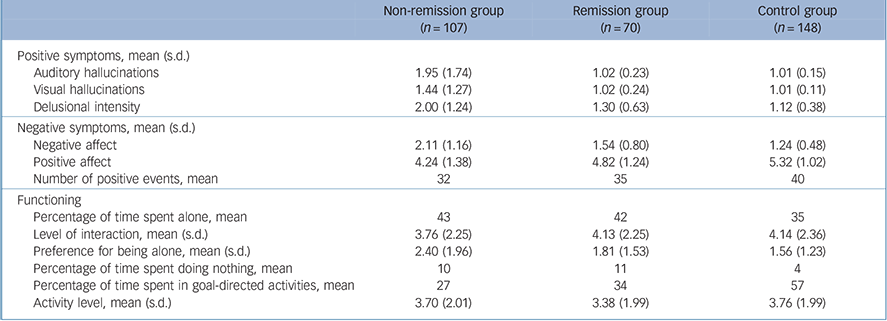
Of the recruited participants, 3 patients (having mania with psychotic features as their main diagnosis) and 17 persons from the control group (with a lifetime history of depression) were excluded from the analyses. Furthermore, 9 patients (3 in remission) and 3 control group members were excluded because of insufficient number of valid ESM observations (fewer than 20) and 2 patients were excluded because of missing data on the PANSS. The final sample therefore comprised 177 patients (70 in remission) and 148 controls. Additional information regarding sociodemographic characteristics and ESM reports is summarised in Table 1. Mean scores on the dependent and independent variables are summarised in Table 2.
Demographic and clinical characteristics
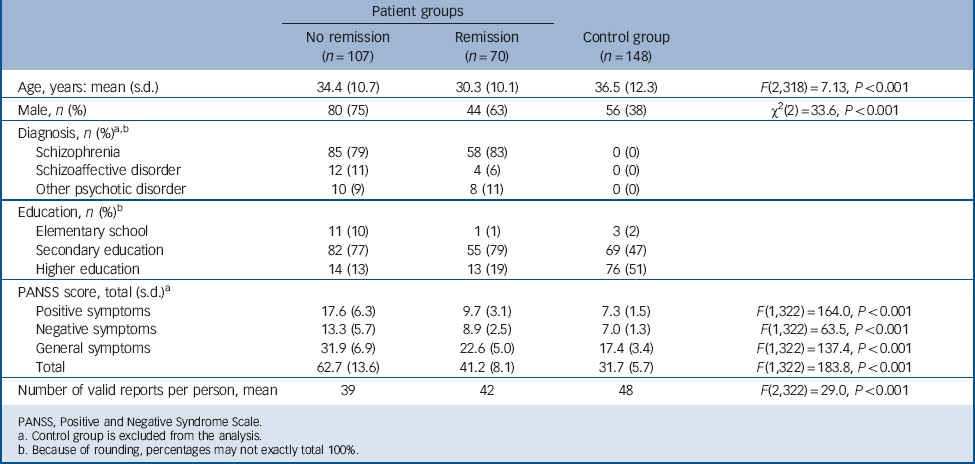
| Patient groups | ||||
|---|---|---|---|---|
| No remission (n = 107) |
Remission (n = 70) |
Control group (n = 148) |
||
| Age, years: mean (s.d.) | 34.4 (10.7) | 30.3 (10.1) | 36.5 (12.3) | F(2,318) = 7.13, P<0.001 |
| Male, n (%) | 80 (75) | 44 (63) | 56 (38) | χ2(2) = 33.6, P<0.001 |
| Diagnosis, n (%)Footnote a , Footnote b | ||||
| Schizophrenia | 85 (79) | 58 (83) | 0 (0) | |
| Schizoaffective disorder | 12 (11) | 4 (6) | 0 (0) | |
| Other psychotic disorder | 10 (9) | 8 (11) | 0 (0) | |
| Education, n (%)Footnote b | ||||
| Elementary school | 11 (10) | 1 (1) | 3 (2) | |
| Secondary education | 82 (77) | 55 (79) | 69 (47) | |
| Higher education | 14 (13) | 13 (19) | 76 (51) | |
| PANSS score, total (s.d.)Footnote a | ||||
| Positive symptoms | 17.6 (6.3) | 9.7 (3.1) | 7.3 (1.5) | F(1,322) = 164.0, P<0.001 |
| Negative symptoms | 13.3 (5.7) | 8.9 (2.5) | 7.0 (1.3) | F(1,322) = 63.5, P<0.001 |
| General symptoms | 31.9 (6.9) | 22.6 (5.0) | 17.4 (3.4) | F(1,322) = 137.4, P<0.001 |
| Total | 62.7 (13.6) | 41.2 (8.1) | 31.7 (5.7) | F(1,322) = 183.8, P<0.001 |
| Number of valid reports per person, mean | 39 | 42 | 48 | F(2,322) = 29.0, P<0.001 |
PANSS, Positive and Negative Syndrome Scale.
a. Control group is excluded from the analysis.
b. Because of rounding, percentages may not exactly total 100%.
Group scores on the dependent and independent variables
| Non-remission
group (n = 107) |
Remission group (n = 70) |
Control group (n = 148) |
|
|---|---|---|---|
| Positive symptoms, mean (s.d.) | |||
| Auditory hallucinations | 1.95 (1.74) | 1.02 (0.23) | 1.01 (0.15) |
| Visual hallucinations | 1.44 (1.27) | 1.02 (0.24) | 1.01 (0.11) |
| Delusional intensity | 2.00 (1.24) | 1.30 (0.63) | 1.12 (0.38) |
| Negative symptoms, mean (s.d.) | |||
| Negative affect | 2.11 (1.16) | 1.54 (0.80) | 1.24 (0.48) |
| Positive affect | 4.24 (1.38) | 4.82 (1.24) | 5.32 (1.02) |
| Number of positive events, mean | 32 | 35 | 40 |
| Functioning | |||
| Percentage of time spent alone, mean | 43 | 42 | 35 |
| Level of interaction, mean (s.d.) | 3.76 (2.25) | 4.13 (2.25) | 4.14 (2.36) |
| Preference for being alone, mean (s.d.) | 2.40 (1.96) | 1.81 (1.53) | 1.56 (1.23) |
| Percentage of time spent doing nothing, mean | 10 | 11 | 4 |
| Percentage of time spent in goal-directed activities, mean | 27 | 34 | 57 |
| Activity level, mean (s.d.) | 3.70 (2.01) | 3.38 (1.99) | 3.76 (1.99) |
Positive symptoms
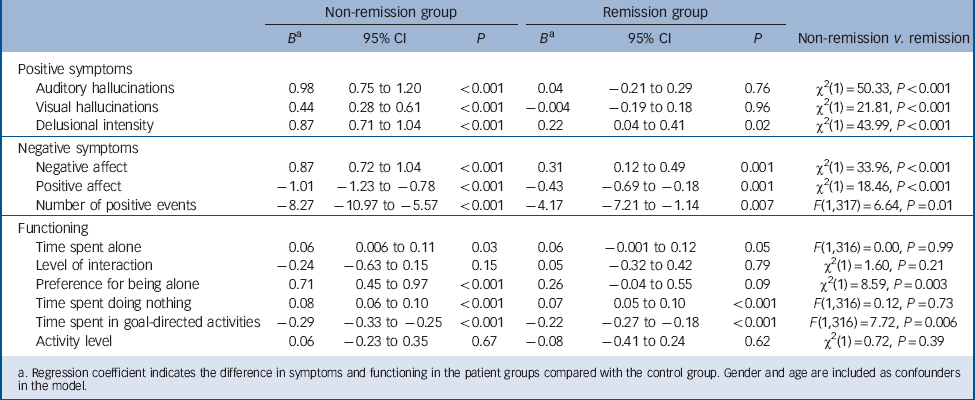
Patients who were not in remission reported significantly higher levels of hallucinatory and delusional intensity compared with both the remission group and the control group (Table 3). Patients in remission scored more highly on delusional intensity compared with the control group (Table 3).
Negative symptoms
Both patient groups reported significantly lower positive affect and higher negative affect compared with controls. However, the two patient groups differed significantly from each other, with those in remission reporting higher positive affect and lower negative affect compared with the non-remission group. Both patient groups also reported significantly fewer positive events compared with controls, with patients in remission reporting more positive events than the non-remission group (Table 3). A significant interaction effect between event pleasantness and group in the model of positive affect was found (χ2(2) = 8.30, P = 0.02), indicating that the groups differed in the level of positive affect reported after pleasant events. Analyses stratified by group revealed that event pleasantness and positive affect are positively associated in all groups (control group B = 0.09, 95% CI 0.07–0.11, P<0.001; remission group B = 0.14, 95% CI 0.11–0.18, P<0.001; non-remission group B = 0.10, 95% CI 0.07–0.12, P<0.001). Patients in the remission group, however, displayed a larger increase in positive affect after pleasant events compared with the non-remission group (χ2(1) = 4.57, P = 0.03) and controls (χ2(1) = 8.15, P = 0.004), whereas the non-remission and control groups did not differ from each other (χ2(1) = 0.26, P = 0.61).
Comparison of symptoms and functioning in the two patient groups
| Non-remission group | Remission group | ||||||
|---|---|---|---|---|---|---|---|
| B Footnote a | 95% CI | P | B Footnote a | 95% CI | P | Non-remission v. remission | |
| Positive symptoms | |||||||
| Auditory hallucinations | 0.98 | 0.75 to 1.20 | <0.001 | 0.04 | –0.21 to 0.29 | 0.76 | χ2(1) = 50.33, P<0.001 |
| Visual hallucinations | 0.44 | 0.28 to 0.61 | <0.001 | –0.004 | –0.19 to 0.18 | 0.96 | χ2(1) = 21.81, P<0.001 |
| Delusional intensity | 0.87 | 0.71 to 1.04 | <0.001 | 0.22 | 0.04 to 0.41 | 0.02 | χ2(1) = 43.99, P<0.001 |
| Negative symptoms | |||||||
| Negative affect | 0.87 | 0.72 to 1.04 | <0.001 | 0.31 | 0.12 to 0.49 | 0.001 | χ2(1) = 33.96, P<0.001 |
| Positive affect | –1.01 | –1.23 to –0.78 | <0.001 | –0.43 | –0.69 to –0.18 | 0.001 | χ2(1) = 18.46, P<0.001 |
| Number of positive events | –8.27 | –10.97 to –5.57 | <0.001 | –4.17 | –7.21 to –1.14 | 0.007 | F(1,317) = 6.64, P = 0.01 |
| Functioning | |||||||
| Time spent alone | 0.06 | 0.006 to 0.11 | 0.03 | 0.06 | –0.001 to 0.12 | 0.05 | F(1,316) = 0.00, P = 0.99 |
| Level of interaction | –0.24 | –0.63 to 0.15 | 0.15 | 0.05 | –0.32 to 0.42 | 0.79 | χ2(1) = 1.60, P = 0.21 |
| Preference for being alone | 0.71 | 0.45 to 0.97 | <0.001 | 0.26 | –0.04 to 0.55 | 0.09 | χ2(1) = 8.59, P = 0.003 |
| Time spent doing nothing | 0.08 | 0.06 to 0.10 | <0.001 | 0.07 | 0.05 to 0.10 | <0.001 | F(1,316) = 0.12, P = 0.73 |
| Time spent in goal-directed activities | –0.29 | –0.33 to –0.25 | <0.001 | –0.22 | –0.27 to –0.18 | <0.001 | F(1,316) = 7.72, P = 0.006 |
| Activity level | 0.06 | –0.23 to 0.35 | 0.67 | –0.08 | –0.41 to 0.24 | 0.62 | χ2(1) = 0.72, P = 0.39 |
a. Regression coefficient indicates the difference in symptoms and functioning in the patient groups compared with the control group. Gender and age are included as confounders in the model.
Functioning
Social functioning
Patients spent significantly more time alone than control group participants, but the two patient groups did not significantly differ in the amount of time they spent with others (Table 3). In the company of others, the groups did not significantly differ in the intensity of interaction they reported. Patients, however, displayed a greater preference for being alone when with others compared with controls, and this preference for being alone was lower in the remission group than the non-remission group (Table 3). No significant interaction effect between social company and group was found in the model of positive affect (χ2(2) = 0.92, P = 0.63). Positive affect was decreased in all participants when they were alone (B = –0.13, 95% CI –0.16 to –0.10, P<0.001). However, a significant interaction effect between social company and group was found in the model of negative affect (χ2(2) = 11.92, P = 0.003). Analyses stratified by group revealed that being alone was associated with significant increased negative affect in patients (remission group B = 0.08, 95% CI 0.03 to 0.12, P = 0.001; non-remission group B = 0.11, 95% CI 0.07 to 0.14, P<0.001; remission v. non-remission groups χ2(1) = 0.90, P = 0.34) but not in the control group (B = 0.02, 95% CI –0.004 to 0.05, P = 0.09).
Activity level
No difference was found in the subjectively experienced activity level between the three groups. However, both patient groups spent more time doing nothing and were less often involved in goal-directed activities compared with the control group. The remission group patients were more involved in goal-directed activities than patients not in remission (Table 3).
Discussion
Our findings provide ecological validation for the symptomatic remission criteria, showing that patients who met the severity criterion reported fewer positive symptoms, better mood states and increased hedonic capacity compared with patients with non-remitted disorder. Remission status, however, was not related to clear improvements in real-life functioning, since both remission and non-remission groups scored lower on our measures of functional outcome compared with controls. Subtle differences between the patient groups in this domain were present, however: patients in remission were found to spend more time performing goal-directed activities and showed less preference for being alone when with others compared with the non-remission group.
Positive and negative symptoms
Patients in remission showed reduced levels of hallucinations and delusional intensity compared with patients who were not. This is not surprising, since positive symptoms are relatively clearly defined and are directly reflected in the ESM measures of positive symptoms. The higher delusional intensity in patients in remission compared with the control group is in line with the remission criteria, which do not require symptoms to be completely absent. In contrast to the positive symptoms, negative symptom consensus items cannot be directly measured using ESM. Correct operationalisation of negative symptoms is further complicated by the current debate on traditional definitions and the nature of such symptoms. Reference Foussias and Remington24 However, the study shows increased intensity of negative affect, which is indicative of the absence of flattened affective experience. This is in line with a growing number of studies showing the absence of flattened emotional experience in patients with schizophrenia, despite the fact that flattened emotional expression is present. Reference Kring and Moran25 Anhedonia is not measured using the PANSS and thus is not included in the consensus definition of remission. Nevertheless, our data reveal that hedonic capacity is improved in patients in remission. Hedonic capacity, or emotional reward experience, is proposed to be a critical factor underlying deficits in motivation and real-life functioning in schizophrenia, although studies of hedonic capacity in schizophrenia have inconsistent results. Reference Horan, Kring and Blanchard26
The increase in reward experience should be investigated in more depth since it may be one of the crucial mechanisms involved in recovery. Studies of reward experience and illness course or treatment effects in schizophrenia are surprisingly scarce. Several ESM studies in depression, however, showed changes in positive emotions and reward experience to be a predictor of treatment response to antidepressants. Reference Geschwind, Nicolson, Peeters, van Os, Barge–Schaapveld and Wichers27,Reference Wichers, Barge–Schaapveld, Nicolson, Peeters, de Vries and Mengelers28 In our study, patients in remission reported both more pleasant events in their daily life and increased emotional reward from these pleasant events. These concepts are likely to be interrelated, with increased reward experience predicting increased motivation to search for positive experiences and the combination of more pleasant experiences and more emotional reward from such experiences working synergistically in their effect on mood. Increased reward experience or hedonic capacity might therefore be one of the keys to recovery after a psychotic episode and should be further investigated.
Functional outcome
The study shows that symptomatic remission is not the same as functional recovery; although patients in remission reported reduced symptom levels, real-life functioning did not clearly improve and this group still scored worse than controls on most measures of such functioning. This is in line with other studies, Reference Shrivastava, Johnston, Shah and Bureau29 and with the focus of the remission criteria consensus group which was on symptomatic rather than functional remission. However, the consensus group decided on these specific symptom severity thresholds since they were assumed not to interfere significantly with day-to-day functioning, whereas our results suggest that functioning in patients with remitted disorder is still impaired. These impairments are not necessarily related to increased delusionality levels, but may be related to lower mood or other non-measured factors such as cognitive dysfunction. Reference Hofer, Baumgartner, Bodner, Edlinger, Hummer and Kemmler30 Moreover, many patients have never achieved certain social, educational or vocational milestones and functional impairments in the remission group could therefore just be a continuation of poor premorbid functioning. Reference Harvey and Bellack31
Measuring real-world functioning
In order to better understand the process of functional recovery, however, sophisticated measures of everyday functioning in schizophrenia are necessary. It is now generally accepted that symptomatic remission is too restricted a goal and that treatment should aim at functional remission. Reference Andreasen, Carpenter, Kane, Lasser, Marder and Weinberger1,Reference Meesters, Comijs, de Haan, Smit, Eikelenboom and Beekman7 A widely accepted definition of functional remission is still lacking. Generally, functional remission is considered a multidimensional concept which is broader than symptomatic remission and implies good social and occupational functioning. Reference Harvey and Bellack31,Reference Kane, Leucht, Carpenter and Docherty32 A review of measures of social functioning in schizophrenia indicated that the most frequently used scales were the Global Assessment of Functioning Scale, the Global Assessment Scale and the Social Functioning Scale. Reference Burns and Patrick33 The first two measures, however, are both single-item, clinician-rated assessments of functioning, and the third is a self-report measure with a 3-month reference period. The ESM may be a useful addition to these measures of real-world functioning, since it is a self-report measure which is sensitive to small changes in behaviour, focuses on functioning in the realm of daily life and allows investigation of subjective appraisal of activities. In contrast to the traditional scales measuring real-life functioning, ESM allows investigation not only of functional outcome but also of the underlying processes and thus provides useful information for treatment and rehabilitation. Computerised ESM using mobile telephones, personal digital assistants or dedicated devices is a rapidly growing field in psychiatry research, Reference Granholm, Loh and Swendsen34,Reference Myin–Germeys, Birchwood and Kwapil35 and makes implementation of momentary assessment easier to achieve in clinical practice, since it minimises the effort and time required from both patient (filling in answers to the questions) and clinician (transcribing and analysing the data).
Methodological issues
Several methodological issues should be taken into account. First, as in other studies, Reference Boden, Sundstrom, Lindstrom and Lindstrom5,Reference Meesters, Comijs, de Haan, Smit, Eikelenboom and Beekman7,Reference van Os, Drukker, à Campo, Meijer, Bak and Delespaul8,Reference Helldin, Kane, Karilampi, Norlander and Archer36 we had no information on the 6-month time criterion. A longer period of symptomatic remission could result in improvement in functional outcome. However, we investigated functional outcome in a subset of 25 patients with remitted disorder for whom we did have time criterion data (16 fulfilling the 6-month criterion). These pilot results (not shown) indicated that functional recovery remains equally if not more problematic over time in patients fulfilling both the symptomatic and time criteria. Second, compliance with the research protocol is a crucial element of this research method. Some authors have cast doubt on compliance in paper-and-pencil ESM studies and preferred the use of electronic devices. Reference Stone, Shiffman, Schwartz, Broderick and Hufford37 However, two studies in which paper-and-pencil diary and electronic diary data were collected using comparable procedures suggested good compliance rates with the time protocol and demonstrated that both methods yielded data comparable in terms of both psychometric features and research findings. Reference Green, Rafaeli, Bolger, Shrout and Reis38,Reference Jacobs, Nicolson, Derom, Delespaul, van Os and Myin–Germeys39 Third, in line with other studies by our group, Reference Lataster, Collip, Lardinois, van Os and Myin–Germeys10–Reference Thewissen, Bentall, Lecomte, van Os and Myin–Germeys12,Reference Myin–Germeys, Delespaul and van Os19 participants who made a valid response to at least a third of the beeps were included in the analyses. Although this criterion might seem liberal compared with criteria used in studies applying more regular methods such as questionnaires and interviews, the absence of data is inherent to the ESM in which we study the daily life of participants while encouraging them not to adapt their activities to the research method. Moreover, the mean number of valid beeps in this study was two-thirds of the total number of beeps. We do not have evidence of systematic differences between groups on missed beeps, except for patients missing the first beep of the day more often than controls, which might be related to differences in sleeping pattern. Reference Delespaul17 Fourth, we used a scientific definition of remission and functioning, whereas patients have developed an experience-based approach to remission and recovery. Patient-based definitions of recovery generally refer to a unique and personal process in which people are able to participate fully in their communities and live a fulfilling and productive life despite a disability. Reference Bellack40 Fifth, we included a control group of healthy individuals. One could argue that this group is not feasible as a control since its members also differ on all demographic variables; however, we chose to include this group to reflect a ‘normal’ level of functioning in society. Sixth, we pooled data from three different studies, which might induce systematic differences within the data-set; however, we feel that it is justified and necessary to pool data to increase power and find subtle effects, as is common practice in genetic studies. Furthermore, the diary structure was similar in all three studies and none of the data had been used previously to study remission or a related concept.
Funding
I.M.-G. was supported by a 2006 NARSAD Young Investigator Award and by a Dutch Medical Research Council (Vidi) grant.




eLetters
No eLetters have been published for this article.