





Introduction
Iodine is an essential component of thyroid hormones, and deficiency can affect thyroid volume and function, with a range of associated deficiency disorders. Goitre, the clinical symptom of severe deficiency, was once common in the UK, especially in the 19th and 20th centuries(Reference Berry and Berry1,Reference Kelly and Snedden2) . Goitre was still prevalent in certain areas of the UK in the early part of the 21st century, but it was generally considered to be a condition assigned to history(Reference Phillips3). The reduction in goitre in the UK was not due to an iodine-specific policy but was related to dietary changes and the increased iodine concentration in milk and dairy products(Reference Phillips3). While salt iodisation has been a global success in improving iodine status in populations, this did not occur in the UK(Reference Phillips3).
It is important to note that iodine deficiency in populations cannot be eradicated, only controlled, and factors that reduced the risk of iodine deficiency risk in the UK in the past (i.e. through milk and dairy intake), may no longer be effective. Indeed, research in the last 15 years has highlighted that iodine deficiency may persist in the UK – if not at the degree to cause goitre, then at a mild deficiency level, including during pregnancy(Reference Vanderpump, Lazarus and Smyth4–Reference Bath and Rayman6). Data from the National Diet and Nutrition Survey (NDNS; 2019–2023) shows that several populations groups (including women of childbearing age) are now classified as mildly iodine deficient, whereas they were iodine-sufficient when monitoring began in 2013(7). This decline in iodine status may in part be due to the general decline in milk consumption(8), and the more recent rise in plant-based diets and dairy-alternative products that have a much lower in iodine concentration than milk(Reference Nicol, Nugent and Woodside9). It is therefore time to consider the public-health approaches to reverse this decline in iodine status in the UK and minimise any effects of iodine deficiency on health and development. This review will consider the issue of iodine deficiency in the UK by critically discussing the data on iodine status, the implications of mild deficiency and the potential solutions, including salt iodisation and other options.
Is there iodine deficiency in the UK today?
Monitoring population status
The Global Iodine Scorecard, a monitoring system that is managed by the Iodine Global Network [previously known as the Iodine Council for the Control of Iodine Deficiency Disorders (ICCIDD)] presents the most recent data on iodine status in each country. From 2003, the Scorecard has been based on urinary iodine concentration (UIC) measured in spot-urine samples from a representative sample of the population (primarily in school-aged children); the median UIC value is compared to thresholds set by the WHO(10). In adults and children, the threshold for iodine adequacy is a median UIC above 100 µg/L(10), and for pregnant women, the median should be above 150 µg/L(Reference Andersson and de Benoist11).
For many years, the UK was one of a few countries that had no national data on the iodine status of the population, according to the 2003–2007 Global Scorecards(Reference de Benoist, McLean and Andersson12). In 2009, a nationwide study measured iodine status in teenage girls (14–15 years of age), covering nine centres across the UK and collecting urine samples from 737 girls; the median UIC was 80 µg/L and therefore classified the group as mildly deficient(Reference Vanderpump, Lazarus and Smyth4). This study provided the first data for over 60 years on the iodine status of the UK population and was used by IGN for the 2015 Scorecard, classifying the UK as iodine deficient(13). However, the study could be criticised because it only included teenage girls and it was not nationally representative. A study that was conducted at a similar time (2007–2008) supported the Vanderpump findings, as it also found iodine deficiency in women of childbearing age (19–45 years)(Reference Bath, Sleeth and McKenna14), but this study was limited by the small sample size and the fact that recruitment was from a single site (Guildford). Conversely, a later study (2014–2015) on the island of Ireland (including two sites in Northern Ireland) found iodine sufficiency in teenage girls (14–15 years) with a median UIC of 111 µg/L(Reference Mullan, Hamill and Doolan15). School-aged children (the group typically recommended for population assessment) were classified as iodine sufficient in a study in three UK centres (Omagh in Northern Ireland, Guildford in Surrey and Glasgow in Scotland) in 2015 (median UIC 161 µg/L)(Reference Bath, Combet and Scully16). These studies show the complexity of the UK picture and the limitations of the evidence base on iodine status in the UK at that time (prior to 2013).
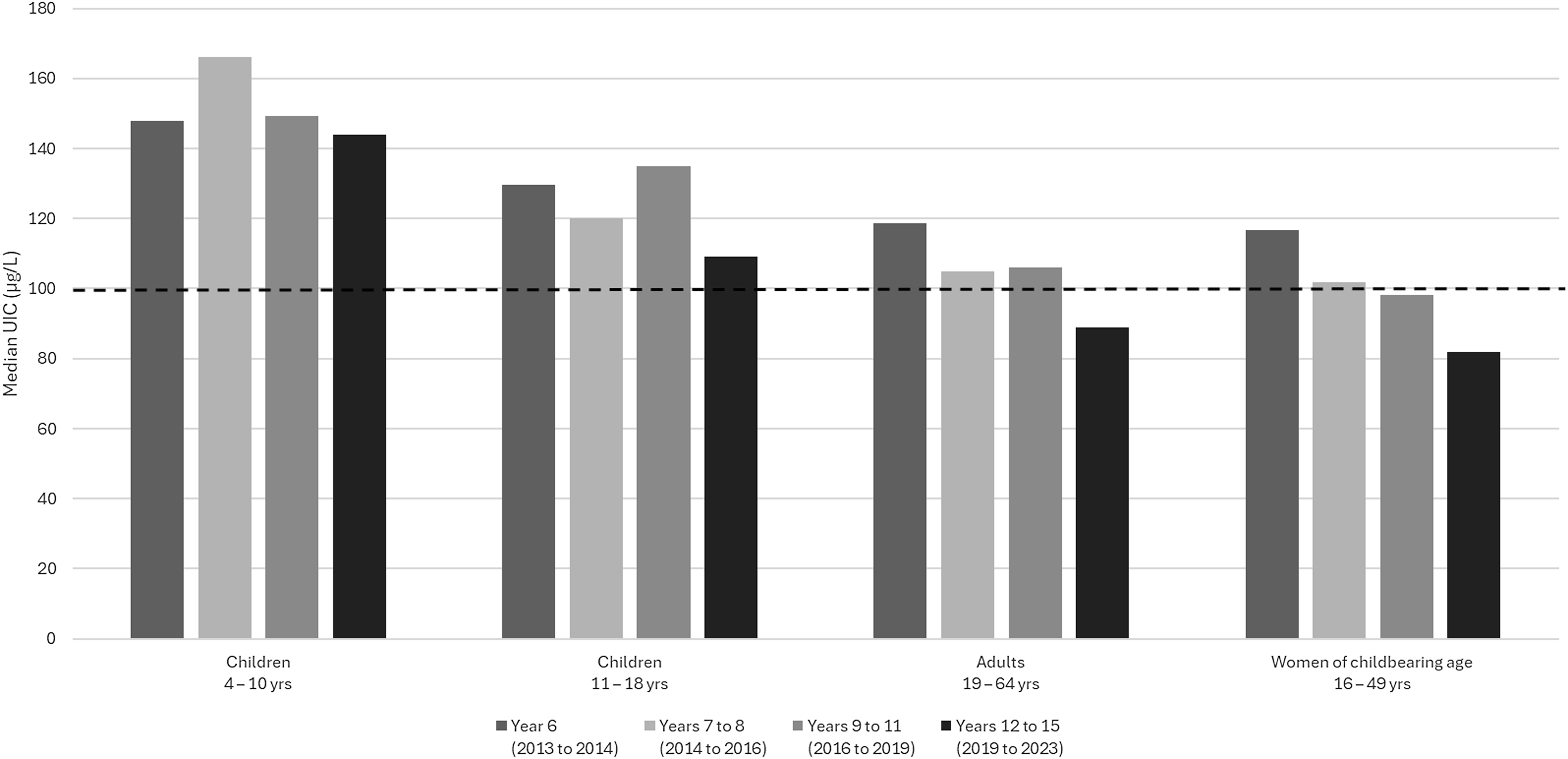
The NDNS began monitoring iodine status in Year 6 of the Rolling Programme (2013–2014), using the WHO methodology of measuring UIC in spot-urine samples(10). This has provided invaluable data for monitoring population iodine status in the UK and provides nationally representative data for children and adults. In fact, the UK is one of only two countries in Europe that fund regular monitoring of iodine status in the population(17). The Rolling Programme of NDNS means that there is regular reporting of iodine status – with four rounds of results now available (Figure 1). Children were classified as iodine sufficient in Year 6 of NDNS (2013/2014), with a median UIC above 100 µg/L (Figure 1), and therefore, the 2017 Global Iodine Scorecard reflected this, with the UK labelled as a country with adequate status(18). This turnaround in status on the Global Scorecard between 2015 (inadequate) and 2017 (adequate) was likely a reflection of the limitations of the Vanderpump data used in the 2015 scorecard, rather than as a result of any public-health policy or change in diet that would have led to an improvement iodine status(Reference Bath and Rayman19).
Change in Urinary Iodine Concentration (UIC) since monitoring began in NDNS; figure drawn from 2019–2023 NDNS report(7) data for children (boys and girls, 4–10 and 11–18 years), adults (men and women, 19–64 years) and women of childbearing age (16–49 years). Dotted line at 100 µg/L represents threshold for adequacy in children and adults(Reference Andersson and de Benoist11).

The most recent data from NDNS from Years 12–15 (up to 2023) indicates that UK adults (both men and women) are now classified as iodine deficient, with a median UIC of 89 µg/L in adults (19–64 years)(7). NDNS has also reported the status of women of childbearing age separately, and this group was classified as deficient in Years 9–11 (median UIC = 98 µg/L), with a further decrease in Years 12–15 to 82 µg/L. The median UIC in this women of childbearing age is now considerably below the threshold for adequacy (100 µg/L)(7). The time-trend analysis in the 2019–2023 NDNS report shows that there has been a significant decrease in iodine status in adult men (19–64 yrs), adult women (19–64 years), girls 11–18 years since 2013(7).
A less well-known aspect of the WHO recommendations for assessing population iodine status, is the criterion that no more than 20% of samples should have a UIC below 50 μg/L(10). Most studies and publications do not report the data in this way, but it is important in terms of assessing the distribution of UIC data in the population. In addition to the median UIC value, the NDNS reports also contain the data on the percentage of UIC values below various thresholds, including 50 μg/L, meaning that the UK data can be fully reported in relation to the WHO criteria. In the most recent NDNS report (2019–2023) the proportion of samples with UIC below 50 μg/L was high (and greater than the 20% threshold suggested by WHO) for girls 11–18 years (at 29%), men 19–64 years (at 24%), women 19–64 years (at 27%) and women of childbearing age (at 30%). In combination with the fact that the median UIC in these groups was below the overall threshold for adequacy (100 μg/), the high proportion at the lower end of the distribution further confirms the risk of deficiency in these population groups.
The iodine status of children in NDNS (both ages 1.5–3 years and 4–10 years) has been classified as adequate in all four NDNS reports (ages 4–10 shown in Figure 1). Data from children are used when classifying countries in the Global Iodine Scorecard, and so the UK is still listed as having adequate status in the 2025 Scorecard(20), even though other groups are deficient. As children are high consumers of iodine rich foods (such as milk and dairy products), the UK is a good example of why children may not be a suitable proxy for the classification of a population as their data can mask deficiency in other groups; this is especially the case in countries like that UK that do not have a strong salt iodisation programme, where dietary source affects iodine status, and where intake of iodine-rich foods varies by age.
Dietary iodine intake in the National Diet and Nutrition Survey (NDNS)
As well as the data on iodine status (i.e. UIC data), NDNS also has data on iodine intake, as estimated using dietary assessment (four-day food diaries/dietary recalls)(7). The data on dietary iodine intake is available from Year 1 (2008) of the Rolling Programme (i.e. at an earlier point that the iodine status measures that started in Year 6, 2013). The dietary iodine intake data can also give an indication of trends and vulnerable populations in the UK(7). Since Year 1 (2008), the median dietary iodine intake (µg/day) has consistently been less than the Reference Nutrient Intake (RNI) for iodine for teenage girls (11–18 years) and adult women 19–64 years(7). In the latest survey, median dietary iodine intake in girls aged 11–18 years was 95 µg/d (69% of the RNI) and for adult women it was 112 µg/d (80% of the RNI). While the RNI relates to risk of deficiency in an individual and not a population, the fact that the median intake is less the RNI suggests an unfavourable distribution of intake in the population, with a high proportion below the lower thresholds. Indeed, 29% and 18% of girls (11–18 years) and adult women (19–64 years) had an iodine intake below the lower RNI (the LRNI)(7) in the 2019–2023 NDNS report. In the UK, the lower RNI was set at the level at which intake was required to prevent goitre(21), so the fact that 18–28% of girls and women have a low intake is of concern.
Estimation of dietary iodine intake is challenging, not only because of the usual concerns with dietary assessment (i.e. under-reporting, changes in diet from usual intake during assessment and the accuracy of nutrient estimates in food tables), but also because of the complexities and challenges of estimating salt intake (especially discretionary salt intake) and therefore iodine intake from iodised salt(17). This is less of a concern for the UK, however, because of the lack of iodised salt available for use by the consumer(Reference Bath, Button and Rayman22,Reference Shaw, Nugent and McNulty23) and therefore the dietary data in NDNS can provide additional information to that provided by the UIC data. Taken together, the data show that the dietary iodine intake and the iodine status of women of childbearing age has significantly decreased in the UK since 2013 and this group is classified as iodine deficient, which is of concern from a public health perspective.
Iodine status in pregnant women in the UK
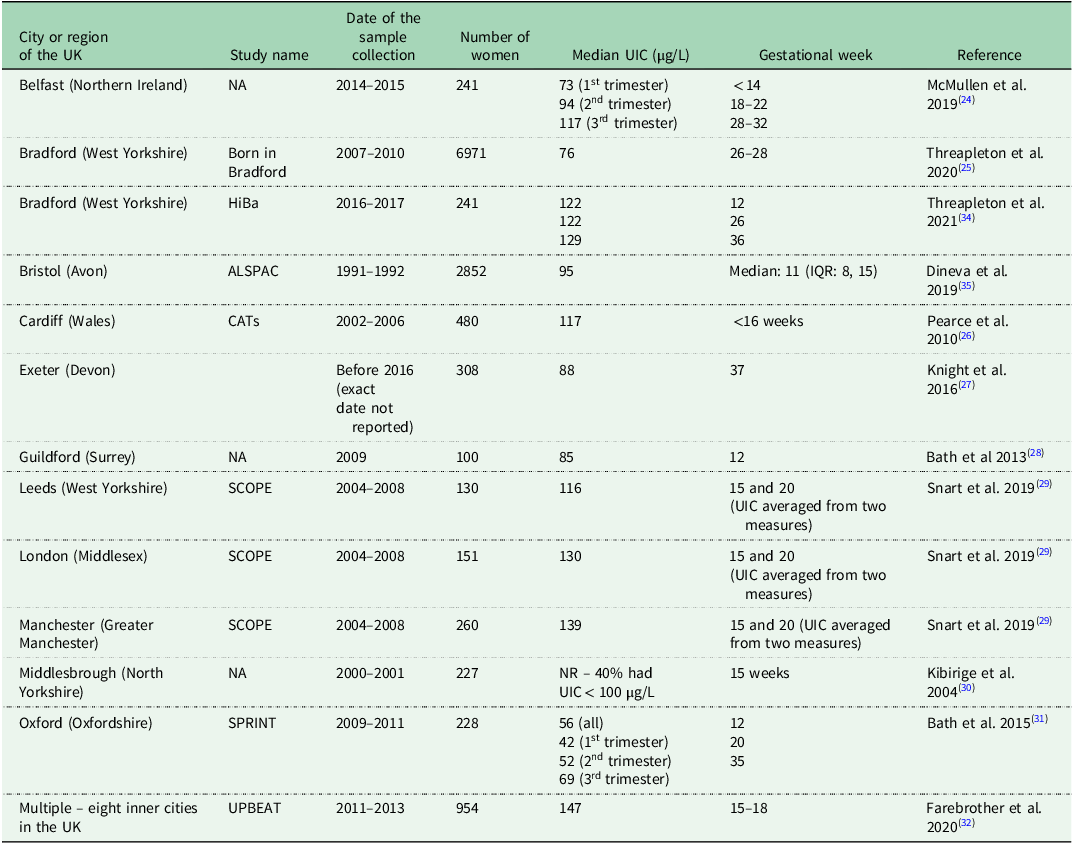
Pregnant women are not included in the NDNS and therefore there are no nationally representative data for this group in the UK. However, in the last 20 years there have been increasing numbers of regional studies (Table 1) and they all demonstrate mild deficiency in UK pregnant women(Reference McMullan, Hamill and Doolan24–Reference Bath, Walter and Taylor33). The median UIC in those studies is below the WHO threshold for adequacy in a population of pregnant women (i.e. 150 µg/L)(10), indeed many are also below the lower threshold of adequacy set for adults (i.e. 100 µg/L)(10). Though these studies are limited by various factors, such as small samples sizes in some studies, recruitment in single seasons, or lack or generalisability for the UK, the totality of the evidence suggests that pregnant women in the UK are at risk of iodine deficiency (Table 1).
Summary of iodine status in UK pregnant women from various regional studies

ALSPAC, Avon Longitudinal Study of Parents and Children; HiBa, Health and Iodine Babies; SCOPE, Screening for Pregnancy Endpoints; UIC: Urinary Iodine Concentration; UPBEAT, UK Pregnancies Better Eating and Activity Trial: London (three centres), Bradford, Glasgow, Manchester, Newcastle and Sunderland; SPRINT, Selenium in PRegnancy INTervention.
Does mild iodine deficiency matter – are there health implications in the UK?
Although goitre is considered to be an historical condition in the UK, a 2016/17 study of pregnant women in Bradford (n = 246) found palpable goitre in over a third (n = 89, 36%) of the cohort, and goitre incidence was found to be related to total iodine intake(Reference Threapleton, Waiblinger and Snart34). There are also case reports of goitre in non-pregnant women and children who follow a vegan diet in the UK(Reference Park, Watson and Bevan36–Reference Shaikh, Anderson and Hall38). This evidence re-enforces the fact that iodine deficiency cannot be eradicated in a population and goitre can re-emerge if the supply of iodine changes in a population.
The main consideration in terms of the public-health impact of iodine deficiency, is the role of iodine during pregnancy and the risk that deficiency may pose for child development and cognition. This is because iodine is required to produce thyroid hormones that are essential for brain development. Iodine deficiency has been noted by the WHO as the ‘greatest preventable cause of brain damage’(10), reflecting the considerable impact that severe iodine deficiency has on neurological development. Severe iodine deficiency can lead to congenital iodine deficiency disorder (historically called cretinism), with considerable cognitive impairment (up to 13.5 IQ points lower than iodine-sufficient populations)(Reference Bleichrodt, Born and Stanbury39). However, the question is whether mild deficiency during pregnancy can also affect brain development. At this end of the iodine-deficiency spectrum, the evidence is less robust than for severe deficiency. However, the evidence base has expanded considerably in the last 10–15 years, with more evidence from observational studies around the world that demonstrates a relationship between mild iodine deficiency and a range of neurodevelopmental outcomes in the child(Reference Bath40).
Data from cohort studies suggests that mild iodine deficiency during pregnancy, especially during the first trimester, may be linked to lower IQ and school performance(Reference Bath40). For example, research using data from the Avon Longitudinal Study of Parents and Children in the UK found that children born to mothers with low iodine status in the first trimester (<150 µg iodine/g creatinine), were more likely to have suboptimal verbal IQ scores at age 8 years, and lower reading accuracy and comprehension scores at age 9 years(Reference Bath, Steer and Golding28). Later work in the EUthyroid project combined data from the Avon Longitudinal Study of Parents and Children with two other birth cohorts in Europe (in Spain and the Netherlands) and demonstrated that the effect on offspring IQ was only significant up to 14 weeks’ gestation(Reference Levie, Korevaar and Bath41). This may explain why a study using samples and data from the UK Born in Bradford cohort, found no effect of iodine status at 26–28 weeks’ gestation on school-measures of cognition(Reference Threapleton, Snart and Keeble25). The fetus is dependent on maternal supply of iodine and thyroid hormones until mid-gestation(Reference Williams42), suggesting that iodine status in early pregnancy (or even pre-pregnancy) may be particularly important for fetal brain development. Indeed, evidence from the Southampton Women’s Survey suggests that low iodine status prior to pregnancy is associated with lower IQ at age 7 (though not with executive function)(Reference Robinson, Crozier and Miles43). Whether this is because the pre-pregnancy iodine status serves as a proxy for iodine status in pregnancy is not clear, but other evidence in Europe also suggests a healthier thyroid-hormone profile in those with steady iodine supply prior to pregnancy (rather than abrupt increase at the start of pregnancy)(Reference Moleti, Di Bella and Giorgianni44). Given that the evidence from NDNS that shows a considerable proportion of women of childbearing age in the UK have a low iodine intake/status(7), this is of concern.
Not all neurodevelopmental outcomes are associated with mild iodine deficiency in pregnancy. In the EUthyroid multi-cohort study (that included Avon Longitudinal Study of Parents and Children data from the UK), there was no clear link between iodine status in pregnancy and Attention Deficit and Hyperactivity Disorder (ADHD; at 4.4–7.7 years) or autistic-trait scores (age 4.5–7.6 years), even when restricting the analysis to early pregnancy(Reference Levie, Bath and Guxens45–Reference Levie, Korevaar and Bath47). The Born In Bradford study also found no evidence of a relationship between iodine status in the third trimester and risk of autism spectrum disorder (diagnosed in 1.3% of the cohort, n = 92, up to the age of 12 years)(Reference Cromie, Threapleton and Snart48); however the study may have been underpowered given the relatively small number of cases of autism. Therefore, further study is warranted on the relationship between iodine and neurodevelopmental disorders.
It is important to point out that there is a lack of evidence from randomised controlled trials (RCT) to evaluate the effect of mild iodine deficiency in pregnancy on child neurodevelopmental outcomes. The three RCTs that do exist are either underpowered(Reference Zhou, Skeaff and Ryan49,Reference Brucker-Davis, Ganier-Chauliac and Gal50) , provided iodine as part of a multivitamin/mineral preparation(Reference Brucker-Davis, Ganier-Chauliac and Gal50), or were limited by the fact that at least a proportion of the women had adequate iodine status at baseline(Reference Gowachirapant, Jaiswal and Melse-Boonstra51). Further RCT evidence in mild iodine deficiency is required. However, this may be challenging as a placebo-controlled group may be considered unethical. Furthermore, recruitment to such a trial may be difficult, as many women take prenatal supplements that already contain iodine.
The evidence-base for recommending iodine supplements to pregnant women in regions of mild deficiency is not clear(Reference Dineva, Fishpool and Rayman52). A systematic review of the effects of iodine supplementation on thyroid function and child neurodevelopment identified 10 RCTs and overall found no effect of supplementation in mild deficiency on maternal or infant thyroid function, though some trials found positive effects on maternal thyroid volume (i.e. a smaller thyroid volume). The meta-analysis of the two RCTs with neurodevelopmental outcomes found no effect of supplementation on child cognitive, language or motor scores at 2 years of age, though as noted above, these trials were limited by baseline iodine status being adequate, or a small sample size(Reference Dineva, Fishpool and Rayman52). The larger RCT (that recruited in India and Thailand) also included IQ and behaviour measures at age 5–6 years and found no overall difference between placebo and iodine supplementation groups (200 µg iodine/d),(Reference Gowachirapant, Jaiswal and Melse-Boonstra51) though this study was limited by the adequate baseline iodine status in India.
Despite this lack of evidence, many countries already have recommendations for pregnant women to take an iodine-containing supplement; for example in the European region, eleven countries (20%) have Government recommendations for pregnant women to take an iodine supplement with around 150 µg/d(17). The WHO Europe report suggests that blanket supplementation policies for pregnant women may not be warranted, and that a targeted approach may be preferable – targeting women with low dietary intake of iodine(17). However, the identification of individuals with low intake or status is a challenge, owing to a lack of a biomarker in individuals(17,Reference Rohner, Zimmermann and Jooste53) .
Assessing iodine status in individuals
There is currently no available biomarker for the assessment of an individual’s iodine status. UIC, from spot-urine samples, can be used to assess populations only – it is not suitable for individuals. This is because spot-urine samples are affected by variation in hydration status and urine dilution, and there is considerable day-to-day variability in dietary iodine intake, and therefore excretion(Reference Zimmermann and Andersson54).
Thyroglobulin (a thyroid-specific protein that is positively correlated with thyroid size) has been explored in relation to iodine status (via UIC) and iodine intake (from dietary assessment) as an alternative biomarker of iodine status in UK pregnant women(Reference Threapleton, Waiblinger and Snart34,Reference Bath, Pop and Furmidge-Owen55,Reference Mullan, McMullan and Kayes56) . The data shows that thyroglobulin concentration is higher in those with low iodine status, or intake(Reference Threapleton, Waiblinger and Snart34,Reference Bath, Pop and Furmidge-Owen55,Reference Mullan, McMullan and Kayes56) . Thyroglobulin showed promise as a functional biomarker in a cohort of pregnant women from Oxford as it significantly increased through pregnancy in the group with low iodine status (grouped by urinary iodine-to-creatinine ratio) in the first trimester, but remained stable in the iodine-sufficient group, suggesting an increase in thyroid size as pregnancy progresses in those without adequate iodine intake(Reference Bath, Pop and Furmidge-Owen55). Data from Europe has shown that Tg concentration is related to dietary patterns in pregnancy, with milk intake and use of supplements negatively associated with Tg concentration (i.e. a lower thyroid volume with increased intake of iodine-rich foods)(Reference Dineva, Rayman and Levie57). However, Tg is not sensitive for use in an individual and is currently used for groups or populations as a complementary measure to UIC.
Instead of using biomarkers, the alternative is to consider dietary intake. This is particularly relevant in the UK, where there is no widespread use of iodised salt in foods or households and therefore dietary choice and consumption of iodine-rich foods affects iodine intake at the individual level. As such, there are ongoing UK studies to validate a screening tool, based on a FFQ design, that could identify individuals at risk of low iodine intake based on dietary patterns(Reference Patel, Heighington-Wansbrough and Bath58,Reference Lutek, Southwick and Bath59) . Screening tools based on FFQ have been developed in other countries, included in Ireland(Reference Kelliher, Kiely and Hennessy60) and in Norway(Reference Naess, Aakre and Kjellevold61).
UK dietary recommendations relevant to iodine
In the UK the RNI for iodine in pregnancy is the same as for adults (140 µg/day)(21) and there are no official recommendation for women to take a supplement with iodine prior to, or during, pregnancy. Against the background of declining iodine status in women of childbearing age, it may be time to review the RNI for iodine in the UK and to consider public-health messaging for pregnant women to ensure adequate iodine intake. Other authorities around the world recommend additional iodine intake during pregnancy and lactation, for example in the US the recommendations are 220 and 290 µg/d respectively, while the Adequate Intake for pregnant and lactating women according to the European Food Safety Authority (EFSA) is 200 µg/d. The fact that there is no increment for iodine intake in pregnancy and lactation in the UK may be why iodine is not listed as an important nutrient in dietary advice provided by the NHS(62).
UK food-based recommendations should consider iodine intake. For example the Eatwell Guide includes ‘dairy and alternatives’ and the guidance only discusses choosing calcium-fortified alternatives, there is no mention of iodine(63). This is of concern given the important role of milk and dairy products for iodine in the UK (contributing 34% of adult intake)(7), and the small percentage (20%) of plant-based alternatives that are fortified with iodine(Reference Nicol, Thomas and Nugent64). As plant-based diets are promoted for health and environmental reasons, iodine should be part of the discussions around nutrient adequacy of these diets, given that the main iodine sources in the UK are animal based(Reference Nicol, Nugent and Woodside65,Reference Bath66) .
Possible approaches to reduce the risk of iodine deficiency in the UK
Increasing awareness of the role and dietary sources of iodine
In the UK, evidence suggests that awareness and knowledge about iodine is low(Reference Kayes, Mullan and Woodside67). Pregnant women in the UK have been found to have a greater knowledge and awareness of other nutrients (such as calcium and iron) than iodine(Reference Combet, Bouga and Pan68) and in women of childbearing age, over 90% were not aware that milk and dairy products were a source of iodine(Reference Kayes, Mullan and Woodside67–Reference O’Kane, Pourshahidi and Farren69). Therefore, there is scope to increase knowledge of iodine, particularly among young women who may be more likely to consume plant-based alternative products, and who need to be aware of the need to check the label for iodine fortification. It is not clear that increased knowledge would translate to changes in behaviours that would increase dietary iodine intake. However, awareness-raising in the UK needs to be evaluated and considered alongside other possible public-health solution to iodine deficiency in the UK. Indeed, there is an ongoing European project (including the UK) that will evaluate the effect of interventions in teenagers and women of childbearing age, in terms of both awareness and iodine intake/status(Reference Völzke, Henck and Ittermann70).
Fortification of plant-based dairy alternatives
UK milk is rich in iodine, with a concentration between 23–41 µg/100g (depending on farm method) and was ranked 3rd of 34 countries in a systematic review of milk-iodine concentration around the world(Reference Tattersall, Peiris and Arai71). By contrast, unfortified milk-alternatives have a low iodine concentration(Reference Bath, Hill and Infante72) and most drinks on the market are not iodine-fortified(Reference Nicol, Thomas and Nugent64). The effect of transition to a plant-based diet with replacement of cow’s milk for plant-based alternatives has been modelled using the nationally-representative NDNS data in the UK; this showed that this replacement of cows’ milk with unfortified milk alternatives would exacerbate iodine deficiency in vulnerable population groups(Reference Nicol, Nugent and Woodside73). Iodine fortification of plant-based products may therefore reduce the risk of iodine deficiency for consumers. The modelling suggested that iodine fortification of plant-based alternatives should be at a minimum of 22.5 µg/100 ml to reduce the proportion with low iodine intake if there was 100% replacement of cows’ milk with alternatives; importantly it also suggests a maximum fortification of 45 µg/100 ml to reduce the risk of iodine excess, especially in high consumers such as children(Reference Nicol, Nugent and Woodside73).
The market for other plant-based products is expanding, for example with alternatives to cheese and yoghurt. These products are less likely to be fortified with iodine than milk alternatives – for example none of the cheese alternatives were fortified (compared to 55% being fortified with calcium), and only 6% of yoghurt alternatives were iodine-fortified (73% were fortified with calcium)(Reference Nicol, Thomas and Nugent64). Further modelling work with NDNS data has shown that even partial replacement of dairy products with plant-based alternatives would have a negative impact on dietary iodine intake(Reference Nicol, Nugent and Woodside74); scenarios of 20%, 35% or 50% replacement of dairy with plant-based alternatives showed that in all population groups iodine intake would reduce, even at 20% replacement(Reference Nicol, Nugent and Woodside74). Therefore, there is potential for brands to expand their portfolio of iodine-fortified products to include other dairy alternatives so that consumers are not at risk of iodine deficiency.
Typically, manufacturers use potassium iodide or potassium iodate to fortify products. While it is assumed that iodine-fortified products would have a similar bioavailability to that of iodine from cows’ milk, there is no data to support that assumption. If fortification of plant-based alternatives was based on seaweed as a source of iodine, the bioavailability may be lower than that of cows’ milk products, as other work has found that the iodine in seaweed is not as bioavailable as that from potassium iodide supplements(Reference Aakre, Tveit and Myrmel75) – further research in this area is needed.
Iodised salt policy in the UK
Universal salt iodisation is the preferred method for controlling deficiency in populations according to the WHO(76). However, salt iodisation was never introduced in the UK, though was recommended by the MRC Goitre Subcommittee in the 1940s(77). In some areas of the UK (such as Somerset) iodised salt was available for private purchase(77), but there was no widespread prophylaxis or policy of iodine fortification of salt in the UK. Instead, what followed was termed an ‘accidental public health triumph’(Reference Phillips3) as iodine deficiency was reduced in the UK through the dairy industry rather than through a dedicated UK-wide policy to improve iodine status and reduce goitre. Milk, rather than salt, became the vehicle for iodine fortification in the UK through changes in dairy farming. Firstly, from the 1930s the iodine concentration of milk increased as farmers added iodine to cattle feed (for herd, not human, health), and they used iodine-containing disinfectants. Secondly, milk was encouraged for health reasons and increased per capita consumption increased(Reference Phillips3). The combined effect of increased milk-iodine concentration and increased milk consumption meant that the iodine intake in the UK greatly increased(Reference Phillips3). As this approach appeared to control visible iodine deficiency (goitre) in the UK, there was no policy for salt iodisation, although for many years, researchers continued to call for action and the introduction of an iodised salt policy(Reference Lazarus and Smyth78).
In 2009 the availability of iodised salt in the UK was surveyed – it was not available at the major retail outlets, and after accounting for market share was estimated to have availability to just 21.5% of the market(Reference Bath, Button and Rayman22). A more recent survey has found that availability has reduced, as fewer supermarket chains stock it than in 2009, and that it is less commonly found in UK supermarkets than ‘gourmet’ salts, like sea salt or Himalayan salt(Reference Tattersall, Rayman and Stergiadis79), both of which are low in iodine. In addition, iodised salt as an ingredient in processed foods was surveyed in 2024 and was found in 237 products - as a proportion of the overall market, it is estimated that fewer than 1% of processed products contain iodised salt in the UK(Reference Tattersall, Rayman and Stergiadis79). Therefore iodised salt is not major factor in ensuring adequate iodine intake in the UK population. Given the strong salt-reduction campaigns in the past(80), any messaging around iodised salt as a source of iodine would need to be carefully managed with messaging for hypertension and cardiovascular disease; members of the public and healthcare professionals may find it challenging to have seemingly conflicting messages. In other countries, this has been managed with double-duty campaigns to promote both salt reduction and use of iodised salt (such as in Germany and Portugal). The WHO have provided guidance on this aspect – encouraging iodine fortification of salt to be balanced against lower total salt intake (i.e. increasing the iodine concentration of salt for adequate provision of iodine in less salt)(81).
Iodised salt in bread
In some countries in Europe (e.g. the Netherlands and Belgium)(17) iodised salt is used in the bread-making process. In those countries, bread and cereal products make up a substantial proportion of total iodine intake in children and adults(17,Reference Bath, Verkaik-Kloosterman and Sabatier82) . Since 2009 it has been mandatory for bread in Australia and New Zealand to contain iodised salt(83) and the evidence suggests that this has improved dietary iodine intake(Reference Beckford, Grimes and Margerison84), although deficiency is still of concern in some groups, especially those with a low intake of bread(Reference Berger, Finlayson and von Hurst85).
Iodised salt in bread may therefore be an option in the UK and would provide a plant-based iodine source for the UK. Modelling work using NDNS data has shown that use of iodised salt in bread (at 30 µg/g) would increase dietary iodine intake in all age groups and would minimise the negative impact of a reduction (25, 35 or 50%) in intake of dairy products in all population groups(Reference Nicol, Nugent and Woodside74). Adding iodised salt to bread products would increase the usual iodine intake across all population groups and decrease the proportion of intakes below the lower RNI. The modelling also shows that there would not be any meaningful impact on the proportion above the Upper Limit of iodine intake in any population group. As such, consideration of a mandatory fortification of bread with iodine (though iodised salt) may be a useful policy for improving iodine intake, particularly in vulnerable groups such as young women.
Conclusions
Iodine deficiency should be taken seriously as a public-health concern in the UK. Deficiency has been demonstrated in the most recent national monitoring in the UK, particularly in young women. This may have consequences if deficiency continues into pregnancy with possible effects of mild deficiency on brain development, although the evidence-base is not strong. Given the lack of salt iodisation policy in the UK, the population is vulnerable to dietary changes and the public need stronger guidance and awareness of the need for adequate iodine. Options for minimising iodine deficiency risk include a clear policy on use of iodised salt in processed foods such as bread, or fortification of popular plant-based products to match the content of the animal equivalents. If a public-health programme were to be introduced in the UK, a multi-pronged approach is needed, with consideration of those who are already iodine sufficient.
Acknowledgements
S.C.B. is grateful to the Nutrition Society for the Silver Medal Award 2025 and for the opportunity to present the review at the Summer Conference in July 2025. S.C.B. would like to acknowledge the guidance and support from Professor Margaret Rayman, and the contributions from all students, research fellows and collaborators on various iodine projects in the last 15 years.
Author contributions
S.C.B. is responsible for conceptualisation and writing of this manuscript.
Financial support
No specific funding for this review.
Competing interests
S.C.B. has received honoraria from Oatly and the Dairy Council Northern Ireland (DCNI) for delivering lectures for Healthcare Professionals.

 Open access

