


Impact statement
This perspective offers a timely and policy-relevant analysis of Ethiopia’s nationwide ban on single-use plastic bags, highlighting the crucial role of public perception and compliance in ensuring their effective implementation. By unpacking the behavioral, socioeconomic, institutional, and infrastructural challenges associated with the ban, this study offers actionable insights for decision-makers, environmental agencies and civil society actors. It advocates inclusive public engagement strategies, targeted education campaigns and supports affordable and sustainable alternatives. These findings and recommendations will inform policymakers, environmental practitioners and researchers working on plastic pollution and sustainable transition strategies. The recommendations presented are not only applicable to Ethiopia but also offer valuable guidance for other developing nations pursuing similar transitions toward circular economies and plastic-free societies.
Highlights
-
• Ethiopia introduced a nationwide ban on single-use plastic bags in June 2025 to address the escalating plastic pollution.
-
• Public perceptions, socioeconomic disparities and awareness levels significantly influenced compliance with the ban.
-
• Weak enforcement, lack of affordable alternatives and limited infrastructure can hinder policy effectiveness.
-
• A bottom-up approach integrating education, economic incentives and inclusive communication is recommended.
-
• This study provides policy-relevant insights that are applicable to other developing nations transitioning toward circular economies.
Introduction
Plastic pollution is a growing environmental concern in Ethiopia, especially in rapidly urbanizing centers, such as Addis Ababa, Bahir Dar, Hawassa and Dire Dawa (EEPA, 2024). Single-use plastics, such as bags, packaging materials and straws, are major contributors to urban waste, clogging drainage systems, polluting rivers and lakes and threatening biodiversity (EEPA, 2024; Aragaw, Reference Aragaw2025). Despite efforts to manage waste, a large proportion of plastic products are improperly discarded owing to limited waste collection infrastructure and poor public awareness of their negative impact on human health and the environment (Desalegn et al., Reference Desalegn, Tarekegn, Muleta and Teshome2024). Plastic waste not only affects aesthetics and urban cleanliness but also human health, and has significant economic implications, such as increased costs for waste management and reduced tourism potential.
The country has experienced a surge in plastic use over the past few decades, driven by population growth, urbanization and the expansion of commercial and retail activities. As a result, microplastics have also begun to accumulate in water bodies and urban wastes, raising concerns over their ecological and human health impacts. For example, microplastic contamination has been studied in lakes and urban ditches in Ethiopia, including Lake Aba Samuel, Lake Hawassa, Lake Ziway and Lake Koka (Merga et al., Reference Merga, Redondo-Hasselerharm, Van den Brink and Koelmans2020; Gela and Aragaw, Reference Gela and Aragaw2022; Jeevanandam et al., Reference Jeevanandam, Talelign, Biru, Sakthi, Silva, Saravanan and Jonathan2022; Gebremedhine et al., Reference Gebremedhine, Tekle, Terfie and Aragaw2025; Hailu et al., Reference Hailu, Fetahi, Mengistou, Vay and Zafiu2025). Quantitatively, microplastic concentrations in Ethiopian water bodies are highest in Lake Koka (454.17 ± 123.92 particles kg−1), followed by Lake Hawassa (350.42 ± 149.95 particles kg−1), Lake Ziway (282.78 ± 151.10 particles kg−1) and Lake Aba Samuel (42 ± 0.5 particles kg−1). These concentrations indicate the severity of the issue and are comparable to the ranges reported in global literature. These studies indicate that the main source of microplastics is macroplastic debris fragmentation.
Recognizing the urgency of the problem, the Ethiopian government enacted a nationwide ban in June 2025 on the production, importation and distribution of single-use plastic bags (FDRE, 2025). This legislative action is a milestone in the nation’s environmental policy, reflecting a commitment to transition toward a circular economy and sustainable waste management. The ban is part of a broader national agenda that aligns with the Sustainable Development Goals (SDGs), particularly SDG 12 (Responsible Consumption and Production), SDG 13 (Climate Action) and SDG 14 (Life Below Water). Additionally, it complements Ethiopia’s Climate Resilient Green Economy strategy by reducing nonbiodegradable waste that contributes to greenhouse gas emissions when burned.
Despite the potential benefits of the policy, its success depends largely on how well it is accepted and implemented by the public. Policy implementation without sufficient engagement, education and infrastructure support can lead to low compliance and policy fatigue. Therefore, evaluating public perception and compliance is critical for measuring progress, identifying gaps and informing future strategy adjustments. This study seeks to analyze these aspects and provide a nuanced perspective on Ethiopia’s transition away from plastic dependence.
Policy analysis was conducted through a qualitative content review of Ethiopia’s single-use plastic bag ban proclamation and related regulatory documents. Key provisions were thematically coded under categories, such as scope, regulatory clarity, enforcement, public engagement and economic/infrastructural support, and benchmarked against international best practice frameworks, including the UNEP Guidelines on Plastic Pollution (UNEP, 2020), the EU Directive on the Reduction of the Impact of Certain Plastic Products on the Environment (Halme, Reference Halme2020) and exemplary African cases such as Kenya (Njeru, Reference Njeru2006; UN Environment, 2018). This approach enabled systematic identification of policy strengths, gaps and context-specific opportunities for improvement, while recognizing the need to adapt best practices to Ethiopia’s socioeconomic and institutional realities.
Description of “solid waste management and disposal proc. no. 1383/2025”
Solid Waste Management and Disposal Proclamation (No. 1383/2025), recently ratified by the House of Peoples’ Representatives of Ethiopia, serves as a comprehensive legal framework for tackling the country’s growing solid waste management challenges (FDRE, 2025). The proclamation broadly addresses the development of sustainable waste handling systems, including collection, disposal, institutional mandates and public awareness and the most debated and prominently featured aspect during parliamentary discussions was the explicit national ban on single-use plastic bags. In the last decade, Ethiopia first introduced policy efforts aimed at controlling single-use plastic pollution, which until now lacked clear enforcement mechanisms and legal support. In 2007, Ethiopia introduced a policy to reduce plastic pollution by banning the production and import of plastic bags thinner than 0.03 mm (FDRE, 2007). However, this policy lacks clear strategies, roadmaps and implementation plans, which limits its effectiveness in plastic waste management. The new provision (Proclamation No. 1383/2025) marks a significant regulatory shift and a complete ban on the importation, production and use of single-use plastic bags, regardless of their thickness.
Moreover, the new proclamation imposed graduated penalties to ensure compliance. Individuals who use or possess single-use plastic bags, including the widely used one-Birr plastic bags used for packaging everyday goods, face fines ranging from 2,000 to 5,000 birr (~14.92–37.30 USD). For manufacturers, importers, large retailers and marketers involved in the supply of single-use plastics, the law prescribes stricter punitive measures, including fines between 50,000 and 2,00,000 birr (373.04–1,492.17 USD) and imprisonment of up to 5 years. The fine amounts presented in USD were calculated using the Birr to USD selling exchange rate published by the Commercial Bank of Ethiopia (CBE) in June 2025 (CBE, 2025). The original proclamation specifies fines only in Ethiopian Birr; USD equivalents are provided for reference and are subject to changes with exchange rate fluctuations.
The stipulated fines of 2,000–5,000 birr for violations may impose a significant economic burden on low-income individuals. Recent estimates indicate that low-income earners in Ethiopia receive ~3,482 birr/month, whereas high-income earners earn around 27,010 birr/month (gross before taxation). For low-income individuals, this monthly income translates to ~150–174 birr/day, assuming 20–22 working days (RemotePeople, 2025). The lower bound of the fine (2,000 birr) corresponds to ~8–13 days of earnings, whereas the upper bound (5,000 birr) represents ~20–33 days of income. Such penalties can disproportionately affect economically vulnerable populations. To mitigate this impact, implementing scaled fines based on income or business size or introducing a tiered warning system could ensure more equitable and context-sensitive enforcement. This approach helps maintain compliance while minimizing undue hardships for low-income earners and small-scale traders.
Beyond penalties, the law also establishes institutional responsibilities, requiring regional and city administrations to develop locally adaptable waste-management strategies. It further promotes awareness creation campaigns aimed at both the general public and plastic-related businesses to encourage behavioral change and source-level waste reduction. Citizens are also obligated to maintain cleanliness in areas extending 20 m beyond their residential compounds, reinforcing a shared responsibility for environmental sanitation.
Parliamentary responses during legislation enactment
As reported by national news channels, the parliamentary session associated with the ratification of legislation also featured a debate along with some critical reflection, particularly on the socioeconomic and logistical concerns of the plastic bag ban (Tsegaye, Reference Tsegaye2025). One of the members of the Council raised a number of concerns, including what citizens should do regarding plastic products that they already possess, and the distinction between reusable and single-use plastics. They also posed the question, “Do our people know how to distinguish quality coupled with quantity distinguish which plastic bag will get them fined?” to highlight the public’s overall compliance awareness.
In addition to other issues, the same member also pointed out proceedings toward their low-income counterparts. It was noted that for individuals who buy smaller food items, the price of a 2,000 birr charge could be too high. Council members had their queries addressed by the accumulated sign-up here via the Deputy Chairperson of the Standing Committee for Water, Irrigation, Lowlands and Environmental Development Affairs. The chairman assured council members that, even though the minimum limit was reduced from 5,000 to 2,000 birr, an easier approach was applied for low-income families to be considered an economic burden, while still providing a revision for the proposed amount. The chairman further added motivating reasons for proposing a law other than its intended purpose, asserting that a state to safeguard the legislation as well. And the environmental urgency behind the law, noting that “Plastic bags are more harmful to the country than the fine itself, as they do not decompose for up to a 100 years.” To facilitate implementation and minimize confusion, the government will roll out a nationwide public awareness campaign to educate citizens on new rules and their environmental rationale. During the session, it was clarified that the ban does not apply to thicker or more durable plastic items, such as plastic water containers, shoes and certain industrial packaging.
Despite the diversity of opinions and concerns raised during the debate, the Solid Waste Management and Disposal Proclamation was approved and officially enacted, marking a critical step forward in Ethiopia’s environmental legislation. This law formalizes and enforces the country’s stance against single-use plastics, 10 years after the initial policy vision, transforming long-standing environmental intentions into binding legal obligations.
Public perception and compliance
Public awareness and attitudes toward the ban
Public awareness plays a foundational role in determining compliance with environmental regulations (Ajzen, Reference Ajzen1991; Kollmuss and Agyeman, Reference Kollmuss and Agyeman2002). Studies show that education and socioeconomic status significantly influence environmental attitudes (Adefris et al., Reference Adefris, Damene and Satyal2023; Taye et al., Reference Taye, Assefa and Simane2024). Surveys and media monitoring in Ethiopia indicate that awareness of the ban is uneven. Urban residents with access to newspapers, television and social media are generally better informed of the policy. In contrast, rural communities and peri-urban areas tend to have limited access to reliable information sources and are less likely to be aware of policy specifics. In Ethiopia, access to information varies according to the region and socioeconomic status. The gap between awareness and action is frequently due to perceived inconvenience, cost and limited alternatives (Negussie and Mustefa, Reference Negussie and Mustefa2017; Eshete et al., Reference Eshete, Desalegn and Tigu2023). While the present authors assert that urban populations may demonstrate higher awareness of the single-use plastic ban than rural populations, it should be noted that no survey data currently exists for Ethiopia. However, evidence from other developed and developing countries suggests substantial disparities in environmental awareness between urban and rural communities (Cheng and Mao, Reference Cheng and Mao2024; Zhang et al., Reference Zhang, Luo and Zhang2024). Future studies are warranted to empirically evaluate the awareness levels across Ethiopian regions to guide targeted educational campaigns and enforcement strategies.
While many Ethiopians express concern about plastic pollution and support government efforts, this often does not translate into behavioral change. A key reason is the perceived inconvenience of using alternative products, which results in a gap between awareness and attitude (Eshete et al., Reference Eshete, Desalegn and Tigu2023). For example, paper bags are less durable, and textile bags are more expensive. Additionally, in many parts of the country, plastic bags continue to circulate because of poor enforcement and a lack of affordable alternatives; hence, this issue could arise due to socioeconomic status. Studies show that education and socioeconomic status significantly influence environmental attitudes (Ali, Reference Ali2023). Higher education levels were correlated with greater environmental consciousness. Wealthier individuals are more likely to afford reusable alternatives, whereas low-income households may prioritize costs over sustainability. This finding highlights the need for differentiated communication strategies and support mechanisms to ensure inclusivity.
Behavioral responses and compliance patterns
Compliance with the plastic ban can be uneven across sectors and regions. In formal retail spaces, such as supermarkets, compliance could be relatively high, partly due to fear of regulatory penalties and partly due to corporate sustainability goals. However, in informal markets, where a large portion of Ethiopians shop and trade, plastic bags can remain in use. Vendors often cite the unavailability or cost of alternatives as reasons for noncompliance.
Studies indicate that compliance is higher in regulated sectors but remains weak in informal markets (EEPA, 2024). Behavioral inertia, a lack of enforcement and insufficient motivation are among the main obstacles (Desalegn et al., Reference Desalegn, Tangl and Fekete-Farkas2022; Gebrekidan et al., Reference Gebrekidan, Gebremedhin, Weldemariam and Teferi2024). However, grassroot movements and local innovations are gradually fostering changes. Many people have used plastic bags for decades and have found it difficult to switch to alternatives. Community-driven initiatives began to promote reusable shopping bags. Convenience, habits and lack of penalties all contribute to low compliance. Furthermore, the transition to alternative packaging is hindered by the limited availability of locally produced biodegradable packaging.
Nevertheless, there were signs of positive change. Community-driven initiatives and small businesses have begun to promote reusable shopping bags made of woven cotton, sisal or jute in the local market. Youth-led environmental movements are increasingly engaging with local communities to distribute alternatives and to conduct environmental education.
Public perception and awareness creation
Public perception
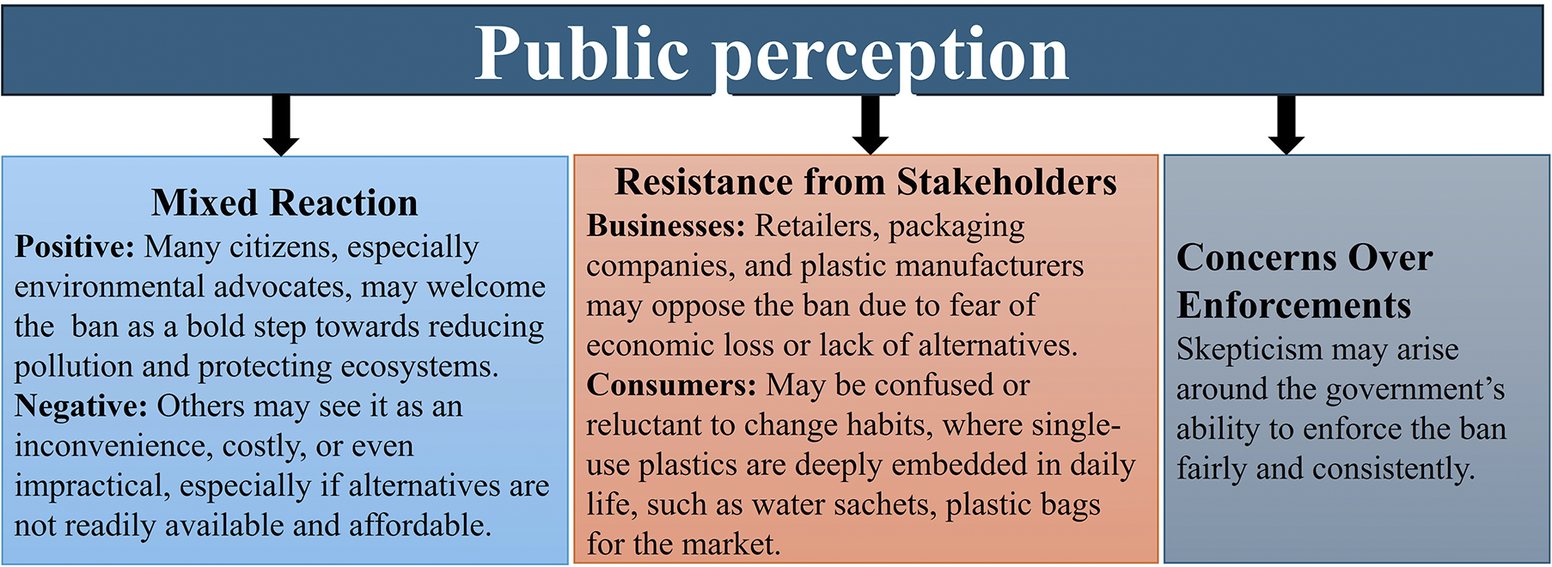
The decision to impose a ban on plastic products, particularly single-use plastics, represents a significant policy shift aimed at curbing environmental degradation and promoting sustainable development. The success of such measures largely depends on the level of public awareness, acceptance and participation. Perceptions may arise regarding the ban on single-use plastics, with individuals potentially accepting the established policy and intending to use alternatives. However, perceptions can be positive or negative (a mixed reaction), and challenges may include resistance from stakeholders, both businesses and consumers, as well as concerns over enforcement and skepticism regarding policy effectiveness, as shown in Figure 1. Public perceptions of such bans are often complex and shaped by a range of socioeconomic, cultural and infrastructural factors that must be addressed through well-crafted awareness campaigns and inclusive policymaking (Negussie and Mustefa, Reference Negussie and Mustefa2017).
Public perception can hinder the successful and effective implementation of Ethiopia’s single-use plastic bag ban policy.

In many developing nations, such as Ethiopia, the public response to plastic bans tends to be mixed. On the one hand, environmentally conscious citizens and civil society organizations may view policy as a progressive and much-needed intervention. These stakeholders often recognize the dire consequences of plastic pollution, ranging from clogged urban drainage systems and polluted water bodies to threats to aquatic life and human health due to microplastic contamination (UNEP, 2018; Misgana and Tucho, Reference Misgana and Tucho2022). However, a significant portion of the public, particularly low-income groups and informal sector workers, may perceive the ban as disruptive or even punitive. For many, single-use plastics, such as shopping bags, packaging materials and water sachets, are affordable, accessible and integral to daily life. Without accessible and affordable alternatives, these communities may view the ban as an elitist agenda that ignores their lived reality.
Business actors, particularly small and medium enterprises involved in the production, distribution or usage of plastic packaging, may also resist such regulations. Studies have reported that the absence of clear transition pathways, economic incentives or technical support for alternative packaging can foster opposition and noncompliance (Mwanza and Mbohwa, Reference Mwanza and Mbohwa2017). Furthermore, widespread skepticism may arise regarding the government’s capacity to enforce the ban effectively. Past policy failures, weak regulatory frameworks and corruption can erode public trust and foster the belief that the policy will be either short-lived or applied inconsistently.
Needed awareness creation and public engagement strategies
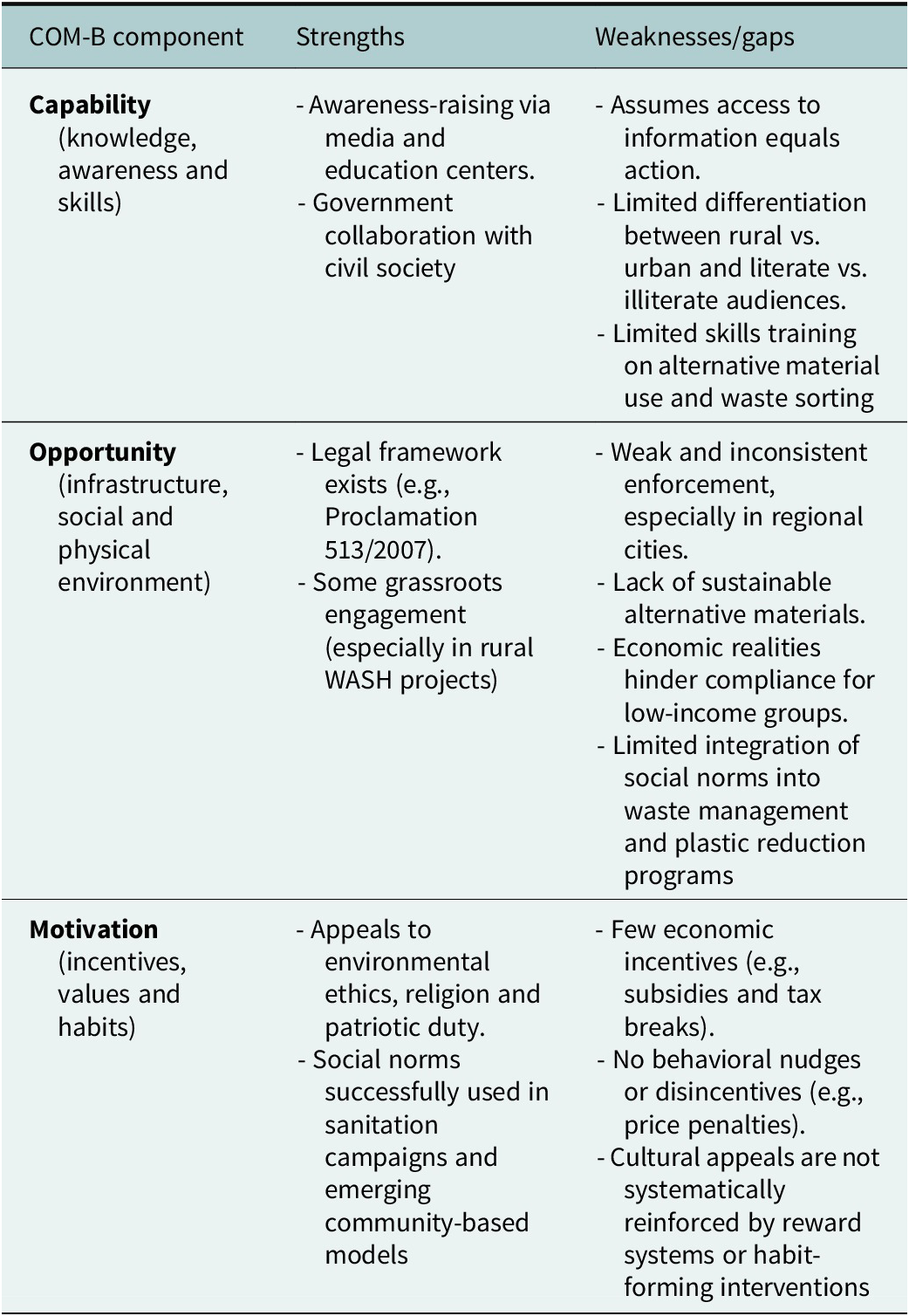
Ethiopia’s environmental activities, such as the banning of single-use plastic bags, focus mainly on public relations and lie solely on the knowledge-deficit model, which assumes that providing information alone will lead to behavioral change. This approach is reflected in campaigns via the media, school programs and public messages framed as moral or patriotic appeals. While useful, research indicates that information alone is insufficient in contexts where structural, economic and sociocultural barriers persist (Kollmuss and Agyeman, Reference Kollmuss and Agyeman2002; Bergquist et al., Reference Bergquist, Nilsson, Harring and Jagers2022). Applying a Capability, Opportunity, Motivation–Behavior (COM-B) model (Michie et al., Reference Michie, van Stralen and West2011) provides a more holistic framework and effective strategies for understanding and addressing these barriers (Table 1).
-
• Capability (psychological and physical) involves the knowledge, awareness and skills needed to adopt environmentally responsible behaviors. In Ethiopia, public awareness campaigns have raised general environmental literacy, yet disparities remain between rural and urban communities, literate and illiterate populations and among different socioeconomic groups.
-
• Opportunity (physical and social) refers to external conditions that enable behavioral change. This includes infrastructure for waste management, affordable alternatives to plastics, the consistent enforcement of laws and supportive community norms. In Ethiopia, weaknesses include limited access to sustainable alternatives, weak enforcement (particularly in regional cities) and the absence of the systematic integration of social norms into programs beyond sanitation.
-
• Motivation (reflective and automatic) encompasses incentives, cultural values and habitual factors that drive behavior. Current strategies leverage appeals to environmental ethics and patriotism, but there is a lack of behavioral nudges, economic levers (e.g., subsidies or price disincentives) and reward systems to reinforce desired behavior.
A critical analysis of the strengths and weaknesses of Ethiopia’s behavior change strategies for environmental governance is mapped to the COM-B framework

Reframing Ethiopia’s strategy through the COM-B lens highlights the need for integrated interventions that combine awareness creation with infrastructure development, legal enforcement and tailored incentives. This approach moves beyond mono-theoretical frameworks and provides a pathway for more sustainable and equitable environmental transformation.
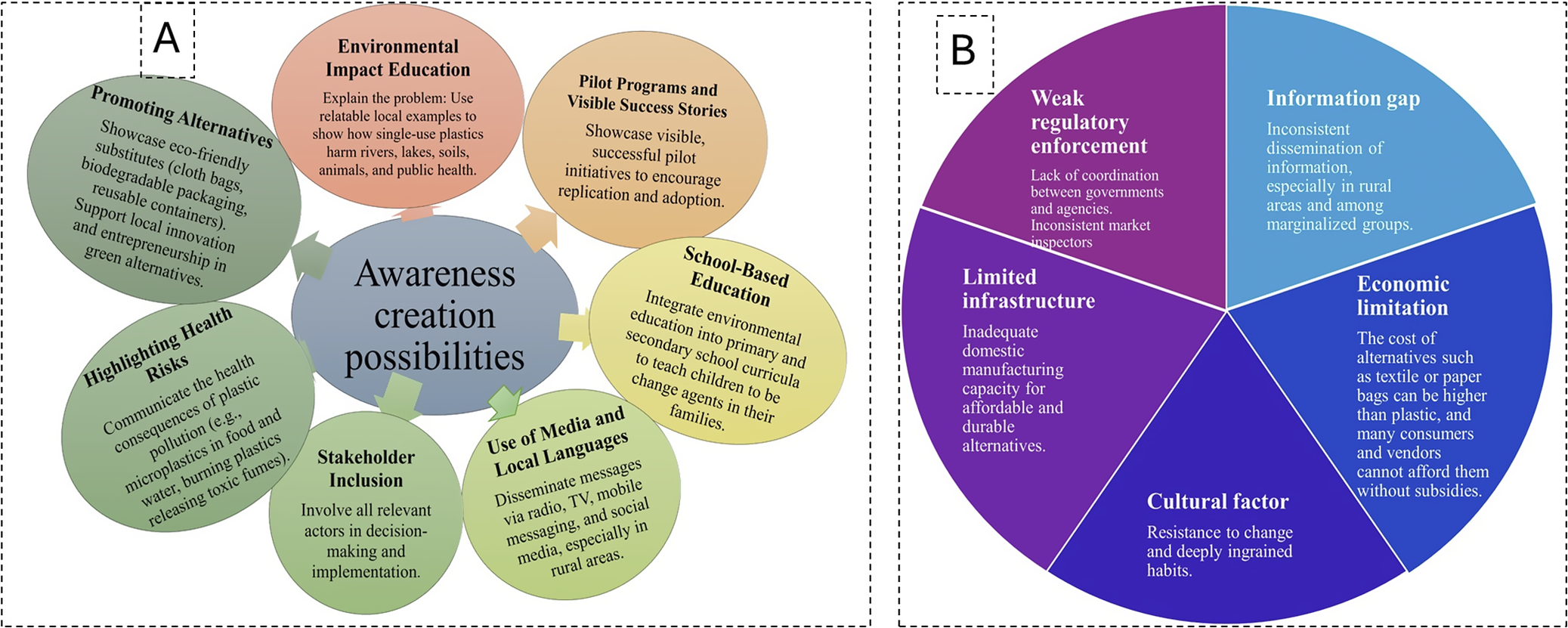
Governments and stakeholders must undertake robust awareness campaigns to shift their perceptions and ensure their widespread support. Figure 2A presents various awareness creation possibilities, such as environmental impact education, highlighting health risks, promoting alternatives, stakeholder inclusion, the use of media and local languages, school-based education, pilot programs and visible success stories. Given this multifaceted landscape of perceptions, studies have reported that awareness creation has emerged as a cornerstone for the successful implementation of plastic bans (UNEP, 2018; Heidbreder et al., Reference Heidbreder, Steinhorst and Schmitt2020; Tiller et al., Reference Tiller, Booth and Cowan2022; Henderson, Reference Henderson2023; Alaghemandi, Reference Alaghemandi2024). A strategic, multi-tiered awareness campaign is essential to inform the public about the policy’s rationale and shift behaviors and values over time (Xanthos and Walker, Reference Xanthos and Walker2017; Heidbreder et al., Reference Heidbreder, Bablok, Drews and Menzel2019). Educational initiatives must begin with clear communication about the environmental and health consequences of plastic pollution. This should include locally relevant examples, such as plastic-laden rivers, lakes and farmland, to make the issue tangible (Agamuthu et al., Reference Agamuthu, Khidzir and Hamid2009; Aragaw, Reference Aragaw2020). Linking plastic pollution to broader environmental challenges, such as biodiversity loss, climate change and food security, can further contextualize the urgency of the policy (Jambeck et al., Reference Jambeck, Geyer, Wilcox, Siegler, Perryman, Andrady, Narayan and Law2015).
Strategies for creating public awareness and engagement, and key barriers to the implementation of Ethiopia’s single-use plastic bag ban policy. The diagram illustrates possible awareness creation (A) and the multifaceted challenges hindering the effective implementation of Ethiopia’s single-use plastic ban policy (B).

The communication of viable alternatives is equally important. Awareness campaigns should highlight the benefits and availability of eco-friendly substitutes, such as reusable cloth bags, biodegradable packaging and refillable containers (Knoblauch and Mederake, Reference Knoblauch and Mederake2021). Governments and stakeholders should actively promote local innovation and entrepreneurship around sustainable materials, thereby ensuring that the ban stimulates green economic opportunities rather than causing unemployment or supply chain disruption (UNEP, 2021a).
Creation of awareness must also be considered participatory. Engaging key community actors – youth associations, women’s groups, religious institutions, market vendors and school communities – ensures that the message reaches diverse segments of society and adapts to local cultural norms (Walker et al., Reference Walker, Baechler, Markley, Grünzner, Akuoko, Bowyer, Menzel, Muntaha, Macdonald, Allen and Cowan2023). For instance, in rural areas, radio programs in local languages may prove to be more effective than social media. In urban centers, visual campaigns, social media influencers and community clean-up initiatives can play a critical role, as environmental dissemination of information plays a vital role in waste management (Kyere and Kankam, Reference Kyere and Kankam2025). Educational institutions should also be leveraged to inspire a sense of environmental responsibility in children and adolescents, who can act as agents of change within their households (Rahmania, Reference Rahmania2024; Husin et al., Reference Husin, Helmi, Nengsih and Rendana2025).
Furthermore, policy implementation should be phased and inclusive. Piloting the ban in selected cities or municipalities, coupled with monitoring and feedback mechanisms, allows governments to identify bottlenecks and adapt their strategies accordingly (Wang et al., Reference Wang, Li and Cai2023; Stoett et al., Reference Stoett, Scrich, Elliff, Andrade, Grilli and Turra2024). Showcasing success stories, such as towns that have significantly reduced plastic waste or markets that have fully transitioned to reusable packaging, can inspire replication and build public confidence (UNESCO, 2020).
In conclusion, while banning single-use plastics in developing countries, such as Ethiopia, is a necessary and commendable step toward environmental sustainability, its success hinges on how well the public is prepared, informed and included in the process. This policy must be supported by robust awareness creation, economic incentives for alternatives and transparent enforcement mechanisms. Only through a bottom-up approach that recognizes the needs and realities of all societal groups can such transformative policies achieve lasting environmental and social impact.
Possible barriers to the effective implementation of the ban
Despite the commendable efforts of the Ethiopian government to introduce a ban on single-use plastics, the full and effective implementation of this policy could be hindered by a combination of interrelated barriers spanning the economic, institutional, infrastructural and socio-cultural dimensions. Figure 2B illustrates the key barriers to the implementation of Ethiopia’s single-use plastic bag bans. This diagram illustrates the multifaceted challenges hindering the effective implementation of single-use plastic bag bans in Ethiopia. Barriers are categorized as weak regulatory enforcement, information gaps, economic limitations, cultural factors, limited infrastructure and inadequate manufacturing capacity. Each segment highlights the critical systemic, social and economic constraints that affect public compliance and institutional enforcement of the policy. Collectively, these challenges can undermine the desired shift toward a circular and sustainable plastic economy.
One of the most prominent challenges is the economic feasibility. The cost of alternatives such as textiles and paper bags is often higher, and many consumers and vendors cannot afford them without subsidies. Moreover, Ethiopia lacks the domestic manufacturing of biodegradable or compostable packaging so far at scale; thus, consumers and vendors may be challenged by affordable prices. Imported alternatives could lead to expensive and scarce products in local markets, making compliance with the ban financially difficult, particularly for small businesses and informal traders. The cost disparity between conventional plastic bags and alternatives, such as textiles, paper, biodegradable plastic bags or plant-based bags, acts as a deterrent in the absence of subsidies or incentives (Haq et al., Reference Haq, Kiran, Khan, Mehmood, Aziz and Haroon2025).
The inconsistent dissemination of information, especially in rural communities and among marginalized population groups, is also a key challenge. The dissemination of information regarding the ban has been inconsistent and often fails to reach areas where informal plastic use is the highest. Many individuals remain unaware of the policy or misunderstand its scope, leading to poor compliance at the grassroots level.
Weak regulatory enforcement mechanisms can also limit policy effectiveness. There may be insufficient coordination between federal institutions, regional governments, local municipalities, environmental protection agencies and market authorities. This fragmentation has resulted in inconsistent inspections, limited monitoring and poor follow-up for violations. In some regions, a lack of clear mandates and overlapping institutional responsibilities impede enforcement.
Another major challenge is the lack of enabling infrastructure to support the transition from plastics. Domestic manufacturing of affordable and durable alternatives is inadequate, resulting in dependency on imports. The local manufacturing industry is underdeveloped and cannot meet the demand for alternative products, whereas plastic recycling facilities remain limited in terms of both capacity and geographic reach (EEPA, 2024). This infrastructure deficit hinders the availability and affordability of environment-friendly substitutes.
Cultural and behavioral factors are among the main barriers that affect the effective implementation of plastic bans (Adeyanju et al., Reference Adeyanju, Augustine, Volkmann, Oyebamiji, Ran, Osobajo and Otitoju2021). For decades, plastic bags have been widely used and valued owing to their convenience, durability and water resistance. Changing long-standing consumer behavior is inherently challenging, particularly in the absence of sustained public education campaigns. Resistance to change, coupled with a limited understanding of the environmental harm caused by plastic pollution, continues to slow the shift toward sustainable consumption practices (Rabiu and Jaeger-Erben, Reference Rabiu and Jaeger-Erben2024). Overall, although the single-use plastic ban represents a positive policy direction, these multifaceted barriers highlight the urgent need for integrated solutions. These include targeted economic incentives, institutional capacity building, infrastructure development and sustained public engagement to shift attitudes and practices regarding plastic use in Ethiopia.
Lessons from developing countries on single-use plastic ban policies
Although Ethiopia has taken a significant step in banning single-use plastic bags, experiences from other developing countries offer valuable insights that can inform implementation strategies, enforcement mechanisms and sustainability pathways. Examining both the successes and challenges faced by comparable societies can help Ethiopia design a robust and adaptive policy framework. Enforcing a plastic bag ban in developing countries, particularly Africa, presents numerous challenges, including economic, social, logistical and political difficulties. The economic impact of plastic bans in Africa is significant, with many nations experiencing employment losses and limited inexpensive alternatives (Ncube et al., Reference Ncube, Ude, Ogunmuyiwa, Zulkifli and Beas2021). Similarly, the UNDP report states that countries such as Nigeria and Uganda continue to face severe challenges owing to inconsistent regulations and inadequate enforcement (UN Environment, 2022; Edodi, Reference Edodi2023). The high cost of alternatives and lack of public knowledge make it difficult for Nigerians to comply with plastic prohibitions (Duru et al., Reference Duru, Ikpeama and Ibekwe2019).
However, a study of Rwanda’s plastic bag bans highlights strong enforcement and public participation as key factors in the country’s successful plastic ban (Hakuzimana, Reference Hakuzimana2021; Xie and Martin, Reference Xie and Martin2022). Rwanda is one of the nations with the strongest bans on plastic bags in Africa. Strong enforcement and public engagement have made Rwanda’s plastic bag ban effective, although residents occasionally ask for alternative measures. This suggests that the ban on plastic bags should be carefully implemented with the engagement of decision-makers, stakeholders and local communities. In Kenya, the government introduced one of the world’s harshest plastic bag bans in 2017 with fines or prison sentences for violators (UNEP, 2021b). Even though the ban in Kenya has led to a significant plastic litter reduction, challenges persist, especially in informal sectors and rural areas where monitoring is weak. In addition, the country initially encounters opposition, but eventually complies with severe penalties (Behuria, Reference Behuria2021). South Africa adopted a different approach by introducing a plastic bag levy in 2003 rather than an outright ban. Initially, plastic consumption dropped, but over time, usage rebounded owing to a lack of enforcement and behavioral change, resulting from the government not endorsing a full ban on plastic bags (Dikgang et al., Reference Dikgang, Leiman and Visser2012).
Even though some of the above-mentioned countries, such as Rwanda, have effectively banned single-use plastic bags and implemented strict enforcement, the implementation of this ban has faced several challenges, which Ethiopia can learn from, as it has banned single-use plastic bags since the middle of 2025 (FDRE, 2025). To unify plastic prohibitions and decrease smuggling, the UNEP report recommends regional and international collaboration, including effective enforcement and public participation (UNDP, 2024). Therefore, Ethiopia can learn from countries that have successfully implemented a single-use plastic bag ban.
-
• Public awareness and behavioral change: Ethiopia should engage in media, schools, universities, the private sector, decision-makers and community leaders to shift public attitudes toward single-use plastic bags. Hence, it is critical to invest in educational campaigns nationwide.
-
• Strong legal framework and enforcement: Ethiopia must ensure robust law enforcement mechanisms from the federal to the local level.
-
• Promote alternative products: Ethiopia should encourage local production of reusable bags to keep costs low and assist local producers.
-
• Invest in waste management: Beyond banning plastic bags, Ethiopia should enhance its recycling and waste collection systems to handle other types of plastic waste.
-
• Regional collaboration: Since smuggling is a challenge to banning single-use plastic bags, Ethiopia must collaborate with neighboring countries, such as Kenya, Djibouti, Somalia and Sudan, to harmonize regional plastic bag regulations.
In general, successful plastic bag ban in countries like Rwanda illustrate that strong political will, public engagement and strict enforcement are essential for success. Ethiopia can imitate this by providing affordable alternatives, supporting entrepreneurs and encouraging regional collaborations to combat smuggling. Additionally, Ethiopia can avoid common challenges by adopting a holistic approach that includes strong enforcement, cost-effective alternatives, public participation and waste infrastructure advancements. This holistic approach should be guided by clear policies and public participation to ensure the sustainable and long-term success of single-use plastic bag bans. Therefore, learning from both successful (Rwanda) and struggling (Kenya) cases is crucial for a sustainable transition from single-use plastic bags in Ethiopia.
Recommendations for enhancing compliance
To strengthen Ethiopia’s single-use plastic bag ban and ensure long-term compliance, an integrated approach that combines enforcement, public engagement, economic incentives and innovation is necessary. Based on urgency, feasibility and equity, the following prioritized recommendations are proposed:
Priority 1: Strengthening enforcement capacity
Train and equip local government inspectors, establish clear penalty structures and create transparent reporting channels for violations. National budget allocation, supplemented by revenues from plastic tax or fines, could be used as a funding mechanism. Environmental Protection Authority (EPA), Ministry of Irrigation and Lowlands, Ministry of Water and Energy (MWE), The Environment, Forest and Climate Change Commission, regional environmental bureaus and municipal authorities could be responsible.
Priority 2: Ensuring affordable alternatives for all
Provide targeted subsidies for low-income households and small vendors to access reusable or biodegradable bags and support the community-based production of cloth bags using local materials. Redirecting a portion of plastic tax revenues and leveraging international development grants (e.g., UNDP, UNEP and GEF) can be a possible funding mechanism. The organization mentioned under Priority 1, the Ethiopian Ministry of Trade and Regional Integration, microfinance institutions and local cooperatives can be used as responsible actors.
Priority 3: Sustained public education and awareness
Implement multilingual, culturally sensitive campaigns through radio, TV and social media; engage community leaders, faith-based institutions and youth groups. Different organizations, such as the Ministry of Education, NGOs and local media houses, can take responsibility.
Priority 4: Support for local innovation and green enterprises
Provide small grants or tax breaks for entrepreneurs producing biodegradable packaging from locally available agricultural residues. Public–private partnerships, innovation funds and concessional loans could be a possible funding mechanism, and industry ministers, local business associations and NGOs are responsible.
Priority 5: School-based environmental education
Integrating lessons on plastic pollution, waste management and sustainability into primary and secondary curricula. The Ministry of Education, the EPA and environmental NGOs are responsible.
Priority 6: Monitoring and evaluation
Establish a national monitoring platform to track compliance rates, environmental improvements and public attitudes; publish annual progress reports. Research institutions and the Central Statistics Agency are responsible actors, and EPA and MWE can be used as funding mechanisms.
By linking each recommendation with concrete funding sources, responsible actors and equity-focused measures, this framework aims to move beyond broad proposals toward practical, scalable solutions that can be implemented in Ethiopia’s current environmental and socioeconomic context.
Conclusion
The Ethiopian government’s move to ban single-use plastic bags represents a bold and necessary step toward environmental sustainability. However, its ultimate success depends more on legislation, which requires broad-based public understanding, acceptance and participation. This study underscores that compliance is not merely a legal issue but a socio-cultural and economic process that must be facilitated through tailored communication, accessible alternatives and inclusive policy design. While pockets of positive behavioral change are emerging, especially in regulated sectors, widespread noncompliance persists because of structural barriers and behavioral inertia. A coordinated, bottom-up approach incorporating education, economic support and participatory governance is vital. By addressing these multidimensional challenges, Ethiopia can strengthen its position as a leader among African nations in the fight against plastic pollution and inspire effective policy adoption across similar contexts.
Open peer review
To view the open peer review materials for this article, please visit http://doi.org/10.1017/plc.2025.10031.
Acknowledgements
The authors would like to express their gratitude to the institutions and universities affiliated with this study for granting access to the resources. Additionally, the authors would like to acknowledge the contributions of community organizations, environmental NGOs and public stakeholders involved in implementing the plastic ban policy, and researchers and policy analysts who provided insights into behavioral trends and compliance challenges.
Author contribution
T.A.A.: Writing – original draft, visualization, investigation, formal analysis, conceptualization, writing – review and editing, validation.
L.H.: Writing – review and editing, visualization and validation.
Financial support
This research received no specific grants from any funding agency, commercial or not-for-profit sectors.
Competing interests
The authors declare none.

 Open access


Comments
June 2025
Subject: manuscript submission
To: Cambridge Prisms: Plastics
Dear Editor,
I am pleased to submit a manuscript entitled “Evaluating Public Perception and Compliance with Ethiopia’s Single-Use Plastic Bag Ban: Challenges and Strategic Pathways to Success” for consideration in the Cambridge Prisms: Plastics
This perspective paper critically examines Ethiopia’s recent nationwide ban on single-use plastic bags implemented in June 2025. It underscores how public perception and behavioral responses influence the success of such environmental policies, particularly in developing nations. Our analysis identifies key compliance barriers—ranging from limited awareness and socioeconomic constraints to institutional and infrastructural shortcomings—and offers actionable, context-specific recommendations.
The study offers timely and policy-relevant insights that can guide not only Ethiopia’s efforts but also inform similar initiatives across developing countries aiming to transition toward sustainable waste management and circular economies.
We believe that our manuscript aligns well with the scope and readership of Cambridge Prisms: Plastics, especially considering its emphasis on policy analysis, behavioral change, and sustainable environmental management. The article has not been submitted elsewhere and is not under review by any other publication.
We kindly request you to consider it for publication and would be happy to address any revisions or questions you may have.
Thank you for your time and consideration.
Yours sincerely,
The corresponding author
Some of the corresponding author’s previous publication experience in plastic and pollution and sustainable topics
1. https://doi.org/10.1016/j.hazadv.2025.100756
2. https://doi.org/10.1017/plc.2024.37
3. https://doi.org/10.1016/j.marpolbul.2020.111517
4. https://doi.org/10.1016/j.marpolbul.2020.111879
5. https://doi.org/10.1186/s40068-020-00217-x
6. https://doi.org/10.1016/j.scitotenv.2022.153261
7. https://doi.org/10.1016/j.jhazmat.2021.128070
8. https://doi.org/10.1016/j.scitotenv.2021.149235
9. https://doi.org/10.3389/fenvs.2022.831417
10. https://doi.org/10.1016/j.hazadv.2022.100126
11. https://doi.org/10.1016/j.hazadv.2023.100328