


1. Introduction
In the last 30 years, there has been a renewed emphasis on commercialisation in the late medieval economy.Footnote 1 In particular, historians have focused on such aspects of this process as the proliferation of regional markets; the growth of urbanisation; and the use and availability of currency and credit.Footnote 2 Yet, the role of land in this process is debatable. Bruce Campbell has argued that nascent factor markets in land, labour and capital emerged in the late twelfth century; however, he claims that the market in land, in particular, served to perpetuate existing economic structures and thus impede the progress of agrarian capitalism.Footnote 3
Previous studies of the medieval property market have predominantly focused on customary land rather than freehold; as customary tenants could not pass on property without the assent of the lord of the manor, this process was subject to a higher degree of regulation, and was therefore more systematically and reliably recorded. Numerous regional studies have made use of the extensive surviving corpus of manorial records to examine the transfer of customary land on particular manors or estates.Footnote 4 The most extensive recent study of this kind examines the transfer of land between customary tenants on the estate of the Bishopric of Winchester from the thirteenth to the fifteenth centuries.Footnote 5
The transfer of land between freeholders has not yet been subject to analysis on a similar scale. This is an important omission in light of the estimation that freehold land constituted approximately 50 per cent of all the landholdings in England c. 1300.Footnote 6 A market in freehold land is argued to have emerged in the late twelfth century following the legal reforms of Henry II, which allowed for the title to property to be legally defended under the common law and enforced in the royal courts.Footnote 7 A wealth of deeds and private charters recording grants, sales, leases and settlements of disputes relating to freehold property survive from this period onwards; these have been the focus of a number of regional studies.Footnote 8 Historians have commented on the potential for future scholarship in this area.Footnote 9 However, depending on their date and provenance, deeds sometimes omit information such as the purchase price or date of the transaction. This, coupled with the fact that original deeds and cartularies are scattered across different archives, makes them a problematic source for the study of large-scale market activity. Detailed information on the extent and value of medieval estates can be obtained from the inquisitions post mortem (IPM) (inquiries made by government officials into the landholdings after death of Crown tenants in order to determine the feudal dues owed to the king), which have been subject to extensive study.Footnote 10 However, the land surveys in the IPMs by their nature represent post mortem valuations, and are therefore not indicative of commercial market activity.
The sources for this current study are the feet of fines. Fines, or final concords, are documents recording agreements in legal actions conducted in the Court of Common Pleas regarding the right to freehold property. Fines originated in the late twelfth century, however by the late thirteenth century the legal actions they record are generally thought to no longer be genuine disputes; in other words, both parties agreed as to the outcome of the case. The agreement was copied three times onto a single piece of parchment. These were then separated by means of an indented line to guard against forgery; the two parties to the case each received a copy, and the third (the ‘foot’) was kept as a record by the court. Fines typically record: the date of the transaction;Footnote 11 the type of legal action; the names of the parties to the suit; a brief description of the property, its location and assets; and the consideration, a sum of money given in exchange for title to the property. Thousands of these documents survive in the National Archives, arranged according to county in the series CP 25/1 and a large number have been published in some form.Footnote 12
Our dataset contains information extracted from nearly 25,000 fines dating from the period 1308–1508. This comprises data from the counties of Bedfordshire, Berkshire, Buckinghamshire, Devon, Essex, Hampshire, Hertfordshire, Herefordshire, Kent, Leicestershire, Lincolnshire, London and Middlesex, Northamptonshire, Northumberland, Nottinghamshire, Oxfordshire, Rutland, Shropshire, Warwickshire, Worcestershire and Yorkshire (see Table 1).Footnote 13 These counties were selected primarily on the basis of accessibility to published sources. For this reason, we do not have a complete run of data for every county; this has been taken into account in the following regional comparison.Footnote 14 In addition to the information contained within the documents themselves, the database also comprises a number of standardised fields in which the property and the parties involved in the transaction are categorised according to type, permitting detailed analysis of regional and temporal trends.
Overview of data from feet of fines used in this study

Source: All tables and figures sourced from the authors' feet of fines dataset; see next page for description. For download: https://www.icmacentre.ac.uk/research_grants/land-prices-rents-medieval-england/. Other data sources indicated in the accompanying footnotes.
As we will detail further below, the consideration was a single sum given in return for the whole property, thus determining the relative values of a property's assets is problematic. Margaret Yates, Anna Campbell and Mark Casson have attempted to overcome this problem in their analysis of fluctuations in the price of property in Essex and Warwickshire between 1300 and 1504.Footnote 15 Using hedonic regression analysis, they estimate the value of the constituent parts of each property, taking into account its location, the type and quantity of its assets, and the gender, marital status and occupation of the individuals involved in the transaction. Their findings demonstrate that, although the value per acre of arable, meadow and pasture remained relatively similar across the two counties, from the fifteenth century the value of manors and urban properties in Essex was markedly greater than in Warwickshire, a result that they attribute to increased demand for these types of properties among the London professional and commercial classes.Footnote 16 Although studies such as this demonstrate the potential for analysis of the monetary considerations stated in the fines, it is clear that they cannot be used without caution. For this reason, the current analysis will use the information presented by the fines to focus primarily on fluctuations in market activity and in size and type of property.
Despite their inability to provide a complete picture, in recent years several studies have demonstrated that, if used along with an understanding of their provenance, fines can provide an insight into freehold market activity, and thus constitute a unique opportunity to gather long-term time series data on medieval property.Footnote 17 In particular, these studies have examined the relationship between fluctuations in the number of fines per year and contemporaneous socio-economic events, one of the key themes emerging from this work being the connection between crisis and market activity.
As demonstrated below, the potential of fines as a source for freehold market activity is supported by the parallels they reveal with trends observable in the customary land market. We will utilise our collected dataset to look afresh at the relationship between periods of crisis and property market activity (the volatility and size of transactions) over time. This will enable revised interpretations to be suggested, explaining the impact of exogenous factors and commercialisation on freehold land ownership over an extended period. For instance, can we find peaks of activity following crisis periods such as the Great Famine (1315–1322) and the Black Death (1348) suggesting that property ownership became open to speculation and market activity?Footnote 18
The article will now further outline the sources and their problems in section 2, consider market activity over time in section 3, before investigating the types of property traded in section 4, then market activity at the regional level at section 5, before concluding in section 6.
2. The sources and their problems
The complex legal provenance of the feet of fines presents a number of problems. They record agreements to a number of different types of legal action, not all of which are analogous to straightforward ‘sales’. While the majority appear to have been actions of covenant (the recognition of the right of title to property in return for a consideration), other kinds of suits recorded entails, life tenancies or licences to alienate land in mortmain.Footnote 19 As the aim of this article is to examine as far as possible the operation of the commercial market in freehold land, we have largely confined our study to those fines that include a monetary consideration, on the assumption that non-monetary transactions are more likely to represent feudal incidents such as relief (after the death of a tenant, a fine payable to the lord by his heir in order to enter into his inheritance) or wardship (the reversion to a lord of an heir's lands until he came of age) rather than sales.Footnote 20 From the later fourteenth century, fines might also have been used to record an enfeoffment to use, a legal device designed, after the death of a feudal tenant, to evade the costs of incidents such as relief, wardship and marriage through the conveyance of the property to one or more trustees rather than the tenant's heir.Footnote 21 Studies of the numbers of enfeoffments to use during this period indicate that they only account for a small proportion of transactions overall; the implications of their existence for our dataset are therefore likely to be minimal.Footnote 22 While it is generally agreed that by the end of the thirteenth century the fine no longer constituted a true legal dispute, challenges to the title of a property still occurred after this date, as evidenced by the occasional appearance of names of rival claimants on the dorse of the documents.Footnote 23 Although the majority of these claims are assumed to have been unsuccessful, there is evidence that the fine continued in some cases to be subject to dispute during the late fourteenth century; in 1376 a petition of the parliamentary Commons expressed concern that fines were being used to disinherit minors from their estates.Footnote 24 However, the extent to which this issue was widespread is unclear.
When conducting an analysis based on a single set of sources, it is necessary to address the question of how representative those sources are of the phenomenon being measured. While fines are one of the most numerous, and certainly the most consistent (in terms of survival), sources for transactions of freehold property, they are, in the words of Sandra Raban, ‘deceptively comprehensive; many known sales, especially of small parcels of land, were never protected by this procedure’.Footnote 25 It is difficult to assess exactly what proportion of English freehold land conveyances were registered as fines in the fourteenth and fifteenth centuries, but we can be certain that this proportion did not remain constant over the whole of the period. The popularity of the fine as a way of transferring property was affected by changes in the legal and administrative systems. Up until the later fourteenth century, one of the main attractions of the fine was that it was one of the few ways in which someone could prove their incontestable right to piece of land. As noted above, in a legal case resulting in a fine, rival claimants to the property had a short period of time (usually a year and a day) to come forward; after this time had elapsed, further claims were barred, effectively securing the property in the plaintiff's (or purchaser's) name.Footnote 26 This changed in 1360 with the passing of the statute of non claim (34 Edward III, ch. 16), which removed this bar, thus making fines a less secure means of conveyance.Footnote 27 The decline in numbers of fines from the late fourteenth century onwards was as much attributable to this legislation as to the overall decline in population.Footnote 28
Fines are also more numerous in the thirteenth century for reasons of accessibility. Until 1294, instead of travelling to the Court of Common Pleas, a litigant had the option of registering a fine at the itinerant court of General Eyre, whereas after this date, parties to a fine either had to travel to Westminster, or appoint an attorney in their place (these individuals are sometimes mentioned in the fines).Footnote 29 The importance of location is indicated by the fact that, during the various periods at which the royal administration relocated to York during the fourteenth century, the numbers of Yorkshire fines substantially increased.Footnote 30 The cost of registering a fine was also likely to have been prohibitive for some. The legal procedure was initiated by the plaintiff obtaining a writ, the cost of which was calculated according to a scale based on the sworn annual value of the property in question (although this was waived if the annual value of the property was £2 or less); then, after the case had appeared before the court, a licence was obtained at the cost of an additional half mark.Footnote 31 Bean attributes the decrease in number of fines over the fifteenth century to the increasing expense associated with the process, in particular in relation to the emergence of the enfeoffment to use.Footnote 32
Several other issues should be taken into account when using fines as a source for the study of the property market. Their standard form has led to doubt being cast on the reliability of the information they provide regarding the descriptions of the property and its purchase price, or consideration. The latter in particular has attracted scepticism as it is often a round figure (for example, £10 or 100 marks); this has led many historians to believe that it had a symbolic significance, and was not reflective of the market value of the property.Footnote 33 As an illustration of this issue, we have found that of the transactions in the database, over 80 per cent record as a consideration one of the following six figures: 100 shillings; 10 marks; 20 marks; £20; 40 marks or 100 marks.Footnote 34 Considering the wide variety in the descriptions of property recorded, and the fact that the transactions take place over a two-hundred-year period, this would seem to confirm the doubts of previous historians as to the consideration's accuracy. Yates reiterates the views of previous editors of the fines in stating that the consideration ‘was not the purchase price’ and furthermore, ‘was probably fictitious and not actually paid’.Footnote 35 However, she does suggest that it was reflective of the property's perceived value as determined by its annual return; based on analysis of a small sample she finds a close correlation between the considerations in the fines and the property valuations recorded in the IPMs during the fourteenth and fifteenth centuries. On this basis, we might therefore view the considerations as representing a number of ‘price brackets’, which were broadly reflective of property value.
3. Market activity over time
The geographical and chronological scope of our data is summarised in Table 1. In addition to the documents recorded in the database, Table 1 also contains figures for the number of fines per county in which no monetary payment was recorded. As stated above, these have been excluded on the grounds that they represent various types of feudal, rather than commercial, transaction. Figure 1 shows numbers of fines per year for all fines (dashed line) and those recording monetary payments only (solid line). In accordance with the decline in feudal incidents over the course of the period, the number of non-monetary fines declines steeply over time; prior to 1350 there are roughly one hundred of these per year, between 1350–1399 this drops to an average of 25 per year, and in the fifteenth century an average of 11 per year.Footnote 36 In the following analysis it should be emphasised that, because we are collecting data only from those fines that record monetary payments, our results differ in some respects from those of previous studies. In particular, the high number of non-monetary fines dating from the first half of the fourteenth century means that we have found a less marked decline in market activity over the total period than that identified by Yates. However, it is interesting to note that the total number of fines and those with monetary payments attached follow a very similar pattern, indicating that they responded in the same way to external events.
Number of fines per year compared with monetary payments only (1308–1508).

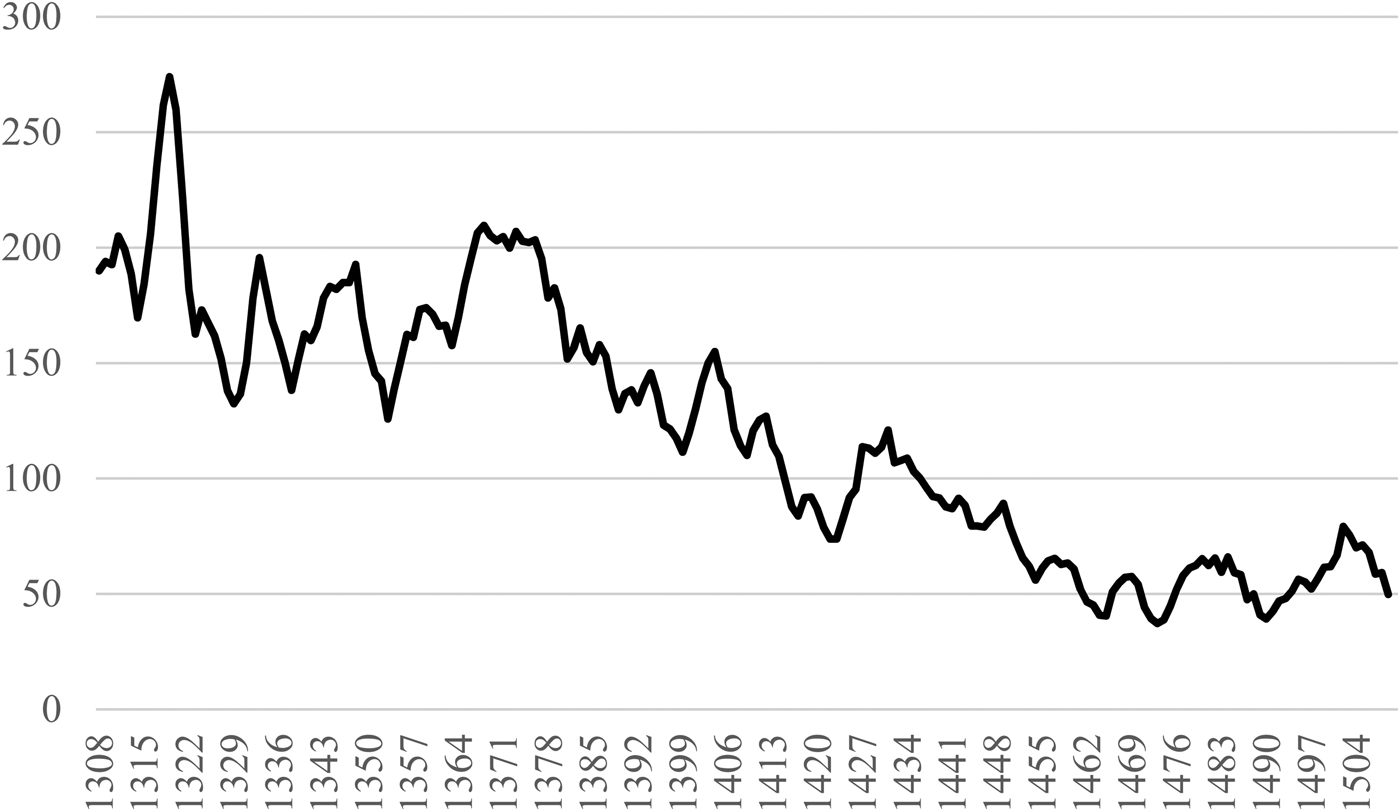
Figure 2 shows five-year averages of the number of fines per year (monetary payments only) for all counties contained within the dataset.Footnote 37 A significant rise in the number of property transactions is visible between 1314 and 1319. This supports the findings of previous studies that associate times of scarcity, in particular the agrarian crisis and resulting famine of 1315–1322, with a surge in activity in both the freehold and customary land markets.Footnote 38 Bruce Campbell, and Mike Davies and Joanthan Kissock argue that rising grain prices drove this surge, causing small landowners to sell property out of financial necessity to wealthier purchasers.Footnote 39 Conversely, Hannah Ingram finds less evidence of a direct relationship between grain prices and the number of transactions in the fines for Warwickshire during the same period. She therefore emphasises the importance of other factors such as the Bovine Pestilence of 1318–1322.Footnote 40
Number of monetary fines per year (1308–1500) (all counties).
Considering both a longer period and a more comprehensive set of counties, two questions therefore arise from our research: first, to what extent did grain and livestock prices drive activity in the property market; and second, were surges in market activity in the wake of the famine predominantly characterised by the movement of property from poor to rich? In answering the first question, we plot the number of transactions per year against annual prices for grain and livestock between 1308 and 1500 (Figures 3a and 3b).
Monetary fines per year and annual price for grain (1308–1500).
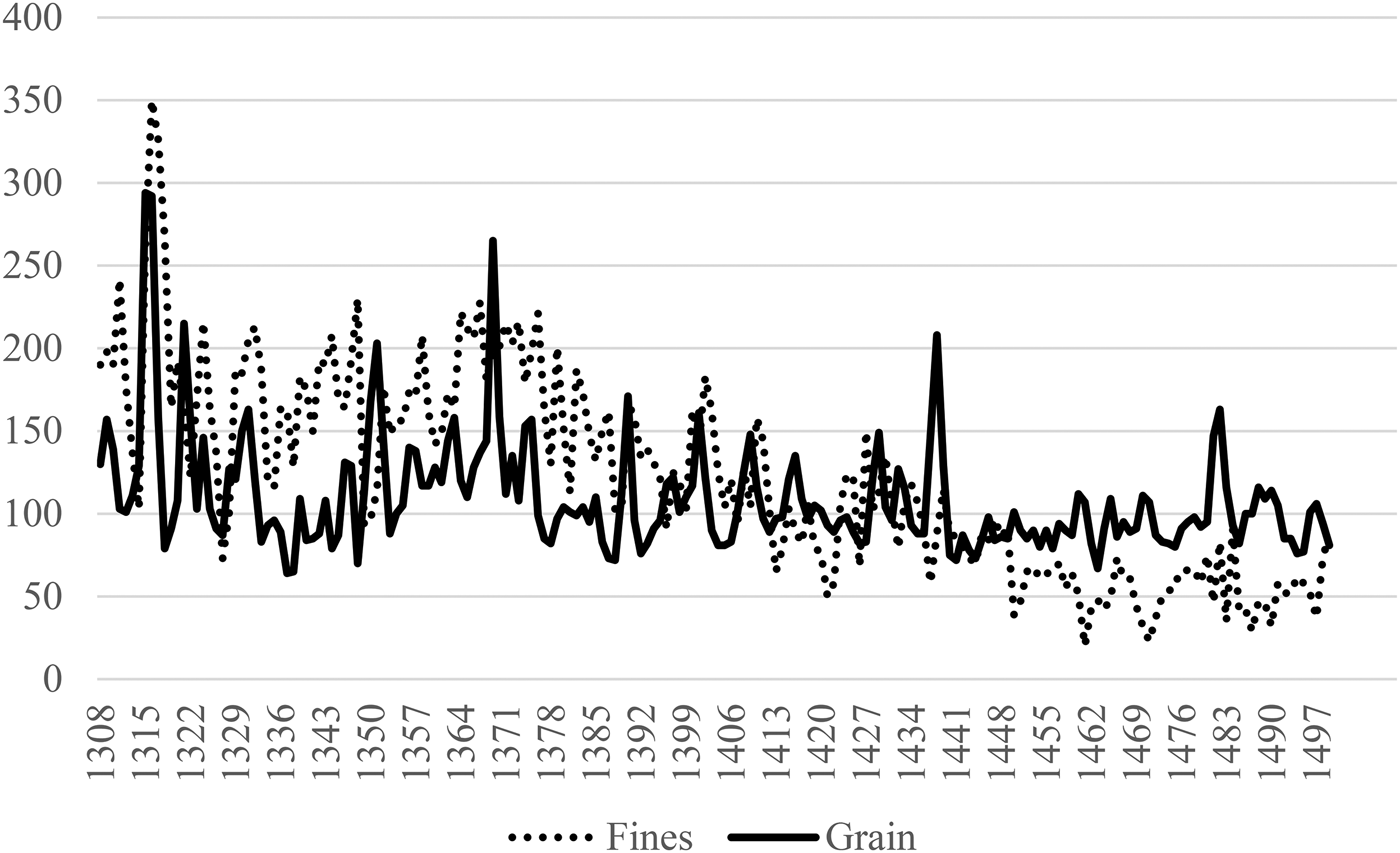
Monetary fines per year and annual price for livestock (1308–1500).

This demonstrates that during the first half of the fourteenth century, there is evidence of a relationship between grain prices and the volume of property transactions; both experienced a peak in 1316, supporting the findings of previous scholars regarding the effects of the Great Famine on the property market. Observation of subsequent smaller peaks in the 1320s suggests that the grain price is in fact driving the number of property transactions. Table 2 demonstrates that changes in the grain price show a considerable positive correlation with property market activity during the first half of the fourteenth century, and to a lesser degree in the period 1350–1399, but are negatively correlated during the fifteenth century. We might therefore assume that the fifteenth-century property market was less affected by subsistence crises, but we should also bear in mind the fact that the fines are less representative of freehold market activity during this period. Our findings follow those of Campbell, whose analysis of the customary land market on the manor of Coltishall, Norfolk, suggests a strong correlation between market activity and the price of grain before the plague; however, he finds little correlation after this date, leading him to argue that ‘before the Black Death the land market was harvest-sensitive; thereafter it was not’.Footnote 41 The relationship between livestock price changes and property is less clear; Table 2 suggests a slight positive correlation during the fifteenth century, which could be attributable to the movement towards pastoral farming that occurred during this period.
Correlation coefficients for number of property transactions and price of commodities (% changes)
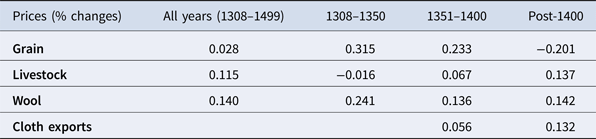
Sources: For fines, see text. Data on grain and livestock from David L. Farmer, ‘Prices and wages’, in H. E. Hallam ed., The agrarian history of England and Wales, vol. II: 1042–1350 (Cambridge, 1988), 790, 804–06 and David L. Farmer, ‘Prices and wages, 1350–1500’, in Edward Miller ed., The agrarian history of England and Wales, vol. III: 1348–1500 (Cambridge, 1991), 502–05; 508–12; data on wool from T. H. Lloyd, ‘The movement of wool prices in medieval England’, Economic History Review, supplement vi (1973), 35–44. Data available online at the European State Finance Database, ‘Data on English economic indicators compiled for the purposes of calculating the real increase of taxation over time: English wool prices: area means & annual means, 1209–1500’, http://www.esfdb.org/Database.aspx [accessed 13 February 2018]; data on cloth exports from E. M. Carus-Wilson, and Olive Coleman, England's export trade, 1275–1547 (Oxford, 1963), 75–119.
The second question, regarding the social status of the participants in the transactions, poses a greater methodological challenge. There are two ways in which we might approach this problem. Firstly, we could examine the available information on the buyers themselves; this is the approach adopted by Davies and Kissock, who examine the social background of the litigants in the fines by seeing how many were registered as taxpayers on the 1327 Lay Subsidy Roll of Gloucestershire.Footnote 42 From this analysis they conclude that less wealthy litigants (that is, those who were not registered for tax or paid a low rate) were more likely to be selling land during the period of the famine. Conducting a similar analysis using our data would be very complex due to the size of our dataset and the fact that it spans multiple counties. However, it is possible to gain some insight into the social background of buyers and sellers from their descriptions within the fines themselves. Unfortunately, this information is far less frequently recorded during the first half of the fourteenth century. Of the 5,480 individuals appearing in fines between 1315 and 1322, only 233 are recorded with any accompanying information regarding their social group.Footnote 43 The majority of these are buyers; information regarding the status of the purchaser of the property, rather than the seller, was more frequently recorded in the fines, presumably as they might have a need to prove their claims to the property in the future.Footnote 44 Members of the lower clergy make up the majority of these individuals (over 70 per cent), the remainder comprising merchants, craftsmen and widows, with a small number of nobility and gentry. It is interesting to note that widows appear to make up a disproportionate number of those selling property during the famine; this is in contrast to the trends observable in the dataset as a whole, in which widows can be seen to be more active in acquiring property than married women. This may be seen as supporting the idea that the famine was characterised by sales prompted by difficult financial circumstances.
Another way of assessing the social status of those buying and selling property during the famine is to examine the nature of the transactions, in order to see whether a high number of the properties sold during the famine were smallholdings. This is the approach adopted by Ingram, who focuses on transactions featuring manors and single messuages (a plot with a house on it) as involving, respectively, elite and low-status participants. She finds that ‘the number of single messuage transfers is far higher during the crisis years than in the period of relative [grain] price stability’.Footnote 45 A similar analysis was conducted using our data; Figure 4 compares transactions featuring manors with those featuring single messuages, in both cases displayed as five-year averages of the percentages of the number of transactions in total. This shows that the proportion of single messuage transactions declines over the whole period, whereas the number of sales featuring manors increases.Footnote 46
Transactions featuring manors and single messuages as a percentage of total (five-year averages).

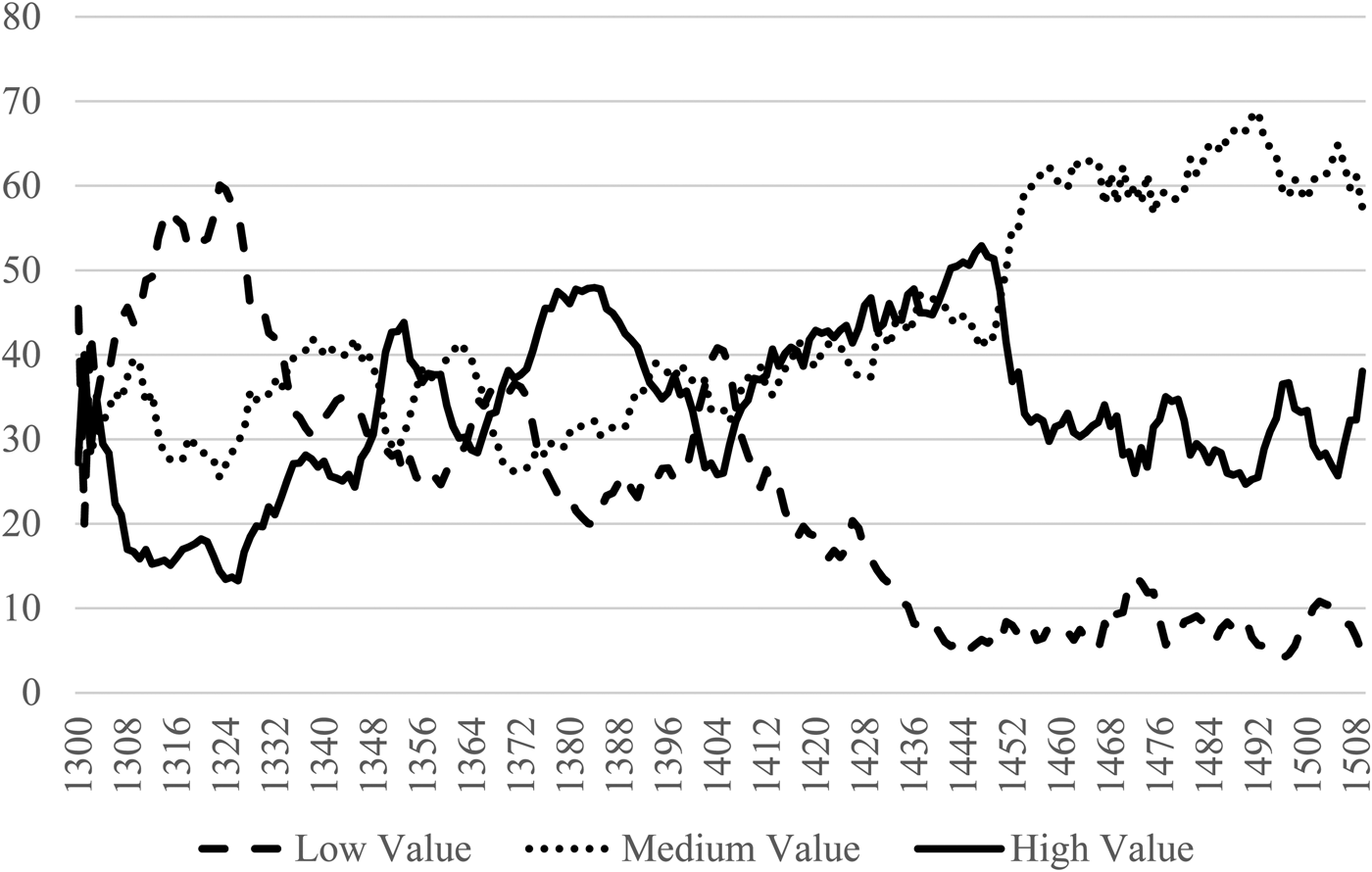
Both graphs are very volatile, and unlike Ingram we find little evidence that the number of single messuage transactions was sensitive to the effects of the early fourteenth-century agrarian crisis. It is perhaps reductive to focus solely on manors and messuages, as this excludes other types of low- and high-status property such as small or large parcels of land. For this reason we conduct an additional analysis, whereby we use the considerations recorded in the fines to separate the properties into three price categories: Low Value, Medium Value and High Value.Footnote 47 Figure 5 displays the percentage of transactions broken down according to these three categories. This clearly demonstrates that, while sales of all three types of property rose substantially during the famine (peaking in 1319 – see Figure 3b), the majority of these were of low value (worth 20 marks or less), whereas high value properties made up less than 20 per cent of the total. This indicates that the surge in market activity during the Great Famine was driven by sales of low-value properties rather than larger estates, thus supporting the idea that the famine caused smallholders to sell land out of financial necessity.Footnote 48
Percentage of transactions according to price bracket.
Yates argues that in the 1320s, the number of fines was influenced by political unrest during the reign of Edward II and a collapse in activity in the Court of Common Pleas.Footnote 49 This is to some extent confirmed by our data; after a steep decline in 1324, the market appears to have undergone a surge in activity upon Edward's death in 1327. However, this period of activity was relatively short-lived, and the number of fines remained volatile throughout the 1330s and 1340s. On the basis of the evidence presented above, we would therefore argue that underlying economic factors, such as the price of grain, played a greater role than political events in influencing freehold property market activity during this period.
Given the striking effects of the Great Famine on the property market, we might expect a similar reaction to the second major demographic crisis of the fourteenth century, the Black Death. In the immediate aftermath of the plague, the market suffered an initial brief downturn in the years 1349–1353 (a similar effect can be observed during the second outbreak between 1361 and 1364). However, thereafter the number of fines rose sharply, and by 1370 they returned to higher than pre-1350 levels. This is particularly notable given the dramatic decline in population, and indicates that this was a period of unprecedented market activity. Figure 1 demonstrates that the total number of fines also shows a similar pattern of recovery after the Black Death, though recovery is less pronounced than when looking at the monetary fines in isolation. These findings are in contrast to those of Yates, who observes a general decline in the number of fines per year for the counties of Berkshire and Warwickshire after the mid-fourteenth century, suggesting that the effects of the plague on the land market were subject to regional variation.Footnote 50 Yates characterises the second half of the fourteenth century as a period of decline and stagnation in the freehold property market; although there was a demand for freehold property among ‘lay professionals who sought an entrée into landed society’, she argues that this demand was not met, as there were relatively few properties available for purchase due to the desire on the part of existing landowners to keep their estates intact so that they could pass them on to their heirs.Footnote 51 In making this argument, Yates cites the work of Bean, McFarlane and Carpenter, all of whom have ‘observed that freehold lands (especially those carrying lordship), in sharp contrast to customary and demesne lands, were not coming onto the market’.Footnote 52
Our results, however, suggest a different interpretation, in which the post-plague land market remained buoyant. A similar effect is observable in studies of customary land transfers of the same period.Footnote 53 Closer analysis reveals that, in contrast to the reaction of the market to the Great Famine, the rise in number of transactions in the decades following the Black Death was predominantly driven by an increase in sales of high value properties, which during the 1370s account for 40–50 per cent of all properties sold (Figure 5). This may be related to the fact that the sale of manors became increasingly common over the course of the fourteenth century (Figure 4). This indicates that the peak in market activity following the plague was different in character to that which followed the famine of the early fourteenth century; whereas the latter was driven by a subsistence crisis, in which smallholders were driven to sell land in order to buy food, the former predominantly involved the sale of large properties and whole manors, and therefore sellers who were wealthy or aristocratic. Furthermore, there is little evidence of a correlation between grain price and land market activity in the second half of the fourteenth century.
To what can we therefore attribute this rise in activity? The simplest explanation is that it was driven by post mortem sales of landowners who were victims of the plague. John Mullan and Richard Britnell's study of the customary land market on the estate of the Bishop of Winchester finds that periods of high mortality were associated with peaks in the number of land transfers, which they categorise predominantly as inheritances.Footnote 54 However, the evidence presented by our data suggests that this was not a key factor in the comparable increase in freehold property market activity; our omission of the non-monetary fines from the dataset is likely to have excluded most inheritances, and of the 3,482 transactions taking place between 1353 and 1370, only 56 (1.6 per cent) contain evidence (either from shared surnames or through explicit statement) that the buyers and sellers were related. On this basis we can therefore assume that in the post-plague period many people were still keen to acquire land.Footnote 55 Cicely Howell has argued that this was the motivation behind the high number of remarriages of widows during this period.Footnote 56
In addition to post mortem sales, it is also possible that some landowners were driven to dispose of their estates due to the lack of male heirs.Footnote 57 Simon Payling has found evidence that social conditions in the wake of the Black Death caused a crisis of inheritance among the aristocracy, in that there was a high rate of failure in the direct male line.Footnote 58 Financial concerns may also have played a part, as the high death toll resulting from the plague caused a substantial increase in the cost of labour. Parliament's attempts to control wages in the 1351 Statute of Labourers were ultimately unsuccessful; after the second outbreak of plague in the 1360s, wages rose steadily throughout the second half of the fourteenth century and by the 1500s were 50 per cent higher than the statutory rate.Footnote 59 As a consequence, the costs associated with running an estate were now much higher than previously, and this may have proved an incentive to sell for many landowners.
Our data therefore supports Mark Bailey's assertion that: ‘the pent-up demand stored in the pre-Black Death economy … was suddenly released with the dramatic demographic cull. The flood of untenanted land onto the market was readily mopped up by surviving smallholders eager to augment their meagre holdings and by the landless seizing the golden opportunity to mount the property ladder.’Footnote 60 There still remains the question, however, of the identity of those who took advantage of this opportunity. Some historians have described the emergence during this period of a new class of aspirational professional buyers who had profited from the French wars and England's expanding cloth industry, and were therefore in a good position to use this wealth for property investment.Footnote 61 Payling has argued that this was an important catalyst for social mobility, as the purchase of property acted as a stepping stone into the landed classes: ‘A new family could not realistically expect to make itself by marriage alone, but by purchasing property in one generation it could rise high enough to add to its purchases by marriage in the next.’Footnote 62
Analysis of the social status of the litigants in the fines from the mid-fourteenth century onwards provides some support for these arguments.Footnote 63 Whereas the number of litigants from aristocratic backgrounds remained relatively static over the course of the period (between 10 and 15 per cent), the number of buyers from the gentry increased substantially, and by the second half of the fifteenth century they had overtaken the clergy as the predominant social group appearing in the fines.Footnote 64 Many of those who engaged in multiple property purchases during this period were from mercantile or professional backgrounds, and in some cases this led to political preferment, knighthood, or marriage into the gentry or nobility. Changes in the ratio of buyers to sellers indicates that buyers begin to outnumber sellers in the late fourteenth century, suggesting wider participation in the property market than previously.Footnote 65 Campbell observes a similar trend in customary land market transactions occurring at the same time.Footnote 66 Other trends in buyer behaviour indicate a new emphasis on property investment. These include a rise in the number of group purchases, and also in the purchase of property at a significant distance from the buyer's place of residence. Londoners in particular are shown to be active in the acquisition of property in the provinces, potentially in regions where they had family connections or business interests.Footnote 67 This evidence therefore suggests that the period of high mortality following the plague allowed for the opening up of property ownership to new interests, and that this acted as a stimulus to market activity.
The post-plague increase in market activity begins to slow during the late 1370s, and a steep decline in the market is observable throughout the reign of Richard II. As referred to above, this may largely be attributed to changes in the legal status of the fine as a means of protecting title to property resulting from a statute in 1361. It is, however, notable that these changes did not appear to have had an immediate effect, as the number of fines per year (both in total and those with monetary payments attached) for the most part rose during the 1360s, suggesting that their decline in popularity was offset by the increase in market activity after the Black Death. Under Richard II, it is also possible that the multiple confiscations of land perpetrated by both the crown and the Lords Appellant led to a sense that property was not as secure an investment as previously. Changes to the law surrounding forfeiture of lands for treason made at the Merciless Parliament in 1388 were particularly disruptive to the legal status of landholding.Footnote 68 In this context, the apparent recovery of the property market upon the accession of Henry IV in 1399 may be linked to the new king's attempts to protect the rights of landholders who had fallen victim to legislation enacted under his predecessor's regime.Footnote 69
In addition to changes to property law, the main factor in the overall drop in number of fines per year in the early fifteenth century was the long-term effects of the plague and the decrease in population, which resulted in a decline in demand for land. As a result, many areas were left uncultivated and villages were deserted.Footnote 70 The slight recovery of market activity in 1423 may in part be related to a fall in direct taxation, which had been levied to a high degree under Henry V in order to support his renewal of hostilities with France.Footnote 71 This recovery appears to have been short-lived, and from the 1430s onwards property market activity appears to be broadly correlated with the state of the contemporary English economy, which underwent a prolonged recession during the mid-fifteenth century, prompted by harvest failures, a shortage of currency, and a decline in international trade.Footnote 72 The end of the economic recession during the late fifteenth century appears to have coincided with a partial recovery of the freehold property market. Table 2 suggests that property sales were to some extent correlated with fluctuations in the English wool and cloth trade of the fourteenth and fifteenth centuries, as England's main export trade transformed from raw materials to finished cloth.Footnote 73 The slight rise in the number of fines during the 1490s may also be attributed to the statute of 1489, which partially reinstated the bar to rival claims to property in place prior to 1361 (see n. 23).Footnote 74
4. Type of property
The properties in the fines vary dramatically in terms of size, type and value; the number of transactions per year therefore gives us an incomplete picture of the nature of the market. The properties are described in the database in terms of their assets, which fall into a number of categories: land, measured in acres or other units (the main types being arable, meadow, pasture and woodland)Footnote 75 and manorial estates; buildings (either residential, agricultural, commercial or industrial); rents from tenants (given either as annual monetary payments or payments of livestock or goods); and various rights and services such as advowsons, knight's fees and labour services. Not all of these are easily quantifiable, but an analysis of the quantities of land and assets described in the fines can give us a more detailed picture of the sizes of the properties that were changing hands.
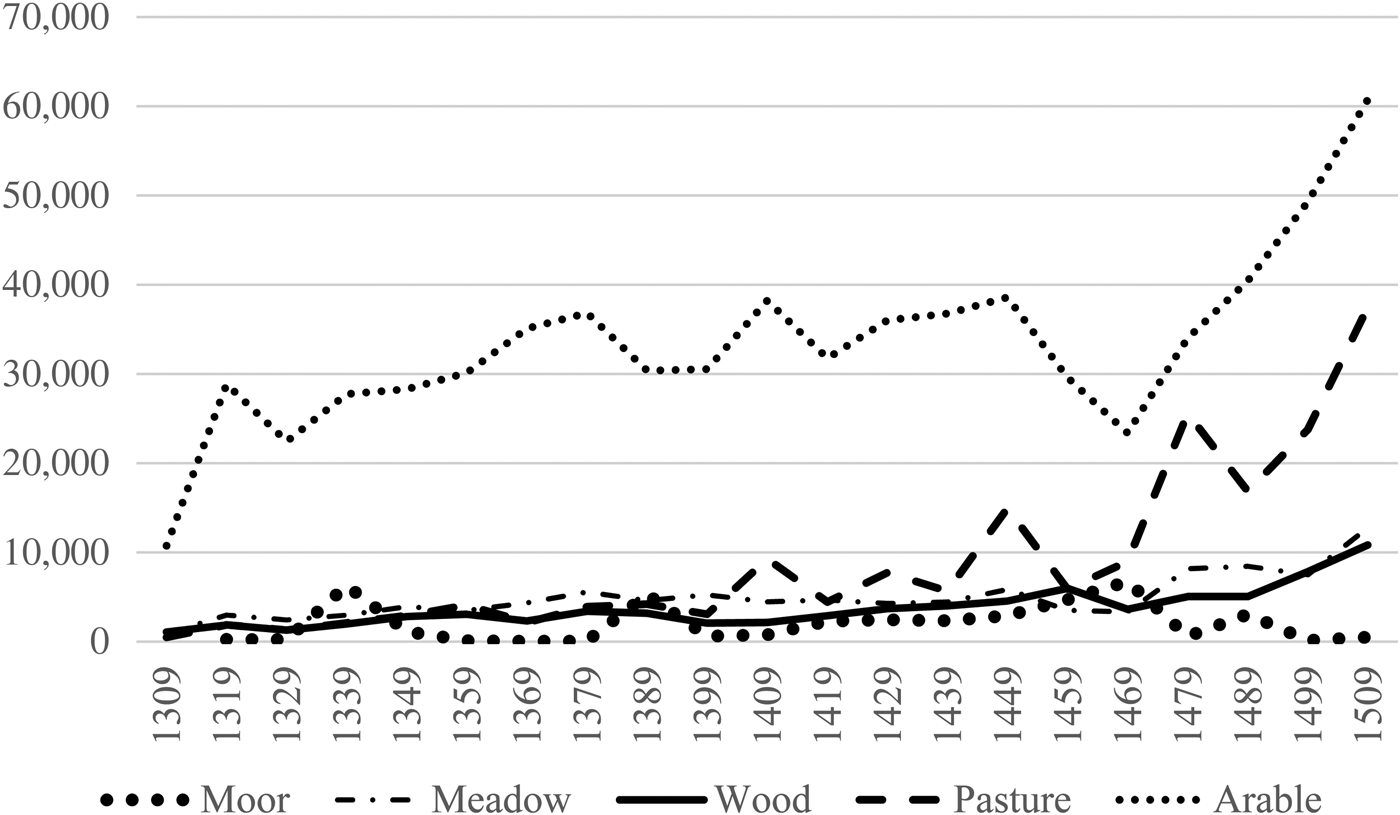
Figure 6 displays the amount of land traded in acres over the period, broken down into the five main land types of arable, pasture, meadow, moor and wood. These results show that, although the number of transactions per year decreased during the fifteenth century, the amount of land traded increased steadily over the period. There was a downturn during the 1450s and 1460s, which may in part be attributed to the unusually low number of fines during this period. Arable land accounted for the majority of land traded throughout the period, but declined in relation to pasture during the 1470s, reflecting the movement towards pastoral or mixed farming that occurred in the fifteenth century.
Type of land transacted in acres by decade (all counties).
Overall, it is clear that the size of the properties in the fines increased substantially from 1400 onwards, both in terms of acreage and in their number of assets. Figure 7 displays the average acreage of land per fine; this suggests that the average property size traded in the fourteenth century was somewhere between 30 and 50 acres, rising to between one hundred and two hundred acres in the second half of the fifteenth century.Footnote 76
Average acreage of land per fine (five-year averages).
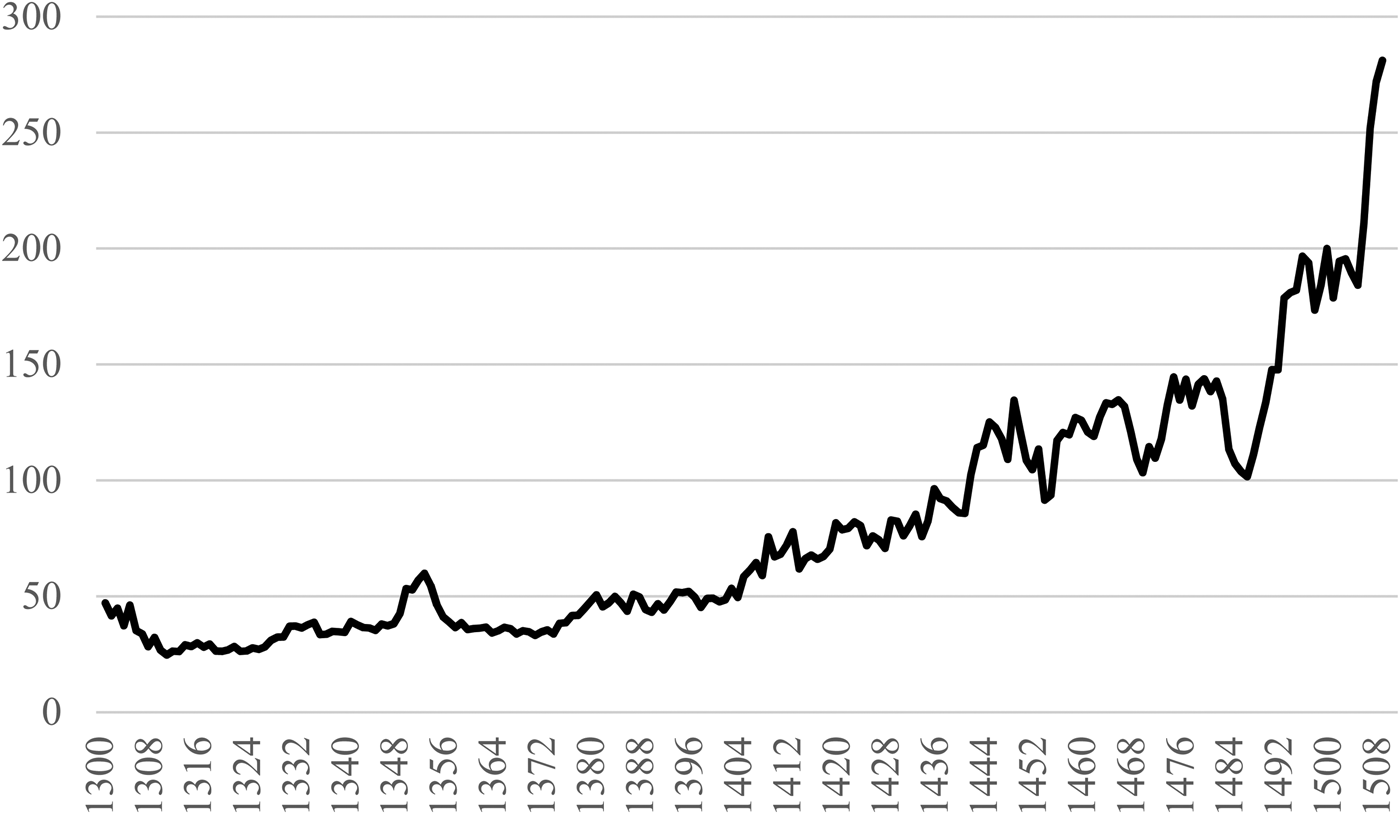
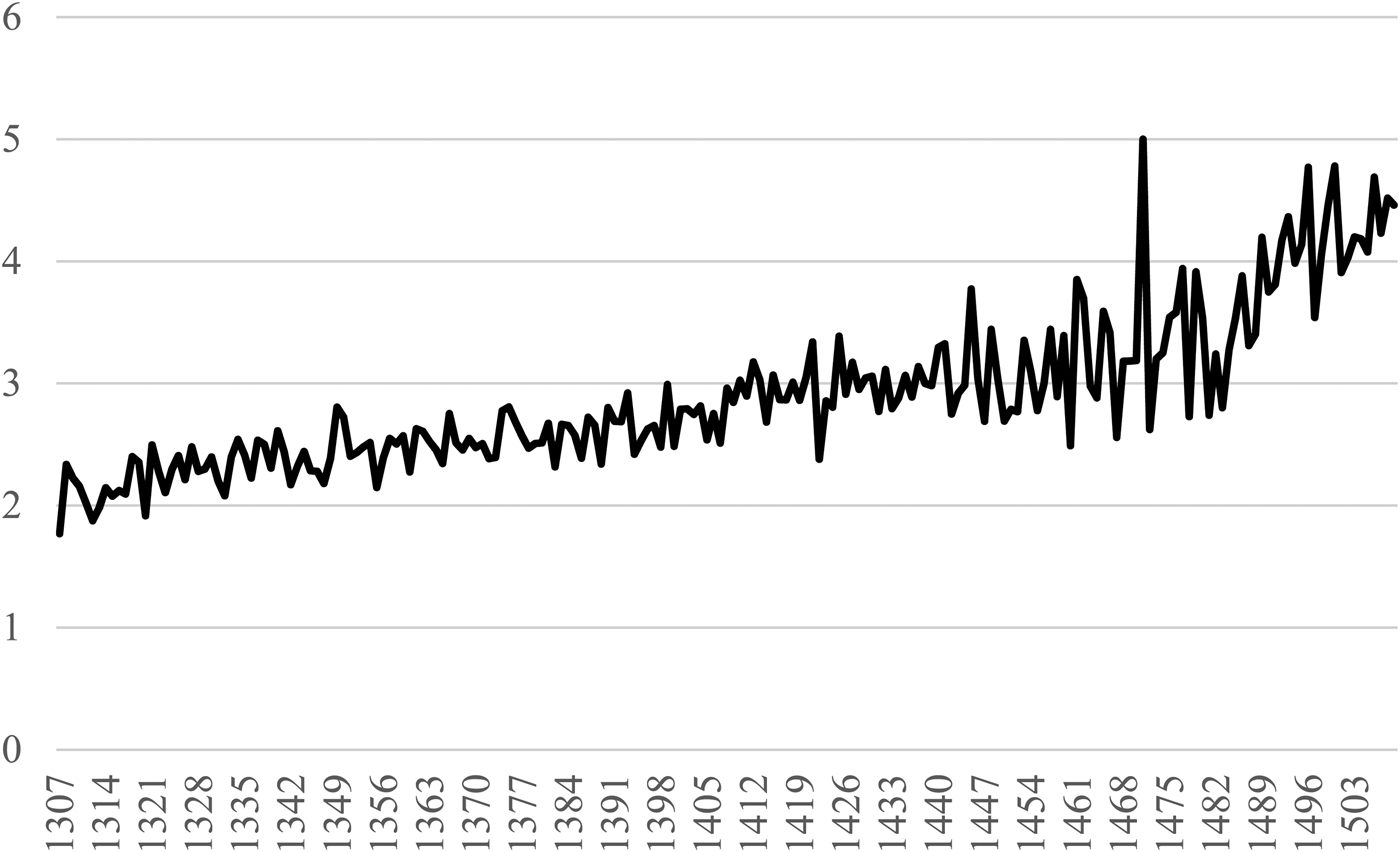
Figure 8 shows the average number of assets changing hands in a single transaction per year; in the fourteenth century, properties generally included two or three different assets, but by the end of the fifteenth century this had risen to over four (an asset in this case is defined as a distinct type of building, land, rents or goods; so, for example, a property involving ten acres of arable land, three acres of pasture and a messuage would be categorised as having three assets).
Average number of assets per transaction per year.
Yates's study of Berkshire yields similar results; her data demonstrate an increase in the acreage of the properties described in the fines for that county over the course of the fifteenth century, and a rise in number of so-called ‘complex’ landholdings (defined as those containing five or more different categories of property). She argues that this signalled the beginnings of enclosure and the consolidation of large estates, and a greater emphasis on commercial agriculture.Footnote 77 These findings mirror similar developments in the movement of land between customary tenants during the same period; in analysing the movement of property on the estate of the Bishopric of Winchester from the thirteenth to the fifteenth centuries Mullan and Britnell found that the size of the properties changing hands increased after 1350, suggesting the development by the fourteenth century of a wealthy peasant class who were able to accumulate substantial landholdings.Footnote 78 These trends can be largely attributed to the demographic changes of the fourteenth century. Using evidence from IPMs, Campbell, in general, finds an inverse relationship between the sizes of property holdings and population.Footnote 79 Using obituaries recorded in the court rolls, he demonstrates that the mean size of customary holding on the manor of Coltishall decreased from 12 rods to 6.4 rods between 1275–1299 and 1349–1350. After the decrease in population caused by the plague, the size of holding grew gradually until the end of the fourteenth century; however, the accumulation of much larger holdings does not become a feature of the customary land market until the early fifteenth century.
In addition to the size of holdings, the data also allow for an analysis of trends in the sale of other types of asset such as buildings (Figures 9 and 10). In contrast to the quantity of land, the number of messuages, tofts, shops and mills declined over the fifteenth century, in line with the decline in number of transactions overall; this may primarily be attributed to the decline in population. The market in three of the most common asset types, manors, messuages and tofts, appears to follow a very similar pattern. The quantity of manors traded rose until the 1380s (with the exception of downturns during the 1320s and 1360s), but declined from the late fourteenth century onwards, and did not show signs of recovery until the end of the fifteenth century. The increase in number of sales of manors in the decades following the Black Death offers support for the idea that the crisis prompted feudal landowners to dispose of their estates, and that there was an increasing demand for this type of asset among socially aspirant members of the professional and commercial classes.
Number of messuages transacted per decade.

Manors, shops, mills and tofts transacted per decade.

5. Market activity at the regional level
In addition to national trends, it is also useful to examine fluctuation in market activity on a regional basis. The total number of transactions in each county over the period can be seen to broadly correspond to the size and population of that county, with the exception of London and the counties of Middlesex, Bedfordshire, Buckinghamshire, Hertfordshire and Essex, all of which record a higher proportion of fines than would be expected (Table 3). This underlines the role of Londoners in property investment both within the capital and in surrounding areas.Footnote 80 The county with the highest number of transactions relative to size and population is Essex, which records almost 16 per cent of fines despite having only an 8 per cent share of both population and area for all counties in the dataset; one potential explanation for this is the county's strong business and credit relationship with the capital.Footnote 81
Number of fines per county compared with population and acreage

Sources: For fines, see text. Population data taken from B. Campbell, S. N. Broadberry, M. Overton, A. Klein and B. van Leeuwen, British economic growth 1270–1870 (Cambridge, 2015), 25–6, Table 1.08. County area in acres taken from Roger J. P. Kain, John Chapman and Richard R. Oliver, The enclosure maps of England and Wales, 1595–1918: a cartographic analysis and electronic catalogue (Cambridge, 2004), 47–137. This table excludes Devon, Kent, Northumberland, Rutland, Shropshire and Worcestershire, as the datasets for these counties are incomplete.
In order to examine regional variation in market activity over time, we have divided the counties included in this study into four groups: Northern England (Northumberland and Yorkshire); East Midlands (Nottinghamshire, Lincolnshire, Leicestershire, Northamptonshire and Rutland); West Midlands (Worcestershire, Warwickshire, Shropshire and Herefordshire); and London and the South East (London and Middlesex, Essex, Kent, Hertfordshire, Bedfordshire, Buckinghamshire, Oxfordshire, Berkshire and Hampshire). Figure 11 displays the results of this regional comparison. The pattern of market activity appears to be fairly similar in London and the South East, Northern England and the East Midlands; however, the number of fines is far higher in London and the South East, reflecting differences in population and also the effects of mercantile investment in the ‘commuter belt’ counties surrounding London.Footnote 82 All three regions display a peak in activity after the early fourteenth-century agrarian crisis, yet the effect appears to be staggered, with the subsequent downturn occurring in 1318 in London and the South East, 1319 in the East Midlands, and 1324 in the North. London and the South East experienced much greater market volatility in the decades leading up to the Black Death, perhaps because these regions were more affected by the political events surrounding the deposition of Edward II in 1327 and the beginning of the Hundred Years’ War; mercantile property investors for instance may have suffered financially due to requests for royal loans, which were a key element of funding for Edward III's military campaigns. All three areas experienced a downturn in market activity beginning in the 1370s, but the early fourteenth-century recovery is less notable in Northern England. The West Midlands presents a slightly different picture; here, the housing market appears to have been less affected by the impact of the agrarian crisis, the plague or the political upheaval of the later fourteenth century, perhaps due to the persistence of feudal ties to land in this region.Footnote 83
Fines per year, by region.

6. Conclusions
A number of conclusions can be drawn from this reappraisal of the late medieval English property market. Fluctuations in the number of fines per year are shown to be closely correlated with key exogenous events of the fourteenth century, lending further support to the argument that, during this period, they constitute a useful source through which to interpret freehold property market activity. Changes in property law affected the popularity of the fine as a form of conveyance from the 1370s onwards, with the result that they became less representative of market activity during the fifteenth century. The volume of fines varied regionally according to proximity to commercial and administrative centres, in particular emphasising the role of London as a focal point for mercantile property investment in the Home Counties.
In common with previous research, we find that the early fourteenth century agrarian crisis resulted in an increase in market activity caused by smaller property holders being compelled to convert real estate holdings into cash in order to survive. We find that the Black Death similarly caused a rise in property transactions, however this differed from the early fourteenth-century peak both in terms of its nature and underlying causes. We find that high mortality resulted in a new market for large properties, such as those involving manors. An additional factor in the emergence of this market was an inheritance crisis within the aristocratic landholding elite (the sellers), and their inability to farm this land productively due to a lack of agricultural labour and its rising cost. As a result, a substantial amount of land that had been previously transferred only through inheritance was made available on the commercial market. At the same time, war and commerce produced newly wealthy individuals and groups (the buyers) who were able to capitalise on this opportunity.
Our evidence supports Campbell's assertion that, in the first half of the fourteenth century, the property market acted as a barrier to the emergence of agrarian capitalism in providing a means for small farmers to weather famines through the sale of land, resulting in the increasing subdivision of holdings and thus perpetuating the system of subsistence agriculture.Footnote 84 After the Black Death, Campbell argues that the decrease in population allowed for a reversal of these trends; progressively larger estates were accumulated, so that by the mid-fifteenth century we can observe ‘a more polarized distribution of land’, which led eventually to ‘the evolution of a capitalist farmer/landless wage labourer division within rural society’.Footnote 85 Our data suggest a more general causal relationship between demographic crisis and property market activity in the later medieval period, as high mortality, increasing geographic and social mobility and the progressive weakening of feudal ties to land allowed for the opening up of the market to new commercial interests. This forms a significant new contribution to the scholarly debate surrounding the extent of the impact of the Black Death on the late medieval English society and economy.Footnote 86
Acknowledgements
This article is based on research conducted as part of a three-year project ‘The First Real Estate Bubble? Land Prices and Rents in Medieval England c. 1200–1550’. We are grateful to the Leverhulme Trust for funding this research under grant RPG-2014-307. We would like to acknowledge the helpful comments of the editors and anonymous reviewers; the advice of Tony Moore; Sam Gibbs for database design tips; and also Ruth Salter, Joe Chick, Mohammed Ahmed and James Hemington for all helping to collect the data on which this research is based.


 Open access

