


Unhealthy diet patterns, which consequently increase the risk for chronic diseases, have been identified as a public health concern in Israel( Reference Rosenberg, Lev and Bin-Nun 1 ). The Israeli diabetes prevalence is 105th among 220 countries, with 416 000 adults (8·2 %) who have diabetes, and this prevalence is projected to rise to 695 000 by 2045( 2 ). In 2017, the total Israeli health-care expenditure on diabetes reached $US 1·72 billion and is projected to reach $US 2·54 billion by 2045( 2 ). Despite these alarming projections, only 26 % of the Israeli population reports maintaining a healthy diet( 3 ); thus, improving eating behaviour is a major Israeli public health priority( Reference Rosenberg, Lev and Bin-Nun 1 ). While individual-level behavioural change efforts can be partly effective, healthy eating habits are more likely to occur in a supportive environment with accessible and affordable healthy food choices( Reference Murray, Atkinson and Bhalla 4 ). Therefore, effective and sustainable strategies are needed to improve the availability of healthy food choices in working places and schools.
Culinary education is an emerging strategy( Reference Polak, Phillips and Nordgren 5 ) that has proved effective in improving patients’ adherence to healthy diets( Reference Reicks, Trofholz and Stang 6 , Reference Reicks, Kocher and Reeder 7 ). However, the literature that describes professional kitchen staff’s culinary education as a strategy to improve cafeteria food, and thus community nutrition, is limited. Indeed, most cafeteria interventions have included methods such as food labelling and food architecture( Reference Nørnberg, Houlby and Skov 8 – Reference Thorndike, Riis and Sonnenberg 10 ), and the kitchen staff were identified as a potential barrier for change( Reference Krishnaswami, Martinson and Wakimoto 11 ). Effective, long-term methods are needed that will enable researchers to collaborate with kitchen staff to empower them to improve the availability of healthy food options in cafeterias.
A kibbutz is a communal settlement based on socialist ideology( Reference Avriel, Fuchs and Plakht 12 ) and is among the most economically homogeneous societies in the Western world. Members live as a cooperative community, sharing income and expenses, working within a communal budget and eating food that is prepared in the community cafeteria. Several publications looked at various health aspects (e.g. disability in older adults( Reference Walter-Ginzburga, Blumstein and Guralnik 13 ), health-care utilization( Reference Friedman and Lahad 14 )) of this unique community, however the potential of leveraging this community structure to improve members’ eating behaviour was never explored. Our goal was to implement an effective and sustainable nutritional change through collaborating with a kibbutz leadership including the cafeteria staff using community-based participatory research (CBPR) principles( Reference Ahmed and Palermo 15 , Reference Horowitz, Robinson and Seifer 16 ).
Culinary coaching is a ‘behavioral intervention that aims to improve nutrition and overall health by facilitating home cooking through an active learning process for participants that combines culinary training with health and wellness coaching competencies’( Reference Polak, Pober and Budd 17 ). Culinary coaching engages clients as an active and autonomous, self-motivated partner to facilitate culinary change through strategies such as client-directed goal-setting, guided self-discovery and client-directed culinary training( Reference Polak, Sforzo and Dill 18 – Reference Polak, Pober and Morris 20 ). Previous publications describe the use and potential impact of culinary coaching in patient programmes that aim to improve nutrition of individuals and families( Reference Polak, Pober and Budd 17 , Reference Polak, Dill and Abrahamson 21 ). However, culinary coaching might also be the foundation of a CBPR programme that focuses on collaborating with community leadership and kitchen staff as equivalent partners to effectively improve community nutrition.
The community culinary coaching programme (CCCP) is an innovative CBPR programme aimed at improving community members’ nutrition through the culinary coaching approach. The Mediterranean diet is rich in fresh fruits and vegetables, legumes, whole grains, fish and low-fat dairy products( Reference Bach-Faig, Berry and Lairon 22 ). This diet has been proved effective in reducing( Reference Shai, Schwarzfuchs and Henkin 23 , Reference Sofi, Cesari and Abbate 24 ) and maintaining weight( Reference Schwarzfuchs, Golan and Shai 25 ), in preventing CVD( Reference Estruch, Ros and Salas-Salvadó 26 ) and in reducing the incidence of cancer( Reference Schwingshackl and Hoffmann 27 ). In addition, there is growing evidence that supports the importance of food quality, including decreasing ultra-processed food items( Reference Monteiro, Cannon and Moubarac 28 ) that were found to contribute to cardiometabolic disorders (e.g. obesity( Reference Mendona, Pimenta and Gea 29 ), hypertension( Reference Mendona, Lopes and Pimenta 30 ), dyslipidaemia( Reference Rauber, Campagnolo and Hoffman 31 )) and cancer( Reference Fiolet, Srour and Sellem 32 ). Therefore, the nutritional foundation of the CCCP was chosen to be a freshly prepared Mediterranean-style diet.
A previous publication has described the programme development and process evaluation( Reference Polak, Pober and Morris 20 ). The aim of the present paper is to describe the programme’s impact on the alignment of the cafeteria food with a freshly prepared Mediterranean-style diet, and community members’ consumption habits and satisfaction; and to collect data on the change in food costs. We hypothesized that the cafeteria’s food alignment with a freshly prepared Mediterranean-style diet would be significantly improved, without change in diners’ consumption habits (e.g. frequency of dining, frequency of family meals) and satisfaction, in comparison to control kibbutzim and their diners.
Methods
The CCCP was a 12-month CBPR founded by the intervention community administration, who partnered with our research team to improve the food served by the community cafeteria. The community administration identified priorities and key principles for the intervention. Priorities included providing healthier options in the communal cafeteria, which also serves food to the pre-school, and delivering educational programmes for the members and the professional staff of both the pre-school and the cafeteria. Key programme principles included focusing on a freshly prepared Mediterranean-style diet (rich in fresh fruits and vegetables, legumes, whole grains, olive oil, fish and low-fat dairy products( Reference Bach-Faig, Berry and Lairon 22 ) and low in ultra-processed food items( Reference Monteiro, Cannon and Moubarac 28 )), and participation of the community in the process by employing the culinary coaching approach( Reference Polak, Pober and Budd 17 ). This allowed the community representatives both to be an equal partner in determining the desired process and outcomes, and to be trained by the programme faculty in the Mediterranean cooking principles. Detailed description about the intervention development and components is presented elsewhere( Reference Polak, Pober and Morris 20 ), and is described briefly below. Control communities were followed-up without having nutritional instruction nor coaching sessions.
Community culinary coaching programme
A community steering committee was assembled by the kibbutz’s administration aimed at representing the community in leading the intervention development and implementation. It included the community’s secretary, health coordinator, food administrator, cafeteria manager, family physician, nurse practitioner and workplace human-resource manager who was appointed the community’s project manager. The CCCP included both a coaching and a training component.
The health coaching component
The steering committee participated in eight 90 min in-person group culinary coaching sessions (one every 6 weeks) with one of the programme coaches (i.e. a family physician who is also a credentialled chef (R.P.) and a registered dietitian (R.A.), both of whom were formally trained in coaching techniques). During each culinary coaching session, the steering committee reviewed the implementation of the intervention goals and community feedback and identified goals for the next 6-week period. Culinary coaching sessions included group and individual coaching strategies designed to build a strong alliance and activate engagement in the process of change, including brainstorming, goal-setting, motivational interviewing and a self-discovery process( Reference Polak, Dill and Abrahamson 21 ).
The training component
The training component included training programmes for both the professional staff and interested community members, whereas each programme’s scope and content areas were identified during the culinary coaching meetings. The final training included a 22 h training programme for the kitchen staff; a 12 h training programme for pre-school staff; and three 4 h cooking modules and nine 2 h nutritional modules for community members. Content areas were focused on a freshly prepared Mediterranean-style diet including cooking plant-based protein items (e.g. lentils, beans) and how to impact nutritional change among children.
Setting and participants
The intervention setting was a rural kibbutz with 493 adults and 241 children. Two kibbutzim in the same district with a total of 487 adults and 206 children, with similar sociodemographic and health parameters( 33 ), were chosen as a control group. Three buffet-style meals per day are served (lunch is the main meal) in these three kibbutzim, and are freely available to members, most of whom work within the kibbutzim (an additional 160 employees work at the intervention kibbutz and have lunch in the cafeteria). Food can also be taken away by members to eat at home, and separate menus are delivered to the community pre-school. Inclusion criteria for participating in the diners’ consumption habits and satisfaction evaluation were: over 18 years of age, not pregnant or less than 3 months after giving birth and eating at least one meal in the communal cafeteria per day. This project was approved by the Clalit Health Service Institutional Review Board on Human Subjects Research (committee’s reference number 0030-12-COM) and the need for participant consent was waived.
Outcome measures
The impact of the CCCP was measured through three outcomes before and 12 months after programme initiation: (i) alignment of the cafeteria food with a freshly prepared Mediterranean-style diet using the Mediterranean index( Reference Sofi, Cesari and Abbate 24 , Reference Trichopoulos and Lagiou 34 ) and the NOVA classification for processed foods( Reference Monteiro, Cannon and Moubarac 28 ); (ii) community members’ satisfaction and consumption habits; and (iii) food costs.
Changes in the alignment of the cafeteria food with a freshly prepared Mediterranean-style diet were measured by comparing the total food purchases pre-intervention with those 12 months after initiation, using a 3-month sample taken from the kitchen food purchasing software. The months June through August were taken as a representative of typical purchasing; purchase lists 12 months from initiation were corrected to the overall change in the food purchased by each community throughout the year. Changes in the food costs were measured by comparing the total food costs of the two 3-month samples. Costs were corrected to the differences in the Israeli food cost indices between 2012 and 2013( 35 ) (Israeli fruits and vegetables price index, Israeli food price index without fruits and vegetables).
A questionnaire, based on previous validated questionnaires( Reference Sorensen, Emmons and Hunt 36 , 37 ), was developed in partnership with the community administration and was administered to community members both in the community clinic and in the communal cafeteria. It included the following domains. (i) Diners’ consumption habits through three questions that evaluated how often members ate or took away food from the cafeteria at breakfast, lunch and dinner (1 = once per week to 7 = seven times per week) and the number of family meals per week (1 = once per week to 7 = seven times per week); and Likert-scale questions evaluating how often responders refilled their plate during an average meal (1 = no refills to 4 = three times or more). (ii) Diners’ satisfaction with the food service, assessed through sixteen Likert-scale questions evaluating the satisfaction from breakfasts, lunches, dinners and Friday night dinners with regard to taste, variety, health and overall (1 = not satisfied at all to 4 = very satisfied); and fourteen Likert-scale questions evaluating satisfaction from specific food items served in the cafeteria (1 = not satisfied at all to 4 = very satisfied). Five demographic items including age, sex, marital status, having children (under the age of 18 years) and country of origin were added to the questionnaire.
Statistical analysis
Demographic variables were assessed using Student’s t test or the χ 2 test as appropriate to the distribution of each variable. Mediterranean index and NOVA classification categories were assessed by generalized linear mixed-effects models (PROC GLIMMIX) using the statistical software package SAS version 9.4. Questionnaire measures were assessed using linear mixed-effects models (PROC MIXED) and P values were adjusted (increased) for the multiplicity of questionnaire items to control the false discovery rate at 0·05 using the method of Benjamini and Hochberg( Reference Benjamini and Hochberg 38 ). Questionnaire and food category outcome analyses were adjusted for differences in age, location of birth (as a categorical variable) and presence of children in the household, as these demographic factors differed significantly between intervention and control communities. These adjustments did not affect the direction or significance of any conclusions.
Results
The CCCP was delivered from November 2012 through October 2013. Two hundred and ten adults from the intervention group completed the questionnaire before the intervention and 232 at 12 months from initiation; 185 adults from the control group completed the questionnaire before the intervention and 193 at 12 months from initiation. Table 1 presents demographic characteristics. The respondents in the control group were somewhat younger (P = 0·04), more had children under the age of 18 years (P = 0·03) and were composed of more immigrants (P < 0·0001) than the intervention group.
Demographic characteristics of the intervention (rural kibbutz with 493 adults and 214 children) and control groups (two rural kibbutzim with a total of 487 adults and 206 children), Israel, November 2012–October 2013

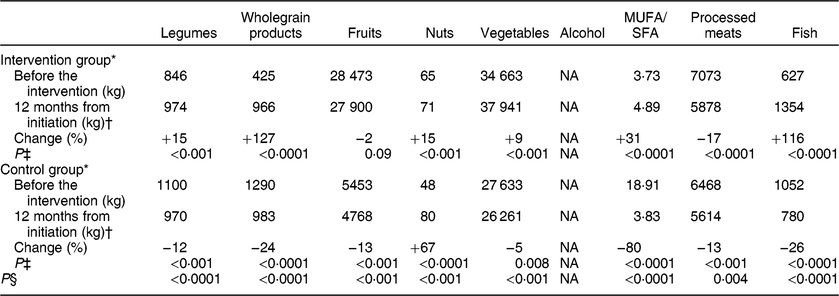
Table 2 presents the changes in the Mediterranean index food categories. The food purchased by the intervention kibbutz cafeteria improved its alignment with the Mediterranean index in most categories (legumes, +15 %, P < 0·001; wholegrain products +127 %, P < 0·0001; nuts +15 %, P < 0·001; vegetables +9 %, P < 0·001; MUFA/SFA +31 %, P < 0·0001; processed meats −17 %, P < 0·0001; fish +116 %, P < 0·0001). The only category that was not improved was fruits, which was also the only category that was not included in the community goals during the programme (alcoholic beverages are not served in this setting)( Reference Polak, Pober and Morris 20 ). Over the same period, the food purchased by the control kibbutzim cafeterias decreased its alignment with the Mediterranean index in all categories except nuts and processed meats (all P < 0·001). This resulted in significantly greater improvement in all categories except nuts in the intervention community as compared with the control (legumes, wholegrain products, fish, MUFA/SFA P < 0·0001; fruits, vegetables P < 0·001; processed meats P = 0·004).
Mediterranean index of food purchases made by the intervention (rural kibbutz with 493 adults and 214 children) and control groups (two rural kibbutzim with a total of 487 adults and 206 children) before and after the community culinary coaching programme, and changes within and between groups, Israel, November 2012–October 2013
NA, not applicable (alcoholic beverages are not served in this setting).
P values are adjusted for differences between groups in age, having children and country of origin.
* Total food items which were purchased by the kitchen during a 3-month interval; kilograms and percentage of the total.
† Weight was adjusted to the total food weight change in each group.
‡ Difference over time within each group.
§ Difference in change over time between groups.
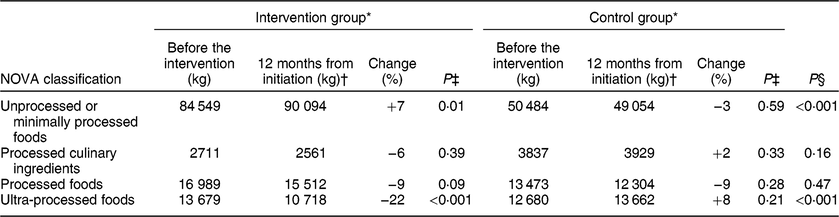
Table 3 presents the changes in the NOVA food classification of both the intervention and the control groups. The proportion of ultra-processed food items that was purchased by the intervention group cafeteria decreased by 22 % (P < 0·001) with a reciprocal increase in the unprocessed or minimally processed foods category (+7 %, P = 0·01), compared with a non-significant decrease of the unprocessed or minimally processed foods and non-significant increase in the ultra-processed food categories served by control cafeterias. This resulted in a significantly greater improvement in both categories in the intervention community compared with control (both P < 0·001).
NOVA classification of food purchases made by the intervention (rural kibbutz with 493 adults and 214 children) and control groups (two rural kibbutzim with a total of 487 adults and 206 children) before and after the community culinary coaching programme, and changes within and between groups, Israel, November 2012–October 2013
P values are adjusted for differences between groups in age, having children and country of origin.
* Total food items which were purchased by the kitchen during a 3-month interval; kilograms and percentage of the total.
† Weight was adjusted to the total food weight change in each group.
‡ Difference over time within each group.
§ Difference in change over time between groups.
The total food costs of the intervention cafeteria 12 months from the beginning of the intervention increased by 10 %, while the total purchased food (kilograms) increased by 6 %. In comparison, during the same time, the food costs of the control group increased by 1 % while the total food purchased (kilograms) decreased by 3 %. No change was reported in workforce costs consequent to the intervention.
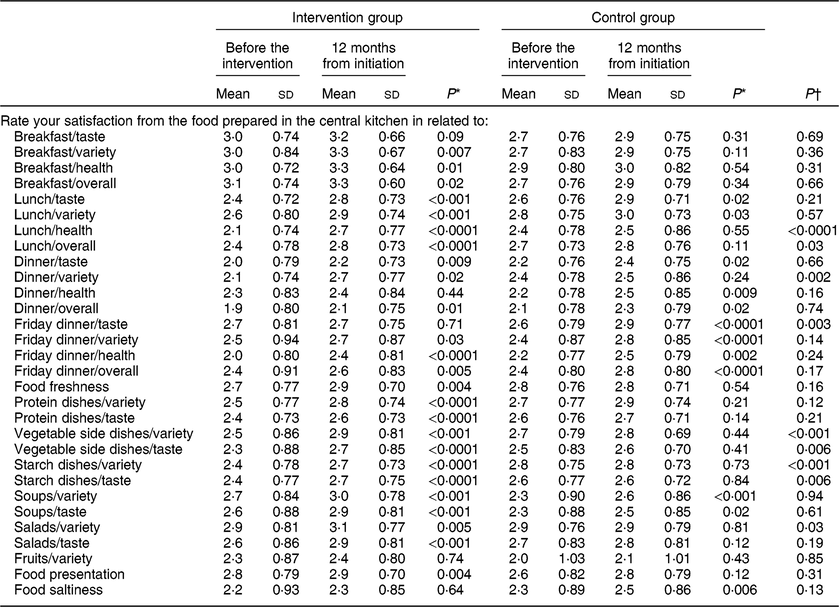
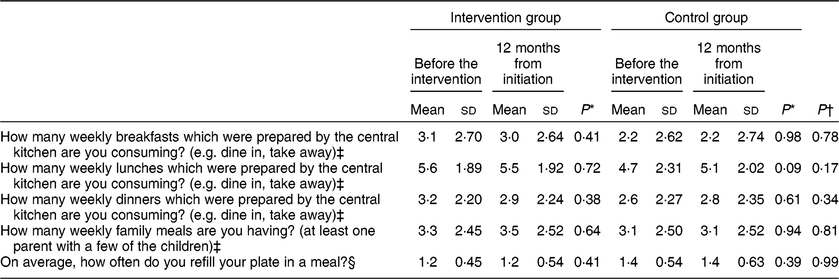
Table 4 presents the changes in community members’ satisfaction with the cafeteria food. In twenty-five (83 %) out of the thirty satisfaction items, intervention community members’ satisfaction was significantly improved 12 months from intervention initiation, in comparison to twelve (40 %) in the control group. However, changes in only nine out of these twenty-five satisfaction items improved selectively between groups. These included mostly changes around lunch (e.g. health, overall), which was the main target of the community goals; and in specific food items (e.g. salad, starch dishes, vegetable side dishes). Table 5 presents the changes that were reported in the diners’ consumption habits. Neither the intervention nor the control community diners reported changing their consumption habits significantly.
Community members’ satisfaction with the cafeteria food in the intervention (rural kibbutz with 493 adults and 214 children) and control groups (two rural kibbutzim with a total of 487 adults and 206 children) before and after the community culinary coaching programme, and changes within and between groups, Israel, November 2012–October 2013
P values are adjusted for differences between groups in age, having children and country of origin, and are adjusted (increased) to control the false discovery rate at 0·05 using the method of Benjamini and Hochberg( Reference Benjamini and Hochberg 38 ).
* Difference over time within each group.
† Difference in change over time between groups.
Diners’ consumption habits in the intervention (rural kibbutz with 493 adults and 214 children) and control groups (two rural kibbutzim with a total of 487 adults and 206 children) before and after the community culinary coaching programme, and changes within and between groups, Israel, November 2012–October 2013
Community members’ self-reported behaviours.
P values are adjusted for differences between groups in age, having children and country of origin, and are adjusted (increased) to control the false discovery rate at 0·05 using the method of Benjamini and Hochberg( Reference Benjamini and Hochberg 38 ).
* Difference over time within each group.
† Difference in change over time between groups.
‡ Response: 1–7 per week.
§ Response: free text (number).
Discussion
The current paper presents the positive impact of a CCCP on the alignment of a rural kibbutz cafeteria food with a freshly prepared Mediterranean-style diet. While these outcomes are consistent with other CBPR programmes for improving cafeteria food( Reference Bogart, Elliott and Uyeda 39 – Reference Black, Hager and Le 41 ), this is the first description of a CBPR that gave the community (both members and cafeteria leadership) an exclusive decision-making role in determining the programme’s nutritional goals and the pace of their implementation.
Several factors had the potential to dilute the cafeteria’s nutritional change, including the gradual pace of the coaching and the layperson leadership( Reference Polak, Pober and Morris 20 ). However, most Mediterranean index and NOVA classification outcomes demonstrated significant positive changes 12 months from programme initiation compared with control. The only Mediterranean index category that did not improve at 12 months is fruits. In addition to the fact that fruits were not included in any of the programme goals, it should be noted that between 2012 and 2013 the increase in the Israeli fruits and vegetables price index was higher (7·52 %) than the increase in the Israeli food price index without fruits and vegetables (6·10 %), which may have impacted purchasing. This positive change in cafeteria food might have clinical significance for diners. For example, while a recent study found that a 10 % increase in the proportion of ultra-processed foods in the diet was associated with a significant increase of 12 % in the risk of overall cancer( Reference Mendona, Lopes and Pimenta 30 ), the decrease of the proportion of ultra-processed foods in the present study was 22 %.
Cafeteria interventions are usually led by experts and include methods such as food labelling and food architecture( Reference Nørnberg, Houlby and Skov 8 ). Interestingly, the community cafeteria leadership, which was equally involved in designing the intervention( Reference Polak, Pober and Morris 20 ), preferred other methods such as improving cooking processes and supplies( Reference Polak, Pober and Morris 20 ). The positive nutritional outcomes suggest that culinary education might be a promising method for future cafeteria interventions. Further, the intent of the kitchen staff to continue the intervention beyond its 1-year time frame( Reference Polak, Pober and Morris 20 ) suggests that culinary coaching might melt kitchen staff’s resistance to change( Reference Krishnaswami, Martinson and Wakimoto 11 ) towards sustainable change. Future research is required to evaluate the impact of culinary training including culinary coaching in other cafeteria settings.
The participant-centred culinary coaching process might also have helped acceptance of the nutritional change by the community members. While the community leadership was concerned that shifting to healthier food would result in objections, diners’ consumption habits did not change significantly and satisfaction with the cafeteria food improved. Outcomes show that the baseline use of the cafeteria was high (average of 5·6 lunches/week) and that a decrease in its use was not reported. Further, although several food items, which are usually appreciated, were reduced significantly (e.g. mayonnaise-based salads, burgers) or removed (e.g. salami, sweetened corn) from the cafeteria menu( Reference Polak, Pober and Morris 20 ), overall members’ satisfaction with the cafeteria food increased 12 months after programme initiation. Members’ satisfaction from domains that were not addressed by the intervention (e.g. Friday dinners)( Reference Polak, Pober and Morris 20 ) were also improved. This might relate to the overall increase in members’ satisfaction or to a general improvement in the kitchen staff’s cooking methods. Although twenty-five satisfaction items of the intervention community were significantly improved, changes in only nine improved selectively in the intervention group. This might be due to a change of the kitchen staff leadership at one of the control community cafeterias that resulted in improved satisfaction, or a difference between the intervention and control groups that is not reflected in the demographics (e.g. resistance to change, relationship with the kitchen leadership).
Strengths and limitations of study
The current study adds to a limited number of studies that used objective outcomes such as sales data to evaluate the impact of cafeteria interventions( Reference Liu, Roberto and Liu 9 , Reference Thorndike, Riis and Sonnenberg 10 ). The analysis of these outcomes using comprehensive objective tools such as the Mediterranean index and the NOVA classification, and the use of a control group, are key strengths of the study. While other studies analysed cafeteria sales data, the current study analysed the food items that were purchased by the kitchen. This rigid method provides comprehensive and accurate evidence of the food items that were used by the kitchen staff while cooking and serving the cafeteria food, as well as an opportunity to present the intervention costs. Further research is needed to demonstrate whether the increased costs are due to the use of more expensive food items or to bigger portions that were consumed by the diners.
The present study describes the impact of a CCCP in the unique community setting of a kibbutz. The CCCP success in this setting might be due to the closeness of community connections, and future research will need to determine whether other organizations where individuals eat some of their meals in a communal setting (e.g. schools, workplaces) might benefit from CCCP. Further, the control group respondents were somewhat younger, more had children under the age of 18 years and were composed of more immigrants than the intervention group. However, after adjusting for these variables, no changes were noted in the number of significant consumption habit/satisfaction item changes in both the intervention and control groups, thus it seems that these differences between communities were inconsequential in the study.
Other limitations include the inclusion of the kitchen food waste in the nutritional analysis (although professional kitchen waste is usually minimal compared with diner food waste) and the lack of a long-term follow-up. Further, despite the positive effect of the intervention on nutritional value of the purchased food, the study did not evaluate whether the intervention had any impact on members’ health. Both the intervention and control communities are insured in the same health-care system; thus, we intend to collect their data and to evaluate the impact of this intervention on health and health-care costs.
Conclusions and public health implications
The current study suggests that the CCCP is an effective programme that was accepted by both community members and cafeteria staff. Although the CCCP decision-making model( Reference Polak, Pober and Morris 20 ) grants communities an exclusive responsibility for determining both the nutritional goals and the pace of adopting them, the study’s outcomes suggest nutritional benefits with an effect size that might impact diners’ health. The CCCP, which considers both the community priorities and the kitchen staff confidence and readiness for a change, might be a useful model for improving the food served in cafeterias at working places and schools.
Acknowledgements
Acknowledgements: The authors would like to thank kibbutz Yotvata’s members and leadership for teaching them how to implement a CBPR. Financial support: This work was sponsored by research grants from kibbutz Yotvata and the Israeli Association of Family Medicine. R.P. was supported through his fellowship with educational grants from Maccabi Healthcare Service, Harvard Medical School Physical Medicine and Rehabilitation department and the Israeli Cancer Association. The funders had no role in the design, analysis or writing of this article; kibbutz Yotvata leadership was an equal partner in designing the programme as described throughout the manuscript. Conflict of interest: The authors declare that they have no competing interests. R.P. received book royalties from Penn Publications and honoraria from the American College of Preventive Medicine and Hebrew University of Jerusalem for the development of a culinary medicine curriculum. Authorship: R.P. participated in the design and delivery of the programme, collection and analysis of data, and drafting the manuscript. D.P. led the analysis of the quantitative data and contributed significantly to the drafting of the manuscript. R.A. participated in the design and delivery of the programme, and collection and analysis of data. T.M. led the questionnaire development and participated in the manuscript drafting. E.M.B. participated in the design and delivery of the programme, analysis of data and drafting the manuscript. M.Z. participated in the design and delivery of the programme, and collection of data. Ethics of human subject participation: This study was conducted according to the guidelines laid down in the Declaration of Helsinki and all procedures involving research study participants were approved by the Clalit Health Service Institutional Review Board on Human Subjects Research (committee’s reference number 0030-12-COM); and the need for participant consent was waived.
Author ORCID
Rani Polak, 0000-0002-6360-902X.



